

Page 1

i ' N il ii'i nvi: fife'' r i ì;V:":№':S4ì S
Video Cassette Recorder
NV-HD650
Series
n ^ SUPEB DRIVE A!
J-CODt )NmUG£NT COimOL SYSTEM
/QT5984
VHS
PAL NTSC 4,43
Before attempting to connect, operate or adjust this product,
please read these instructions completely.
Page 2
Dear Customer
May we take this opportunity to thank you for purchasing
this Panasonic Video Cassette Recorder.
We would particularly advise that you carefully study the
Operating Instructions before attempting to operate the unit
and that you note the listed precautions.
G-Code Programming System
Programming is now easier than ever; simply enter the
G-Code number provided in the programme schedule
column carried by newspapers and magazines.
•G'Code is a trademark applied for by Gemstar
Development Corp. G-Code system is manufactured
under licence from Gemstar Development Corporation.
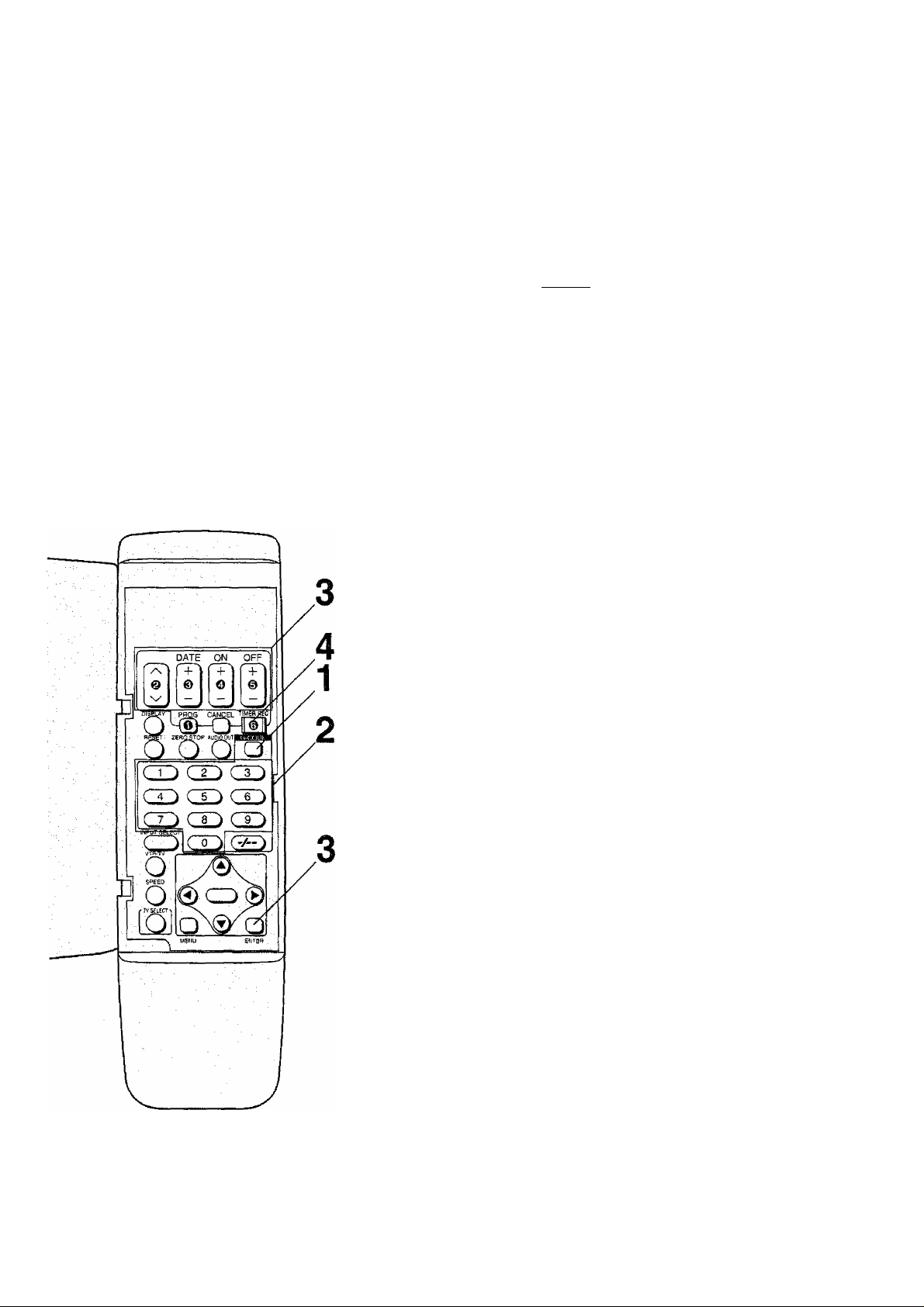
Al Crystal View Control
Al circuit for automatic tape calibration and optimizing of
playback characteristics.
During playback the contrast of tapes recorded with good
level is automatically optimized.
Page 3
IMPORTANT
Your attention is drawn to the fact that
recording of pre-recorded tapes or discs
or other published or broadcast material
may infringe copyright laws.
WARNING
TO REDUCE THE RISK OF FIRE OR
SHOCK HAZARD, DO NOT EXPOSE
THIS EQUIPMENT TO RAIN OR
MOISTURE.
NV-HD650A: Australian model
NV-HD650EA: New Zealand model
FOR YOUR SAFETY
■ DO NOT REMOVE OUTER COVER.
To prevent electric shock, do not remove
cover. No user serviceable parts inside. Refer
servicing to qualified service personnel.
Contents
Controls and Connection Sockets
Infra-red Remote Controller
Connections
Tuning the TV to your VTR ..................................... 9
Setting the Remote Controller for Operation
of your TV
Language Setting of On Screen Display
Setting the Clock of the VTR .................................. 13
Storing TV Broadcasts into your VTR
Preparations for G-Code Programming
Settings Using On Screen Display
...............................................................
..............................
.........
.....
..........................
...........................
................
...................
...................
11
12
14
8
16
18
HQ (High Quality) Picture System
Video recorders carrying the HQ symbol mark feature the
new VHS High Quality Picture System. This system
assures complete compatibility with VTRs that use the
conventional VHS system.
Playback
Manual Recording..................................................... 22
Timer Recording ....................................................... 24
•G* *Code Programming ............................................ 26
Editing ....................................................................... 27
•Assembly Editing ...................................................... 27
• insert Editing ............................................................ 28
•Audio Dubbing........................................................... 29
Other Functions........................................................ 30
Before Requesting Service
Precautions............................................................... 36
..................................................................
.....................................
20
33
Specifications...................................................................... 37
Page 4
Controls and Connection Sockets
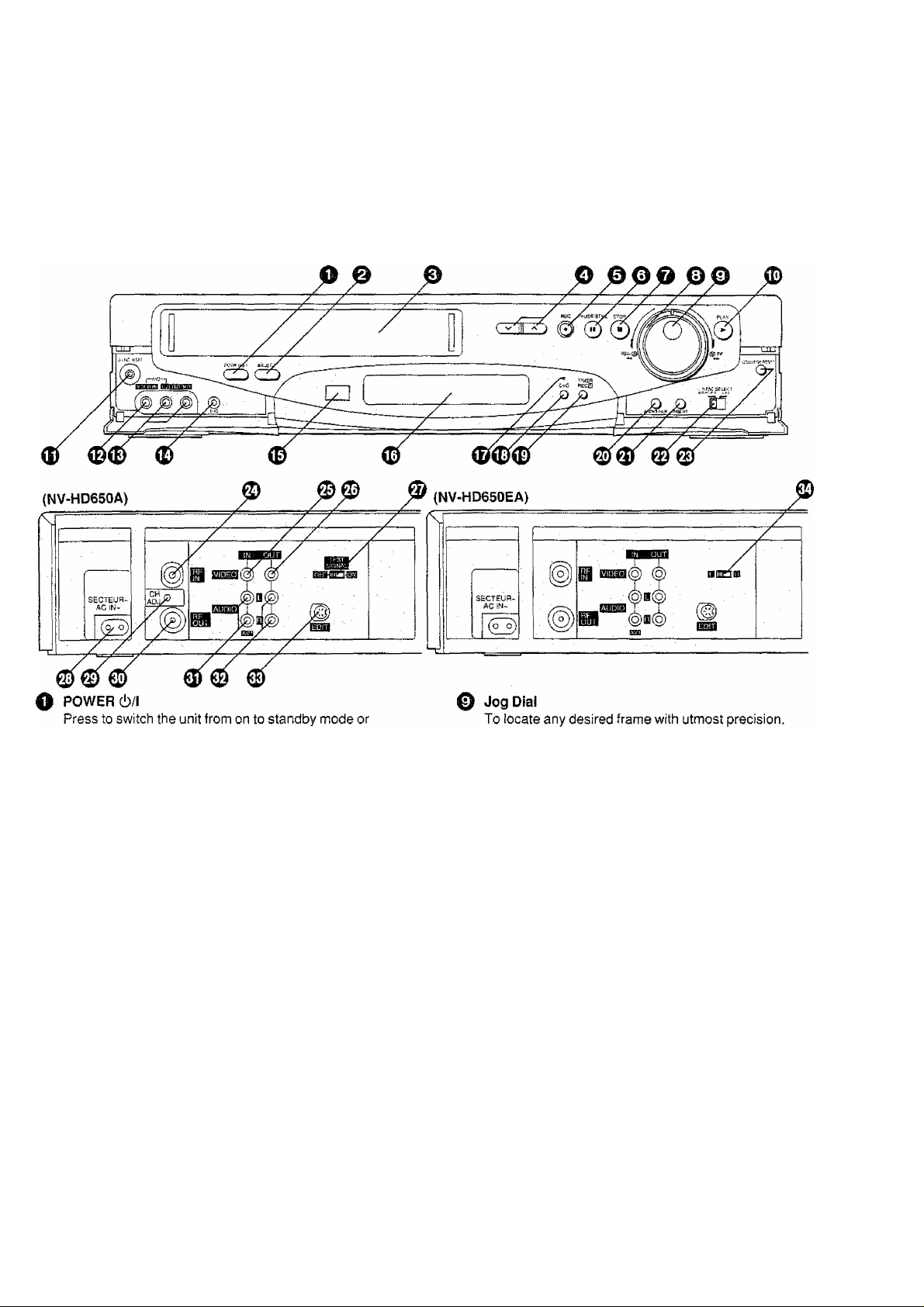
This gives a detailed explanation of the function of each button, switch and connection socket.
vice versa. In standby mode, the unit is still connected
to the mains.
0 EJECT
To eject a video cassette.
0 Cassette Compartment
Insert a video cassette here.
o
To select the required programme position (TV
station).
© REC
To start a recording.
© PAUSE/STILL
in the stop mode: Still picture (Jog/Shuttle mode).
During playback: Still picture (Jog/Shuttle mode).
During recording; To interrupt recording,
O STOP
To stop any playback or recording.
© Shuttle Ring
In the stop mode: To rewind or fast forward the tape.
In the playback mode:
To search picture backward or
forward.
In the still playback mode:
To adjust playback speed backward
or forward.
In the rewind or fast forward mode:
To obtain high speed picture.
® PLAY
To start playback. “O” is lit.
For the repeat playback function.
0 SYNC, EDIT
To connect a movie camera or another VTR equipped
with synchronized editing capability.
0 VIDEO IN (AV2)
To connect the video cable to a movie camera or to
another VTR.
0 AUDIO IN (AV2)
To connect the audio cable to a movie camera or to
another VTR.
0 MIC
To connect a microphone for recording. Once
connected, this socket has priority.
0 Infra-red Remote Control Receiver Window 0 Display
0 CVC Indicator
When the CVC function is on, this indicator is lit.
Page 5

.o
C
CVC {Crystal View Control)
ON; Using the CVC function, playback and
recording are performed in the state which
achieves optimum picture quality in light of
characteristics of a tape.
•The CVC indicator is lit.
•This control should normally be left in the ON
position.
OFF; Turn off the CVC function.
•The CVC indicator is not lit.
•With certain tapes, the OFF position may
result in a better picture.
0 TIMER REC
To turn the timer recording function on and off.
H is lit or not lit.
Once operating timer recording function, the normal
VTR operation is not possible unless this button is set
to off.
0 AUDIO DUB
To set up the VTR for audio dubbing.
A,DUB is appeared on screen display.
0 INSERT
To set up the VTR for insert editing.
INSERT is appeared on screen display.
© NTSC SELECT
Set according to the colour TV system.
NTSC P,8.: When receiving PAL signals.
For TV’s that can only receive PAL
signals.
4.43: When receiving NTSC 4.43 signals.
For TV’s that can receive NTSC 4.43
signals.
© COUNTER RESET
T0 reset the tape counter (elapsed time) to “0:00.00”.
•The tape counter is automatically reset to “0;00.00”
when a video cassette is inserted.
© RFIN
To connect to the external aerial.
© VIDEO IN (AV1)
To connect a video cable from a Movie Camera or
another video recorder.
© VIDEO OUT
To connect a video cable to a TV or another video
recorder.
@ TEST SIGNAL (NV-HD650A only)
The test signal is transmitted on channel AU37.
© ACIN-
T0 connect to the main power supply.
© CH ADJ. (NV-HD650A only)
To adjust the RF transmitting channel AU31 -43.
© RFOUT
To connect to the aerial terminal on a TV set.
© AUDIO IN (AVI)
To connect an audio cable from a Movie Camera or
another video recorder.
Controls and Connection Sockets
© AUDIO OUT
To connect an audio cable to a TV or another video
recorder.
© EDIT
By connecting the optional Editing Controller
(VW-EC300E/VW-EC31OE) to this socket, such
editing functions as Assemble Editing, Insert Editing
and Audio Dubbing can be performed more quickly
and efficiently between two VTRs or between a VTR
and a movie camera.
©
Video Playback Channel Selector
(NV-HD650EA only)
To select the video playback channel.
-S-
b
CO
Q)
Q
Page 6
Infra-red Remote Controller
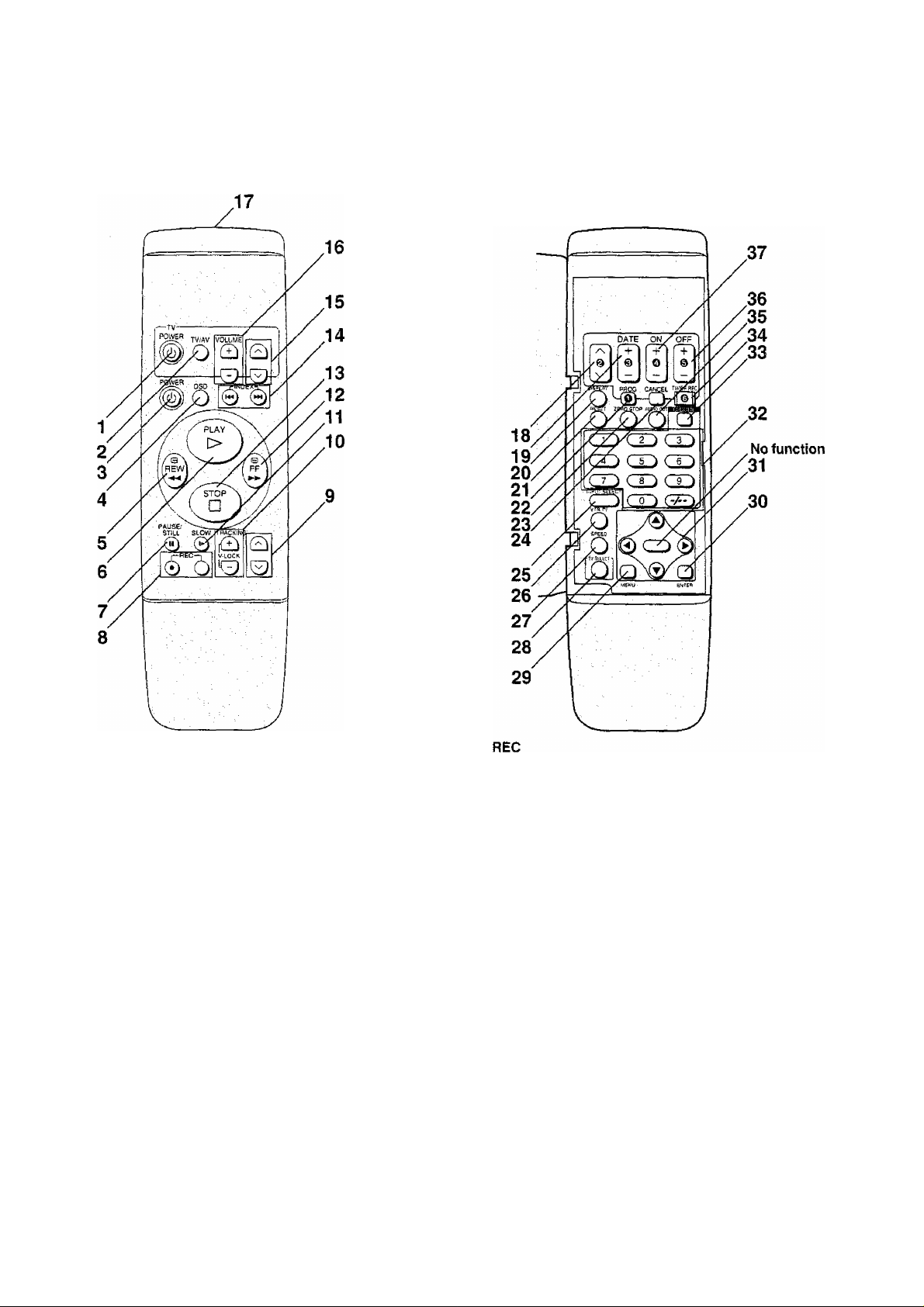
POWER (TV)
To switch the TV from on to standby mode or vice
versa. In standby mode, the TV is still connected to the
mains.
•With some TV models, it may only be possible to
switch the TV to standby mode using this button.
In this case, use TV/AV or s/ /\ (TV) to switch the
TV on.
TV/AV
To select the TV input.
POWER (VTR)
To switch the VTR from on to standby mode or vice
versa, in standby mode, the VTR is still connected to
the mains.
OSD
For the On Screen Display Function.
REW (REWIND)
In the stop mode; To rewind the tape
In the playback mode: To search backward
In the rewind mode: To obtain high speed picture
is lit.
PLAY
To start playback. “O" is lit.
For the repeat playback function,
PAUSE/STILL
During playback: Still picture.
During recording: To interrupt recording.
To start a recording.
• Press both buttons simultaneously.
9 V/N(VTR)
To select the required programme position (TV station)
of the VTR.
10 TRACKING/V-LOCK
For manual tracking adjustment
The + and - buttons are used to adjust the tracking
when, for example, noise bars on the picture are better
removed manually than by the automatic digital
tracking control. After making a manual adjustment,
press both buttons together to return to automatic
digital tracking control.
For slow tracking adjustment
When noise bars appear during Still or Slow playback,
switch over to slow playback and adjust with the + or
- Button to reduce the noise bars.
For vertical locking adjustment
Use the + and - buttons to minimize any vertical jitter
during still-picture playback.
11 SLOW
For the slow motion playback function, is lit.
12 FF (FAST FORWARD)
In the stop mode: To fast forward the tape
In the playback mode: To search forward
In the fast forward mode: To obtain high speed picture
“!>!>’’ is lit.
Page 7

13 STOP
To stop any playback or recording.
14 INDEX
For the index search function.
15 \//\(TV)
To select the required programme position {TV station)
of the TV,
16 VOLUME
To adjust the volume of the TV.
17 Infra-red Transmitter
18 s/ /\
To programme a timer recording.
19 DATE
To programme a timer recording.
20 DISPLAY
To change the indication on the VTR Display.
p^Clock^Counter-^Remaining Tape Time —|
21 RESET
To reset the tape counter (elapsed time) to “0:00.00”.
•The tape counter is automatically reset to “0:00,00”
when a video cassette is inserted.
22 PROG
To set and check timer programmes.
23 ZERO STOP
For the zero stop function.
24 CANCEL
To cancel the settings made for a timer recording.
25 INPUT SELECT
To select the A1 or A2 external recording source.
26 VTR/TV
To select the VTR mode or TV mode.
(NV-HD650A: No function.)
27 SPEED
To select the tape speed desired for recording.
SP gives the best picture quality.
LP gives the longest recording time.
28 TV SELECT
To set the remote controller for operation of the TV.
29 MENU
To make OSD menu appear on the TV screen.
30 ENTER
To confirm the selection, or to store.
31 A ▼
To make selections from On Screen Display.
32 Programme Position Selector Buttons
•To select the programme positions (1-99).
Infra-red Remote Controller
34 TIMER REC
To turn the timer recording function on and off.
[3 is lit or not lit,
Once operating timer recording function, the norma!
VTR operation is not possible unless this button is set
to off.
35 AUDIO OUT
To select the desired sound mode.
At the every push of this button, the audio output mode
changes as follows,
»Stereo->Left—»-Right^Norma! audio track-
c:
The Left (L) and Right (P) Indicators show which sound
mode is selected in the following way.
Stereo; Both the Left (L) and Right (R) Indicators
appear.
Left: The Left (L) Indicator appears.
Right: The Right (R) Indicator appears.
Normal: Both the Left (L) and Right (R) Indicators
don’t appear.
36 OFF
To programme a timer recording.
37 ON
To programme a timer recording.
Power Source for the Remote Controller
The remote controller is powered by 2 “AA”, “UM3" or “R6”
size batteries. The life of the batteries is about one year,
although this depends on the frequency of use.
Precautions for Battery Replacement
•Load the new batteries with their polarity (© and ©)
aligned correctly.
•Do not apply heat to the batteries, or an internal
short-circuit may occur.
•If you do not intend to use the remote controller for a long
period of time, remove the batteries and store them in a
cool and dry place.
• Remove spent batteries immediately and dispose of
them.
•Do not use an old and a new battery together, and never
use an alkaline battery with a manganese battery.
Installing the Batteries
c
o
•C3
.Q-
o
CO
Qi
Q
9: CO
19: (-/--)—( 1 )—C 9 j
• To programme a G-Code number.
33 G-Code
For the G-Code programming.
Page 8
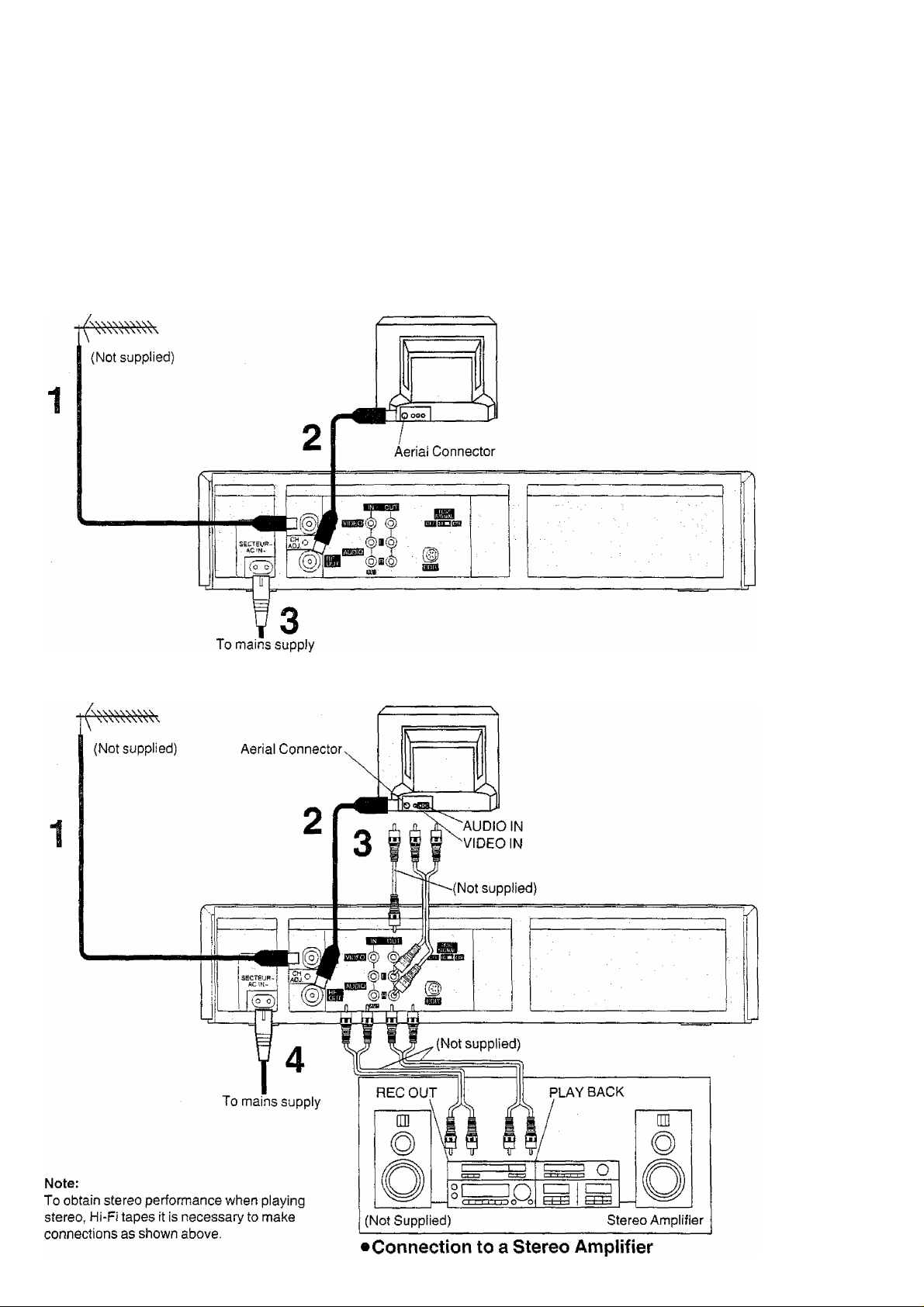
Connections
This tells you how to connect with an aerial, TV, etc.
Basic Connections
The following connections are required to record and play
back the VTR through TV set:
Aerial TV Set (Not supplied)
Connection to a TV Set with the Audio/Video Input Sockets
Aerial
TV Set (Not supplied)
Page 9
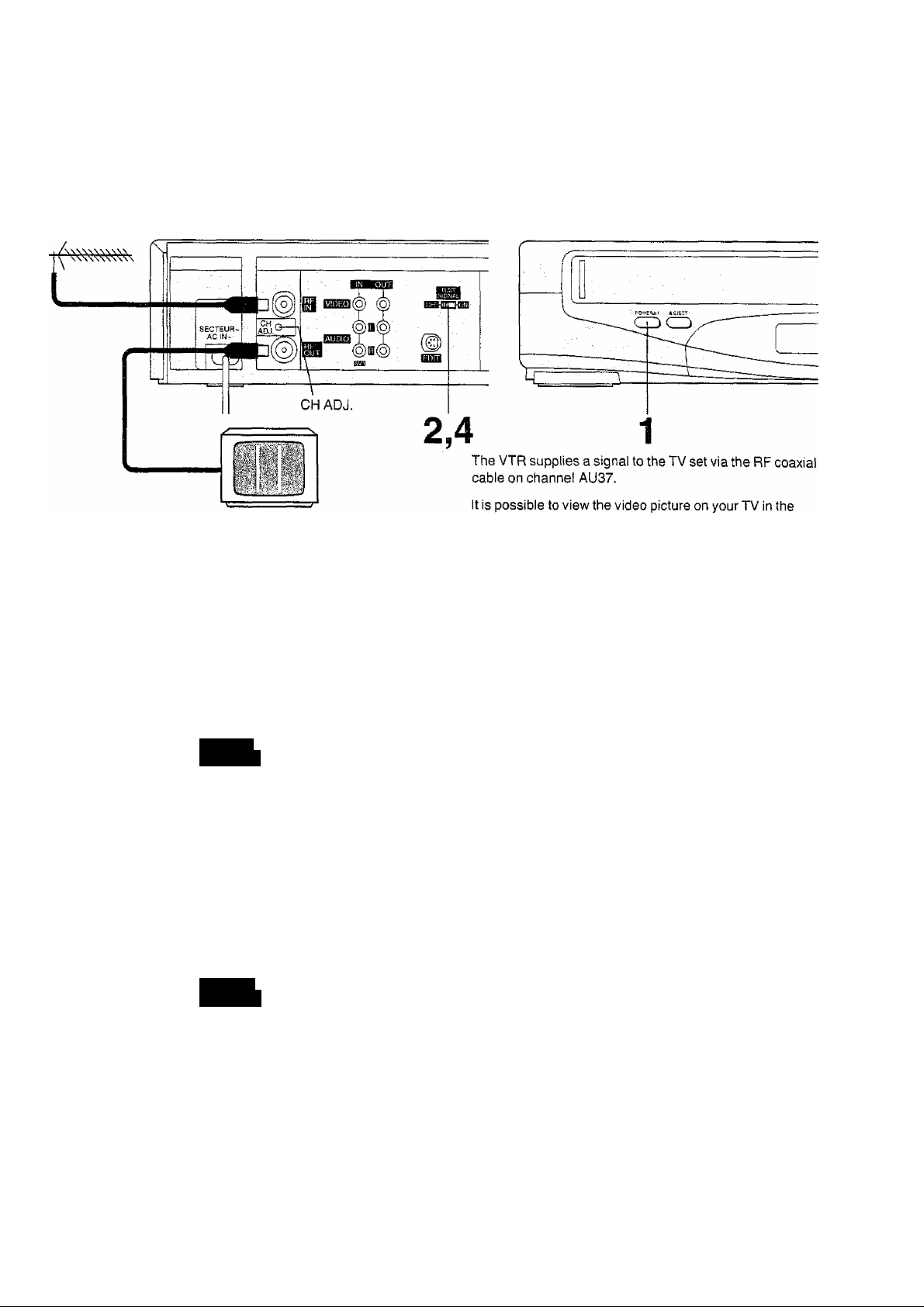
Tuning the TV to your VTR
NV-HD650A
1,3
Connections
Tuning the TV to your VTR
CO
same way that you watch TV broadcasts.
If you have connected the VTR to the TV through the video
and audio sockets then you do not need to follow the
procedure mentioned below.
Operations
1
CZ)
TEST
SIGNAL
TEST
SIGNAL
Turn on the TV and VTR.
To generate a test pattern, set TEST
SIGNAL to ON.
Set the TV to an unused position which you
wish to use for your video playback.
Set TEST SIGNAL to OFF.
Note:
The test signal is transmitted on video channel AU37. If you
are encountering interference from a TV broadcast on this
video channel, you may readjust to another free channel
(AU31 -43) by using the CH ADJ. screw which is located on
the rear of the VTR.
Please note that if the CH ADJ. screw is used then you will
have to retune your TV to the test signal as in item 2 to 4
above.
Page 10
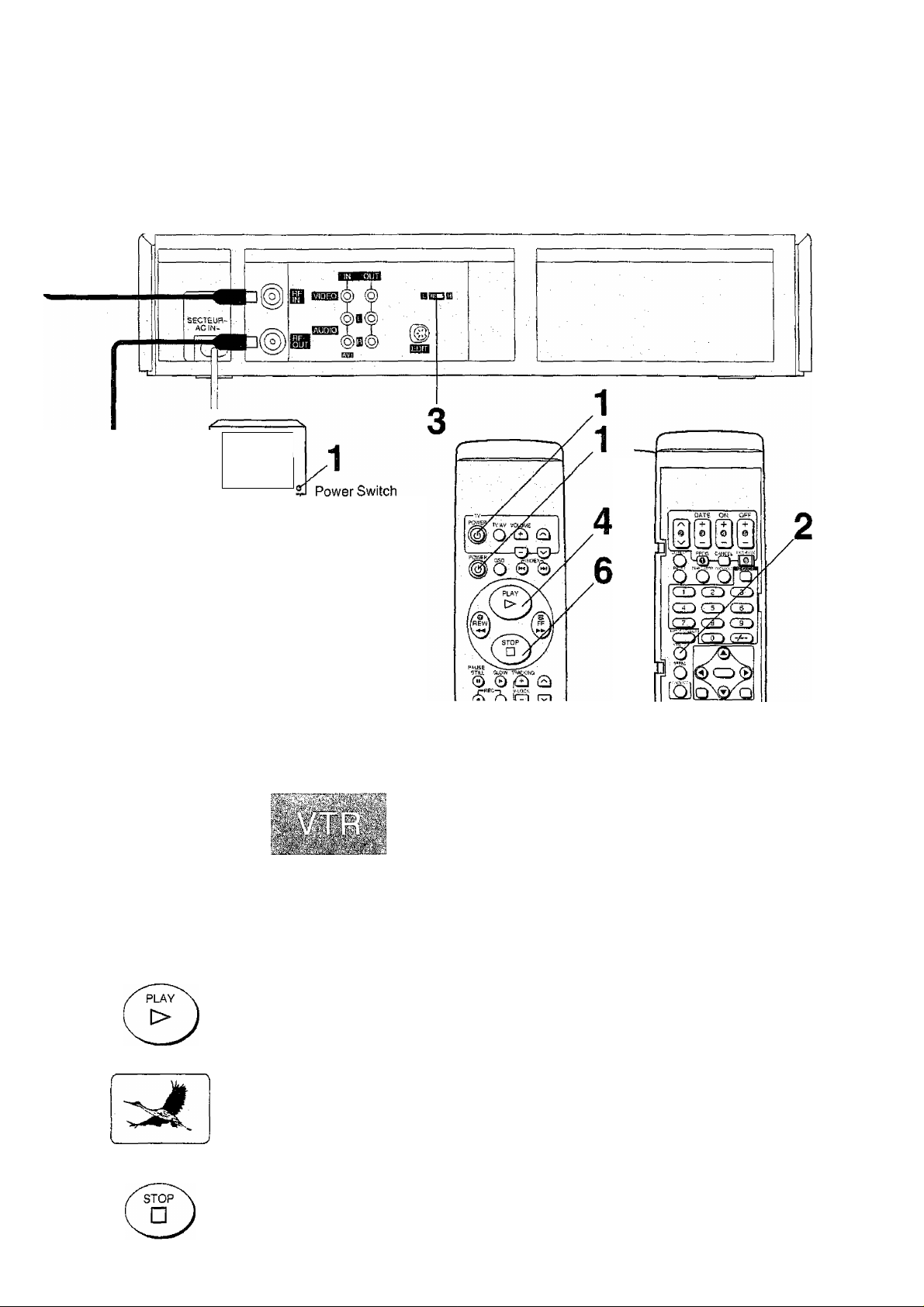
NV-HD650EA
-
. ^
_______
_
Select the channel or AV,
It is possible to view the video picture on your TV in the
same way that you watch TV broadcasts.
If you have connected the VTR to the TV through the
video and audio input sockets then you do not need to
foliow the procedure mentioned below. Instead, simply
select AV mode on the television.
Operations Display Symbol
TV
1
POWER
POWER
VTtVTV
o
iimsi
Turn on the TV and VTR.
Select the VTR mode.
Select the video playback channel which is
not occupied with any TV station.
H: Channels
L: Channel 2
Insert a pre-recorded cassette tape and
press PLAY.
Select a programme number on the TV set
which you wish to use as the video viewing
channel. Then tune in the TV to the picture
from the cassette tape currently playing.
Stop the playback.
Page 11
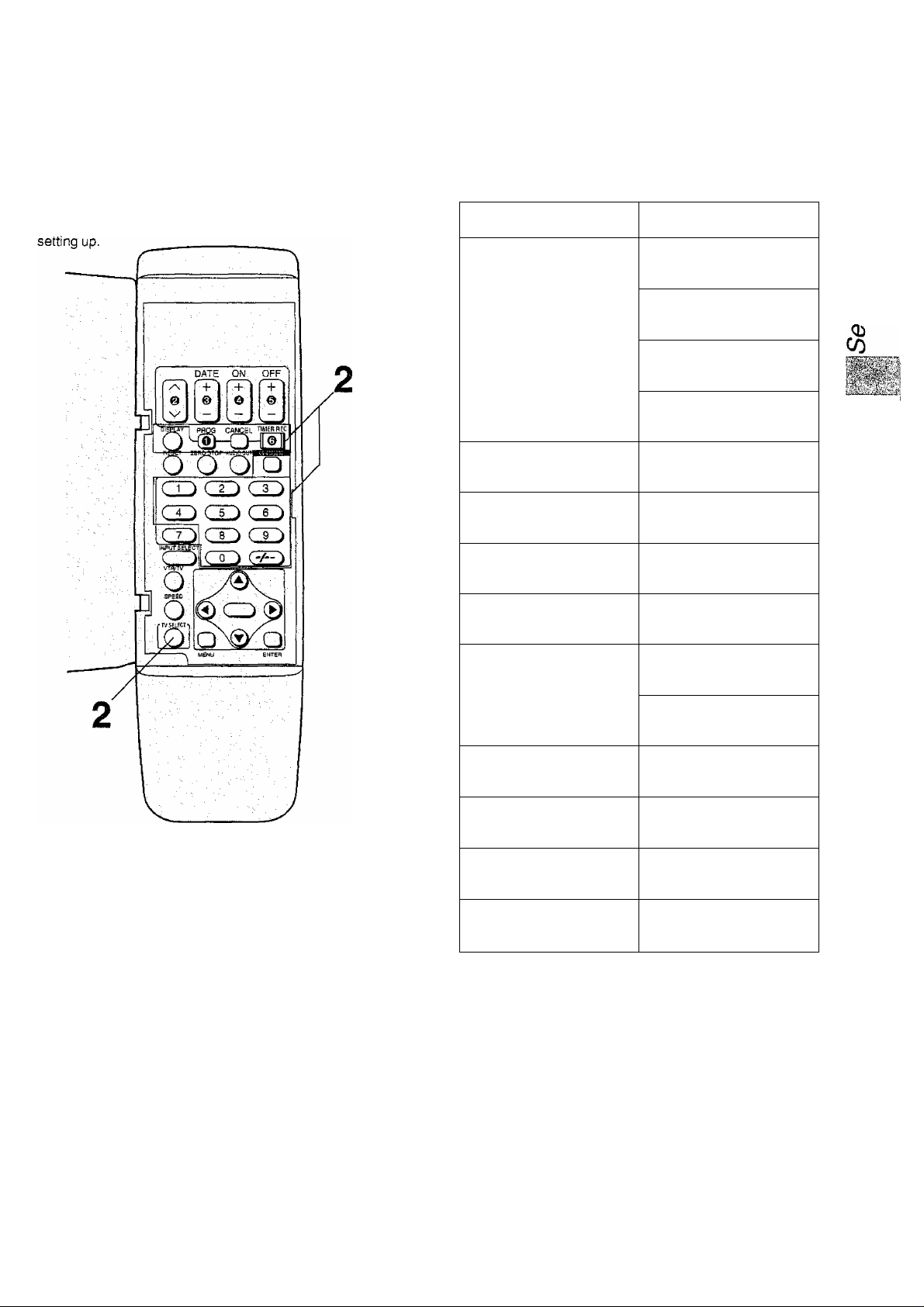
Setting the Remote Controller for Operation of your TV
Tuning the TV to your VTR
Setting the Remote Controller
for Operation of your TV
You can operate some manufacturer of TVs (see following
table) using the supplied Remote Controller after this
TV Manufacturer
Panasonic/National
SONY
TOSHIBA
JVC
HITACHI
Operation Button
TV SELECT DISPLAY
O • 0
TVSEIKT ppQQ
O " ®
TV SELECT CANCEL
O * □
TV^CT RE0
o " a
TV SELECT
O
TV SELECT
O ^ CO
TV SELECT
O
TV SELECT
O *CiD
TV SELECT
Preparation
Install the batteries in the remote controller. See page 7.
Operations
Turn on the TV.
1
Press corresponding operation button
to your TV manufacturer (see following
table) while keeping TV SELECT
pressed.
•If setting is correct, TV will be turned off
automatically.
MITSUBISHI
O " ^
TV SELECT
O
TV SELECT
SHARP
o ^
TV SELECT
PHILIPS
NEC
SANYO
When the TV manufacturer Is Panasonic/National or MITSUBISHI;
When the TV's power is turned off in step 2 above, turn it
back on and adjust the TV’s volume using this remote
controller. The volume can be adjusted if the operation
button matches the manufacturer of TV.
If it is not possible to adjust the TV's volume, try pressing
the other operation button to match the manufacturer of TV
again until the volume can be adjusted.
Note:
Some TV models cannot be operated using this remote
controller.
O ^ CO
TV SELECT
O -CO
TV SELECT
O -eu
11
Page 12
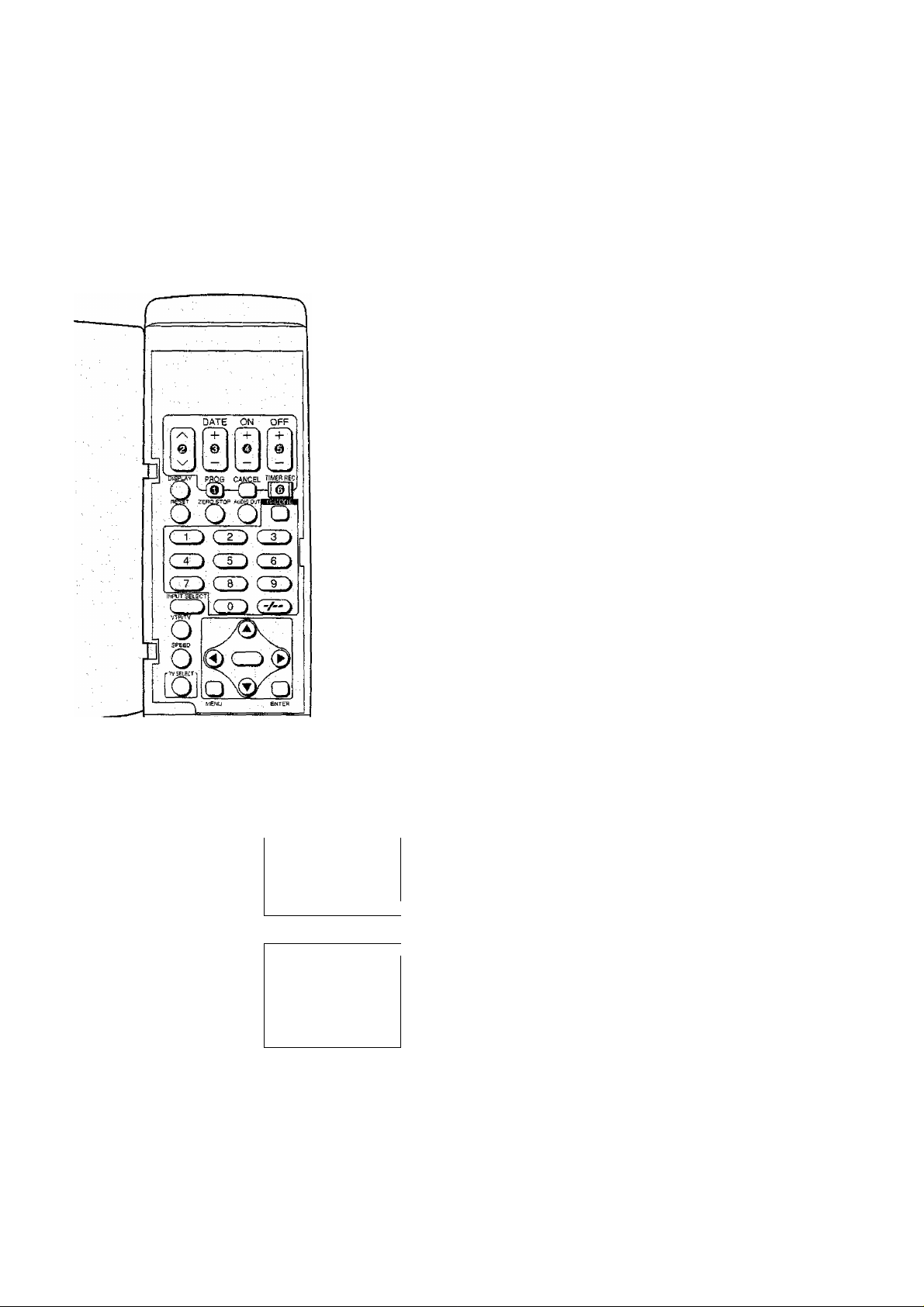
Language Setting of On Screen Display
Preparations
•Confirm that the TV is on and the VTR viewing channel is
selected.
•Turn on the VTR.
• Press VTR/TV to select the VTR mode.
(NV-HD650EA only)
To View a Demonstration
1 Press MENU.
□
2 Select DEMONSTRATION.
0
O
0
• During Demonstration mode, all the On Screen
Displays are displayed one after the other at about five
second intervals.
3 Press MENU to stop the Demonstration.
ENTER
OSD MENU
• LANGUAGE
CLOCK SET
7UNEH PRESET
Q.COOE CH SET
OPTION
DEMONSTRATION
OSD MENU
LANGUAGE
CLOCK SET
TUNER PRESET
G.CODE CH SET
OPTION
• DEMOMSTRATIOK
SELECT ;QQ. ENTER
END :MENU
To select the Desired Language
Select one of the two languages displayed; English and
Russian. 1 Press MENU. On Screen Display
OBD MENU
•LANGUAGE
CLOCKSET
TUNER PRESET
□
MENU
2 Select LANGUAGE.
0
□
ENTER
0
Q-COOE CH SET
OPTION
DEMONSTRATION
: SELECT lilD.ENTER
END :MENU
L_
•LANGUAGE
CLOCKSET
TUNER PRESET
OPCODE ONSET
OPTION
DEMONSTHATtON
SELECT -.BD.ENTER
END :MENU
OSO MENU
□
MENU
Note:
The Menu Screen has a blue background. However, if there
is no signal input during AV1/AV2 is selected, the Menu
Screen may change to black and white when MENU is
pressed. This does not indicate a malfunction,
if this happens, either input a signal or select other
programme position.
_J
3 Select the desired language.
0
0
4 Press MENU twice.
□
MENU
•engush
PyCCKUM
Page 13
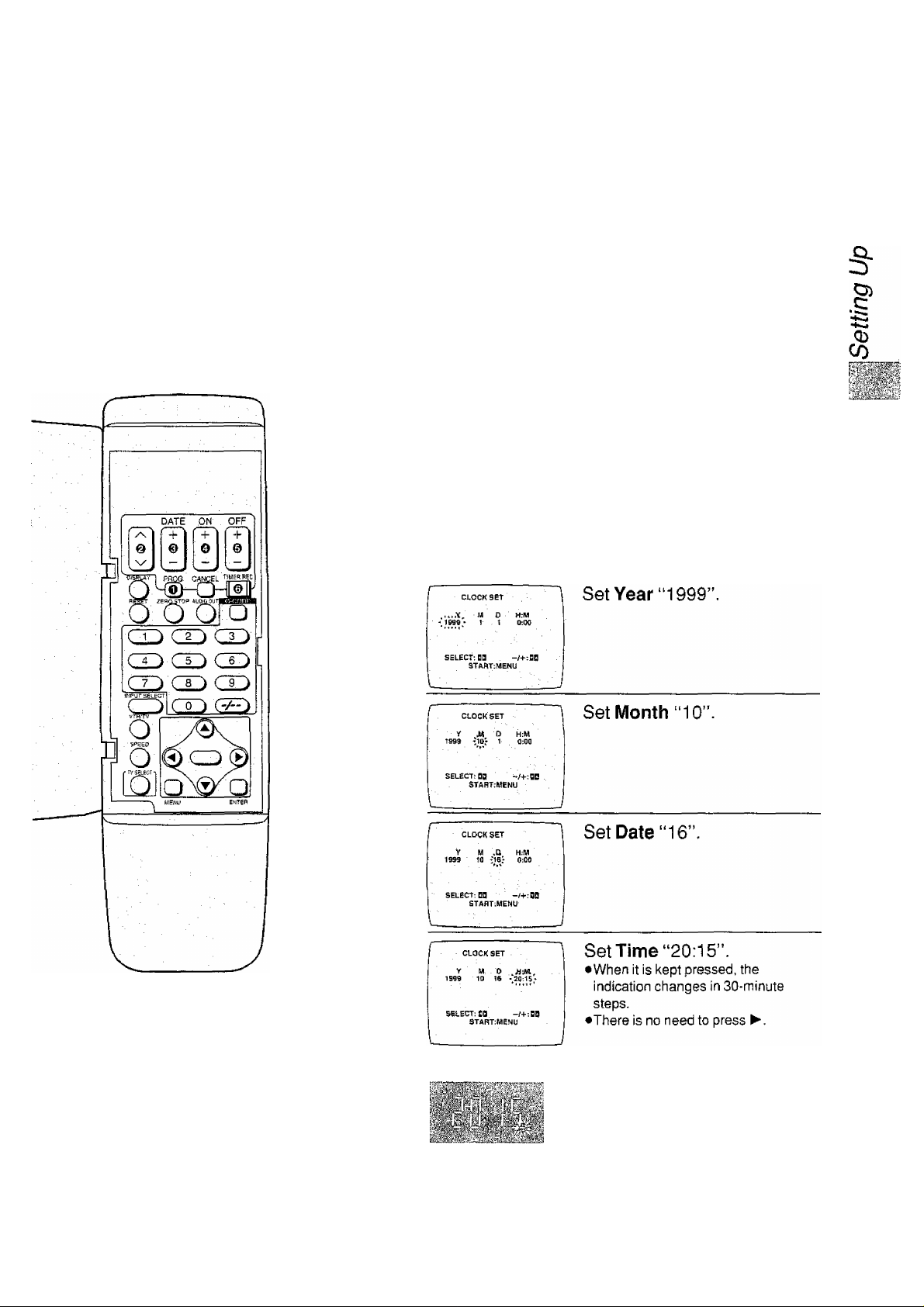
Setting the Clock of the VTR
Language Setting of
On Screen Display
Setting the Clock of the VTR
The built-in dock is used to activate the timer for automatic
recording and must be set to the correct time.
The built-in digital clock employs the 24-hour system.
Preparation
•Confirm that the TV is on and the
VTR viev/ing channel is selected.
•Turn on the VTR.
• Press VTR/TV to select the VTR
mode. (NV-HD650EA only)
Operations On Screen Display
1
О
MENU
20
0
0 Set each item by pressing A or ▼ and ►.
Q
ENTER
For Example:
Date; 16th, October, 1999
Time; 20:15
OSO MSNU
•LANGUAGE
CLOCK SET
TUNEH PRESET
G-CODE CH SET
OPTION
demonstration
SELECT .BD.ENTER
END ;MENU
OSD MENU
LANGUAGE
• CLOCK SET
TUNER PRESET
Q'COOECHSET
OPTION
demonstration
SELECT ;M.5NTER
END :MENU
Press MENU.
Select CLOCK SET.
Time Reset Function
If the clock is less than two minutes
slow or fast, it can easily be reset to
the proper time.
For example:
Resetting the dock to 12:00.00.
1 Select CLOCK SET from OSD
menu and press ENTER.
2 When the current clock display on
the VTR is between 11:58 to 12:01,
press MENU as soon as you hear
the 12:00.00 time signal. This
resets the time to 12:00.00.
0
0
0
4
Display Symbol
Q
MENU
Note:
The clock operates for at least 60 minutes by its backup system in the event of power
failure.
Press MENU.
•The clock will start.
13
Page 14
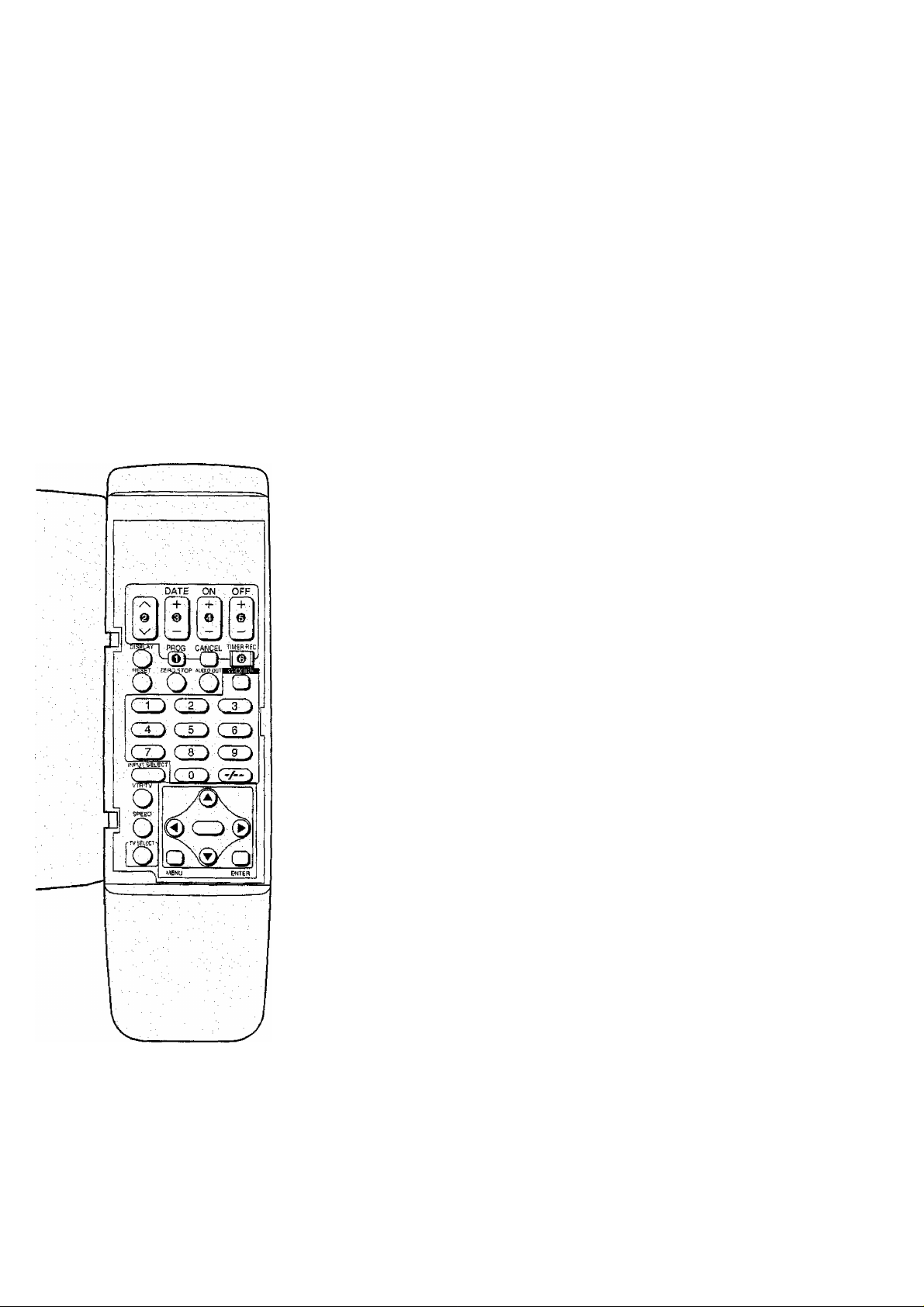
storing TV Broadcasts into your VTR
Introduction
The VTR is fitted with its own tuner (just like a norma! TV
set) and can be pre-set to receive up to 99 TV broadcast
stations.
Preparations
•Confirm that the TV is on and the VTR viewing channel is
selected.
•Turn on the VTR and select the programme position
except A1 or A2.
• Press VTR/TV to select the VTR mode.
{NV-HD650EA only)
Auto Tuning Procedure
Operations
1
Q
^0
0
r
PRE-PROGRAMMED TV CHANNELS (NV-HD650A)
The local TV transmission channels 2, 7, 9,10 and 28
are factory-preset in this VTR. That is, if you can
receive television broadcasts on VHP channels 2, 7,
9,10 and on UHF channel 28, these are already
tuned on the programme positions with the matching
numbers.
However, it is possible to cancel these presettings
and tune the local TV broadcast channels on any
desired programme positions.
For alternative settings and tuning of additional TV
broadcasts channels, follow the Tuning Operations.
On Screen Display
OSD MENU
•tANQUAGE
CLOCK SET
TUNER PRESET
OPCODE CH SET
OPTION
DEMONSTRATION
SELECT
:aD.EHTER
END
¡MENU
OSD MENU
LANGUAGE
CLOCK SET
• TUNER PRESET
G-CODECHSET
□
ENTER
OPTÎON
DEMONSTRATION
SELECT : as,ENTER
END ;MENU
Press MENU.
1 Select TUNER PRESET.
0
0
© ©
Notes:
•The Auto Tuning is searching for TV station from VHP
minimum to UHF maximum and memorizing the data for
every programme position. The other programme
positions are skipped.
•The Auto Tuning takes seven or more minutes to
complete the search.
• If VTR is not correctly tuned by Auto Tuning, foilow the
procedure on next page.
-AUTO TUNESEARCH’” 1
FINE
SELECT: DO
r
ON «OFF
SEARCH J+i
ENbrlil^U
Select AUTO TUNE and
press ◄ or ►.
•When the Auto Tuning finished, On
Screen Display disappears and
programme position 1 is selected.
Page 15
storing TV Broadcasts into your VTR
Manual Tuning Procedure
1 Press MENU.
2 Select TUNER PRESET by pressing
ENTER.
3 Select CH by pressing
programme position by pressing ◄ or ►,
4 Confirm that CLEAR is set to OFF.
5 Select SEARCH by pressing
A
or ▼ and then select the
A
A
or T and
or ▼ and then press ►.
r n
CH2 SEARCH i+r
gHdrMENU
1 J L
• If the desired TV station is not be tuned, press ► again.
• Press MENU and repeat steps 3-5 for each
programme position you want to tune to a station.
6 Press MENU three times,
Channel Plan
VHF
NV-HD650A 0-12
NV-HD650EA 1-11
NV-HD650A;
Broadcast TV Channel Position tuned on VTR
2 ABC
7ATN
CH2 SEARCH 2
EMD:MENU
__________
UHF
21-69
21-69
2
7
Fine Tuning Procedure
1 Press MENU.
2 Select TUNER PRESET by pressing
ENTER.
3 Select CH by pressing
programme position by pressing ◄ or ►.
4 Select FINE by pressing A or ▼. Cb
A
or ▼ and then select the
5 Press ◄ or ► to obtain the best tuning condition.
j
•To return the tuning to its former state, press ENTER.
6 Press MENU.
A
or ▼ and
CH 2 AFC:ENTER
FINE + -/+;*> eND;MENU
§
O)
.c
£
CO
.
^
Blanking of Unoccupied Programme positions
1 Press MENU.
2 Select TUNER PRESET by pressing A or T and
ENTER.
3 Select CH by pressing A or ▼ and then select the
programme position by pressing or ►.
4 Select CLEAR by pressing A or
5 Select ON by pressing ◄ or ►.
• Repeat steps 3-5 for another unoccupied programme
positions to skip during the selection of the programme
positions.
•To cancel the blanking of a programme position, select
that programme position and then select CLEAR OFF.
6 Press MENU twice.
T.
9TCN
10 TEN
28SBS
This table will be required when programming the G-Code.
9
10
28
15
Page 16
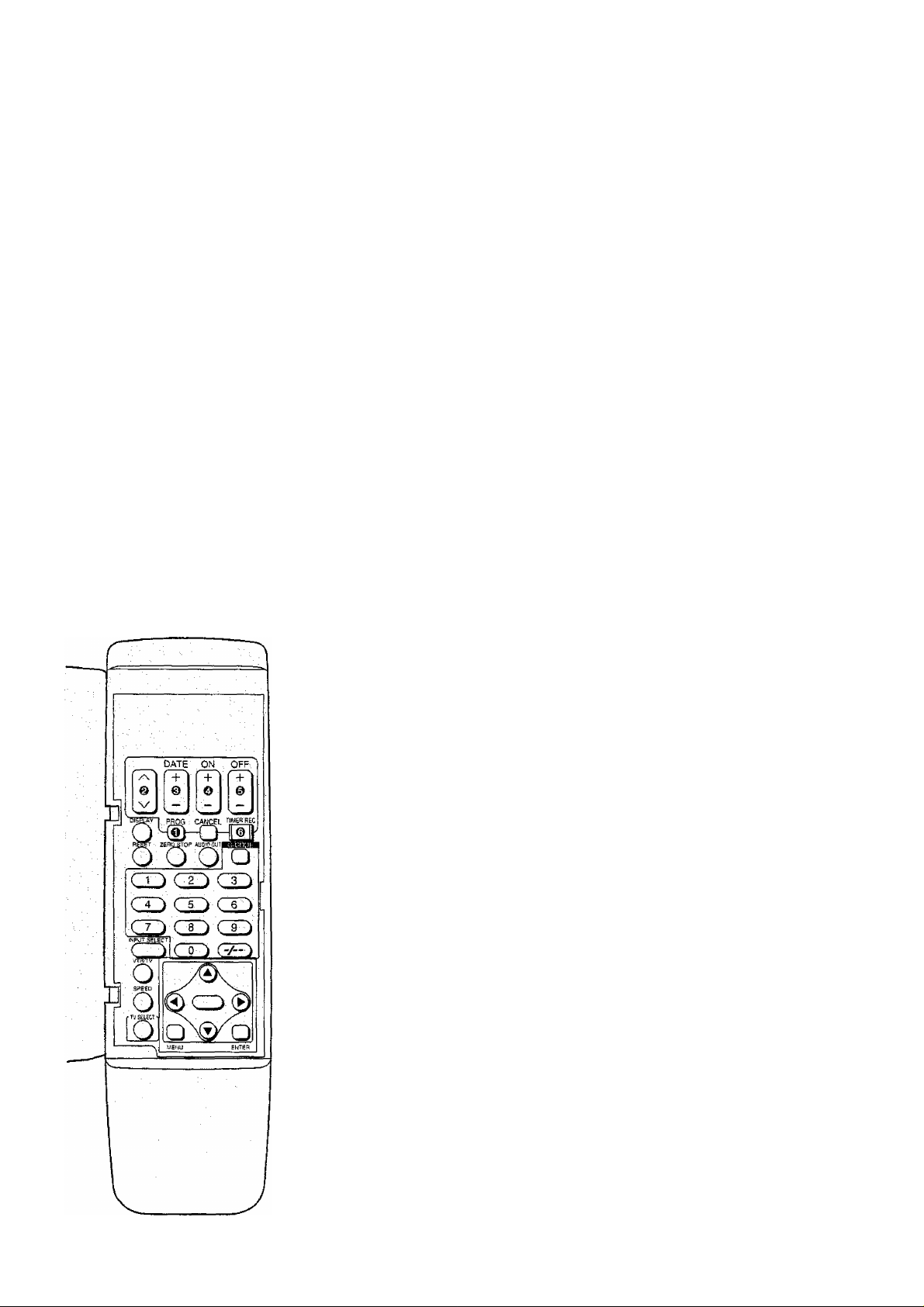
Preparations for G-Code Programming
Identification numbers must be set for G-Code
programming. Simply proceed with the G-Code
programming operation described on page 26, and the
identification numbers of the TV stations concerned will be
set automatically. This means that G-Code programming is
possible even without performing the operation described
on this page. However, you can follow the setting
procedure described below if you wish to set the
identification numbers of ail the TV stations prior to actual
programming.
"Identification numbers" refer to the numbers used for
identifying the TV stations.
The programme positions on the VTR receiving the TV
stations are set in these identification numbers.
Have a newspaper or magazine on hand which lists today’s
local TV station programmes and G-Code numbers.
Preparations
•Set the dock of the VTR. See page 13.
•Store TV broadcasts into your VTR. See pages 14 and 15.
•Confirm that the TV is on and the VTR viewing channel is
selected.
•Turn on the VTR.
• Press VTR/TV to select the VTR mode.
(NV-HD650EA only)
Operations
On Screen Display
Press MENU.
1
OSDMEMU
■LANGUAGE
CLOCK SET
TUNER PRESET
o
Select G-CODE CH SET.
0
□
ENTER
0
O Select the Identification number (Guide
Channel) (001-255).
0
0
OPCODE CH SET
OPTION
DEMONSTRATION
SELECT ^OB.ENTER
END :MENU
OSD MENU
LANGUAGE
CLOCK SET
TUNER PRESET
■ G-CODE CH SET
OPTION
DEMONSTRATION
SELECT iBD.ENTER
END :MENU
G-CODE CH SET
GUIDE CM,
-O01- -
END: MENU
Press ◄ or ► and then select the
programme position (1-99, A1, A2).
G-CODE CH SET
0
0 0
0
GUIDE CH
QG1
SELECT: OQ
QM,
-/+-.ac
ENDrMENU
•To set the other TV stations, press ◄ or ► and then
repeat steps 3 and 4.
C Press MENU twice.
^ □
MENU
Note:
To receive satellite stations, the satellite receiver must be
connected to the VTR and programme position must be set
depending on the type of the connection mode.
A1 /A2: When the satellite receiver is connected to the
AudioA/ideo input sockets {AV1/AV2).
•When the satellite receiver is connected by means of the
RF coaxial cable, set to a free programme position
between 1 and 99.
Page 17
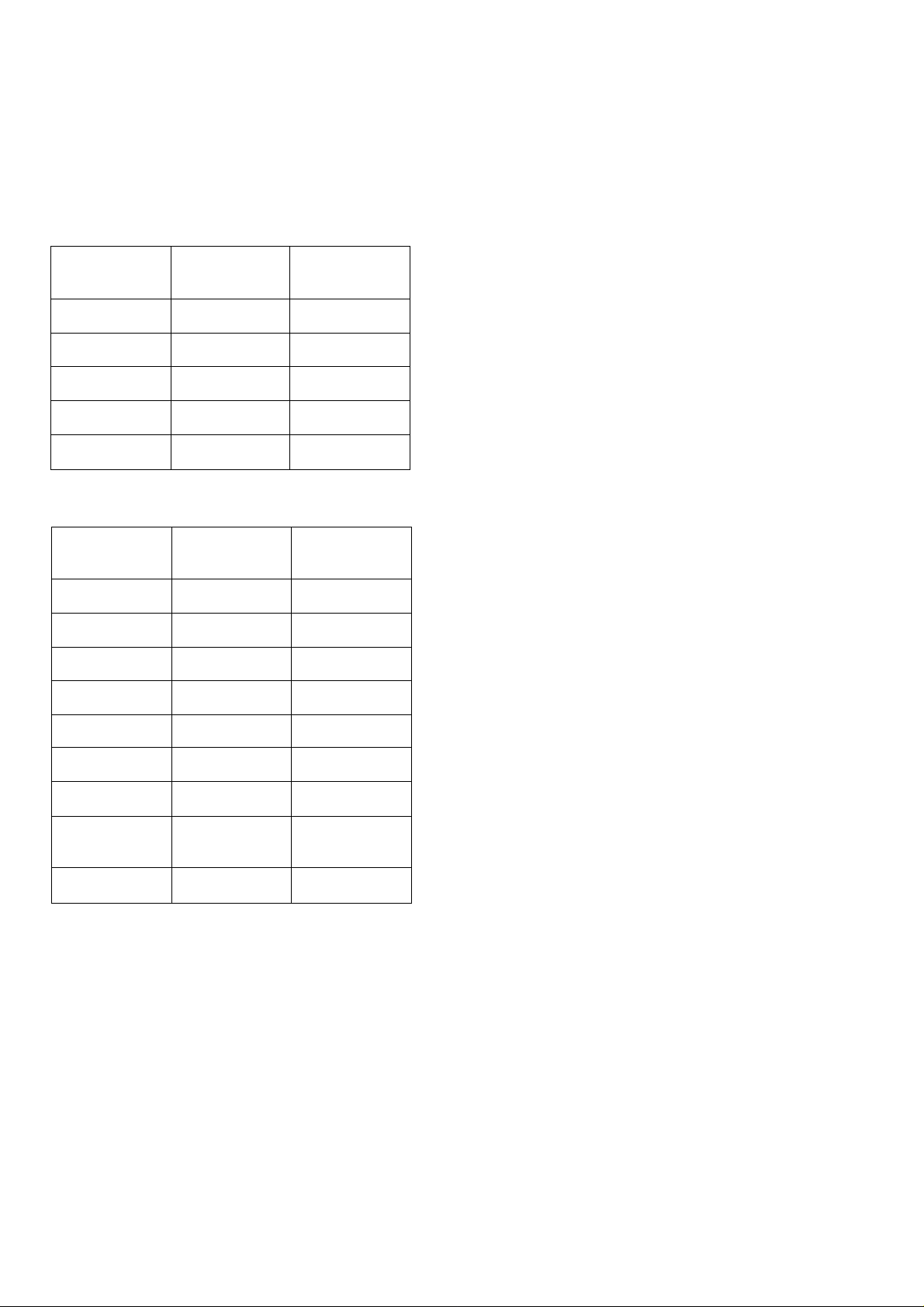
For Example:
(NV-HD650A)
Preparations for G-Code Programming
TV Station
ABC
ATN
TCN
TEN
SBS
For Example: (NV-HD650EA)
TV Station
TV ONE
CHANNEL 2
TV3
SKY TV MOVIES
Programme
Position on VTR
2
7
9
10
28
Programme
Position on VTR
1
2
3
4
Guide Channel
002
007
009
010
028/001
Guide Channel
001
002
003
004
§
C)
c
S
CO
SKY TV SPORTS
SKY TV NEWS 6
SKY ORANGE
SKY DISCOVERY
&TRACKSIDE
CTV
11
5
7
8
005
006
007
008
011
17
Page 18
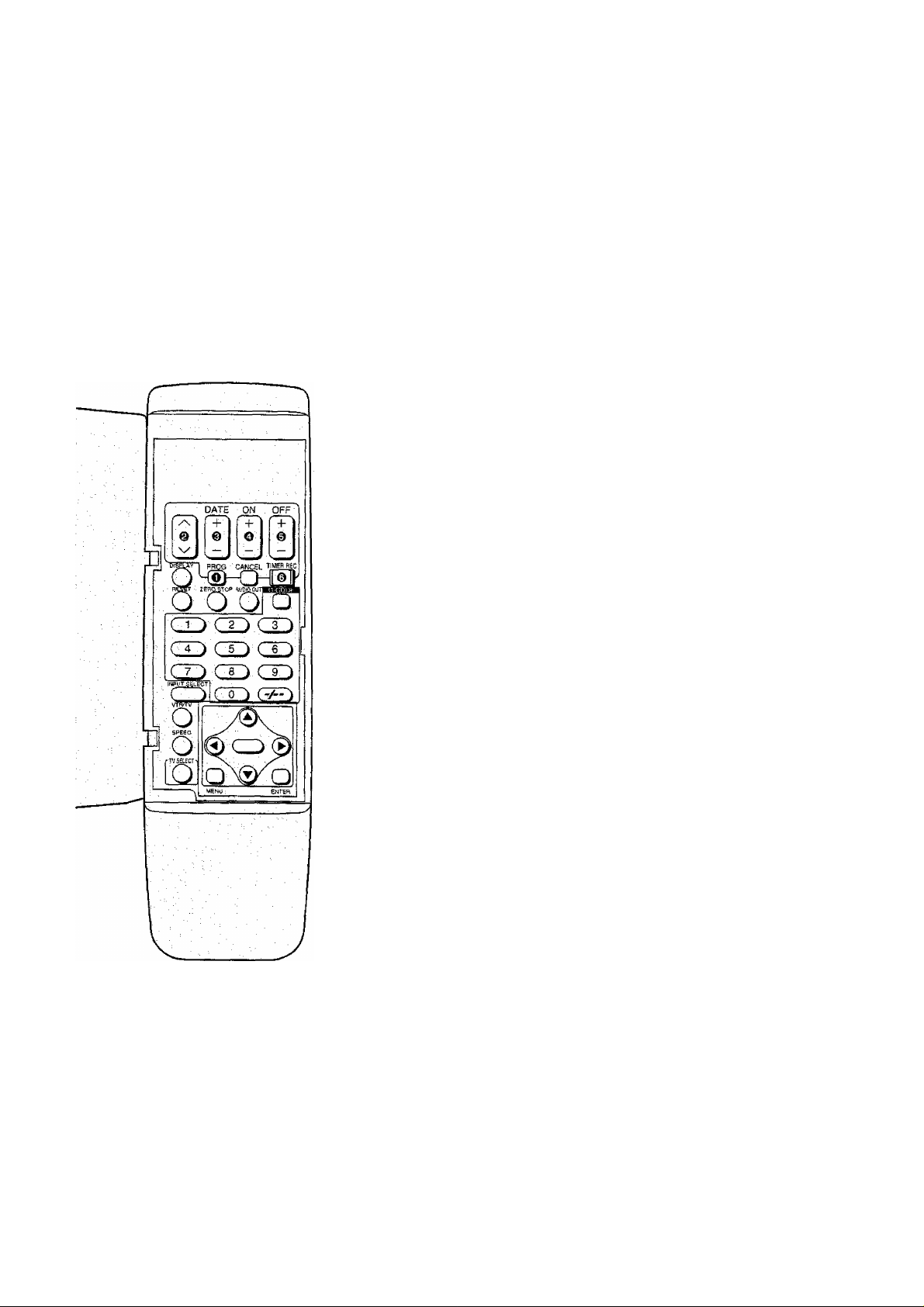
Settings Using On Screen Display
Preparations
•Confirm that the TV is on and the VTR viewing channel is
selected.
•Turn on the VTR.
• Press VTR/TV to select the VTR mode.
(NV-HD650EAonly)
To select the corresponding Cassette
Tape Length for displaying the
approximate remaining tape time
1 Press MENU.
Q
MEWU
2 Select OPTION.
On Screen Display
r
OSD№IEKU
LANQUAQE
CLOCK SET
0
□
0
3 Select TAPE SELECT.
0
0
TUNER PRESET
Q.CODE CH SET
• OPTION
DEMONSTRATION
SELECT :Ba,ENTER
END :MENU
'tape'select'-
■ ’ *ET SB" ” HiàS E240 E280
TAPE SPEED »SP LP
AUDIO MIX ON »OFF
BLUE BACK >ON OFF
-/+ :Bfl
END -.MENU
4 Select the corresponding cassette tape length.
■’fAPESELECT'“
"E1S!)"'»Et6s E240 E2S0
TAPE SPEED *SP LP
AUDIO MIX ON *OFF
0 0
BLUE SACK »ON OFF
El 80; For E30, -60, -90, -120, -150 and -180 tapes
E195: For E195 tape
E240: ForE240tape
E260: For E260 and -300 tapes
~/+ ;flB
END ;MENU
18
Page 19

Settings Using On Screen Dispiay
To select the Desired Tape Speed for the manual recording
1 Select TAPE SPEED,
0
0
2 Select the desired tape speed.
® ©
On Screen Display
OPTION
TAPE SELECT
.>AE]ea^i<£195 E24G E£SD
'TAPESPEeO- «SP LP
AUDICfMB” ON »OFF
BLUE BACK *ON OFF
ENDiMENU
r
,.ASiaa-,i£)95 E34a E2S0
-TAPESPEED- SP »LP
OPTION
TAPE3ELECT
AUOIOMK” OK »OFF
BLUE BACK <ON OFF
~/+ :SQ
end ;MENU
:Da
Audio Mix
1 Select Audio Mix.
OPTION
TAPESELECT
0
0
2 Select ON or OFF.
© ©
• E1fiD E195 EZ40
JMESSSEp «SP
- AUDIO MIX B4.T)ESACli
L.
TAPESELECT
•E180 E1S5 E240
,TABE.SflEEp *SP LP
-AUDtOMIX- «ON OFF
BLT3EBACX *ON OFF
*ON OFF
OPTION
ON (OFF
-/4- :DD
END iMENU
-Í-I-;fla^
END :MENU
LP
For Blue Background Function
When BLUE BACK is ON, the screen will always have a
blue background when no signal is received or the received
signal is very weak.
1 Select BLUE BACK.
OPTION
TAPE SELECT
• E1G0 E1S5 E240
0
TAPE SPEED »SP LP
.JUJCUQUIXi, ON (OFF
-BLUE BACK- *ON OFF
0
2 Select ON.
^ OPTION '
TAPESELECT
•ElflO E195
TAPESPEED
.AUDiaiWC,.
0 0
* BLUE SACK^
SELECTiBD
L
•When BLUE BACK is OFF, the blue background
function does not work.
•It is not possible to record the blue picture of the blue
background function.
To select the Sound Mode
(NV-HD650EA only)
1 Select MONAURAL.
TAPESELECT
0
0
• EiaO E195 EZ40
JAS&eREED *SP LP
-MONAURAL- ON »OFF
AUDIOMtX' ON «OFF
BLUE BACK «ON OFF
SELECT; as
• SP LP
• ON OFF
_
OPTION
E240 EZ6IÍ
ON »OFF
END :MENU
__
-/-l-;0a
END;MENU
-/+ :cm
J
ON: Both sound tracks (the Hi-Fi sound track and the
norma! sound track) are played back mixed
together. Use this setting when playing back a
cassette tape which has been insert edited or
audio dubbed.
OFF: Normally set at this position to reproduce the
better sound available from the Hi-Fi track.
2 Select OFF.
OPTION
TAPESELECT
• E130 E19S ÉZ40
.TAEESREED *SF LP
-MONAURAL- ON «OFF
AUraOMK' ON »OFF
© ©
BLUE BACK (ON OFF
SELECT; DB
~f+ ;DB
END ;MENU
L
•Select ON to record the normal sound during a NICAM
broadcast or if the stereo sound is distorted due to
inferior reception conditions.
After All Settings are selected
Press MENU twice to make On Screen Display disappear.
□
19
Page 20
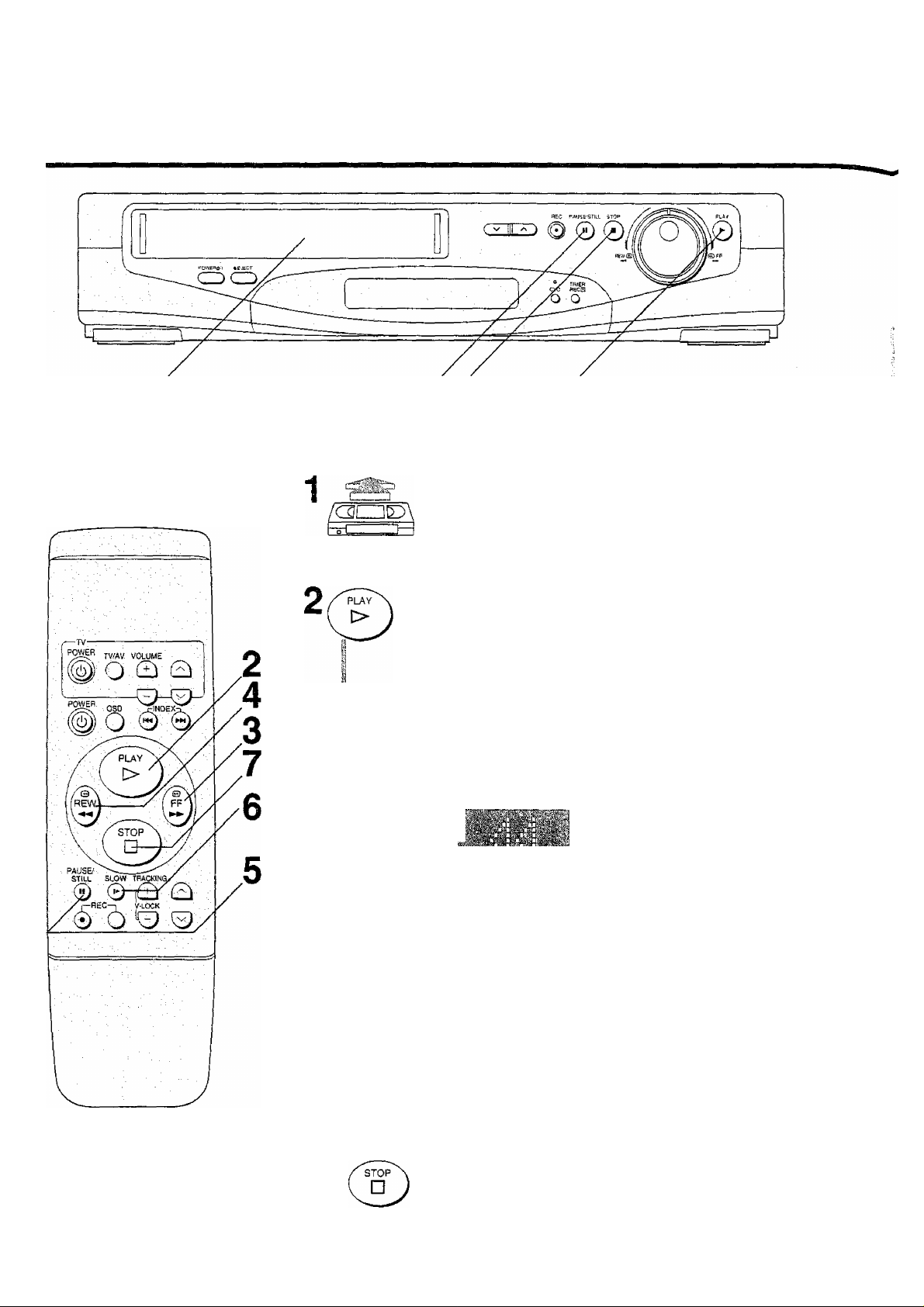
Playback
1
57 2
Operations Display Symbols
__
J I nsert a recorded cassette
start viewing the picture.
Search forward by tapping
'■ ■■■ *T0 change back to normal playback,
press PLAY.
Search backward by tapping
REW.
I »To change back to normal playback,
I press PLAY,
20
PAUSE/
STILL
SLOW
©
^ picture.
*To continue the normal playback,
■■■■ press PLAY or PAUSE/STILL.
View the slow motion picture.
-.'i f V.L-- .■ •Tocontinuethenormaiplayback,
Pf®ss play.
Stop viewing the picture.
Page 21
Other Playback Functions
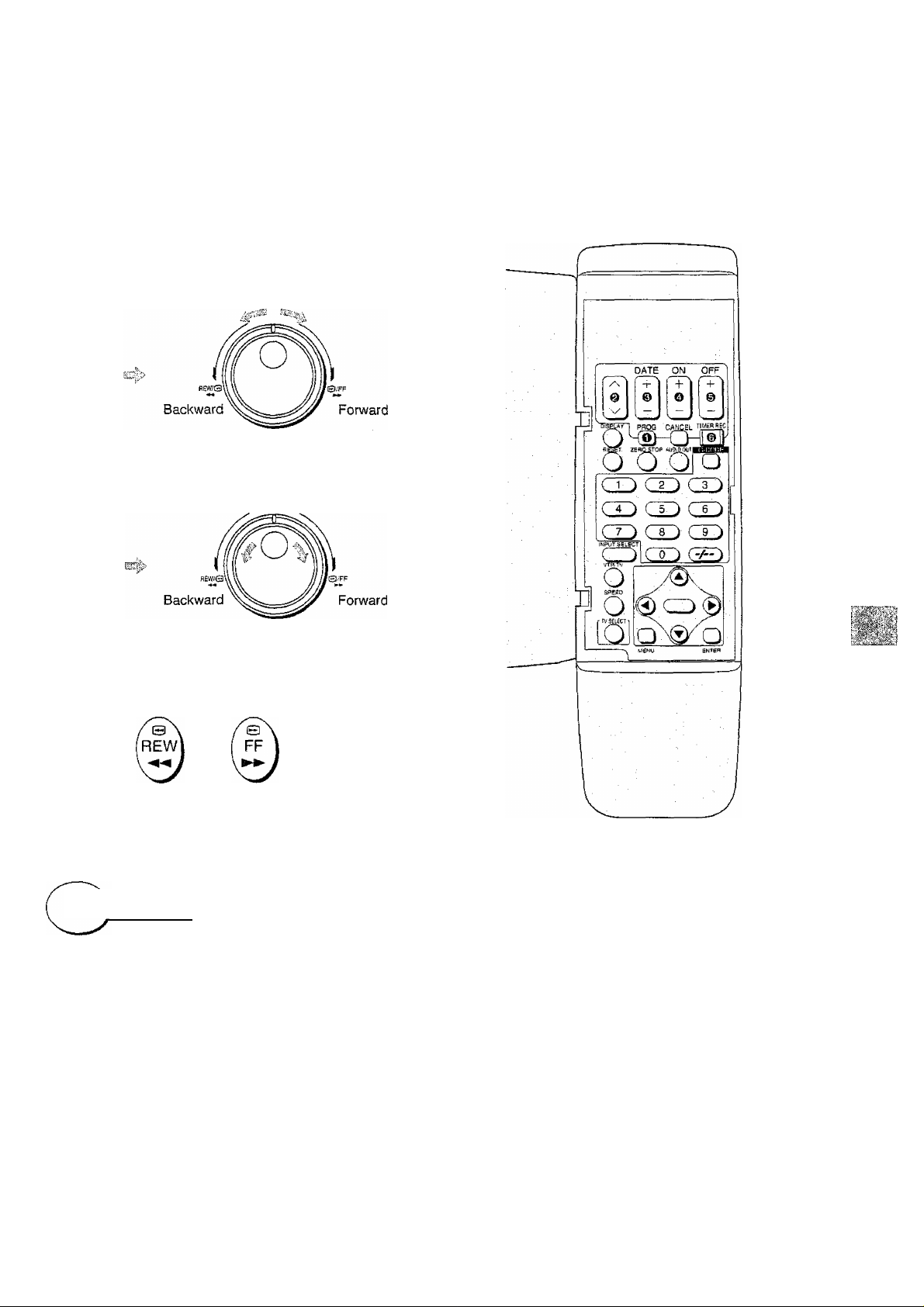
To change the Playback Speed
1 Press PAUSE/STILL on the VTR.
2 Rotate Shuttle Ring.
PAUSEiSTIU
0
To locate the Desired Picture Exactly
1 Press PAUSE/STILL on the VTR.
2 Turn Jog Dial.
PAU5E/5TfLL
0
Playback
To obtain High Speed Picture During Fast
Forward or Rewind
Keep FF pressed during fast forward.
Keep REW pressed during rewind.
To playback the Recorded Part
Repeatedly
Keep PLAY pressed for more than 5 seconds.
Beginning
PLAY \ of Tape
End of
Recorded Part
> )rm~i I
Repeat Playback qqp^j.q| signal interruption
PLAY (at least 5 sec.)
REW
• Press STOP to release from Repeat Playback mode.
To return to a Specified Scene
1 Press RESET to set the counter to 0:00.00.
RESET
Notes:
•Audio reproduction of linear (conventionally recorded)
tapes will be monaural when played back on the FM Hi-Fi
video recorders.
•Cue, review or slow playback will be automatically
released after 10 minutes, and still playback after
5 minutes.
• In LP mode only:
1. During any playback mode otherthan normal
playback, the picture may have some noise bars, the
colour may be unstable, or a black and white picture
may appear.
2. When playing back a tape which was recorded on
another VTR, it may be necessary to adjust the
Tracking Control. In some cases the picture quality
may still be inferior. This is due to limitation of format.
2 After playback, press ZERO STOP in the stop mode.
•The tape will be rewound or fast forwarded to 0:00.00
approximately. ^erdstop
0
21
Page 22
Manual Recording
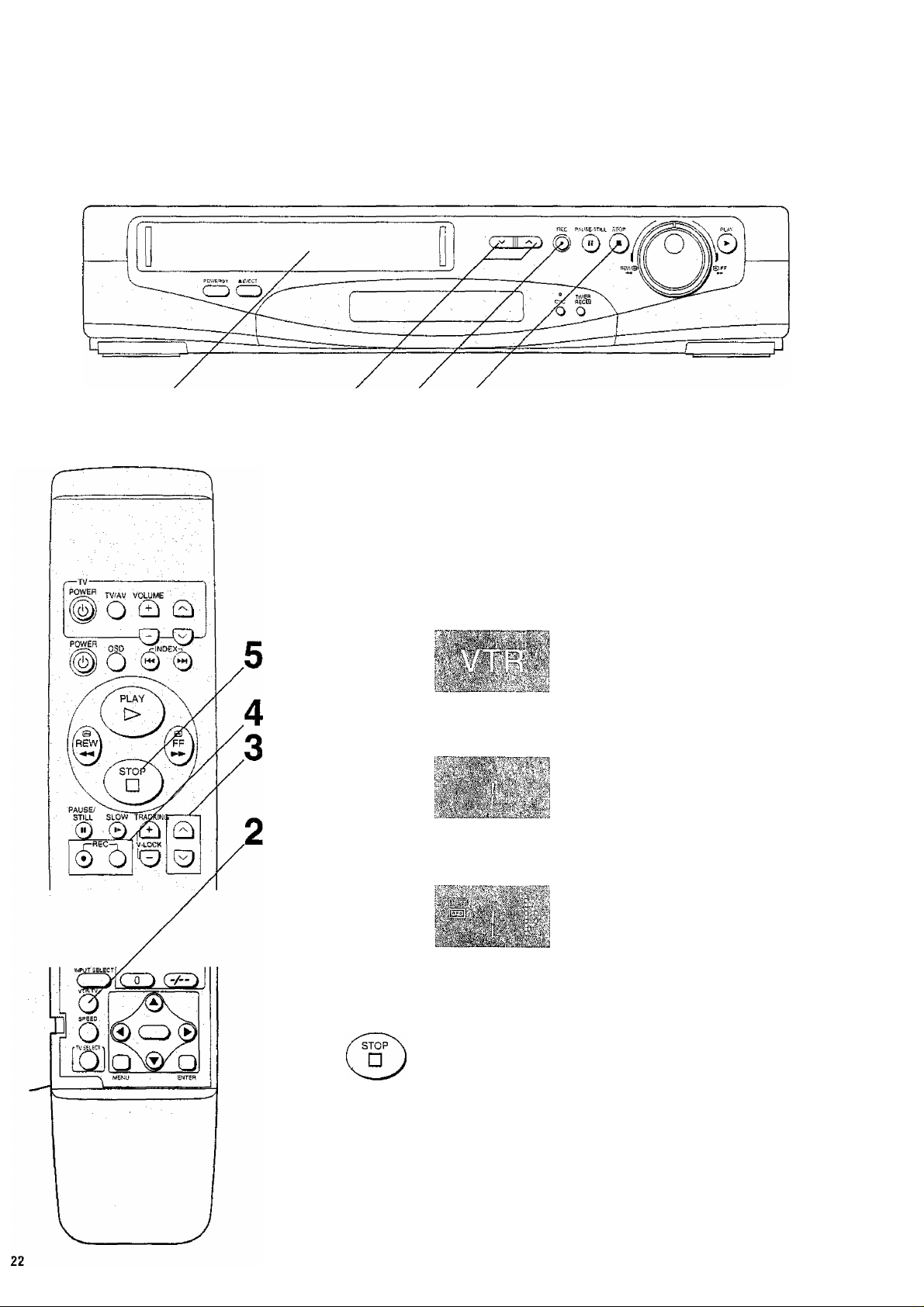
1
3 4 5
Operations Display Symbols
1
'aiczip\ ■
bisi.■ »¿LL-uSjiii'¿¿SiilAi" uIVS
VTR/TV
■
o
3 0
insert a cassette tape.
•If it has already been inserted, press
POWER to turn the VTR on.
Select the VTR mode.
(NV-HD650EAoniy)
Select TV station.
(§“6
Start recording.
Stop recording.
Page 23
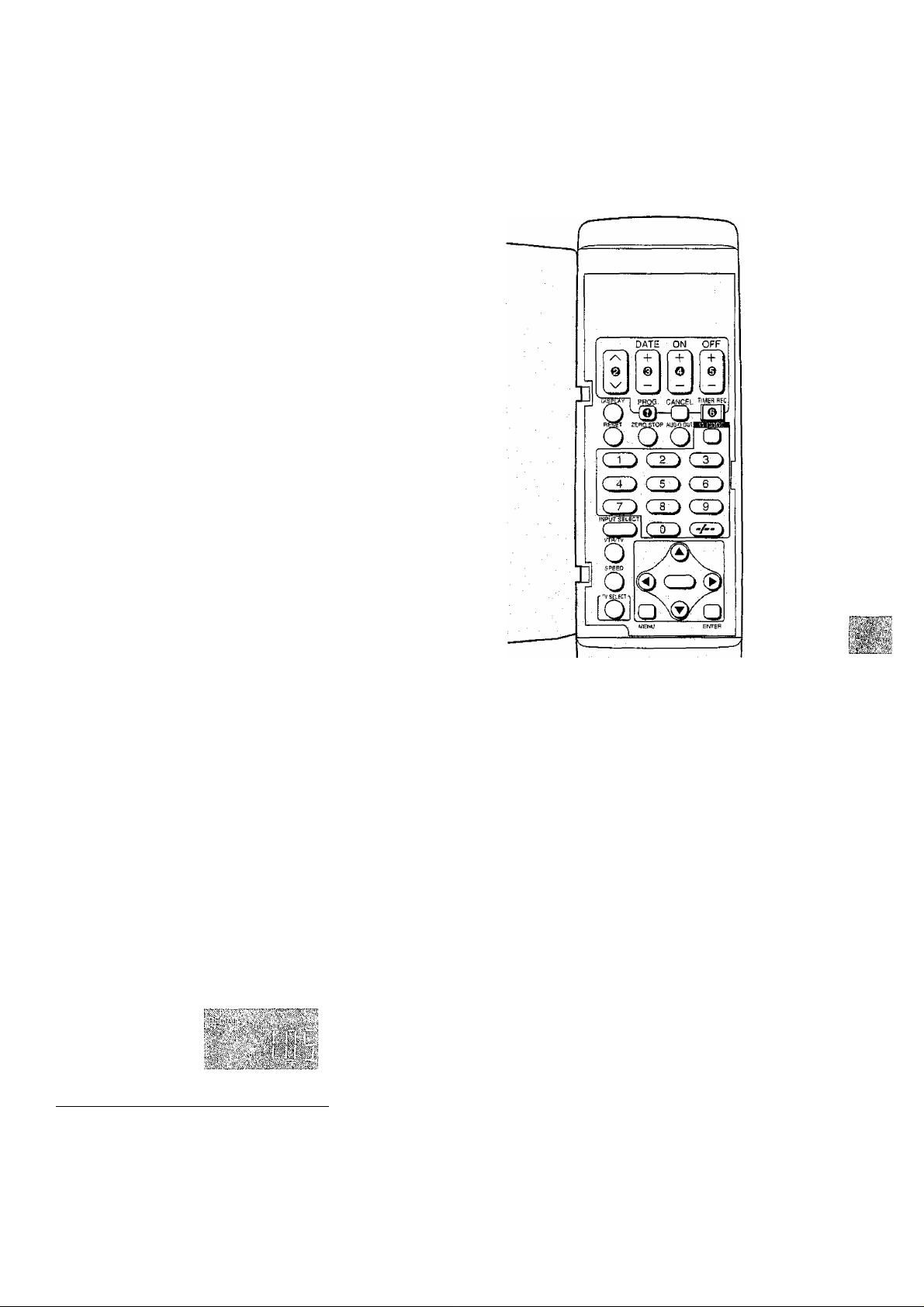
To select the Desired Tape Speed
Press SPEED before recording.
SPEED
Manual Recording
o
fê'iS'iill
To interrupt Recording
Press PAUSE/STILL during recording.
Press again to continue recording.
PAUSE/
STILL
0
To record One TV Programme while
Viewing Another Programme
1 Refer to the manual recording operations steps 1 to 4.
2 Press VTR/TV to select the TV mode.
(NV-HD650EA only)
3 Select the TV programme on your TV set you wish to
view at the present time.
To display the Approximate Remaining
Tape Time
1 Select TAPE SELECT on OPTION on screen display
and select the corresponding cassette tape length. See
page 18.
00 «>o
0“
El 80: For E30, -60, -90, -120, -150 and -180 tapes
£195: For E195 tape
E240: For E240 tape
E260: For E260 and -300 tapes
2 Press DISPLAY.
DISPLAY
Ô
|-»Clock^Counter->Remaining Tape Time
•The remaining tape time may not be displayed correctly
depending on the tape used.
Notes:
•When a video cassette with a broken off tab is inserted,
the “S3" indication will flash to indicate that recording is
not possible.
•The recording pause mode will be automatically released
after 5 minutes. Revert back to the stop mode.
¡y-' (--A.-.
MENU
On Screen Display
.
........................
-’TAPESELeCr'-
OPTION
’*HT8(T”'HTSS E24Û Ë260
TAPE SPEED «SP LP
AUmOMIX ON «OFF
SLUE BACK «ON OFF
~/+ :oa
END:MENU
The NICAM Broadcast System
(NV-HD650EAonly)
NV-HD650EA is equipped with the NICAM sound system.
NICAM is a 2 channel sound broadcast system to provide
either a high quality stereo sound track or 2 independent
MONO sound tracks, Ml and M2.
NICAM programmes are always accompanied by standard
sound broadcasts and you can select the desired sound
with AUDIO OUT during playback.
•The NICAM digital stereo sound can only be recorded on
the Hi-Fi audio track.
•When NICAM programme is being received, the indicators
are lit to inform you of the type of broadcast.
(See page 30.)
•To record the regular sound (ordinary normal sound) on
the FM audio tracks when a NICAM programme is
received, select MONAURAL ON. (See page 19.)
•To hear stereo performance connect as shown on page 8
to a TV or Stereo Amplifier with left and right audio inputs.
Important Note for the NICAM System
When N V-HD650EA is switched on, the tuner will
automatically switch to a NICAM broadcast, if NICAM is
being transmitted.
At this time the NICAM signal is transmitted on stereo
channels only, since the M1 and M2 formats are not yet
available. Even if the sound track is in MONO, the stereo
indicator will appear.
23
Page 24
Timer Recording
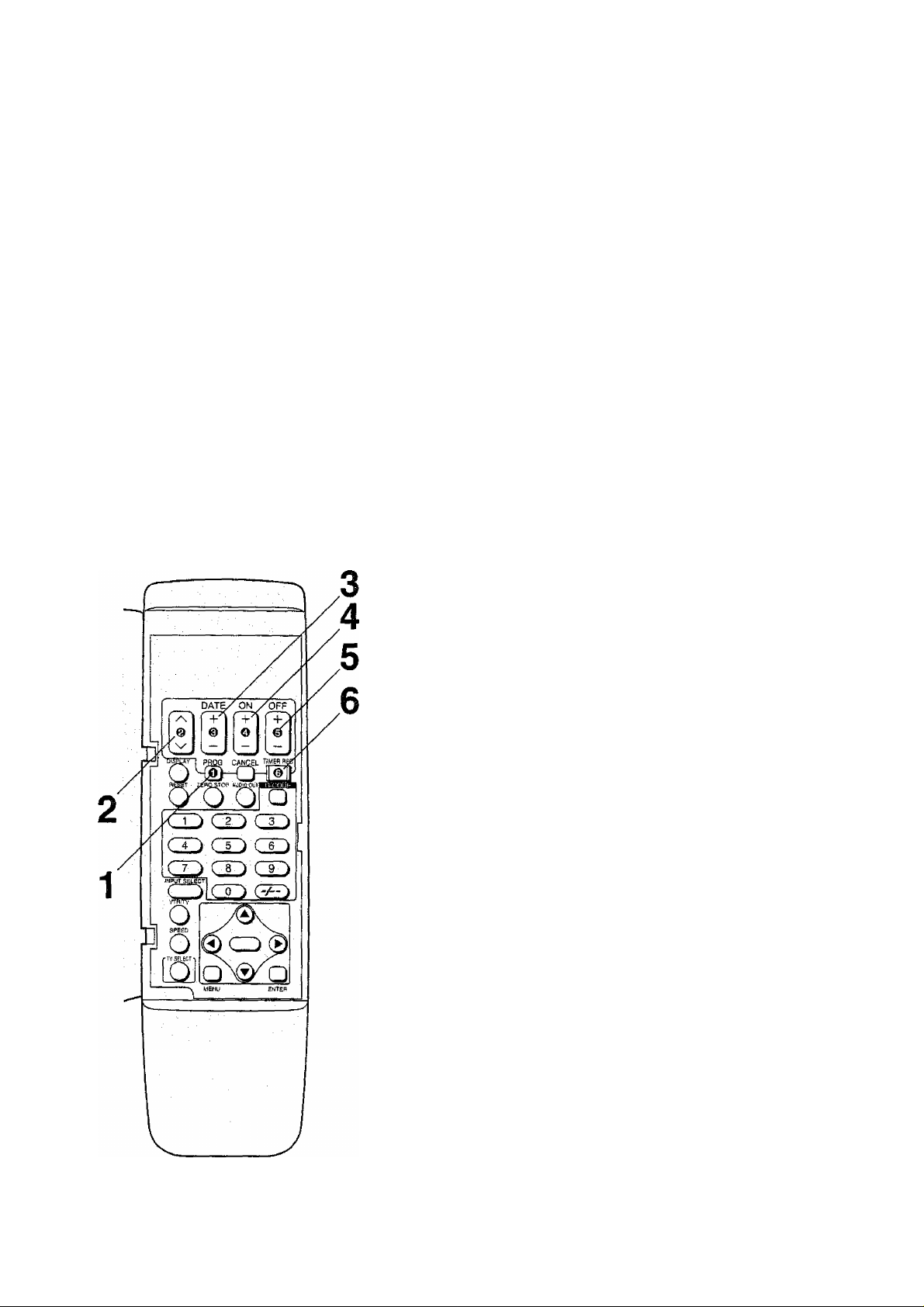
Up to 8 timer programmes can be recorded up to one
month in advance by setting the timer, including weekly and
daily programmes.
Preparations
• Insert a cassette tape with an intact erasure prevention
tab.
•Confirm that the TV is on and the VTR viewing channel is
selected.
•Turn on the VTR.
• Press VTR/TV to select the VTR mode.
(NV-HD650EA only)
For Example:
Timer programme number; 1
Programme position (channel); 2
Date; 27th, October
Starting time; 20:02
Ending time; 21:30
(Present date; 16th, October)
Operations
On Screen Display
-| Select Timer Programme number “1
CH DATE QM OFF
PROG
SELECT-Oa -/+; SB
2
Set Programme position (channel)
“2".
CH DATE ON OFF
c
SELECT:Ba -/+:Dg
Set Date “27”.
DATE
+
©
CH DATS ON OFF
- 2 27Wg --
SELECT; as -/4-:Q0
^ Set Starting time “20:02”
ON
+
o
•When it is kept pressed, the indication changes in
30-minute steps.
CH OAT6 ON OFF
L 2 2TWE 20
SELECT;00
^ Set Ending time “21 ;30”.
OFF
+
©
t 2 27We 20
SELECT:D3 -^+;5D
To activate timer recording, press
TIMER REC.
TIMER REC
02 —SP
CH DATE ON OFF
02 21;JO SP
J
24
Page 25

Timer Recording
Weekly Timer Recording
in step 3, select the desired day by pressing DATE —.
For example, SU (Sunday) Screen Display
DATE
. CH DATE ОЫ
2 SU
©
(SU=Sunday, MO=Monday, TU=Tuesday,
WE=Wednesday, TH=Thursday, FR= Friday,
SA=Saturday)
Daily Timer Recording
For this timer function, several groups of days can be
selected.
@ Daily recording from Monday to Friday
Daily recording from Monday to Saturday
Daily recording from Sunday to Saturday
In step 3, select the desired days by pressing DATE —.
For example, (5)
DATE
„ CH ОАГЕ OH OFF
■'Í- 2 SU-SA—SP
+
©
SELECT ;flB -H-;aD
Timer Recording from External Signal Source
If Timer Recording is performed by a unit connected to the
Audio/Video input sockets (AV1/AV2), select the A1 or A2
indicator in step 2 for the programme position.
.w. CH DATE ON OFF
/\
©
\/
I'
-----------------------------
n
Ж.
]g
ж
* SELECT ;D0 ' -1
1-
F:go
___
Selecting the Desired Tape Speed
Press ◄ and then select the desired tape speed by
pressing A or ▼ in any of steps 2-5.
CH DATE ON OFF
30
0
0
0
SELECT;0B -/+:ИИ
Checking a Timer Programme
•The VTR must be turned on, or the timer recording
indicator ‘'H” is lit.
•Confirm that the TV is on and the VTR viewing channel is
selected.
1 Press PROG.
PROG
2 Press VTR/TV to select the VTR
mode, (NV-HD650EA only)
VTR/TV
CH DATE ON OFP
27WE
2
■tTI*
1 SU-SA
14
SU 15:00
19TU
5
At 20TH
4 30SA
SELECT ;0n
20:02
10:30
22:1S
20:02
19:10
21:30
11:00
16:00
23;30
21:30
19:55
SP
LP
SP
LP
SP
SP
o —
Cancelling a Timer Programme
•The VTR must be turned on, or the timer recording
indicator"!!]" is lit.
•Confirm that the TV is on and the VTR viewing channel is
selected.
1 Press PROG.
PROG
2 Press VTR/TV to select the VTR
mode. (NV-HD650EA only)
VTR/TV
О
3 Press PROG repeatedly until the
desired timer programme number
is flashed on and off.
PROG
d)
4 Press CANCEL.
CANCEL
Q
Note:
If a timer recording is not performed to the end (due to
insufficient tape or cancellation by the user), the
programmed timer recording data will be cancelled from the
memory by 4 a.m. one day later.
However, if the Timer Record Function is activated at that
time, the programmed timer recording data will be
cancelled at 4 a.m. the next day.
CH DATE ON OFF
2 271VE 20;02 21'30 SP
1 SU-SA10;3Q 11:00 LP
14 3U 15:00 16:00 SP
5 19TU 22:15 23:30 LP
A1 2STH 20:02 21:30 SP
* 30SA 13:10 13:55 SP
CH DATE ON OFF
2 27WE 20:02 21:30 SP
1 SU-SA 10:30 1 1:00 LP
14 SU 15-.00 16:00 SP
3 19TU 22:15 23:30 LP
At 23TH 20:02 21:30 SP
4 30SA 1S;10 13:55 SP
r~
CH DATE ON OFF
27WE20:02
2
S
1
14
A1
N
i
Ш
IS
SELECT:0a
SU-SA10:30
SU 15:00
26TH
4
30SA
21:30 SP
11:00 LP
15:00 SP
21:30 SP
20':02
19:10 19:55 SP
-/-!■; BB
L J
Setting other Programmes in succession
Repeat steps 1-5.
25
Page 26
G-Code Programming
Programming is now easier than ever; simply enter the
G-Code number provided in the programme schedule
column carried by newspapers and magazines.
G-Code numbers are numbers which are assigned to each
programme listed in the TV programme schedule carried in
newspapers and TV guides. When these numbers are
entered, the numbers are converted into the actual
programming.
Operations
Press G-CODE.
1
■cBflliai
On Screen Display
G"Cooe
o
Preparations
•Insert a cassette tape with an intact erasure prevention
tab.
•Confirm that the TV is on and the VTR viewing channel is
selected.
•Turn on the VTR.
• Press VTR/TV to select the VTR mode.
{NV-HD650EA only)
Enter a G-Code number.
Example; 123456
G-CODE
1!MS6—
PROGRAMME SET-.ENTER
• If you have entered the wrong number, press
CANCEL and then enter the proper number.
END:G-COOE
Press ENTER.
O
ENTER
•Confirm that the number corresponds to the right
programme, if the display looks like this:
CM DATE OM OFF
-4-17SU t5;00 17:00 SP
SELECT;Q!] -/+:On
ENOiTiMER REC
G-CODE
123456
CH DATE ON OFF
-~17SU 15.00 17:00 SP
SELECTED -1-F;Qa
ENDiG-CODE
select the programme position of your VTR which
receives the TV station you entered at step 2 using
button Q and then press ENTER.
►To make any corrections, use buttons 0-0 as the
same way on page 24.
Press TIMER REG.
TIMER REC
HI
Notes:
•To select the desired tape speed, press SPEED before
programming.
•When the G-Code number is used for programming, the
recording time may be slightly longer than the actual
programme time.
• Repeat steps 2 and 3 if “PROGRAMME iS
INCOMPLETE." appears.
•When programming two or more programmes, repeat
steps 1 -3 before pressing TIMER REC.
•The procedures for checking and cancelling a timer
programme are the same as on page 25.
Page 27
Editing
Assembly Editing
This function can be used to make up an edited tape from
other recordings or video sources.
A new scene can be added to the end of a previous one.
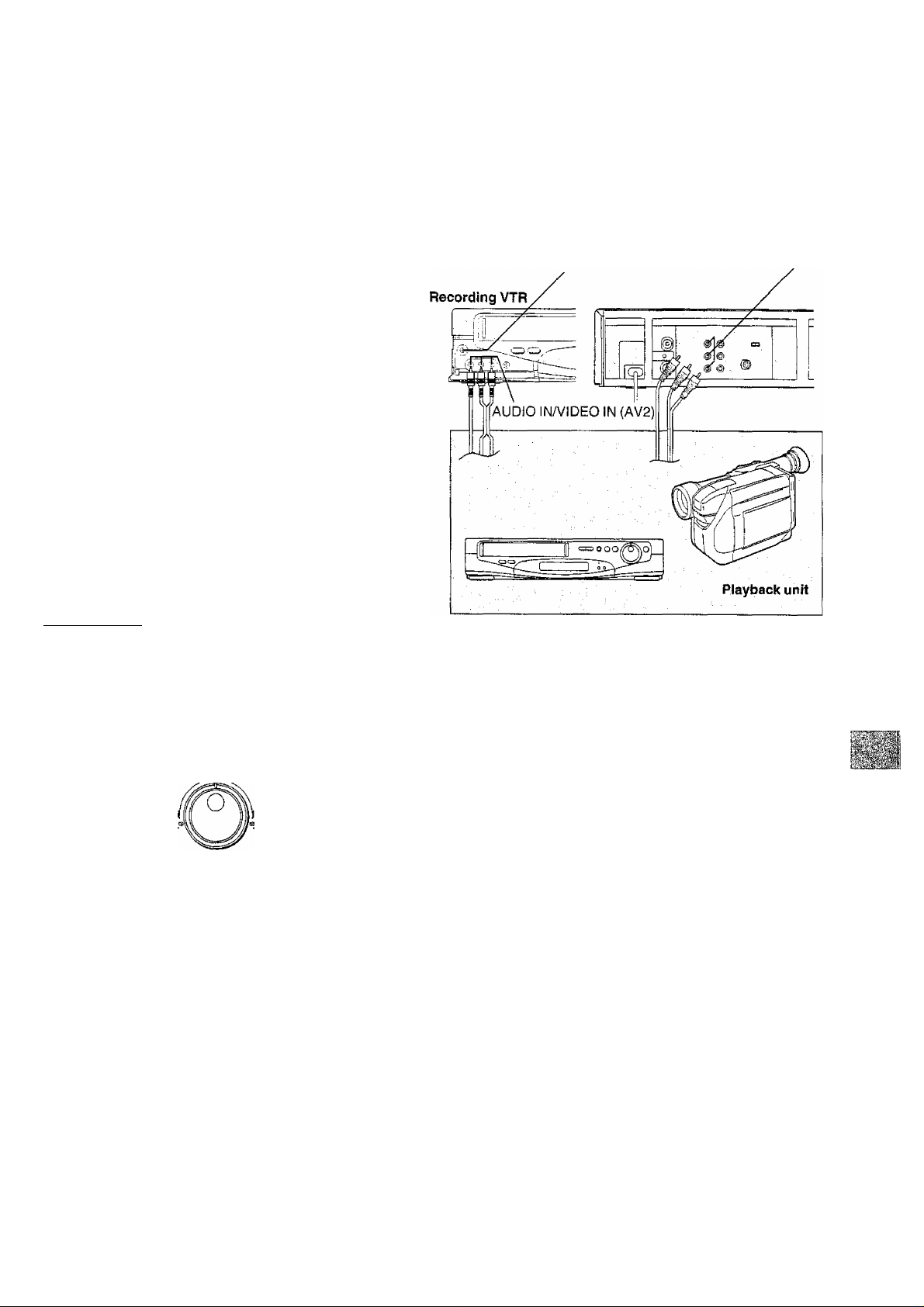
Preparations
•Connect a movie camera or another VTR to this VTR as
shown.
• Insert a recorded cassette tape with an intact erasure
prevention tab.
•Select the video source required by pressing INPUT
SELECT to set A1 or A2.
A1; Through the AV1 (AUDIO IN/VIDEO IN) sockets,
A2; Through the AV2 (AUDIO IN/VlDEO IN) sockets on
front panel.
•Set NTSC SELECT.
NTSC P.B.: When recording in the PAL system.
4.43: When recording NTSC 4.43 signals from
External Signal Source.
When dubbing an NTSC tape, keep the NTSC SELECT
on both the recording and playback units at the 4.43
position.
Timer Recording
Editing
SYNC EDIT AUDIO IN/ViDEO IN (AV1)
Operations
Press PAUSE/STILL on the recording
1
VTR.
______________________
0
O Search for the end of the previous
^ recording.
Press REC to switch the VTR from the
pause mode to the recording standby
mode.
Start the new recording by pressing
PAUSE/STILL again.
0
Synchronized Editing
It is possible to synchronize the playback start and stop of
the Movie Camera with the recording start and stop of this
VTR.
Preparation
Connect a Movie Camera to this VTR with Synchro
Connection Cord (VW-K1E).
1 Put the VTR in the recording pause mode by pressing
PAUSE/STILL (VTR) and REC.
2 Put the Movie Camera in the still playback mode at the
point where you want to start editing.
3 Press PAUSE/STILL on the VTR.
•The Movie Camera changes over to the playback mode
and the dubbing will start automatically.
Synchronized Editing between the VTRs
When editing from another VTR equipped with Synchro Edit
Socket, synchronized start and stop of both VTRs can be
activated from this VTR.
The operation is the same as described for synchronized
editing from a Movie Camera.
Press STOP to stop recording.
5
_______________
Note;
The new sound wilt be recorded on both the normal and
Hi-Fi sound tracks, only monaural sound recording is
possible on the normal sound tracks.
STOP
0
______________
27
Page 28
Insert Editing
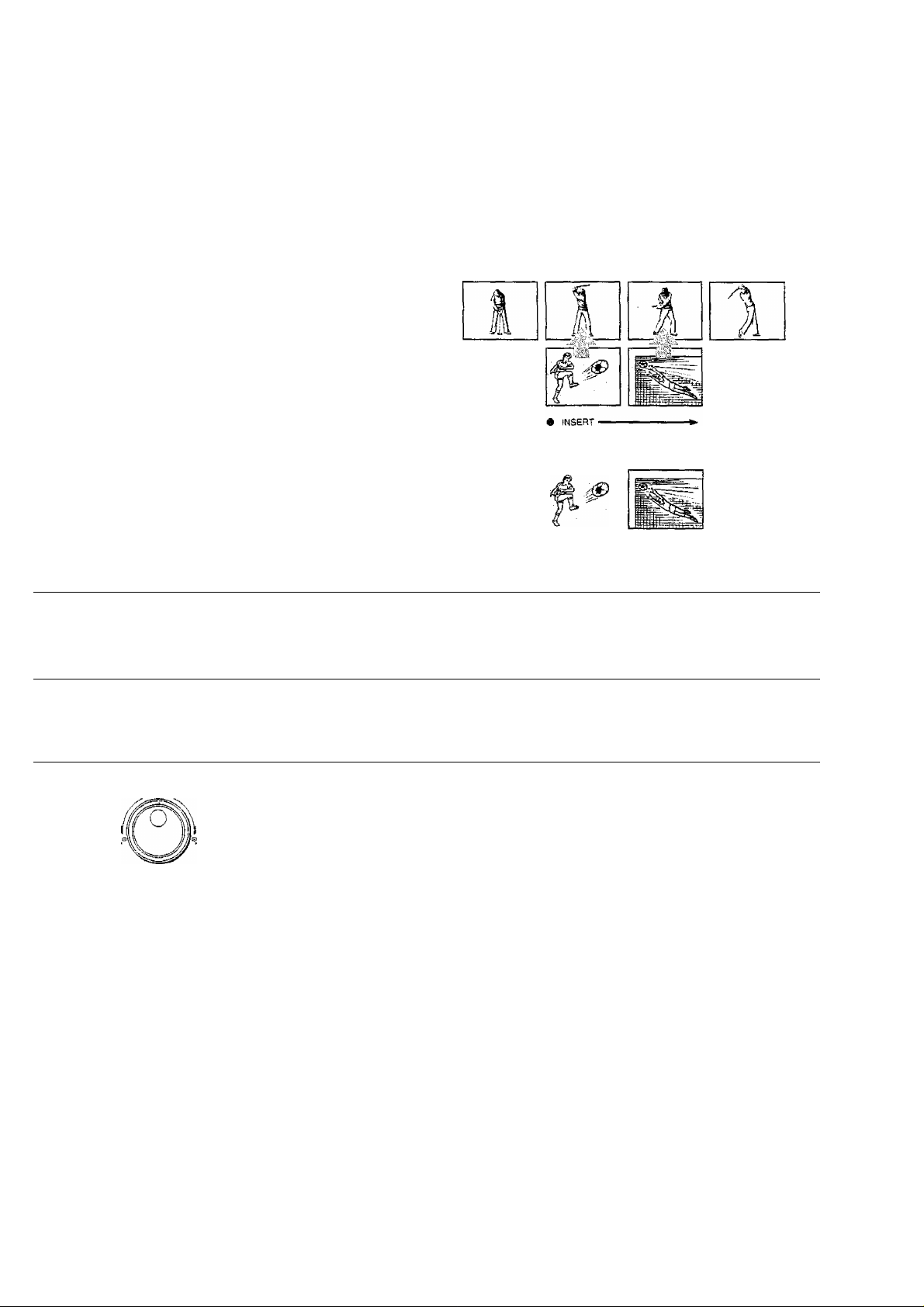
This is used to substitute one scene for another providing.
Preparations
• Insert a recorded cassette with an intact erasure
prevention tab.
•Select the video source required by pressing INPUT
SELECT to set A1 or A2.
A1: Through the AVI (AUDIO IN/VIDEO IN) sockets.
A2: Through the AV2 (AUDIO IN/VIDEO IN) sockets on
front panel.
1
OD-
II* INSERT-
2
► DOO-.OO.OO
-OD
OD 0:00.00 B
Operations
1
2
4
3
.0
©
Display Symbols
On Screen Display
f A2 -0:00.22
INSERT
-0:00.22
■ ■•SPEiil
AV INSERT
-0:00.22
• SPGS
INSERT
-0:00.22 ^
AV INSERT
• SPSB
Press PAUSE/STILL on recording the VTR.
Search for the Edit out (ending) point, and
set the counter to 0:00.00 by pressing
COUNTER RESET.
Search for the Edit in (starting) point, and
press INSERT.
• If you want to replace the sound on the “normal” audio
track, press AUDIO DUB, too. (AV Insert Editing)
Start insert editing by pressing PAUSE/
STILL.
•The insert editing will finish when the counter reaches
0:00.00.
Note:
Insert Editing cannot be used on blank sections of a tape.
In this case use Assembly Editing first.
The new sound will be recorded on the Hi-Fi sound track.
If AUDIO DUB selected, the new sound will also be
recorded on the normal sound track.
Only monaural sound recording is possible on the normal
sound tracks.
Page 29
Audio Dubbing
Editing
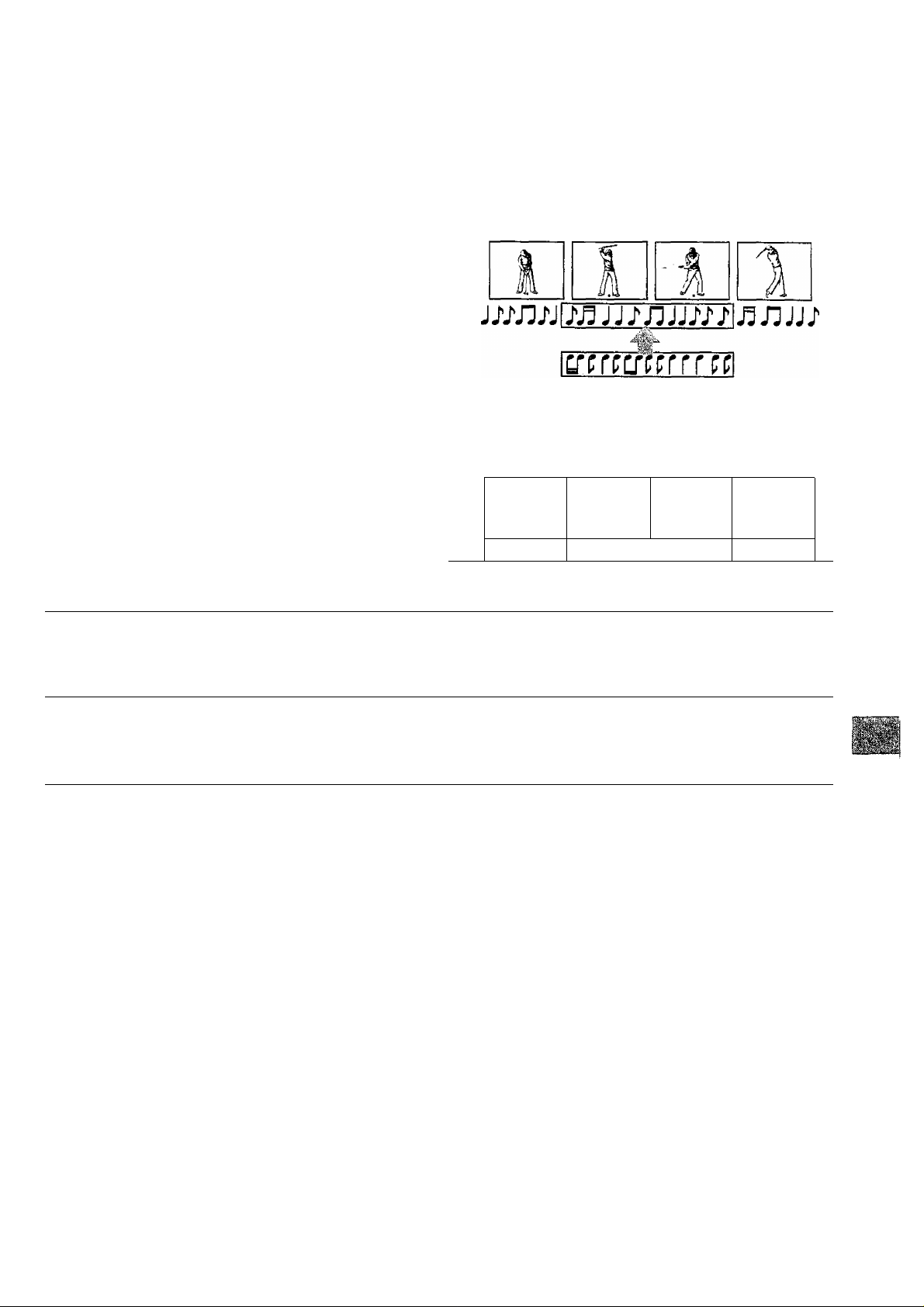
The audio dubbing is made on the normal audio track and
erases the original sound on this track. On Hi-Fi audio
tracks, however, the original sound is maintained.
Preparations
• Insert a recorded cassette with an intact erasure
prevention tab.
•Select the video source required by pressing INPUT
SELECT to set A1 or A2.
A1: Through the AV1 {AUDIO IN) sockets.
A2; Through the AV2 (AUDIO IN) sockets on front panel.
Operations Display Symbols
1
PLAV
o
1
■00
!• A.DUB
3
4
1
Search for the starting point for audio
dubbing.
1 'i
cn:riOTfrrn:f
SUJJJ'
I
’v’T'j.JV.rTr
1
CO
c:
.o
5
CD
a
o
<D
O
c
§
'O
2
’AUSE/STILL
©
On Screen Display
A2^ 0-.00.22 ^
A. DUS
ti«SPGSI
0:00.22 1
« $pra
©
Note:
The new sound will be recorded on the normal sound
track of the tape, and the original sound will remain on the
Hi-Fi sound track. Only monaural sound recording is
possible on the normal sound track.
Press PAUSE/STILL at the starting point.
Set for audio dubbing by pressing AUDIO
DUB.
•On some televisions, the screen image may become
unstable or begin to scroll at this point. However, this is
not an indication of a malfunction.
Start recording the new sound by pressing
PAUSE/STILL.
•stop recording by pressing STOP.
To hear the new sound, select the normal sound track by
pressing AUDIO OUT.
To hear the new sound and original sound mixed together,
set Audio MIX to ON. (See page 19.)
29
Page 30
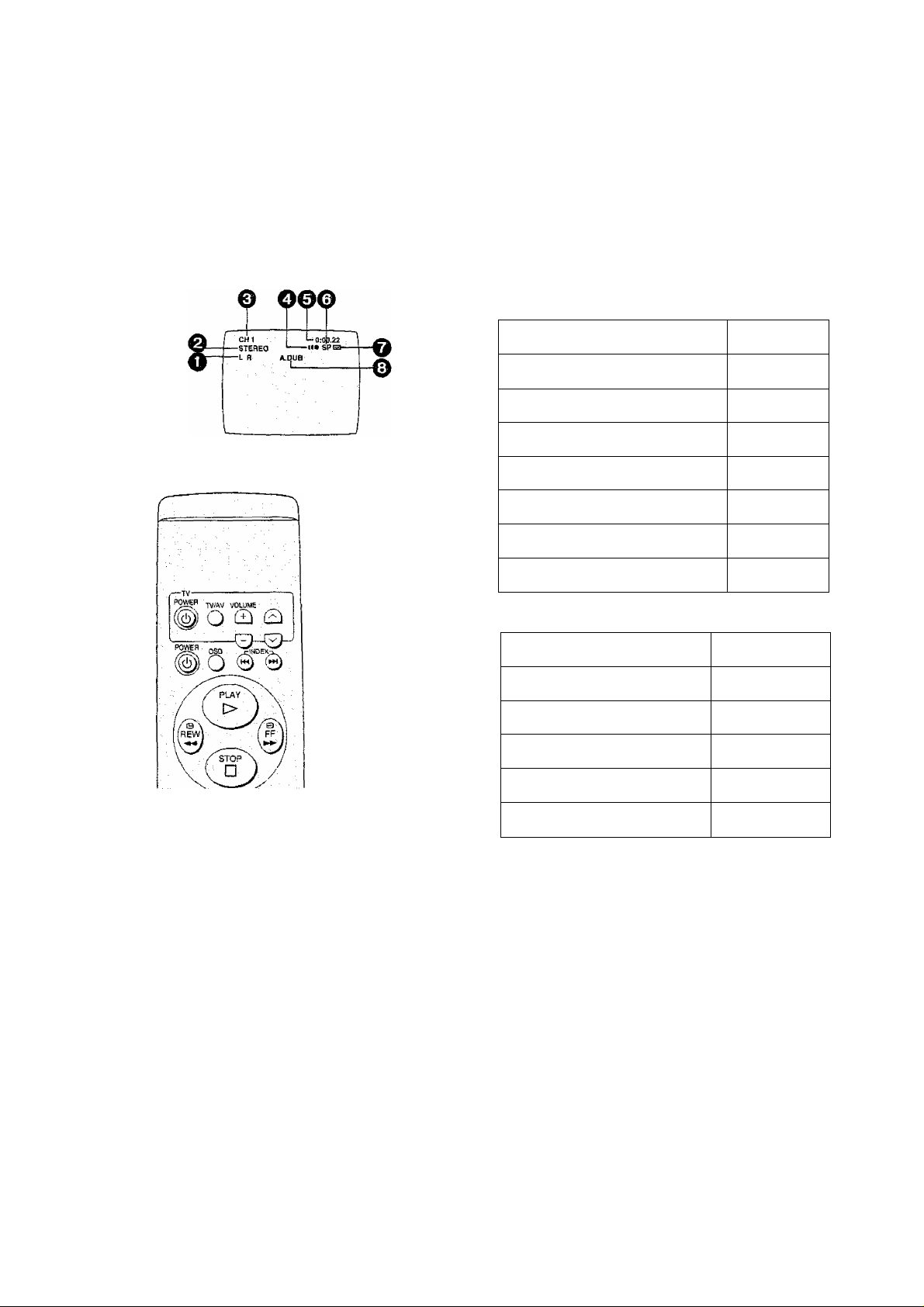
other Functions
On Screen Display
Press OSD to make the On Screen Display appear on the
TV screen.
•To make this display disappear, press OSD again.
OSD
o
Note:
To hear stereo performance connect as shown on
page 8 to a TV or Stereo Amplifier with left and right
audio inputs.
0 Programme position 0 Tape running display
Stop, Eject
Rewind, Review
Fast Forward, Cue
Playback ►
Still Playback
Recording
Recording Pause
Slow Playback
© Present time/Tape counter
►►
II
•
!!•
0 Audio Output Mode Indicators
The Left (L) and Right (R) indicators show which sound
mode is selected with AUDIO OUT.
Stereo: Both the Left (L) and Right (R) Indicators
appear.
Left: The Left{L) indicator appears.
Right: The Right (R) Indicator appears.
Normal: Both the Left (L) and Right {R} indicators
don’t appear.
0 STEREO or BILINGUAL Indicator (NV-HD650A)
When receiving a TV programme, the type of sound
system in which it is broadcast is automatically
indicated.
STEREO, Ml and M2 Indicator (NV-HD650EA)
When receiving a TV programme with the NICAM
sound system, the type of sound system in which it is
broadcast is automatically indicated.
STEREO: When receiving a NICAM stereo
broadcast.
Ml M2: When receiving a NICAM dual-sound
broadcast.
M1: When receiving a NICAM monaural
broadcast.
30
Information
Present time 17:24
Tape counter
Remaining Tape Time REMAIN 2:34
Dew
index search
0 Tape speed indicator
0 Cassette-in indicator
0 Edit mode
When edit mode (Insert Editing, AV Insert Editing,
Audio Dubbing) is set, the On Screen Display appears.
INSERT : Insert Editing
AV INSERT: AV Insert Editing
A.DUB: Audio Dubbing
Note:
On Screen Display may be disturbed or disappear during
special playback.
Display
-2:35.47
DEW
SOI
Page 31
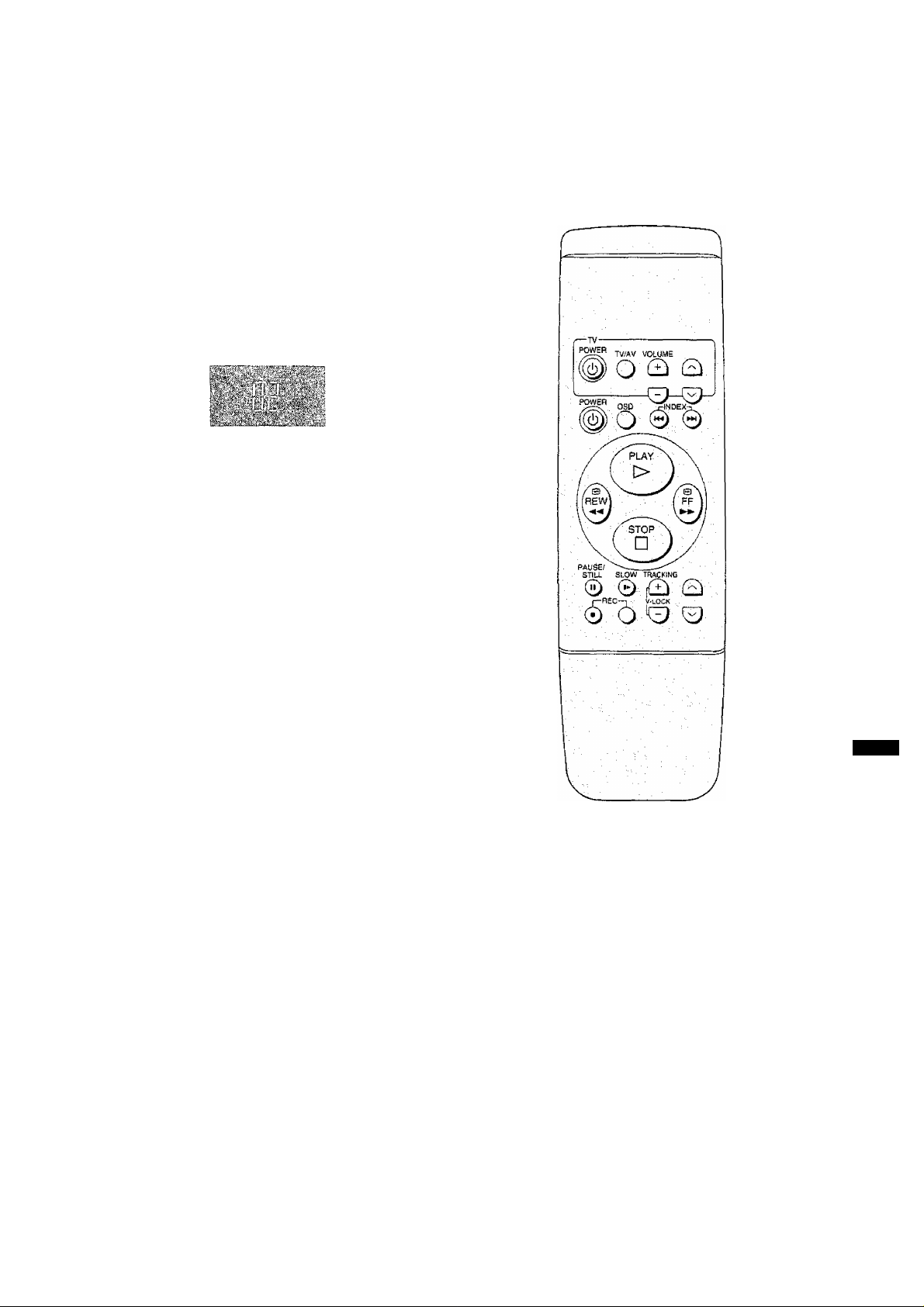
VHS Index Search System
It is very easy to find the beginning of each recording,
because a special index signal is recorded at the start of
each recorded segment on the tape.
For example:
Searching for the 2nd recorded segment in the forward
direction.
Press INDEX
r~INDEX~i
•After finding the specific recorded segment, playback
starts automatically.
• For the reverse direction, press INDEX
• Up to 20 index signals can be searched for in both
directions.
•When the opposite INDEX button is pressed, the number
shall be decreased tili 1.
•The figure on the display is decremented by 1 each time
an index signal is located.
•The INDEX search function can only work correctly, if the
index signals are spaced at least 3 minutes apart in the
SP mode and 5 minutes apart in the LP mode.
Recording Index Signals
Index signals are recorded in following cases.
•When a recording is started by pressing REC.
•When REC is pressed during recording.
•When timer recording is activated.
twice.
Other Functions
CO
c:
.o
CD
a
О
c:
s
31
Page 32

NTSC Playback
Tapes recorded in the NTSC system can be played back
with this VTR via a PAL system TV set.
•Set NTSC SELECT according to the colour TV system of
the TV set.
NTSC P.B.; For TV’s that can only receive PAL signals.
4.43: For TV’s that can receive NTSC 4.43
signals.
A note about NTSC playback on PAL TV
On some TVs, the playback picture may roil up or down;
adjust this using the V-HOLD control on the TV. TVs not
equipped with a V-HOLD control cannot correct this
condition. The playback picture will shrink vertically, and
black bars will appear both on the top and bottom of the
screen. This is not an indication of a malfunction.
•During Cue, Review, Still or Slow playback, the picture
may not be in colour.
•This function is designed only to allow the playback of
tapes recorded by NTSC signals on a PAL system TV.
The NTSC signal is not completely converted to a PAL
signal. For this reason, images played back by this
function cannot be recorded on another VTR.
Other Automatic Functions
Automatic playback
When a cassette without an erasure prevention tab is
inserted, the VTR starts playback automatically.
VTR-off playback
When the VTR is off, an inserted cassette can be played
back by pressing PLAY.
Automatic rewinding
When the tape reaches its end during recording (except for
timer recording) or playback, it will automatically be
rewound to the beginning.
Automatic switching off and ejection
When the VTR is switched off, an inserted cassette can be
ejected simply by pressing EJECT. The VTR will eject the
cassette and automatically turn itself off again.
S-VHS Quasi Playback
(SQPB)
It is also possible to playback tapes recorded in the S-VHS
system.
•Some picture noise may occur depending on the type of
tape used.
•It is not possible to fully obtain the high resolution that
S-VHS is capable of.
• It is not possible to record in the S-VHS system with this
VTR.
32
Page 33
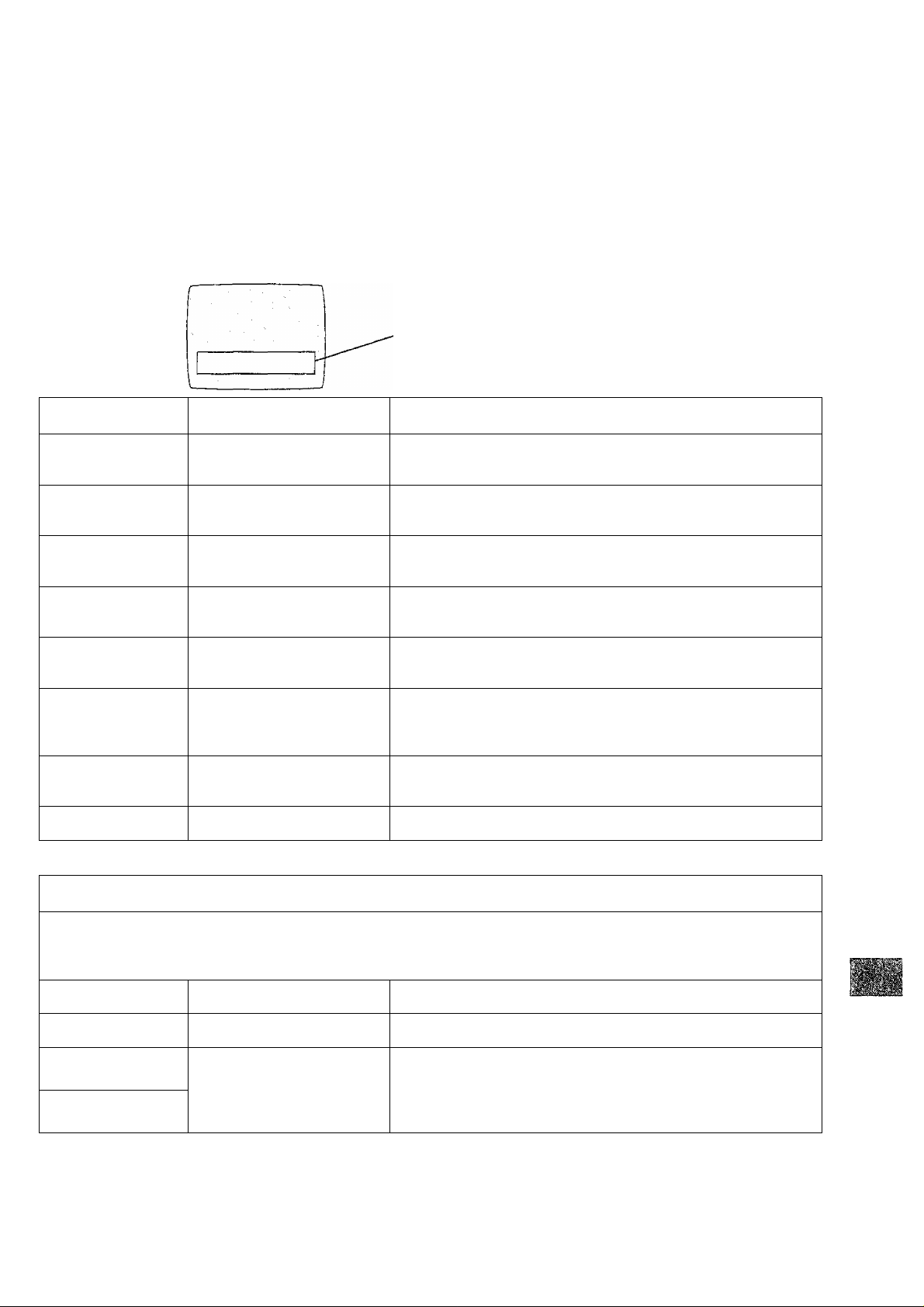
Before Requesting Service
Before requesting service, check the foliowing points once again.
Message of On Screen Display
Message of On Screen Display is displayed.
Other Functions
Before Requesting Service
MESSAGE
PLE AS E P UT IN
A V IDE O C AS SE TTE .
PLE AS E S TO P T HE TA PE
REC is pressed without
cassette.
TUNER PRESET is selected
CAUSE
REMEDY
Put in a video cassette.
Stop the tape.
during playback.
PLE AS E S ET TH E C LO CK.
PROG is pressed when the
Set the clock.
clock is not set
PLE AS E U SE A C AS SE TTE
NO TIM ER HE CO aO ING
TIM ER PR OG RA MM ES AR E
HAS BEEN SET
WIT H TAB .
FULL
REC is pressed without tab of
Cassette.
TIMER REC is pressed with
no timer programmes.
G-CODE is pressed when
8 programmes have been
Use a cassette with tab.
Set timer recording.
Cancel unneccessary programme.
already set.
VTR IS IN TH E T IME R
STA ND BY MO DE .
DEW F OR ME D IN THE VTR .
POWER is pressed during
timer standby mode.
Dew forms.
Press TIMER REC to release from timer standby mode.
Wait until the message disappears.
Self Test Indication
This VTR has a self-diagnosis and display function. If the VTR detects trouble during installation or during use, the following
indications automatically appear in the VTR display. Indications are displayed in the form of a single English letter plus two
numbers such as [HOI].
c
2
.Q.
3:
INDICATION
U 1 0 Dew forms.
HOD
Some trouble has occurred.
{Numbers following H and F
FDO
differ according to the status
of the VTR.)
CAUSE
REMEDY
Wait until the indication disappears.
Consult your dealer for further advice.
33
Page 34
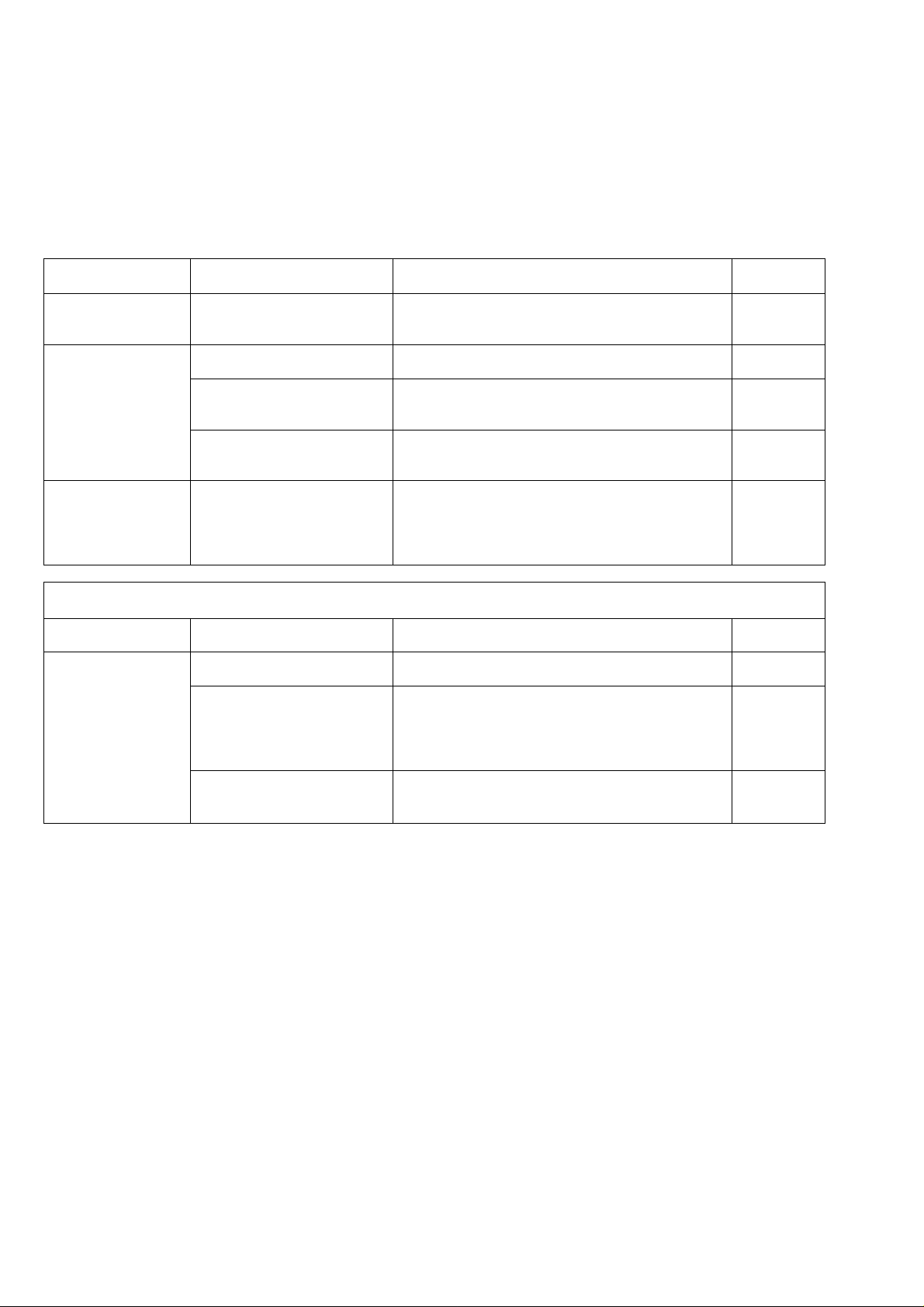
VTR will not operate correctly
SYMPTOM
VTR display is not
illuminated.
VTR display is
illuminated but VTR
will not operate.
A language which
you do not
understand appears
on the TV screen.
SYMPTOM
Picture noisy or not
in colour.
Horizontal bars or
lines run down the
screen.
CAUSE
^Уlains lead is not connected.
VTR is in timer mode.
Safety devices are operating.
Condensation may have
formed.
The Language Setting is set to
a language which you do not
understand.
Playback will not Operate correctly
CAUSE REMEDY
Tracking is not correct.
TV set is not tuned to VTR.
REMEDY CHECKED
Reconnect mains lead to VTR.
Press TIMER REC to operate VTR manually.
Disconnect mains lead and wait for 1 minute.
Reconnect mains supply and check functions.
Do not operate VTR for 1 hour.
Select the desired language. See page 12.
CHECKED
Adjust the tracking. See page 6.
Operate TEST SIGNAL on VTR and check TV
tuning. See page 9. (NV-HD650A)
Operate Video Playback Channel Selector on VTR
and check TV tuning. See page 10. (NV-HO650EA)
Video heads are clogged or
worn.
Consult your dealer for further advice.
34
Page 35
Recording will not operate correctly
Before Requesting Service
SYMPTOM CAUSE
indication
flashes whenever
recording is
attempted.
Picture is recorded
with noise or biank
screen.
Timer recording
cannot be
performed.
AV external
recordings cannot be
made.
Erasure prevention tab on
cassette is broken off.
Aerial or aerial lead is
defective.
VTR is not correctly tuned.
A1 or A2 is selected.
Clock or calendar is
incorrectly set.
Recording start or end time
setting is incorrect.
VTR is not set for timer
recording.
A1 or A2 is not selected.
External AV connections are
incorrect.
REMEDY
Use tape with intact erasure prevention tab, or cover
tab hole with adhesive tape, if original recording is no
longer required.
Check aerial connection to VTR. See page 8.
Check your norma! TV picture. If there is no picture,
check your aerial.
Re-tune VTR. See page 14.
Select the required TV programme.
Check clock and calendar. Set to present time.
(Note this is a 24 hour clock.) See page 13.
Set recording start and end time correctly.
Press TIMER REC after programming for timer
recording.
Select A1 or A2 by pressing INPUT SELECT.
Check that connections for external video and audio
source are correct. See page 27.
CHECKED
SYMPTOM CAUSE
Remote controller
does not operate
correctly.
Remote controller transmitter
beam is not reaching VTR.
Distance is too far.
Batteries are exhausted.
Batteries are incorrectly fitted
with {+/-) reversed.
Remote controller will not work correctly
REMEDY
Ensure that remote controller is being pointed at VTR
and that transmitter beam is not obstructed.
Use remote controller within 7 m of VTR. If this range
is not possible, replace batteries.
Replace batteries. Note precaution for replacement
on page 7.
Fit batteries correctly as shown on page 7.
CHECKED
&
.c
5
:c
35
Page 36

Precautions
Please read these cautions before you operate this VTR.
Avoid Sudden Changes in Temperature
If the VTR is suddenly moved from a cold place to a warm
place, condensation may form on the tape and inside the
VTR. In this case, the Dew Indicator “ d ” will flash on and off
and the VTR wiil not operate.
Humidity and Dust
Avoid places where there is high humidity or much dust,
which may cause damage to internal parts.
Do Not Obstruct the Ventilation Holes
The ventilation holes prevent abnormal increase in
temperature. Do not block or cover these holes, Especially
avoid covering the holes with soft materials such as cloth or
paper.
Video Head Clogging
The video heads place picture signals on the tape during
recording and read picture signals from the tap© during
playback and they are, therefore, of critical importance for
the picture quality. If the VTR is used over extremely long
periods of time, these heads may become dirty and
clogged. In such a case, the signals can no longer be
recorded correctly, and the playback picture will be
distorted accordingly. This is the case, for example, during
the playback of a tape, the sound is reproduced normally,
but no picture is seen, or the picture is greatly distorted.
When such a symptom case occurs have the recorder
checked by qualified service personnel.
Head cleaning by service agent is not covered by
warranty.
Keep away from High Temperature
Keep the VTR away from extreme direct heat such as direct
sunlight, heating radiators, or closed automobiles.
Keep Magnets away
Never bring a magnet or magnetized object near the VTR
because it will adversely affect the performance of the VTR.
No Fingers or Other Objects Inside
Touching internal parts of this VTR is dangerous, and may
cause serious damage to the VTR. Do not attempt to
disassemble the VTR. There are no user serviceable parts
inside.
Keep Water away
Keep the VTR away from fiower vases, tubs, sinks, etc.
CAUTION; If liquids are spilled into the VTR, serious
damage could occur. If you spill any liquid into the VTR,
consult qualified service personnel.
Lightning
To avoid damage by lightning, disconnect the aerial plug
from the VTR.
Cleaning the VTR
Wipe the VTR with a clean, dry cloth. Never use cleaning
fluid, or other chemicals. And do not use compressed air to
remove dust.
If Dew Condensation Forms in the VTR
Condensation may form In the VTR if:
•The VTR is in a room where the heater has just been
turned on.
•The VTR is in a room with steam or high humidity.
•The VTR is brought from cold surroundings into a
welt-heated room.
•The VTR is suddenly brought from cool surroundings,
such as an air-conditioned room or car, to a place which is
hot and humid.
When dew forms in the VTR, the Dew Indicator '* " on the
display will flash on and off and all the function buttons are
made non-operational to protect the tape and the video
heads. When the Dew Indicator flashes, wait until this
indicator disappears.
• If dew condensation forms inside the VTR while the VTR
is off, it will turn on automatically and the Dew Indicator
will flash on and off. As soon as the dew condensation has
been dissolved, the VTR will turn itself off again.
Stacking
Place the VTR in a horizontal position, and do not place
anything heavy on it.
Ì6
Page 37

Specifications
NV-HD650A/EA
Precautions
Specifications
Power Source:
Power Consumption:
Video Recording System:
Video Heads:
Tape Speed:
Tape Format: Record/Playback Time;
VIDEO
Television System:
Moduiation System:
Input Level:
Output Level:
AUDIO
Input Level;
Output Level;
Audio Track:
Video Horizontal Resolution:
Dynamic Range;
Audio Frequency Response;
Wow and Flutter;
Operating Temperature:
Operating Humidity:
Weight:
Dimensions;
Standard Accessories:
Weight and dimensions shown are approximate.
Specifications are subject to change without notice.
240 V AC 50-60 Hz (NV-HD650A)
230 V AC 50-60 Hz (NV-HD650EA)
23 watts
2 rotary heads, helical scanning system
4 heads
SP; 23.39 mm/sec.
LP; 11.7 mm/sec.
VHS tape
SP; 240 min. with NV-E240
LP; 480 min. with NV-E240
CCiR; 625 lines, 50 fields, PAL colour signal
Luminance; FM azimuth recording
Colour signal: converted subcarrier phase shift recording
VIDEO IN (PHONO); I.OVp-p,
VIDEO OUT (PHONO); I.OVp-p,
RF Modulated; UHF channel AU37±6 (NV-HD650A),
AUDIO IN (PHONO); -lOdBV,
MICROPHONE (M3); -70dBV
AUDIO OUT (PHONO): -8dBV,
1 track (Normal-mono only), 2 channels (Hi-Fi sound-stereo)
Colour; more than 240 lines (SP)
Audio: more than 90 dB (Hi-Fi audio track)
20 Hz-20 kHz
0.005% Wrms/Hi-Fi
5°C-40“C
35%-80%
4.6 kg
430 (W)X91 (H)x312(D)mm
1 pc. RF Coaxial Cable
1 pc. Remote Controller
2 pcs. “R6" size batteries
1 pc. AC Mains Lead
1 pc. Audio Cable
VHF channel N22 or 3 (NV-HD650EA),
75 ohm, terminated
75 ohm, terminated
75 ohm
75 ohm
more than 47 kohm
less than 1 kohm
37
 Loading...