

Page 1
Operating instructions
for Washing machine
W 989i
It is essential to read these
operating instructions before
installing or using the machine, to
avoid the risk of accident, or damage
to the machine. M.-Nr. 04 953 271
WPS
G
Page 2

Caring for our environment
Disposal of the packing
material
The transport and protective packing
has been selected from materials which
are environmentally friendly for disposal
and can normally be recycled.
Ensure that any plastic wrappings,
bags etc. are disposed safely and kept
out of the reach of babies and young
children. Danger suffocation!
Rather than just throwing these materi
als away, please ensure they are of
fered for recycling.
-
-
Disposal of your old appliance
Old appliances contain materials which
can be recycled. Please contact your
dealer, your local waste collection cen
tre or scrap merchant about potential
recycling schemes.
Ensure that the appliance presents no
danger to children while being stored
for disposal. See the appropriate ad
vice in the "Warning and safety instruc
tions".
-
-
-
2
Page 3

Contents
Caring for our environment
Disposal of the packing material . . . . . . . . . . . . . . . . . . . . . . . . . . . . . . . . . . . . . . . 2
Disposal of your old appliance . . . . . . . . . . . . . . . . . . . . . . . . . . . . . . . . . . . . . . . . 2
Guide to the machine
General view . . . . . . . . . . . . . . . . . . . . . . . . . . . . . . . . . . . . . . . . . . . . . . . . . . . . . . 6
Control panel . . . . . . . . . . . . . . . . . . . . . . . . . . . . . . . . . . . . . . . . . . . . . . . . . . . . . . 7
Warning and safety instructions . . . . . . . . . . . . . . . . . . . . . . . . . . . . . . . . . . . . . 8
Washing environmentally and economically. . . . . . . . . . . . . . . . . . . . . . . . . . . 11
Before using for the first time
Flushing out the machine. . . . . . . . . . . . . . . . . . . . . . . . . . . . . . . . . . . . . . . . . . . . 12
Water hardness reminder dial . . . . . . . . . . . . . . . . . . . . . . . . . . . . . . . . . . . . . . . . 12
How to wash correctly
Brief guide . . . . . . . . . . . . . . . . . . . . . . . . . . . . . . . . . . . . . . . . . . . . . . . . . . . . . . . 13
Before washing. . . . . . . . . . . . . . . . . . . . . . . . . . . . . . . . . . . . . . . . . . . . . . . . . 13
To start a programme . . . . . . . . . . . . . . . . . . . . . . . . . . . . . . . . . . . . . . . . . . . . 14
Delay start. . . . . . . . . . . . . . . . . . . . . . . . . . . . . . . . . . . . . . . . . . . . . . . . . . . . . 16
After washing . . . . . . . . . . . . . . . . . . . . . . . . . . . . . . . . . . . . . . . . . . . . . . . . . . 16
Adding or removing washing after programme start. . . . . . . . . . . . . . . . . . . . . . . 17
Programme . . . . . . . . . . . . . . . . . . . . . . . . . . . . . . . . . . . . . . . . . . . . . . . . . . . . . . 18
. . . interruption . . . . . . . . . . . . . . . . . . . . . . . . . . . . . . . . . . . . . . . . . . . . . . . . . 18
. . . alteration . . . . . . . . . . . . . . . . . . . . . . . . . . . . . . . . . . . . . . . . . . . . . . . . . . . 18
. . . Skipping a programme stage. . . . . . . . . . . . . . . . . . . . . . . . . . . . . . . . . . . 18
Adding detergent
It is important to dispense the correct amount, because . . . . . . . . . . . . . . . . . . . 19
Adding detergent. . . . . . . . . . . . . . . . . . . . . . . . . . . . . . . . . . . . . . . . . . . . . . . . . . 20
Water softeners . . . . . . . . . . . . . . . . . . . . . . . . . . . . . . . . . . . . . . . . . . . . . . . . . . . 20
Fabric conditioners, texturisers, liquid starch . . . . . . . . . . . . . . . . . . . . . . . . . . . . 20
Automatic fabric conditioners, texturisers, or liquid starch . . . . . . . . . . . . . . . 21
Separate fabric conditioner or texturiser . . . . . . . . . . . . . . . . . . . . . . . . . . . . . 21
Starching separately. . . . . . . . . . . . . . . . . . . . . . . . . . . . . . . . . . . . . . . . . . . . . 21
Programmes
Programme selection. . . . . . . . . . . . . . . . . . . . . . . . . . . . . . . . . . . . . . . . . . . . . . . 22
Sequence. . . . . . . . . . . . . . . . . . . . . . . . . . . . . . . . . . . . . . . . . . . . . . . . . . . . . . . . 24
Care symbols - washing . . . . . . . . . . . . . . . . . . . . . . . . . . . . . . . . . . . . . . . . . . 26
3
Page 4

Contents
Additional options
Soak . . . . . . . . . . . . . . . . . . . . . . . . . . . . . . . . . . . . . . . . . . . . . . . . . . . . . . . . . . . . 28
Pre-wash . . . . . . . . . . . . . . . . . . . . . . . . . . . . . . . . . . . . . . . . . . . . . . . . . . . . . . . . 28
Short. . . . . . . . . . . . . . . . . . . . . . . . . . . . . . . . . . . . . . . . . . . . . . . . . . . . . . . . . . . . 28
Water plus . . . . . . . . . . . . . . . . . . . . . . . . . . . . . . . . . . . . . . . . . . . . . . . . . . . . . . . 29
Buzzer . . . . . . . . . . . . . . . . . . . . . . . . . . . . . . . . . . . . . . . . . . . . . . . . . . . . . . . . . . 29
Spin . . . . . . . . . . . . . . . . . . . . . . . . . . . . . . . . . . . . . . . . . . . . . . . . . . . . . . . . . . . . 29
"Without final spin". . . . . . . . . . . . . . . . . . . . . . . . . . . . . . . . . . . . . . . . . . . . . . . 29
"Rinse hold". . . . . . . . . . . . . . . . . . . . . . . . . . . . . . . . . . . . . . . . . . . . . . . . . . . . 29
Electronic programme locking. . . . . . . . . . . . . . . . . . . . . . . . . . . . . . . . . . . . . . . . 30
Electronic Locking . . . . . . . . . . . . . . . . . . . . . . . . . . . . . . . . . . . . . . . . . . . . . . . . . 31
Display
Delay start . . . . . . . . . . . . . . . . . . . . . . . . . . . . . . . . . . . . . . . . . . . . . . . . . . . . . . . 32
Time left display. . . . . . . . . . . . . . . . . . . . . . . . . . . . . . . . . . . . . . . . . . . . . . . . . . . 32
Soak . . . . . . . . . . . . . . . . . . . . . . . . . . . . . . . . . . . . . . . . . . . . . . . . . . . . . . . . . . . . 32
Programmable functions
P1 = Water level . . . . . . . . . . . . . . . . . . . . . . . . . . . . . . . . . . . . . . . . . . . . . . . . . . 33
P2 = Water plus system . . . . . . . . . . . . . . . . . . . . . . . . . . . . . . . . . . . . . . . . . . . . 33
P4 = Activating the i compartment . . . . . . . . . . . . . . . . . . . . . . . . . . . . . . . . . 33
P9 = Gentle action . . . . . . . . . . . . . . . . . . . . . . . . . . . . . . . . . . . . . . . . . . . . . . . . 34
P10 = Top-up rinse for Cottons . . . . . . . . . . . . . . . . . . . . . . . . . . . . . . . . . . . . . . . 34
P11 = Memory function . . . . . . . . . . . . . . . . . . . . . . . . . . . . . . . . . . . . . . . . . . . . . 34
Programming and storing in memory . . . . . . . . . . . . . . . . . . . . . . . . . . . . . . . . . . 35
1. Selecting programming mode . . . . . . . . . . . . . . . . . . . . . . . . . . . . . . . . . . . 35
2. Selecting a programmable function . . . . . . . . . . . . . . . . . . . . . . . . . . . . . . . 35
3. To activate or deactivate a programmable function. . . . . . . . . . . . . . . . . . . 36
4. Storing the programmable function in memory . . . . . . . . . . . . . . . . . . . . . . 36
Cleaning and care
Cleaning the washing machine . . . . . . . . . . . . . . . . . . . . . . . . . . . . . . . . . . . . . . . 37
Extra cleaning . . . . . . . . . . . . . . . . . . . . . . . . . . . . . . . . . . . . . . . . . . . . . . . . . . . . 37
Cleaning the detergent dispenser drawer. . . . . . . . . . . . . . . . . . . . . . . . . . . . . . . 38
Cleaning the fluff (drain) filter and pump. . . . . . . . . . . . . . . . . . . . . . . . . . . . . . . . 39
Cleaning the filter in the water inlet . . . . . . . . . . . . . . . . . . . . . . . . . . . . . . . . . . . . 41
4
Page 5

Contents
Problem solving guide
The programme does not start. . . . . . . . . . . . . . . . . . . . . . . . . . . . . . . . . . . . . . . . 43
The wash programme stops and a fault indicator light comes on. . . . . . . . . . . . . 44
A fault indicator light comes on but the wash programme continues as normal. . 45
General problems or an unsatisfactory wash result . . . . . . . . . . . . . . . . . . . . . . . 46
Opening the drum door in the event of a power failure. . . . . . . . . . . . . . . . . . . . . 49
After sales service
Customer contact . . . . . . . . . . . . . . . . . . . . . . . . . . . . . . . . . . . . . . . . . . . . . . . . . 51
Future updates (PC). . . . . . . . . . . . . . . . . . . . . . . . . . . . . . . . . . . . . . . . . . . . . . . . 51
Installation
Installation surface. . . . . . . . . . . . . . . . . . . . . . . . . . . . . . . . . . . . . . . . . . . . . . . . . 52
Installation . . . . . . . . . . . . . . . . . . . . . . . . . . . . . . . . . . . . . . . . . . . . . . . . . . . . . . . 52
Removing the transit fitting . . . . . . . . . . . . . . . . . . . . . . . . . . . . . . . . . . . . . . . . . . 52
Re-fitting the transit bars . . . . . . . . . . . . . . . . . . . . . . . . . . . . . . . . . . . . . . . . . . . . 53
Levelling the machine . . . . . . . . . . . . . . . . . . . . . . . . . . . . . . . . . . . . . . . . . . . . . . 54
Screwing out and adjusting the feet. . . . . . . . . . . . . . . . . . . . . . . . . . . . . . . . . 54
Building under . . . . . . . . . . . . . . . . . . . . . . . . . . . . . . . . . . . . . . . . . . . . . . . . . . . . 55
Adjusting the facia height . . . . . . . . . . . . . . . . . . . . . . . . . . . . . . . . . . . . . . . . . . . 56
Fitting the front panel . . . . . . . . . . . . . . . . . . . . . . . . . . . . . . . . . . . . . . . . . . . . . . . 56
Front panel dimensions: . . . . . . . . . . . . . . . . . . . . . . . . . . . . . . . . . . . . . . . . . . 56
Drilling template . . . . . . . . . . . . . . . . . . . . . . . . . . . . . . . . . . . . . . . . . . . . . . . . 57
Example 1: . . . . . . . . . . . . . . . . . . . . . . . . . . . . . . . . . . . . . . . . . . . . . . . . . . . . 57
Example 2: . . . . . . . . . . . . . . . . . . . . . . . . . . . . . . . . . . . . . . . . . . . . . . . . . . . . 58
Aligning the door . . . . . . . . . . . . . . . . . . . . . . . . . . . . . . . . . . . . . . . . . . . . . . . 59
Fitting a plinth facing . . . . . . . . . . . . . . . . . . . . . . . . . . . . . . . . . . . . . . . . . . . . . . . 60
Fitting the plinth facing: . . . . . . . . . . . . . . . . . . . . . . . . . . . . . . . . . . . . . . . . . . 60
Washer and dryer Stack . . . . . . . . . . . . . . . . . . . . . . . . . . . . . . . . . . . . . . . . . . 60
Connection to water supply . . . . . . . . . . . . . . . . . . . . . . . . . . . . . . . . . . . . . . . . . . 61
Connection to the drainage system. . . . . . . . . . . . . . . . . . . . . . . . . . . . . . . . . . . . 64
Electrical connection U.K. . . . . . . . . . . . . . . . . . . . . . . . . . . . . . . . . . . . . . . . . . . . 65
Consumption data . . . . . . . . . . . . . . . . . . . . . . . . . . . . . . . . . . . . . . . . . . . . . . . . 67
Technical Data . . . . . . . . . . . . . . . . . . . . . . . . . . . . . . . . . . . . . . . . . . . . . . . . . . . 68
5
Page 6
Guide to the machine
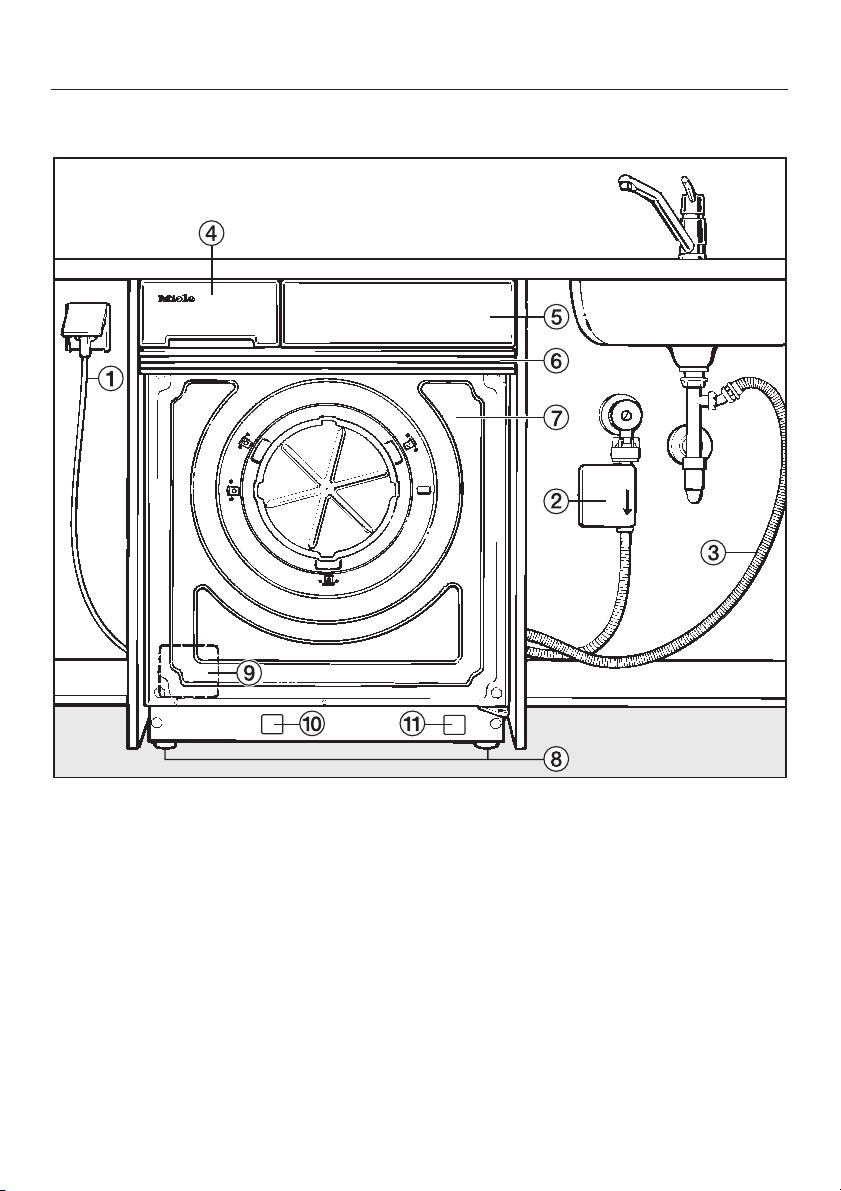
General view
a Electric supply cable
b Inlet hose with "Waterproof" system
c Flexible drain hose (with detachable
swivel elbow)
d Detergent dispenser drawer
e Facia panel with controls
f Adapter strips
6
g Door interior plate with fixing points
for a front panel
h Four height adjustable feet
i Access panel for drain pump and fil
ter
j Panel for emergency door release
(door hinged right) and for drainage
(door hinged left or right)
k Panel for emergency door release
(door hinged left)
-
Page 7
Control panel
Guide to the machine
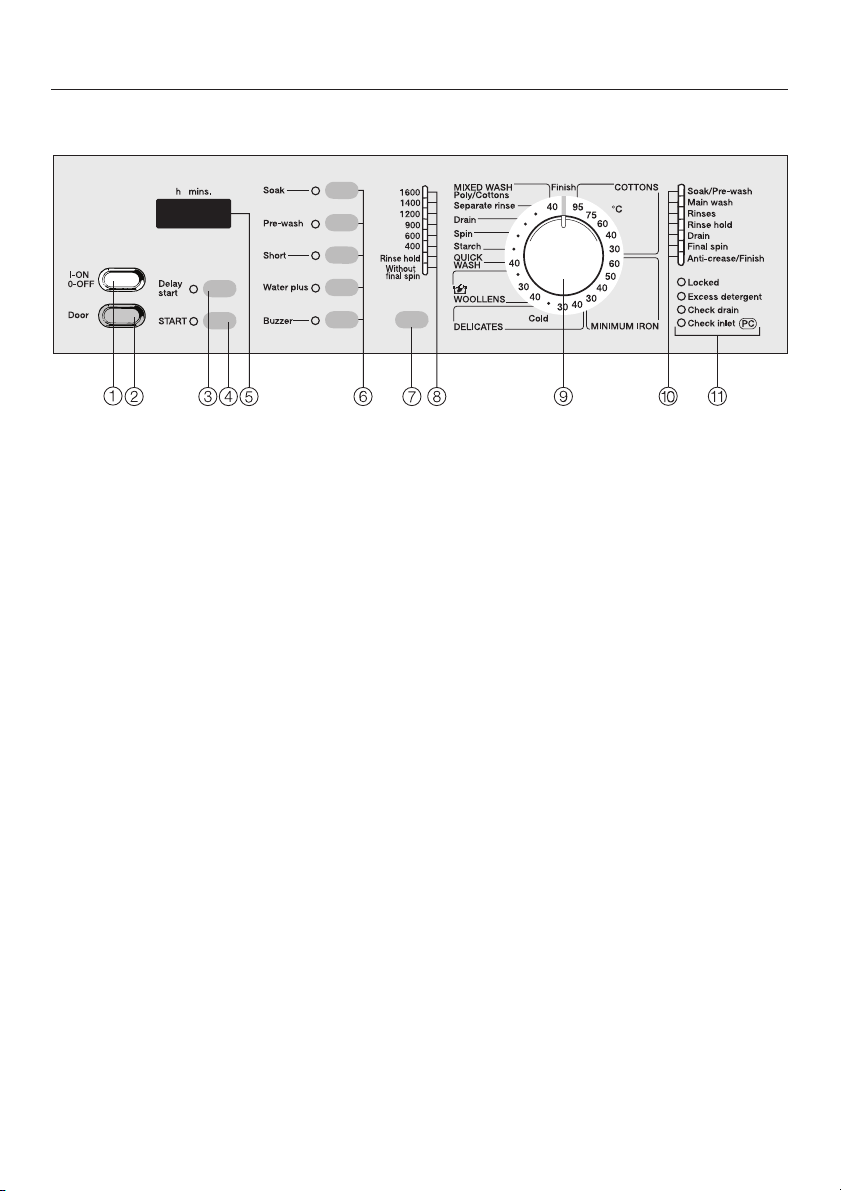
a "I-ON / 0-OFF" button
To switch the machine ON or OFF or
to interrupt a programme.
b "Door" button
opens the machine door.
c "Delay start" button
With delay start the start of the
programme can be delayed from 30
minutes up to a maximum of 24^.
d "START" button
starts the wash programme
e Display
Display fulfils several functions:
–
shows the length of programme;
–
with "delay start" shows the time until
the programme starts.
–
shows the programming functions
when they are called up.
f Buttons for additional options
Indicator light on = selected
Indicator light off = not selected
g "Spin" button
for spin speed, Rinse hold and With
out final spin
h Indicator lights
showing the selected spin speed.
i Programme selector
Can be turned clockwise or anti-clockwise.
The ring display goes out in the
following circumstances:
–
if a few minutes after switching on no
programme selection or programme
start has been selected.
–
a few minutes after the programme
has ended.
j Programme sequence indicator
lights
k Check lights
-
7
Page 8
Warning and safety instructions
Read the operating instructions be
fore using this machine for the first
time. They contain important infor
mation about the safety, use and
maintenance of the machine. This
way you will avoid the risk of acci
dents and damage to the machine.
Keep these operating instructions in
a safe place and ensure that new
users are familiar with the content.
Pass them on to any future owner of
the machine.
-
-
-
Correct usage
Only use the washing machine to
wash items which are specified by
the manufacturer to be machine-washable on the wash-care label, and textiles composed of hand-washable wool
or wool blend fabrics as well as satin,
lace, silk and other hand-washable garments.
Any other applications may be dangerous. The manufacturer is not liable for
damage resulting from improper use or
operation.
This appliance should not be oper
ated by children. Supervise its use
by the elderly or infirm.
supply. If in any doubt, consult a quali
fied electrician.
The electrical safety of this appli
ance can only be guaranteed when
continuity is complete between the ma
chine and an effective earthing system
which complies with local and national
regulations. It is most important that this
basic safety requirement is regularly
tested by a qualified electrician.
The manufacturer cannot be held re
sponsible for the consequences of an
inadequate earthing system (e.g. elec
tric shock).
Do not connect the appliance to
the mains electricity supply by an
extension lead. Extension leads do not
guarantee the required safety of the
appliance (e.g. danger of overheating).
The machine is built in accordance
with current safety requirements.
Unauthorised repairs could result in unforeseen dangers for the user, for which
the manufacturer cannot accept responsibility. Repairs should only be un
dertaken by a Miele approved
engineer.
-
Ensure current is not supplied to the
appliance while maintenance or repair
work is being carried out.
-
-
-
-
-
-
Technical safety
Before setting up the machine,
check it for any externally visible
damage. Do not install and use a dam
aged machine.
Before connecting the machine,
ensure that the connection data on
the data plate (fusing, voltage and fre
quency) match the mains electricity
8
The machine is only completely
isolated from the electricity supply
when:
–
-
-
it is switched off at the wall socket
and the plug is withdrawn, or
–
it is switched off at the mains, or
–
the mains fuse is withdrawn.
Page 9

Warning and safety instructions
The Miele "Waterproof system" pro
tects from water damage provided
the following conditions have been met:
the machine is correctly plumbed in
–
and connected to the electricity sup
ply.
if a fault has been identified, the ma
–
chine must be examined by a com
petent person before further use,
and repaired if necessary.
Faulty components must only be
exchanged for Miele original spare
parts. Only when these parts are fitted
can the safety standards of the machine be guaranteed.
If the connection cable is damaged
it must be replaced by a special
Miele cable.
In countries where there are areas
which may be subject to infestation
by cockroaches or other vermin, pay
particular attention to keeping the appliance and its surroundings in a clean
condition at all times. Any damage
which may be caused by cockroaches
or other vermin will not be covered by
the appliance guarantee.
-
Use
This equipment is not designed for
maritime use, or for use in mobile
installations such as caravans, aircraft
etc. However, it may be suitable for
such usage subject to a risk assess
ment of the installation being carried
out by a suitably qualified engineer.
-
-
-
-
Do not install your washing ma
chine in rooms where temperatures
below freezing may occur. Frozen
hoses may burst under pressure. The
reliability of the electronic control sys
tem may be impaired at temperatures
below freezing point.
Before using the machine for the
first time, check that the transit fit
ting at the rear of the machine has been
removed (see section on "Installation").
During spinning, a transit fitting which is
still in place may result in damage to
both the machine and adjacent furni
ture or appliances.
Turn off the stopcock if the ma-
chine is to be left for any length of
time (e.g. holiday), especially if there is
no floor drain (gully) in the immediate
vicinity.
Flooding danger.
If hooking the drain hose into a
wash basin, check that the water can
drain off quickly enough to prevent the
sink from overflowing.
Make sure the drain hose is secure, so
that the force of the water flowing out of
the hose does not dislodge it. Other
wise this will result in flooding.
Take care to ensure that foreign ob
jects (e.g. nails, needles, coins,
paper clips, etc.) do not find their way
into the machine with the washing (e.g.
in pockets). Foreign objects can dam
age components of the machine, which
in turn can result in damage to the
washing.
-
-
-
-
-
-
-
9
Page 10

Warning and safety instructions
If the correct amount of detergent
is dispensed, the machine should
not need to be descaled. If, however,
you do wish to descale the machine
only use proprietary non-corrosive
descaling agents and strictly observe
the manufacturer’s instructions given on
the packaging. Consult the Miele Cus
tomer Service Department if necessary.
Textiles which have been pre-
treated in solvent-based cleaning
agents must be thoroughly rinsed in
clean water before being washed in the
machine.
Never use solvent-based cleaning
agents in this machine, as this may
result in damage to component parts
and create toxic fumes. Such detergents also pose a fire and explosion
hazard.
Only use dyes specified by the
manufacturer as being suitable for
use in a washing machine. Always observe the manufacturer’s instructions
carefully.
-
Accessories
Accessory parts may only be fitted
when expressly approved by Miele.
If other parts are used, guarantee, per
formance and product liability claims
may be invalidated.
Disposal of your old machine
Before discarding an old machine
unplug it. Render the plug useless.
Cut off the cable directly behind the ap
pliance to prevent misuse.
-
-
Colour run and dye removers may
contain sulphur compounds which
cause damage such as corrosion. Do
not use these products in this machine.
Always make sure the drum is sta
tionary before reaching in to re
move laundry. Reaching into a moving
drum is extremely dangerous.
10
-
-
Page 11

Washing environmentally and economically
Water consumption and energy us
–
age are determined by the size of the
load. Load to the maximum recom
mended for the programme selected.
The washing times can vary consid
–
erably due to the automatic load ad
justment feature. Depending on the
amount of the load, the main wash
may be shortened and one rinse
omitted.
Use the Mixed Wash poly/cottons
–
programme or the Quick Wash
programme for smaller amounts of
laundry.
– To save energy wash normally and
lightly soiled laundry at lower temperatures. The 95°C Cottons
programme is probably only needed
in exceptional circumstances, e.g.
for oil based stains or where a very
hot wash is required.
Use the "Short" wash option for nor
–
mally or very lightly soiled laundry.
-
-
-
Do not exceed the amounts of deter
–
gent which may be recommended by
the manufacturer on the packaging.
Reduce the amounts of detergent
–
with smaller loads, (e.g. with a half
load, approx. one third less deter
gent).
Select the highest suitable spin
–
speed in the wash programme when
tumble drying afterwards.
-
-
-
– A main wash (programme without
pre-wash) is sufficient to clean normally soiled laundry.
–
By using the additional option "Soak"
for heavily soiled laundry you can se
lect a lower temperature in the main
wash.
–
Use the additional option "Soak" in
stead of "Pre-wash" with heavily
soiled laundry.
If "Soak" is followed immediately by a
main wash the same suds are used.
-
-
11
Page 12

Before using for the first time
Before using the machine for the first
time ensure that it is correctly in
stalled and connected. See the rele
vant section under "Installation".
Also check that the fluff filter is se
curely tightened. Otherwise there is
a risk of water leakage during use.
Flushing out the machine
Any residual lubricants and water from
testing still in the machine should be
flushed out as follows:
Turn on the stopcock.
^
^ Do not load any laundry.
^ Add detergent to compartment j ,
however
amount recommended on the packaging for a full load.
^ Press the "I-ON/0-OFF" button in.
only add max.1/4of the
-
-
-
Water hardness reminder dial
Several factors including the water
hardness level in your area will affect
how much detergent you should use.
The small dial in the detergent dis
penser drawer can be set purely as a
reminder of the hardness level.
-
^ Turn the programme selector to
"COTTONS 60°C".
Important!
This programme must be selected in or
der to prepare the machine for spinning
and to activate the ball valve.
^
Press the "Water plus" button in. The
indicator light next to it will come on.
^
Press the "Spin" button repeatedly un
til the "Without final spin" indicator
light comes on.
^
Press the "START" button.
^
When this programme has finished
your washing machine is ready for
using for the first time.
12
^ Remove the yellow spatula from in-
side the dispenser drawer.
-
-
^
Adjust the dial to the appropriate set
ting (1 = soft, 4 = very hard).
-
Page 13
How to wash correctly
Brief guide
The headings numbered (A,B,C,...)
show the operating sequence and can
be used as a brief guide.
Before washing
A Sort the laundry.
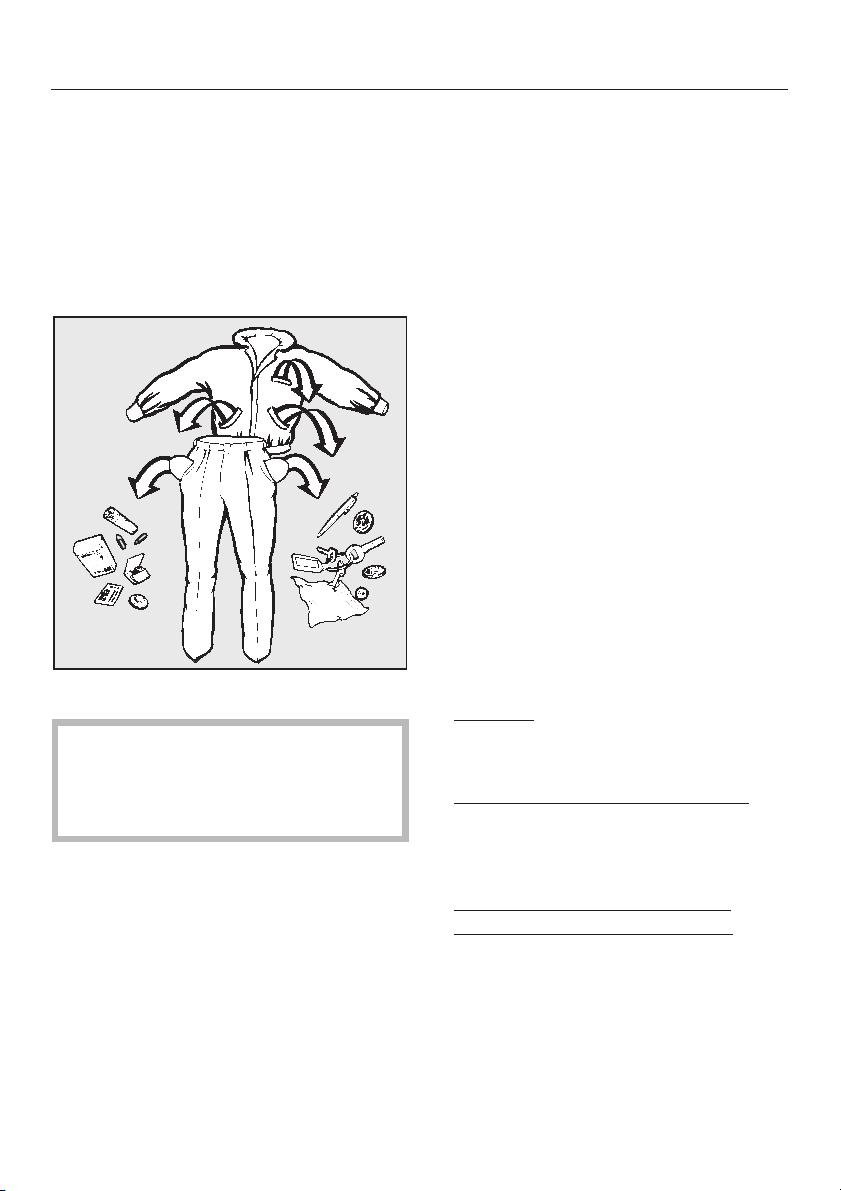
^ Empty all pockets.
Foreign objects (e.g. nails, coins,
paper clips, etc.) can cause dam
age to textiles and components in
the machine.
Most garments have a textile care label
in the collar or side seam. Sort the
washing by care label symbols. (See
"Programmes - Care symbols" for their
explanation).
-
Dark textiles often contain excess dye
and should be washed separately sev
eral times before being included in a
mixed load.
Delicate textiles should be washed sep
arately in a delicates programme (use a
washing bag where appropriate).
Do not wash any items in this machine
which are specified by the manufac
turer as non-machine washable on the
care label. (h symbol)
Pre-treat the laundry
Badly soiled areas, e.g. collars and
cuffs, and water soluble stains can be
pre-treated with bar soap, liquid detergent or detergent mixed into a solution
or paste.
With particularly stubborn stains ask
your dry cleaner for advice. Do not
used solvent-based cleaning agents in
this machine.
– Curtains:
Remove lead weights and strips or
place in a laundry bag.
–
Underwiring and collar stiffeners:
Any loose wiring in bras, shirt collar
stiffeners, etc. should be removed or
sewn in.
–
Knitted garments, trousers and
jeans, T-shirts and sweat shirts:
Turn inside out, if recommended by
the manufacturer.
-
-
-
–
Close any zips, fasten hooks and
eyes etc. before washing.
–
Fasten duvet covers to prevent
smaller items rolling up inside them.
13
Page 14
How to wash correctly
B Press the "Door" button.
C Load the drum.
Unfold washing and load loosely in the
drum. To achieve best results it is ad
visable to make up mixed loads con
sisting of both large and small items.
This improves the washing effect and
helps distribute the load evenly to keep
the machine stable and reduce the
noise level during spinning.
Overloading reduces the wash result
and causes more creasing.
Maximum load weights are noted below:
COTTONS . . . . . . . . . . . . . . . . . . 5.0 kg
MINIMUM IRON. . . . . . . . . . . . . . 2.5 kg
DELICATES/SYNTHETICS . . . . . . 1.0 kg
WOOLLENS / . . . . . . . . . . . . . . 1.0 kg
QUICK WASH . . . . . . . . . . . . . . . 2.5 kg
MIXED WASH (Poly/Cottons). . . . 3.0 kg
D Shut the door with a light swing
but do not slam it. Do not push on
the door to shut it.
-
-
To start a programme
G Press in the "I-ON/0-OFF" button.
The programme selector should be
–
pointing to Finish, the indicator light
"Anti-crease/Finish" is lit up in the se
quence display.
If the programme selector is pointing
–
to a programme, the programme
time is shown in the display and the
"START" button flashes.
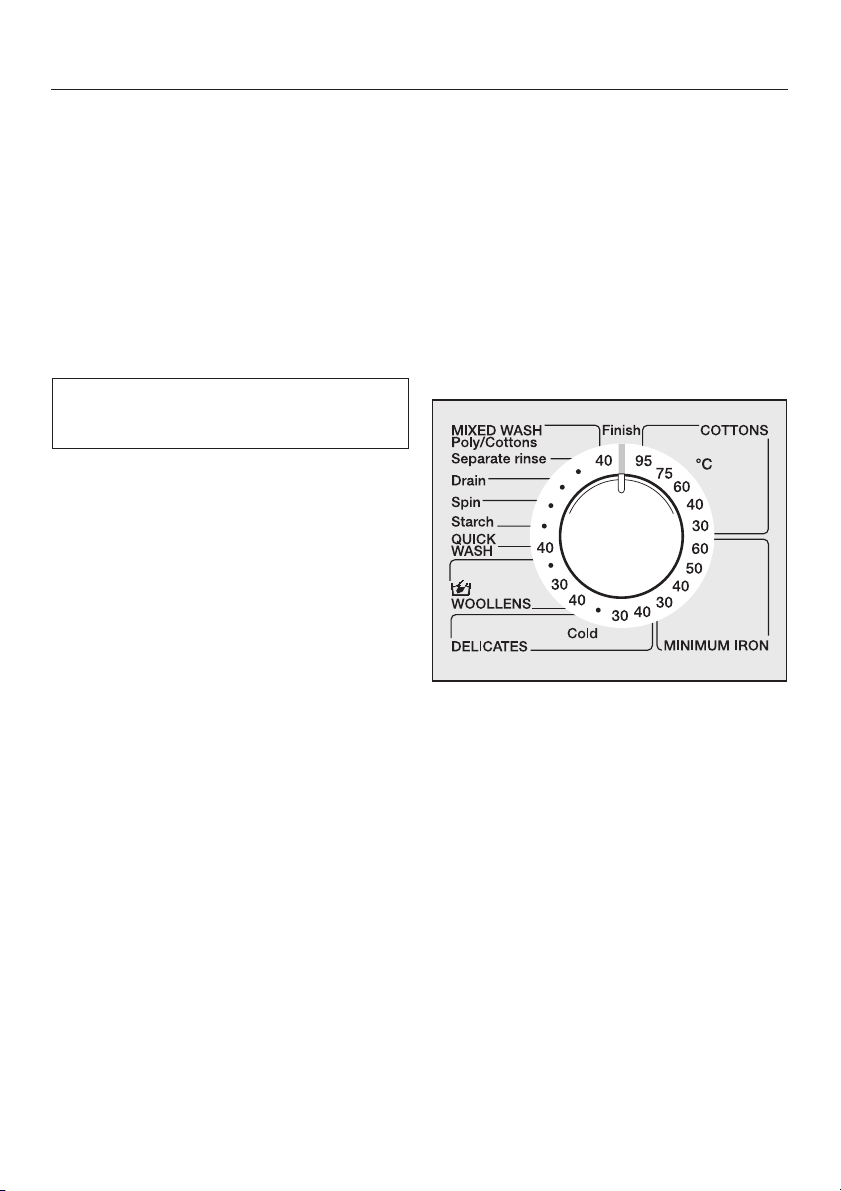
H Turn the programme selector to
the programme required
See "Programme survey" section.
-
Make sure that no washing is trapped
between the drum door and seal.
E Open the stopcock.
F Add detergent.
See section on "detergent" for details.
14
Page 15

How to wash correctly
I Select any additional option re
quired.
^ Press the relevant button.
Indicator light on = selected
Indicator light off = not selected
An additional option that has been se-
lected can be de-selected by pressing
the button.
Exception:
With the additional option "Soak" the
soak time increases each time the but
ton is pressed, up to a maximum of 6
hours. If the button is pressed again it
switches the "Soak" option off, (see sec
tion "Additional options, Soak").
-
J Select a spin speed
Press the "Spin" button enough times
^
until the indicator light for the required final spin speed lights up.
In some programmes the maximum
spin speed is limited. The machine will
not allow a higher spin speed to be selected. (see "Programme survey" section).
Memory-Function
If the last time a programme was run
an additional option or different spin
speed was selected, the machine will
have stored this information in its
memory.
The next time that programme is se
lected the machine offers the additional
option and / or spin already stored in
memory.
Exception:
Buzzer and Delay start
-
15
Page 16
How to wash correctly
Delay start
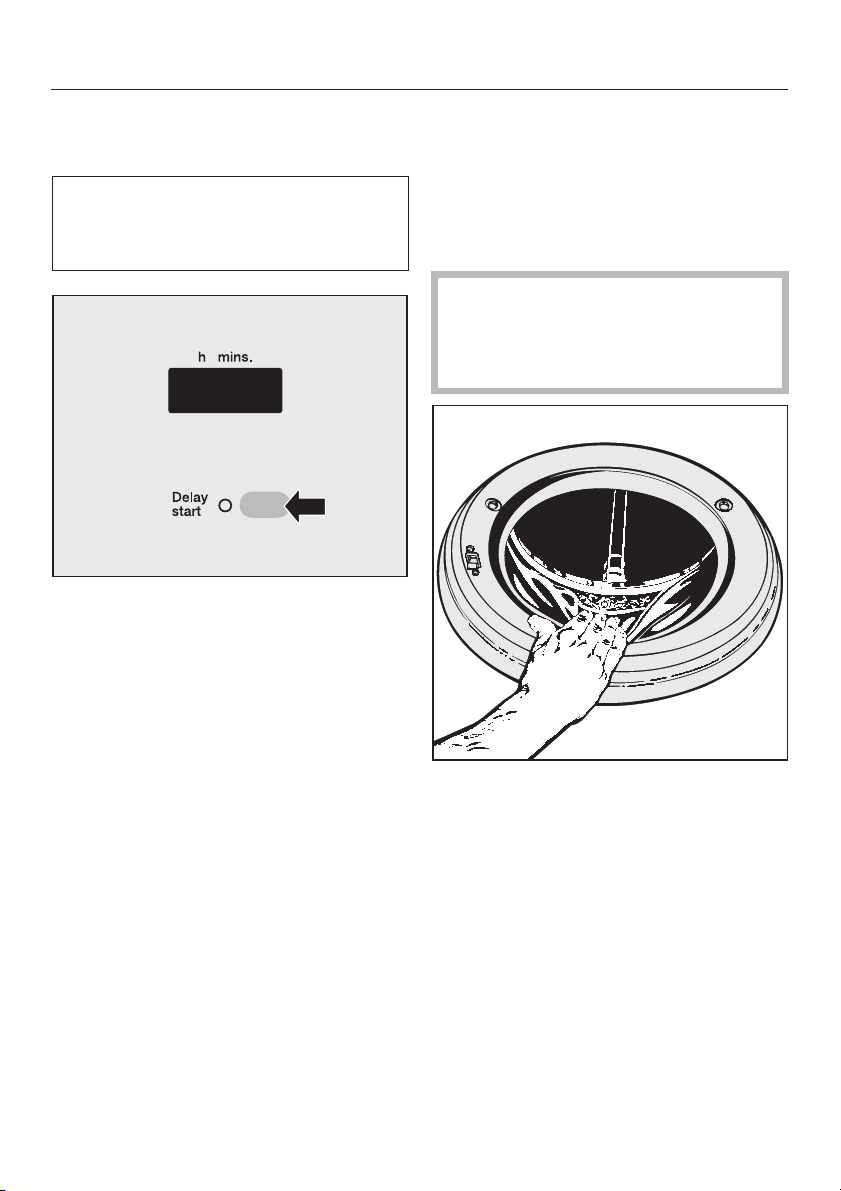
K Select delay start if required.
The start of programmes can be de
layed from 30 minutes up to a maxi
mum of 24^.
^ Press the "Delay start" button. Each
press increases the delayed time,
– by 30 minutes up to 10 hours,
– by one hour from 10 hours upwards.
-
-
After washing
M Press the "Door" button.
N Press and release the "I-On/0-Off"
button.
O Remove the washing.
Only remove washing from the ma
chine once the drum has stopped
turning, otherwise you may seriously
injure yourself.
-
^
Delay start can be cancelled by
bringing up 24^ and pressing the
"Delay start" button once more.
L Press the "START" button
This starts the programme.
16
P Check the folds in the door seal for
any small articles e.g. buttons
which might be lodged there.
Q Close the drum door.
Otherwise there is a danger of objects
being placed inadvertently in the drum.
If these remained unnoticed and were
washed in the next load, they could
damage the washing.
Page 17

How to wash correctly
Adding or removing washing
after programme start
Washing can be added or removed af
ter the programme has already started,
when using the following programmes.
COTTONS
–
MINIMUM IRON
–
WOOLLENS /
–
QUICK WASH
–
Starch
–
MIXED WASH
–
^ Press the"Door" button and hold it un-
til the door springs open.
^ Add or remove items
^ Shut the door.
The programme will automatically continue.
– Apart from some exceptional cases
the door can be opened during all
sections of COTTONS, WOOLLENS,
QUICK WASH, Starch and MIXED
WASH - Poly/Cottons (high cotton
percentage) programmes.
General exceptions:
The door cannot be opened when:
-
the suds temperature is above 55°C.
–
the additional option "Water plus" has
–
been selected,
programme locking is switched on,
–
the programme has reached the "Fi
–
nal spin" stage.
-
–
With MINIMUM IRON and
MIXED WASH - Poly/Cottons (high
polyester percentage) the door can
be opened during the main wash
with some exceptions.
17
Page 18

How to wash correctly
Programme . . .
. . . interruption
Press the "I-ON/0-OFF" button.
^
To continue with the same
^
programme press the"I-ON/0-OFF"
button again.
. . . alteration
The machine will accept the following
changes after the "Start" button has
been pressed.
– selection of a different temperature,
extra selection or de-selection of the
"Water plus", and "Quick wash" options can be carried out up to 6 minutes after start.
– the spin speed for final spin can be
changed within the limits for the
programme.
After start it is no longer possible to select a different programme.
If a different programme or 6 minutes
after start another temperature is se
lected, the indicator light "Anticrease/Finish" flashes. This does not af
fect the programme sequence. The in
dicator light goes out when the
programme selector is set back to the
programme or temperature previously
chosen.
-
To select a different programme pro
ceed as follows:
With the "I-On/0-Off" button switch off
^
the appliance.
Turn the programme selector to "Fin
^
ish".
Switch the machine on with the "I-
^
On/0-Off" button.
Select a new programme.
^
Press the "START" button.
^
. . . Skipping a programme stage
^ Turn the programme selector to "Fin-
ish".
As soon as the programme sequence
light starts flashing for the stage at
which the programme should continue:
^ Turn the programme selector switch
to the appropriate programme within
4 seconds.
When programme locking has been
activated the programme cannot be
changed or a programme stage left
out.
-
-
-
-
18
Page 19

Adding detergent
All modern detergents produced for au
tomatic washing machines are suitable,
including liquid, compact (concen
trated), tablets and special application
detergents. Use dispensing aids, e.g.
balls, if these are supplied with the de
-
tergent.
Woollens and knitwear containing wool
mixtures and hand-washable garments
should be washed using a detergent
specifically designed for washing
woollens.
Silk should be washed using a liquid
detergent specifically designed for
washing woollens. Do not use biological detergents on silk as the enzymes
will damage the silk!
Add detergent according to the amount
recommended on the packaging. The
right amount to dispense will depend
on the following:
– The quantity of laundry.
– The soiling level of the laundry.
Lightly soiled
No visible dirt or stains. Possibly
slight body odour.
Normally soiled
Visibly dirty and/or just a few slight
stains.
Heavily soiled
Stains and soiling clearly visible.
Water Hardness
-
Hardness
range
I soft 0 - 1.3 0 - 7
II medium 1.3 - 2.5 7 - 14
III hard 2.5 - 3.8 14 - 21
IV very hard over 3.8 over 21
Type of
water
(hardness)
Hardness
level in
mmol / l
It is important to dispense the
correct amount, because . . .
. . . too little has the following results:
– Laundry will not be properly clean
and will in time become grey and
hard to the touch.
– Greasy particles cling to the laundry.
– Lime deposits on the heater ele-
ments.
. . . too much results in the following:
– Excessive foam.
–
Low level of agitation.
–
Poor washing, rinsing and spinning
results.
–
High water consumption (an addi
tional rinse cycle will automatically
switch in).
–
Burdening the environment.
°dH
German
-
–
The water hardness level
Check with your local water supplier
if you do not know the water hard
ness level.
-
19
Page 20
Adding detergent
Adding detergent
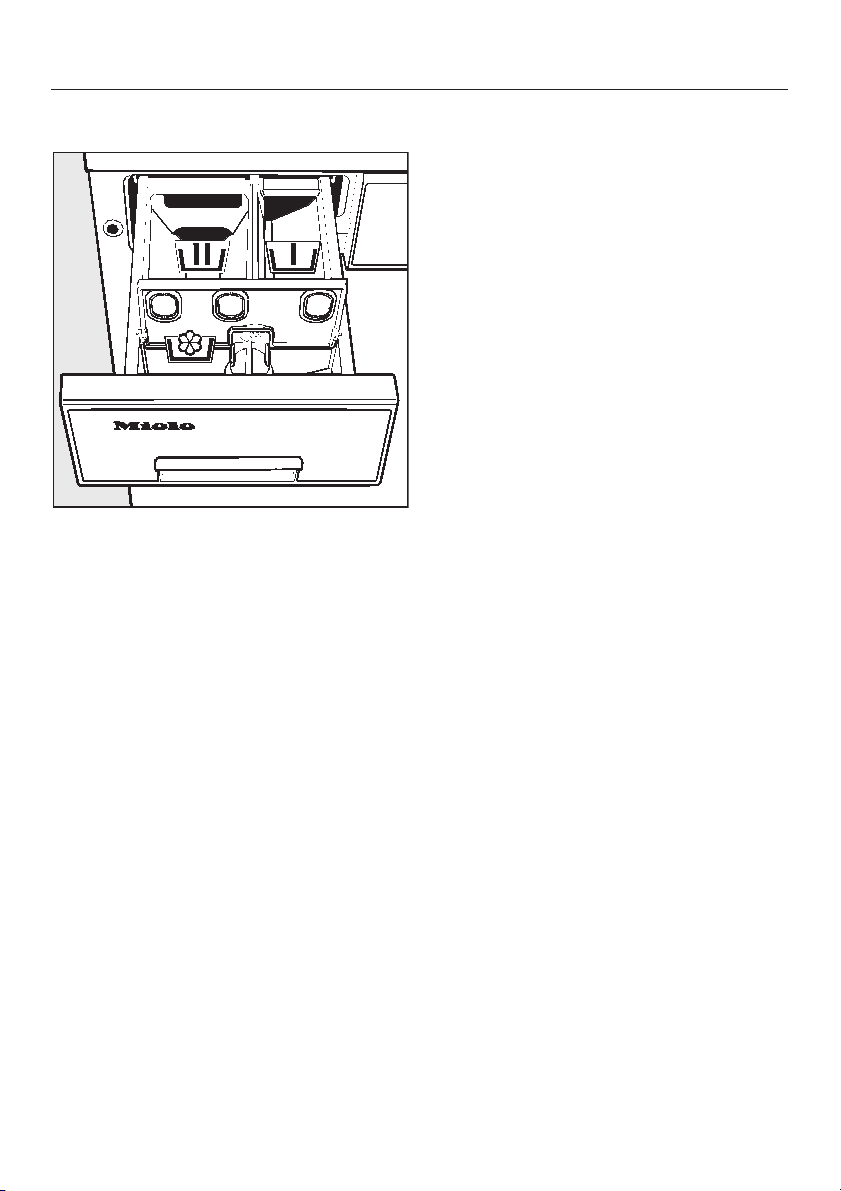
i = Compartment soak/pre-wash
j = Compartment main wash
p = Compartment fabric conditioner
Water is taken in through compartment
i in the pre-wash.
Water is taken in through compartment
j in the main wash. If the capacity of
compartment j is insufficient for the
amount of detergent needed for a
COTTONS programme (e.g. in very
hard water areas), the machine can be
programmed so that water and deter
gent can also be taken into the main
wash through compartment i , see
"Programmable functions", "Activating
compartment i".
-
Water softeners
A water softener can be used to cut
down on the use of detergents in water
hardness ranges II-IV. Dispense ac
cording to the amount specified on the
packaging. First add detergent and
then the water softener.
Use a quantity of detergent as for soft
water.
If you wash using several components
(e.g. special application detergents),
we recommend always dispensing the
agents into compartment j in the fol
lowing order:
1. Detergent
2. Water softener
3. Stain salts
This way the agents are distributed
more efficiently.
-
-
Fabric conditioners,
texturisers, liquid starch
Fabric conditioners make garments soft
and fluffy to handle and help prevent
static cling when tumble drying.
Texturisers are synthetic starch formula
tions and give body to items e.g. shirts,
tablecloths and bed linen.
Starch gives body to items of washing.
^
Dispense according to the amount
specified on the packaging.
-
20
Page 21
Adding detergent
Automatic fabric conditioners,
texturisers, or liquid starch
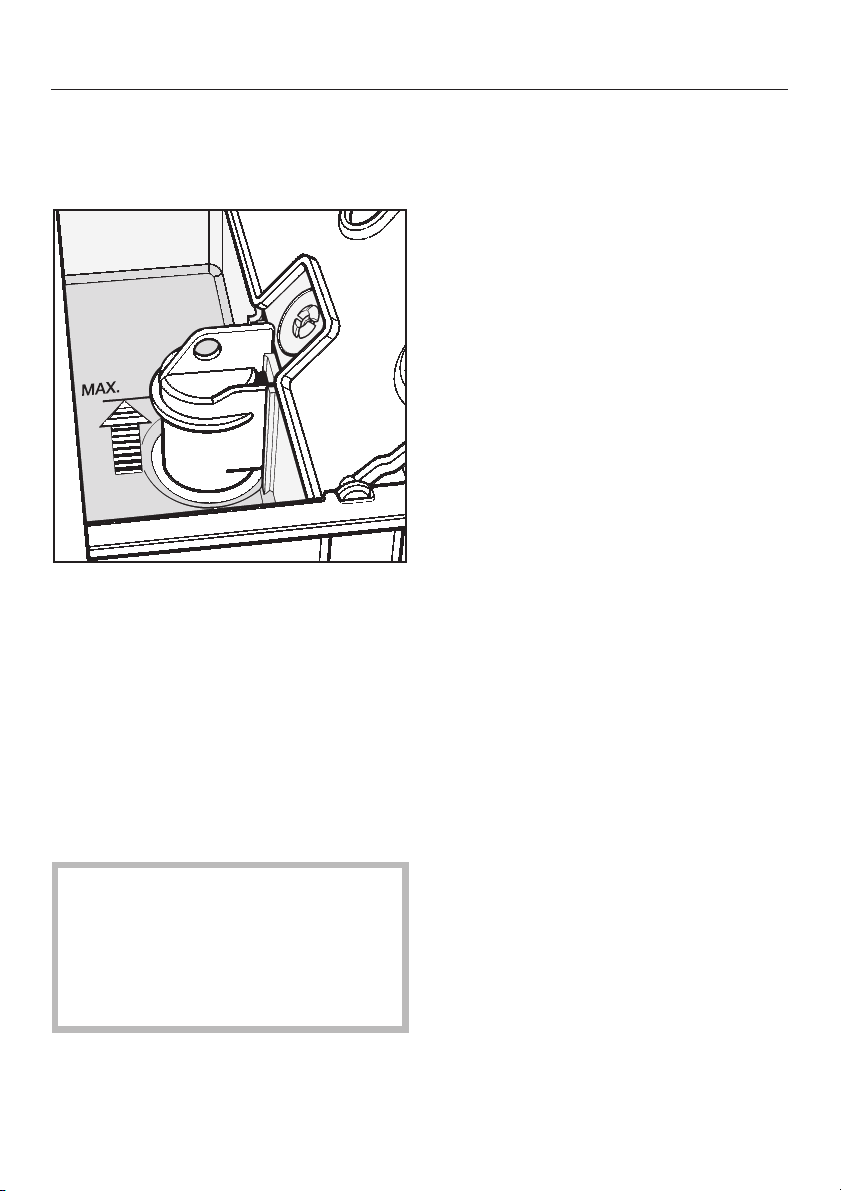
Open the lid of compartment p.
^
^ Add the fabric conditioner, texturiser
or liquid starch. Do not exceed the
maximum level mark.
^ Close the compartment lid.
Separate fabric conditioner or
texturiser
Add fabric conditioner or texturiser to
^
the compartment p.
Turn the programme selector to
^
"Starch".
Select a spin speed.
^
Press the "Start" button.
^
Starching separately
Measure and prepare starch in ac
^
cordance with the manufacturer’s in
structions.
^ Add the starch to compartment i.
^ Turn the programme selector to
"Starch".
^ Select a spin speed.
^ Press the "Start" button.
-
-
^
Push the drawer back in.
The conditioner, texturiser or liquid
starch is automatically dispensed in the
last rinse. At the end of the programme
a small amount of water remains in the
fabric conditioner compartment p.
If starching frequently, clean the dis
penser compartment and especially
the siphon tube and conditioner
channel. (See section on the deter
gent dispenser drawer in "Cleaning
and Care") .
-
-
21
Page 22
Programmes
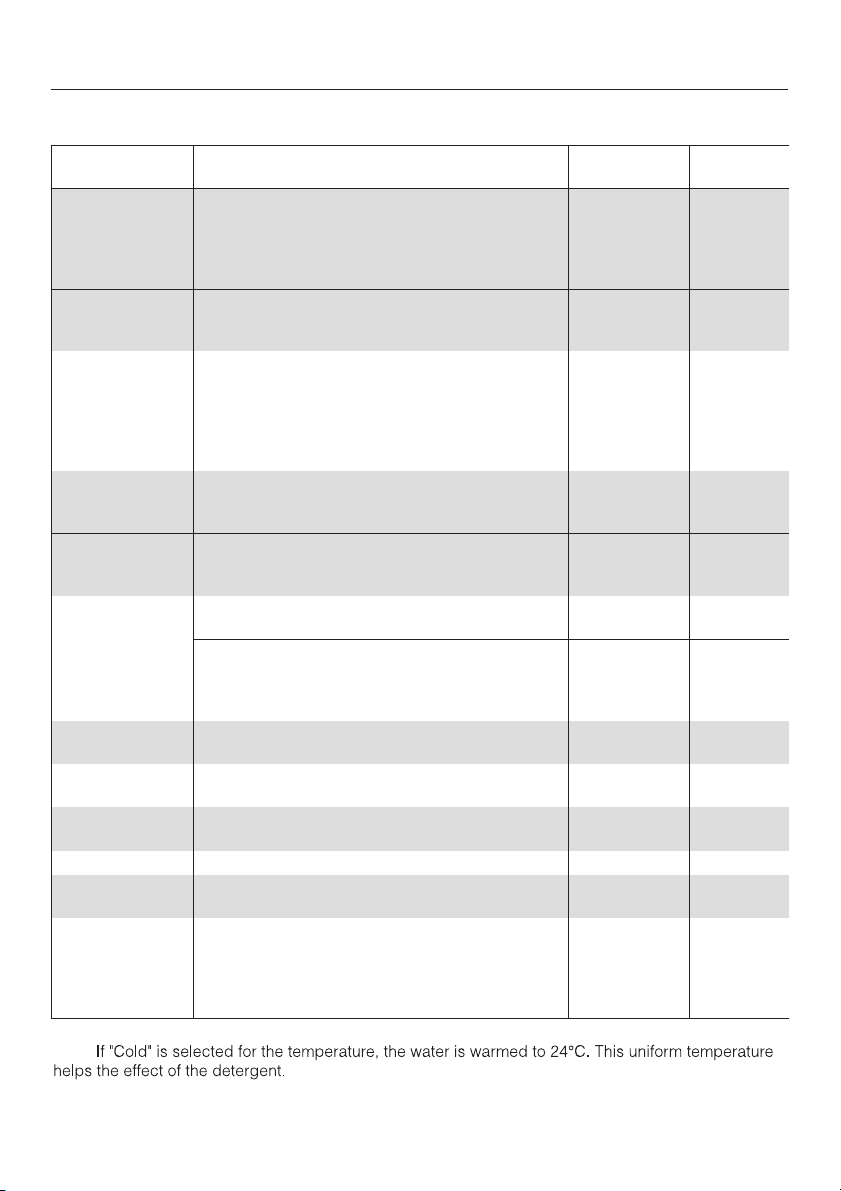
Programme selection
Programme Fabric Temperature max.
COTTONS Cottons and linen fabrics, eg bed linen, table
linen, towelling, jeans, underwear, T-shirts, nap
pies.
COTTONS Wash load as for standard tests 60°C 1600
95°C to 30°C 1600
-
spin speed
MINIMUM IRON (60°C) white nylon, white polyester fabrics (50°C),
DELICATES Acrylics, acetate and triacetate, socks and stock
WOOLLENS
/
QUICK WASH Very lightly soiled fabrics, which can be washed in
Starch Table cloths, napkins, overalls, uniforms cold 1600
Spin Articles which can be spun, eg handwashed
Drain
Separate rinse Fabrics which were washed by hand and only
MIXED WASH
Poly/Cottons
coloured nylon, polyester, cotton and viscose fab
rics with special finishes, acrylic, cotton fabrics,
coloured polyester / cotton fabrics, (40°/30°C) min
imum iron fabrics not washable at higher tempera
tures
ings in man-made fibres, (not wool or wool blends)
Curtains, specified machine-washable by the
manufacturer (pre-wash probably advisable).
Programme for machine-washable or hand-washable wool or wool blend fabrics
Also suitable for satin, lace, silk and other hand
washable garments.*
the Cottons programme.
items, max weight according to fabric
need to be rinsed and spun.
Suitable for small loads of garments made from
man-made fibres and cotton garments which can
be washed together. Sort according to colour.
60°C to 30°C 900
-
-
-
40°C to cold 600
-
30°C to cold 600
40°C to cold 1200
40°C to cold 1600
cold 1200
40°C 900
*
1600
cold:
22
Page 23
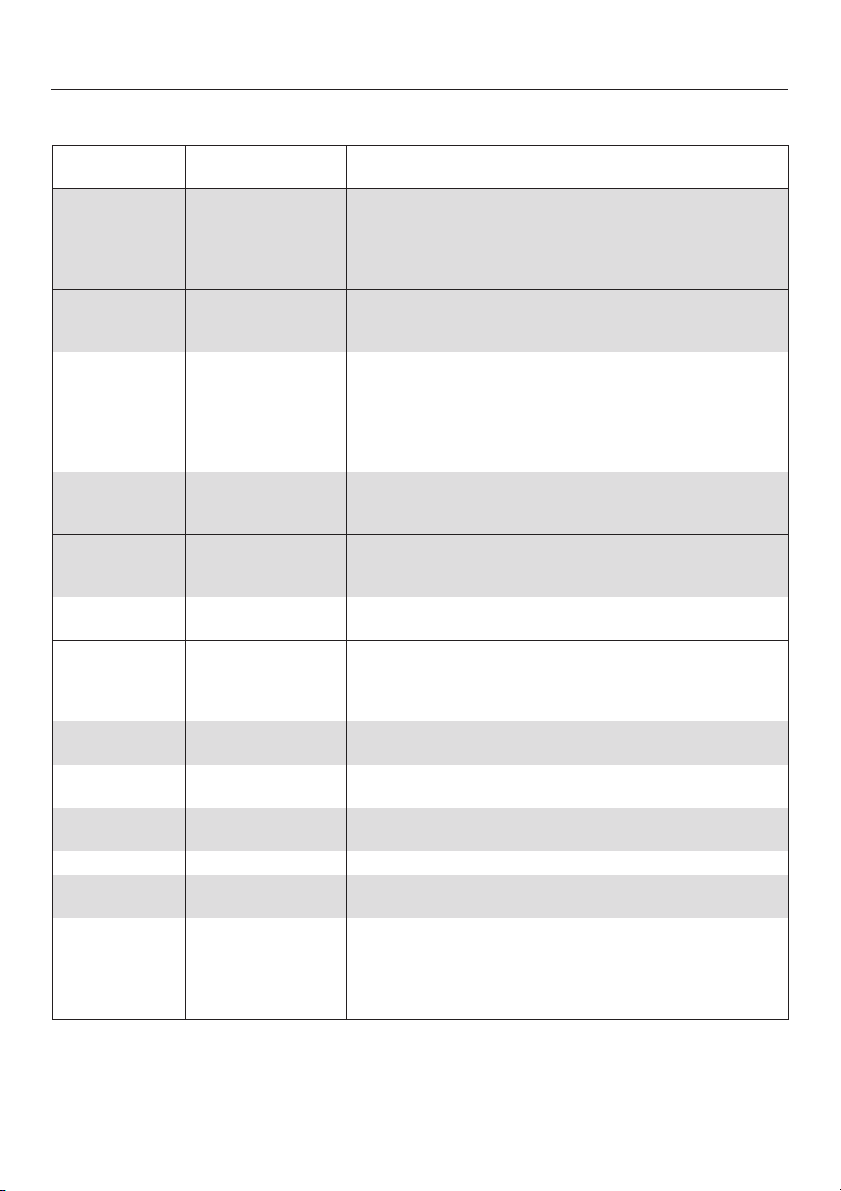
max. load Additional options Notes
Programmes
5 kg
5 kg For test institutes:
2.5 kg
1 kg
Fill the drum
1
loosely
Do not overload
/2to3/
full
2 kg
2.5 kg
5 kg The washing should be washed, but not treated with fabric
5 kg
Soak
–
Pre-wash
–
Short
–
Water plus
–
(Option 1,2,3,4)
Soak
–
Pre-wash
–
Short
–
Water plus
–
(Option 1,2,4)
Soak
–
Pre-wash
–
Short
–
Soak
–
Pre-wash
–
4
– Short
–
Water plus
(Option 1,2,4)
With heavily soiled items select "Soak" or "Pre-wash". Wash
dark colours in liquid detergent.
For normally soiled items select "Short".
Programme setting for tests according to EN 60456 Stan
dard Programme
With heavily soiled items select "Soak" or "Pre-wash"
For normally soiled items select "Short"
f If fabrics have a high proportion of man-made fibres
it is advisable to programme the machine for "Gentle
Action". see "Programmable functions"
Use the Wool programme for textiles with wool content
Dust in curtains usually makes pre-wash advisable.
Use liquid wool detergent.
Hand washable garments will not shrink, stretch, matt or felt
beyond the accepted tolerance.
*For satin, lace, silk and other hand washable garments
manually reduce the spin speed or select without final spin.
Add less detergent (half load)
conditioner.
-
5 kg
3 kg
See Section on Additional options for more details.
–
Soak
–
Pre-wash
–
Short
–
Water plus
(Option 1,2,3*,4*)
The water level, number of rinses and programme time are
set automatically in relation to composition of the washing
(see "Programmes" Sequence).
*Option is only carried out with a high proportion of cotton.
23
Page 24
Programmes
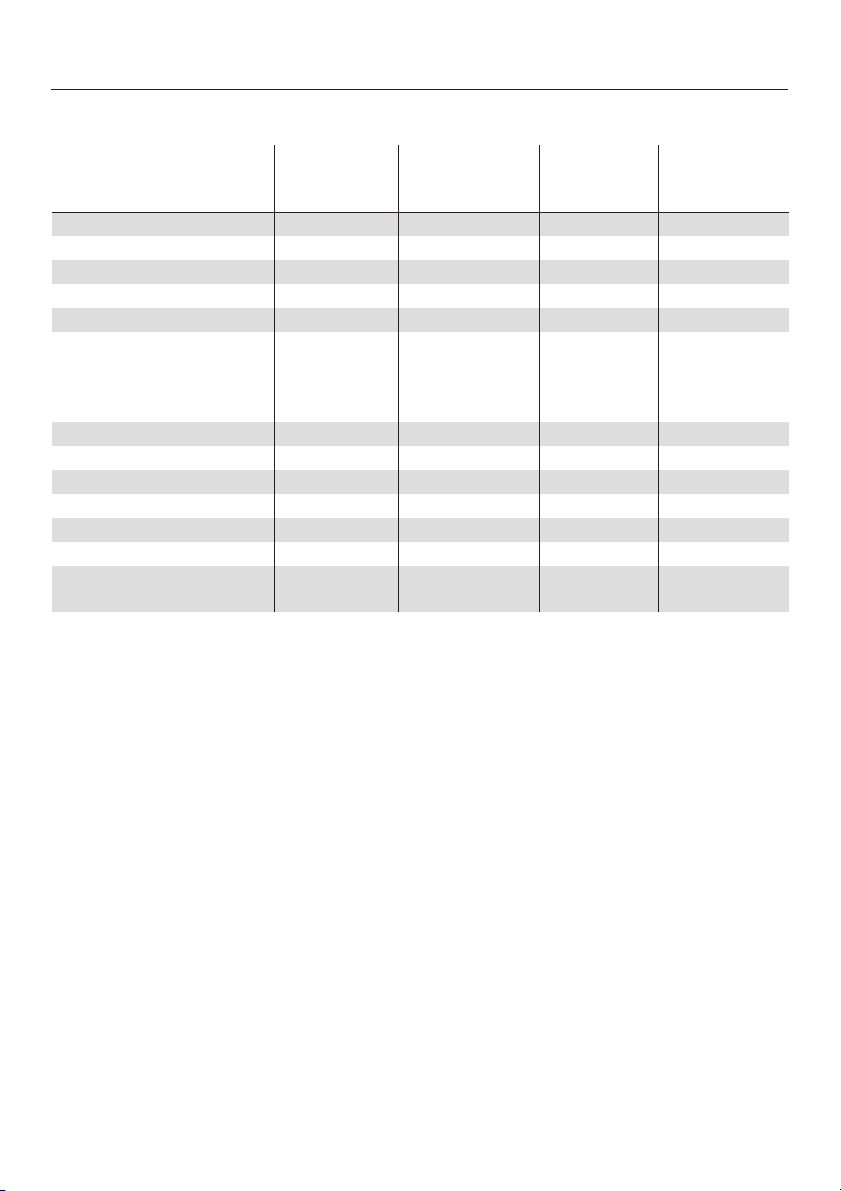
Sequence
COTTONS1)MINIMUM IRON1)DELICATES WOOLLENS /
Soak optional optional optional –
Pre-wash optional optional optional –
Main wash ßßßß
Top-up rinse from 75°C programmable – – –
Graduated rinsing – from 40°C – –
No. of rinses
normal
–
medium load
–
short
–
Rinse and interim spin (rpm) max. 1000 max. 500 – max. 600
Final spin (rpm) max. 1600 max. 900 max. 600 max. 1200
Anti-crease, and loosen max. 30 mins max. 30 mins max. 30 mins –
Rinse-hold optional optional optional optional
Without final spin optional optional optional optional
Wash rhythm normal normal gentle action wool
Water level – Wash
– Rinse
3 or 4
2
2
low
low
2)
3
2
2
low
medium
3
–
3
high
high
2
–
–
medium
medium
Explanations:
ß Programme section included
– Programme section not included
1)
Load recognition:
The programme sequence is modified in these programmes according to the absorbency of the load.
2)
A 4th rinse
automatically switches in if there is too much foam in the drum, or if a spin speed lower than 700 rpm
has been selected.
Wool:
Wool is susceptible to damage from movement when it is wet. The wash action during the course of
the programme is low.
24
Page 25
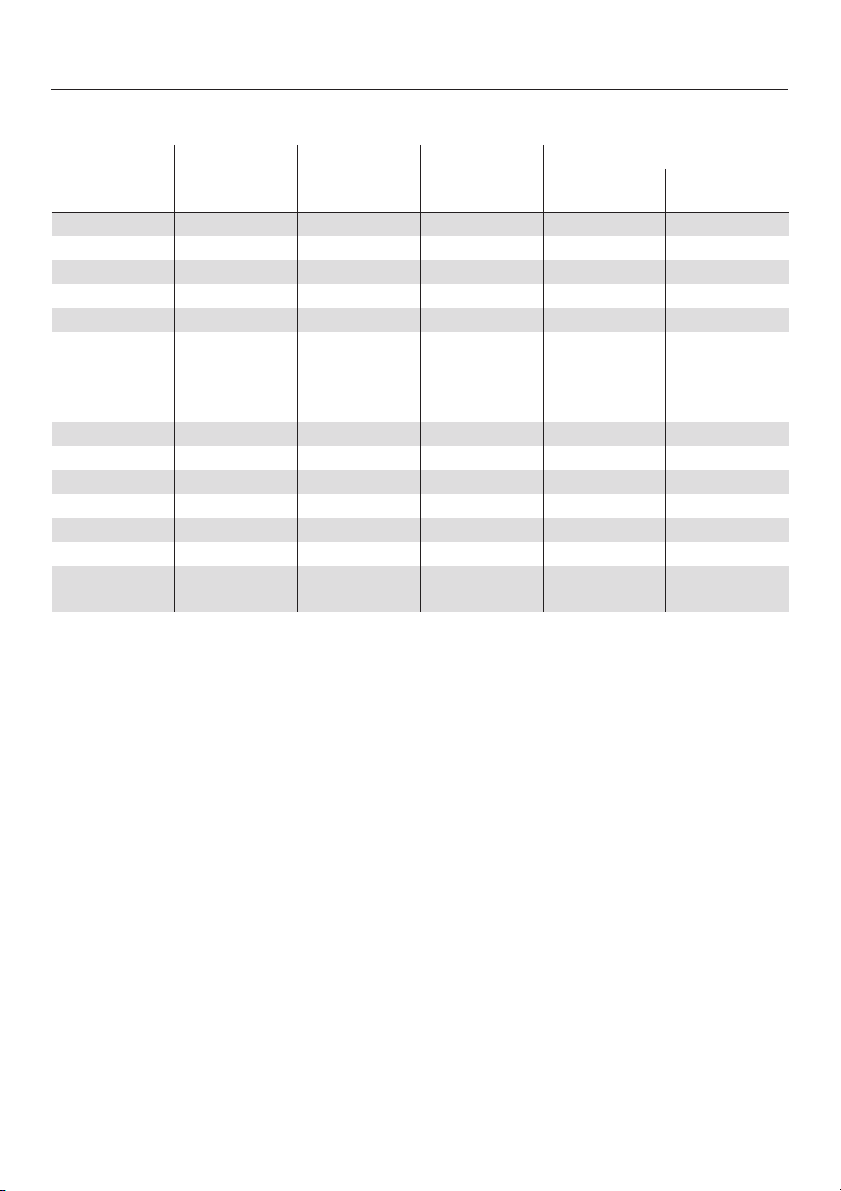
Programmes
QUICK WASH Starch Spin Separate rinse MIXED WASH
high cotton
content
––––optional optional
– ß – – optional optional
ß –––ßß
––––––
–––––ß
2)
2
2
–
max. 500 – – – max. 900 max. 500
max. 1600 max. 1600 max. 1600 max. 1200 max. 900 max. 900
max. 30 mins max. 30 mins max. 30 mins – max. 30 mins max. 30 mins
optional optional – optional optional optional
optional optional – optional optional optional
normal normal – gentle action normal normal
low
medium
Top-up rinse (programmable):
At the end of the main wash additional water flows into the drum, and the suds are cooled slightly. Hot
water might damage plastic drain pipes.
Graduated rinsing:
The suds are cooled at the end of the wash cycle by water flowing in and being pumped away at inter
vals thereby minimising crease formation.
Rinse and interim spin:
There is a spin between the rinses.
Final spin:
The maximum spin speed according to the programme can be selected with the Spin button. In the
programmes MINIMUM IRON, DELICATES, WOOLLENS, Separate rinse and MIXED WASH the spin
speed is automatically limited to the above stated maximum spin speed.
Anti-crease, and loosen:
The anti-crease action guards against the tendency for creases to set in when fabrics have been left in
the drum for a long time. There is drum movement twice a minute.
–
–
–
low
–
–
–
–
–
– high
2
–
–
3 or 4
2
2
low
low
1)
high polyester
content
3
2
2
low
medium
-
25
Page 26
Programmes
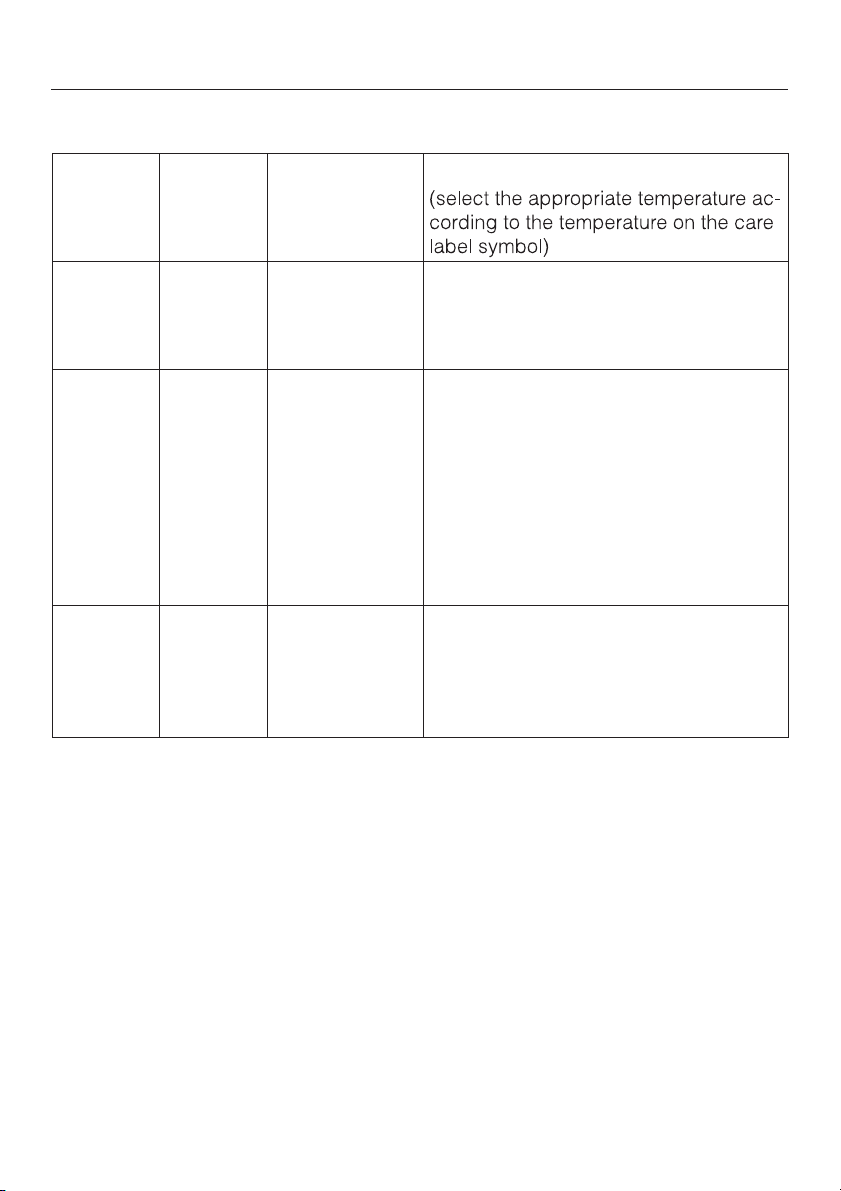
Care symbols - washing
Care
symbols
e
no bar
f*
single bar
g
broken
bar
Fabric
types
Cottons Normal (maxi
Synthetics Reduced (me
Woollens Much reduced
Description of
process
mum) machine
action and nor
mal spinning
dium) machine
action and re
duced spinning
(minimum) machine action but
with normal
spinning
Programme:
Cottons, Minimum iron, Quick wash
-
-
Delicates
-
-
*If the gentle action option has been
programmed into your machine via the
programmable functions garments with
a single bar under the care label f
can also be processed using a Cottons, Minimum Iron, Quick wash, Mixed
Wash or Starch programme.
Hand Wash Woollens programmes.
26
Page 27
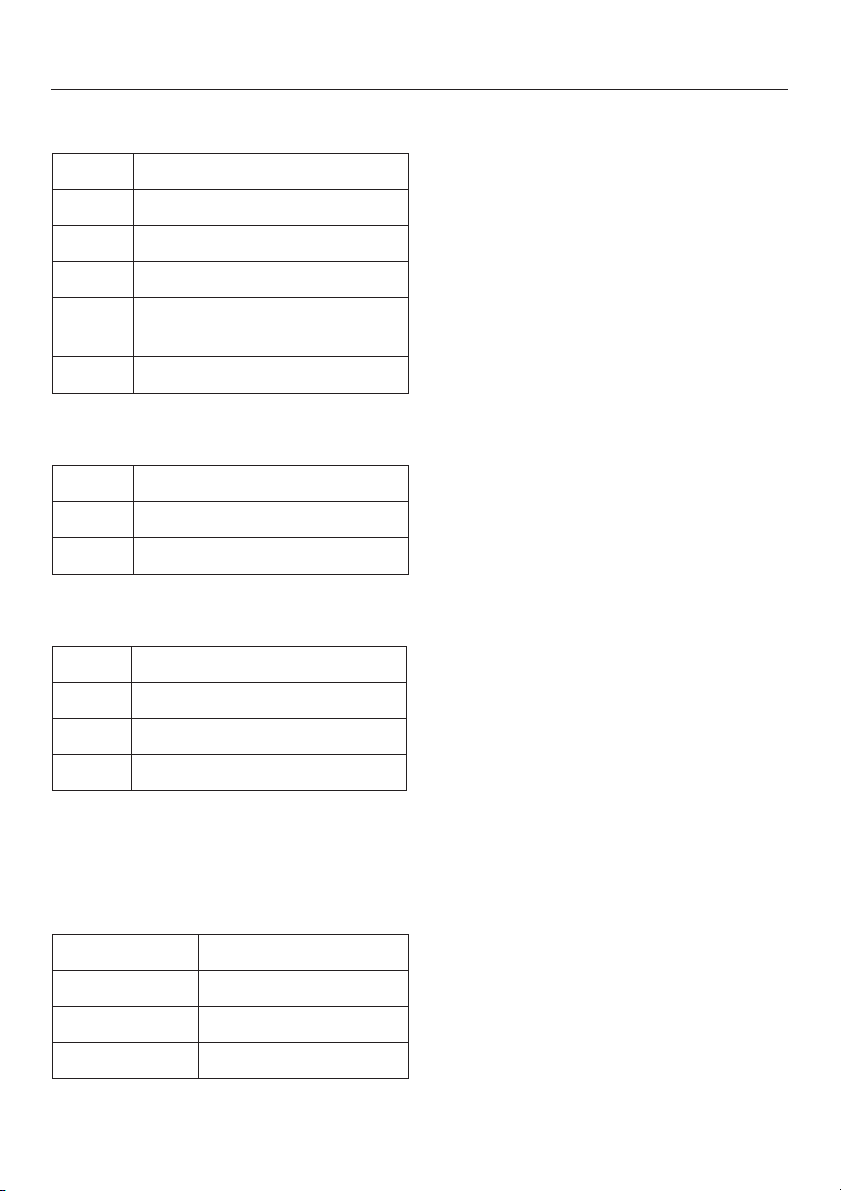
Important - other care symbols
/ Hand wash
h Do not wash
apf Dry clean
D Do not dry clean
Programmes
y Suitable for chlorine bleach
ing
z Do not use chlorine bleach
Tumble dry
q At normal temperature
r At low temperature
s Do not tumble dry
Ironing
I Hot iron
H Medium hot iron
G Cool iron
J Do not iron
N.B. If you have any textiles with the
older wash care labels, select a
programme according to the label be
low:
-
-
[:\] Cottons
?;\ Minimum iron
={ Delicates
# Woollens
27
Page 28

Additional options
To select an additional option to the ba
sic programme press the button for that
option. The indicator light for the option
button comes on.
If an additional option is chosen which
is incompatible with the basic
programme, (see the "Programme Sur
vey"):
the indicator light goes out when the
–
button is released.
-
Soak
For heavily soiled and stained items
with dried-on stains, or ones which
cannot be bleached out, (e.g. blood,
fats and oils, cocoa).
A length of time of between 30 minutes
and 6 hours can be chosen, in 30 minute periods, for the "Soak" process.
Setting soak time
Deleting soak time
Keep pressing the "Soak" button, until
the indicator light goes out.
Adding detergent for the Soak op
tion:
Programmes without pre-wash:
–
Add the total amount into compart
ment j or directly on to the wash
ing in the drum.
Programmes with pre-wash:
–
1
/4of the detergent should be added
to compartment i for "soak" and
"pre-wash",
compartment j for the main wash.
3
/4of the detergent into
Pre-wash
For heavily soiled and stained items
Short
-
-
-
A Select a programme.
B Press the "Soak" button repeatedly
until the length of time required for
soaking is reached. Each press of
the button increases soak time by 30
minutes.
–
The indicator light next to the ‘Soak’
button flashes.
–
Important
The soak time chosen will be added
to the original programme duration in
the "time" display.
C Press the "Start" button, unless "De
lay start" is to be selected. The indi
cator light for the ‘Soak’ button stays
on.
28
This shortens the programme running. For lightly soiled items.
In the COTTONS, MINIMUM IRON and
MIXED WASH-Poly/Cottons
programmes only two rinse cycles are
carried out with a higher water level.
-
-
Page 29

Additional options
Water plus
The water level increases in "soak",
pre-wash", "main wash" and / or
"rinses", and / or an extra rinse can
be carried out.
You can choose between four options
for the "Water plus" button.
The options can be called up through
one of the programmable functions,
(see Water plus system in the Section
on programmable functions).
Buzzer
At the end of the programme or when
Rinse hold is reached an audible
tone sounds repeatedly.
The buzzer sounds until the machine is
switched off.
Switching off the additional options
If an additional option is switched on
(and the corresponding button indicator
light is lit up), the option can be
switched off by pressing the button
again. The indicator light goes out.
Spin
A final spin is carried out at the end
of each of the basic programmes, if a
spin speed had been selected.
"Without final spin"
Washing is not spun after the final rinse.
After water has been drained the ma
chine switches automatically to the anticrease phase.
Interim rinse and spin is carried out in
the relevant programme sections.
"Rinse hold"
The washing remains suspended in water after the final rinse.
This helps to reduce the possibility of
creasing if the washing is left for some
time before being taken out of the machine.
Interim rinse and spin is carried out in
the relevant programme sections.
To continue the programme
- with final spin:
Select the required spin speed with the
Spin button under the Spin selection
display.
-
- without final spin:
Press the Spin button under the spin
display once to highlight "without final
spin". The machine pumps the water
away.
29
Page 30

Additional options
Electronic programme locking
Programme locking prevents the ma
chine from being opened or the
programme cancelled using a wash
programme.
Switching on programme locking
A Select a programme, (see Brief
guide to washing correctly).
B Press the "START" button for at least
4 seconds, until the "locked" check
light comes on, (lower right on the
control panel).
Programme locking is now activated.
The machine will now not accept any
changes, and the wash programme
proceeds through to the end.
At the end of the wash programme, and
in "Rinse hold" the programme locking
is discontinued, so that a new wash
programme can be chosen.
-
Switching off programme locking
A Press the "Start" button until the
"locked" check light goes out.
Exception:
The indicator light "Anti-crease/Finish"
in the Sequence display flashes.
A Turn the programme selector to the
programme previously chosen. The
"Anti-crease" light goes out.
B Press the START button for at least 4
seconds until the "Locked" check
light (lower right on the control panel)
goes out.
30
Page 31

Additional options
Electronic Locking
The locking function prevents your
machine being used without your
knowledge.
when the locking function is switched
on:
the machine cannot be opened,
–
no programme can be selected,
–
the machine cannot be started.
–
Switching on the locking function
A Shut the drum door, turn the
programme selector to "Finish".
B Switch on the machine.
C Press the "Pre-wash" button and hold
pressed in while carrying out steps
D to F.
D Turn the programme selector slowly
step by step clockwise
40°C.
to COTTONS
To switch off the locking function
Repeat steps A to G. The check light
"locked" goes out.
E Turn the programme selector slowly
step by step anti-clockwise
F Turn the programme selector slowly
step by step anti-clockwise
–
The "locked" check light flashes,
(lower right on the control panel).
G Release the "Pre-wash" button.
H Switch off the machine.
to Finish.
to "Spin".
31
Page 32

Display
The time left shows in the display, or
the time left plus soak time or the de
lay start period.
In addition it serves as a display for
the programmable functions.
Delay start
A period of delay shows in the display.
After the appliance has started the de
lay start time counts down.
If a delay start is higher than 10 hours it
will count down hourly, from 9 h 59 it
will count down in minutes.
Once the delay start period is completed the programme begins and the
actual programme duration shows in
the display.
See the section "How to wash correctly
(Programme start)".
Soak
If a time is selected for soaking, this is
added to the prescribed running time
for the programme and the total shown
in the display.
Example:
The COTTONS 60°C programme is se
lected:
The display shows a programme run
–
ning time of 1 h 58.
A soaking time of one hour is cho
–
sen.
– The display shows a total running
time of 2 h 58. For more detailed information on soaking see the section
Additional options "Soak".
-
-
-
Time left display
At the beginning of a programme, the
maximum duration of a programme is
shown in hours and minutes, where de
lay start has not been selected.
In the Cottons, Minimum Iron and Mixed
Wash Poly/Cottons programmes the
type and volume of the wash will be
monitored during the first water inlet
phase. With a part load the time may
now be shortened by up to 60 minutes.
32
-
Page 33

Programmable functions
The programmable functions enable
the user to introduce further features as
required. The programmable functions
remain stored in memory until they are
cancelled by the user.
The following programmable
functions can be selected:
P1 = Water level
The water level for rinsing is automat
ically raised to the maximum level
where rinse results are particularly
important.
Effective for the rinses in programmes:
– COTTONS
– MINIMUM IRON
– QUICK WASH
– MIXED WASH - Poly/Cottons
Option 2
Increase in the water level in soak, prewash, main wash and rinses for Cot
tons, Minimum iron, Delicates, Quick
wash, and Mixed wash particularly for
fabrics that need special care, or where
extra attention must be given to dissolv
ing detergent. This option is already set
when the machine is delivered from the
factory.
-
Option 3
An extra rinse cycle is introduced to the
Cottons programme, e.g. when rinse re
sults are particularly important.
Option 4
Is Option 2 plus Option 3, where this
quality of rinse is required.
P4 = Activating the i
compartment
-
-
-
P2 = Water plus system
The "Water plus" button offers four
options, increasing water level and /
or bringing in an extra rinse cycle.
Option 1
Increase in the rinse water level in the
Cottons, Minimum iron, Quick Wash
and Mixed wash - Poly/Cottons
programmes, where for example rinse
results are particularly important.
For the first 10 seconds of the main
wash cycle, water flows in through
compartment i.
Compartment j may sometimes not
be able to hold the total amount of de
tergent required:
–
when the water is very hard (over
3.8 mmol/l, water hardness level IV)
and
–
the washing is heavily soiled.
In this case compartment i can be
used to flush in the extra detergent for
the main wash.
-
33
Page 34

Programmable functions
P9 = Gentle action
For gentle washing of slightly soiled
items. Drum action is reduced.
Gentle action can be used with the Cot
tons, Minimum iron, Quick Wash, Mixed
wash and Starch programmes.
If "Gentle action" has been pro
grammed, every wash cycle in these
programmes is carried out with gentle
action rhythm.
-
P10 = Top-up rinse for Cottons
At the end of the main wash additional water flows into the drum and
the suds are cooled down.
Hot suds can damage plastic drainage
pipes.
Top-up rinse takes place when temperatures of 95°C and 75°C are selected.
P11 = Memory function
If an additional option is selected for
a programme, and / or the spin
speed is altered, the machine stores
-
these changes in memory at the start
of a programme.
The memory function is active when the
machine is first delivered, but can be
programmed to be switched off.
See the following pages for how to
programme the programmable func
tions.
-
34
Page 35

Programmable functions
Programming and storing in
memory
The programmable functions are acti
vated using the additional option but
tons and the programme selector in
special combinations, which intro
duce extra features not marked up on
the control panel.
Programming is carried out in four
steps:
1. Select programming mode
2. Select programmable function
3. Activate or deactivate programmable
function
4. Store the programmable function in
memory
1. Selecting programming mode
A The machine must be switched off
and the drum door closed. The
programme selector must point to
"Finish".
-
-
2. Selecting a programmable function
E For the programmable function re
-
quired turn the programme selector
to the setting given:
for P1 High Water level
–
to - MIXED WASH Poly/Cottons for P2 Water plus system
–
to - Separate rinse for P4 activate i compartment
–
to - Spin for P9 Gentle action
–
to - WOOLLENS 40°C -
– for P10 Activate top-up rinse for
COTTONS wash
to - DELICATES cold -
– for P11 Memory Function
to - DELICATES 30°C -
F In the Display the P now flashes al-
ternating with the number of the programmable function
e.g. P...1...P...1
The following also appears on the right:
-
B Press the additional option buttons
"Soak" and "Pre-wash" at the same
time and hold pressed in and:. . .
C . . . switch the machine on with the "I-
ON/0-OFF"-button.
D Release all these buttons.
P 0 appears in the "time" display.
0 = Programmable function is
not active
1 = Programmable function
is active
with P 2, a 2 appears on the right = Op
tion 2 is active.
-
35
Page 36

Programmable functions
3. To activate or deactivate a
programmable function.
For the programmable functions P1,
P4, P9, P10, P11.
G Pressing the "Start" button once will
make the display message change
from "0" to "1" (active), or from "1" to "0"
(not active).
For the programmable function P2
G By pressintg the "Start" button you
can select various options.
If 1 appears on the right = Option 1
If 2 appears on the right = Option 2
If 3 appears on the right = Option 3
If 4 appears on the right = Option 4
4. Storing the programmable function
in memory
H Switch the machine off with the
"I-ON/0-OFF" button.
Now you can start the wash
programme that you want.
The programmable function is now
stored in memory and is available at
any time, until it is deleted.
36
Page 37

Cleaning and care
Cleaning the washing machine
Clean the casing with a mild non-
^
abrasive detergent or soap and wa
ter. Wipe dry with a soft cloth.
Clean the facia panel and lid with a
^
damp cloth and dry with a soft cloth.
The drum can be cleaned using a
^
suitable proprietary stainless steel
cleaner.
Do not use abrasive cleaners, glass
cleaners or all-purpose cleaners.
These might cause damage to the
plastic surfaces because of the
chemicals they contain.
E-cloth
A microfibre "E-Cloth" is available from
the Miele UK Spare Parts Department,
Part Number 98013530, which is suitable for cleaning surfaces such as
stainless steel, glass, plastic and
chrome without the use of chemicals.
-
Extra cleaning
Carrying out a hot wash (70°C or
above) with powder detergent approx.
once every six weeks will help to en
sure that no deposits build up in the
machine. These can occur when wash
ing is mainly done at low temperatures,
and also lead to unpleasant smells. If
you have no reason to wash laundry oc
casionally at this high temperature, then
carry out a 95°C Cottons programme as
a cleaning cycle with powder detergent
and no washing, at regular intervals.
-
-
-
37
Page 38
Cleaning and care
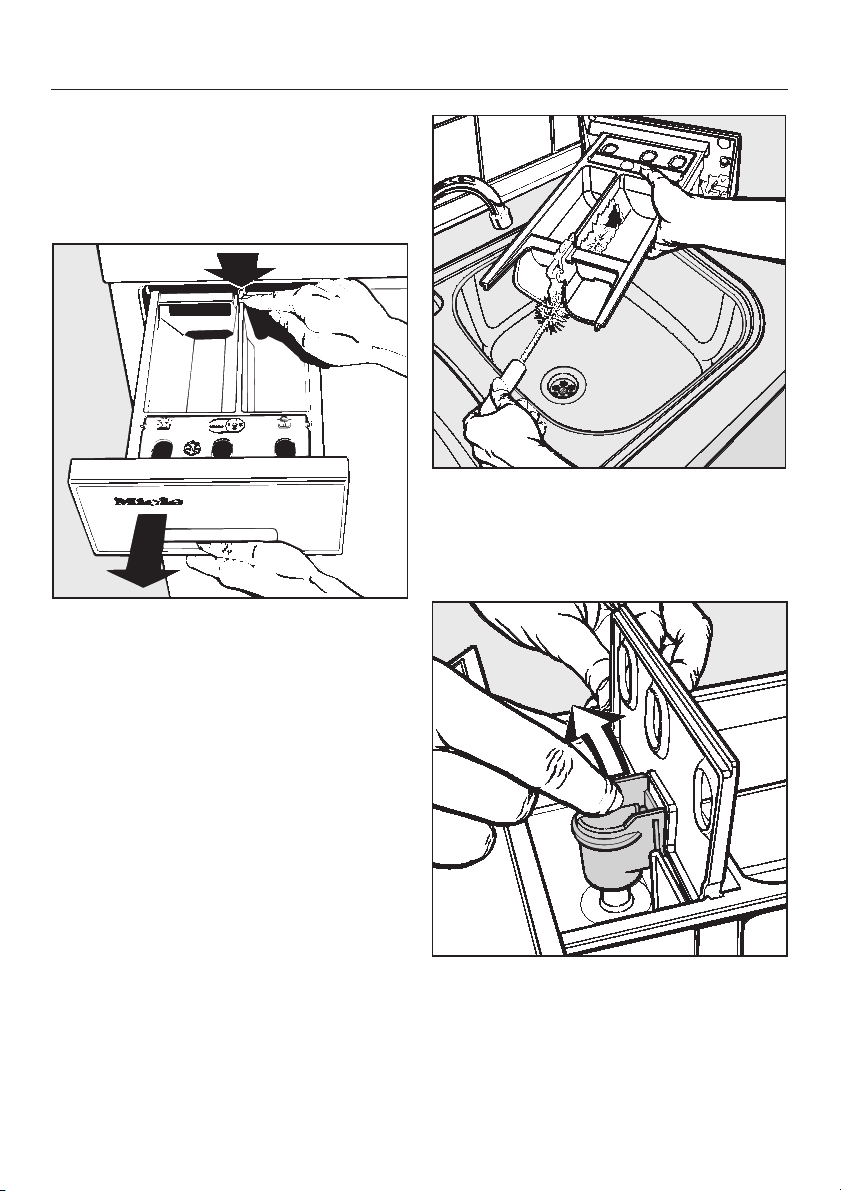
Cleaning the detergent
dispenser drawer
Pull out the detergent dispenser
^
drawer until a resistance is felt.
^ Press down the red release catch
and at the same time pull the drawer
right out of the machine.
^ Clean the dispenser compartments
and conditioner channel.
Regularly remove any detergent residues.
38
^
Remove the siphon tube from com
partment p.
Wash under running warm water and
put back.
-
Page 39
Cleaning the fluff (drain) filter
and pump
Check the fluff (drain) filter initially after
3-4 washes to ascertain how often it is
likely to require cleaning.
With normal cleaning approx. 2 litres of
water run out.
Cleaning and care
If the drain outlet is clogged, more wa
ter will be retained in the machine (up
to 25 litres).
Caution: If laundry has been washed
at a high temperature, water drain
ing out of the machine will still be
hot.
-
-
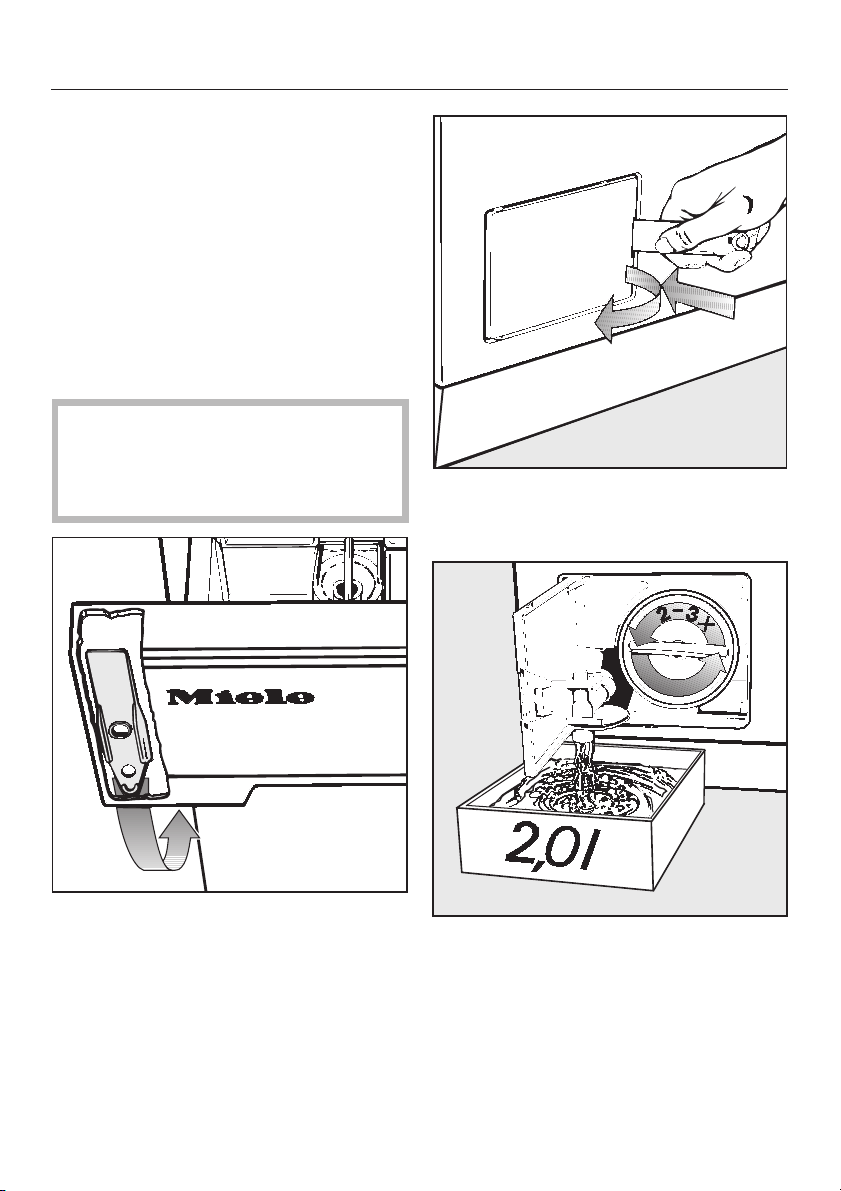
^ Open the flap.
^ Place a dish under the drain fixture.
Take the (yellow) filter flap opener from
behind the detergent drawer facia
panel, (see illustration above).
^
Open the door.
^
Turn the fluff filter lid round 2-3
times. Do not take it right out.
With large volumes of water, when the
dish is full, screw the fluff filter back into
position, and empty the dish before re
peating the procedure.
-
39
Page 40
Cleaning and care
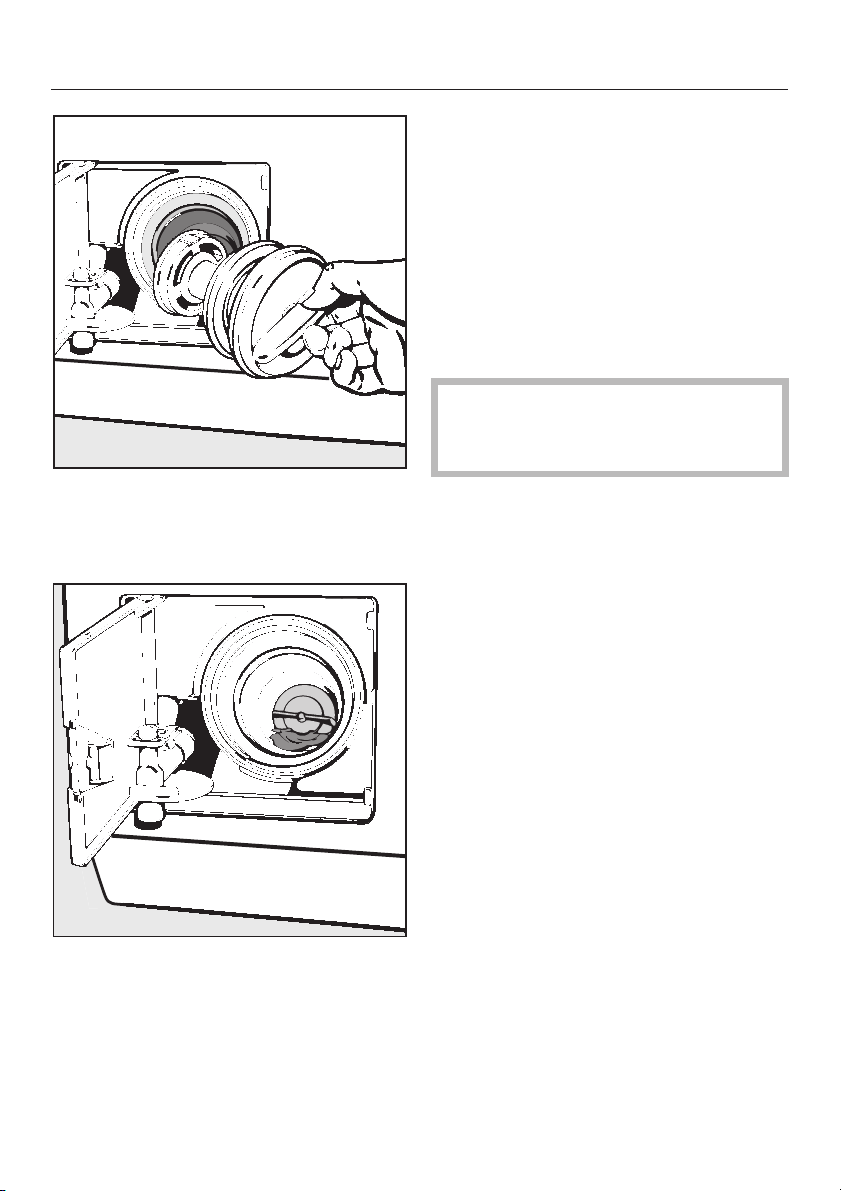
Clean the inside of the fluff filter hous
^
ing.
Remove any deposits of lime scale and
detergent or foreign objects from the
thread of the filter housing and filter unit
(as these objects can cause a leakage
of water). Deposits of lime scale are of
ten a sign of underdosage of powder.
Put the fluff filter back in place and
^
secure.
Make sure the fluff filter is securely
tightened. Otherwise there is a risk
of water leakage during use.
-
-
^ Once the flow of water ceases, re-
move the fluff filter completely.
^ Clean the fluff filter thoroughly.
^
Remove any foreign objects (e.g.
buttons, coins, etc.) and fluff.
^
Turn the impeller by hand to check
that it is free to rotate. Any foreign ob
jects causing an obstruction should
be removed.
After cleaning
^ Pour approx. 2 litres of water into the
detergent dispenser compartment
j to reactivate the ball valve which
keeps detergent in circulation in the
suds.
-
40
Page 41
Cleaning and care
Cleaning the filter in the water
inlet
The washing machine has a filter to
protect the water inlet valve.
The accessible filter in the union in the
open end of the inlet hose should be
checked every six months, or more of
ten if there are frequent interruptions to
the external water supply.
First turn off the stopcock.
^
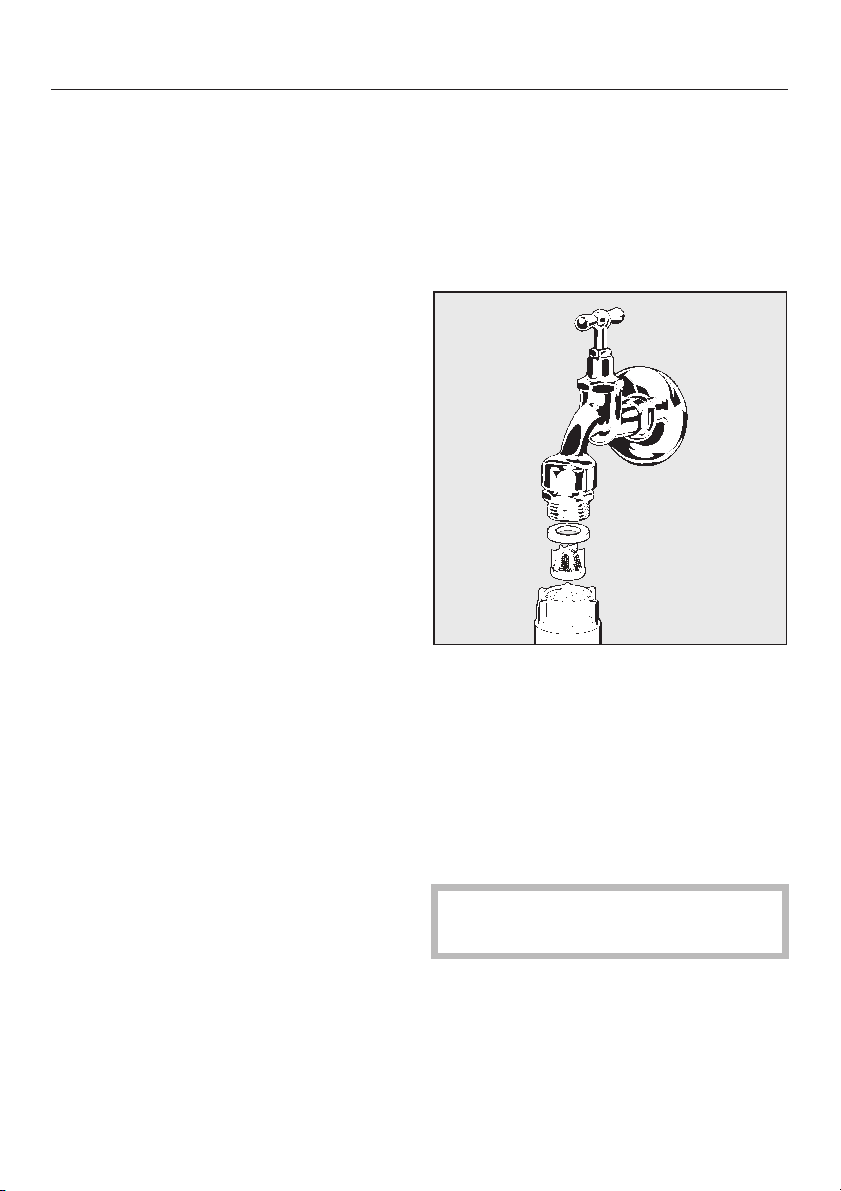
Unscrew the threaded union connect
^
ing the free end of the inlet hose to
the stopcock.
Remove the rubber seal 1 from the
^
recess.
-
^ Using pointed pliers, take hold of the
plastic filter bar 2, remove the filter
and clean.
-
^
Put the filter and seal back in the re
verse order and reconnect the hose.
Turn on the stopcock and check the
connection is watertight. If water drips
out, tighten the connection.
Never forget to put the filter back in
place after cleaning it.
-
41
Page 42

Problem solving guide
With the help of the following notes minor faults in the performance of the appli
ance, some of which may result from incorrect operation, can be put right without
contacting the Service Department.
Repair work to electrical appliances should only be carried out by a suit
,
ably qualified person in accordance with local and national safety regulations.
Unauthorised repairs could be dangerous.
The chart is divided into the following sections to help you:
The programme does not start.
–
The wash programme stops and a fault indicator light comes on.
–
A fault indicator light comes on but the wash programme continues as normal.
–
General problems or an unsatisfactory wash result.
–
-
-
42
Page 43

Problem solving guide
The programme does not start.
What to do if ... Possible cause Remedy
The Anti-crease / Fin
ish indicator light is
not on.
The programme does
not start when Spin
has been selected.
The "Locked" check
light is flashing.
At the end of one
programme you cannot start the next
programme.
There is no power.
-
The washing ma
chine has not been
prepared for using
for the first time.
The lock function is
switched on.
The programme selector has not been
turned past the
"Finish" postion.
Check that
the door is properly closed.
–
the mains plug is plugged in.
–
the fuse or circuit breaker has
–
not tripped.
Prepare the machine as de
scribed in "Before using for the
first time".
Switch the lock function off.
Turn the programme selector to
the "Finish" postion and then to
the programme you want to run.
-
43
Page 44
Problem solving guide
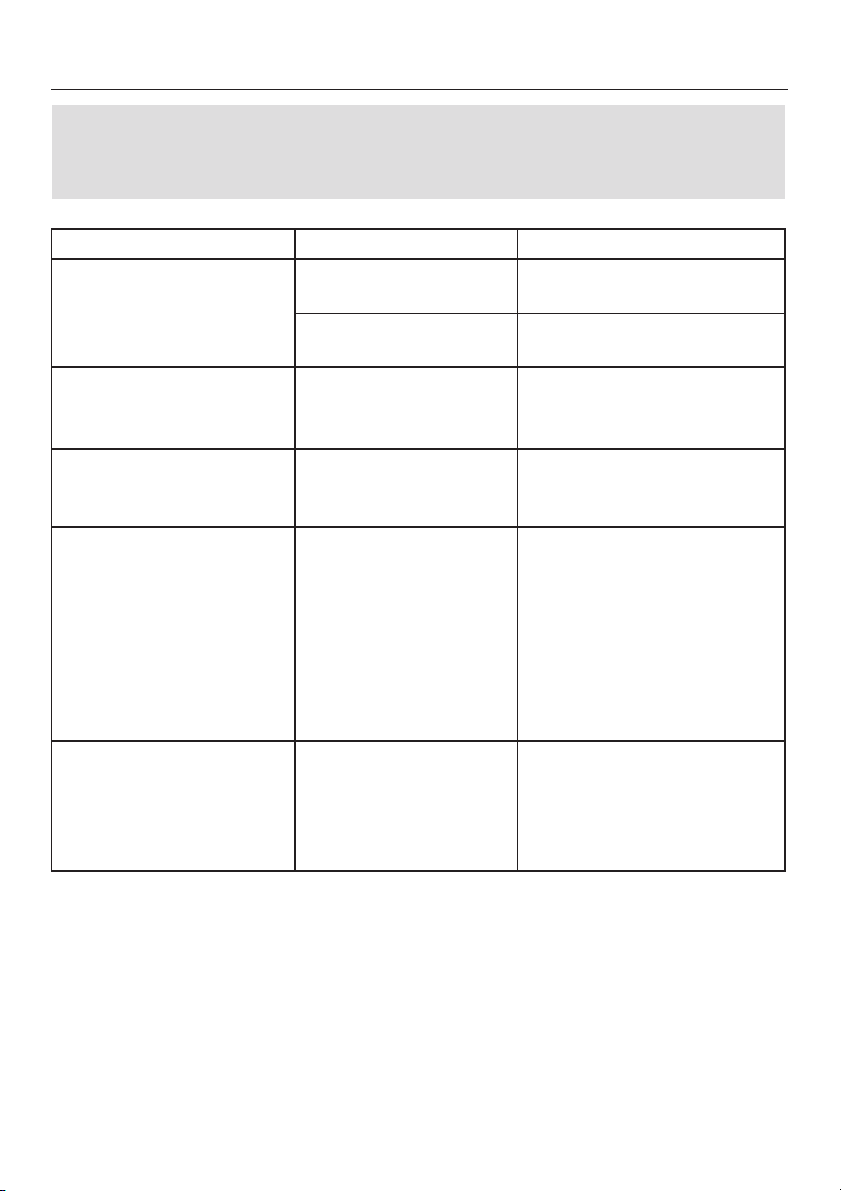
The wash programme stops and a fault indicator light comes
on.
What to do if ... Possible cause Remedy
The buzzer sounds and
the Check drain light is
flashing.
The buzzer sounds and
the Check inlet light is
flashing.
The buzzer sounds and
the Check inlet and
Check drain lights flash.
One of the following indicator lights is flashing
and the buzzer is
sounding.
– "Soak/Pre-wash"
– "Main wash"
– "Rinses"
–
"Rinse hold"
Three horizontal bars
"- - -" appear in the dis
play and the buzzer is
sounding.
The water outlet is
blocked.
The drain hose has
been fixed too high.
The water inlet is
blocked
The Waterproof system
has reacted.
There is a fault. – Start the programme
There is a fault.
-
Clean the fluff (drain) filter
and drain pump.
The maximum drain height
is 1 m.
Open the stopcock.
–
Start the programme
–
again.
Call the Service Department.
again.
– If the check lights flash
again, contact the Service
Department.
–
Start the programme
again.
–
If the three horizontal bars
"- - -" appear again, call
the Service Department.
44
Page 45
Problem solving guide
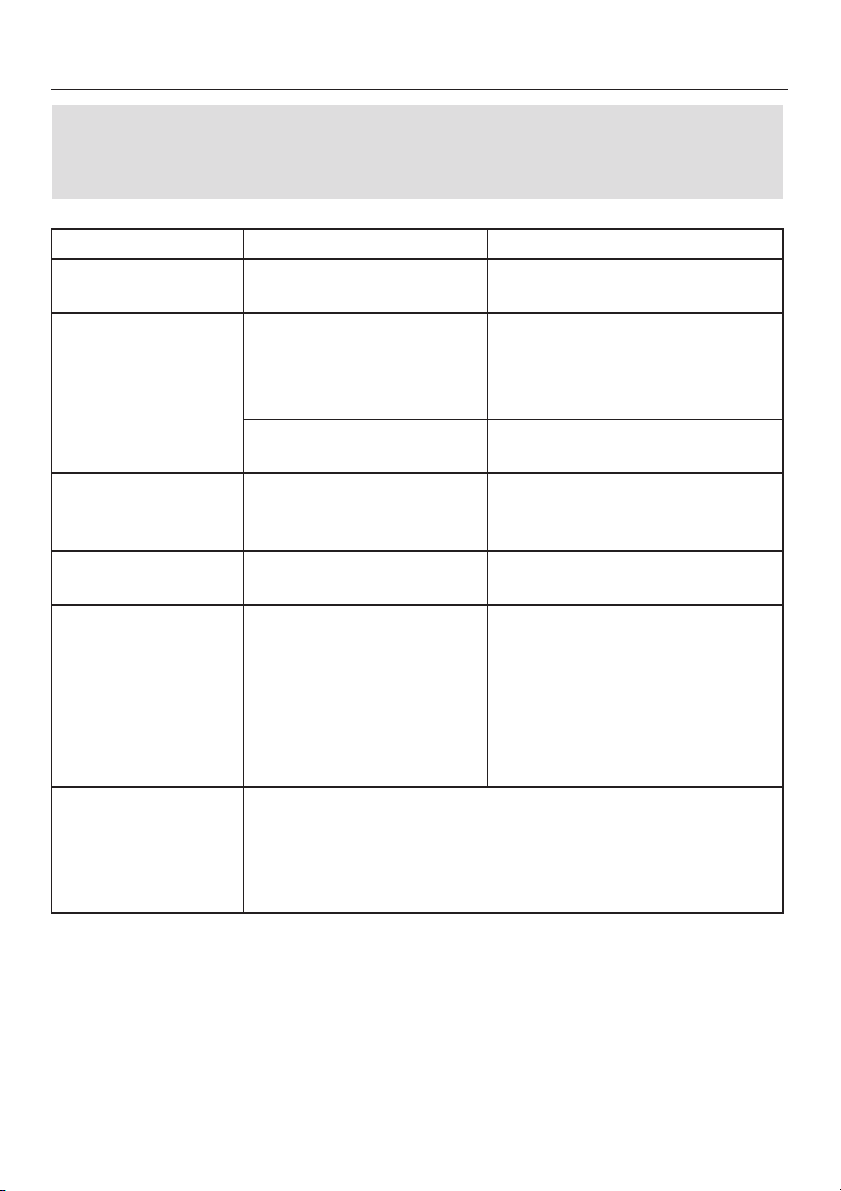
A fault indicator light comes on but the wash programme
continues as normal.
What to do if ... Possible cause Remedy
The Check drain
light flashes.
The Check inlet
light flashes.
The Excess detergent check light
comes on.
The "Locked"
check light is on.
The "Final spin"
indicator light
flashes in the
programme sequence display.
The Anti-crease /
Finish indicator
light flashes in the
programme se
quence display.
The drain outlet is re
stricted.
The water inlet is re
stricted or the water pres
sure is too low.
The filter in the inlet hose
is dirty.
Excessive foam has built
up during washing.
Programme locking is
switched on.
The final spin has not
taken place. The machine
detected an imbalance.
The position of the programme selector was altered after
the start of the programme. Turn the programme selector
back to the programme previously chosen.
-
-
-
Clean the fluff (drain) filter and
drain pump.
make sure the stopcock is
–
opened wide enough.
make sure the inlet hose is
–
not kinked.
Clean the filter.
Use less detergent next time
and follow the recommendation
on the packaging.
Switch off the programme locking.
– Loosen and re-distribute the
washing.
– Select the programme Spin
or Drain.
–
Take into account the spin
speed of the relevant
programme.
45
Page 46
Problem solving guide
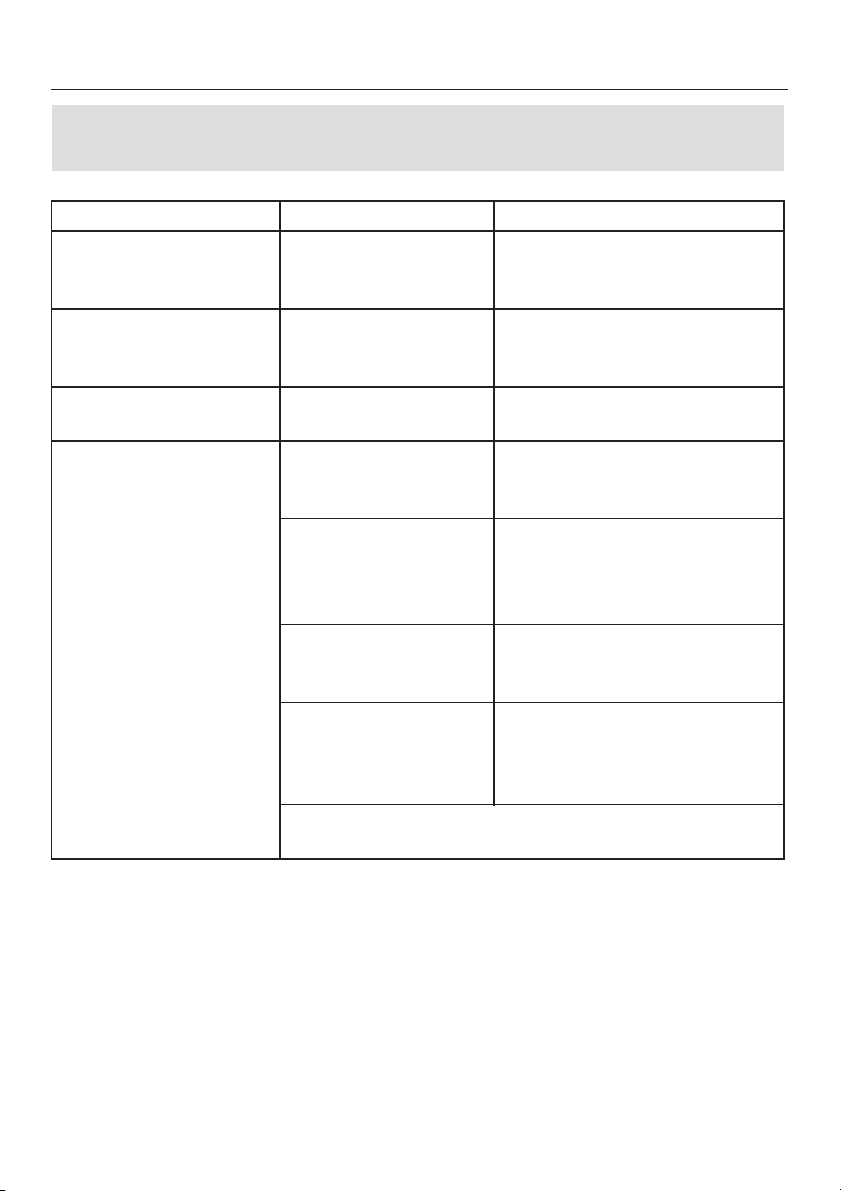
General problems or an unsatisfactory wash result
What to do if... Possible cause Remedy
The machine shakes
during the spin cycle.
The laundry has not
been spun satisfacto
rily.
The light ring does
not come on.
The drum door cannot
be opened by pressing the Door button.
The four feet are not
resting evenly on the
floor.
The spin speed se
lected was too low.
-
This is not a fault. See "Guide to the machine".
The machine is not
connected to the electricity supply.
Power cut. Open the drum door as de-
The door was not correctly engaged.
There is still water in
the drum and the ma
chine is unable to
drain.
For safety reasons the drum door cannot be opened
when the suds temperature is higher than 55°C.
Level the machine. See advice
on installation.
Select a higher spin speed
next time.
Put the plug in the socket and
switch on.
scribed in the section
"Opening the door in the event
of a power failure".
Press hard against the lock
side of the drum door and then
press the "Door" button.
Clean the fluff (drain) filter and
-
the drain pump.
46
Page 47
Problem solving guide
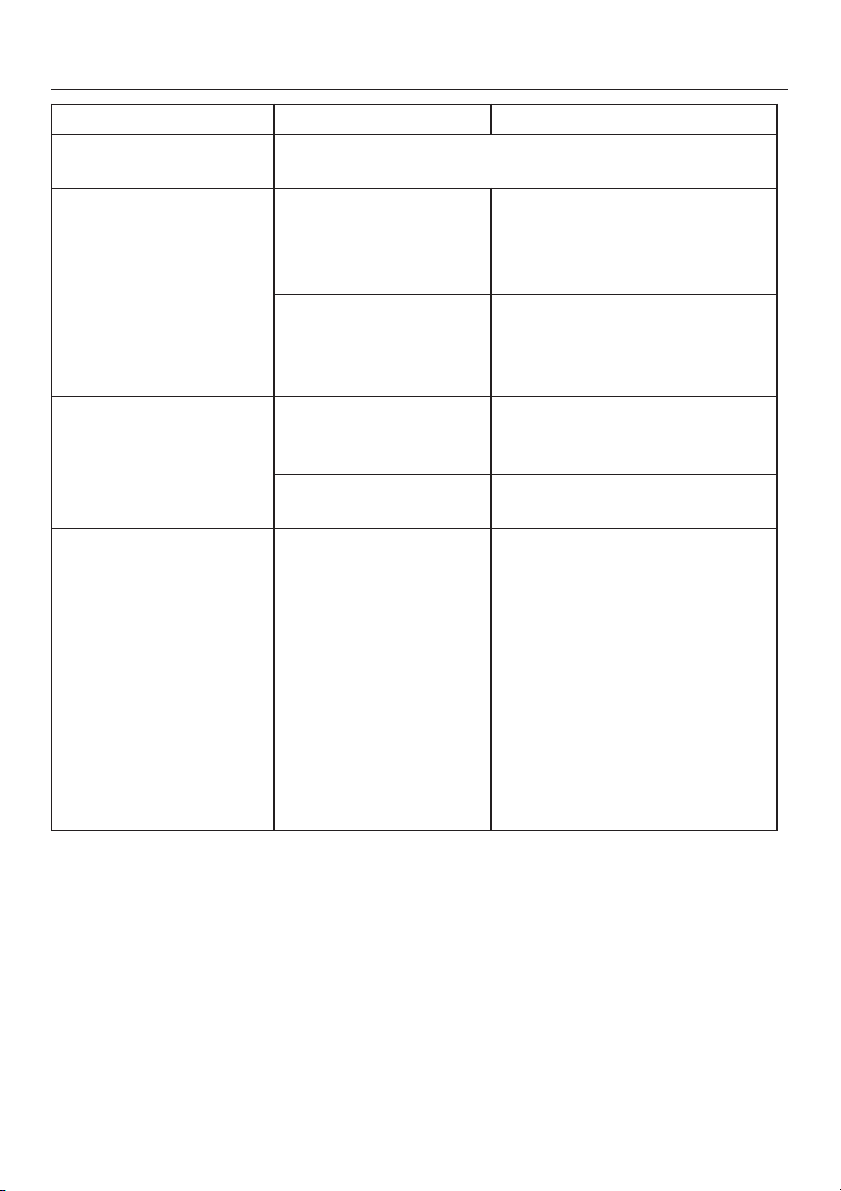
What to do if ... Possible cause Remedy
The pump makes
strange noises.
Large residues of de
tergent remain in the
dispenser drawer.
Fabric conditioner is
not completely dis
pensed or too much
water remains in the
p compartment.
Liquid detergent does
not give the required
result.
These do not indicate a fault. They occur at the end of
a pump sequence as a normal part of the operation.
The water supply pres
-
sure is too low.
Washing powder used
with water softener
tends to become
sticky.
The siphon is either in
correctly positioned or
-
clogged.
The fabric conditioner
channel is clogged.
Liquid detergents do
not contain bleaching
agents. They do not
remove fruit, coffee
and tea stains.
Clean the filter in the water
-
–
inlet system.
It may be useful to press
–
the Water plus button.
Pour washing powder into the
dispenser before adding any
water softener.
Clean the siphon, see
"Cleaning and care - Cleaning
the detergent drawer".
Clean the fabric conditioner
channel.
– Use washing machine pow-
der containing a bleaching
agent.
– Pour stain removers into
compartment j of the dispenser drawer and liquid
detergent into a dispenser
ball.
–
Never put stain removers
and liquid detergent to
gether in the dispenser
drawer.
-
47
Page 48

Problem solving guide
What to do if... Possible cause Remedy
Grey, greasy parti
cles cling to
washed laundry.
There are white res
idues which look
like powder deter
gent on dark col
oured laundry.
Insufficient amounts of
-
detergent were used to
break down the particles
of grease in heavily
soiled laundry.
The detergent contained
-
compounds (zeolites) to
aid water softening
-
which are not soluble in
-
water. These have
ended up on the laundry.
Add more detergent.
–
Before washing the next load
–
run a COTTONS 95°C
programme with powder de
tergent but without a load.
(See also "Extra cleaning" in
Cleaning and Care).
Try and brush off the resi
–
dues with a soft brush once
the laundry is dry.
Use a liquid detergent to
–
wash dark coloured textiles.
Liquid detergents usually
contain no zeolites.
-
-
48
Page 49
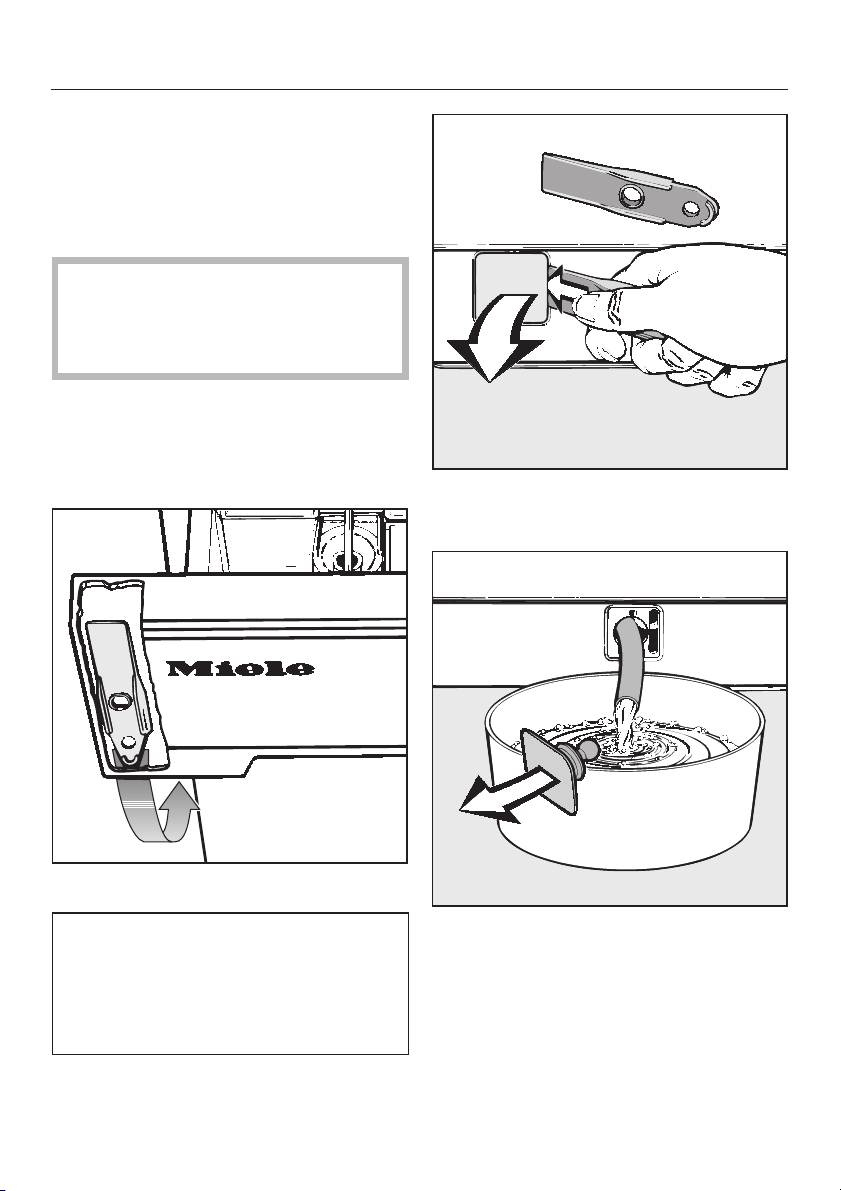
Opening the drum door in the
event of a power failure
Problem solving guide
If the drain outlet is clogged, more wa
ter will be retained in the machine (up
to 25 litres).
Caution: If laundry has been washed
at a high temperature, water drain
ing out of the machine will still be
hot.
Switch off the washing machine.
^
Take the (yellow) filter flap opener from
behind the detergent drawer facia
panel, (see illustration below).
-
-
^ Open the flap (in the machine plinth).
^ Place a dish or bowl under the spout.
^
Remove the opener.
Important
Left hand hinged machines have two
access panels in the plinth. The left
hand panel conceals the emergency
drainage.
^
Point the drain hose into the con
tainer.
^
Remove the stopper. When no more
water comes out, replace the stopper
in the end of the hose.
^
If there is a large amount of water in
the machine this procedure will have
to be repeated several times.
-
49
Page 50
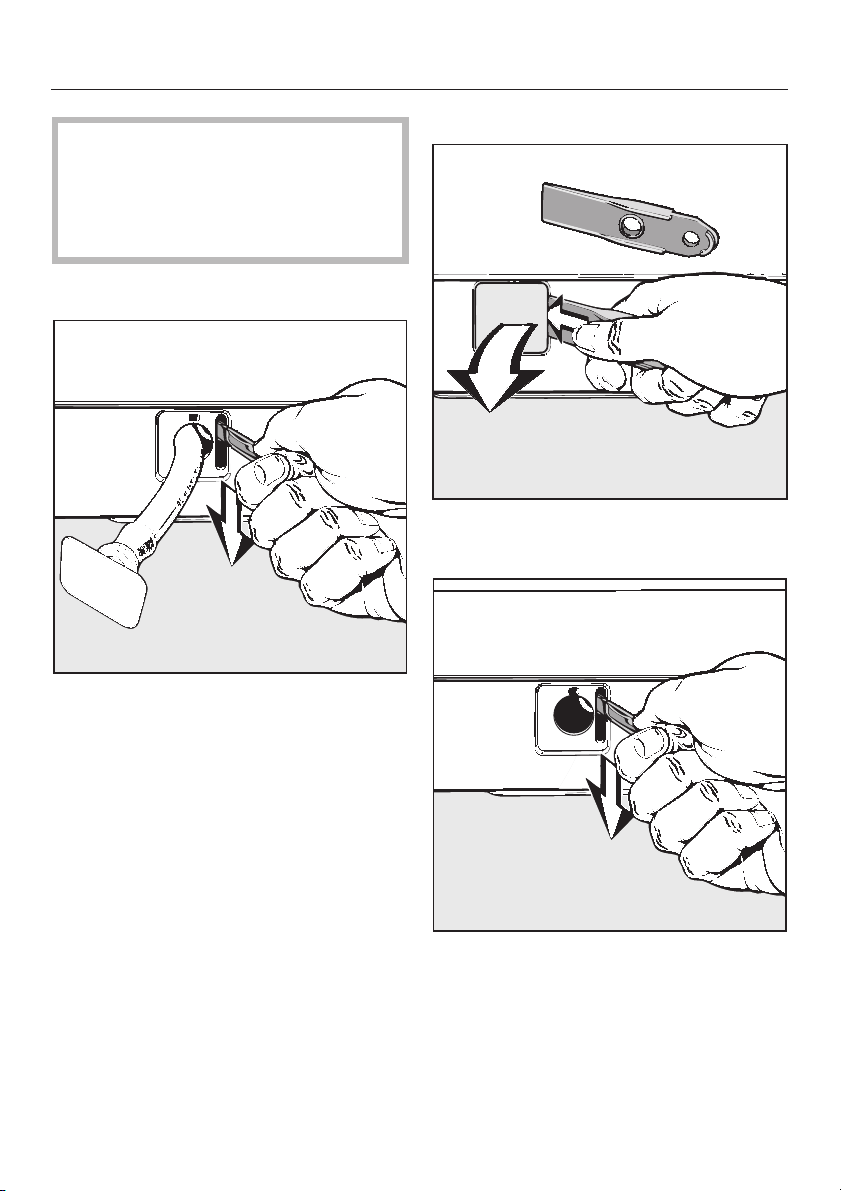
Problem solving guide
Always make sure the drum is sta
tionary before reaching in to the ma
chine to remove washing. Reaching
into a moving drum is extremely
dangerous.
Door hinged right
Door hinged left
-
-
^ Open the access panel on the right
hand side of the plinth.
^ Pull the emergency door latch down-
wards (see illustration). The machine
door will then open.
50
^
Pull the emergency door latch down
wards (see illustration). The machine
door will then open.
-
Page 51
After sales service
Customer contact
In the event of any faults which you
cannot remedy yourself please contact
Your Miele Dealer or
–
Your nearest Miele Service depart
–
ment
(see back cover for the address).
When contacting the Service Depart
ment, please quote the Model and Se
rial Nos. of your appliance, both of
which are shown on the data plate visi
ble above the porthole glass when the
door front is opened.
Please note that telephone calls may
be monitored and recorded to improve our service.
-
-
Future updates (PC)
The indicator light or check light
marked PC is reserved for the service
engineer, for updates to your machine
in future years.
When for example technological devel
opments offer advanced modifications
to your existing programme cycles, a
service engineer will be able to input
these into your machine controls.
Miele will provide information when
-
such possibilities become available.
-
51
Page 52
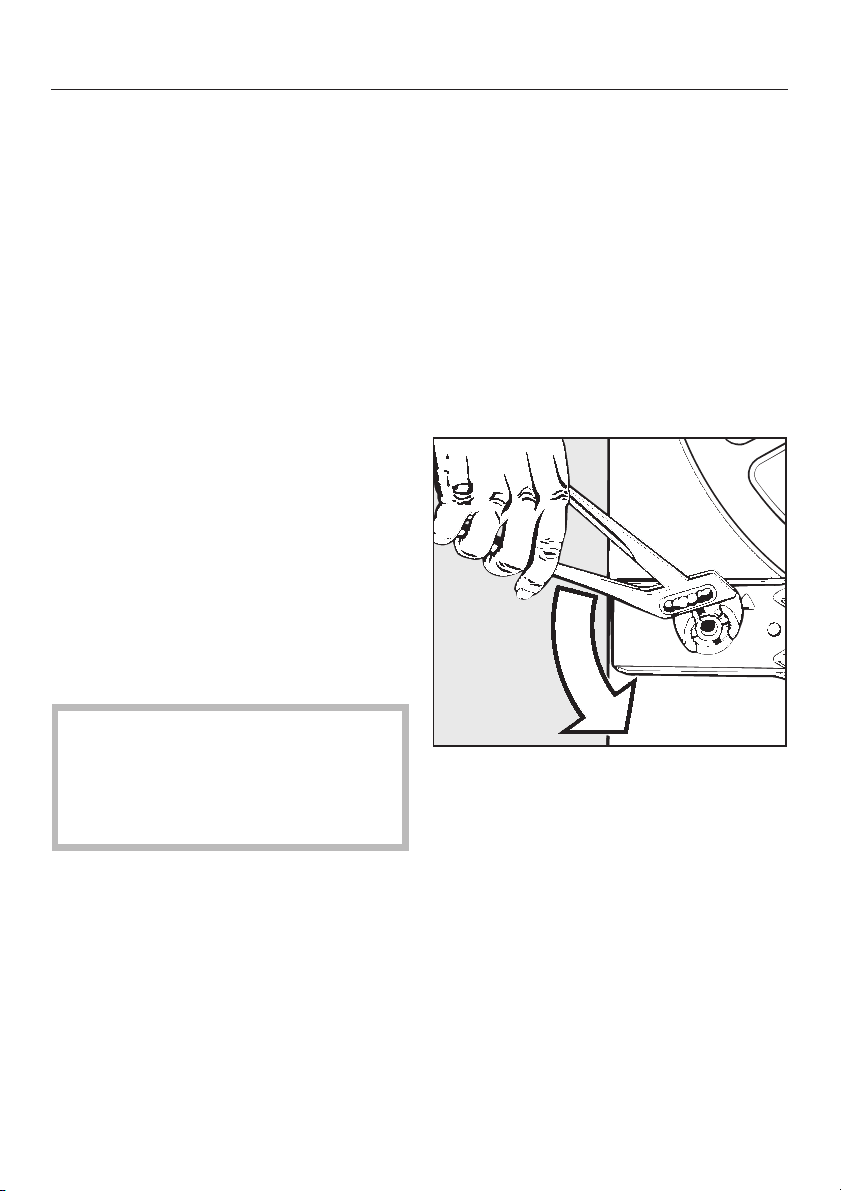
Installation
Installation surface
A concrete floor is the most suitable in
stallation surface for a washing ma
chine, being far less prone to vibration
during the spin cycle than wooden
floorboards or a surface with "soft"
properties.
Please note the following points:
The machine must be level and se
^
curely positioned.
To avoid vibrations during spinning,
^
the machine should not be installed
on soft floor coverings.
^ If installing on a wooden joist floor, we
recommend a plywood base at least
30 mm thick, 590 x 520 mm wide.
The base should span several joists
and be bolted to the joists, not only to
the floorboards. Check for the presence of pipes and cables first.
The most stable part of the floor is
usually in the corner.
-
-
Installation
Lift the machine from its packaging
base and move it to its site. Please
note:
Do not lift the machine by the
^
drum door.
Ensure that the machine feet and the
^
floor are dry to prevent the machine
from slipping during the spin cycle.
Removing the transit fitting
If the machine is installed on a
raised plinth, it has to be secured
against slippage during spin using
retaining clips (available from the
Miele Spare Parts Dept).
52
1. Turn the left-hand transit bar 90°.
Page 53
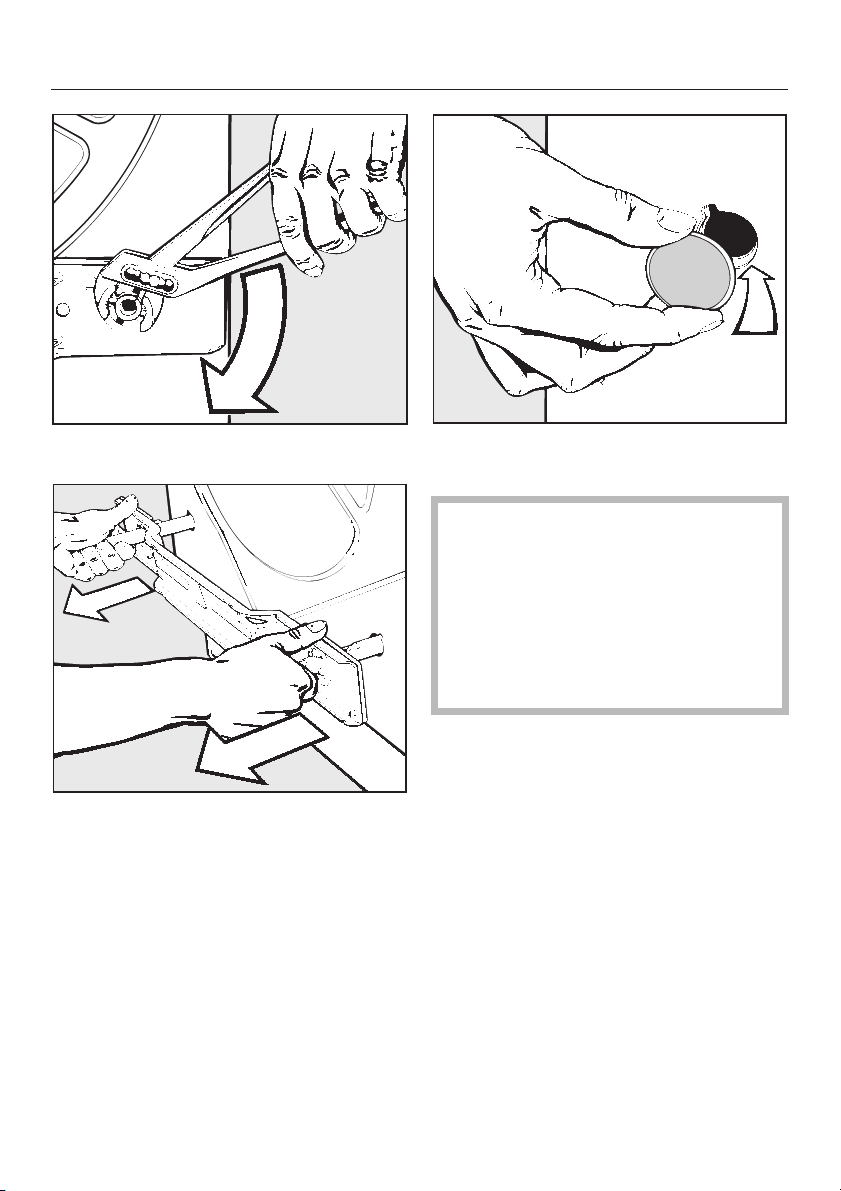
Installation
2. Turn the right-hand transit bar 90°.
3. Withdraw the two bars together with
the support plate.
4. Plug the two holes with the plastic
caps supplied.
The washing machine must not
,
be moved without the transit bars in
place.
Store the transit bars as shown or
keep them in a safe place for future
use. They must be re-fitted if the machine is to be moved again
(e.g.when moving house).
Re-fitting the transit bars
Re-fitting is carried out by reversing the
procedure.
53
Page 54
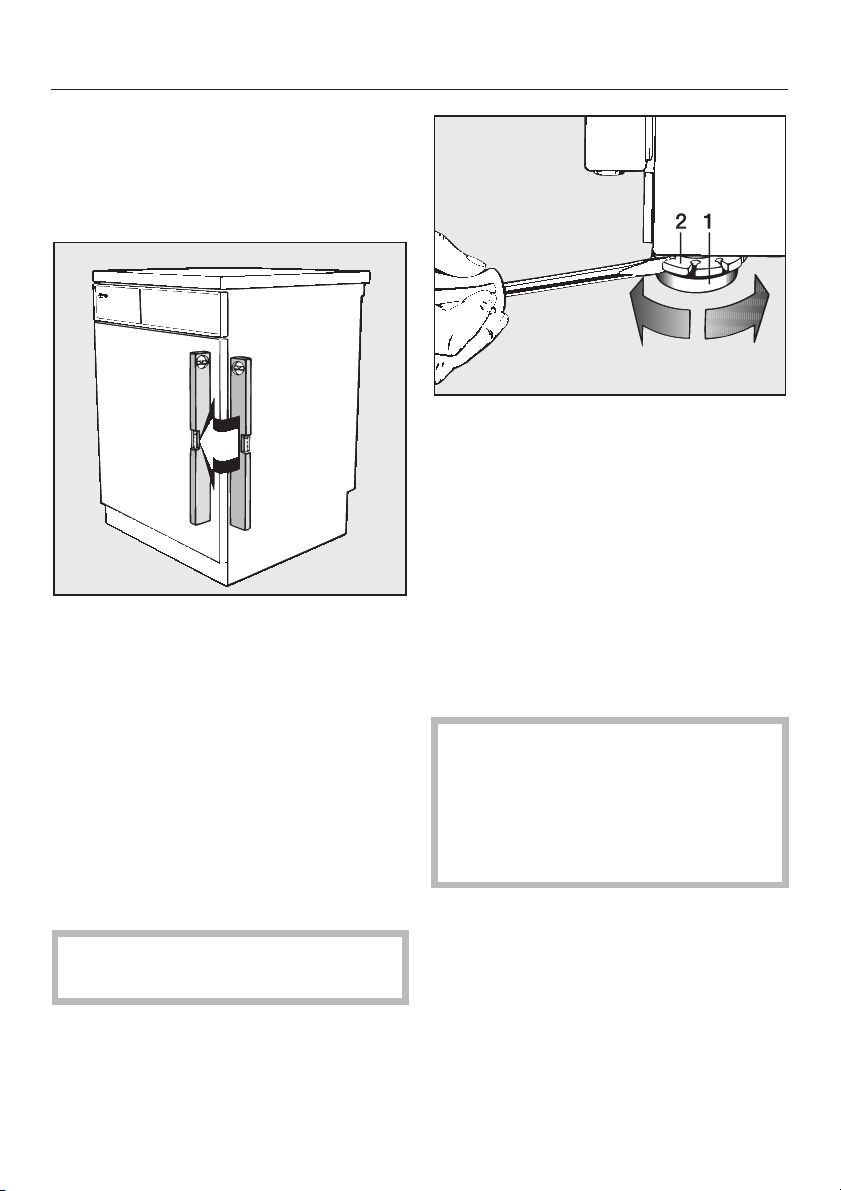
Installation
Levelling the machine
The machine must stand perfectly level
on all four feet to ensure safe and
proper operation.
With a screwdriver loosen and turn
^
the foot 1 together with the
counternut 2 to the left, (see illustration below) and screw out.
^ Put the machine back on all four feet.
^ Use a spirit level to check the ma-
chine is standing level.
Incorrect installation may increase electricity and water consumption and may
cause the machine to move about.
The four adjustable screw feet are used
to level the machine. All four feet are
screwed in when the machine is deliv
ered.
Screwing out and adjusting the feet
^
Gently tip the machine and prop it up
using a solid wood wedge for exam
ple, to ensure stability.
,
Make sure the machine does not
slip as this could cause injury.
54
-
-
^ Hold the foot 1 firm using a pipe
wrench and turn the counternut 2 to
the right firmly up against the housing
with a screwdriver.
,
All four counternuts must be
firmly up against the housing. Please
also check this for the feet which did
not need adjustment. Otherwise
there is the danger of the machine
moving about.
Page 55
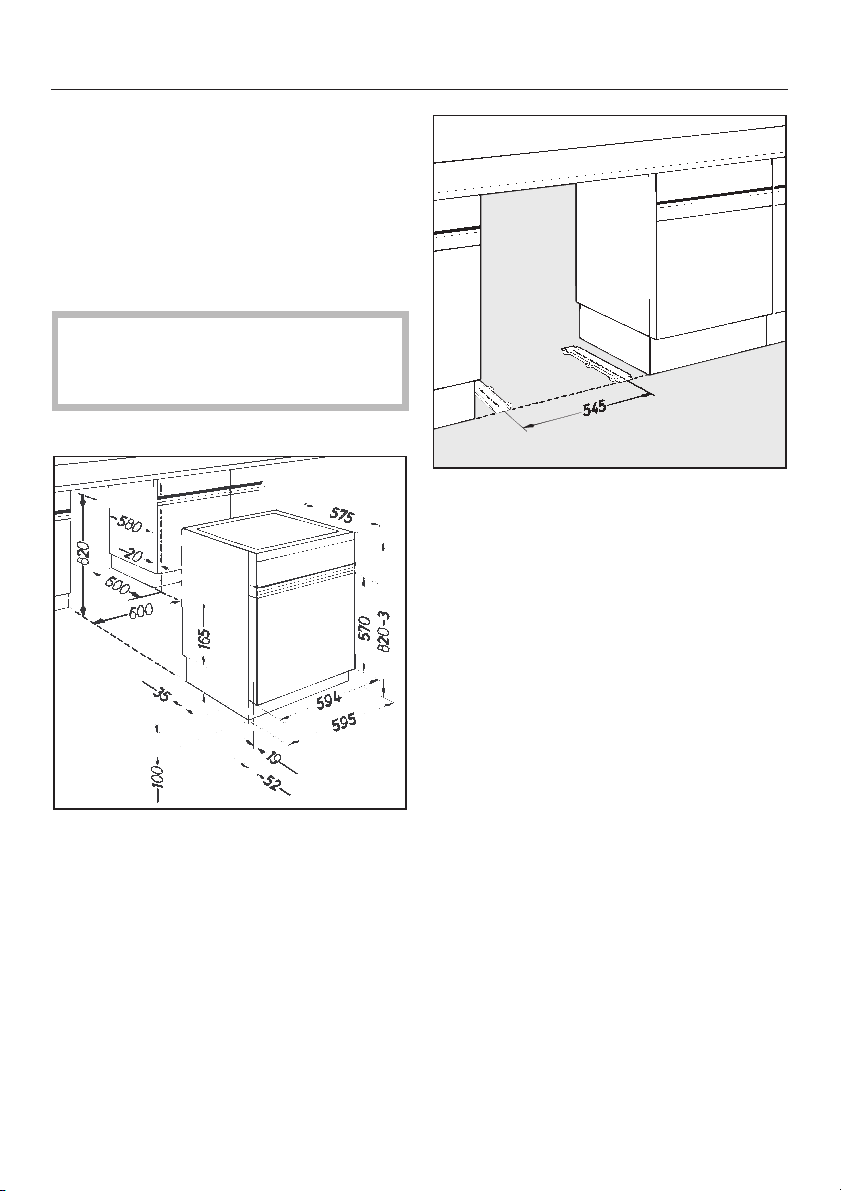
Building under
Installation
This washing machine is specially de
signed for installation under a continu
ous worktop.
This machine is fitted with a protective
coverplate which replaces the machine
lid.
For reasons of electrical safety
,
this coverplate is necessary, and
must not be removed.
Please note the following:
-
-
– The skids provided with the machine
are intended to prevent damage to
floor coverings when manoeuvring it
into position.
Installation under a work surface 900 to
910 mm or 950 to 960 mm from the
floor, requires one or two raising kit(s)
respectively, available with fitting instructions from Miele dealers and the
Miele Spare Parts dept.
–
The machine should never be oper
ated without the front panel firmly in
place.
–
The electrical and water connection
points should be close to the ma
chine and easily accessible.
-
-
55
Page 56
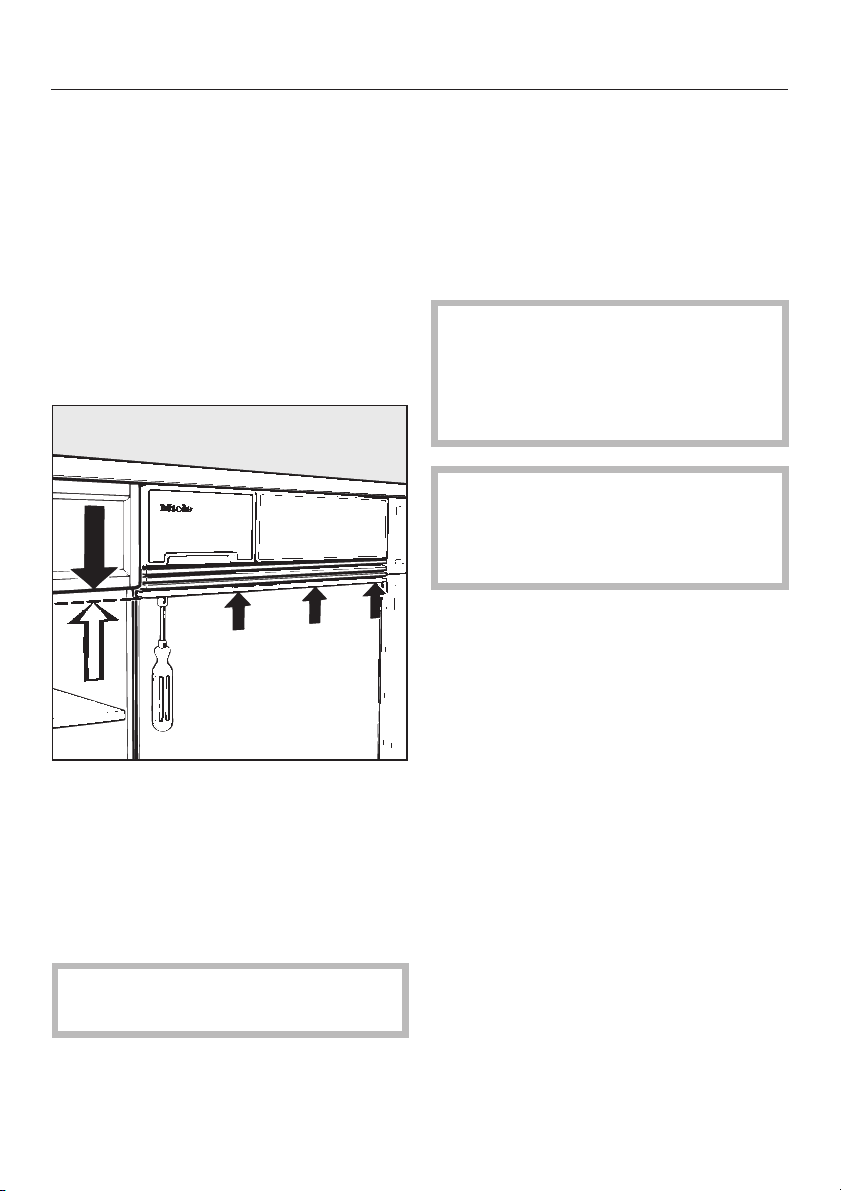
Installation
Adjusting the facia height
The adapter can be adjusted to match
the machine facia to the height of an
adjacent drawer by:
altering the position of the nuts
–
or
by removing one or more of the
–
strips.
Adapter strip adjustment range:
Fitting the front panel
The front of this appliance can be fitted
with a door panel to match surrounding
units. If the unit is fitted in a MIELE
KITCHEN, a door panel with the appro
priate dimensions and the necessary
holes pre-drilled can be provided.
If the kitchen is from a manufacturer
other than Miele, it is recommended
that the panel be cut to size and
holes drilled by a specialist, accord
ing to Miele specifications.
The rear side of the front panel must
be completely flat (without profile).
Any unevenness must be levelled
out.
Front panel dimensions:
Height: . . . . . . . . 570 mm (+10/-25mm)
Width: . . . . . . . . . . . . . . . 588 - 596 mm
-
-
–
max. 10 mm upwards (see arrows il
lustrated),
–
max. 25 mm downwards (this re
quires additional adapter strip(s) and
longer screws, available from the
Miele Spare Parts dept, or your Miele
dealer).
After adjustments have been made,
cut or pinch off any excess thread.
56
Thickness: . . max 19 mm (at the edges)
The template provided serves to locate
and drill the fixing holes for non-Miele
kitchens.
-
Page 57
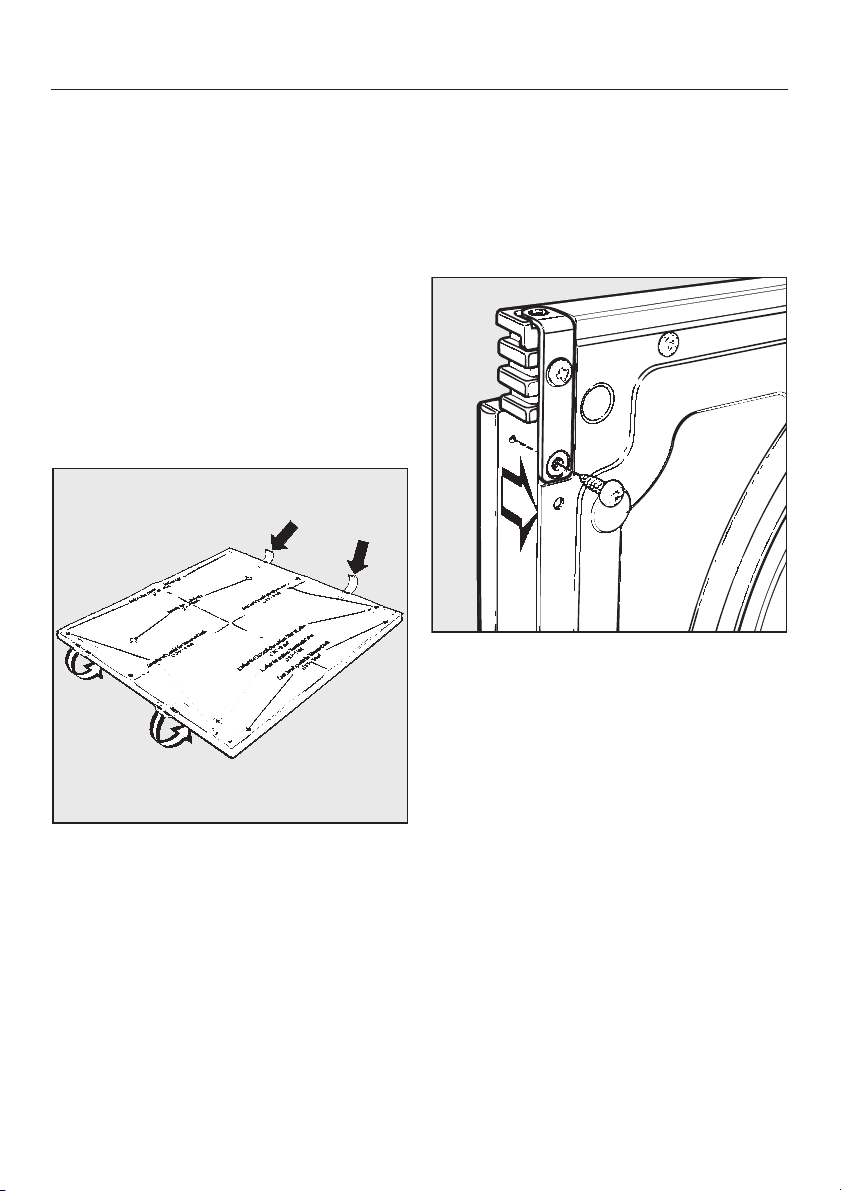
Installation
Drilling template
Place the template on the lower edge
^
of the rear of the door panel.
There are four short parallel marks in all
four corners of the template.
Use these short markings to position
^
the template correctly.
Example:
On a 594 mm wide panel the 2nd mark
ing from the centre must line up with
the left and right hand outer edge of the
door panel.
Example 1:
Drill all fixing holes for the inner door
^
panel to the specified depth. On
chipboard fronts: inject silicone seal
ant (supplied) into the (= Ø 10 mm)
free holes.
-
^ Unscrew the lower screws on the top
hinges on both the left and right hand
side of the door (see illustration).
-
^
Affix the template to the panel using
adhesive tape.
There are various ways of fixing the
panel in position.
^
Screw the front panel on through drill
holes 1 and 2 of the inner door panel
(see template) - do not overtighten,
(screws are supplied).
^
Align the front panel.
^
Tighten the screws
^
Fit the front panel with the remaining
screws provided and the hinge
screws.
57
Page 58
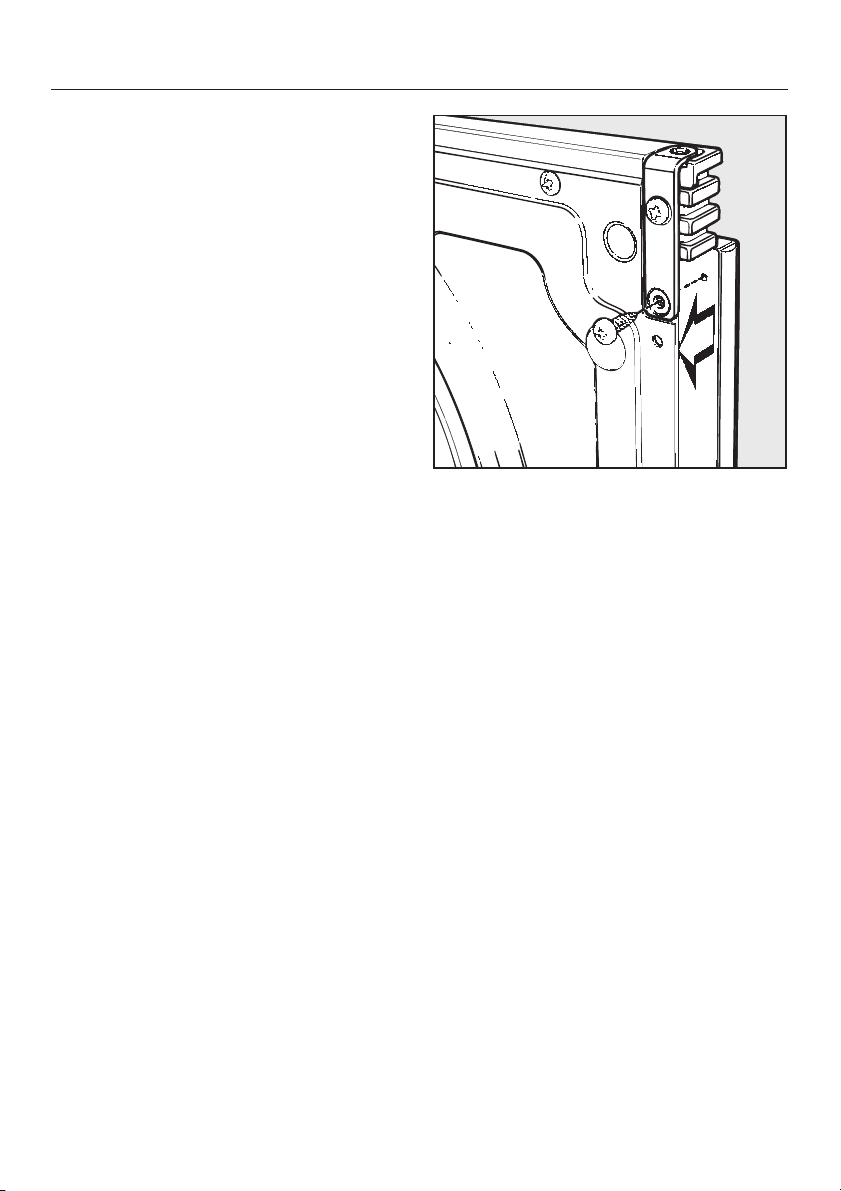
Installation
Example 2:
Drill the numbered holes and the
^
screw points for the inner door panel
to the specified depth.
On chipboard fronts: inject silicone
sealant (supplied) into the (= Ø 10
mm) free holes.
Note that some different holes are re
quired for left or right hand hingeing.
Left hand hingeing:
left drawing (see template), holes 1, 2,
3, 4, 5, 7, 8
Right hand hingeing:
right drawing (see template), holes 1, 2,
4, 5, 6, 7, 8
-
^ Unscrew the lower screws on the top
hinges on both the left and right hand
sides of the door, (see illustration).
^ Screw the front panel on through the
drilled holes 1 and 2 on the inner
door panel (see template) - do not
over-tighten (screws are supplied).
^ Align the front panel.
^
Tighten the screws.
^
Drill any more holes required through
the drill holes in the door inner panel.
^
Securely fit the front panel with the re
maining screws provided and the
hinge screws.
-
58
Page 59
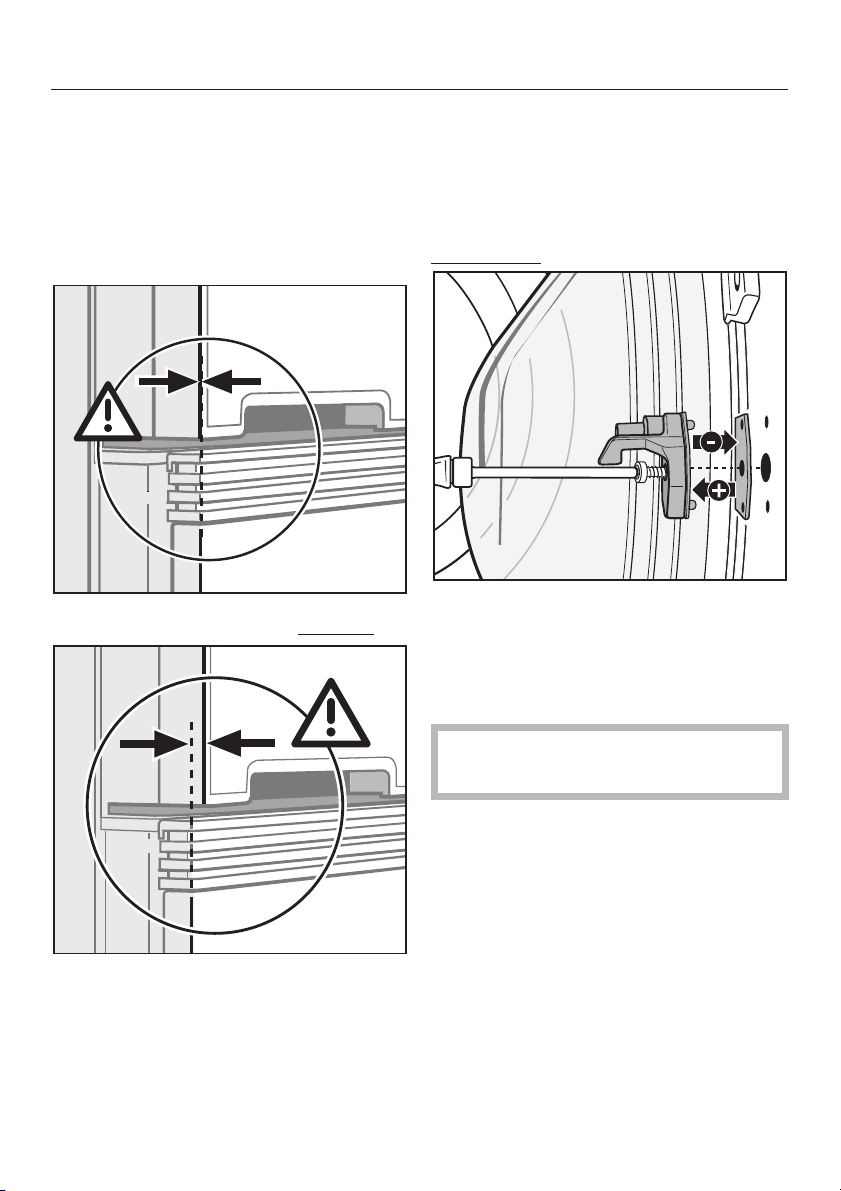
Installation
Aligning the door
The door must align so that it is flush
with the control panel. If the door is not
flush with the control panel it will not
shut properly.
Example of a flush door:
Example of a door which is not flush
:
To align the door add or remove the
spacers located underneath the door
latch.
Additional spacers are supplied in the
accessory pack.
Please note:
If you use too many spacers the door
will not provide a sufficient seal when
shut.
If this is the case remove one or more
spacers until the door shuts correctly.
After aligning the door test it to make
sure that the seal is adequate.
59
Page 60

Installation
Fitting a plinth facing
The appliance plinth below the door
can be partially concealed using a
plinth facing.
The height and return of the appliance
plinth cannot be altered.
A taller plinth facing can only be in
stalled if the overall niche height is
higher.
Plinth
height
100 mm (stan
dard)
150 mm 870 mm one spacer
200 mm 920 mm two spacer
Niche height
820 mm
-
frame is required
frames are required
A plinth facing (600 mm long) can be
ordered from your kitchen Dealer or
manufacturer. For Miele kitchens please
quote the model number when ordering.
Before fitting the plinth facing, please
note:
Under no circumstances must any
thing be stuck over the flap(s) in the
appliance plinth.
In order to open the drum door dur
ing an emergency the plinth facing
must be removable.
-
-
-
Fitting the plinth facing:
Stick the velcro fastener provided to the
appliance plinth.
For this the following procedure is rec
-
ommended:
Match up the hooked side and the
^
looped side of the velcro fastener
lengthwise.
Cut into 2 or 3 pieces.
^
Peel off the protective backing from
^
one of the velcro fastener pieces.
Position the cut pieces along the ap
^
pliance plinth, at the left and right
hand edge, and in the middle, avoiding the drain flaps. Press firmly into
place.
^ Now peel the protective backing off
the other velcro fastener piece.
^ Address the plinth facing to the ad-
hesive backing and press firmly into
place.
Washer and dryer Stack
A Miele tumble dryer can be stacked
with this washing machine. A stacking
kit* and special accessories* are nec
-
essary.
* All parts marked * are available from
the Miele Spare Parts or Sales depart
-
ments and from some Miele Dealers.
-
60
Page 61
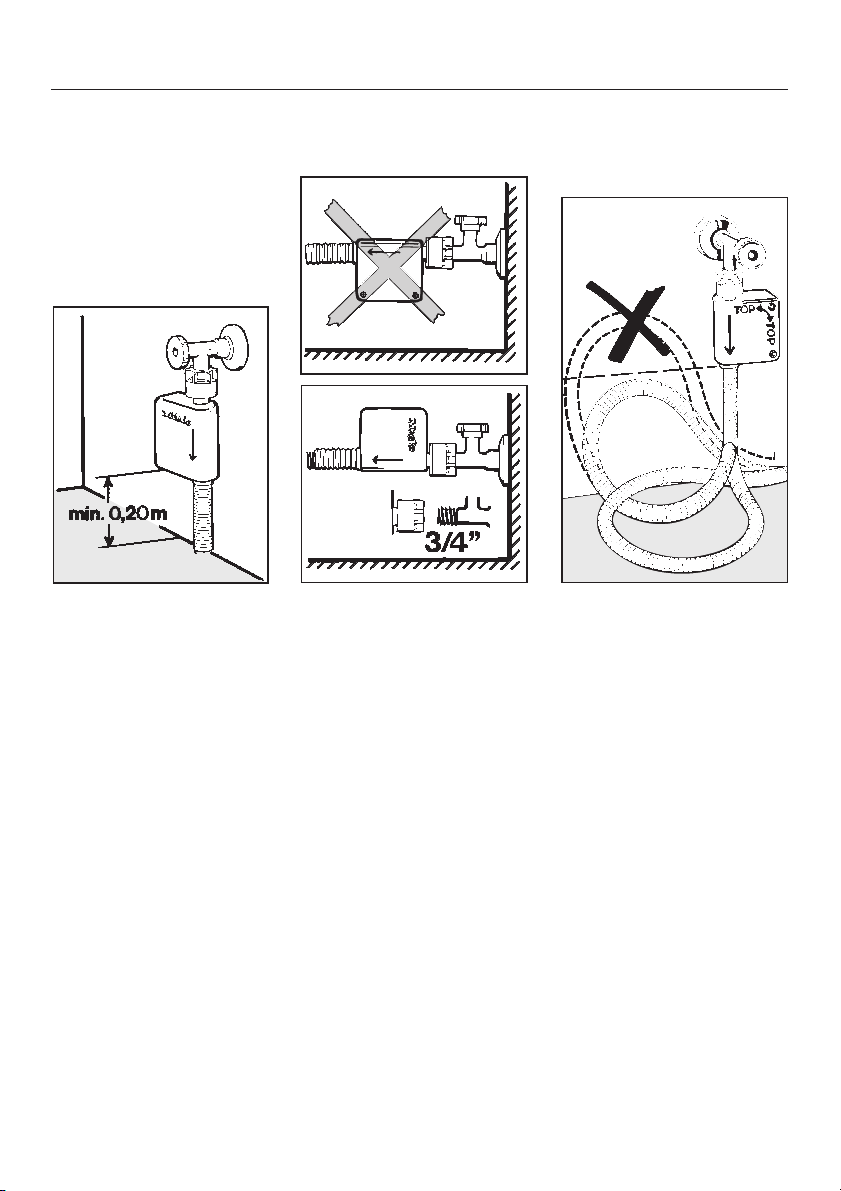
Connection to water supply
Fitting
Installation
The machine should be connected to a
mains water supply in accordance with
standard regulations. In Germany the
washing machine is not required to
have a non-return valve as it has been
designed to comply with the relevant
German DIN standard.
The machine is designed to operate
with a minimum water pressure of 1 bar.
There is a minimum flow pressure of 1
bar if 5 litres of water flow into a suit
able container in 15 seconds. The static
water pressure must not exceed 10 bar.
If it is higher than 10 bar it is essential
to fit a reducer valve.
-
The Miele Waterproof-System connected between the stopcock and the
machine offers the safest protection
against water leaks.
For the Waterproof system to function
correctly, it may only be fitted in the po
sitions shown (see illustrations).
Connection to the mains water supply
should incorporate a mains stopcock
3
with
/4’’ thread. The stopcock should
be fitted by a qualified plumber.
-
61
Page 62
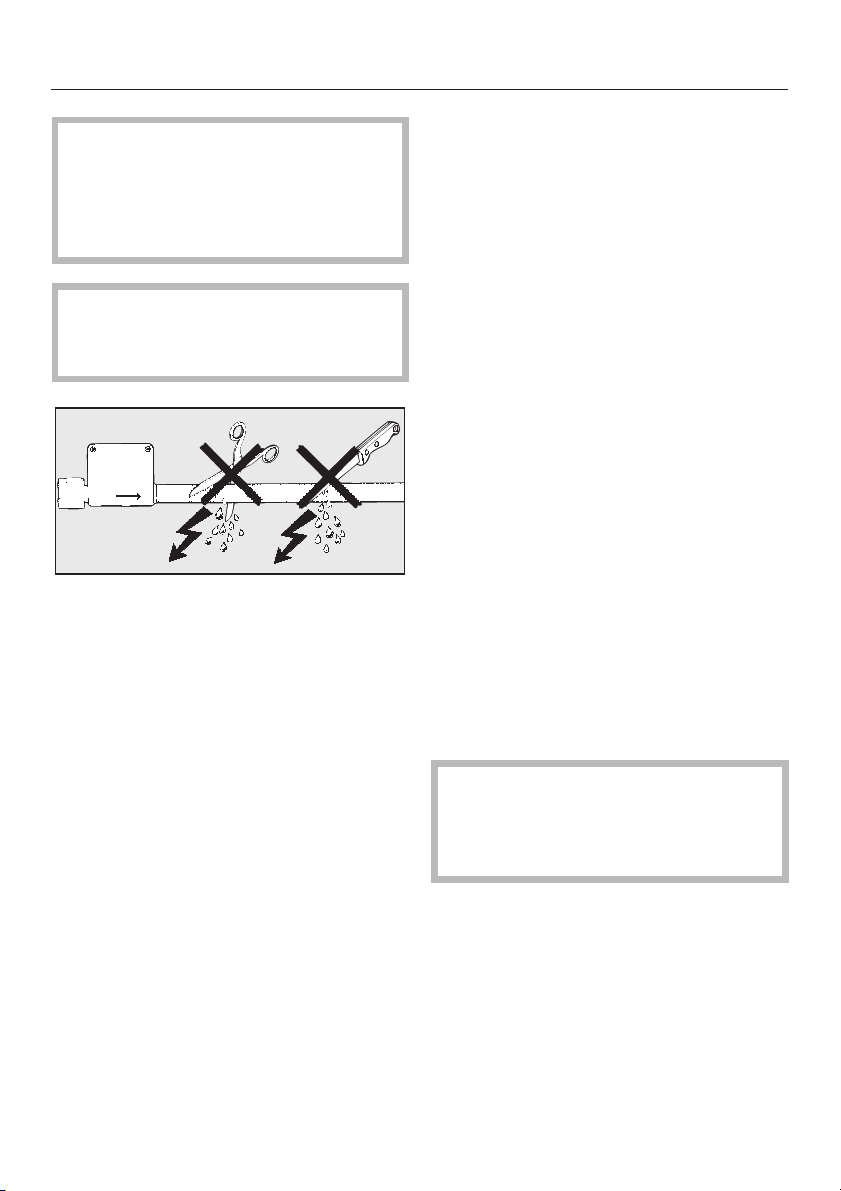
Installation
The connection point is subject to
mains water pressure. Turn on the
stopcock slowly and check for leaks.
Correct the position of the washer
and union if appropriate.
Protection in the event of a leaking
machine.
Any leaking water is collected in a
sump in the base of the appliance. A
float switch switches the safety valve off
electrically. No more water will flow in.
The "Waterproof system" is NOT suit
able for connection to a hot water
supply.
The protective sleeve of the hose must
not be damaged (see illustration).
The "Waterproof system" with a hose
length of approx. 4.5 metres is available
as an optional extra from your Miele
dealer or the Spare Parts Department.
Function
At the heart of this leak protection sys
tem there is an electric safety valve,
which works like an automatic stop
cock.
-
-
-
Protection in the event of a leaking
water inlet hose
Leaking water is fed into the sump
through the protective covering which
surrounds the inlet hose as a "second
skin". The float switch turns off the water
supply.
Maintenance
N.B. If you intend to unscrew the "Waterproof system" unit from the mains water supply it is essential that the machine is first disconnected from the
electricity supply.
Only use a genuine Miele "Waterproof
system" able to withstand pressure of
up to 70 bar, should you ever need a
replacement.
To protect the filters in the water inlet
valves the dirt filter in the "Water
proof system" connection must not
be removed.
-
The Miele "Waterproof system" protects
from water damage in the following
cases:
62
Page 63
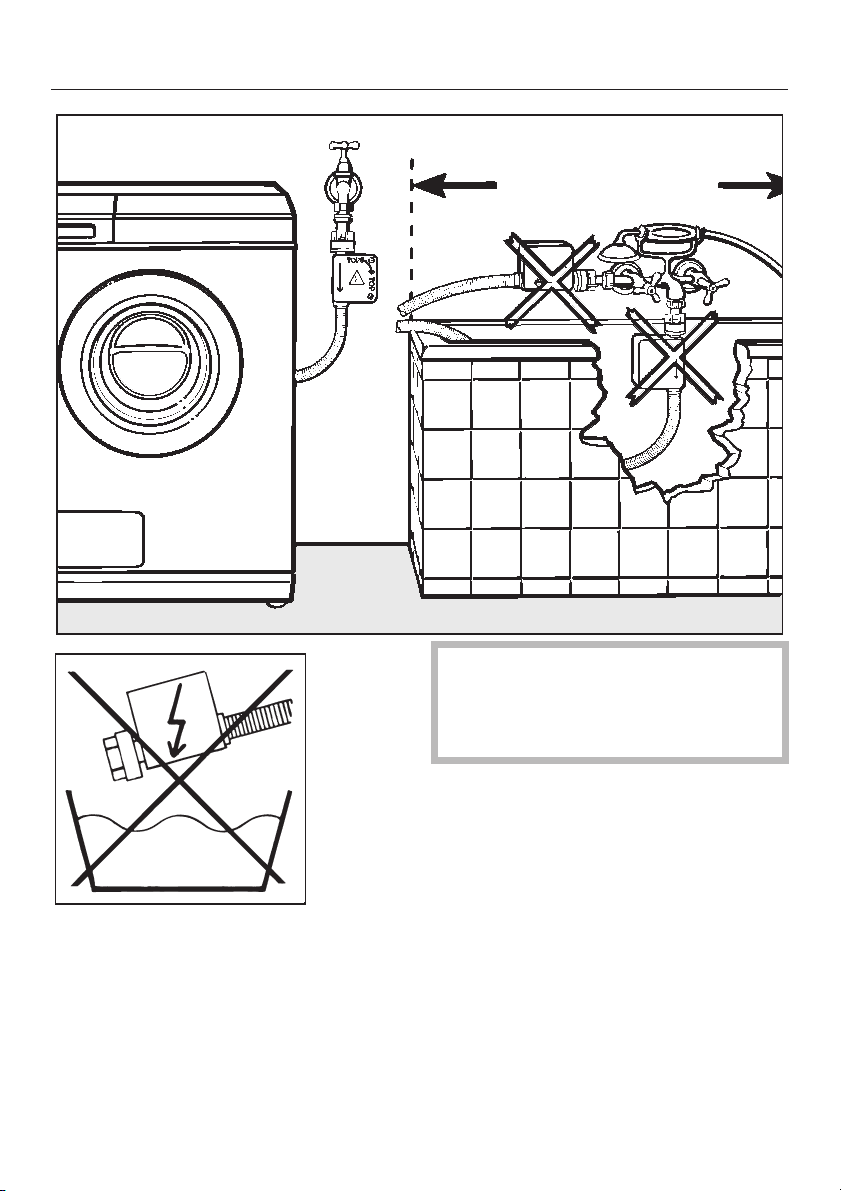
Installation
Important!
The plastic casing of the water connec
tion contains an electric component.
Do not dip into any liquid!
The "Waterproof system" must only
be connected to its own stopcock. It
must not be connected to mixer taps
or similar.
-
63
Page 64

Installation
Connection to the drainage
system
The machine drains via a drain pump
with a delivery head of 1 metre.
The drain hose is 1.5 m long. It must
not be kinked as this restricts drainage.
The swivel elbow at the end of the hose
can be turned in either direction, or can
be detached if required, with a sharp
twist and pull.
Drain hose connection:
1. Direct into a sink or basin:
Please note the following
Hook the hose over the edge and se
–
cure.
Make sure that the water can drain
–
away freely without hindrance. Other
wise there is a risk of water overflow
ing or of some of the drained water
being sucked back into the machine.
2. Connected securely to a plastic drain
pipe with a rubber nipple. There is no
need to use a non-return valve.
3. Connected securely to a standpipe.
. Connected securely to a floor gully.
4
If required, the drain hose can be extended to a length of 5 m. The necessary parts can be purchased from the
Miele Spare Parts Department, or your
Miele dealer.
-
-
-
64
For a delivery head of more than 1 m
(up to a maximum of 1.8 m) a second
Duo-drain pump is available with the
corresponding conversion kit from the
Miele Spare Parts Department or your
Miele dealer.
Page 65

Installation
Electrical connection U.K.
All electrical work should be carried out
only by a suitably qualified and compe
tent person, in strict accordance with
national and local safety regulations.
The appliance is supplied with a mains
cable with moulded plug for connection
to a 230-240V mains supply. The volt
age, rated load and fuse rating are
given on the data plate. Please ensure
these match the household mains sup
ply.
Connection should be made via a fused
plug and suitable switched socket
which is easily accessible after installation. For extra safety it is advisable to
install a residual current device (RCD),
with a trip current of 30 mA (in accordance with DIN VDE 0664, VDE 0100,
section 739). Do not connect via an extension lead.
Ensure power is not supplied to the appliance while installation work is being
carried out.
-
-
Where it is necessary to change plugs,
if the colours of the wires in the mains
lead of this appliance do not corre
spond with the coloured markings iden
tifying the terminals of your plug, pro
ceed as follows:
The wire which is coloured green and
^
yellow must be connected to the ter
minal in the plug which is marked
with the letter E or by the earth sym
bol z or coloured green, or green
and yellow.
The wire which is coloured blue must
^
be connected to the terminal in the
plug which is marked with the letter N
or coloured black.
^ The wire which is coloured brown
must be connected to the terminal in
the plug which is marked with the letter L or coloured red.
WARNING: THIS APPLIANCE
MUST BE EARTHED
-
-
-
-
-
Important
The wires in the mains lead are col
oured in accordance with the following
code:
Green/yellow = earth
Blue = neutral
Brown = live
-
65
Page 66

Installation
Electrical connection U.K.
Non-rewireable plugs BS 1363
If this machine is fitted with a nonrewireable plug, the following informa
tion applies:
If the socket outlets are not suitable for
the plug supplied with the product, it
must be cut off and an appropriate plug
fitted. The fuse carrier and fuse should
be removed from the old plug and dis
posed of.
The plug cut from the flexible cord
should then be disposed of and on no
account be inserted into any socket
elsewhere in the house (electric shock
hazard).
The fuse cover must be refitted when
changing the fuse, and if the fuse cover
is lost, the plug must not be used until a
suitable replacement is obtained. The
colour of the correct replacement cover
is that of the coloured insert in the base
of the plug, or the colour that is em
bossed in words on the base of the
plug (as applicable to the design of
plug fitted).
-
-
-
Replacement fuses should be ASTA ap
proved to BS 1362 and have the cor
rect rating. Replacement fuse covers
may be purchased from your local elec
trical supplier or Service agent.
66
-
-
-
Page 67
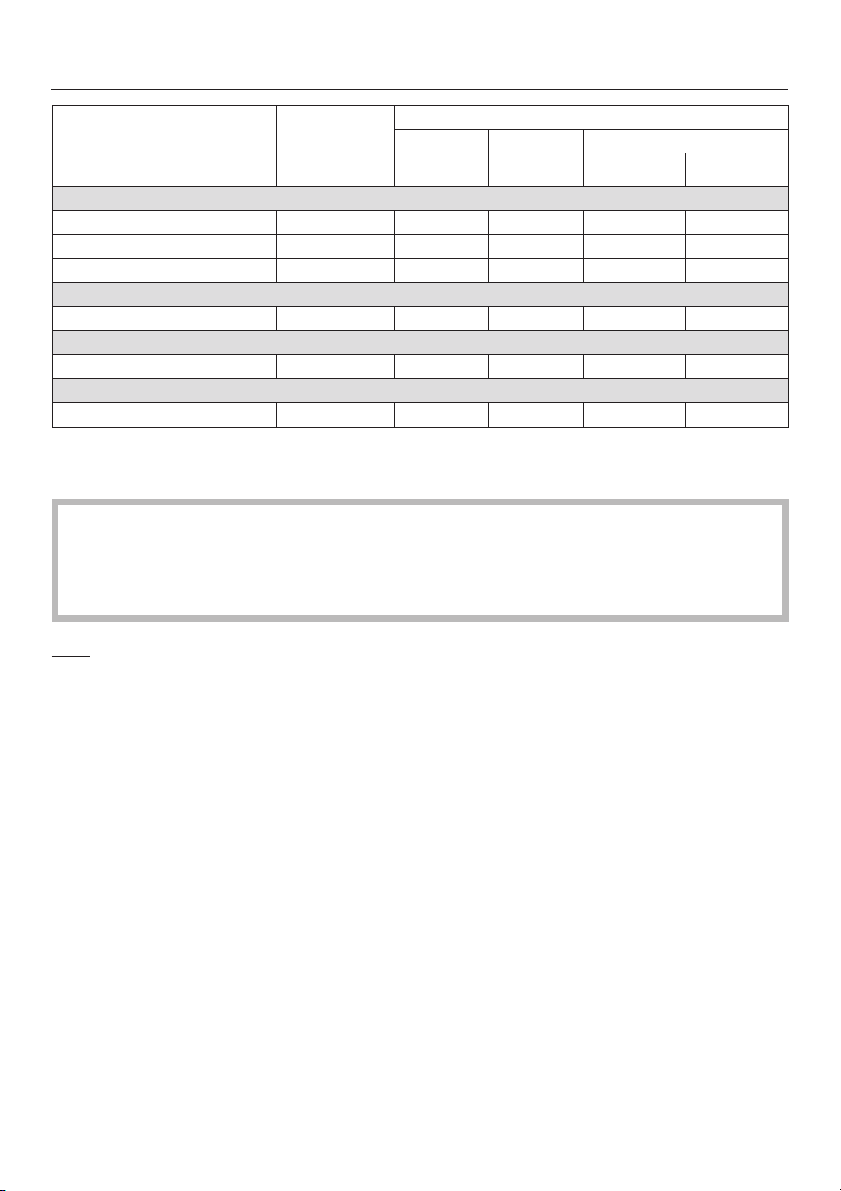
Consumption data
Programme
(without any additional op
programmable functions)
COTTONS
95°C 5.0 kg 1.70 49 1 h 54 mins 1 h 22 mins
60°C
40°C 5.0 kg 0.55 49 1 h 58 mins 1 h 06 mins
MINIMUM IRON
40°C 2.5 kg 0.45 58 1 h 20 mins 49 mins
DELICATES
30°C 1.0 kg 0.40 75 58 mins 48 mins
WOOLLENS
30°C 1.0 kg 0.15 25 35 mins -
(1)
EN 60456 test programme
tions or
(1)
-
Load Consumption data
Energy Water Programme time
in kWh litres normal short
5.0 kg 0.95 49 1 h 58 mins 1 h 16 mins
Consumption data can vary from the nominal values given depending on water
pressure, water hardness, water inlet temperature, room temperature, type and
volume of load, fluctuations in the electricity supply and any additional functions selected.
N.B.
Consumption data obtained from a machine designed for the German market.
67
Page 68

Technical Data
Height 82.0 cm
Width 59.5 cm
Depth 60.0 cm
Depth with door open 118.0 cm
Weight 96 kg
Maximum floor load 1600 Newton (approx. 160 kg)
Capacity 5 kg dry laundry
Voltage see data plate
Rated load see data plate
Fuse rating see data plate
Consumption data see "Consumption data"
Water flow pressure min. 1 bar (100 kPa)
Water flow pressure max. 10 bar (1000 kPa)
Drain pump head max. 1.00 m
Drain pump length max. 5.00 m
Test certificates awarded Radio/TV suppression, VDE
686970
Page 69

Page 70

Page 71

71
Page 72

Alteration rights reserved/000 2401
This paper consists of cellulose which has been bleached without the use of chlorine.
 Loading...