

Page 1
Model Gallery
High definition models of immortal amps and effects
is what Line 6 POD HD series all about
Here’s what you’ll find under the hood of your
POD HD Device
____________________________________
POD HD Pro | POD HD500 | POD HD Desktop
POD HD300 | POD HD400
____________________________________
Electrophonic Online Limited Edition - Revision D
Page 2

Table of Contents
About the Model Gallery ......................................................... 4
HD Amp Models ........................................................................ 4
Blackface Double ................................................................................................5
Hiway 100 Custom .............................................................................................. 6
Super O ...............................................................................................................7
Gibtone 185 ........................................................................................................8
Tweed B-Man ...................................................................................................... 9
Blackface ‘Lux ...................................................................................................10
Divide 9/15 ........................................................................................................ 11
PhD Motorway .................................................................................................. 12
Class A 15 .........................................................................................................13
Class A 30 .........................................................................................................14
Brit J-45 ............................................................................................................. 15
Brit P-75 ............................................................................................................ 16
Brit J-800 ........................................................................................................... 17
Bomber Uber ..................................................................................................... 18
Cali Tread .......................................................................................................... 19
ANGEL F-Ball 100 ...........................................................................................20
Plexi Lead 100 ................................................................................................... 21
Solo 100 ............................................................................................................22
Line 6 Creations - Elektrik, Doom & Epic ....................................................... 23
Flip Top .............................................................................................................24
Page 3

FX Models ................................................................................ 25
Delay Models .....................................................................................................25
Modulation Models ........................................................................................... 27
Distortion Models .............................................................................................29
Filter & Wah Models ........................................................................................32
Reverb Models ..................................................................................................35
Line 6, POD, M13 Stompbox Modeler, M9 Stompbox Modeler and M5 Stompbox
Modeler are trademarks of Line 6, Inc. All other product names, trademarks, and artists’
names are the property of their respective owners, which are in no way associated or
affiliated with Line 6. Product names, images, and artists’ names are used solely to identify
the products whose tones and sounds were studied during Line 6’s sound model development
for this product. The use of these products, trademarks, images, and artists’ names does not
imply any cooperation or endorsement.
Copyright © 2012 Line 6, Inc.
Page 4

Model Gallery - HD Amp Models
About the Model GAllery
The effects in this gallery feature a tonal heritage of the past fifty years of amplifier and
effects design. Featuring brand new HD amp modeling, Line 6 POD® HD devices also
feature effects taken from our industry standard M series of products, M5, M9 & M13. This
Model Gallery is a tribute and reference to the careful study and design of the models found
in the POD HD products.
4
This publication is provided for your reference only – see the Pilot’s Handbook or Advanced
Guide of your Line 6 product for details on operation, care & maintenance. Both are available
online at http://line6.com/support/manuals/
hd AMp Models
It’s been over a decade since Line 6 introduced the first modeling amplifier, AXSys, into
the market. Since then our dedicated engineers have spent countless hours unveiling the
elusive magic created from those glowing tubes in the back of an amplifier. Circuits for tube
amplification have been around for over a half century and yet when it comes to guitar tone
there is still little that compares. Enter HD amp modeling, thanks to more processing power
under the hood than even we imagined would be available when we introduced the first
POD®!
The DSP you are hearing behind these new amp models is like nothing before. This is not
simply a higher fidelity version of past products. We’ve completely reinvented modeling Mullard vacuum tubes, paper in foil caps, carbon comp resistors and output transformers
- it’s all part of the digital alchemy studied to bring you the tube feel without the tube
maintenance. We hope you enjoy using these models as much as we did creating them!
And now, away we go....
Page 5
Model Gallery - HD Amp Models
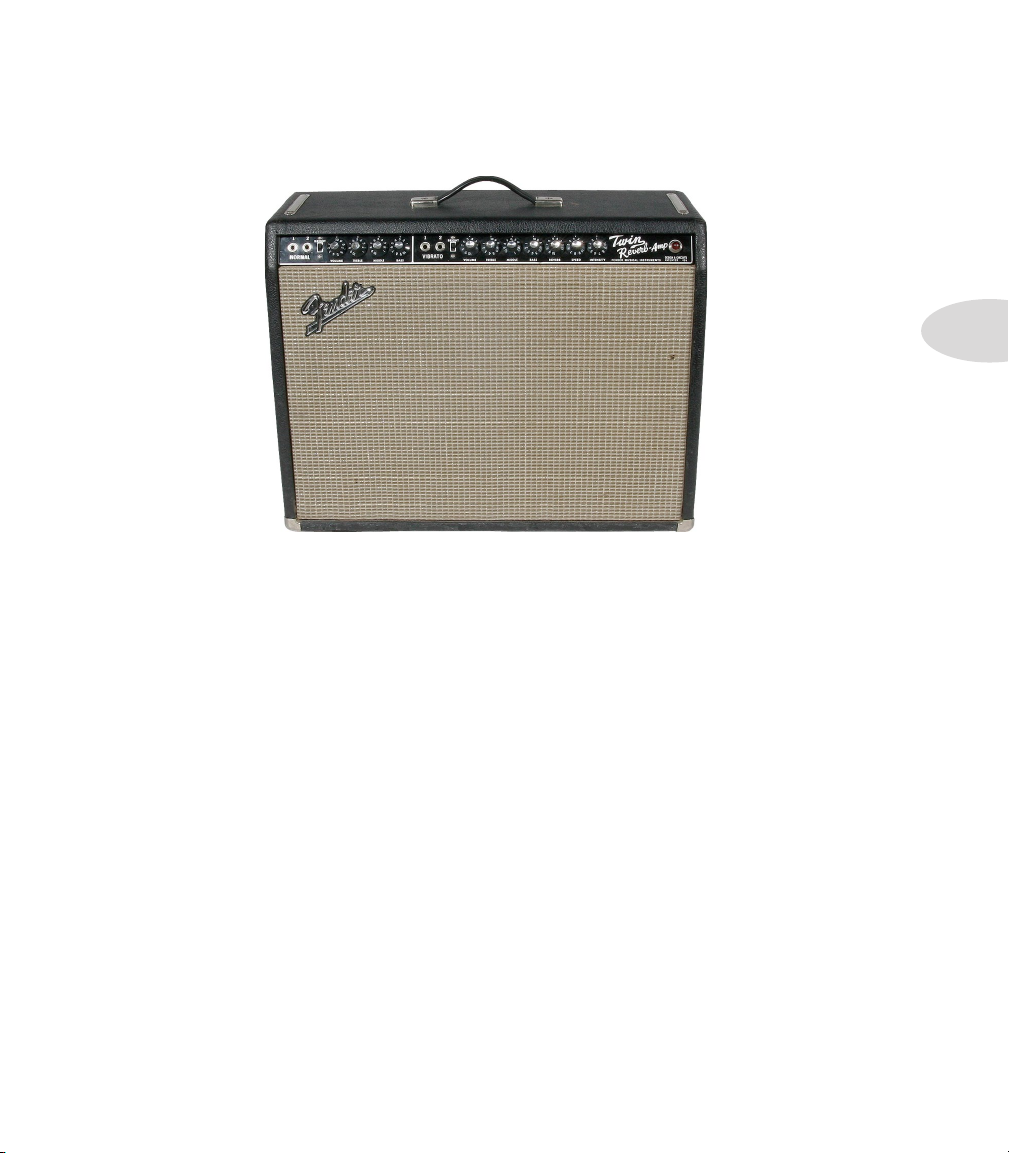
Blackface Double
Based on* 1965 Fender® Twin Reverb
Fender® Twin Reverb® An all-time classic of biting twang and shimmering clean tones, the
Fender® Twin Reverb® first hit the scene in 1964 and quickly became the standard for large,
fully featured touring combos. Everybody used it, from jazz and country players to serious
rockers. With 100 watts of power, 2x12” Jensen speakers, and lush onboard tremolo and
reverb, the Twin Reverb® has remained a go-to amp for countless players for going on five
decades, and has earned its place in the annals of tone history many times over. Played clean
but singing with a Telecaster, this is the sound of Roy Buchanan; cranked with a Les Paul, it’s
pure Michael Bloomfield. It never gets extremely overdriven and dirty, mostly just louder–a
lot louder.
®
5
Blackface Double NRM: The Normal channel is the mellower of the two, with less gain
than the Vibrato channel.
Blackface Double VIB: The Vibrato channel is a separate preamp circuit with clipping
characteristics that are different than the Normal channel due to an additional 12AX7 tube
stage.
* All product names used in this manual are trademarks of their respective owners, which are in no way associated or affiliated with Line 6. These trademarks of other manufacturers are used solely to identify the products of those manufacturers whose tones and sounds were
studied during Line 6’s sound model development. Fender® and Twin Reverb® are registered trademarks of Fender Musical Instruments Corp.
Page 6
Model Gallery - HD Amp Models
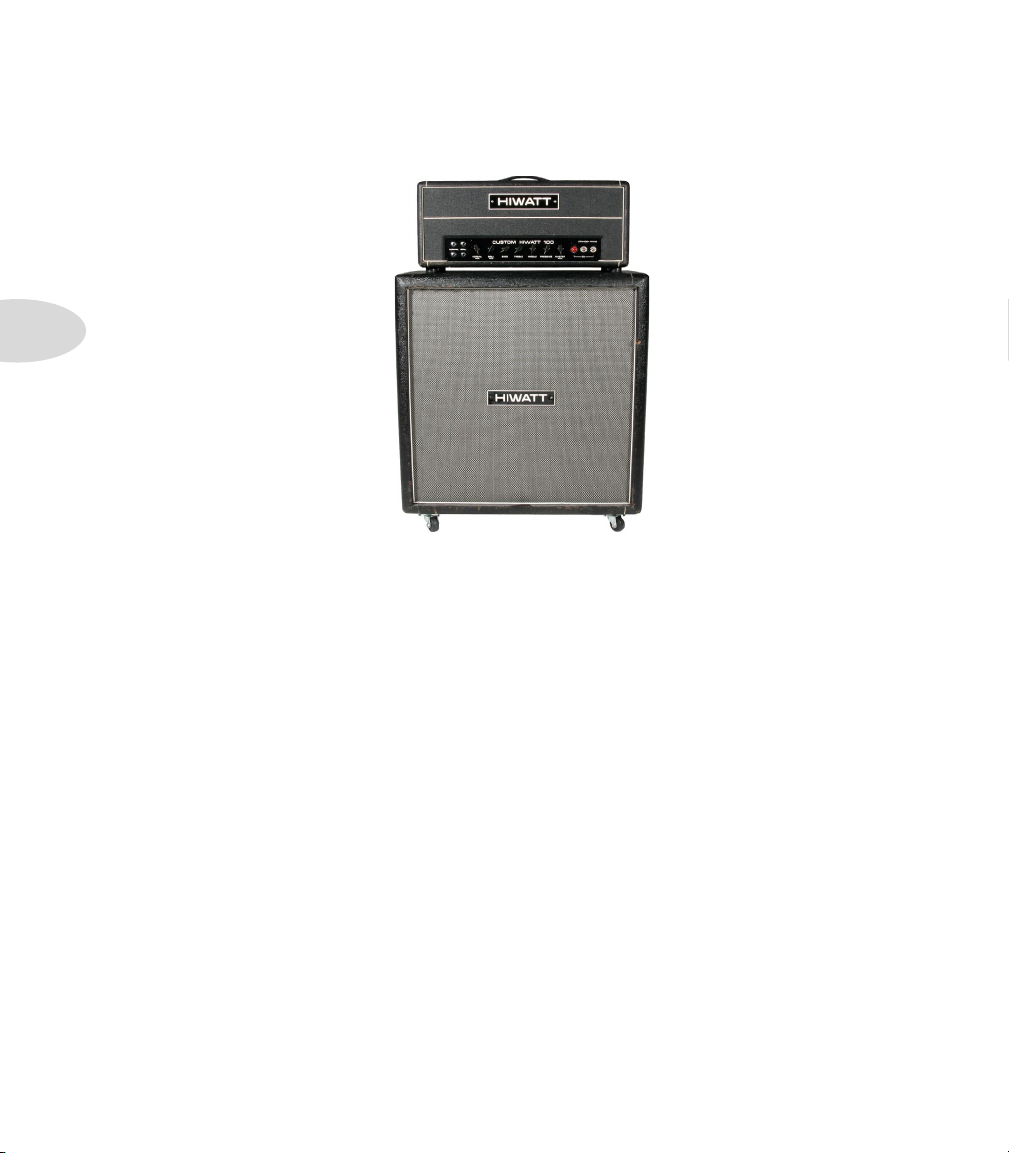
Hiway 100 Custom
Based on* 1973 Hiwatt® DR-103
6
Although it might have looked somewhat Marshall-esque from the outside with its black,
business like British styling and four EL34 output section, the Hiwatt® Custom 100 was a
very different beast. When Dave Reeves began prototyping his Hiwatts in 1967 it was with
the objective of building the best guitar amp available, period. A look inside a good Custom
100 shows you how thoroughly he achieved that goal (due in part to Reeves’ hiring of ‘milspec’ wiring specialist Harry Joyce). With their immaculate wire runs, military-grade circuit
work, and high-end transformers, Hiwatt amps achieved tones that ranged from multidimensional cleans to ungodly aggressive overdrive, all at unprecedented volume levels.
This was the sound that propelled Pete Townshend’s Live at Leeds-era tone with The Who
in the late ’60s, as well as David Gilmour’s soaring lead work with Pink Floyd in the ’70s.
* All product names used in this manual are trademarks of their respective owners, which are in no way associated or affiliated with Line 6. These trademarks of other manufacturers are used solely to identify the products of those manufacturers whose tones and sounds were
studied during Line 6’s sound model development. Hiwatt® is a registered trademark of Fernandes Company LTD Corportation, Japan.
Page 7
Model Gallery - HD Amp Models
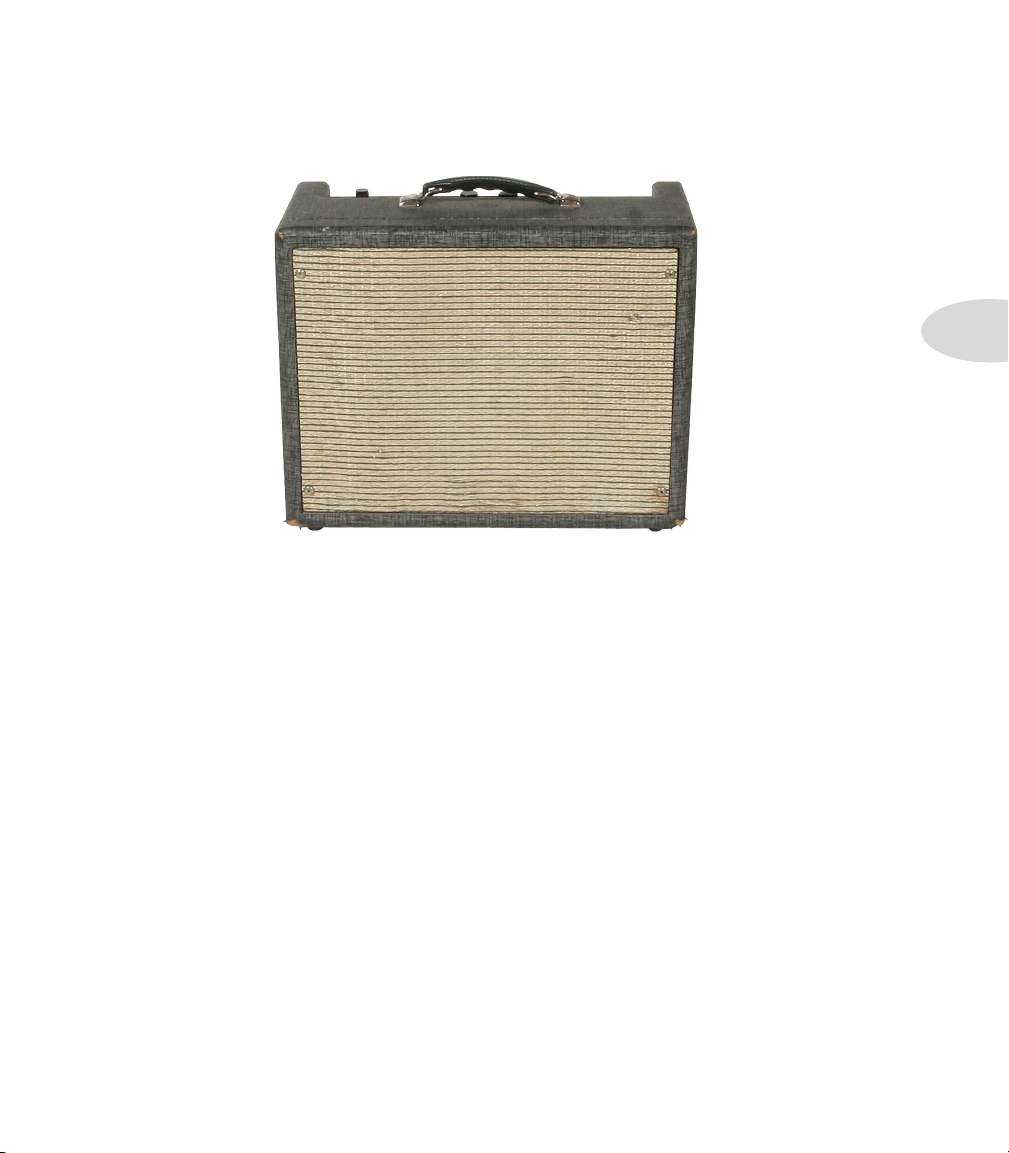
Super O
Based on* Supro® S6616
With its single-ended 6V6 output stage, unusual preamp circuitry, and oval 6” x 9” speaker,
the Supro® S6616 of the late ’50s and early ’60s—manufactured by Valco in Chicago—
might seem an unlikely candidate for “classic amp” status. Yet more of the stuff of legend,
Jimmy Page has admitted to using a Supro® amp to record most of the first two Led Zeppelin
albums. The only problem is, he never copped to which Supro model he used. Talk about
a real communication breakdown! Wind it up, and the S6616 offers juicy, brown overdrive
that can sound like a raging stack when mixed with the track, yet with a character all its
own. Reined in to clean volumes, it is beautifully spanky and crisp. And at all levels the 6” x
9” speaker yields nodes and peaks that contribute to an unusual and distinctive sonic voice
that has come to be known as the Supro® sound. We don’t know if this is ‘the one’ or not,
but it sure sounds like it to us! (Dragon pants not included.)
7
* All product names used in this manual are trademarks of their respective owners, which are in no way associated or affiliated with Line 6. These trademarks of other manufacturers are used solely to identify the products of those manufacturers whose tones and sounds were
studied during Line 6’s sound model development. Supro is a registered trademark of Zinky Electronics.
Page 8
Model Gallery - HD Amp Models
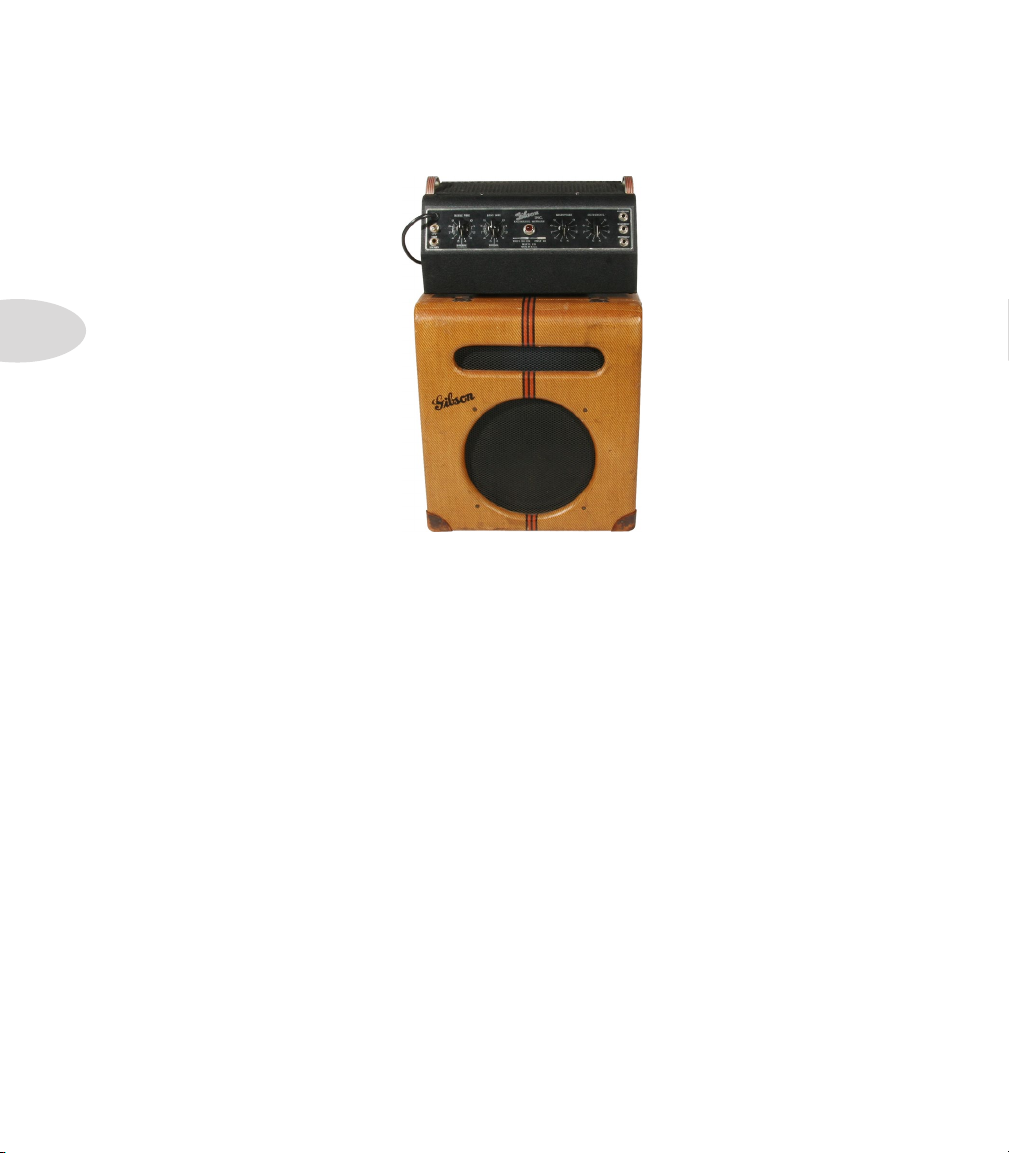
Gibtone 185
Based on* 1939 Gibson® EH-185
8
Gibson® EH-185 With its hot “microphone” input and a well-worn 12” field-coil speaker, this
little 1939-’42 combo has become a favorite of blues guitarists and studio players alike. This
was the Gibson® company’s first amp designed for the electric guitar – previous models were
designed for Hawaiian lap steels, an extremely popular instrument during this era. Nothing
else quite nails the round, warm, woody tone and easy breakup of its octal preamp stage
and dual-6L6 output stage. The EH-185 makes a surprisingly versatile voice for sculpting
anything from vintage jazz tones to raw rock’n’roll when cranked up, and sits beautifully in
a full-band mix, both live and in the studio. Seminal jazzer Charlie Christian is believed to
have moved up to an EH-185 combo before his death, about the same time that he stepped
up from his original Gibson® ES-150 guitar to an ES-250. In a more modern setting, it has
shared the stage with Queen Of The Stone Age’s Josh Homme.
* All product names used in this manual are trademarks of their respective owners, which are in no way associated or affiliated with Line 6. These trademarks of other manufacturers are used solely to identify the products of those manufacturers whose tones and sounds were
studied during Line 6’s sound model development. Gibson® is a registered trademark of Gibson Guitar Corp.
Page 9
Model Gallery - HD Amp Models
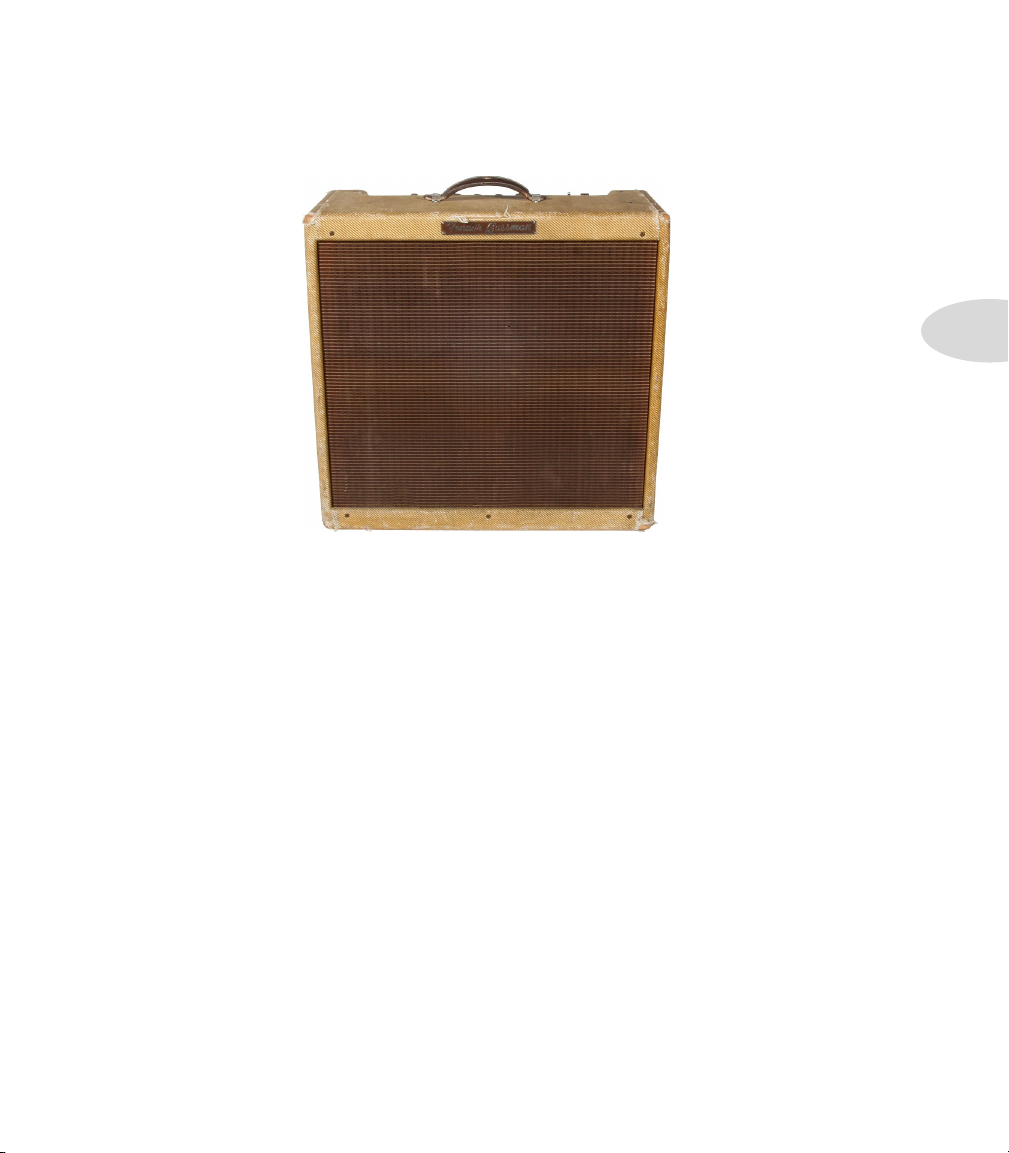
Tweed B-Man
Based on* 1958 Fender® Bassman
Simply the crème de la crème of vintage amps from the ’50s, the Fender® 5F6-A Bassman
combo with 4x10” Jensen® alnico speakers was the amp that started it all – instant rock and
roll tone. Originally a bass guitar amp, the Bassman® became a blues and country staple for
6-string guitarists. Incidentally, when Jim Marshall built his first amps with Ken Bran they
were heavily influenced by the early Bassman. Its 5AR4 tube rectifier aids in its outstanding
dynamic response, and it boasts great touch-sensitivity thanks to a highly interactive threeknob “cathode-follower” tone stack. The Bassman doesn’t have a master volume, so like all
amps of this era, you had to crank this mutha up to get that dirty tone revered by all Bassman
enthusiasts! As Buddy Guy, Bruce Springsteen, Jimmy Vaughan, and so many others would
tell you, when you’re talking vintage amps, the Bassman really is ground-zero for big-combo
tone.
®
9
Tweed B-Man NRM: The Normal channel is the mellower of the two, with less (as you’d
expect) brightness and gain than the Bright channel.
Tweed B-Man BRT: The Bright channel utilizes the second half of the first preamp tube
(the Normal channel uses the first half only) for a different voicing. High frequencies are
increased due to the addition of a bright cap across the volume knob.
* All product names used in this manual are trademarks of their respective owners, which are in no way associated or affiliated with Line 6. These trademarks of other manufacturers are used solely to identify the products of those manufacturers whose tones and sounds were
studied during Line 6’s sound model development. Fender® and Bassman® are registered trademarks of Fender Musical Instruments Corp.
Page 10
Model Gallery - HD Amp Models
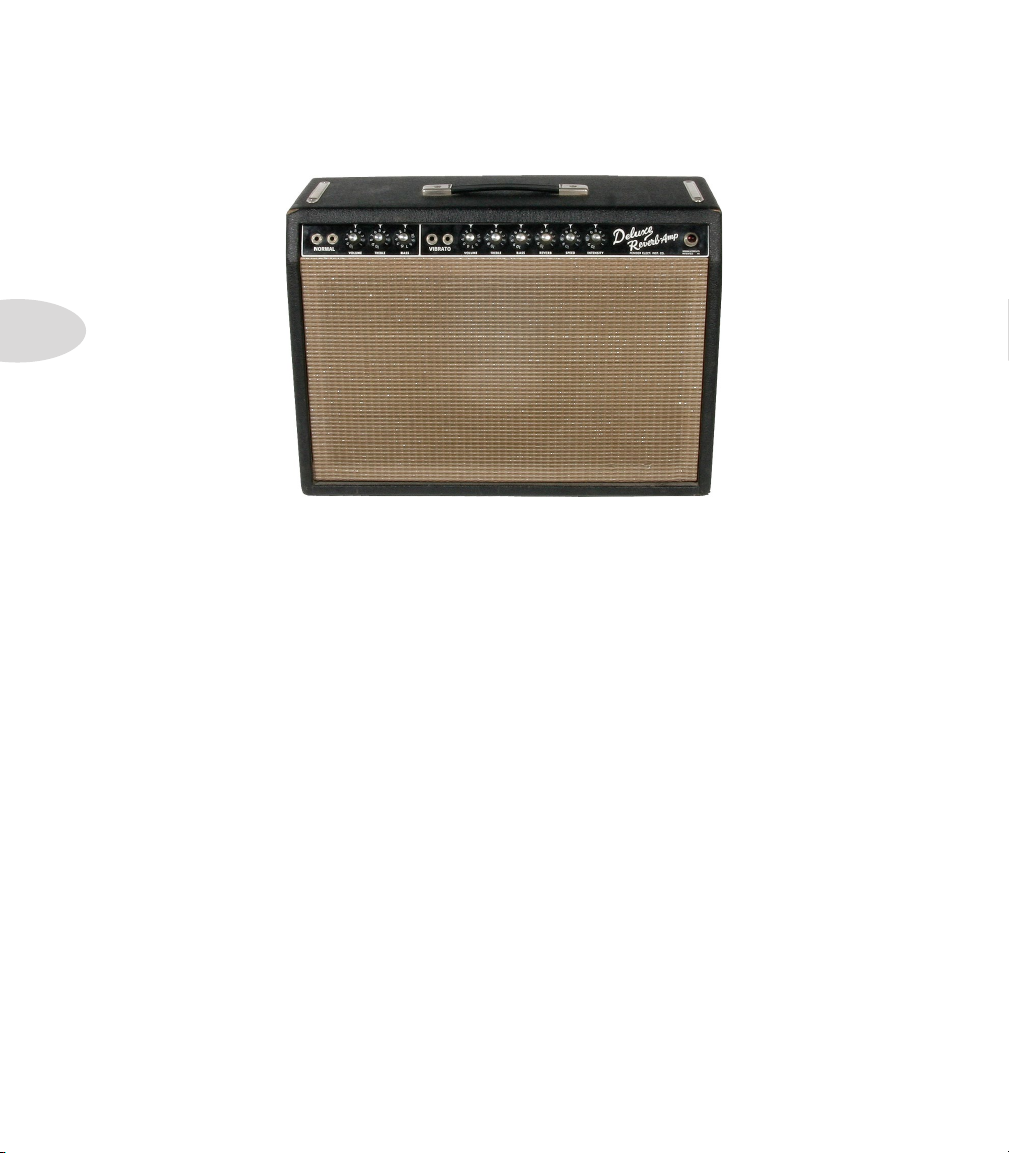
Blackface ‘Lux
Based on* 1964 Fender® Deluxe Reverb
10
While the Twin Reverb® set the standard as the large-club amp, its smaller sibling the
Deluxe Reverb® established itself as perhaps the most popular small-to-medium club and
studio amp of all time. And now, in this age of improved sound reinforcement and lower stage
volumes, a Deluxe Reverb® remains all the amp that plenty of players need to get their mojo
going, whatever size the venue. With 22 watts from two 6V6GT output tubes in class AB,
a single 12” Oxford 12K5-6 speaker, and tasty tube reverb and tremolo (the latter errantly
dubbed “vibrato” on Fender control panels), the Deluxe Reverb® is a grab’n’go combo that
has proved a pivotal tone tool for too many major players to begin to mention. Its clean tones
exhibit classic mid-’60s Fender sparkle and bite, while its overdrive is extremely dynamic
and expressive. Plenty of guitarists consider this the “ultimate Tele® amp”, but inject just
about any style axe and the Deluxe Reverb® will deal out gorgeous tones with equal finesse.
®
Blackface ‘Lux NRM: The Normal channel is the mellower of the two, with less brightness
and gain than the Vibrato channel.
Blackface ‘Lux VIB: The Vibrato channel is a separate preamp circuit with tone and clipping
characteristics that are different than the Normal channel due to an additional 12AX7 tube
stage. High frequencies are increased due to the addition of a bright cap across the volume
knob.
* All product names used in this manual are trademarks of their respective owners, which are in no way associated or affiliated with Line 6. These trademarks of other manufacturers are used solely to identify the products of those manufacturers whose tones and sounds were
studied during Line 6’s sound model development. Fender®, Tele®, Twin Reverb®, and Deluxe Reverb® are registered trademarks of Fender Musical Instruments Corp.
Page 11
Model Gallery - HD Amp Models
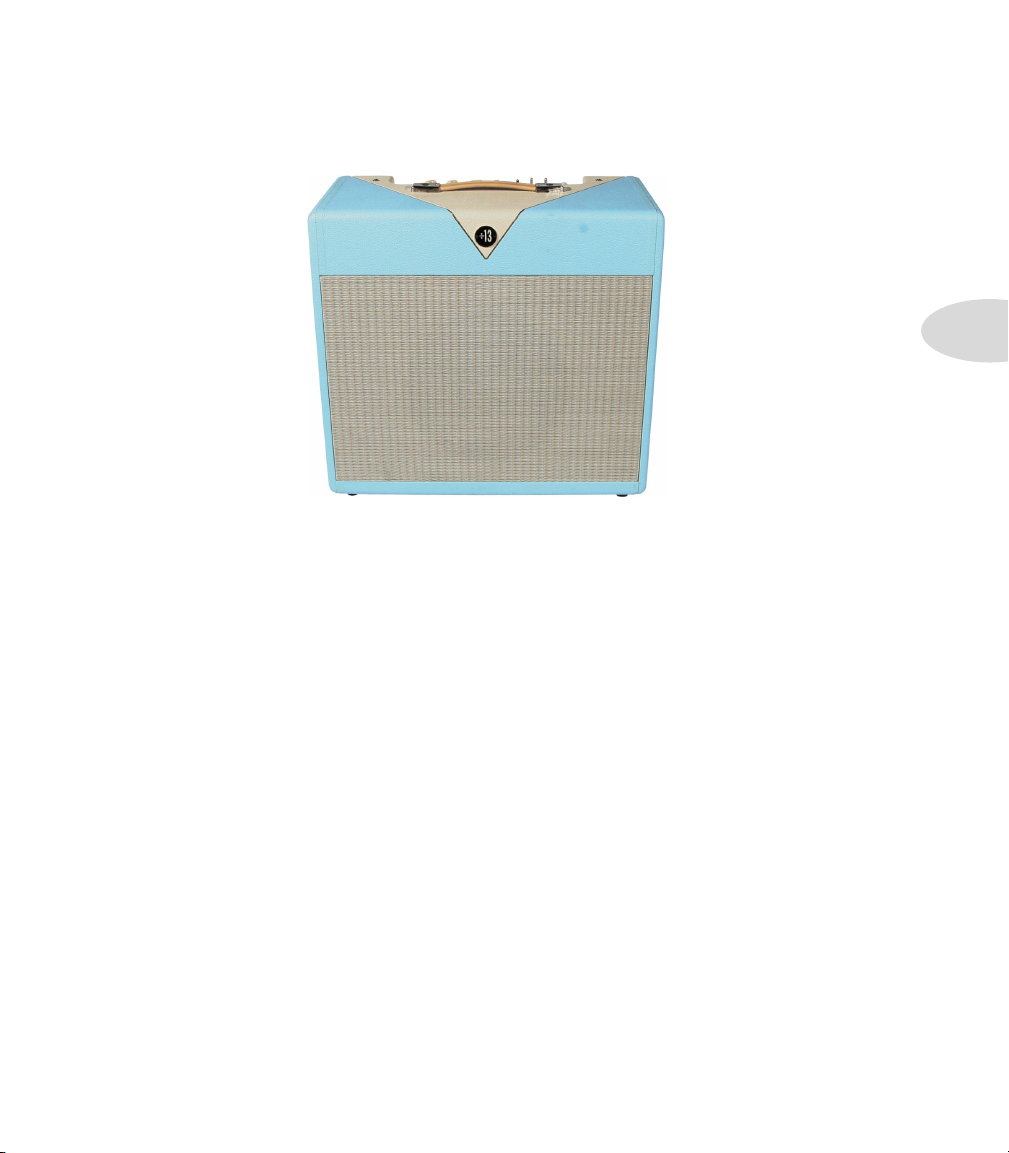
Divide 9/15
Based on* ÷13® JRT 9/15
Fred Taconne, a relative newcomer to the “boutique” amp market, but one that brings several
unique twists to his designs, by referencing some of the more unusual tube complements of
the past as well as combining unexpected feature sets—all in hand-built amplifiers of the
highest quality. The company’s JRT 9/15 is a case in point: using a pair of 5879 pentode
preamp tubes (best known for their use in the Gibson® GA-40 Les Paul® Amp of the ’50s),
Divided by 13 creates two differently voiced but blendable channels for a simple yet incredibly
versatile front end. Running this through one of two switchable output stages built into the
same amp—a pair of 6V6GTs in class A for 9 watts, or a pair of EL84s in class AB for 15
watts—further augments this amp’s voice exponentially. The result is a palette of tones that
remind you of the best American “tweed” and classic British amps, while somehow sounding
entirely unique throughout their range.
®
11
* All product names used in this manual are trademarks of their respective owners, which are in no way associated or affiliated with Line 6. These trademarks of other manufacturers are used solely to identify the products of those manufacturers whose tones and sounds were
studied during Line 6’s sound model development. Gibson® and Les Paul® are registered trademarks of Gibson Guitar Corp.
Page 12
Model Gallery - HD Amp Models
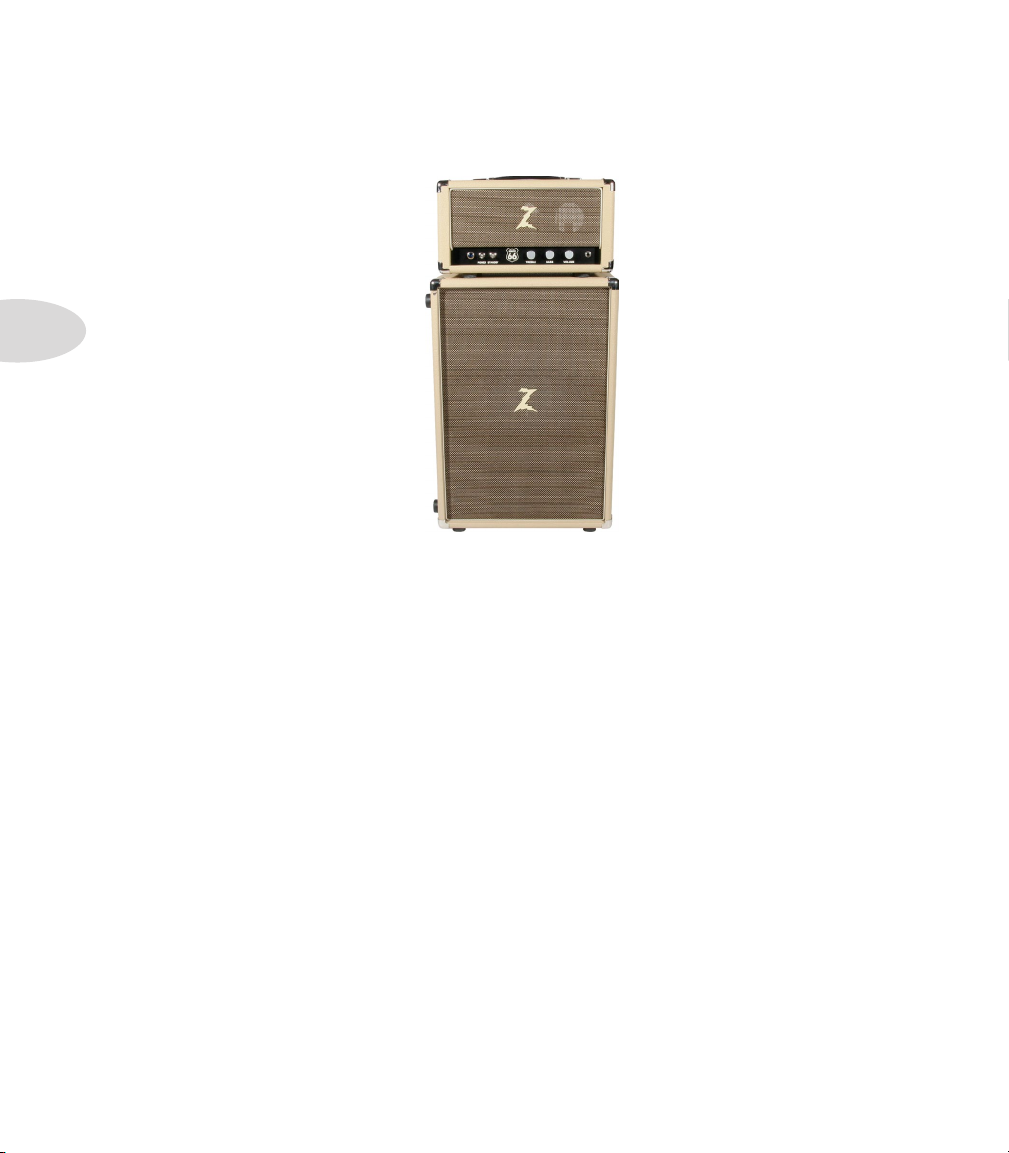
PhD Motorway
Based on* Dr Z® Route 66
12
One of the most original and successful, designers and manufacturers in the contemporary
“boutique” scene, Dr Z is known for establishing new tonal templates, rather than cloning
the vintage standards. The popular Route 66 is perhaps the best case in point: based around
a pair of KT66 output tubes (a ruggedized, military-spec version of the 6L6), with an EF86
pentode in the preamp, the Route 66 manages to make the most of high-end “ultra-linear”
output transformers that are popular in the tube audio world, but have foiled guitar amp
makers for decades. The result is an amp that achieves an extremely touch sensitive, fullbodied “milkshake thick” overdrive when pushed, without ever losing its impressive clarity
and definition. In short, a new and original classic.
®
* All product names used in this manual are trademarks of their respective owners, which are in no way associated or affiliated with Line 6. These trademarks of other manufacturers are used solely to identify the products of those manufacturers whose tones and sounds were
studied during Line 6’s sound model development.
Page 13
Model Gallery - HD Amp Models
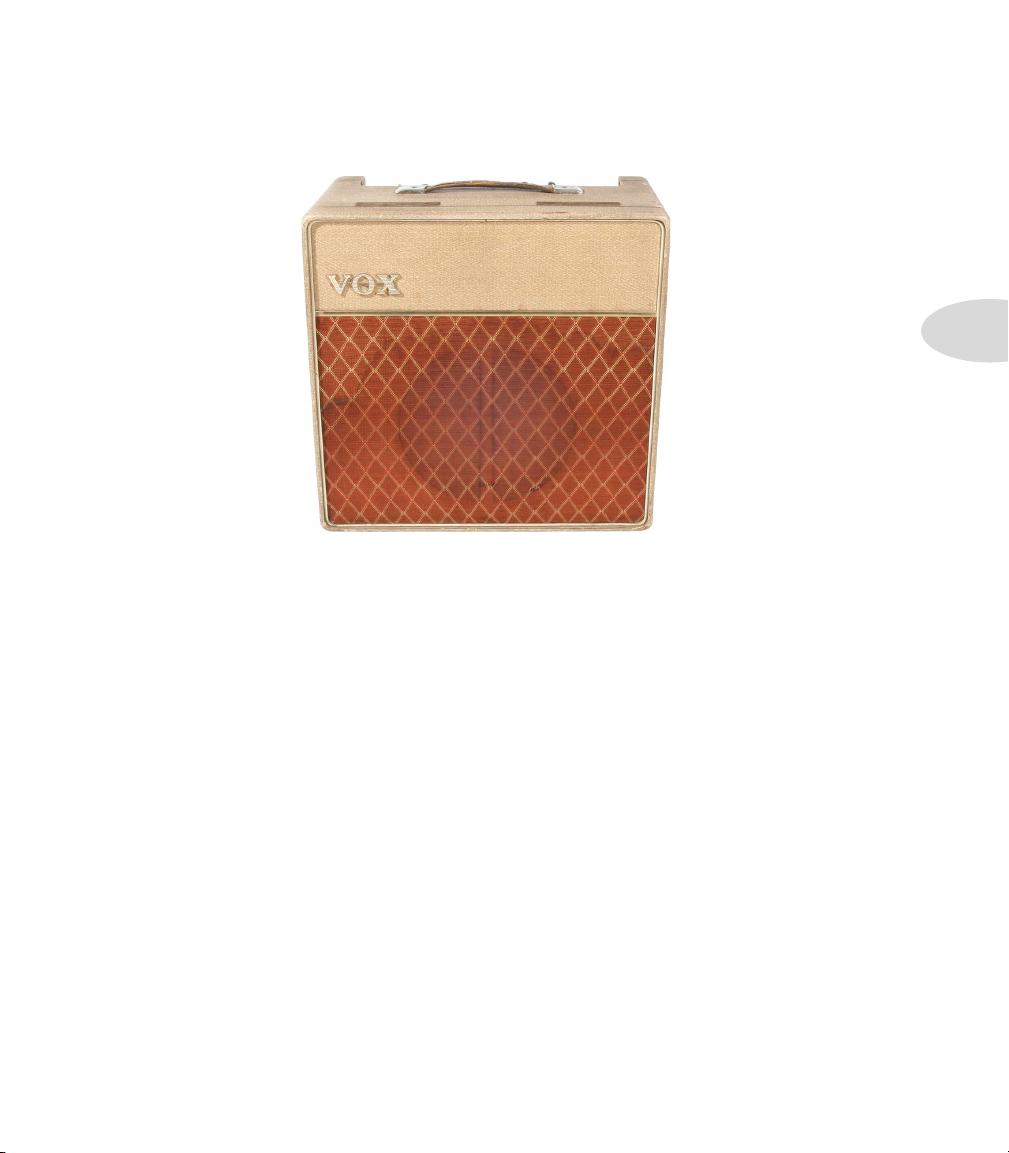
Class A 15
Based on* 1960 Vox® AC-15
Designed by Dick Denney for Tom Jennings’s JMI company in 1957 and often lauded as “the
first tube amplifier specifically designed for the electric guitar,” the AC-15® has been hailed
as one of the juiciest distortion generators ever created, and sought after as a top-flight tone
machine for five decades. With one channel utilizing an EF86 pentode preamp tube, a second
utilizing an ECC83 (12AX7), luscious tremolo, and a pair of EL84s in hot cathode bias with
no negative feedback (aka “class A”), it emits an extremely complex, harmonically-saturated
distortion tone when driven hard, and classic British jangle and chime when reined in. The
bloom, depth and dimension of this combo is further enhanced by its legendary speaker, the
alnico Celestion® Blue (G12 T530). An EZ81 tube rectifier contributes to its stunning touch
sensitivity. Quite simply, this is one of the most copied amps in history, the inspiration to
countless boutique designs, and truly a tone to die for.
®
13
* All product names used in this manual are trademarks of their respective owners, which are in no way associated or affiliated with Line 6. These trademarks of other manufacturers are used solely to identify the products of those manufacturers whose tones and sounds were
studied during Line 6’s sound model development. Vox® and AC-15® are registered trademarks of Vox R&D Ltd. Celestion® is a registered trademark of Celestion International Ltd.
Page 14
Model Gallery - HD Amp Models
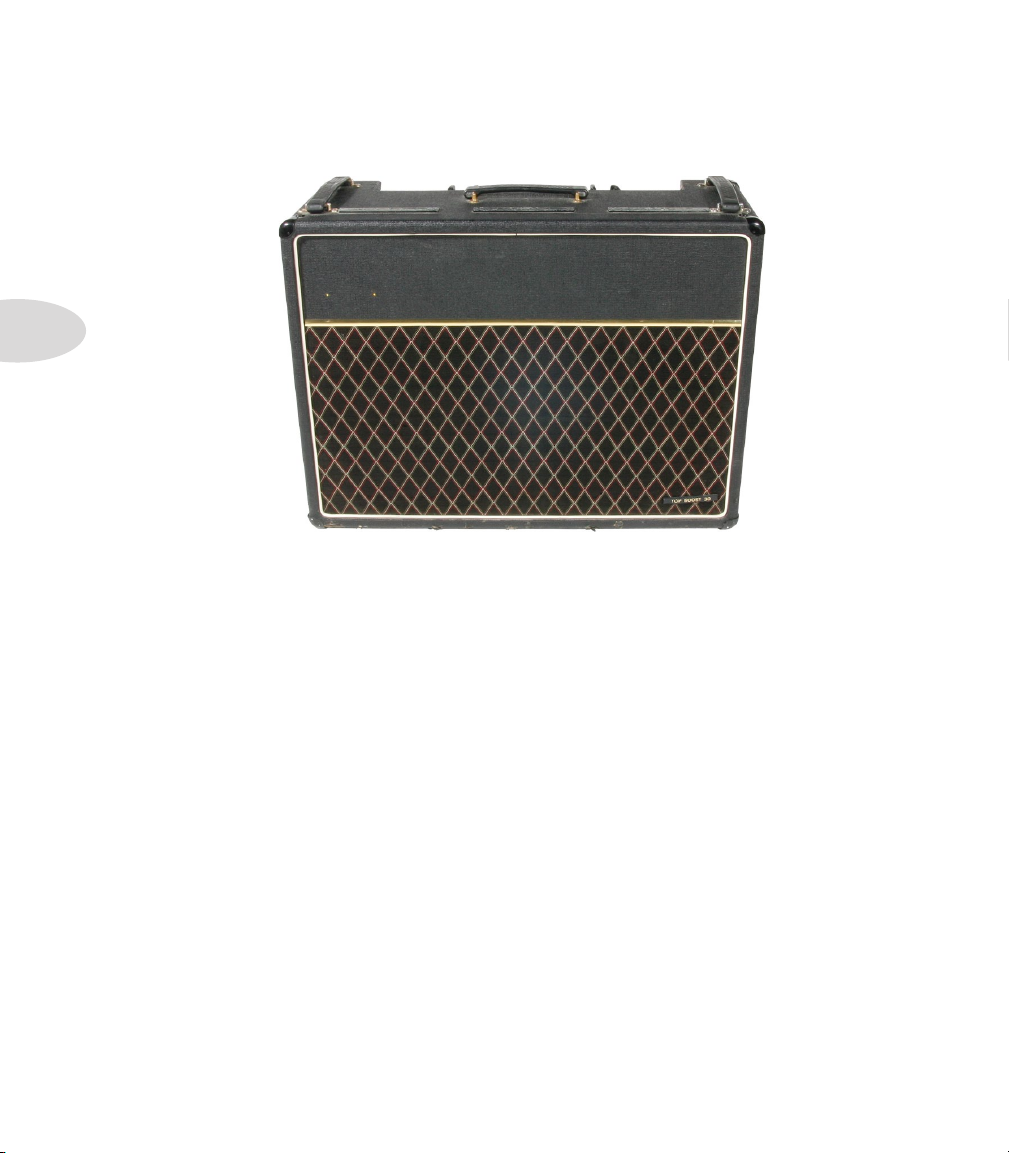
Class A 30
Based on* 1967 Vox® AC-30® with Top Boost
14
With four EL84s generating around 36 watts vs the AC-15®’s two EL84 at 18 watts, the
AC-30® was originally designed simply as “twice an AC-15®” for British pop bands that
needed the power to take them to the larger venues (and stadiums) that this new music was
reaching. Through the course of the early ’60s, however, this soon-legendary combo evolved
into something very much its own. The EF86 pentode was dropped from the preamp early
on, replaced by another ECC83, but the most distinguishing factor arrived in 1961 in the
form of the highly interactive “Top Boost” tone circuit. First available as a back-to-factory
modification, Top Boost became a standard option in 1964, and amps from that era—with
a pair of Celestion® alnico Silver Bell (G12) speakers—represent the archetypal AC-30s
in the minds of most players. With a broad, blooming, three-dimensional tone and volume
levels that belie its 36-watt rating, the AC-30 has been a cornerstone of tone for The
Beatles, The Shadows, Tom Petty & The Heartbreakers, Brian May of Queen, Peter Buck
of R.E.M., and many, many others.
* All product names used in this manual are trademarks of their respective owners, which are in no way associated or affiliated with Line 6. These trademarks of other manufacturers are used solely to identify the products of those manufacturers whose tones and sounds were
studied during Line 6’s sound model development. Vox® and AC-30® are registered trademark of Vox R&D Ltd. Celestion® is a registered trademark of Celestion International Ltd.
Page 15
Model Gallery - HD Amp Models
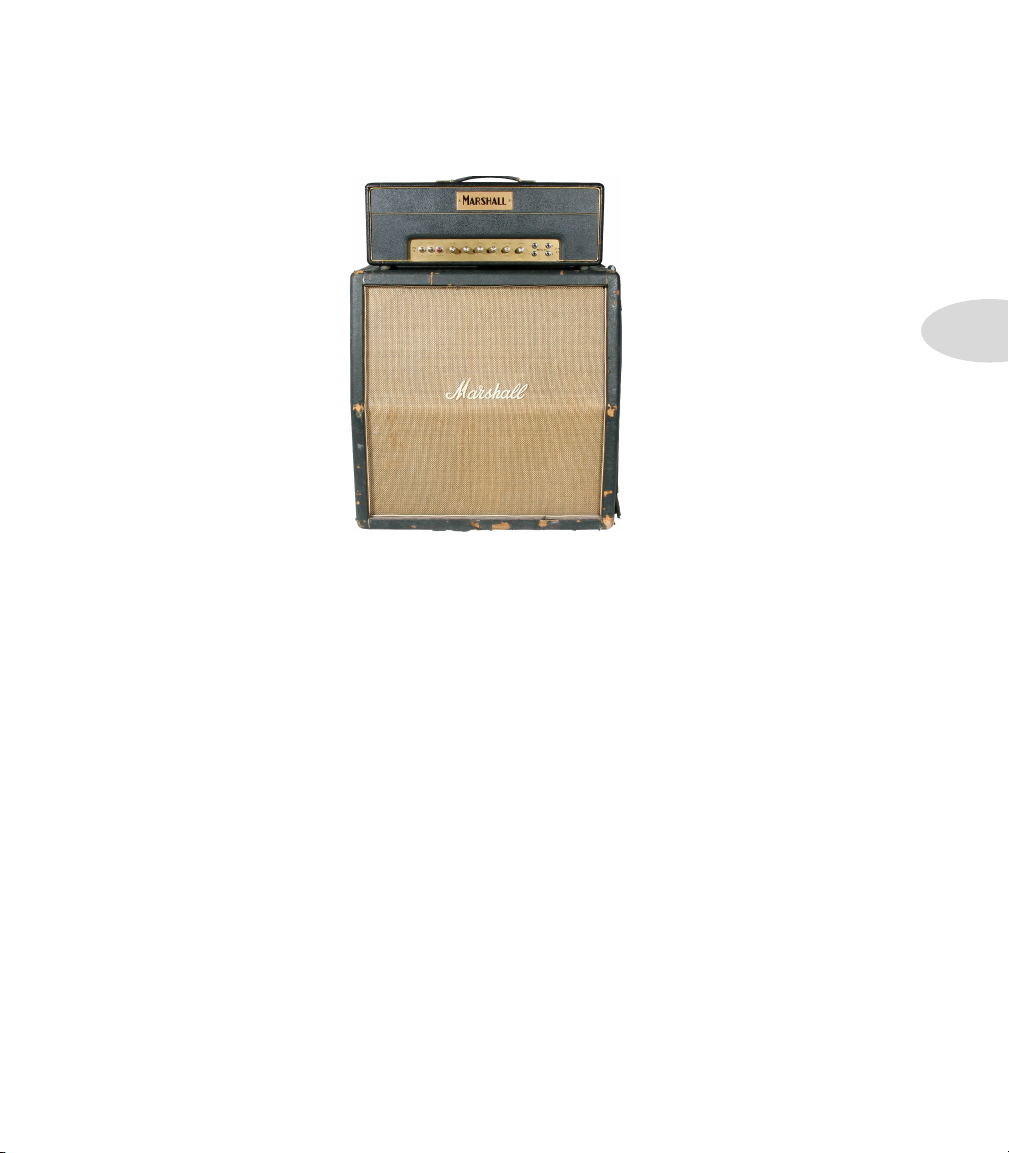
Brit J-45
Based on* 1965 Marshall® JTM-45
One of the earlier amps that, as mentioned above, found its inspiration in the tweed Fender®
Bassman®, but nevertheless managed to sound like something quite different as it took on
several constructional twists and design elements that marked the beginning transition from
a mellower Fender® like tone to the distinctive, bright “crunchy” sound of all Marshall®
amps to follow. Hefty, high-quality British transformers and KT66 output tubes (a 6L6
equivalent, but with more power and punch) gave the JTM-45 a huge soundstage and a
smoother overdrive tone than the later EL34-based Marshalls that more players are familiar
with today. Cranked through a closed-back 4x12” cab with Celestion® G12M “Greenback”
speakers, this rig evokes the archetypal Brit-rock and blues-rock guitar tone. Interesting
side note: this is the exact same amplifier as the Marshall® “Bluesbreaker” that Eric Clapton
made famous, but in head form, rather than housed in a 2x12” combo. This is your starting
point if you’re looking for that ‘beano’ tone.
15
Brit J-45 NRM: The Normal channel is the mellower of the two, with less (as you’d expect)
brightness and gain than the Bright channel.
Brit J-45 BRT: The Bright channel utilizes the second half of the first preamp tube (the
Normal channel uses the first half only) for a different voicing. High frequencies are
increased due to an inter-stage high-shelving filter
* All product names used in this manual are trademarks of their respective owners, which are in no way associated or affiliated with Line 6. These trademarks of other manufacturers are used solely to identify the products of those manufacturers whose tones and sounds were
studied during Line 6’s sound model development. Marshall is a registered trademark of Marshall Amplification Plc. Fender® and Bassman® are registered trademarks of Fender Musical Instruments Corp. Celestion® is a registered trademark of Celestion International Ltd.
Page 16
Model Gallery - HD Amp Models
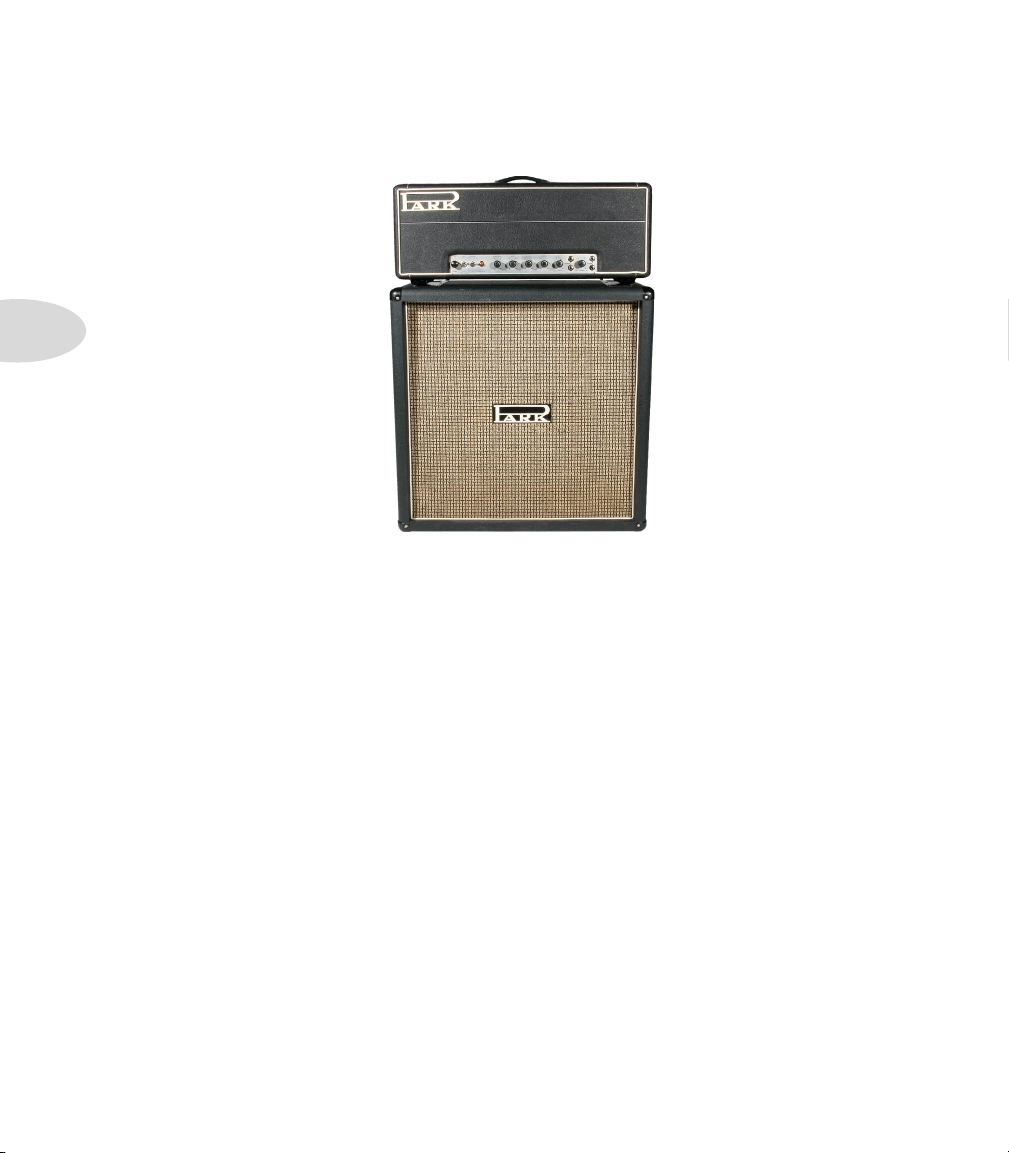
Brit P-75
Based on* 1971 Park® 75
16
Park® amps were manufactured by Jim Marshall from the mid ’60s until the late ’70s as a
means of circumventing an exclusive English distribution deal for the amplifiers bearing his
own name. It got its name from the dealer Johnny Jones’ wife’s maiden name, Park. These
amps have become legendary in their own right, but none has quite attained the status of the
beefy Park® 75. Although they were usually based loosely on circuits used in classic Marshall
amps, Park models were often given clever new twists, such as the increased front-end gain
in the 75 and the use of military-grade KT88 output tubes rather than the traditional EL34s.
Our specimen comes paired with a 1973/74 speaker cabinet loaded with four Rola Celestion®
G12H speakers. Add it all up, and it’s a sizzling, crunchy plexi-style tone like nothing you’ve
ever heard before, equally adept at classic British blues-rock and contemporary grind.
Brit P-75 NRM: The Normal channel is the mellower of the two, with less (as you’d expect)
brightness and gain than the Bright channel.
Brit P-75 BRT: The Bright channel utilizes the second half of the first preamp tube (the
Normal channel uses the first half only) for a different voicing. High frequencies are increased
due to an inter-stage high-shelving filter.
* All product names used in this manual are trademarks of their respective owners, which are in no way associated or affiliated with Line 6. These trademarks of other manufacturers are used solely to identify the products of those manufacturers whose tones and sounds were
studied during Line 6’s sound model development. Marshall is a registered trademark of Marshall Amplification Plc. Celestion® is a registered trademark of Celestion International Ltd.
Page 17
Model Gallery - HD Amp Models
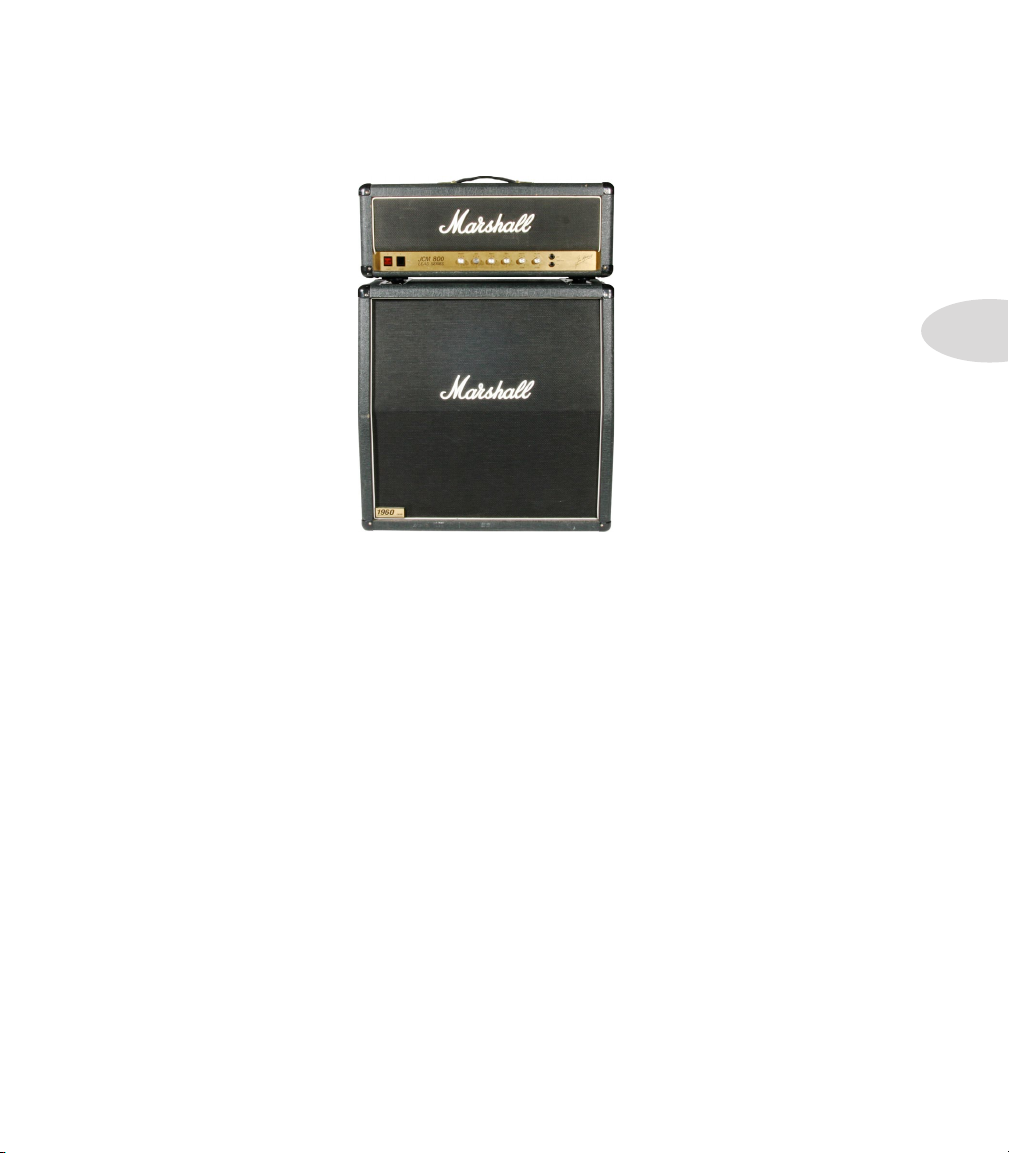
Brit J-800
Based on* 1982 Marshall® JCM-800
As Marshall® amplifiers evolved through the course of the ’80s, the JCM-800 (1981-’90)
came to stand out as the new flagship of the range. While the 2210 version—previously
modeled by Line 6—was enjoyed by many for its 100 watts of power and two foot switchable
channels, the 2204 50-watter came to be known as the flag-bearer of classic Marshall tone.
With its one, dual-input channel, added versatility of its Pre-Amp Volume and Marshall’s
new Master Volume control, the JCM-800 2204 was otherwise not a stone’s throw from
the hallowed “plexi” and “metal” panel 1987 Lead Models of the late ’60s and early ’70s,
although its front-end gain could be tapped more easily without blowing your head off.
Cranked through a closed-back 4x12” with Celestion® G12T-75 speakers, this is the pure
sound of ’80s rock, the amp that propelled countless hits from that decade and beyond.
17
* All product names used in this manual are trademarks of their respective owners, which are in no way associated or affiliated with Line 6. These trademarks of other manufacturers are used solely to identify the products of those manufacturers whose tones and sounds were
studied during Line 6’s sound model development. Marshall® is a registered trademark of Marshall Amplification Plc. Celestion® is a registered trademark of Celestion International Ltd.
Page 18
Model Gallery - HD Amp Models
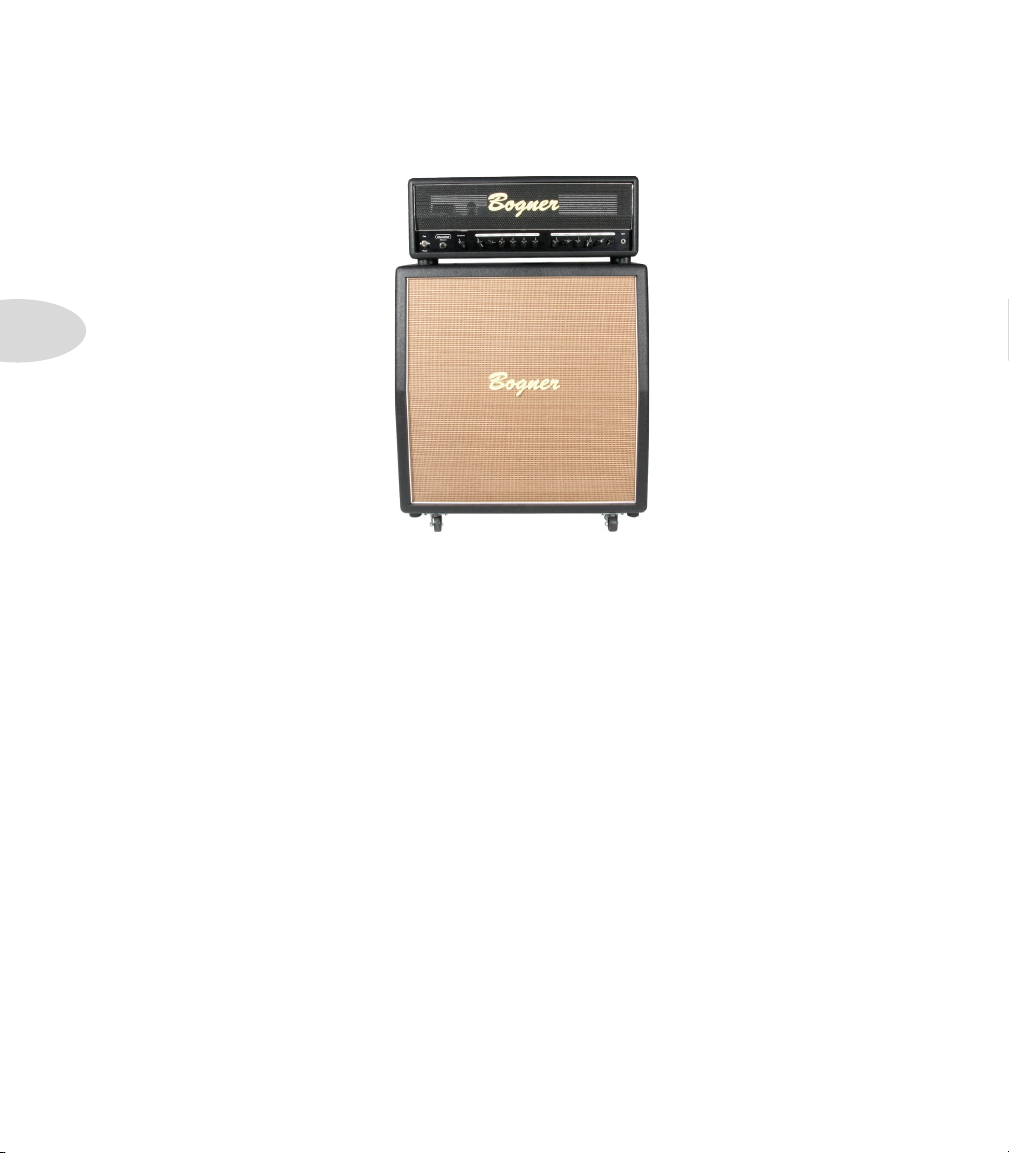
Bomber Uber
Based on* 2002 Bogner® Uberschall
18
Plenty of amps have fought it out to be baddest of the bad in the high-gain stakes, but the
Bogner® Uberschall is as heavy, mean, and downright evil sounding as they come. With a
whopping four 12AX7s worth of preamp gain, plus two more for FX loop and phase inverter,
rammed through a quad of EL34 output tubes, the Uberschall (German for “super sonic”)
was designed to be Armageddon in a box. A take-no-prisoners distortion machine for the
most aggressive shred and nu-metal players on the planet. In addition to its unprecedented
levels of highly saturated gain, this amp packs the eviscerating bass response needed to put
this kind of music across on the big stage. We’ve also modeled the complimentary Bogner
4x12” cab, which utilizes a clever mix of two Celestion® G12T-75 + two Celestion® Vintage
30 speakers. As Reinhold Bogner himself puts it: “You think you’ve heard bass before? No
way. The Uberschall will shatter your rib cage, you better put 911 on speed dial.” You have
been warned.
* All product names used in this manual are trademarks of their respective owners, which are in no way associated or affiliated with Line 6. These trademarks of other manufacturers are used solely to identify the products of those manufacturers whose tones and sounds were
studied during Line 6’s sound model development. Bogner® is a registered trademark of Bogner Amplification. Celestion® is a registered trademark of Celestion International Ltd.
Page 19
Model Gallery - HD Amp Models
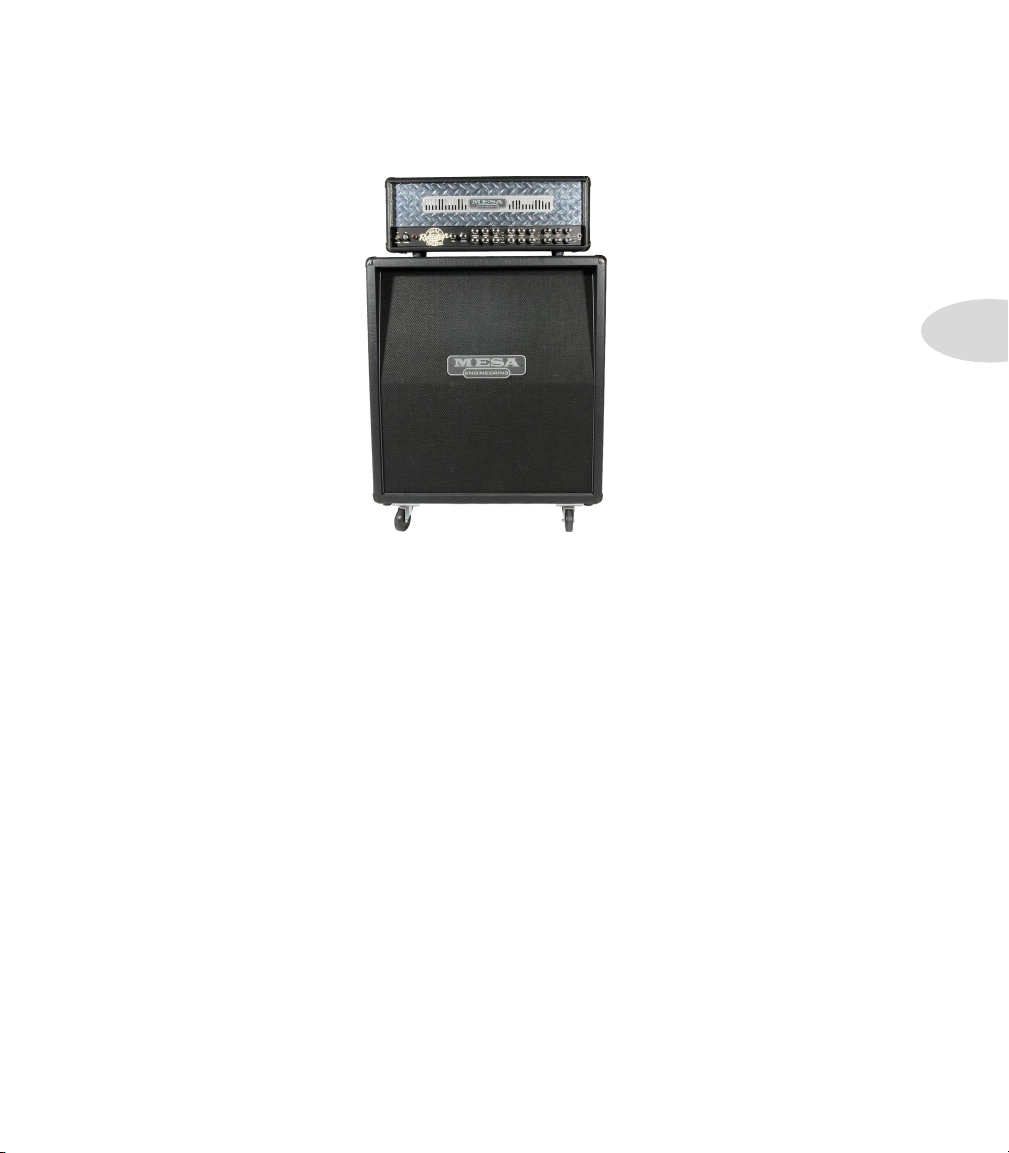
Cali Tread
Based on* 2001 Mesa Boogie® Dual Rectifier® Solo
Mesa/Boogie® almost single-handedly, and simultaneously, established the “custom amp
(aka boutique)” and “high-gain” crazes in the early ’70s, and has continued to set the
pace for nearly four decades. As the new standard for grunge and alt-rock amplification,
the Dual Rectifier® pushed this pedigree forward to the new millennium, and its high-gain
third channel established the tone to beat for the ’90s and early ’00s guitar rock. With
broad control over its drive and level, and a versatile tone stack, it can go from thundering,
scooped crunch to soaring lead tones with a creamy midrange, all with crushing volume and
authority. Others have come and gone, but the Dual Rectifier continues to earn its place on
the big stage, and to exert its authority over lesser amplification efforts.
19
* All product names used in this manual are trademarks of their respective owners, which are in no way associated or affiliated with Line 6. These trademarks of other manufacturers are used solely to identify the products of those manufacturers whose tones and sounds were
studied during Line 6’s sound model development. Mesa/Boogie and Rectifier are registered trademarks of Mesa/Boogie, Ltd
Page 20
Model Gallery - HD Amp Models
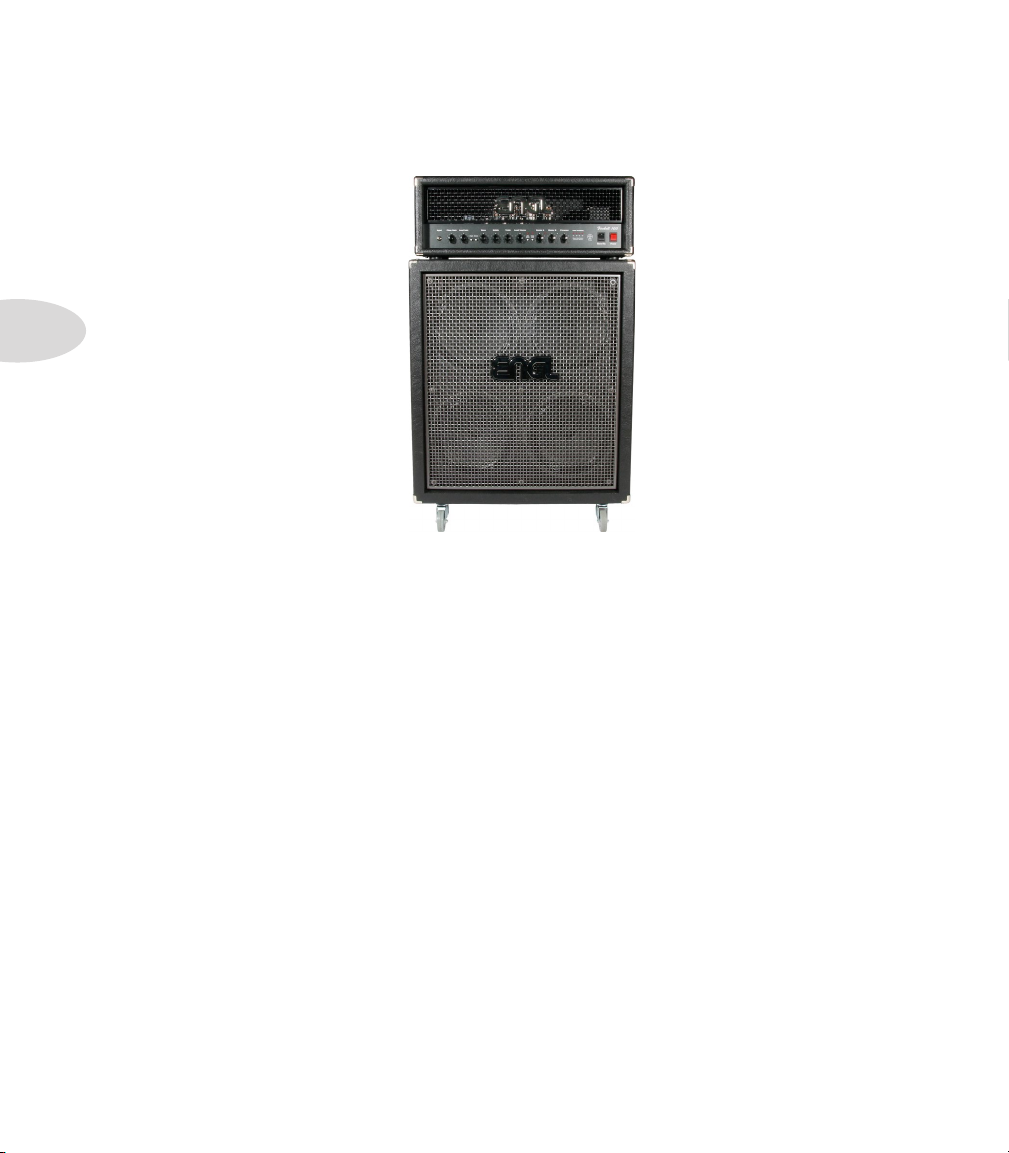
ANGEL F-Ball 100
Based on* 2009 ENGL® Fireball 100
20
Designed to redefine the stereotypical “shred” sound and dial in a more musical lowermidrange and bass response, the ENGL Fireball 100 has become one of the new standards of
contemporary rock and metal. Using a quad of 6L6 output tubes for mammoth lows and gutthumping punch, and four 12AX7 preamp tubes for scorched-earth gain levels, the Fireball
100 nevertheless brings great refinement and articulation to this aggressive genre, boasts
surprising versatility, and has earned its keep in the rigs of Ritchie Blackmore and Steve
Morse.
* All product names used in this manual are trademarks of their respective owners, which are in no way associated or affiliated with Line 6. These trademarks of other manufacturers are used solely to identify the products of those manufacturers whose tones and sounds were
studied during Line 6’s sound model development. Engl® is a registered trademark of Beate Ausflug and Edmund Engl.
Page 21
Model Gallery - HD Amp Models
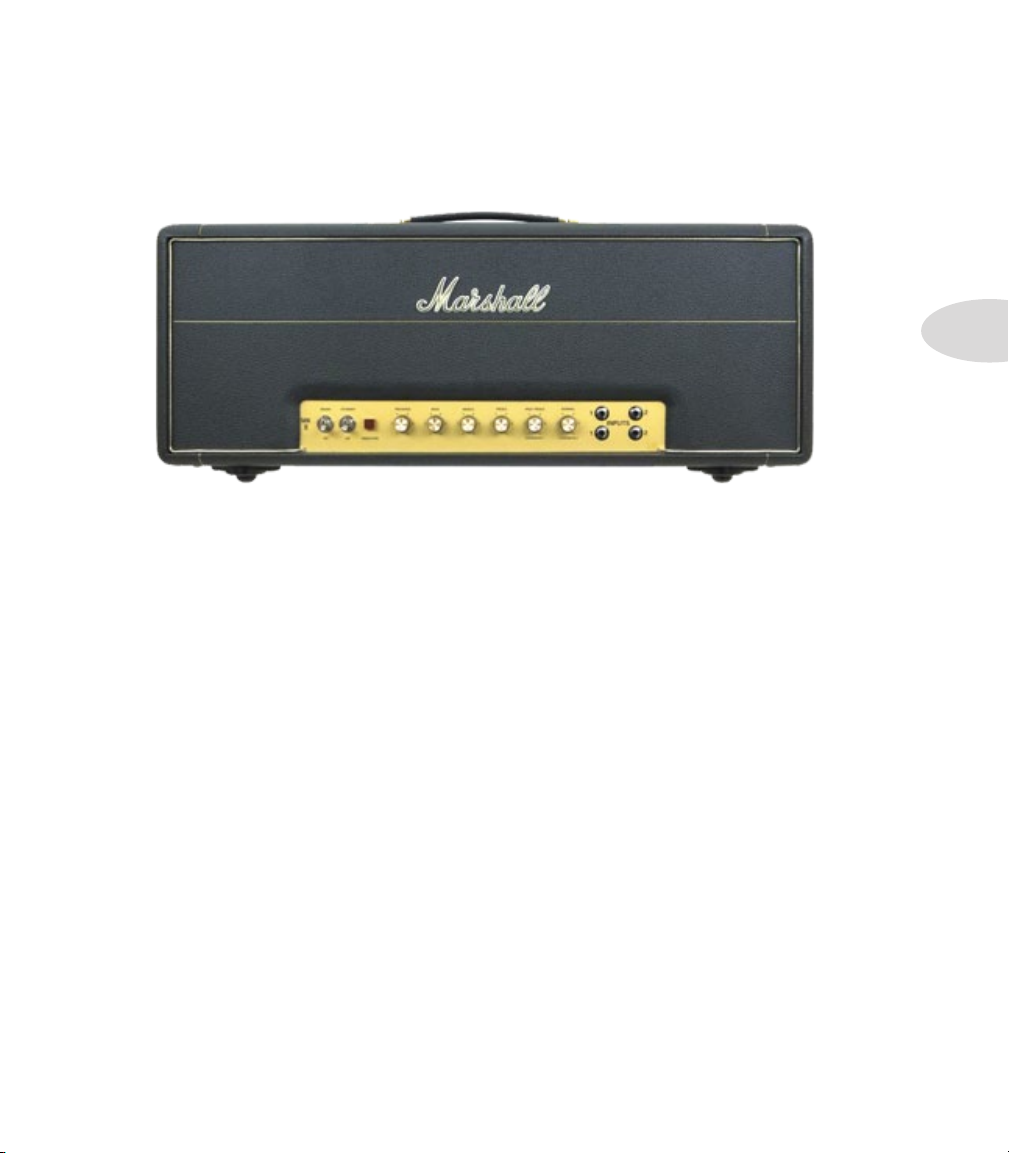
Plexi Lead 100
Based on* the Marshall® “Plexi” 1959 Super Lead 100
Here we’ve captured the magic of both the Normal and Bright inputs of this legendary
Marshall® 100 watt beast. First produced in 1965 (note that the “1959 “ is a model number
and does not indicate the date of manufacture) is often referred to as the “original” Plexi,
featuring two channels and four inputs. It was utilized by Pete Towsend, Eric Clapton, and
most famously, by Jimi Hendrix at his Woodstock performance.
21
Plexi Lead 100 NRM: The Normal channel, as you might expect, offers a flatter EQ response
and a bit lower gain, well-suited for rhythm playing.
Plexi Lead 100 BRT: The Bright channel features a boosted, brighter tone, which is ideal for
a more cutting lead tone.
* All product names used in this manual are trademarks of their respective owners, which are in no way associated or affiliated with Line 6. These trademarks of other manufacturers are used solely to identify the products of those manufacturers whose tones and sounds were
studied during Line 6’s sound model development. Marshall® is a registered trademark of Marshall Amplification Plc.
Page 22
Model Gallery - HD Amp Models
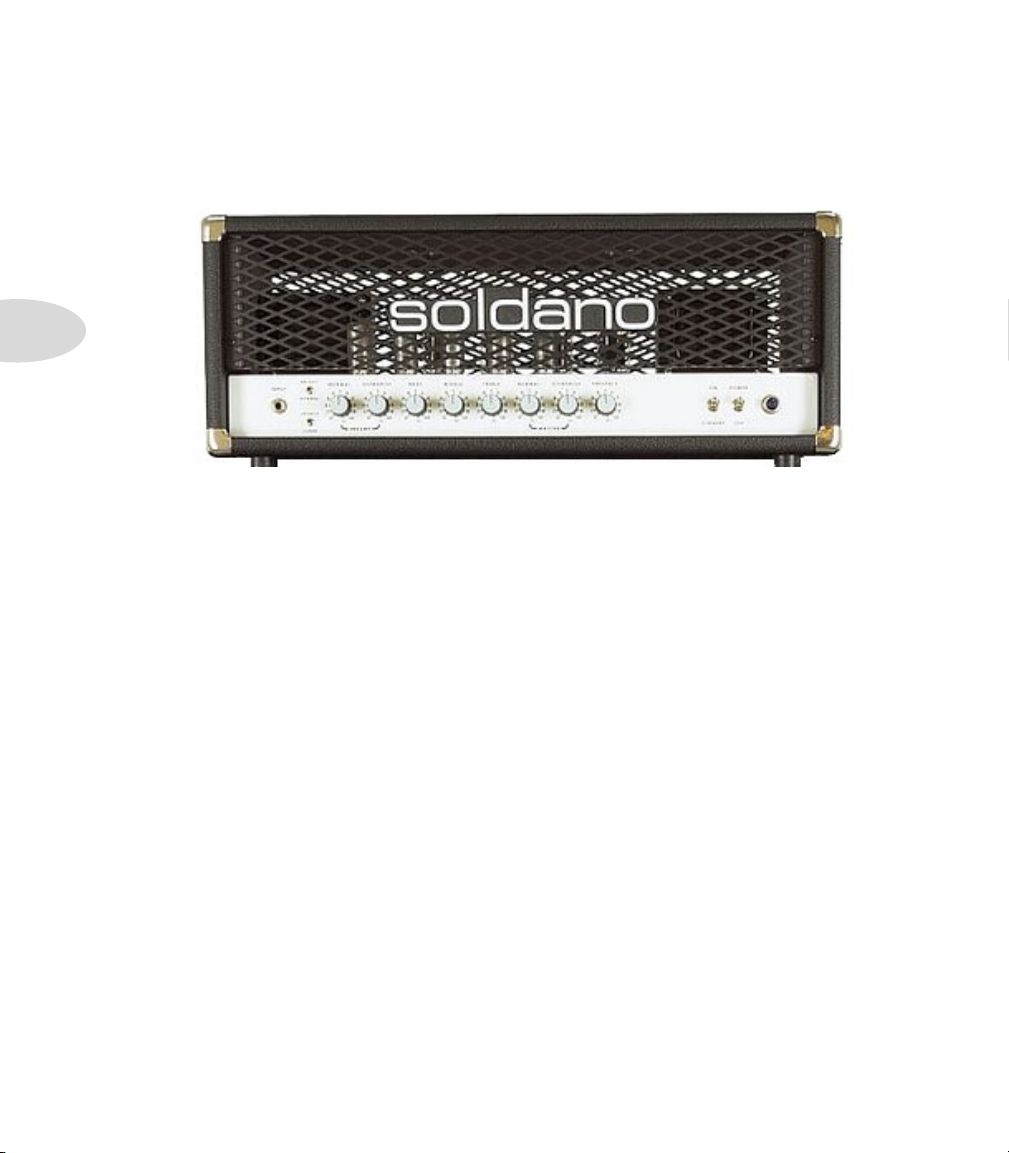
Solo 100
Based on* the Soldano® SLO-100
22
Now considered a modern American classic, Mike Soldano created his flagship Super
Lead Overdrive 100 (SLO-100) amplifier in 1987 and continues to hand-build it to this
day. The SLO-100 was made an instant hit by early adopters Eric Clapton and Mark
Knopfler, and used by a range of players, including Warren DeMartini, Warren Haynes,
Lou Reed, and Eddie Van Halen. Much of the love for the SLO-100 is due to not only its
juicy high gain tones, but also its clean and crunchy capabilities, making it an extremely
versatile head. The SLO-100 features two channels, Normal and Overdrive, with a Clean
/ Crunch gain switch on the Normal channel. We loved the different characteristics of
this amp so much that we created three separate models!
Solo Clean: This model of the Normal channel switched to Clean provides the most
headroom and a variety of warm to shimmery clean tones.
Solo Crunch: Here we’ve modeled the Normal channel switched to Crunch, which is
superb for a range of distorted textures from polite to aggressive.
Solo Overdrive: A model of the Overdrive channel with some seriously tight bottom
chunk to liquid, screaming lead capabilities.
* All product names used in this manual are trademarks of their respective owners, which are in no way associated or affiliated with Line 6. These trademarks of other manufacturers are used solely to identify the products of those manufacturers whose tones and sounds were
studied during Line 6’s sound model development. Soldano® is a registered trademark of Gremlin Inc. DBA Soldano Custom Amplification Corporation, Washington.
Page 23
Model Gallery - HD Amp Models
Line 6 Creations - Elektrik, Doom & Epic
Courtesy of the Line 6 Sound Design Team
The direct result of long nights developing HD Amp Models, our Sound Designers
(fueled by copious amounts of energy drinks) brought together forbidden combinations
of their favorite aspects of classic amplifiers, plus a few secret ingredients - kind of
like a Mary Shelley novel - to come up with these Line 6 custom creations. “High
gain” is simply an understatement here. Try tweaking the Master Volume parameter to
experience the true versatility of these amps.
23
Line 6 Elektrik: This high-voltage, face-melting original has interactive presence &
mid-range controls, with more gain than you can shake a stick at.
Line 6 Epic: A metal-freindly beast that provides sustain for days at virtually any
playing dynamic, giving up gobs of distortion with ease.
Line 6 Doom: Here’s a hybrid to fill a void for doom/sludge players. It’s a JCM800
preamp going into a Hiwatt® power amp with some additional tweaks, to give you
large amounts of gain and a rich, sag-induced reaction with a whole lot of bass.
* All product names used in this manual are trademarks of their respective owners, which are in no way associated or affiliated with Line 6. These trademarks of other manufacturers are used solely to identify the products of those manufacturers whose tones and sounds were
studied during Line 6’s sound model development.
Page 24
Model Gallery - HD Amp Models
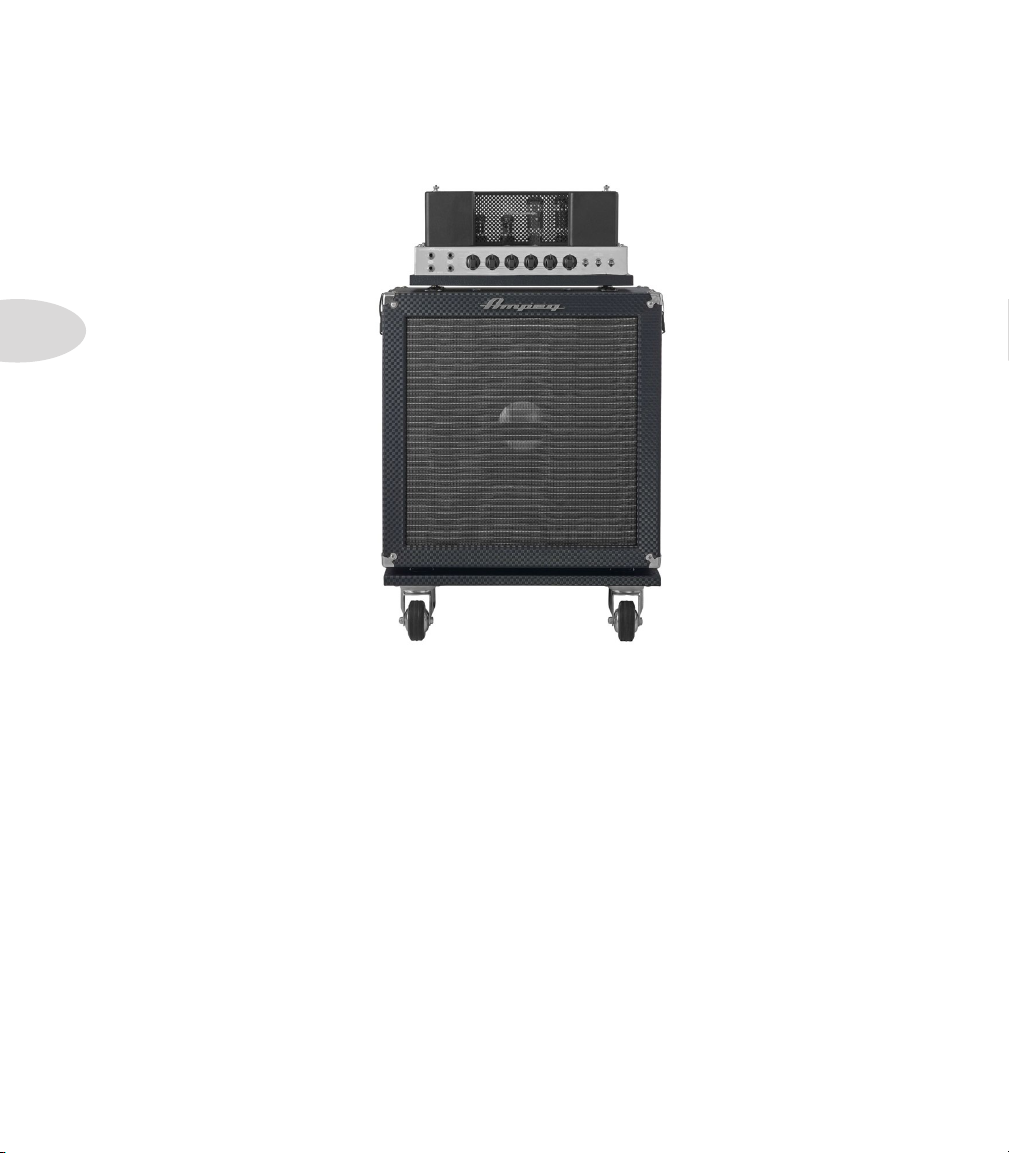
Flip Top
Based on* the Ampeg® B-15NF Portaflex® (Bass Guitar Amp)
24
We didn’t forget about that Bass guitar of yours... Get sweet and lowdown with this model
of the honorable ‘60s Ampeg® B-15F bass amp, complete with the Custom Design, CTS
15 inch speaker. The unique Portaflex® design consisted of the tube amp’s electronics being
mounted on a chassis that “flipped over” (hence our nifty model name) to secure as part of
the speaker cabinet, intended to offer the portability of a combo, without the over-heating
and rattling problems associated with combo amps of the period. Ampeg® founder Everett
Hull was not a fan of Rock ‘n Roll music, and thus conservatively rated this amp at 30 watts,
to encourage its users to keep the volume at “sensible” levels to avoid distortion. But we
think this versatile low-ender sounds just as great turned up for some throaty growl.
* All product names used in this manual are trademarks of their respective owners, which are in no way associated or affiliated with Line 6. These trademarks of other manufacturers are used solely to identify the products of those manufacturers whose tones and sounds were
studied during Line 6’s sound model development. Ampeg® and Portaflex® are registered trademarks of LOUD Technologies, Inc. Hiwatt® is a registered trademark of Fernandes Company LTD Corportation, Japan
Page 25
Model Gallery - FX Models
FX Models
To follow is the complete selection of Line 6 FX Models featured in the M5/M9/M13
Stompbox Modelers & DL4 Delay Modeler. You’ll also find these fine FX throughout the
POD HD Modeler devices - note that the inclusion of some FX Models differ throughout the
POD HD line, as indicated within the following applicable model descriptions.
Delay Models
Featured in the M5/M9/M13 Stompbox Modelers & DL4 Delay Modeler
25
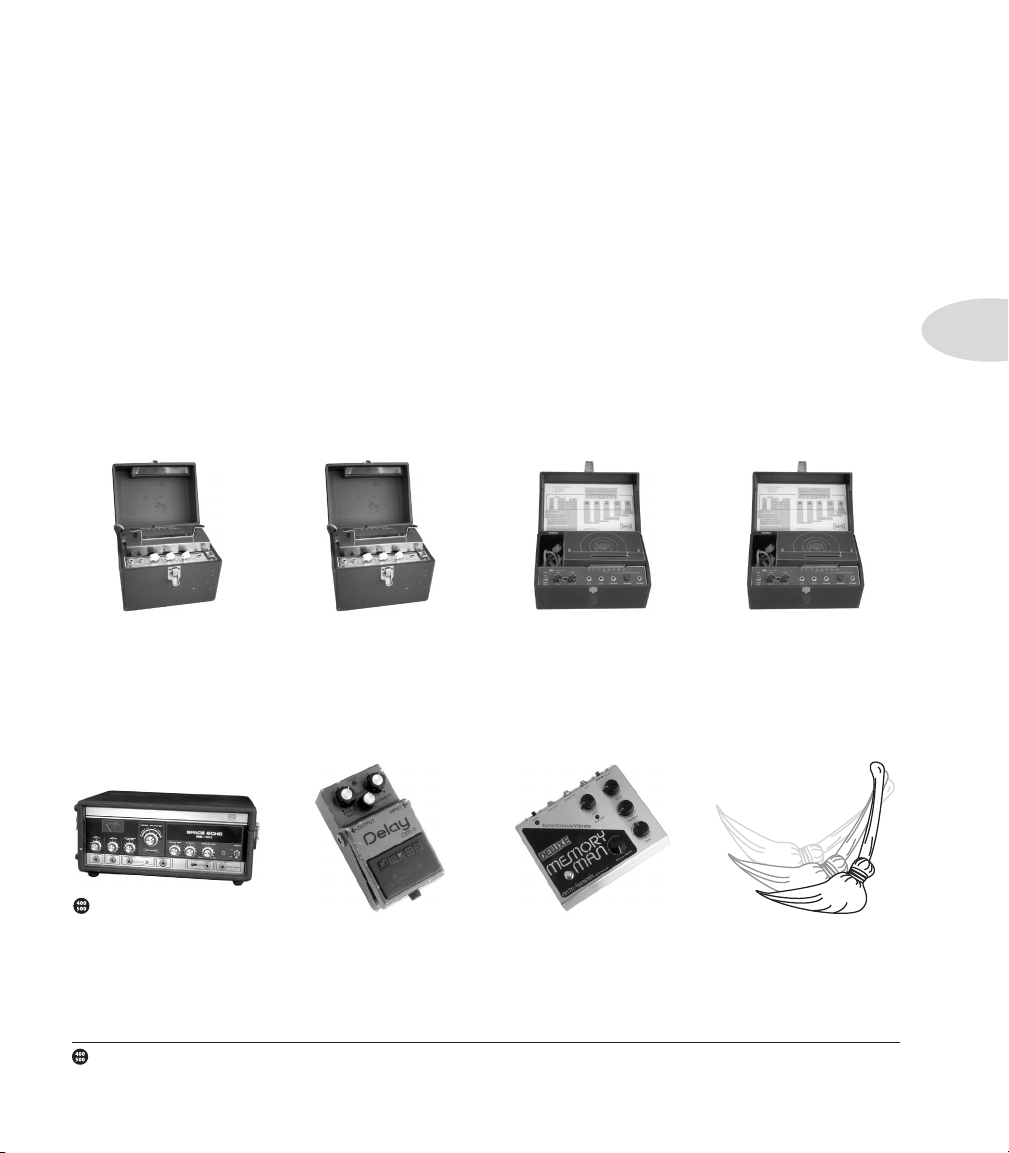
Tube Echo
Based on* Maestro® EP-1.
Some say the holy grail of
delay. Like PB&J...tubes and
tape is one great combination!
Multi Head
Based on* the Roland® RE101 Space Echo. This model
emulates the multiple playback
heads of the original for that
multi-tap delay effect.
Featured in POD HD400, POD HD500, POD HD Pro and POD HD Desktop devices.
* All product names used in this manual are trademarks of their respective owners, which are in no way associated or affiliated with Line 6. These trademarks of other manufacturers are used solely to identify the products of those manufacturers whose tones and sounds were studied
during Line 6’s sound model development. Maestro® is a registered trademark of Gibson Guitar Corp. Roland® and Boss® are registered trademarks of Roland Corp. Electro-Harmonix® is a registered trademark of New Sensor Corp.
Tube Echo Studio
The same effect as the Tube
Echo only it does not color
your guitar’s dry signal. We let
the dry pass through.
Analog Echo
Based on* the Boss® DM2
Analog Delay. Treasured for
its warm, distorted delays only
a bucket brigade delay can
produce!
Tape Echo
Based on* the Maestro® EP-3
Echoplex. The EP-3 used
transistors instead of tubes for
the sound electronics.
Analog W/MOD
Here’s a model based on* the
Electro-Harmonix® Deluxe
Memory Man, which is an
analog delay with chorus.
Tape Echo Studio
The same effect as the Tape
Echo only it does not color
your guitar’s dry signal. We let
the dry pass through.
Sweep Echo
Take the tone of the Tube Echo
and add a sweeping effect to
the repeats to give you unique
textures for adjusting the tone
of your delays.
Page 26
Model Gallery - FX Models
26
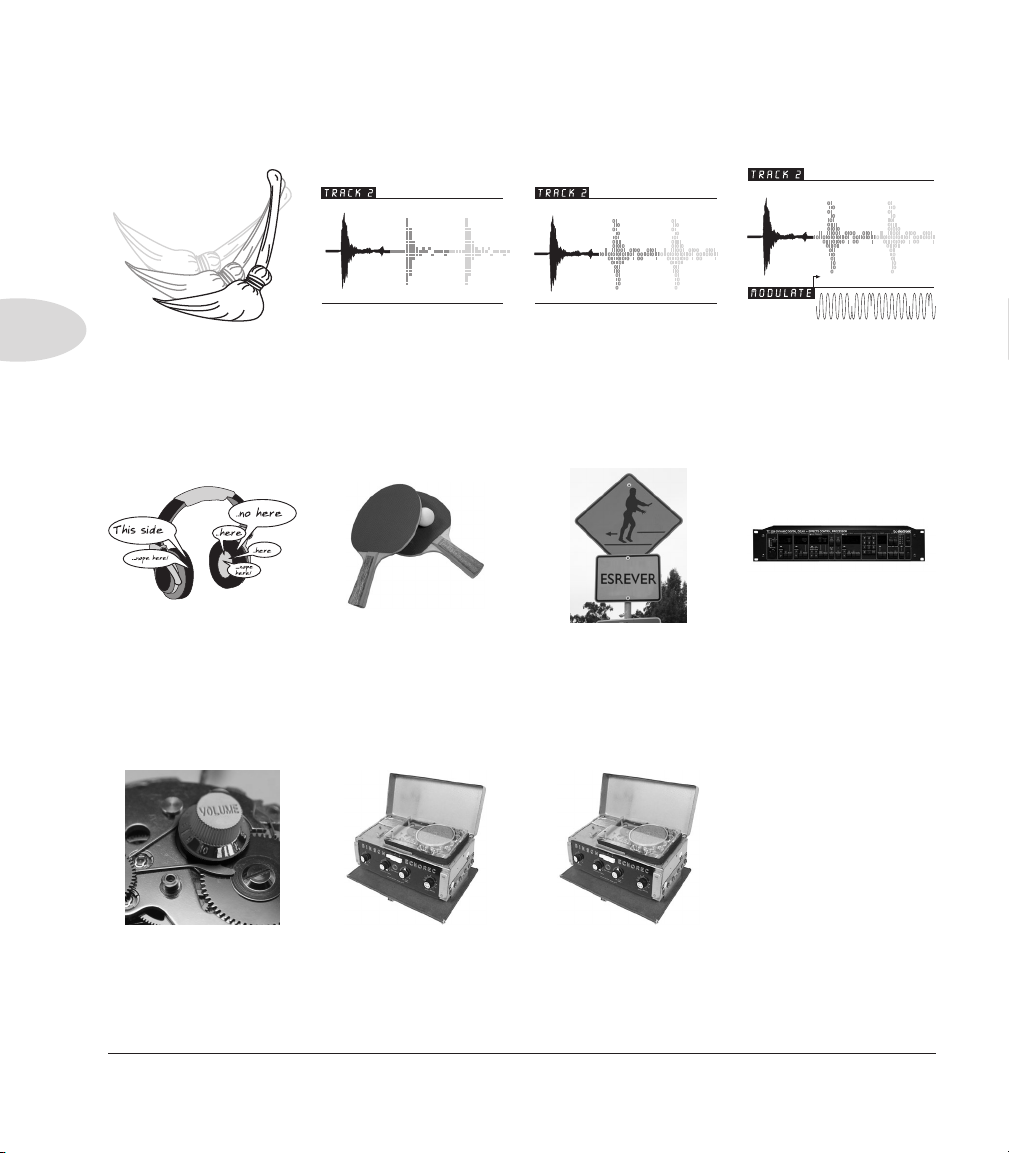
Sweep Echo
Studio
The same effect as the Sweep
Echo only it does not color
your guitar’s dry signal. We let
the dry pass through.
Stereo Delay
Here’s the secret to the “Big
L.A. Solo” sound of the ’80s.
Set one side as a fast echo with
many repeats, and the other
as a slow delay with just a few
repeats. Voilà, you’re famous!
Lo Res Delay
Early digital delay units
generally had only 8 bit
resolution. Low bit resolution
can create a unique sort of
grunge and noise.
Ping Pong
This effect has two separate
channels of delay, with the
output of each channel flowing
into the other, going back and
forth like a game of ping pong.
Digital Delay
This model is a straight up
digital delay with bass and
treble tone controls. Nothing
fancy here, just transparent
pristine echo-cho-cho-cho.
Reverse
!seltaeB eht dna xirdneH
imiJ ekil tsuJ — Take a step
back in time. Whatever you
play in comes back out at you
backwards, delayed by the time
you set (up to 2 seconds).
Digital Delay W/
MOD
Choose this model to add a
chorus effect to your digital
delays.
Dynamic Delay
Made popular by the T.C.
Electronic® 2290 Dynamic
Digital Delay. While you play,
the Dynamic Delay keeps the
volume of the echoes turned
down, so that the echoes don’t
overwhelm what you’re doing.
Auto-Vol. Echo
This model gives you two
effects in one. A volume fadein swell used for a bowing
effect. The other effect is an
echo, complete with tape-style
wow and flutter modulation.
* All product names used in this manual are trademarks of their respective owners, which are in no way associated or affiliated with Line 6. These trademarks of other manufacturers are used solely to identify the products of those manufacturers whose tones and sounds were
studied during Line 6’s sound model development. T.C. Electronic® is a registered trademark of T.C. Electronic A/S Corp.
Echo Platter
Based on* the Binson EchoRec.
A staple for the likes of Pink
Floyd. Rather than using tape,
the EchoRec used a magnetic
platter to record and play back.
(Not available on the DL4.)
Echo Platter
Studio
The same effect as the Echo
Platter only it does not color
your guitar’s dry signal. We let
the dry pass through.
Page 27
Model Gallery - FX Models
Modulation Models
Featured in the M5/M9/M13 Stompbox Modelers & MM4 Modulation Modeler
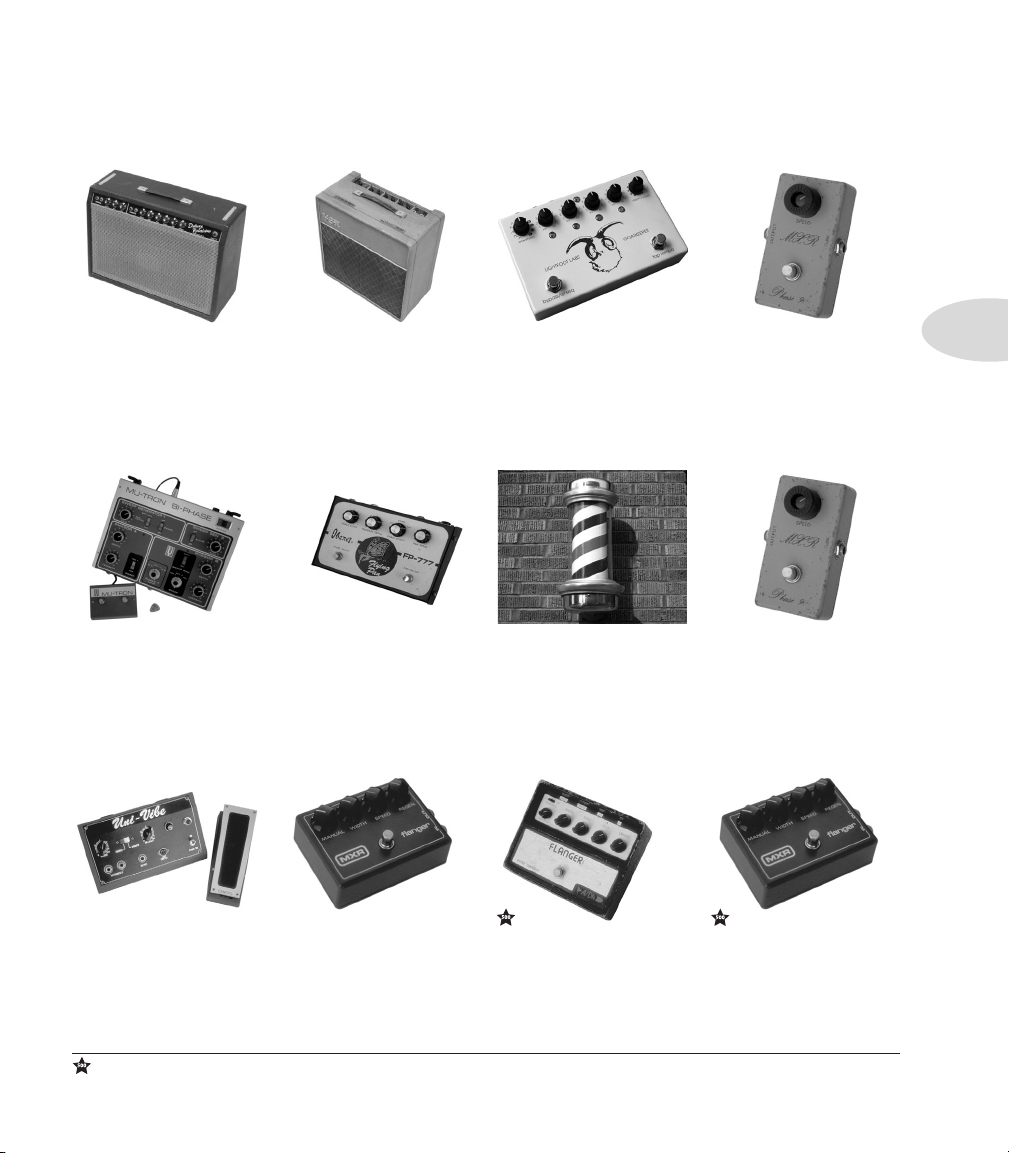
Opto Tremolo
Based on* the optical tremolo
circuit that was used in the
blackface Fender® amps, like
the ’64 Deluxe Reverb®.
Dual Phaser
Based on* the Mu-Tron® BiPhase known for its big jet
sound.
Bias Tremolo
Based on* the 1960 Vox® AC15 Tremolo, which got its pulse
by literally varying the bias of
the power amp tubes.
Panned Phaser
Based on* the Ibanez® Flying
Pan. It’s a 4-stage phase shifter
with a panner built in.
Pattern Tremolo
Inspired by* Lightfoot Labs
Goatkeeper. This effect is what
you’d get if you could hook up a
vintage keyboard sequencer to
a tremolo.
Barberpole
Phaser
A classic effect from the world
of modular synths. This phaser
either sounds like it’s always
going up or always down
depending on how you set it.
Set to stereo you get both!
Phaser
Inspired by* the MXR®
Phase 90. Our model features
additional parameters to take
you there and back again.
Script Phase
Based on* MXR® Phase 90.
Just one knob, Speed, like the
original “script logo” version.
Just add brown sound and
you’ll be “Talking’ Bout Love.”
27
U-Vibe
Based on* the now-legendary
Uni-Vibe®, one listen to
“Machine Gun” and you’ll be
hooked on this effect model!
Featured in POD HD500, POD HD Pro and POD HD Desktop devices..
* All product names used in this manual are trademarks of their respective owners, which are in no way associated or affiliated with Line 6. These trademarks of other manufacturers are used solely to identify the products of those manufacturers whose tones and sounds were
studied during Line 6’s sound model development. Fender® and Deluxe Reverb® are registered trademarks of Fender Musical Instruments Corp. Vox® is a registered trademark of Vox R&D Limited. MXR® and Uni-Vibe® are registered trademarks of Dunlop Manufacturing,
Inc. Mu-Tron® is a registered trademark of Henry A. Zajac Jr. Ibanez® is a registered trademark of Hoshino, Inc. Roland® and Boss® are registered trademarks of Roland Corp.
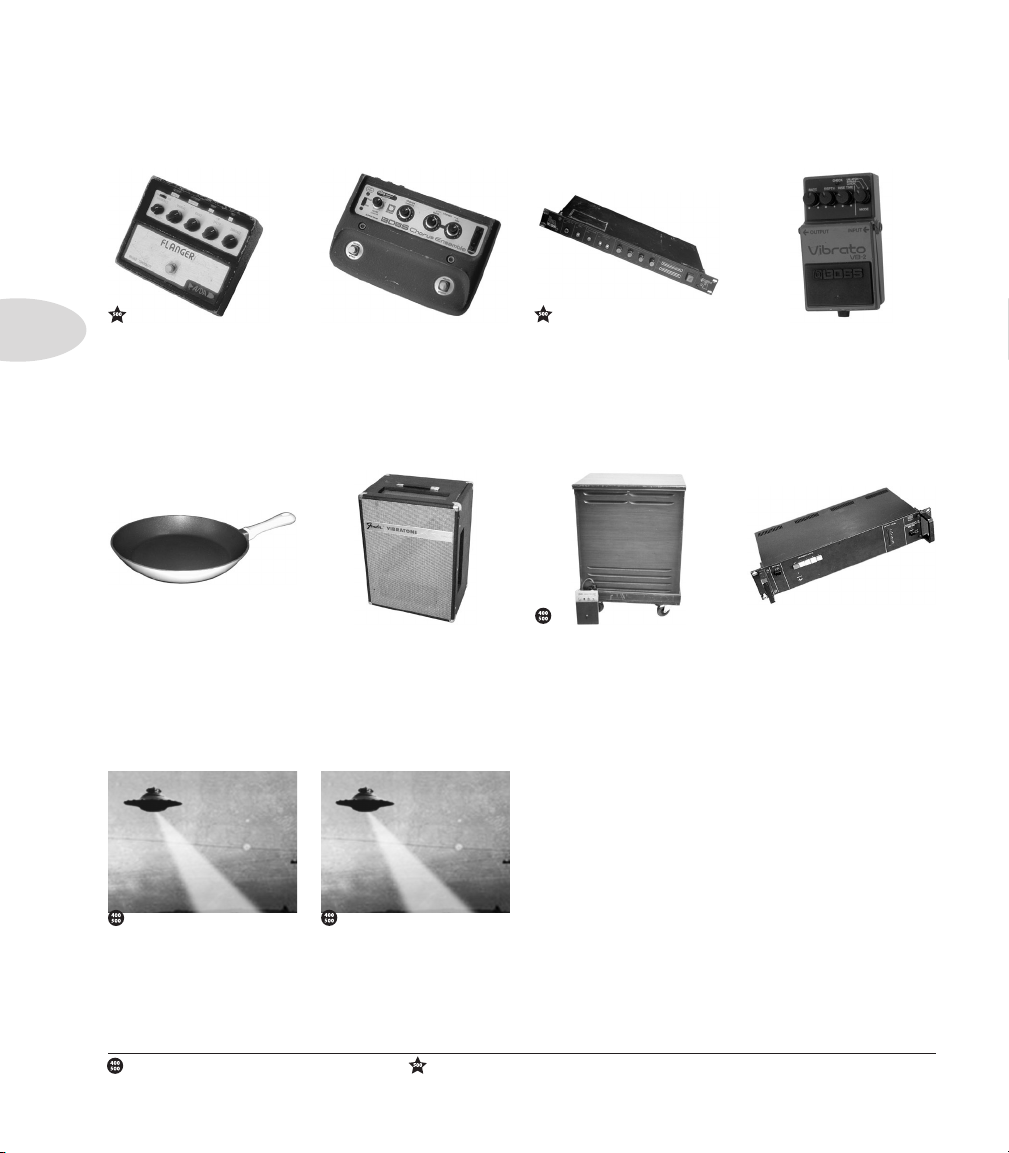
Analog Flanger
Inspired by* the classic MXR®
Flanger.
Jet Flanger
Inspired by* the A/DA
Flanger. Compared to the
Analog Flanger, this model is
more dramatic, with a different
wave shape.
AC Flanger
Based on* the classic MXR®
Flanger. You’ve heard it on
Van Halen’s Fair Warning,
Women and Children First,
and “Unchained”.
Page 28
Model Gallery - FX Models
28
80A Flanger
Based on* the A/DA Flanger
with its signature jet-like
sweep. True to the original, this
model features the same knob
functions as the classic.
Panner
This effect pans back and forth
between your left and right
channels. If you try and run it
in mono, it’s basically tremolo.
Analog Chorus
Based on* the Boss® CE-1
Chorus Ensemble, the original
stompbox chorus with big,
warm and groovy chorus tones.
Rotary Drum
Based on* the Fender®
Vibratone. This rotating
speaker effect was a popular hit
with SRV. Think “Cold Shot.”
Tri-Chorus
Based on* the Song Bird /
DyTronics Tri-Stereo Chorus.
You may have never seen one,
but you’ve heard it hundreds of
times.
Rotary Drum &
Horn
Based on* the Leslie® 145, the
tube-driven rotating speaker
cabinet. It was made for the B3
but guitarists fell in love with
this shimmery effect.
Pitch Vibrato
Based on* the Boss® VB-
2. It contained a circuit that
produced bubbly vibrato, but
was popular for it’s “rise time”
control that when engaged,
sped up to where you last set it.
Dimension
Based on* the Roland®
Dimension D. One of the
first true stereo chorus units.
Relatively subtle in it’s nature,
it became an industry standard
for double-track effects.
Ring Modulator
Ring modulators are for those
special times when you want
different, weird, strange and
otherwise nontraditional guitar
sounds.
Featured in POD HD400, POD HD500, POD HD Pro and POD HD Desktop devices. Featured in POD HD500, POD HD Pro and POD HD Desktop devices..
* All product names used in this manual are trademarks of their respective owners, which are in no way associated or affiliated with Line 6. These trademarks of other manufacturers are used solely to identify the products of those manufacturers whose tones and sounds were
studied during Line 6’s sound model development. Roland® and Boss® are registered trademarks of Roland Corp. Fender® is a registered trademarks of Fender Musical Instruments Corp. Leslie® is a registered trademark of Suzuki Musical Instrument Manufacturing Co. Ltd.
Frequency Shifter
A ring modulator gives you
both up and down shifted
frequencies. Here you can
select just the up or down
shifted frequencies.
Page 29
Model Gallery - FX Models
Distortion Models
Featured in the M5/M9/M13 Stompbox Modelers & DM4 Modulation Modeler
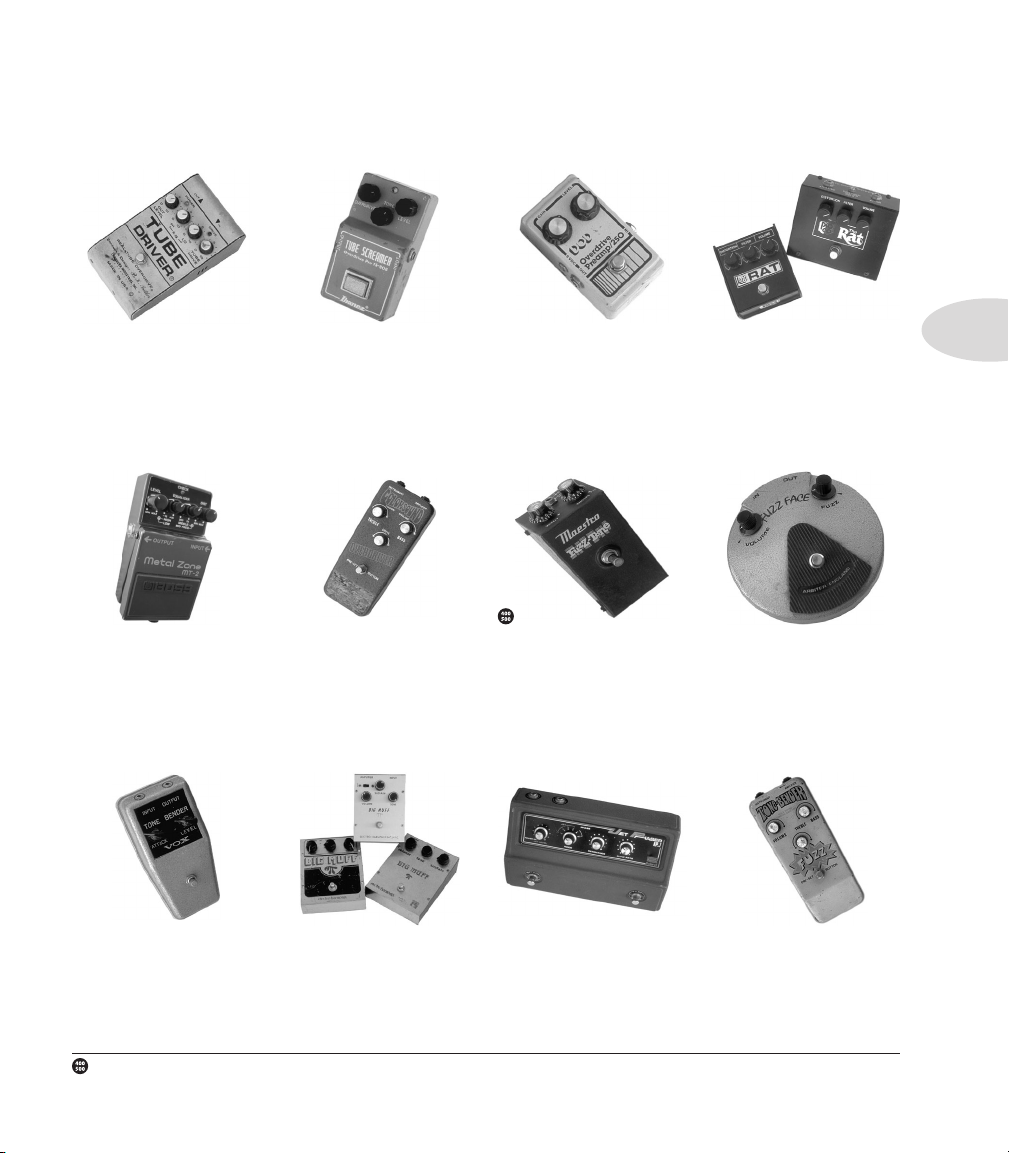
Tube Drive
Based on* the Chandler Tube
Driver®, delivering the sweet
singing sustain craved by
guitarists worldwide.
Heavy Distortion
Based on* Boss® Metal Zone,
the industry standard distortion
pedal for metal players since
1989.
Screamer
Based on* an Ibanez® Tube
Screamer®. In many blues
circles, you’re not allowed
to solo without one of these
medium-gain pedals!
Color Drive
Based on* the Colorsound®
Overdriver. Our model will
transport you instantly back to
that breeding ground of British
guitar heroes.
Overdrive
Based on* the DOD®
Overdrive/Preamp 250
designed to slam the input of
a tube guitar amp forcing the
amp to distort violently.
Buzz Saw
Based on* the Maestro® Fuzz
Tone. Take a deep breath and
repeat: “I can’t get no (duh,
duh, duh) Satisfaction.”
Classic Distortion
Based on* the ProCo Rat, an
angry and aggressive distortion
box that put teeth into a new
breed of metal in the late 70’s.
Facial Fuzz
Based on* the Arbiter Fuzz
Face, best known for its famous
association with guitar legends
Jimi Hendrix & Eric Johnson.
29
Jumbo Fuzz
Based on* the Vox® Tone
Bender. It can be heard all
over the first two Led Zeppelin
records, and is especially
apparent on “Communication
Breakdown.”
Featured in POD HD400, POD HD500, POD HD Pro and POD HD Desktop devices.
* All product names used in this manual are trademarks of their respective owners, which are in no way associated or affiliated with Line 6. These trademarks of other manufacturers are used solely to identify the products of those manufacturers whose tones and sounds were
studied during Line 6’s sound model development. Tube Driver® is a registered trademark of Butler Audio, Inc. Ibanez® is a registered trademark of Hoshino, Inc. Tube Screamer® is a registered trademark of Hoshino Gakki Co. Ltd. DOD® is a registered trademark of
DOD Electronics Corp. Roland® and Boss® are registered trademarks of Roland Corp. Colorsound® is a registered trademark of Sola Sound Limited Corp. Maestro® is a registered trademark of Gibson Guitar Corp. Vox® is a registered trademark of Vox R&D Limited.
Electro-Harmonix® and Big Muff Pi® are registered trademarks of New Sensor Corp.
Fuzz Pi
Based on* the ElectroHarmonix® Big Muff Pi®, this
is an American twist on the
distortion/fuzz pedal, known
more for its wicked sustain than
its buzz.
Jet Fuzz
Based on* the Roland® Jet
Phaser. It’s a fuzz. It’s a phaser.
Yeah baby! Time to grab
your 8-tracks of Uli Roth era
Scorpions.
Line 6 Drive
Inspired by* the Colorsound®
Tone Bender. If we could go
back to the 60’s and be a part
of the fuzz revolution... this is
what we’d design.
Page 30
Model Gallery - FX Models
30
Line 6 Distortion
Completely over the top. Sure,
it’s massive. Yes, it’s over the
top. Okay, it’s a lotta crazy!!!
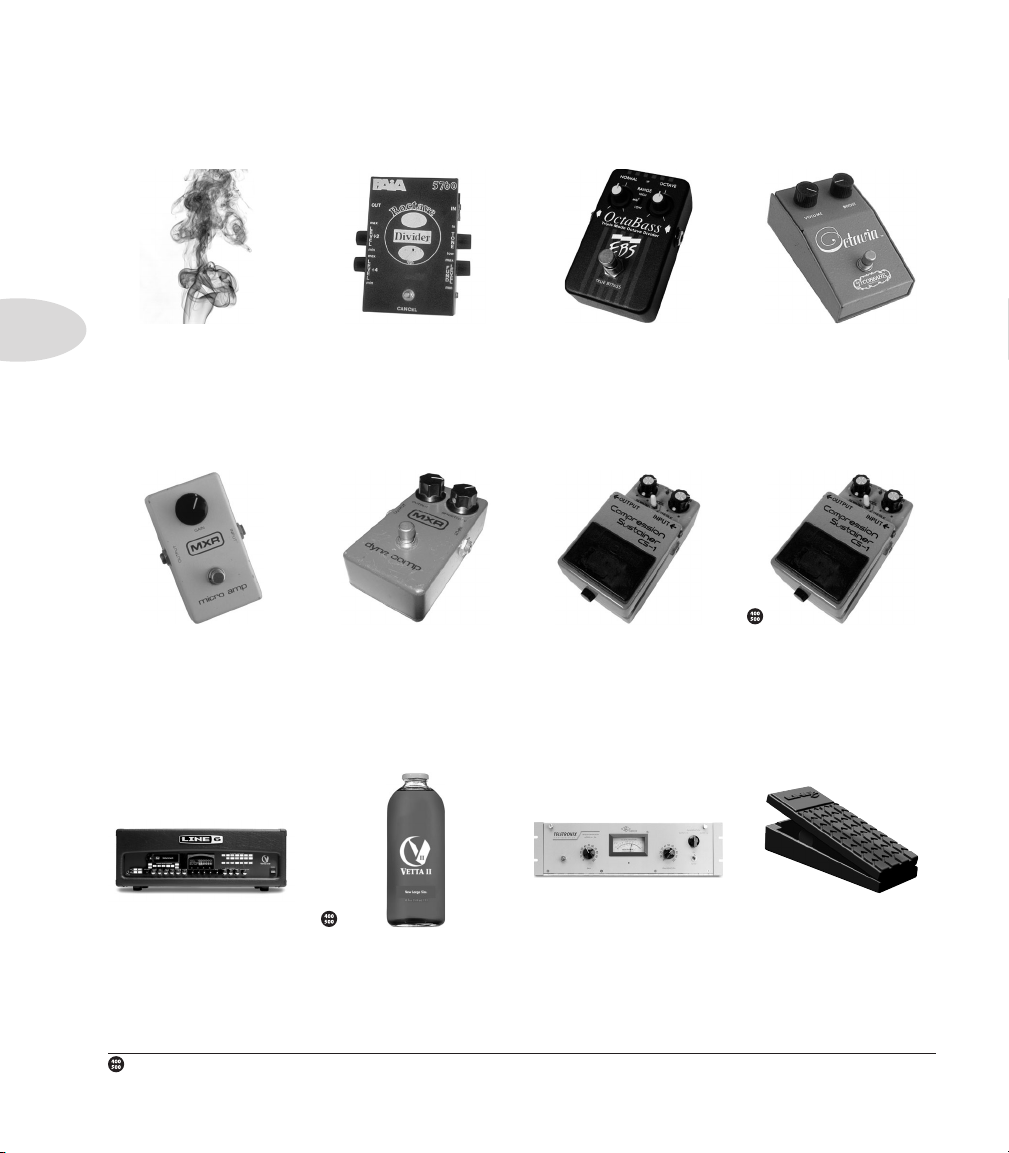
Boost Comp
Inspired by* a MXR® Micro
Amp. Our model delivers the
same “goose the input of the
amp” experience and serves up
a little secret sauce on the side.
Sub Octave Fuzz
Inspired by* the PAiA Roctave
Divider, this fuzz with an octave
below is just what you need to
give those Moog players a fit!
Try it on bass guitar—this is the
Octaver of Doom!
Red Comp
Based on* the MXR®
Dyna Comp, probably the
most widely used stompbox
compressor. Slide players such
as Lowell George loved it.
Bass Octaver
Inspired by* the EBS OctaBass.
This effect gives you a clean
octave down signal. It is very
popular in bass rigs but players
such as Jeff Beck have been
known to bust out this effect.
Blue Comp
Based on* the Boss® CS-1
Compression Sustainer with
the treble switch off.
Octave Fuzz
Based on* the Tycobrahe®
Octavia, the classic fuzz+octave
effect. One pioneering user
of this type of effect was Jimi
Hendrix.
Blue Comp Treb
Based on* the Boss® CS-1
Compression Sustainer with
the treble switch on.
Line 6 Vetta Comp
Taken from Line 6’s guitar
amplifier – Vetta II. With a
fixed ratio of 2.35:1, adjustable
threshold and up to 12dB of
gain available at the Level
knob.
Featured in POD HD400, POD HD500, POD HD Pro and POD HD Desktop devices.
* All product names used in this manual are trademarks of their respective owners, which are in no way associated or affiliated with Line 6. These trademarks of other manufacturers are used solely to identify the products of those manufacturers whose tones and sounds were
studied during Line 6’s sound model development. EBS® is a registered trademark of EBS Holding HB. MXR® is a registered trademark of Dunlop Manufacturing, Inc. Boss® is a registered trademark of Roland Corp. LA-2A® is a trademark of William Putnam. Tycobrahe
is a registered trademark of Kurt Stier. Teletronix® and LA-2A® are registered trademarks of Universal Audio, Inc.
Line 6 Vetta Juice
A Line 6 original also created
for our Vetta II guitar amplifier,
the ‘Juice’ in Vetta Juice comes
from the 30dB of available gain
in the Level knob.
Tube Comp
Based on* the Teletronix®
LA-2A® studio compressor.
Considered one of the finest
compressors in many circles.
Volume Pedal
Effect
We added this for those of you
that need volume control via
the expression pedal. Awesome
for faux pedal steel and chords
swells. Try it!
Page 31
Level (dB)
Level (dB)
Threshold
Gain Reduction
Model Gallery - FX Models
Shelf
0
Q
Frequency
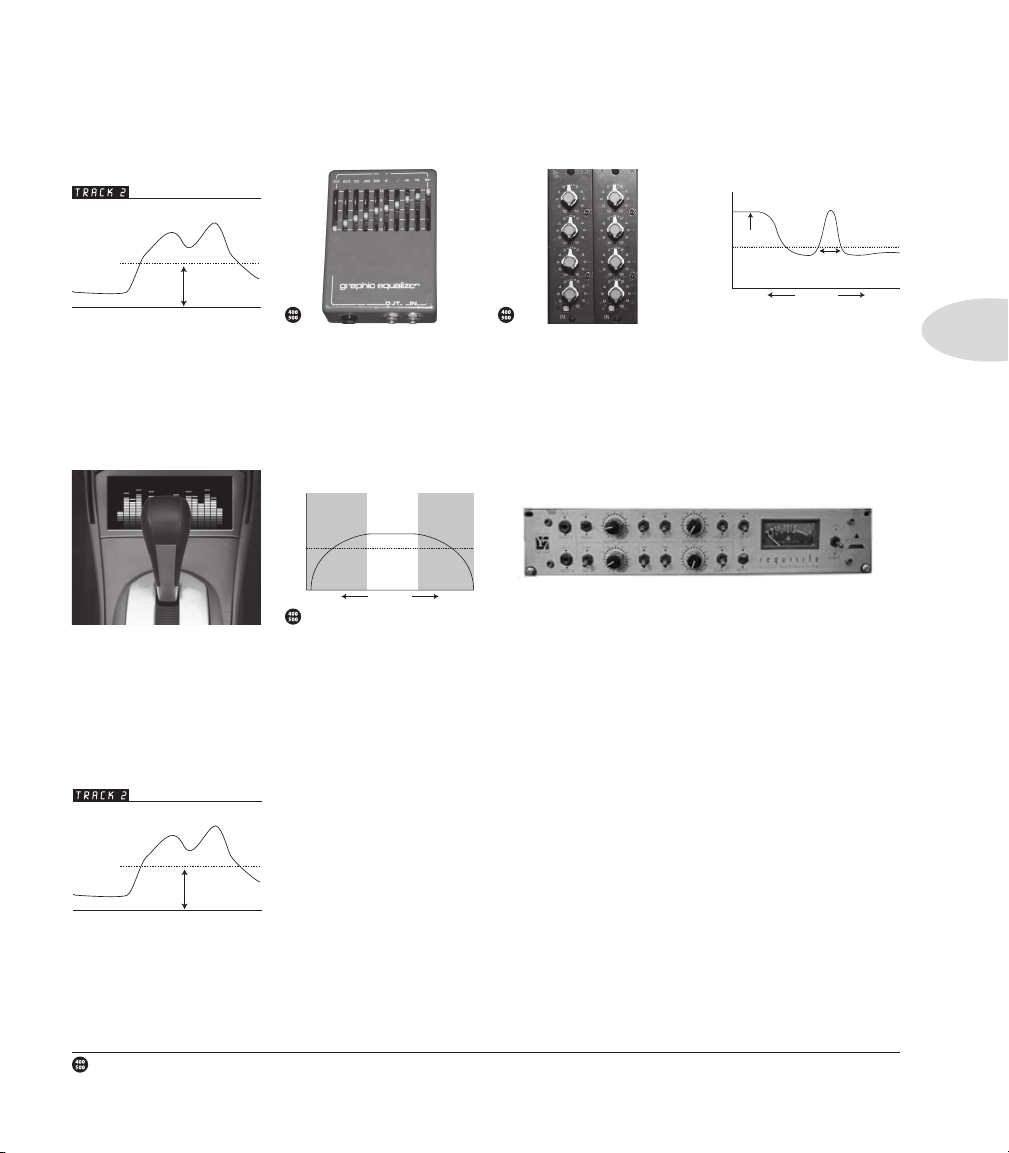
Noise Gate
Use this to eliminate the hiss
from noisy pickups or the white
noise from extremely high gain
distortions by placing the noise
gate further in your signal path
chain.
4 Band Shift EQ
Four band graphic but the
shifter moves the lower band
even lower and the higher
bands even higher. Try shifter
above 50% for guitar and
below for bass guitar.
Threshold
Gain Reduction
Graphic EQ
Inspired by* graphic eq pedals
such as the MXR® ten band
graphic equalizer which
became an integral part of the
live rig of Randy Rhoads.
HI
Pass
0
Frequency
Low
Pass
Mid Focus EQ
It’s a high pass and a low pass
both with frequency and gain
control used together to create
a band-pass. Also has a gain
boost to make up for level loss
in extreme band-passing.
Studio EQ
Inspired by* API® 550B.
Featuring a constant Q and
Parametric EQ
High shelf, low shelf, and a
fully parametric band.
Soft Clipping output with level
control.
Vintage Pre
A vintage-voiced, tube mic preamp based on* the Requisite® Y7
vintage Tube Mic Preamp, excellent for use with your Mic source
input, Variax acoustic guitar models, or even in conjunction with
Bass or Guitar Amps, anywhere in the signal path, to provide some
nice tube warmth.
31
Hard Gate
With more controls than the
Noise Gate, you can further use
this one for intentional effects,
such as stuttering and loppedoff power chords.
Featured in POD HD400, POD HD500, POD HD Pro and POD HD Desktop devices.
* All product names used in this manual are trademarks of their respective owners, which are in no way associated or affiliated with Line 6. These trademarks of other manufacturers are used solely to identify the products of those manufacturers whose tones and sounds were studied
during Line 6’s sound model development. API® is a registered trademark of Automated Processes, Inc. MXR® is a registered trademark of Dunlop Manufacturing, Inc. * Requisite® is a registered trademark of Requisite Audio Engineering.
Page 32
Model Gallery - FX Models
Filter & Wah Models
Featured in the M5/M9/M13 Stompbox Modelers & FM4 Filter Modeler
32
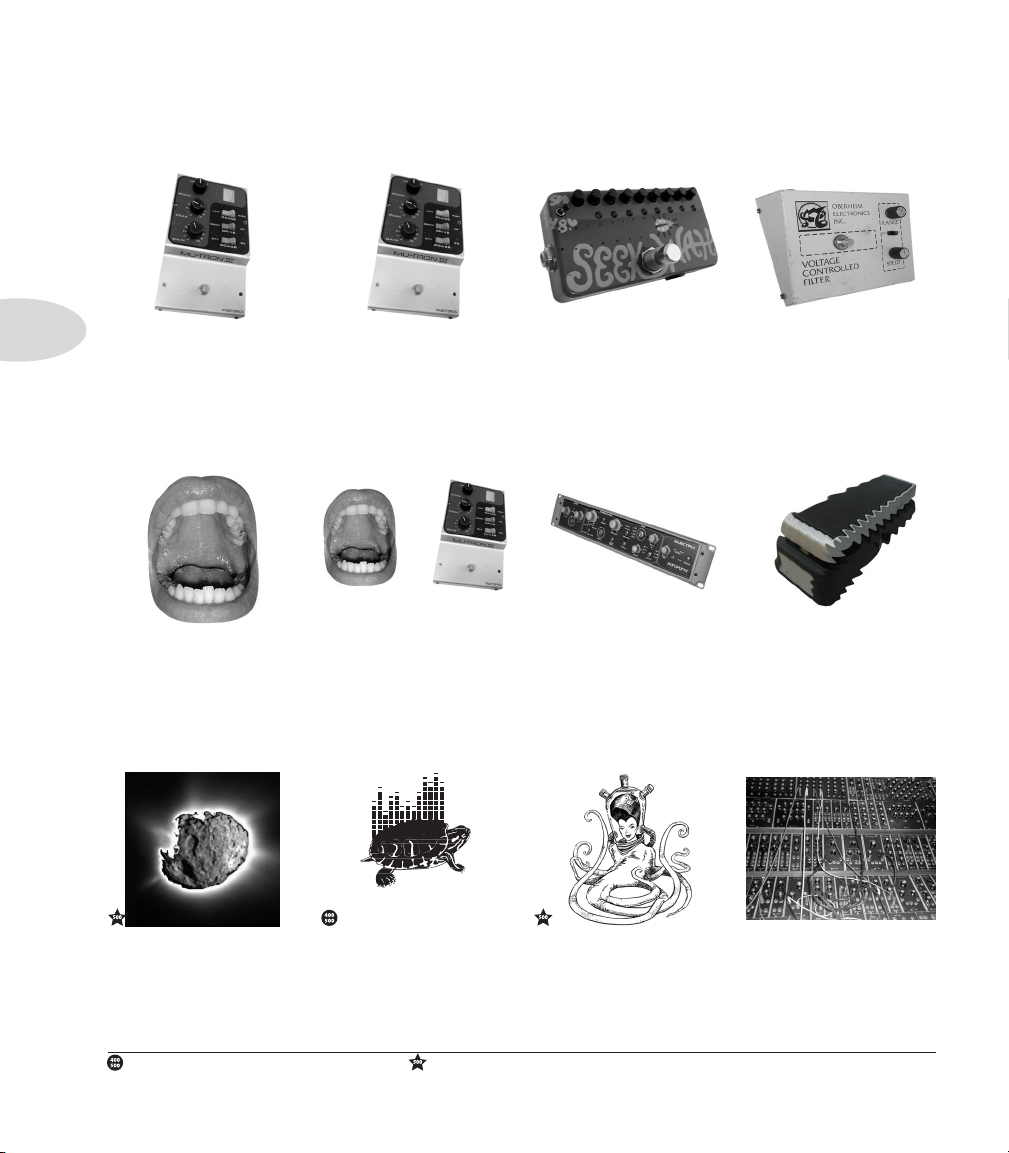
Tron Up
Inspired by* the Mu-Tron® III
envelope follower in the “Up”
position. Part auto-wah, part
triggered filter, it’s all about
wacky.
Voice Box
Inspired by* Vocoders, Vocal
Tracts & Surgical Tubing. This
model gives your guitar a sound
that’s typical of a classic “talk
box.”
Tron Down
Inspired by* the Mu-Tron®
III envelope follower in the
“Down” position.
+
V-Tron
Voice Box meets Mu-Tron®
III. In this model your guitar
again “speaks” with an almost
human voice, but now it does
so in response to your playing.
Seeker
Inspired by* the Z-Vex Seek
Wah. Imagine 8 “parked wah”
filters set at varying positions
and then sequenced through,
creating a pulsating hypnotic
vibe.
Throbber
Inspired by* the Electrix®
Filter Factory. It’s perfect for
cool Electronica sounds.
Obi-Wah
Based on* the Oberheim®
Voltage Controlled Sample and
Hold filter. Voltage Controlled
Filters create changes in
tone by emphasizing random
frequencies.
Spin Cycle
Inspired by Craig Anderton’s
Wah/Anti-Wah. This is what
headphone mixes were made
for! Imagine two wahs panned
left and right working opposite
directions from each other.
Comet Trails
After several days spent crafting
the code for our digital secret
sauce, we found ourselves one
afternoon surrounded by 10
empty cans of Dew, and sounds
from another world.
Featured in POD HD400, POD HD500, POD HD Pro and POD HD Desktop devices. Featured in POD HD500, POD HD Pro and POD HD Desktop devices..
* All product names used in this manual are trademarks of their respective owners, which are in no way associated or affiliated with Line 6. These trademarks of other manufacturers are used solely to identify the products of those manufacturers whose tones and sounds were
studied during Line 6’s sound model development. Mu-Tron® is a registered trademark of Henry A. Zajac Jr. Oberheim® is a registered trademark of Gibson Guitar Corp. Electrix® is a registered trademark of Electrix Pro, Inc.
Slow Filter
It’s Swell! This triggered filter
rolls off the high end of your
tone, with adjustable speed.
Your choice from dark to bright
(the UP mode), or bright to
dark (the DOWN mode).
Octisynth
Inspired by eight armed
denizens of the deep. Everyone
knows that all you need is a
bottleneck and a reverb tank
to get whale sounds, but how
about our friend the Octopus?
Synth-O-Matic
Inspired by a collection of
vintage analog synths. This
model features waveforms
captured from a mouth
watering collection of vintage
synths.
Page 33
Model Gallery - FX Models
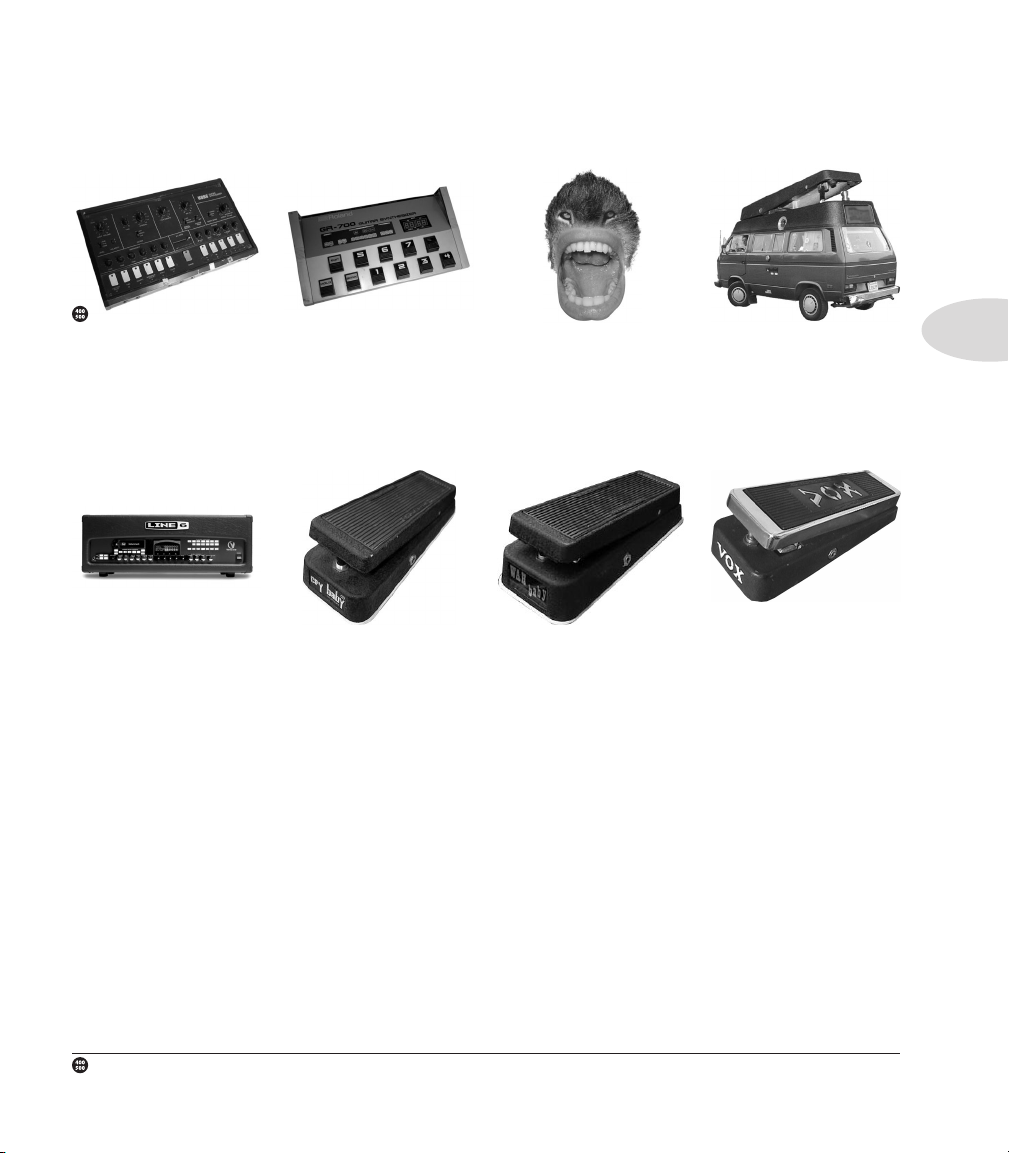
Attack Synth
Based on* the Korg® X911
Guitar Synth. Modeled after
one of the waveforms in the
X911, along with some of the
wave shaping functions that
are found on the original.
Vetta Wah
Taken from Line 6’s guitar
amplifier – Vetta II. This is
our sound designers’ take on a
classic effect.
Synth String
Based on* the Roland®
GR700 Guitar Synth. Your
Filter Modeler’s Synth String
model is based on one of the
sounds of the GR700.
Fassel
Based on* a Cry Baby® Super.
Coveted for the mojo of it’s
Fasel inductor.
Growler
R700 meets Mu-Tron® III.
Grrrrrrrrr!
Weeper
Based on* the Arbiter Cry
Baby®. Another variation
of the original wah with a
different inductor and other
component choices.
Q Filter
Your very own parked wah!
You’ve heard it before from
Mark Knopfler and from Brian
May of Queen—it’s a wah
“parked” in one position.
Chrome
Based on* a Vox® V847. A
successor to the original Clyde
McCoy wah. Clyde is a trumpet
player but guitarists everywhere
thank him for suggesting Vox®
create this effect.
33
Featured in POD HD400, POD HD500, POD HD Pro and POD HD Desktop devices.
* All product names used in this manual are trademarks of their respective owners, which are in no way associated or affiliated with Line 6. These trademarks of other manufacturers are used solely to identify the products of those manufacturers whose tones and sounds were
studied during Line 6’s sound model development. Mu-Tron® is a registered trademark of Henry A. Zajac Jr. Roland® is a registered trademark of Roland Corp. Cry Baby® is a registered trademark of Dunlop Manufacturing, Inc. Vox® is a registered trademark of Vox R&D
Ltd. Korg® is a registered trademark of Korg Inc.
Page 34
Model Gallery - FX Models
34
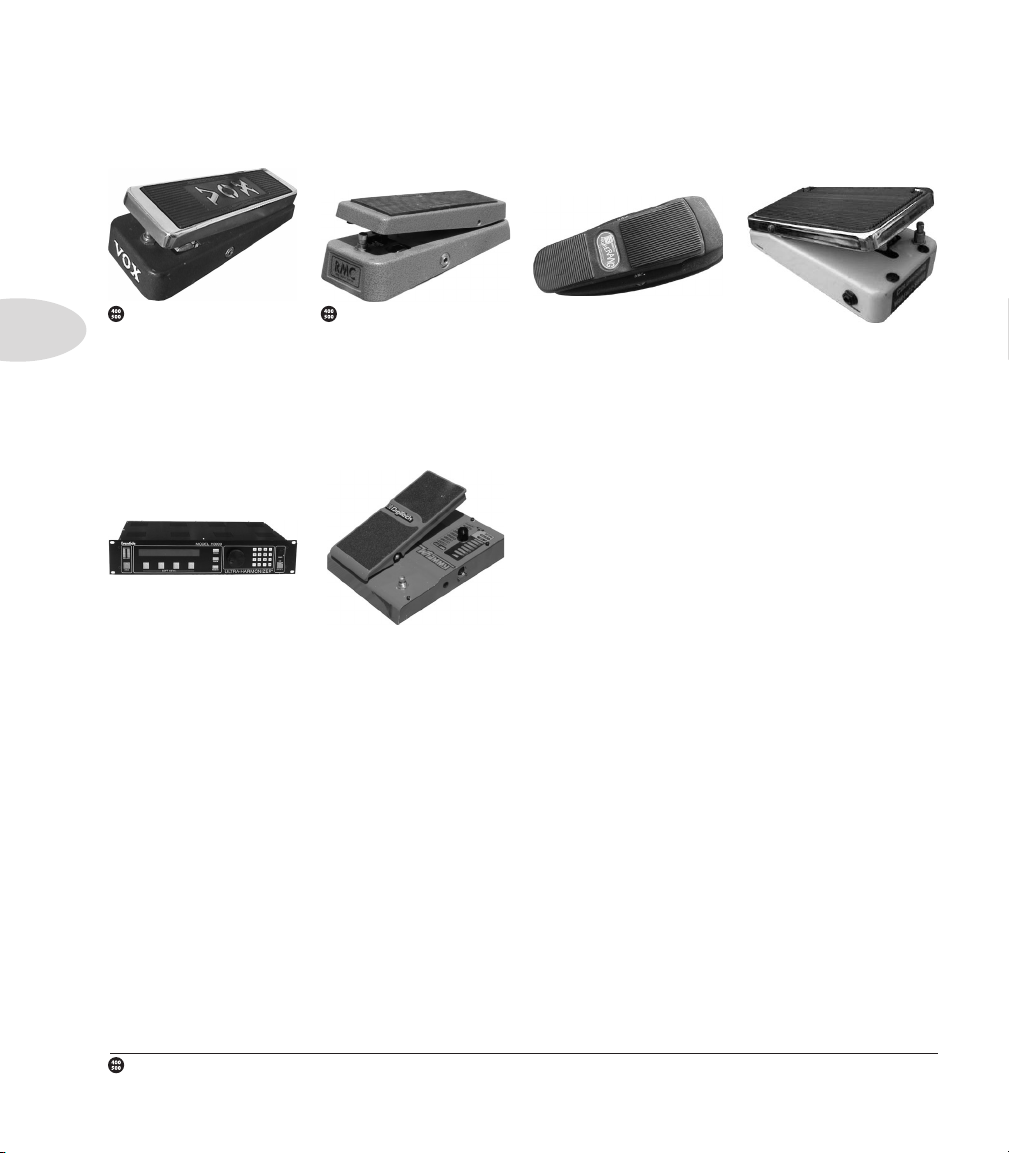
Chrome Custom
Based on* a modded Vox®
V847 that has the gain staging
on the first transistor stage
tweaked, and aftermarket
inductor, the Q widened, and
replaced with a 470k pot.
Smart Harmony
Inspired by* the Eventide®
H3000. This is a diatonic
harmonizer. If you ever wished
you had that second guitar
player for dual guitar parts, this
effect is for you.
Throaty
Based on* the RMC Real
McCoy 1. Geoffrey Teese
meticulously crafts the clones
of the original and rare Vox®
Clyd McCoy “Picture” wah.
Pitch Glide
Inspired by* Digitech
Whammy®. Dive bomb or ice
pick? This is how Tom Morello
gets a lot of those crazy sounds.
You’ll want an expression
pedal hooked up to enjoy this
properly.
Conductor
Based on* the Maestro®
Boomerang. According to
original advertising material,
this was not a ‘wah-wah’
pedal but a ‘wow-wow’ pedal.
Po-tay-to or Po-tah-to?
Colorful
Based on* the Colorsound®
Wah-fuzz. We only modeled
the wah section of course. This
pedal is different in that it was
an inductor-less design. It uses
a different circuit to get its
frequency resonance.
Featured in POD HD400, POD HD500, POD HD Pro and POD HD Desktop devices.
* All product names used in this manual are trademarks of their respective owners, which are in no way associated or affiliated with Line 6. These trademarks of other manufacturers are used solely to identify the products of those manufacturers whose tones and sounds were
studied during Line 6’s sound model development. Vox® is a registered trademark of Vox R&D Limited. Maestro® is a registered trademark of Gibson Guitar Corp. Colorsound® is a registered trademark of Sola Sound Ltd. Eventide® is a registered trademark of Eventide, Inc.
Digitech Whammy® is a registered trademark of Harman International Industries, Inc.
Page 35
Reverb Models
Featured in the M5/M9/M13 Stompbox Modelers & Verbzilla
Model Gallery - FX Models
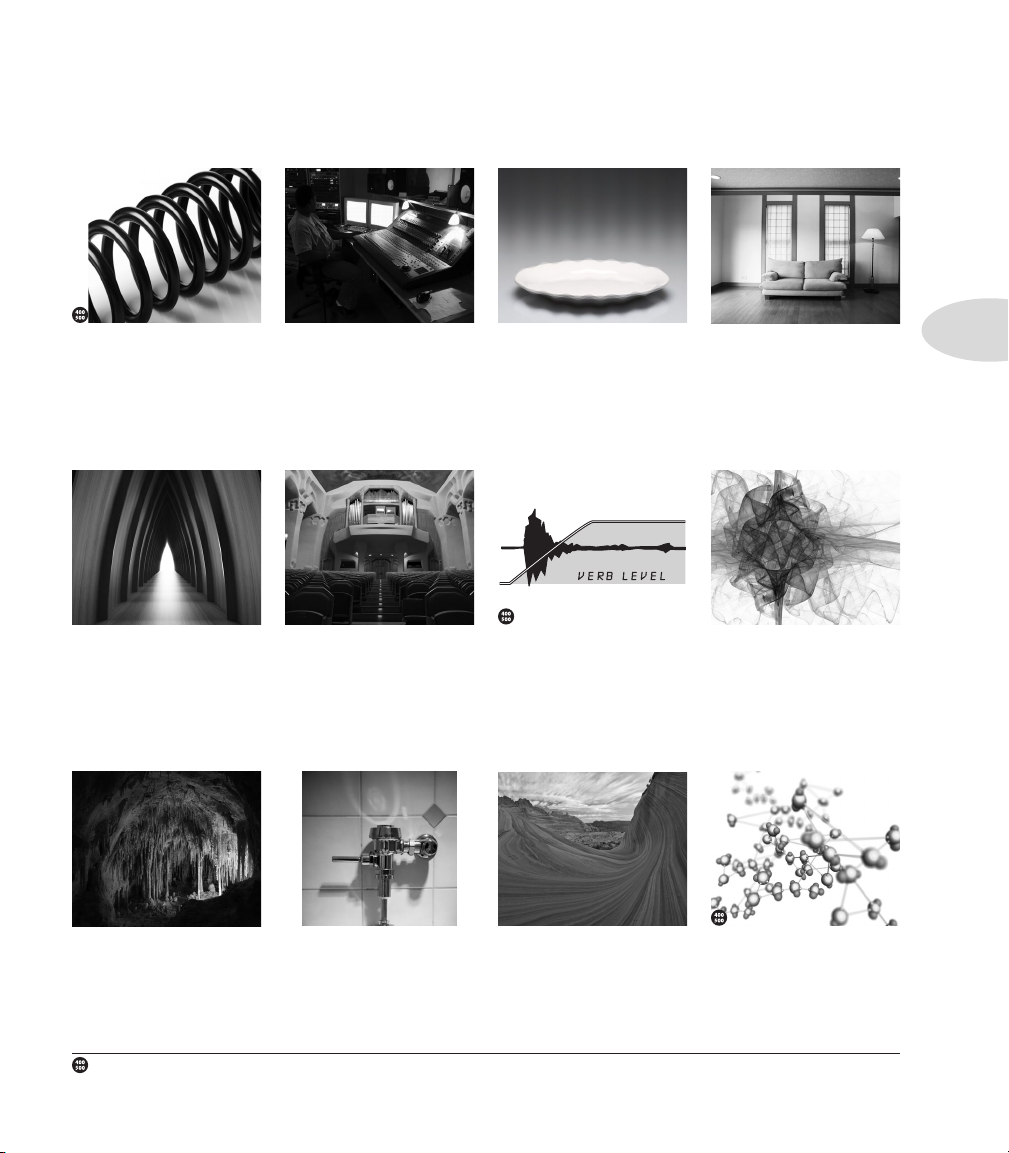
‘63 Spring
Based on a 1963 brown spring
reverb head unit. Best known
for great surf guitar tone!
Chamber
An elongated ambient space
such as a hall, stairwell or
elevator shaft creates this
reverb type. Dreamy.
Spring
Based on a studio spring reverb.
A spring reverb’s characteristic
resonant sound was created
by springs suspended inside a
metal box. Sweet!
Hall
Simulates the sound of a
concert hall or large open
space with a strong reverb
tail. Imagine a gymnasium,
performance hall, or cathedral.
Plate
Based on a studio Plate reverb.
Similar to the spring, in its
metallic resonant quality. Plate
reverbs consisted of a thin
metal sheet suspended inside
a box.
Ducking
Built using a ‘Hall’ but with a
ducking effect. The volume
of your reverb is “ducked”
(reduced) while you’re playing,
and increases when you stop.
Room
Simulates the acoustic
properties of a classic echo
chamber , which was a room
used in early recording studios
for reverb effects.
Octo
Creates a lush, ambient space
with a harmonized decay
whose harmonic denseness is
controlled by the time knob.
Use volume swells and prepare
to float on cloud 9!
35
Cave
Surreal cavernous echo
chamber. I’m just a simple
caveman... Your world frightens
and confuses me... what more
can be said.
Featured in POD HD400, POD HD500, POD HD Pro and POD HD Desktop devices.
Tile
Emulates the acoustic
reflections of a tiled room, such
as a bathroom or shower, with
clearer/brighter discrete early
reflections.
Echo
Just like it says …echo…
echo…echo. This is a lush
echo with reverb.
Particle Verb
A Line 6 original that turns
your chords into a lush
modulated pad in stable mode.
Critical mode adds a slight rise
in pitch. All stops are removed
when in Hazard mode.
 Loading...