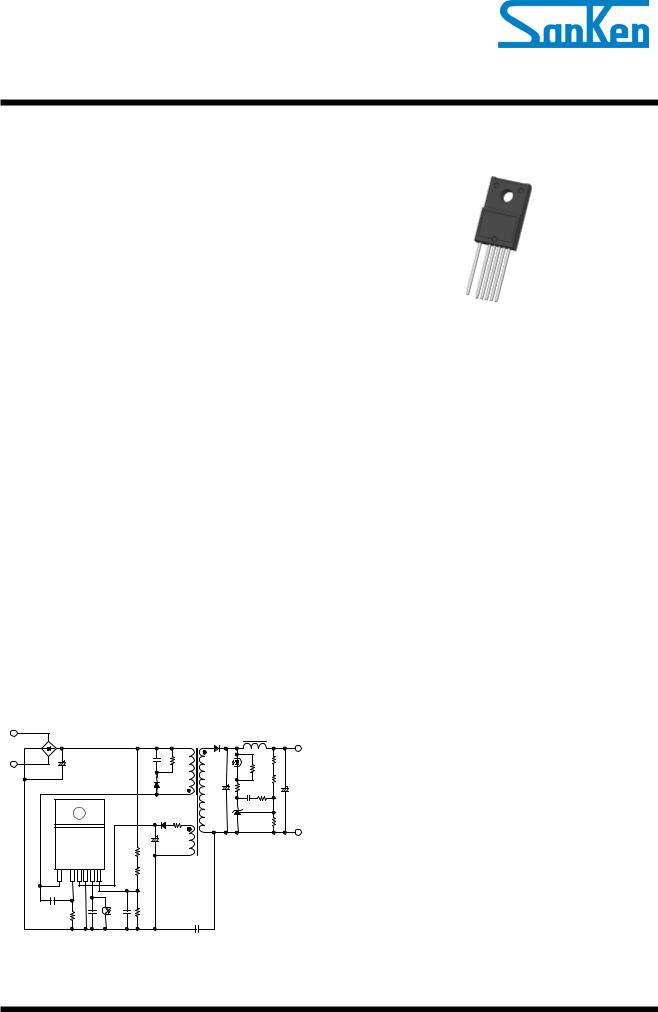
Off-Line PWM Controllers with Integrated Power MOSFET
STR-W6000S Series
General Descriptions
The STR-W6000S series are power ICs for switching
power supplies, incorporating a MOSFET and a current
mode PWM controller IC.
The low standby power is accomplished by the
automatic switching between the PWM operation in
normal operation and the burst-oscillation under light
load conditions. The product achieves high
cost-performance power supply systems with few
external components.
Features
Current Mode Type PWM Control
Brown-In and Brown-Out function
Auto Standby Function
No Load Power Consumption < 30 mW
Operation Mode
Normal Operation ----------------------------- PWM Mode
Random Switching Function
Slope Compensation Function
Leading Edge Blanking Function
Bias Assist Function
Audible Noise Suppression function during Standby
mode
Protections
・Overcurrent Protection (OCP); Pulse-by-Pulse,
built-in compensation circuit to minimize OCP point
* The output power is actual continues power that is measured at
= 67 kHz
OSC(AVG)
*
OUT
50 °C ambient. The peak output power can be 120 to 140 % of the
value stated here. Core size, ON Duty, and thermal design affect
the output power. It may be less than the value stated here.
Applications
White goods
Office automation equipment
Industrial equipment
STR-W6000S - DS Rev.2.0 SANKEN ELECTRIC CO.,LTD.1
Aug. 07, 2014
Page 3
STR-W6000S Series
CONTENTS
General Descriptions ----------------------------------------------------------------------- 1
1. Absolute Maximum Ratings --------------------------------------------------------- 3
10.2 PCB Trace Layout and Component Placement ----------------------- 20
11. Pattern Layout Example ------------------------------------------------------------ 22
12. Reference Design of Power Supply ----------------------------------------------- 23
OPERATING PRECAUTIONS -------------------------------------------------------- 25
IMPORTANT NOTES ------------------------------------------------------------------- 26
STR-W6000S - DS Rev.2.0 SANKEN ELECTRIC CO.,LTD.2
Aug. 07, 2014
Page 4
STR-W6000S Series
Parameter
Symbol
Test Conditions
Pins
Rating
Units
Notes
Drain Peak Current
(1)
I
DPEAK
Single pulse
1 – 3
5.0
A
STR-W6051S
7.0
STR-W6052S
7.5
STR-W6072S
9.5
STR-W6053S
Maximum Switching
Current
(2)
I
DMAX
Single pulse
Ta= ‒20 to 125°C
1 – 3
5.0
A
STR-W6051S
7.0
STR-W6052S
7.5
STR-W6072S
9.5
STR-W6053S
Avalanche Energy
(3)(4)
EAS
I
LPEAK
=2.0A
1 – 3
47
mJ
STR-W6051S
I
LPEAK
=2.3A
60
STR-W6072S
I
LPEAK
=2.3A
62
STR-W6052S
I
LPEAK
=2.7A
86
STR-W6053S
S/OCP Pin Voltage
V
OCP
3 – 5
− 2 to 6
V
VCC Pin Voltage
VCC
4 – 5
32
V
FB/OLP Pin Voltage
VFB
6 – 5
− 0.3 to 14
V
FB/OLP Pin Sink Current
IFB
6 – 5
1.0
mA
BR Pin Voltage
VBR
7 – 5
− 0.3 to 7
V
BR Pin Sink Current
IBR
7 – 5
1.0
mA
MOSFET Power
Dissipation
(5)
PD1
With infinite
heatsink
1 – 3
22.3
W
STR-W6051S
23.6
STR-W6052S
25.8
STR-W6072S
26.5
STR-W6053S
Without heatsink
1 – 3
1.3
W
Control Part Power
Dissipation
PD2
VCC×ICC
4 – 5
0.13
W
Internal Frame Temperature
in Operation
TF −
− 20 to 115
°C
Operating Ambient
Temperature
TOP
−
− 20 to 115
°C
Storage Temperature
T
stg
−
− 40 to 125
°C
Junction Temperature
Tch
− 150
°C
1. Absolute Maximum Ratings
The polarity value for current specifies a sink as "+," and a source as "−," referencing the IC.
Unless otherwise specified T
= 25 °C
A
(1)
Refer to 3.3 MOSFET Safe Operating Area Curves.
(2)
The maximum switching current is the drain current determined by the drive voltage of the IC and threshold voltage
(Vth) of the MOSFET.
(3)
Refer to Figure 3-2 Avalanche Energy Derating Coefficient Curve.
(4)
Single pulse, V
(5)
Refer to 3.2 Ta-PD1curves.
STR-W6000S - DS Rev.2.0 SANKEN ELECTRIC CO.,LTD.3
Aug. 07, 2014
= 99 V, L = 20 mH
DD
Page 5
STR-W6000S Series
Parameter
Symbol
Test
Conditions
Pins
Min.
Typ.
Max.
Units
Notes
Power Supply Startup Operation
Operation Start Voltage
V
CC(ON)
4 – 5
13.8
15.3
16.8
V Operation Stop Voltage
(1)
V
CC(OFF)
4 – 5
7.3
8.1
8.9
V Circuit Current in Operation
I
CC(ON)
V
CC
= 12 V
4 – 5 − −
2.5
mA
Startup Circuit Operation
Voltage
V
ST(ON)
4 – 5 − 40 − V
Startup Current
I
STARTUP
V
CC
= 13.5 V
4 – 5
− 3.9
− 2.5
− 1.1
mA
Startup Current Biasing
Threshold Voltage
V
CC(BIAS)
I
CC
= − 100 µA
4 – 5
8.5
9.5
10.5
V
Normal Operation
Average Switching
Frequency
f
OSC(AVG)
1 – 5
60
67
74
kHz
Switching Frequency
Modulation Deviation
Δf
1 – 5 − 5 − kHz
Maximum ON Duty
D
MAX
1 – 5
63
71
79
%
Protection Function
Leading Edge Blanking Time
tBW − − 390 − ns
OCP Compensation
Coefficient
DPC
− − 18
−
mV/μs
OCP Compensation ON Duty
D
DPC
−−36 −%
OCP Threshold Voltage at
Zero ON Duty
V
OCP(L)
3 – 5
0.70
0.78
0.86
V
OCP Threshold Voltage at
36% ON Duty
V
OCP(H)
V
CC
= 32 V
3 – 5
0.79
0.88
0.97
V
Maximum Feedback Current
I
FB(MAX)
V
CC
= 12 V
6 – 5
− 340
− 230
− 150
µA
Minimum Feedback Current
I
FB(MIN)
6 – 5
− 30
− 15
− 7
µA
FB/OLP pin Oscillation Stop
Threshold Voltage
V
FB(STB)
6 – 5
0.85
0.95
1.05
V
OLP Threshold Voltage
V
FB(OLP)
6 – 5
7.3
8.1
8.9
V
OLP Operation Current
I
CC(OLP)
V
CC
= 12 V
4 – 5 − 300 − µA
OLP Delay Time
t
OLP
6 – 5
54
68
82
ms
FB/OLP Pin Clamp Voltage
V
FB(CLAMP)
6 – 5
11
12.8
14
V
Brown-In Threshold Voltage
V
BR(IN)
V
CC
= 32 V
7 – 5
5.2
5.6 6 V
Brown-Out Threshold
Voltage
V
BR(OUT)
V
CC
= 32 V
7 – 5
4.45
4.8
5.15
V
BR Pin Clamp Voltage
V
BR(CLAMP)
V
CC
= 32 V
7 – 5 6 6.4 7 V
BR Function Disabling
Threshold
V
BR(DIS)
V
CC
= 32 V
7 – 5
0.3
0.48
0.7
V
OVP Threshold Voltage
V
CC(OVP)
4 – 5
26
29
32
V
Thermal Shutdown Operating
Temperature
T
j(TSD)
− 130 − −
°C
2. Electrical Characteristics
The polarity value for current specifies a sink as "+," and a source as "−," referencing the IC.
Unless otherwise specified, T
= 25 °C, VCC = 18 V
A
(1)
V
CC(BIAS)
> V
CC(OFF)
STR-W6000S - DS Rev.2.0 SANKEN ELECTRIC CO.,LTD.4
Aug. 07, 2014
always.
Page 6
STR-W6000S Series
Parameter
Symbol
Test
Conditions
Pins
Min.
Typ.
Max.
Units
Notes
MOSFET
Drain-to-Source Breakdown
Voltage
V
DSS
8 – 1
650 − −
V
STR-W605×S
800 − −
STR-W6072S
Drain Leakage Current
I
DSS
8 – 1 − −
300
μA
On Resistance
R
DS(ON)
8 – 1
− − 3.95
Ω
STR-W6051S
−−3.6
STR-W6072S
−−2.8
STR-W6052S
−−1.9
STR-W6053S
Switching Time
tf
8 – 1 − −
250
ns
Thermal Resistance
Channel to Frame Thermal
Resistance
(2)
θ
ch-F
−
− − 2.63
°C/W
STR-W6051S
−−2.26
STR-W6052S
−−2.03
STR-W6072S
−−1.95
STR-W6053S
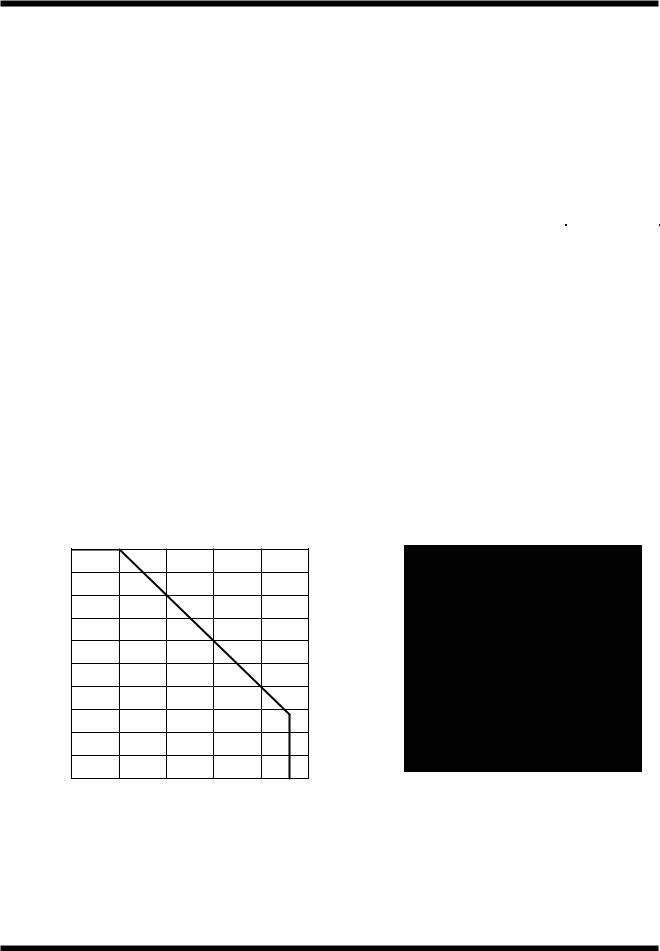
Figure 3-1 SOA Temperature Derating Coefficient Curve
Figure 3-2 Avalanche Energy Derating Coefficient Curve
0
20
40
60
80
100
0255075100125
Safe Operating Area
Temperature Derating Coefficient (%)
Channel Temperature, Tch (°C)
0
20
40
60
80
100
255075100125150
E
AS
Temperature Derating Coefficient (%)
Channel Temperature, Tch (°C)
(2)
The thermal resistance between the channels of the MOSFET and the internal frame.
3. Performance Curves
3.1 Derating Curves
STR-W6000S - DS Rev.2.0 SANKEN ELECTRIC CO.,LTD.5
Aug. 07, 2014
Page 7
STR-W6000S Series
STR-W6051S
STR-W6052S
STR-W6053S
STR-W6072S
0
5
10
15
20
25
30
0255075100125150
Power Dissipation, P
D1
(W)
Ambient Temperature, TA(°C )
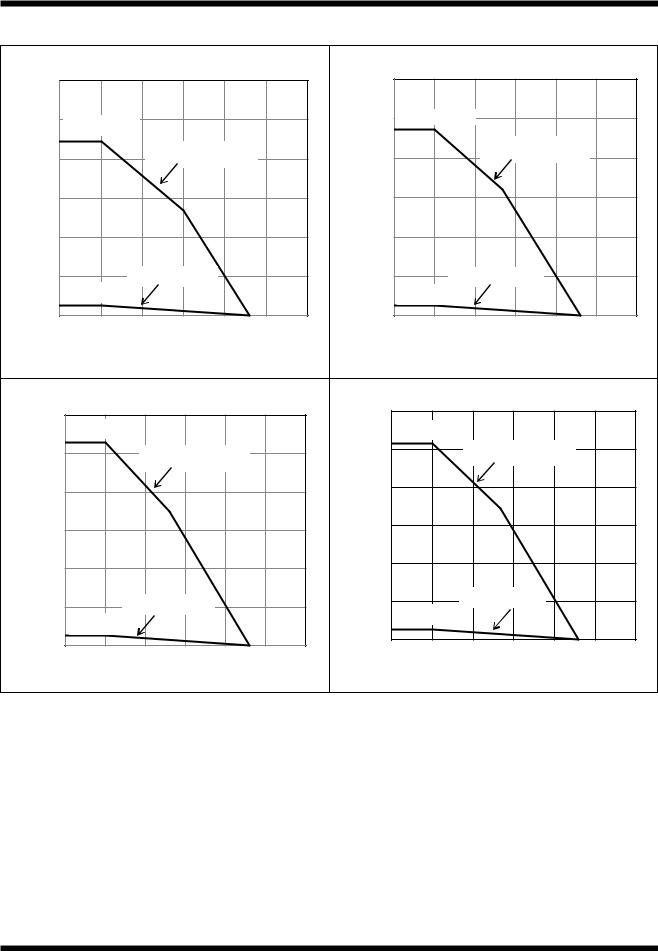
With infinite heatsink
PD1=23.6W
PD1=1.3W
Without heatsink
PD1_STR-W6052S_R1
0
5
10
15
20
25
30
0255075100125150
Power Dissipation, P
D1
(W)
Ambient Temperature, TA(°C )
With infinite heatsink
PD1=26.5W
PD1=1.3W
Without heatsink
PD1_STR-W6053S_R1
0
5
10
15
20
25
30
0255075100125150
Power Dissipation, P
D1
(W)
Ambient Temperature, TA(°C )
With infinite heatsink
PD1=25.8W
PD1=1.3W
Without heatsink
PD1_STR-W6072S_R1
0
5
10
15
20
25
30
0255075100125150
Power Dissipation, P
D1
(W)
Ambient Temperature, TA(°C )
With infinite heatsink
PD1=22.3W
PD1=1.3W
Without heatsink
PD1_STR-W6051S_R1
3.2 Ambient Temperature versus Power Dissipation Curves
STR-W6000S - DS Rev.2.0 SANKEN ELECTRIC CO.,LTD.6
Aug. 07, 2014
Page 8
STR-W6000S Series
STR-W6051S
STR-W6052S
STR-W6053S
STR-W6072S
0.01
0.1
1
10
1101001000
Drain Current, I
D
(A)
Drain-to-Source Voltage (V)
SOA_STR-W6052S_R1
0.01
0.1
1
10
100
1101001000
Drain Current, I
D
(A)
Drain-to-Source Voltage (V)
SOA_STR-W6053S_R1
0.01
0.1
1
10
100
1101001000
Drain Current, I
D
(A)
Drain-to-Source Voltage (V)
SOA_STR-W6072S_R1
0.1ms
1ms
0.1ms
1ms
0.1ms
1ms
0.01
0.1
1
10
1101001000
Drain Current, I
D
(A)
Drain-to-Source Voltage (V)
0.1ms
1ms
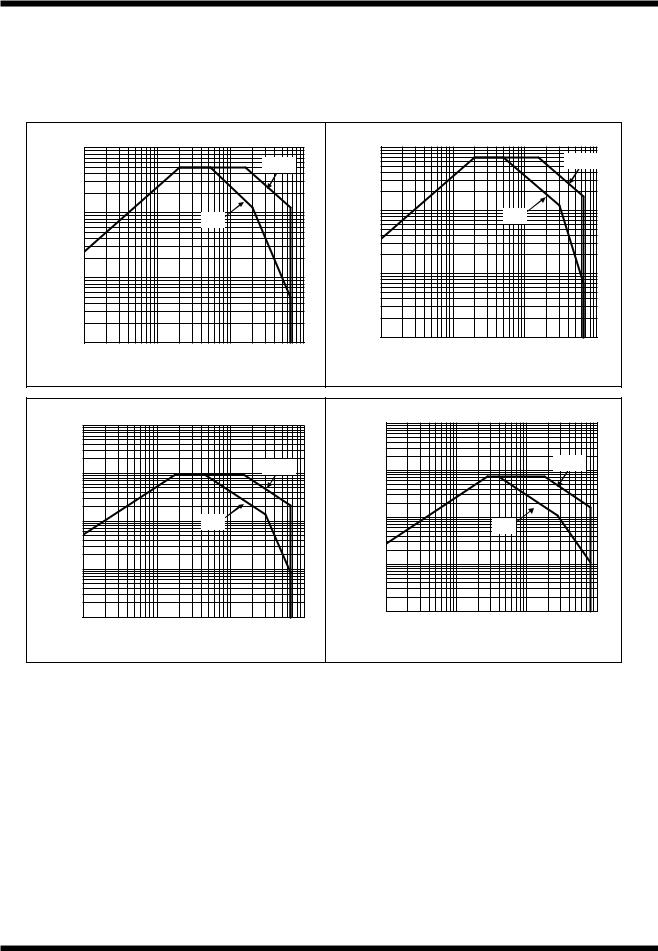
3.3 MOSFET Safe Operating Area Curves
When the IC is used, the safe operating area curve should be multiplied by the temperature derating coefficient
derived from Figure 3-1.
The broken line in the safe operating area curve is the drain current curve limited by on-resistance.
Unless otherwise specified, TA = 25 °C, Single pulse
SOA_STR-W6051S_R1
STR-W6000S - DS Rev.2.0 SANKEN ELECTRIC CO.,LTD.7
Aug. 07, 2014
Page 9
STR-W6000S Series
STR-W6051S
STR-W6052S
STR-W6053S
STR-W6072S
0.01
0.1
1
10
Transient Thermal Resistance
θch-c (°C/W)
Time (s)
TR_STR-W6051S_R1
0.01
0.1
1
10
Transient Thermal Resistance
θch-c (°C/W)
Time (s)
TR_STR-W6052S_R1
0.001
0.01
0.1
1
10
Transient Thermal Resistance
θch-c (°C/W)
Time (s)
TR_STR-W6053S_R1
0.001
0.01
0.1
1
10
Transient Thermal Resistance
θch-c (°C/W)
Time (s)
TR_STR-W6072S_R1
1µ 10µ 100µ 1m 10m 100m
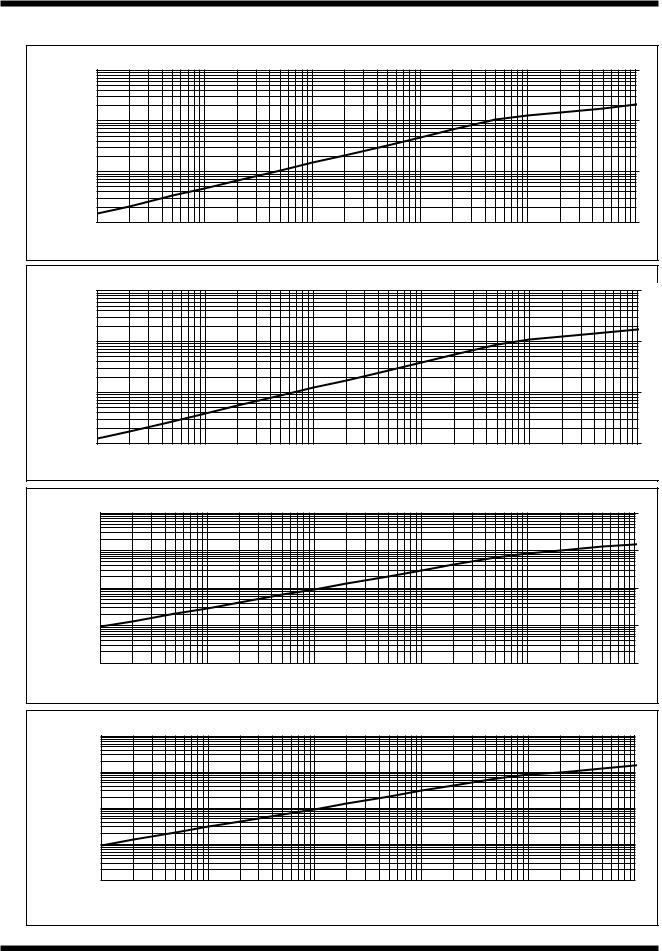
3.4 Transient Thermal Resistance Curves
STR-W6000S - DS Rev.2.0 SANKEN ELECTRIC CO.,LTD.8
Aug. 07, 2014
Page 10
STR-W6000S Series
UVLOOVPTSDREG
Brown-in
Brown-out
PWM OSC
OLP
Feedback
control
Slope
compensation
LEB
Drain peak current
compensation
OCP
Startup
DRV
VREG
6.4V
12.8V
7VVCC
VCC
BR
FB/OLP
D/ST
S/OCP
GND
1
3
5
6
7
4
SRQ
BD_STR-W6000S_R1
1
6
4
D/ST
S/OCP
VCC
GND
FB/OLP
BR
(LF2003)
3
5
7
Pin
Name
Descriptions
1
D/ST
MOSFET drain and startup current input
2
−
(Pin removed)
3
S/OCP
MOSFET source and overcurrent protection
(OCP) signal input
4
VCC
Power supply voltage input for control part and
overvoltage protection (OVP) signal input
5
GND
Ground
6
FB /OLP
Constant voltage control signal input and over
load protection (OLP) signal input
7
BR
Brown-In and Brown-Out detection voltage input
4. Functional Block Diagram
5. Pin Configuration Definitions
STR-W6000S - DS Rev.2.0 SANKEN ELECTRIC CO.,LTD.9
Aug. 07, 2014
Page 11
STR-W6000S Series
BR
GND
FB/OLP
S/OCP
VCC
D/ST
2
1
7
653 4
STR-W6000S
VAC
C1
C6 R1
D1
BR1
R2
C2
T1
D
P
PC1
C3
R
OCP
C
Y
CRD clamp snubber
C5
C(CR)
damper snubber
D2
C4
R
C
R
B
R
A
D51
C51
R51
R52
U51
R54
R56
C52
S
PC1
R53
R55
L51
C53
VOUT
(+)
TC_STR-W6000S_2_R1
(-)
BR
GND
FB/OLP
S/OCP
VCC
D/ST
2
1
7
653 4
STR-W6000S
VAC
C1
C6 R1
D1
BR1
R2
C2
T1
D
P
PC1
C3
R
OCP
C
Y
CRD clamp snubber
C5
C(RC)
damper snubber
D2
D51
C51
R51
R52
U51
R54
R56
C52
S
PC1
R53
R55
L51
C53
VOUT
(+)
TC_STR-W6000S_3_R1
(-)
6. Typical Application Circuit
The following drawings show circuits enabled and disabled the Brown-In/Brown-Out function.
The PCB traces D/ST pins should be as wide as possible, in order to enhance thermal dissipation.
In applications having a power supply specified such that D/ST pin has large transient surge voltages, a clamp
snubber circuit of a capacitor-resistor-diode (CRD) combination should be added on the primary winding P, or a
damper snubber circuit of a capacitor (C) or a resistor-capacitor (RC) combination should be added between the
D/ST pin and the S/OCP pin.
Figure 6-1 Typical application circuit (enabled Brown-In/Brown-Out function, DC line detection)
STR-W6000S - DS Rev.2.0 SANKEN ELECTRIC CO.,LTD.10
Aug. 07, 2014
3) Gate burr indicates protrusion of 0.3 mm (max).
4) Pb-free. Device composition compliant with the RoHS directive
2
1
7
Part Number
STR
W 6 0 × × S
Y M D D X
Lot Number
Y is the last digit of the year (0 to 9)
M is the month (1 to 9, O, N or D)
DD is a day (01 to 31)
X is the Sanken Control Symbol
3
7. Package Outline
TO220F-6L
The pin 2 is removed to provide greater creepage and clearance isolation between the high voltage pin (pin 1:
D/ST) and the low voltage pin (pin 3: S/OCP).
8. Marking Diagram
STR-W6000S - DS Rev.2.0 SANKEN ELECTRIC CO.,LTD.11
Aug. 07, 2014
Page 13
STR-W6000S Series
.)(minVV.)(maxV
)OVP(CCCC)BIAS(CC
⇒10.5 (V)
CCV
26 (V)
(1)
STRATUP
)INT(CC)ON(CC
START
I
VV
×C2t
-
(2)
VAC
C1
D2R2
C2
T1
D
P
BR1
VCC
GND
D/ST
1
5
4
U1
V
D
BR
7
V
CC(ON)
VCC pin
voltage
Drain current,
I
D
t
START
V
CC(ON)
VCC pin
voltage
Drain current,
I
D
t
START
BR pin
voltage
V
BR(IN)
V
CC(OFF)
9. Operational Description
All of the parameter values used in these descriptions
are typical values, unless they are specified as
minimum or maximum.
With regard to current direction, "+" indicates sink
current (toward the IC) and "–" indicates source
current (from the IC).
9.1 Startup Operation
Figure 9-1 shows the circuit around IC. Figure 9-2
shows the start up operation.
The IC incorporates the startup circuit. The circuit is
connected to D/ST pin. When D/ST pin voltage reaches
to Startup Circuit Operation Voltage V
startup circuit starts operation.
During the startup process, the constant current,
I
VCC pin voltage increases to V
= − 2.5 mA, charges C2 at VCC pin. When
STARTUP
CC(ON)
control circuit starts operation.
During the IC operation, the voltage rectified the
auxiliary winding voltage, VD, of Figure 9-1 becomes a
power source to the VCC pin. After switching operation
begins, the startup circuit turns off automatically so that
its current consumption becomes zero.
The approximate value of auxiliary winding voltage is
about 15 V to 20 V, taking account of the winding turns
of D winding so that VCC pin voltage becomes
Equation (1) within the specification of input and output
voltage variation of power supply.
= 40 V, the
ST(ON)
= 15.3 V, the
With Brown-In / Brown-Out function
When BR pin voltage is more than V
and less than V
= 5.6 V, the Bias Assist Function
BR(IN)
BR(DIS)
= 0.48 V
(refer to Section 9.3) is disabled. Thus, VCC pin
voltage repeats increasing to V
V
becomes V
(shown in Figure 9-3). When BR pin voltage
CC(OFF)
or more, the IC starts switching
BR(IN)
and decreasing to
CC(ON)
operation.
Figure 9-1 VCC pin peripheral circuit
(Without Brown-In / Brown-Out)
The oscillation start timing of IC depends on
Brown-In / Brown-Out function (refer to Section 9.8).
Figure 9-2 Startup operation
(Without Brown-In / Brown-Out)
Without Brown-In / Brown-Out function (BR pin
voltage is V
When VCC pin voltage increases to V
= 0.48 V or less)
BR(DIS)
CC(ON)
, the IC
starts switching operation, As shown in Figure 9-2.
The startup time of IC is determined by C2 capacitor
value. The approximate startup time t
START
(shown in
Figure 9-2) is calculated as follows:
where,
t
START
V
CC(INT)
: Startup time of IC (s)
: Initial voltage on VCC pin (V)
Figure 9-3 Startup operation
STR-W6000S - DS Rev.2.0 SANKEN ELECTRIC CO.,LTD.12
Aug. 07, 2014
(With Brown-In / Brown-Out)
Page 14
STR-W6000S Series
Circuit current, I
CC
I
CC(ON
)
V
CC(OFF
)
V
CC(ON
)
VCC pin
voltage
StartStop
IC starts operation
VCC pin
voltage
V
CC(ON)
V
CC(BIAS)
V
CC(OFF)
Startup failure
Startup success
Target operating
voltage
Time
Bias assist period
Increase with rising of
output voltage
PC1
C3
R
OCP
356
S/OCP
FB/OLP
GND
U1
I
FB
V
ROCP
V
SC
FB Comparator
Drain current,
I
D
+
-
Voltage on both
sides of R
OCP
V
ROCP
Target voltage including
Slope Compensation
9.2 Undervoltage Lockout (UVLO)
Figure 9-4 shows the relationship of VCC pin voltage
and circuit current ICC. When VCC pin voltage decreases
to V
= 8.1 V, the control circuit stops operation by
CC(OFF)
UVLO (Undervoltage Lockout) circuit, and reverts to
the state before startup.
Figure 9-4 Relationship between
VCC pin voltage and ICC
9.3 Bias Assist Function
Figure 9-5 shows VCC pin voltage behavior during
the startup period.
After VCC pin voltage increases to V
at startup, the IC starts the operation. Then circuit
current increases and VCC pin voltage decreases. At the
same time, the auxiliary winding voltage VD increases in
proportion to output voltage. These are all balanced to
produce VCC pin voltage.
CC(ON)
= 15.3 V
biasing voltage, V
= 9.5 V. While the Bias Assist
CC(BIAS)
function is activated, any decrease of the VCC pin
voltage is counteracted by providing the startup current,
I
, from the startup circuit. Thus, the VCC pin
STARTUP
voltage is kept almost constant.
By the Bias Assist function, the value of C2 is
allowed to be small and the startup time becomes shorter.
Also, because the increase of VCC pin voltage becomes
faster when the output runs with excess voltage, the
response time of the OVP function becomes shorter.
It is necessary to check and adjust the startup process
based on actual operation in the application, so that poor
starting conditions may be avoided.
9.4 Constant Output Voltage Control
The IC achieves the constant voltage control of the
power supply output by using the current-mode control
method, which enhances the response speed and
provides the stable operation.
The FB/OLP pin voltage is internally added the slope
compensation at the feedback control (refer to Section 4
Functional Block Diagram), and the target voltage, VSC,
is generated. The IC compares the voltage, V
current detection resistor with the target voltage, VSC, by
the internal FB comparator, and controls the peak value
of V
so that it gets close to VSC, as shown in Figure
ROCP
9-6 and Figure 9-7.
ROCP
, of a
Figure 9-6 FB/OLP pin peripheral circuit
Figure 9-5 VCC pin voltage during startup period
The surge voltage is induced at output winding at
turning off a power MOSFET. When the output load is
light at startup, the surge voltage causes the unexpected
feedback control. This results the lowering of the output
power and VCC pin voltage. When the VCC pin voltage
decreases to V
operation and a startup failure occurs. In order to prevent
this, the Bias Assist function is activated when the VCC
pin voltage decreases to the startup current threshold
STR-W6000S - DS Rev.2.0 SANKEN ELECTRIC CO.,LTD.13
Aug. 07, 2014
= 8.1 V, the IC stops switching
CC(OFF)
Figure 9-7 Drain current, ID, and FB comparator
operation in steady operation
Page 15
STR-W6000S Series
t
ON1
Target voltage
without Slope Compensation
t
ON2
TTT
Normal
operation
Standby
operation
Normal
operation
Burst oscillation
Output current,
I
OUT
Drain current,
I
D
Below several kHz
Light load conditions
When load conditions become lighter, the output
voltage, V
, increases. Thus, the feedback current
OUT
from the error amplifier on the secondary-side also
increases. The feedback current is sunk at the FB/OLP
pin, transferred through a photo-coupler, PC1, and the
FB/OLP pin voltage decreases. Thus, VSC decreases,
and the peak value of V
is controlled to be low,
ROCP
and the peak drain current of ID decreases.
This control prevents the output voltage from
increasing.
Heavy load conditions
When load conditions become greater, the IC
performs the inverse operation to that described above.
Thus, VSC increases and the peak drain current of ID
increases.
This control prevents the output voltage from
decreasing.
In the current mode control method, when the drain
current waveform becomes trapezoidal in continuous
operating mode, even if the peak current level set by the
target voltage is constant, the on-time fluctuates based
on the initial value of the drain current.
This results in the on-time fluctuating in multiples of
the fundamental operating frequency as shown in Figure
9-8. This is called the subharmonics phenomenon.
In order to avoid this, the IC incorporates the Slope
Compensation function. Because the target voltage is
added a down-slope compensation signal, which reduces
the peak drain current as the on-duty gets wider relative
to the FB/OLP pin signal to compensate VSC, the
subharmonics phenomenon is suppressed.
Even if subharmonic oscillations occur when the IC
has some excess supply being out of feedback control,
such as during startup and load shorted, this does not
affect performance of normal operation.
In peak-current-mode control method, there is a case
that the power MOSFET turns off due to unexpected
response of FB comparator or overcurrent protection
circuit (OCP) to the steep surge current in turning on a
power MOSFET.
In order to prevent this response to the surge voltage
in turning-on the power MOSFET, the Leading Edge
Blanking, t
= 390 ns is built-in. During tBW, the OCP
BW
threshold voltage becomes about 1.7 V which is higher
than the normal OCP threshold voltage (refer to Section
9.9).
9.6 Random Switching Function
The IC modulates its switching frequency randomly
by superposing the modulating frequency on f
OSC(AVG)
in
normal operation. This function reduces the conduction
noise compared to others without this function, and
simplifies noise filtering of the input lines of power
supply.
9.7 Automatic Standby Mode Function
Automatic standby mode is activated automatically
when the drain current, ID, reduces under light load
conditions, at which ID is less than 15 % to 20 % of the
maximum drain current (it is in the OCP state). The
operation mode becomes burst oscillation, as shown in
Figure 9-9. Burst oscillation mode reduces switching
losses and improves power supply efficiency because of
periodic non-switching intervals.
Figure 9-9 Auto Standby mode timing
Generally, to improve efficiency under light load
conditions, the frequency of the burst oscillation mode
Figure 9-8 Drain current, ID, waveform
in subharmonic oscillation
becomes just a few kilohertz. Because the IC suppresses
the peak drain current well during burst oscillation mode,
audible noises can be reduced.
If the VCC pin voltage decreases to V
CC(BIAS)
= 9.5 V
during the transition to the burst oscillation mode, the
9.5 Leading Edge Blanking Function
The IC uses the peak-current-mode control method
for the constant voltage control of output.
Bias Assist function is activated and stabilizes the
Standby mode operation, because I
STARTUP
is provided to
the VCC pin so that the VCC pin voltage does not
decrease to V
CC(OFF)
.
STR-W6000S - DS Rev.2.0 SANKEN ELECTRIC CO.,LTD.14
Aug. 07, 2014
Page 16
STR-W6000S Series
BR pin voltage
V
BR(IN)
V
BR(OUT)
t
OLP
Drain current,
I
D
V
DC
U1
BR
7
C4R
C
GND
5
R
B
R
A
V
AC
BR1
C1
C
BA
)TH(BR)OP(DC
R
RR
1VV
(3)
However, if the Bias Assist function is always
activated during steady-state operation including
standby mode, the power loss increases. Therefore, the
VCC pin voltage should be more than V
CC(BIAS)
, for
example, by adjusting the turns ratio of the auxiliary
winding and secondary winding and/or reducing the
value of R2 in Figure 10-2 (refer to Section 10.1
Peripheral Components for a detail of R2).
9.8 Brown-In and Brown-Out Function
This function stops switching operation when it
detects low input line voltage, and thus prevents
excessive input current and overheating.
This function turns on and off switching operation
according to the BR pin voltage detecting the AC input
voltage. When BR pin voltage becomes more than
V
and the drain currnet.
pin voltage is V
voltage decreases from steady-state and the BR pin
voltage falls to V
Delay Time, t
operation.
voltage reaches V
state that the VCC pin voltage is V
starts switching operation.
unnecessary, connect the BR pin trace to the GND pin
trace so that the BR pin voltage is V
stop period in burst oscillation mode. When the BR pin
voltage falls to V
and the sum of switching operation period becomes
t
= 0.48 V, this function is activated.
BR(DIS)
Figure 9-10 shows waveforms of the BR pin voltage
Even if the IC is in the operating state that the VCC
or more, when the AC input
CC(OFF)
= 4.8 V or less for the OLP
BR(OUT)
= 68 ms, the IC stops switching
OLP
When the AC input voltage increases and the BR pin
= 5.6 V or more in the operating
BR(IN)
or more, the IC
CC(OFF)
In case the Brown-In and Brown-Out function is
or less.
BR(DIS)
This function is disabled during switching operation
or less in burst oscillation mode
BR(OUT)
= 68 ms or more, the IC stops switching operation.
OLP
There are two types of detection method as follows:
9.8.1 DC Line Detection
Figure 9-11 shows BR pin peripheral circuit of DC
line detection. There is a ripple voltage on C1
occurring at a half period of AC cycle. In order to
detect each peak of the ripple voltage, the time
constant of RC and C4 should be shorter than a half
period of AC cycle.
Since the cycle of the ripple voltage is shorter than
t
, the switching operation does not stop when only
OLP
the bottom part of the ripple voltage becomes lower
than V
Thus it minimizes the influence of load conditions
on the voltage detection.
The components around BR pin:
・ RA and RB are a few megohms. Because of high
voltage applied and high resistance, it is
recommended to select a resistor designed against
electromigration or use a combination of resistors
in series for that to reduce each applied voltage,
according to the requirement of the application.
・ RC is a few hundred kilohms
・ C4 is 470 pF to 2200 pF for high frequency noise
reduction
Neglecting the effect of both input resistance and
forward voltage of rectifier diode, the reference value
of C1 voltage when Brown-In and Brown-Out
function is activated is calculated as follows:
.
BR(OUT)
Figure 9-11 DC line detection
Figure 9-10 BR pin voltage and drain current waveforms
where,
V
: C1 voltage when Brown-In and
V
DC(OP)
BR(TH)
Brown-Out function is activated
: Any one of threshold voltage of BR pin
(see Table 9-1)
STR-W6000S - DS Rev.2.0 SANKEN ELECTRIC CO.,LTD.15
Aug. 07, 2014
Page 17
STR-W6000S Series
Parameter
Symbol
Value
(Typ.)
Brown-In Threshold Voltage
V
BR(IN)
5.6 V
Brown-Out Threshold Voltage
V
BR(OUT)
4.8 V
)OP(DCRMS)OP(AC
V
2
1
V
(4)
V
DC
U1
BR
7
C4R
C
GND
5
R
B
R
A
V
AC
BR1
C1
VCC
4
R
S
C
BA
)TH(BRRMS)OP(AC
R
RR
1V
2
V
(5)
Surge pulse voltage width at turning on
t
BW
V
OCP
’
Table 9-1 BR pin threshold voltage
V
can be expressed as the effective value of AC
DC(OP)
input voltage using Equation (4).
RA, RB, RC and C4 should be selected based on actual
operation in the application.
9.8.2 AC Line Detection
Figure 9-12 shows BR pin peripheral circuit of AC
line detection.
In order to detect the AC input voltage, the time
constant of RC and C4 should be longer than the
period of AC cycle. Thus the response of BR pin
detection becomes slow compared with the DC line
detection.
This method detects the AC input voltage, and thus
it minimizes the influence from load conditions.
Neglecting the effect of input resistance is zero, the
reference effective value of AC input voltage when
Brown-In and Brown-Out function is activated is
calculated as follows:
where,
V
AC(OP)RMS
:The effective value of AC input voltage
when Brown-In and Brown-Out function
is activated
V
:Any one of threshold voltage of BR pin
BR(TH)
(see Table 9-1)
RA, RB, RC and C4 should be selected based on
actual operation in the application.
9.9 Overcurrent Protection Function
(OCP)
Overcurrent Protection Function (OCP) detects each
drain peak current level of a power MOSFET on
pulse-by-pulse basis, and limits the output power when
the current level reaches to OCP threshold voltage.
During Leading Edge Blanking Time (tBW), OCP is
disabled. When power MOSFET turns on, the surge
voltage width of S/OCP pin should be less than tBW, as
shown in Figure 9-13. In order to prevent surge voltage,
pay extra attention to R
).
In addition, if a C (RC) damper snubber of Figure
9-14 is used, reduce the capacitor value of damper
snubber.
trace layout (refer to Section
OCP
Figure 9-12 AC line detection
The components around BR pin:
・ RA and RB are a few megohms. Because of high
voltage applied and high resistance, it is
recommended to select a resistor designed against
electromigration or use a combination of resistors
in series for that to reduce each applied voltage,
according to the requirement of the application.
・ RC is a few hundred kilohms
・ RS must be adjusted so that the BR pin voltage is
more than V
voltage is V
・ C4 is 0.22 μF to 1 μF for averaging AC input
voltage and high frequency noise reduction.
STR-W6000S - DS Rev.2.0 SANKEN ELECTRIC CO.,LTD.16
Aug. 07, 2014
BR(DIS)
CC(OFF)
= 0.48 V when the VCC pin
= 8.1 V
Figure 9-13 S/OCP pin voltage
Page 18
STR-W6000S Series
C1
T1
D51
R
OCP
U1
C51
C(RC)
Damper snubber
1
D/ST
S/OCP
3
C(RC)
Damper snubber
OCP Threshold Voltage after
compensation, V
OCP
'
ON Duty (%)
D
DPC
V
OCP(L)
0
100
V
OCP(H)
0.5
1.0
50
D
MAX
ONTimeDPCV'V
)L(OCPOCP
)AVG(OSC
)L(OCP
f
ONDuty
DPCV
(6)
PC1
C3
6
FB/OLP
U1
VCC
4
GND
3
D2
R2
C2
D
VCC pin voltage
FB/OLP pin voltage
Drain current,
I
D
V
CC(OFF)
V
FB(OLP)
t
OLP
V
CC(ON)
Non-switching interval
t
OLP
where,
V
: OCP Threshold Voltage at Zero ON Duty
OCP(L)
DPC: OCP Compensation Coefficient
ONTime: On-time of power MOSFET
ONDuty: On duty of power MOSFET
f
OSC(AVG)
: Average PWM Switching Frequency
Figure 9-14 Damper snubber
< Input Compensation Function >
ICs with PWM control usually have some propagation
delay time. The steeper the slope of the actual drain
current at a high AC input voltage is, the larger the
detection voltage of actual drain peak current is,
compared to V
. Thus, the peak current has some
OCP
variation depending on the AC input voltage in OCP
state.
In order to reduce the variation of peak current in
OCP state, the IC incorporates a built-in Input
Compensation function.
The Input Compensation Function is the function of
correction of OCP threshold voltage depending with AC
input voltage, as shown in Figure 9-15.
When AC input voltage is low (ON Duty is broad),
the OCP threshold voltage is controlled to become high.
The difference of peak drain current become small
compared with the case where the AC input voltage is
high (ON Duty is narrow).
The compensation signal depends on ON Duty. The
relation between the ON Duty and the OCP threshold
voltage after compensation V
' is expressed as
OCP
Equation (6). When ON Duty is broader than 36 %, the
V
' becomes a constant value V
OCP
OCP(H)
= 0.88 V
9.10 Overload Protection Function (OLP)
Figure 9-16 shows the FB/OLP pin peripheral circuit,
and Figure 9-17 shows each waveform for OLP
operation.
Figure 9-16 FB/OLP pin peripheral circuit
Figure 9-17 OLP operational waveforms
Figure 9-15 Relationship between ON Duty and Drain
STR-W6000S - DS Rev.2.0 SANKEN ELECTRIC CO.,LTD.17
Aug. 07, 2014
Current Limit after compensation
When the peak drain current of ID is limited by OCP
operation, the output voltage, V
feedback current from the secondary photo-coupler
becomes zero. Thus, the feedback current, IFB, charges
, decreases and the
OUT
C3 connected to the FB/OLP pin and the FB/OLP pin
voltage increases. When the FB/OLP pin voltage
Page 19
STR-W6000S Series
)NORMAL(CC
)NORMAL(OUT
OUT(OVP)
V
V
V
29 (V)
(7)
VCC pin voltage
Drain current,
I
D
V
CC(OFF)
V
CC(ON)
V
CC(OVP)
VAC
C1
C6R1
D1
D2 R2
C2
T1
D
P
PC1
C3
R
OCP
BR1
C5
BR
GND
FB/OLP
S/OCP
VCC
D/ST
2
1
7
653 4
U1
R
C
C4
R
A
R
B
CRD clamp snubber
C(RC)
damper
snubber
increases to V
time, t
= 68 ms or more, the OLP function is
OLP
= 8.1 V or more for the OLP delay
FB(OLP)
activated, the IC stops switching operation.
During OLP operation, Bias Assist Function is
disabled. Thus, VCC pin voltage decreases to V
CC(OFF)
the control circuit stops operation. After that, the IC
reverts to the initial state by UVLO circuit, and the IC
starts operation when VCC pin voltage increases to
V
by startup current. Thus the intermittent
CC(ON)
operation by UVLO is repeated in OLP state.
This intermittent operation reduces the stress of parts
such as power MOSFET and secondary side rectifier
diode. In addition, this operation reduces power
consumption because the switching period in this
intermittent operation is short compared with oscillation
stop period. When the abnormal condition is removed,
the IC returns to normal operation automatically.
9.11 Overvoltage Protection (OVP)
When a voltage between VCC pin and GND pin
increases to V
activated, the IC stops switching operation. During OVP
operation, the Bias Assist function is disabled, the
intermittent operation by UVLO is repeated (refer to
Section 9.10). When the fault condition is removed, the
IC returns to normal operation automatically (refer to
Figure 9-18).
In case the VCC pin voltage is provided by using
auxiliary winding of transformer, the overvoltage
conditions such as output voltage detection circuit open
can be detected because the VCC pin voltage is
proportional to output voltage. The approximate value of
output voltage V
by using Equation (7).
= 29 V or more, OVP function is
CC(OVP)
OUT(OVP)
in OVP condition is calculated
9.12 Thermal Shutdown Function (TSD)
When the temperature of control circuit increases to
T
= 130 °C or more, Thermal Shutdown function
j(TSD)
(TSD) is activated, the IC stops switching operation.
,
During TSD operation, the Bias Assist function is
disabled, the intermittent operation by UVLO is repeated
(refer to Section 9.10). When the fault condition is
removed and the temperature decreases to less than
T
, the IC returns to normal operation automatically.
j(TSD)
10. Design Notes
10.1 External Components
Take care to use properly rated, including derating as
necessary and proper type of components.
Figure 10-1 The IC peripheral circuit
Input and Output Electrolytic Capacitor
Apply proper derating to ripple current, voltage, and
temperature rise. Use of high ripple current and low
where,
V
OUT(NORMAL)
V
CC(NORMAL)
: Output voltage in normal operation
: VCC pin voltage in normal operation
impedance types, designed for switch mode power
supplies, is recommended.
S/OCP Pin Peripheral Circuit
In Figure 10-1, R
is the resistor for the current
OCP
detection. A high frequency switching current flows
to R
, and may cause poor operation if a high
OCP
inductance resistor is used. Choose a low inductance
and high surge-tolerant type.
VCC Pin Peripheral Circuit
The value of C2 in Figure 10-1 is generally
Figure 9-18 OVP operational waveforms
recommended to be 10µ to 47μF (refer to Section 9.1
Startup Operation, because the startup time is
determined by the value of C2).
In actual power supply circuits, there are cases in
which the VCC pin voltage fluctuates in proportion to
the output current, I
(see Figure 10-2), and the
OUT
Overvoltage Protection function (OVP) on the VCC
STR-W6000S - DS Rev.2.0 SANKEN ELECTRIC CO.,LTD.18
Aug. 07, 2014
Page 20
STR-W6000S Series
Without R2
With R2
VCC pin voltage
Output current, I
OUT
D51
C51
R51
R52
U51
R54
R56
C52
S
PC1
R53
R55
L51
C53
VOUT
(-)
T1
(+)
pin may be activated. This happens because C2 is
charged to a peak voltage on the auxiliary winding D,
which is caused by the transient surge voltage coupled
from the primary winding when the power MOSFET
turns off.
For alleviating C2 peak charging, it is effective to add
some value R2, of several tenths of ohms to several
ohms, in series with D2 (see Figure 10-1). The
optimal value of R2 should be determined using a
transformer matching what will be used in the actual
application, because the variation of the auxiliary
winding voltage is affected by the transformer
structural design.
Figure 10-2 Variation of VCC pin voltage and power
・ A damper snubber circuit of a capacitor (C) or a
resistor-capacitor (RC) combination should be
added between the D/ST pin and the S/OCP pin.
In case the damper snubber circuit is added, this
components should be connected near D/ST pin
and S/OCP pin.
Peripheral circuit of secondary side shunt regulator
Figure 10-3 shows the secondary side detection circuit
with the standard shunt regulator IC (U51).
C52 and R53 are for phase compensation. The value
of C52 and R53 are recommended to be around
0.047μF to 0.47μF and 4.7 kΩ to 470 kΩ, respectively.
They should be selected based on actual operation in
the application.
FB/OLP Pin Peripheral Circuit
BR pin peripheral circuit
Because RA and RB (see Figure 10-1) are applied high
voltage and are high resistance, the following should be
considered according to the requirement of the
application:
See the section 9.8 about the AC input voltage
detection function and the components around BR pin.
When the detection resistor (RA, RB, RC) value is
decreased and the C4 value is increased to prevent
unstable operation resulting from noise at the BR pin,
pay attention to the low efficiency and the slow
response of BR pin.
Snubber Circuit
STR-W6000S - DS Rev.2.0 SANKEN ELECTRIC CO.,LTD.19
Aug. 07, 2014
C3 is for high frequency noise reduction and phase
compensation, and should be connected close to these
pins. The value of C3 is recommended to be about
2200 pF to 0.01µF, and should be selected based on
actual operation in the application.
▫ Select a resistor designed against electromigration,
or
▫ Use a combination of resistors in series for that to
reduce each applied voltage
In case the surge voltage of VDS is large, the circuit
should be added as follows (see Figure 10-1);
・ A clamp snubber circuit of a capacitor-resistor-
diode (CRD) combination should be added on the
primary winding P.
Figure 10-3 Peripheral circuit of secondary side shunt
regulator (U51)
Transformer
Apply proper design margin to core temperature rise
by core loss and copper loss.
Because the switching currents contain high
frequency currents, the skin effect may become a
consideration.
Choose a suitable wire gauge in consideration of the
RMS current and a current density of 4 to 6 A/mm2.
If measures to further reduce temperature are still
necessary, the following should be considered to
increase the total surface area of the wiring:
▫ Increase the number of wires in parallel.
▫ Use litz wires.
▫ Thicken the wire gauge.
In the following cases, the surge of VCC pin
voltage becomes high.
▫ The surge voltage of primary main winding, P, is
high (low output voltage and high output current
power supply designs)
▫ The winding structure of auxiliary winding, D, is
susceptible to the noise of winding P.
Page 21
STR-W6000S Series
Margin tape
Margin tape
Margin tape
Margin tape
P1 S1 P2 S2 D
P1 S1 D S2 S1 P2
Winding structural example (a)
Winding structural example (b)
BobbinBobbin
When the surge voltage of winding D is high, the
VCC pin voltage increases and the Overvoltage
Protection function (OVP) may be activated. In
transformer design, the following should be
considered;
▫ The coupling of the winding P and the secondary
output winding S should be maximized to reduce the
leakage inductance.
▫ The coupling of the winding D and the winding S
should be maximized.
▫ The coupling of the winding D and the winding P
should be minimized.
In the case of multi-output power supply, the
coupling of the secondary-side stabilized output
winding, S1, and the others (S2, S3…) should be
maximized to improve the line-regulation of those
outputs.
Figure 10-4 shows the winding structural examples
of two outputs.
Winding structural example (a):
S1 is sandwiched between P1 and P2 to
maximize the coupling of them for surge
reduction of P1 and P2.
D is placed far from P1 and P2 to minimize the
coupling to the primary for the surge reduction of
D.
Winding structural example (b)
P1 and P2 are placed close to S1 to maximize the
coupling of S1 for surge reduction of P1 and P2.
D and S2 are sandwiched by S1 to maximize the
coupling of D and S1, and that of S1 and S2.
This structure reduces the surge of D, and
improves the line-regulation of outputs.
10.2 PCB Trace Layout and Component
Placement
Since the PCB circuit trace design and the component
layout significantly affects operation, EMI noise, and
power dissipation, the high frequency PCB trace should
be low impedance with small loop and wide trace.
In addition, the ground traces affect radiated EMI noise,
and wide, short traces should be taken into account.
Figure 10-5 shows the circuit design example.
(1) Main Circuit Trace Layout
This is the main trace containing switching currents,
and thus it should be as wide trace and small loop as
possible.
If C1 and the IC are distant from each other, placing
a capacitor such as film capacitor (about 0.1 μF and
with proper voltage rating) close to the transformer
or the IC is recommended to reduce impedance of
the high frequency current loop.
(2) Control Ground Trace Layout
Since the operation of IC may be affected from the
large current of the main trace that flows in control
ground trace, the control ground trace should be
separated from main trace and connected at a single
point grounding of point A in Figure 10-5 as close to
the R
(3) VCC Trace Layout
This is the trace for supplying power to the IC, and
thus it should be as small loop as possible. If C2 and
the IC are distant from each other, placing a
capacitor such as film capacitor Cf (about 0.1 μF to
1.0 μF) close to the VCC pin and the GND pin is
recommended.
(4) R
R
S/OCP pin. The connection between the power
ground of the main trace and the IC ground should
be at a single point ground (point A in Figure 10-5)
which is close to the base of R
pin as possible.
OCP
Trace Layout
OCP
should be placed as close as possible to the
OCP
.
OCP
STR-W6000S - DS Rev.2.0 SANKEN ELECTRIC CO.,LTD.20
Aug. 07, 2014
Figure 10-4 Winding structural examples
(5) Peripheral components of the IC
The components for control connected to the IC
should be placed as close as possible to the IC, and
should be connected as short as possible to the each
pin.
(6) Secondary Rectifier Smoothing Circuit Trace
Layout:
This is the trace of the rectifier smoothing loop,
carrying the switching current, and thus it should be
as wide trace and small loop as possible. If this trace
is thin and long, inductance resulting from the loop
may increase surge voltage at turning off the power
MOSFET. Proper rectifier smoothing trace layout
helps to increase margin against the power MOSFET
Page 22
STR-W6000S Series
BR
GND
FB/OLP
S/OCP
VCC
D/ST
2
1
7
653 4
C1
C6R1
D1
R2
C2
T1
D
P
PC1
C3
R
OCP
C
Y
C5
D2
C4
R
C
D51
C51
S
A
U1
R
A
R
B
(1)Main trace should be wide
trace and small loop
(6)Main trace of secondary side should
be wide trace and small loop
(7)Trace of D/ST pin should be
wide for heat release
(2) Control GND trace should be
connected at a single point as
close to the R
OCP
as possible
(4)R
OCP
should be as
close to S/OCP pin
as possible.
(5)The components connected to the IC should
be as close to the IC as possible, and should
be connected as short as possible
(3) Loop of the power
supply should be small
breakdown voltage, and reduces stress on the clamp
snubber circuit and losses in it.
(7) Thermal Considerations
Because the power MOSFET has a positive thermal
coefficient of R
, consider it in thermal design.
DS(ON)
Since the copper area under the IC and the D/ST pin
trace act as a heatsink, its traces should be as wide as
possible.
Figure 10-5 Peripheral circuit example around the IC
STR-W6000S - DS Rev.2.0 SANKEN ELECTRIC CO.,LTD.21
Aug. 07, 2014
Page 23
STR-W6000S Series
2
CN1
C5
T1
D51
R52
Z51
D
P1
S1
PC1
1
L51
C54
R53
F1
1
3
C1
TH1
L1
8
7
C6
C10
C11
C7
C13
C12
D1
D2
D3R2
R5
R1
D52
C52
C55
C57
R51
R54
R55
R56
R59
R58
R57
R62
PC1
C51
C56
C4
OUT1(+)
OUT1(-)
L52
C59
C2
C3
JW1
JW51
TK1
JW3
BR
GND
FB/OLP
S/OCP
VCC
D/ST
2
1
7
653 4
STR-W6000S
Z1
C8
D4
S2
3
4
D56
C65
R66
C64
CN51
S3
C53
JW59
JW52
JW61
JW53
JW57
JW58
D53
Z52
R60
R61
5
6
D54
C61
R65
C60
L53
C63
JW54
D55
Z54
R63
R64
C58
C62
JW56
Z53
JW55
S4
OUT2(+)
OUT3(+)
OUT4(+)
OUT2(-)
OUT3(-)
OUT4(-)
TK2
11. Pattern Layout Example
The following show the PCB pattern layout example and the schematic of the four outputs circuit using
STR-W6000S series without Brown-In and Brown-Out function.
The above circuit symbols correspond to these of Figure 11-1. Only the parts in the schematic are used. Other parts
in PCB are leaved open. C11 and D4 are shorted.
Figure 11-1 PCB circuit trace layout example
STR-W6000S - DS Rev.2.0 SANKEN ELECTRIC CO.,LTD.22
Aug. 07, 2014
Figure 11-2 Circuit schematic for PCB circuit trace layout
Page 24
STR-W6000S Series
IC
STR-W6053S
Input voltage
AC85 V to AC265 V
Maximum output power
56 W (70.4 W
PEAK
)
Output 1
8 V / 2.5 A
Output 2
12 V / 3 A (4.2 A
PEAK
)
BR
GND
FB/OLP
S/OCP
VCC
D/ST
2
1
7
653 4
U1
VAC
C3
C4R1
D1
BR1
R3
C6
T1
D
P1
PC1
C7
R2
C9
C5
D2
C8
R5
F1
C1C2
L1
TH1
D51
R51
U51
R56
S3
PC1
L51
8V/2.5A
C52
R52
R53
C53
R55
R54
C51
S1
S2
C55
D52
C54
C56
12V/4.2A
C57
P2
R57
VDC
R6
R7
R4
TC_STR-W6000S_4_R1
OUT1(+)
OUT1(-)
OUT2(+)
OUT2(-)
Symbol
Part type
Ratings
(1)
Recommended
Sanken Parts
Symbol
Part type
Ratings
(1)
Recommended
Sanken Parts
F1 Fuse
AC 250 V, 6 A
PC1 Photo-coupler
PC123 or equiv
L1
(2)
CM inductor
2.2 mH
U1 IC - STR-W6053S
TH1
(2)
NTC thermistor
Short T1 Transformer
See
the specification
BR1 General
600 V, 6 A
L51 Inductor
5 μH D1 Fast recovery
1000 V, 0.5 A
EG01C
D51 Schottky
100 V, 10 A
FMEN-210A
D2 Fast recovery
200 V, 1 A
AL01Z
D52 Fast recovery
150 V, 10 A
FMEN-210B
C1
(2)
Film, X2
0.1 μF, 275 V
C51
(2)
Ceramic
470 pF, 1 kV
C2
(2)
Film, X2
0.1 μF, 275 V
C52 Electrolytic
1000 μF, 16 V
C3 Electrolytic
220 μF, 400 V
C53
(2)
Ceramic
0.15 μF, 50 V
C4 Ceramic
3300 pF, 2 kV
C54 Electrolytic
1000 µF, 16 V
C5
(2)
Ceramic
Open
C55
(2)
Ceramic
470 pF, 1 kV
C6 Electrolytic
22 μF, 50V
C56 Electrolytic
1500 μF, 25 V
C7
(2)
Ceramic
0.01 μF
C57 Electrolytic
1500 μF, 25 V
C8
(2)
Ceramic
1000 pF
R51 General
1.5 kΩ
C9 Ceramic, Y1
2200 pF, 250 V
R52 General
1 kΩ R1
(3)
Metal oxide
56 kΩ, 2 W
R53
(2)
General
33 kΩ
R2 General
0.27 Ω, 1 W
R54
(2)
General, 1%
3.9 kΩ
R3 General
5.6 Ω
R55 General, 1%
22 kΩ
R4
(3)
General
2.2MΩ
R56 General, 1%
6.8 kΩ
R5
(3)
General
2.2MΩ
R57 General
Open
R6
(3)
General
2.2MΩ
U51 Shunt regulator
V
REF
= 2.5 V
TL431or equiv
R7
(2)
General
470kΩ
12. Reference Design of Power Supply
As an example, the following show the power supply specification, the circuit schematic, the bill of materials, and
the transformer specification.
Power supply specification
Circuit schematic
Bill of materials
(1)
Unless otherwise specified, the voltage rating of capacitor is 50 V or less and the power rating of resistor is 1/8 W or less.
(2)
It is necessary to be adjusted based on actual operation in the application.
(3)
Resistors applied high DC voltage and of high resistance are recommended to select resistors designed against electromigration or use
STR-W6000S - DS Rev.2.0 SANKEN ELECTRIC CO.,LTD.23
Aug. 07, 2014
combinations of resistors in series for that to reduce each applied voltage, according to the requirement of the application.
Page 25
STR-W6000S Series
Winding
Symbol
Number of
turns (T)
Wire diameter
(mm)
Construction
Primary winding 1
P1
26
TEX – φ 0.35 × 2
Two-layers,
solenoid winding
Primary winding 2
P2
18
TEX – φ 0.35 × 2
Single-layer,
solenoid winding
Auxiliary winding
D
10
TEX – φ 0.23 × 2
Single-layer,
space winding
Output winding 1
S1
7
φ 0.4 × 4
Single-layer,
space winding
Output winding 2
S2
7
φ 0.4 × 4
Single-layer,
space winding
Output winding 3
S3
5
φ 0.4 × 4
Single-layer,
space winding
●: Start at this pin
Cross-section view
Bobbin
D
S1
P1
VDC
D/ST
VCC
GND
12V
S2
S1
P2
S3
P2
S3
8V
S2
D
P1
OUT1(+)
OUT1(-)
OUT2(+)
OUT2(-)
Transformer specification
▫ Primary inductance, LP :LP:315 μH
▫ Core size :EER28L
▫ Al-value :163 nH/N2 (Center gap of about 0.8 mm)
▫ Winding specification
STR-W6000S - DS Rev.2.0 SANKEN ELECTRIC CO.,LTD.24
Aug. 07, 2014
Page 26
STR-W6000S Series
Type
Suppliers
G746
Shin-Etsu Chemical Co., Ltd.
YG6260
Momentive Performance Materials Japan LLC
SC102
Dow Corning Toray Co., Ltd.
OPERATING PRECAUTIONS
In the case that you use Sanken products or design your products by using Sanken products, the reliability largely
depends on the degree of derating to be made to the rated values. Derating may be interpreted as a case that an operation
range is set by derating the load from each rated value or surge voltage or noise is considered for derating in order to
assure or improve the reliability. In general, derating factors include electric stresses such as electric voltage, electric
current, electric power etc., environmental stresses such as ambient temperature, humidity etc. and thermal stress caused
due to self-heating of semiconductor products. For these stresses, instantaneous values, maximum values and minimum
values must be taken into consideration. In addition, it should be noted that since power devices or IC’s including power
devices have large self-heating value, the degree of derating of junction temperature affects the reliability significantly.
Because reliability can be affected adversely by improper storage environments and handling methods, please
observe the following cautions.
Cautions for Storage
Ensure that storage conditions comply with the standard temperature (5 to 35°C) and the standard relative humidity
(around 40 to 75%); avoid storage locations that experience extreme changes in temperature or humidity.
Avoid locations where dust or harmful gases are present and avoid direct sunlight.
Reinspect for rust on leads and solderability of the products that have been stored for a long time.
Cautions for Testing and Handling
When tests are carried out during inspection testing and other standard test periods, protect the products from power
surges from the testing device, shorts between the product pins, and wrong connections. Ensure all test parameters are
within the ratings specified by Sanken for the products.
Remarks About Using Thermal Silicone Grease
When thermal silicone grease is used, it shall be applied evenly and thinly. If more silicone grease than required is
applied, it may produce excess stress.
The thermal silicone grease that has been stored for a long period of time may cause cracks of the greases, and it
cause low radiation performance. In addition, the old grease may cause cracks in the resin mold when screwing the
products to a heatsink.
Fully consider preventing foreign materials from entering into the thermal silicone grease. When foreign material
is immixed, radiation performance may be degraded or an insulation failure may occur due to a damaged insulating
plate.
The thermal silicone greases that are recommended for the resin molded semiconductor should be used.
Our recommended thermal silicone grease is the following, and equivalent of these.
Cautions for Mounting to a Heatsink
When the flatness around the screw hole is insufficient, such as when mounting the products to a heatsink that has
an extruded (burred) screw hole, the products can be damaged, even with a lower than recommended screw torque.
For mounting the products, the mounting surface flatness should be 0.05mm or less.
Please select suitable screws for the product shape. Do not use a flat-head machine screw because of the stress to
the products. Self-tapping screws are not recommended. When using self-tapping screws, the screw may enter the
hole diagonally, not vertically, depending on the conditions of hole before threading or the work situation. That
may stress the products and may cause failures.
Recommended screw torque: 0.588 to 0.785 N・m (6 to 8 kgf・cm).
For tightening screws, if a tightening tool (such as a driver) hits the products, the package may crack, and internal
stress fractures may occur, which shorten the lifetime of the electrical elements and can cause catastrophic failure.
Tightening with an air driver makes a substantial impact. In addition, a screw torque higher than the set torque can
be applied and the package may be damaged. Therefore, an electric driver is recommended.
When the package is tightened at two or more places, first pre-tighten with a lower torque at all places, then tighten
with the specified torque. When using a power driver, torque control is mandatory.
STR-W6000S - DS Rev.2.0 SANKEN ELECTRIC CO.,LTD.25
Aug. 07, 2014
Page 27
STR-W6000S Series
Soldering
When soldering the products, please be sure to minimize the working time, within the following limits:
• 260 ± 5 °C 10 ± 1 s (Flow, 2 times)
• 380 ± 10 °C 3.5 ± 0.5 s (Soldering iron, 1 time)
Soldering should be at a distance of at least 1.5 mm from the body of the products.
Electrostatic Discharge
When handling the products, the operator must be grounded. Grounded wrist straps worn should have at least 1MΩ
of resistance from the operator to ground to prevent shock hazard, and it should be placed near the operator.
Workbenches where the products are handled should be grounded and be provided with conductive table and floor
mats.
When using measuring equipment such as a curve tracer, the equipment should be grounded.
When soldering the products, the head of soldering irons or the solder bath must be grounded in order to prevent
leak voltages generated by them from being applied to the products.
The products should always be stored and transported in Sanken shipping containers or conductive containers, or
be wrapped in aluminum foil.
IMPORTANT NOTES
The contents in this document are subject to changes, for improvement and other purposes, without notice. Make
sure that this is the latest revision of the document before use.
Application examples, operation examples and recommended examples described in this document are quoted for
the sole purpose of reference for the use of the products herein and Sanken can assume no responsibility for any
infringement of industrial property rights, intellectual property rights, life, body, property or any other rights of
Sanken or any third party which may result from its use.
Unless otherwise agreed in writing by Sanken, Sanken makes no warranties of any kind, whether express or
implied, as to the products, including product merchantability, and fitness for a particular purpose and special
environment, and the information, including its accuracy, usefulness, and reliability, included in this document.
Although Sanken undertakes to enhance the quality and reliability of its products, the occurrence of failure and
defect of semiconductor products at a certain rate is inevitable. Users of Sanken products are requested to take, at
their own risk, preventative measures including safety design of the equipment or systems against any possible
injury, death, fires or damages to the society due to device failure or malfunction.
Sanken products listed in this document are designed and intended for the use as components in general purpose
electronic equipment or apparatus (home appliances, office equipment, telecommunication equipment, measuring
equipment, etc.).
When considering the use of Sanken products in the applications where higher reliability is required (transportation
equipment and its control systems, traffic signal control systems or equipment, fire/crime alarm systems, various
safety devices, etc.), and whenever long life expectancy is required even in general purpose electronic equipment
or apparatus, please contact your nearest Sanken sales representative to discuss, prior to the use of the products
herein.
The use of Sanken products without the written consent of Sanken in the applications where extremely high
reliability is required (aerospace equipment, nuclear power control systems, life support systems, etc.) is strictly
prohibited.
When using the products specified herein by either (i) combining other products or materials therewith or (ii)
physically, chemically or otherwise processing or treating the products, please duly consider all possible risks that
may result from all such uses in advance and proceed therewith at your own responsibility.
Anti radioactive ray design is not considered for the products listed herein.
Sanken assumes no responsibility for any troubles, such as dropping products caused during transportation out of
Sanken’s distribution network.
The contents in this document must not be transcribed or copied without Sanken’s written consent.
STR-W6000S - DS Rev.2.0 SANKEN ELECTRIC CO.,LTD.26
Aug. 07, 2014
Loading...
+ hidden pages
You need points to download manuals.
1 point = 1 manual.
You can buy points or you can get point for every manual you upload.