

Page 1
Owner’s
Manual
For Maximum Effectiveness And
Safety, Please Review this
Owner’s Manual, View the video,
and for Healthy Eating Tips refer
to the Jump Start Section.
Page 2

TABLE OF CONTENTS
®
©2005 Fitness Quest Inc. All rights reserved.
Ab Lounge® and Fitness Quest®are registered trademarks of Fitness Quest Inc. U.S. Patent #5,681,250.
Ab Lounge™ XL System, Ab Lounge™ XL Workout, Focus Strap™ and Iso-Grip™ are trademarks of
Fitness Quest Inc.
No part of this booklet may be reproduced or utilized in any form or by any means electronic, mechanical
or otherwise without the expressed written consent of the copyright holder.
10/17/05
OWNER’S MANUAL
Important Safety Information ...............................................2
Equipment Warning & Caution Labels .................................3
Specifications & Parts ..........................................................3
Introduction ..........................................................................4
Assembly Instructions.......................................................5-6
Folding Instructions..............................................................7
Parts List & Exploded View ..................................................8
Exercise Guidelines.........................................................9-10
Warm Up & Cool Down Stretches ................................11-12
Ab Lounge™XL System .....................................................13
Ab Lounge™XL Workout ..............................................13-14
Care & Storage...................................................................14
Getting Started on Your Ab Lounge®XL Equipment .........15
Ab Lounge®XL Exercises.............................................16-18
Ab Lounge™XL Workout Tracking Sheets.........................19
Cardiovascular Conditioning.........................................19-20
Progressive Cardiovascular Training Program ...................21
Cardio Workout Tracking Sheets........................................22
JUMP START DIET ......................................................23-28
Workout Progress Chart ...........................Inside Back Cover
Page 3
-------- 2 --------
IMPORTANT SAFETY INFORMATION
1) Before starting this or any other exercise
program, consult your physician.
Your physician
should assist you in determining the target heart rate
zone appropriate for your age and physical condition.
Certain exercise programs or types of equipment may
not be appropriate for all people. This is especially
important for people over the age of 35, pregnant
women, or those with pre-existing health problems
or balance impairments.
If you are taking medication
which may affect your heart rate,
a physician's advice
is absolutely essential.
2) Start out slowly and progress sensibly.
Even if you are an experienced exerciser, start with the
basic workout and become familiar with all of the exercises before moving on to more advanced workouts or
exercises. For best results, perform all of the exercises
at the tempo demonstrated in the video.
3) Do not overexert yourself with this or any other
exercise program.
Listen to your body and respond to
any reactions you may be having. You must learn to
distinguish “good” pain, like fatigue, from “bad” pain,
which hurts.
If you experience any pain or tightness
in your chest, an irregular heartbeat, dizziness,
nausea, or shortness of breath, stop exercising at
once and consult your physician immediately.
4) Warm up
before any exercise program by doing 5 to 10
minutes of aerobic activity, followed by stretching.
5) Inspect the equipment. Before EACH use, visually
inspect the equipment including stitching, fabric, frame
and pivot area.
Do not use unit if you detect any
tearing, fraying or cuts on fabric.
Do not use unit if
any pivoting assembly is not working properly.
NEVER operate the equipment if the equipment is
not functioning properly.
6) USE CARE when getting on and off the equipment.
Set up and use your equipment on a solid, level,
carpeted surface. Follow the instructions demonstrated
in your video and on page 15 in this manual for proper
entry and exit techniques.
7) Use this equipment ONLY for the intended use
as described in this manual. Do not modify the
equipment or use attachments not recommended
by the manufacturer.
8) Have plenty of clearance behind and in front of
your equipment.
It is important to keep children,
pets, furniture and other objects out of the way when
using your equipment. You should have a minimum
of 3 feet of clearance both in front of and behind
your equipment.
9) Wear appropriate clothing when exercising.
Workout clothing should be comfortable and
lightweight, and should allow freedom of movement.
Wear comfortable athletic shoes made of good
support with non-slip soles, such as running or
aerobic shoes. Do not use this product with bare
feet or when wearing only socks or stockings.
10) THIS EQUIPMENT IS NOT FOR USE BY CHILDREN.
To prevent injuries, keep this and all fitness
equipment out of the reach of children.
Follow these simple rules:
– Keep children out of rooms where you have
your exercise equipment.
– Store exercise equipment in a room that
can be locked.
– Know exactly where your children are when
you work out.
– If you have small children at home, don’t wear
headphones while you work out.
– Talk to your kids about the dangers of exercise
equipment.
11) Breathe naturally, never holding your breath during
an exercise. Avoid over training, you should be able to
carry on a conversation while exercising.
12) Cool down after an exercise session, with 5 to10
minutes of slow walking, followed by stretching.
13) Handicapped or disabled people must have
medical approval
before using this equipment and
should be under close supervision when using any
exercise equipment.
14) Only one person at a time should use this
equipment.
15) DO NOT put hands, feet, or any foreign objects
on or near this equipment when in use by others.
Use caution not to pinch fingers or hands in
moving parts when folding, setting up, or using
the equipment.
WARNING
YOU AND OTHERS CAN BE SERIOUSLY INJURED
OR KILLED IF WARNINGS ON THE EQUIPMENT, IN THIS
OWNER’S MANUAL AND VIDEO ARE NOT FOLLOWED.
Go to www.fitnessquest.com
or call 1-800-497-5831 for
replacement labels, manuals or video(s).
Page 4
-------- 27 --------
JUMP START DIET
DINNER CONTINUED
8 oz. water
3 oz. pork chop, lean only, baked, broiled or grilled
1 small baked potato
1 tsp. butter
1 cup green beans
1 large salad made with mixed greens
1 tsp. olive oil with flavored vinegar (no need to
measure vinegar) or 1 Tbsp. regular dressing
8 oz. water
1 piece (3 oz.) turkey baked, broiled or grilled. Brush lightly
with olive oil and favorite seasonings before cooking.
1 small baked potato with 1 tsp. butter
1 cup broccoli
8 oz. water
1 cup vegetable soup
6 crackers
2 oz. lean ham
1/2 large whole grain pita with mustard
2 sliced carrots
8 oz. water
3 oz. lean hamburger, grilled or broiled
1 Tbsp. ketchup
1 hamburger bun, tomato, lettuce, pickle and
onion if desired
8 oz. water
2 slices cheese pizza from a medium pie, baked
in pizza oven not in pan
1 large mixed green salad
1 Tbsp. reduced fat salad dressing
8 oz. water
1 cup angel hair pasta with 1/2 Tbsp. olive oil with garlic
on pasta and topped with 1 tsp. grated cheese
3 oz. grilled chicken with Italian seasonings
1 large salad with mixed greens
1/2 Tbsp. olive oil and vinegar or
1 Tbsp. salad dressing
1/2 cup cooked green beans
8 oz. water
3 oz. pork chop, lean only, broiled or grilled
without added fat
1/2 cup rice with 1 tsp. butter
1/2 cup applesauce
1 large mixed green salad
1/2 Tbsp. olive oil and vinegar (no need to measure vinegar)
or 1 Tbsp. reduced fat dressing
8 oz. water
3 oz. white fish such as flounder, baked and brushed
with olive oil and favorite seasonings
1 small baked potato
1 Tbsp. sour cream and chives
1 cup broccoli or cauliflower
8 oz. water
3 oz. chicken breast, no skin, baked, broiled or grilled
3 to 4 new boiled potatoes tossed with 1 Tbsp. butter
and sprinkled with garlic and parsley
1 cup beets or other vegetable
1 large salad made with mixed greens
1 Tbsp. olive oil with flavored vinegar
(no need to measure vinegar)
8 oz. water
1 cup angel hair pasta
3 oz. boiled shrimp, tossed
1/2 Tbsp. olive oil and garlic
1 tsp. grated cheese
1 mixed green salad
1/2 Tbsp. salad dressing
8 oz. water
3 oz. lean pork chop, baked with
reduced fat cream of mushroom soup
1/2 cup noodles with 2 Tbsp. gravy from pork chop
1 cup green beans
1 large salad made with mixed greens
2 tsp. olive oil with flavored vinegar
(no need to measure vinegar)
8 oz. water
4 oz. fish, baked, broiled or grilled, brushed lightly with
olive oil and favorite seasonings
1/2 cup corn
1 tsp. butter
1 cup broccoli
1 small dinner roll
Page 5
-------- 3 --------
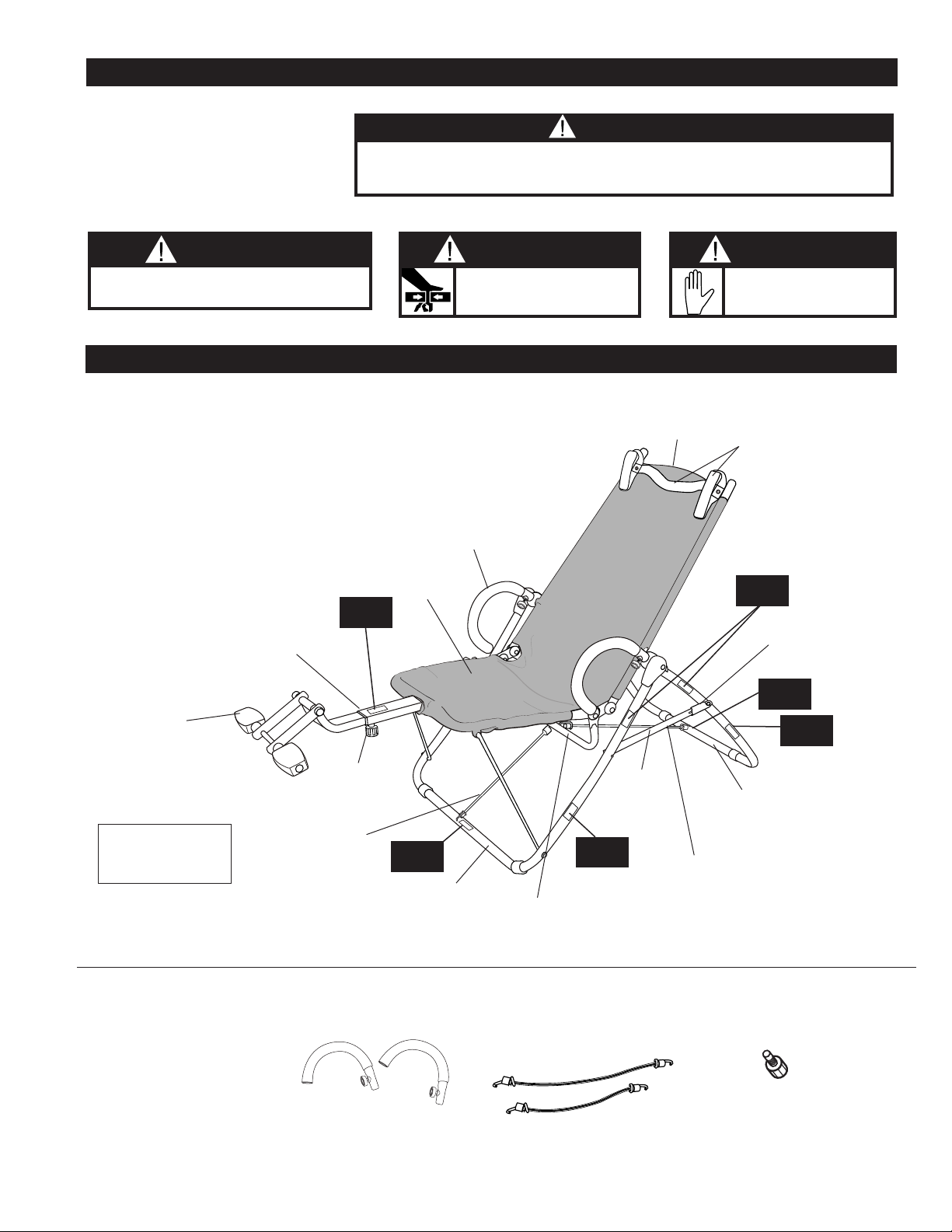
EQUIPMENT WARNING & CAUTION LABELS
WARNING
FAILURE TO READ AND FOLLOW THE SAFETY INSTRUCTIONS STATED IN THE OWNER’S MANUAL
AND VIDEO MAY RESULT IN POSSIBLE SERIOUS INJURY OR DEATH. KEEP CHILDREN AWAY. MAXIMUM
USER WEIGHT 275 LBS. REPLACE THIS LABEL IF DAMAGED, ILLEGIBLE OR REMOVED. CLASS HC.
WARNING LABEL 1
DETACH THIS END OF BAND FROM FRAME BEFORE
FOLDING. FAILURE TO DO SO MAY RESULT IN INJURY.
WARNING LABEL 2 (2 locations)
CRUSH HAZARD. Keep hands clear
during folding. Failure to do so,
could result in crushed fingers.
WARNING LABEL 3 (4 locations)
WARNING
Place hand here when folding.
Keep hand outside of tubes to
prevent pinched fingers.
CAUTION LABEL 1 (4 locations)
CAUTION
Ab Lounge®XL Specifications:
Product Weight:
Approx. 35 lbs.
Length: 54”
Width: 31-3/4”
Height: 45-1/2”
Note: Dimensions are based
on unit set up for use.
Maximum user weight: 275 lbs.
SPECIFICATIONS AND PARTS
Also Includes a
Workout DVD
The following parts are located in the Parts Box. Please make sure you have all of the parts before
beginning assembly of your equipment.
X15908-8
short band
X15906
foot rest
assembly
X15908-1
handlebar
X15907
seat
X15903-1
seat support frame
X15901-1
front frame
X15901-8
locking
arm
X15908-7
long band
X15901-2
rear frame
X15905-3
head rest frame
X15901-8
locking arm
mechanism
X15905-4
Focus Strap™with
Iso-Grip™handles
2 - handlebars with
locking knobs
1 - short band
X15908
PARTS BOX:
1 - long band
WARNING
LABEL 1
LOCATED ON
BOTH SIDES
OF FRAME
WARNING
LABEL 3
WARNING
LABEL 2
LOCATED ON
BOTH SIDES
OF FRAME
CAUTION
LABEL 1
LOCATED ON BOTH
SIDES OF FRAME
CAUTION
LABEL 1
WARNING
LABEL 2
X15908-6
adjustment
knob
X15902-1
foot rest receiver
1 - adjustment
knob
IMPORTANT: See below for
placement of the following
Warning/Caution Labels on
your unit.
WARNING
Page 6
-------- 4 --------
Congratulations on your purchase of the Ab Lounge®XL unit. You have taken an important step
toward your fitness goals. Whether that means toning your abs, or strengthening and stretching
your core abdominal muscles, the Ab Lounge®XL unit can help you get the results you want.
Working out on comfortable, efficient equipment that allows you to start and progress at the
level that’s appropriate for you is a vital element in sticking with a program of regular exercise.
With your Ab Lounge®XL unit, you’ll use the abdominal muscles in smooth natural motions.
You’ll be able to adjust the equipment to fit your body and begin your workout right away - just
what you need to improve your fitness the healthy, easy way!
Just 30 minutes a week – three enjoyable 10 minute sessions – is all it takes to begin experiencing the toning and stretching benefits of your Ab Lounge®XL unit. With regular use of your
equipment, consistent aerobic exercise and a proper diet, you may soon notice some
important changes in yourself, such as:
• More endurance and stamina
• Less body fat and excess weight
• Improved abdominal muscle tone
• Increased energy for daily tasks
• Less stress and a more positive outlook
With a minimal time commitment, you’ll receive an impressive return on your investment!
We’re so sure that you will be completely satisfied with your Ab Lounge®XL unit that we
encourage you to write or call our Customer Service Specialists at the address or phone
number listed below or contact us on our website. As always, you have our personal
assurance that we want your complete satisfaction. After all, your success is our success too!
Sincerely,
Karla Williamson, Customer Service
Ab Lounge®XL, Customer Service Department
248 Fitness Quest Plaza, Canton, OH 44750-1001
Call Toll Free: 1-800-321-9236 • Monday – Friday, 8:30am to 8:00pm, EST
Email: [email protected] • www.fitnessquest.com
Please do not call the above number for Parts. See Ordering Missing
or Defective Parts section below.
IMPORTANT: This owner's manual is the authoritative source of information about
your Ab Lounge XL unit. Please read it carefully and follow all the instructions.
INTRODUCTION
Ordering Missing or Defective Parts
When ordering parts, please contact our Parts Department, toll free at 1-800-497-5831
Monday through Friday, 8:30am to 8:00pm, Eastern Standard Time.
IMPORTANT: You must have your serial number, date of purchase, and this manual
ready when calling for parts.
Serial #: _____________________________
If you would like a FREE VHS* copy of your DVD, simply give us a call. All you have to do
is pay $3.95 for shipping and handling.
*Offer valid for a limited time. Limit one video per customer. Additional shipping and handling charges may apply
to deliveries outside the continental U.S.
Page 7
-------- 5 --------
ASSEMBLY INSTRUCTIONS
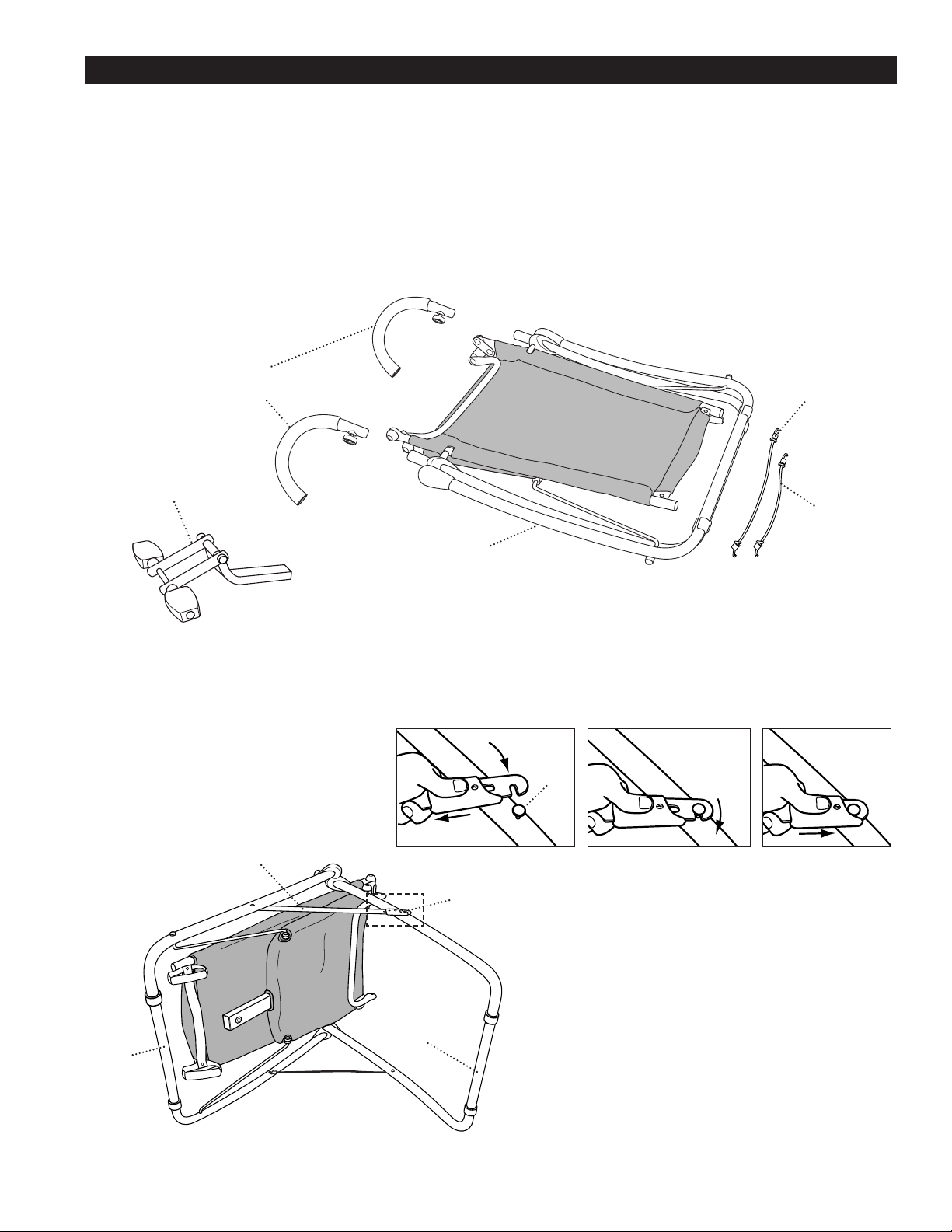
Step 1. Remove the Main Assembly and all parts from packing
and place them on floor as shown in Figure 1.
Occasionally our products contain components that are pre-lubricated at the factory. We recommend
that you protect flooring, or anything else the parts may contact, with newspaper or cloth.
FIGURE 2
X15901-2
Rear Frame
X15901-1
Front
Frame
X15901-8
Locking Arm
Step 2. Lift and place the unit on its
right side with the left side and Locking
Arm facing up as shown in Figure 2.
Open the unit by grasping the bottom of
the Front and Rear Frames and spread
them apart.
Swing the Locking Arm, located on the
Left Front Frame, around so the notch
lines up with the pin on the Left Rear
Frame. Push down on the button on
the Locking Arm Mechanism and slide
it back while you hook the notch over
the pin.
X15901
Main Assembly
FIGURE 1
X15908-7
Long Band
X15908-8
Short Band
X15908-1
Handlebar with Locking Knob
X15901-8
Locking Arm
Mechanism
X15906
Foot Rest Assembly
Pin
Attaching the Locking Arm Mechanism
NOTE: All location references, such as front, rear, left
or right, made in these instructions are from the user
sitting on the unit and facing forward.
Page 8
-------- 6 --------
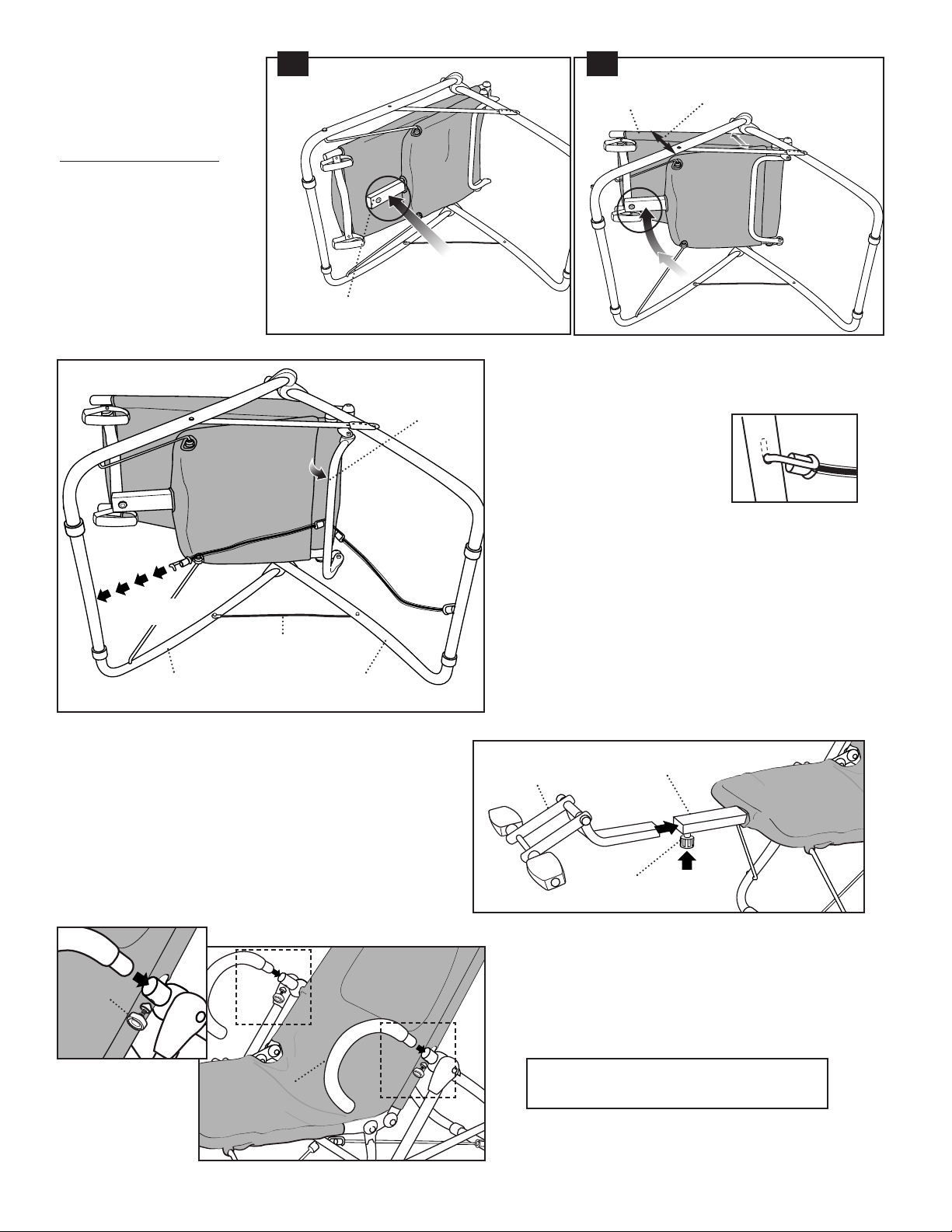
Step 4. Pull the Seat Support Frame toward
you and locate the two holes on the top.
Hook the Long Band over and
attach to the lower hole of the
Seat Support Frame. Hook the
other end of the Long Band into
the hole on the Rear Frame.
Make sure hooks are inserted
completely as shown here.
NOTE: The chair will pivot easily at this
point. Make sure you hold the Frame
firmly in place as you attach the Bands.
Step 5. Place the Short Band Hook into the upper
hole on the Seat Support Frame and hook the
other end into the hole on the Front Frame.
Step 3a. While standing
between the two frames,
PUSH the Foot Rest
Receiver out away from you
through the front frame
as
shown in 3a.
Step 3b. The Seat and
Back will start to separate
(open up). Continue pushing outward until the Seat
and Back are approximately
2 feet apart as shown in 3b.
Step 7. Remove the Locking Knobs from the
Handlebars. Slide the Handlebars into the holes
at the top of the Main Assembly with the curves
facing down. Align mounting hole and secure each
Handlebar with the Locking Knobs you just removed.
X15902-1
Foot Rest Receiver
Seat and Back will separate (open up).
Open to approximately 2 feet apart.
Stand Here And
PUSH Open With
Your Hands
X15901-9
Cable
Long Band
in Rear
X15903-1
Seat Support Frame
X15901-2
Rear Frame
X15901-1
Front Frame
Seat
Seat
Seat
3a 3b
Check all bolts and nuts to be sure
they are tight before using your unit.
ASSEMBLY IS NOW COMPLETE.
Step 6. Partially screw the Adjustment Knob into the
underside of the Foot Rest Receiver at the front of the
unit. Pull down the Adjustment Knob and slide the Foot
Rest Assembly into the Receiver. Once the Foot Rest
Assembly is in the Receiver, let the Adjustment Knob
retract making sure it is secure in one of the holes on the
Foot Rest Assembly. Screw the Adjustment Knob by
turning clockwise until tight.
X15908-6
Adjustment Knob
X15906
Foot Rest Assembly
X15902-1
Foot Rest Receiver
SET UNIT UPRIGHT
Back
Back
REAR
FRONT
X15908-5
Locking
Knob
Handlebar
Short Band
in Front
5
4
5
4
4
Page 9
-------- 7 --------
FOLDING INSTRUCTIONS
The Ab Lounge®XL unit has been designed to fold for convenient travel and storage.
The Locking Arm Mechanism is removable by hand, no special tools required. For maximum
effectiveness and safety, always review these instructions prior to folding the unit.
Folding the Ab Lounge®XL Unit
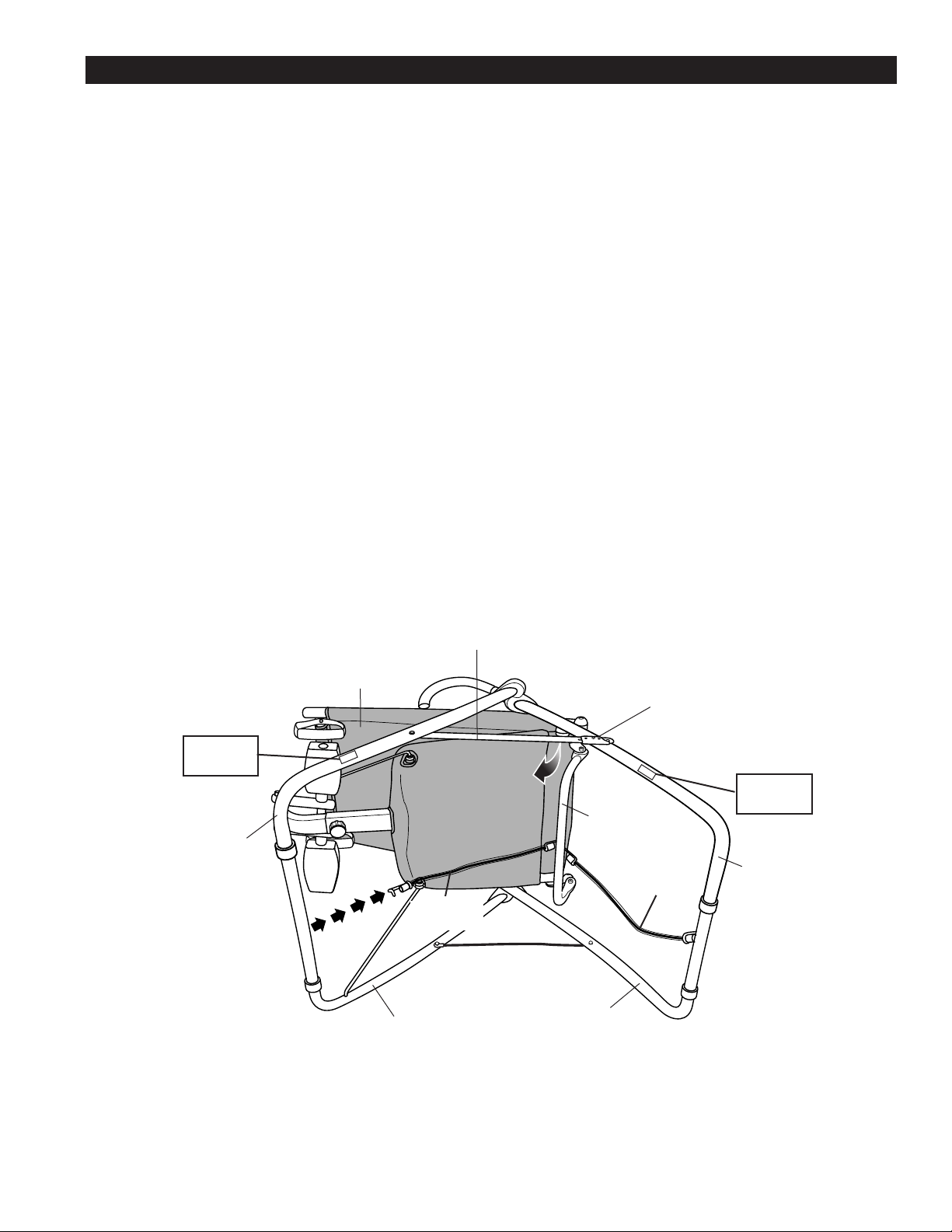
a) Lay the unit on its right side as shown. Unhook the Short Band from the
Front Frame and the Long Band from the Rear Frame. Leave both Bands
connected to the Seat Support Frame for storage.
b) Pull the Back toward the Seat until it aligns with the Front Frame.
c) Unhook the Locking Arm Mechanism by pushing down on the button and
sliding it back and unhooking the Left Rear Frames (reverse assembly
Step 2).
d) Rotate the Locking Arm towards the Front Frame.
e) Grasp the Front Frame with one hand and the Rear Frame with the other
hand and slowly pull them together.
IMPORTANT: Place hands on Caution Labels when folding,
and be careful not to pinch your fingers between the
Front and Rear Frames.
f)
For your unit to store flat you must fold the Handlebars in. To do this,
loosen the Handlebar Knobs and turn Handlebars inward toward the unit
and tighten Knobs to keep in place.
IMPORTANT: Before using your unit, be sure Handlebars are back in
correct position and the Knobs are securely tightened.
CAUTION
LABEL
CAUTION
LABEL
X15901-1
Front Frame
X15901-2
Rear Frame
Back
X15901-2
Rear Frame
X15903-1
Seat Support
Frame
X15901-1
Front Frame
X15908-8
Short Band
Seat
X15908-7
Long Band
LOCATED ON BOTH
SIDES OF FRAME
LOCATED ON BOTH
SIDES OF FRAME
X15901-8
Locking Arm
Mechanism
X15901-8
Locking Arm
Page 10
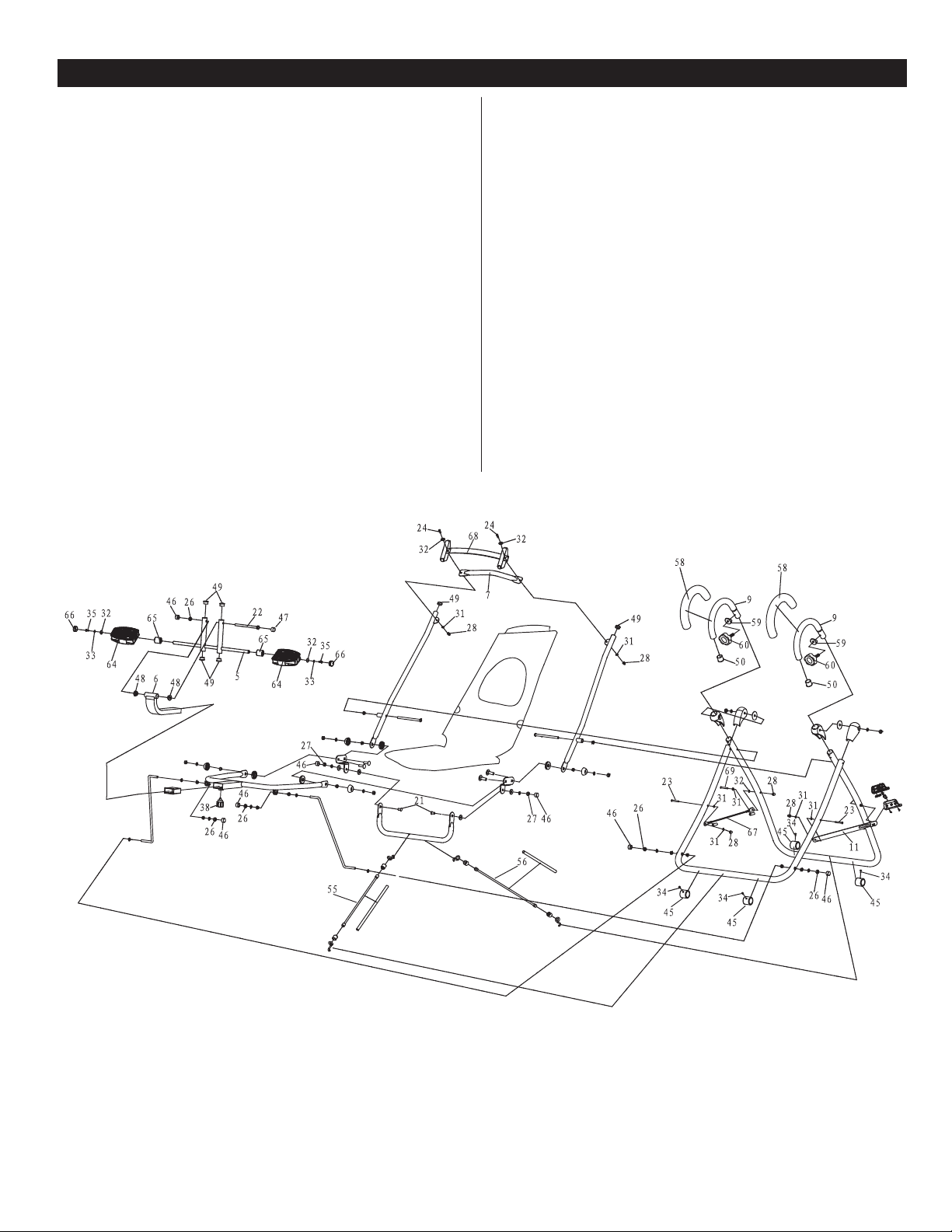
-------- 8 --------
PART NO. PARTS NAME QTY.
X15906-1 foot rest assembly (5) 1
X15906-2 foot extension tube (6) 1
X15905-3 head rest frame (7) 1
X15908-1 handlebars (9) 2
X15901-8 locking arm (11) 1
X15901-7 M10 x 20mm carriage bolt (21) 2
X15906-4 M10 x 145mm hex bolt (22) 1
X15901-10 M6 x 43mm phillips bolt (23) 2
X15905-5 M6 x 20mm phillips bolt (24) 2
X15902-6 M10 large nylon nut (26) 5
X15903-2 M10 thin nylon nut (27) 2
X15901-12 M6 acorn nut (28) 5
X15901-11 M6 small washer (31) 7
X15905-6 M6 large washer (32) 5
X15906-9 M6 spring washer (33) 2
X15901-4 M5 x 19mm phillips screw (34) 4
X15906-8 M6 x 15mm phillips bolt (35) 2
X15908-6 adjustment knob (38) 1
X15901-3 rubber foot (45) 4
X15902-7 M10 large nut cap (46) 7
PART NO. PARTS NAME QTY.
X15906-5 M10 small nut cap (47) 1
X15906-3 plastic bushing (48) 2
X15905-2 end plug (49) 6
X15908-3 plug (50) 2
X15908-8 short band (55) 1
X15908-7 long band (56) 1
X15908-2 grip (58) 2
X15908-4 locking washer (59) 2
X15908-5 locking knob (60) 2
X15906-7 pedal (64) 2
X15906-6 spacer (65) 2
X15906-10 plug (66) 2
X15901-9 cable (67) 1
X15905-4 focus strap with Iso-grip handles (68) 1
X15901-13 M6 x 45mm phillips bolt (69) 1
X15910 literature pack 1
X15911T top box 1
X15911B bottom box 1
X15912 accessory kit 1
X15909D workout video 1
PARTS LIST AND EXPLODED VIEW
Page 11

-------- 9 --------
EXERCISE GUIDELINES
IMPORTANT:
If you are over 35 and have been inactive for
several years, you should consult your physician,
who may or may not recommend a graded
exercise test. Your physician can also assist you
in determining the Target Heart Rate Zone
appropriate for your age and physical condition.
You should also consult your physician if you
have the following:
• High blood pressure
• High cholesterol
• Asthma
• Heart trouble
• Family history of early stroke or
heart attack deaths
• Frequent dizzy spells
• Extreme breathlessness after mild exertion
• Arthritis or other bone problems
• Severe muscular, ligament or
tendon problems
• Other known or suspected disease
• If you experience any pain or tightness
in your chest, an irregular heartbeat or
shortness of breath, stop exercising
immediately. Consult your physician
before continuing.
• Pregnant
• Balance Impairment
•Taking medications that affect heart rate
(continued on next page)
IMPORTANT
Please review this section before you begin exercising.
Workout Phases:
Regardless of whether you are working out on your Ab
Lounge® XL equipment or doing a cardio workout, your
workout should consist of the following three phases.
Warm-Up
To prevent injury and maximize performance, we
recommend that each workout period should start with
a warm-up. Your warm-up should gently prepare your
muscles for the coming exertion. Start by doing 5 to 10
minutes of gentle exercise that gradually increases your
heart rate and loosens up your muscles. Your warm-up
exercise should be aerobic in nature and only require an
easy, unforced range of motion. This should be followed
by 5 to 10 minutes of stretching. Refer to the stretches
found on pages 11 and 12 of this manual. Never push
yourself beyond a point of gentle tension or strain.
Keep your movements gentle, rhythmic and controlled.
Muscle Toning Workout
Your warm-up should be followed by either a workout on
the Ab Lounge®XL equipment or a cardio workout,
depending on which workout you are doing that day.
Regardless of which workout your are doing, build up
as your current fitness level allows and progress at a
rate that is comfortable to you.
For the first week or so, you may feel some muscle
soreness. This is quite normal and will disappear in a
matter of days. If you experience major discomfort, you
may be on a regimen that is too advanced for you or
you may have increased your program too rapidly.
Cool Down and Stretching
Your workout should be followed by a cool down. The
cool down should consist of 5 to 10 minutes of slow
walking, followed by stretching. Refer to the stretches
found on pages 11 and 12 of this manual. Never push
yourself beyond a point of gentle tension or strain.
Keep your movements gentle, rhythmic and controlled.
Page 12

-------- 10 --------
When to Exercise
The hour just before the evening meal is a popular time
for exercise. The late afternoon workout provides a
welcome change of pace at the end of the work day and
helps dissolve the day's worries and tensions.
Another popular time to work out is early morning,
before the work day begins. Advocates of the early start
say it makes them more alert and energetic on the job.
Among the factors you should consider in developing
your workout schedule are personal preference, job and
family responsibilities, availability of exercise facilities
and weather. It's important to schedule your workouts for
a time when there is little chance that you will have to
cancel or interrupt them because of other demands on
your time.
You should not exercise strenuously during extremely
hot, humid weather or within two hours after eating.
Heat and/or digestion both make heavy demands on the
circulatory system, and in combination with exercise can
be an over-taxing double load.
Measuring Your Heart Rate
When checking Heart Rate during a workout, take your
pulse within five seconds after interrupting exercise
because it starts to go down once you stop moving.
Count pulse for 10 seconds and multiply by six to
get the per-minute rate.
Target Heart Rate
Aerobic intensity guidelines for healthy adults are
generally set at 40 to 85 percent of heart rate. But, if
you’re out of shape, remember that moderate to low
level and consistent cardiovascular training – well
below the standard recommendations set forth – can
result in substantial and beneficial effects to your health
and can greatly improve cardiovascular endurance.
You can use the following calculation to determine what
percentage of your heart rate you are working at:
% heart rate = (220 - age) x %.
Using this calculation, a 70% heart rate for a 40 year old
would be (220 - 40) x 70% or 126. Thus, this individual
would need to reach 126 beats per minute to equal a
70% heart rate.
The above are guidelines, people with any medical
limitations should discuss this formula with their
physician.
Clothing
All exercise clothing should be loose-fitting to
permit freedom of movement, and should make
the wearer feel comfortable and self-assured.
Never wear rubberized or plastic clothing, such
garments interfere with the evaporation of perspiration and can cause body temperature to rise to
dangerous levels.
We recommend wearing comfortable athletic shoes
made of good support with non-slip soles. Do not
use this equipment with bare feet or when wearing
only socks or stockings.
Tips to Keep You Going
1) Adopt a specific plan and write it down.
2) Keep setting realistic goals as you go
along, and remind yourself of them often.
3) Keep a log to record your progress and
make sure to keep it up-to-date. See
charts in this booklet.
4) Include weight and/or percent body fat
measures in your log. Extra pounds can
easily creep back.
5) Enlist the support and company of your
family and friends.
6) Update others on your successes.
7) Avoid injuries by pacing yourself and
including a warm up and cool down
period as part of every workout.
8) Reward yourself periodically for a job
well done!
Page 13
-------- 11 --------
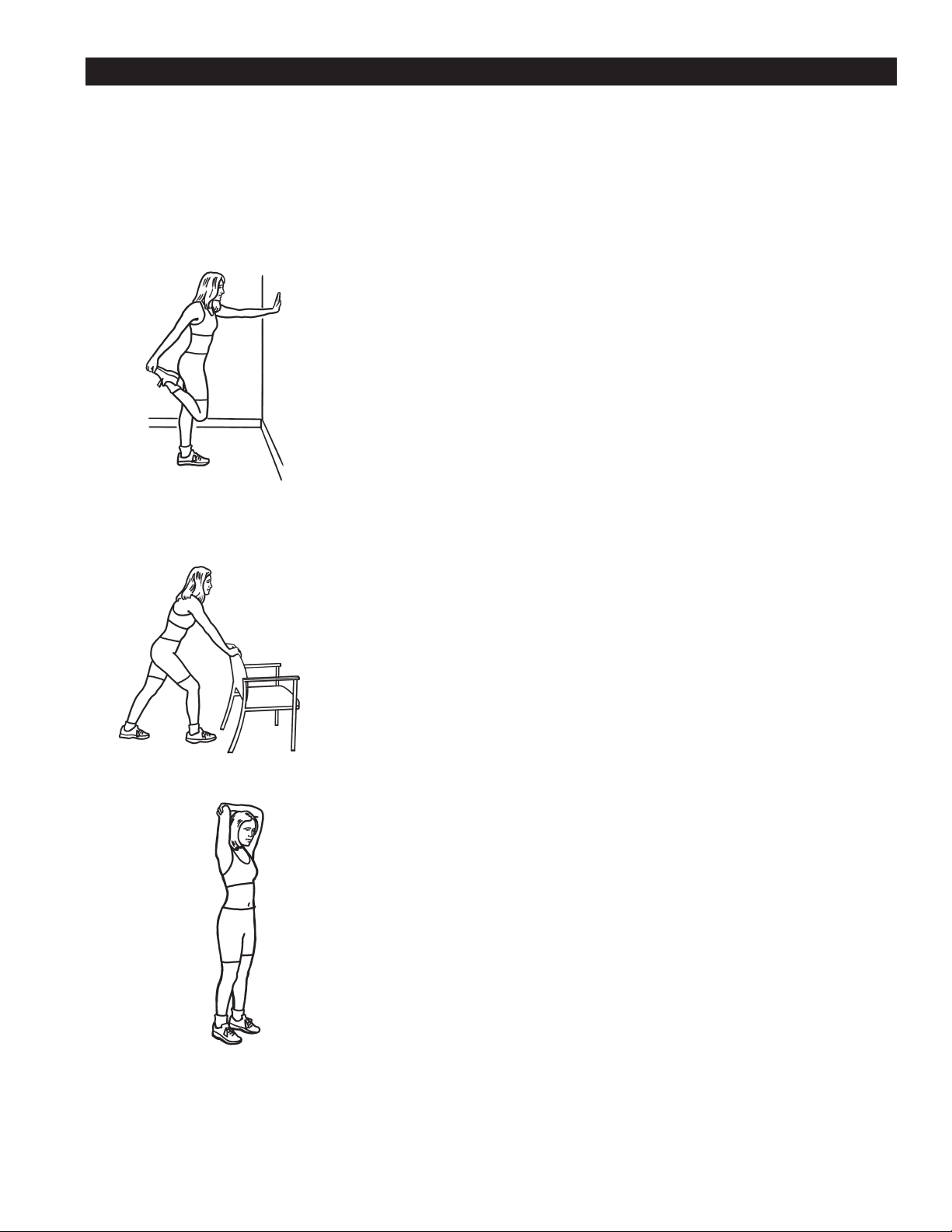
WARM UP & COOL DOWN STRETCHES
When performing these stretches, your movements should be slow and smooth,
with no bouncing or jerking. Move into the stretch until you feel a slight tension,
not pain, in the muscle and hold the stretch for 20 to 30 seconds. Breathe slowly
and rhythmically. Be sure not to hold your breath. Remember that all stretches
must be done for both sides of your body.
1. Quadriceps Stretch
Stand close to a wall, chair or other solid object. Use one hand to
assist your balance. Bend the opposite knee and lift your heel towards
your buttocks. Reach back and grasp the top of your foot with the
same side hand. Keeping your inner thighs close together, slowly pull
your foot towards your buttocks until you feel a gentle stretch in the
front of your thigh. You do not have to touch your buttocks with your
heel. Stop pulling when you feel the stretch. Keep your kneecap
pointing straight down and keep your knees close together. (Do not
let the lifted knee swing outward.)
Hold for 20 to 30 seconds. Repeat for the other leg.
2. Calf and Achilles Stretch
Stand approximately one arms length away from a wall or chair with
your feet hip-width apart. Keeping your toes pointed forward, move
one leg in close to the chair while extending the other leg behind you.
Bending the leg closest to the chair and keeping the other leg straight,
place your hands on the chair. Keep the heel of the back leg on the
ground and move your hips forward. Slowly lean forward from the
ankle, keeping your back leg straight until you feel a stretch in your
calf muscles.
Hold for 20 to 30 seconds. Repeat for the opposite leg.
3. Overhead/Triceps Stretch
Stand with your feet shoulder width apart and your knees slightly bent.
Lift one arm overhead and bend your elbow, reaching down behind
your head with your hand toward the opposite shoulder blade. Walk
your fingertips down your back as far as you can. Hold this position.
Reach up with your opposite hand and grasp your flexed elbow.
Gently assist the stretch by pulling on the elbow.
Hold for 20 to 30 seconds. Repeat for the opposite arm.
Page 14
-------- 12 --------
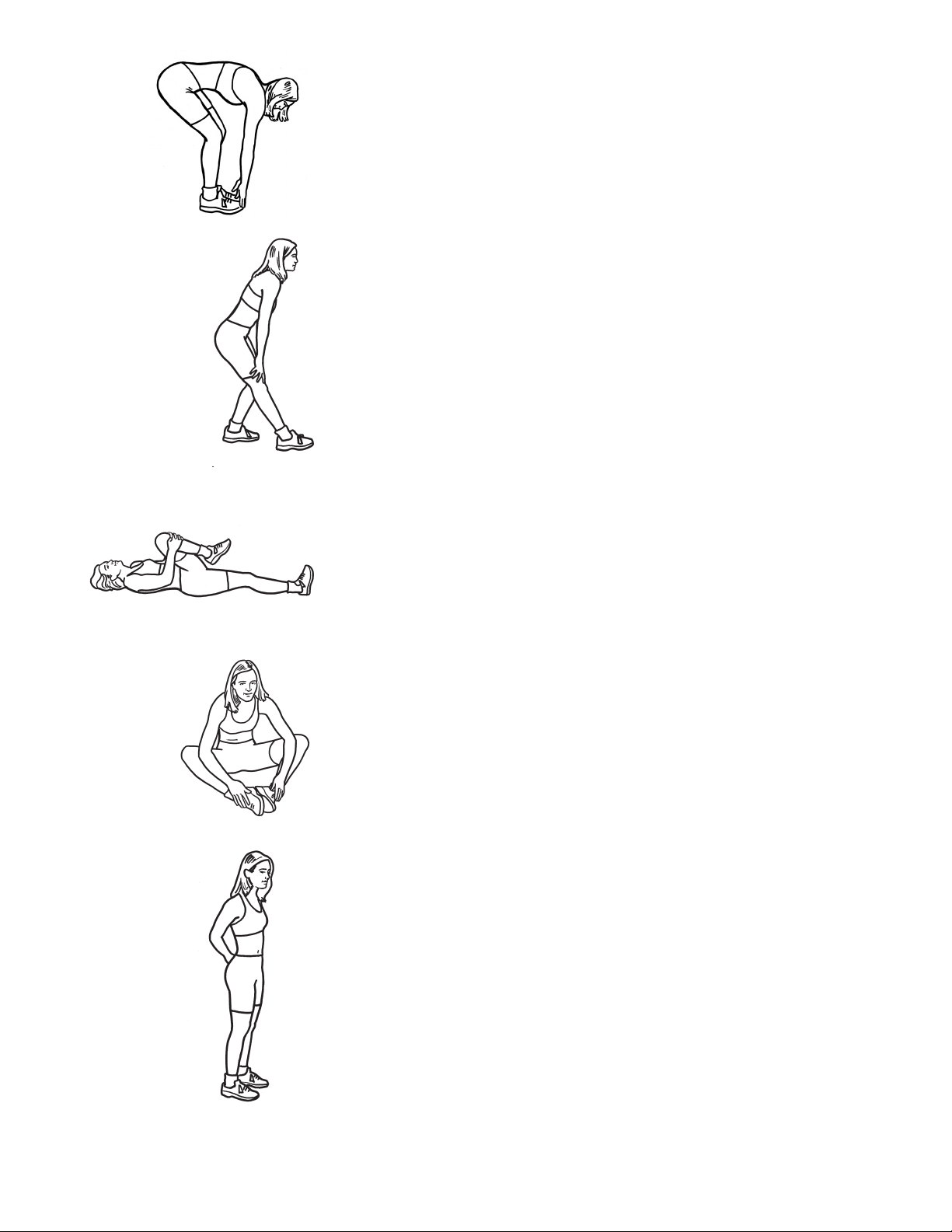
4. Back Stretch
Stand with your legs shoulder width apart and your knees slightly
bent. Bend forward from your waist with your arms extending loosely
in front of your body. Gently bend from the waist flexing your body as
far forward as it will go.
Hold for 20 to 30 seconds. Straighten up and repeat.
5. Standing Hamstrings Stretch
Stand with your legs hip-width apart. Extend one leg out in front
of you and keep that foot flat against the ground. With your hands
resting lightly on your thighs, bend your back leg and lean forward
slightly from your hips until you feel a stretch in the back of your
thigh. Be sure to lean forward from the hip joint rather than
bending at your waist.
Hold for 20 to 30 seconds. Repeat for the opposite leg.
6. Buttocks, Hips and Abdominal Stretch
Lay flat on your back with your hips relaxed against the floor. Bend
one leg at the knee. Keeping both shoulders flat on the floor, gently
grasp the bent knee with your hands and pull it over your body
and towards the ground. You should feel a stretch in your hips,
abdominals and lower back.
Hold for 20 to 30 seconds and release. Repeat for opposite side.
7. Inner Thigh Stretch
Sit on the floor and bend your legs so that the soles of your feet are
together. Place your elbows on your knees. Lean forward from the
waist and press down lightly on the inside of your knees. You should
feel a stretch in the muscles of your inside thigh.
Hold for 20 to 30 seconds and release.
8. Arm Pullback
Stand with your feet shoulder width apart and toes pointing forward
and with your knees slightly bent. Let your arms hang relaxed on
either side of your body. Expand your chest and pull your shoulders
back. Bend your elbows slightly and clasp your hands behind your
back. Slowly straighten your arms as you lift your hands upward.
Raise your hands upward until you feel mild tension in your shoulder
and chest region.
Hold for 20 to 30 seconds. Lower your arms to their original position
and bend your elbows. Release your hands and return them to your
sides.
Page 15

-------- 13 --------
AB LOUNGE™XL SYSTEM
The Ab Lounge® XL is more than just a machine; it is a
total body exercise and nutrition system. It is a “fitness
for life” plan that goes hand in hand with an overall
healthy lifestyle. This includes regular check-ups, healthy
eating habits and exercise for the rest of your life.
Today, all fitness research recommends both cardiovascular exercise and strength conditioning to achieve
balanced fitness. By improving your cardiovascular fitness you will strengthen your heart and lungs, increase
your stamina and endurance, and help with weight loss.
Strength conditioning adds lean muscle to your body,
which increases your body’s metabolism. And we all
know that a healthy eating plan is an important part of
any balanced fitness program.
The Ab Lounge™ XL System is designed to help you
achieve a balanced fitness program. The system
consists of three parts:
1) Strength Conditioning. The Ab Lounge®XL unit was
designed to help you tone and strengthen your upper
abdominal muscles, your lower abdominal muscles
and your obliques. We recommend that you workout
for at least 30 minutes, 3 times a week. However, the
frequency and duration of your workouts will depend
on your current fitness level and goals. Please refer
to the Ab Lounge®XL Workout section of this booklet
to determine the workout that is appropriate for you.
2) Cardiovascular Exercise. The Ab Lounge™XL
System includes a cardio workout program. You can
achieve an effective cardio workout from a variety of
activities, such as walking, hiking, swimming and jogging. We recommend that you do a cardio workout
for at least 30 minutes, 3 times a week. You can
easily alternate days for your Ab Lounge™XL and
cardio workouts. Again, the frequency and duration
of your workouts will depend on your current fitness
level and goals. Please refer to the Cardiovascular
Workout section of this booklet to determine the
workout that is appropriate for you.
3) Nutrition. The Ab Lounge™XL System includes the
Jump Start Diet which is designed to ‘jump start’ your
total fitness program. The Jump Start Diet will allow
you, in just 14 days, to begin to form habits to help
you reach your fitness goals faster and easier than
ever before. Please refer to your Jump Start Diet
included in this booklet for an easy-to-follow, 2-week
menu plan, full of healthy eating choices. Once you
complete the 2-week diet, you can continue your
sensible diet with the eating plans in the Fitness
Quest Eating Plan booklet or the Low Carbohydrate,
Heart Healthy Menu Plan booklet which are also
included with the system.
AB LOUNGE™XL WORKOUT
is a recommended speed for toning exercises.
Working at a fast pace is not recommended, and
may compromise your safety and results.
5. You may not be able to complete all of the repetitions
suggested at first. When you feel your muscles fatiguing, or are unable to work with good form and technique, take a short break and rest.
6. Keep track of how many repetitions of each exercise
you are able to do at first. You will be surprised at
how quickly you progress. In just a few weeks you’ll
probably be able to complete all of the repetitions at
the workout level you choose.
7. Progress slowly. If you are very sore and tired after
your workout you are working at a level that is too
hard. Great results can be obtained by working at
a level that challenges you, but doesn’t create
soreness and excessive fatigue.
1. Once your equipment is assembled, make sure it is
on a solid, level, carpeted surface with a minimum
of 3 feet of clearance space behind and in front of
the unit. Practice getting on and off your unit a few
times until you are comfortable with this movement.
2. Review this Owner’s Manual and the video completely
before you begin your exercise program. Remember
to follow the instructions exactly – they have been
developed with your health and safety in mind.
3. Pay careful attention to the techniques and range
of motion that are described and illustrated in this
manual and the video. This is essential for safety, and
for isolating and targeting the appropriate muscles.
4. Perform the exercises at a slow and controlled
speed. About one or two seconds into the movement,
a one to two second pause at the end range of
motion, and a slow return to the starting position
(continued on next page)
IMPORTANT EXERCISE AND SAFETY TIPS
Page 16

-------- 14 --------
8. It is important that you know how to work out safely
and properly. These safety steps are for your benefit
and you should follow them closely to maximize the
effectiveness of your workout routine.
9. You should begin to feel results within one to two
weeks of working out with your equipment. Look for
better posture and the feeling of more strength and
efficiency in your core abdominal muscles.
Developing Your
Ab Lounge™XL Workout
The choices you make about the frequency (how
often), the duration (how long), and intensity
(how hard) at which you will workout, will directly influence your results.
Before beginning any workouts on the Ab Lounge® XL
unit, you should first determine your current
fitness level. The following are guidelines that
you can use to determine your fitness level, but
remember these are just guidelines. You must
always listen to your body. Start out at a level
that is comfortable to you and progress sensibly.
Beginner – No previous exercise experience,
or have not exercised in a long time.
Intermediate – Have been performing abdominal
exercises regularly for three months or more.
Advanced – Have been performing abdominal
exercises regularly for six months or more.
How Often, How Long, How Hard
Beginners should start out slowly and only do as many
exercises as you can with good form and technique.
Your Ab Lounge™ XL System includes Rosalie Brown’s
Ab Blasting DVD. The DVD includes a 10 minute
Ab Lounge
™ XL Workout that is perfect for most begin-
ners. Start by doing the Ab Blasting workout (or as
much of the workout as you can comfortably perform)
once a day, every other day. Then gradually increase
the number of workouts you do every other day until
you can comfortably complete three workouts every
other day with good form.
Intermediates should strive to complete three Ab
Blasting workouts every other day. Once you can
comfortably complete these workouts with good form
and technique, you should begin to increase the
frequency and duration of your workouts. But, you
should only increase one of these elements at a time.
Once you are familiar with the Ab Blasting workout, you
may want to develop your own workout for variety. You
can incorporate the exercises found on pages 16 - 18 of
this booklet into your own customized exercise routine.
Start out by doing 10 repetitions of the Basic Exercises
during each workout until you can complete all of the
repetitions with good form. When you can complete
one set of 10 repetitions of each Basic Exercise,
then you are ready to add the Bonus Exercises to
your workout or perform additional sets of your basic
routine. Use the Workout Tracking Sheets on page 19
to record the number of repetitions and sets that you
are able to do with each workout. Using the Workout
Progress Chart at the end of this manual will also
help you keep track of your progress.
Advanced should strive for a long term goal of
completing a 30 to 60 minute workout on the Ab
Lounge® XL unit most days of the week. This can be
accomplished by repeating the Ab Blasting workout,
developing your own workout or a combination of both.
But remember, always work and progress at a pace that
is comfortable to you and make sure you can complete
each exercise with good form and technique.
CARE & STORAGE
Care directions
Your equipment has been carefully designed to require
minimum maintenance. To ensure this, we recommend
that you do the following:
• Keep your equipment clean. Wipe sweat, dust or
other residue off the seat, foot rest and handlebars
with a soft, clean cloth after each use.
• Before each use, check the bands, fabric, and
stitching for signs of fraying.
If you notice any
wear, stop using the equipment immediately.
Call our Parts Department to order replacement
parts. Refer to the front of this Manual for How to
Order Missing or Defective Parts.
• To protect your equipment from stains and dirt,
you may want to spray the fabric with any type
of protective fabric spray.
• Before each use, check the frame and pivot
assembly to be sure that it is in proper working order.
Also check all nuts and bolts to be sure that they are
tight.
If the unit is not in proper working order,
stop using the equipment immediately.
Storage directions
• Store your equipment in a dry area away from
children and high traffic areas.
Page 17
-------- 15 --------
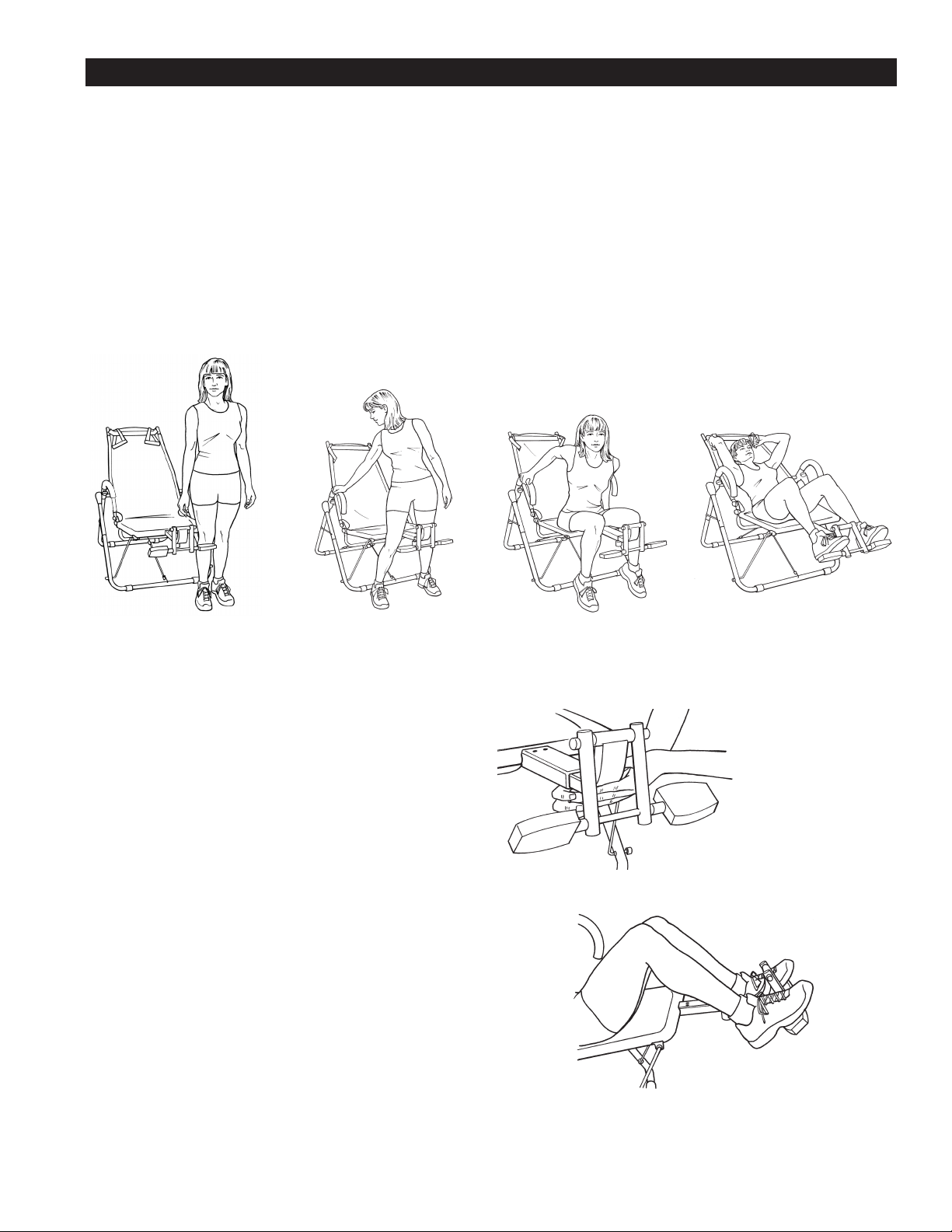
GETTING STARTED ON YOUR AB LOUNGE®XL EQUIPMENT
FIG. 2
FIG. 4
FIG. 3
FIG. 5
Getting On Your Ab Lounge®XL Equipment
Stand next to the unit, near the foot rest. See Fig. 1.
Place one hand lightly on the handlebar and carefully
step over the bar that connects the seat and foot rest.
See Fig. 2. Facing the foot rest, slowly sit down on the
seat. See FIG. 3. When the hips feel centered, lean
back into the unit in a comfortable reclining position. Lift
the feet, one at a time, and place them on the foot rests.
Reach overhead and grasp the Iso-Grip™ handles with
a light grip. See FIG. 4.
Adjusting the Ab Lounge®XL Equipment
for Your Body
The unit is easy to adjust, and allows a comfortable fit
for almost any body size.
To adjust the foot rest, grasp the adjustment knob on
the under side of the foot rest receiver. Pull the pin out
and slide the foot rest closer to or further away from the
seat. Replace the pin into one of the holes in the foot
rest. Make sure the pin is secured before placing the
feet on the foot rest. See FIG. 5. The foot rest should be
adjusted to a point where the knees are bent about 90
degrees, or at a right angle, when the feet are resting
on the foot rest. See FIG. 6.
To Get Out Of Your Ab Lounge®XL
Equipment
Release the hands from the Iso-Grip™ handles and
lean forward until you are sitting upright. Lower the feet
one at a time until they are flat on the floor. Stand up
slowly, using the handlebars on the sides of the unit,
and carefully step back over the bar to one side
of the unit.
FIG. 6
FIG. 1
Page 18
-------- 16 --------
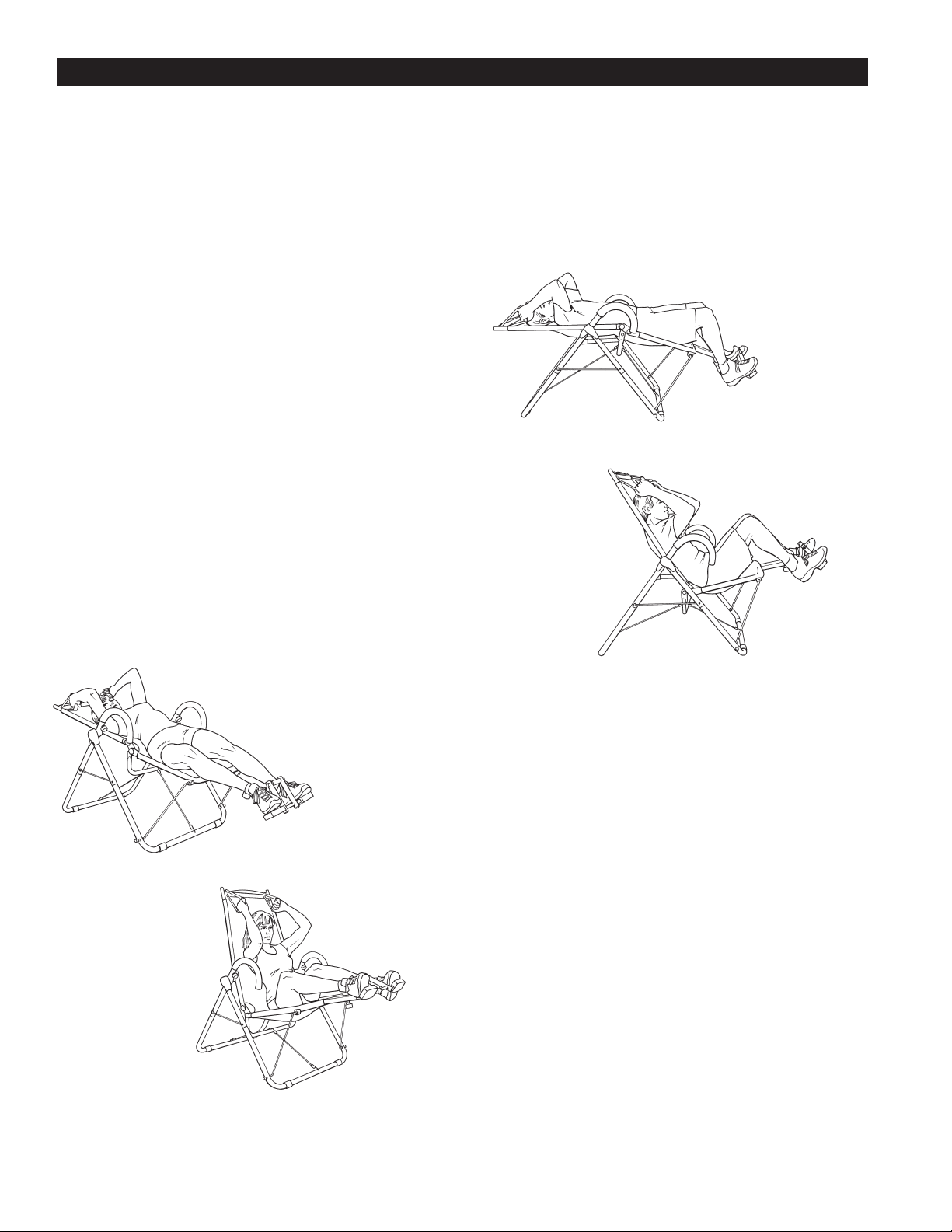
2. Oblique Jackknife
By rotating the lower body to one side, the oblique
muscles as well as the rectis abdominis are targeted with
this exercise. The oblique muscles help shape the waist as
well as add stability to the spine. Begin in the same position
described in the Basic Jackknife. Keeping the shoulders
facing front, angle the legs about 45 degrees to one side
and hold this lower body position. Exhale and slowly round
your lower back, pulling your torso forward into the curl
position. As you pull forward, contract your abdominal
muscles inward toward your spine and pull the bottom of
your rib cage down toward the top of your hip bones.
Pause at the end of the curl movement, then inhale and
slowly return to the starting position. Perform five-second
repetitions as described in the Basic Jackknife. After
completing the repetitions on one side, angle your legs
in the opposite direction and repeat the same number
of repetitions. See FIG. 9 & 10.
FIG. 9
FIG. 10
AB LOUNGE®XL EXERCISES
FIG. 7
FIG. 8
See pages 13 - 14 for instructions on how to include these exercises
in your own custom Ab Lounge
™ XL Workout.
BASIC EXERCISES
1. Basic Jackknife
This abdominal curl isolates the muscle that runs down
the entire front of your torso, known as the rectus
abdominis. Relax back into your unit with your knees
bent and feet placed on the foot rest. Reach overhead
and grasp the Iso-Grip™ handles. Exhale and slowly
round your lower back, pulling your torso forward into
a curl position. As you pull forward, contract your
abdominal muscles inward toward your spine and pull
the bottom of your rib cage down toward the top of your
hip bones. Pause at the end of the curl movement, then
inhale and slowly return to the starting position. To help
you maintain a slow tempo, pull forward for two counts,
pause for one count, and return to the start for two
counts. These five-second repetitions will make the
muscle work harder by avoiding momentum. Do not
pull with your arms or lift your feet off the foot rest.
See FIG. 7 & 8.
Page 19
-------- 17 --------
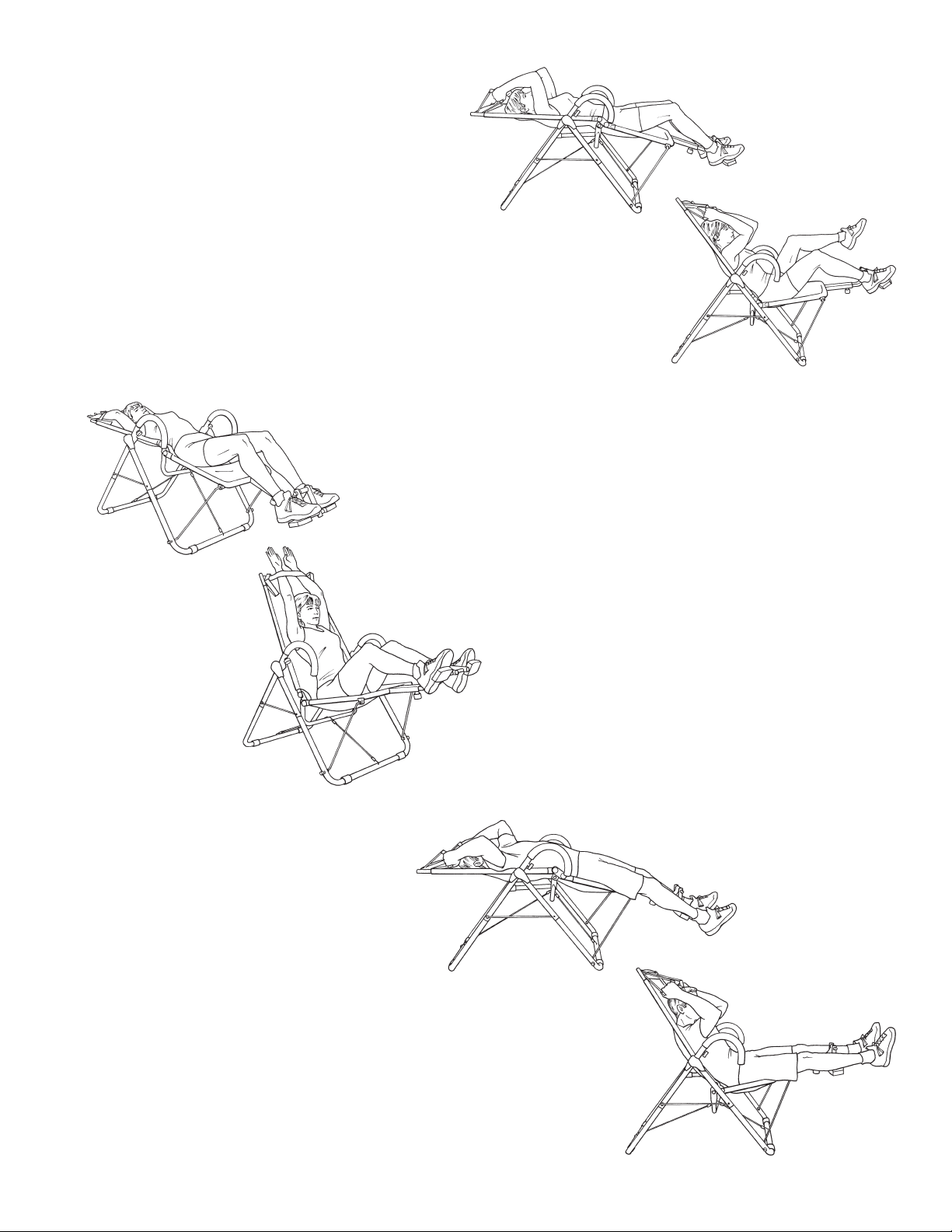
5. Extended Leg Jackknife
This exercise targets the rectus abdominis and,
like the Extended Arm Jackknife, is a little higher
intensity than the Basic Jackknife. Begin in the
same position described in the Basic Jackknife.
Then, straighten both legs, resting the ankles or
calves on the foot rest. Exhale and slowly round
your lower back, pulling your torso forward into a
curl position. As you pull forward, contract your
abdominal muscles inward toward your spine
and pull the bottom of your rib cage down
toward the top of your hip bones. Pause at the
end of the curl movement, then inhale and slowly return to the starting position. Perform fivesecond repetitions as described in the Basic
Jackknife. Do not pull with the arms or lift the
legs as you Jackknife. See FIG. 15 & 16.
FIG. 15
FIG. 16
FIG. 11
FIG. 12
4. Extended Arm Jackknife
This exercise targets the rectus abdominis, and is
a little higher intensity than the Basic Jackknife.
Begin in the same position described in the Basic
Jackknife. Then, straighten both arms until the
forearms are behind the Focus Strap™. Exhale and
slowly round your lower back, pulling your torso
forward into a curl position. As you pull forward,
contract your abdominal muscles inward toward
your spine and pull the bottom of your rib cage
down toward the top of your hip bones. Pause at
the end of the curl movement, then inhale and
slowly return to the starting position. Perform
five-second repetitions as described in the Basic
Jackknife. Do not lift your legs as you crunch.
See FIG. 13 & 14.
FIG. 13
FIG. 14
3. Jackknife With Leg Lift
This exercise targets the rectus abdominis as well as
the hip flexor muscles of the lifting leg. Begin in the
same position described in the Basic Jackknife. Exhale
and slowly round your lower back, pulling your torso
forward into a curl position. Simultaneously, lift one leg
and pull the knee up and toward the chest. Pause at
one end of the curl movement, then inhale and slowly
return the leg and torso to the starting position. Repeat
the Jackknife, lifting the opposite leg. Alternate legs
with each Jackknife. Perform five-second repetitions as
described in the Basic Jackknife. Do not pull with your
arms as you Jackknife and lift the leg.
See FIG. 11 & 12.
Page 20
-------- 18 --------
BONUS EXERCISES
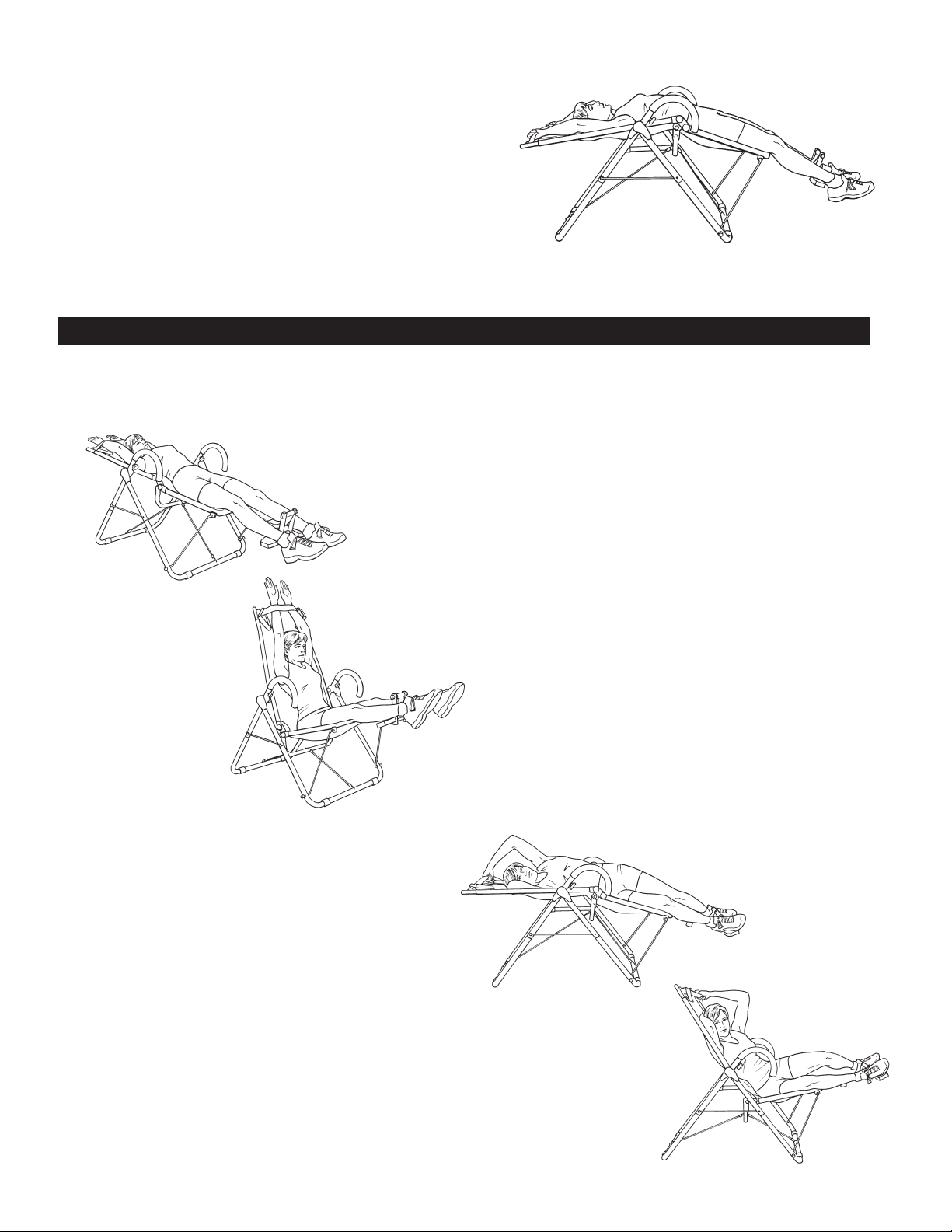
7. Advanced Jackknife
This exercise will target the rectus abdominis and hip
flexors, and the spinal extensor muscles of the lower
back. Begin in the same position described in the
Extended Arm Jackknife, then straighten the legs as
described in the Extended Leg Jackknife. Slowly lean
back with the torso and press down slightly with the
legs, until the body is in a fully extended position with
the torso and legs parallel to the floor. Exhale and
pike from the hips until the body is in a “V” position.
Pause at the end of the movement, inhale and slowly
return to the starting position. Perform five-second
repetitions as described in the Basic Jackknife. Keep
the back straight and do not bend the arms or legs as
you pike up. See FIG. 18 & 19.
When you can perform 10 repetitions of each Basic Exercise you are ready to progress to the Bonus Exercises.
These exercises require more advanced body positions to be maintained throughout the movement.
FIG. 18
FIG. 19
8. Lateral Jackknife
This exercise will isolate the rectus abdominis and
obliques, as well as the quadratus lumborum muscles
of the lower back. Roll into a sidelying position on the
unit. Bend the elbow of your lower arm and rest your
head on that arm. Reach overhead with your top arm
and lightly hold the Focus Strap™. Bend the knees
slightly and rest the feet on the foot rest. Exhale and
bend your torso to the side. Pause at the end of the
movement, inhale and slowly return to the starting
position. Laterally flex from the waist, rather than
pulling with your arms. Perform five-second repetitions
as described in the Basic Jackknife. After completing
the repetitions on one side, carefully turn over, lie on
your other side and repeat the same number of
repetitions. See FIG. 20 & 21.
FIG. 20
FIG. 21
6. Torso And Hip Flexor Stretch
This exercise will stretch all of the abdominal muscles as well
as the muscles of the front of the hip. Begin in the same position described in the Extended Arm Jackknife. Then, straighten
the legs as described in the Extended Leg Jackknife. Slowly
lean back with the torso and legs parallel to the floor. For more
stretch, carefully extend further until the back is slightly arched.
Relax and hold the stretch at a comfortable range of motion for
10 to 30 seconds, breathing deeply. Do not exceed a stretch
that is comfortable for your body. See FIG. 17.
FIG. 17
Page 21
-------- 19 --------
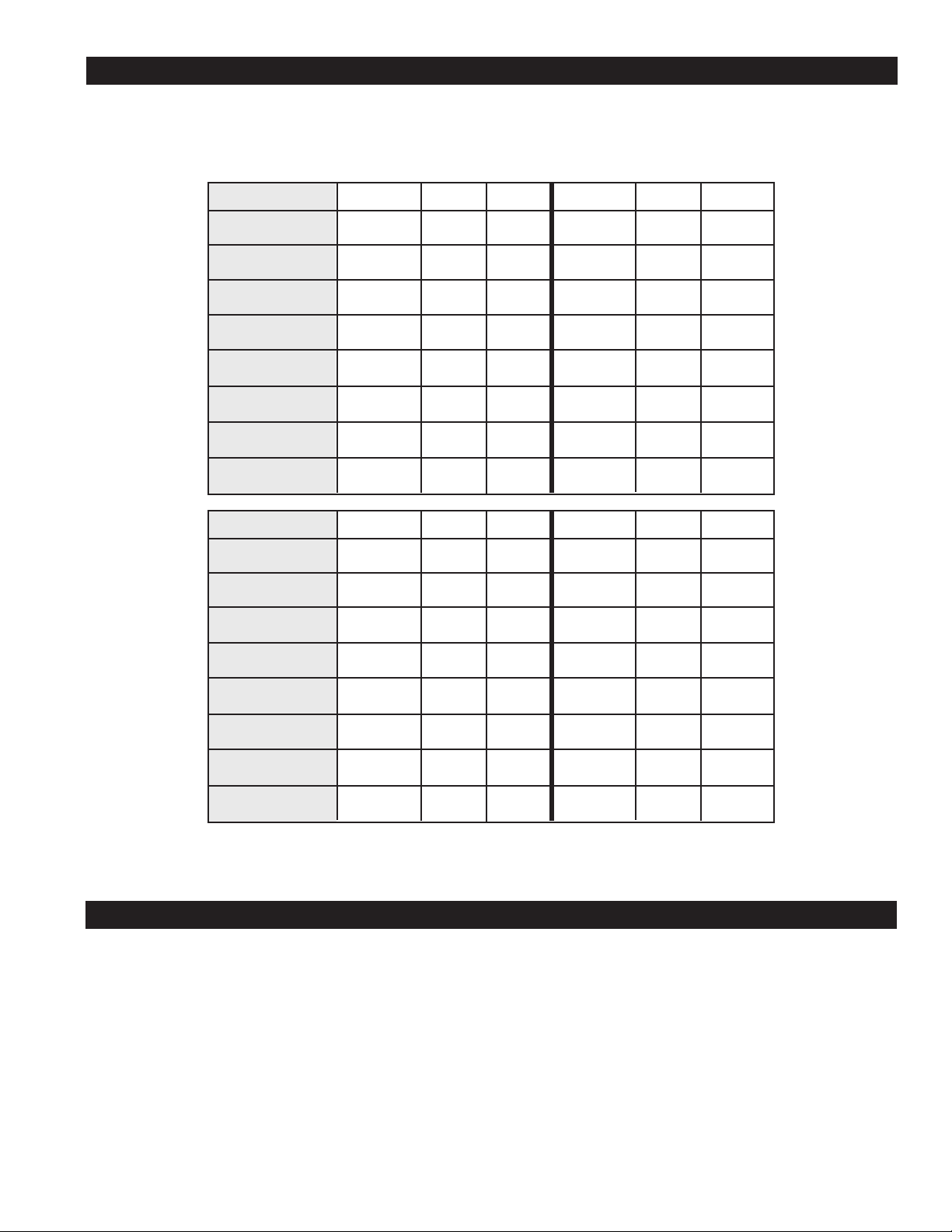
EXERCISE DATE REPS SETS DATE REPS SETS
BASIC JACKKNIFE
OBLIQUE
JACKKNIFE
JACKKNIFE
w/LEG LIFT
EXTENDED ARM
JACKKNIFE
EXTENDED LEG
JACKKNIFE
TORSO AND HIP
FLEXOR STRETCH
ADVANCED
JACKKNIFE
LATERAL
JACKKNIFE
EXERCISE DATE REPS SETS DATE REPS SETS
BASIC JACKKNIFE
OBLIQUE
JACKKNIFE
JACKKNIFE
w/LEG LIFT
EXTENDED ARM
JACKKNIFE
EXTENDED LEG
JACKKNIFE
TORSO AND HIP
FLEXOR STRETCH
ADVANCED
JACKKNIFE
LATERAL
JACKKNIFE
Use these charts to keep track of your progress over time. Before writing on them, make as many copies as you
think you’ll need. We suggest you keep these in a notebook. You will find it both informative and motivational to look
back at what you’ve done. This data will help you chart future fitness goals as you continue to improve.
AB LOUNGE™XL WORKOUT TRACKING SHEETS
CARDIOVASCULAR CONDITIONING
Exercise that challenges the heart is a simple part of an
exercise program – almost anyone can walk, run, treadmill, climb steps, or bike. But, creating a progressive,
time efficient and results oriented cardio program takes a
little planning. A properly designed and consistently performed cardiovascular training program is an essential
part of your program if you want to improve your health
and lose weight, or maintain a healthy lifestyle.
Training Aerobically
Aerobic exercise is the key to building a stronger heart
and can reduce your chances of heart disease, as well
as burn lots of fat and calories. Aerobic exercise is any
activity that you can keep at for several minutes or
longer and increases your heart rate. Activities that have
the potential to condition the heart typically involve the
(continued on next page)
Page 22

-------- 20 --------
large muscles of the hips, thighs, and buttocks.
Examples include walking, hiking, jogging, running,
cycling, in-line skating, swimming, cross-country skiing,
and stair stepping.
Benefits of Aerobic Training
Health benefits of aerobic exercise include the following:
1. A stronger and healthier heart.
2. Increased HDL. This “good” cholesterol helps keep
your arteries unplugged and healthy.
3. Decreased total cholesterol. This is the debris in
your blood that can clog your arteries.
4. Reduced blood pressure. Even moderate exercise
can help.
5. Reduced risk for heart attack and stroke.
6. Decreased body fat and an ability to help you
reach your desirable weight. You’ll become a better
fat-burner and burn a lot of calories every session.
7. Decreased risk for diabetes.
8. Reduced feelings of anxiety, tension, and
depression.
9. Improved sleep.
10. Higher levels of energy. Efficient delivery and use
of blood and oxygen is the key to increased vigor
and performance.
Warming Up And Cooling Down
Warming up and cooling down are essential to a
balanced and safe exercise program. A proper
warm-up and cool-down can:
• Make your workouts safe and easier to do,
• Limit the risk of unnecessary stress on your heart,
• Get you ready for your activity,
• Improve your stamina and endurance (you won’t
tire as quickly),
• Decrease your risk for injury,
• Increase enjoyment of your workouts, and
• Help you stick with your health and fitness program.
Warm-Up
To prevent injury and maximize performance, we
recommend that each workout period should start with
a warm-up. Your warm-up should gently prepare your
muscles for the coming exertion. Start by doing 5 to 10
minutes of gentle exercise that gradually increases your
heart rate and loosens up your muscles. Your warm-up
exercise should be aerobic in nature and only require an
easy, unforced range of motion. This should be followed
by 5 to 10 minutes of stretching. Refer to the stretches
found on pages 11 and 12 of this manual. Never push
yourself beyond a point of gentle tension or strain.
Keep your movements gentle, rhythmic and controlled.
Cool Down and Stretching
Your workout should be followed by a cool down. The
cool down should consist of 5 to 10 minutes of slow
walking followed by stretching. Refer to the stretches
found on pages 11 and 12 of this manual. Never push
yourself beyond a point of gentle tension or strain.
Keep your movements gentle, rhythmic and controlled.
How Often, How Long, and How Hard
The choices you make about the frequency (how often),
duration (how long), and intensity (how hard) at which
you will train, will directly influence your training results.
How often. If you want to see serious improvements in
your fitness, lose weight and develop a good training
base, you need to do cardio workouts three to six times
per week.
If you are just starting a program or out of shape, don’t
let these recommendations discourage or mislead you.
Realize that doing cardio training two to three times per
week will still result in significant fitness improvement
and health benefits. Your long-term goal is to build up to
exercising your heart on most days of the week.
How long. How long you work out depends on your
current level of fitness. Again, if you’re just starting a
program or out of shape, don’t follow strict textbook
recommendations. Instead, start with 5 to 10 minutes
once or twice per day. You will see significant fitness
improvement. Your long-term goal is to build to a
duration of 30 to 60 minutes of cardiovascular activity
on most days of the week.
How hard. Aerobic intensity guidelines for healthy adults
are generally set at 40 to 85 percent of heart rate. But, if
you’re out of shape, remember that moderate to low
level and consistent cardiovascular training – well below
the standard recommendations set forth – can result in
substantial and beneficial effects to your health and can
greatly improve cardiovascular endurance.
You can use the following calculation to determine what
percentage of your heart rate you are working at:
% heart rate = (220 - age) x %.
Using this calculation, a 70% heart rate for a 40 year old
would be (220 - 40) x 70% or 126. Thus, this individual
would need to reach 126 beats per minute to equal a
70% heart rate.
Refer to the “Measuring Your Heart Rate” section on
page 10 of this manual for information on how to
measure your heart rate.
The above are guidelines, people with any medical
limitations should discuss this formula with their
physician.
Page 23
-------- 21 --------
WEEK
HOW OFTEN
(times per week)
HOW HARD
(% heart rate)
HOW LONG
(minutes)
HOW HARD
(RPE)*
RPE DESCRIPTIVE RATING
1
2
3
4
5
6
2 - 3
2 - 3
2 - 3
2 - 3
3
3 - 4
2 - 4
2 - 4
2 - 4
2 - 4
2 - 4
2 - 4
Somewhat easy to somewhat hard
Somewhat easy to somewhat hard
Somewhat easy to somewhat hard
Somewhat easy to somewhat hard
Somewhat easy to somewhat hard
Somewhat easy to somewhat hard
5 - 15
5 - 15
10 - 17
10 - 17
15 - 20
15 - 20
40 - 50
40 - 50
40 - 50
50 - 60
50 - 60
50 - 60
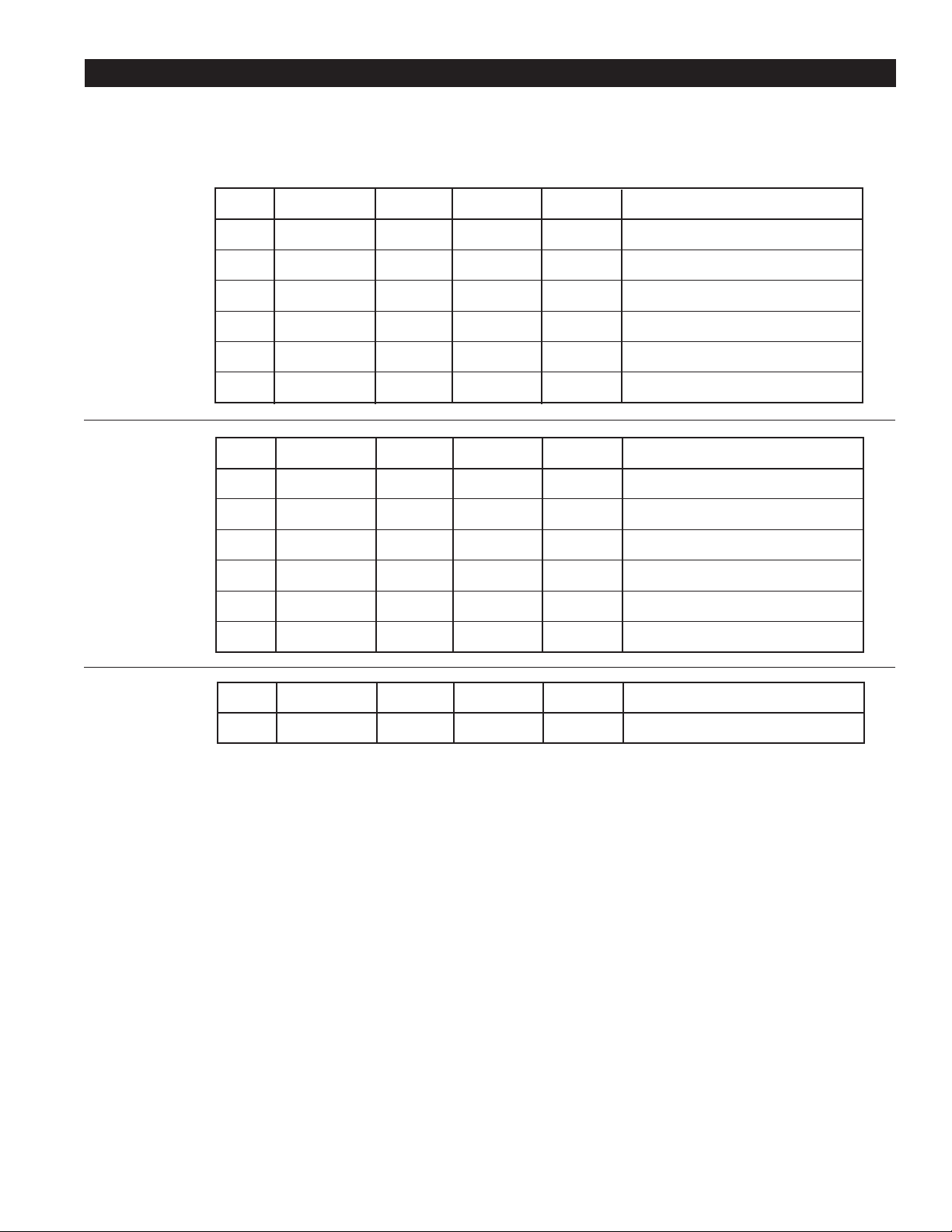
PROGRESSIVE CARDIOVASCULAR TRAINING PROGRAM
The training program that follows is a progressive training program for cardiovascular conditioning.
It can be used for any aerobic activity you choose. But remember, these are only guidelines.
People with medical conditions should discuss this training program with their physician.
MOVING
BEYOND
BASE-LEVEL
FITNESS
CONDITIONING
BASE
MAINTENANCE
*RPE = rating of perceived exertion; this means you match up a numerical rating (RPE) of 1- 10, with how you
feel (RPE descriptive rating in chart above). A rating of 2 - 3 is equal to a warm-up or recovery level of effort; 4 -5
equates to moderate to somewhat challenging; 6 -10 represents effort that is somewhat hard, to very hard.
Smart Progression
In regard to progressing to a higher intensity level,
longer duration, or more frequent sessions, it makes
good sense to change only one of these elements at
a time. You run a higher risk of overuse injury if you
simultaneously increase more than one of these
elements. A conservative yet effective guideline is to
increase intensity or duration by no more than about
5 percent. You should adapt to this increase over a
period of a week or two, and then consider changing
one of the other variables (frequency, duration or
intensity) or further progressing the one you’ve
adapted to.
Top Aerobic Exercise
No one cardiovascular activity is better than another!
Manipulating how hard (intensity), how often (duration),
and how long (frequency) you participate in a particular
aerobic activity determines its effectiveness or lack
thereof. And of course, you have to like what you’re
doing. Choose the type of aerobic activity that is right for
you by identifying one or more types of cardio exercise
that you can see yourself sticking to, and enjoying,
for the rest of your life. Often, the best aerobic exercise
will be not one, but several activities that are fun and
feel good to your body. Excellent cardiovascular activities
include, but are not limited to, walking, swimming, water
fitness, jogging, running, cross-country skiing, in-line
skating, lateral movement training (slide), cycling,
mountain biking, and step training.
WEEK
HOW OFTEN
(times per week)
HOW HARD
(% heart rate)
HOW LONG
(minutes)
HOW HARD
(RPE)*
RPE DESCRIPTIVE RATING
7 - 9
10 - 13
14 - 16
17 - 19
20 - 23
24 - 27
3 - 4
3 - 4
3 - 4
3 - 5
3 - 5
3 - 6
3 - 4
4 - 5
4 - 5
4 - 5
4 - 5
4 - 5
Moderate to somewhat hard
Somewhat hard to hard
Somewhat hard to hard
Somewhat hard to hard
Somewhat hard to hard
Somewhat hard to hard
20 - 25
21 - 25
26 - 30
26 - 30
31 - 35
31 - 35
60 - 65
65 - 70
65 - 70
70 - 75
70 - 75
70 - 75
WEEK
HOW OFTEN
(times per week)
HOW HARD
(% heart rate)
HOW LONG
(minutes)
HOW HARD
(RPE)*
RPE DESCRIPTIVE RATING
After 4-6
months
3 - 6
3 - 6
Easy - Moderate to somewhat hard
30 - 60
40 - 85
Page 24
-------- 22 --------
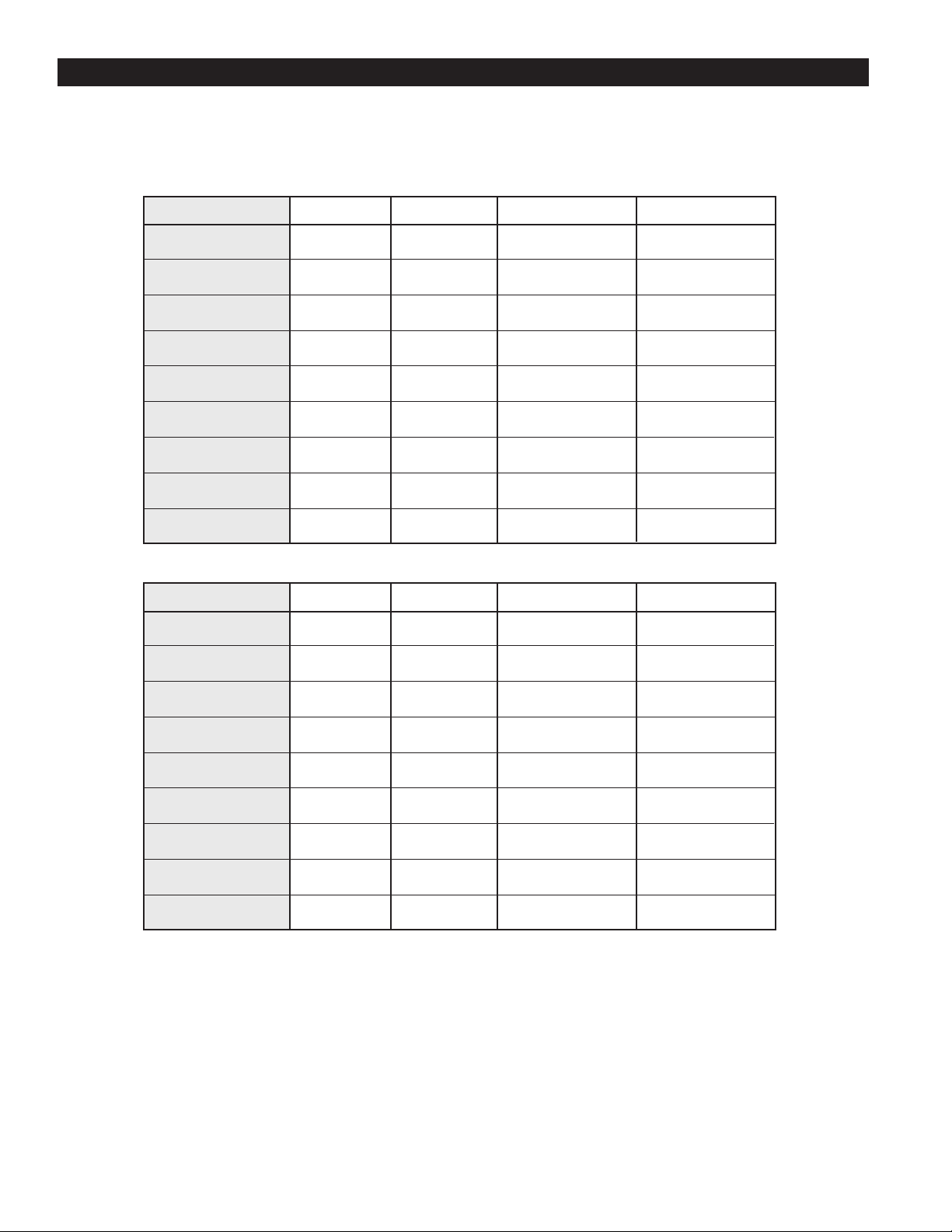
CARDIO WORKOUT TRACKING SHEETS
ACTIVITY DATE
HOW LONG
(minutes)
HEART RATE
HOW HARD
(RPE)*
Use these charts to keep track of your progress over time. Before writing on them, make as many copies as you
think you’ll need. We suggest you keep these in a notebook. You will find it both informative and motivational to
look back at what you’ve done. This data will help you chart future fitness goals as you continue to improve.
*RPE = rating of perceived exertion; this means you match up a numerical rating (RPE) of 1-10, with how you feel
(RPE descriptive rating in chart above). A rating of 2 - 3 is equal to a warm-up or recovery level of effort; 4 -5
equates to moderate to somewhat challenging; 6 -10 represents effort that is somewhat hard, to very hard.
ACTIVITY DATE
HOW LONG
(minutes)
HEART RATE
HOW HARD
(RPE)*
Page 25
-------- 23 --------
Using Healthy Eating Choices
JUMP
START
DIET
Table of Contents
Introduction . . . . . . . . . . . . . . . . . . . . . . . . . 24
The Jump Start Diet . . . . . . . . . . . . . . . . . . . 24
Breakfast Choices . . . . . . . . . . . . . . . . . . . . 25
Morning Snack . . . . . . . . . . . . . . . . . . . . . . . 25
Lunch . . . . . . . . . . . . . . . . . . . . . . . . . . . . . . 26
Afternoon Snack . . . . . . . . . . . . . . . . . . . . . . 26
Dinner . . . . . . . . . . . . . . . . . . . . . . . . . . . 26-27
Evening Snack . . . . . . . . . . . . . . . . . . . . . . . 28
Page 26

-------- 24 --------
JUMP START DIET
The Jump Start Diet
This 2-week menu plan is based on 1200 to 1300 calories. We have consciously used real food and have even put in some foods often thought of
as "off limits" when trying to lose weight. The plan is nutritionally sound and
offers a variety of foods from all food categories. You may substitute one
food within a food group for another, such as a pear for an apple or 3 oz.
of chicken for 3 oz. lean beef. The most important thing to remember is to
pay attention to portion sizes. When it says 1 cup, you need to measure
out 1 cup, etc.
The plan is extremely simple to follow. Simply pick one selection for each
meal as your day goes along. Note that your lunch will consist of a Lean
Cuisine®meal. This is done so that you have a realistic option to eat at
work or on the go. (If you don't find Lean Cuisine®meals at your local
grocer, other options are Healthy Choice®and Weight Watchers® lunches.)
We have also built in a special treat at the end of most days. This is
because people have the biggest success when they are allowed to have
some of their favorite foods. They do not feel deprived and are not tempted
to binge. Success comes because they are able to stick with the plan, lose
weight and meet their goals without feeling like they were "on a diet". The
important thing to remember is to use only the portion size given, do not go
back for more or guess on your portion size.
If you do not wish to eat the snack after your evening meal, or feel that you
cannot limit your portion size, it can be omitted.
Foods and condiments that can be used without adding significant calories
include:
• Non-caloric beverages, this includes diet carbonated drinks
• Fat free condiments such as mustard, ketchup and vinegar
• Seasonings such as onion, garlic and herbs
• Artificial sweeteners
• Coffee, tea and herbal teas
Introduction
This program is designed to "jump start" you on your way to better health
and fitness. In just 2 weeks, just 14 short days, you will begin to form habits
to help you reach your fitness goals faster and easier than ever before.
Page 27
-------- 25 --------
JUMP START DIET
MORNING SNACK
(CHOOSE JUST ONE OPTION)
8 oz. water
1 cup fat free yogurt
8 oz. water
1 cup sugar free hot chocolate
made with skim milk
8 oz. water
1 pear
8 oz. water
1 orange
8 oz. water
1 apple
8 oz. water
1 cereal bar (about 140 calories)
8 oz. water
1 kiwi
8 oz. water
1/2 cup oatmeal, cooked
1 cup skim milk
1/2 banana
8 oz. water
2 pancakes (4 inches across)
1 Tbsp. maple syrup
1/2 cup orange juice
8 oz. water
1 slice french toast
1/2 cup fresh blueberries
1 cup skim milk
8 oz. water
1/2 english muffin
1 egg poached
1/2 cup fruit juice
8 oz. water
1 slice whole grain bread
1 egg scrambled
1 cup cubed melon
8 oz. water
1 cup fat free yogurt
1/3 cup low fat granola cereal
1 cup sliced strawberries
8 oz. water
3/4 cup cereal
1 cup skim milk
1/2 cup sliced strawberries
8 oz. water
3/4 cup cereal and 2 Tbsp.
crushed walnuts
1/2 cup skim milk
4 oz. orange juice
8 oz. water
1 slice whole grain bread
1 egg scrambled or poached
4 oz. orange juice
8 oz. water
1 slice cinnamon bread
1 tsp. butter
4 oz. orange juice
BREAKFAST CHOICES
(CHOOSE JUST ONE OPTION)
Page 28
-------- 26 --------
DINNER
(CHOOSE JUST ONE OPTION)
8 oz. water
3 oz. sirloin steak, lean only, broiled or grilled
without added fat
1/2 cup rice with 1 tsp. butter
1/2 cup cooked carrots
1 large mixed green salad with
1 Tbsp. reduced fat dressing
8 oz. water
3 oz. baked ham
1 cup noodles
1 tsp. butter
2 cups applesauce
1 cup mixed vegetables
8 oz. water
3 oz. steak, (lean only) broiled or baked
1 cup noodles with 1 tsp. butter
1/2 cup applesauce
1 cup mixed vegetables
8 oz. water
salad with romaine lettuce
1/4 cup mandarin oranges
1/4 cup sliced strawberries
2 Tbsp. chopped walnuts
1 Tbsp. raspberry vinaigrette dressing
3 oz. white meat chicken
1 oz. crumbled feta cheese
8 oz. water
1 cup cooked pasta
1/2 cup spaghetti sauce
1 tsp. grated cheese
3 oz. lean ground beef in sauce
8 oz. water
1 cup angel hair pasta
1 clove garlic topped with green and red peppers
sautéed with 1 Tbsp. olive oil
3 oz. grilled shrimp
1 tsp. grated cheese
AFTERNOON SNACK
(CHOOSE JUST ONE OPTION)
8 oz. water
1 cup strawberries
8 oz. water
1 oz. low fat cheese
6 saltine crackers
8 oz. water
1 banana
8 oz. water
1 cup low fat, flavored yogurt with
1 Tbsp. low fat granola cereal on top
8 oz. water
1 tsp. peanut butter
6 saltine crackers
1 apple
8 oz. water
1 cup low fat chocolate milk
8 oz. water
1 cup vegetable soup
6 crackers
8 oz. water
3 cups light popcorn
8 oz. water
15 grapes
8 oz. water
1 cereal bar (about 140 calories)
JUMP START DIET
LUNCH
Choose a Lean Cuisine® meal of your choice! (If you have difficulty
finding Lean Cuisine
® meals at your local grocer, another option
is meals from Healthy Choice
® or Weight Watchers®.)
Y
O
G
T
R
U
Page 29
-------- 28 --------
1/2 cup chocolate or vanilla pudding
made with skim milk
hot chocolate made with skim milk
8 oz. water
5 ginger snaps or vanilla wafers
8 oz. water
3 small mint patties or
3 Hershey’s Miniatures
®
3 cups light microwave popcorn
2 small cookies (about 50 calories each)
8 oz. water
1 oz. pretzels
1 cup skim milk
8 oz. water
2 tsp. peanut butter
6 crackers
1 cup skim milk
1/2 cup cereal
1/2 skim milk
8 oz. water
EVENING SNACK
(CHOOSE JUST ONE OPTION)
RULES for eating your evening snack:
Have it in a relaxed setting where you can enjoy them as a child would.
Do nothing while having your snack, do not read, write or watch TV.
Make your snack last 20 minutes.
DO NOT go back for seconds.
JUMP START DIET
Page 30
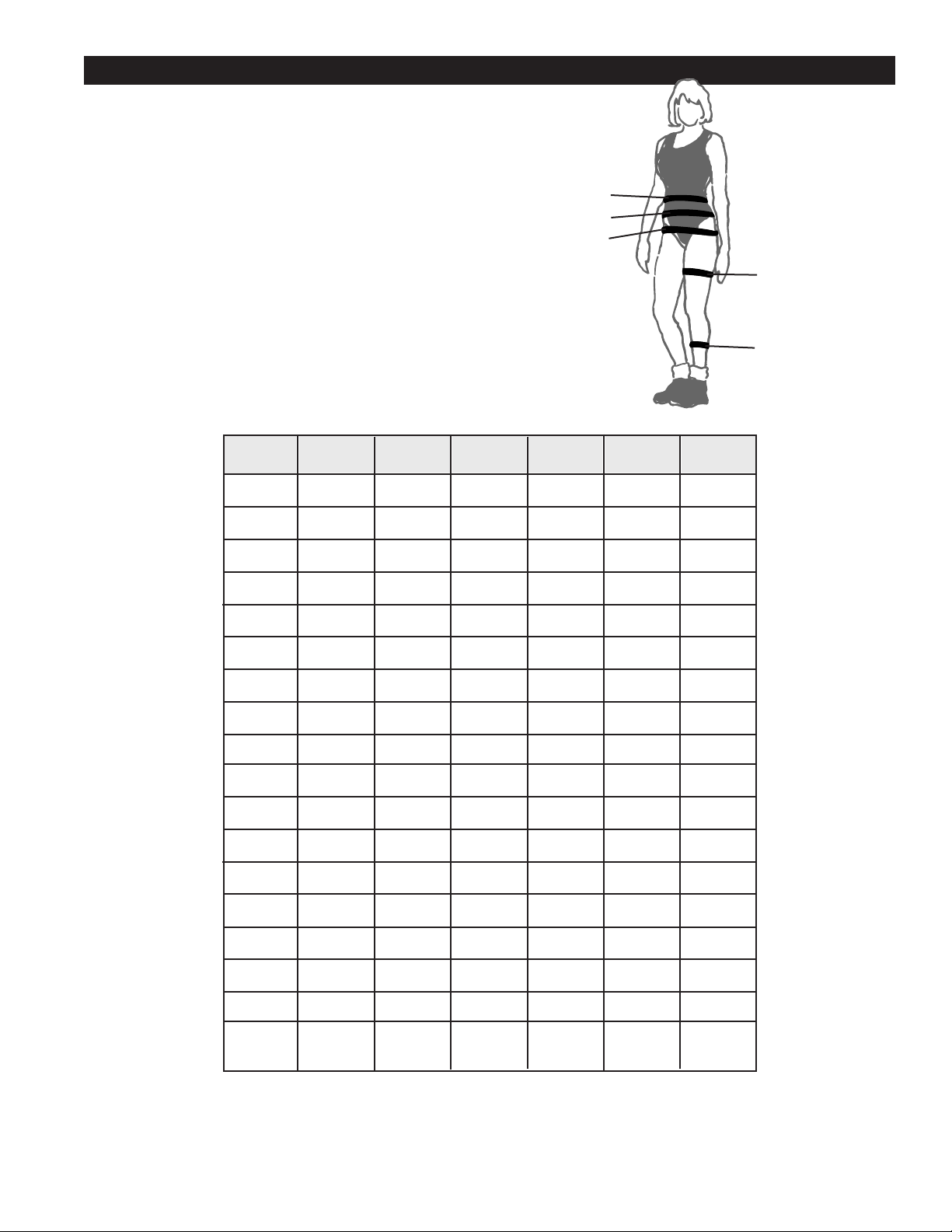
WORKOUT PROGRESS CHART
Every two weeks, measure yourself and use the
chart below to record your progress. Before writing
on it, make as many copies as you think you’ll need.
We suggest you keep these in a notebook. You will
find it both informative and motivational to look back
at what you’ve done. This data will help you chart
future fitness goals as you continue to improve.
Calves
Thighs
Hips
Abdomen
Waist
Weight
Date
Measuring Sites
Waist
Abdomen
Hips
Thighs (L/R)
Calves (L/R)
Page 31
®
We warrant this product to be free from all
defects in material and workmanship when used
according to the manufacturer’s instructions.
See Limited Warranty Card for details.
Save your sales receipt.
(You may wish to staple it into this manual.)
Dedication to Quality
10/17/05
 Loading...