

Page 1

374 FC/375 FC/376 FC
Clamp Meter
PN 4705494
September 2015
© 2015 Fluke Corporation. All rights reserved. Specifications are subject to change without notice.
All product names are trademarks of their respective companies.
Find Quality Products Online at: [email protected]
www.GlobalTestSupply.com
www. .com
information@itm.com1.800.561.8187
Page 2

LIMITED WARRANTY AND LIMITATION OF LIABILITY
This Fluke product will be free from defects in material and workmanship for three
years from the date of purchase. This warranty does not cover fuses, disposable
batteries, or damage from accident, neglect, misuse, alteration, contamination, or
abnormal conditions of operation or handling. Resellers are not authorized to extend
any other warranty on Fluke’s behalf. To obtain service during the warranty period,
contact your nearest Fluke authorized service center to obtain return authorization
information, then send the product to that Service Center with a description of the
problem.
THIS WARRANTY IS YOUR ONLY REMEDY. NO OTHER WARRANTIES, SUCH AS
FITNESS FOR A PARTICULAR PURPOSE, ARE EXPRESSED OR IMPLIED. FLUKE
IS NOT LIABLE FOR ANY SPECIAL, INDIRECT, INCIDENTAL OR
CONSEQUENTIAL DAMAGES OR LOSSES, ARISING FROM ANY CAUSE OR
THEORY. Since some states or countries do not allow the exclusion or limitation of an
implied warranty or of incidental or consequential damages, this limitation of liability
may not apply to you.
Fluke Corporation
P.O. Box 9090
Everett, WA 98206-9090
U.S.A.
11/99
Fluke Europe B.V.
P.O. Box 1186
5602 BD Eindhoven
The Netherlands
Find Quality Products Online at: [email protected]
www.GlobalTestSupply.com
www. .com
information@itm.com1.800.561.8187
Page 3

Table of Contents
Title Page
Introduction ................................................................................................................. 1
Contact Fluke ............................................................................................................. 2
Safety Information ...................................................................................................... 3
Replacement Part List ................................................................................................ 9
The Product ................................................................................................................ 10
Specifications ............................................................................................................. 22
i
Find Quality Products Online at: [email protected]
www.GlobalTestSupply.com
www. .com
information@itm.com1.800.561.8187
Page 4

Introduction
The Fluke 374 FC/375 FC/376 FC (the Product) measures true-rms ac current and voltage, dc
current and voltage, inrush current, resistance, and capacitance. The 375 FC and 376 FC also
measure frequency and dc millivolts. The detachable iFlex (Flexible Current Probe) that is
included with the 376 FC (optional with the 374 FC and 375 FC) expands the measurement range
to 2500 A ac. The Flexible Current Probe provides increased display flexibility and allows
measurements of awkward sized conductors and improved wire access. The illustrations in this
manual show the 376 FC.
1
Find Quality Products Online at: [email protected]
www.GlobalTestSupply.com
www. .com
information@itm.com1.800.561.8187
Page 5

Clamp Meters
Safety Information
Safety Information
A Warning identifies conditions and procedures that are dangerous to the user. A Caution
identifies conditions and procedures that can cause damage to the Product or the equipment
under test.
Symbols used on the Product and in this manual are explained in Table 1.
XWWarning
To prevent possible electrical shock, fire, or personal injury:
• Carefully read all instructions.
• Read all safety information before you use the Product.
• Use the Product only as specified, or the protection supplied by the Product can
be compromised.
• Do not use the Product around explosive gas, vapor, or in damp or wet
environments.
• Do not use and disable the Product if it is damaged.
• Do not use the Product if it operates incorrectly.
• Use only correct measurement category (CAT), voltage, and amperage rated
probes, test leads, and adapters for the measurement.
3
Find Quality Products Online at: [email protected]
www.GlobalTestSupply.com
www. .com
information@itm.com1.800.561.8187
Page 6

374 FC/375 FC/376 FC
Users Manual
• Do not exceed the Measurement Category (CAT) rating of the lowest rated
individual component of a Product, probe, or accessory.
• Comply with local and national safety codes. Use personal protective equipment
(approved rubber gloves, face protection, and flame-resistant clothes) to prevent
shock and arc blast injury where hazardous live conductors are exposed.
• Before each use, examine the Product. Look for cracks or missing pieces of the
clamp housing or output cable insulation. Also look for loose or weakened
components. Carefully examine the insulation around the jaws.
• Do not use test leads if they are damaged. Examine the test leads for damaged
insulation and measure a known voltage.
• Do not touch voltages >30 V ac rms, 42 V ac peak, or 60 V dc.
• Do not measure current while the test leads are in the input jacks.
• Do not apply more than the rated voltage, between the terminals or between each
terminal and earth ground.
• De-energize the circuit or wear personal protective equipment in compliance with
local requirements before you apply or remove the Flexible Current Probe.
• Measure a known voltage first to make sure that the Product operates correctly.
• Limit operation to the specified measurement category, voltage, or amperage
ratings.
• The battery door must be closed and locked before you operate the Product.
4
Find Quality Products Online at: [email protected]
www.GlobalTestSupply.com
www. .com
information@itm.com1.800.561.8187
Page 7

Clamp Meters
Safety Information
• Connect the common test lead before the live test lead and remove the live test
lead before the common test lead.
• Remove all probes, test leads, and accessories before the battery door is
opened.
• Keep fingers behind the finger guards on the probes.
• Hold the Product behind the tactile barrier.
• Replace the batteries when the low battery indicator shows to prevent incorrect
measurements.
• Do not use the HOLD function to measure unknown potentials. When HOLD is
turned on, the display does not change when a different potential is measured.
• Disconnect power and discharge all high-voltage capacitors before you measure
resistance, continuity, capacitance, or a diode junction.
• Remove the input signals before you clean the Product.
• Use only specified replacement parts.
• When batteries are changed, ensure that the calibration seal in the battery
compartment is not damaged. If damaged, the Product may not be safe to use.
Return the Product to Fluke for replacement of the seal.
• Do not use in CAT III or CAT IV environments without the protective cap of test
probe, The protective cap decreases the expose probe metal < 4mm. This
decreases the possibility of arc flash from short circuits.
• Do not place magnet inside Category IV panel. Place it outside the panel instead.
5
Find Quality Products Online at: [email protected]
www.GlobalTestSupply.com
www. .com
information@itm.com1.800.561.8187
Page 8

374 FC/375 FC/376 FC
Users Manual
For safe operation and maintenance of the Product:
• Repair the Product before use if the battery leaks.
• Have an approved technician repair the Product.
WCaution
To avoid possible damage to the Product or to equipment under test:
• Use the proper jacks, function, and range for the measurement application.
• Clean the case and accessories with a damp cloth and mild detergent only.
Do not use abrasives or solvents.
Note
The Measurement Category (CAT) and voltage rating of any combination of test
probe, test probe accessory, current clamp accessory, and the Product is the
LOWEST rating of any individual component.
6
Find Quality Products Online at: [email protected]
www.GlobalTestSupply.com
www. .com
information@itm.com1.800.561.8187
Page 9
Clamp Meters
Safety Information
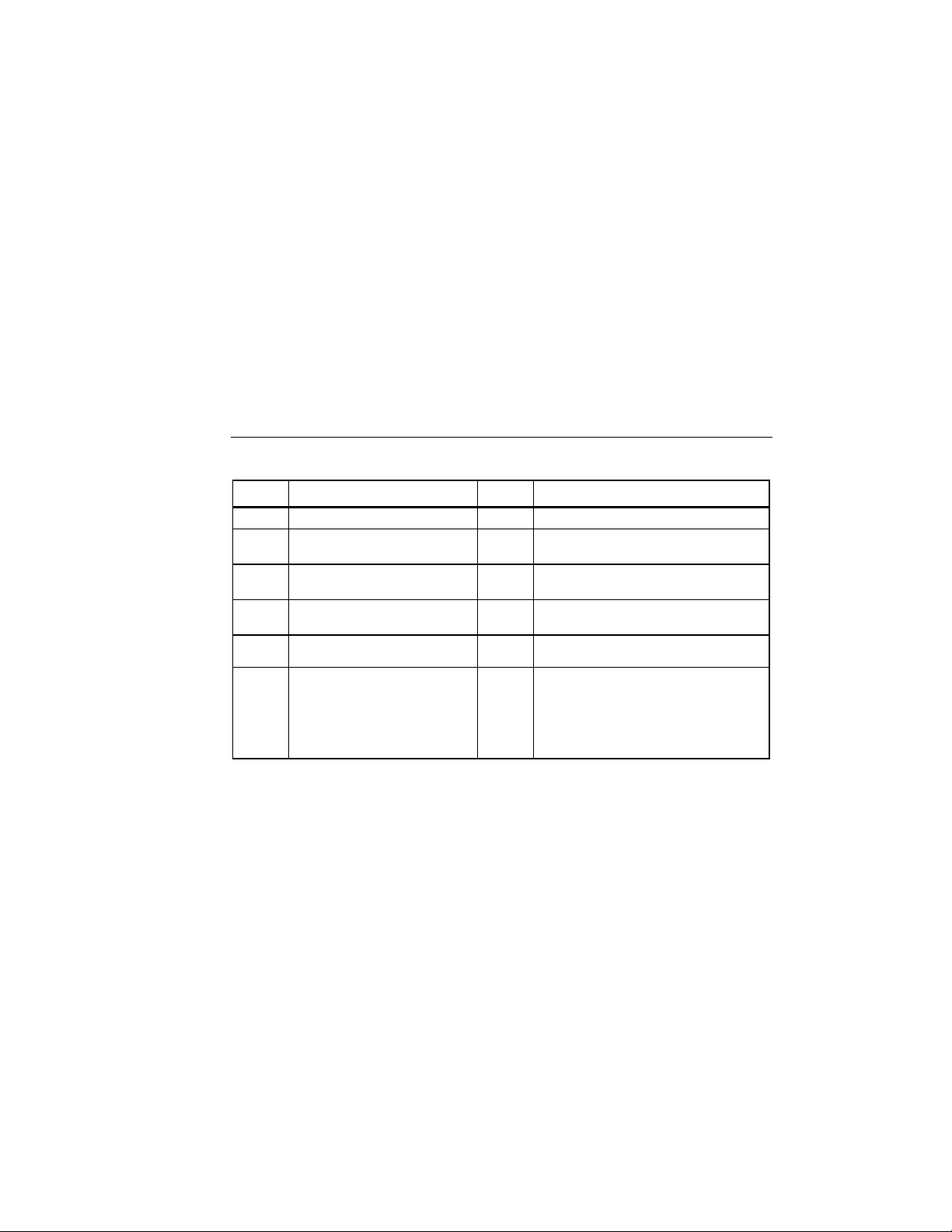
Table 1. Symbols
Symbol Meanin g S ymbol Meaning
AC (Alternating Current) Earth
DC (Direct Current) X
Conforms to European Union
P
directives.
Consult user documentation.
WARNING. HAZARDOUS VOLTAGE.
Risk of electric shock.
W WARNING. RISK OF DANGER.
Battery. Low battery when shown on
display.
T Double Insulated Certified by TÜV SÜD Product Service.
Do not apply to or remove from
HAZARDOUS LIVE conductors.
Do not apply around or remove
-
from uninsulated hazardous live
conductors without taking
additional protective measures.
Application around and removal from
,
uninsulated hazardous live conductors is
permitted.
7
Find Quality Products Online at: [email protected]
www.GlobalTestSupply.com
www. .com
information@itm.com1.800.561.8187
Page 10

374 FC/375 FC/376 FC
Users Manual
Table 1. Symbols (Cont.)
Symbol Meanin g Symbol Meaning
~
8
Measurement Category III is
applicable to test and measuring
circuits connected to the distribution
part of the building’s low-voltage
MAINS installation.
Conforms to relevant Australian
EMC standards.
This product complies with the WEEE Directive marking requirements. The affixed
label indicates that you must not discard this electrical/electronic product in domestic
household waste. Product Category: With reference to the equipment types in the
WEEE Directive Annex I, this product is classed as category 9 "Monitoring and
Control Instrumentation" product. Do not dispose of this product as unsorted
municipal waste.
)
Measurement Category IV is
applicable to test and measuring
circuits connected at the source of
the building’s low-voltage MAINS
installation.
Certified by CSA Group to North
American safety standards.
Find Quality Products Online at: [email protected]
www.GlobalTestSupply.com
www. .com
information@itm.com1.800.561.8187
Page 11
Clamp Meters
Replacement Part List
Replacement Part List
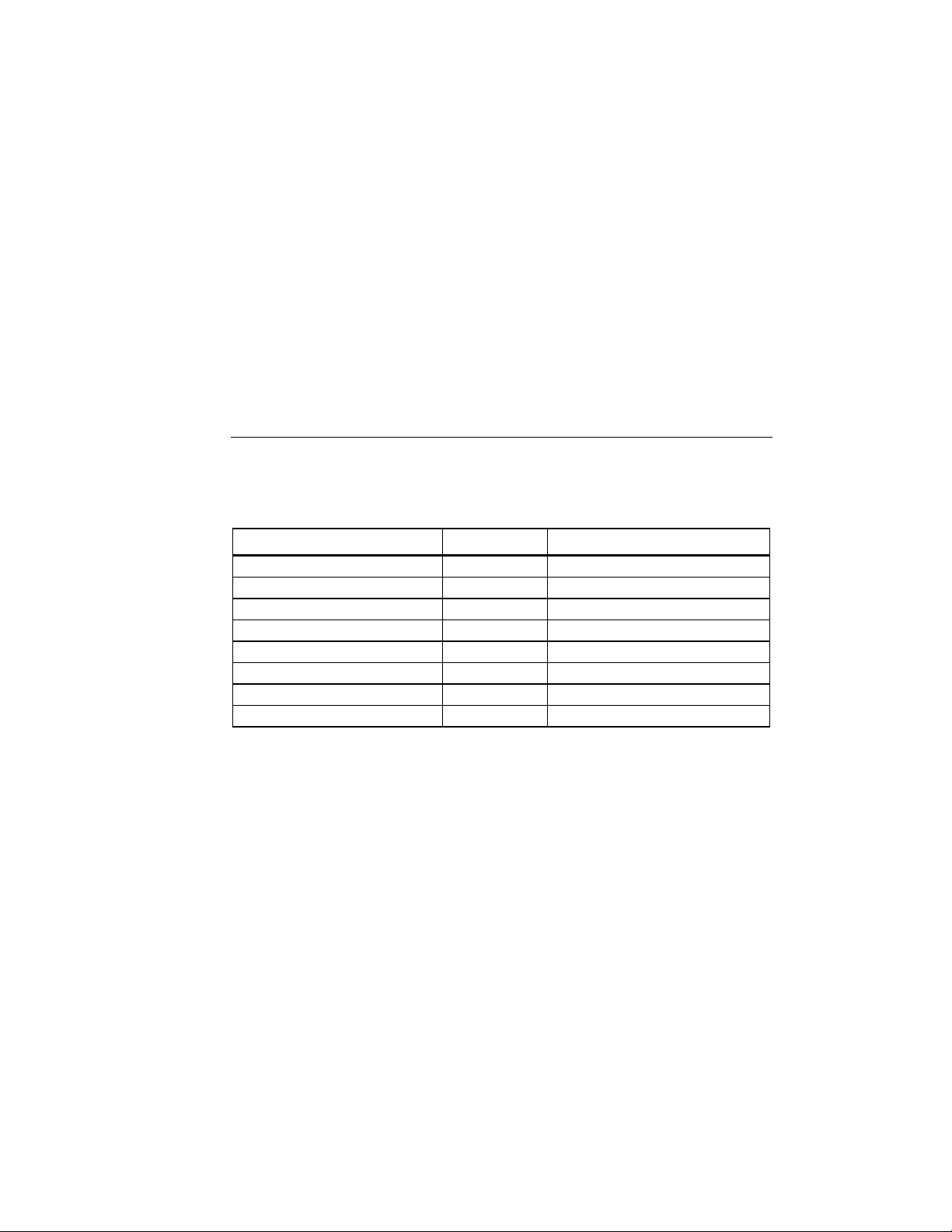
Table 2 lists the available replacement parts.
Table 2. Replacement Parts
Item Qty. Fluke Part or Model Number
Battery, AA 1.5 V 2 376756
Battery Door Assembly 1 4696918
Test lead set 1 TL75
Flexible current probe i2500-10 1 3676410
Flexible current probe i2500-18 1 3798105
Magnet strap 1 669952
STRAP 9 INCHES 1 669960
Soft Case 1 3752958
9
Find Quality Products Online at: [email protected]
www.GlobalTestSupply.com
www. .com
information@itm.com1.800.561.8187
Page 12
374 FC/375 FC/376 FC
Users Manual
The Product
Clamp Meter
10
fig01.eps
Find Quality Products Online at: [email protected]
www.GlobalTestSupply.com
www. .com
information@itm.com1.800.561.8187
Page 13
Clamp Meters
The Product
Auto Power Off Backlight
20
ON
ON
fig02_3.eps
11
Find Quality Products Online at: [email protected]
www.GlobalTestSupply.com
www. .com
information@itm.com1.800.561.8187
Page 14
374 FC/375 FC/376 FC
Users Manual
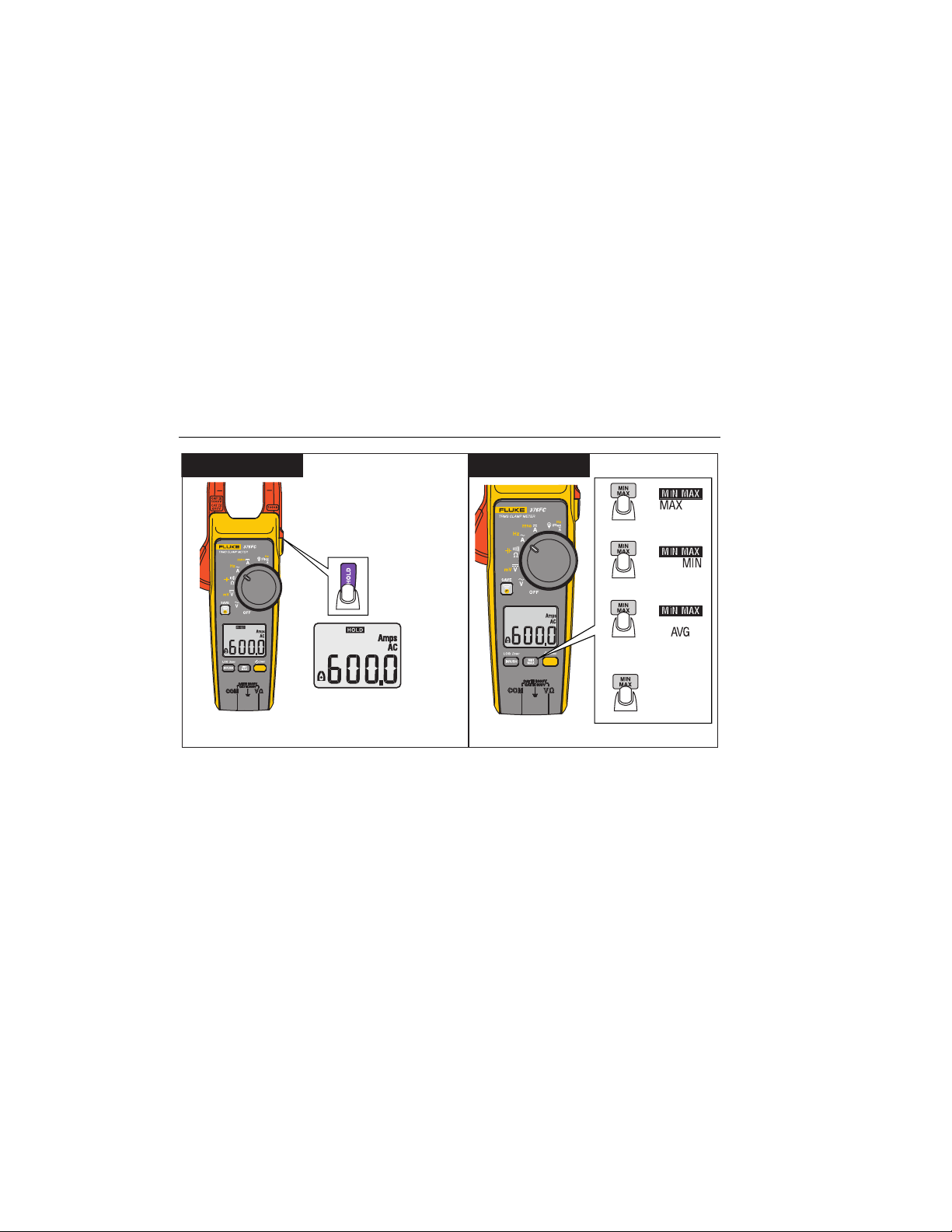
Display Hold MIN MAX AVG
12
1x
2x
3x
=
=
=
2 sec = Exit
fig04_5.eps
Find Quality Products Online at: [email protected]
www.GlobalTestSupply.com
www. .com
information@itm.com1.800.561.8187
Page 15
Clamp Meters
The Product
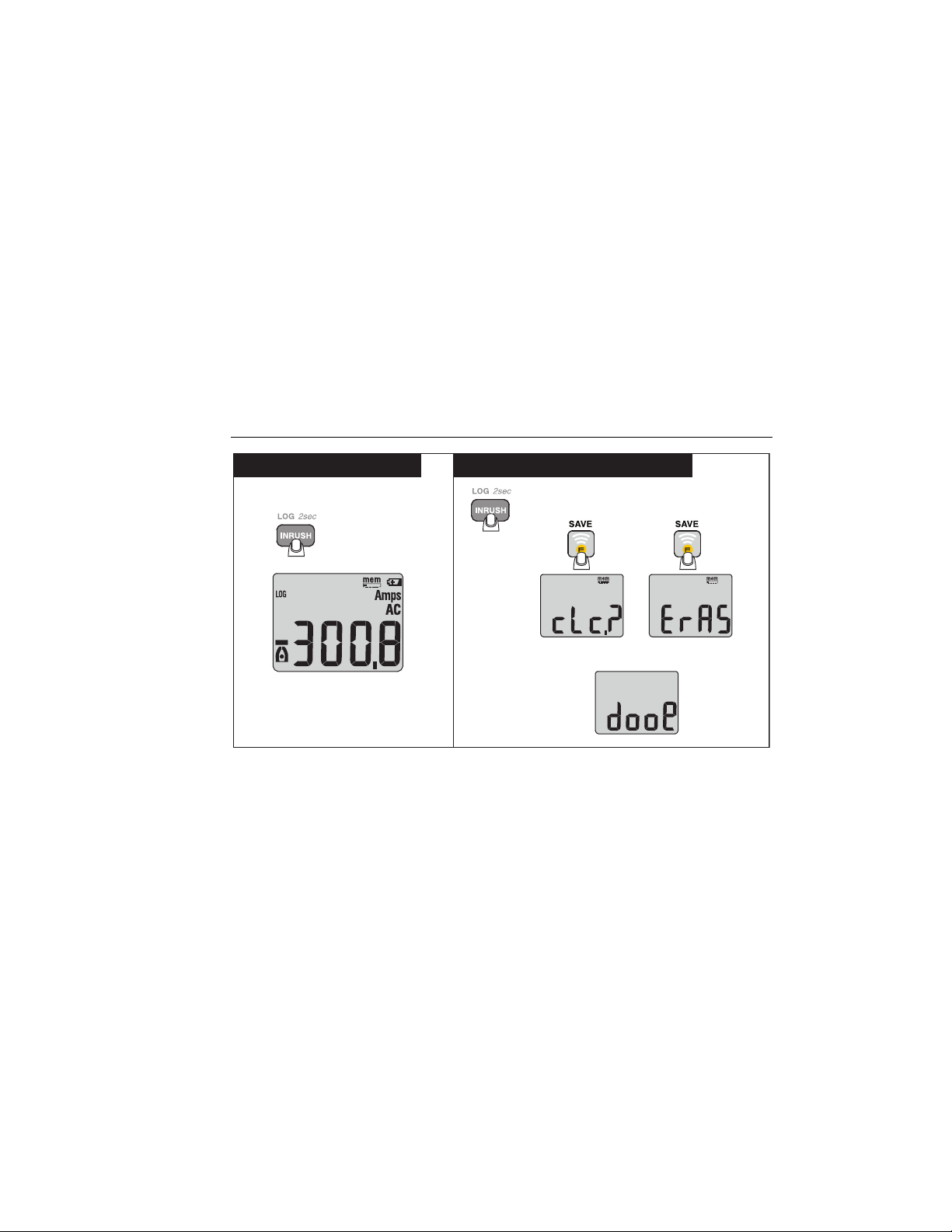
LOG
(375 FC and 376 FC)
Clear Memory
+ ON +
(375 FC and 376 FC)
2 sec = LOG
x1 x2
5 sec
fig_16.eps
13
Find Quality Products Online at: [email protected]
www.GlobalTestSupply.com
www. .com
information@itm.com1.800.561.8187
Page 16
374 FC/375 FC/376 FC
Users Manual
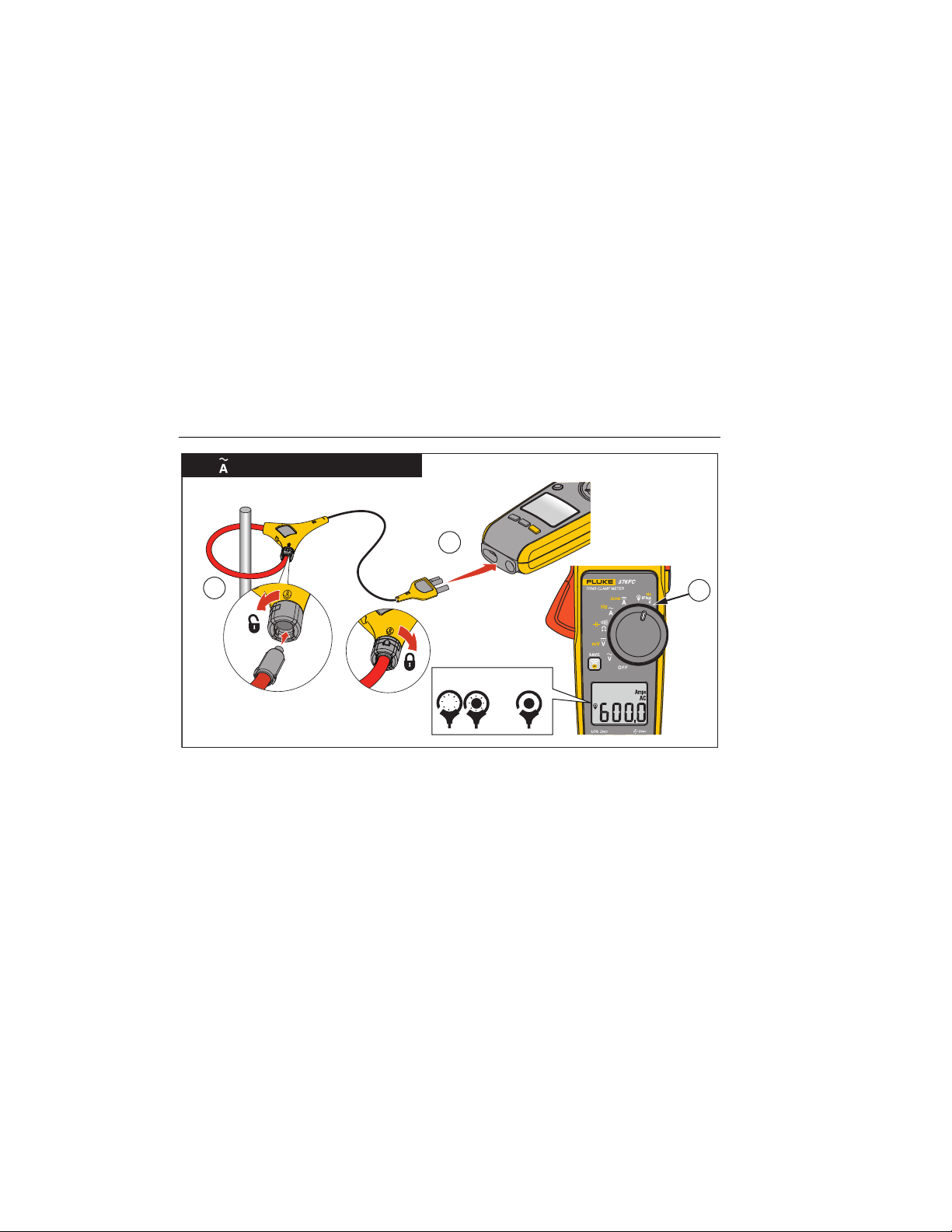
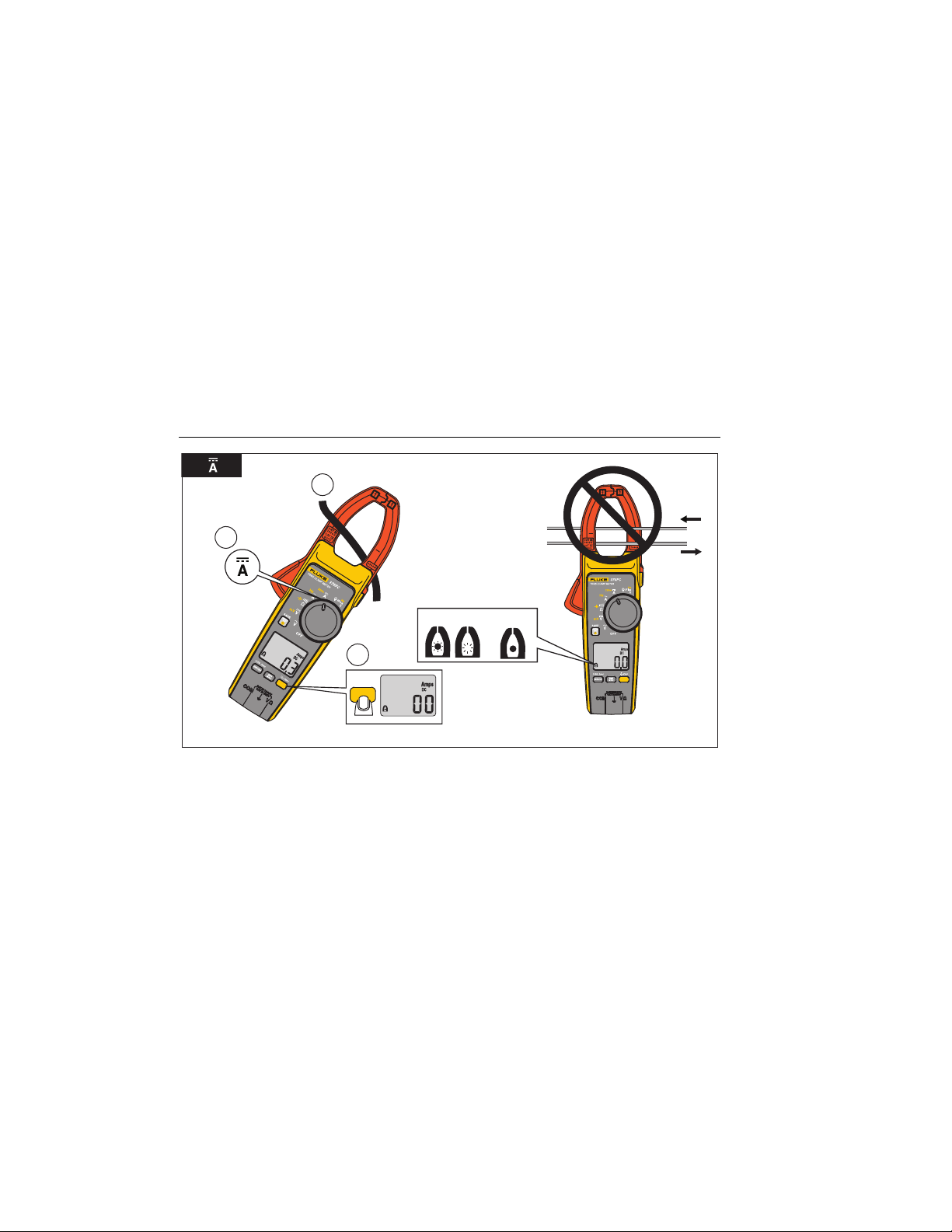
Flexible Current Probe
1
14
2
<0.5 A
>0.5 A
3
fig06.eps
Find Quality Products Online at: [email protected]
www.GlobalTestSupply.com
www. .com
information@itm.com1.800.561.8187
Page 17
Clamp Meters
The Product
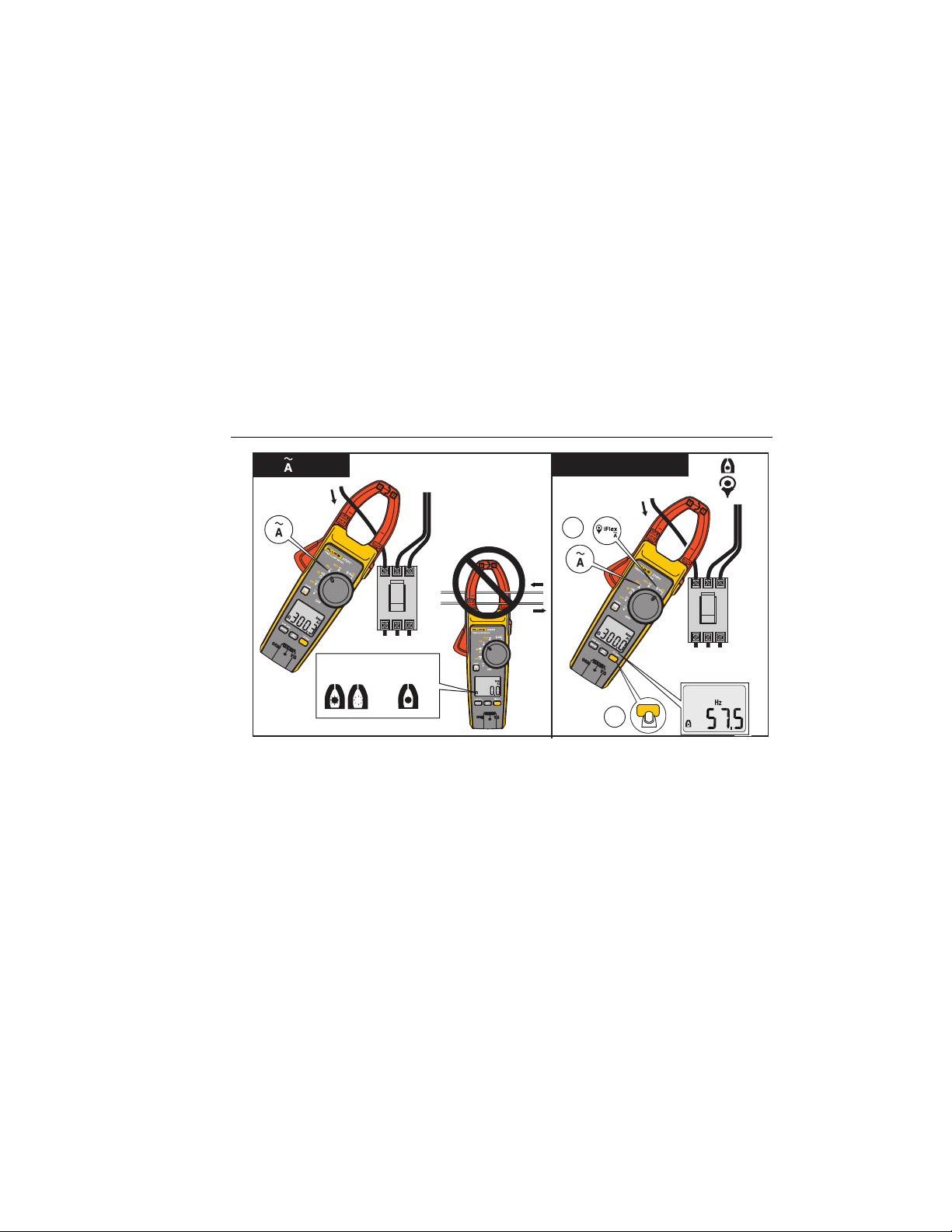
Hz
Jaw
(375 FC & 376 FC)
1
> 5 A
> 20 A
<0.5 A
>0.5 A
2
fig07.eps
15
Find Quality Products Online at: [email protected]
www.GlobalTestSupply.com
www. .com
information@itm.com1.800.561.8187
Page 18
374 FC/375 FC/376 FC
Users Manual
1
3
16
<0.5 A
2
>0.5 A
Fig08.eps
Find Quality Products Online at: [email protected]
www.GlobalTestSupply.com
www. .com
information@itm.com1.800.561.8187
Page 19
Clamp Meters
The Product
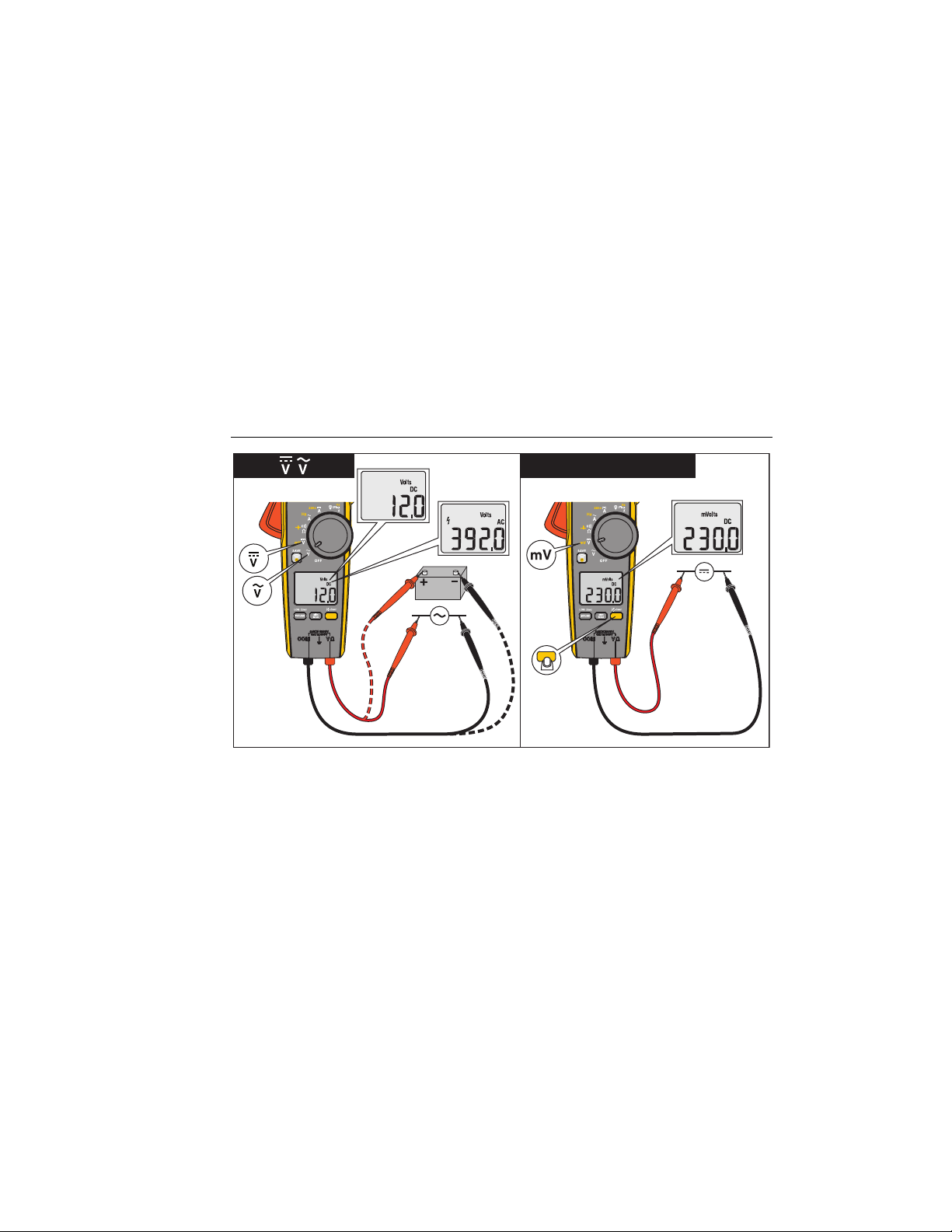
mV dc (375 FC & 376 FC)
fig09_10.eps
17
Find Quality Products Online at: [email protected]
www.GlobalTestSupply.com
www. .com
information@itm.com1.800.561.8187
Page 20
374 FC/375 FC/376 FC
Users Manual
e
18
R
ON
<30
Fig15.eps
Find Quality Products Online at: [email protected]
www.GlobalTestSupply.com
www. .com
information@itm.com1.800.561.8187
Page 21
Clamp Meters
The Product
3
On
100 ms
4
fig13_14.eps
19
Off
1
2
Find Quality Products Online at: [email protected]
www.GlobalTestSupply.com
www. .com
information@itm.com1.800.561.8187
Page 22
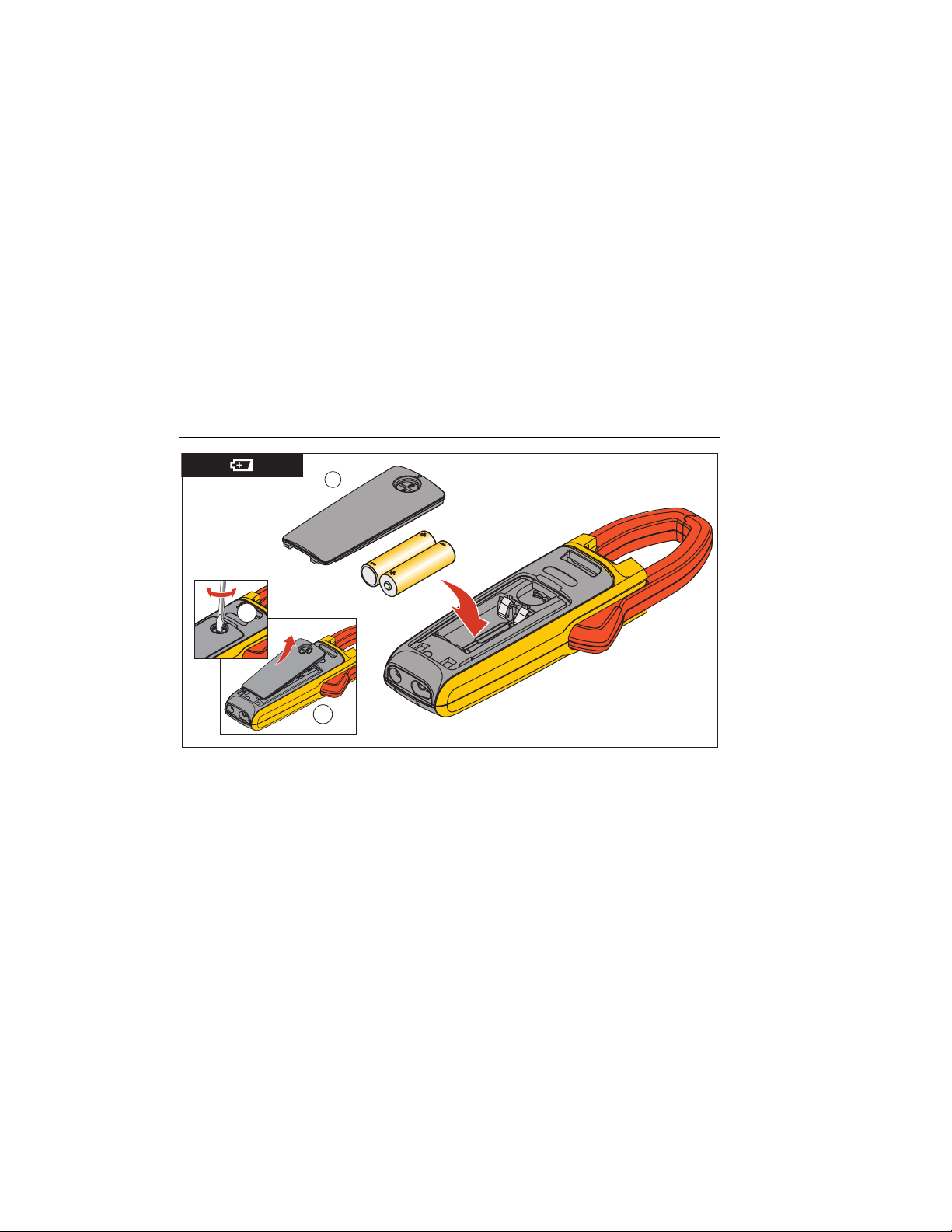
374 FC/375 FC/376 FC
Users Manual
1
20
3
2
fig11_12.eps
Find Quality Products Online at: [email protected]
www.GlobalTestSupply.com
www. .com
information@itm.com1.800.561.8187
Page 23
Clamp Meters
The Product
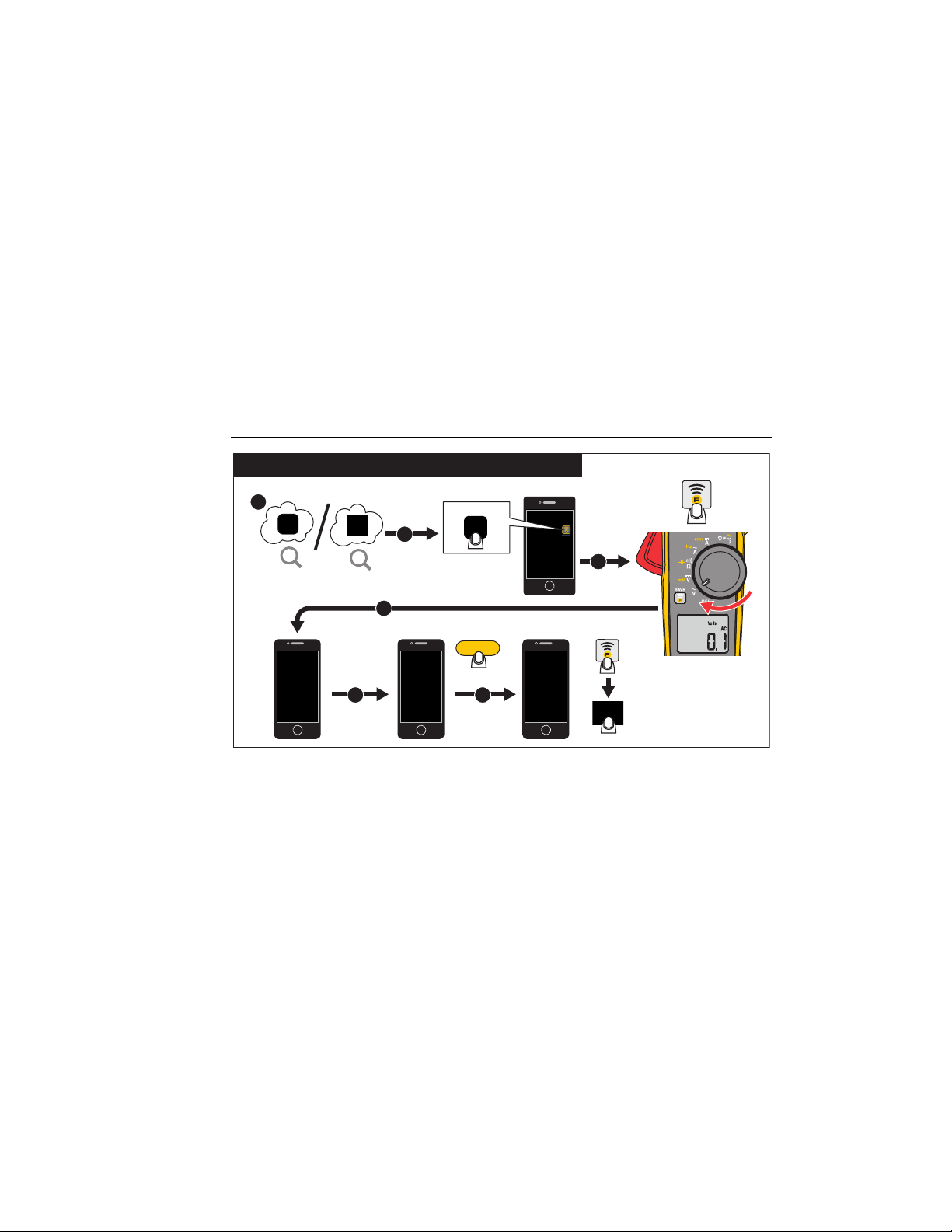
Fluke ConnectTM Bluetooth® Connection to FC Tools
1
4
5 6
Fluke Connect
2
TM
CAPTURE
FC Module
SAVE
Connect
3
SAVE
21
Find Quality Products Online at: [email protected]
www.GlobalTestSupply.com
www. .com
information@itm.com1.800.561.8187
Page 24

374 FC/375 FC/376 FC
Users Manual
Specifications
Maximum voltage between
any Terminal and Earth Ground ............. 1000 V
Batteries .................................................. 2 AA, NEDA 15A, IEC LR6
Operating Temperature ........................... -10 °C to +50 °C
Storage Temperature .............................. -40 °C to +60 °C
Operating Humidity ................................. Non condensing (<10°C)
≤90 % RH (at 10 °C to 30 °C)
≤75 % RH (at 30 °C to 40 °C)
≤45 % RH (at 40 °C to 50 °C)
Operating Altitude ................................... 2000 m
Storage Altitude ...................................... 12,000 m
Size (L x W x H) ..................................... 249 mm x 85 mm x 45 mm
Weight ..................................................... 410 g
Jaw Opening ........................................... 34 mm
Flexible Current Probe Diameter ............ 7.5 mm
Flexible Current Probe Cable Length
(head to electronics connector) .............. 1.8 m
22
Find Quality Products Online at: [email protected]
www.GlobalTestSupply.com
www. .com
information@itm.com1.800.561.8187
Page 25

Clamp Meters
Specifications
Safety ...................................................... IEC 61010-1, Pollution Degree 2
IEC 61010-2-032: CAT III 1000V / CAT IV 600V
IEC 61010-2-033: CAT III 1000V / CAT IV 600V
Intrusion Protection (IP) Rating ............... IEC 60529: IP30
Radio Frequency Certification ................. FCC ID:T68-FBLE IC:6627A-FBLE
Wireless Radio Frequency Range .......... 2412 MHz to 2462 MHz
Output Power .......................................... <100 mW
Electromagnetic Compatibility (EMC)
International ...................................... IEC 61326-1: Portable, Electromagnetic Environment,
Group 1: Equipment has intentionally generated and/or uses conductively-coupled radio
frequency energy that is necessary for the internal function of the equipment itself.
Class A: Equipment is suitable for use in all establishments other than domestic and
those directly connected to a low-voltage power supply network that supplies buildings
used for domestic purposes. There may be potential difficulties in ensuring
electromagnetic compatibility in other environments due to conducted and radiated
disturbances. Emissions that exceed the levels required by CISPR 11 can occur when the
equipment is connected to a test object.
IEC 61326-2-2, CISPR 11: Group 1, Class A
23
Find Quality Products Online at: [email protected]
www.GlobalTestSupply.com
www. .com
information@itm.com1.800.561.8187
Page 26

374 FC/375 FC/376 FC
Users Manual
Temperature Coefficients........................ Add 0.1 x specified accuracy for each degree C above
AC Current via Jaw
Range
374 FC and 375 FC ........................... 600.0 A
376 FC ............................................... 999.9 A
Resolution ............................................... 0.1 A
Accuracy ................................................. 2 % ±5 digits (10 Hz to 100 Hz)
2.5 % ±5 digits (100 to 500 Hz)
Crest Factor (50 Hz/60 Hz)
376 FC .............................................. 3 @ 500 A
2.5 @ 600 A
1.42 @ 1000 A
374 FC and 375 FC .......................... 2.5 @ 350 A
Note: Add 2 % for C.F. >2
24
28 °C or below 18 °C
1.42 @ 600 A
Find Quality Products Online at: [email protected]
www.GlobalTestSupply.com
www. .com
information@itm.com1.800.561.8187
Page 27

Clamp Meters
Specifications
AC Current via Flexible Current Probe
Range .................................................... 2500 A
Resolution ............................................... 0.1 A (≤999.9 A)
1 A (≤2500 A)
Accuracy ................................................. 3 % ±5 digits (5 to 500 Hz)
Crest Factor (50 Hz/60 Hz) ..................... 3.0 @ 1100 A
2.5 @ 1400 A
1.42 @ 2500 A
Add 2 % for C.F. >2
25
Find Quality Products Online at: [email protected]
www.GlobalTestSupply.com
www. .com
information@itm.com1.800.561.8187
Page 28
374 FC/375 FC/376 FC
Users Manual
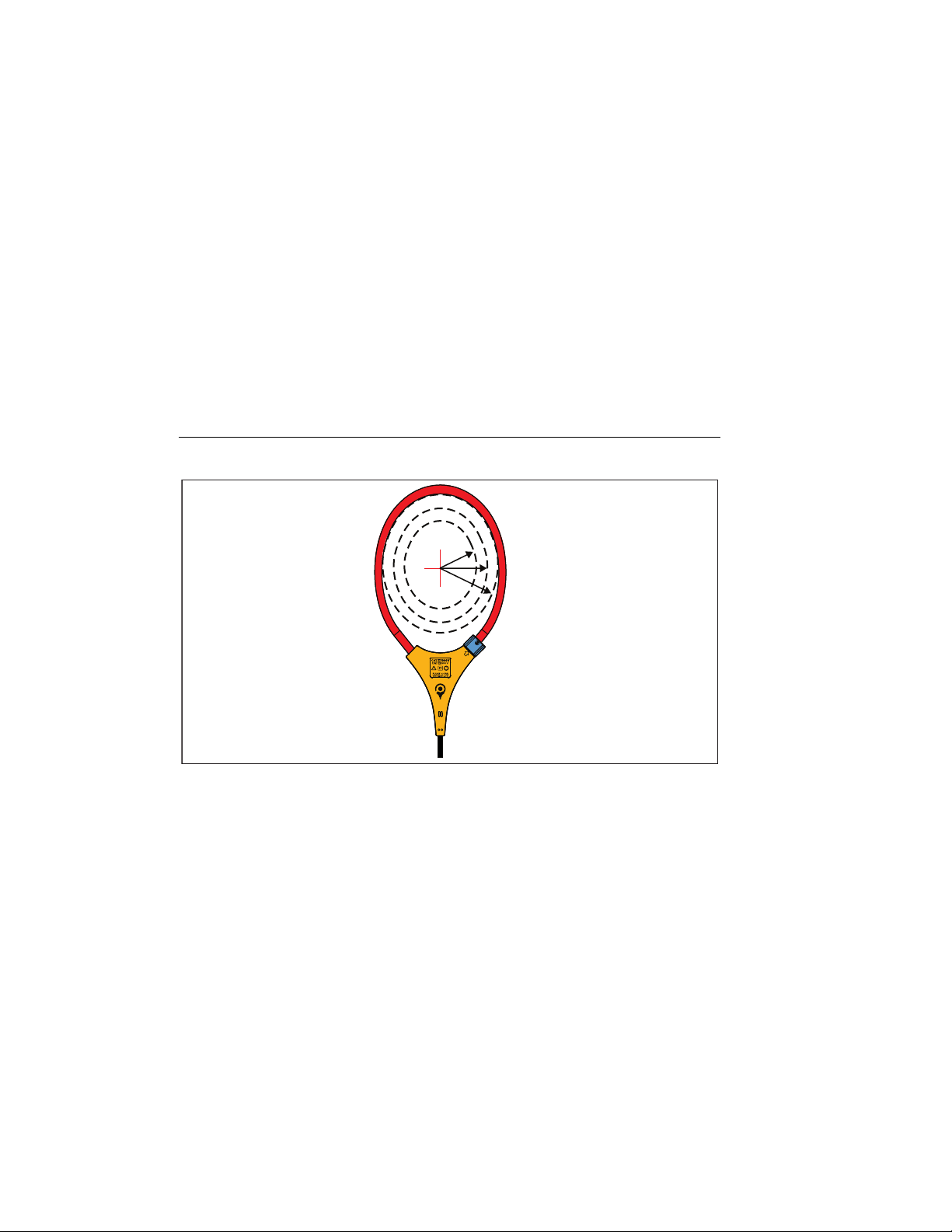
Position Sensitivity
26
A
B
C
Figure 1. Position Sensitivity
ghn12.eps
Find Quality Products Online at: [email protected]
www.GlobalTestSupply.com
www. .com
information@itm.com1.800.561.8187
Page 29
Clamp Meters
Specifications
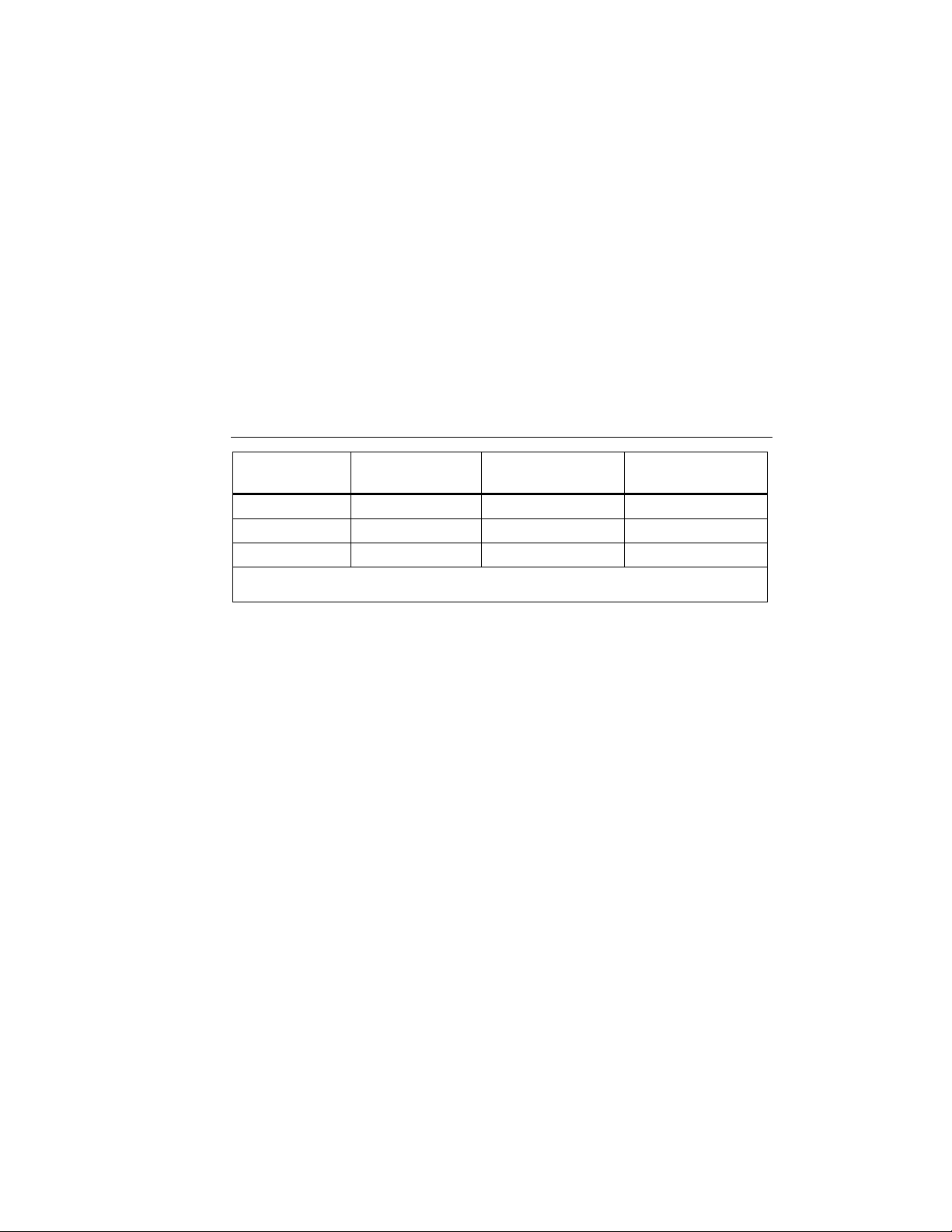
Distance from
Optimum
A 0.5 in (12.7 mm) 1.4 in (35.6 mm) ±0.5 %
B 0.8 in (20.3 mm) 2.0 in (50.8 mm) ±1.0 %
C 1.4 in (35.6 mm) 2.5 in (63.5 mm) ±2.0 %
Measurement uncertainty assumes centralized primary conductor at optimum position, no
external electrical or magnetic field, and within operating temperature range.
DC Current
Range
374 FC and 375 FC ........................... 600.0 A
376 FC ............................................... 999.9 A
Resolution ............................................... 0.1 A
Accuracy ................................................. 2 % ±5 digits
i2500-10 Flex i2500-18 Flex Error
27
Find Quality Products Online at: [email protected]
www.GlobalTestSupply.com
www. .com
information@itm.com1.800.561.8187
Page 30

374 FC/375 FC/376 FC
Users Manual
AC Voltage
Range ..................................................... 1000 V
Resolution ............................................... 0.1 V (≤600.0 V)
1 V (≤1000 V)
Accuracy ................................................. 1.5 % ±5 digits (20 Hz to 500 Hz)
DC Voltage
Range ..................................................... 1000 V
Resolution ............................................... 0.1 V (≤600.0 V)
1 V (≤1000 V)
Accuracy ................................................. 1 % ±5 digits
mV dc (375 FC and 376 FC)
Range ..................................................... 500.0 mV
Resolution ............................................... 0.1 mV
Accuracy ................................................. 1 % ±5 digits
28
Find Quality Products Online at: [email protected]
www.GlobalTestSupply.com
www. .com
information@itm.com1.800.561.8187
Page 31

Clamp Meters
Specifications
Frequency via Jaw
Range
375 FC and 376 FC ........................... 5.0 Hz to 500.0 Hz
Resolution ............................................... 0.1 Hz
Accuracy ................................................. 0.5 % ±5 digits
Trigger Level ........................................... 5 Hz to 10 Hz, ≥10 A
10 Hz to 100 Hz, ≥5 A
100 Hz to 500 Hz, ≥10 A
Frequency via Flexible Current Probe
Range
375 FC and 376 FC ............................. 5.0 Hz to 500.0 Hz
Resolution ............................................... 0.1 Hz
Accuracy ................................................. 0.5 % ±5 digits
Trigger Level ........................................... 5 Hz to 20 Hz, ≥25 A
20 Hz to 100 Hz, ≥20 A
100 Hz to 500 Hz, ≥25 A
29
Find Quality Products Online at: [email protected]
www.GlobalTestSupply.com
www. .com
information@itm.com1.800.561.8187
Page 32

374 FC/375 FC/376 FC
Users Manual
Resistance
Range
374 FC ............................................... 6000 Ω
375 FC and 376 FC ........................... 60 kΩ
Resolution
374 FC ............................................... 0.1 Ω (≤600 Ω)
1 Ω (≤6000 Ω)
375 FC and 376 FC ........................... 0.1 Ω (≤600 Ω)
1 Ω (≤6000 Ω)
10 Ω (≤60 kΩ)
Accuracy ................................................. 1 % ±5 digits
Capacitance
Range ..................................................... 1000 µF
Resolution ............................................... 0.1 µF (≤100 µF)
1 µF (≤1000 µF)
Accuracy ................................................. 1 % ±4 digits
30
Find Quality Products Online at: [email protected]
www.GlobalTestSupply.com
www. .com
information@itm.com1.800.561.8187
 Loading...