

Page 1
TEN-TEC MODEL 1253
REGENERATIVE RADIO KIT
As I had limited previous kit-building experience, I built the
Ten-Tec Model 1253 Nine-Band Regenerative HF Radio Kit in a
several short sessions spread out over several days. More
experienced kit builders could be expected to complete this kit
in much less time, but I took my time and worked at a
leisurely pace. Overall, a good kit building experience.
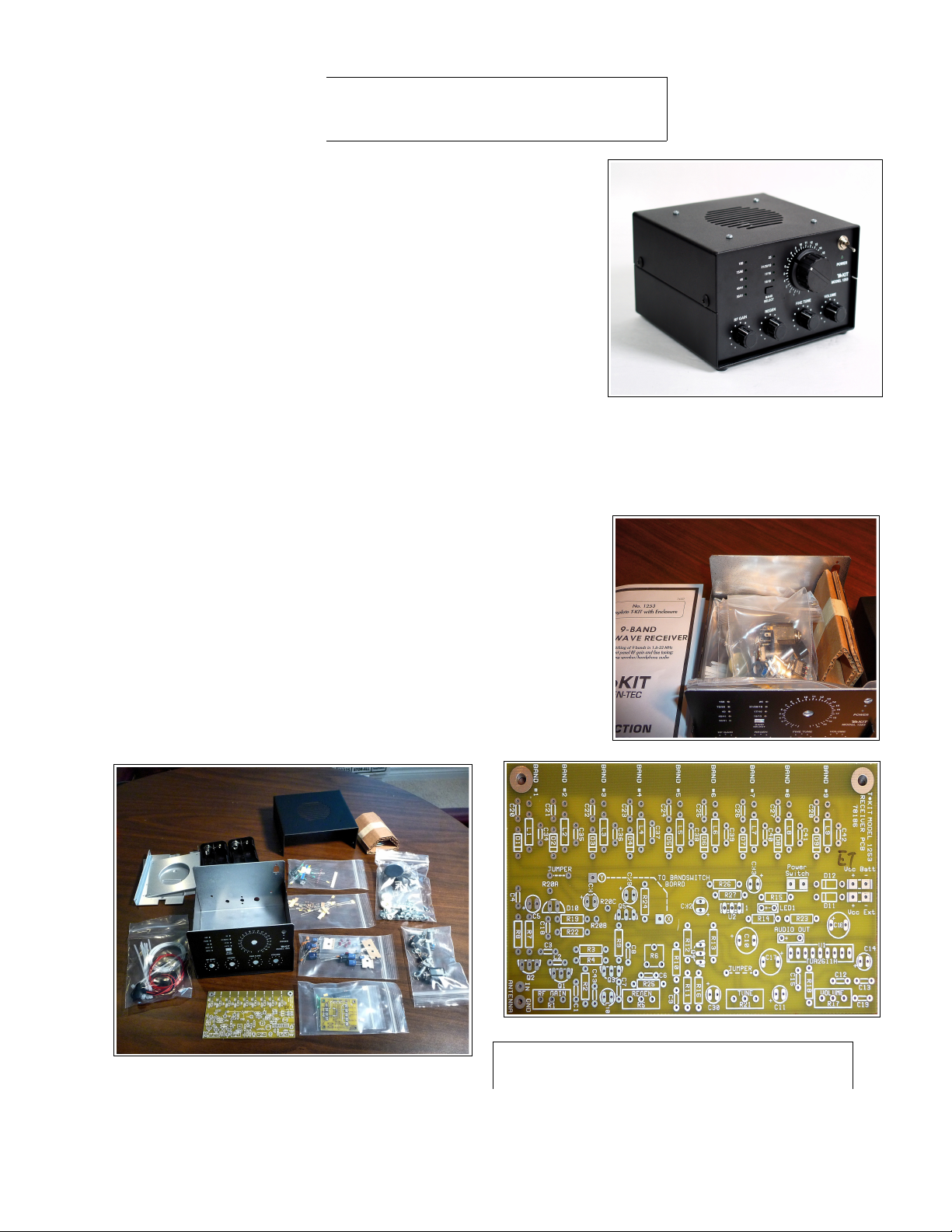
The kit included all required parts, which were packaged in
several zip-lock plastic bags. It was fairly easy to quickly
identify and inventory all parts.
The instruction booklet was reasonably clear, concise, and
adequate to guide the novice builder. My sole objection is it
appears to have been reproduced on a standard copy machine and should have higher print clarity
and quality. The builder is well advised to pay attention to any separate error corrections and
updates printed on separate sheets of paper, and take time to mark all such changes and updates in
the main instruction booklet before starting construction.
Sidebar – Considering we live in an era of modern computer
word processing and inexpensive, high quality laser printers,
there is no excuse for not producing all documents with these
applications, and all updates or changes should be made to
the original document before its inclusion in the kit as
delivered to builder. I suspect these kits were put up some
time ago, so I doubt it would be profitable to rewrite this
manual unless and until current supplies run out or major
revisions in design or component parts are made that
necessitate overhauling the instruction manual. I would to it,
if only to update the look and feel of the kit to the builder.
Photos (above) show components before commencing
assembly.
____________________________________________________________________________________________________________________________
Ten-Tec Model 1253 Regenerative HF Radio Kit, Page 1 of 3. K8JHR © copyright 2013
Page 2
Overall, a good kit experience.
A few Suggestions, Minor Concerns, and Issues to consider:
1. One problem was a temporary show stopper. The audio amplifier IC chip burned out during a
scheduled progress test. While a bit disconcerting, Ten-Tec agreed it was a defective part, and
provided a replacement without delay. It is hard to beat Ten-Tec customer service. The
service technicians are just a phone call away, and are patient, courteous and helpful.
2. Building the front panel circuit board so the LEDs line up with the respective holes in the front
panel can be tricky. Careful workmanship will be rewarded with easier alignment during final
assembly. Some builders report the little holes might be filled with paint, and have remedied
this using an appropriate size twist drill bit. I did not encounter this problem, but the LEDs
are hard to line up in any case.
3. Some builders suggest placing a piece of window screen, fine metal mesh or fabric across the
speaker to prevent dust and small objects from falling into the top-mounted speaker grill. I
eschewed this advice, although it seems like a good idea. Some builders have found the
speaker vibrates or rattles, and cure this with some well placed electrical tape or rubber
padding. My unit did not require this modification, although I can see how it could happen.
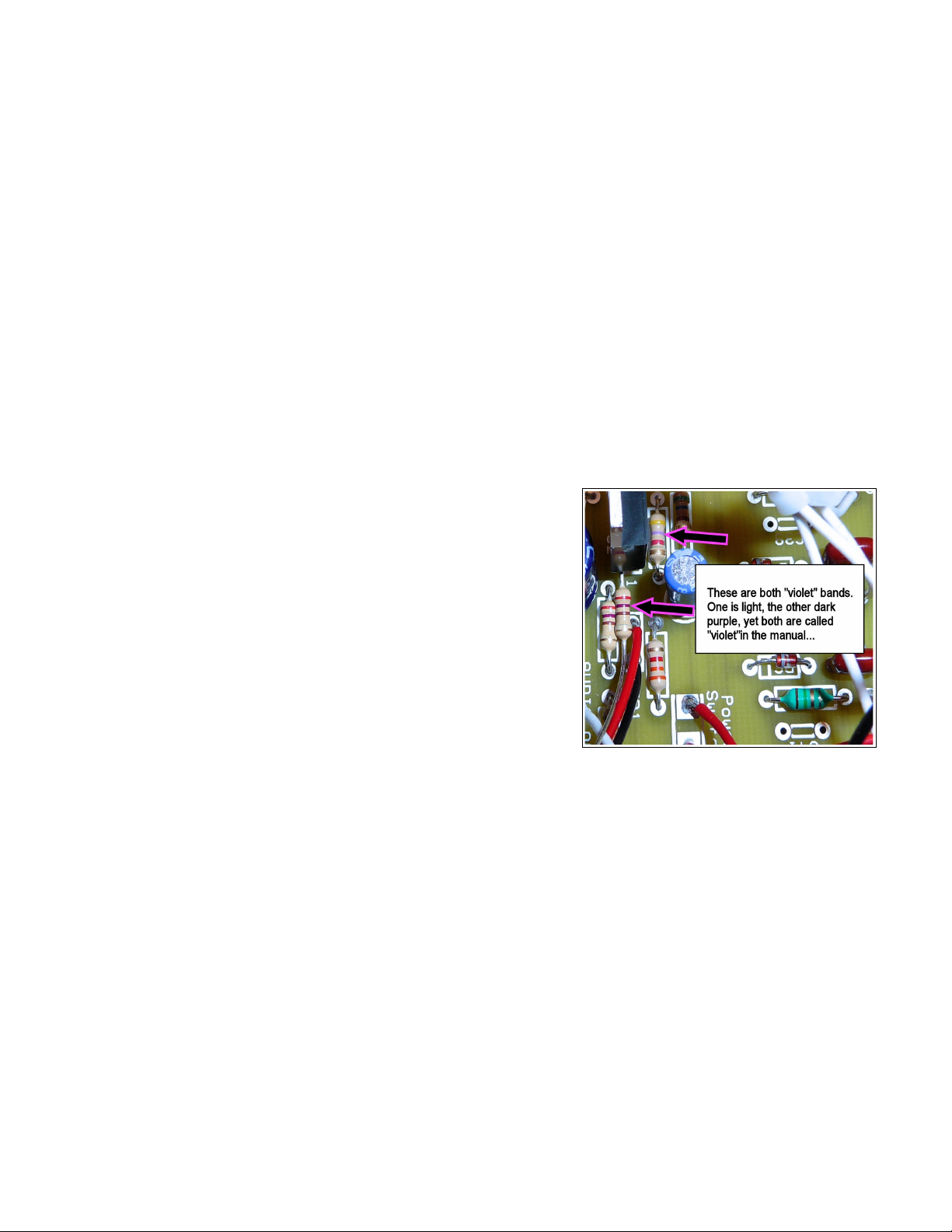
4. Live and Learn Dept. -- I got confused over
inconsistent markings on a some of the resistors, as
some resistors had “violet” value bands which were
a much lighter color violet, while others had bands
which were more dark purple than violet. Ten-Tec
Service said some manufacturers use substantially
different colors when marking resistor values, as is
evident in the attached photo. This taught me to
use my digital multimeter to verify correct values
before installing various components.
5. Not a big deal, but the wires running from the front
panel to the rear panel should be cut a little longer
than specified in order to facilitate final assembly
and better accommodate the battery holder.
6. Not a big deal, but the builder may wish to use smaller gauge wire (zip) ties, and, perhaps,
use additional ties, to better anchor and organize the wires in the final construction stages.
7. I left the battery compartment out of my finished radio, as I do not intend to operate the unit
on battery power. I might better have stored it inside the rig, to save storage space and
minimize the chances I misplace it, but I opted to leave it out. You be the judge.
8. Another builder suggests using an SLA gel cell to run the rig for an extended period, which
could be recharged with an inexpensive, but appropriate, charger at relatively low cost.
9. The instruction manual gives the builder an option for higher receiver sensitivity. The
consensus among kit builders appears to favor exercising this option during initial
construction. I concur, as it appears easier to do at that time, rather than waiting until after
the kit is finished. You be the Judge.
____________________________________________________________________________________________________________________________
Ten-Tec Model 1253 Regenerative HF Radio Kit, Page 2 of 3. K8JHR © copyright 2013
Page 3
10. Some builders eschew the specified in-progress tests, but I recommend doing all of such tests
as recommended in the manual. It it much easier to troubleshoot a small, isolated section of
the overall circuit, than the entire circuit, if something is amiss after final construction.
11. Some builders replace the RCA phono jack (antenna jack) with a more robust BNC or UHF
(PL-250=9) jack. This is easier to accomplish during initial construction, than afterward. This
seems a good suggestion as either of the recommended replacement jacks are more robust
and sturdy than the supplied RCA jack, and can be expected to take more stress and abuse
before failure, especially if the builder uses a stiff, heavy duty coax cable such as ham
operators typically use.
12. Reserved
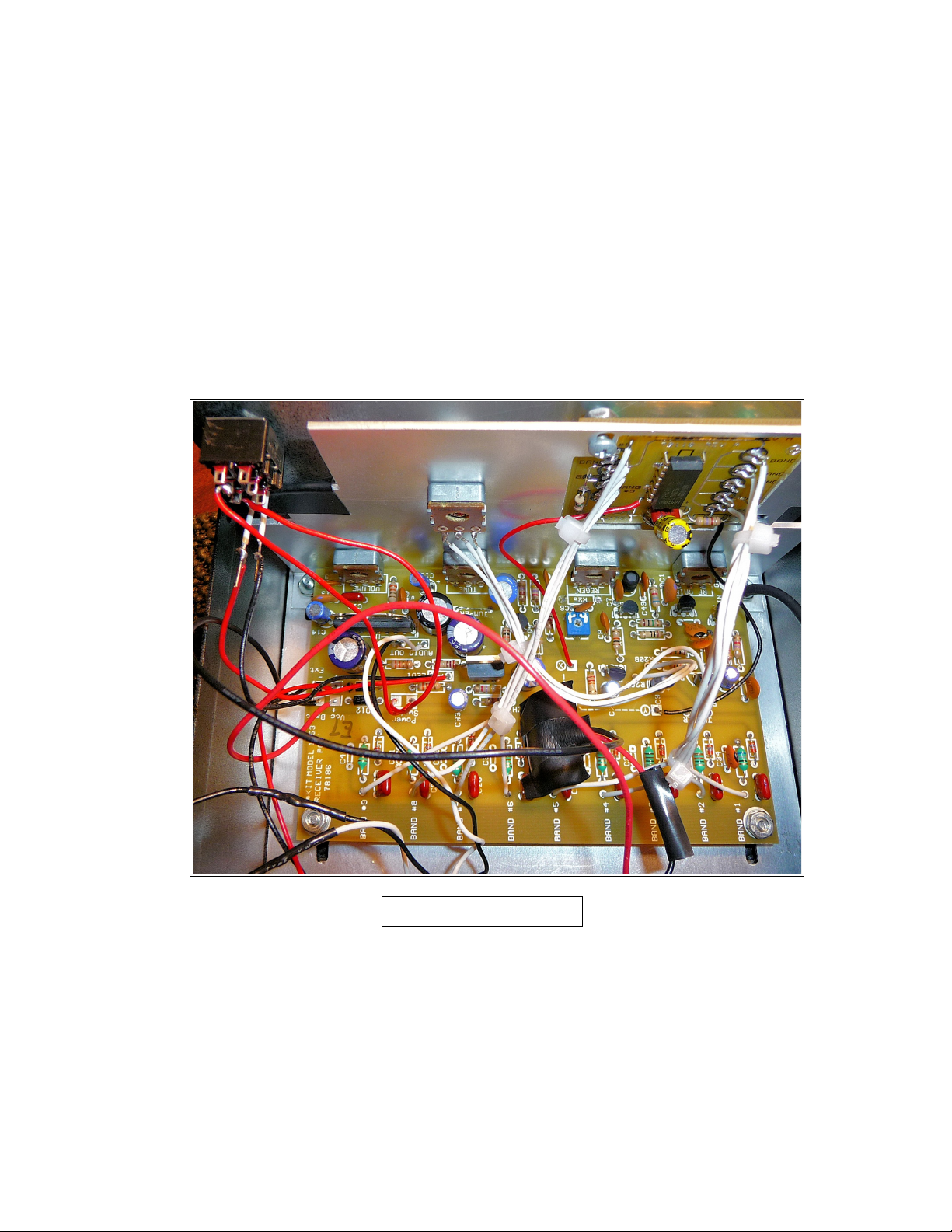
Interior view of completed kit.
____________________________________________________________________________________________________________________________
Ten-Tec Model 1253 Regenerative HF Radio Kit, Page 3 of 3. K8JHR © copyright 2013
 Loading...