

Page 1

Quick Start
Thank you for purchasing the MSI® Z170-A PRO motherboard. This
Quick Start section provides demonstration diagrams about how to
install your computer. Some of the installations also provide video
demonstrations. Please link to the URL to watch it with the web
browser on your phone or tablet. You may have even link to the URL
by scanning the QR code.
Kurzanleitung
Danke, dass Sie das MSI® Z170-A PRO Motherboard gewählt
haben. Dieser Abschnitt der Kurzanleitung bietet eine Demo zur
Installation Ihres Computers. Manche Installationen bieten auch
die Videodemonstrationen. Klicken Sie auf die URL, um diese
Videoanleitung mit Ihrem Browser auf Ihrem Handy oder Table
anzusehen. Oder scannen Sie auch den QR Code mit Ihrem Handy,
um die URL zu öffnen.
Présentation rapide
Merci d’avoir choisi la carte mère MSI® Z170-A PRO. Ce manuel
fournit une rapide présentation avec des illustrations explicatives
qui vous aideront à assembler votre ordinateur. Des tutoriels vidéo
sont disponibles pour certaines étapes. Cliquez sur le lien fourni
pour regarder la vidéo sur votre téléphone ou votre tablette. Vous
pouvez également accéder au lien en scannant le QR code qui lui
est associé.
Быстрый старт
Благодарим вас за покупку материнской платы MSI® Z170-A
PRO. В этом разделе представлена информация, которая
поможет вам при сборке комьютера. Для некоторых этапов
сборки имеются видеоинструкции. Для просмотра видео,
необходимо открыть соответствующую ссылку в веб-браузере
на вашем телефоне или планшете. Вы также можете выполнить
переход по ссылке, путем сканирования QR-кода.
Quick Start
I
Page 2
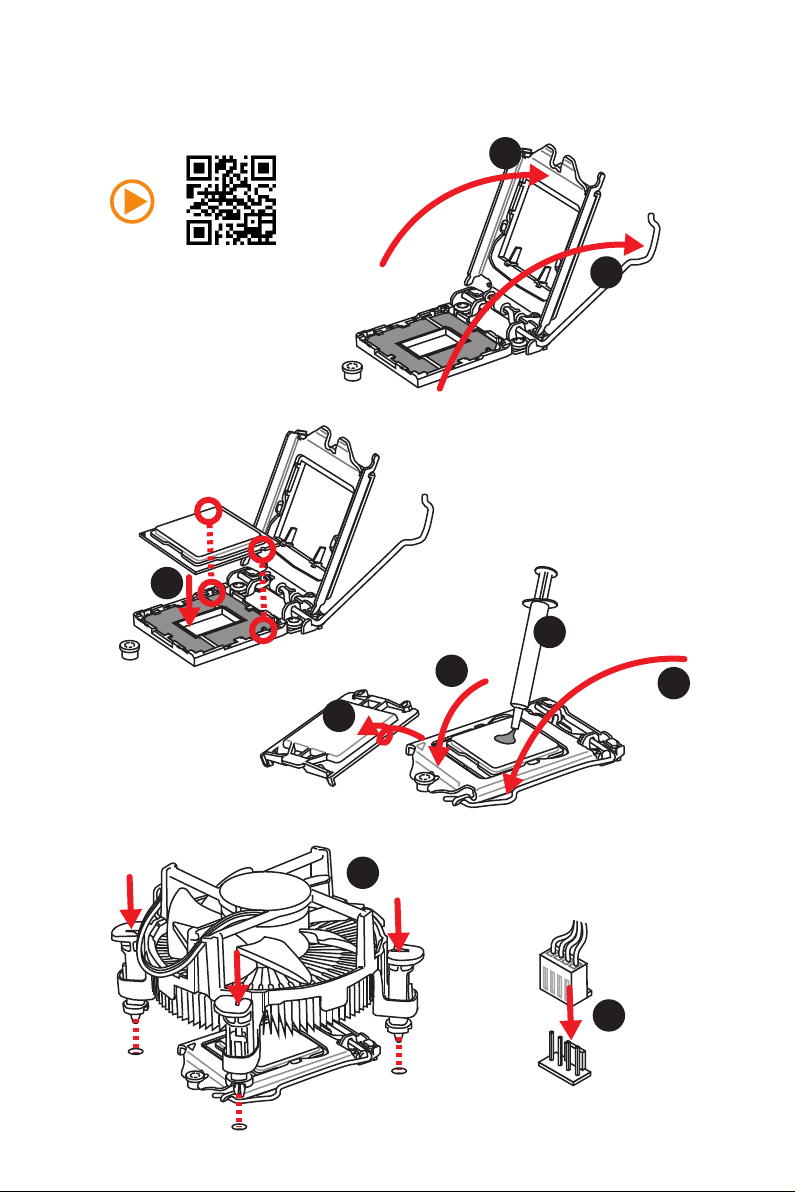
Installing a Processor/ Installation des Prozessors/ Installer
un processeur/ Установка процессора
2
http://youtu.be/bf5La099urI
3
1
7
4
5
6
Quick Start
II
8
9
Page 3
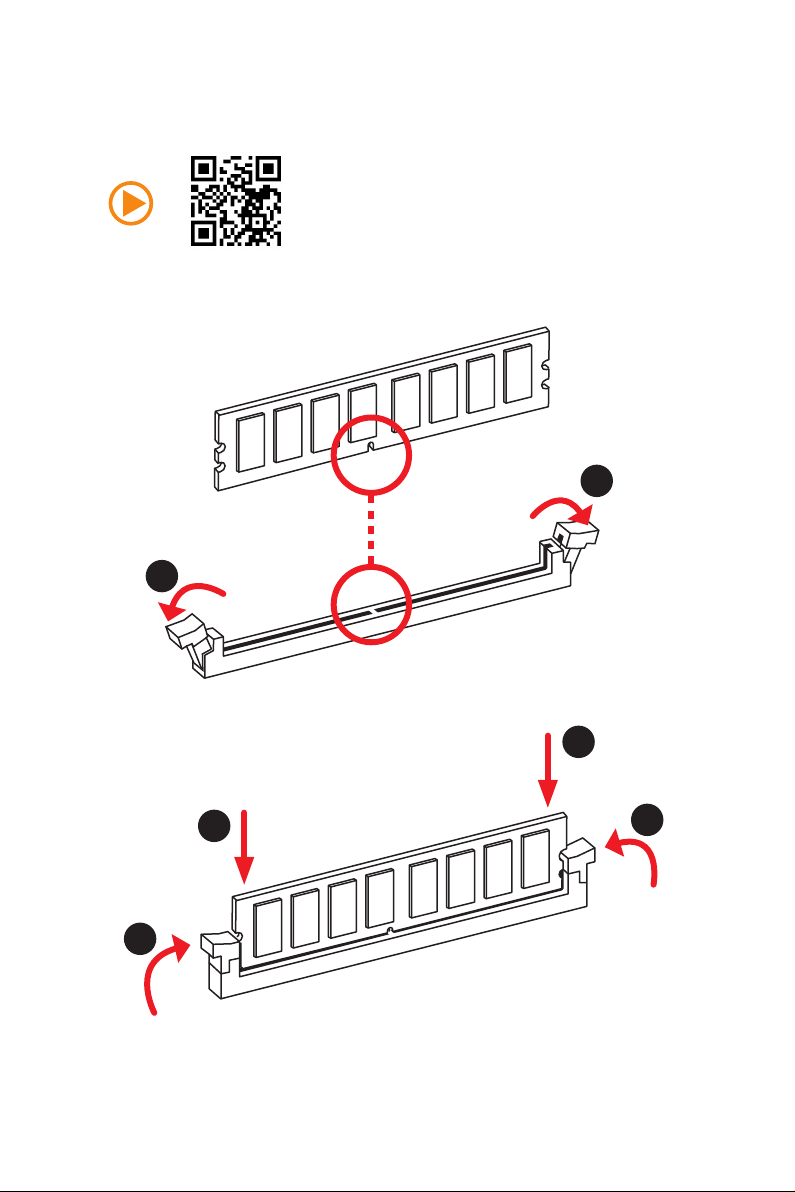
Installing DDR4 memory/ Installation des DDR4-Speichers/
Installer une mémoire DDR4/ Установка памяти DDR4
http://youtu.be/T03aDrJPyQs
1
1
2
2
3
3
Quick Start
III
Page 4
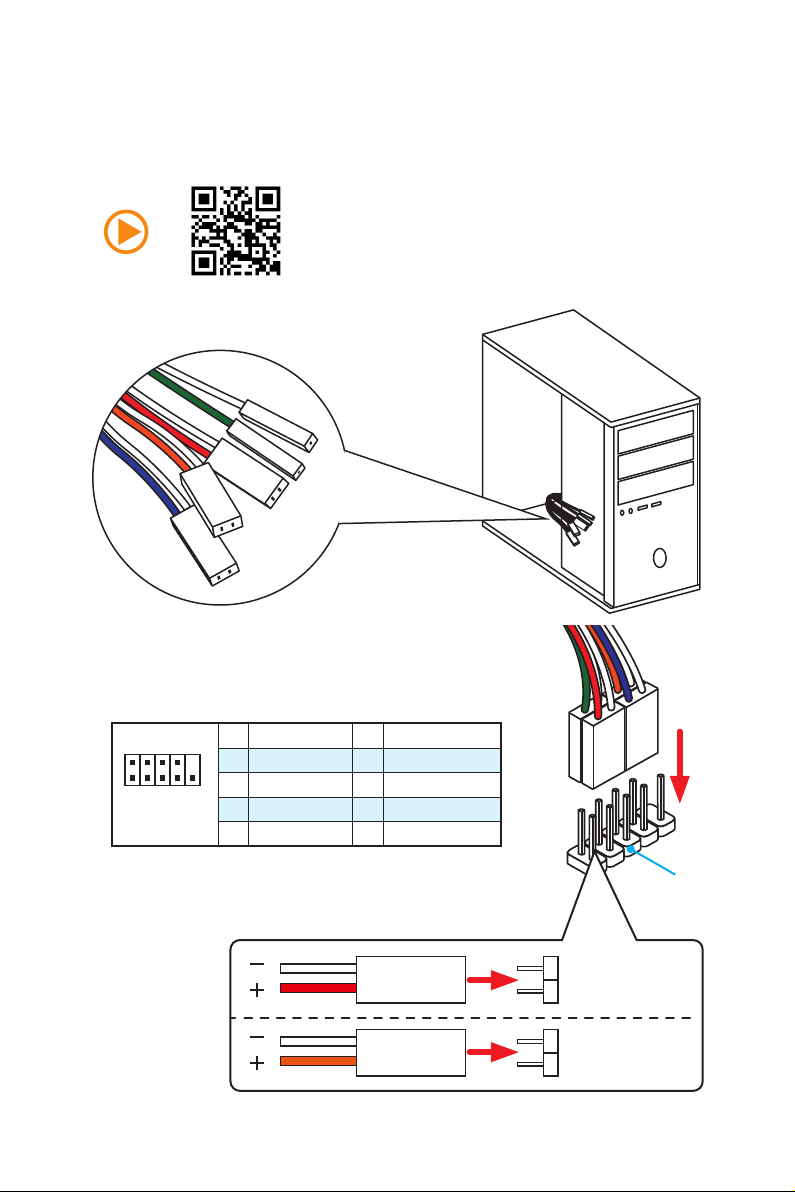
RESET SW
POWER SW
POWER LED+
POWER LED-
HDD LED
Connecting the Front Panel Header/ Anschließen der
Frontpanel-Stiftleiste/ Connecter un connecteur du panneau
avant/ Подключение разъемов передней панели
http://youtu.be/DPELIdVNZUI
IV
2 10
1
JFP1
Quick Start
1 HDD LED + 2 Power LED +
3 HDD LED - 4 Power LED -
5 Reset Switch 6 Power Switch
9
7 Reset Switch 8 Power Switch
9 Reserved 10 No Pin
HDD LED
POWER LED
RESET SW
HDD LED
JFP1
HDD LED -
HDD LED +
POWER LED -
POWER LED +
Page 5
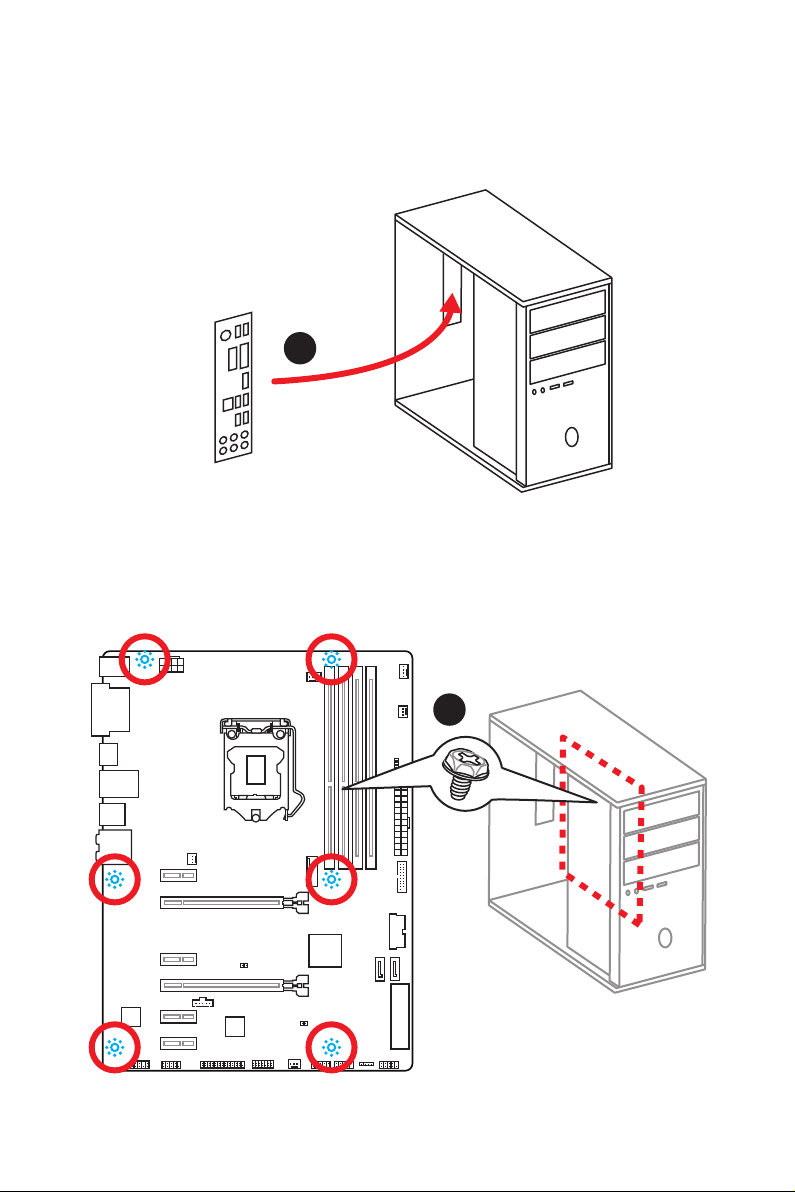
Installing the Motherboard/ Installation des Motherboards/
Installer la carte mère/ Установка материнской платы
1
2
Quick Start
V
Page 6
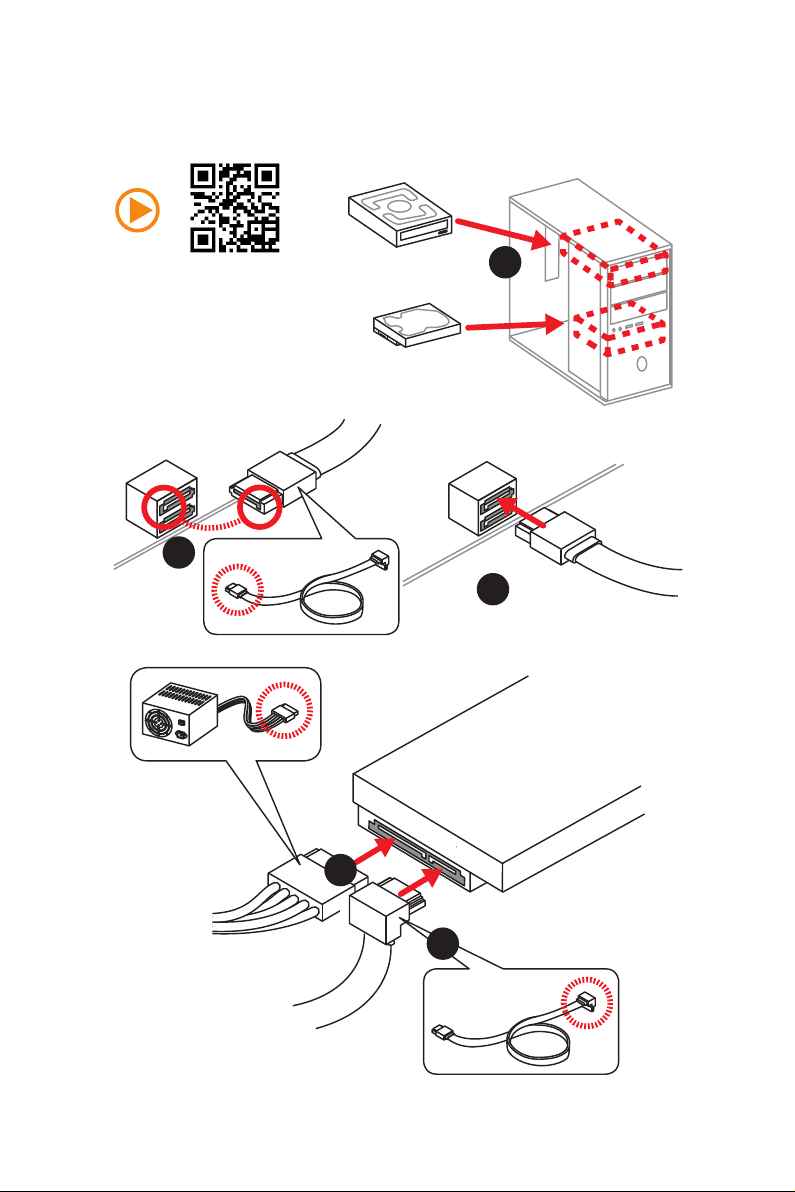
Installing SATA Drives/ Installation der SATA-Laufwerke/
Installer le disque dur SATA/ Установка дисков SATA
http://youtu.be/RZsMpqxythc
2
1
3
VI
5
4
Quick Start
Page 7
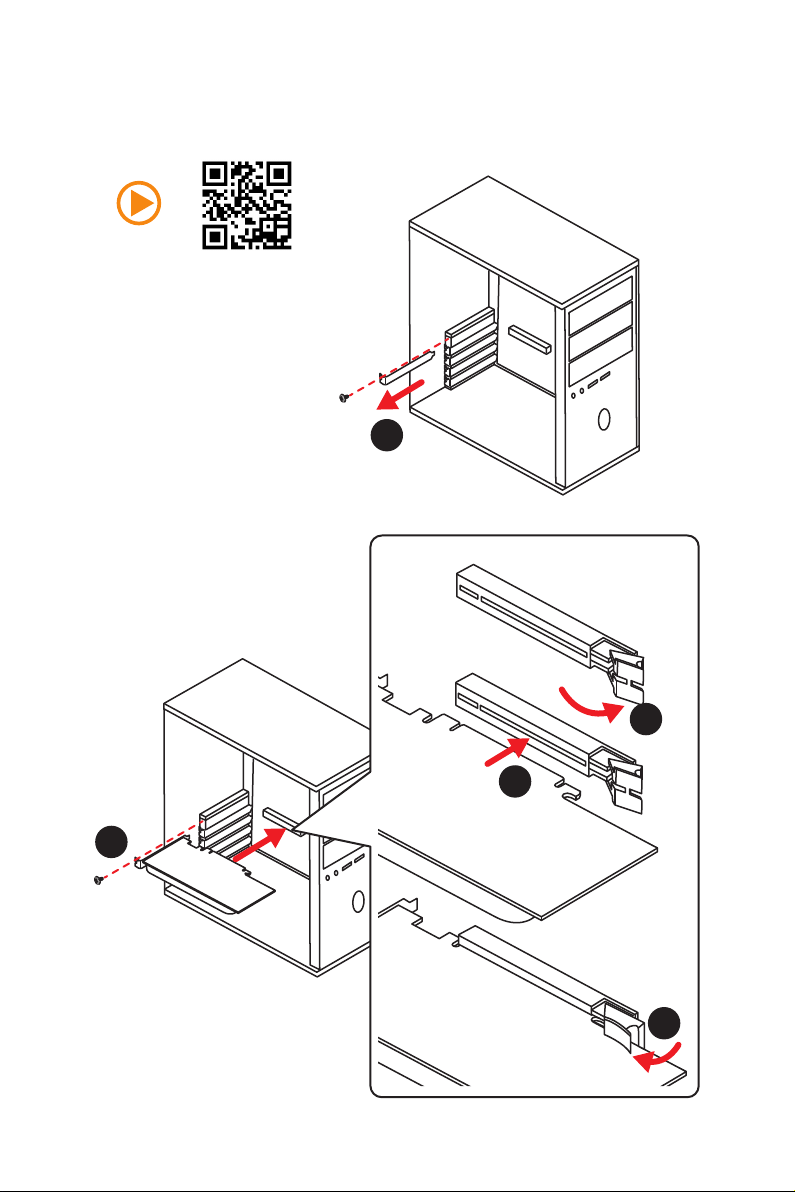
Installing a Graphics Card/ Einbau der Grafikkarte/ Installer
une carte graphique/ Установка дискретной видеокарты
http://youtu.be/mG0GZpr9w_A
1
2
3
5
4
Quick Start
VII
Page 8
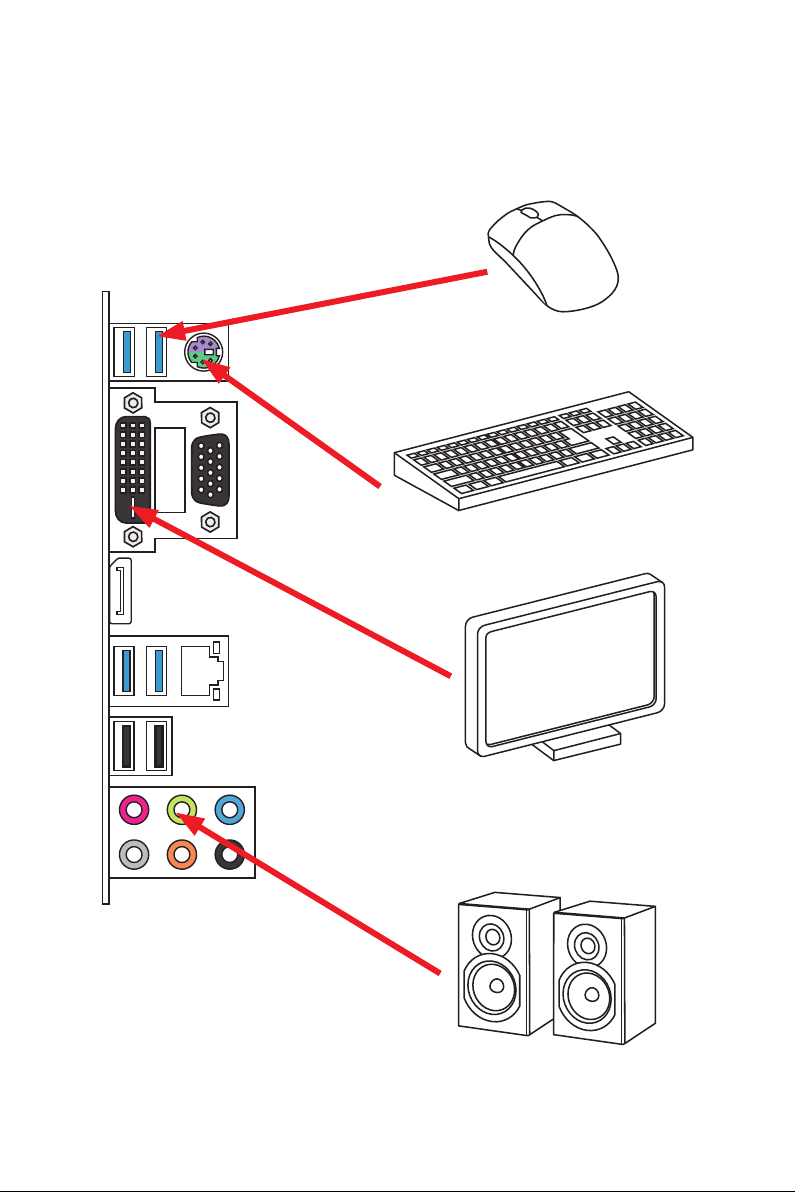
Connecting Peripheral Devices/ Peripheriegeräte/
Connecter un périphérique anschliessen/ Подключение
периферийных устройств
VIII
Quick Start
Page 9
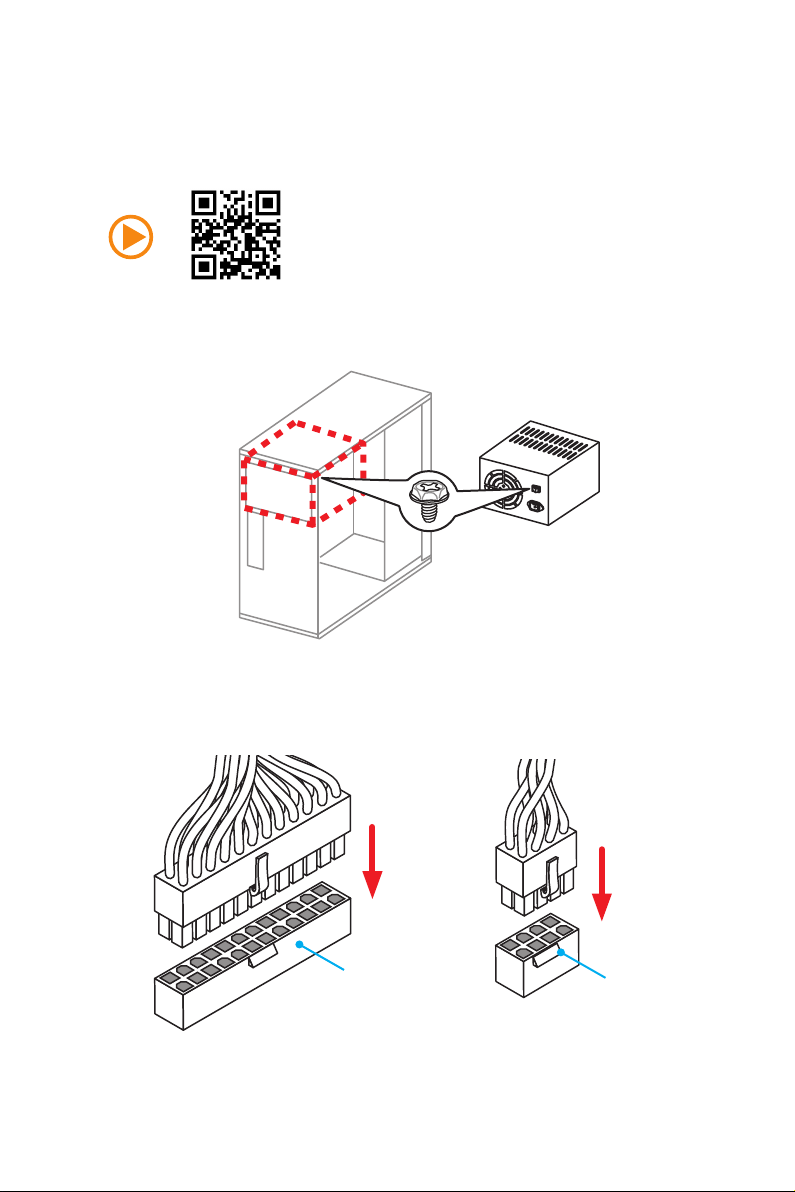
Connecting the Power Connectors/ Stromanschlüsse
anschliessen/ Connecter les câbles du module
d’alimentation/ Подключение разъемов питания
http://youtu.be/gkDYyR_83I4
JPWR1
JPWR2
Quick Start
IX
Page 10
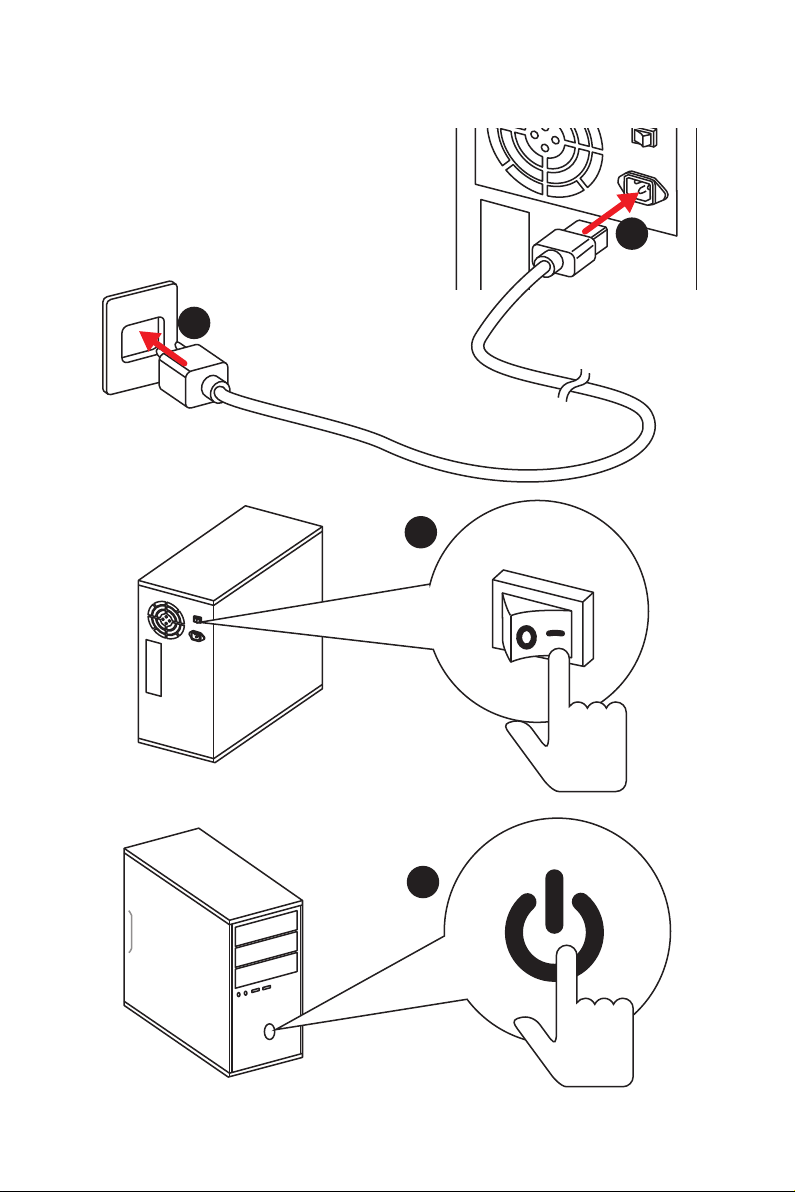
Power On/ Einschalten/ Mettre sous-tension/ Включение
питания
1
2
3
Quick Start
X
4
Page 11

Contents
Safety Information ...................................................................................................2
Specifications ..........................................................................................................3
Rear I/O Panel ..........................................................................................................7
LAN Port LED Status Table ................................................................................. 7
Audio Ports Configuration .................................................................................... 7
Overview of Components ......................................................................................9
CPU Socket ....................................................................................................... 10
DIMM Slots ........................................................................................................ 11
PCI_E1~6: PCIe Expansion Slots...................................................................... 12
SATA1~6: SATA 6Gb/s Connectors .................................................................. 13
SE1_21-SE2_65: SATAe Connectors ............................................................... 13
M2_1: M.2 Slot ................................................................................................... 14
JFP1, JFP2: Front Panel Connectors ................................................................ 15
JPWR1~2: Power Connectors ........................................................................... 16
JUSB1~2: USB 2.0 Connectors......................................................................... 17
JUSB3~4: USB 3.1 Gen1 Connectors ............................................................... 17
JAUD1: Front Audio Connector ......................................................................... 18
CPUFAN1~2, SYSFAN1~3: Fan Connectors .................................................... 19
JLPT1: Parallel Port Connector ......................................................................... 20
JCOM1: Serial Port Connector .......................................................................... 20
JTPM1: TPM Module Connector ....................................................................... 21
JBAT1: Clear CMOS (Reset BIOS) Jumper ...................................................... 21
JCI1: Chassis Intrusion Connector .................................................................... 22
EZ Debug LED: Debug LED indicators ............................................................ 22
BIOS Setup .............................................................................................................23
Entering BIOS Setup ......................................................................................... 23
Resetting BIOS .................................................................................................. 24
Updating BIOS ................................................................................................... 24
EZ Mode ............................................................................................................ 25
Advanced Mode ................................................................................................ 27
OC ..................................................................................................................... 28
Software Description ............................................................................................34
Installing Windows® 7/ 8.1/ 10 ........................................................................... 34
Installing Drivers ................................................................................................ 34
Installing Utilities ................................................................................................ 34
Contents
1
Page 12

Safety Information
● The components included in this package are prone to damage from electrostatic
discharge (ESD). Please adhere to the following instructions to ensure successful
computer assembly.
● Ensure that all components are securely connected. Loose connections may cause
the computer to not recognize a component or fail to start.
● Hold the motherboard by the edges to avoid touching sensitive components.
● It is recommended to wear an electrostatic discharge (ESD) wrist strap when
handling the motherboard to prevent electrostatic damage. If an ESD wrist strap is
not available, discharge yourself of static electricity by touching another metal object
before handling the motherboard.
● Store the motherboard in an electrostatic shielding container or on an anti-static pad
whenever the motherboard is not installed.
● Before turning on the computer, ensure that there are no loose screws or metal
components on the motherboard or anywhere within the computer case.
● Do not boot the computer before installation is completed. This could cause
permanent damage to the components as well as injury to the user.
● If you need help during any installation step, please consult a certified computer
technician.
● Always turn off the power supply and unplug the power cord from the power outlet
before installing or removing any computer component.
● Keep this user guide for future reference.
● Keep this motherboard away from humidity.
● Make sure that your electrical outlet provides the same voltage as is indicated on
the PSU, before connecting the PSU to the electrical outlet.
● Place the power cord such a way that people can not step on it. Do not place
anything over the power cord.
● All cautions and warnings on the motherboard should be noted.
● If any of the following situations arises, get the motherboard checked by service
personnel:
▶ Liquid has penetrated into the computer.
▶ The motherboard has been exposed to moisture.
▶ The motherboard does not work well or you can not get it work according to user
guide.
▶ The motherboard has been dropped and damaged.
▶ The motherboard has obvious sign of breakage.
● Do not leave this motherboard in an environment above 60°C (140°F), it may
damage the motherboard.
Safety Information
2
Page 13
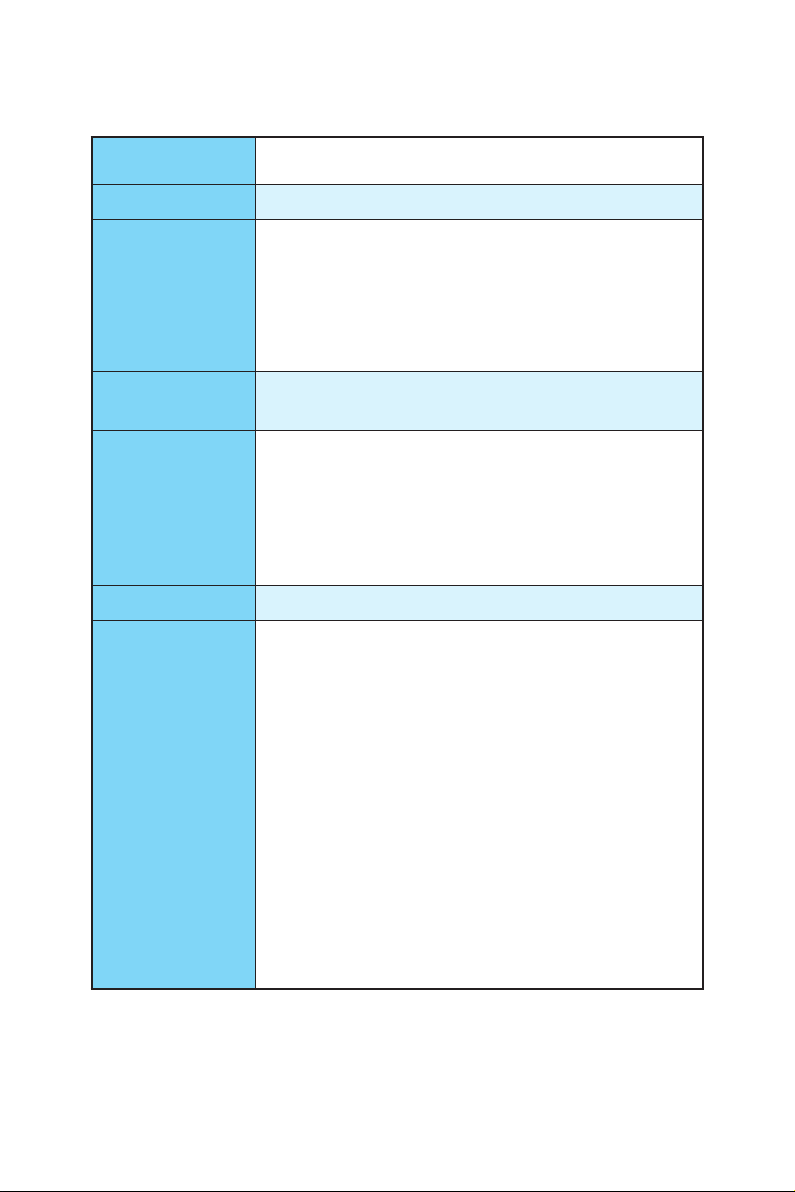
Specifications
CPU
Chipset Intel
Memory
Supports 6th Gen Intel
Pentium® and Celeron® processors for Socket LGA1151
● 4x DDR4 memory slots, support up to 64GB
● Dual channel memory architecture
● Supports ECC, un-buffered memory
● Supports Intel
®
Core™ i3/i5/i7 processors, and Intel®
®
Z170 Chipset
▶ Supports DDR4 3200(OC)/ 3000(OC)/ 2800(OC)/
2600(OC)/ 2400/ 2133 MHz
®
Extreme Memory Profile (XMP)
Expansion Slots
● 2x PCIe 3.0 x16 slots (support x16/x4 modes)
● 4x PCIe 3.0 x1 slots
● 1x DisplayPort, supports a maximum resolution
of 4096x2304@24Hz, 2560x1600@60Hz,
3840x2160@60Hz, 1920x1200@60Hz
Onboard Graphics
● 1x DVI-D Port, supports a maximum resolution of
1920x1200@60Hz
● 1x VGA Port, supports a maximum resolution of
1920x1200@60Hz
Multi-GPU ● Supports 2-Way AMD
®
Z170 Chipset
Intel
● 6x SATA 6Gb/s ports*
● Supports RAID 0, RAID 1, RAID 5 and RAID 10 for SATA
storage devices
● 1x M.2 slot
▶ Supports PCIe 3.0 x4 and SATA 6Gb/s standards,
4.2cm/ 6cm/ 8cm length M.2 SSD cards
Storage
▶ Supports PCIe 3.0 x4 NVMe Mini-SAS SSD with Turbo
U.2 Host Card**
● 2x SATAe ports (PCIe 3.0 x2)***
● Supports Intel
®
Smart Response Technology for Intel
Core™ processors
* SATA1~2 ports will be unavailable when installing the M.2 SATA interface
module in M.2 slot. SATA3~4 ports will be unavailable when installing the
M.2 PCIe interface module in M.2 slot.
** The Turbo U.2 Host Card is not included, please purchase separately.
*** SATAe port is backward compatible with SATA.
Continued on next page
®
CrossFire™ Technology
Specications
3
Page 14

Continued from previous page
®
Z170 Chipset
● Intel
▶ 8x USB 3.1 Gen1 (SuperSpeed USB) ports (4 ports on
the back panel, 4 ports available through the internal
USB
USB 3.1 Gen 1 connectors)
▶ 6x USB 2.0 (High-speed USB) ports (2 ports on the back
panel, 4 ports available through the internal USB 2.0
connectors)
®
Audio
● Realtek
● 7.1-Channel High Definition Audio
LAN 1x Realtek
ALC892 Codec
®
RTL8111H Gigabit LAN controller
● 1x PS/2 keyboard/ mouse port
● 1x VGA port
● 1x DVI-D port
Back Panel
Connectors
● 1x DisplayPort
● 1x LAN (RJ45) port
● 4x USB 3.1 Gen1 ports
● 2x USB 2.0 ports
● 6x audio jacks
● 1x 24-pin ATX main power connector
● 1x 8-pin ATX 12V power connector
● 6x SATA 6Gb/s connectors
● 2x SATAe connectors
● 2x USB 2.0 connector (supports additional 4 USB 2.0
ports)
● 2x USB 3.1 Gen1 connectors (supports additional 4 USB
3.1 Gen1 ports)
Internal Connectors
● 2x 4-pin CPU fan connectors
● 3x 3-pin system fan connectors
● 1x Front panel audio connector
● 2x Front panel connectors
● 1x TPM module connector
● 1x Chassis Intrusion connector
● 1x Serial port connector
● 1x Parallel port connector
● 1x Clear CMOS jumper
I/O Controller NUVOTON NCT6793 Controller Chip
Specications
4
Continued on next page
Page 15

Hardware Monitor
Form Factor
BIOS Features
Software
MSI Exclusive
Features
Continued from previous page
● CPU/System temperature detection
● CPU/System fan speed detection
● CPU/System fan speed control
● ATX Form Factor
● 12 in. x 8.9 in. (30.5 cm x 22.5 cm)
● 1x 128 Mb flash
● UEFI AMI BIOS
● ACPI 5.0, PnP 1.0a, SM BIOS 2.8
● Multi-language
● Drivers
● COMMAND CENTER
● LIVE UPDATE 6
● FAST BOOT
● SUPER CHARGER
● M-CLOUD
● RAMDISK
● NETWORK GENIE
®
● Intel
Extreme Tuning Utility
™
● Norton
● Google Chrome
Security
™
,Google Toolbar, Google Drive
● CPU-Z
● CLICK BIOS 5
▶ EZ Mode & Advanced Mode Switching
▶ Board Explorer
▶ Hardware Monitor
● COMMAND CENTER
▶ System Monitor
▶ Smart Fan Control
● RAM DISK
● LIVE UPDATE 6
● M-CLOUD
Continued on next page
Specications
5
Page 16

Specification
Highlights
Continued from previous page
● DDR4 Boost Support
▶ Dual-Channel DDR4 Memory Support
▶ Isolated DDR4 Circuit Design
▶ DDR4 XMP Ready
● PCI Express 3.0 Support
▶ 2-Way AMD CrossFire
TM
Support
● SATA Express Support
● EZ Debug LED
Specications
6
Page 17
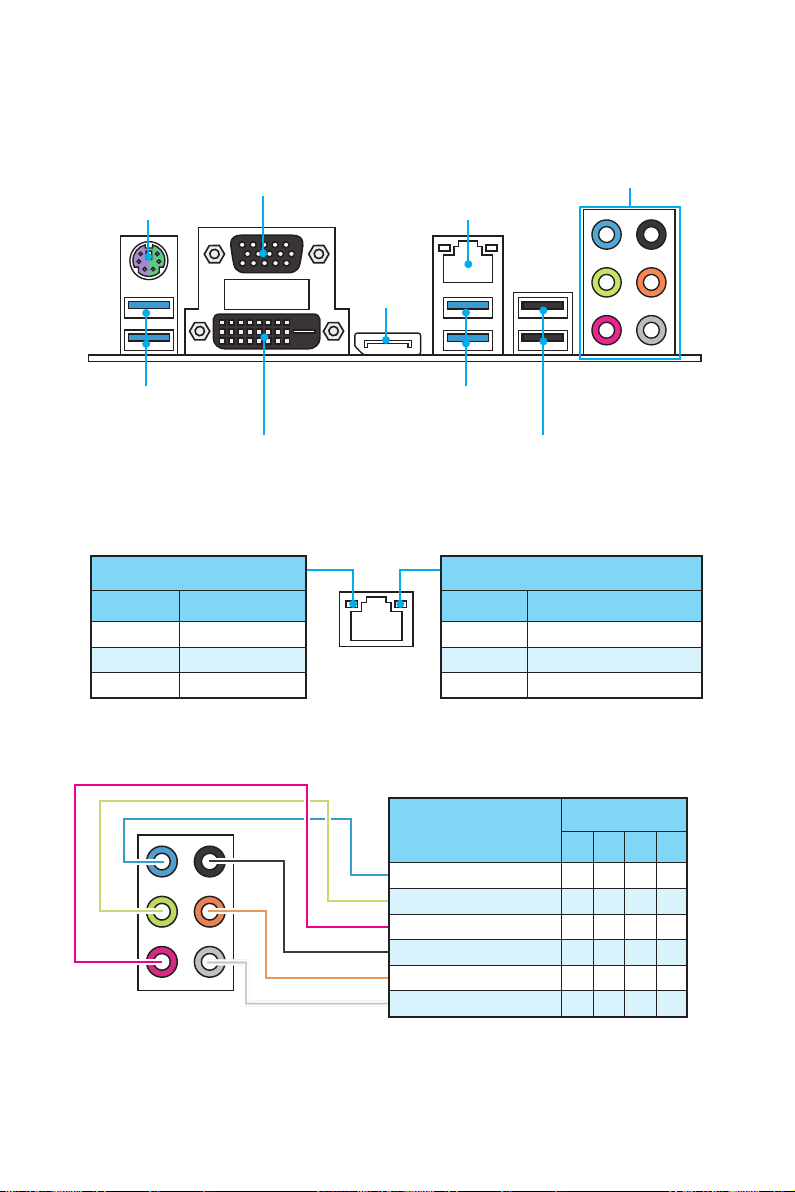
Rear I/O Panel
VGA
PS/2 LAN
DisplayPort
USB 3.1 Gen1
DVI-D
LAN Port LED Status Table
Link/ Activity LED
Status Description
Off No link
Yellow Linked
Blinking Data activity
Audio Ports
USB 3.1 Gen1
USB 2.0
Speed LED
Status Description
Off 10 Mbps connection
Green 100 Mbps connection
Orange 1 Gbps connection
Audio Ports Configuration
Audio Ports
Line In
Line-Out/ Front Speak Out ● ● ● ●
Mic In
Rear Speaker Out ● ● ●
Center/ Subwoofer Out ● ●
Side Speaker Out ●
Channel
2 4 6 8
(●: connected, Blank: empty)
Rear I/O Panel
7
Page 18
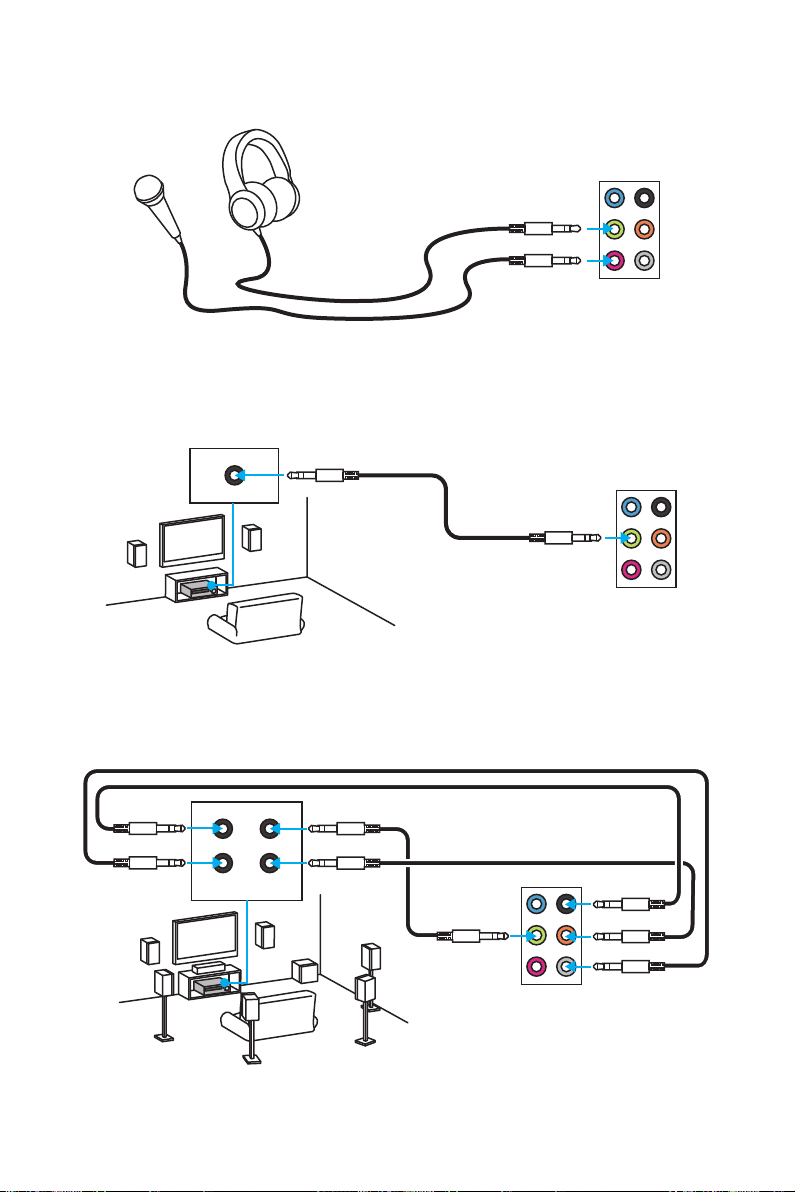
Audio jacks to headphone and microphone diagram
Audio jacks to stereo speakers diagram
AUDIO INPUT
Audio jacks to 7.1-channel speakers diagram
AUDIO INPUT
Rear Front
Side Center/
Subwoofer
Rear I/O Panel
8
Page 19
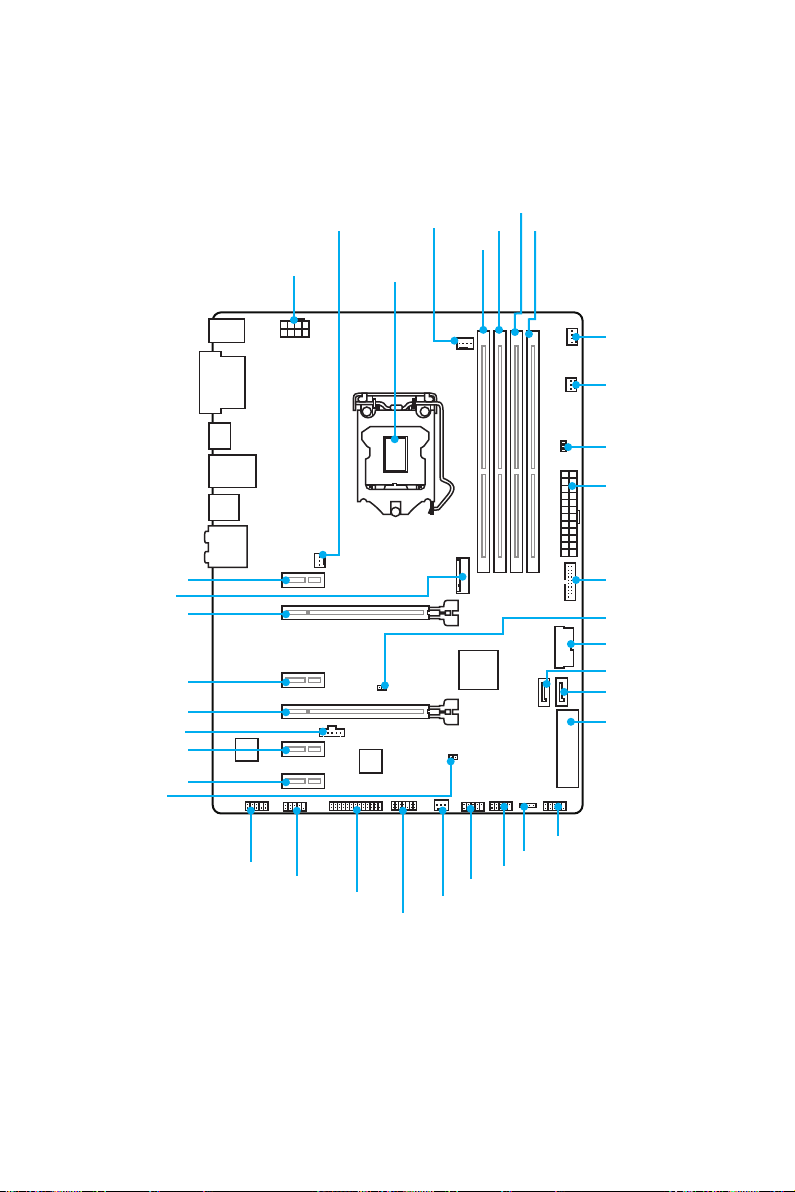
Overview of Components
PCI_E1
M2_1
PCI_E2
PCI_E3
PCI_E4
JTBT1*
PCI_E5
PCI_E6
JCI1
JPWR2
SYSFAN1
CPUFAN1
CPU Socket
DIMM2
DIMM1
DIMM3
DIMM4
CPUFAN2
SYSFAN3
EZ Debug LED
JPWR1
JUSB3
JBAT1
JUSB4
SATA3
SATA4
SE1_21-SE2_65
JAUD1
JCOM1
* JTBT1 is used to connect a specific card.
JLPT1
JTPM1
JUSB2
SYSFAN2
JFP1
JFP2
JUSB1
Overview of Components
9
Page 20
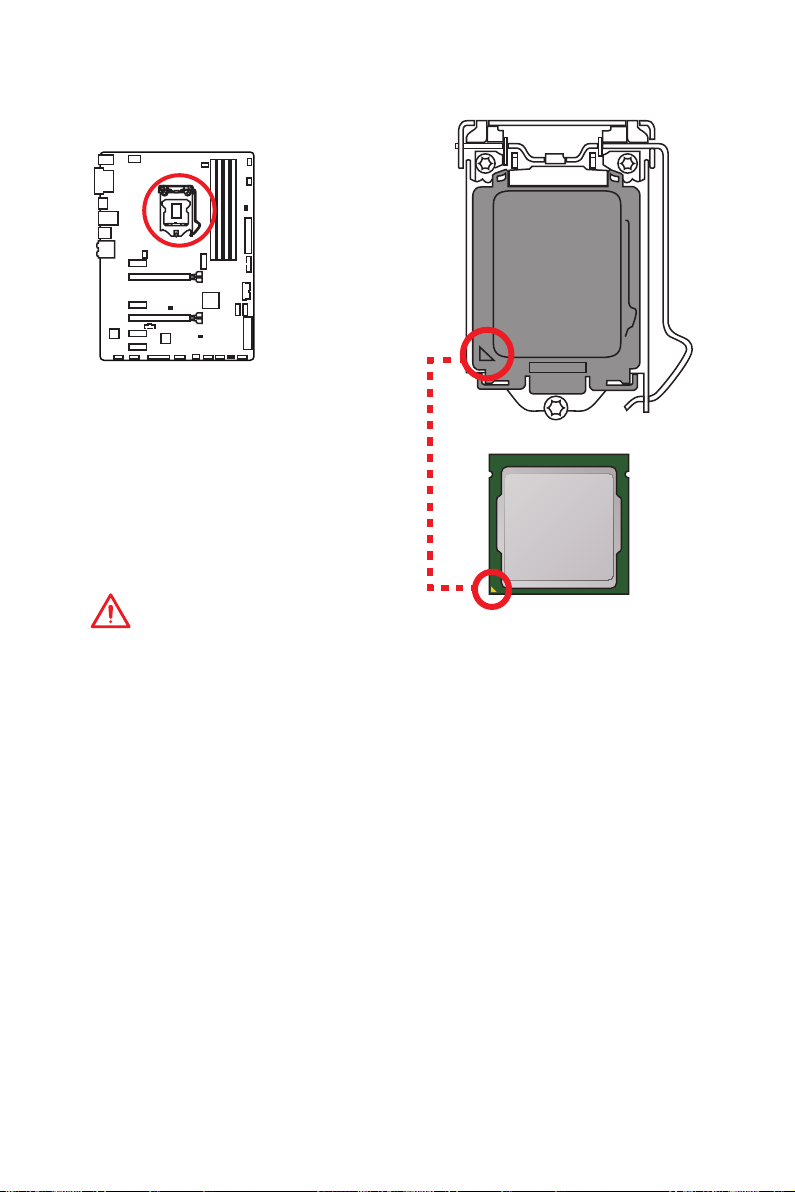
CPU Socket
Introduction to the LGA 1151 CPU
The surface of the LGA 1151 CPU has
two notches and a golden triangle to
assist in correctly lining up the CPU for
motherboard placement. The golden
triangle is the Pin 1 indicator.
Important
●
Always unplug the power cord from the power outlet before installing or removing
the CPU.
●
Please retain the CPU protective cap after installing the processor. MSI will deal
with Return Merchandise Authorization (RMA) requests if only the motherboard
comes with the protective cap on the CPU socket.
●
When installing a CPU, always remember to install a CPU heatsink. A CPU
heatsink is necessary to prevent overheating and maintain system stability.
●
Confirm that the CPU heatsink has formed a tight seal with the CPU before booting
your system.
●
Overheating can seriously damage the CPU and motherboard. Always make sure
the cooling fans work properly to protect the CPU from overheating. Be sure to
apply an even layer of thermal paste (or thermal tape) between the CPU and the
heatsink to enhance heat dissipation.
●
Whenever the CPU is not installed, always protect the CPU socket pins by covering
the socket with the plastic cap.
●
If you purchased a separate CPU and heatsink/ cooler, Please refer to the
documentation in the heatsink/ cooler package for more details about installation.
●
This motherboard is designed to support overclocking. Before attempting to
overclock, please make sure that all other system components can tolerate
overclocking. Any attempt to operate beyond product specifications is not
recommended. MSI® does not guarantee the damages or risks caused by
inadequate operation beyond product specifications.
Overview of Components
10
Page 21
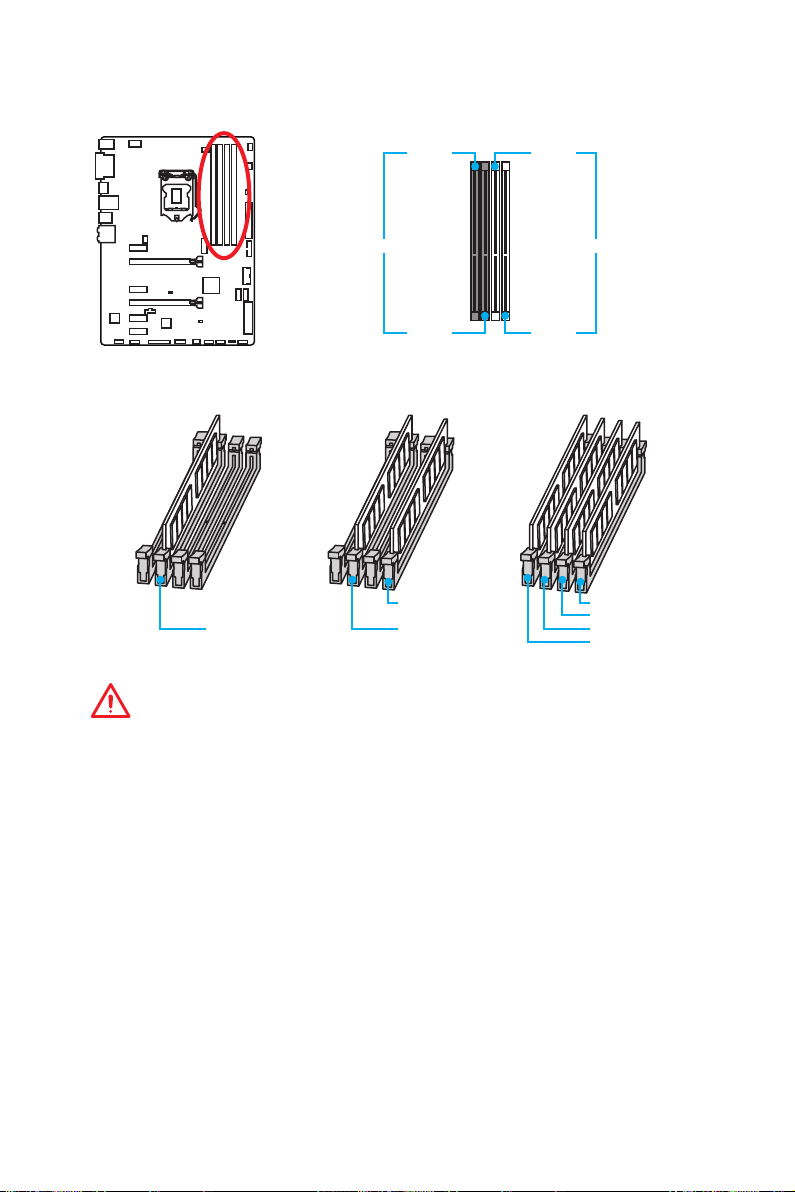
DIMM Slots
DIMM1 DIMM3
Channel A Channel B
DIMM2 DIMM4
Memory module installation recommendation
DIMM4 DIMM4
DIMM2 DIMM2 DIMM2
DIMM3
DIMM1
Important
●
Always insert memory modules in the DIMM2 slot first.
●
Due to chipset resource usage, the available capacity of memory will be a little less
than the amount of installed.
●
Based on Intel CPU specification, the Memory DIMM voltage below 1.35V is
suggested to protect the CPU.
●
Please note that the maximum capacity of addressable memory is 4GB or less
for 32-bit Windows OS due to the memory address limitation. Therefore, we
recommended that you to install 64-bit Windows OS if you want to install more than
4GB memory on the motherboard.
●
Some memory may operate at a lower frequency than the marked value when
overclocking due to the memory frequency operates dependent on its Serial
Presence Detect (SPD).
●
It is recommended to use a more efficient memory cooling system for full DIMMs
installation or overclocking.
●
The stability and compatibility of installed memory module depend on installed CPU
and devices when overclocking.
Overview of Components
11
Page 22
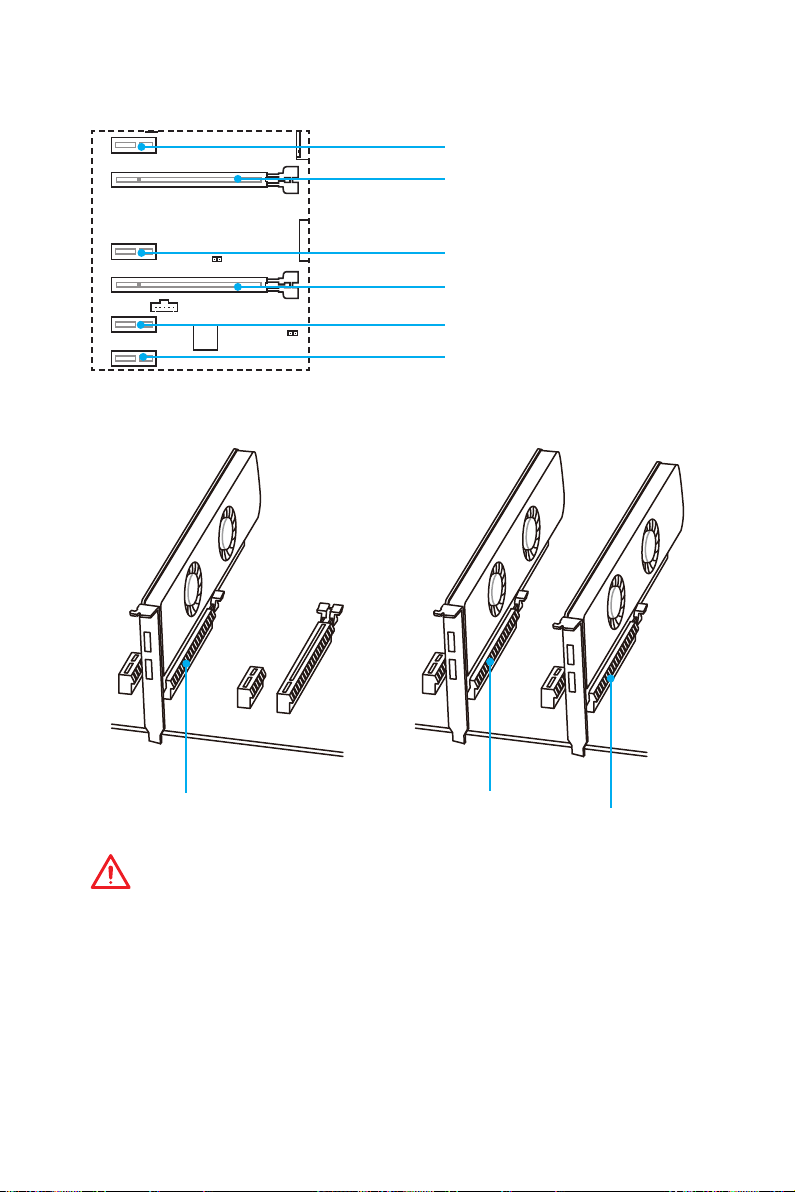
PCI_E1~6: PCIe Expansion Slots
PCI_E1: PCIe 3.0 x1 slot
PCI_E2: PCIe 3.0 x16 slot
PCI_E3: PCIe 3.0 x1 slot
PCI_E4: PCIe 3.0 x4 slot
PCI_E5: PCIe 3.0 x1 slot
PCI_E6: PCIe 3.0 x1 slot
Multiple graphics cards installation recommendation
x16
x16
Important
●
For a single PCIe x16 expansion card installation with optimum performance, using
the PCI_E2 slot is recommended.
●
When adding or removing expansion cards, always turn off the power supply and
unplug the power supply power cable from the power outlet. Read the expansion
card’s documentation to check for any necessary additional hardware or software
changes.
●
When Install the cards in both PCIe x16 slots for CrossFireTM technology, PCI_E2
bandwidth will only be 3.0x4.
Overview of Components
12
x4
Page 23
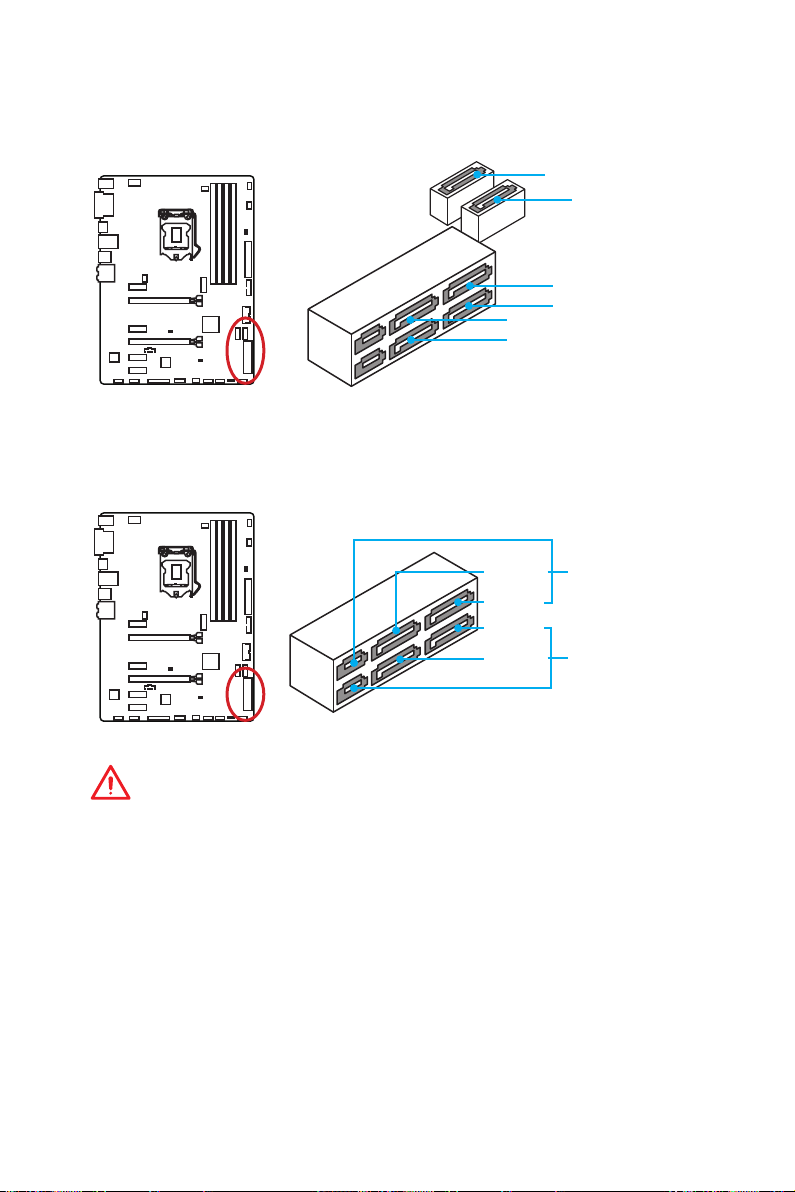
SATA1~6: SATA 6Gb/s Connectors
These connectors are SATA 6Gb/s interface ports. Each connector can connect to
one SATA device.
SATA3
SATA4
SATA5
SATA1
SATA6
SATA2
SE1_21-SE2_65: SATAe Connectors
These connectors are SATAe (SATA Express) interface ports. Each SATAe connector
can be used with a single SATAe device or two legacy SATA devices.
SATA6
SATA5
SATA1
SATA2
SE2_65
(SATA_EX2)
SE1_21
(SATA_EX1)
Important
●
Please do not fold the SATA or SATAe cable at a 90-degree angle. Data loss may
result during transmission otherwise.
●
SATA cable has identical plugs on either sides of the cable. However, it is
recommended that the flat connector be connected to the motherboard for space
saving purposes.
Overview of Components
13
Page 24
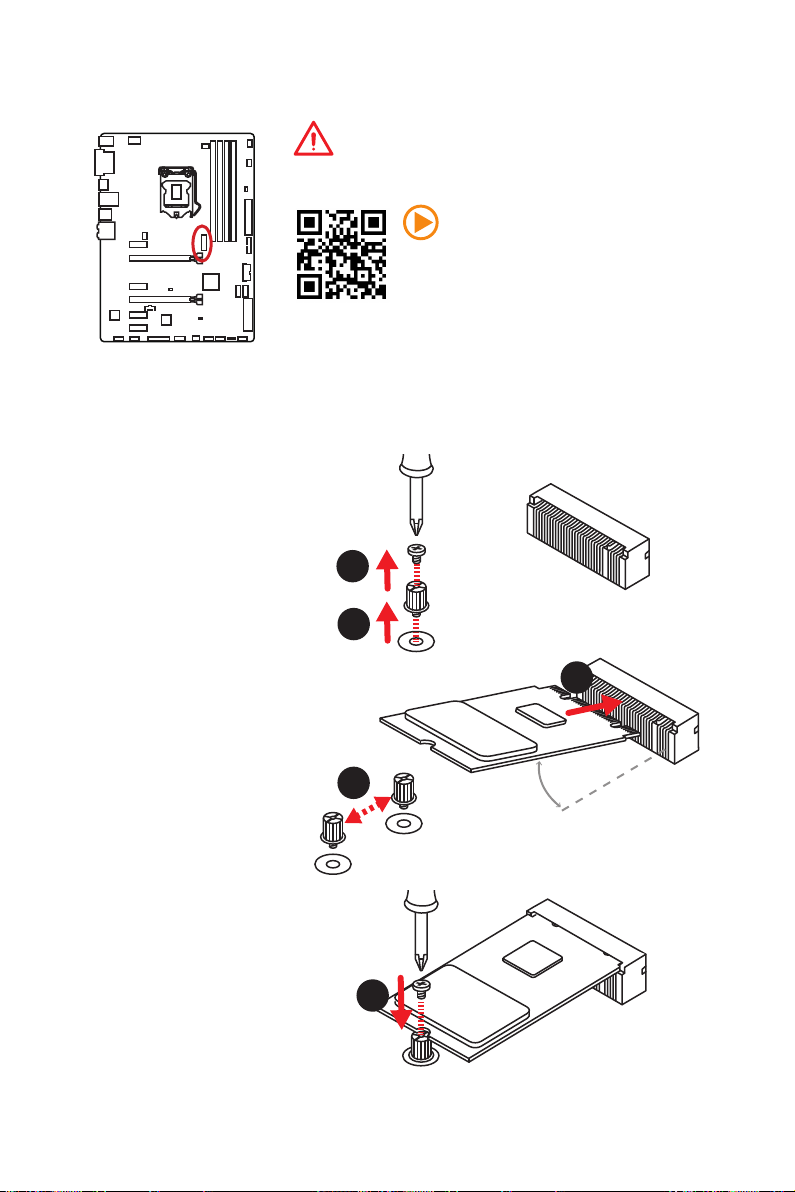
M2_1: M.2 Slot
Installing M.2 module
1. Remove the screw from
the base screw.
2. Remove the base
screw.
Important
●
Intel® RST only supports PCIe M.2 SSD with UEFI
ROM, does not support Legacy ROM.
Video Demonstration
Watch the video to learn how to Install
M.2 module.
http://youtu.be/JCTFABytrYA
1
2
3. Tighten the base screw
into the hole of the
distance to the M.2 slot
as the length your M.2
module.
4. Insert your M.2 module
into the M.2 slot at a
30-degree angle.
5. Put the screw in the
notch on the trailing edge
of your M.2 module and
tighten it into the base
screw.
Overview of Components
14
4
3
30°
5
Page 25
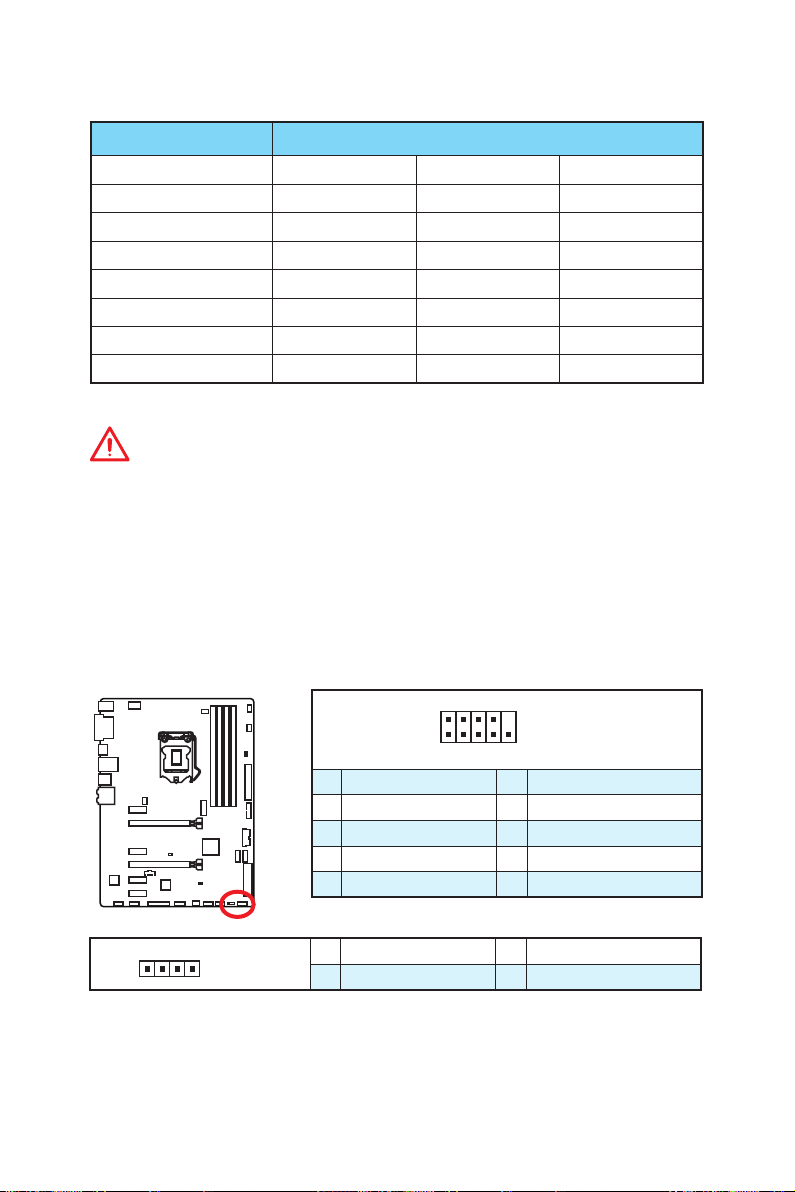
M.2/ SATA & SATAe combination table
Slot Available SATA/ SATA Express connectors
M2_1 Empty M.2 SATA M.2 PCIe
SATA_EX1 & EX2 ✓ ✓ ✓
SATA1 ✓ ─ ✓
SATA2 ✓ ─ ✓
SATA3 ✓ ✓ ─
SATA4 ✓ ✓ ─
SATA5 ✓ ✓ ✓
SATA6 ✓ ✓ ✓
(✓: available, ─: unavailable)
Important
●
SATA1~2 ports will be unavailable when installing the M.2 SATA interface module
in M.2 slot.
●
SATA3~4 ports will be unavailable when installing the M.2 PCIe interface module in
M.2 slot.
JFP1, JFP2: Front Panel Connectors
These connectors connect to the switches and LEDs on the front panel.
2 10
JFP1
1
1 HDD LED + 2 Power LED +
3 HDD LED - 4 Power LED -
5 Reset Switch 6 Power Switch
7 Reset Switch 8 Power Switch
9 Reserved 10 No Pin
1
JFP2
1 Speaker - 2 Buzzer +
3 Buzzer - 4 Speaker +
9
Overview of Components
15
Page 26
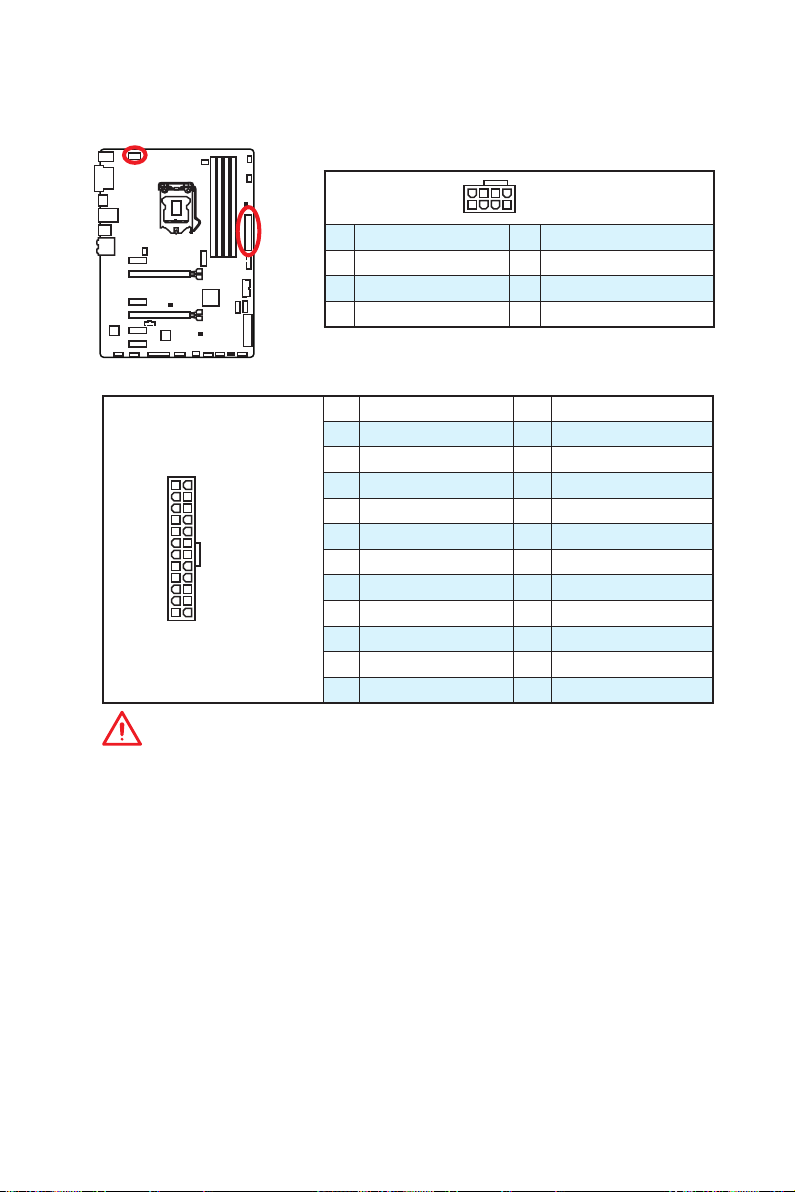
JPWR1~2: Power Connectors
These connectors allow you to connect an ATX power supply.
8
4 1
1 Ground 5 +12V
2 Ground 6 +12V
3 Ground 7 +12V
4 Ground 8 +12V
1 +3.3V 13 +3.3V
2 +3.3V 14 -12V
3 Ground 15 Ground
24
12
JPWR1
131
4 +5V 16 PS-ON#
5 Ground 17 Ground
6 +5V 18 Ground
7 Ground 19 Ground
8 PWR OK 20 Res
9 5VSB 21 +5V
10 +12V 22 +5V
11 +12V 23 +5V
12 +3.3V 24 Ground
5
JPWR2
Important
Make sure that all the power cables are securely connected to a proper ATX power
supply to ensure stable operation of the motherboard.
Overview of Components
16
Page 27
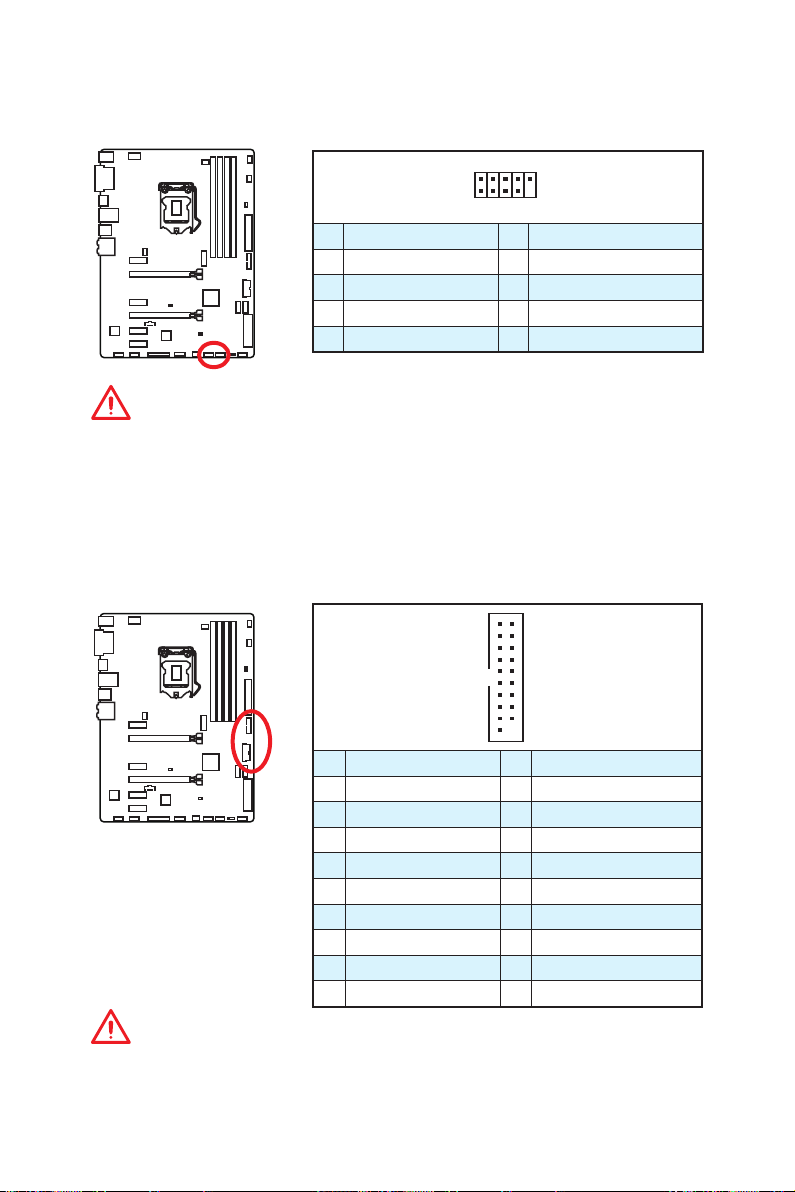
JUSB1~2: USB 2.0 Connectors
These connectors allow you to connect USB 2.0 ports on the front panel.
2 10
1
9
1 VCC 2 VCC
3 USB0- 4 USB1-
5 USB0+ 6 USB1+
7 Ground 8 Ground
9 No Pin 10 NC
Important
●
Note that the VCC and Ground pins must be connected correctly to avoid possible
damage.
●
In order to recharge your iPad,iPhone and iPod through USB ports, please install
MSI® SUPER CHARGER utility.
JUSB3~4: USB 3.1 Gen1 Connectors
These connectors allow you to connect USB 3.1 Gen1 ports on the front panel.
10 11
1
20
1 Power 11 USB2.0+
2 USB3_RX_DN 12 USB2.0-
3 USB3_RX_DP 13 Ground
4 Ground 14 USB3_TX_C_DP
5 USB3_TX_C_DN 15 USB3_TX_C_DN
6 USB3_TX_C_DP 16 Ground
7 Ground 17 USB3_RX_DP
8 USB2.0- 18 USB3_RX_DN
9 USB2.0+ 19 Power
10 Ground 20 No Pin
Important
Note that the Power and Ground pins must be connected correctly to avoid possible
damage.
Overview of Components
17
Page 28
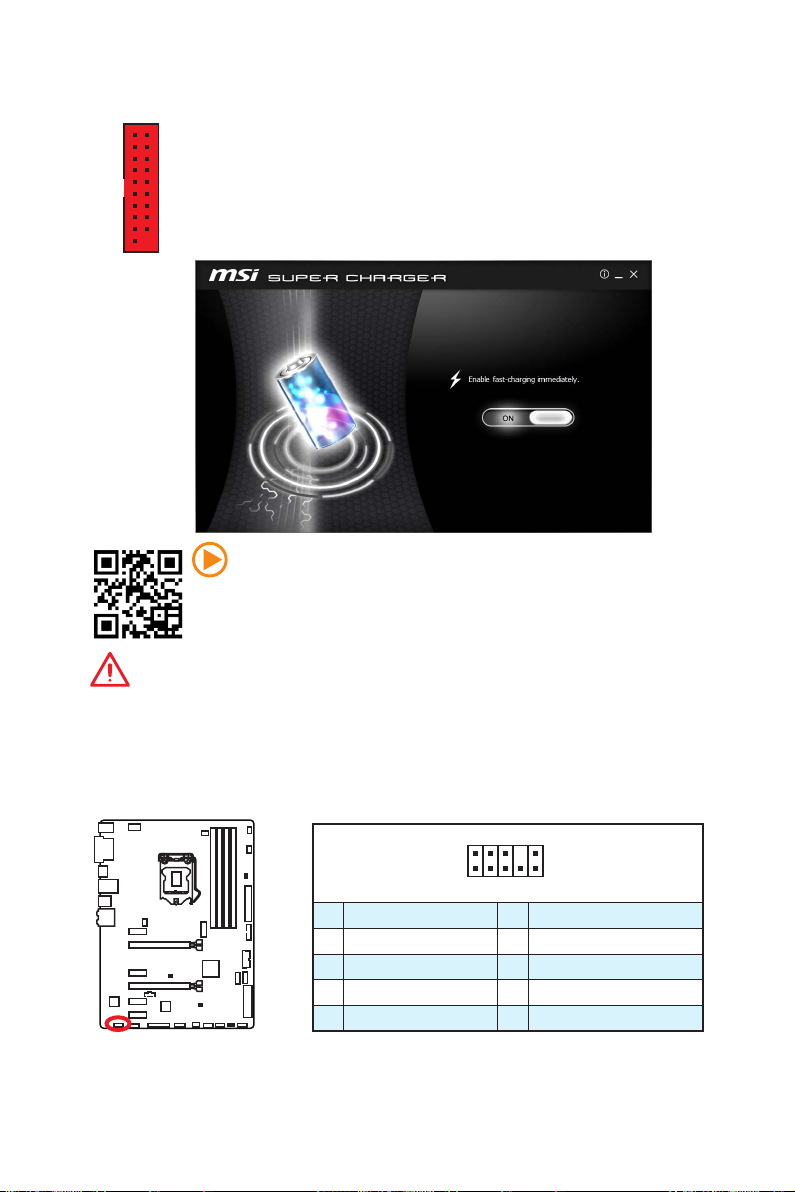
Charger Port
The JUSB3 (red mark) connector is a charger port which can increase
USB power output for fast charging your smartphone or USB-powered
devices. The Charger Port is hardware controlled by motherboard
chip, it can still charge your device in suspend, hibernate state or
even shutdown states. However, when you boot the computer into
Windows®, you will need to install the MSI® SUPER CHARGER
application to turn ON/OFF the Charging mode.
JUSB3
Video Demonstration
Watch the video to learn how to charge the smartphone with Super-
Charge.
http://youtu.be/FCyvjr5NbOw
Important
When the Charging mode is enabled, the Charge Port data syncing will be disabled.
JAUD1: Front Audio Connector
This connector allows you to connect audio jacks on the front panel.
2 10
1
1 MIC L 2 Ground
3 MIC R 4 NC
5 Head Phone R 6 MIC Detection
7 SENSE_SEND 8 No Pin
9 Head Phone L 10 Head Phone Detection
Overview of Components
18
9
Page 29
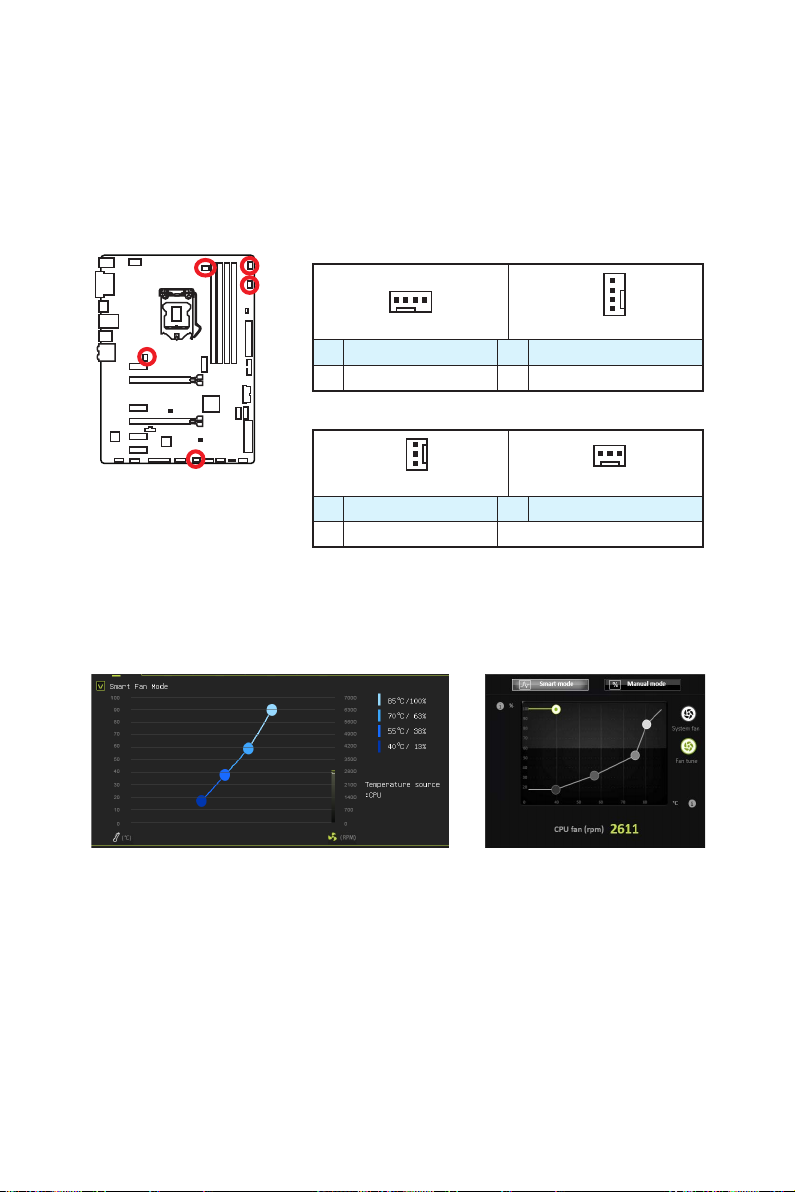
CPUFAN1~2, SYSFAN1~3: Fan Connectors
Fan connectors can be classified as PWM (Pulse Width Modulation) Mode and
Voltage Mode. PWM Mode fan connectors provide constant 12V output and adjust fan
speed with speed control signal. Voltage Mode fan connectors control fan speed by
changing voltage. Therefore, when you plug a 3-pin (Non-PWM) fan to a PWM Mode
fan connector, the fan speed will be always maintained at 100%, and that could be
noisy.
PWM Mode fan connector
1
CPUFAN1
1 Ground 2 +12V
3 Sense 4 Speed Control Signal
Voltage Mode fan connector
1
CPUFAN2
1
SYSFAN1/ SYSFAN3
1 Ground 2 Voltage Control
3 Sense
1
SYSFAN2
Controlling the fan speed
There are two ways to manage fan speed. One is to go to BIOS > HARDWARE
MONITOR. The other is to use COMMAND CENTER application.
BIOS > HARDWARE MONITOR COMMAND CENTER
Both methods offer gradient points of the fan speed that allow you to adjust fan speed
in relation to CPU temperature.
Overview of Components
19
Page 30

JLPT1: Parallel Port Connector
This connector allows you to connect the optional parallel port with bracket.
2 26
1
1 RSTB# 2 AFD# 3 PRND0
4 ERR# 5 PRND1 6 PINIT#
7 PRND2 8 LPT_SLIN# 9 PRND3
10 Ground 11 PRND4 12 Ground
13 PRND5 14 Ground 15 PRND6
16 Ground 17 PRND7 18 Ground
19 ACK# 20 Ground 21 BUSY
22 Ground 23 PE 24 Ground
25 SLCT 26 No Pin
25
JCOM1: Serial Port Connector
This connector allows you to connect the optional serial port with bracket.
2 10
1
9
1 DCD 2 SIN
3 SOUT 4 DTR
5 Ground 6 DSR
7 RTS 8 CTS
9 RI 10 No Pin
Overview of Components
20
Page 31

JTPM1: TPM Module Connector
This connector is for TPM (Trusted Platform Module). Please refer to the TPM security
platform manual for more details and usages.
2 14
1
1 LPC Clock 2 3V Standby power
3 LPC Reset 4 3.3V Power
5 LPC address & data pin0 6 Serial IRQ
7 LPC address & data pin1 8 5V Power
9 LPC address & data pin2 10 No Pin
11 LPC address & data pin3 12 Ground
13 LPC Frame 14 Ground
13
JBAT1: Clear CMOS (Reset BIOS) Jumper
There is CMOS memory onboard that is external powered from a battery located on
the motherboard to save system configuration data. If you want to clear the system
configuration, set the jumpers to clear the CMOS memory.
Keep Data
(default)
Clear CMOS/
Reset BIOS
Resetting BIOS to default values
1. Power off the computer and unplug the power cord
2. Use a jumper cap to short JBAT1 for about 5-10 seconds.
3. Remove the jumper cap from JBAT1.
4. Plug the power cord and power on the computer.
Overview of Components
21
Page 32

JCI1: Chassis Intrusion Connector
This connector allows you to connect the chassis intrusion switch cable.
Normal
(default)
Trigger the chassis
intrusion event
Using chassis intrusion detector
1. Connect the JCI1 connector to the chassis intrusion switch/ sensor on the
chassis.
2. Close the chassis cover.
3. Go to BIOS > Settings > Security > Chassis Intrusion Configuration.
4. Set Chassis Intrusion to Enabled.
5. Press F10 to save and exit and then press the Enter key to select Yes.
6. Once the chassis cover is opened again, a warning message will be displayed on
screen when the computer is turned on.
Resetting the chassis intrusion warning
1. Go to BIOS > Settings > Security > Chassis Intrusion Configuration.
2. Set Chassis Intrusion to Reset.
3. Press F10 to save and exit and then press the Enter key to select Yes.
EZ Debug LED: Debug LED indicators
These LEDs indicate the status of the motherboard.
Overview of Components
22
CPU - indicates CPU is not detected or fail.
DRAM - indicates DRAM is not detected or fail.
VGA - indicates GPU is not detected or fail.
Page 33

BIOS Setup
The default settings offer the optimal performance for system stability in normal
conditions. You should always keep the default settings to avoid possible system
damage or failure booting unless you are familiar with BIOS.
Important
●
BIOS items are continuously update for better system performance. Therefore,
the description may be slightly different from the latest BIOS and should be for
reference only. You could also refer to the HELP information panel for BIOS item
description.
●
The pictures in this chapter are for reference only and may vary from the product
you purchased.
Entering BIOS Setup
Please refer the following methods to enter BIOS setup.
● Press Delete key, when the Press DEL key to enter Setup Menu, F11 to enter
Boot Menu message appears on the screen during the boot process.
● Use MSI FAST BOOT application. Click on GO2BIOS button and choose OK. The
system will reboot and enter BIOS setup directly.
Click on GO2BIOS
● Enable the GO2BIOS item (SETTINGS > Boot > GO2BIOS) in BIOS setup
Advanced mode (F7). It allows the system to enter BIOS setup directly by pressing
the power button for 4 seconds upon bootup.
Function key
Key Function Key Function
F1 General Help F3 Enter Favorites menu
F4 Enter CPU Specifications menu F5 Enter Memory-Z menu
F6 Load optimized defaults F8 Load Overclocking Profile
F9 Save Overclocking Profile F10 Save Change and Reset*
* When you press F10, a confirmation window appears and it provides the modification
information. Select between Yes or No to confirm your choice.
BIOS Setup
23
Page 34

Resetting BIOS
You might need to restore the default BIOS setting to solve certain problems. There
are several ways to reset BIOS:
● Go to BIOS and press F6 to load optimized defaults.
● Short the Clear CMOS jumper on the motherboard.
● Press the Clear CMOS button, on the rear I/O panel. (Only for the motherboard
with clear CMOS button.)
Important
Please refer to the Clear CMOS jumper/ button section for resetting BIOS.
Updating BIOS
Updating BIOS with M-FLASH
Before updating:
Please download the latest BIOS file that matches your motherboard model from MSI
website. And then save the BIOS file into the USB flash drive.
Updating BIOS:
1. Press Del key to enter the BIOS Setup during POST.
2. Insert the USB flash drive that contains the update file into the computer.
3. Select the M-FLASH tab and click on Yes to reboot the system and enter the flash
mode.
4. Select a BIOS file to perform the BIOS update process.
5. After the flashing process is 100% completed, the system will reboot
automatically.
Updating the BIOS with Live Update 6
Before updating:
Make sure the LAN driver is already installed and the internet connection is set
properly.
Updating BIOS:
1. Install and launch MSI LIVE UPDATE 6.
2. Select Manual scan.
3. Check MB BIOS box and click on Scan button.
4. Select the MB BIOS and click on
file.
5. Click Next and choose In Windows mode. And then click Next and Start to start
updating BIOS.
6. After the flashing process is 100% completed, the system will restart
automatically.
icon to download and install the latest BIOS
24
BIOS Setup
Page 35

EZ Mode
At EZ mode, it provides the basic system information and allows you to configure the
basic setting. To configure the advanced BIOS settings, please enter the Advanced
Mode by pressing the Setup Mode switch or F7 function key.
XMP switch
OC GENIE 4
toggle
Information
display
M-Flash
Favorites
Hardware
Monitor
● Function buttons - enable or disable the LAN Option ROM, Fast Boot, HD audio
controller, AHCI, RAID, CPU Fan Fail Warning Control and BIOS Log Review
by clicking on their respective button.
● Hardware Monitor - click on this button to display the Hardware Monitor menu
that allows you to manually control the fan speed by percentage.
● M-Flash - click on this button to display the M-Flash menu that provides the way to
update BIOS with a USB flash drive.
● Information display - click on the CPU, Memory, Storage, Fan Info and Help
buttons on left side to display related information.
● Boot device priority bar - you can move the device icons to change the boot
priority. The boot priority from high to low is left to right.
● System information - shows the CPU/ DDR speed, CPU/ MB temperature, MB/
CPU type, memory size, CPU/ DDR voltage, BIOS version and build date.
● Language - allows you to select the language of BIOS setup.
● Screenshot - press this tab or the F12 key to take a screenshot and save it to USB
flash drive (FAT/ FAT32 format only).
● Setup Mode switch - press this tab or the F7 key to switch between Advanced
mode and EZ mode.
● XMP switch - click on the inner circle to enable/ disable the X.M.P. (Extreme
Memory Profile). Switch the outer circle to select the X.M.P. profile. This switch will
only be available if the X.M.P. supported memory module is installed.
Favorites ScreenshotSetup Mode switch
Language
System
information
Boot device
priority bar
Function
buttons
BIOS Setup
25
Page 36

● OC GENIE 4 toggle - click on it to toggle the OC GENIE 4 function which can
automatically overclock the CPU with MSI optimized setting.
Important
Please don’t make any changes in OC menu and don’t load defaults to keep the
optimal performance and system stability after enabling the OC GENIE 4 function.
● Favorites - press any Favorites tab or the F3 key to enter Favorites menu. It
allows you to create personal BIOS menu where you can save and access favorite/
frequently-used BIOS setting items.
▶ Default HomePage - allows you to select a BIOS menu (e.g. SETTINGS,
OC...,etc) as the BIOS home page.
▶ Favorite1~5 - allows you to add the frequently-used/ favorite BIOS setting items in
one page.
▶ To add a BIOS item to a favorite page (Favorite 1~5)
1. Select a BIOS item in SETTINGS, OC or OC PROFILE menu.
2. Right-click or press F2 key.
3. Choose a favorite page and click on OK.
▶ To delete a BIOS item from favorite page
1. Select a BIOS item in favorite page (Favorite 1~5)
2. Right-click or press F2 key.
3. Choose Delete and click on OK.
26
BIOS Setup
Page 37

Advanced Mode
Press Setup Mode switch or F7 function key can switch between EZ Mode and
Advanced Mode in BIOS setup.
OC GENIE 4
toggle
BIOS menu
selection
XMP switch
Menu display
Favorites ScreenshotSetup Mode switch
Language
System
information
Boot device
priority bar
BIOS menu
selection
● OC GENIE 4 toggle/ XMP switch/ Setup Mode switch/ Screenshot/ Favorites/
Language/ System information/ Boot device priority bar - please refer to the
descriptions of EZ Mode Overview section.
● BIOS menu selection - the following options are available:
▶ SETTINGS - allows you to specify the parameters for chipset and boot devices.
▶ OC - contains the frequency and voltage adjustments. Increasing the frequency
may get better performance.
▶ M-FLASH - provides the way to update BIOS with a USB flash drive.
▶ OC PROFILE - allows you to manage overclocking profiles.
▶ HARDWARE MONITOR - allows you to set the speeds of fans and monitor
voltages of system.
▶ BOARD EXPLORER - provides the information of installed devices on this
motherboard.
● Menu display - provides BIOS setting items and information to be configured.
BIOS Setup
27
Page 38

OC
This menu is for advanced users who want to overclock the motherboard.
Important
●
Overclocking your PC manually is only recommended for advanced users.
●
Overclocking is not guaranteed, and if done improperly, it could void your warranty
or severely damage your hardware.
●
If you are unfamiliar with overclocking, we advise you to use OC GENIE 4 function
for easy overclocking.
▶OC Explore Mode [Normal]
Enables or disables to show the normal or expert version of OC settings.
[Normal] Provides the regular OC settings in BIOS setup.
[Expert] Provides the advanced OC settings for OC expert to configure in BIOS
Note: We use * as the symbol for the OC settings of Expert mode.
▶CPU Ratio [Auto]
Sets the CPU ratio that is used to determine CPU clock speed. This item can only be
changed if the processor supports this function.
▶1/2/3/4-Core Ratio Limit [Auto] *
Allows you to set the CPU ratios for different number of active cores. These items only
appear when a CPU that support this function is installed.
▶Adjusted CPU Frequency
Shows the adjusted CPU frequency. Read-only.
▶OC Genie Function Control [By Onboard Button] (optional)
Enables the OC GENIE function by virtual button in BIOS or physical button on
motherboard. Enabling OC GENIE function can automatically overclock the system
with MSI optimized overclocking profile.
[By BIOS Options] OC GENIE function is enabled by clicking the virtual OC GENIE 4
[By Onboard Button]OC GENIE function is enabled by pressing the physical OC
setup.
toggle at the top left corner of BIOS setup screen.
GENIE button.
28
BIOS Setup
Page 39

▶Ring Ratio [Auto]
Sets the ring ratio. The valid value range depends on the installed CPU.
▶Adjusted Ring Frequency
Shows the adjusted Ring frequency. Read-only.
▶GT Ratio [Auto]
Sets the integrated graphics ratio. The valid value range depends on the installed
CPU.
▶Adjusted GT Frequency
Shows the adjusted integrated graphics frequency. Read-only.
▶Misc Setting*
Press Enter, + or - key to open or close the following 3 items related to CPU features.
▶EIST [Enabled]*
Enables or disables the Enhanced Intel
®
SpeedStep Technology.
[Enabled] Enables the EIST to adjust CPU voltage and core frequency
dynamically. It can decrease average power consumption and
average heat production.
[Disabled] Disables EIST.
▶Intel Turbo Boost [Enabled]*
Enables or disables the Intel
®
Turbo Boost. This item appears when the installed
CPU supports this function.
[Enabled] Enables this function to boost CPU performance automatically above
rated specications when system request the highest performance
state.
[Disabled] Disables this function.
▶Enhanced Turbo [Auto]
Enables or disables Enhanced Turbo function for all CPU cores to boost CPU
performance.
[Auto] This setting will be congured automatically by BIOS.
[Enabled] All CPU cores would be increased to maximum turbo ratio.
[Disabled] Disables this function.
▶CPU Base Clock (MHz) [Default]
Sets the CPU Base clock. You may overclock the CPU by adjusting this value. Please
note that overclocking behavior and stability is not guaranteed. This item appears
when a CPU that support this function is installed.
▶Extreme Memory Prole (X.M.P.) [Disabled]
X.M.P. (Extreme Memory Profile) is the overclocking technology by memory module.
This item will be available when the memory modules that supporting X.M.P. is
installed.
[Disabled] Disables this function.
[Profile 1] Uses profile1 settings of XMP memory module.
[Profile 2] Uses profile2 settings of XMP memory module.
BIOS Setup
29
Page 40

▶DRAM Frequency [Auto]
Sets the DRAM frequency. Please note the overclocking behavior is not guaranteed.
▶Adjusted DRAM Frequency
Shows the adjusted DRAM frequency. Read-only.
▶DRAM Timing Mode [Link]
Selects the memory timing mode.
[Link] Allows user to configure the DRAM timing for all memory channel.
[UnLink] Allows user to configure the DRAM timing for respective memory
▶Advanced DRAM Conguration
Press <Enter> to enter the sub-menu. User can set the memory timing for each/ all
memory channel. The system may become unstable or unbootable after changing
memory timing. If it occurs, please clear the CMOS data and restore the default
settings. (Refer to the Clear CMOS jumper/ button section to clear the CMOS data,
and enter the BIOS to load the default settings.)
▶CPU Voltages control [Auto]
These options allows you to set the voltages related to CPU. If set to Auto, BIOS will
set these voltages automatically or you can set it manually.
▶DRAM Voltages control [Auto]
These options allows you to set the voltages related to memory. If set to Auto, BIOS
will set these voltages automatically or you can set it manually.
▶CPU Specications
Press <Enter> to enter the sub-menu. This sub-menu displays the information of
installed CPU. You can also access this information menu at any time by pressing
[F4]. Read only.
▶CPU Technology Support
Press <Enter> to enter the sub-menu. The sub-menu shows the key features of
installed CPU. Read only.
▶MEMORY-Z
Press <Enter> to enter the sub-menu. This sub-menu displays all the settings and
timings of installed memory. You can also access this information menu at any time by
pressing [F5].
▶DIMMx Memory SPD
Press <Enter> to enter the sub-menu. The sub-menu displays the information of
installed memory. Read only.
▶CPU Features
Press <Enter> to enter the sub-menu.
channel.
30
BIOS Setup
Page 41

▶Hyper-Threading [Enabled]
Intel Hyper-Threading technology treats the multi cores inside the processor as
multi logical processors that can execute instructions simultaneously. In this way,
the system performance is highly improved. This item appears when the installed
CPU supports this technology.
[Enable] Enables Intel Hyper-Threading technology.
[Disabled] Disables this item if the system does not support HT function.
▶Active Processor Cores [All]
Allows you to select the number of active CPU cores.
▶Limit CPUID Maximum [Disabled]
Enables or disables the extended CPUID value.
[Enabled] BIOS limits the maximum CPUID input value to circumvent boot
[Disabled] Use the actual maximum CPUID input value.
▶Execute Disable Bit [Enabled]
Intel’s Execute Disable Bit functionality can prevent certain classes of malicious
buer overow attacks where worms attempt to execute code to damage the
system. It is recommended that keeps this item enabled always.
[Enabled] Enables NO-Execution protection to prevent the malicious attacks
[Disabled] Disables this function.
▶Intel Virtualization Tech [Enabled]
Enables or disables Intel Virtualization technology.
[Enabled] Enables Intel Virtualization technology and allows a platform to run
[Disabled] Disables this function.
▶Intel VT-D Tech [Enabled]
Enables or disables Intel VT-D (Intel Virtualization for Directed I/O) technology.
▶Hardware Prefetcher [Enabled]
Enables or disables the hardware prefetcher (MLC Streamer prefetcher).
[Enabled] Allows the hardware prefetcher to automatically pre-fetch data
[Disabled] Disables the hardware prefetcher.
▶Adjacent Cache Line Prefetch [Enabled]
Enables or disables the CPU hardware prefetcher (MLC Spatial prefetcher).
[Enabled] Enables adjacent cache line prefetching for reducing the cache
[Disabled] Enables the requested cache line only.
problems with older operating system that do not support the
processor with extended CPUID value.
and worms.
multiple operating systems in independent partitions. The system
can function as multiple systems virtually.
and instructions into L2 cache from memory for tuning the CPU
performance.
latency time and tuning the performance to the specic application.
BIOS Setup
31
Page 42

▶CPU AES Instructions [Enabled]
Enables or disables the CPU AES (Advanced Encryption Standard-New
Instructions) support. This item appears when a CPU supports this function.
▶Intel Adaptive Thermal Monitor [Enabled]
Enables or disables the Intel adaptive thermal monitor function to protect the CPU
from overheating.
[Enabled] Throttles down the CPU core clock speed when the CPU is over the
adaptive temperature.
[Disabled] Disables this function.
▶Intel C-State [Auto]
Enables or disables the Intel C-state. C-state is a processor power management
technology dened by ACPI.
[Auto] This setting will be congured automatically by BIOS.
[Enabled] Detects the idle state of system and reduce CPU power consumption
accordingly.
[Disabled] Disable this function.
▶C1E Support [Disabled]
Enables or disables the C1E function for power-saving in halt state. This item
appears when Intel C-State is enabled.
[Enabled] Enables C1E function to reduce the CPU frequency and voltage for
power-saving in halt state.
[Disabled] Disables this function.
▶Package C State limit [Auto]
This item allows you to select a CPU C-state level for power-saving when system is
idle. The options of C-state depend on the installed CPU. This item appears when
Intel C-State is enabled.
[Auto] This setting will be congured automatically by BIOS.
[C0~C8] The power-saving level from high to low is C8 to C0.
▶CFG Lock [Enabled]
Lock or un-lock the MSR 0xE2[15], CFG lock bit.
[Enabled] Locks the CFG lock bit.
[Disabled] Un-locks the CFG lock bit.
▶EIST [Enabled]
Enables or disables the Enhanced Intel
®
SpeedStep Technology. This item will
appear when OC Explore Mode is set to Normal.
[Enabled] Enables the EIST to adjust CPU voltage and core frequency
dynamically. It can decrease average power consumption and
average heat production.
[Disabled] Disables EIST.
32
BIOS Setup
Page 43

▶Intel Turbo Boost [Enabled]
Enables or disables the Intel
®
Turbo Boost. This item is for Simple mode and
appears when a CPU that support Turbo Boost is installed.
[Enabled] Enables this function to boost CPU performance automatically over
specication when system request the highest performance state.
[Disabled] Disables this function.
▶Long Duration Power Limit (W) [Auto]
Sets the long duration TDP power limit for CPU in Turbo Boost mode.
▶Long Duration Maintained (s) [Auto]
Sets the maintaining time for Long duration power Limit(W).
▶Short Duration Power Limit (W) [Auto]
Sets the short duration TDP power limit for CPU in Turbo Boost mode.
▶CPU Current Limit (A) [Auto]
Sets maximum current limit of CPU package in Turbo Boost mode. When the
current is over the specied value, the CPU will automatically reduce the core
frequency for reducing the current.
▶FCLK Frequency [Auto]
Sets FCLK frequency. Lower FCLK frequency may help you to set higher base
clock frequency.
▶DMI Link Speed [Auto]
Sets DMI speed.
BIOS Setup
33
Page 44

Software Description
Installing Windows® 7/ 8.1/ 10
1. Power on the computer.
2. Insert the Windows
Note: Due to chipset limitation, during the Windows 7 installation process, USB
optical drives or USB flash drives are not supported.
3. Press the Restart button on the computer case.
4. For windows 8.1/ 10, skip this step. For Windows 7, access the BIOS menu
SETTINGS > Advanced > Windows OS Configuration > Windows 7
Installation and set the item to enabled, save changes and restart.
Note: It is suggested to plug in your USB Keyboard/ USB Mouse to the leftmost
USB port when installing Windows® 7.
5. Press F11 key during the computer POST (Power-On Self Test) to get into Boot
Menu.
6. Select your optical drive from the Boot Menu.
7. Press any key when screen shows Press any key to boot from CD or DVD...
message.
8. Follow the instructions on the screen to install Windows
Installing Drivers
1. Start up your computer in Windows® 7/ 8.1/ 10.
2. Insert MSI
3. The installer will automatically appear and it will find and list all necessary drivers.
4. Click Install button.
5. The software installation will then be in progress, after it has finished it will prompt
you to restart.
6. Click OK button to finish.
7. Restart your computer.
®
®
7/ 8.1/ 10 disc into your optical drive.
Driver Disc into your optical drive.
®
7/ 8.1/ 10.
Installing Utilities
Before you install utilities, you must complete drivers installation.
1. Insert MSI
2. The installer will automatically appear.
3. Click Utilities tab.
4. Select the utilities you want to install.
5. Click Install button.
6. The utilities installation will then be in progress, after it has finished it will prompt
you to restart.
7. Click OK button to finish.
8. Restart your computer.
Software Description
34
®
Driver Disc into your optical drive.
Page 45

Inhalt
Sicherheitshinweis .................................................................................................2
Spezifikationen ........................................................................................................3
Rückseite E/A ..........................................................................................................7
LAN Port LED Zustandstabelle ............................................................................ 7
Konfiguration der Audioanschlüsse ..................................................................... 7
Übersicht der Komponenten .................................................................................9
CPU Sockel ....................................................................................................... 10
DIMM-Steckplätze ............................................................................................. 11
PCI_E1~6: PCIe Erweiterungssteckplätze ........................................................ 12
SATA1~6: SATA 6Gb/s Anschlüsse .................................................................. 13
SE1_21-SE2_65: SATAe Anschlüsse ............................................................... 13
M2_1: M.2 Steckplatz ........................................................................................ 14
JFP1, JFP2: Frontpanel-Anschlüsse ................................................................. 15
JPWR1~2: Stromanschlüsse ............................................................................. 16
JUSB1~2: USB 2.0 Anschlüsse......................................................................... 17
JUSB3~4: USB 3.1 Gen1 Anschlüsse ............................................................... 17
JAUD1: Audioanschluss des Frontpanels ......................................................... 18
CPUFAN1~2, SYSFAN1~3: Stromanschlüsse für Lüfter .................................. 19
JLPT1: Parallele Schnittstelle ............................................................................ 20
JCOM1: Serieller Anschluss .............................................................................. 20
JTPM1: TPM Anschluss .................................................................................... 21
JBAT1: Steckbrücke zur CMOS-Löschung (Reset des BIOS) .......................... 21
JCI1: Gehäusekontaktanschluss ....................................................................... 22
EZ Debug LED: Debug LED-Anzeigen ............................................................. 22
BIOS-Setup .............................................................................................................23
Öffnen des BIOS Setups ................................................................................... 23
Reset des BIOS ................................................................................................. 24
Aktualisierung des BIOS .................................................................................... 24
EZ Modus .......................................................................................................... 25
Erweiterten Modus ............................................................................................ 27
OC ..................................................................................................................... 28
Softwarebeschreibung .........................................................................................34
Installation von Windows® 7/ 8.1/ 10 ................................................................. 34
Installation von Treibern ................................................................................... 34
Installation von Utilities ..................................................................................... 34
Inhalt
1
Page 46

Sicherheitshinweis
● Die im Paket enthaltene Komponenten sind der Beschädigung durch
elektrostatische Entladung (ESD). Beachten Sie bitte die folgenden Hinweise, um
die erfolgreichen Computermontage sicherzustellen.
● Stellen Sie sicher, dass alle Komponenten fest angeschlossen sind. Lockere
Steckverbindungen können Probleme verursachen, zum Beispiel: Der Computer
erkennt eine Komponente nicht oder startet nicht.
● Halten Sie das Motherboard nur an den Rändern fest, und verhindern Sie die
Berührung der sensiblen Komponenten.
● Um eine Beschädigung der Komponenten durch elektrostatische Entladung
(ESD) zu vermeiden, sollten Sie eines elektrostatischen Armbands während
der Handhabung des Motherboards tragen. Wenn kein elektrostatischen
Handgelenkband vorhanden ist, sollten Sie Ihre statische Elektrizität ableiten,
indem Sie ein anderes Metallobjekt berühren, bevor Sie das Motherboard
anfassen.
● Bewahren Sie das Motherboard in eine elektrostatische Abschirmung oder einem
Antistatiktuch, wenn das Motherboard nicht installiert ist.
● Überprüfen Sie vor dem Einschalten des Computers, dass sich keine losen
Schrauben und andere Bauteile auf dem Motherboard oder im Computergehäuse
befinden.
● Bitte starten Sie den Computer nicht, bevor die Installation abgeschlossen ist. Dies
könnte permanente Schäden an den Komponenten sowie zu das Verletzung des
Benutzers verursachen.
● Benötigen Sie Hilfe während des Installations benötigen, wenden Sie sich bitte an
einen zertifizierten Computer-Techniker.
● Schalten Sie die Stromversorgung aus und ziehen Sie das Netzleitung ab, bevor
Sie jegliche Computer-Komponente ein- und ausbauen.
● Bewahren Sie die Bedienungsanleitung als künftige Referenz auf.
● Halten Sie das Motherboard von Feuchtigkeit fern.
● Bitte stellen Sie sicher, dass Ihre Netzspannung den Hinweisen auf dem Netzteil vor
Anschluss des Netzteils an die Steckdose entspricht.
● Verlegen Sie das Netzkabel so, dass niemand versehentlich darauf treten kann.
Stellen Sie nichts auf dem Netzkabel ab.
● Alle Achtungs- und Warnhinweise auf dem Motherboard müssen befolgt werden.
● Falls einer der folgenden Umstände eintritt, lassen Sie bitte das Motherboard von
Kundendienstpersonal prüfen:
▶ Flüssigkeit ist in dem Computer eingedrungen.
▶ Das Motherboard wurde Feuchtigkeit ausgesetzt.
▶ Das Motherboard funktioniert nicht richtig oder Sie können es nicht wie in der
Bedienungsanleitung beschrieben bedienen.
▶ Das Motherboard ist heruntergefallen und beschädigt.
▶ Das Motherboard weist offensichtlich Zeichen eines Schadens auf.
● Nutzen und lagern Sie das Gerät nicht an Stellen, an denen Temperaturen von
mehr als 60°C herrschen - das Motherboard kann in diesem Fall Schaden nehmen.
Sicherheitshinweis
2
Page 47

Spezifikationen
Unterstützt Intel
CPU
Chipsatz Intel
Speicher
Pentium® der 6.Generation und Celeron® Prozessoren für
Sockel LGA1151
®
● 4x DDR4 Speicherplätze, aufrüstbar bis 64GB
▶ Unterstützt DDR4 3200(OC)/ 3000(OC)/ 2800(OC)/
2600(OC)/ 2400/ 2133 MHz
● Dual-Kanal-Speicherarchitektur
● Unterstützt ungepufferte ECC-Speicher
● Unterstützt Intel
®
Core™ i3/i5/i7 Prozessoren, und Intel®
Z170 Chipsatz
®
Extreme Memory Profile (XMP)
Erweiterung-
anschlüsse
● 2x PCIe 3.0 x16-Steckplätze (unterstützen x16/x4 Modus)
● 4x PCIe 3.0 x1-Steckplätze
● 1x DisplayPort, unterstützt eine maximale Auflösung
von 4096x2304@24Hz, 2560x1600@60Hz,
3840x2160@60Hz, 1920x1200@60Hz
Onboard-Grafik
● 1x DVI-D Anschluss, unterstützt eine maximale Auflösung
von 1920x1200@60Hz
● 1x VGA Anschluss, unterstützt eine maximale Auflösung
von 1920x1200@60Hz
Multi-GPU ● Unterstützt 2-Wege AMD
®
Z170 Chipsatz
Intel
● 6x SATA 6Gb/s Anschlüsse*
● Unterstützt RAID 0, RAID 1, RAID 5 und RAID 10 für
SATA Speichergeräte
● 1x M.2 Steckplatz
▶ Unterstützt PCIe 3.0 x4 und SATA 6Gb/s Standards,
4,2cm/ 6cm/ 8cm Modullänge M.2 SSD-Karten
▶ Unterstützt PCIe 3.0 x4 NVMe Mini-SAS SSD mit Turbo
Aufbewahrung
U.2 Hostkarte**
● 2x SATAe Anschlüsse (PCIe 3.0 x2)***
● Unterstützt Intel
®
Smart Response Technologie für Intel
Core™ Prozessoren
* Die SATA1~2 Anschlüsse werden nicht zur Verfügung stehen, wenn Sie ein
M.2 SATA Schnittstellenmodul im M.2 Steckplatz installieren. Die SATA3~4
Anschlüsse werden nicht zur Verfügung stehen, wenn Sie ein M.2 PCIe
Schnittstellenmodul im M.2 Steckplatz installieren.
** Die Turbo U.2 Hostkarte ist im Lieferumfang nicht enthalten, bitte separat
kaufen.
*** Der SATAe Anschluss ist abwärtskompatibel mit SATA-Geräten.
Fortsetzung auf der nächsten Seite
®
CrossFire™ Technologie
Spezikationen
3
Page 48

Fortsetzung der vorherigen Seite
®
● Intel
Z170 Chipsatz
▶ 8x USB 3.1 Gen1 (SuperSpeed USB) Anschlüsse (4
Anschlüsse an der rückseitigen Anschlussleiste, 4
stehen durch die internen USB 3.1 Gen1 Anschluss zur
USB
Verfügung)
▶ 6x USB 2.0 (High-speed USB) Anschlüsse (2
Anschlüsse an der rückseitigen Anschlussleiste, 4
stehen durch die internen USB 2.0 Anschluss zur
Verfügung)
Audio
● Realtek
● 7,1-Kanal-HD-Audio
LAN 1x Realtek
● PS/2 Tastaturanschluss/ Mausanschluss x1
● VGA Anschluss x1
● DVI-D Anschluss x1
Hintere Ein-/ und
Ausgänge
● DisplayPort x1
● LAN (RJ45) Anschluss x1
● USB 3.1 Gen1 Anschlüsse x4
● USB 2.0 Anschlüsse x2
● Audiobuchsen x6
● ATX 24-poliger Stromanschluss x1
● ATX12V 8-poliger Stromanschluss x1
● SATA 6Gb/s Anschlüsse x6
● SATAe Anschlüsse x2
● USB 2.0 Anschlüsse x2 (unterstützt zusätzliche 4 USB
2.0-Ports)
● USB 3.1 Gen1 Anschlüsse x2 (unterstützt zusätzliche 4
USB 3.1 Gen1-Ports)
Interne Anschlüsse
● 4-poliger CPU-Lüfter-Anschlüsse x2
● 3-poliger System-Lüfter-Anschlüsse x3
● Audioanschluss des Frontpanels x1
● Frontpanel-Anschlüsse x2
● TPM Anschluss x1
● Gehäusekontaktschalter x1
● Serieller Anschluss x1
● Parallele Schnittstelle x1
● Steckbrücke zur CMOS-Löschung x1
Fortsetzung auf der nächsten Seite
®
ALC892 Codec
®
RTL8111H Gigabit LAN Controller
Spezikationen
4
Page 49

Fortsetzung der vorherigen Seite
E/A Anschluss NUVOTON NCT6793 Controller Chip
● CPU/System Temperaturerfassung
Hardware Monitor
● CPU/System Geschwindigkeitserfassung
● CPU/System Lüfterdrehzahlregelung
Formfaktor
● ATX Formfaktor
● 12 Zoll x 8,9 Zoll (30,5 cm x 22,5 cm)
● 1x 128 Mb Flash
BIOS Funktionen
● UEFI AMI BIOS
● ACPI 5.0, PnP 1.0a, SM BIOS 2.8
● Mehrsprachenunterstützung
● Treiber
● COMMAND CENTER
● LIVE UPDATE 6
● FAST BOOT
● SUPER CHARGER
Software
● M-CLOUD
● RAMDISK
● NETWORK GENIE
®
● Intel
Extreme Tuning Utility
™
● Norton
● Google Chrome
Security
™
, Google Toolbar, Google Drive
● CPU-Z
● CLICK BIOS 5
▶ EZ Modus & Umschalten erweitertes Modus
▶ Board Explorer
▶ Hardware Monitor
MSI Exklusive
Merkmale
● COMMAND CENTER
▶ System Monitor
▶ Smart-Lüftersteuerung
● RAM DISK
● LIVE UPDATE 6
● M-CLOUD
Fortsetzung auf der nächsten Seite
Spezikationen
5
Page 50

Spezifikation-
Highlights
Fortsetzung der vorherigen Seite
● DDR4 Boost
▶ Dual-Kanal DDR4 Speicher
▶ Isolated DDR4 Circuit Design
▶ DDR4 XMP Ready
● PCI Express 3.0
▶ 2-Wege AMD CrossFire
TM
● SATA Express
● EZ Debug LED
Spezikationen
6
Page 51

Rückseite E/A
VGA
PS/2 LAN
DisplayPort
USB 3.1 Gen1
DVI-D
LAN Port LED Zustandstabelle
LAN Port LED
Zustandstabelle
Zustand Bezeichnung
Aus Keine Verbindung
Gelb Verbindung
Blinkt Datenaktivität
Audioanschlüsse
USB 3.1 Gen1
USB 2.0
Geschwindigkeit LED
Zustand Bezeichnung
Aus 10 Mbps-Verbindung
Grün 100 Mbps-Verbindung
Orange 1 Gbps-Verbindung
Konfiguration der Audioanschlüsse
Audioanschlüsse
Line In
Line-Out/ Vorderer
Lautsprecher
Mic In
Hinterer Lautsprecher ● ● ●
Mitte-/ Subwoofer-Ausgang ● ●
Seitliche Lautsprecher ●
(●: verbindet, Blank: leer)
Kanal
2 4 6 8
● ● ● ●
Rückseite E/A
7
Page 52

Audiobuchsen für den Anschluss von einem Kopfhörer und Mikrofon
Audiobuchsen für Stereo-Lautsprecher
AUDIO INPUT
Audiobuchsen für 7.1 Kanal Anlage
AUDIO INPUT
Rear Front
Side Center/
Subwoofer
Rückseite E/A
8
Page 53

Übersicht der Komponenten
PCI_E1
M2_1
PCI_E2
PCI_E3
PCI_E4
JTBT1*
PCI_E5
PCI_E6
JCI1
JPWR2
SYSFAN1
CPU Sockel
CPUFAN1
DIMM2
DIMM1
DIMM3
DIMM4
CPUFAN2
SYSFAN3
EZ Debug LED
JPWR1
JUSB3
JBAT1
JUSB4
SATA3
SATA4
SE1_21-SE2_65
JAUD1
JCOM1
* JTBT1 dient dem Einsatz einer bestimmten Karte.
JLPT1
JTPM1
JUSB2
SYSFAN2
JFP1
JFP2
JUSB1
Übersicht der Komponenten
9
Page 54

CPU Sockel
Erklärung zur LGA 1151 CPU
Die Oberseite der LGA 1151 CPU hat
zwei Justierungen und ein goldenes
Dreieck um die korrekte Ausrichtung
der CPU auf dem Motherboard zu
gewährleisten. Das goldene Dreieck des
Prozessors deniert die Position des
ersten Pins.
Wichtig
●
Ziehen Sie das Netzkabel ab, bevor Sie CPU ein- und ausbauen.
●
Bitte bewahren Sie die CPU Schutzkappe nach der Installation des Prozessors auf.
MSI wird RMA (Return Merchandise Authorization) Anfragen nur dann behandeln,
wenn die Schutzklappe auf dem CPU-Sockel des Motherboards sitzt.
●
Wenn Sie eine CPU einbauen, denken sie bitte daran, einen CPU-Kühler zu
installieren. Ein CPU-Kühlkörper ist notwendig, um eine Überhitzung zu vermeiden
und die Systemstabilität zu gewährleisten.
●
Stellen Sie sicher, dass Ihr Kühlkörper eine feste Verbindung mit der CPU
hergestellt hat, bevor Sie Ihr System starten.
●
Überhitzung beschädigt die CPU und das System nachhaltig. Stellen Sie stets eine
korrekte Funktionsweise des CPU Kühlers sicher, um die CPU vor Überhitzung zu
schützen. Stellen Sie sicher, dass eine gleichmäßige Schicht der thermischen Paste
zwischen der CPU und dem Kühlkörper vorhanden ist, um die Wärmeableitung zu
erhöhen.
●
Schützen Sie den CPU-Sockel immer mit der Plastikabdeckung, wenn keine CPU
installiert ist.
●
Verwenden Sie bitte die Installationsanweisung des Kühlkörper/Kühlers, falls Sie
eine seperate CPU oder Kühlkörper/Kühler erworben haben.
●
Dieses Motherboard wurde so entworfen, dass es Übertakten unterstützt. Stellen
Sie jedoch bitte sicher, dass die betroffenen Komponenten mit den abweichenden
Einstellungen während des Übertaktens zurecht kommen. Von jedem Versuch
des Betriebes außerhalb der Produktspezifikationen kann nur abgeraten werden.
MSI® übernehmt keinerlei Garantie für die Schäden und Risiken, die aus einem
unzulässigem Betrieb oder einem Betrieb außerhalb der Produktspezifikation
resultieren.
Übersicht der Komponenten
10
Page 55

DIMM-Steckplätze
DIMM1 DIMM3
Kanal A Kanal B
DIMM2 DIMM4
Speichermodul-Installationsempfehlung
DIMM4 DIMM4
DIMM2 DIMM2 DIMM2
DIMM3
DIMM1
Wichtig
●
Um einen sicheren Systemstart zu gewährleisten, bestücken Sie immer DIMM2
zuerst.
●
Aufgrund der Chipsatzressourcennutzung wird die verfügbare Kapazität des
Speichers kleiner sein als die Größe der installierten Speicherkapazität.
●
Basierend auf der Intel CPU Spezifikation wird eine Speicherspannung unter 1,35
Volt vorgeschlagen, um die CPU zu schützen.
●
Bitte beachten Sie, dass die maximale Kapazität eines 32-Bit-Windows-
Betriebssystem bei 4GB oder weniger liegt. Wenn Sie mehr als 4 GB Speicher auf
dem Motherboard einbauen möchten, empfehlen wir deshalb, ein 64-Bit-Windows-
Betriebssystem zu installieren.
●
Einige Speicherriegel können beim Übertakten auf einer niedrigeren Frequenz
arbeiten, als der festgelegte Wert - abhängig von dem SPD (Serial Presence
Detect).
●
Es wird empfohlen, ein effizienteres Speicherkühlsystem bei einer Vollbestückung
des DIMMs oder beim Übertakten zu verwenden.
●
Die Stabilität und Kompatibilität beim Übertakten der installierten Speichermodule
sind abhängig von der installierten CPU und Geräte.
Übersicht der Komponenten
11
Page 56

PCI_E1~6: PCIe Erweiterungssteckplätze
PCI_E1: PCIe 3.0 x1-Steckplatz
PCI_E2: PCIe 3.0 x16-Steckplatz
PCI_E3: PCIe 3.0 x1-Steckplatz
PCI_E4: PCIe 3.0 x4-Steckplatz
PCI_E5: PCIe 3.0 x1-Steckplatz
PCI_E6: PCIe 3.0 x1-Steckplatz
Mehrere Grafikkarten Einbauempfehlung
x16
x16
Wichtig
●
Für die Installation einer einzelnen PCIe x16 Erweiterungskarte mit optimaler
Leistung, empfehlen wir PCI_E2 Steckplatz zu verwenden.
●
Achten Sie darauf, dass Sie den Strom abschalten und das Netzkabel aus der
Steckdose herausziehen, bevor Sie eine Erweiterungskarte installieren oder
entfernen. Lesen Sie bitte auch die Dokumentation der Erweiterungskarte, um
notwendige zusätzliche Hardware oder Software-Änderungen zu überprüfen.
●
Beim Installieren der Karten in beiden PCIe x16-Steckplätze für CrossFireTM
Technologie wird PCI_E2 Bandbreite nur 3.0x4 sein.
Übersicht der Komponenten
12
x4
Page 57

SATA1~6: SATA 6Gb/s Anschlüsse
Diese Anschlüsse basieren auf der Hochgeschwindigkeitsschnittstelle SATA 6Gb/s.
Pro Anschluss kann ein SATA Gerät angeschlossen werden.
SATA3
SATA4
SATA5
SATA1
SATA6
SATA2
SE1_21-SE2_65: SATAe Anschlüsse
Diese Anschlüsse sind SATAe (SATA Express) Schnittstellenmodule. Pro
SATAe Anschluss kann eine einzige SATA-Gerät oder zwei ältere SATA-Geräte
angeschlossen werden.
SATA6
SATA5
SATA1
SATA2
SE2_65
(SATA_EX2)
SE1_21
(SATA_EX1)
Wichtig
●
Knicken Sie das SATA- oder SATAe-Kabel nicht in einem 90° Winkel. Datenverlust
könnte die Folge sein.
●
SATA-Kabel hat identische Stecker an beiden Enden. Es wird empfohlen den
flachen Stecker auf dem Motherboard einstecken.
Übersicht der Komponenten
13
Page 58

M2_1: M.2 Steckplatz
●
Intel® RST unterstützt nur PCIe M.2 SSD mit UEFI
ROM, Legacy-ROM wird NICHT unterstützt.
Installation eines M.2 Moduls
1. Entfernen Sie die
Scharube aus dem
Schraubsockel.
2. Entfernen Sie den
Schraubsockel.
Wichtig
Video-Demonstration
Eine anschauliche Darstellung zur
Installation eines M.2 Moduls finden Sie
im Video.
http://youtu.be/JCTFABytrYA
1
2
3. Befestigen Sie den
Schraubsockel in das
Loch, welches zur Länge
des M.2 Moduls passt.
4. Stecken Sie das
M2-Modul in den M2-
Steckplatz in einem
30-Grad-Winkel.
5. Setzen Sie die Schraube
in der Aussparung an der
Hinterkante des M2-
Modul und schrauben Sie
sie in den Schraubsockel.
Übersicht der Komponenten
14
4
3
30°
5
Page 59

M.2/ SATA & SATAe Kombinationstabelle
Steckplatz Verfügbare SATA/ SATA Express Anschlüsse
M2_1 Leer M.2 SATA M.2 PCIe
SATA_EX1 & EX2 ✓ ✓ ✓
SATA1 ✓ ─ ✓
SATA2 ✓ ─ ✓
SATA3 ✓ ✓ ─
SATA4 ✓ ✓ ─
SATA5 ✓ ✓ ✓
SATA6 ✓ ✓ ✓
(✓: Verfügbar, ─: Nicht verfügbar)
Wichtig
●
Die SATA1~2 Anschlüsse werden nicht zur Verfügung stehen, wenn Sie ein M.2
SATA Schnittstellenmodul im M.2 Steckplatz installieren.
●
Die SATA3~4 Anschlüsse werden nicht zur Verfügung stehen, wenn Sie ein M.2
PCIe Schnittstellenmodul im M.2 Steckplatz installieren.
JFP1, JFP2: Frontpanel-Anschlüsse
Diese Anschlüsse verbinden mit den Schaltern und LEDs auf des Frontpanels.
2 10
JFP1
1
1 HDD LED + 2 Power LED +
3 HDD LED - 4 Power LED -
5 Reset Switch 6 Power Switch
7 Reset Switch 8 Power Switch
9 Reserved 10 No Pin
1
JFP2
1 Speaker - 2 Buzzer +
3 Buzzer - 4 Speaker +
9
Übersicht der Komponenten
15
Page 60

JPWR1~2: Stromanschlüsse
Mit diesen Anschlüssen verbinden Sie die ATX Stromstecker.
8
4 1
1 Ground 5 +12V
2 Ground 6 +12V
3 Ground 7 +12V
4 Ground 8 +12V
1 +3.3V 13 +3.3V
2 +3.3V 14 -12V
3 Ground 15 Ground
24
12
JPWR1
131
4 +5V 16 PS-ON#
5 Ground 17 Ground
6 +5V 18 Ground
7 Ground 19 Ground
8 PWR OK 20 Res
9 5VSB 21 +5V
10 +12V 22 +5V
11 +12V 23 +5V
12 +3.3V 24 Ground
5
JPWR2
Wichtig
Stellen Sie sicher, dass alle Anschlüsse mit den richtigen Anschlüssen des Netzteils
verbunden sind, um einen stabilen Betrieb der Hauptplatine sicherzustellen.
Übersicht der Komponenten
16
Page 61

JUSB1~2: USB 2.0 Anschlüsse
Mit diesen Anschlüssen können Sie die USB 2.0 Anschlüsse auf dem Frontpanel
verbinden.
2 10
1
9
1 VCC 2 VCC
3 USB0- 4 USB1-
5 USB0+ 6 USB1+
7 Ground 8 Ground
9 No Pin 10 NC
Wichtig
●
Bitte beachten Sie, dass Sie die mit VCC (Stromführende Leitung) und Ground
(Erdleitung) bezeichneten Pins korrekt verbinden müssen, ansonsten kann es zu
Schäden kommen.
●
Um das iPad, iPhone und iPod über USB-Anschlüsse aufzuladen, installieren Sie
bitte die MSI® SUPER CHARGER Software.
JUSB3~4: USB 3.1 Gen1 Anschlüsse
Mit diesen Anschlüssen können Sie die USB 3.1 Gen1 Anschlüsse auf dem
Frontpanel verbinden.
10 11
1
20
1 Power 11 USB2.0+
2 USB3_RX_DN 12 USB2.0-
3 USB3_RX_DP 13 Ground
4 Ground 14 USB3_TX_C_DP
5 USB3_TX_C_DN 15 USB3_TX_C_DN
6 USB3_TX_C_DP 16 Ground
7 Ground 17 USB3_RX_DP
8 USB2.0- 18 USB3_RX_DN
9 USB2.0+ 19 Power
10 Ground 20 No Pin
Wichtig
Bitte beachten Sie, dass Sie die mit Stromführende Leitung und Erdleitung
bezeichneten Pins korrekt verbinden müssen, ansonsten kann es zu Schäden
kommen.
Übersicht der Komponenten
17
Page 62

Ladegerätanschluss
Der JUSB3 (rote Markierung) Anschluss ist ein Ladegerätanschluss,
mit dem Sie die Ladegeschwindigkeit Ihres Smartphones oder
anderen USB-betriebenen Geräte erhöhen. Der Ladegerätanschluss
ist eine vom Mainboard-Chip gesteuerte Hardware, die auch im
Ruhezustand, Standby- oder im ausgeschalteten Modus Geräte
aufladen kann. Wenn Sie den Computer in Windows® starten, müssen
Sie die MSI® SUPER CHARGER Anwendung installieren, um den
JUSB3
Lademodus EIN/AUSZUSCHALTEN.
Video-Demonstration
In diesem Video erfahren Sie, wie das MSI Super Charger funktioniert.
http://youtu.be/FCyvjr5NbOw
Wichtig
Wenn der Lademodus aktiviert ist, können Sie keine Daten über die Ladebuchse
synchronisieren.
JAUD1: Audioanschluss des Frontpanels
Dieser Anschluss ermöglicht den Anschluss von Audiobuchsen eines Frontpanels.
2 10
1
9
1 MIC L 2 Ground
3 MIC R 4 NC
5 Head Phone R 6 MIC Detection
7 SENSE_SEND 8 No Pin
9 Head Phone L 10 Head Phone Detection
Übersicht der Komponenten
18
Page 63

CPUFAN1~2, SYSFAN1~3: Stromanschlüsse für Lüfter
Diese Anschlüsse können im PWM (Pulse Width Modulation) Modus
oder Spannungsmodus betrieben werden. Im PWM-Modus bieten die
Lüfteranschlüsse konstante 12V Ausgang und regeln die Lüftergeschwindigkeit
per Drehzahlsteuersignal. Im Spannungsmodus bestimmen die Lüfteranschlüsse
die Lüftergeschwindigkeit durch Ändern der Spannung. Wenn Sie ein 3-Pin (NonPWM) Lüfter an einen PWM-Modus Lüfteranschluss anschließen, läuft der Lüfter mit
höchster Drehzahl und kann unangenehm laut werden.
Lüfteranschluss des PWM-Modus
1
CPUFAN1
1 Ground 2 +12V
3 Sense 4 Speed Control Signal
Lüfteranschluss des Spannung-Modus
1
CPUFAN2
1
SYSFAN1/ SYSFAN3
1 Ground 2 Voltage Control
3 Sense
1
SYSFAN2
Lüfterdrehzahl steuern
Es gibt zwei Möglichkeiten zur Steuerung der Lüfterdrehzahl. Sie können unter BIOS
> HARDWARE MONITOR die Drehzahl ändern oder die COMMAND CENTER
Anwendung verwenden.
BIOS > HARDWARE MONITOR COMMAND CENTER
Beide Verfahren benutzen einen Graphen, mit dem man die Lüfterdrehzahl im Bezug
auf die CPU-Temperatur anpassen kann.
Übersicht der Komponenten
19
Page 64

JLPT1: Parallele Schnittstelle
Mit dieser Schnittstellekönnen Sie das optionale parallele Schnittstelle mit dem
Einbausatze verbinden.
2 26
1
1 RSTB# 2 AFD# 3 PRND0
4 ERR# 5 PRND1 6 PINIT#
7 PRND2 8 LPT_SLIN# 9 PRND3
10 Ground 11 PRND4 12 Ground
13 PRND5 14 Ground 15 PRND6
16 Ground 17 PRND7 18 Ground
19 ACK# 20 Ground 21 BUSY
22 Ground 23 PE 24 Ground
25 SLCT 26 No Pin
25
JCOM1: Serieller Anschluss
Mit diesem Anschluss können Sie das optionale serielle Schnittstelle mit dem
Einbausatze verbinden.
2 10
1
9
1 DCD 2 SIN
3 SOUT 4 DTR
5 Ground 6 DSR
7 RTS 8 CTS
9 RI 10 No Pin
Übersicht der Komponenten
20
Page 65

JTPM1: TPM Anschluss
Dieser Anschluss wird für das TPM Modul (Trusted Platform Module) verwendet.
Weitere Informationen über den Einsatz des optionalen TPM Modules entnehmen Sie
bitte dem TPM Plattform Handbuch.
2 14
1
1 LPC Clock 2 3V Standby power
3 LPC Reset 4 3.3V Power
5 LPC address & data pin0 6 Serial IRQ
7 LPC address & data pin1 8 5V Power
9 LPC address & data pin2 10 No Pin
11 LPC address & data pin3 12 Ground
13 LPC Frame 14 Ground
13
JBAT1: Steckbrücke zur CMOS-Löschung (Reset des BIOS)
Der Onboard CMOS Speicher (RAM) wird durch eine externe Spannungsversorgung
durch eine Batterie auf dem Motherboard versorgt, um die Daten der
Systemkonfiguration zu speichern. Wenn Sie die Systemkonfiguration löschen wollen,
müssen Sie die Steckbrücke für kurze Zeit umsetzen.
Daten
beibehalten
(Standardwert)
CMOS-Daten
löschen/ Reset
des BIOS
Rücksetzen des BIOS auf Standardwerte
1. Schalten Sie den Computer ab und ziehen Sie das Netzkabel ab.
2. Schließen Sie JBAT1 mit dem Deckel zur CMOS-Löschung für ca. 5-10
Sekunden.
3. Entfernen Sie den Deckel von JBAT1.
4. Stecken Sie das Kabel Ihres Computers in die Steckdose hinein und schalten Sie
den Computer ein.
Übersicht der Komponenten
21
Page 66

JCI1: Gehäusekontaktanschluss
Dieser Anschluss wird mit einem Kontaktschalter verbunden.
Normal
(Standardwert)
Trigger
Gehäusekontakt
Event
Gehäusekontakt-Detektor verwenden
1. Schließen Sie den JCI1-Anschluss am Gehäusekontakt-Schalter/ Sensor am
Gehäuse an.
2. Schließen Sie die Gehäuseabdeckung.
3. Gehen Sie zu BIOS > Settings > Security > Chassis Intrusion Configuration.
4. Stellen Sie Chassis Intrusion auf Aktiviert (Enabled).
5. Drücken Sie F10 zum Speichern und Beenden und drücken Sie dann die Enter-
Taste, um Ja auszuwählen.
6. Bei eingeschaltetem Computer wird eine Warnmeldung auf dem Bildschirm
angezeigt, wenn die Gehäuseabdeckung wieder geöffnet wird.
Gehäusekontakt-Warnung zurücksetzen
1. Gehen Sie zu BIOS > Settings > Security > Chassis Intrusion Configuration.
2. Stellen Sie Chassis Intrusion auf Reset.
3. Drücken Sie F10 zum Speichern und Beenden und drücken Sie dann die Enter-
Taste, um Ja auszuwählen.
EZ Debug LED: Debug LED-Anzeigen
Diese LEDs zeigen den Status des Motherboards.
Übersicht der Komponenten
22
CPU - CPU wird nicht erkannt oder ist fehlerhaft.
DRAM - DRAM wird nicht erkannt oder ist fehlerhaft.
VGA - GPU wird nicht erkannt oder ist fehlerhaft.
Page 67

BIOS-Setup
Die Standardeinstellungen bieten die optimale Leistung für die Systemstabilität unter
Normalbedingungen. Sie sollten immer die Standardeinstellungen behalten,um
mögliche Schäden des Systems oder Boot-Fehler zu vermeiden, außer Sie besitzen
ausreichende BIOS Kenntnisse.
Wichtig
●
BIOS Funktionen werden kontinuierlich aktualisiert für eine bessere Systemleistung.
Deswegen können die Beschreibungen leicht von der letzten Fassung des
BIOS abweichen und sollten demnach nur als Anhaltspunkte dienen. Für eine
Beschreibung der BIOS Funktionen rufen Sie die HELP Informationstafel aus.
●
Die Bilder in diesem Kapitel sind nur als Referenz und können von dem von Ihnen
erworbenen Produkt abweichen.
Öffnen des BIOS Setups
Befolgen Sie bitte die nachfolgende Schritten, um das BIOS Setup aufzurufen.
● Während des BOOT-Vorgangs drücken Sie die Taste Delete, wenn die Meldung
Press DEL key to enter Setup Menu, F11 to enter Boot Menu erscheint.
● Verwenden Sie die MSI FAST BOOT Anwendung. Klicken Sie die GO2BIOS-Taste
und drücken OK. Das System startet neu und geht direkt ins BIOS.
Klicken Sie auf GO2BIOS
● Aktivieren Sie die GO2BIOS Funktion (SETTINGS > Boot > GO2BIOS) im
Erweiterten Modus des BIOS-Setups (F7). Rufen Sie das BIOS-SetupDienstprogramm durch ein 4 Sekunden langes Drücken der Power-Taste auf.
Funktionstasten
Taste Funktion Taste Funktion
F1 Allgemeine Hilfe F3 Öffnen das Favoriten-Menü
F4
F6
F9
* Beim Drücken der F10 Taste wird das Fenster zum Speichern der Einstellungen
angezeigt. Wählen Sie YES, um die Wahl zu bestätigen, oder NO, um die derzeitige
Einstellung beizubehalten.
Öffnen das CPU-
Spezifikationen-Menü
Laden der ursprünglichen
Setup-Standardwerte
OC-Profil wird auf einem USB-
Stick gespeichert
F5 Öffnen das Memory-Z-Menü
OC-Profil wird vom USB-Stick
F8
F10
Speichern oder Zurücksetzen
geladen
der Änderungen*
BIOS-Setup
23
Page 68

Reset des BIOS
Sie können die Werkseinstellung wieder herstellen, um bestimmte Probleme zu lösen.
Es gibt verschiedene Möglichkeiten, um das BIOS zurückzusetzen:
● Öffnen Sie das BIOS und drücken Sie F6,um optimierten Voreinstellungen zu laden.
● Schließen Sie die Clear CMOS Steckbrücke auf dem Motherboard.
● Drücken Sie die Taste Clear CMOS auf der Rückseite E/ A des Panels. (Nur für
Motherboard mit einer Clear CMOS Taste.)
Wichtig
Bitte lesen Sie für Informationen zum BIOS-Reset im Bereich “Steckbrücke zur
CMOS-Löschung/ Clear CMOS Taste” nach.
Aktualisierung des BIOS
Aktualisierung des BIOS mit dem M-FLASH-Programm
Vorbereitung:
Laden Sie bitte die neueste BIOS Version, die dem Motherboard-Modell entspricht,
von der offiziellen MSI Website herunter und speichern Sie die BIOS-Datei auf USBFlash-Laufwerk.
BIOS-Aktualisierungsschritte:
1. Drücken Sie während des POST-Vorgangs die Taste (Entf), um das BIOS zu
öffnen.
2. Schließen das USB-Flashlaufwerk mit der BIOS-Datei an den Computer.
3. Wählen Sie die Registerkarte M-FLASH und klicken Sie auf Yes (Ja), um das
System neu zu starten. Rufen Sie den Flash-Modus auf.
4. Wählen Sie die BIOS-Datei zur Durchführung des BIOS-Aktualisierungsprozesses
aus.
5. Nachdem das Flashen des BIOS vollständig ist, startet das System automatisch
neu.
Aktualisierung des BIOS mit Live Update 6
Vorbereitung:
Stellen Sie sicher, dass zuvor die LAN-Treiber installiert wurden und eine
Internetverbindung eingerichtet ist.
BIOS-Aktualisierungsschritte:
1. Installieren und starten Sie “MSI LIVE UPDATE 6”.
2. Wählen Sie Manual scan aus.
3. Machen Sie ein Häkchen bei MB BIOS und klicken sie auf die SCAN Taste.
4. Wählen Sie MB BIOS aus und klicken auf dieses Icon
Datei zu laden und zu installieren.
5. Klicken Sie auf Next (Weiter) und wählen Sie In Windows Mode aus. Und
klicken dann auf Next (Weiter) und Start (Starten), um das BIOS-Update zu
starten.
6. Nachdem das Flashen des BIOS vollständig ist, startet das System automatisch
neu.
BIOS-Setup
24
, um die neueste BIOS-
Page 69

EZ Modus
Im EZ-Modus können Sie die Grundinformationen des Systems einsehen und
grundlegende Einstellungen konfigurieren. Um die erweiterten BIOS-Einstellungen
anzeigen zu lassen, aktivieren Sie bitte den Erweiterten Modus durch Drücken des
Setup Mode Schalter oder der Funktionstaste F7.
XMP Schalter
OC GENIE 4
Schalter
Informations-
anzeige
M-Flash
Favoriten
Hardware
Monitor
● Funktionstasten - Aktivieren oder Deaktivieren Sie LAN Option ROM, Fast Boot,
HD Audio Controller, AHCI, RAID, CPU Fan Fail Warning Control und BIOS Log
Review durch Anklicken der zugehörigen Schaltfläche.
● Hardware Monitor - Ein Klick auf diese Schaltfläche öffnet das Menü des
Hardware Monitor mit dem Sie die Lüfterdrehzahl in Prozent manuell steuern.
● M-Flash - Ein Klick auf diese Schaltfläche öffnet M-Flash mit dem Sie das BIOS mit
einem USB-Flash-Laufwerk aktualisieren.
● Informationsanzeige - Klicken Sie auf die Schaltfläche CPU, Memory, Storage,
Fan Info und Help auf der linken Seite, um die jeweiligen Informationen
anzuzeigen.
● Boot-Geräte Prioritätsleiste - Sie können die Gerätesymbole verschieben, um die
Startreihenfolge zu ändern. Die Bootreihenfolge sind mit "hoch"(links) bis "niedrig"
(rechts) bezeichnet.
● Systeminformationen - Diese zeigt CPU-Name, CPU/ DDR-Frequenz, CPU/
MB-Temperatur, MB/ CPU-Typ, Speicherkapazität, CPU/ DDR-Spannung, BIOSVersion und Erstellungs-Datum.
● Sprache - Hier können Sie die Sprache der BIOS-Einstellungen auswählen.
● Screenshot - Mit dieser Registerkarte oder der F12-Taste, um einen Screenshot zu
machen und auf einen FAT/FAT32-USB-Laufwerk zu speichern.
● Setup-Modus-Schalter - Mit dieser Registerkarte oder der F7-Taste können Sie
zwischen dem Erweiterten-Modus und EZ-Modus wechseln.
● XMP Schalter - Klicken Sie auf den inneren Kreis, X.M.P.(Extreme Memory
Profile) zu aktivieren/deaktivieren. Drehen Sie den äußeren Kreis, um ein X.M.P.
Profil zu wählen. Dieser Schalter steht nur zur Verfügung, wenn die installierten
Speichermodule die X.M.P. Technik unterstützen.
Favoriten ScreenshotSetup Mode switch
Sprache
System-
information
Bootgeräte-
Prioritätsleiste
Funktions-
tasten
BIOS-Setup
25
Page 70

● OC GENIE 4 Schalter - Klicken Sie den Umschalter der OC GENIE 4 Funktion, um
den CPU mit MSI optimierte Einstellung automatisch zu übertakten.
Wichtig
Biite ändern Sie keine Werte im OC Menü und laden Sie keine Standardwerte
während GAME GENIE 4 aktiviert ist, um die optimale Leistung und Stabilität des
Systems zu gewährleisten.
● Favoriten - Drücken Sie eine beliebige Favoriten-Registerkarte oder die F3-
Taste, um das Favoriten-Menü aufzurufen. Hier können Sie Ihre persönliches
BIOS-Menü erstellen, in dem Sie die häug verwendeten oder favorisierten BIOS-
Einstellungsoptionen auswählen können.
▶ Default HomePage - Über diese Option können Sie ein BIOS-Menü (zum
Beispiel: Einstellungen, Übertaktung, usw.) als BIOS Homepage auswählen.
▶ Favorite1~5 - Hier können Sie die häug erwendeten oder favorisierten BIOS-
Einstellungsoptionen auf einer Seite hinzufügen.
▶ Um ein BIOS-Punkte zu einer Lieblingsseite hinzufügen (Lieblingseinstellung
1~5)
1. Wählen Sie den BIOS-Punkt in den Einstellungen-, OC- oder OC Profil-Menü.
2. Klicken Sie mit der rechten Maustaste oder drücken Sie die Taste F2.
3. Wählen Sie die gewünschte Seite aus und klicken Sie auf OK.
▶ Um ein BIOS-Punkte von Lieblingsseite zu löschen
1. Wählen Sie den BIOS-Punkt in Lieblingsseite (Lieblingseinstellung 1~5)
2. Klicken Sie mit der rechten Maustaste oder drücken Sie die Taste F2.
3. Wählen Sie Delete aus und klicken Sie auf OK.
26
BIOS-Setup
Page 71

Erweiterten Modus
Drücken Sie den Setup Mode Schalter oder die Funkionstaste F7, um zwischen den
EZ-Modus und Erweiterten-Modus im BIOS-Setup zu wechseln.
OC GENIE 4
Schalter
BIOS-Menü
-Auswahl
XMP Schalter
Menüanzeige
FavoritenScreenshotSetup Modus Schalter
Sprache
System-
information
Bootgeräte-
Prioritätsleiste
BIOS-Menü
-Auswahl
● OC GENIE 4 Schalter/ XMP Schalter/ Setup Modus Schalter/ Screenshot/
Favoriten/ Sprache/ Systeminformation/ Boot-Geräte Prioritätsleiste - Finden
Sie die Informationen in den Beschreibungen der EZ Modus-Abschritt.
● BIOS-Menü-Auswahl - Die folgenden Optionen stehen zur Verfügung:
▶ SETTINGS - Mit diesem Menü können Sie die Parameter für Chipsatz, Boot-
Geräte angeben.
▶ OC - Hier können Sie die Frequenz und Spannung anpassen. Die Erhöhung der
Frequenz kann eine bessere Leistung erreichen.
▶ M-FLASH - Es bietet die Funktion, das BIOS mit einem USB-Flash-Laufwerk zu
aktualisieren.
▶ OC PROFILE - In diesem Menü werden die verschiedenen Overclocking-Prole
gesetzt.
▶ HARDWARE MONITOR - Hier können Sie die Geschwindigkeiten der Lüfter
setzen und die Spannungen des Systems überwachen.
▶ BOARD EXPLORER - provides the information of installed devices on this
motherboard.
● Menüanzeige - Dieser Bereich ermöglicht die Konguration von BIOS
Einstellungen.
BIOS-Setup
27
Page 72

OC
In diesem Menü können Benutzer das BIOS anpassen und das Mainboard übertakten.
Bitte führen Sie nur Änderungen durch, wenn Sie sich über das Ergebnis im Klaren
sind. Sie sollten Erfahrung beim Übertakten haben, da Sie sonst das Motherboard
oder Komponenten des Systems beschädigen können.
Wichtig
●
Die Übertaktung ist nur für fortgeschrittene Benutzer zu empfehlen.
●
Die erfolgreiche Übertaktung ist nicht gewährleistet. Die Anwendung von
Übertaktungsmaßnahmen kann zu Verlust der Garantie oder zur Beschädigung der
Hardware führen.
●
Falls Sie sich mit der Übertaktung nicht auskennen, empfehlen wir für einfaches
Übertakten die OC-GENIE 4 Funktion.
▶OC Explore Mode [Normal]
Aktivieren oder deaktivieren Sie die Funktion, um die normale oder Expertenversion
des OC-Einstellungen anzuzeigen.
[Normal] Bietet normale Übertaktungseinstellungen im BIOS-Setup.
[Expert] Bietet die erweiterten Übertaktungseinstellungen für den erfahrenen
Hinweis: Wir verwenden * als Symbol für die Übertaktungseinstellungen des
▶CPU Ratio [Auto]
Legen Sie den CPU-Multiplikator fest, um die CPU-Taktfrequenzen zu bestimmen.
Diese Option kann nur geändert werden, wenn der Prozessor diese Funktion
unterstützt.
▶1/2/3/4-Core Ratio Limit [Auto] *
Hier können Sie den CPU Multiplikator für die verschiedenen aktiven Kerne einstellen.
Diese Option erscheint nur, wenn eine CPU installiert ist, die diese Funktion
unterstützt.
▶Adjusted CPU Frequency
Zeigt die eingestellte Frequenz der CPU an. Es handelt sich um eine Anzeige –
Änderungen sind nicht möglich.
Benutzer, welche die Einstellungen im BIOS-Setup kongurieren
wollen.
Erweiterten Modus.
28
BIOS-Setup
Page 73

▶OC GENIE Function Control [By Onboard Button] (optional)
Aktiviert die OC GENIE-Funktion durch einen Klick auf die virtuelle OC GENIE Taste
im BIOS oder die physische OC GENIE Taste auf dem Motherboard. Durch die
Aktivierung der OC GENIE-Funktion wird ein automatisches Übertakten mit einem von
MSI optimierten Übertaktungsprofil ermöglicht.
[By BIOS Options] Aktivieren Sie die OC GENIE Funktion durch einen Klick auf
die virtuelle Taste "OC GENIE 4" in der linken oberen Ecke des
BIOS-Setup- Bildschirms.
[By Onboard Button]Aktivieren Sie die OC GENIE Funktion durch einen Klick auf die
physischen OC GENIE Taste auf dem Motherboard.
▶Ring Ratio [Auto]
Setzen Sie den Ring Ratio. Der erlaubte Wertebereich ist abhängig von der
installierten CPU.
▶Adjusted Ring Frequency
Zeigt die angepasste Ring Frequenz. Nur Anzeige – keine Änderung möglich.
▶GT Ratio [Auto]
Setzen Sie den Multiplikator der integrierten Grafik. Der erlaubte Wertebereich ist
abhängig von der installierten CPU.
▶Adjusted GT Frequency
Zeigt die angepasste Frequenz der integrierten Grafik. Nur Anzeige – keine Änderung
möglich.
▶Misc Setting*
Drücken Sie die Enter, + oder - Taste, um die folgenden 3 Punkte des CPU-
Funktionen zu öffnen oder zu schließen.
▶EIST [Enabled]*
Aktivieren oder deaktivieren Sie die Enhanced Intel
®
SpeedStep Technologie.
[Enabled] Aktiviert EIST, um die CPU-Spannung und Taktfrequenz dynamisch
anzupassen. Diese Funktion kann den durchschnittlichen
Stromverbrauch und die durchschnittliche Hitzeentwicklung
verringern.
[Disabled] Deaktiviert EIST.
▶Intel Turbo Boost [Enabled]*
Aktivieren oder deaktivieren Sie Intel® Turbo Boost. Diese Option ist für Simple
Mode und wird angezeigt, wenn die installierte CPU diese
Einstellungen unterstützt.
[Enabled] Aktivieren Sie diese Funktion, um die CPU-Leistung automatisch zu
erhöhen, wenn das System mehr Leistung benötigt.
[Disabled] Deaktivieren Sie diese Funktion.
▶Enhanced Turbo [Auto]
Aktivieren oder deaktivieren Sie die Enhanced Turbo Funktion für alle CPU-Kerne.
[Auto] Diese Einstellungen werden vom BIOS automatisch konguriert.
[Enabled] Alle CPU-Kerne werden mit maximalem Turbo konguriert.
[Disabled] Deaktivieren Sie diese Funktion.
BIOS-Setup
29
Page 74

▶CPU Base Clock (MHz) [Default]
Hier können Sie den CPU Grundtakt anpassen. Sie können die CPU übertakten,
indem Sie diesen Wert verändern. Bitte beachten Sie, dass die Übertaktung (und das
Ergebnis) und die Stabilität nicht gewährleistet sind. Diese Option wird angezeigt,
wenn der installierte Prozessor diese Funktion unterstützt.
▶Extreme Memory Prole (X.M.P.) [Disabled]
Extreme Memory Proles (XMP) sind von Intel eingeführte Zertizierungen für DDR3Speichermodule aus dem PC-Bereich. Diese Option steht zur Verfügung, wenn die
installierten Speichermodule die XMP Technik unterstützen.
[Disabled] Deaktiviert diese Funktion.
[Profile 1] Wählen Sie Prol 1 des XMP-Speichermoduls.
[Profile 2] Wählen Sie Prol 2 des XMP-Speichermoduls.
▶DRAM Frequency [Auto]
Setzen Sie die DRAM Frequenz. Bitte beachten Sie, dass ein zuverlässiges
Übertaktungsverhalten nicht garantiert werden kann.
▶Adjusted DRAM Frequency
Zeigt die Speicherfrequenz an. Nur Anzeige – keine Änderung möglich.
▶DRAM Timing Mode [Link]
Wählt den Speicher-Timing-Modus aus.
[Link] Ermöglicht die manuelle Konfigurieren des DRAM-Timing für alle
[UnLink] Ermöglicht die manuelle Konfigurieren des DRAM-Timing für die
▶Advanced DRAM Conguration
Drücken Sie die Eingabetaste <Enter>, um das Untermenü aufzurufen. Der Anwender
kann die Speicher-Timing für jeden Kanal des Speichers einstellen. Das System
könnte nach dem Ändern der Speicher-Timings instabil werden oder nicht mehr
booten. Wenn Instabilität auftritt, löschen Sie bitte die CMOS-Daten und stellen Sie
die Standardeinstellungen wieder her. (Lesen Sie bitte den Abschnitt “Clear CMOS
Jumper/ Taste”, um die CMOS-Daten zu löschen, und die Standardeinstellungen auf
das BIOS zu laden.)
▶CPU Voltages control [Auto]
Erlaubt das Einstellen der CPU-Spannungen. Wenn die Einstellung auf Auto gesetzt
ist, wird das BIOS die Spannungen automatisch einstellen oder Sie können es
manuell einstellen.
▶DRAM Voltages control [Auto]
Erlaubt das Einstellen der DRAM-Spannungen. Wenn die Einstellung auf Auto
gesetzt ist, wird das BIOS die Spannungen automatisch einstellen oder Sie können es
manuell einstellen.
▶CPU Specications
Drücken Sie die Eingabetaste <Enter>, um das Untermenü aufzurufen. Das
Untermenü zeigt die Informationen der installierten CPU an. Zu diesen Informationen
gelangen Sie, indem Sie die Taste [F4] drücken. Nur Anzeige.
Speicherkanäle.
einzelnen Speicherkanäle.
30
BIOS-Setup
Page 75

▶CPU Technology Support
Drücken Sie die Eingabetaste <Enter>, um das Untermenü aufzurufen. Das
Untermenü zeigt die wichtigsten Eigenschaften der installierten CPU an.
▶MEMORY-Z
Drücken Sie die Eingabetaste <Enter>, um das Untermenü aufzurufen. Dieses
Untermenü zeigt alle Einstellungen und Timings des installierten Speichers. Zu diesen
Informationen gelangen Sie auch, indem Sie die Taste [F5] drücken.
▶DIMMx Memory SPD
Drücken Sie die Eingabetaste <Enter>, um das Untermenü aufzurufen. Das
Untermenü zeigt die Informationen des verwendeten Speichers an. Nur Anzeige.
▶CPU Features
Drücken Sie die Eingabetaste <Enter>, um das Untermenü aufzurufen.
▶Hyper-Threading [Enabled]
Die Intel Hyper-Threading Technologie behandelt die Prozessorkerne
innerhalb des Prozessors als multi-logische Prozessoren, die Anweisungen
simultan durchführen können. Dadurch tritt eine wesentliche Verbesserung der
Systemleistung ein. Diese Option wird angezeigt, wenn die installierte CPU diese
Einstellungen unterstützt.
[Enable] Aktiviert die Intel Hyper-Threading Technologie.
[Disabled] Deaktiviert die Option, wenn das System die HT-Funktion nicht
▶Active Processor Cores [All]
Hier können Sie die Zahl der aktiven Prozessorkerne auswählen.
▶Limit CPUID Maximum [Disabled]
Aktiviert oder deaktiviert den erweiterten CPUID-Wert.
[Enabled] Das BIOS begrenzt den maximalen CPUID Eingabewert, um
[Disabled] Verwenden Sie den maximalen CPUID Eingabewert.
▶Execute Disable Bit [Enabled]
Intel’s Execute Disable Bit kann an den Rechner gerichtete Buer Overow
Angrie verhindern, bei denen Computer-Würmer versuchen, das System durch
Ausführung von Codes zu schädigen. Es wird empfohlen, diese Funktion zu
aktivieren.
[Enabled] Aktiviert den NO-Execution Schutz, um bösartigen Angrie und
[Disabled] Deaktiviert diese Funktion.
▶Intel Virtualization Tech [Enabled]
Aktiviert oder deaktiviert die Intel Virtualization Technologie.
[Enabled] Aktiviert die Intel Virtualization-Technologie, die es mehreren
[Disabled] Deaktiviert diese Funktion.
unterstützt.
Bootprobleme mit älteren Betriebssystem zu umgehen, die den
Prozessor mit erweiterten CPUID-Wert nicht unterstützen.
Würmern abzuwehren.
Betriebssystemen ermöglicht, in voneinander unabhängigen
Partitionen zu arbeiten. Das System kann als mehrere Systeme
virtuell einsetzen.
BIOS-Setup
31
Page 76

▶Intel VT-D Tech [Enabled]
Aktiviert oder deaktiviert die Intel VT-D (Intel Virtualization for Directed I/O)
Technologie.
▶Hardware Prefetcher [Enabled]
Aktivieren oder deaktivieren Sie das Hardware Prefetcher (MLC Streamer
prefetcher).
[Enabled] Der CPU Hardware Prefetcher kann frühzeitig Daten und
[Disabled] Deaktiviert den Hardware Prefetcher.
▶Adjacent Cache Line Prefetch [Enabled]
Aktiviert oder deaktiviert den CPU Hardware Prefetcher (MLC Spatial prefetcher).
[Enabled] Ermöglicht Adjacent Cache Line Prefetch zur Verringerung der
[Disabled] Aktiviert nur die angeforderten Cache-Zeilen.
▶CPU AES Instructions [Enabled]
Aktiviert oder deaktiviert die CPU AES (Advanced Encryption Standard-New
Instructions) Unterstützung. Diese Option wird angezeigt, wenn die CPU diese
Funktion unterstützt.
▶Intel Adaptive Thermal Monitor [Enabled]
Aktiviert oder deaktiviert die Intel Adaptive Thermal-Monitor-Funktion, um die CPU
vor Überhitzung zu schützen.
[Enabled] Drosselt die CPU Kerntakt, wenn die CPU-Temperatur über die
[Disabled] Deaktiviert diese Funktion.
▶Intel C-State [Auto]
Aktiviert oder deaktiviert das Intel C-State. C-State ist eine durch ACPI denierte
Prozessor-Power-Management-Technologie.
[Auto] Diese Einstellungen werden vom BIOS automatisch konguriert.
[Enabled] Ermöglicht die Erkennung, wann sich das System im Leerlauf
[Disabled] Deaktiviert diese Funktion.
▶C1E Support [Disabled]
Aktiviert oder deaktiviert die C1E-Funktion für Stromersparnis im Leerlauf. Diese
Option wird angezeigt, wenn Intel C-State aktiviert ist.
[Enabled] Ermöglicht die C1E Funktion, um die CPU-Frequenz und Spannung
[Disabled] Deaktiviert diese Funktion.
Anweisungen aus dem Speicher in den L2-Cache aden um die
Cache-Latency Zeiten zu reduzieren.
Cache Latenzzeit und zur Leistungssteigerung von Applikationen.
adaptive Temperatur steigt.
bendet und senkt den CPU-Stromverbrauch entsprechend.
zur Stromersparnis im Leerlauf zu reduzieren.
32
BIOS-Setup
Page 77

▶Package C State limit [Auto]
Hier können Sie einen CPU C-State-Modus für Stromsparen auswählen, wenn das
System im Leerlauf ist. Diese Option wird angezeigt, wenn Intel C-State aktiviert
ist.
[Auto] Diese Einstellungen werden vom BIOS automatisch konguriert.
[C0~C8] Die Energiesparstufen von hoch bis niedrig sind C8 ~ C0.
▶CFG Lock [Enabled]
Sperren oder Entsperren des MSR 0xE2[15]s, des CFG Lock-Bits.
[Enabled] Sperrt das CFG Lock-Bit.
[Disabled] Entsperrt das CFG Lock-Bit.
▶EIST [Enabled]
Aktivieren oder deaktivieren Sie die Enhanced Intel
®
SpeedStep Technologie.
Diese Option wird angezeigt, wenn OC Explore Mode auf Normal eingestellt.
[Enabled] Aktiviert EIST, um die CPU-Spannung und Taktfrequenz
dynamisch anzupassen. Es kann zu verringern durchschnittliche
Stromverbrauch und die durchschnittliche Wärmeproduktion.
[Disabled] Deaktiviert EIST.
▶Intel Turbo Boost [Enabled]
Aktivieren oder deaktivieren Sie Intel
®
Turbo Boost. Diese Option ist für Normal
Mode und wird angezeigt, wenn die installierte CPU diese Einstellungen
unterstützt.
[Enabled] Aktivieren Sie diese Funktion, um die CPU-Leistung automatisch zu
erhöhen, wenn das System mehr Leistung benötigt.
[Disabled] Deaktivieren Sie diese Funktion.
▶Long Duration Power Limit (W) [Auto]
Hier stellen Sie die TDP Leistungsgrenze für die CPU in Turbo Boost Modus ein.
▶Long Duration Maintained (s) [Auto]
Hier stellen Sie den Zeitraum (ms) für die TDP Leistungsgrenze (W) ein.
▶Short Duration Power Limit (W) [Auto]
Hier stellen Sie die TDP Leistungsgrenze für CPU in Turbo Boost Modus ein.
▶CPU Current Limit (A) [Auto]
Hier legen Sie die maximale Stromgrenze der CPU im Turbo Boost Modus fest.
Wenn der Strom über den angegebenen Grenzwert steigt, verringert die CPU
automatisch Core-Frequenz.
▶FCLK Frequency [Auto]
Legt FCLK Frequenz fest. Stellen Sie eine niedrigere FCLK-Frequenz ein, um die
Einstellung der höheren Grundtakt-Frequenz zu machen.
▶DMI Link Speed [Auto]
Legt die DMI-Gerschwindigkeit fest.
BIOS-Setup
33
Page 78

Softwarebeschreibung
Installation von Windows® 7/ 8.1/ 10
1. Schalten Sie den Computer ein.
2. Legen Sie die Windows
Hinweis: Auf Grund einer Chipsatz-Limitierung werden während des Windows® 7
Installationsprozesses keine optischen Laufwerke und USB-Laufwerke oder USB-
Sticks unterstützt.
3. Drücken Sie die Taste Restart auf dem Computergehäuse.
4. Für Windows 8.1/ 10, überspringen Sie diesen Schritt. Für Windows 7, gehen
Sie ins BIOS-Menü: SETTINGS > Advanced > Windows OS Configuration >
Windows 7 Installation und aktivieren Sie die Punkte, um die Änderungen zu
speichern und starten Sie den Computer neu.
Hinweis: Wir empfehlen Ihnen, dass Sie Ihren USB-Tastatur/ USB-Maus an den
linken USB-Anschluss bei der Installation von Windows 7 anschließen.
5. Drücken Sie die F11-Taste während des POST-Vorgangs (Power-On Self Test),
um das Bootmenu zu öffnen.
6. Wählen Sie das optische Laufwerk aus dem Bootmenu.
7. Wenn eine entsprechende Meldung Press any key to boot from CD or DVD...
angezeigt wird, drücken Sie eine beliebige Taste.
8. Folgen Sie den Anweisungen auf dem Bildschirm, um das Dienstprogramm
“Windows
®
7/ 8.1/ 10” zu installieren.
Installation von Treibern
1. Starten Sie Ihren Computer mit Windows® 7/ 8.1/ 10.
2. Legen Sie die MSI
3. Der Installer wird automatisch erscheint und findet und finden Sie die benötigten
Treiber in die Liste.
4. Klicken Sie auf Install.
5. Die Software-Installation ist im Gange. Wenn die Installation abgeschlossen ist,
werden Sie dazu aufgefordet, den Computer neu zu starten.
6. Klicken Sie auf OK zum Beenden.
7. Starten Sie Ihren Computer neu.
Installation von Utilities
Bevor Sie Anwendungen installieren, müssen Sie die Treiber-Installation vollständig
beendet haben.
1. Legen Sie die MSI
2. Der Installer wird automatisch erscheint.
3. Klicken Sie auf Utilities.
4. Wählen Sie die Dienstprogramme, die installiert werden soll.
5. Klicken Sie die Taste Install.
6. Die Utilities-Installation ist im Gange. Wenn die Installation abgeschlossen ist,
werden Sie dazu aufgefordet, den Computer neu zu starten.
7. Klicken Sie auf OK zum Beenden.
8. Starten Sie Ihren Computer neu.
®
7/ 8.1/ 10 Disk in das optisches Laufwerk.
®
Treiber Disk in das optisches Laufwerk.
®
Treiber Disk in das optisches Laufwerk.
Softwarebeschreibung
34
Page 79

Table des matières
Safety Information ...................................................................................................2
Spécifications ..........................................................................................................3
Panneau arrière Entrée/ Sortie ..............................................................................7
Tableau explicatif de l’état de la LED du port LAN .............................................. 7
Configuration des ports audio .............................................................................. 7
Vue d’ensemble des composants ........................................................................9
Socket processeur ............................................................................................. 10
Slots DIMM ....................................................................................................... 11
PCI_E1~6: Slots d'extention PCIe .................................................................... 12
SATA1~6: Connecteurs SATA 6 Gb/s ............................................................... 13
SE1_21-SE2_65: Connecteurs SATA Express ................................................. 13
M2_1: Slot M.2 .................................................................................................. 14
JFP1, JFP2: Connecteurs panneau avant ......................................................... 15
JPWR1~2: Connecteurs d’alimentation ............................................................. 16
JUSB1~2: Connecteurs USB 2.0....................................................................... 17
JUSB3~4: Connecteurs USB 3.1 Gen1 ............................................................. 17
JAUD1: Connecteur audio avant ....................................................................... 18
CPUFAN1~2, SYSFAN1~3: Connecteurs pour ventilateurs ............................. 19
JLPT1: Connecteur de port parallèle ................................................................. 20
JCOM1: Connecteur de port série ..................................................................... 20
JTPM1: Connecteur de module TPM ................................................................ 21
JBAT1: Cavalier clear CMOS (Réinitialisation BIOS) ........................................ 21
JCI1: Connecteur intrusion châssis ................................................................... 22
EZ Debug LED: Indicateurs LED Debug ........................................................... 22
Configuration du BIOS .........................................................................................23
Entrer dans l’interface Setup du BIOS ............................................................... 23
Réinitialiser le BIOS ........................................................................................... 24
Mettre le BIOS à jour ......................................................................................... 24
EZ Mode (mode simplifié) .................................................................................. 25
Advanced Mode (mode avancé) ...................................................................... 27
OC ..................................................................................................................... 28
Informations sur les logiciels ..............................................................................34
Installer Windows® 7/ 8.1/ 10 ............................................................................. 34
Installer les pilotes ............................................................................................. 34
Installer les utilitaires ......................................................................................... 34
Table des matières
1
Page 80

Safety Information
● Les composants dans l’emballage peuvent être endommagés par des décharges
électrostatiques (ESD). Pour vous assurer de correctement monter votre ordinateur,
veuillez vous référer aux instructions ci-dessous.
● Assurez-vous de bien connecter tous les composants. En cas de mauvaise
connexion, il se peut que l’ordinateur ne reconnaisse pas le composant et que le
démarrage échoue.
● Veuillez tenir la carte mère par les bords pour éviter de toucher les composants
sensibles.
● Il est recommandé de porter un bracelet antistatique lors de la manipulation
de la carte mère pour prévenir tout dommage. Si vous n’avez pas de bracelet
antistatique, touchez un objet métallique relié à la terre avant de manipuler la carte
mère afin de vous décharger de votre charge statique. Touchez régulièrement
l’objet métallique pendant toute la manipulation.
● Tant que la carte mère n’est pas installée, conservez-la dans un récipient protégé
contre les ondes électrostatiques ou sur une couche antistatique.
● Avant de démarrer l’ordinateur, vérifiez si toutes les vis et les composants
métalliques sont bien fixés sur la carte mère ou ailleurs dans le boîtier de
l’ordinateur.
● Ne démarrez pas l’ordinateur avant d’avoir terminé l’installation. Ceci peut
endommager les composants ou vous blesser.
● Si vous avez besoin d’aide pendant l’installation, veuillez consulter un technicien
informatique certifié.
● Avant d’installer les composants d’ordinateur, veuillez toujours mettre hors tension
et débrancher le cordon d’alimentation.
● Gardez ce manuel pour références futures.
● Protégez ce manuel contre l’humidité.
● Avant de brancher le bloc d’alimentation sur la sortie électrique, veuillez vous
assurer que la tension de la sortie électrique est bien égale à celle du bloc
d’alimentation.
● Placez le cordon d’alimentation de façon à éviter que l’on marche dessus. Ne posez
rien sur le cordon d’alimentation.
● Veuillez prêter attention à toutes les alertes et remarques indiquées sur la carte
mère.
● Dans un cas comme ci-dessous, faites appel au service autorisé pour vérifier votre
carte mère :
▶ Un liquide a pénétré dans l’ordinateur.
▶ La carte mère a été exposée à de l’humidité.
▶ La carte mère ne fonctionne pas comme indiqué dans les instructions.
▶ La carte mère est tombée par terre et a été endommagée.
▶ La carte mère est cassée.
● Ne pas mettre la carte mère dans un environnement dont la température est
supérieure à 60°C (140°F) sous peine de l'endommager.
Safety Information
2
Page 81

Spécifications
®
CPU
Support des processeurs Intel
Pentium®et Celeron® de 6ème génération pour socket
LGA1151
®
Chipset Chipset Intel
Z170
● 4 x slots pour mémoire DDR4, support jusqu’à 64Go
▶ Support DDR4 3200(OC)/ 3000(OC)/ 2800(OC)/
Mémoire
2600(OC)/ 2400/ 2133 MHz
● Architecture mémoire double canal
● Support ECC, mémoire un-buffered
®
Extreme Memory Profile (XMP)
Slots d’extension
● Support Intel
● 2 x slots PCIe 3.0 x16 (support des modes x16/x4)
● 4 x slots PCIe 3.0 x1
● 1 x DisplayPort, supportant une résolution maximum
de 4096x2304@24Hz, 2560x1600@60Hz,
Sorties vidéo
intégrées
3840x2160@60Hz, 1920x1200@60Hz
● 1 x port DVI-D, supportant une résolution maximum de
1920x1200@60Hz
● 1 x port VGA, supportant une résolution maximum de
1920x1200@60Hz
Multi-GPU ● Support de la technologie AMD
®
Chipset Intel
Z170
● 6 x ports SATA 6 Gb/s*
● Support RAID 0, RAID 1, RAID 5 et RAID 10 pour
périphériques de stockage SATA
● 1 x slot M.2
▶ Support d’un SSD M.2 d’une longueur de 4,2 cm/6 cm/8
cm en PCIe 3.0 x4, norme SATA 6 Gb/s standard
Stockage
▶ Support SSD mini-SAS en PCIe 3.0 x4, interface NVMe,
par l’intermédiaire d’une carte hôte Turbo M.2**
● 2 x ports SATAe (PCIe 3.0 x2)***
● Support de la technologie Intel
processeurs Intel® Core™
* Les ports SATA1~2 sont indisponibles pendant l’installation du module
d’interface M.2 SATA dans le slot M.2. Les ports SATA3~4 sont
indisponibles pendant l’installation du module d’interface M.2 PCIe dans le
slot M.2.
** La carte hôte Turbo U.2 n’est pas fournie.
*** Le port eSATA est rétrocompatible avec la norme SATA.
Suite du tableau sur la page suivante
Core™ i3/i5/i7, Intel
®
CrossFire™ 2-Way
®
Smart Response pour les
®
Spécications
3
Page 82

Suite du tableau de la page précédente
®
● Chipset Intel
Z170
▶ 8 x ports USB 3.1 Gen1 (SuperSpeed USB) (4 ports
sur le panneau arrière, 4 ports disponibles par
USB
l’intermédiaire des connecteurs USB 3.1 Gen 1)
▶ 6 x ports USB 2.0 High-speed USB (2 ports sur le
panneau arrière, 4 ports disponibles par l’intermédiaire
des connecteurs USB 2.0)
Audio
● Codec Realtek
● Audio haute définition 7.1
LAN 1 x contrôleur Realtek
®
ALC892
®
RTL8111H Gigabit LAN
● 1 x port clavier/souris PS/2
● 1 x port VGA
● 1 x port DVI-D
Connecteurs sur le
panneau arrière
● 1 x DisplayPort
● 1 x port LAN (RJ45)
● 4 x ports USB 3.1 Gen1
● 2 x ports USB 2.0
● 6 x jacks audio
● 1 x connecteur d’alimentation principal ATX 24 broches
● 1 x connecteur d’alimentation ATX 12V 8 broches
● 6 x connecteurs SATA 6 Gb/s
● 2 x connecteurs SATA Express
● 2 x connecteurs USB 2.0 (support de 4 autres ports USB
2.0 )
● 2 x connecteurs USB 3.1 Gen1 (support de 4 autres ports
USB 3.1 Gen1)
Connecteurs
internes
● 2 x connecteurs de ventilateurs CPU 4 broches
● 3 x connecteurs de ventilateurs système 3 broches
● 1 x connecteur audio avant
● 2 x connecteurs de panneau avant
● 1 x connecteur de module TPM
● 1 x connecteur intrusion châssis
● 1 x connecteur de port série
● 1 x connecteur de port parallèle
● 1 x cavalier clear CMOS
Contrôleur E/S Contrôleur NUVOTON NCT6793
Spécications
4
Suite du tableau sur la page suivante
Page 83

Moniteur système
Dimensions
Fonctions BIOS
Logiciel
Fonctions spéciales
MSI
Suite du tableau de la page précédente
● Détection de la température du CPU et du système
● Détection de la vitesse du ventilateur du CPU et du
système
● Contrôle de la vitesse du ventilateur du CPU et du
système
● Format ATX
● 30,5 cm x 22,5 cm (12” x 8,9”)
● 1 x flash BIOS 128 Mb
● BIOS UEFI AMI
● ACPI 5.0, PnP 1.0a, SM BIOS 2.8
● Multilingue
● Pilotes
● COMMAND CENTER
● LIVE UPDATE 6
● FAST BOOT
● SUPER CHARGER
● M-CLOUD
● RAMDISK
● NETWORK GENIE
®
● Intel
Extreme Tuning Utility
™
● Norton
● Google Chrome
Security
™
,Google Toolbar et Google Drive
● CPU-Z
● CLICK BIOS 5
▶ Possibilité d’alterner entre les modes Simplifié et Avancé
(EZ et Advanced)
▶ Board Explorer (Tableau des connecteurs)
▶ Hardware Monitor (Moniteur système)
● COMMAND CENTER
▶ Moniteur système
▶ Contrôle des ventilateurs
● RAM DISK
● LIVE UPDATE 6
● M-CLOUD
Suite du tableau sur la page suivante
Spécications
5
Page 84

Informations
supplémentaires
Suite du tableau de la page précédente
● Support de DDR4 Boost
▶ Support mémoire DDR4 Dual-Channel
▶ Circuit DDR4 isolé
▶ Compatible XMP DDR4
● Support PCI Express 3.0
▶ Support AMD CrossFire™ 2-Way
● Support SATA Express
● EZ Debug LED
Spécications
6
Page 85

Panneau arrière Entrée/ Sortie
VGA
PS/2 LAN
DisplayPort
USB 3.1 Gen1
DVI-D
USB 3.1 Gen1
USB 2.0
Tableau explicatif de l’état de la LED du port LAN
LED indiquant la connexion
et l’activité
Etat Description
Eteint Pas de connexion
Jaune Connexion correcte
Clignote Activité en cours
LED indiquant la vitesse
Etat Description
Eteint Débit de 10 Mbps
Vert Débit de 100 Mbps
Orange Débit de 1 Gbps
Ports Audio
Configuration des ports audio
Ports Audio
Ligne-entrée
Ligne-sortie/ sortie audio haut-
parleur avant
Entrée microphone
Sortie audio haut-parleur arrière ● ● ●
Sortie centre/ Caisson de basse ● ●
Sortie audio haut-parleur côté ●
Canal
2 4 6 8
● ● ● ●
(●: connecté, Espace: vide)
Panneau arrière Entrée/ Sortie
7
Page 86

llustration de l’utilisation des ports audio dédiés au casque et au
microphone
llustration de l’utilisation du port audio dédié aux haut-parleurs
AUDIO INPUT
llustration de l’utilisation des ports audio dédiés aux haut-parleurs 7.1
AUDIO INPUT
Rear Front
Side Center/
Subwoofer
Panneau arrière Entrée/ Sortie
8
Page 87

Vue d’ensemble des composants
PCI_E1
M2_1
PCI_E2
PCI_E3
PCI_E4
JTBT1*
PCI_E5
PCI_E6
JCI1
JPWR2
SYSFAN1
Socket
processeur
CPUFAN1
DIMM2
DIMM1
DIMM3
DIMM4
CPUFAN2
SYSFAN3
EZ Debug LED
JPWR1
JUSB3
JBAT1
JUSB4
SATA3
SATA4
SE1_21-SE2_65
JAUD1
JCOM1
* Le port JTBT1 vous permet de connecter une carte additionnelle.
JLPT1
SYSFAN2
JTPM1
JFP1
JFP2
JUSB1
JUSB2
Vue d’ensemble des composants
9
Page 88

Socket processeur
Présentation du socket LGA 1151
Sur le socket LGA 1151, vous remarquerez
deux encoches et un triangle jaune servant
d’indicateur pour placer le processeur dans
la bonne position sur la carte mère. Le
triangle jaune correspond à la broche 1 du
processeur.
Important
●
Avant d’installer ou de retirer le processeur du socket, veillez à toujours débrancher
le câble d’alimentation de la prise électrique.
●
Veuillez garder le capot de protection du processeur après l’installation du
processeur. Selon les exigences de RMA (Return Merchandise Authorization), MSI
n’acceptera pas les cartes mère dont le capot de protection aura été retiré.
●
Lors de l’installation d’un processeur, n’oubliez pas d’installer un ventilateur
pour processeur. Un ventilateur de processeur est nécessaire pour protéger le
processeur contre la surchauffe et maintenir la stabilité du système.
●
Assurez-vous de l’étanchéité entre le ventilateur et le processeur avant de démarrer
votre système.
●
La surchauffe peut facilement endommager le processeur et la carte mère.
Assurez-vous toujours que le système de refroidissement fonctionne correctement
pour protéger le processeur de la surchauffe. Assurez-vous d’appliquer une couche
de pâte thermique (ou adhésif thermique) entre le processeur et le système de
refroidissement afin d’améliorer la dissipation de la chaleur.
●
Quand le processeur n’est pas installé, protégez toujours les broches de
l’emplacement du processeur avec le couvercle dédié.
●
Si vous avez achetez un processeur indépendamment du ventilateur, veuillez vous
référer à la documentation dans le paquet du ventilateur pour plus d’informations
concernant l’installation.
●
Cette carte mère supporte l’overclocking. Néanmoins, veuillez vous assurer que vos
composants soient capables de tolérer l’overclocking. Prenez note que l’utilisation
au-delà des spécifications du constructeur n’est pas recommandée. MSI® ne
garantit pas les dommages et risques causés par les utilisations non prévues dans
les spécifications du produit.
Vue d’ensemble des composants
10
Page 89

Slots DIMM
DIMM1 DIMM3
Canal A Canal B
DIMM2 DIMM4
Installation recommandée de module mémoire
DIMM4 DIMM4
DIMM2 DIMM2 DIMM2
DIMM3
DIMM1
Important
●
Veillez à toujours insérer un module de mémoire dans l’emplacement DIMM2 en
premier.
●
Du fait des ressources utilisées par le chipset, la capacité de mémoire disponible
est un peu moins élevée que celle installée.
●
Basé sur les spécifications du processeur Intel, une tension d’une barrette mémoire
en dessous de 1.35V est conseillée pour protéger le processeur.
●
Veuillez noter que la capacité maximum de la mémoire est de 4 Go ou moins pour
le système d’exploitation Windows 32-bit du fait de la limitation de mémoire. Par
conséquent, il est recommandé d’installer le système d’exploitation Windows 64-bit
si vous voulez installer une mémoire de plus de 4 Go sur la carte mère.
●
Certaines mémoires peuvent fonctionner à une fréquence réduite par rapport à
la valeur indiquée lors de l’overclocking car la fréquence d’opération de mémoire
dépend du Serial Presence Detect (SPD).
●
Il est recommandé d’utiliser un système de refroidissement qui sera capable de
refroidir toutes les barrettes mémoire et d’offrir de bonnes performances lors d’un
overclocking.
●
La stabilité et la compatibilité du module de mémoire lors de l’overclocking
dépendent du processeur et des périphériques installés.
Vue d’ensemble des composants
11
Page 90

PCI_E1~6: Slots d'extention PCIe
PCI_E1: slot PCIe 3.0 x1
PCI_E2: slot PCIe 3.0 x16
PCI_E3: slot PCIe 3.0 x1
PCI_E4: slot PCIe 3.0 x4
PCI_E5: slot PCIe 3.0 x1
PCI_E6: slot PCIe 3.0 x1
Installation recommandée pour une configuration multi-GPU
x16
x16
Important
●
Si vous choisissez d’installer une seule carte d’extension PCIe x16, nous vous
recommandons d’utiliser le slot PCI_E2 pour profiter de performances optimales.
●
Veillez à toujours mettre l’ordinateur hors tension et à débrancher le cordon
d’alimentation avant d’installer les cartes d’extension. Référez-vous à la
documentation des cartes pour vérifier si un composant ou un logiciel doit être
modifié.
●
Lorsque vous installez les cartes dans les deux slots PCIe x16 pour la technologie
CrossFireTM, le débit du slot PCI_E2 passera à 3.0x4 uniquement.
Vue d’ensemble des composants
12
x4
Page 91

SATA1~6: Connecteurs SATA 6 Gb/s
Ces connecteurs utilisent une interface SATA 6 Gb/s. Chaque connecteur peut être
relié à un appareil SATA.
SATA3
SATA4
SATA5
SATA1
SATA6
SATA2
SE1_21-SE2_65: Connecteurs SATA Express
Ces connecteurs utilisent une interface SATAe (SATA Express). Chaque connecteur
SATAe peut être utilisé avec un périphérique SATAe unique ou deux périphériques
SATA mode Legacy.
SATA6
SATA5
SATA1
SATA2
SE2_65
(SATA_EX2)
SE1_21
(SATA_EX1)
Important
●
Veuillez ne pas plier les câbles SATA ou SATAe à 90° car cela pourrait entraîner
une perte de données pendant la transmission.
●
Les câbles SATA disposent de prises identiques sur chaque côté. Néanmoins, il est
recommandé de connecter la prise plate sur la carte mère pour un gain d’espace.
Vue d’ensemble des composants
13
Page 92

M2_1: Slot M.2
Installation du module M.2
1. Enlevez la vis de la vis
de base.
2. Enlevez la vis de base.
Important
●
La technologie Intel® RST supporte seulement un SSD
M.2 PCIe avec une mémoire ROM UEFI et non avec
une mémoire ROM Legacy.
Vidéo de démonstration
Pour en savoir plus sur l’installation du
module M.2, cliquez sur le lien ci-dessous.
http://youtu.be/JCTFABytrYA
1
2
3. Fixez la vis de base dans
le trou correspondant à la
longueur du module M.2.
4. Insérez votre module M.2
dans l’emplacement M.2
à un angle de 30 degrés.
5. Positionnez la vis dans
l’encoche située sur le
bord du module M.2 et
fixez-la dans la vis de
base.
Vue d’ensemble des composants
14
4
3
30°
5
Page 93

Tableau de combinaison M.2/ SATA & SATAe
Slots Connecteurs SATA/ SATAe disponibles
M2_1 Vide M.2 SATA M.2 PCIe
SATA_EX1 & EX2 ✓ ✓ ✓
SATA1 ✓ ─ ✓
SATA2 ✓ ─ ✓
SATA3 ✓ ✓ ─
SATA4 ✓ ✓ ─
SATA5 ✓ ✓ ✓
SATA6 ✓ ✓ ✓
(✓: disponible, ─: indisponible)
Important
●
Les ports SATA1~2 sont indisponibles pendant l’installation du module d’interface
M.2 SATA dans le slot M.2.
●
Les ports SATA3~4 sont indisponibles pendant l’installation du module d’interface
M.2 PCIe dans le slot M.2.
JFP1, JFP2: Connecteurs panneau avant
Ces connecteurs se lient aux interrupteurs et indicateurs LED du panneau avant.
2 10
JFP1
1
1 HDD LED + 2 Power LED +
3 HDD LED - 4 Power LED -
5 Reset Switch 6 Power Switch
7 Reset Switch 8 Power Switch
9 Reserved 10 No Pin
1
JFP2
1 Speaker - 2 Buzzer +
3 Buzzer - 4 Speaker +
9
Vue d’ensemble des composants
15
Page 94

JPWR1~2: Connecteurs d’alimentation
Ce connecteur vous permet de relier une alimentation ATX.
8
4 1
1 Ground 5 +12V
2 Ground 6 +12V
3 Ground 7 +12V
4 Ground 8 +12V
1 +3.3V 13 +3.3V
2 +3.3V 14 -12V
3 Ground 15 Ground
24
12
JPWR1
131
4 +5V 16 PS-ON#
5 Ground 17 Ground
6 +5V 18 Ground
7 Ground 19 Ground
8 PWR OK 20 Res
9 5VSB 21 +5V
10 +12V 22 +5V
11 +12V 23 +5V
12 +3.3V 24 Ground
5
JPWR2
Important
Veuillez vous assurer que tous les câbles d’alimentation sont branchés aux
connecteurs adéquats afin garantir une opération stable de la carte mère.
Vue d’ensemble des composants
16
Page 95

JUSB1~2: Connecteurs USB 2.0
Ces connecteurs vous permettent de relier des ports USB 2.0 sur le panneau avant.
2 10
1
9
1 VCC 2 VCC
3 USB0- 4 USB1-
5 USB0+ 6 USB1+
7 Ground 8 Ground
9 No Pin 10 NC
Important
●
Notez que les broches VCC et Terre doivent être branchées correctement afin
d’éviter tout dommage sur la carte mère.
●
Pour recharger votre tablette, smartphone ou autre périphérique par l’intermédiaire
d’un port USB, veuillez installer l’utilitaire MSI® SUPER CHARGER.
JUSB3~4: Connecteurs USB 3.1 Gen1
Ces connecteurs vous permettent de relier un port USB 3.1 Gen1 sur le panneau
avant.
10 11
1
20
1 Power 11 USB2.0+
2 USB3_RX_DN 12 USB2.0-
3 USB3_RX_DP 13 Ground
4 Ground 14 USB3_TX_C_DP
5 USB3_TX_C_DN 15 USB3_TX_C_DN
6 USB3_TX_C_DP 16 Ground
7 Ground 17 USB3_RX_DP
8 USB2.0- 18 USB3_RX_DN
9 USB2.0+ 19 Power
10 Ground 20 No Pin
Important
Notez que les câbles d’alimentation et de terre doivent être branchés correctement
afin d’éviter d’endommager la carte.
Vue d’ensemble des composants
17
Page 96

Port Super Charger
Le connecteur JUSB3 (en rouge) est un port de recharge capable
d’augmenter le débit USB en sortie afin de recharger rapidement votre
téléphone portable ou d’autres périphériques USB compatibles. Le
port Charger est contrôlé au niveau matériel par la puce de la carte
mère et peut supporter le rechargement lorsque l’ordinateur est en
mode veille, hibernation ou éteint. Néanmoins, quand vous démarrez
l’ordinateur sous Windows®, il vous faut installer l’application MSI®
JUSB3
SUPER CHARGER pour activer ou désactiver le mode Charging
(rechargement).
Vidéo de démonstration
Pour en savoir plus sur Super Charger, cliquez sur le lien ci-dessous.
http://youtu.be/FCyvjr5NbOw
Important
Lorsque le mode Charging est activé, la synchronisation des données du port Super
Charger sera désactivée.
JAUD1: Connecteur audio avant
Ce connecteur se lie aux jacks audio du panneau avant.
2 10
1
9
1 MIC L 2 Ground
3 MIC R 4 NC
5 Head Phone R 6 MIC Detection
7 SENSE_SEND 8 No Pin
9 Head Phone L 10 Head Phone Detection
Vue d’ensemble des composants
18
Page 97

CPUFAN1~2, SYSFAN1~3: Connecteurs pour ventilateurs
Les connecteurs pour ventilateurs peuvent être utilisés en mode PWM (Pulse Width
Modulation) et en mode tension. En mode PWM, les connecteurs fournissent une
sortie de 12V constante et ajustent la vitesse des ventilateurs avec un signal de
contrôle de vitesse. En mode tension, les connecteurs contrôlent la vitesse des
ventilateurs en modifiant la tension. Par conséquent, quand vous branchez un
ventilateur à 3 broches (Non-PWM) à un connecteur de ventilateur de mode PWM, la
vitesse sera toujours maintenue à 100% et cela occasionnera du bruit.
Connecteurs pour ventilateurs en mode PWM
1
CPUFAN1
1 Ground 2 +12V
3 Sense 4 Speed Control Signal
Connecteurs pour ventilateurs en mode tension
1
CPUFAN2
1
SYSFAN1/ SYSFAN3
1 Ground 2 Voltage Control
3 Sense
1
SYSFAN2
Contrôler la vitesse des ventilateurs
Il existe deux façons de gérer la vitesse des ventilateurs. La première est d’aller
dans le BIOS puis HARDWARE MONITOR. La seconde est d’utiliser l’application
COMMAND CENTER.
BIOS > HARDWARE MONITOR
Ces deux méthodes proposent une augmentation graduée de la vitesse des
ventilateurs, vous permettant d’ajuster la vitesse de ventilateur par rapport à la
température du processeur.
COMMAND CENTER
Vue d’ensemble des composants
19
Page 98

JLPT1: Connecteur de port parallèle
Ce connecteur sert à connecter un support de port parallèle optionnel.
2 26
1
1 RSTB# 2 AFD# 3 PRND0
4 ERR# 5 PRND1 6 PINIT#
7 PRND2 8 LPT_SLIN# 9 PRND3
10 Ground 11 PRND4 12 Ground
13 PRND5 14 Ground 15 PRND6
16 Ground 17 PRND7 18 Ground
19 ACK# 20 Ground 21 BUSY
22 Ground 23 PE 24 Ground
25 SLCT 26 No Pin
JCOM1: Connecteur de port série
Ce connecteur vous permet de relier un port série en option.
2 10
1
1 DCD 2 SIN
3 SOUT 4 DTR
5 Ground 6 DSR
7 RTS 8 CTS
9 RI 10 No Pin
25
9
Vue d’ensemble des composants
20
Page 99

JTPM1: Connecteur de module TPM
Ce connecteur est relié à un module TPM (Trusted Platform Module). Veuillez vous
référer au manuel du module TPM pour plus d’informations.
2 14
1
1 LPC Clock 2 3V Standby power
3 LPC Reset 4 3.3V Power
5 LPC address & data pin0 6 Serial IRQ
7 LPC address & data pin1 8 5V Power
9 LPC address & data pin2 10 No Pin
11 LPC address & data pin3 12 Ground
13 LPC Frame 14 Ground
13
JBAT1: Cavalier clear CMOS (Réinitialisation BIOS)
Une mémoire CMOS est intégrée et est alimentée en externe par une batterie située
sur la carte mère afin de conserver les données de configuration système. Si vous
souhaitez nettoyer la configuration système, placez le cavalier sur Effacer CMOS de
manière à nettoyer la mémoire CMOS.
Conserver les
données
(défaut)
Effacer CMOS/
Réinitialiser BIOS
Réinitialiser le BIOS aux valeurs par défaut
1. Eteignez l’ordinateur et débranchez le câble d’alimentation de la prise électrique.
2. Utilisez un couvercle de cavalier pour fermer JBAT1 pour environ 5-10 secondes.
3. Enlevez le couvercle de cavalier du JBAT1.
4. Branchez de nouveau le câble d’alimentation à votre ordinateur et allumez-le.
Vue d’ensemble des composants
21
Page 100

JCI1: Connecteur intrusion châssis
Ce connecteur est relié à un câble d’interrupteur intrusion châssis.
Normal
(défaut)
Commencer l’activité
intrusion châssis
Utilisation du détecteur d’intrusion châssis
1. Reliez le connecteur JCI1 à l’interrupteur ou au capteur d’intrusion châssis situé
sur le boîtier du PC.
2. Fermez le couvercle du boîtier.
3. Allez dans le BIOS > Settings (Réglages) > Security (Sécurité) > Chassis
Intrusion Configuration (Configuration intrusion châssis).
4. Réglez Chassis Intrusion (intrusion châssis) sur Enabled (Activé).
5. Appuyez sur F10 pour sauvegarder et quitter. Ensuite appuyez sur la touche
Entrée pour choisir Oui.
6. Désormais, si le boîtier du PC est ouvert quand l’ordinateur est allumé, vous
recevrez un message d’alerte à l’écran.
Réinitialisation de l’alerte intrusion châssis
1. Allez dans le BIOS > Settings (Réglages) > Security (Sécurité) > Chassis
Intrusion Configuration (Configuration intrusion châssis).
2. Mettez Chassis Intrusion (intrusion châssis) en Reset (Remettre).
3. Appuyez sur F10 pour sauvegarder et quitter. Ensuite appuyez sur la touche
Entrée pour choisir Oui.
EZ Debug LED: Indicateurs LED Debug
Ces LED indiquent l’état de la carte mère.
Vue d’ensemble des composants
22
CPU - indique que le CPU n’est pas détecté ou que
son initialisation a échoué.
DRAM - indique que la mémoire DRAM n’est pas
détectée ou que son initialisation a échoué.
VGA - indique que le GPU n’est pas détecté ou que
son initialisation a échoué.
 Loading...