

Page 1
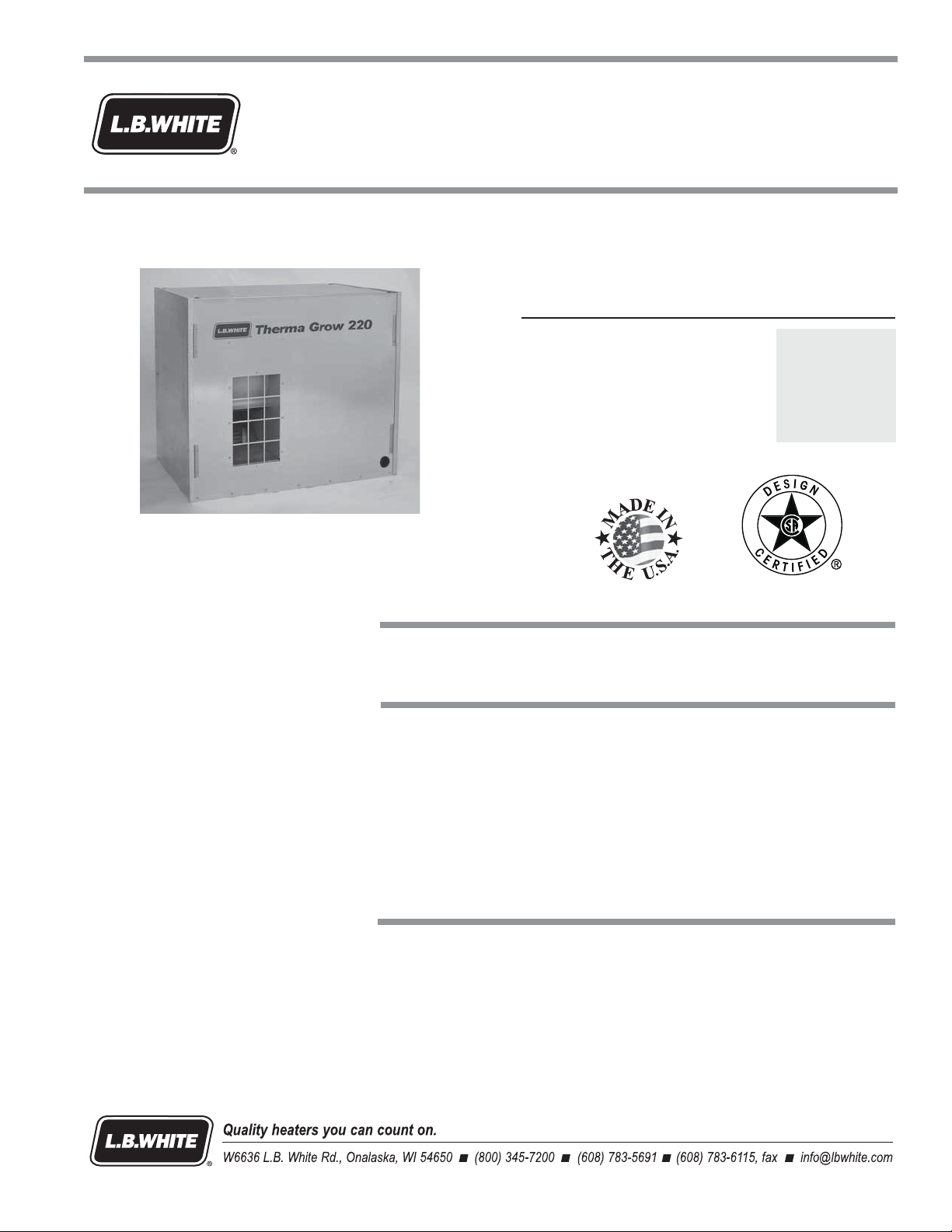
Owner's Manual and Instructions
Therma Grow
MODELS OUTPUT (Btuh) FUEL
™
Greenhouse Heaters
HW220 220,000
Available in either
L.P. Gas Vapor
Withdrawal or
Natural Gas
Configurations.
Congratulations!
You have purchased the finest agricultural building heater available.
Your new L.B. White heater incorporates the benefits from the most experienced
manufacturer of heating products using state-of-the-art technology.
We, at L.B. White, thank you for your confidence in our products and
welcome any suggestions or comments you may have...call us, toll-free,
at (800) 345-7200.
ATTENTION ALL USERS
This heater has been tested and evaluated by C.S.A. International, in
accordance with IAS U.S. Requirements for Gas-Fired Greenhouse Heaters,
for use as a direct gas-fired circulating heater for the heating of greenhouses.
If you are considering using this product for any application other than its
intended use, then please contact your fuel gas supplier, or the L.B. White
Co., Inc.
150-27595
Page 2

Page 3
GENERAL HAZARD WARNING
2
■ Failure to comply with the precautions and instructions provided with this heater, can result in:
—Death
— Serious bodily injury or burns
— Property damage or loss from fire or explosion
— Asphyxiation due to lack of adequate air supply or carbon monoxide poisoning
— Electrical shock
■ Read this Owner’s Manual before installing or using this heater.
■ Only properly-trained service people should repair or install this heater.
■ Save this Owner’s Manual for future use and reference.
■ Owner’s Manuals and replacement labels are available at no charge. For assistance, contact
L.B. White at 800-345-7200.
WARNING
■ Proper gas supply pressure must be provided to the inlet of the heater.
■ Refer to dataplate for proper gas supply pressure.
■ Gas pressure in excess of the maximum inlet pressure specified at the heater inlet can cause
fires or explosions.
■ Fires or explosions can lead to serious injury, death, building damage, or loss of plant life.
■ Gas pressure below the minimum inlet pressure specified at the heater inlet may cause
improper combustion.
■ Improper combustion can lead to asphyxiation or carbon monoxide poisoning and therefore
serious injury or death to humans and plant life.
WARNING
Fire and Explosion Hazard
■ Not for home or recreational vehicle use.
■ Installation of this heater in a home or
recreational vehicle may result in a fire or
explosion.
■ Fire or explosions can cause property
damage or loss of life.
Fire and Explosion Hazard
■ Keep solid combustibles a safe distance
away from the heater.
■ Solid combustibles include wood or paper
products, straw, and dust.
■ Do not use the heater in spaces which
contain or may contain volatile or airborne
WARNING
combustibles.
FOR YOUR SAFETY
Do not store or use gasoline or other
flammable vapors and liquids in the vicinity of
■ Volatile or airborne combustibles include
gasoline, solvents, paint thinner, dust
particles or unknown chemicals.
this or any other appliance.
■ Failure to follow these instructions may
FOR YOUR SAFETY
If you smell gas:
1. Open windows.
result in a fire or explosion.
■ Fire or explosions can lead to property
damage, personal injury or loss of life.
2. Don't touch electrical switches.
3. Extinguish any open flame.
4. Immediately call your gas supplier.
Page 4
Table of Contents
3
SECTION PAGE
General Information . . . . . . . . . . . . . . . . . . . . . . . . . . . . . . . . . . . . . . . . . . . . . . . . . . . . . . . . . . . . . . . . . . .3
Heater Specifications . . . . . . . . . . . . . . . . . . . . . . . . . . . . . . . . . . . . . . . . . . . . . . . . . . . . . . . . . . . . . . . . . .4
Safety Precautions . . . . . . . . . . . . . . . . . . . . . . . . . . . . . . . . . . . . . . . . . . . . . . . . . . . . . . . . . . . . . . . . . . . .5
Installation Instructions
General . . . . . . . . . . . . . . . . . . . . . . . . . . . . . . . . . . . . . . . . . . . . . . . . . . . . . . . . . . . . . . . . . . . . . . . . .7
Air Discharge Diverter Duct . . . . . . . . . . . . . . . . . . . . . . . . . . . . . . . . . . . . . . . . . . . . . . . . . . . . . . . . .8
Indoor Installation Requirements
Air Inlet . . . . . . . . . . . . . . . . . . . . . . . . . . . . . . . . . . . . . . . . . . . . . . . . . . . . . . . . . . . . . . . . . . . . . .9
Exhaust Fan . . . . . . . . . . . . . . . . . . . . . . . . . . . . . . . . . . . . . . . . . . . . . . . . . . . . . . . . . . . . . . . . .10
Hanging the Heater . . . . . . . . . . . . . . . . . . . . . . . . . . . . . . . . . . . . . . . . . . . . . . . . . . . . . . . . . . . . . . .10
Sediment Trap Assembly Instructions . . . . . . . . . . . . . . . . . . . . . . . . . . . . . . . . . . . . . . . . . . . . . . . .11
Thermostat Installation . . . . . . . . . . . . . . . . . . . . . . . . . . . . . . . . . . . . . . . . . . . . . . . . . . . . . . . . . . .11
Manual Shut-Off Valve, Hose and Regulator Assembly Instructions . . . . . . . . . . . . . . . . . . . . . . . .11
Start-Up Instructions . . . . . . . . . . . . . . . . . . . . . . . . . . . . . . . . . . . . . . . . . . . . . . . . . . . . . . . . . . . . . . . . .12
Shut-Down Instructions . . . . . . . . . . . . . . . . . . . . . . . . . . . . . . . . . . . . . . . . . . . . . . . . . . . . . . . . . . . . . . .12
Cleaning Instructions . . . . . . . . . . . . . . . . . . . . . . . . . . . . . . . . . . . . . . . . . . . . . . . . . . . . . . . . . . . . . . . . .13
Maintenance Instructions . . . . . . . . . . . . . . . . . . . . . . . . . . . . . . . . . . . . . . . . . . . . . . . . . . . . . . . . . . . . .13
Service Instructions
General . . . . . . . . . . . . . . . . . . . . . . . . . . . . . . . . . . . . . . . . . . . . . . . . . . . . . . . . . . . . . . . . . . . . . . . .14
Motor & Fan Assembly . . . . . . . . . . . . . . . . . . . . . . . . . . . . . . . . . . . . . . . . . . . . . . . . . . . . . . . . . . . .14
Air Proving Switch . . . . . . . . . . . . . . . . . . . . . . . . . . . . . . . . . . . . . . . . . . . . . . . . . . . . . . . . . . . . . . . .15
Manual Reset High Limit Switch . . . . . . . . . . . . . . . . . . . . . . . . . . . . . . . . . . . . . . . . . . . . . . . . . . . .15
Burner Orifice and Gas Control Valve . . . . . . . . . . . . . . . . . . . . . . . . . . . . . . . . . . . . . . . . . . . . . . . .15
Gas Pressure Checks . . . . . . . . . . . . . . . . . . . . . . . . . . . . . . . . . . . . . . . . . . . . . . . . . . . . . . . . . . . . .16
Igniter and Flame Sensor . . . . . . . . . . . . . . . . . . . . . . . . . . . . . . . . . . . . . . . . . . . . . . . . . . . . . . . . . .17
Troubleshooting Instructions . . . . . . . . . . . . . . . . . . . . . . . . . . . . . . . . . . . . . . . . . . . . . . . . . . . . . . . . . . .18
Electrical Connection and Ladder Diagram
115 Volt Supply . . . . . . . . . . . . . . . . . . . . . . . . . . . . . . . . . . . . . . . . . . . . . . . . . . . . . . . . . . . . . . . . . .24
230 Volt Supply . . . . . . . . . . . . . . . . . . . . . . . . . . . . . . . . . . . . . . . . . . . . . . . . . . . . . . . . . . . . . . . . . .25
Heater Component Function . . . . . . . . . . . . . . . . . . . . . . . . . . . . . . . . . . . . . . . . . . . . . . . . . . . . . . . . . . .26
Parts Identification (Parts List & Schematic) . . . . . . . . . . . . . . . . . . . . . . . . . . . . . . . . . . . . . . . . .27 & 28
Warranty Policy . . . . . . . . . . . . . . . . . . . . . . . . . . . . . . . . . . . . . . . . . . . . . . . . . . . . . . . . . . . . . . . . . . . . .29
Replacement Parts and Service . . . . . . . . . . . . . . . . . . . . . . . . . . . . . . . . . . . . . . . . . . . . . . . . . . . . . . . .29
General Information
This Owner's Manual includes all options and accessories
commonly used on this heater. However, depending on the
configuration purchased, some options and accessories
may not be included.
When calling for technical service assistance, or for other
specific information, always have model number,
configuration number and serial number available. This
information is contained on the dataplate. The dataplate is
located on the interior of either the burner end or motor end
door.
This manual will instruct you in the operation and care of
your unit. Have your qualified installer review this manual
with you so that you fully understand the heater and how it
functions.
The gas supply line installation, installation of the heater,
and repair and servicing of the heater requires continuing
expert training and knowledge of gas heaters and should
not be attempted by anyone who is not so qualified. See
page 6 for definition of the necessary qualifications. A
detailed Installation and Service Guide is available, at no
charge, to qualified personnel by contacting the local
L.B. White distributor, dealer or the L.B. White Company.
Contact your local L.B. White distributor or the L.B. White
Co., Inc. for assistance, or if you have any questions about
the use of the equipment or its application.
The L.B. White Co., Inc. has a policy of continuous product
improvement. It reserves the right to change specifications
and design without notice.
Page 5
4
Heater Specifications
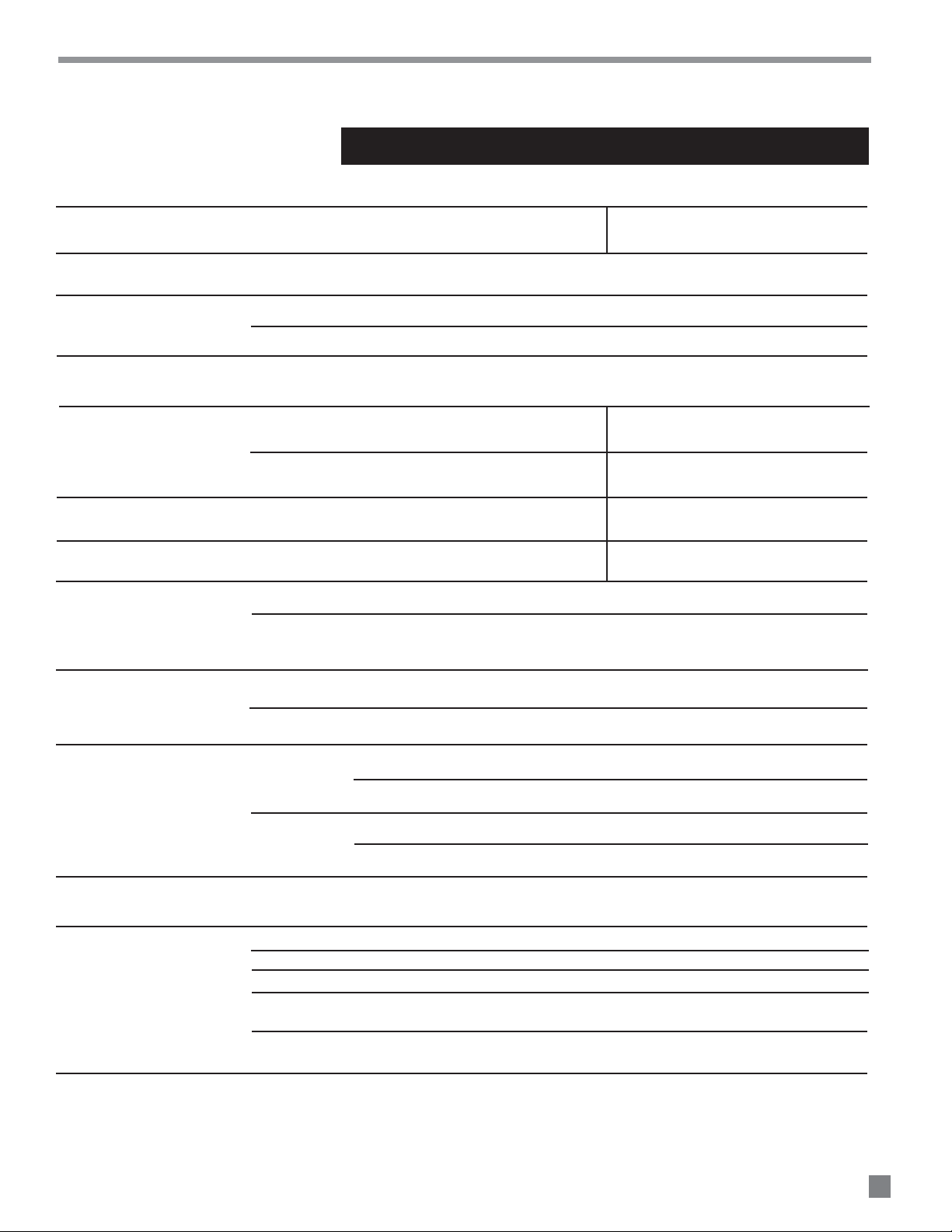
SPECIFICATIONS
HW220
Model
Propane Natural
Gas Gas
Maximum Input (BTUH) 220,000
Indoor Mounting Air
Exchange Requirements
Outdoor Mounting Air
Exchange Requirements
Inlet Gas Supply
Pressure Acceptable at
the Inlet of the Heater
for Purpose of Input
Adjustment (In. W.C.)
Burner Manifold
Pressure (In. W.C.)
Fuel Consumption Per
Hour
Motor Characteristics
EXHAUST FAN 550 CFM
(1)
SHUTTERED AIR INLET 220 sq. in.
SHUTTERED
(1)
EXHAUST OUTLET
MAX. 13.5 11.0
MIN. 11.0 7.0
5.0 3.1
10.19 lbs. 220 cu. ft.
100 sq. in.
Ball Bearing
1/2 H.P.
1,100 RPM
Electrical Supply
(Volts/Hz/Phase)
115 VOLT MOTOR
STARTING
Amp Draw
CONTINUOUS
OPERATION
Dimensions (inches)
L x W x H
TOP 1 ft.
SIDES 1 ft.
Minimum Safe
Distances From Nearest
Combustible Materials
(1) Air inlets and exhaust outlets must be electromechanically operated and electrically interlocked with the
heater to prevent heater operation if air inlet and exhaust outlet do not open when heating is required.
BACK 1 ft.
BLOWER
OUTLET
GAS Propane Gas Supply — 6 ft. (1.83 m)
SUPPLY Natural Gas Supply — N/A
230 VOLT MOTOR
115 VOLT MOTOR
230 VOLT MOTOR
115/60/1
230/60/1
17.1
6.7
6.2
2.6
35 x 25 x 30
6 ft. (1.83 m)
4
Page 6
5
LP gas and natural gas have man-made odorants added specifically for detection of fuel gas leaks.
If a
gas leak occurs, you should be able to smell the fuel gas.
THAT’S YOUR SIGNAL TO GO INTO IMMEDI
ATE ACTION !
FINALLY,
WARNING
Asphyxiation Hazard
Some people cannot smell well. Some people cannot
smell the odor of the man-made chemical added to
propane or natural gas. You must determine if you can
smell the odorant in these fuel gases.
The odorant in propane gas and natural gas is colorless
and the intensity of its odor can fade under some
circumstances.
Always be sensitive to the slightest gas odor.
Safety Precautions
■ Do not use this heater for heating human living
quarters.
■ Do not use in areas without proper air exchange. See
air exchange requirements on page 4 or on heater’s
dataplate.
■ Exhaust fans, supply air inlets, or exhaust fan outlets
must not be obstructed.
■ Proper air exchange must be provided for either indoor
or outdoor mount installations.
FUEL GAS ODOR
■ Do not take any action that could ignite the fuel gas. Do
not operate any electrical switches. Do not pull any
power supply or extension cords. Do not light matches
or any other source of flame. Do not use your
telephone.
■ Get everyone out of the building and away from the area
immediately.
■ Close all propane gas tank or cylinder fuel supply
valves, or the main fuel supply valve located at the
meter if you use natural gas.
■ Propane gas is heavier than air and may settle in low
areas. When you have reason to suspect a propane
leak, keep out of all low areas.
■ Refer to the specification section and installation
instructions of the heater’s Owner’s Manual, heater
dataplate, or contact the L.B. White Company to
determine air exchange requirements of the heater.
■ Lack of proper air exchange will lead to improper
combustion.
■ Improper combustion can lead to carbon monoxide
poisoning in humans leading to serious injury or death.
Symptoms of carbon monoxide poisoning can include
headaches, dizziness and difficulty in breathing.
■ Natural gas is lighter than air and can collect around
rafters or ceilings.
■ Use your neighbor’s phone and call your fuel gas
supplier and your fire department. Do not re-enter the
building or area.
■ Stay out of the building and away from the area until
declared safe by the firefighters and your fuel gas
supplier.
■
firefighters check for escaped gas. Have them air out
the building and area before you return. Properly
trained service people must repair the leak, check for
further leakages, and then relight the appliance for you.
let the fuel gas service person and the
ODOR FADING -- NO ODOR DETECTED
■
■ Learn to recognize the odor of propane gas and natural
gas. Local propane gas dealers and your local natural
gas supplier (utility) will be more than happy to give you
a scratch and sniff pamphlet. Use it to become familiar
with the fuel gas odor.
■ Smoking can decrease your ability to smell. Being
around an odor for a period of time can affect your
sensitivity to that particular odor.
■
■ If there is an underground leak, the movement of gas
through the soil can filter the odorant.
■ Propane gas odor may differ in intensity at different
levels. Since propane gas is heavier than air, there may
be more odor at lower levels.
■
continue to detect any gas odor, no matter how small,
treat it as a serious leak. Immediately go into action as
discussed previously.
ATTENTION -- CRITICAL POINTS TO REMEMBER!
■ Propane gas and natural gas have a distinctive odor.
Learn to recognize these odors. (Reference Fuel Gas
Odor and Odor Fading sections above.
■
If you have not been properly trained in repair and service
of propane gas and natural gas fueled heaters, then do
not attempt to light heater, perform service or repairs, or
make any adjustments to the heater on propane gas or
natural gas fuel system.
5
■ Even if you are not properly trained in the service and
repair of the heater, ALWAYS be consciously aware of
the odors of propane gas and natural gas.
■ A periodic sniff test around the heater or at the heater’s
joints; i.e. hose, connections, etc., is a good safety
practice under any conditions. If you smell even a small
amount of gas, CONTACT YOUR FUEL GAS SUPPLIER
IMMEDIATELY. DO NOT WAIT!
If you
Page 7

1. Do not attempt to install, repair, or service this heater
6
or the gas supply line unless you have continuing
expert training and knowledge of gas heaters.
Qualifications for service and installation of this
equipment are as follows:
a.
To be a qualified gas heater service person, you
must have sufficient training and experience to
handle all aspects of gas-fired heater installation,
service and repair. This includes the task of
installation, troubleshooting, replacement of
defective parts and testing of the heater. You
must be able to place the heater into a continuing
safe and normal operating condition. You must
completely familiarize yourself with each model
heater by reading and complying with the safety
instructions, labels, Owner’s Manual, etc., that is
provided with each heater.
b.
To be a qualified gas installation person, you must
have sufficient training and experience to handle
all aspects of installing, repairing and altering gas
lines, including selecting and installing the proper
equipment, and selecting proper pipe and tank
size to be used. This must be done in accordance
with all local, state and national codes as well as
the manufacturer’s requirements.
2. All installations and applications of L.B. White heaters
must meet all relevant local, state and national
codes. Included are L.P. gas, natural gas, electrical,
and safety codes. Your local fuel gas supplier, a local
licensed electrician, the local fire department or
similar government agencies, or your insurance agent
can help you determine code requirements.Refer to
the following:
6. Do not operate the heater with its door open.
7. Do not locate fuel gas containers or fuel supply
hoses anywhere near the blower outlet of the heater.
8. Do not block air intakes or discharge outlets of the
appliance. Doing so may cause improper combustion
or damage to heater components leading to property
damage or plant loss.
9. The hose assembly shall be visually inspected on an
annual basis. If it is evident there is excessive
abrasion or wear, or if the hose is cut, it must be
replaced prior to the heater being put into operation.
The hose assembly shall be protected from animals,
building materials, and contact with hot surfaces
during use. The hose assembly shall be that
specified by the manufacturer. See parts list.
10. Check for gas leaks and proper function upon heater
installation, before building repopulation or when
relocating.
11. This heater should be inspected for proper operation
by a qualified service person before building
repopulation and at least annually.
12. Always turn off the gas supply to the heater if the
heater is not going to be used.
13. Heaters requiring 230 volts electrical supply must
have electrical wiring consisting of two hot leads, a
neutral lead, and a ground lead. All GreenGro
heaters, regardless of voltage, must be properly
connected to a grounded electrical supply. Failure
to use a grounded electrical supply can result in
electrical shock, serious injury, or death.
-- ANSI/NFPA 58, latest edition, Standard for
Storage and Handling of Liquefied Petroleum
Gas and/or
-- ANSI Z223.1/NFPA 54, National Fuel Gas
Code
-- ANSI/NFPA 70, National Electrical Code.
3. Do not move, handle, or service heater while in
operation or connected to a power or fuel supply.
4. This heater may be installed in areas subject to
washdown. This heater may only be washed on the
external case assembly—see Cleaning Instructions.
Do not wash the interior of the heater. Use only
compressed air, soft brush or dry cloth to clean the
interior of the heater and it’s components. After
external washdown, do not operate this heater until it
is completely dry. In any event, do not operate the
heater for at least one hour after external washdown.
5. For safety, this heater is equipped with a manual
reset high-limit switch and an air proving switch.
Never operate this heater with any safety device that
has been bypassed. Do not operate this heater
unless all of these features are fully functioning.
14. Direct ignition heaters will make up to three trials for
ignition. If ignition is not achieved, the control system
will lock out the gas control valve. If gas is smelled
after system lock out has occurred, immediately close
all fuel supply valves. Do not relight until you are sure
that all gas that may have accumulated has cleared
away. In any event, do not relight for at least 5
minutes.
15. In a hanging type installation, rigid pipe or copper
tubing coupled directly to the heater may cause gas
leaks during movement, and therefore must not be
used. Use only gas hose assemblies that are rated
and approved for L.P. gas and natural gas in a
hanging type of installation.
16. Installations not using the gas hose supplied with this
appliance must connect dimensionally using
American National Standard Wrought Steel and
Wrought Iron Pipe B36/10-1970. (Aluminum piping
or tubing shall not be used.) Copper tubing when
used for conveying natural gas, shall be internally
tinned or equivalently treated to resist sulphur.
6
Page 8
Indoor Mounted Heater:
Outdoor Mounted Heater:
7
Installation Instructions
WARNING
Fire and Explosion Hazard
GENERAL
Direct fired heaters discharge combustion by-products with
the heated air in to the area being heated. These include
CO, CO2, NO, NO2, and Ethylene. These gases can result in
harm to the worker or the plants.
This greenhouse heater has been specifically developed for
very low levels of these combustion by-products. However,
it is necessary to have an exchange of air within the
greenhouse to avoid accumulation of these gases to a
harmful level over an extended period of operating time.
Greenhouses have a natural air leakage factor. This natural
leakage is influenced by the design and physical condition
of the greenhouse as well as wind conditions and other
factors. This natural leakage factor can not be relied upon
as being sufficient to provide the necessary air exchange
within the greenhouse. Proper installation of the GreenGro
greenhouse heater must include provision for adequate air
exchange as follows:
I
-- An exhaust fan capable of providing at least 550
cfm of discharge air.
-- An inlet shuttered louver of at least 220 sq. in. area.
-- The inlet shutters must be electromachanically
operated and electrically interlocked with the heater
such that the heater can not operate if the inlet
shutters do not open when heating is required.
-- Refer to Indoor Ventilation Requirements in this
manual.
-- An exhaust shuttered louver of at least 100 sq. in.
area.
-- The exhaust shutter must be electromechanically
operated and electrically interlocked with the heater
such that the heater can not operate if the exhaust
shutters do not open when heating is required.
1. Read all safety precautions and follow L.B. White
recommendations when installing this heater. If
during the installation or relocating of heater, you
suspect that a part is damaged or defective, call a
qualified service agency for repair or replacement.
2.
Make sure the heater is properly positioned before use
and is hung level. Observe and obey all minimum safe
distances of the heater to the nearest combustible
materials. Minimum safe distances are given on the
heater nameplate and on page 4 of this manual.
3. The heater may be used either indoors or outdoors.
For heaters intended for outdoor installation, the
heater is to be installed at least 18 inches above the
ground or to a height that would prevent snow
blockage of heater’s air inlet. Refer to instructions
provided in the optional L.B. White outdoor mounting
and ducting kit, part number 23579.
The heater must have the proper gas regulator installed
4.
for the application. A regulator must be connected to
the gas supply so that gas pressure at the inlet to the
gas valve is regulated within the range specified on the
dataplate at all times. Contact your gas supplier, or the
L.B. White Co., Inc. if you have any questions.
5. The heater’s gas regulator (with pressure relief valve)
should be installed outside of building. Any
regulators inside the buildings must be properly
vented to the outside. Local, state and national
codes always apply to regulator installation. Natural
gas regulators with vent limiting device may be
mounted indoors without venting to outdoors.
6.
All gas pressure regulators must be installed in strict
accordance with the manufacturer’s safety instructions.
These instructions accompany each regulator.
7. Insure that all accessories that ship within the heater
have been removed from inside of heater and
installed. This pertains to air diverters, hose,
regulators, etc.
8. Make certain that a sediment trap is installed at the
gas valve inlet to prevent foreign materials (pipe
compound, pipe chips and scale) from entering the
gas valve. Debris blown into the gas valve may cause
that valve to malfunction resulting in a serious gas
leak that could result in a possible fire or explosion
causing loss of products, building or even life. A
properly installed sediment trap will keep foreign
materials from entering the gas valve and protect the
safe functioning of that important safety component.
9. Any heater connected to a piping system must have
an accessible, approved manual shut off valve
installed within six feet (6 ft.) of the heater it serves.
10. Check all connections for gas leaks using approved
gas leak detectors. Gas leak testing is performed as
follows:
■ Do not use open flame (matches, torches, candles, etc.)
in checking for gas leaks.
■ Use only approved leak detectors.
■ Failure to follow this warning can lead to fires or
explosions.
■ Fires or explosions can lead to property damage,
personal injury or loss of life.
-- Check all pipe connections, hose connections,
fittings and adapters upstream of the gas control
with approved gas leak detectors.
-- In the event a gas leak is detected, check the
components involved for cleanliness and proper
application of pipe compound before further
tightening.
-- Furthermore tighten the gas connections as
necessary to stop the leak.
Page 9
-- After all connections are checked and any leaks
only
8
are stopped, turn on the main burner.
-- Stand clear while the main burner ignites to
prevent injury caused from hidden leaks that could
cause flashback.
-- With the main burner in operation, check all
connections, hose connections, fittings and joints
as well as the gas control valve inlet and outlet
connections with approved gas leak detectors.
-- If a leak is detected, check the components
involved for cleanliness in the thread areas and
proper application of pipe compound before further
tightening.
-- Tighten the gas connection as necessary to stop
the leak.
-- If necessary, replace the parts or components
involved if the leak cannot be stopped.
-- Ensure all gas leaks have been identified and
repaired before proceeding.
dataplate for the gas configuration of the specific
heater. Do not use the heater in an L.P. gas liquid
withdrawal system or application. If you are in doubt,
contact the L.B. White Co., Inc.
15. Eventually, like all electrical/mechanical devices, the
thermostat can fail. Thermostat failure may result in
either an underheating or overheating condition which
may damage or kill plants. Plants should be
protected by a separate back-up control system that
limits high and low temperatures and also activates
appropriate alarms.
16. Take time to understand how to operate and maintain
the heater by using this Owner’s Manual. Make sure
you know how to shut off the gas supply to the
building and also to the individual heater. Contact
your fuel gas supplier if you have any questions.
11. A qualified service agency must check for proper
operating gas pressure upon installation of the
heater.
12. Light according to instructions on heater or within
owner's manual.
13. It is extremely important to use the proper size and
type of gas supply line to assure proper functioning of
the heater. Contact your fuel gas supplier for proper
line sizing and installation.
14. This heater can be configured for use with either L.P.
gas vapor withdrawal or natural gas. Consult the
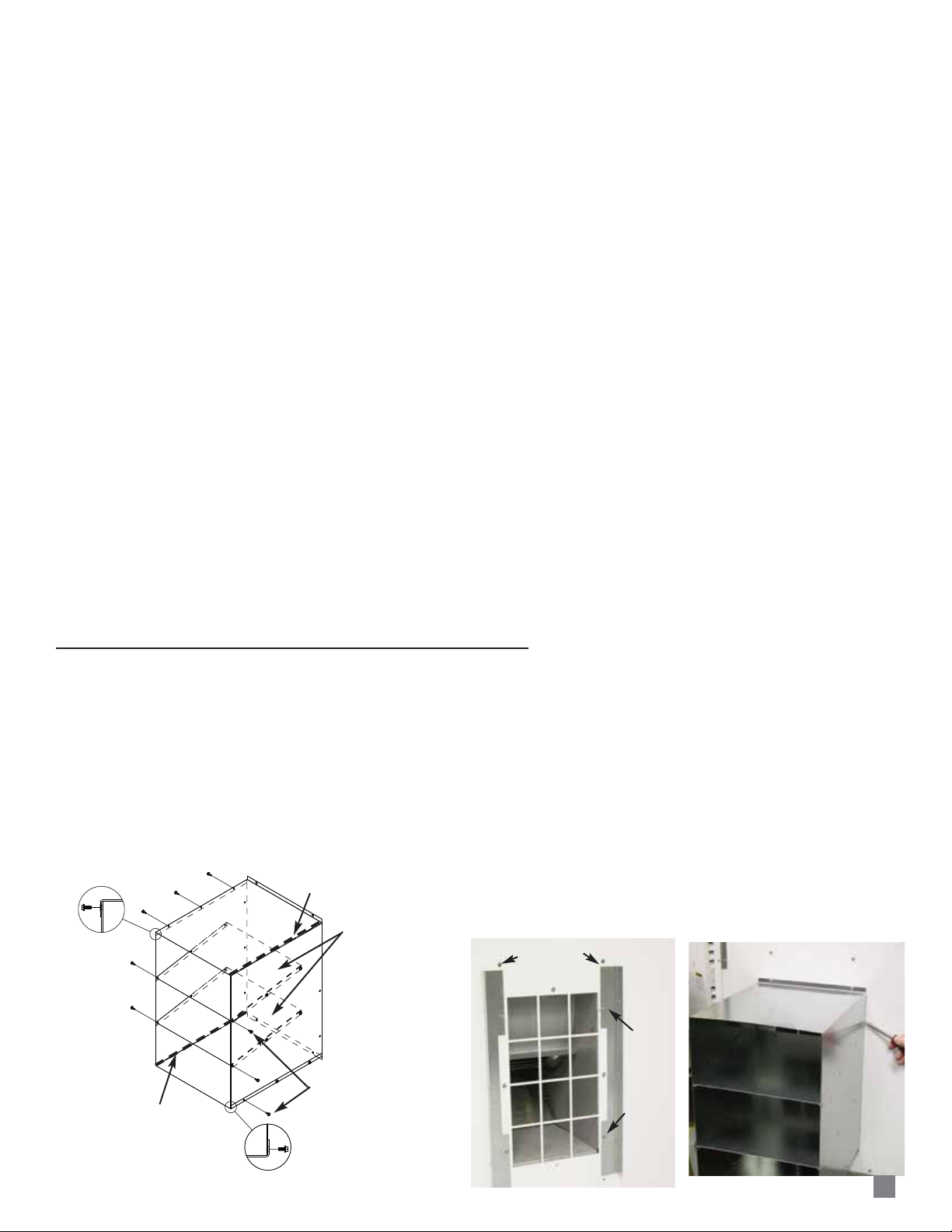
1. The air discharge diverter duct provides improved
directional air flow and greater heat throw, beneficial
o
in heating long houses. Use the duct
on indoor
mounted heaters. Do not use the diverter when the
heater is mounted outside the green house. The
diverter duct requires hand forming prior to assembly.
Make 90 degree bends utilizing the performations
provided. Assemble as shown in Fig. 1.
FIG. 1
PERFORATIONS
17. Any defects found in performing any of the service or
maintenance procedures must be eliminated and
defective parts replaced immediately. The heater
must be retested by properly qualified service
personnel before placing the heater back into use.
18. Do not exceed input rating stamped on the dataplate
of the heater. Do not exceed the burner manifold
pressure stated on the dataplate. Do not use an
orifice size different than specified for the specific
input rating of this heater, fuel type configuration and
altitude.
AIR DISCHARGE DIVERTER DUCT
Part Number 25977
(Accessory)
2. Remove the upper and lower screws at both sides of
the blower outlet, and the two screws at outlet top.
3. Install flanges as shown in Fig. 2, using the same
screws. Tighten the screws securely.
4. Position the diverter over the flanges. Align holes in
diverter to flange holes and to vacant holes at top
and bottom of blower outlet.
5. Fasten the diverter to the flanges with the screws
provided. See Fig. 3.
PERFORATIONS
VANES
MUST BE
DIRECTED
DOWNWARD
SCREWS
FROM KIT
FIG. 2 FIG. 3
SCREWS REMOVED AT OUTLET TOP
UPPER
SCREW
LOWER
SCREW
Page 10

INDOOR VENTILATION REQUIREMENTS
Air Inlet
9
This heater requires a properly sized, motorized air inlet
shutter and exhaust fan for indoor installation. These
components, along with specific instructions, are provided
in indoor ventilation kit # 25985.
Locate the air inlet directly beneath the heater and align it
to the heaters air inlet for combustion air supply. Ensure
the motorized air inlet and the heater’s air inlet are kept
free of any blockages.
■ The air inlet must be located directly beneath the
heater’s air inlet, and have access to outside fresh air.
See Fig. 4a.
■ The heater draws its combustion air through holes in its
base. The motorized air inlet must be centered to the
heater’s air inlet. See Fig. 4b.
■ The motorized air inlet must be no more than 1 ½ ft.
from the back of the heater and properly aligned to the
heater. See Fig. 4c.
■ The heater should have a minimum clearance of 1 ½ ft.
above the ground. See Fig. 4c.
FIG. 4b
Underside View
FIG. 4c
Side View
HEATER AIR INLET
1 1/2 FT MAX.
AIR INLET
TRANSITION
CENTERED
INTERIOR EXTERIOR
OUTSIDE
FRESH AIR
OUTSIDE
AIR SOURCE
Refer to Figs. 4a, 4b, and 4c for air inlet placement. If the
air inlet must be installed away from the heater in a location
other than as follows, duct kit part number 25987 must
also be installed to allow supply of combustion air to the
heater.
FIG. 4a
Blower Outlet View
1 1/2 FT MAX.
AIR
DISCHARGE
1 1/2 FT
MIN.
1 1/2 FT
MAX.
TOP OF AIR INLET
TRANSITION ALIGNED
WITH BASE OF HEATER
OUTSIDE
OUTSIDE
AIR SOURCE
FRESH AIR
MOTORIZED AIR INLET
ALIGNED TO AIR INLET
IN BASE OF HEATER
Page 11

E
Exhaust Fan
must
FIG. 5
The exhaust fan
be located at an upper area of the
end wall opposite from the heater, preferably in an area
higher than the heater’s discharge. See Fig. 5. The fan
does not need to be directly in line to the heater. Ensure the
exhaust fan is kept free of blockage.
EXHAUST FAN IN UPPER AREA OF
GREENHOUSE
CHAIN OR CABLE
AIR FLOW
ENTRY / EXIT
AIR INLET LOCATED
DIRECTLY BENEATH HEATER
AIR INLET.
HANGING THE HEATER
As shipped, the heater is configured for mounting to an
optional mounting bracket kit, part number 23652, which is
installed on freestanding supports or mounted directly to
the structure’s wall. Separate installation instructions
accompany the kit.
The heater may also be suspended by chain to the
greenhouse’s overhead structure by using an optional chain
hanging kit, part number 07802. Refer to the following
instructions.and illustrations.
1. Remove case top hole plugs. See Fig. 6.
FIG. 6
2. Assemble eyebolts and chain according to the
illustration and tighten all eyebolts securely.
FIG. 7
EYE BOLT
CHAIN
NUT 1/4-20
FLAT WASHER
FLAT WASHER
HEATER TOP
NUT 1/4-20
3. Ensure the heater is securely fastened to overhead
supports and is hanging level. (Check crosswise and
lengthwise.)
4. See Fig. 5 for typical indoor installation. In any
installation, consideration must be given to making
sure the heater is located away from the people
entering or exiting the greenhouse so they cannot
accidentally knock the heater or tamper with the
heater and its gas supply line in any way. Additionally,
the heater must be located so that it does not block
the normal entryway or exit of the building. Observe
and obey minimum clearance distances to
combustible materials as stated in the specification
section of this owner’s manual and on the heater’s
dataplate.
10
Page 12

To Connect the Series Tap Plug Thermostat Kit:
To Connect the Direct Wired Thermostat Kit to the
Control Box on the Heater:
WARNING
Electrical Shock Hazard
11
Check all
conne c t i ons f or gas leaks using appro v e d g a s leak
detectors.
SEDIMENT TRAP ASSEMBLY
Assemble the tee, nipples and cap together and tighten
securely. See Fig. 8. The sediment trap assembly must
always be mounted in a vertical
position. Make sure pipe
thread compound that is resistant to both L.P. gas and
natural gas is used in making all connections.
THERMOSTAT INSTALLATION
■ Disconnect the electrical supply before connecting the
thermostat to the heater.
■ Failure to follow this warning can result in electrical
shock, leading to personal injury or death.
T
1.
a. Connect the power cord of the heater to the
female side of the plug on the end of the
thermostat cord.
b. Plug the male side of the series tap plug on the
thermostat cord into a three-wire (grounded)
electrical outlet within the building.
FIG. 8
NIPPLE
HOSE ADAPTER
TO GAS CONTROL
VALVE INLET
2.
a. The installation and wiring of a thermostat must
be done by an electrician or someone properly
qualified.
b. The thermostat may use 18 gauge, 2 wire cord to
handle the low voltage being supplied to the
thermostat from the transformer.
c. Follow all instructions provided with the
thermostat kit.
d. The heater must be tested for proper operation
after the thermostat has been connected.
TEE
NIPPLE
CAP
MANUAL SHUT-OFF VALVE, HOSE
AND REGULATOR ASSEMBLY
1. Always use approved pipe thread compound suitable
for use with L.P. gas or natural gas on the threaded
connections.
2. Assemble the components together according to the
figure. This view is to show general assembly of the
components only. The regulator must always be
mounted so its vent, regardless of location on the
regulator, is always pointed downward.
3. Tighten all connections securely and check for gas
leaks.
FIG. 9
REGULATOR VENT
TO CONTROL
VALVE INLET
REGULATOR
NIPPLE
VALVE, MANUAL
SHUT-OFF
GAS FLOW
GAS HOSE
ADAPTER
SEDIMENT TRAP
Page 13

12
Start-Up Instructions
Follow steps 1 - 6 on initial start-up after heater installation
by a qualified gas heater service person. For normal startup, simply turn thermostat above room temperature. The
heater will start.
1. Open all manual fuel supply valves and check for gas
leaks using approved leak detectors. The gas control
valve on the heater has a manual shut-off feature
incorporated into the valve assembly. Make sure the
indicator on the valve is turned to the on position.
See Fig. 10.
FIG. 10
ON
OFF
2. Connect the electrical cord to an approved electrical
outlet.
3. Set the thermostat (if supplied) to desired room
temperature.
LED is visible through the plastic window of the
control box. A constant light from the LED is an
indicator that the heater is functioning correctly.
5. On a call for heat, the motor will start and run for five
(5) seconds and then stop. This pre-purge is a safety
feature and a normal operational characteristic prior
to ignition taking place. After the motor has stopped,
the igniter will heat up (approximately 17 seconds).
After igniter warm up time has been achieved, the
motor will start again and shortly thereafter ignition
will occur.
NOTE: It is normal for air to be trapped in the gas
hose on new installations. The heater may
attempt more than one trial for ignition before
the air is finally purged from the line and
ignition takes place.
6. The HSI control will make up to three trials for
ignition. Each trial for ignition will take approximately
20 seconds. The first two trials for ignition will occur
within 40 seconds if ignition is not achieved. A 15
minute wait period will then begin after the second
trial for ignition has taken place. After the 15 minute
time has passed, the third and final trial for ignition
will take place. If ignition is not achieved at this final
trial, the system will lock out, and a three flash
pattern will be indicated by the LED.
4. This heater includes a hot surface ignition (HSI)
control module for purposes of controlling the timing
of the ignition process of the heater as well as
monitoring of the safety functions. The HSI module is
contained within the control enclosure.
When the heater receives a call for heat, the red light
emitting diode (LED) on the ignition control will come
on. This LED indicates the status of the heater. The
If the heater is to be shut down for cleaning, maintenance or
repair, follow steps 1 - 5. Otherwise, simply turn thermostat
to off or no heat for standard shut down.
1. Close all manual fuel supply valves.
2. With the heater lit, allow heater to burn off excess
fuel in gas supply hose.
7. Do not exceed input rating stamped on nameplate or
manufacturer’s recommended burner orifice pressure
for size orifice(s) used. Make certain that the primary
air supply to main burner is open and free of dust, dirt
and debris for complete, proper combustion.
Shut-Down Instructions
3. Turn the indicator on the gas control to off.
4. Turn thermostat to off or no heat position.
5. Disconnect the heater from the electrical supply.
1
Page 14

13
WARNING
Cleaning Instructions
WARNING
Fire, Burn, and Explosion Hazard
■ This heater contains electrical and mechanical components in the gas management, and safety systems.
■ Such components may become inoperative or fail due to dust, dirt, wear and aging.
■ Periodic cleaning and inspection as well as proper maintenance are essential to avoid serious injury or property
damage.
1. Before cleaning, shut off all gas supply valves and
disconnect electrical supply.
2. At least once a year give the heater a thorough
cleaning, preferably before the beginning of the fall
heating season. At that time, remove the fan and
motor assembly and brush or blow off the fan wheel.
Additionally, ensure the burner casting and orifice are
free of dust accumulation, insect nests, webs, etc.
Maintenance Instructions
1. The area surrounding the heater shall be kept clear
and free from combustible materials, gasoline, and
other flammable vapors and liquids.
2. Have your gas supplier check all gas piping annually
for leaks or restrictions in gas lines.
3. Regulators must be periodically inspected to make
sure the regulator vents are not blocked. Debris,
insects, insect nests, snow, or ice on a regulator can
block vents and cause excess pressure at the heater.
4. Regulators can wear out and function improperly.
Have your gas supplier check the date codes on all
regulators installed and check delivery pressures to
the heater to make sure that the regulator is reliable.
Do not use a pressure washer, water, or liquid cleaning
solution on any heater components. Use of a pressure
washer, water, or liquid cleaning solution on the control
components can cause severe personal injury or
property damage due to water and/or liquids:
■ In electrical components, and wires causing electrical
shock or equipment failure.
■ On gas control valves causing corrosion which can
result in gas leaks and fire or explosion from the leak.
Clean all internal components of the heater with
pressurized air, a dry brush, or a dry cloth.
5. Check all wiring associated terminals and electrical
components within the heater for corrosion, frayed or
cut insulation, tight connections, etc. Repair or
replace as necessary.
6. Review all heater markings (i.e. wiring diagram,
warnings, start-up, shut-down, troubleshooting, etc.)
at the time of maintenance for legibility. Make sure
none are cut, torn, or otherwise damaged. Any
damaged markings must be replaced immediately by
contacting the L.B. White Co., Inc. Dataplates, startup and shut-down instructions and warnings are
available at no cost. A nominal charge will be applied
for wiring diagrams.
1
Page 15

14
MOTOR MOUNT PLATE
WARNING
Burn Hazard
■ Heater surfaces are hot for a period of time after the
heater has been shut down.
■ Allow the heater to cool before performing service,
maintenance, or cleaning.
■ Failure to follow this warning will result in burns
causing injury.
WARNING
Fire and Explosion Hazard
■ Do not disassemble or attempt to repair any
component part of the heater, including regulators
and gas hoses.
■ All components must be replaced if defects are
found.
■ Failure to follow this warning will result in gas leaks.
■ Gas leaks cause fire or explosions, leading to
property damage, injury, or death.
Service Instructions
GENERAL
4. The thermostat, and high limt switch can be tested by
jumpering the suspect part out of the electrical
circuit.:
-- Reconnect the electrical supply and open fuel
supply valves.
-- If the heater lights, the component is defective
and must be replaced.
-- Do not operate the heater with the component
jumpered. Replace the part immediately.
-- An alternate method for checking the
components is to perform a continuity check.
5. Do not jumper the air proving switch. If jumpered, the
ignition control will not allow heater operation. Test
the air proving switch for continuity. If defective,
replace the switch
6. For reassembly, reverse the respective service
procedure. Ensure gas connections are tightened
securely.
1. Close the fuel supply valve to the heater and
disconnect the electrical supply before servicing
unless necessary for your service procedure.
2. Open end panels for access to heater components.
3 Disconnect the appropriate electrical leads for the
component being replaced.
1. Remove the motor mounting plate screws and pull
the fan and motor assembly from the housing.
2. Loosen the square head set screw(s) on the fan
wheel.
3. Pull the fan wheel from the motor shaft. Use a wheel
puller if necessary.
4. Remove the four (4) nuts securing the motor to the
mounting plate.
7. After servicing, start the heater to ensure proper
operation. Check for gas leaks with approved leak
detectors.
8. Clean the heater’s orifice with compressed air or a
soft, dry rag. Do not use files, drills, broaches, etc. to
clean the orifice. Doing so may enlarge the hole,
causing combustion or ignition problems. Replace
the orifice if it cannot be cleaned properly.
MOTOR AND FAN WHEEL ASSEMBLY
NOTES:a. Fan wheel to motor mount plate spacing must be
adjusted to the clearance specified in the table
below before tightening the fan wheel to the
motor shaft.
b. Make sure that set screw(s) of the fan are on the
flats of motor shaft when tightening.
FIG. 11
FAN WHEEL
MOTOR
CLEARANCE
1/8 IN.
1
Page 16

15
AIR PROVING SWITCH
Be
careful not to melt the plastic housing of the switch
when conducting this test.
WARNING
Fire Hazard
1. Remove two sheet metal screws holding air proving
FIG. 12
switch assembly to blower housing. Remove
assembly by turning switch assembly 90 degrees so
the switch paddle can be pulled through oblong hole
on side of fan housing. See Fig. 12.
3. Disconnect the leads from the air proving switch.
SWITCH W/ PADDLE
4. When installing replacement switch, use care in not
bending the switch arm, otherwise ignition problems
may occur. Replacement includes mounting bracket.
LEADS
TESTING THE MANUAL RESET HIGH LIMIT SWITCH
■ Do not operate the heater with the high limit switch
bypassed.
■ Operating the heater with a bypassed high limit switch
may lead to overheating, possibly resulting in a fire,
with subsequent damage to the heater, building
damage, or loss of livestock.
3. Within a minute, you should hear a pop coming
from the switch, which indicates the contacts of the
switch have opened.
4. Allow the switch cool down for about a minute
before firmly pressing the red reset button on the
switch.
5. Check for electrical continuity across the switch
terminals to make sure the contacts have closed.
HOUSING SIDE
PANEL
NUTS
PADDLE
OBLONG HOLE
The high limit switch should be tested a minimum of once
6. Reinstall the switch back into the heater.
per year when the heater is given a thorough cleaning.
FIG. 13
1. Remove the high limit switch from the heat
chamber.
2. Holding the switch by one of its mounting legs or
electrical terminals, apply a small flame only to the
sensing surface on the back of the switch.
BURNER ORIFICE and GAS CONTROL VALVE
1. Remove the following
-- Hose and sediment trap from inlet of gas valve
-- Screws securing valve bracket to heater base.
-- Burner bolt from underside of base.
-- Screws and spacers securing burner casting to
heat chamber.
2. Remove control valve with burner from heater. Rotate
the valve/manifold assembly as necessary so orifice
and orifice block can exit the burner casting venturi
port..
3. Replace components as needed.
FIG. 14
RESET BUTTON
TERMINAL
MOUNTING
LEG
GAS CONTROL
VALV E
SENSING
SURFACE
FLAME
ORIFICE
BLOCK
1
BURNER
ORIFICE
Page 17

T
A. Preparation
B. Gauge Installation
C. Reading Pressures
D. Completion
Gas Pressure Checks
WARNING
16
■ Do not disassemble the gas control valve.
■ Do not attempt to replace any components of the gas
control valve.
■ The gas control valve must be replaced if any physical
damage occurs to the control valve assembly.
■ Failure to follow this warning will result in fire or
explosions, leading to injury or death to humans, and
property damage.
ATTENTION
■ The following explains a typical procedure to be followed
in checking gas pressures.
■ The gas pressures will vary depending upon fuel type.
■ Consult the dataplate on the heater or page 4 in this
manual for specific pressures to be used in conjunction
with this procedure.
■ Gas pressure measured at the inlet to the gas valve is
Inlet Pressure and gas pressure measured at the outlet
of the gas valve is Burner Manifold Pressure.
A
1. Obtain two pressure gauges capable of reading up to
35 in. W.C.
2. Disconnect the heater from the electrical supply and
close the fuel supply valve to the heater inlet.
3. Open the burner access panel.
2. Securely connect a pressure gauge to each pressure
tap.
3. Open the fuel supply valves to the heater and
reconnect the heater electrical supply.
4. Start the heater
1. With the heater operating, the pressure gauges
should read the pressures specified on the dataplate
.
2. Do the readings at the inlet and outlet pressure
gauges agree with that specified on the dataplate?
If so, then no further checking or adjustment is
required. Proceed to section D.
3. If the inlet pressures do not agree with that specified
on the dataplate, then the regulator controlling gas
pressure to the heater requires adjustment.
4. If the inlet pressures are correct and the burner
manifold pressure does not agree with that specifed
on the dataplate, then the gas control valve’s internal
pressure regulator requires adjustment. See Fig. 16
for regulator location.
FIG. 16
OUTLET PRESSURE TAP
INTERNAL PRESSURE REGULATOR
LOW PRESSURE GUAGE
ON
OFF
INLET PRESSURE TAP
LOW PRESSURE GUAGE
4. Brush or blow off any dust and dirt on or in the vicinity
of the gas control valve.
1. Locate the inlet and outlet pressure taps, see Fig. 15.
Remove the pressure tap plug using a 3/16 in. allen
key.
FIG. 15
ON
OFF
INLET PRESSURE TAP
OUTLET PRESSURE
OUTLET PRESSURE
TAP
TYPICAL PRESSURE GAUGE INSTALLATION. ALWAYS
EXAMPLE SHOWS PRESSURE FOR PROPANE GAS
REFER TO DATA PLATE FOR FUEL TYPE AND
ALWAYS REFER TO PRESSURE ON DATAPLATE
PRESSURE REQUIREMENTS.
1. Once the proper inlet and burner manifold pressures
have been confirmed and/or properly set, close the
fuel supply valve to the heater and allow the heater to
burn off any gas remaining in the gas supply line.
2. Disconnect the heater from its electrical supply.
3. Remove the gauges and connecting hoses.
4. Install pressure tap plugs and tighten securely.
Check for gas leaks.
Page 18

17
IGNITER
1. Disconnect the plastic male and female plugs
located at the end of the igniter leads. See Fig. 17.
2. Loosen the screw securing the igniter shield and the
igniter to the mounting bracket. Remove the igniter
and shield.
3. Ensure the igniter is located so the its lip on back
side of igniter is resting on the edge of the mounting
bracket and the mounting hole in the igniter aligns
with the mounting hole in the bracket.
4. Slide the igniter shield over the igniter so hole in
shield aligns with hole in igniter and bracket.
FLAME SENSOR
1. Remove the sensor from its mounting bracket. Clean
the sensor’s rod with emery cloth or steel wool to
buildup of dirt to help maintain proper flame sense.
See Fig. 17.
2. Check the flame sensor’s insulative base for any
cracks. If cracks are found, replace the sensor.
■ Handle the igniter by its ceramic base, or by its leads.
■ Center the igniter shield over the igniter element,
making sure the shield does not touch the igniter
element, otherwise igniter damage will occur when the
igniter is energized.
■ Do not overtighten the igniter mounting screw.
Overtightening may crack the base of the igniter,
leading to premature failure.
For proper flame sense operation, the flame sensor tip
■
must be properly positioned within the burner flame.
See Fig. 18.
FIG. 18
FIG. 17
SCREW
IGNITER
SHIELD
WASHER
MALE CONNECTOR
SENSOR
SCREW
FEMALE CONNECTOR
BURNER
BRACKET
BURNER
FLAME
BURNER
CASTING
1/2 in. to 3/4 in.
3/8 TO 1/2 IN.
FLAME SENSOR
1
Page 19

Troubleshooting Instructions
OPPERATION SEQUENCE:
IGNITIOON TTRIAL SEQUENCE:
18
READ THIS ENTIRE SECTION BEFORE BEGINNING TO
TROUBLESHOOT PROBLEMS.
WARNING
■ This heater can start at any time.
■ Troubleshooting this system may require operating the
unit with line voltage present and gas on. Use extreme
caution when working on the heater.
■ Failure to follow this warning may result in personal
injury or death.
following troubleshooting guide provides systematic
procedures for isolating equipment problems. This guide is
intended for use by a QUALIFIED GAS HEATER SERVICE
PERSON. DO NOT ATTEMPT TO SERVICE THESE HEATERS
UNLESS YOU HAVE BEEN PROPERLY TRAINED.
TEST EQUIPMENT REQUIRED
The following pieces of test equipment will be required to
troubleshoot this system with minimal time and effort.
• Digital Multimeter - for measuring voltage and resistance.
• Low Pressure Gauge - for checking inlet and outlet
pressures at the gas control valve against dataplate rating.
INITIAL PREPARATION
The
■ Visually inspect equipment for apparent damage.
■ Check all wiring for loose connections and worn
insulation.
The ignition control module is self-diagnostic. The red light
located on the control will flash a specific pattern depending
upon the problem which is diagnosed. To use the flow charts, t
identify the problem by the light pattern of the L.E.D. (light
emitting code) diagnostic light. If the light is flashing, the flash
pattern will be followed by a pause and then a repeat of the
flash pattern until the problem is corrected. The light will only
be on when the selector switch is positioned to HEAT and the
thermostat or controller is calling for heat. The light will not be
on when the selector switch is positioned to VENT.
Heating Mode Problems
L.E.D. light is not on during a call for heat. . . . . . . . . . . . . . . 19
L.E.D. diagnostic light is flashing:
A. Rapid flash . . . . . . . . . . . . . . . . . . . . . . . . . . . . 20
B. Long flash ( 2 seconds on-2 seconds off) . . . 20
C. One time . . . . . . . . . . . . . . . . . . . . . . . . . . . . . . 20
D. Two times . . . . . . . . . . . . . . . . . . . . . . . . . . . . . 21
E. Three times. . . . . . . . . . . . . . . . . . . . . . . . . . . . 22
F. Four times . . . . . . . . . . . . . . . . . . . . . . . . . . . . . 23
G.Five times . . . . . . . . . . . . . . . . . . . . . . . . . . . . . 23
H.Six times . . . . . . . . . . . . . . . . . . . . . . . . . . . . . . 23
Page
-- Line voltage is sent to motor relay and transformer
-- Terminal at transformer branches off line voltage to terminal
L1 on ignition control.
-- Transformer reduces line voltage to 24 VAC.
-- 24 VAC is sent to thermostat.
-- Thermostat contacts close on call for heat and return 24
volts to terminal W on ignition control.
-- Red light on ignition control is illuminated.
-- Ignition control sends flame sense current to flame sensor.
-- Ignition control module performs self safety check.
-- Internal components are tested.
-- Air proving circuit is tested
-- Control sends 24 VAC from terminal PSI to air . . .
proving switch.
-- Ignition control module begins ignition trial sequence.
-- Ignition control sends 115 volts from terminal IND to motor
relay.
-- Motor relay closes.
-- Line voltage is sent to motor
-- Motor starts.
-- Air proving switch closes and 24 volts are returned to
terminal PSO of ignition control.
-- Motor stops.
-- Ignition control module sends 115 volts to hot surface igniter.
-- Igniter reaches ignition temperature in 17 seconds.
-- Ignition control restarts the fan motor while sending 24 VAC
to air proving switch.
-- Switch closes and 24 volts is returned back to control.
-- Ignition control send 24 volts from terminal GV to high limit
switch.
-- If limit switch contacts are closed, limit sends 24 volts
to gas control valve
-- Gas control valve opens
-- Ignition occurs.
-- Flame sense current is passed through burner flame back to
ignition control.
-- Igniter stays powered until ignition control proves flame sense
-- Igniter then shuts down.
-- Gas control valve stays open
-- Room warms to desired temperature.
-- Thermostat is satisfied.
-- Heater shuts down.
-- Process starts again on a call for heat.
-- First trial for ignition takes approximately 30 seconds
-- Two more ignition trials occur
-- Second trial immediatley follows if first trial failed.
-- If second trial fails
-- Ignition control starts a 15 minute waiting period
-- Allows the ignition interruption to pass
-- At end of 15 minutes
-- Ignition control attempts third and final ignition trial
-- If igntion control does not prove burner flame after third
trial, the control goes into safety lockout ( 3 flash)
-- Gas valve closes.
-- Hot surface igniter shuts down
-- Fan motor stops.
-- To retry for ignition, turn the heater off and then on.
Page 20

LED Light
Not On
Does
transformer
Yes
Is 24 volts
delivered to
Yes
reduce
incoming
Yes
No
thermostat?
No
volts?
voltage to 24
No
Check wiring between
transformer and
thermostat. Check
continuity. Repair as
needed.
Defective transformer.
Relace transformer.
Replace thermostat
Defective
ignition control.
Is transformer
receiving proper
Yes
Is proper voltage
supplied to heater?
Yes
Normal Operation
Is heater
connected to
power supply?
voltage?
No
No
Check wiring for
continuity between
transformer and power
supply. Repair or replace
requirments.
Provide proper
electrical supply
voltage, contact
Check data plate for
breakers
supply. Check
Ensure heater is
connected to power
electrician.
Yes
Is
continuity.
thermostat
defective? Check for
Yes
Is
above room
thermostat set
No
No
temperature?
Yes
Are 24 volts
from thermostat?
control terminal W
supplied to ignition
above room
temperature.
Set thermostat
No
Defective wire or
Reapir or replace.
electrical connection.
19
LED Constant On
Problem
Page 21

LED Flashing
One Time
Flash Pattern
Begins
Immediately
After Condition
Occurs.
Free the switch .
Rapid Flash
Long Flash
Determine casue of
flapper binding.
Check for damage to
fan housing,.
Yes
Replace air proving switch
Yes
Remove jumper from switch.
Yes
Problem
Reverse polarity. Have electrician check neutral and hot wire
Is
No
housing?
binding in fan
ignition control module will present the three time flash pattern. Either recycle the heater or wait for
Heater has attempted two ignition trials. Heater is in a 15 minute wait period before attempting its third
connections that outlet heater is connected to.
heater to attempt third ignition trial.
(final) trial for ignition. If ignition is not achieved after the third trial, the heater will lock out and the
airflow switch arm
Is
continuity.
air proving switch stuck
closed or shorted ? Check
No
been jumpered?
Has air proving switch
No
Defective wire or poor
Repair wire or connections.
connections to air proving switch.
Two seconds
on, two seconds
off repetitively
for 15 minutes.
20
Page 22

21
Two Times
Defective ignition
control. Replace
ignition control.
Check for binding of
air-proving switch arm
on housing, Repair or
replace as necessary.
Yes
Check for proper clearance of
fan wheel to motor mount. If
good, replace fan wheel, or
check for housing alignment.
Tighten set screw(s) on fan. Make
sure set screw(s) are tightened
against flat(s) of motor shaft.
Clean the fan wheel with
compressed air or soft brush.
Remove obstruction.
Clean as necessary.
Yes
Yes
from air proving
switch to terminal
PSO on controller?
Are 24 volts returned
Yes
from terminal PS1
air proving switch?
on controller to the
Are 24 volts supplied
Yes
No
Are air-proving switch
No
component. Repair or replace as
Check wiring between module and
necessary. If wiring is good, replace
No
check.)
(Perform continuity
contacts stuck open?
Replace motor.
Defective motor.
Yes
Is
ignition control module.
voltage sent from
relay to motor?
Yes
binding?
Is fan wheel
No
Check wiring between
No
replace relay
needed. If good,
relay and motor. If
defective, repair as
Yes
shaft?
Is fan wheel
loose on motor
No
Yes
dirt?
Is fan wheel
plugged with
No
Defective air proving switch. Replace switch.
No
Is there an obstruction
air-proving switch closure?
in blower outlet preventing
Does
2
for heat?
for prepurge
during initial call
fan motor start up
Flash pattern
begins 12
seconds after
condition
Yes
No
No
- OR -
from ignition
control terminal
IND to motor relay
Are 115 volts sent
occurs.
(Pattern
indicates
lack of air
proving in fan
section
of unit.)
contact electrician.
If improper voltage is supplied,
relay , check wiring bewtween
If no voltage is supplied to motor
motor relay and ignition control. If
good, replace control.
Page 23

22
Three Times
No
--
Replace
sensor.
Are 24 volts
the high limit
supplied from
control valve?
switch to the gas
Yes
of controller to
high limit switch
Are 24 volts sent
from terminal GV
after igniter warm
up and fan motor
Yes
closed?
Are high limit
switch contacts
Yes
to heater?
Is proper gas
pressure supplied
Yes
restarts?
No
No
valve. Check wiring
Check for voltage to
and repair if defective.
replace limit switch.
If wiring is good and
voltage is not present,
No
control.
replace ignition
Check for voltage to
Perform continuity check.
If switch is open reset the switch.
If wiring is good and
switch. Check wiring
and repair if defective
voltage is not present,
Obstructions in air inlets or
Check the following:
-- Confirm correct fuel for heater.
-- Proper voltage to motor
-- Dust and dirt build-up
-- Plugged fan assembly
-- Fan not tightened to motor
discharge outlet of heater.
gauge.
Provide proper
and check with a
pressure to heater
Yes
Is
insulator
cracked?
flame sensor
Yes
Is flame
sensor clean?
Yes
sensor?
checked
control and
Has wiring been
between ignition
Yes
glow?
Does igniter
No
Is
flame sensor
No
steel wool.
with emery cloth or
Clean flame sensor
No
module and
Check wiring between
Yes
No
Is igniter
properly
positioned?
or replace .
component. Repair
properly
connected?
No
Position flame
sensor so 1/2 -
Defective igniter.
Perform continuity
check and replace
Yes
Are
115 volts
supplied from
ignition control
terminal HSI on
No
Connect igniter
burner flame.
3/4 in. of tip is in
igniter If necessary.
No
igniter?
module to
Check wiring between module and
supply wiring.
to igniter power
component. Repair or replace as
necessary or replace ignition control .
properly
Is heater
grounded?
Yes
Is
LP tank
heater open?
supply valves to
full and properly
sized and are all gas
Ignition
failure Heater
does not light
or stay lit.
No
grounded for
System must be
Contact electrician.
proper operation.
No
gas supply valves
Fill tank or resize if
necessary. Open all
Yes
No
Have
the burner
blockage?
orifice, burner
been checked for
casting and manifold
Remove orifice and
out with compressed
burner casting. Blow
soft brush.
air or clean with a
Yes
Yes
Is proper
outlet of gas
burner manifold
pressure read at
No
valve?
is read, adjust outlet
pressure.
(A) If low or high pressure
read, replace the gas
control valve.
(B) If gas pressure is not
2
Page 24

23
Five Times
Six Times
Four Times
If HSI board does not reset, then replace the board. (Internal board fault.)
If HSI board resets, then have qualified electrician check power source for
power quality problems. (Frequency, line noise, line spikes, loose connections,
too small wire gauge.)
See flame sensor related problems in
three time flash pattern.
Low microamp output from flame sensor. The heater will
continue to operate as normal. Flame sense is low and that
flame failure or improper operation can occur at any time. See
flame sensor related problems in three time flash pattern.
2
Rapid On/Off
cycling of the
burner.
Page 25

24
Electrical Connection and Ladder Diagram
115 Volt Supply
120 VOLT
2
Page 26

25
230 Volt Supply
2
120 VOLT
Page 27

26
Heater Component Function
Air Proving Switch
Safety device used to insure that the proper air flow is being
achieved before the gas valve is opened.
Burner
Cast iron component used to channel gas and provide an
area at which the fuel may ignite.
Burner Orifice
Brass metering device used to feed gas to burner at a
specific rate.
Fan Housing
Chamber used for delivering air for efficient air movement.
Fan Wheel
Component used in conjunction with the motor and fan
housing to pull the hot air from heater and blow it into room
for heating (also known as a squirrel cage).
Gas Control Valve
A device which consists of a low pressure regulator and
electrical solenoids which are used for the control of gas
flow to the burner assembly. A feature of the control is a
built in gas shut off which is used to isolate the heater from
its gas supply when servicing.
Gas Hose
Flexible connector used to convey gas from supply line in
building to heater.
Heat Chamber
Metal “fire box” within the appliance that provides an area
where burner flame mixes with combustion air, thereby
providing heat.
High Limit Switch
Safety device wired into the control system which is used to
break an electrical circuit to the gas control valve in event of
overheat situation.
Hot Surface Igniter
Ignition device used on automatic ignition control systems.
Ignites gas by surface temperature rather than spark or
flame.
Ignition Control Module
Electronic printed circuit board which sends and receives
voltages to various controls in an automatic ignition system.
An important safety feature of the control board is that it will
shut down the entire heater, thereby stopping the flow of
fuel gas if burner flame goes out.
Motor
Electric device used to force preheated air through the
heater and to circulate heat within a certain area. Converts
electrical energy into mechanical energy.
Motor Relay
Electrical component wired between ignition control and
motor. Used to feed voltage to motor upon receipt of voltage
from ignition control.
Regulator
Mechanical device used in L.P. and natural gas distribution
systems to reduce a higher inlet pressure to a preset lower
pressure. The regulator is responsible to supply a steady
outlet pressure to the heater(s) despite changes in inlet
pressure, heater demand and weather conditions.
Thermostat
Electrical device used as an automatic “on/off” switch
which will respond to changes in temperature in a certain
area. Can be wired so contacts in the thermostat open or
close on temperature increase or decrease.
Transformer
Electrical control used to accept line power supply primary
voltage and reduce it to lower secondary voltage to operate
certain control systems.
(Accessory)
2
Page 28

27
Parts Identification
PARTS SCHEMATIC
30
28
22
29
25
35
38
37
39
27
13
26
34
33
32
31
14
1
12
11
2
36
23
24
21
20
19
16
17
5
6
7
8
18
15
9
2
10
3
4
Page 29

28
Parts Identification
Item Description Part Number
PARTS LIST
1 Regulator LP Gas 06553
Natural Gas 24414
2 Valve, Manual Shut Off with Nipple 03399
3 Hose, 1/2 x 10 ft., Rigid x Swivel 20714
4 Adapter, Hose, 1/2 NPT x 1/2 NPS 25873
5 Kit, Sediment Trap 00815
6 Screws (2) 572502
7 Bracket with Screws 570141
8 Valve, Gas Control LP Gas 570666
Natural Gas 570667
9 Manifold U Shape with Orifice LP Gas 572492
Natural Gas 572495
10 Washer and Bolt 25866
11 Base LP Gas 572493
12 Orifice LP Gas 570318
Natural Gas 570319
13 Burner w/ Mounting Hardware 25842
14 Spacers and Screws 570211
15 Igniter, Hot Surface 509201
16 Shield, Igniter 572494
17 Screw and Washer, Igniter Shield 572512
18 Bracket w/ Screws 570089
19 Flame Sensor 520139
20 High Limit Switch LP Gas 572501
Natural Gas 505566
21 Heat Chamber LP Gas 572499
Natural Gas 572500
22 Control Box w/Cover 572485
23 Window w/ O-Ring 570002
24 Cover, Control Box 572484
25 Relay, Motor 570221
26 Ignition Control 509298
27 Transformer 509615
28 Case Assembly, w/ Labels LP Gas, 115 Volt 572475
LP Gas, 230 Volt 572477
Natural Gas, 115 Volt 572480
Natural Gas, 230 Volt 572481
29 Door, Motor End 572488
30 Door, Burner End 572498
31 Fan Housing w/ Motor Mount and Air Proving Switch 572491
32 Fan Wheel 570440
33 Air Proving Switch 09925
34 Motor Mount 570251
35 Motor 115 Volt 25757
230 Volt 08635
36 Latch Kit 570228
37 Wire Harness, Igniter, Red 572503
38 Wire Harness, Neutral 230 Volt 572497
39 Power Cord 115 Volt 572486
2
Page 30

Warranty Policy
HEATER
L.B. White Co., Inc. warrants that the component parts of its
heater are free from defects in material and workmanship,
when properly installed, operated, and maintained in
accordance with the Installation and Maintenance
Instructions, safety guides and labels contained with each
unit. If, within 12 months from the date of purchase by
the end user, any component is found to be defective,
L.B. White Co., Inc. will at its option, repair or replace the
defective part or heater, with a new part or heater, F.O.B.,
Onalaska, Wisconsin.
PARTS
L.B. White Co., Inc. warrants that replacement parts
purchased from the company and used on the appropriate
L. B. White equipment are free from defects both in material
and workmanship for 12 months from the date of
purchase by the end user. Warranty is automatic if a
component is found defective within 12 months of the date
code marked on the part. If the defect occurs more than 12
months later than the date code but within 12 months from
the date of purchase by the end user, a copy of a bill of sale
will be required to establish warranty qualification.
The warranty set forth above is the exclusive warranty
provided by L.B. White, and all other warranties, including
any implied warranties or merchantability or fitness for a
particular purpose, are expressly disclaimed. In the event
any implied warranty is not hereby effectively disclaimed
due to operation of law, such implied warranty is limited in
A warranty card on file at L.B. White will automatically
qualify a unit and its component parts for warranty
consideration. If a warranty card is not on file, a copy of the
bill of sale will be required to establish warranty
qualification. If neither is available, the warranty period will
be 12 months from date of shipment from L.B. White.
duration to the duration of the applicable warranty stated
above. The remedies set forth above are the sole and
exclusive remedies available hereunder. L.B. White will not
be liable for any incidental or consequential damages
directly or indirectly related to the sale, handling or use of
the equipment, and in any event L.B. White's liability in
connection with the equipment, including for claims based
on negligence or strict liability, is limited to the purchase
price.
Some states do not allow limitations on how long an implied
warranty lasts, so the above limitation may not apply to you.
Some states do not allow the exclusion or limitation of
incidental or consequential damages, so the above
limitation or exclusion may not apply to you. This warranty
gives you specific legal rights, and you may also have other
rights which vary from state to state.
Replacement Parts and Service
Contact your local L.B. White dealer for replacement parts
and service or call the L.B. White Co., Inc. at (800) 345-7200
for assistance. Be sure that you have your heater model
number and configuration number when calling.
29
 Loading...