

Page 1
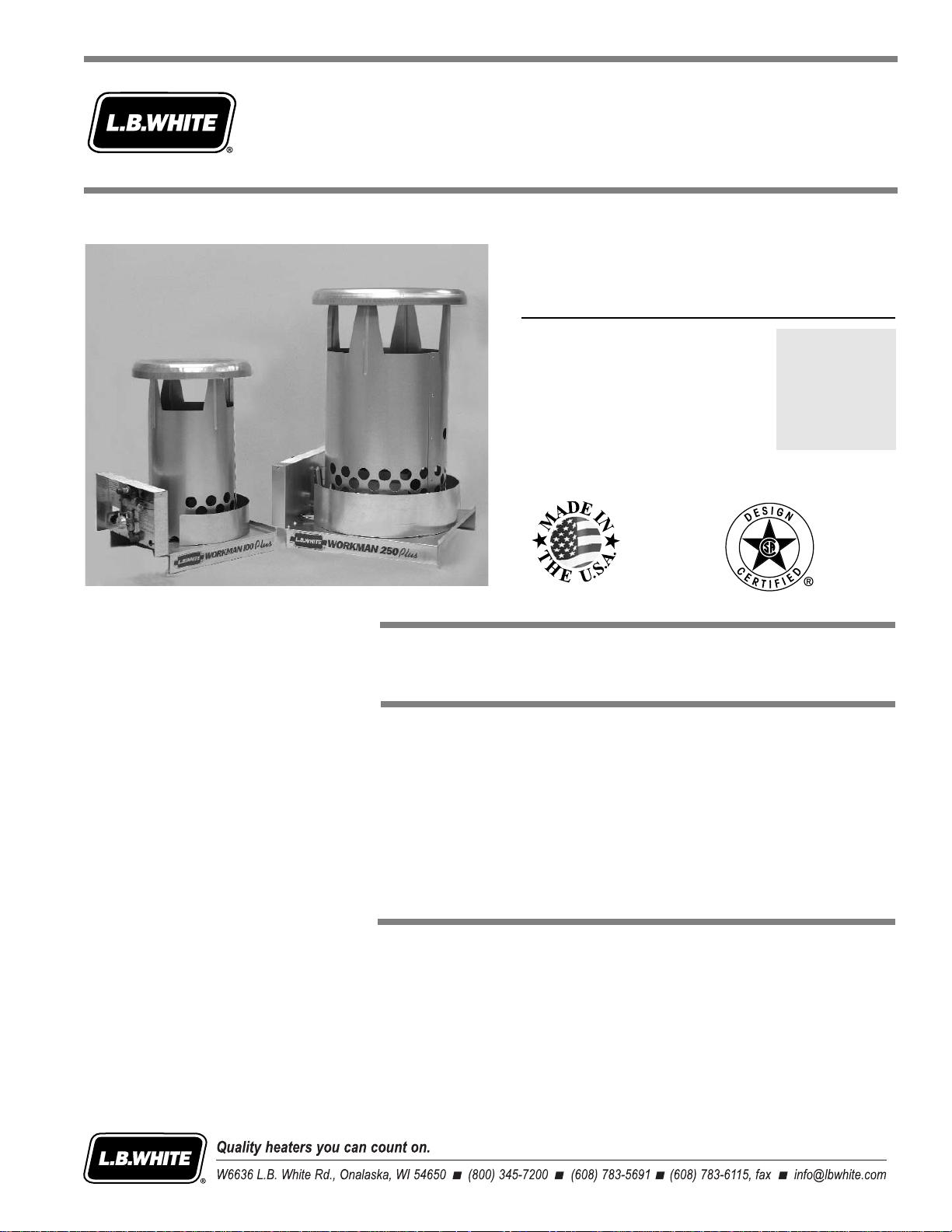
All Models are
available in either
Propane Vapor
Withdrawal or
Natural Gas
Configurations.
MODELS OUTPUT (Btuh) FUEL
CV100 100,000
CV250 250,000
Congratulations!
You have purchased the finest convection heater available.
Your new L.B. White heater incorporates the benefits from the most experienced
manufacturer of heating products using state-of-the-art technology.
We, at L.B. White, thank you for your confidence in our products and
welcome any suggestions or comments you may have...call us, toll-free,
at 1-800-345-7200.
Owner's Manual and Instructions
“Workman” Convection Construction Heaters
ATTENTION ALL USERS
This heater has been tested and evaluated by C.S.A. International in accordance with
Standard ANSI Z83.7
z
CSA 2.14 and is listed and approved as a direct fired vertical
convection construction heater for use on combustible floors. This heater is
intended for use as a portable, temporary heater for buildings under construction,
alteration, or repair. If you are considering using this product for any application
other than its intended use, then please contact your fuel gas supplier, or the
L.B. White Co., Inc.
150-20227-D
Certification by:
Page 2
WARNING
Fire and Explosion Hazard
■ Not for home or recreational vehicle use.
■ Installation of this heater in a home or
recreational vehicle may result in a fire or
explosion.
■ Fire or explosions can cause property
damage or loss of life.
FOR YOUR SAFETY
If you smell gas:
1. Open windows.
2. Don't touch electrical switches.
3. Extinguish any open flame.
4. Immediately call your gas supplier.
FOR YOUR SAFETY
Do not store or use gasoline or other
flammable vapors and liquids in the vicinity of
this or any other appliance.
WARNING
Fire and Explosion Hazard
■ Keep solid combustibles a safe distance
away from the heater.
■ Solid combustibles include wood or paper
products, building materials, and dust.
■ Do not use the heater in spaces which
contain or may contain volatile or airborne
combustibles.
■ Volatile or airborne combustibles include
gasoline, solvents, paint thinner, dust
particles or unknown chemicals.
■ Failure to follow these instructions may
result in a fire or explosion.
■ Fire or explosions can lead to property
damage, personal injury or loss of life.
GENERAL HAZARD WARNING
■ Failure to comply with the precautions and instructions provided with this heater, can result in:
— Death
— Serious bodily injury or burns
— Property damage or loss from fire or explosion
— Asphyxiation due to lack of adequate air supply or carbon monoxide poisoning
— Electrical shock
■ Read this Owner’s Manual before installing or using this product.
■ Only properly-trained service people should repair or install this heater.
■ Save this Owner’s Manual for future use and reference.
■ Owner’s Manuals and replacement labels are available at no charge. For assistance, contact
L.B. White at 800-345-7200.
WARNING
■ Proper gas supply pressure must be provided to the inlet of the heater.
■ Refer to data plate for proper gas supply pressure.
■ Gas pressure in excess of the maximum inlet pressure specified at the heater inlet can cause
fires or explosions.
■ Fires or explosions can lead to serious injury, death, or building damage.
■ Gas pressure below the minimum inlet pressure specified at the heater inlet may cause
improper combustion.
■ Improper combustion can lead to asphyxiation or carbon monoxide poisoning and therefore
serious injury or death.
2
Page 3

This Owner's Manual includes all options and accessories
commonly used on this heater. However, depending on the
configuration purchased, some options and accessories
may not be included.
When calling for technical service assistance, or for other
specific information, always have model number,
configuration number and serial number available. This
information is contained on the dataplate.
This manual will instruct you in the operation and care of
your unit. Have your qualified installer review this manual
with you so that you fully understand the heater and how it
functions.
The gas supply line installation, installation of the heater,
and repair and servicing of the heater requires continuing
expert training and knowledge of gas heaters and should
not be attempted by anyone who is not so qualified. See
page 6 for definition of the necessary qualifications.
Contact your local L.B. White distributor or the L.B. White
Co., Inc. for assistance, or if you have any questions about
the use of the equipment or its application.
The L.B. White Co., Inc. has a policy of continuous product
improvement. It reserves the right to change specifications
and design without notice.
SECTION
PAGE
General Information . . . . . . . . . . . . . . . . . . . . . . . . . . . . . . . . . . . . . . . . . . . . . . . . . . . . . . . . . . . . . . . . . . .3
Heater Specifications . . . . . . . . . . . . . . . . . . . . . . . . . . . . . . . . . . . . . . . . . . . . . . . . . . . . . . . . . . . . . . . . . .4
Safety Precautions . . . . . . . . . . . . . . . . . . . . . . . . . . . . . . . . . . . . . . . . . . . . . . . . . . . . . . . . . . . . . . . . . . . .5
Installation Instructions
General . . . . . . . . . . . . . . . . . . . . . . . . . . . . . . . . . . . . . . . . . . . . . . . . . . . . . . . . . . . . . . . . . . . . . . . . .7
Hose and Regulator Assembly Instructions . . . . . . . . . . . . . . . . . . . . . . . . . . . . . . . . . . . . . . . . . . . . .8
Start-Up Instructions . . . . . . . . . . . . . . . . . . . . . . . . . . . . . . . . . . . . . . . . . . . . . . . . . . . . . . . . . . . . . . . . . .9
Shut-Down Instructions . . . . . . . . . . . . . . . . . . . . . . . . . . . . . . . . . . . . . . . . . . . . . . . . . . . . . . . . . . . . . . . .9
Cleaning Instructions . . . . . . . . . . . . . . . . . . . . . . . . . . . . . . . . . . . . . . . . . . . . . . . . . . . . . . . . . . . . . . . . .10
Maintenance Instructions . . . . . . . . . . . . . . . . . . . . . . . . . . . . . . . . . . . . . . . . . . . . . . . . . . . . . . . . . . . . .10
Service Instructions
Gas Pressure Checks . . . . . . . . . . . . . . . . . . . . . . . . . . . . . . . . . . . . . . . . . . . . . . . . . . . . . . . . . . . . .11
Pilot Assembly . . . . . . . . . . . . . . . . . . . . . . . . . . . . . . . . . . . . . . . . . . . . . . . . . . . . . . . . . . . . . . . . . . .12
Igniter and Electrode . . . . . . . . . . . . . . . . . . . . . . . . . . . . . . . . . . . . . . . . . . . . . . . . . . . . . . . . . . . . .13
Burner Orifice . . . . . . . . . . . . . . . . . . . . . . . . . . . . . . . . . . . . . . . . . . . . . . . . . . . . . . . . . . . . . . . . . . .13
Troubleshooting . . . . . . . . . . . . . . . . . . . . . . . . . . . . . . . . . . . . . . . . . . . . . . . . . . . . . . . . . . . . . . . . . . . . .14
Heater Component Function . . . . . . . . . . . . . . . . . . . . . . . . . . . . . . . . . . . . . . . . . . . . . . . . . . . . . . . . . . .15
Parts Identification
Parts Schematic . . . . . . . . . . . . . . . . . . . . . . . . . . . . . . . . . . . . . . . . . . . . . . . . . . . . . . . . . . . . . . . . .16
Parts List . . . . . . . . . . . . . . . . . . . . . . . . . . . . . . . . . . . . . . . . . . . . . . . . . . . . . . . . . . . . . . . . . . . . . . .17
Warranty Policy . . . . . . . . . . . . . . . . . . . . . . . . . . . . . . . . . . . . . . . . . . . . . . . . . . . . . . . . . . . . . . . . . . . . . .18
Replacement Parts and Service . . . . . . . . . . . . . . . . . . . . . . . . . . . . . . . . . . . . . . . . . . . . . . . . . . . . . . . .18
Table of Contents
General Information
3
Page 4
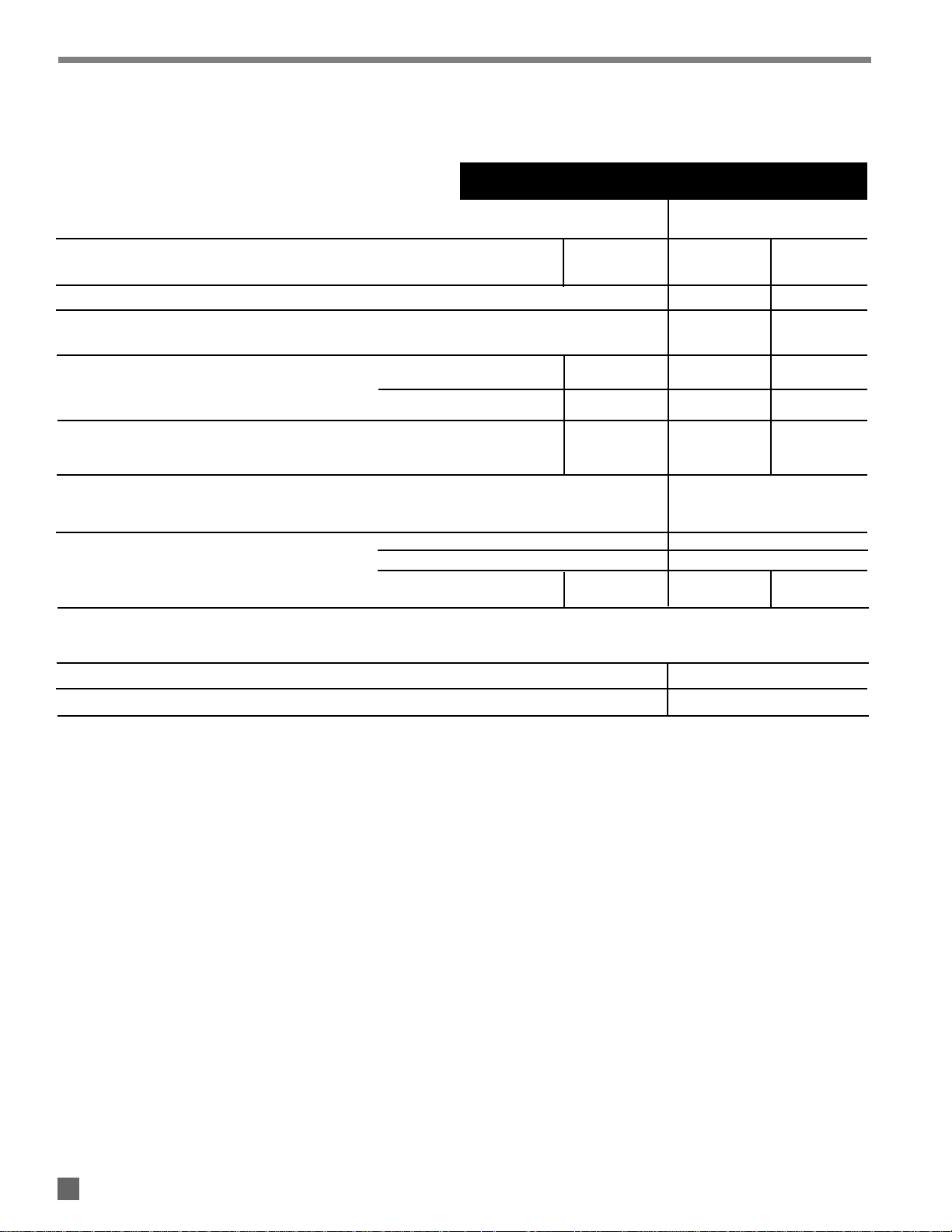
SPECIFICATIONS
Maximum Input (BTUH) 100,000 250,000 200,000
400 1000 800
11 2 11 2
10 2 10 2
4.6 100 11.6 200
lbs. cu. ft. lbs. cu. ft.
14 x 12 x 20 16 1/2 x 15 x 25
TOP 5 ft. 5 ft. 10 in.
SIDES 3 ft. 4 ft.
GAS 6 ft. 6 ft.
SUPPLY (1.83 m) N/A (1.83 m) N/A
11 16
14 19
CV100 CV250
Propane Natural Propane Natural
Gas Gas Gas Gas
MMooddeell
Ventilation Air Required
to Support Combustion (CFM)
Net Weight (lbs.)
Shipping Weight (lbs.)
Dimensions (Inches)
L x W x H
Minimum Safe Distances
From Nearest Combustible
Materials
Fuel Consumption Per Hour
Inlet Gas Supply Pressure Acceptable at
the Inlet of the Heater for Purpose of
Input Adjustment (PSIG)
MAX.
MIN.
4
Heater Specifications
Minimum ambient temperature in which
heater may be used.
-20oF
Fuel
Page 5
Propane ggas aand nnatural ggas hhave mman-mmade oodorants aadded sspecifically ffor ddetection oof ffuel ggas lleaks.
If aa ggas lleak ooccurs, yyou sshould bbe aable tto ssmell tthe ffuel ggas.
THAT’S YYOUR SSIGNAL TTO GGO IINTO IIMMEDIATE AACTION!
■ Do not take any action that could ignite the fuel gas. Do
not operate any electrical switches. Do not pull any
power supply or extension cords. Do not light matches
or any other source of flame. Do not use your
telephone.
■ Get everyone out of the building and away from the area
immediately.
■ Close all propane gas tank or cylinder fuel supply
valves, or the main fuel supply valve located at the
meter if you use natural gas.
■ Propane gas is heavier than air and may settle in low
areas. When you have reason to suspect a propane
leak, keep out of all low areas.
■ Natural gas is lighter than air and can collect around
rafters or ceilings.
■ Use your neighbor’s phone and call your fuel gas
supplier and your fire department. Do not re-enter the
building or area.
■ Stay out of the building and away from the area until
declared safe by the firefighters and your fuel gas
supplier.
■
FI N ALLY,
let the fuel gas service person and the
firefighters check for escaped gas. Have them air out
the building and area before you return. Properly
trained service people must repair the leak, check for
further leakages, and then relight the appliance for you.
WARNING
■ Do not use this heater for heating human living
quarters.
■ Do not use in unventilated areas.
■ The flow of combustion and ventilation air must not be
obstructed.
■ Proper ventilation air must be provided to support the
combustion air requirements of the heater being used.
■ Refer to the specification section of the heater’s
Owner’s Manual, heater dataplate, or contact the
L.B. White Company to determine combustion air
ventilation requirements of the heater.
■ Lack of proper ventilation air will lead to improper
combustion.
■ Improper combustion can lead to carbon monoxide
poisoning leading to serious injury or death. Symptoms
of carbon monoxide poisoning can include headaches,
dizziness and difficulty in breathing.
Asphyxiation HHazard
■
Some ppeople ccannot ssmell wwell. SSome ppeople ccannot
smell tthe oodor oof tthe mman-mmade cchemical aadded tto
propane oor nnatural ggas. YYou mmust ddetermine iif yyou ccan
smell tthe oodorant iin tthese ffuel ggases.
■ Learn to recognize the odor of propane gas and natural
gas. Local propane gas dealers and your local natural
gas supplier (utility) will be more than happy to give you
a “scratch and sniff” pamphlet. Use it to become
familiar with the fuel gas odor.
■ Smoking can decrease your ability to smell. Being
around an odor for a period of time can affect your
sensitivity to that particular odor.
■
The oodorant iin ppropane ggas aand nnatural ggas iis ccolorless
and tthe iintensity oof iits oodor ccan ffade uunder ssome
circumstances.
■ If there is an underground leak, the movement of gas
through the soil can filter the odorant.
■ Propane gas odor may differ in intensity at different
levels. Since propane gas is heavier than air, there may
be more odor at lower levels.
■
Always bbe ssensitive tto tthe sslightest ggas oodor.
If you
continue to detect any gas odor, no matter how small,
treat it as a serious leak. Immediately go into action as
discussed previously.
5
Safety Precautions
FUEL GAS ODOR
ODOR FADING -- NO ODOR DETECTED
ATTENTION -- CRITICAL POINTS TO REMEMBER!
■ Propane gas and natural gas have a distinctive odor.
Learn to recognize these odors. (Reference “Fuel Gas
Odor” and “Odor Fading” sections above.
■
If you have not been properly trained in repair and service
of propane gas and natural gas fueled heaters, then do
not attempt to light heater, perform service or repairs, or
make any adjustments to the heater on propane gas or
natural gas fuel system.
■ Even if you are not properly trained in the service and
repair of the heater, ALWAYS be consciously aware of
the odors of propane gas and natural gas.
■ A periodic sniff test around the heater or at the heater’s
joints; i.e. hose, connections, etc., is a good safety
practice under any conditions. If you smell even a small
amount of gas, CONTACT YOUR FUEL GAS SUPPLIER
IMMEDIATELY. DO NOT WAIT!
Page 6

1. Do not attempt to install, repair, or service this heater
or the gas supply line unless you have continuing
expert training and knowledge of gas heaters.
Qualifications for service and installation of this
equipment are as follows:
a.
To be a qualified gas heater service person, you
must have sufficient training and experience to
handle all aspects of gas-fired heater installation,
service and repair. This includes the task of
installation, troubleshooting, replacement of
defective parts and testing of the heater. You
must be able to place the heater into a continuing
safe and normal operating condition. You must
completely familiarize yourself with each model
heater by reading and complying with the safety
instructions, labels, Owner’s Manual, etc., that is
provided with each heater.
b.
To be a qualified gas installation person, you must
have sufficient training and experience to handle
all aspects of installing, repairing and altering gas
lines, including selecting and installing the proper
equipment, and selecting proper pipe and tank
size to be used. This must be done in accordance
with all local, state and national codes as well as
the manufacturer’s requirements.
c. In the Commonwealth of Massachusetts, this
product must be installed by a gas fitter licensed
by the Commonwealth of Massachusetts.
2. All installations and applications of L.B. White heaters
must meet all relevant local, state and national
codes. Included are propane gas, natural gas,
electrical, and safety codes. Your local fuel gas
supplier, a local licensed electrician, the local fire
department or similar government agencies, or your
insurance agent can help you determine code
requirements.
Also refer to:
-- ANSI/NFPA 58, latest edition, Standard for
Storage and Handling of Liquefied Petroleum
Gas and/or
-- ANSI Z223.1/NFPA 54, National Fuel Gas
Code
-- ANSI A10.10 American National Standards
Safety Requirements for Temporary and
Portable Space Heating Devices and
Equipment Used in the Construction Industry.
3. We cannot anticipate every use which may be made
of our heater. Check with your local fire safety
authority if you have questions about applications.
4. Other standards govern the use of fuel gases and
heat producing products in specific applications.
Your local authority can advise you about these.
5. Use only compressed air, soft brush or dry cloth to
clean the interior of the heater and it’s components.
6. The heater shall be installed so that it is not directly
exposed to water spray, rain, or dripping water.
7. Do not locate fuel gas containers or fuel supply
hoses anywhere near the discharge outlet of the
heater.
8. Do not block air intakes or discharge outlets of the
heater. Doing so may cause improper combustion or
damage to heater components leading to property
damage.
9. The hose assembly shall be visually inspected on a
daily basis after heater relocation and when the
heater is in use. If it is evident there is excessive
abrasion or wear, or if the hose is cut, it must be
replaced prior to the heater being put into operation.
The hose assembly shall be protected building
materials, and contact with hot surfaces during use.
The hose assembly shall be that specified by the
manufacturer. See parts list.
10. Check for gas leaks and proper function upon heater
installation or when relocating. Refer to leak check
instructions within installation section of this manual.
11. This heater should be inspected for proper operation
by a qualified service person before each use and at
least annually.
12. Always turn off the gas supply to the heater if the
heater is not going to be used in the heating of the
work space.
13. If gas flow is interrupted and flame goes out, do not
relight the heater until you are sure that all gas that
may have accumulated has cleaned away. In any
event, do not relight the heater for at least 5 minutes.
14. Minimum propane gas supply cylinder size to be used
shall be 100 pounds. When using a cylinder supply
system, the system must be arranged to provide
vapor withdrawal from the operating cylinder.
15. When the heater is to be stored indoors, the
connection between the propane gas supply
cylinder(s) and the heater must be disconnected and
the cylinder(s) removed from the heater and stored in
accordance with the Standard and Handling of
Liquefied Petroleum Gases, ANSI/NFPA 58.
16. When natural gas is used as a fuel and the heater is
connected to the gas supply using the optionally
supplied gas hose, the heater must connect
dimensionally using American National Standard
Wrought Steel and Wrought Iron Pipe B36/10-1970.
If corrugated metal tubing, other such flexible
connections or quick connectors are utilized, they
must be appropriately approved for use with natural
gas. Aluminum piping or tubing shall not be used. If
copper tubing is utilized with natural gas, it shall be
internally tinned or equivalently treated to resist
sulphur
17. Propane gas supply cylinders containers have left
handed threads. Always use the appropriate wrench
to tighten or loosen the P.O.L. fitting at the propane
gas containers supply valve. Do not use pliers.
6
Page 7

1. Read all safety precautions and follow L.B. White
recommendations when installing this heater. If
during the installation or relocating of heater, you
suspect that a part is damaged or defective, call a
qualified service agency for repair or replacement.
2. Position heater properly before use. The heater must
be installed on a level, flat, horizontal and stable
surface when hot or in operation and according to
minimum clearances from combustible surfaces such
as walls, floor or ceilings. Do not place combustible
materials within this zone of clearance. Minimum
safe distances are as follows:
CV100 CV250
Top to Ceiling 5 ft. 5 ft. 10 in.
All Sides 3 ft. 4 ft.
Gas Supply 6 ft. 6 ft.
3. Position the heater and its gas supply hose so as to
protect heater and its gas supply hose from traffic.
Protect hoses with a shielding device of suitable
nature to protect the hose from traffic and movement
or other construction equipment.
4. The heater is approved for indoor use only.
5. The heater’s gas pressure regulator (with pressure
relief valve) must be protected from adverse weather
conditions (rain, ice, snow) as well as from building
materials (tar, concrete, plaster, etc.) which can affect
safe operation and could result in property damage or
injury.
6. Heaters used in the vicinity of combustible tarpaulins,
canvas, plastics, wind barriers, or similar coverings
shall be located at least 10 feet from the coverings.
The coverings shall be securely fastened to prevent
ignition or upsetting of the heater due to wind action
on the covering or other material.
7. Check all connections for gas leaks using approved
gas leak detectors. Gas leak testing is performed as
follows:
-- Check all pipe connections, hose connections,
fittings and adapters upstream of the gas
control with approved gas leak detectors.
-- In the event a gas leak is detected, check the
components involved for cleanliness and
proper application of pipe compound before
further tightening.
-- Furthermore tighten the gas connections as
necessary to stop the leak.
-- After all connections are checked and any
leaks are stopped, turn on the main burner.
-- Stand clear while the main burner ignites to
prevent injury caused from hidden leaks that
could cause flashback.
-- With the main burner in operation, check all
connections, hose connections, fittings and
joints as well as the gas control valve inlet and
outlet connections with approved gas leak
detectors.
-- If a leak is detected, check the components
involved for cleanliness in the thread areas
and proper application of pipe compound
before further tightening.
-- Tighten the gas connection as necessary to
stop the leak.
-- If necessary, replace the parts or components
involved if the leak cannot be stopped.
-- Ensure all gas leaks have been identified and
repaired before proceeding.
8. A qualified service agency must check for proper
operating gas pressure upon installation of the
heater.
WARNING
Fire oor eexplosion hhazard.
Can ccause pproperty ddamage, ssevere iinjury oor ddeath.
1. To avoid dangerous accumulation of fuel gas, turn off
the gas supply at the heater service valve before
starting installation, and perform gas leak test after
completion of installation.
2. Do not force the gas control pilot button. Use only
normal hand pressure to depress the pilot button.
Never use any tools. If the button will not operate by
normal hand pressure, the control should be
replaced by a qualified service technician. Force or
attempted repair may result in fire or explosion.
7
Installation Instructions
GENERAL
WARNING
Fire aand EExplosion HHazard
■ Do not use open flame (matches, torches, candles,
etc.) in checking for gas leaks.
■ Use only approved leak detectors.
■ Failure to follow this warning can lead to fires or
explosions.
■ Fires or explosions can lead to property damage,
personal injury or loss of life.
Page 8

9. Light according to instructions on heater or within
owner's manual.
10. Make sure the heater has the proper gas regulator for
the application. A regulator must be connected to the
gas supply so that gas pressure at the inlet to the gas
valve is regulated within the range specified on the
dataplate at all times. Contact your gas supplier, or
the L.B. White Co., Inc. if you have any questions.
11. This heater can be configured for use with either
propane gas vapor withdrawal or natural gas. Consult
the heater’s dataplate for the gas configuration of the
specific heater. Do not use the heater in an propane
liquid withdrawal system or application. If you are in
doubt, contact the L.B. White Co., Inc.
12. Take time to understand how to operate and maintain
the heater by using this Owner’s Manual. Make sure
you know how to shut off the gas supply to the
building and also to the individual heater. Contact
your fuel gas supplier if you have any questions.
13. Any defects found in performing any of the service or
maintenance procedures must be eliminated and
defective parts replaced immediately. The heater
must be retested by properly qualified service
personnel before placing the heater back into use.
8
HOSE AND REGULATOR ASSEMBLY
PROPANE GAS SUPPLY
CONTAINER VALVE
REGULATOR
HOSE
HOSE ADAPTER
TO HEATER
1. Always use approved pipe thread compound suitable
for use with propane gas or natural gas on the
threaded connections.
2. Assemble the components together according to the
figure. This view is to show general assembly of the
components only.
3. Tighten all connections securely.
4.
Check aall cconnections ffor ggas lleaks uusing aapproved
gas lleak ddetectors.
FIG. 1
Page 9

9
Start-Up Instructions
1. Slowly open the fuel gas supply valve.
2. Fully depress the button on the pilot safety control
valve while pushing the igniter button. The pilot will
light. See Fig. 2.
Fig. 2
ATTENTION
On new installations it may take a short time for gas to
purge out any air in the pilot line before the pilot stays lit.
3. Keep the pilot button depressed for about 30
seconds to allow the thermocouple to warmup so the
pilot stays lit after the pilot button is released.
4. Fully open the manual main burner valve located
between pilot safety control and burner, the main
burner will light.
WARNING
Burn HHazard
■ Close the manual main burner valve before lighting the
pilot.
■ Failure to do so will result in the main burner igniting
when the pilot is being lit.
■ Serious injury or death due to burns may occur.
PILOT GAS VALVE
PILOT BUTTON
PIEZO IGNITER
PIEZO
IGNITER
BUTTON
GAS INLET ELBOW
MAIN
BURNER
VA LVE
THERMOCOUPLE
LEAD
Shut-Down Instructions
1. Close all fuel gas supply valves.
2. Allow the heater to burn off any fuel gas remaining on
the gas supply line.
3. Close the manual main burner valve on the heater.
4. Disconnect the heater from its gas supply.
Page 10

10
1. The area surrounding the heater shall be kept clear
and free from combustible materials, gasoline, and
other flammable vapors and liquids.
2. Have your gas supplier check all gas piping annually
for leaks or restrictions in gas lines.
3. Regulators must be periodically inspected to make
sure the regulator vents are not blocked. Debris,
insects, insect nests, snow, or ice on a regulator can
block vents and cause excess pressure at the
appliance.
4. Regulators can wear out and function improperly.
Have your gas supplier check the date codes on all
regulators installed and check delivery pressures to
the appliance to make sure that the regulator is
reliable.
5. Check all wiring associated terminals and electrical
components within the heater for corrosion, frayed or
cut insulation, tight connections, etc. Repair or
replace as necessary.
6. Review all heater markings (i.e. warnings, start-up,
shut-down, etc.) at the time of maintenance for
legibility. Make sure none are cut, torn, or otherwise
damaged. Any damaged markings must be replaced
immediately by contacting the L.B. White Co., Inc.
Dataplates, start-up and shut-down instructions and
warnings are available at no cost.
1. Before cleaning, shut off all
gas supply valves.
2. The heater should have dirt or dust removed
periodically:
a. Before each use give the heater a general
cleaning using compressed air, a soft brush, or
dry rag, on its case and internal components.
b. At least once a year, give the heater a thorough
cleaning. At this time, remove the case assembly
and brush and/or blow off the burner and related
components.
WARNING
Do not use a pressure washer, water or liquid cleaning
solution on any gas controls. Use of a pressure washer,
water, or liquid cleaning solution on the control
components can cause severe personal injury or
property damage due to water and/or liquids:
* On gas control valves causing corrosion which can
result in gas leaks and fire or explosion from the
leak.
Clean all components of the heater with a pressurized
air, a dry brush or a dry cloth.
Cleaning Instructions
Maintenance Instructions
WARNING
Fire, BBurn, aand EExplosion HHazard
■ This heater contains mechanical components used in the gas management and safety systems.
■ Such components may become inoperative or fail due to dust, dirt, wear or aging.
■ Periodic cleaning and inspection as well as proper maintenance are essential to avoid serious injury or damage.
Page 11

11
Service Instructions
PLUG
CONNECTOR
HIGH PRESSURE GAUGE
GAS PRESSURE CHECKS
Fig. 3
ATTENTION
■
This procedure is to be done once a year prior to the
heating season, anytime the heater is moved from one
job location to the next, or after servicing the heater.
MATERIALS REQUIRED
(To be secured through local purchase)
Quantity Description
1 High Pressure Gas Gauge capable of
reading up to 15 PSIG
A. PREPARATION
1. Close fuel supply valve at propane gas supply
container.
2. Allow heater to burn off gas remaining in it’s gas
supply line..
3. Close manual main burner valve on heater.
B. GAUGE INSTALLATION
1. Using an allen wrench, remove the hex plug as shown
in Fig. 3.
2. Attach the pressure gauge to this point. See Fig.3.
3. Open fuel supply valves to heater.
C. READING PRESSURES
1. Start the heater. With the heater operating, the
pressure gauge should read the pressure specified
on the dataplate or in the specification section of this
owner’s manual.
2. Does the pressure reading agree with that given on
the dataplate? If so, no further checking or
adjustment is required. Proceed to section D.
3. If the pressures does not agree with that specified on
the dataplate, then check the following:
-- Improper regulator for heater.
-- Regulator out of adjustment.
(Replace if necessary).
-- Blockage in gas hose.
-- Insufficient size or quantity of propane gas supply
containers.
D. COMPLETION
1. Once the proper pressure has been confirmed, close
fuel supply valves.
2. Allow heater to burn off fuel remaining in gas supply
line.
3. Remove gauge, hose adapter, nipple and tee.
4. Install hex plug. Tighten securely..
5. Tighten all connection securely and check for gas
leaks.
WARNING
■ Do not disassemble the pilot safety control valve.
■ Do not attempt to replace any components of the pilot
safety control valve.
■ The pilot safety control must be replaced if any
physical damage occurs to it.
■ Failure to follow this warning will result in fire or
explosions, leading to injury or death, and building
damage.
Page 12

12
PILOT ASSEMBLY
1. Shut off gas supply to heater.
2. Let the heater cool down.
3. Remove screws that secure barrel assembly to base
of heater.
4. Remove barrel assembly from base, exposing burner
and pilot assembly.
5. The pilot orifice and thermocouple are located at the
burner. Refer to the following to remove these
components for servicing.
A. Pilot OOrifice
(See Fig. 4)
1. Remove thermocouple from bracket.
2. Remove wire from igniter.
3. Remove screws that hold burner head to base of
heater.
4. Slide burner head off of base to expose pilot
orifice.
5. Hold the hex-shaped connector at the pilot orifice
inlet in place with an appropriate wrench while
using another wrench to loosen the pilot orifice.
6. Reassemble by reversing above steps.
B. Thermocouple
(See Fig. 4)
1. Pull back sharply on the thermocouple’s lead or
its body. It will then pop out of its mounting hole.
2. Loosen the lead connector nut threaded into the
power unit on the pilot safety gas control valve and
slide thermocouple through bushing on back of
heater to remove.
3. To assemble, reverse above procedure.
ATTENTION
■
The pilot orifice hole is drilled to a specific diameter to
match the fuel and gas pressure being used.
■ Do not push sharp instruments into the orifice holes.
■ Clean the orifice only with compressed air, a soft brush
or dry rag. If necessary, replace the pilot orifice.
■ Do not use a pliers to remove the pilot orifice from its
gas supply line.
■ Doing so may round off the hex sides of the orifice,
making for difficult servicing later on. Always use a
wrench.
ATTENTION
■
The thermocouple has a push-in mounting clip. Make
sure on reassembly that the thermocouple is completely
pushed into its bracket. Failure to do so may cause pilot
outage problems.
■ When threading the thermocouple’s connector nut back
into the power unit on the gas control valve, thread the
nut in finger tight and snug it in place with a wrench.
■ DO NOT OVERTIGHTEN OR USE UNNECESSARY FORCE
ON THE NUT WHEN TIGHTENING. Doing so will destroy
the power unit in the gas control valve.
■ Do not use a pliers when removing or replacing the
connector nut.
■ Doing so will round off the hex, making servicing
difficult later on. Always use the appropriate size
wrench.
PILOT ORIFICE
THERMOCOUPLE
BURNER
BURNER ORIFICE
ELECTRODE
Fig. 4
ELECTRODE ON CENTER
LINE OF PILOT ORIFICE
Page 13

13
IGNITER and ELECTRODE
Servicing of the igniter and electrode is needed when a
spark at the electrode is not seen. This may happen with
hard use over a long period of time, or due to dust and dirt
accumulation.
If you do not see a spark being generated at the electrode
check the following areas:
A. Igniter
1. Pull the wire from the push button igniter.
2. Place a metal object, (such as a screwdriver tip)
about 1/8 in. from igniter.
3. Push the igniter’s button several times. If spark is not
seen, replace igniter.
B. Electrode
1. Ensure the wire between the electrode and the igniter
is properly connected. All connections should be
good and tight.
2. Check the wire for nicks, cuts, or mars. Nicks or cuts
will prevent a spark from being generated at the
electrode tip. Replace the electrode if necessary.
The electrode ships with the wire.
3. Ensure the electrode tip is not out of position and is
not corroded. The tip should be located at the center
line of the pilot orifice and positioned so it sparks
across to the outside edge of the pilot orifice holder.
See Fig. 4.
4. Verify that the electrode’s ceramic body is not
cracked and that the electrode tip does not move
within its insulative body. If it does, replace the
electrode.
BURNER ORIFICE
1. In replacing the burner orifice, make sure the orifice
body and its holes are positioned properly. See Fig. 5
representing top view of burner. If the orifice body is
not positioned properly, the burner flame will not be
properly directed within the heater and improper
combustion may occur.
2. The basic steps used in removal of the burner orifice
are the same as those used in removal of the pilot
orifice.
ATTENTION
■
Use only a soft brush, dry rag, or compressed air to
clean the burner orifice.
■ Do not push instruments into the orifice holes. As the
holes are drilled at a specific angle and diameter.
■ Doing so may distort or enlarge the holes, creating
improper combustion and burner flames extending
beyond the heater’s case barrel.
PILOT
ORIFICE
THERMOCOUPLE
ELECTRODE
BURNER
BURNER ORIFICE
Fig. 5
Page 14

14
Troubleshooting
PROBLEMS CAUSES REMEDIES
1. Pilot will not light. * Propane gas tank is empty. * Fill tank.
* Fuel supply valves closed. * Open fuel supply valves.
* Excess flow valve in P.O.L. * Close propane cylinder valve. Wait 5 minutes
fitting on regulator is closed. and open cylinder valve slowly.
* Pilot button not fully pushed in. * Push in pilot button completely.
* Pilot orifice is plugged. * Clean or replace pilot orifice. (DO NOT poke sharp
instruments in orifice holes, blow out with compressed
air.)
* Inlet screen at inlet of gas valve is * Remove screen and clean or replace screen.
plugged.
* Restriction in gas hose or * Remove hose or pilot line from heater and blow
pilot line. out with compressed air or replace if necessary.
* Air in gas line. * Push in pilot button (normally 15 - 20 seconds is
sufficient) on pilot control of gas valve to purge air from
line (usually necessary at time of installation).
NOTE: Make sure you are pushing the Piezo igniter
button during this time to prevent gas
accumulation.
* Pilot safety gas control power * Replace entire pilot safety control valve.
unit is defective.
* Defective Piezo igniter or electrode. * Refer to electrode service instruction section of this
manual for problems associated with Piezo igniter assembly.
2. Pilot lights but will not * Restriction in gas hose or pilot line. * See remedy for same cause in Problem #1.
stay lit when pilot
button is released.
* Insufficient time allowed for pilot * Hold in pilot button for 30 seconds to allow proper
light to heat up thermocouple. warm up.
* Loose thermocouple. * Tighten thermocouple at gas control and make sure
it is securely pushed into pilot bracket. Tighten
“finger tight” and “snug” the contact nut with an
appropriate wrench.
* Defective thermocouple. * Replace thermocouple.
* Pilot orifice is plugged. * See remedy for same in Problem #1.
* Defective pilot safety control valve. * Replace entire pilot safety control valve.
* Improper gas pressure. * Set pressure according to pressure on dataplate.
3. Main burner will not * Propane gas tank empty. * Fill tank.
light.
* Fuel supply valves closed on heater * Open all valves.
and at tank.
* Pilot light not lit. * Light the pilot.
* Burner orifice holes plugged. * Clean the burner orifices.
4. Burner flame "lifting" * Fuel pressure set too high. * Set pressure according to pressure on dataplate.
off burner.
* Blockages in burner orifice or at * Clean suspected area with soft brush, dry cloth,
primary air inlets of burner. or compressed air.
5. Heater does not seem * Gas supply valves not fully open. * Open valves completely.
to be delivering
maximum heat output. * Burner orifice holes plugged. * Clean burner orifice with compressed air or replace.
* Low fuel supply pressure. * Consult propane gas supplier. Cylinder or tank needs
replacement or refill. Regulator needs adjustment.
Check for use of proper regulation and fuel gas.
Page 15

15
Heater Component Function
BARREL (CASE)
Upright sheet metal case component. Acts as a chimney to
distribute heat to surrounding area.
BASE
Sheet metal case platform used to support and stabilize
burner and barrel assemblies.
BURNER
Component at which combustion of fuel gases takes place.
BURNER ORIFICE
Brass metering device used to feed gas to burner at a
specific rate, with the appropriate pressure.
GAS HOSE
Flexible connector used to convey gas from supply line or
cylinder to heater.
MAIN BURNER VALVE
This valve is located between the pilot safety, gas control
valve and burner. It is manually operated and is used to
open or close the main fuel supply to the burner.
PILOT LIGHT ORIFICE
Small metering device used to supply gas for the dual
purpose of igniting the main burner and heating the
thermocouple. Works directly in conjunction with the
thermocouple.
PILOT SAFETY GAS CONTROL VALVE
A gas control valve which is held open by electrical power
supplied by a pilot thermocouple and which closes
automatically to shut off the flow of gas to the main burner
when pilot flame is extinguished or becomes too small to
light the main burner.
PILOT LINE
Tubing used to convey gas from gas control valve to pilot
light orifice.
REGULATOR
The heart of any gas supply installation. Used to deliver a
working pressure to the appliance under varying conditions
in tank pressure.
THERMOCOUPLE
A thermoelectric device that converts heat directly into
electrical energy. Works in conjunction with electromagnet
in gas control valve thereby assisting in maintaining gas
supply for the pilot light.
TOP (CASE)
Formed sheet metal case component assembled onto
barrel top used to deflect heat out to surrounding area.
Page 16

Parts Identification
Parts Schematic
16
LP - GAS HOSE AND
REGULATOR ASSEMBLY
NATURAL GAS HOSE AND
REGULATOR ASSEMBLY
1
2
3
4
5
1
2
2
3
6
7
8
9
10
11
14
13
15
12
19
18
17
20
23
22
24
21
26
25
27
28
30
29
Page 17

17
Parts List
Item Description Part Number
1 Regulator (Propane Gas) 21722
Regulator (Natural Gas) 20218
2 Adapter, Hose, 1/4 NPT x 9/16-18 (Propane Gas) 01098
Adapter, Hose, 1/2 NPT x 1/2 NPS (Natural Gas) 02894*
3 Hose, 1/4 in. x 10 ft. (Propane Gas) 20496
Hose, 1/2 in. x 10 ft. (Natural Gas) 20243*
4 Valve, Manual Shut Off (Natural Gas) 05548
5 Nipple, 1/2 in. x 1 1/2 in. (Natural Gas) 02420
6 Bushing, 1/2 in. x 1/4 in. (Natural Gas) 01519
7 Nipple, 1/4 in. x 2 in. (Natural Gas) 03071
8 Ell 01300
9 Screen, Inlet 20391
10 Nut, Jam 20185
11 Valve, Pilot Safety 07966
12 Valve, Main Burner 20229
Valve, Main Burner (CV250 Natural Gas) 09698
13 Ell, Street, 1/4 NPT 01425
14 Bushing 04817
15 Igniter, Piezo 20280
17 Base - CV100 20202
Base - CV250 20203
18 Plug, 1/8 NPT 09271
19 Connector, Pilot Line, Gas Control Outlet 20454
20 Connector, Pilot Line for Pilot Head, Inlet 20455
21 Orifice, Pilot (Propane Gas) 20212
Orifice, Pilot (Natural Gas) 20213
22 Manifold, 1/4 NPT x 6 in. 20228
23 Orifice, Burner - CV100 (Propane Gas) 20187
Orifice, Burner - CV100 (Natural Gas) 20186
Orifice, Burner - CV250 (Propane Gas) 20189
Orifice, Burner - CV250 (Natural Gas) 20188
24 Thermocouple, 18 in. 03555
25 Bracket, Thermocouple 20194
26 Burner - CV100 20206
Burner - CV250 20231
27 Electrode with Wire (Piezo) 20184
28 Ring, Heat Shield - CV100 20305
Ring, Heat Shield - CV250 20255
29 Barrel - CV100 20210
Barrel - CV250 20230
30 Top - CV100 20078
Top - CV250 20064
Miscellaneous CComponents ((Not IIllustrated)
Description Part Number
Screw, #8 x 3/8 07288
* Optional Accessories for Natural Gas Units
NOTE: The complete barrel assembly may be ordered. Order part #20211 for CV100 and #20235 for CV250.
The barrel assembly consists of items 29 and 30.
Page 18

Contact your local L.B. White dealer for replacement parts
and service or call the L.B. White Co., Inc. at 1-800-345-7200
for assistance. Be sure that you have your heater model
number and configuration number when calling.
18
L.B. White Co., Inc. warrants that the component parts of its
heaters are free from defects in material and workmanship,
when properly installed, operated, and maintained in
accordance with the Installation and Maintenance
Instructions, safety guides and labels contained with each
unit. If,
within 112 mmonths ffrom tthe ddate oof ppurchase bby tthe
end uuser
, any component is found to be defective, L.B.
White Co., Inc. will at its option, repair or replace the
defective part or heaters, with a new part or heater, F.O.B.,
Onalaska, Wisconsin.
A warranty card on file at L.B. White will automatically
qualify a unit and its component parts for warranty
consideration. If a warranty card is not on file, a copy of the
bill of sale will be required to establish warranty
qualification. If neither is available, the warranty period will
be 12 months from date of shipment from L B. White.
Warranty Policy
Replacement Parts and Service
EQUIPMENT
PARTS
L.B. White Co., Inc. warrants that replacement parts
purchased from the company and used on the appropriate
L. B. White heater are free from defects both in material and
workmanship for
12 mmonths ffrom tthe ddate oof ppurchase bby
the eend uuser
. Warranty is automatic if a component is found
defective within 12 months of the date code marked on the
part. If the defect occurs more than 12 months later than
the date code but within 12 months from the date of
purchase by the end user, a copy of a bill of sale will be
required to establish warranty qualification.
The warranty set forth above is the exclusive warranty
provided by L.B. White, and all other warranties, including
any implied warranties or merchantability or fitness for a
particular purpose, are expressly disclaimed. In the event
any implied warranty is not hereby effectively disclaimed
due to operation of law, such implied warranty is limited in
duration to the duration of the applicable warranty stated
above. The remedies set forth above are the sole and
exclusive remedies available hereunder. L.B. White will not
be liable for any incidental or consequential damages
directly or indirectly related to the sale, handling or use of
the heater, and in any event L.B. White's liability in
connection with the heater, including for claims based on
negligence or strict liability, is limited to the purchase price.
Some states do not allow limitations on how long an implied
warranty lasts, so the above limitation may not apply to you.
Some states do not allow the exclusion or limitation of
incidental or consequential damages, so the above
limitation or exclusion may not apply to you. This warranty
gives you specific legal rights, and you may also have other
rights which vary from state to state.
 Loading...