

Page 1
2012
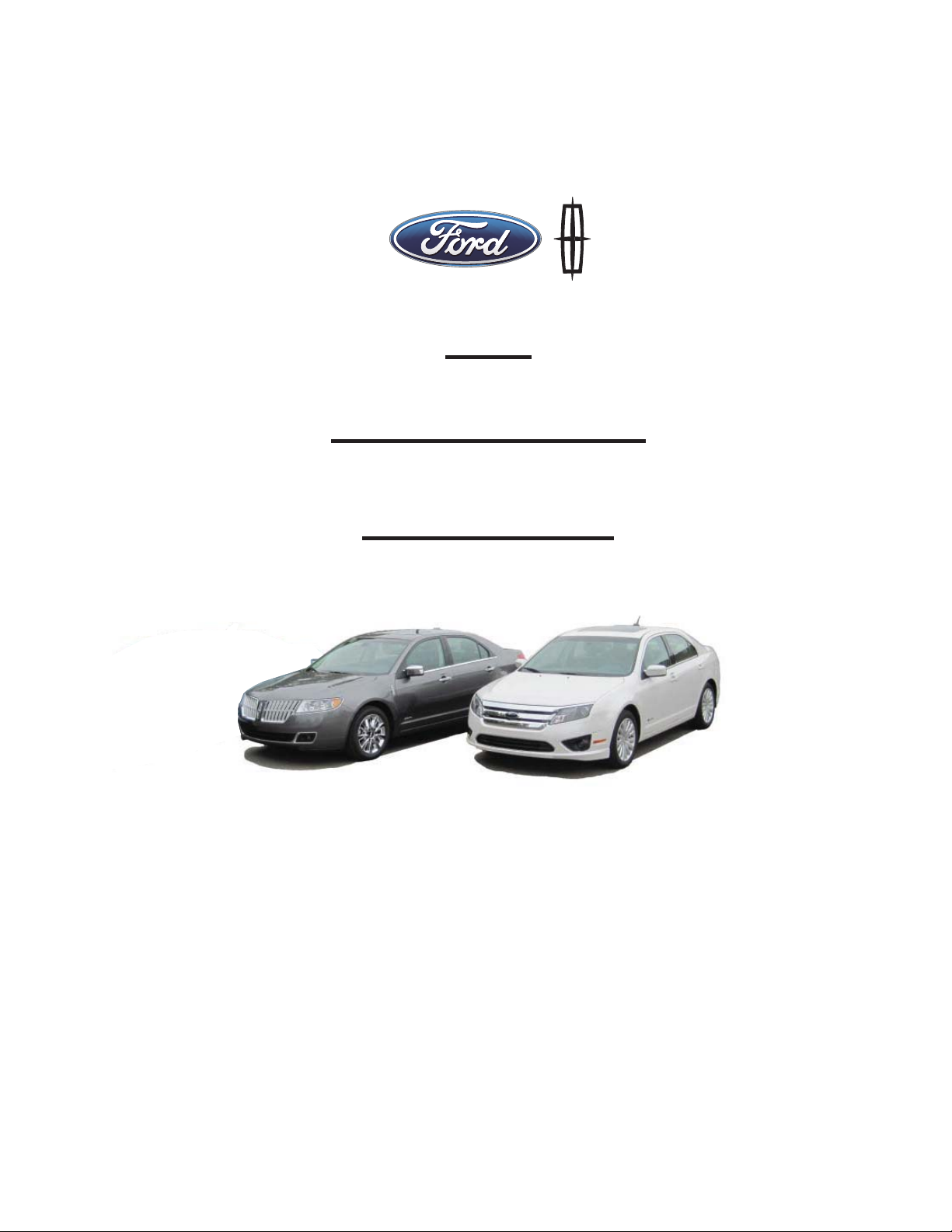
FUSION HYBRID
MKZ HYBRID
EMERGENCY RESPONSE GUIDE
FCS-15129-12 08/2011
Page 2

FOREWORD
The emergency response procedures for the Fusion Hybrid and MKZ Hybrid vehicles are
similar to those for traditional gasoline-powered vehicles with the addition of special
considerations for the high-voltage electric system components.
The Fusion Hybrid and MKZ Hybrid vehicles use a conventional gasoline engine in addition to an electric motor to power the vehicle.
• Gasoline is stored in a traditional fuel tank.
• Electricity is stored in a high-voltage battery pack.
The combination of a gasoline engine and electric motor provides for improved
performance (V6 performance with a 4-cylinder engine and electric motor), reduced
emissions and improved fuel economy . The high-voltage system is self contained, never
needing to be plugged into an electrical outlet for recharging. The system incorporates a
generator that recharges the high-voltage batteries during cruising and braking.
The information in this guide will allow response to emergencies involving the Fusion
Hybrid and MKZ Hybrid vehicles to be as safe as non-hybrid vehicles.
The Fusion Hybrid and MKZ Hybrid vehicles have been designed with many safety features for your protection. These features help provide safe access to the vehicle under
various conditions; however, when approaching a high-volt age vehicle in a fire, rescue or
recovery situation, always follow one industry standard rule:
ALWAYS ASSUME THE VEHICLE’S
HIGH-VOLTAGE SYSTEM IS POWERED UP !
1
FCS-15129-12 2012 Fusion MKZ Hybrid Emergency Response Guide 08/2011
Page 3
HYBRID VEHICLE IDENTIFICATION
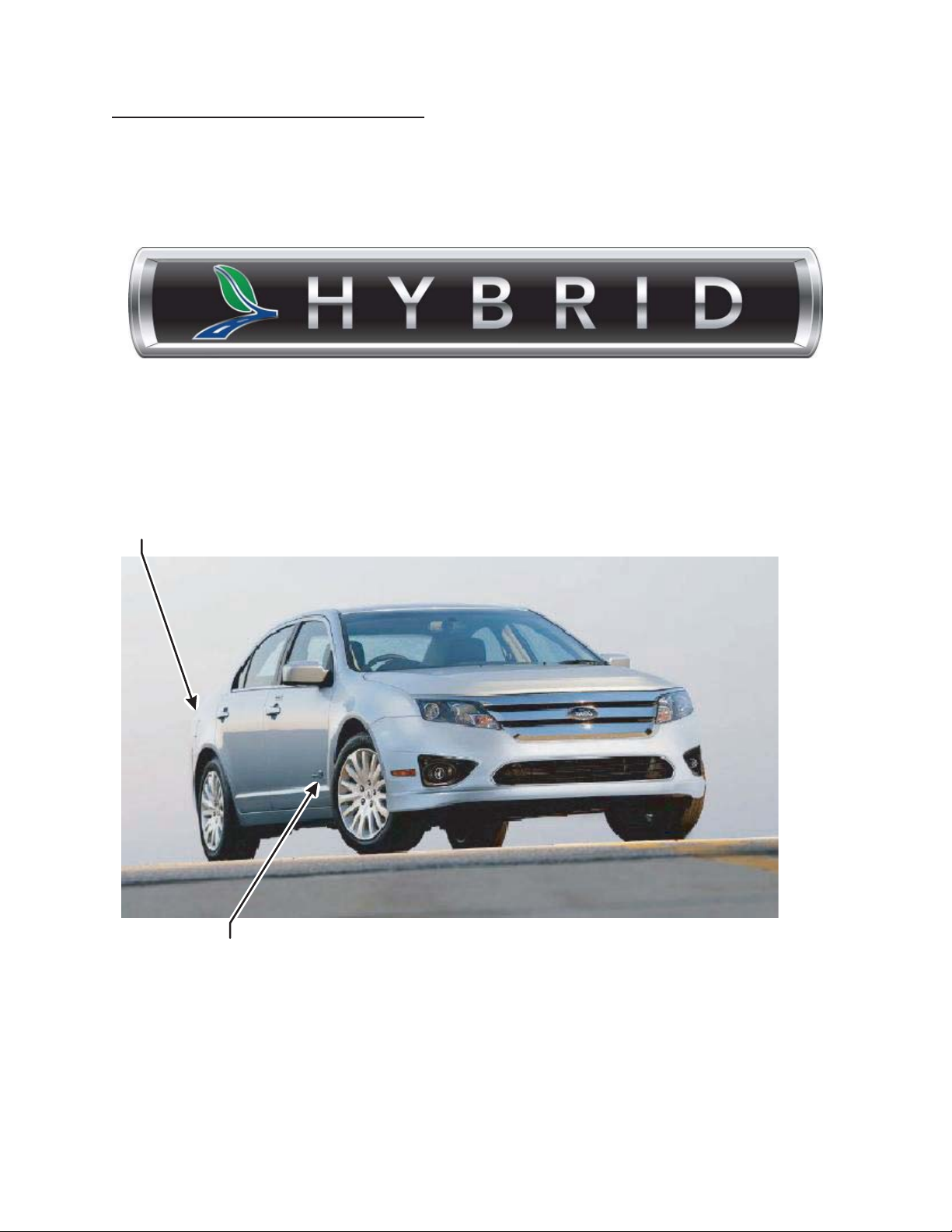
• The Fusion Hybrid and MKZ Hybrid vehicles can easily be identified by the
“Hybrid” badges located on the left and right front doors. There is a “Hybrid”
nameplate on the trunk lid that also includes the green leaf/blue highway
“Hybrid” icon.
NOTE: Fusion Hybrid shown, MKZ Hybrid similar.
Hybrid nameplate and icon on
trunk lid.
Hybrid nameplate with Hybrid icon
on front doors.
2
FCS-15129-12 2012 Fusion MKZ Hybrid Emergency Response Guide 08/2011
Page 4
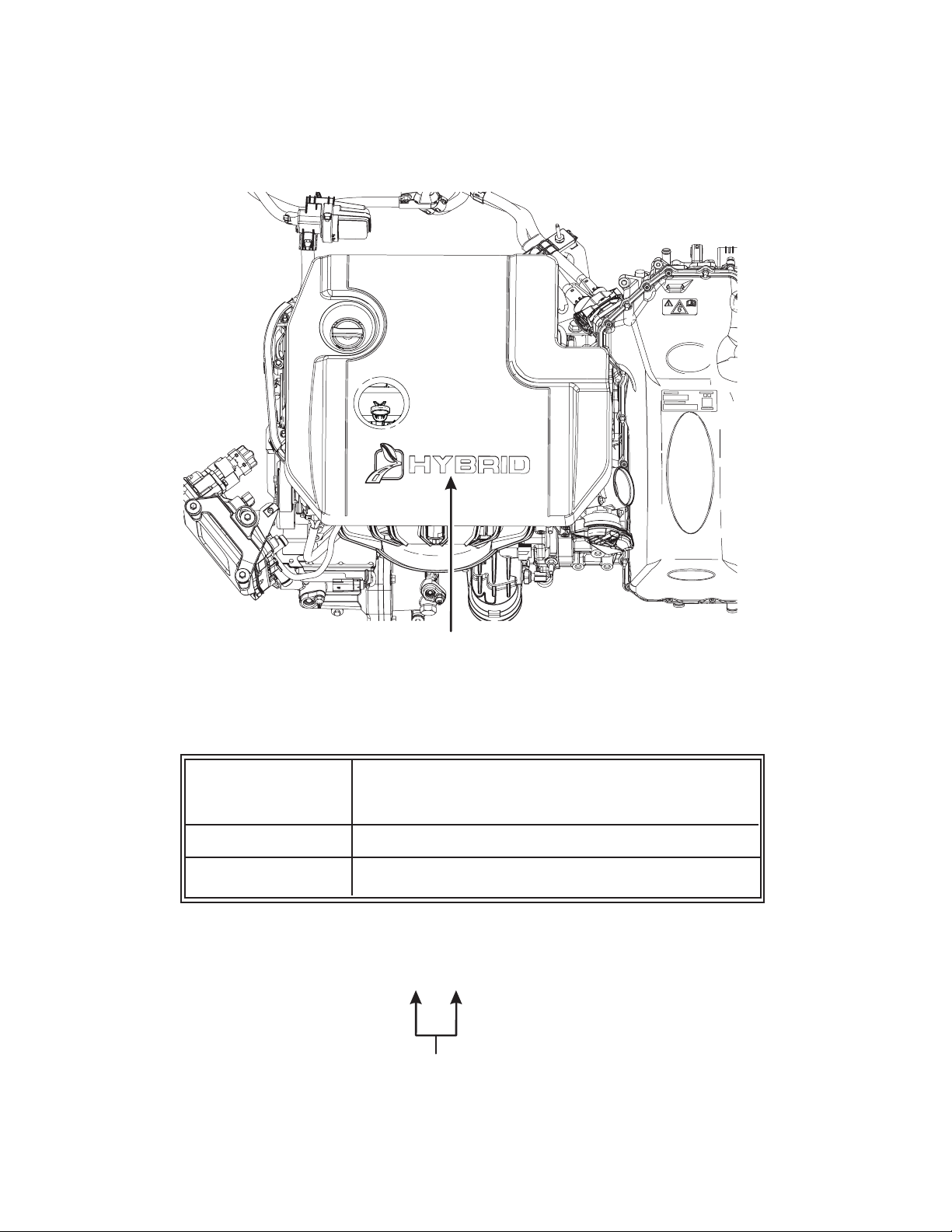
• The Fusion Hybrid and MKZ Hybrid vehicles have a unique engine
appearance cover with a raised “HYBRID” icon on it.
Unique Hybrid engine appearance cover
with raised lettering and icon
• The 5th, 6th and 7th digits of the V ehicle Identification Number (VIN)
identify the Hybrid vehicle line.
VIN POSITIONS
VEHICLE
5, 6 and 7
P0L Fusion Hybrid — Front Wheel Drive (FWD)
L2L MKZ Hybrid — Front Wheel Drive (FWD)
SAMPLE VIN
3 F A D P 0 L 3 0 A R 1 0 0 0 0 1
Fusion Hybrid FWD
3
FCS-15129-12 2012 Fusion MKZ Hybrid Emergency Response Guide 08/2011
Page 5

HIGH-VOLTAGE ELECTRICAL DISCONNECT FEATURES
The following list describes certain features that have been incorporated into the Hybrid
vehicles that allow for either simple or automatic shut off of the high-voltage electrical
systems.
• High-Volt age Fuse — In the event of a high-voltage short circuit,
the high-voltage fuse will open, disabling the high-voltage system.
• High-Voltage Interlock Circuit — Whenever a high-volt age connector
is disconnected, the high-voltage interlock circuit opens and disables
the high-voltage system.
• Ignition Key in the OFF Position — Any time the ignition lock cylinder is in
the OFF position, the high-voltage system is disabled.
• High-V oltage Service Disconnect — Whenever the high-voltage
service disconnect (located behind the rear seat) is removed, the
high-voltage system is disabled. For additional information, refer to
Page 8 in this manual.
• Thermal Sensors — In the event that the ignition key is left in the ON position,
this may cause the high-voltage battery temperature to exceeds 60°C
(140°F); if this temperature is reached, the thermal sensors located near the
high-voltage battery will automatically disable the high-voltage battery .
4
FCS-15129-12 2012 Fusion MKZ Hybrid Emergency Response Guide 08/2011
Page 6
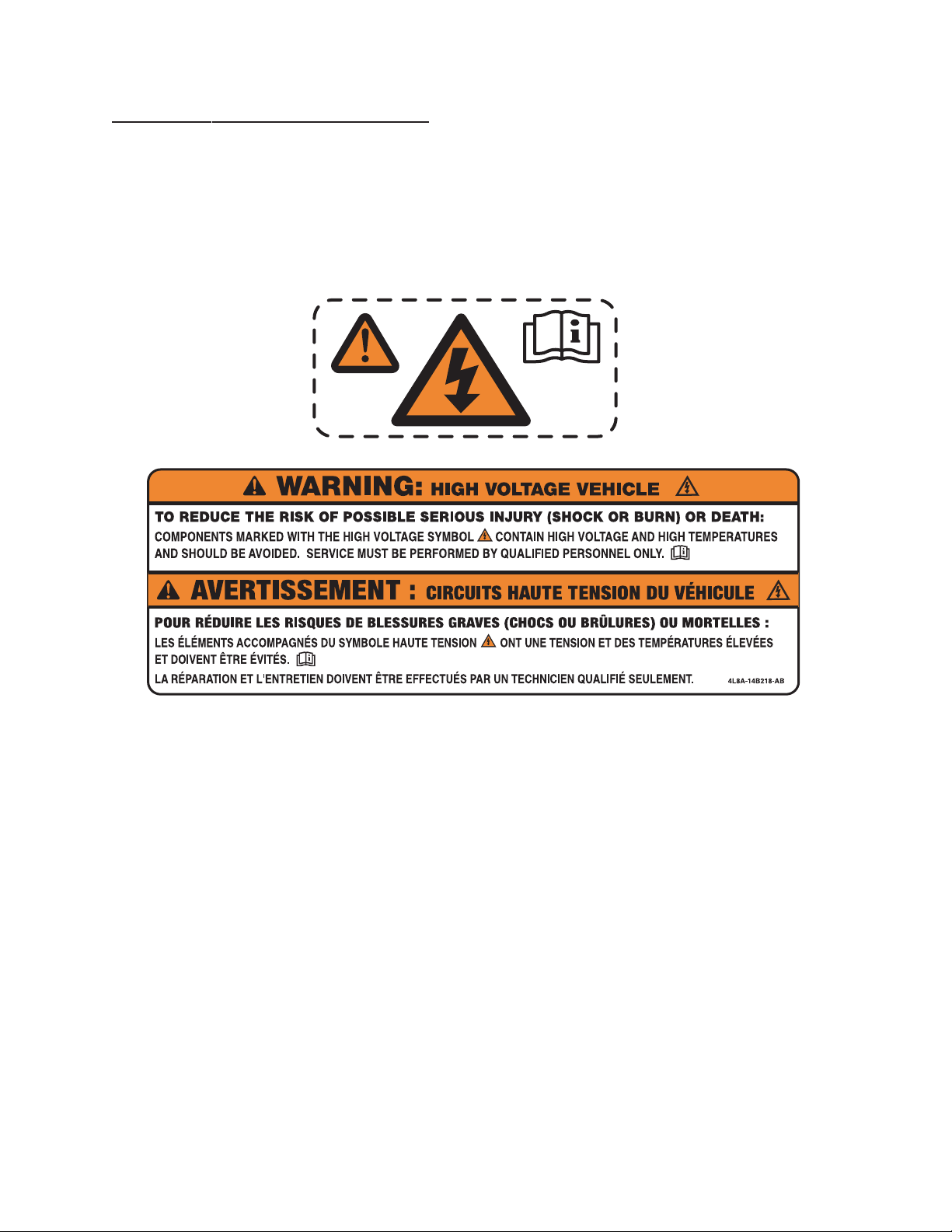
HIGH-VOLTAGE WARNING DECALS
• On Hybrid vehicles, WARNING decals are located on components in the highvoltage system throughout the vehicle. Please see example below .
2U5A-14B218-CA
5
FCS-15129-12 2012 Fusion MKZ Hybrid Emergency Response Guide 08/2011
Page 7
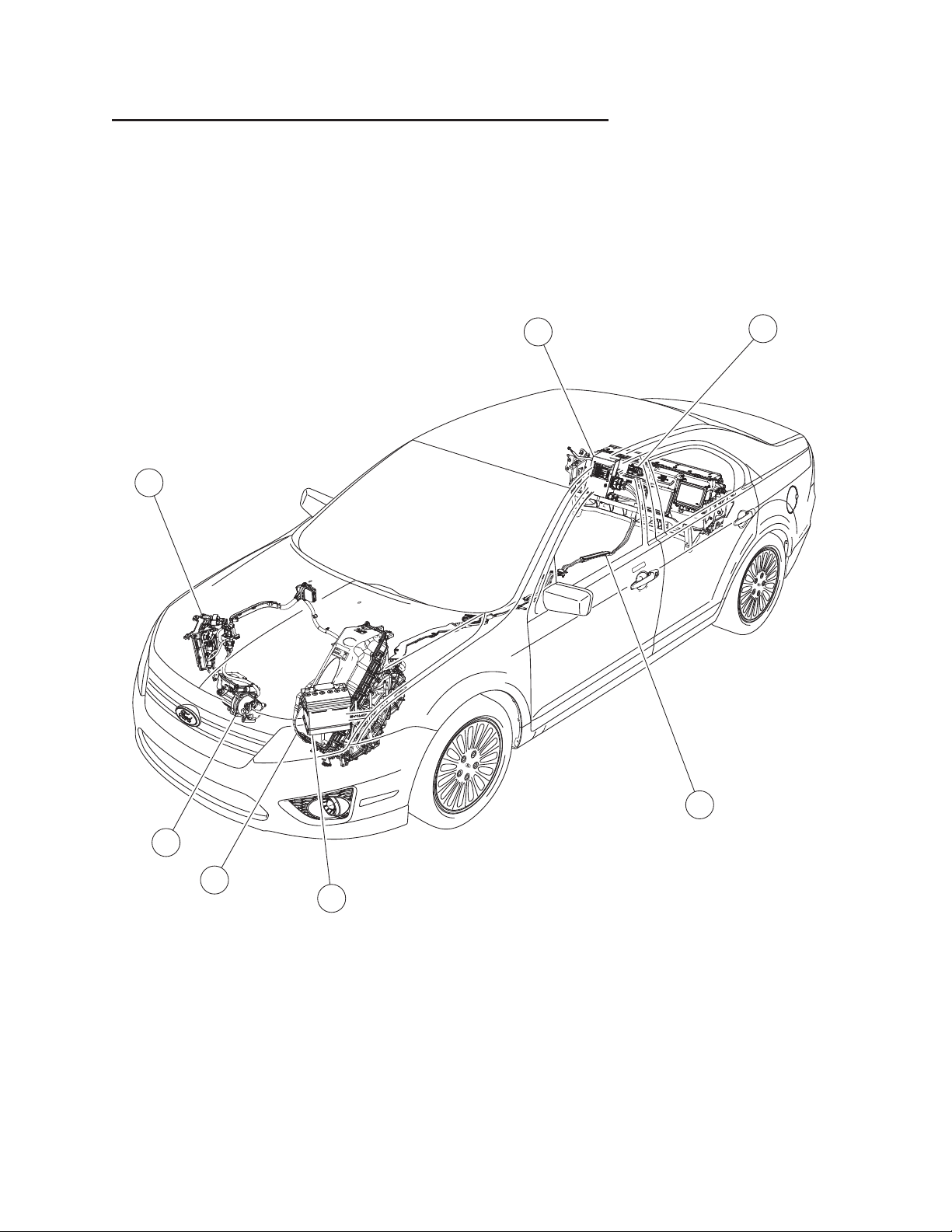
HYBRID COMPONENT LOCATION AND IDENTIFICATION
The illustration below and its defining chart on Page 7, provide the location, description
and basic function of the Hybrid system components.
NOTE: All high-volt age wires and harnesses are wrapped in orange-colored insulation.
NOTE: Fusion Hybrid shown, MKZ Hybrid similar.
2
6
1
3
7
5
4
6
FCS-15129-12 2012 Fusion MKZ Hybrid Emergency Response Guide 08/2011
Page 8

HYBRID COMPONENT LOCATION AND IDENTIFICATION - CONTINUED
COMPONENT LOCATION / DESCRIPTION FUNCTION
1 High-Volt age • Located behind the rear Provides means to disconnect
Service Disconnect seatback. high-voltage battery for safely
servicing vehicle.
• Orange rectangle with a molded
plastic handle, about 100 mm
(4 in) in length.
2 High-V oltage Battery • Located behind the rear Provides high-voltage storage
Approximately 300 seatback. for vehicle’s electric motor.
Volts DC
• Sealed nickel-metal hydride.
3 High-V olt age Wiring • Runs along the vehicle’s Provides physical connection
floorpan from the high-voltage
battery to the Electronically and vehicle’s High-V olt age
Controlled Continuously equipment.
V ariable Transaxle (ECVT),
to the DC-to-DC converter,
then the electric A/C unit.
• All high-voltage wiring has
orange-colored insulation.
between High-V oltage battery
4 12-V olt Battery • Located under the hood on the Provides 12-volts for vehicle
driver side of the vehicle. accessories.
• T ypical automotive 6-cell
lead/acid design.
5 Electronically • Transverse-mounted design, Provides rotational force to
Controlled similar to the non-Hybrid wheels for vehicle propulsion,
Continuously Fusion MKZ vehicles. generates electricity to
V ariable Transaxle recharge batteries during
(ECVT) • Contains the traction motor, operation and contains some
generator motor and hybrid
electronics.
electronics.
6 DC/DC Converter • Located under the hood on Provides 12 volts to charge
the passenger side, forward the 12-volt battery and
of the strut tower. run vehicle accessories.
• It has orange high voltage wires
and Motor Electronics Cooling
System hoses attached to it.
7 Electric A/C • Located in front of Provides electric A/C operation;
Compressor the engine. replaces the belt driven A/C
• It has an orange high voltage compressor.
wire attached to it using an
interlock connector.
7
FCS-15129-12 2012 Fusion MKZ Hybrid Emergency Response Guide 08/2011
Page 9
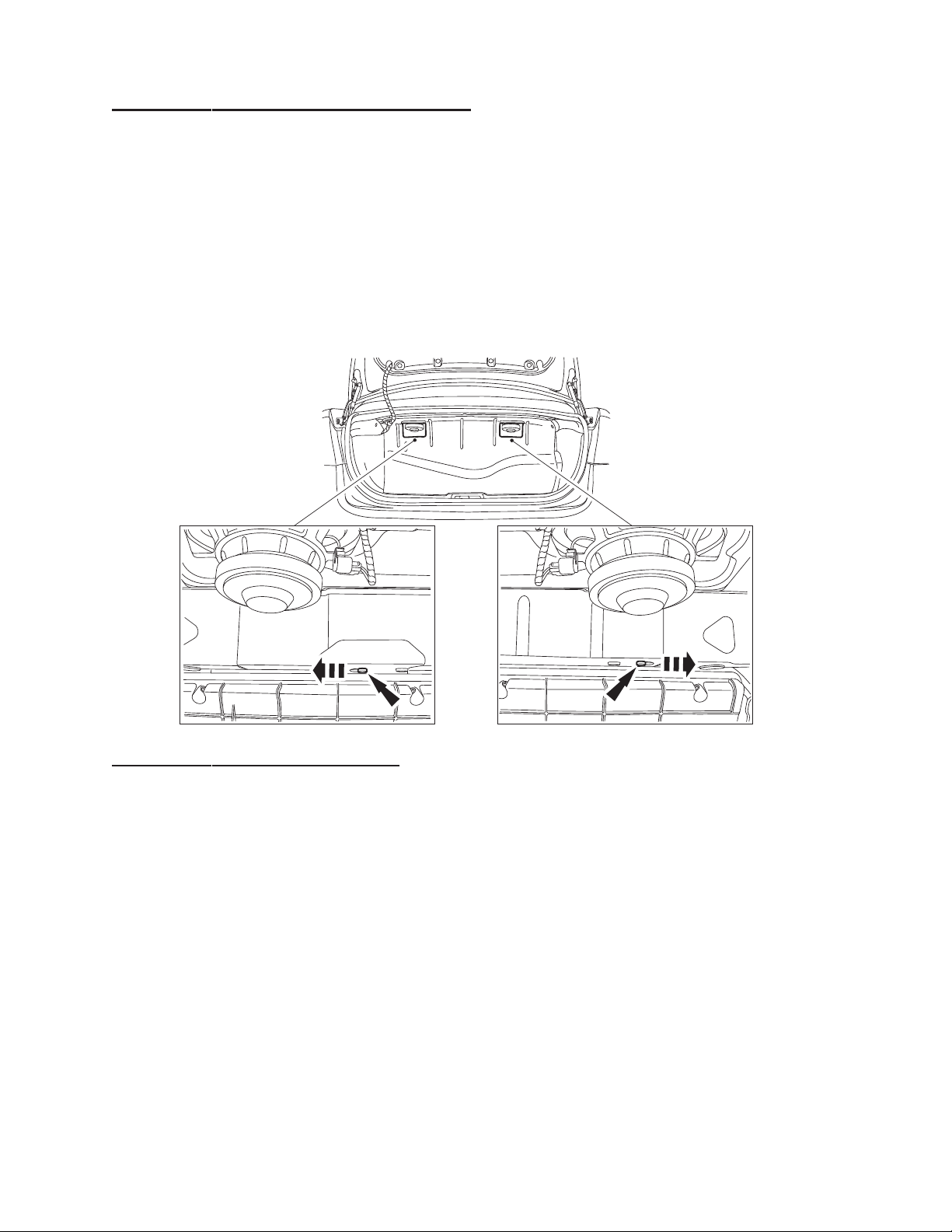
HIGH-VOLTAGE SERVICE DISCONNECT
T o gain access to the high-voltage service disconnect, the rear seat must be lowered. The
rear seat is released from the trunk area.
• Locate the seat’s 2 backrest release levers. They are between the high-voltage
battery and the body sheet metal.
• Push the release levers toward the outboard side of the vehicle.
NOTE: Fusion Hybrid shown, MKZ Hybrid similar.
HIGH-VOLTAGE BATTERY PACK
WARNING: Do not cut, weld, or screw into the high-voltage battery case
Do not penetrate the batteries or case in any way .
• The high-voltage battery pack is located behind the rear seatback.
• Removing the high-voltage service disconnect will disconnect the high-voltage
from the vehicle. The battery pack will remain live and dangerous.
• The total voltage of the battery pack is approximately 300 volts DC.
• The battery case is designed to be water resistant.
• The battery cells contain a base electrolyte, consisting of potassium hydroxide
as the dominant active ingredient, that is absorbed in a special paper . The
electrolyte will not leak from the battery under most conditions, however, if the
battery is crushed, it is possible for a small amount of electrolyte to leak.
8
FCS-15129-12 2012 Fusion MKZ Hybrid Emergency Response Guide 08/2011
Page 10
W ARNING: The following must be followed when working with a damaged battery:
• Exposure to electrolyte could cause skin and/or eye irritation and/or burns. If
exposed, rinse with large amounts of water until the soapy feel is gone. Personal
Protective Equipment (PPE) such as splash shield or safety goggles, gloves (latex,
rubber or Nitrile), an apron or overcoat suitable to protect against alkaline and
rubber boots are required when handling damaged batteries. Fold-down helmet
shields are not acceptable for acid or alkaline spills.
• If the battery is exposed to intense heat, it is possible that hydrogen could be
released from the battery . Appropriate precautions should be taken to make sure
the area is properly ventilated, such as opening the vehicle’s windows or doors.
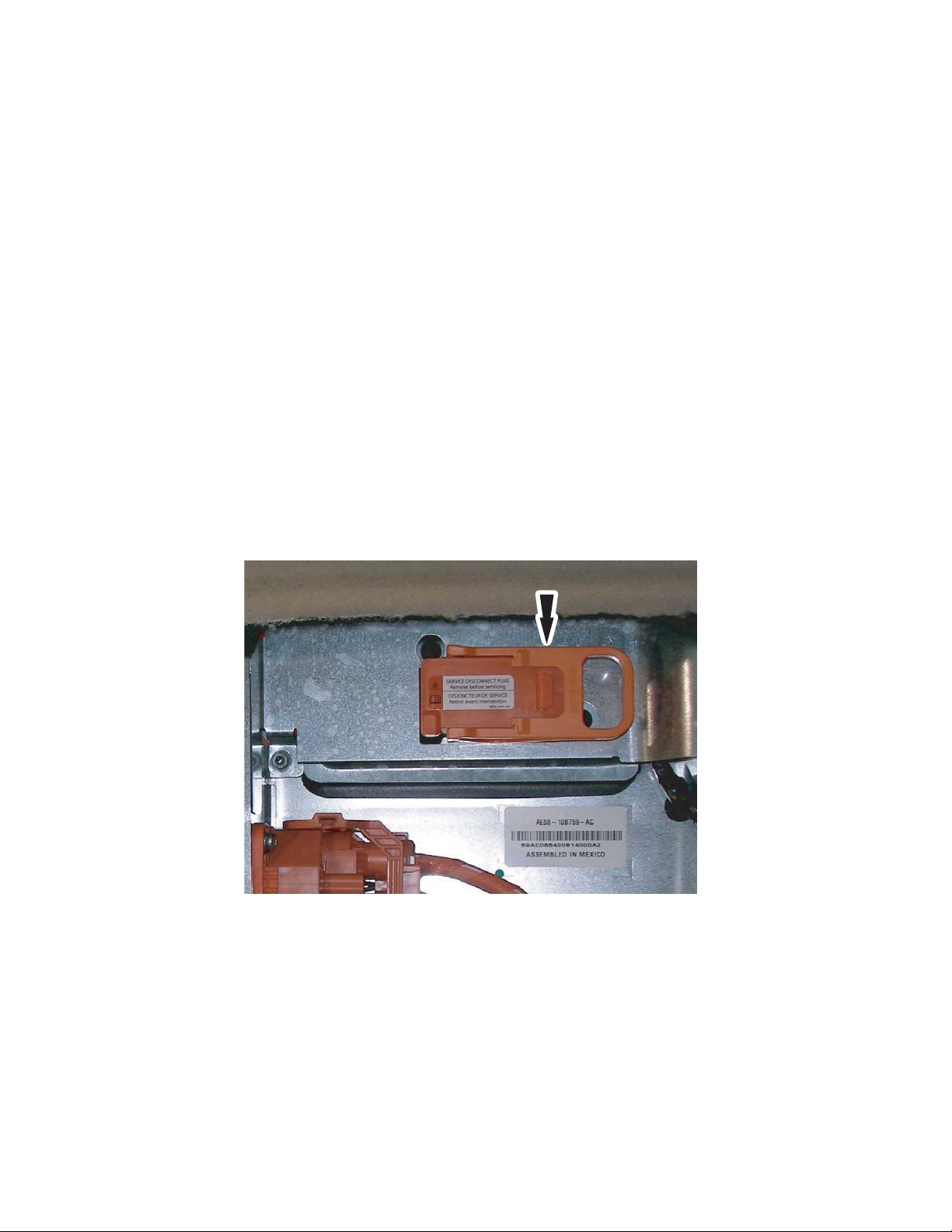
NOTE: If possible, lift the handle to release and remove the high-voltage service
disconnect.
NOTE: Fusion Hybrid shown, MKZ Hybrid similar.
NOTE: The high-voltage service disconnect is removed from inside the passenger
compartment.
9
FCS-15129-12 2012 Fusion MKZ Hybrid Emergency Response Guide 08/2011
Page 11

APPROACHING A DAMAGED HIGH-VOLTAGE VEHICLE
1. FOLLOW EXISTING TRAINING AND INCIDENT COMMANDER DIRECTION
• This guide provides only supplemental information as it pertains to the
Fusion Hybrid and MKZ Hybrid vehicles. The same rules apply when
approaching any potential high-voltage situation. Always follow your
high-voltage safety training. Some precautions to take in a high-voltage
situation include:
— Remove all jewelry: Watches, necklaces and earrings. Remove any
metal objects that are conductors of electricity .
— Wear the necessary PPEs: High-voltage rubber gloves, face
shield, insulated boots, protective raincoat and apron.
• Bring the following equipment:
— Class ABC powder-type fire extinguisher .
— A nonconductive object, about 1.5 m (5 ft) long. This can be used to safely
push someone away from the vehicle if they accidentally come in contact
with high-voltage.
2. APPROACHING A DAMAGED VEHICLE
• Disable the high-voltage electrical system using as many of the following
steps as possible:
— Secure the vehicle: Place the shift lever into the P ARK position.
Remove the ignition key; removing the ignition key or turning the key to
the OFF position will disconnect the high-voltage system. Block the
wheels, if necessary .
— Disconnect the negative cable from the 12-volt battery: Doing this
disables the high-voltage system.
— If possible, remove the high-voltage service disconnect. For additional
information, refer to Page 8 in this manual.
10
FCS-15129-12 2012 Fusion MKZ Hybrid Emergency Response Guide 08/2011
Page 12

APPROACHING A DAMAGED VEHICLE - CONTINUED
• If the vehicle is on fire, use a Class ABC powder-type extinguisher to cont ain
and smother the flames. If water is being used, LARGE amounts of water will
be required to extinguish the flames. A fire-hydrant or dedicated fire hose can
supply the needed amount.
• If the vehicle has any exposed cables, make sure to wear high-voltage
rubber gloves and other protective clothing. Do not touch any broken or
damaged high-voltage orange cables. T reat severed cables as if they
contain high voltage.
• If the vehicle is submerged in water , do not touch any high-voltage
components or orange cables while extricating the occupant(s). Do not
remove the vehicle until you are sure the high-voltage battery is completely
discharged. A submerged high-voltage battery may produce a fizzing or
bubbling reaction to the water. The high-voltage battery will be discharged
when the fizzing or bubbling has completely stopped, however, still treat it as
if it was not discharged.
3. IF THE HIGH-VOLTAGE BATTERY CASE HAS BEEN RUPTURED
• Just like any other battery , hose the area down with LARGE amounts of water .
4. MOVING DAMAGED VEHICLES — WRECKER DRIVERS
• Turn the vehicle ignition key to the ACCESSORY position to release
the locked steering wheel.
• If possible, remove the high-voltage service disconnect. For additional
information, refer to page 8 in this manual.
• Follow the guidelines in the Wrecker T owing Manual.
— Front Tow: Wheel Lift (FWD)
— Rear Tow: Wheel Lift with Dolly (FWD)
— Flatbed: FWD and A WD
5. SPECIAL NOTE TO SALVAGE YARDS
• If a vehicle with a high-voltage battery is to be scrapped, the high-voltage
battery must be disposed of following all local, state/provincial and federal
guidelines.
11
FCS-15129-12 2012 Fusion MKZ Hybrid Emergency Response Guide 08/2011
 Loading...