

Page 1
Compact 33,600 BPS Data and Fax Modem
XE3386L
12/00
Description
Xecom's XE3386L combines high-speed data and
Group III send/receive fax in a compact component.
Xecom designed the XE3386L to be embedded by OEM
designers. Xecom also offers pin compatible 2400 BPS
14,400 BPS and 56 KBPS alternatives to the XE3386L
for applications with other date rate requirements.
The XE3386L is not a modem chip but a complete
modem including the telephone interface integrated into
a compact module. It provides user transferable FCC
Part 68 registration and can connect directly to the
telephone line through an RJ11 jack. The modem
connects to the host through a TTL level serial interface.
The XE3386L also includes MNP2-4, MNP10 and
V.42 error control and MNP5 and V.42bis data
compression to provide an error free connection with the
greatest possible data throughput rate.
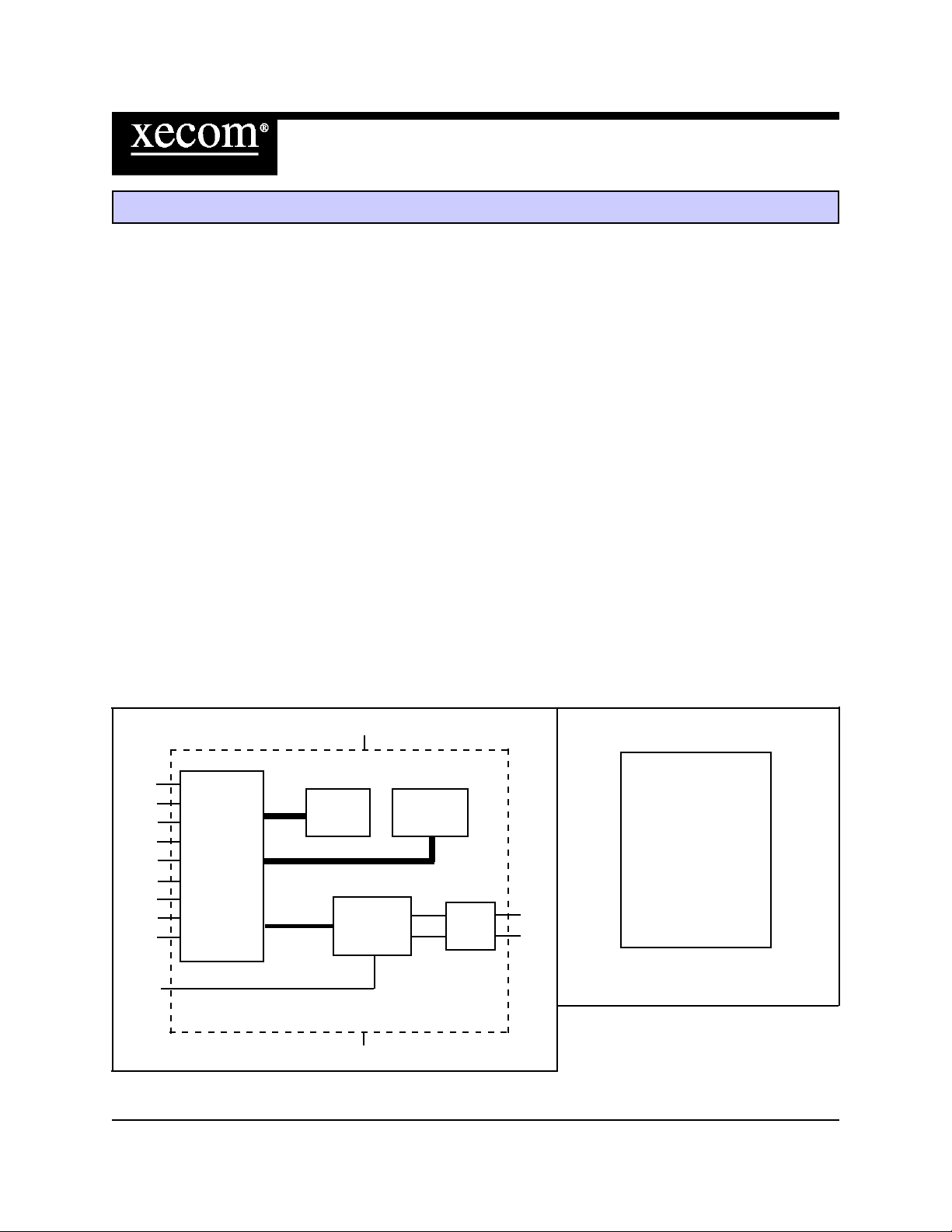
Block Diagram
Features
• Small Size; 1.385 " x 1.36" x 0.575"
• Modem control with "AT" commands
• Class 1 Fax commands
• Data transfer up to 33,600 bps
• Send and receive fax to 14,400 bps
• MNP and V.42 Error Control
• MNP10 Error Control for Cellular Links
• MNP5 Data Compression to 67,200 bps
• V.42bis Data Compression to 115,200 bps
• Low power, single +5V supply
Operating Power 800 mW (Typ.)
Sleep Mode 200 mW (Typ.)
• NVRAM for modem configuration storage
XE3386L Pin Configuration
RST
TXD
RXD
/DCD
/CTS
/DSR
/DTR
/RTS
/V-D
Modem
Controller
VCC
ROM NVRAM
Analog
Front End
DAA
Tip
Ring
RING
TIP
N/C
N/C
SPK
N/C
N/C
N/C
N/C
TXD
RXD
(Top View)
oo
1
oo
2
oo
3
oo
4
oo
5
oo
6
oo
7
oo
8
oo
9
oo
10
o
11
22
RTS
21
RST
o
20
GND
19
VCC
18
N/C
17
/DCD
16
/CTS
15
/RI
14
/DSR
13
/DTR
12
/V-D
Spk
Gnd
XECOM (1) XE3386L
Page 2
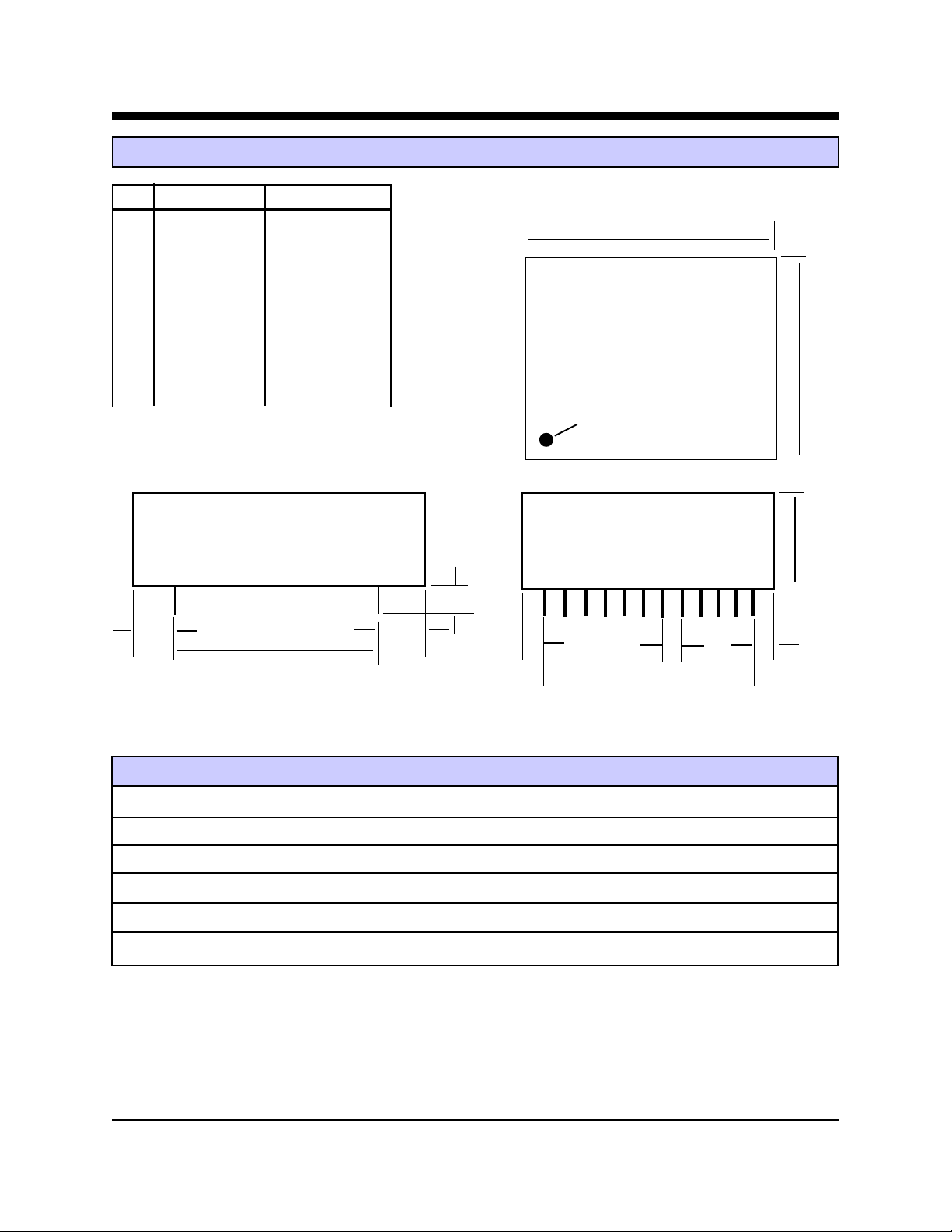
XE3386L Mechanical Specifications
INCHES METRIC(MM)
Dim Min Max Min Max
A 1.350 1.370 34.29 34.80
B 1.375 1.395 34.92 35.43
C 0.555 0.585 14.10 14.86
D 0.190 0.210 4.83 5.33
E 0.090 0.110 2.29 2.79
F 0.115 0.135 2.92 3.43
G 0.280 0.300 7.11 7.62
H 0.790 0.810 20.07 20.57
J 1.090 1.110 27.69 28.19
Pins = 0.025 inches Square
A
B
Denotes Pin 1
C
D
G
G
F
E
H
ABSOLUTE MAXIMUM RATINGS*
SUPPLY VOLTAGE - Vcc +6.5 Volts
DC INPUT VOLTAGE -0.6 Volts to +6.5 Volts
STORAGE TEMPERATURE RANGE -25° C TO +85° C
LEAD TEMPERATURE (Soldering, 2 sec per wave) 260° C
OPERATING TEMPERATURE RANGE 0 TO 70° C
*Exceeding these values may result in permanent damage to the device.
F
J
XECOM (2) XE3386L
Page 3
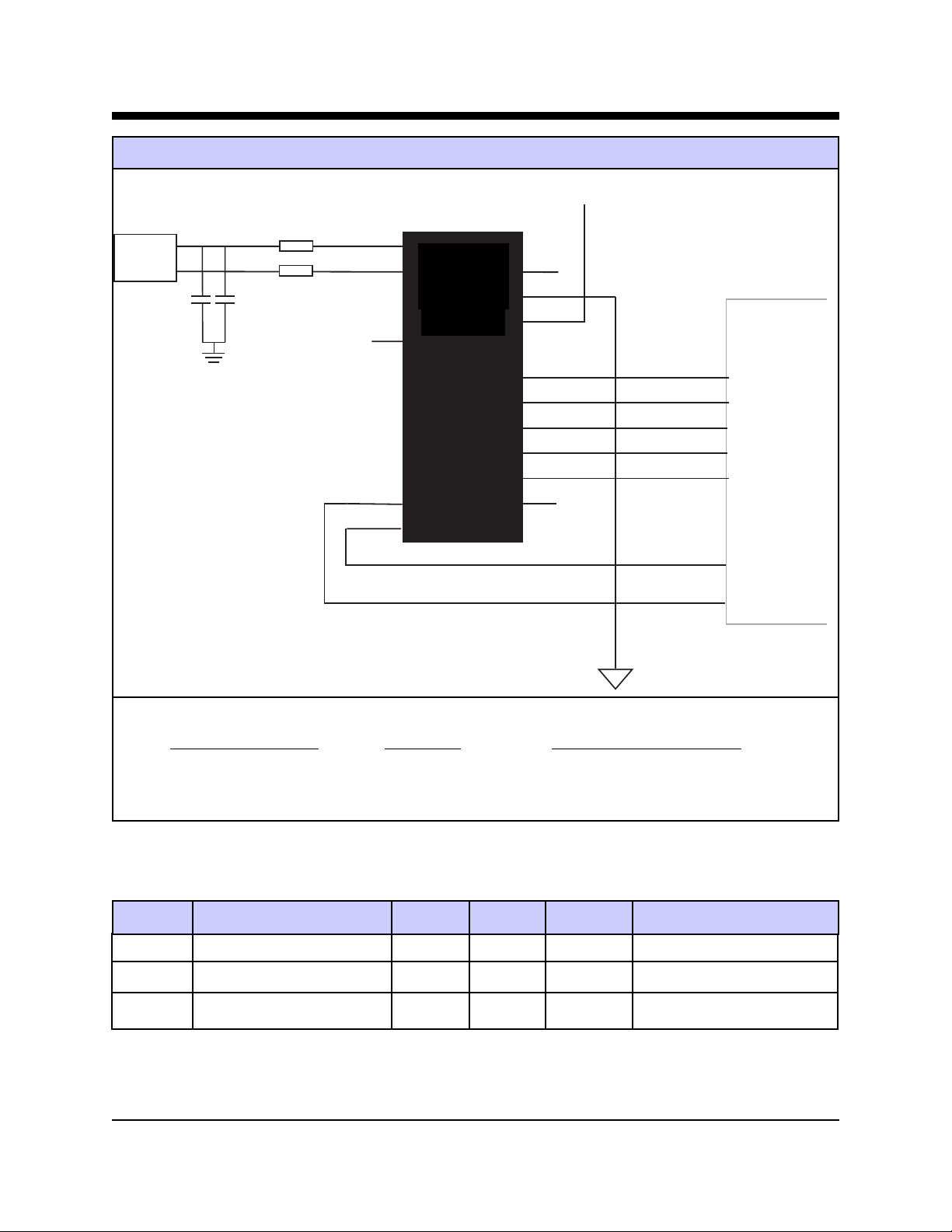
XE3386L Typical Connection Diagram
VCC
RJ11
3
4
C1 C2
FB1
FB2
Ring
Tip
AMP
TXD
RXD
XE1486
XE3386L
RST
Gnd
VCC
/DCD
/CTS
/RI
/DSR
/DTR
/V-D
Host Serial
Interface
Recommended Parts
Reference Designation Description Recommended Part Number
FB1, FB2 Ferrite Beads TDK CB30-1812
C1, C2 Capacitors Sprague 30GAT47, 470 pfd, 3000 Volts
Power Supply Characteristics(T
Symbol Parameter Typ Max Units Comments
Vcc Supply Voltage 5.0 5.25 Volts
Icc Vcc Supply Current 160 180 mA Active, On Line
= 0 - 70°C, Vcc = 5v ±5%)
A
40 60 mA Sleep Mode
XECOM (3) XE3386L
Page 4

XE3386L Pin Descriptions
PIN NAME DESCRIPTION
1 Ring Ring provides half of the two-wire connection to the telephone network, RJ-11 Pin 4.
A 1500 volt barrier isolates Ring from all other circuits. This isolation must be preserved throughout the system. The battery voltage on Ring may be positive or negative
with respect to Tip.
2 Tip Tip provides half of the two-wire connection to the telephone network, RJ-11 Pin 3. A
1500 volt barrier isolates Tip from all other circuits. This isolation must be preserved
throughout the system. The battery voltage on Tip may be positive or negative with respect to Ring.
3, 4 Not Used No Connection should be made to these pins.
5 SPK SPK provides the audio output to a speaker. Speaker output is controlled by the ATL
and ATM commands. The input impedance to the speaker driver must be greater than
300 ohms.
6-9 N/C No Connection
10 TXD TXD provides serial data input from the host. A logic high represents a "Mark" and a
low represents a "Space".
11 RXD RXD provides serial data output to the host. A logic high represents a "Mark" and a
low represents a "Space".
12 /V-D The Voice-Data output can be used to drive an external relay for switching between the
modem and handset connected to the same telephone line.
13 /DTR Data Terminal Ready is an active low input to the modem. The AT&D command sets
the function of DTR.
14 /DSR Data Set Ready is an active low output from the modem. Its operation is determined by
the AT&S command.
15 /RI Ring Indicator is an active low output which marks the presence of a ring on the line.
16 /CTS The XE3386L uses Clear to Send for hardware flow control. With hardware flow con-
trol active the modem raises \CTS to signal the host that the modem's transmit data
buffer is nearly full. When the buffer empties, the modem reactivates CTS.
17 /DCD Data Carrier Detect goes low to indicate receipt of a valid incoming carrier. The
AT&C1 command enables the carrier detect function.
18 N/C No Connection
19 VCC VCC provides the +5 volt power required by the modem.
20 GND Ground provides the common reference for the XE3386L.
21 RST This active high input causes a hardware reset in the XE3386L. The reset pulse must be held
high for at least 10 milliseconds to correctly reset the modem.
22 RTS The modem uses Request to Send for hardware flow control. The modem stops sending data to
the host when the hosts raises /RTS. The modem resumes transferring data to the host when the
host activates /RTS
XECOM (4) XE3386L
Page 5
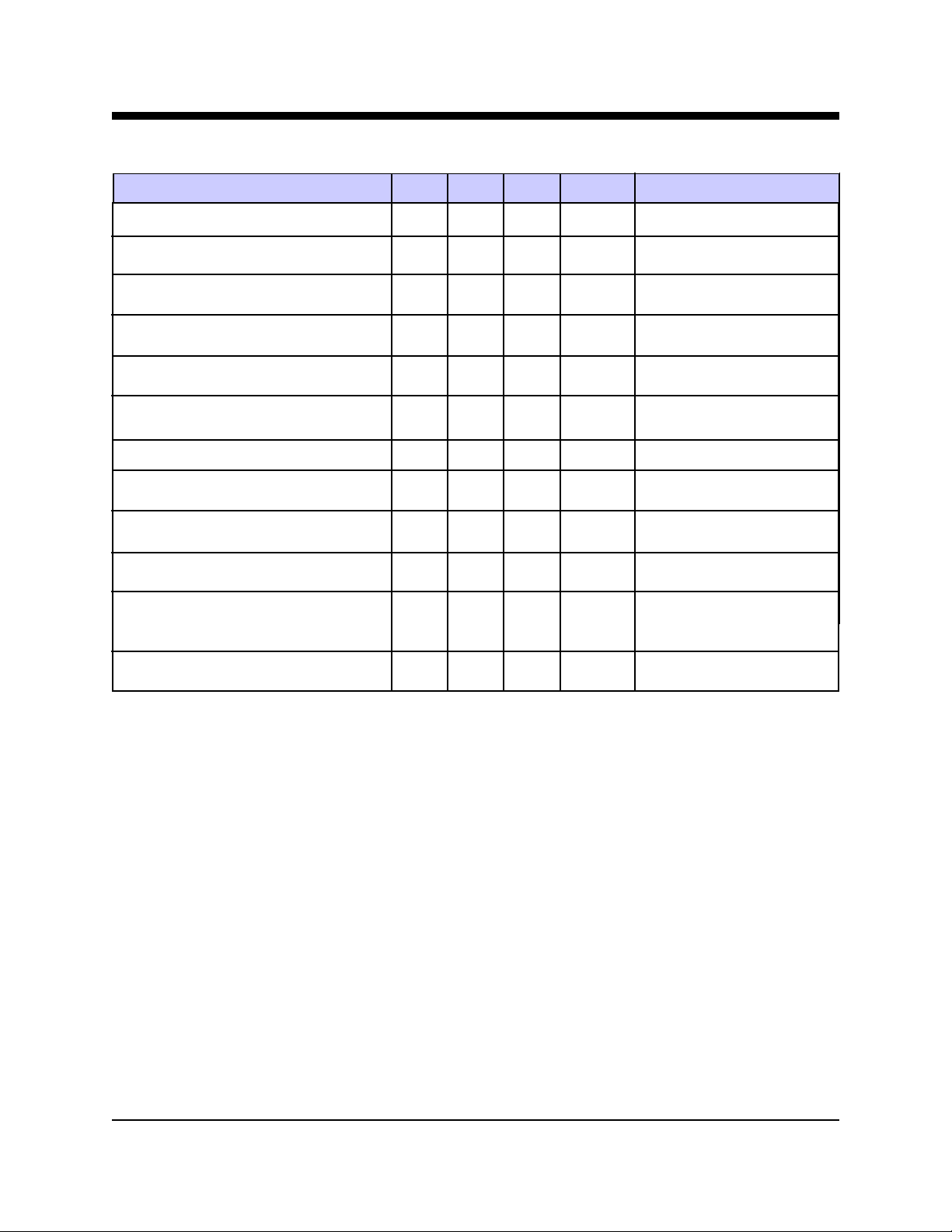
XE3386L Electrical Specifications (T
= 0 - 70°C, Vcc = 5v ±5%)
A
Parameter Min Typ Max Unit Comments
DTMF Level -2.2 0 dBm 3 second average
Modem Transmit Level -12 -10.5 -9.0 dBm 600 ohm line
Pulse Dialing Rate 10 pps
Pulse Dialing Make/Break 39/61 % USA
Billing Delay Interval 2.0 sec.
Phone Line Impedance Match 600 ohms
Ring Detect Sensitivity 38 150 VRMS Type B Ringer
Telephone Loop Current 20 100 milliamps Off-hook
Input High Voltage (TXD, RTS, DTR) 2.0 Volts
Input Low Voltage (TXD, RTS, DTR) 0.8 Volts
Output High Voltage 2.4 Volts RXD -100 microamps;
(DCD, DSR, CTS, RXD, RI, OH) DCD, RI, OH - 1.6 milliamps
Output Low Voltage 0.4 Volts RXD - 1.6 milliamps;
XECOM (5) XE3386L
Page 6

XE3386L AT Commands
Modes of Operation
The XE3386L has three operational modes; Command,
Fax and Data.
Data Mode: The XE3386L enters data mode after it
establishes a connection and issues a "CONNECT" result
code. In the Data Mode the modem sends all signals on
Transmit Data to the remote modem and puts data from
the remote modem onto Received Data for the host
equipment. When the modem exits data mode, it issues a
"NO CARRIER" result code.
Command Mode: The XE3386L enters command mode
on power-up, reset, loss of the connection, or receipt of
the escape sequence. In command mode the modem
accepts commands from the host on Transmit Data.
Appropriate result codes are returned on Received Data.
Fax Mode: The XE3386L enters Class 1 fax mode on
receipt of AT+FCLASS=1. In fax mode commands and
responses are issued at 19,200 bits per second; the
character format is 8 bits no parity. The modem accepts
fax commands only in fax mode. The A/, ATO, AT&T
and escape commands are not valid in fax mode.
Command Line Format
Commands sent to the modem follow a strict format.
Each command line begins with the prefix AT. The
modem stores the command line in the command buffer
and executes it upon receipt of a carriage return. Until
executed, a backspace edits the command line.
Command Prefix - The "A" and "T" command prefix
may be both upper or both lower case but cannot be of
different cases. The prefix identifies the speed and parity
of the host. The modem determines speed by measuring
the width of the incoming bits and parity by comparing
the parity bits of the "A" and "T." The XE3386L
normally sends result codes at the speed and parity
determined by the prefix.
Command Buffer - The command buffer accepts only
40 characters, including the AT prefix. If the command
buffer overflows, the modem issues an "ERROR" result
code and does not execute the commands.
Command Line Editing - The backspace edits the
command line. Hitting the backspace key, or Control and
H simultaneously on some systems, erases the previous
character in the command line. All characters can be
erased except for the "A" and "T." Register S5 allows
the user to select a character other than a backspace to
edit the command line.
Re-Execute Last Command - The A/ command causes
the modem to re-execute the last command line. This is
the only command that does not require the "AT" prefix.
Omitted Parameters - Most commands include a parameter which determines the command function. If the
command omits the parameter, he modem assumes the
parameter is a zero.
Escape Characters - A three character escape sequence
switches the modem from data mode to command mode
while remaining on line. The escape character, set by
Register S2, must be entered 3 times in succession to
execute the escape. The default escape sequence is
"+++."
Result Codes - The modem issues a result code after
each action. The modem sends result codes as full
words, numeric codes or the user may disable the result
codes. Each result code ends with a carriage return when
the user chooses numeric result. The modem terminates
full word result codes with a Line Feed and Carriage
Return.
Command Line - One command line may include
multiple commands. The modem executes commands in
the sequence they appear. Spaces inserted into the
command line do not fill space in the command buffer . A
carriage return terminates the command line and causes
the commands to be executed. Register S3 allows the
user to select a character other than a carriage return to
terminate the command line.
XECOM (6) XE3386L
Page 7

XE3386L AT Command List
List of Commands
An asterisk indicates the default setting of the command for the
XE3386L.
A - Answer Command - ATA forces the modem to
immediately go off-hook and begin transmitting the answer
tone sequence.
Bn - Select Communications Standard - ATBn selects the
modulation scheme used for connections below 2400 bits per
second
n=0 Selects CCITT standards
n=1 Selects Bell standards*
D - Dial Command - Below are the characters accepted in a
dialing command.
0-9, #, * = Dialing Digits
L = Re-dial last number
P = Pulse dial
T = Tone dial
S=n = Dial stored number
W = Wait for dial tone
^ = Toggles state of calling tone
, = Pause for the duration of S8
@ = Wait for silence
! = Switch hook flash
; = Return to the command state
Mn - Speaker Activity - ATMn determines when the
modem's audio output is active.
n=0 Speaker off
n=1 Speaker on until carrier received*
n=2 Speaker remains on
n=3 Speaker off during dialing, on until carrier
On - On Line - ATOn switches the modem from the command
mode to the data mode.
n=0 Return On Line with no retrain*
n=1 Initiate retrain returning On Line.
Qn - Responses - ATQn determines if the modem will issue
responses.
n=0 Send responses*
n=1 No Responses
Sr? - Interrogate Register - ATSr? requests the current value
in register Sr.
Sr=n - Set Register Value - ATsr=n sets the value of register
Sr to n.
Vn - Result Codes - ATVn sets the modem to issue Numeric
or Full Word result codes .
n=0 Numeric Result Codes
n=1 English Word Result Codes*
En - Command Echo - ATEn determines whether commands
will be echoed back to the host.
n=0 Do not echo commands
n=1 Enable command echo*
Hn - Switch Hook Control - ATHn opens and closes the
modem's hook switch.
n=0 Switch hook relay opens
n=1 The switch hook relay closes
In - Modem Identification - ATIn identifies the modem
Ln - Speaker Volume - ATLn sets the amplitude of the
modem's audio output.
n=0 Lowest speaker volume
n=1 Low speaker volume*
n=2 Moderate speaker volume
n=3 High speaker volume
Wn - Connect Message Rate - ATWn determines whether
the data rate reported in the Connect response is the host data
rate, the link data rate or whether both are provide along with
the error control and data compression protocols negotiated.
n=0 Send "CONNECT" at DTE Rate*
n=1 Report line speed, DTE speed and Link protocol
n=2 "CONNECT" Reports Link speed
Xn - Result Code Set - ATXn selects which set of result
codes the modem may send.
n=0 Result codes 0 to 4
n=1 Result codes 0 to 5 and 10
n=2 Result codes 0 to 6 and 10
n=3 Result codes 0 to 5, 7 and 10
n=4 Full Result codes*
Zn - Reset - ATZn executes a soft reset to the modem and
resets the modem configuration.
n=0 Reset to user profile 0*
n=1 reset to user profile 1
XECOM (7) XE3386L
Page 8

XE3386L AT Command List (continued)
&Cn - DCD Operation - AT&Cn determines the operation of
the DCD output.
n=0 DCD is forced active.
n=1 DCD indicates a valid carrier*
&Dn - DTR - AT&Dn determines how the modem will
respond to changes to DTR.
n=0 DTR is ignored by the modem.
n=1 Enter command mode if DTR revoked.
n=2 Disconnect if DTR revoked.*
n=3 Soft reset when DTR revoked
&Fn - Return to Factory Defaults - AT&Fn returns the
modem configuration to one of two factory configurations.
n=0 Restore configuration 0*
n=1 Restore configuration 1
&Gn - Guard Tone - AT&Gn controls the guard tone
produced by the modem
n=0 Guard Tone Disabled*
n=1 Guard Tone Disabled
n=2 1800 Hz Guard Tone
&Kn - Flow Control - AT&Kn selects the flow control
method used by the modem.
n=0 Disabled
n=3 RTS/CTS
n=4 XON/XOFF
n=5 Transparent XON/XOFF
&Pn - Dial Pulse Make/Break Ratio - AT&Pn determines
the specific pulse dialing parameters used by the modem.
n=0 39/61% @ 10 pps*
n=1 33/67% @ 10 pps
n=2 39/61% @ 20 pps
n=3 33/67% @ 20 pps
&Tn - Test Modes - AT&T selects modem test mode.
n=0 Exit test mode
n=1 Local analog loopback
&Vn - View Configuration Profiles - AT&V permits the user
to check on the modems current configuration or conditions of
the last call
n=0 View active profile & user profiles *
n=1 View statistics on last call
&Wn - Store Active Profile - AT&Wn stores the current
modem configuration in NVRAM.
n=0 Store active profile as profile 0*
n=1 Store active profile as profile 1
&Yn - Recall Stored Profile - AT&Yn sets the stored modem
configuration to be used after a hard reset.
n=0 Recall profile 0 on power-up*
n=1 Recall profile 1 on power-up
&Zn=x - Store telephone number "x" in memory location
"n"
%En - Line Quality Monitor/Auto Retrain - AT%En
determines if the modem will monitor line quality during a
connection and initiate a retrain if quality drops below
acceptable levels.
n=0 Disabled
n=1 Enabled
n=2 Line quality, fallback, fall forward
%L - Read Received Signal Level - AT%L
to read the magnitude of the receive signal in dBm.
%Q - Read Line Signal Quality - AT%Q permits the user to
read the EQM value of the received signal.
permits
the user
&Qn - Line Connection - AT&Qn determines if error control
or data buffering are active on the link.
n=0 Direct mode (no data buffering)*
n=5 Use Error Correction
n=6 Normal Mode (Speed buffering)
&Sn - DSR Operation - AT&Sn sets the operation of the
DSR signal.
n=0 DSR always active*
n=1 DSR in accordance with V.25.
\Bn - Transmit Break - AT\Bn selects the duration of the
break signal sent. Break = n x 100 msec.
\Gn - Modem Port Flow Control -
n=0 No Modem Port Flow Control
n=1 XON/XOFF Port Flow Control
XECOM (8) XE3386L
Page 9

XE3386L AT Command List (continued)
\Kn - Break control - AT\Kn determines how the modem will
handle a break signal received from the host.
Break received from host in data transfer mode.
n=0 Enter on-line command mode; do not transmit
break
n=1 Purge buffers, immediately transmit break
n=2 Same as n=0
n=3 Immediately send break
n=4 Same as n=0
n=5 Send break in sequence with data *
Break received from the host during the on-line
command mode.
n=0 Purge buffers, immediately transmit break
n=1 Same as n=0
n=2 Immediately send break
n=3 Same as n=2
n=4 Send break in sequence with data
n=5 same as n=4 *
Break received from modem during a non-error corrected link
n=0 Purge buffers, Immediately send break to host
n=1 same as n=0
n=2 Immediately send break to the host
n=3 Same as n=2
n=4 Send break in sequence with data.
n=5 Same as n=2*
-Kn - MNP Extended Services - AT-Kn determines how the
modem handles MNP10.
n=0 No LAPM to MNP10 conversion
n=1 LAPM to MNP10 conversion*
n=2 LAPM to MNP10 conversion but no MNP Extended Service during V.42 LAPM answer mode detect.
+MS - Select Modulation - AT+MS sets the modulation and
data rates to be supported by the modem. The format for
the +MS command is shown below.
AT+MS=a, b, c, d, e, f<CR>
a - modulation type
B103 - Bell 103 (300 BPS)
B212 - Bell 212A (1200 BPS)
V21 - V.21 (300 BPS)
V22 - V.22 (1200 BPS)
V.22B - V.22bis (1200 or 2400 BPS)
V23 - V.23 (1200 Tx / 75 RX or 75 Tx / 1200 Rx)
V32 - V.32 (4800 or 9600 BPS)
V32B - V.32bis (4800 to 14,400 BPS)
V34 - V.34 (16,800 to 33,600 BPS)
b - Automode Detection
0 - Automatic Negotiation Disabled
1 - Automatic Negotiation Enabled
c - Minimum Receive Data Rate (300 to 33600 BPS)
d - Maximum Receive Data Rate (300 to 33600 BPS)
e - Minimum Transmit Data Rate (300 to 33600 BPS)
f - Maximum Transmit Data Rate (300 to 33600 BPS)
\Nn - Error Control Selection - AT\Nn determines how the
modem will handle error control negotiations.
n=0 Normal mode, no error correction
n=1 Direct mode, no buffering, no error correction
n=2 Reliable mode, error correction required
n=3 V.42 Auto-reliable mode, accept either an error
controlled or non-error controlled link*
n=4 V.42 Reliable mode, LAPM required
n=5 MNP required
/V<value> - Single Line Connect Messages - This command
allows users to select single line connect messages in the
format shown below.
<DTE Speed> <Modulation> <Protocol> <Compression>
<Line Speed> <Voice & Data>
n=0 No single Line Connect Messages
n=1 Issue a complete response in a single line
Default: AT+MS=V34, 1, 300, 300, 300, 33600
XECOM (9) XE3386L
Page 10

XE3386L S-Registers
S0 Answer on nth Ring: S0 sets the modem to
automatically answer on the nth ring. Setting S0 to 0
disables automatic answer.
Range: 0 to 255
Units Rings
Default 0
S1 Ring Count: S1 is a read-only register showing the
number of rings detected. If a ring is not detected within
8 seconds, S1 is reset to zero.
Range: 0 to 255
Units Rings
Default 0
S2 Escape Character: S2 sets the ASCII escape character.
Values of 0-127 select valid ASCII escape characters;
values from 128 to 255 disable the escape sequence.
Range: 0 to 255
Units ASCII Character
Default 43 (+)
S3 Carriage Return Character: S3 determines the ASCII
character to serve as a carriage return to terminate
commands and modem responses.
Range: 0 to 127
Units ASCII Character
Default 13 (Carriage Return)
S4 Line Feed Character: S4 sets the ASCII character to
act as a line feed character in modem responses.
Range: 0 to 127
Units ASCII Character
Default 10 (Line Feed)
S5 Back Space Character: S5 defines the ASCII character
used as a backspace to edit the command line.
Range: 0 to 32
Units ASCII Character
Default 8 (Back Space)
S6 Dial Tone Wait Time: S6 determines how long the
modem waits for dial tone before dialing begins. The
Dial Tone Wait Time cannot be set to less than two
seconds.
Range: 2 to 255
Units Seconds
Default 2
S7 Wait for Carrier after Dialing: S7 determines how long
the modem waits for a valid carrier signal after dialing.
Range: 1 to 255
Units Seconds
Default 50
S8 Comma Pause Time: S8 defines the duration of the
pause set by a comma in the dialing string. The pause is
generally used when waiting for a second dial tone.
Range: 1 to 255
Units Seconds
Default 50
S9 Reserved
S10 Carrier Off Disconnect Delay: S10 selects how long
carrier must be lost before the modem disconnects.
Range: 1 to 255
Units 0.1 Seconds
Default 14
S11 Tone Dialing Speed: S10 sets the duration and spacing of
the dialing tones. S11 does not affect pulse dialing.
Range: 50 to 255
Units 1 Millisecond
Default 95
S12 Escape Code Guard Timer: S12 sets the guard timer for
the escape sequence. If characters are received within the
guard time, the modem aborts the escape attempt and
remains in data mode.
Range: 0 to 255
Units 0.02 Seconds
Default 50
S14 General Bit-Mapped Options: S14 reflects the state of
several "AT" commands.
Bit 0,4,6 Not Used
Bit 1 0 = Echo Disabled (ATE0)
1 = Echo Active (ATE1)
Bit 2 0 = Send Result Codes (ATQ0)
1 = No Result Codes (ATQ1)
Bit 3 0 = Numeric Result Codes (ATV0)
1 = Full Word Result Codes (ATV1)
Bit 5 0 = Tone Dialing Selected (T)
1 = Pulse Dialing Selected (P)
Bit 7 0 = Answer
1 = Originate
XECOM (10) XE3386L
Page 11

XE3386L S-Registers (continued)
S16 Test Status: S16 shows the modem test status.
Bit 0 0 = No Local Analog Loopback
1 = Local ALB Active
Bit 2 - 7 Not Used
S21 General Bit-Mapped Options: S21 reflects the state of
several "AT" commands.
Bit 0-2, 7 Not Used
Bit 3,4 0 = DTR ignored (&D0)
1 =
Enter command mode on DTR off
2 = Disconnect on DTR off (&D2)
3 = Reset on DTR off (&D3)
Bit 5 0 = DCD always active (&C0)
1 = DCD on with Carrier (&C1)
Bit 6 0 = DSR always active (&S0)
1= DSR on when modem ready (&S1)
S22 General Bit-Mapped Options: S22 reflects the state of
several "AT" commands.
Bit 0-1 0 = Low speaker volume (ATL0)
1 = Low speaker volume (ATL1)
2
= Moderate speaker volume (ATL2)
3 = High speaker volume (ATL3)
Bit 2-3 0 = Speaker off (ATM0)
1 = Speaker off with carrier (ATM1)
2 = Speaker always on (ATM2)
3 = Speaker on during handshake (ATM3)
Bit 4-6 0 = Basic Result codes (ATX0)
4
= Connect speed result codes (ATX1)
5 = No Blind Dial (ATX2)
6 = Busy Detection (ATX3)
7 = Full result codes (ATX4)
Bit 7 Not Used
S23 General Bit-Mapped Options: S23 reflects the state of
several "AT" commands.
Bit 0-5 Not Used
Bit 6-7 0 = No Guard Tone (AT&G0)
1 = No Guard Tone (AT&G1)
2 = 1800 Hz guard tone (AT&G2)
3 = Not Used
S24 Sleep Mode Timer: S24 sets the length of time in
seconds that the modem must be idle before entering the
low power, sleep mode. When S24 is set to 0, sleep
mode is disabled.
Range: 0 to 255
Units: seconds
Default: 0
(&D1)
S27 General Bit-Mapped Options: S27 reflects the state of
several "AT" commands.
Bit 0 1 3
0 0 0 = Normal Mode (AT&Q0)
1 0 1
0 1 1
Bit 2, 4-5, 7 Not Used
Bit 6 0 = CCITT Protocols (ATB0)
1 = Bell Protocols (ATB1)
S28 Pulse Dialing Bit-Mapped Options: S28 stores the
modem's pulse dialing configuration.
Bit 0-2, 5-7 Not Used
Bit 3-4 0 = Make/Break ratio 39%/61%; 10
pulses per second (AT&P0)
1 = Make/Break ratio 33%/67%; 10
pulses per second (AT&P1)
2 = Make/Break ratio 39%/61%; 20
pulses per second (AT&P2)
3 = Make/Break ratio 33%/67%; 20
pulses per second (AT&P3)
S29 Hook Flash Timer: S29 determines the length for time
the modem closes its off-hook relay on receipt of the "!"
dial modifier to simulate a switch hook flash.
Range: 0 to 255
Units 10 milliseconds
Default 70
S30 Disconnect on Inactivity Timer: S30 sets the period the
modem is idle before it disconnects. A 0 disables the inactivity timer.
Range: 0 to 255
Units 10 Seconds
Default 0
S31 General Bit-Mapped Options: S31 stores the status of
various AT commands.
Bit 0 0 =
1 =
Bit 1, 4-7 Not Used
Bit 2-3 0 = Report host speed (ATW0)
1 = Report all parameters (ATW1)
2 =
= Error control enabled (AT&Q5)
= Direct Mode (AT&Q6)
No single-line Connect messages
Use single-line connect messages
Report modem speed only (ATW2)
(AT\V0)
(AT\V1)
XECOM (11) XE3386L
Page 12

XE3386L S-Registers (continued)
S36 LAPM Failure: S36 instructs the modem what to do if
the error control negotiations fail.
Bit 0-2 0 = Modem Disconnects
1 = Establish Direct Connection
3 = Establish normal Connection
4 = Disconnect if MNP handshake fails
5 = Establish Direct Connection if
MNP handshake fails.
7 = Establish Normal Connection if
MNP handshake fails.
Bit 3-7 Not Used
S38 Forced Disconnect Timer: S38 sets the delay between
receipt of the command to disconnect and the actual
opening of the switch hook. If S38 is set to 255 the modem disconnects only after its buffers are empty.
Range: 0 to 255
Units 1 Second
Default 20
S39 Flow Control Bit-Mapped Options: S39 shows the
modem's flow control status, AT&K.
Bit 0-2 0 = Flow Control Disabled
3 =
Hardware Flow Control, RTS/CTS
4 =
In-Band Flow Control XON/XOFF
5 =
Transparent In-Band Flow Control
Bit 3-7 Not use
S40 MNP Bit-Mapped Options: S40 shows the status of the
modem's MNP commands, .
Bit 0-1 0 = No LAPM/MNP10 conversion (AT-K0)
1 = Enable LAPM/MNP10 conversion (AT-K1)
2 = Enable LAPM to MNP10 conversion except
for LAPM answer mode (AT-K1)
Bit 2 Not Used
Bit 3-5 0 = AT\K0 break handling selected
1 = AT\K1 break handling selected
2 = AT\K2 break handling selected
3 = AT\K3 break handling selected
4 = AT\K4 break handling selected
5 = AT\K5 break handling selected
Bit 6-7 Not Used
S41 General Bit-Mapped Options: S41 stores the condition
of various "AT" commands.
Bit 0-1 0 = No Data Compression (AT%C0)
1 = MNP5 Data Compression (AT&C1)
2 = V.42bis Data Compression (AT&C2)
3 = Either MNP5 or V.42bis (AT&C3)
Bit 2, 6
0 0 = No Fallback/Forward (AT%E0)
1 0 = Retrain Enabled (AT%E1)
0 0 = Fallback/Forward Enabled (AT%E2)
Bit 3-5, 7 Not Used
S46 Data Compression Control: S46 selects whether or not
the modem will support data compression.
S46=136 No data compression
S46=138 Data Compression selected
Default 138
S48 V.42 Negotiations: S48 determines the modem's V.42 ne-
gotiation process.
S48=0 Proceed with LAPM
S48=7 Negotiate per V.42*
S48=128 Assume LAPM failure
S86 Call Failure Code: S86 shows why the last "NO CAR-
RIER response was issued.
S86=0 Normal Disconnect
S86=3 Call Waiting caused Disconnect
S86=4 Loss of Carrier
S86=5 V.42 Negotiation Failure
S86=6 No response to feature Negotiation
S86=7 Other modem is Synchronous modem
S86=8 No common framing technique
S86=9 Modem Handshake Failure
S86=10 Bad response to Feature Negotiation
S86=12 Disconnect Initiated by remote modem
S86=13 No response after 10 retries
S86=14 Protocol Violation
S86=15 Lost DTR
S86=16 Received GSTN cleardown
S86=17 Inactivity timeout
S86=18 Speed not supported
S86=20 Key abort disconnect
S86=22 No connection established
S86=23 Disconnect after 3 retrains
S86=24 Call Waiting tone detected
XECOM (12) XE3386L
Page 13

XE3386L S-Registers (continued)
S95 Extended Result Codes: S95 permits the user to customize the extended result
Bit 0 Connect result code shows link speed
Bit 1 Add /ARQ to connect response
Bit 2 Add /VFC to Carrier response
Bit 3 Enable Protocol response
Bit 4 Not Used
Bit 5 Enable Compression Result Code
Bit 6 Not used
Bit 7 Not Used
XE3386L Class 1 Fax Commands
AT+FCLASS? - Service Class Indication
0 = Configured as a data modem
1 = Configured for Service Class 1.
AT+FCLASS=? - Service Class Capability
0 = Configured as a data modem
1 = Configured for Service Class 1.
AT+FCLASS=n - Set Service Class
0 = Configured as a data modem
1 = Configured for Service Class 1.
AT+FAE=n - Data/Fax Auto Answer
0 = Answer as a fax modem only
1 = Either a fax or data modem
AT+FF - Enhanced Flow Control
AT+FRM<mod> - Receive Fax
(see AT+FRH for "mod" values)
AT+FRS<time> - Receive Silence
AT+FRTn - Receive Test Data
AT+FTH<mod> - Transmit HDLC Data
(see AT+FRH for "mod" values)
AT+FTM<mod> - Transmit Fax
(see AT+FRH for "mod" values)
A T+FTS<time> - Transmit Silence
AT+FTTn - Transmit Test Data
codes.
AT+FRH<mod> - Receive HDLC Data
3 V.21 Channel 2, 300 bps
24 V.27ter, 2400 bps
48 V.27ter, 4800 bps
72 V.29, 7200 bps
96 V.29, 9600 bps
97 V.17, 9600 bps
98 V.17 short train, 9600 bps
121 V.17, 12,000 bps
122 V.17 short train, 12,000 bps
145 V.17, 14,400 bps
146 V.17 short train, 14,400 bps
XECOM (13) XE3386L
Page 14

XE3386L Result Codes
Digits Verbose Description
0 OK Successfully executed command line
1 CONNECT 300 bps connection
2 RING Ring signal detected
3 NO CARRIER Carrier not detected/lost
4 ERROR Error in command line
5 CONNECT 1200 1200 bps connection
6 NO DIAL TONE No dial tone detected
7 BUSY Busy signal detected
8 NO ANSWER 5 second silence not detected
9 CONNECT 600 600 bps connection
10 CONNECT 2400 2400 bps Connection
11 CONNECT 4800 4800 bps Connection
12 CONNECT 9600 9600 bps Connection
13 CONNECT 7200 7200 bps Connection
14 CONNECT 12000 12,000 bps Connection
15 CONNECT 14400 14,400 bps Connection
16 CONNECT 19200 19,200 bps Connection
17 CONNECT 38400 38,400 bps Connection
18 CONNECT 57600 57,600 bps Connection
19 CONNECT 115200 115200 bps Connection
22 CONNECT 75TX/1200RX .23 originate connection
23 CONNECT 1200TX/75RX V.23 answer connection
33 F A X Fax connection
35 DATA Data connection in Fax mode
40 +MRR: 300 300 bps carrier received
44 +MRR: 1200/75 V.23 reverse channel carrier received
45 +MRR: 75/1200 V.23 forward channel carrier received
46 +MRR: 1200 1200 bps carrier received
47 +MRR: 2400 2400 bps carrier received
48 +MRR: 4800 4800 bps carrier received
49 +MRR: 7200 7200 bps carrier received
50 +MRR: 9600 9600 bps carrier received
51 +MRR: 12000 12,000 bps carrier received
Digits Verbose Description
52 +MRR: 14400 14,400 bps carrier received
53 +MRR: 16800 16,800 bps carrier received
54 +MRR: 19200 19,200 bps carrier received
55 +MRR: 21600 21,600 bps carrier received
56 +MRR: 24000 24,000 bps carrier received
57 +MRR: 26400 26,400 bps carrier received
58 +MRR: 28800 28,800 bps carrier received
59 CONNECT 16800 16,800 bps connection
61 CONNECT 21600 21,600 bps connection
62 CONNECT 24000 24,000 bps connection
63 CONNECT 26400 26,400 bps connection
64 CONNECT 28800 28,800 bps connection
66 +DR: Alt MNP5 data compression
67 +DR: V42B V.42bis data compression
69 +DR: NONE No data compression
70 +ER: NONE No error correction
77 +ER: LAPM LAPM error correction
78 +MRR:31200 31,200 bps carrier received
79 +MRR: 33600 33,600 bps carrier received
80 +ER: ALT MNP error correction
81 +ER: ALT CELLULAR MNP10 error correction
84 CONNECT 33600 33,600 bps Connection
91 CONNECT 31200 31,200 bps Connection
134 +MCR: B103 Bell 103 Connection
135 +MCR: B212 Bell 212A Connection
136 +MCR: V21 V.21 Connection
137 +MCR: V22 V.22 Connection
138 +MCR: V22B V.22bis Connection
139 +MCR: V23 V.23 Connection
140 +MCR: V32 V.32 Connection
141 +MCR: V32B V.32bis Connection
142 +MCR: V34 V.34 Connection
+F4 +FCERROR Fax carrier error
XECOM (14) XE3386L
Page 15

XE3386L FCC Instructions
This product complies with Part 68 of the FCC Rules and Regulations. Each device shipped includes a label which
contains the FCC Registration Number and Ringer Equivalence (REN). If requested, this FCC information must be
provided to the telephone company. A registration label must be affixed to the cabinet's exterior for each device
mounted within a closed assembly.
Ringer Equivalence (REN) is used to calculate the number of devices you may connect to one telephone line and still
have all of the devices respond to an incoming call. Typically, the sum of the RENs of all devices connected to one
line should not exceed five (5.0). Contact your local telephone company to determine the maximum REN for your
area.
Mount this device in the final assembly so as to prevent exposure to any hazardous voltages in the system and to
preserve the high voltage protection between Tip/Ring and the rest of the system. Installation must provide adequate
separation and restraint of cables and cords. Xecom recommends maintaining a minimum of .100 inches between the
Tip and Ring traces and all other circuits. No circuitry may be added between Tip/Ring and the telephone line
connection unless specifically allowed by the rules.
This device requires use of an RSOC RJ-11C jack for the telephone line connection. The jack selected must be
certified to meet FCC Part 68 subpart F requirements.
If you experience trouble with this device, contact XECOM at (408)945-6640 to obtain service. There are no repairs
the customer may make to this device. If your system causes harm to the telephone network, the telephone company
may discontinue service temporarily until the problem has been corrected or it is demonstrated that the device is not
malfunctioning. If possible, you will be notified in advance that service is being discontinued. If advance notice is not
practical, you will be notified as soon as possible.
Your telephone company may make changes to their facilities, equipment, or operation that affect proper functioning
of your equipment. You will be notified in advance of such changes to give you the opportunity to maintain
uninterrupted telephone service.
This device cannot be used on coin operated telephone lines provided by the telephone company. Connection of this
equipment to party lines is subject to state tariffs.
Any one using this device for fax transfer must include sender identification information as required in the T elephone
Consumer Protection Act of 1991. The Telephone Consumer Protection Act of 1991 makes it unlawful to send a fax
without clearly identifying the fax sender (business or individual) and the number of the transmitting fax machine.
This information may be provided either on the first page of the fax or in the top or bottom margin of each page. The
number listed may not be a 900 number or other number for which charges exceed local or long distance transmission.
The final assembler must provide these FCC instructions to the end user of the equipment.
XECOM (15) XE3386L
Page 16

Terms of Sale
Devices sold by XECOM are covered by the warranty provisions appearing in its Terms of Sale only. XECOM makes
no warranty, express, statutory, implied, or by description regarding the information set forth herein, or regarding the
freedom of the described devices from patent infringement. XECOM makes no warranty of merchantability or fitness
for any purposes. XECOM reserves the right to discontinue production and change specifications and prices at any
time and without notice. This product is intended for use in normal commercial applications. Applications requiring
extended temperature range, unusual environmental requirements, or high reliability applications, such as military,
medical life-support or life-sustaining equipment, are specifically not recommended without additional processing
and authorization by XECOM for such application.
Xecom assumes no responsibility for the use of any circuitry other than circuitry embodied in a Xecom product. No
other circuits, patents, or licenses are implied.
Life Support Policy
Xecom's products are not authorized for use as Critical Components in Life Support Devices or Systems.
Life Support Devices or Systems are devices or systems which, (a) are intended for surgical implant into the body,
or (b) support or sustain life, and whose failure to perform, when properly used in accordance with instructions provided in the labeling, can be reasonably expected to result in significant injury to the user.
A Critical Component is any component of a life support device or system whose failure to perform can be reasonably expected to cause failure of the life support device or system, or to affect its safety or effectiveness.
Copyright, Xecom © 2000
While Xecom, Inc. has made every effort to ensure that the information presented here is accurate, Xecom will not
be liable for any damages arising from errors or omission of fact. Xecom reserves the right to modify specifications
and/or prices without notice. Product mentioned herein are used for identification purposes only and may be trademarks and/or registered trademarks of their respective companies.
Xecom Incorporated
374 Turquoise Street, Milpitas, CA 95035
Ph:408-945-6640 Fax:408-942-1346 E-Mail: info@xecom.com
XECOM (16) XE3386L
 Loading...