

Page 1
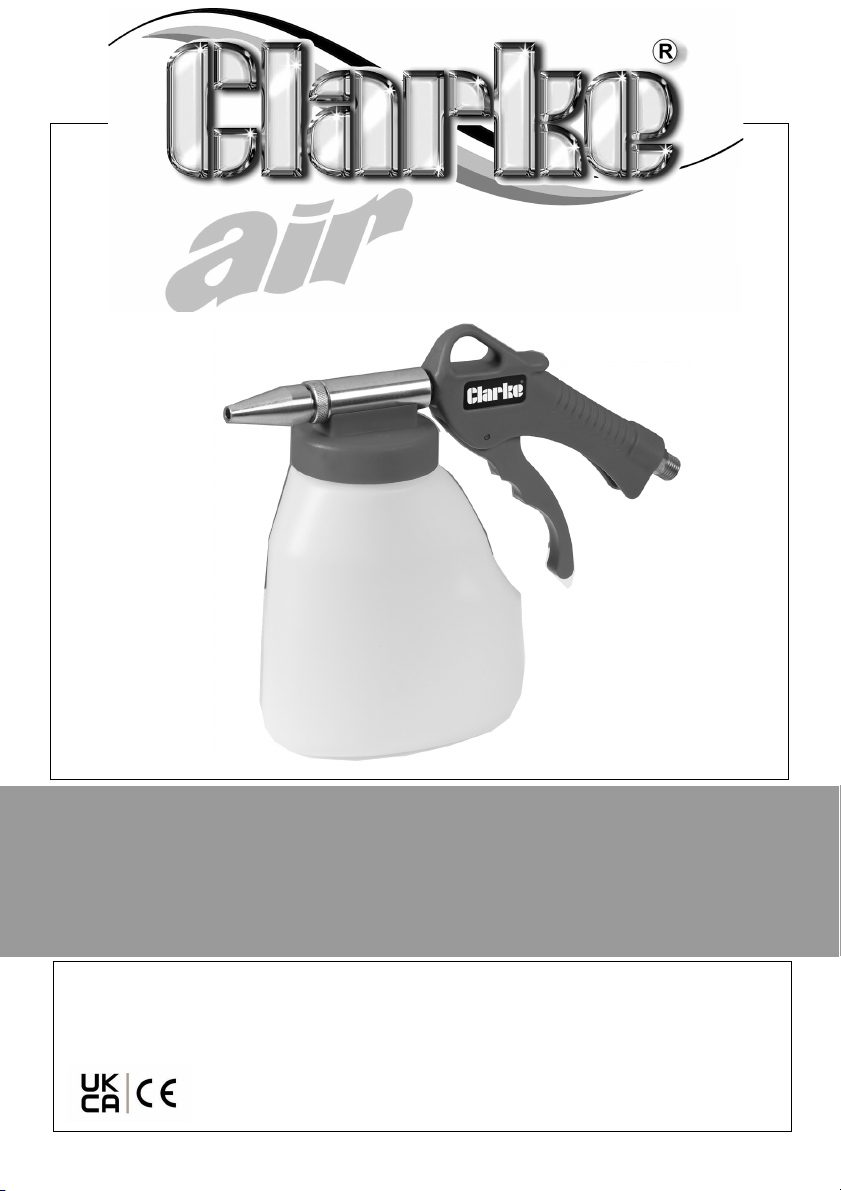
HAND HELD SODA BLASTER
MODEL NO: CHHSB1
PART NO: 7640137
OPERATING & MAINTENANCE
INSTRUCTIONS
ORIGINAL INSTRUCTIONS GC 09/23 rev 1
Page 2
INTRODUCTION
Thank you for purchasing this CLARKE product. Before attempting to use this
product, please read this manual thoroughly and follow the instructions
carefully. In doing so you will ensure the safety of yourself and that of others
around you, and you can look forward to your purchase giving you long and
satisfactory service.
GENERAL USER SAFETY
CAUTION: FAILURE TO FOLLOW THESE PRECAUTIONS COULD RESULT IN
PERSONAL INJURY, AND/OR DAMAGE TO PROPERTY.
WORK ENVIRONMENT
1. Keep the work area clean and tidy.
2. Keep children and visitors away - DO NOT let children handle the tool.
3. DO NOT operate where there are flammable liquids or gases.
4. ALWAYS make sure there is adequate ventilation. DO NOT blast in confined
or enclosed areas.
5. Media used in this soda blaster may be covered by COSHH Regulations.
PERSONAL SAFETY
1. Stay alert and use common sense. DO NOT operate the air tool when you
are tired or under the influence of alcohol, drugs or medication.
2. ALWAYS wear eye protection when using the soda blaster- This must provide
protection from flying particles from the front and the side. NOTE:
Spectacles DO NOT give sufficient protection, correct goggles must be
worn, although a full face mask is strongly recommended.
3. ALWAYS wear a dust mask when operating this type of device. Dust masks
MUST ALWAYS BE WORN. Inhaling dust produced by the blasting process or
the possible inhalation or ingestion of soda is extremely hazardous.
4. DO NOT overreach - Keep proper footing and balance at all times.
USE OF COMPRESSED AIR POWERED TOOLS
1. NEVER use oxygen, CO2, combustible gases or any type of bottled gas as a
source of power for the tool.
2
Parts & Service: 020 8988 7400 / E-mail: [email protected] or [email protected]
Page 3

2. DO NOT connect the air supply hose with your finger on the trigger.
3. DO NOT exceed the maximum pressure for the product.
4. Check hoses for leaks or worn condition before use and ensure that all
connections are secure.
5. Keep the air supply hose away from heat, oil and sharp edges.
6. DO NOT fit the soda blaster to any clamping device that may damage it.
7. ALWAYS disconnect from the air supply when not in use or performing any
maintenance.
8. ALWAYS keep the blaster clean for the best and safest performance.
9. ALWAYS use appropriate air hoses and couplings and ensure that they are
in good condition. If any parts are worn or damaged, they should be
replaced immediately.
10. Quick change couplings should not be located at the air tool. They add
weight and could fail due to vibration.
11. Use clamps or vices to hold a loose workpiece. Failure to secure the
workpiece could result in personal injury.
12. NEVER direct the soda blaster at people or animals. In the case of injury,
seek expert medical advice immediately.
13. ALWAYS hold the soda blaster firmly and maintain good balance.
14. ALWAYS ensure hose couplings are secure before use.
15. NEVER use wet or even damp blast media. Ensure the soda is completely
dry,
16. NEVER operate the blaster in the vicinity of an air compressor unless an
efficient air filter is fitted. The possibility of blasting media entering the air
compressor cylinder, which would cause serious damage, should not be
overlooked.
17. NEVER allow children to use or play with this device.
TRANSPORTATION AND STORAGE
1. NEVER carry the soda blaster by the air supply hose.
2. ALWAYS turn OFF the air supply at the compressor outlet and expel all air
from the air hose and gun, BEFORE disconnecting the soda blaster from the
air hose.
3. NEVER carry the soda blaster with your finger on the trigger.
4. When not in use the soda blaster should be disconnected from the air
supply and stored in a dry place out of the reach of children.
3
Parts & Service: 020 8988 7400 / E-mail: [email protected] or [email protected]
Page 4
COMPRESSED AIR REQUIREMENTS
WARNING: COMPRESSED AIR CAN BE DANGEROUS. ENSURE THAT YOU
ARE FAMILIAR WITH ALL PRECAUTIONS RELATING TO THE USE OF AIR
COMPRESSORS AND COMPRESSED AIR SUPPLIES.
Use only clean, dry, regulated compressed air as a power source.
Air compressors used must comply with the appropriate European Community
Safety Directives.
A build-up of moisture or oil in the air compressor will accelerate wear and
corrosion in the tool. Ensure any moisture is drained from the compressor daily
and the airline filter is kept clean.
If an unusually long air hose is required, (over 8 metres), the line pressure or the
hose inside diameter may need to be increased. The air hose must be rated at
least 150% of the maximum operating pressure of the tool.
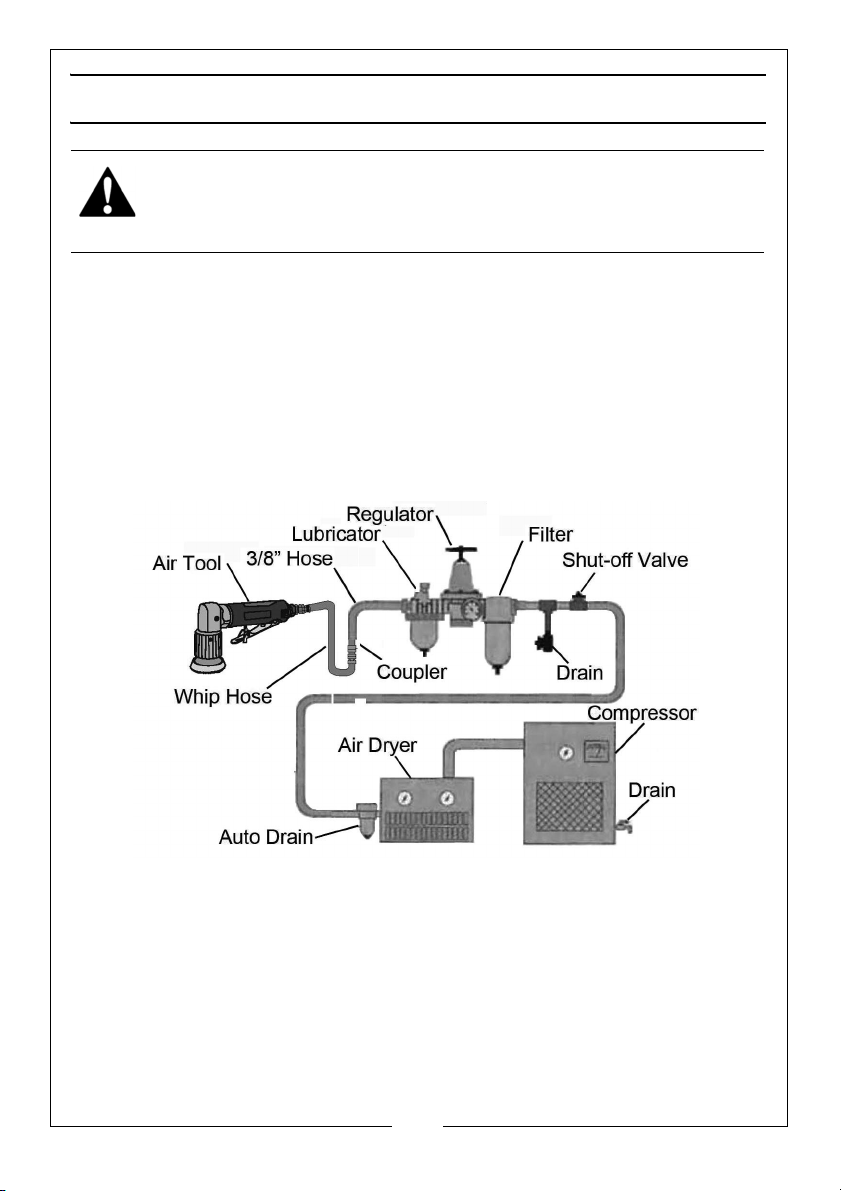
A typical air line layout is shown above. If an automatic in-line filter/regulator is
used, it will keep air tools in good condition.
Never exceed the maximum operating pressure for the tool stated on page 6.
Higher pressures and contaminated air will shorten the life of the tool due to
faster wear and is a possible safety hazard.
A wide range of airline accessories is available including filter/regulators, highpressure hoses (5 to 50 metres) etc. Contact your CLARKE dealer for further
information or CLARKE International Service Department.
4
Parts & Service: 020 8988 7400 / E-mail: [email protected] or [email protected]
Page 5
BEFORE USE
1. Connect a suitable hose with a threaded connector to the air inlet.
2. Connect the other end of the hose to the compressor.
3. Run the compressor at low pressure and check for leaks.
4. Fill the container with dry soda blasting media. Wet or moist soda can clog
the blaster and cause a malfunction. Maximum 3/4 filled.
5. Adjust the compressor pressure to the required value.
NOTE: ALWAYS consult the soda manufacturer’s recommendations for
the correct grade of media to be used and NEVER use damp
soda.
OPERATION
1. Ensure the breather hole in the container cap is clear.
2. Place the nozzle against a scrap piece of material and pull the trigger to
discharge excessive soda in the feed tube. You could cause damage to
the workpiece if you do not carry out this procedure.
3. Improve the overall performance by adjusting the air pressure, the
distance from the work and the amount of soda.
4. Hold the blaster the appropriate distance from the workpiece to be
cleaned and where possible, perpendicular to the workpiece. Squeeze
the trigger for a few seconds at a time. Check the workpiece frequently.
NOTE: The softer the material the lower the pressure or the further the
nozzle should be held from the workpiece.
5. Shake the gun frequently when in use to prevent a cavity forming in the
container, thereby ensuring that the soda will be drawn up correctly.
6. Press the trigger all the way down and find the right flow of soda by
adjusting the nozzle. To find the default setting screw on the nozzle until it
stops with the locking ring fully mounted, default setting is 2.5 turns 12.53mm up from here. The amount of soda should be neither too low nor too
high. Test it by directing the blast onto some less visible part of the
workpiece. Once you have got the right flow of soda, lock the nozzle by
turning the locking ring.
• The finish left by the blast operation should be ideal for immediate
priming where required.
5
Parts & Service: 020 8988 7400 / E-mail: [email protected] or [email protected]
Page 6
7. When finished clean off soda dust e.g. with a blowgun or by vacuum
cleaning. If your workpiece is to be painted after the blasting it is a good
idea to clean it thoroughly before painting.
8. DO NOT disconnect the air supply hose until the compressor has been shut
down and the compressed air released. Refer to the compressor instruction
manual for the procedure to shut down and release the compressed air.
MAINTENANCE
This soda blaster requires minimum maintenance and no adjustment is
possible. After use, remove the container and wipe all surfaces clean and dry
ensuring that there are no traces of waste material. Store in a dry environment.
Before next use, drain any water from the air line and compressor.
PERFORMANCE
Please note that factors other than the tool may effect its operation and
efficiency such as reduced compressor output, excessive drain on the airline
moisture or restrictions in the air-line, or the use of connectors of improper size
or poor condition which will reduce air supply.
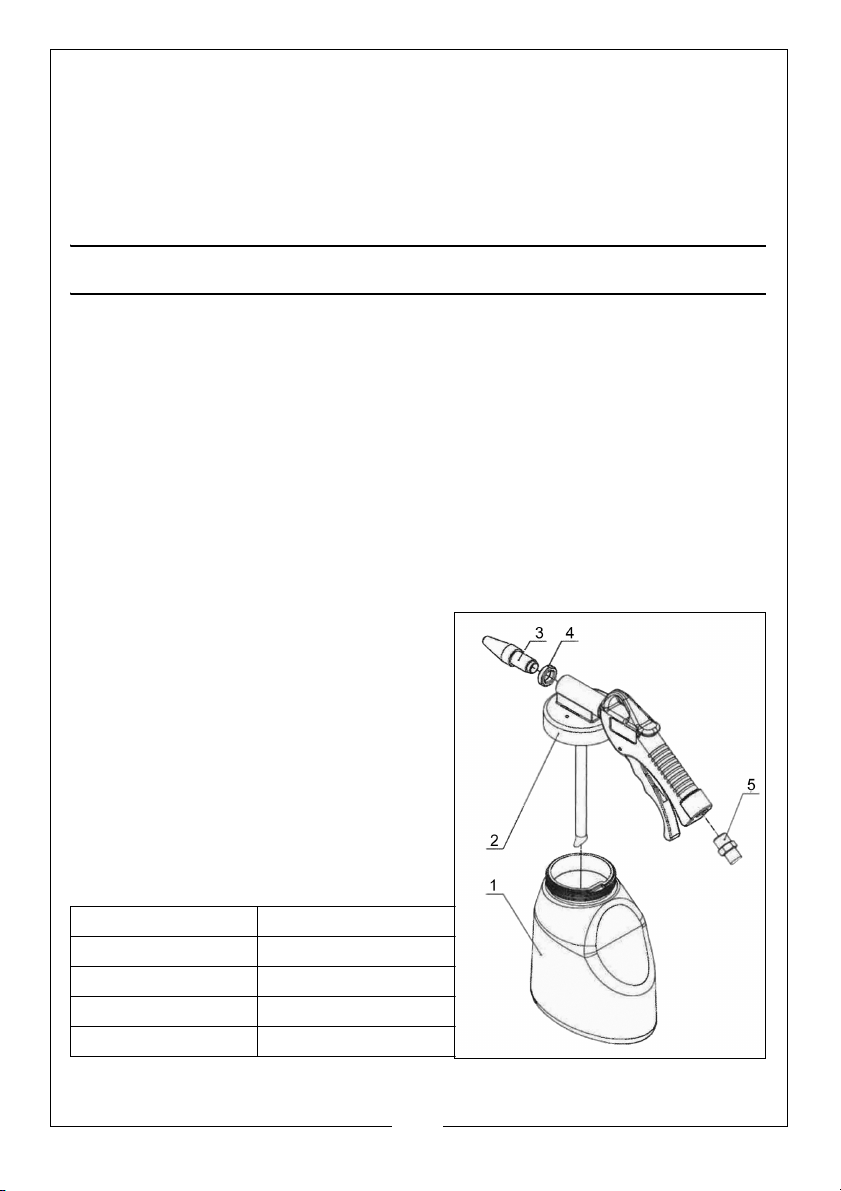
COMPONENT PARTS
1. Soda media container
2. Soda Blasting Gun assembly
3. Nozzle
4. Locking Ring
5. Air inlet connector
Use Soda blast abrasive (coarse) Part No
3052805 (7.5kg)
Dimns (L x W x H) 245 x 85 x 200 mm
Weight 0.52 kg
Air Inlet Size 1/2“BSP (male)
Operating Pressure 75-115 psi
Air Consumption 8 cfm @90psi
6
Parts & Service: 020 8988 7400 / E-mail: [email protected] or [email protected]
Page 7
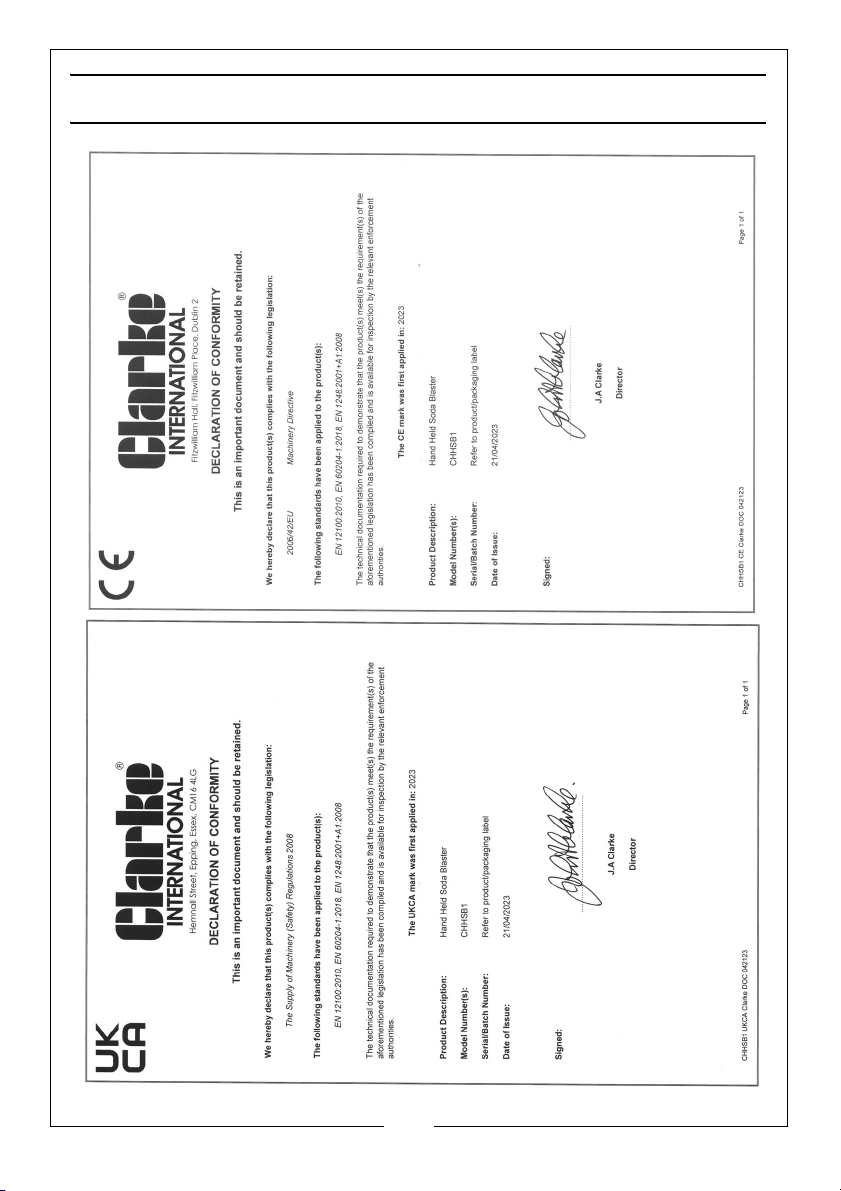
DECLARATIONS OF CONFORMITY
7
Parts & Service: 020 8988 7400 / E-mail: [email protected] or [email protected]
Page 8
 Loading...