

Page 1
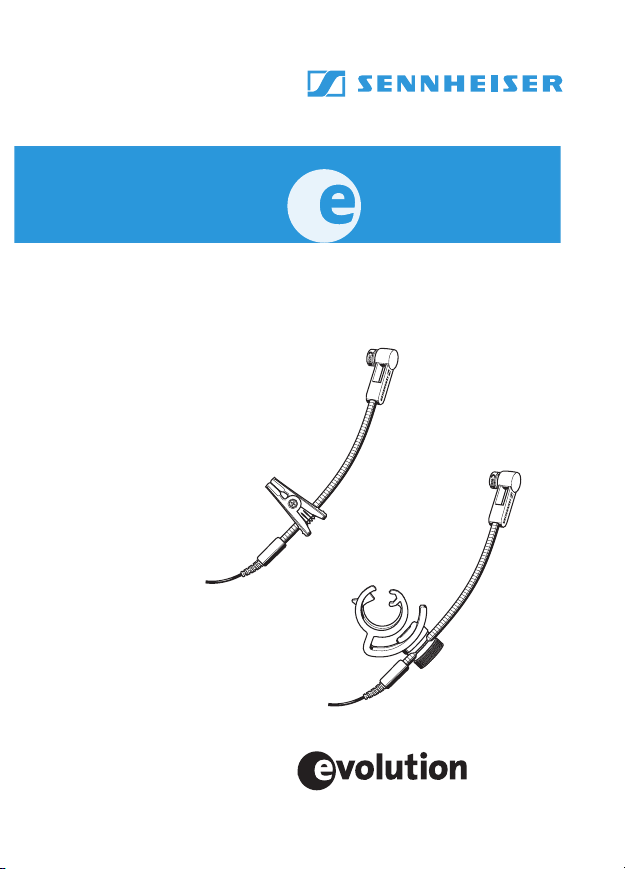
Bedienungsanleitung
Instructions for use
Notice d‘emploi
Istruzioni per l‘uso
Instrucciones para el uso
Gebruiksaanwijzing
908
Page 2

908 B / 908 D / 908 B ew / 908 T ew
Diese Mikrofone sind professionelle dauerpolarisierte
Kondensator-Mikrofone. Ihr weiter Dynamikumfang und
der sorgfältig abgestimmte Frequenzgang sorgen für
ausgezeichnete Signalqualität mit Durchsetzungsvermö
gen und hoher Verzerrungsfreiheit. Die über den gesamten Frequenzbereich konstante Richtwirkung gewährleistet höchste Lautstärken ohne Rückkopplung.
Das Mikrofon 908 D wurde speziell für Schlagzeug und
Percussion entwickelt. Das 908 B ist für die drahtgebundene Abnahme von Blasinstrumenten konzipiert, eignet sich aber aufgrund seiner Instrumentenklammer auch
hervorragend für Trommeln mit Freischwingsystemhalte
rung oder Congas. Für die Verwendung mit ew Taschensendern gibt es zwei spezielle Mikrofontypen: 908 B ew
für Saxophon, 908 T ew für Trompete, Flügelhorn und
Posaune.
Für den drahtgebundenen Betrieb verwenden Sie bitte
den Phantomspeise-Adapter MZA 900 P. Lesen Sie hierzu
bitte die Bedienungsanleitung des MZA 900 P.
Durch die unkomplizierte Phantomspeisung sind die Mikrofone besonders für den Anschluss und Betrieb an professionellen Mischpulten geeignet. Ebenso können sie mit
einem Evolution Wireless Taschensender drahtlos betrie
ben werden.
Die aufwändige Dämpfung und die federnde Lagerung
der Kapsel schirmen die Mikrofone gegen Vibrationen ab
und verhindern so Tritt- und Körperschall.
-
-
-
3
Page 3
Mit den langen, flexiblen Schwanenhälsen können die Mikrofone optimal am Instrument ausgerichtet werden.
Merkmale
y
außergewöhnlich lebendiger und klarer Klang
y
langer, flexibler Mikrofonarm zur optimalen
Ausrichtung am Instrument
y
unempfindlich gegen Tritt- und Körperschall durch
federnde Kapsellagerung
y
Metallgehäuse
y
reißfestes Kabel
y
Anschluss an evolution Taschensender oder Mikrofonspeiseadapter MZA
900 P
Lieferumfang
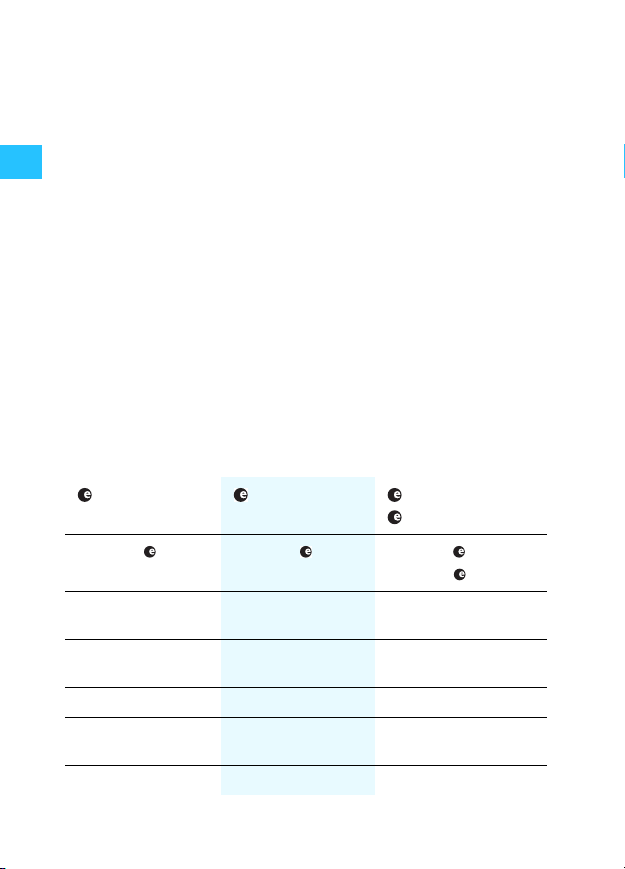
908 D 908 B 908 B ew /
908 T ew
Mikrofon 908 D Mikrofon 908 B Mikrofon 908 B ew /
Mikrofon 908 T ew
Mikrofonspeiseadapter MZA 900 P
Mikrofonklammer
MZH 908 D
Tasche Tasche Tasche
Bedienungsanleitung
Garantiekarte Garantiekarte Garantiekarte
Mikrofonspeiseadapter MZA 900 P
Mikrofonklammer
MZH 908 B
Bedienungsanleitung
—
Mikrofonklammer
MZH 908 B
Bedienungsanleitung
4
Page 4
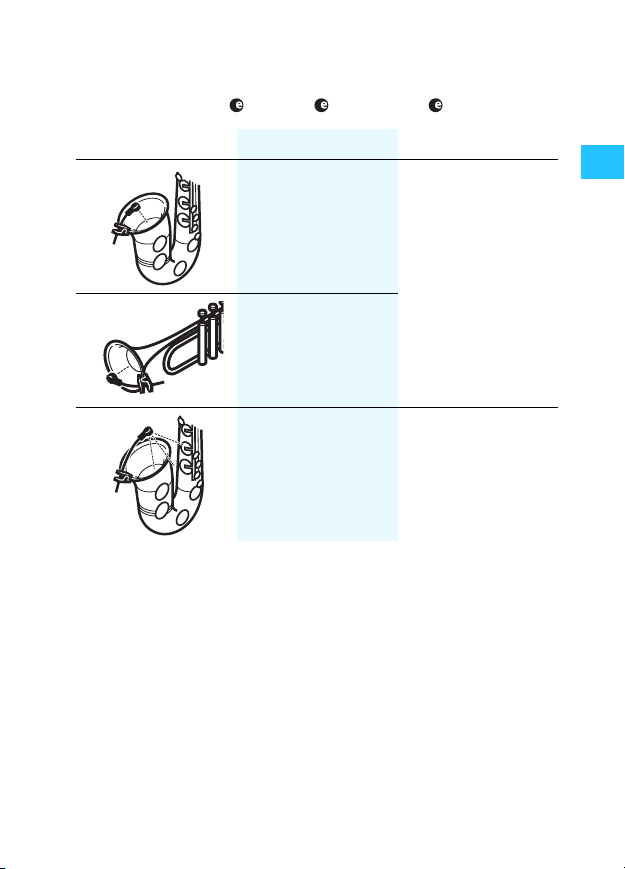
Mikrofon platzieren
Blasinstrumente ( 908 B / 908 B ew / 908 T ew)
Positionierung Klangresultat Kommentar
reduzierte
Nebengeräusche
klarer, kraftvoller
Sound
Mikrofon mit der
Klammer MZH 908 B
am Trichter des Instruments befesti
gen und direkt auf
den Schalltrichter
ausrichten.
-
ausgeglichener,
natürlicher Sound
Ausrichtung teilweise in den Trichter, teilweise auf
den Instrumenten
körper
-
5
Page 5
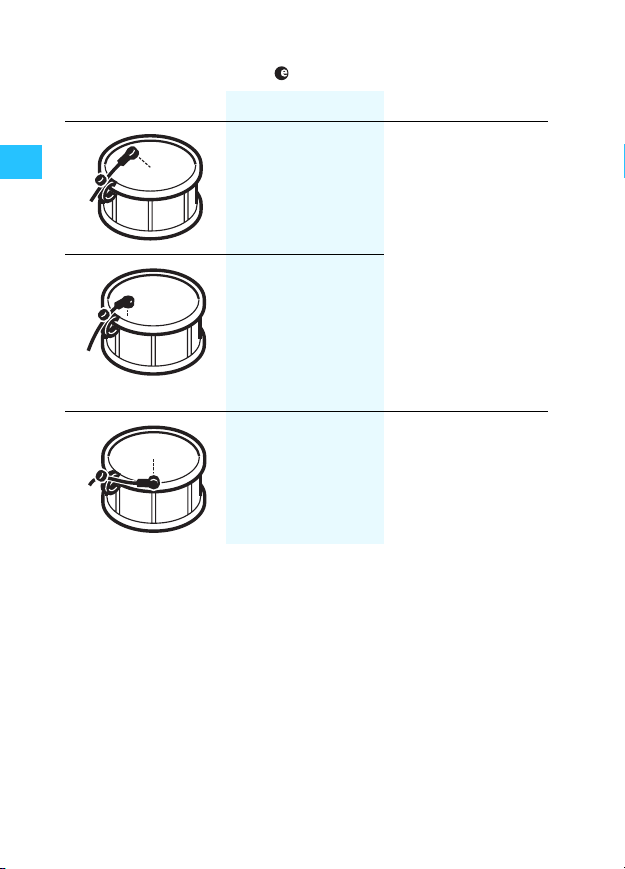
Schlagzeug/Percussion ( 908 D)
Positionierung Klangresultat Kommentar
viel Grundton,
wenig Obertöne
wenig Grundton,
viel Obertöne
ausgeprägter Nahbesprechungseffekt
Positionierung an
der Trommel: 3 – 5
cm über dem Fell,
Ausrichtung zur Fell
mitte. Das Verhältnis von Grundton zu
Obertönen lässt sich
mit dem Winkel ein
stellen.
Die ausgewogensten Ergebnisse
erzielt man unter
einem 30 – 60°
Winkel
Optional:
tangentiale Positionierung des Schwanenhalses zur Verringerung des Abstandes zum Fell
-
-
Um Störungen durch Übersprechen von benachbarten
Schallquellen zu vermeiden, versuchen Sie, das Mikrofon
so zu positionieren, dass die Störschallquelle im Winkel
bereich der größten Auslöschung des Mikrofons liegt
(180°, vgl. Polardiagramm).
6
Page 6
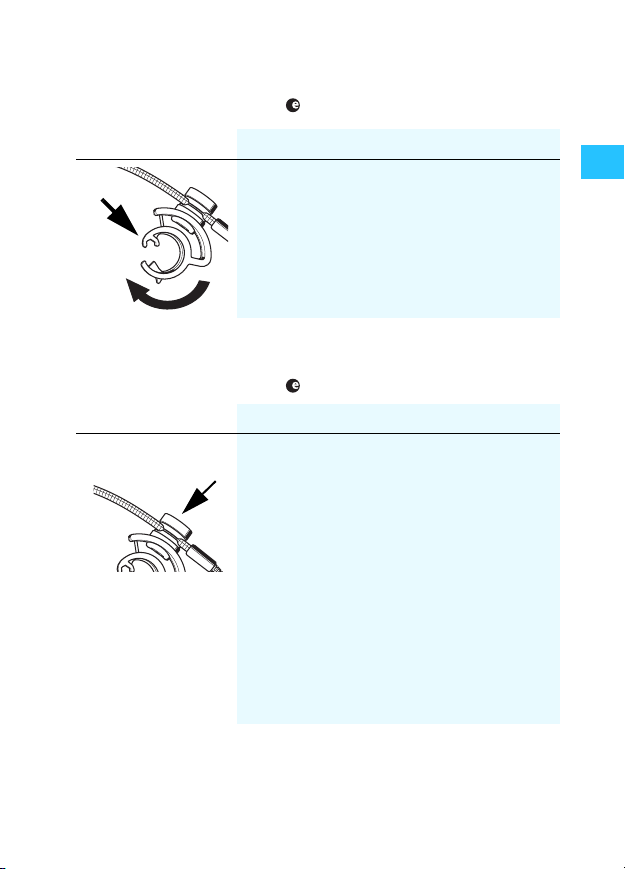
Schlagzeugklammer an der Trommel befestigen
Schlagzeug/Percussion ( 908 D)
Positionierung Kommentar
1
2
Die Schlagzeugklammer MZH 908 D wird
durch Aufschnappen auf den Spannreifen
der Trommel befestigt.
Führen Sie zunächst den oberen Schnapper
auf den Spannreifen (1) und rasten Sie dann
die Schlagzeugklammer nach unten ein (2).
Mikrofon an der Schlagzeugklammer befestigen
Schlagzeug/Percussion ( 908 D)
Positionierung Kommentar
Befestigen Sie das Mikrofon an der Schlagzeugklammer, indem Sie leicht die Rändelschraube an der Oberseite lösen. Führen Sie
jetzt den Schwanenhals des Mikrofons seit
lich in eine der zwei Aussparungen und
ziehen Sie dann die Rändelschraube wieder
fest.
Sie haben die Möglichkeit, zwei Mikrofone
an der Schlagzeugklemme zu befestigen
(z. B. bei der Tonabnahme von zwei Toms
unter beengten Platzverhältnissen). Nutzen
Sie dazu beide Aussparungen der Schlag
zeugklammer).
-
-
7
Page 7
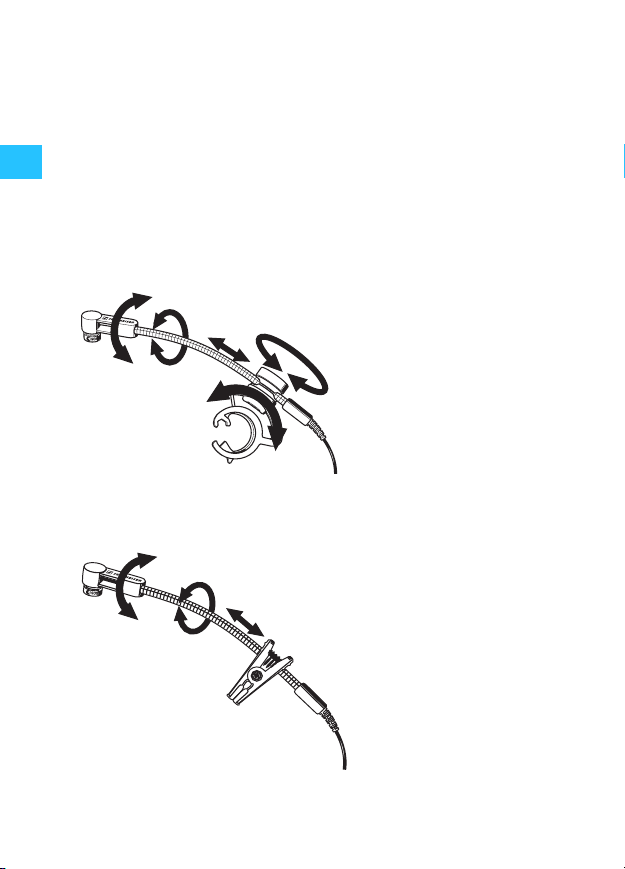
Optimale Positionierung des Mikrofons
Die vielfältigen Einstellmöglichkeiten der Klammern
MZH
908 D und MZH 908 B in Verbindung mit dem flexiblen Schwanenhals bieten Ihnen die Möglichkeit, das Mikrofon optimal an der Schallquelle zu positionieren (siehe
Pfeile der Abbildungen).
MZH 908 D
MZH 908 B
8
Page 8
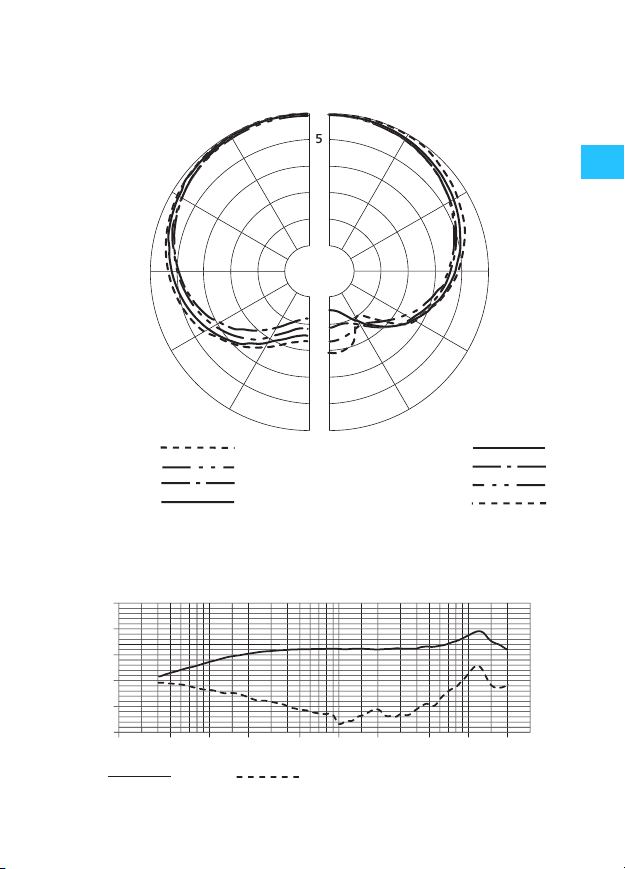
Polardiagramm
0
5
0
5
0
5
dB
30
60
90
30
60
90
0
50180
50
0
000
z
000
z
8000
z
6000
z
z
z
z
000 Hz
0
50
60
0
80
0
00
00
000
000
0000
0000
80
30
v
1
1
2
2
125 H
250 H
H
1
Frequenzgang
B
-
- 4
-
-
- 7
2
12
1
1
2
4
12
H
H
H
1
H
1
2
1
2
1
2
1
9
Page 9

Technische Daten
908 B / 908 D / 908 B ew / 908 T ew
Wandlerprinzip dauerpolarisiertes
Kondensatormikrofon
Übertragungsbereich 40 – 20.000 Hz
Richtcharakteristik Niere
Freifeld-Leerlauf- 4,0 mV/Pa
Übertragungsfaktor (1kHz) 0,56 mV/Pa ( 908 T ew)
Nennimpedanz 100 Ω (symmetrisch)*
Min. Abschlussimpedanz 2 kΩ*
Grenzschalldruckpegel
bei 1 kHz 147 dB/SPL
Ersatzgeräuschpegel
908 B, 908 D 35 dB(A)
908 B ew 30 dB(A)
908 T ew 39 dB(A)
Phantomspeisung 12 – 48 V / 3 mA*
Stecker
908 B, 908 DXLR-3*
908 B ew / T ew 3,5 mm-Klinke
Gewicht
908 B, 908 D 130 g, 140 g
908 B ew / T ew 70 g
Maße Ø 47 x 193 mm
10
Page 10
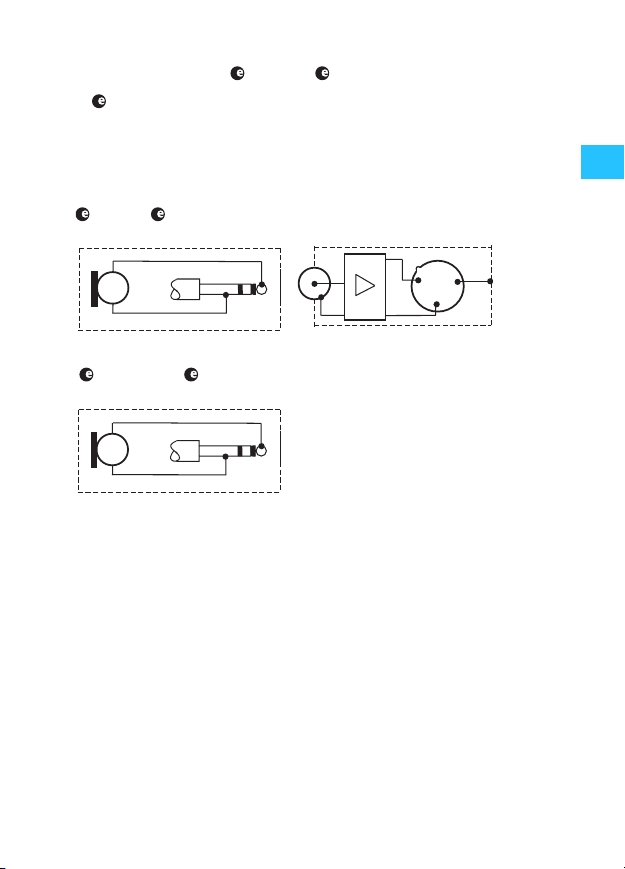
* mit MZA 900 P ( 908 B / 908 D)
908 B ew / T ew zum Direktanschluss an ew-Sender
Anschlussbelegung Stecker
908 B, 908 D
3,5 mm
908 B ew, 908 T ew
3,5 mm
+
3,5 mm
+
2
1
3
11
Page 11

Übersicht Mikrofonanwendungen
Modell
Anwendung
e901
e902
e904
e905
e906
e908B
e908B ew
e908D
e908T ew
e912
e914
Gesang x
Chor x x
Studio,
x x x
akust. Instrumente
Orchester x
Trompete, Posaune x x x
Saxophon x x x
Akustische Gitarre x
Akustischer Bass x
Gitarrenverstärker x
Bassverstärker x
Leslie x x x x
Piano, Flügel x x
Kick Drum x x
Snare Drum x x x x
Hänge-Tom x x x x x
Stand-Tom x x x x x
Congas x x x x
Becken x
Percussion x x x x x x
Overhead
Konferenztisch, Altar
x
Rednerpult x
Theaterbühne x
e935/e945
12
Page 12

Herstellererklärungen
Garantie
2 Jahre
Konformitätserklärung
Sennheiser electronic GmbH & Co. KG erklären, dass dieses Gerät die anwendbaren CE-Normen und Vorschriften erfüllt.
Akkus und Batterien
Alte Akkus und Batterien bitte nur leer über den Fachhandel oder
Batteriecontainer entsorgen.
WEEE-Erklärung
Bitte entsorgen Sie dieses Gerät am Ende seiner Nutzungsdauer bei Ihrer örtlichen kommunalen Sammelstelle oder im Recycling Center.
13
Page 13

14
Page 14

908 B / 908 D / 908 B ew / 908 T ew
These microphones are professional pre-polarised
condenser microphones. An extended dynamic range and
a well balanced frequency response deliver an outstanding signal quality with excellent projection and the
lowest possible distortion. An excellent directivity across
the whole frequency range enables the mics to handle the
highest signal levels without feedback.
The microphone 908 D has been developed especially
for drums and percussion. The 908 B is designed for
wired recording of wind instruments, but because of its
instrument clamp it is also paricularly suitable for drums
with suspension systems or congas. There are two special
types of microphones for use with ew bodypack
transmitters:
trumpets, flugelhorns and trombones.
Due to their phantom powering capability, the mics are
especially suitable for use with professional mixing
consoles. Alternatively, they can be used with any
evolution bodypack transmitter for wireless applications.
Extensive damping and shock mounting isolates the
capsules from extraneous vibrations, impact and handling
noise
.
The long, flexible goosenecks enable the mics to be
optimally positioned on the instrument.
908 B ew for saxophone, 908 T ew für
3
Page 15
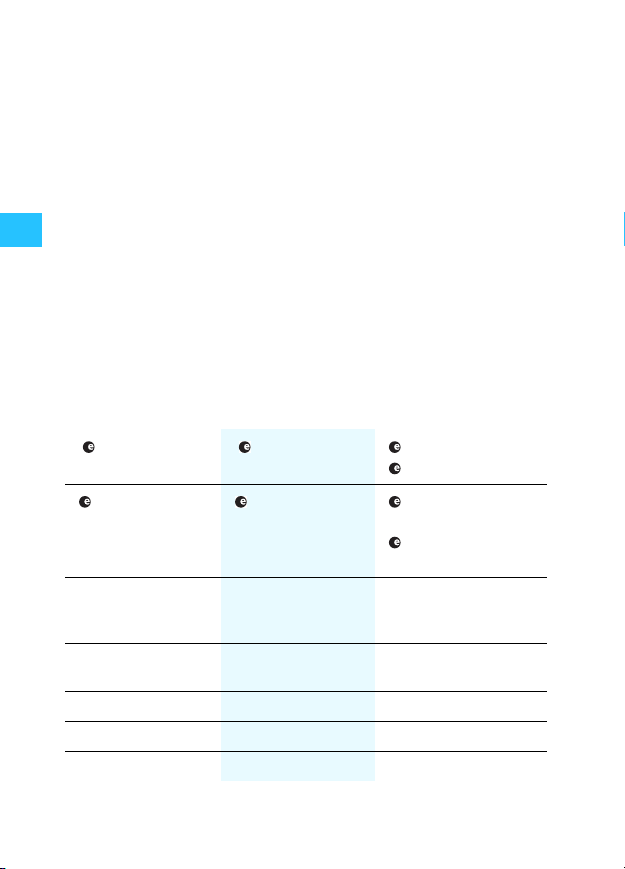
Features
y Exceptionally vivid, clear sound
y Optimum positioning on the instrument due to
flexible gooseneck
y Shock-mounted capsule provides low sensitivity to
impact and handling noise
y Rugged metal body
y Extremely robust connection cable
y Can optionally be used with any evolution bodypack
transmitter or the MZA
900 P phantom power
adaptor
Delivery includes
908 D 908 B 908 B ew /
908 T ew
908 D
microphone
MZA 900 P phantom
power adaptor
MZH 908 D microphone clamp
Pouch Pouch Pouch
Instructions for use Instructions for use Instructions for use
Warranty Certificate Warranty Certificate Warranty Certificate
908 B
microphone
MZA 900 P
phantom power
adaptor
MZH 908 B microphone clamp
908 B ew
microphone /
908 T ew
microphone
—
MZH 908 B microphone clamp
4
Page 16
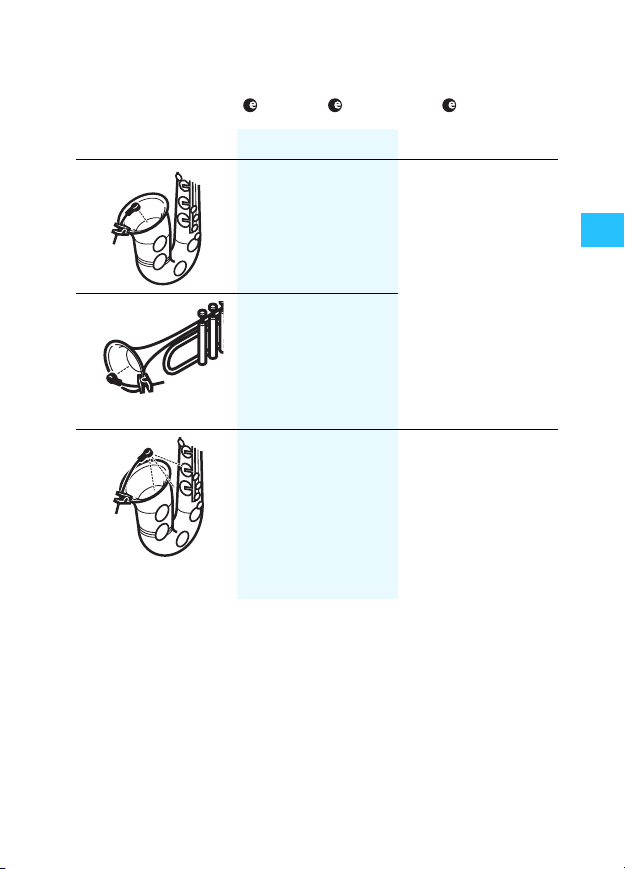
Positioning the microphone
Wind instruments ( 908 B / 908 B ew / 908 T ew)
Position Resulting sound Commentary
Reduced ambient
noise
Use the MZH 908 B
clamp to attach the
microphone to the
bell of the
instrument.
Clear, powerful
sound
Balanced, natural
sound
To reduce ambient
noise (at the
expense of the true
“Saxophone
sound”) direct the
microphone into the
bell (as illustrated).
For a Saxophone,
the microphone
should normally be
directed partly
towards the bell and
partly towards the
body of the
instument.
5
Page 17
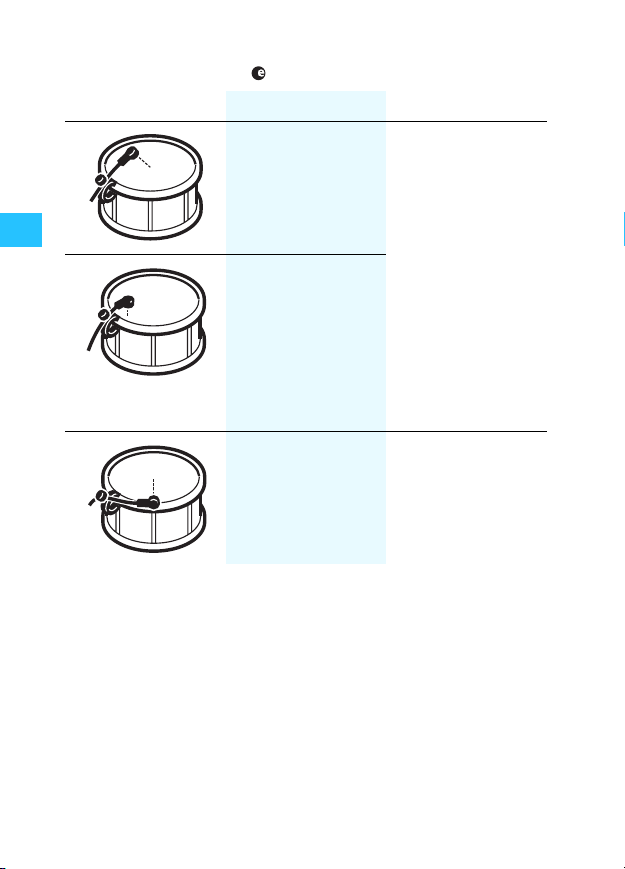
Drums / Percussions ( 908 D)
Position Resulting sound Commentary
More fundamental,
little overtones
Less fundamental,
many overtones
Pronounced
proximity effect
Position on the
drum:
3–5 cm above the
drumskin, directed
towards the center
of the drumskin, the
fundamental to
overtones ratio can
be adjusted by
changing the angle
of the microphone.
The most balanced
results are obtained
at an angle of
30–60°.
Optional:
tangential position
of the gooseneck in
order to reduce the
distance to the
drumskin.
In order to prevent interference due to crosstalk between
adjacent sound sources, try to position the microphone so
that the interfering sound source is located in the angle
area of the highest cancellation of the microphone
(approx. 180°; see polar diagram).
6
Page 18
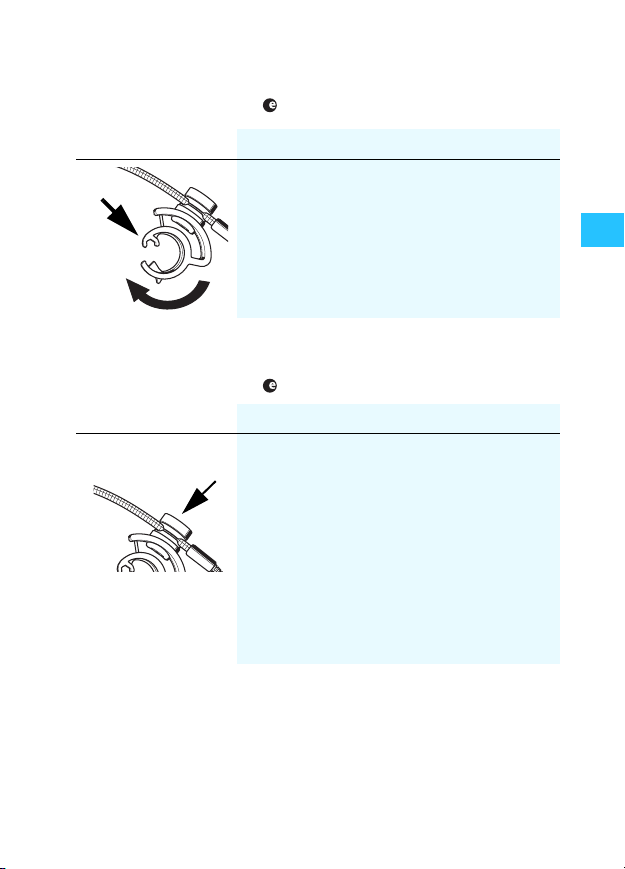
Attaching the drum clamp to the drum
Drums / Percussions ( 908 D)
Position Commentary
1
2
To attach the MZH 908 D drum clamp, snap
it onto the rim of the drum as follows:
Put the upper part of the clip (1) onto the
rim and clip on by pushing down in a rota
ting action (2) until it clips into place.
Attaching the microphone to the drum clamp
Drums / Percussions ( 908 D)
Position Commentary
To attach the microphone to the drum
clamp:
Loosen the knurled screw. Insert the
gooseneck of the microphone from the side
into one of the two slots and tighten the
knurled screw.
You can attach two microphones to the
drum clamp (e.g. for picking up two toms in
cramped space conditions). To do so, use
both slots of the drum clamp.
-
7
Page 19
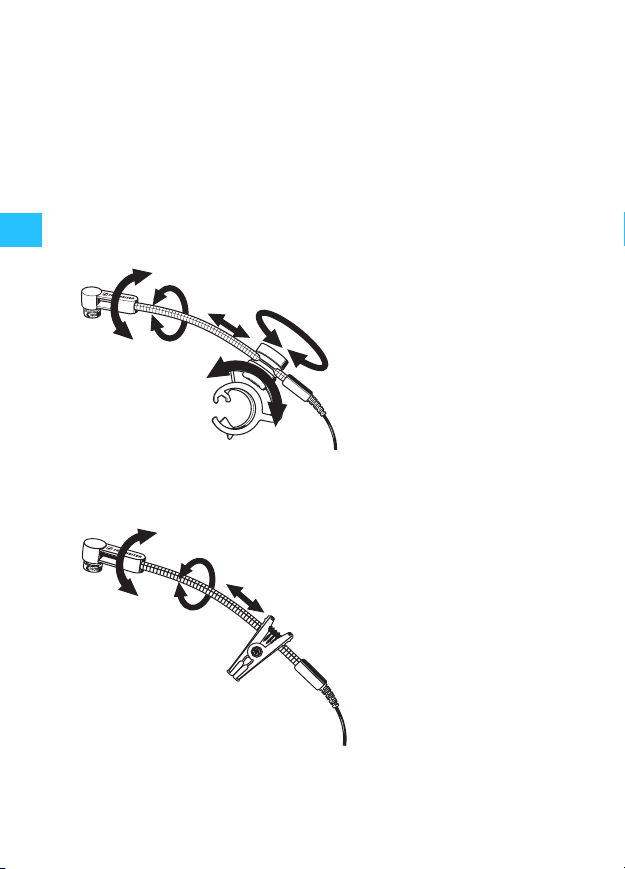
Optimum positioning of the microphone
The various adjustment possibilities of the MZH 908 D
and MZH 908
neck enable the microphone to be optimally positioned
on the sound source (see arrows in the diagrams below).
MZH 908 D
MZH 908 B
B clamps together with the flexible goose-
8
Page 20
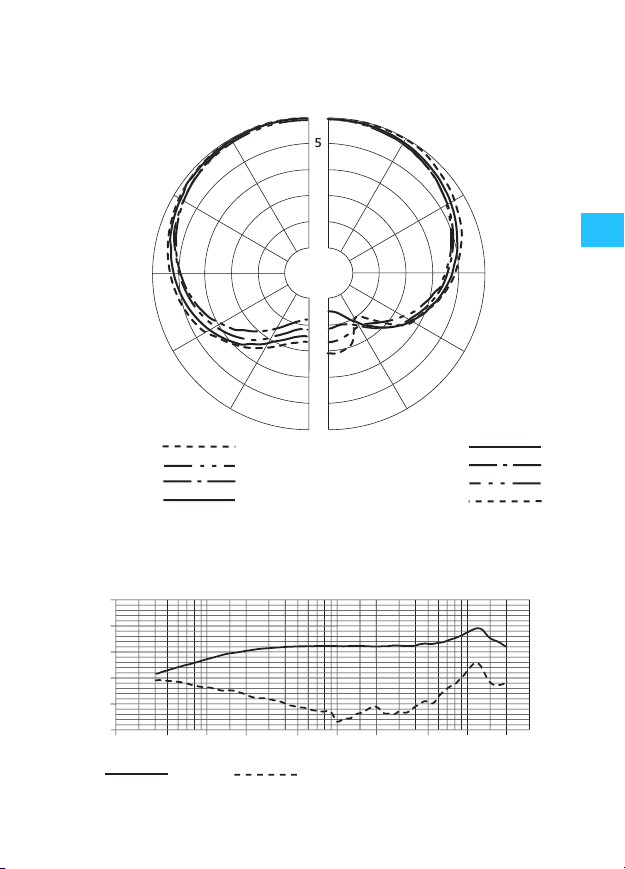
Polar diagram
0
5
0
5
0
50
80
50
0
000
z
000
z
z
6000
z
z
z
z
000
z
0
50
60
0
80
0
00
00
000
000
0000
0000
80
30
v
1
1
2
2
12
1
125 H
250 H
H
1
H
Frequency response curve
B
-
- 4
-
-
- 7
2
1
2
12
1
1
2
H
4
H
H
1
H
1
2
1
2
1
9
Page 21

Specifications
908 B / 908 D / 908 B ew / 908 T ew
Transducer principle pre-polarised
condenser microphone
Frequency response 40–20,000 Hz
Pick-up pattern cardioid
Sensitivity 4.0 mV/Pa
(free field, no load at 1 kHz) 0.56 mV/Pa ( 908 T ew)
Nominal impedance 100 Ω (balanced)*
Min. terminating impedance 2 kΩ*
Max. sound pressure level
at 1 kHz 147 dB/SPL
Equivalent noise level
908 B, 908 D 35 dB(A)
908 B ew 30 dB(A)
908 T ew 39 dB(A)
Phantom powering 12–48 V / 3 mA*
Connector
908 B, 908 DXLR-3*
908 B ew / T ew 3.5 mm jack
Weight
908 B, 908 D 130 g, 140 g
908 B ew / T ew 70 g
Dimensions Ø 47 x 193 mm
10
Page 22
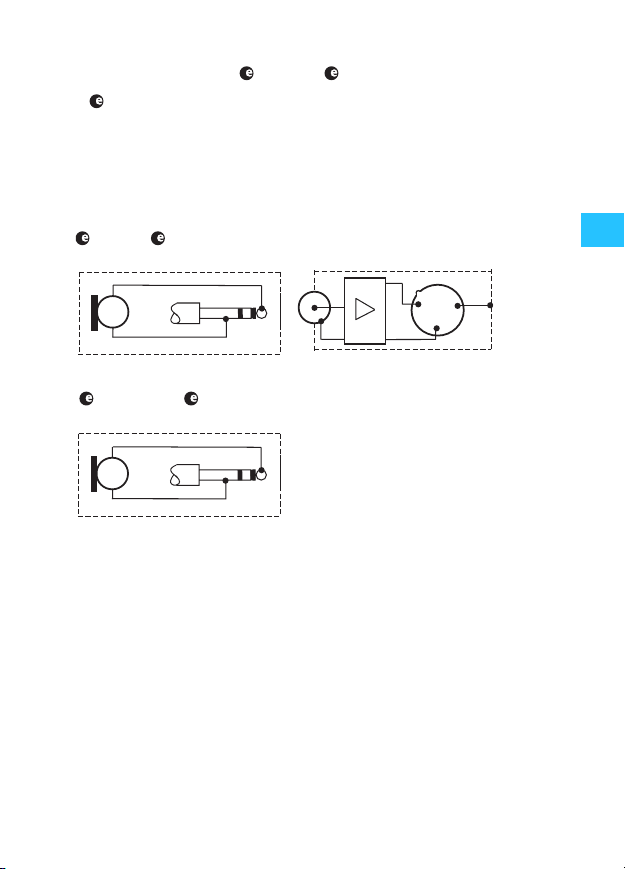
* with MZA 900 P ( 908 B / 908 D)
908 B ew / T ew for direct connection to ew trans-
mitters
Pin assignment of connectors
908 B, 908 D
3,5 mm
908 B ew, 908 T ew
3,5 mm
+
3,5 mm
+
2
1
3
11
Page 23

Overview of microphone applications
Modell
Anwendung
e901
e902
e904
e905
e906
e908B
e908B ew
e908D
e908T ew
e912
e914
Voca ls x
Choir x x
Studio, acoustic
x x x
instruments
Orchestra x
Trumpe ts,Trombones
x x x
Saxophone x x x
Acoustic guitar x
Acoustic bass x
Guitar amplifiers x
Bass amplifiers x
Leslie x x x x
Piano, grand piano x x
Kick Drum x x
Snare Drum x x x x
Rack toms x x x x x
Floor toms x x x x x
Congas x x x x
Cymbals x
Percussion x x x x x x
Overhead x
Conference table,
x
altar
Lectern x
Theater stage x
e935/e945
12
Page 24

Manufacturer declarations
Warranty
2 years
Approval
Sennheiser electronic GmbH & Co. KG declare that this device
is in compliance with the applicable CE standards and regulations.
Batteries or rechargeable batteries
Please dispose of batteries or rechargeable batteries as special
waste or return them to your specialist dealer.
WEEE Declaration
Please dispose of this product at the end of its operational lifetime by bringing it to your local collection point or recycling
centre for such equipment.
13
Page 25

14
Page 26

908 B / 908 D / 908 B ew / 908 T ew
Ces sont des microphones professionnels de type
électrostatique à polarisation permanente. La dynamique
très étendue et la réponse en fréquence très régulière
assurent un signal de haute qualité, d'une présence
maximale, sans distorsion audible. La directivité est
homogène tout au long du spectre, ce qui permet à ces
micros de délivrer un niveau de sortie très élevé sans
Larsen.
Le microphone 908 D a été développé spécialement
pour les batteries et percussions. Le 908 B est conçu
pour l'enregistrement par fil des instruments à vent, mais
grâce à ses clips de fixation sur instrument, il convient
extraordinairement bien aux tambours avec système de
suspension ou aux congas. Deux types de microphones
spécifiques sont disponibles pour une utilisation avec les
émetteurs de poche ew :
908 T ew pour trompettes, bugles à pistons et
trombones.
Grâce à leur alimentation par tension fantôme, les micros
conviennent particulièrement à une utilisation avec des
consoles de mixage professionnelles. Pour des
applications sans fil, vous pouvez également les utiliser
avec n'importe quel émetteur de poche de la gamme
evolution wireless.
Un amortissement élevé et un montage anti-choc des
capsules protègent des vibrations, bruits d
manipulation.
908 B ew pour saxophones,
'impacts et de
3
Page 27

Les cols de cygne longs et flexibles permettent un
placement optimal des micros sur les instruments.
Caractéristiques
y Son très vivant, d'une clarté exceptionnelle
y Placement optimal sur l'instrument grâce au col de
cygne flexible
y Capsule à suspension : faible sensibilité aux bruits
d
'impacts et de manipulation
y Robuste corps métallique
y Câble de raccordement très robuste
y Peut s'utiliser, en option, avec n'importe quel
émetteur de poche de la gamme evolution wireless ou
avec l'adaptateur d'alimentation fantôme MZA
900 P.
Fourniture
908 D 908 B 908 B ew /
908 T ew
Microphone 908 D
Adaptateur
d'alimentation
fantôme MZA
Pince MZH 908 D Pince MZH 908 B Pince MZH 908 B
Etui Etui Etui
Notice d'emploi Notice d'emploi Notice d'emploi
Carte de garantie Carte de garantie Carte de garantie
900 P
Microphone
908 B
Adaptateur
d'alimentation
fantôme MZA
Microph. 908 B ew /
Microph. 908 T ew
—
900 P
4
Page 28
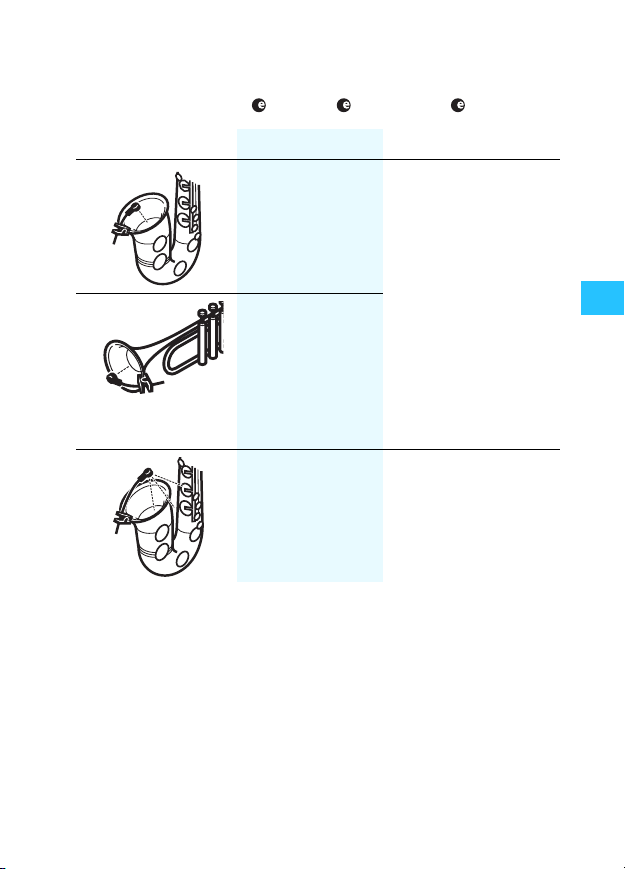
Mise en place du microphone
Instruments à vent ( 908 B / 908 B ew / 908 T ew)
Positionnement Tonalité Commentaire
Réduction du
bruit ambiant
Utiliser la pince
MZH
908 B pour fixer
le micro sur le corps de
'
instrument. Diriger le
l
micro vers la partie
d
'
où sort le son.
Son clair et
puissant
Son équilibré et
naturel
Pour réduire le bruit
ambiant (au détriment
du vrai “son de
saxophone”), diriger le
micro à l'intérieur du
pavillon (comme
illustré).
Dans le cas d'un
saxophone, le micro
doit normalement
viser en partie le
pavillon et en partie le
corps de l'instrument.
5
Page 29
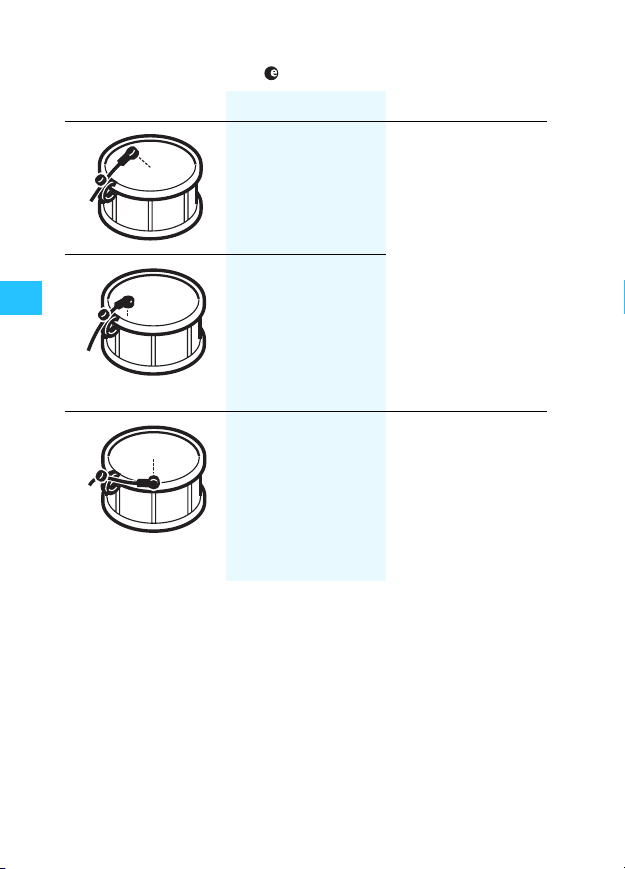
Batterie / percussions ( 908 D)
Positionnement Tonalité Commentaire
Beaucoup de son
fondamental,
peu de sons
harmoniques
Peu de son
fondamental,
beaucoup de sons
harmoniques
Effet de proximité
prononcé
Positionnement sur
le fût : 3 à 5 cm
au-dessus de la
peau, en visant le
milieu. L'équilibre
fondamental/
harmoniques se
dose en faisant
varier l'angle. Les
résultats les plus
équilibrés
s'obtiennent avec
un angle compris
entre 30 et 60°.
En option :
positionnement
tangentiel du col de
cygne (parallèle à la
peau) afin de
réduire la distance
séparant le micro de
la peau.
Pour éviter des perturbations dues aux interférences de
sources sonores voisines, essayez de positionner le
microphone de manière que la source parasite se trouve
dans l'angle d'atténuation maximale du microphone (env.
180° – voir diagramme polaire).
6
Page 30

Montage de la pince de fixation sur la batterie
Batterie / percussions ( 908 D)
Positionnement Commentaire
1
2
Pour mettre en place la pince de fixation
MZH 908 D, pincez-la sur le bord du fût
comme suit :
Guidez le loquet supérieur (1) sur le bord du
fût, puis refermez la pince de fixation en
appuyant dessus vers le bas (2).
Montage du micro sur la pince de fixation
Batterie / percussions ( 908 D)
Positionnement Commentaire
Pour fixer le micro sur la pince :
Desserrez la vis moletée. Insérez le col de
cygne du microphone, en partant du côté,
dans un des deux trous, et resserrez la vis
moletée.
Vous pouvez fixer deux micros sur la pince
(par exemple, pour prendre le son de deux
toms dans des conditions où l'espace
manque). Dans ce cas, utilisez les deux trous
de la pince.
7
Page 31

Placement optimal du microphone
Les diverses possibilités de réglage des pinces MZH 908 D
et MZH 908 B, alliées à la souplesse du col de cygne,
permettent de placer le micro de façon optimale par
rapport à la source sonore (comme indiqué par les flèches
dans les schémas ci-dessous).
MZH 908 D
MZH 908 B
8
Page 32

Diagramme polaire
0
5
0
5
0
50
80
50
0
000
z
000
z
z
6000
z
z
z
z
000
z
0
50
60
0
80
0
00
00
000
000
0000
0000
80
30
v
1
1
2
2
12
1
125 H
250 H
H
1
H
Réponse en fréquence
B
-
- 4
-
-
- 7
2
1
12
1
1
2
H
4
H
H
1
H
1
2
2
1
2
1
9
Page 33

Caractéristiques techniques
908 B / 908 D / 908 B ew / 908 T ew
Principe transducteur microphone
électrostatique à
polarisation permanente
Résponse en fréquence 40–20.000 Hz
Directivité cardioïde
Sensibilité 4,0 mV/Pa
(champ libre, à vide à 1kHz) 0,56 mV/Pa ( 908 T ew)
Impédance nominale 100 Ω (symétrique)*
Impédance de
charge minimum 2 kΩ*
Niveau de pression
sonore max. à 1 kHz 147 dB/SPL
Niveau de bruit équivalent
908 B, 908 D 35 dB(A)
908 B ew 30 dB(A)
908 T ew 39 dB(A)
Alimentation fantôme 12 – 48 V / 3 mA*
Connecteur
908 B, 908 DXLR-3*
908 B ew / T ew jack 3,5 mm
Poids
908 B, 908 D 130 g, 140 g
908 B ew / T ew 70 g
Dimensions Ø 47 x 193 mm
10
Page 34
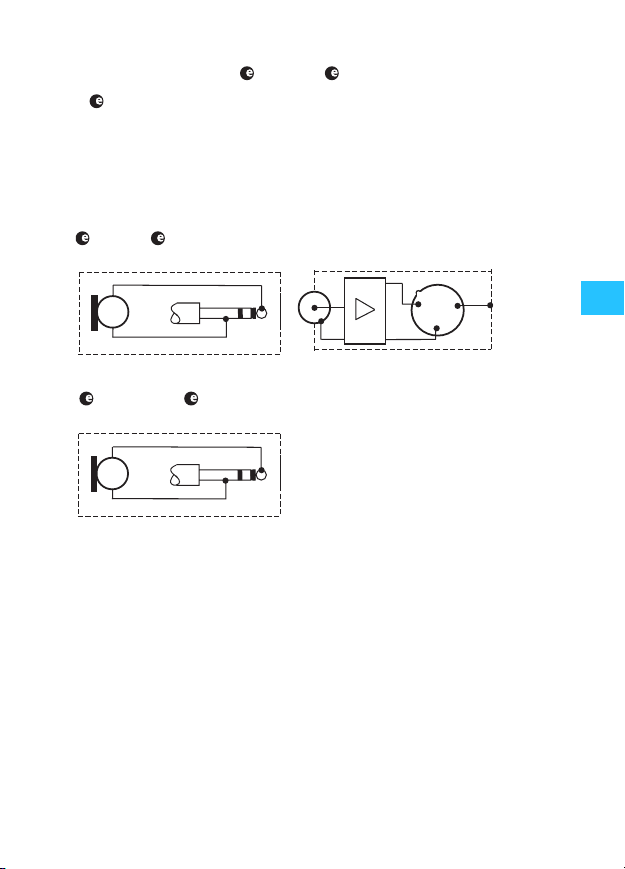
* avec MZA 900 P ( 908 B / 908 D)
908 B ew / T ew pour le raccordement direct aux
émetteurs de la série ew
Brochage des connecteurs
908 B, 908 D
3,5 mm
908 B ew, 908 T ew
3,5 mm
+
3,5 mm
+
2
1
3
11
Page 35

Vue d'ensemble des applications de microphones
Modèle
Application
e901
e902
e904
e905
e906
e908B
e908B ew
e908D
e908T ew
e912
e914
Chant x
Chœurs x x
Studio, instruments
x x x
acoustiques
Orchestre x
Trom pette ,Tromb one
x x x
Saxophone x x x
Guitare acoustique x
Basse acoustique x
Ampli de guitare x
Ampli de basse x
Leslie x x x x
Piano, à queue x x
Grosse caisse x x
Caisse claire x x x x
Tom suspendu x x x x x
Tom sur pied x x x x x
Congas x x x x
Cymbale x
Percussions x x x x x x
Overhead
Table de conférence,
x
autel
Lutrin x
Scène de théâtre x
e935/e945
12
Page 36
Déclarations du fabricant
Garantie
2 ans
Certification
Sennheiser electronic GmbH & Co. KG déclarons que cet appareil est en conformité avec les normes CE.
Piles et accus
Déposez les batteries usagées dans un point de collecte spécifique ou ramenez-les à votre revendeur.
WEEE Déclaration
En fin de vie veuillez rapporter cet appareil à la déchetterie
communale ou à un centre de recyclage.
13
Page 37

14
Page 38

908 B / 908 D / 908 B ew / 908 T ew
Questi microfoni sono microfoni a condensatore a
polarizzazione permanente per uso professionale. La loro
ampia estensione dinamica e la risposta armonica
accuratamente sintonizzata offrono una qualità di
segnale eccellente con capacità di imposizione ed elevata
assenza di distorsione. La direttività costante per l'intero
campo di frequenza garantisce i volumi più alti senza
retroazione.
Il microfono 908 D è particolarmente indicato per le
percussioni. Il modello 908 B è stato sviluppato per la
registrazione a filo di fiati, ma grazie all’apposito gancio
si adatta perfettamente anche a tamburi con supporto a
sospensione libera o conga. Per l’utilizzo con il
trasmettitore tascabile ew esistono due modelli speciali
di microfono:
tromba, cornetta e trombone.
Grazie al semplice sistema di alimentazione fantasma, i
microfoni sono particolarmente adatti per il collegamento
e il funzionamento con tavoli di missaggio professionali.
Allo stesso modo, essi possono essere utilizzati anche
senza fili con un trasmettitore tascabile Evolution
Wireless.
L'abbondante ammortizzazione e la sospensione elastica della capsula schermano il microfono dalle vibrazioni ed evitano così la ripresa del rumore dei passi e del rumore dovuto alla manipolazione.
Grazie ai colli di cigno lunghi e flessibili, è possibile orientare i microfoni sullo strumento in modo ottimale.
908 B ew per sassofono, 908 T ew per
3
Page 39

Caratteristiche
y
suono straordinariamente chiaro e vivace
y
braccio del microfono lungo e flessibile per
l'orientamento ottimale sullo strumento
y
insensibile al rumore dei passi e al rumore dovuto alla
manipolazione grazie alla sospensione elastica della
capsula
y
corpo in metallo
y
cavo antistrappo
y
collegamento al trasmettitore tascabile evolution
oppure all'adattatore di alimentazione del microfono
MZA
900 P
Dotazione
908 D 908 B 908 B ew /
908 T ew
Microfono 908 D Microfono 908 B Microfono 908 B ew /
Microfono 908 T ew
Adattatore alimentazione microfono
MZA
900 P
Clip microfono
MZH 908 D
Borsa Borsa Borsa
Istruzioni per l'uso Istruzioni per l'uso Istruzioni per l'uso
Scheda di garanzia Scheda di garanzia Scheda di garanzia
Adattatore alimentazione microfono
MZA
900 P
Clip microfono
MZH 908 B
—
Clip microfono
MZH 908 B
4
Page 40

Posizionamento microfono
Fiati ( 908 B / 908 B ew / 908 T ew)
Posizionamento Risultato sonoro Commento
Riduzione dei
rumori circostanti
Suono chiaro e
potente
Fissare il microfono
con la clip MZH 908
B sulla campana
dello strumento e
orientarlo diretta
mente verso
l'interno della
campana.
-
Suono naturale ed
armonico
Orientamento in
parte verso la cam
pana, in parte sul
corpo dello stru
mento
-
-
5
Page 41

Percussioni ( 908 D)
Posizionamento Risultato sonoro Commento
Molte fondamentali,
poche armoniche
Poche fondamentali, molte armoniche
Spiccato effetto di
registrazione rav
vicinata
Posizionamento
sulla campana: 3 – 5
cm sopra la mem
brana, orientamento
verso il centro della
membrana. Il rap
porto delle note fondamentali rispetto
alle note armoniche
può essere regolato
con l'angolazione. I
risultati più equili
brati si ottengono
con un'angolazione
di 30 – 60°
Opzionale:
-
posizionamento tangenziale del collo di
cigno per ridurre la
distanza dalla mem
brana
-
-
-
-
Per evitare disturbi dovuti alla sovrapposizione di
sorgenti sonore vicine, cercare di posizionare il microfono
in modo tale che la sorgente sonora di disturbo si trovi nel
campo angolare di massima cancellazione del microfono.
(180°, cfr. diagramma polare).
6
Page 42
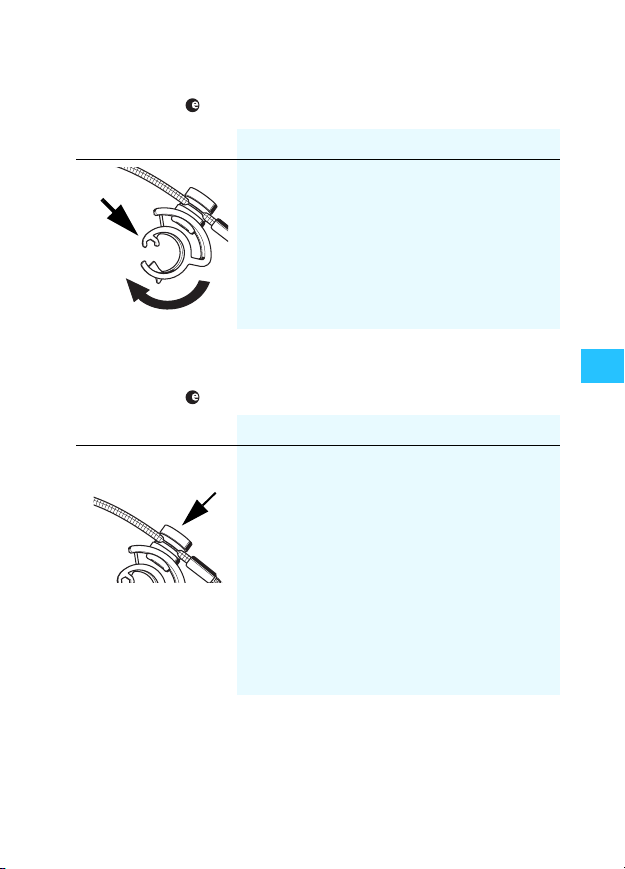
Fissaggio della clip per percussioni sulla campana
Percussioni ( 908 D)
Posizionamento Commento
1
2
La clip per percussioni MZH 908 D viene fissata sui morsetti di chiusura della campana
mediante un meccanismo a scatto.
Per prima cosa, portare il dispositivo di chiusura a scatto superiore sul morsetto di chiusura (1) e far quindi scattare in posizione la
clip per percussioni verso il basso (2).
Fissaggio del microfono sulla clip per percussioni
Percussioni ( 908 D)
Posizionamento Commento
Fissare il microfono sulla clip per percussioni
allentando leggermente la vite a testa zigri
nata sul lato superiore. Introdurre ora il collo
di cigno del microfono lateralmente in una
delle due aperture e serrare di nuovo la vite
a testa zigrinata.
È possibile fissare due microfoni sulla clip
per percussioni (ad es. per la registrazione
dei suoni di due tom in spazi ristretti). A tale
scopo, utilizzare entrambe le aperture della
clip per percussioni).
-
7
Page 43

Posizionamento ottimale del microfono
Le molteplici possibilità di regolazione delle clip
MZH
908 D e MZH 908 B abbinate alla flessibilità del collo
di cigno offrono la possibilità di posizionare il microfono
in modo ottimale sulla sorgente sonora (ved. frecce nelle
figure).
MZH 908 D
MZH 908 B
8
Page 44

Diagramma polare
0
5
0
5
0
50
80
50
0
000
z
000
z
z
6000
z
z
z
z
000
z
0
50
60
0
80
0
00
00
000
000
0000
0000
80
30
v
1
1
2
2
12
125 H
250 H
H
1
H
Risposta in frequenza
B
-
- 4
-
-
- 7
2
1
12
1
1
1
2
H
4
H
H
1
H
1
2
2
1
2
1
9
Page 45

Dati tecnici
908 B / 908 D / 908 B ew / 908 T ew
Principio di funzionamento microfono a condensatore
a polarizzazione
permanente
Risposta in frequenza 40 – 20.000 Hz
Caratteristica di direttività cardioide
Fattore di trasmissione a 4,0 mV/Pa
vuoto-campo libero (1kHz) 0,56 mV/Pa ( 908 T ew)
Impedenza nominale 100 Ω (simmetrica)*
Impedenza finale min 2 kΩ*
Livello di pressione acustica
limite ai 1 kHz 147 dB/SPL
Livello di rumore equivalente
908 B, 908 D 35 dB(A)
908 B ew 30 dB(A)
908 T ew 39 dB(A)
Alimentazione fantasma 12 – 48 V / 3 mA*
Connettore
908 B, 908 DXLR-3*
908 B ew / T ew jack da 3,5 mm
Peso
908 B, 908 D 130 g, 140 g
908 B ew / T ew 70 g
Dimensioni Ø 47 x 193 mm
10
Page 46

* con MZA 900 P ( 908 B / 908 D)
908 B ew / T ew per il collegamento diretto al
trasmettitore ew
Assegnazione collegamenti spina
908 B, 908 D
3,5 mm
908 B ew, 908 T ew
3,5 mm
+
3,5 mm
+
2
1
3
11
Page 47

Panoramica degli utilizzi del microfono
Modello
Utilizzo
e901
e902
e904
e905
e906
e908B
e908B ew
e908D
e908T ew
e912
e914
Canto x
Coro x x
Studio,
strumenti acustici
x x x
Orchestra x
Tromba, Trombone x x x
Sassofono x x x
Chitarra acustica x
Basso acustico x
Amplificatore per
x
chitarra
Amplificatore per
x
basso
Leslie x x x x
Piano,
x x
pianoforte a coda
Kick Drum (tam-
buro a cornice)
Snare Drum (cassa
x x
x x x x
chiara)
Tom sospesi x x x x x
Tom a terra x x x x x
Conga x x x x
Piatti x
Percussioni x x x x x x
Overhead x
Tavolo da confe-
x
renza, altare
Pulpito x
Palcoscenico
x
teatrale
e935/e945
12
Page 48

Dichiarazione del costruttore
Garanzia
2 anni
Certificazione
Sennheiser electronic GmbH & Co. KG diachiara che questo apparecchio è conforme alle normative e alle prescrizioni CE applicabili.
Batterie e accumulatori
Una volta scarichi, gli accumulatori esausti devono essere smaltiti nei negozi specializzati o in contenitori per la raccolta differenziata delle batterie.
Dichiarazione WEEE
Alla fine del loro utilizzo vi preghiamo di smaltire questo apparecchio negli appositi punti di raccolta locali o nei centri preposti al riciclaggio.
13
Page 49

14
Page 50

908 B / 908 D / 908 B ew / 908 T ew
Estos micrófonos son micrófonos de condensador
profesionales con polarización permanente. Su amplia
dinámica y su respuesta de frecuencia cuidadosamente
adaptada aseguran una señal de excelente calidad con
una alta potencia y ausencia de distorsiones. La
característica direccional constante en toda la gama de
frecuencia garantiza volúmenes máximos sin acoplamientos.
El micrófono 908 D fue desarrollado especialmente
para batería y percusión. El modelo 908 B está
concebido para el registro con cable de instrumentos de
viento, pero gracias a su pinza para instrumentos
muestra también una aptitud excelente para tambores
con soporte de sistema de oscilación libre o congas. Para
el uso con transmisores de bolsillo ew existen dos tipos de
micrófono especiales:
908 T ew para trompeta, cornetín y trombón.
Gracias a la sencilla alimentación fantasma, los micrófonos son especialmente aptos para la conexión y el uso
en mesas de mezcla profesionales. Asimismo, se pueden
utilizar de forma inalámbrica con un transmisor de
bolsillo Evolution Wireless.
La amortiguación perfeccionada y el alojamiento elástico de la cápsula protegen los micrófonos contra vibraciones y evitan ruidos de pasos y por manejo.
Los cuellos de cisne largos y flexibles permiten posicionar los micrófonos de forma óptima en el instrumento.
908 B ew para saxofón,
3
Page 51
Características
y
Sonido extraordinariamente vivo y claro
y
Brazo de micrófono largo y flexible para el posicionamiento óptimo en el instrumento
y
Insensible a ruidos de pasos y por manejo gracias al
alojamiento elástico de la cápsula
y
Carcasa metálica
y
Cable resistente a la rotura
y
Conexión a transmisores de bolsillo Evolution o a
adaptadores de corriente para micrófonos MZA
900 P
Volumen de suministro
908 D 908 B 908 B ew /
908 T ew /
Micrófono 908 D Micrófono 908 B Micrófono 908 B ew /
Micrófono 908 T ew
Adaptador de corriente para micrófono
MZA
900 P
Pinza para el micrófono MZH 908 D
Bolsa Bolsa Bolsa
Instrucciones para
el uso
Tarjeta de garantía Tarjeta de garantía Tarjeta de garantía
Adaptador de corriente para micrófono MZA 900 P
Pinza para el micrófono MZH 908 B
Instrucciones para
el uso
—
Pinza para el micrófono
MZH
908 B
Instrucciones para el
uso
4
Page 52

Posicionamiento del micrófono
Instrumentos de viento
( 908 B / 908 B ew / 908 T ew)
Posicionamiento Resultado Comentario
Reducción de los ruidos del entorno
Sonido claro y
potente
Fijar el micrófono
en el pabellón del
instrumento con la
pinza MZH 908 B y
orientarlo directa
mente al pabellón.
-
Sonido equilibrado y
natural
Orientación en parte
hacia el interior del
pabellón y en parte
hacia el cuerpo del
instrumento
5
Page 53
Batería / percusión ( 908 D)
Posicionamiento Resultado Comentario
mucho tono fundamental, pocos
armónicos
poco tono fundamental, muchos
armónicos
marcado efecto de
proximidad
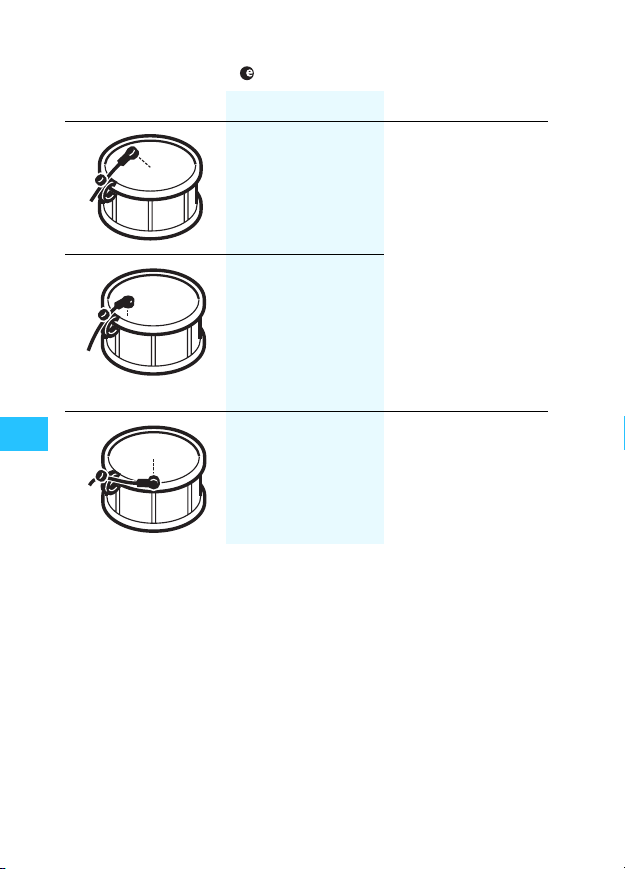
Posicionamiento en
el tambor: 3 – 5 cm
por encima del par
che, orientación al
centro del parche. La
relación entre el tono
fundamental y los
armónicos se puede
ajustar a través del
ángulo.
Los resultados más
equilibrados se con
siguen con un ángulo
de 30 – 60°
Opcional:
posicionamiento
tangencial del cuello
de cisne para reducir
la distancia frente al
parche
-
-
Para evitar interferencias por diafonía desde fuentes de
sonido contiguas, trate de posicionar el micrófono de tal
manera que la fuente de interferencia se encuentre en la
zona angular de la mayor extinción del micrófono (180°,
ver diagrama polar).
6
Page 54
Fijación de la pinza para batería en el tambor
Batería / percusión ( 908 D)
Posicionamiento Comentario
1
2
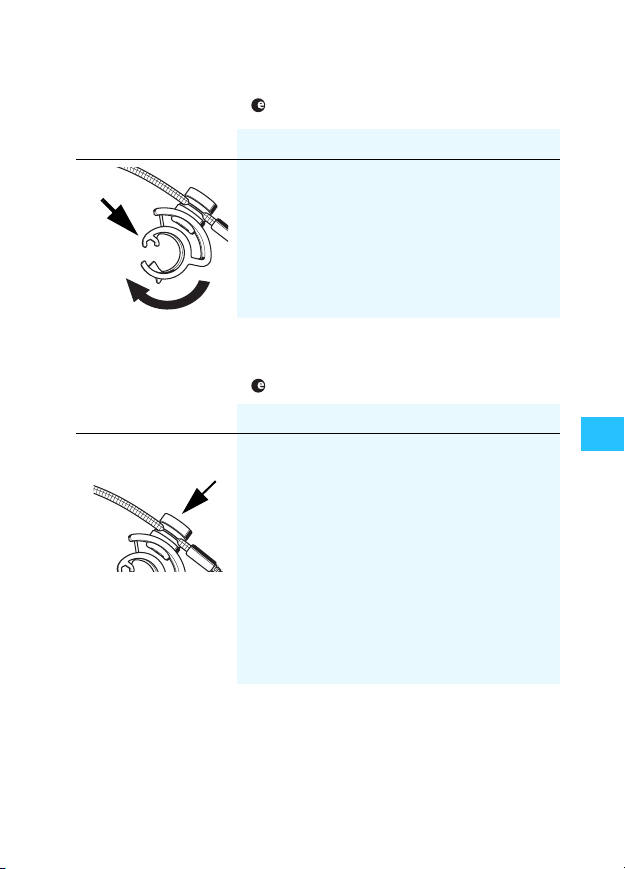
La pinza para batería MZH 908 D se abrocha
en el aro tensor del tambor.
Coloque primero la parte superior en el aro
tensor (1) y encaje después la pinza para
batería hacia abajo (2).
Fijación del micrófono en la pinza para batería
Batería / percusión ( 908 D)
Posicionamiento Comentario
Fije el micrófono en la pinza para batería
aflojando ligeramente el tornillo moleteado
de la parte superior. A continuación, intro
duzca el cuello de cisne lateralmente en una
de las dos escotaduras y vuelva a apretar el
tornillo moleteado.
Puede fijar dos micrófonos en la pinza para
batería (p.ej. para registrar el sonido de dos
tam-tams en condiciones de espacio restrin
gidas, utilice ambas escotaduras de la pinza
para batería).
-
-
7
Page 55

Posicionamiento óptimo del micrófono
Las múltiples posibilidades de ajuste de las pinzas
MZH
908 D y MZH 908 B en combinación con el cuello de
cisne flexible le permiten posicionar el micrófono de
forma óptima en la fuente de sonido (ver flechas en las
figuras).
MZH 908 D
MZH 908 B
8
Page 56
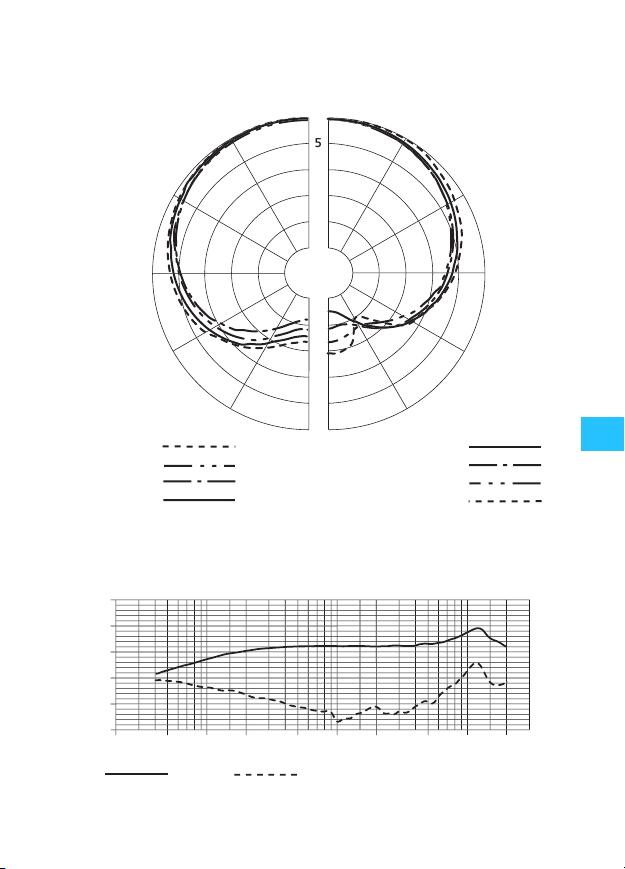
Diagrama polar
0
5
0
5
0
50
80
50
0
000
z
000
z
z
6000
z
z
z
z
000
z
0
50
60
0
80
0
00
00
000
000
0000
0000
80
30
v
1
1
2
2
12
1
125 H
250 H
H
1
H
Respuesta de frecuencia
B
-
- 4
-
-
- 7
2
1
12
1
1
2
H
4
H
H
1
H
1
2
2
1
2
1
9
Page 57

Datos técnicos
908 B / 908 D / 908 B ew / 908 T ew
Principio transductor Micrófono de condensador
con polarización
permanente
Margen de transmisión 40 – 20.000 Hz
Característica direccional ovalada
Factor de transmisión de 4,0 mV/Pa
campo acústico libre en 0,56 mV/Pa ( 908 T ew)
vacío (1kHz)
Impedancia nominal 100 Ω (simétrico)*
Impedancia terminal mín. 2 kΩ*
Nivel máx de presión
acústica con 1 kHz 147 dB/SPL
Nivel acústico de sustitución
908 B, 908 D 35 dB(A)
908 B ew 30 dB(A)
908 T ew 39 dB(A)
Alimentación fantasma 12 – 48 V / 3 mA*
Conector
908 B, 908 DXLR-3*
908 B ew / T ew Conector macho de 3,5 mm
Peso
908 B, 908 D 130 g, 140 g
908 B ew / T ew 70 g
Medidas Ø 47 x 193 mm
10
Page 58

* con MZA 900 P ( 908 B / 908 D)
conexión directa del 908 B ew / T ew al transmisor ew
Asignación de terminales del conector
908 B, 908 D
3,5 mm
908 B ew, 908 T ew
3,5 mm
+
3,5 mm
+
2
1
3
11
Page 59

Vista general de las aplicaciones del micrófono
Modelo
Aplicación
e901
e902
e904
e905
e906
e908B
e908B ew
e908D
e908T ew
e912
e914
Canto x
Coros x x
Estudio, instrumen-
tos acústicos
x x x
Orquesta x
Trompeta, Trombón x x x
Saxofón x x x
Guitarra acústica x
Bajo acústico x
Amplificador de gui-
tarra
Amplificador de bajo
x
x
Leslie x x x x
Piano, piano de cola x x
Kick Drum x x
Snare Drum x x x x
Tam-tam
x x x x x
suspendido
Tam-tam con pie x x x x x
Congas x x x x
Platillos x
Percusión x x x x x x
Overhead x
Mesa de conferen-
x
cias, altar
Púlpito de orador x
Escenario de teatro x
e935/e945
12
Page 60
Declaración del fabricante
Garantia
2 años
Autorización
Sennheiser electronic GmbH & Co. KG declara que este aparato cumple las normas y directrices de la CE aplicables.
Acumuladores y pilas
Los acumuladores y las pilas usadas sólo se deben eliminar a través del comercio especializado o contenedores de recogida de pilas
WEEE Declaración
Al final de su vida útil, lleve este aparato al punto de recogida de su municipio o a un centro de reciclaje.
13
Page 61

1434
Page 62

Page 63

908 B / 908 D / 908 B ew / 908 T ew
Deze microfoons zijn professionele permanent gepolariseerde condensatormicrofoons. Hun grote dynamische
bereik en het zorgvuldig afgestemde frequentie-bereik
zorgen voor een uitstekende signaalkwaliteit met veel
vermogen en minder vervorming. De over het totale
frequentiebereik constante richtwerking garandeert de
hoogste volumes zonder terugkoppeling.
De microfoon 908 D is speciaal ontwikkeld voor slagwerk en percussie. De 908 B is ontwikkeld voor de
draadgebonden opname van blaasinstrumenten, is
echter door de instrumentenklem ook uitstekend
geschikt voor trommels met vrijtrilsysteemhouder of
conga’s. Voor het gebruik in combinatie met ew
zakzenders zijn er twee speciale microfoontypen:
908 B ew voor saxofoon, 908 T ew voor trompet,
vleugelhoorn en trombone.
Door de ongecompliceerde fantoomvoeding zijn de
microfoons in 't bijzonder geschikt voor het aansluiten en
gebruiken op en met professionele mengpanelen. Bovendien kunnen de microfoons in combinatie met een
Evolution Wireless zakzender draadloos worden gebruikt.
De technisch hoogwaardige demping en de verende
lagering van het kapsel schermen de microfoons af tegen
trillingen en voorkomen daardoor stap- en lichaamsgeluiden.
Met de lange flexibele zwanenhalzen kunnen de
microfoons optimaal op het instrument worden uitgericht.
Page 64
Eigenschappen
y
buitengewoon levendige en heldere klank
y
lange, flexibele microfoonarm voor een optimale uitlijning op het instrument
y
ongevoelig voor stap- en lichaamsgeluiden door verende kapsellagering
y
metalen behuizing
y
breukbestendige kabel
y
aansluiting op evolution zakzender of microfoonvoedingsadapter MZA
900 P
Omvang levering
908 D 908 B 908 B ew /
908 T ew
Microfoon 908 D Microfoon 908 B Microfoon 908 B ew /
Microfoon 908 T ew
Microfoonvoedingsadapter
MZA
900 P
Microfoonklem
MZH 908 D
Hoes Hoes Hoes
Bedieningshandleiding
Garantiebewijs Garantiebewijs Garantiebewijs
Microfoonvoedingsadapter
MZA
900 P
Microfoonklem
MZH 908 B
Bedieningshandleiding
—
Microfoonklem
MZH 908 B
Bedieningshandleiding
5
Page 65
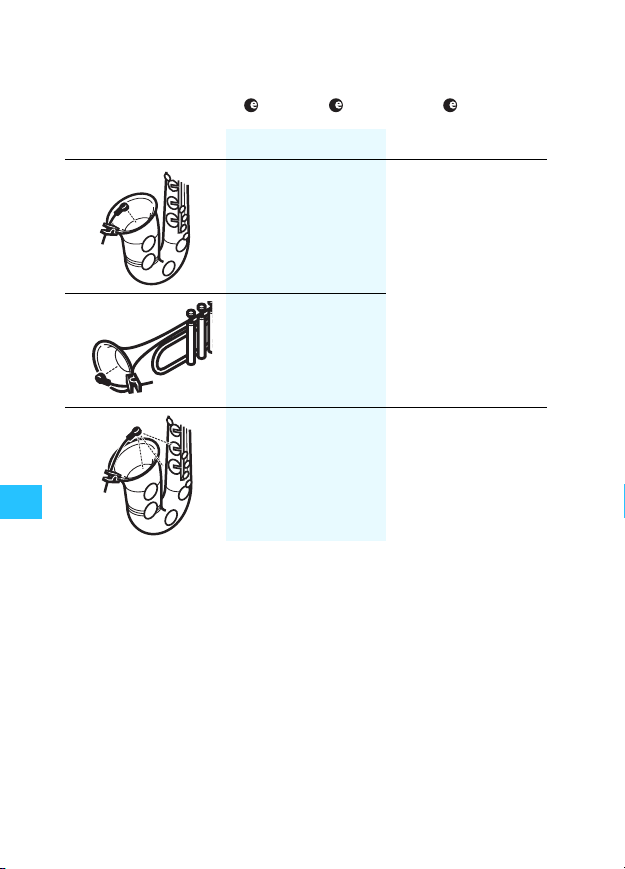
Microfoon plaatsen
Blaasinstrumenten ( 908 B / 908 B ew / 908 T ew)
Positionering Klankresultaat Commentaar
gereduceerde
nevengeluiden
heldere, krachtige
sound
Microfoon met de
klem MZH 908 B op
de trechter van het
instrument bevesti
gen en direct op de
geluidstrechter rich
ten.
-
-
uitgebalanceerde
sound
Deels in de trechter
en deels op het
instrumentelement
richten
6
Page 66
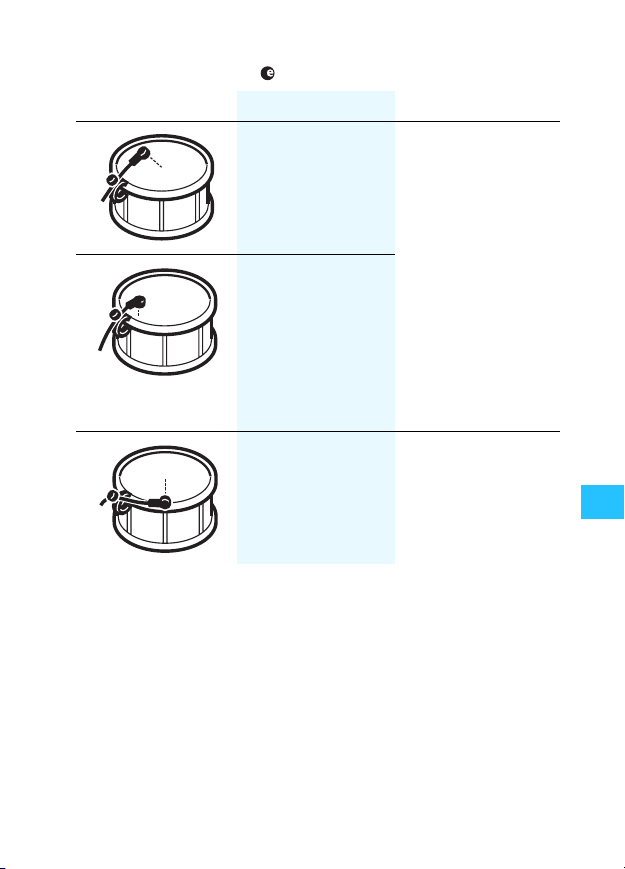
Slagwerk/percussie ( 908 D)
Positionering Klankresultaat Commentaar
veel grondtonen,
weinig boventonen
Weinig grondtoon,
veel boventonen
uitgesproken effect
bij het spreken op
korte afstand
Positionering bij de
trommel: 3 – 5 cm
boven het vel, uit
lijning op het midden
van het vel. De ver
houding van de
grondtoon ten
opzichte van de
boventoon, kan met
behulp van de hoek
worden ingesteld. De
beste resultaten
worden verkregen
onder een hoek van
30 – 60°.
Optie:
tangentiële positionering van de zwanenhals om de
afstand tot het vel te
verminderen.
-
-
Om storingen door overmodulatie van naastgelegen
geluidsbronnen te vermijden, moet u de microfoon zo
positioneren, dat de storingsbron in het gebied met de
minste storing van de microfoon ligt (180°, zie
pooldiagram).
7
Page 67
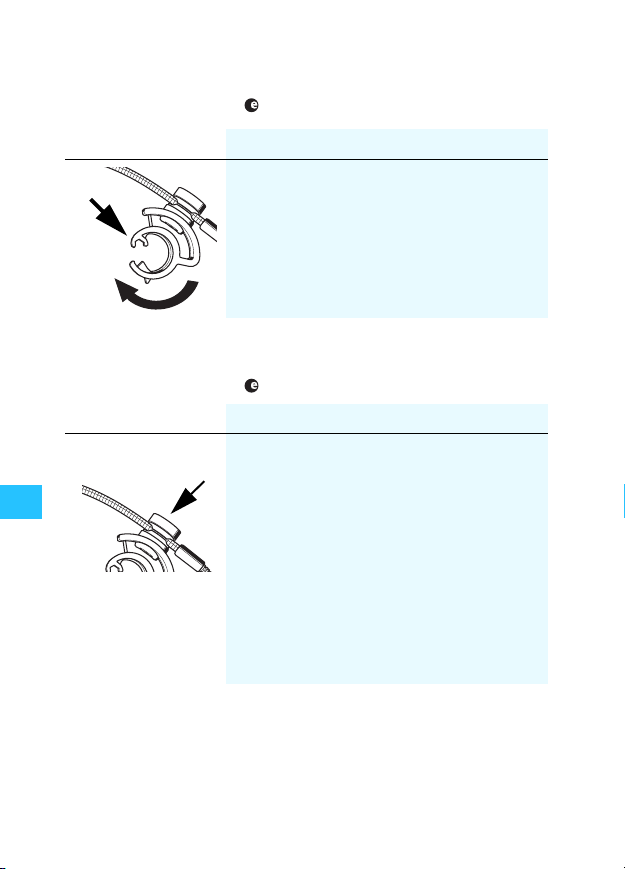
De slagwerkklem op de trommel bevestigen
Slagwerk/percussie ( 908 D)
Positionering Commentaar
1
2
De slagwerkklem MZH 908 D wordt op de
spanband van de trommel bevestigd.
Zet eerst de bovenste snapper op de spanband (1) en klem dan de slagwerkklem naar
onder toe vast (2).
Microfoon op de slagwerkklem bevestigen
Slagwerk/percussie ( 908 D)
Positionering Commentaar
Bevestig de microfoon op de slagwerkklem,
door de kartelbout aan de bovenkant iets
los te draaien. Plaats nu de zwanenhals van
de microfoon vanaf de zijkant in één van de
twee uitsparingen en draai de kartelbout
daarna weer vast.
U heeft de mogelijkheid om twee microfoons
op de slagwerkklem te bevestigen (bijv. bij
het opnemen van twee toms, wanneer er
weinig plaats is). Gebruik daarvoor de beide
uitsparingen in de slagwerkklem).
8
Page 68
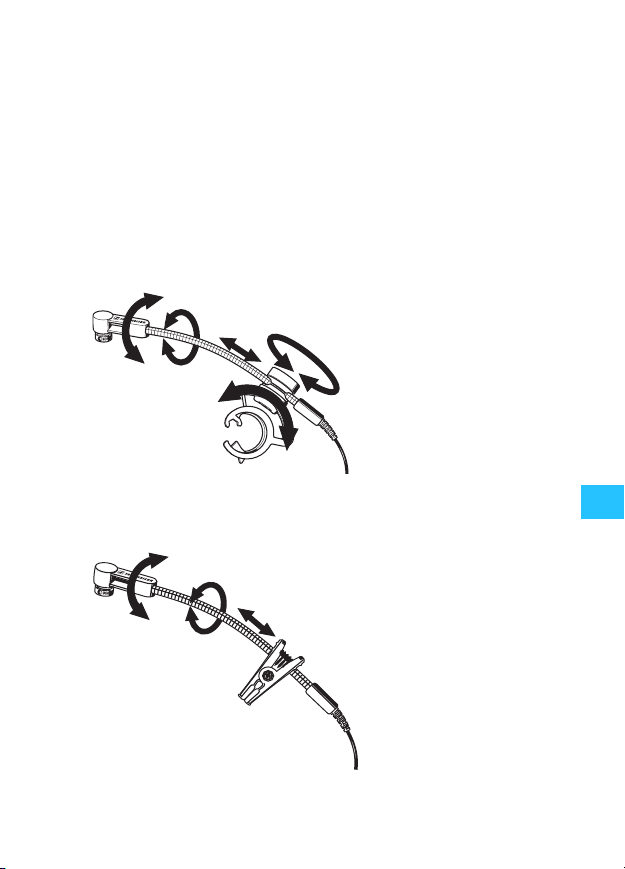
Optimale plaatsing van de microfoon
De veelzijdige instelmogelijkheden van de klemmen
MZH
908 D en MZH 908 B in combinatie met de flexibele
zwanenhals bieden u de mogelijkheid om de microfoon
optimaal op de geluidsbron in te stellen (zie pijltjes in de
afbeeldingen).
MZH 908 D
MZH 908 B
9
Page 69
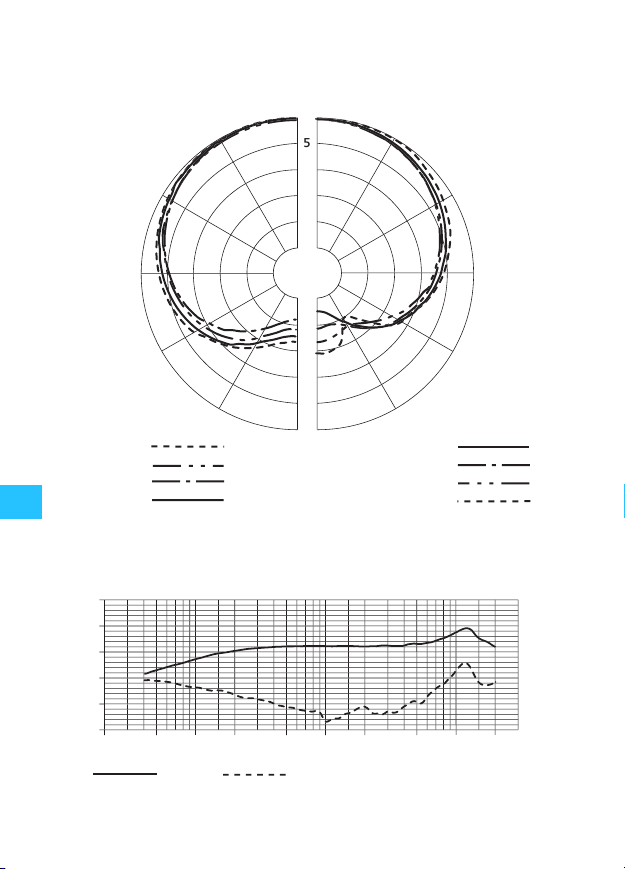
Pooldiagram
0
5
0
5
0
50
80
50
0
000
z
000
z
z
6000
z
z
z
z
000
z
0
50
60
0
80
0
00
00
000
000
0000
0000
80
30
v
1
1
2
2
125 H
250 H
1
Frequentiesnelheid
B
-
- 4
-
-
- 7
2
10
H
H
12
1
1
1
2
4
12
H
H
H
1
H
1
2
1
2
1
2
1
Page 70

Technische gegevens
908 B / 908 D / 908 B ew / 908 T ew
Omvormerprincipe permanent gepolariseerde
condensatormicrofoon
Frequentiebereik 40 – 20.000 Hz
Richtkarakteristiek nier
Vrij veld-onbelast- 4,0 mV/Pa
overdrachtsfactor 0,56 mV/Pa ( 908 T ew)
Nominale impedantie 100 Ω (symmetrisch)*
Min. afsluitimpedantie 2 kΩ*
Grenswaarde geluidspiek
bij 1 kHz 147 dB/SPL
Vervangingsgeluidsniveau
908 B, 908 D 35 dB(A)
908 B ew 30 dB(A)
908 T ew 39 dB(A)
Fantoomvoeding 12 – 48 V / 3 mA*
Stekker
908 B, 908 DXLR-3*
908 B ew / T ew 3,5-mm-jackplug
Gewicht
908 B, 908 D 130 g, 140 g
908 B ew / T ew 70 g
Afmeting Ø 47 x 193 mm
11
Page 71
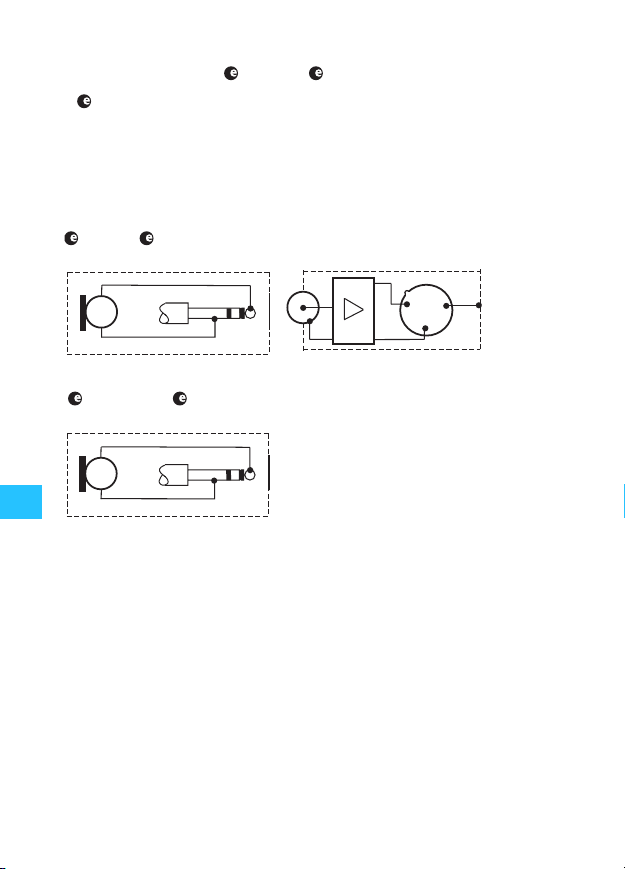
* met MZA 900 P ( 908 B / 908 D)
908 B ew / T ew voor rechtstreekse aansluiting op een
ew-zender
Aansluitbezetting stekker
908 B, 908 D
3,5 mm
908 B ew, 908 T ew
3,5 mm
+
12
3,5 mm
+
2
1
3
Page 72

Overzicht van microfoontoepassingen
Model
Toe pass ing
e901
e902
e904
e905
e906
e908B
e908B ew
e908D
e908T ew
e912
e914
Zang x
Koor x x
Studio, akoest.
x x x
instrumenten
Orkest x
Trompet, trombone x x x
Saxofoon x x x
Akoestische gitaar x
Akoestische bas x
Gitaarversterker x
Basversterker x
Leslie x x x x
Piano, vleugel x x
Kick-drum x x
Snaardrum x x x x
Hangende trom x x x x x
Staande trom x x x x x
Conga‘s x x x x
Bekken x
Percussie x x x x x x
Overhead
Conferentietafel,
x
altaar
Spreekgestoelte x
Theaterpodium x
e935/e945
13
Page 73

Verklaringen van de fabrikant
Garantie
2 jaar
Vergunning
Sennheiser electronic GmbH & Co. KG verklaren, dat dit toestel voldoet aan de toepasselijke CE-normen en voorschriften.
WEEE-verklaring
Breng dit apparaat aan het einde van zijn levensduur naar een
van de plaatselijke verzamelpunten of naar een kringloopwinkel.
Batterijen en accu’s
Lege oude accu's alleen inleveren bij de vakhandel of bij het chemisch afval.
14
Page 74

Sennheiser electronic GmbH & Co. KG
30900 Wedemark, Germany
Phone +49 (5130) 600 0
Fax +49 (5130) 600 300
www.sennheiser.com
Printed in Germany Publ. 04/07 511912/A01
 Loading...