

Page 1
Issue: 2018-03-07
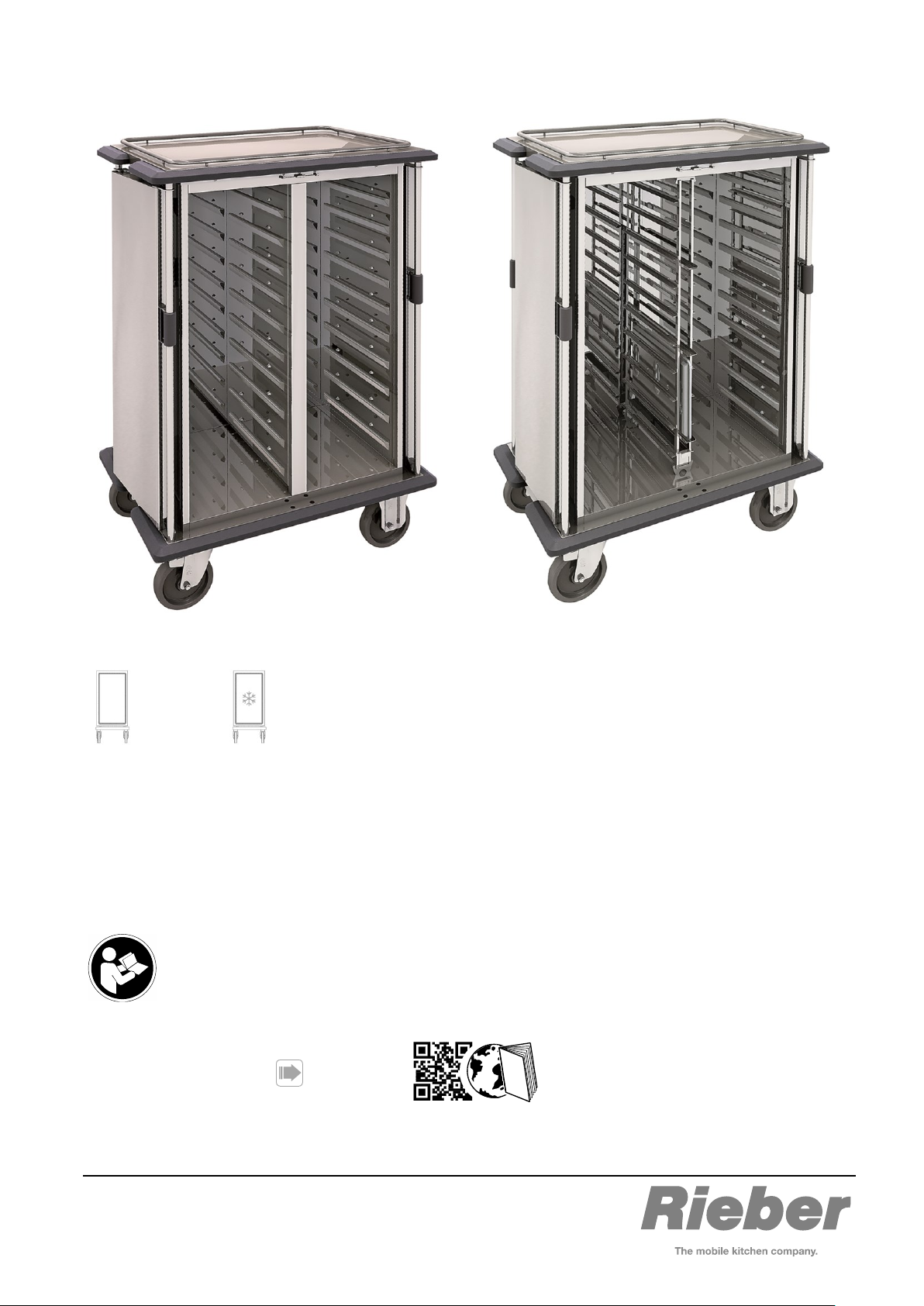
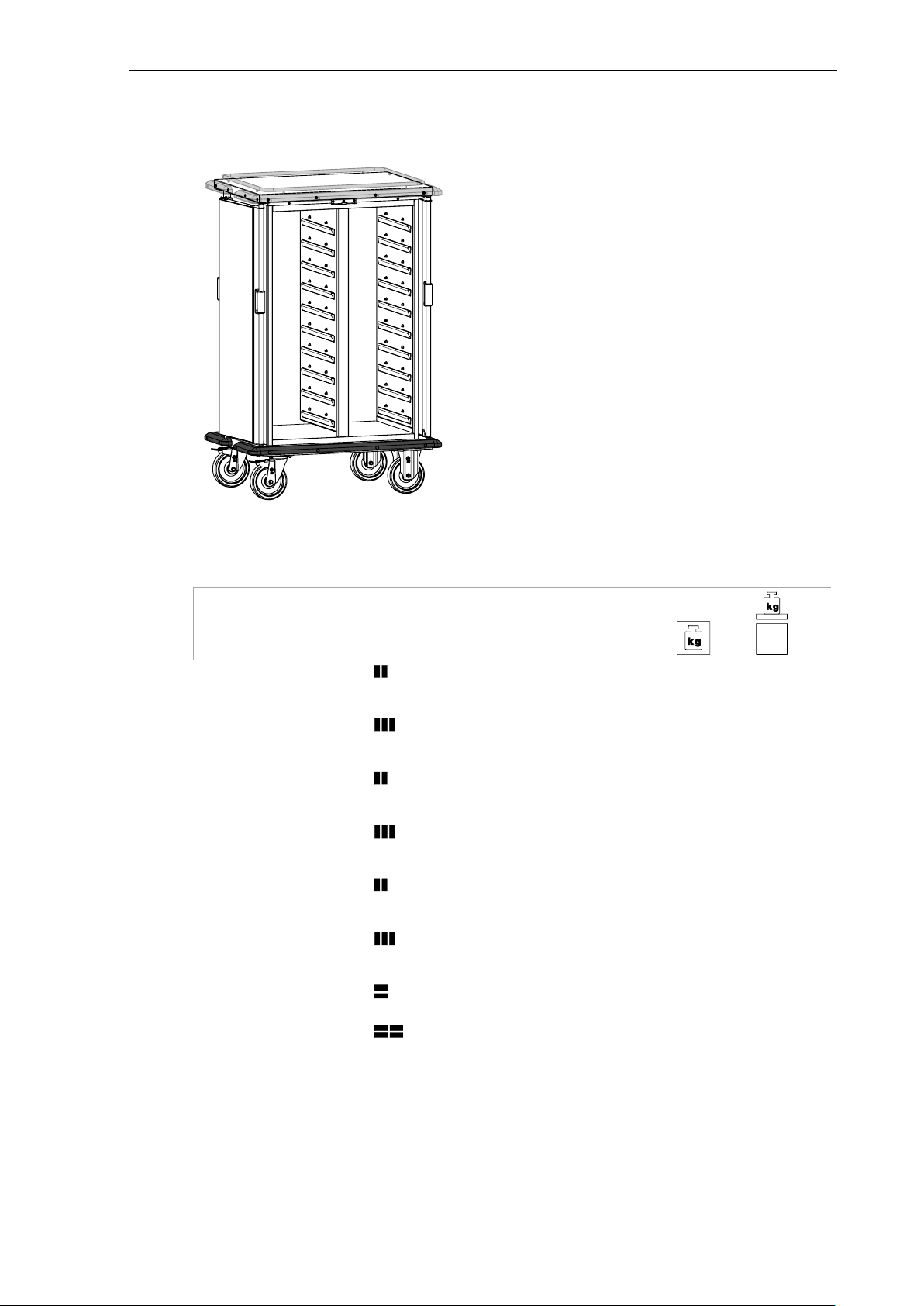
Design example TWF-C 3.0
Design example TWF-C 3.0-PK
… longer lasting cooling effect with cooling pellets
Tray Transport Trolley
Diverse selection of tray transport trolleys for your special requirements.
Diverse additional features
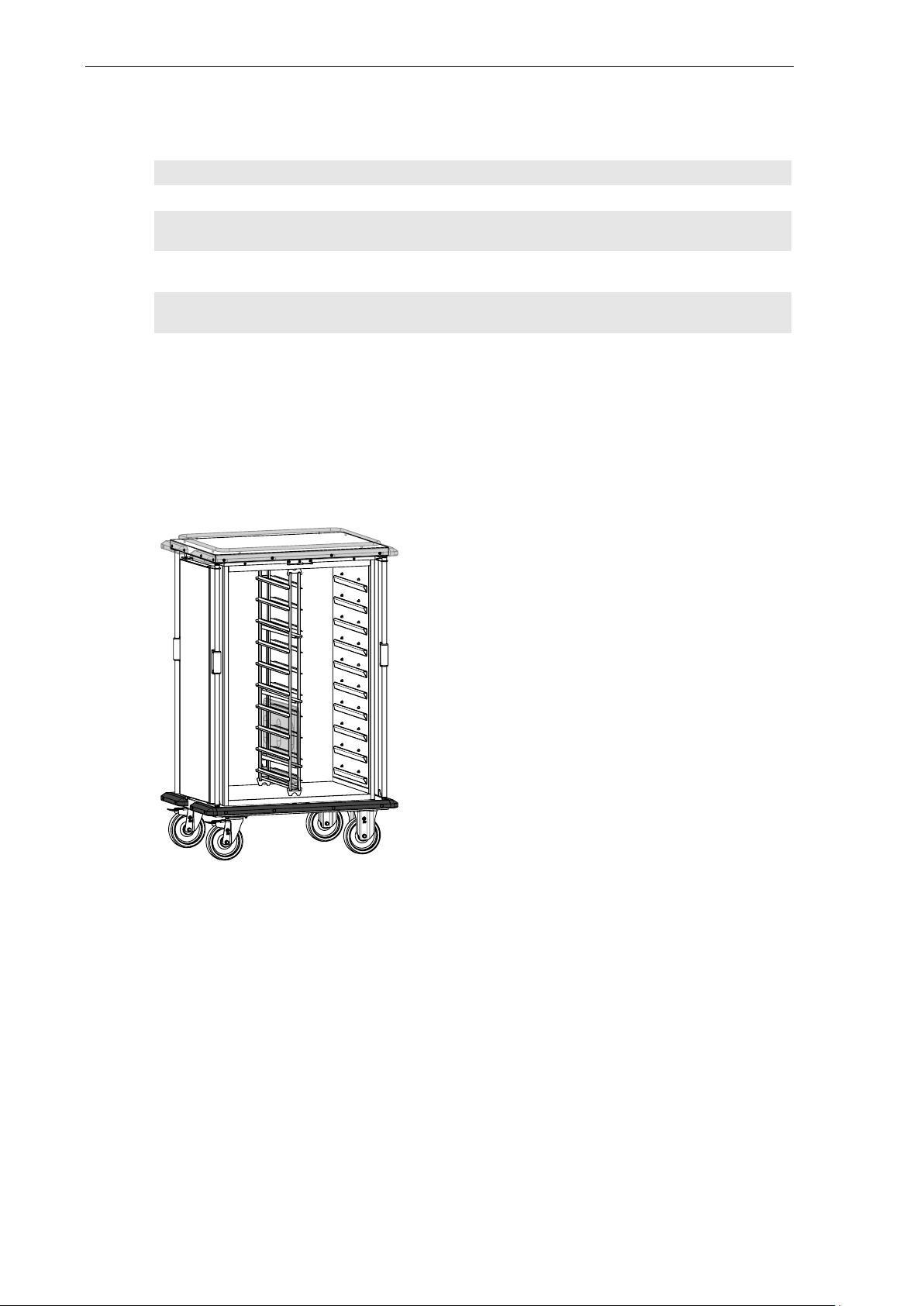
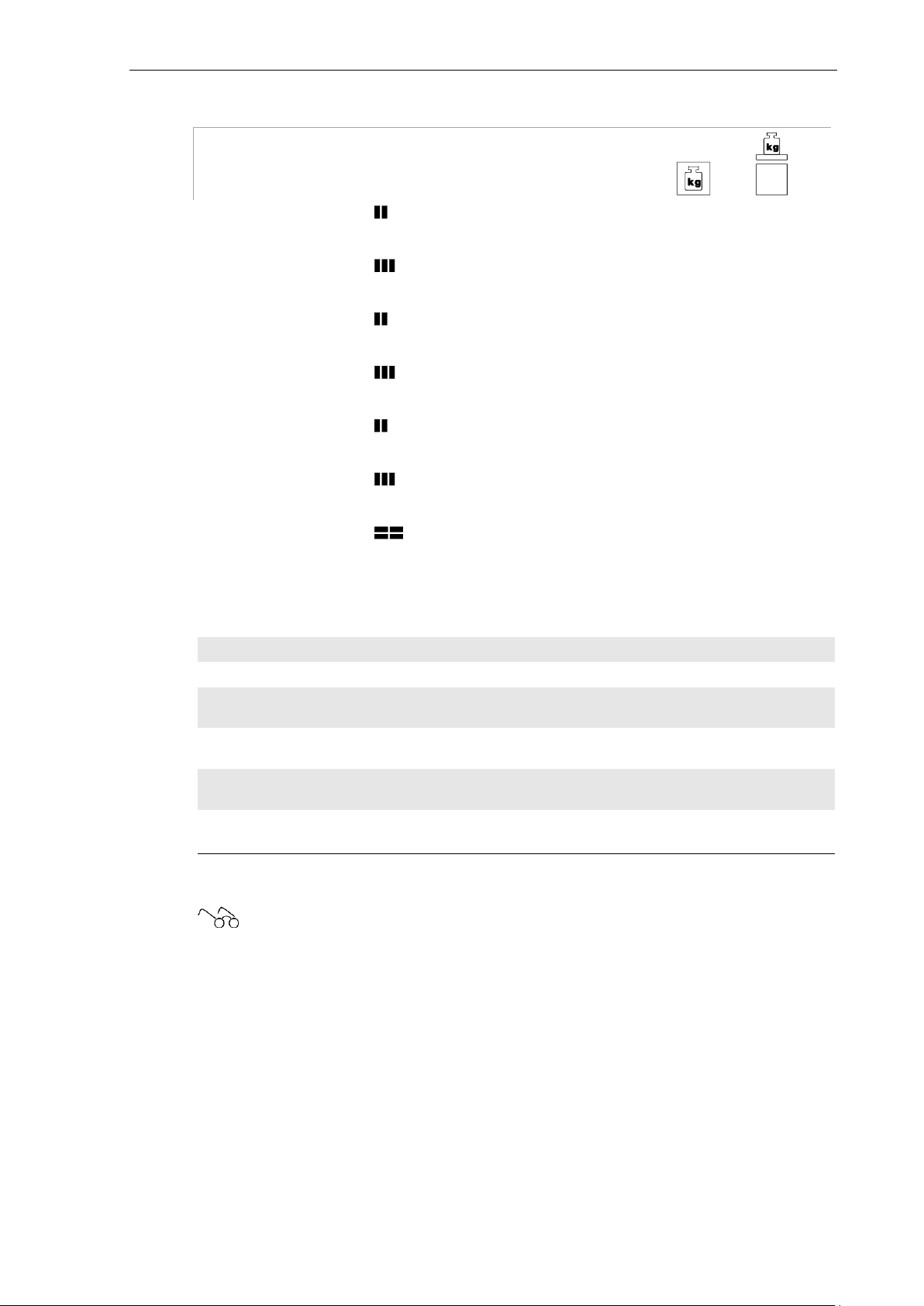
The illustrations show examples of versions, which do not necessarily have to be included in the scope of supply.
Observe the operating instructions
Translation of the Original Operating Instructions
DOWNLOAD: USER MANUAL
QR code on type plate
EN
Page 2
Contents
2 Rieber GmbH & Co. KG
CHECK HACCP
– In the area of HACCP documentation the CHECK CLOUD
platform offers the CHECK HACCP digital system, for simple, safe and transparent
temperature detection.
In addition to this, further digital features are possible in the area of hygiene and
service management. The automated digital answer to the analogue paper trail.
Our solutions provide quality, safety
and, in particular, a high level of energy efficiency and cost effectiveness.
Contents
1 Revision Index ................................................................................................................................................. 4
2 Important information ..................................................................................................................................... 4
2.1 The components of the technical documentation ................................................................................................ 4
2.2 Using this guide ................................................................................................................................................... 4
2.3 Representation conventions in the text ................................................................................................................ 5
2.4 Structure of safety instructions ............................................................................................................................ 6
2.5 Navigation aid for making selections for your specific requirements................................................................... 6
3 Safety instructions .......................................................................................................................................... 7
3.1 General behaviour ............................................................................................................................................... 7
3.2 On use of electrical appliances ............................................................................................................................ 7
3.3 Operator's duties .................................................................................................................................................. 8
3.4 Personnel qualification requirements ................................................................................................................... 9
3.5 Provide personal protective equipment (PPE) for personnel ............................................................................ 10
3.6 Appliance-specific safety instructions ................................................................................................................ 10
3.6.1 Risks due to unstable position ...................................................................................................................... 10
3.6.2 Risks during transport of the appliance......................................................................................................... 10
3.6.3 Risks due to electricity .................................................................................................................................. 11
3.6.4 Risks due to trapped moisture and mould formation .................................................................................... 12
3.6.5 Risks of slipping/falling .................................................................................................................................. 12
3.6.6 Risks of tilting/toppling over .......................................................................................................................... 13
3.6.7 Risks due to being enclosed or suffocation in the appliance ........................................................................ 13
3.6.8 Risks concerning the use of the appliance by children ................................................................................. 13
3.6.9 Safety and monitoring devices ...................................................................................................................... 14
3.7 Note the product identification and ensure its preservation .............................................................................. 15
3.8 Information about regulations to be followed ..................................................................................................... 16
3.9 Instructions on behaviour in an emergency ....................................................................................................... 16
4 Designated use .............................................................................................................................................. 18
4.1 Generally, the following are intended uses for the product ............................................................................... 18
4.2 Prevent any predictable misuse and abuse ....................................................................................................... 18
4.3 Special intended use for TWF-H-AWT appliances ............................................................................................ 19
4.4 Special intended use for TWF-AK appliances ................................................................................................... 19
4.5 Tray solution for closed facility ........................................................................................................................... 20
Page 3

Contents
Rieber GmbH & Co. KG
3
5 Description of appliance ............................................................................................................................... 20
5.1 Designations ...................................................................................................................................................... 20
5.2 Technical data .................................................................................................................................................... 22
5.2.1 General information ...................................................................................................................................... 22
5.2.2 Types TWF-C 3.0 .......................................................................................................................................... 23
5.2.3 Types TWF-C 3.0-PK .................................................................................................................................... 24
5.2.4 Types TWF-H-AWT ...................................................................................................................................... 26
5.2.5 Tray solution for closed facilities ................................................................................................................... 27
5.3 Optional features, accessories .......................................................................................................................... 28
5.4 Rieber system crockery ..................................................................................................................................... 32
5.4.1 Thermotray 1 and Thermotray 2 ................................................................................................................... 32
5.4.2 Combitray - insulated crockery ..................................................................................................................... 33
6 Things to know at delivery ........................................................................................................................... 36
7 Use ................................................................................................................................................................. 38
7.1 Safety information with regard to use ................................................................................................................ 38
7.2 General instructions for use ............................................................................................................................... 39
7.3 Types TWF-AK .................................................................................................................................................. 40
8 Cleaning, Maintenance and Care ................................................................................................................. 42
8.1 Safety information relating to cleaning, maintenance and care ........................................................................ 42
8.2 Cleaning agents for stainless steel .................................................................................................................... 43
8.3 Choose the correct cleaning method ................................................................................................................. 44
8.4 Overview ............................................................................................................................................................ 46
9 Troubleshooting ............................................................................................................................................ 47
9.1 Notes on troubleshooting ................................................................................................................................... 47
9.2 Disposing of your product .................................................................................................................................. 48
10 Warranty and liability .................................................................................................................................... 49
11 Excerpt from the EU Declaration of Conformity ......................................................................................... 49
12 Index ............................................................................................................................................................... 50
13 Contact Details .............................................................................................................................................. 51
Page 4
Important information
4 Rieber GmbH & Co. KG
Revision
Change
2016-03-30
Provisional new edition
2017-12-06
Series C has been changed; mobile kitchen company logo
2018-03-07_f1
Adjusted to new reconstruction
Read the operating instructions before first using the product.
Keep this guide in a safe place and pass it onto the next owner should you
wish to part with the product.
1 Revision Index
2 Important information
2.1 The components of the technical documentation
Separate instructions for CHECK HACCP
www.rieber.de
Select " Service" at the top of the display list.
Operating instructions for tray transport trolley
Spare parts and necessary instructions.
www.rieber.de
Select "Customer Service" at the top of the display list.
The Rieber price guide provides information about a wide variety of accessories.
www.rieber.de
At the top of the display list, select: Search price guide
Or: Contact the manufacturer, Rieber, or your dealer
Do you wish to have the operating instructions in another language?
www.rieber.de
Select "Customer Service" at the top of the display list.
2.2 Using this guide
This guide contains important information about how you can use the appliance safely and
correctly.
Our customers often express the wish to have one compact guide instead of a number of different
guides for these product variants, which have similar functions.
If there are any shortcomings in your opinion, please do not hesitate to let us know. We endeavour
to become even better with your help.
Page 5
Rieber GmbH & Co. KG
5
NOTE
indicates potential damage to property without any personal injury.
Failure to observe this note can lead to material damage.
User tip
Useful information or tip
Empty weight
Maximum loading
Please add your notes here
2.3 Representation conventions in the text
Important information
Lists are represented in this way.
Instructions on certain actions are represented in this way.
▌ The result of the action is represented in this way.
See ‘. . . ’ cross-references are represented in this way.
# Explanation of graphic symbols used
Page 6
Important information
6 Rieber GmbH & Co. KG
DANGER
indicates
imminent danger
.
Failure to follow these warning instructions will result in
serious bodily
injury or even death
.
WARNING
indicates a
potentially hazardous situation
.
Failure to follow these warning instructions
may
cause
serious bodily
injury or even death
.
CAUTION
indicates a
potentially harmful situation
.
Failure to follow these warnings
may
cause
minor bodily injury
.
2.4 Structure of safety instructions
The signal words DANGER - WARNING - CAUTION classify the degree of risk of bodily injury in an actual
situation. You can avoid injury by complying with the behavioural rules provided.
The warning triangle symbol indicates a "General Danger".
2.5 Navigation aid for making selections for your specific requirements
# Advantages at a glance
Diverse selection of tray transport trolleys for your special requirements.
CHECK HACCP – the digitisation and organisation system from Rieber, for a safe,
transparent and traceable process.
# Note for your order
The order no. can be supplemented by the order numbers of optional features.
Select accessories such as *Rieber system tableware' separately.
‘Optional features, accessories’, Page 28 et seqq.
Page 7

Rieber GmbH & Co. KG
7
3 Safety instructions
This section covers residual risks and hazards associated with the intended use of the appliance. We have
provided a list of all generally valid safety instructions which must be followed.
In the following section, safety information relating to a particular operation or situation is placed before the
appropriate operation step or description of the situation.
The information provided here such as ‘Basic rules of conduct’, ‘Operator's obligations’ etc. only refers to the
legally required observance of requirements such as the Workplaces Ordinance (ArbStättV) according to
German law.
3.1 General behaviour
This appliance meets the current state of the art and complies with all acknowledged technical
safety-related regulations. Nevertheless hazards may still arise.
Only use this appliance when it is in fault-free condition and according to the
instructions in this user guide.
During all phases of the appliance's life please ensure that the appliance is safely
integrated into its environment.
Safety instructions
Refrain from rearranging or changing the device.
3.2 On use of electrical appliances
Safety instructions according to EN 60745-1:
Work area
Keep your work area clean and tidy. A messy or unlit work area can cause accidents.
Keep children and other people away from the area when work is being carried out.
Electrical safety
The plug on the unit must fit in the socket. Do not modify the plug in any way. Never use an adapter
in combination with earthed appliances. Using an unmodified plug and a suitable socket will reduce
the risk of an electric shock.
Avoid bodily contact with earthed surfaces such as pipes, heating units, cookers and refrigerators.
The risk of an electric shock is greater when your body is earthed.
Keep the device away from rain or moisture. Allowing water to get into an electric appliance will
increase the risk of electric shock.
Do not use the cable for anything other than the intended purpose to disconnect the plug from the
socket. Always remove whilst holding onto the plug. Keep the cable away from heat, oil, sharp edges
or the moving parts of other appliances. Using damaged or tangled cables increases the risk of
electric shock.
When working with an electrical appliance outdoors, only use extension cables which are permitted
for outdoor use. Using an extension cable suitable for outdoor use reduces the risk of electric shock.
Potential risk of fire due to heat build-up. Unwind the cable from the cable drum to prevent a possible
heat build-up and/or cable fire. The coupling must have splash protection, must be made of rubber or
be rubber-coated.
Page 8

Safety instructions
8 Rieber GmbH & Co. KG
Safety guidelines for persons
Be attentive and pay attention to what you are doing, act rationally when working with an electrical
appliance. Do not use the appliance when tired or under the influence of drugs, alcohol or
medication.
Just one moment of inattention whilst using the appliance can result in serious injury.
Make sure the appliance cannot be switched on unintentionally. Double check that the main switch is
in the "OFF" position before inserting the plug in the socket. Connecting the appliance to the power
supply while it is switched on can cause an accident.
Careful handling and use of electrical appliances
Never use an electrical appliance with a faulty switch. An electrical appliance which can no longer be
switched on or off is dangerous and must be repaired.
Keep unused electrical devices away from children. Do not allow the appliance to be used by
persons who are not familiar with it or persons who are not familiar with this user guide. Electrical
appliances are dangerous when in the hands of inexperienced persons.
Treat the device with care. Check that moving parts are functioning properly and do not block; check
whether parts are broken or damaged and impairing the functioning of the device. Have any
damaged parts repaired before using the appliance. Many accidents are caused by poorlymaintained electrical appliances.
Use electrical appliances, accessories etc in accordance with these instructions and in a manner that
is specified for this particular appliance type. When using the appliance, please take into account the
working conditions and the work being carried out. Using electrical appliances for other uses than
that intended can lead to hazardous situations.
Service
Only have the device repaired by qualified and authorised staff. Only use original spare parts. In this
way you can ensure that the appliance remains safe.
3.3 Operator's duties
Operator
The operator is the person who operates the appliance for commercial or economic purposes either
himself/herself or lets others use it and bears the legal appliance responsibility for protection of the
user, staff or any third parties during operation.
Operator's duties
The appliance is used in commercial applications. For this reason, the operator of the appliance
must meet all legal duties relating to work safety.
In addition to the safety instructions in this guide, the safety, accident prevention and environmental
protection regulation applying to the application of the appliance must be complied with.
In particular, the following shall apply:
The operator must be familiar with the applicable work safety regulations and
identify, by carrying out a risk analysis, any additional hazards which are due to the
place where the appliance is used. These hazards must be addressed in the form of
operating instructions governing the operation of the appliance.
Throughout the period of use of the device the operator must check that the
operating instructions which he has compiled comply with the current regulations
and adapt them if necessary.
The operator must clearly regulate and define the responsibilities for installation,
operation, troubleshooting, maintenance and cleaning.
The operator must ensure that all employees who use the device have read and
understood these instructions. In addition, the operator must train the personnel and
inform them of the hazards involved at regular intervals.
Page 9

Rieber GmbH & Co. KG
9
The operator must provide the personnel with the necessary protective equipment
and issue mandatory instructions on wearing it.
In addition, the operator must ensure that the appliance is always in a perfect technical condition.
For this reason, the following shall apply:
The operator must ensure that the maintenance intervals defined in this guide are
obeyed.
The operator must regularly check all safety devices for functionality and
completeness.
The operator must ensure that the appropriate media connections are present.
The operator must ensure that structural safety measures are performed.
3.4 Personnel qualification requirements
Safe operation requires certain technical skills and personal qualification of each person.
The responsibility for organization lies with the ‘Designated Representative’
(operator).
According to EN 50110-1 a work supervisor is ‘a person who is appointed to take
direct responsibility for the performance of work. If necessary, this responsibility can
be assigned partly to other persons. [...] The designated representative must instruct
all persons involved in the work on all hazards which may not be obvious for them’.
The work may only be performed by ‘instructed persons’ who have been trained
accordingly. Training, instructions must be repeated, proper understanding must be
verified (ideally by way of an appropriate test).
Only ‘Qualified Staff’ are allowed to carry out repair work.
According to IEC 60204-1, skilled workers are 'People who, due to their relevant
training and experience, are able to recognize risks and avoid potential hazards.'
Electrical work may only be carried out by trained and experienced electricians.
Electro-technically instructed persons may only work under the supervision of a
qualified electrician.
Work on the cooling unit should only be carried out by authorised skilled personnel
like a refrigeration specialist or a member of the Rieber Customer Service.
Repairs during the warranty period may only be carried out by the Rieber service
department, otherwise any resulting claims may lapse. Please contact the
manufacturer's service department at Rieber.
Safety instructions
Chapter ‘Warranty and liability’, page 49
Page 10
Safety instructions
10 Rieber GmbH & Co. KG
3.5 Provide personal protective equipment (PPE) for personnel
The requirements for safety shoes are regulated by standards. The safety shoes in this case are intended to
protect the toes. S1 safety shoes are protective shoes with the requirement that a protective toecap is present.
As with S2 and S3 safety shoes, the protective toecap has a load capacity of 200 joules. These requirements
are regulated in EN 20345:2004 for safety shoes.
Ensure that the personnel wear the personal protective equipment appropriate to the
relevant situation.
Wear safety shoes to prevent injuries during transport of the appliance.
3.6 Appliance-specific safety instructions
This chapter describes general, appliance-specific safety instructions. In the following section, additional safety
information relating to a particular operation or situation is placed before the appropriate operation step or
3.6.1 Risks due to unstable position
description of the situation.
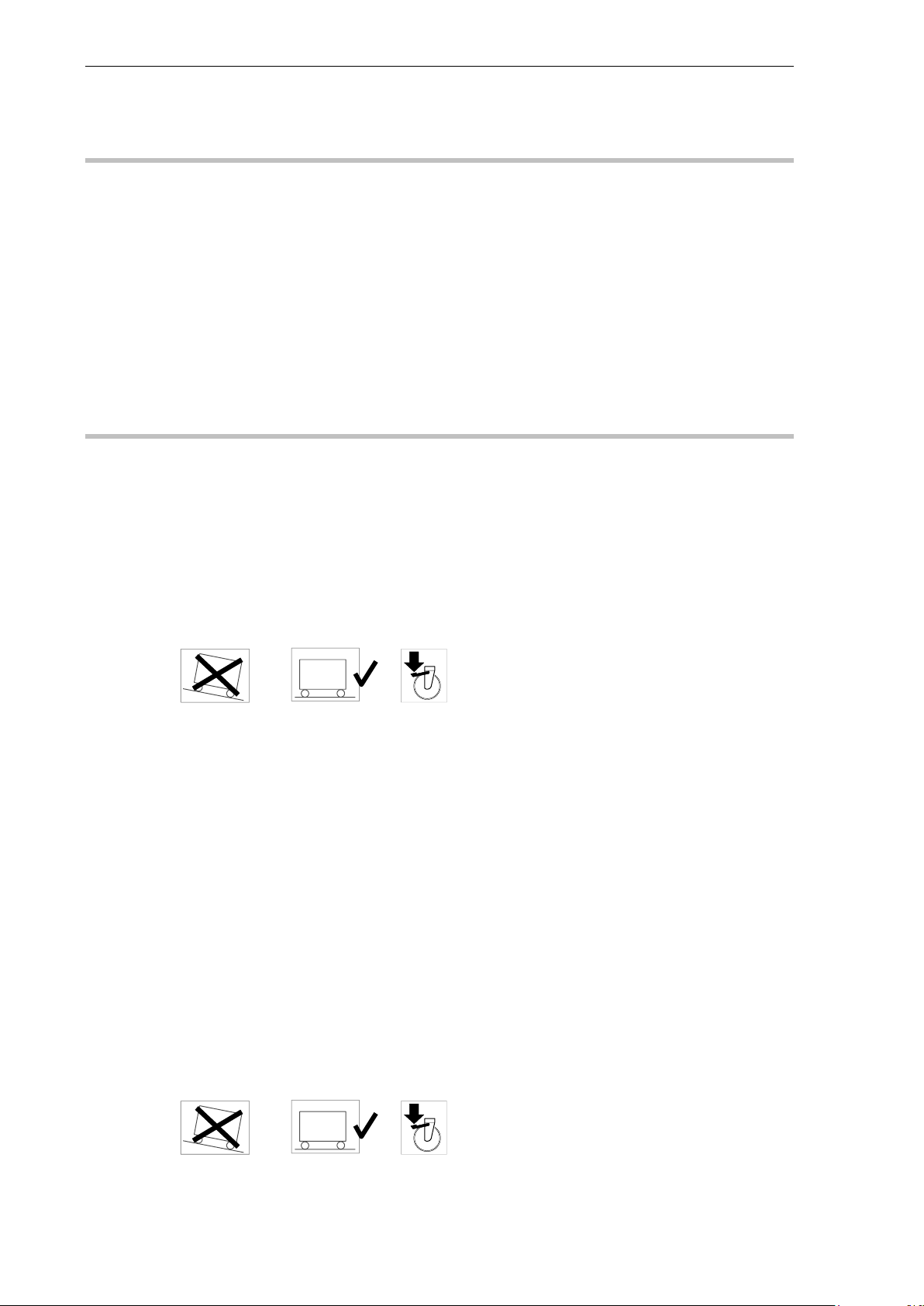
Avoid unintentional moving of the appliance and the resulting risks. Prevent the
appliance from rolling away accidentally using the two parking brakes. Only park the
device on flat surfaces.
Observe general rules for safety against overturning:
Load the appliance from bottom to top to increase safety against overturning.
Unload the appliance from top to bottom.
3.6.2 Risks during transport of the appliance
Keep the doors closed during transport.
Push the appliance using the pushing handles; this gives you direct access to the
casters and retainers.
Move the appliance with 2 people if necessary.
Risks due to uncontrollable forces and overall weight of the appliance. Do not use
the appliance on a sloping surface, only move it on a flat surface.
Avoid unintentional moving of the appliance and the resulting risks. Prevent the
appliance from rolling away accidentally using the two parking brakes. Only park the
appliance on flat surfaces.
Page 11

Safety instructions
Rieber GmbH & Co. KG
11
Only park the appliance on objects if a guard rail (optional) is provided. Make
realistic decisions when ensuring that deposited objects cannot fall. Secure objects
if necessary, for example with lashing straps or transport straps. Do not exceed the
maximum loading on the top, maximum 20 kg.
NOTE
Do not lift or transport the appliance with material handling equipment or a lift truck,
as this could damage the underside.
Wear personal protective equipment (PPE) such as safety shoes to prevent injuries
such as crushing, for example due to toes being run over.
NOTE
Note the permissible step height, maximum 4 mm, otherwise the casters may be
damaged.
NOTE
Do not lift the appliance using the pushing handle, as this could cause damage.
3.6.3 Risks due to electricity
→ Applies to types TWF-AK (… with cooling device, active convection cooling)
Danger of electric shock. Always disconnect the power cable before transporting the
appliance.
Danger of electric shock. Keep the device away from rain or moisture. Allowing
water to get into an electric appliance will increase the risk of electric shock.
Install the electric connection cable in such a way that risks like falling over or
tearing off the cable, etc. are avoided.
Page 12
Safety instructions
12 Rieber GmbH & Co. KG
!
→ Applies to types TWF-C 3.0-PK
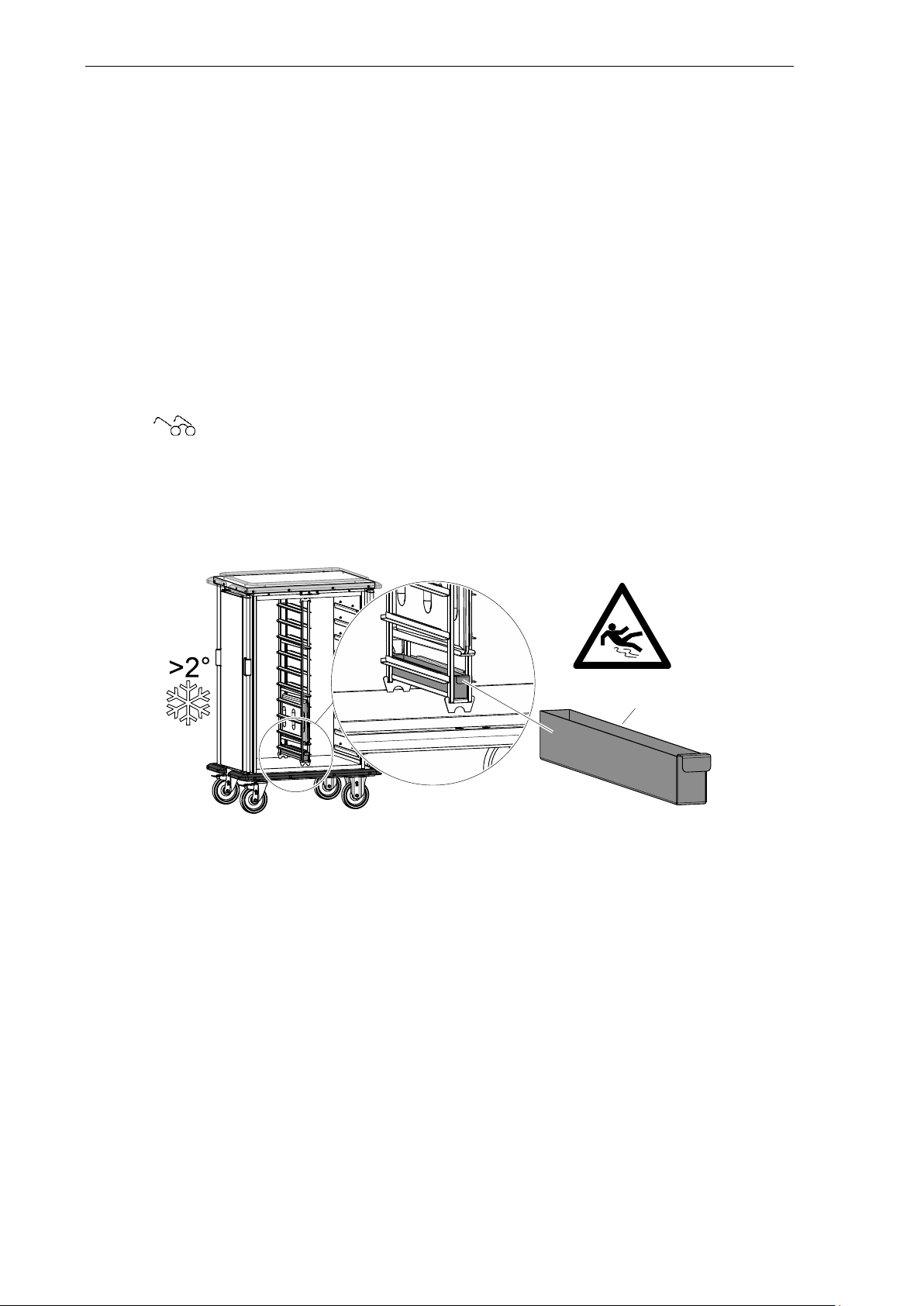
Collection tank for condensation
3.6.4 Risks due to trapped moisture and mould formation
Water jet can wet insulation materials on the side, which would impair the insulation effect; mould
formation, unpleasant odours etc. could result.
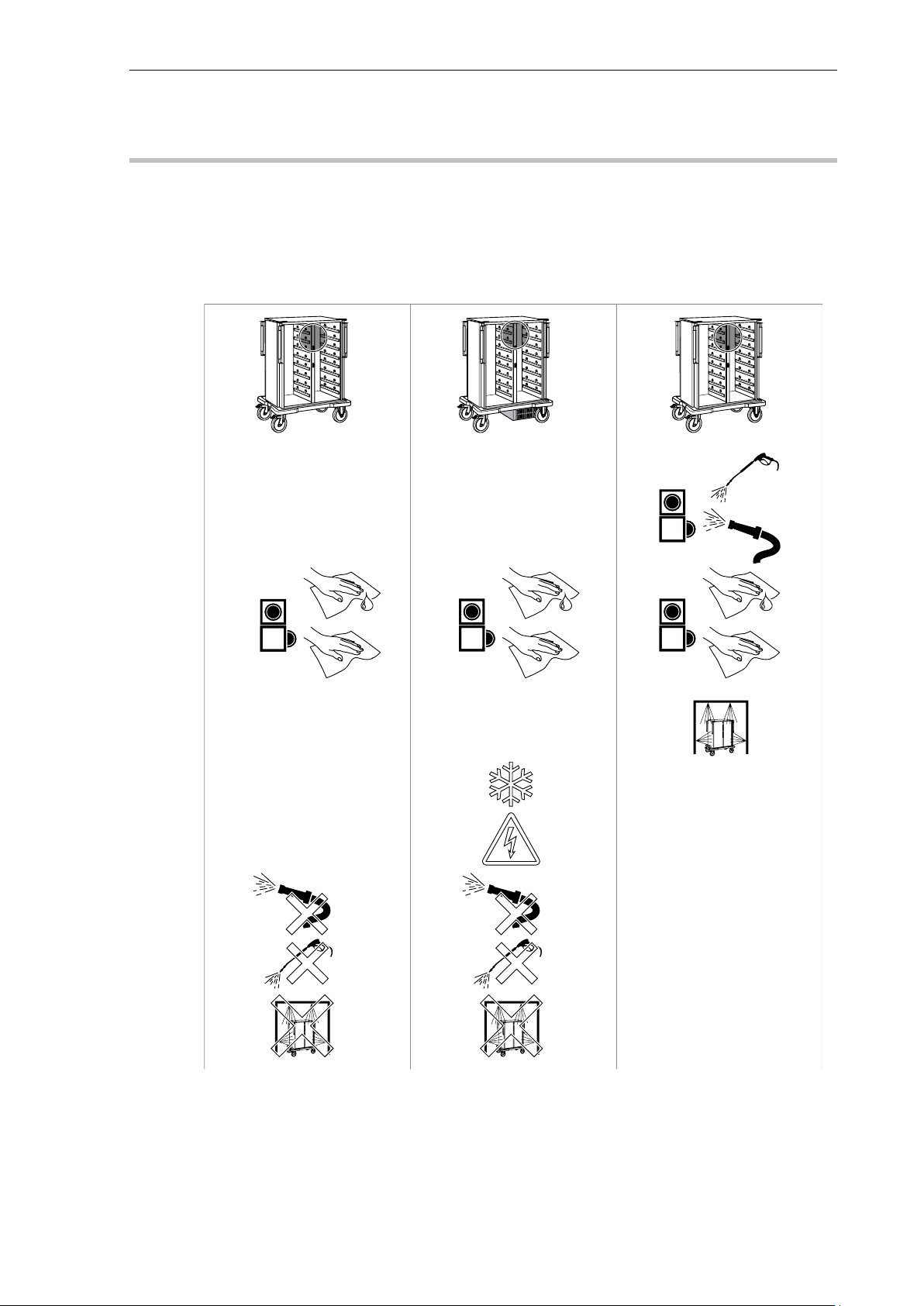
TWF-C 3.0, TWF-C 3.0-PK, TWF-AK may only be wiped down with a moist cloth.
Do not expose to water jets.
In the event of moisture damage, dry the appliance in the heating cabinet if
necessary.
Maximum permissible temperature +45 °C.
In the event of mould formation, lock the appliance and arrange for a hygiene
specialist to carry out the necessary measures.
Take suitable measures against human error, for example against the risk of
confusing appliances with each other, as when cleaning.
‘Operator's duties’, page 8
3.6.5 Risks of slipping/falling
Slipping hazard. Risk of falling. Empty the collection tank for condensation in due
time.
The device can be brought to the right temperature in advance in a cold chamber or
heat cabinet, between +2 °C and +45 °C. Do not allow it to go below +2 °C.
Page 13
Rieber GmbH & Co. KG
13
!
3.6.6 Risks of tilting/toppling over
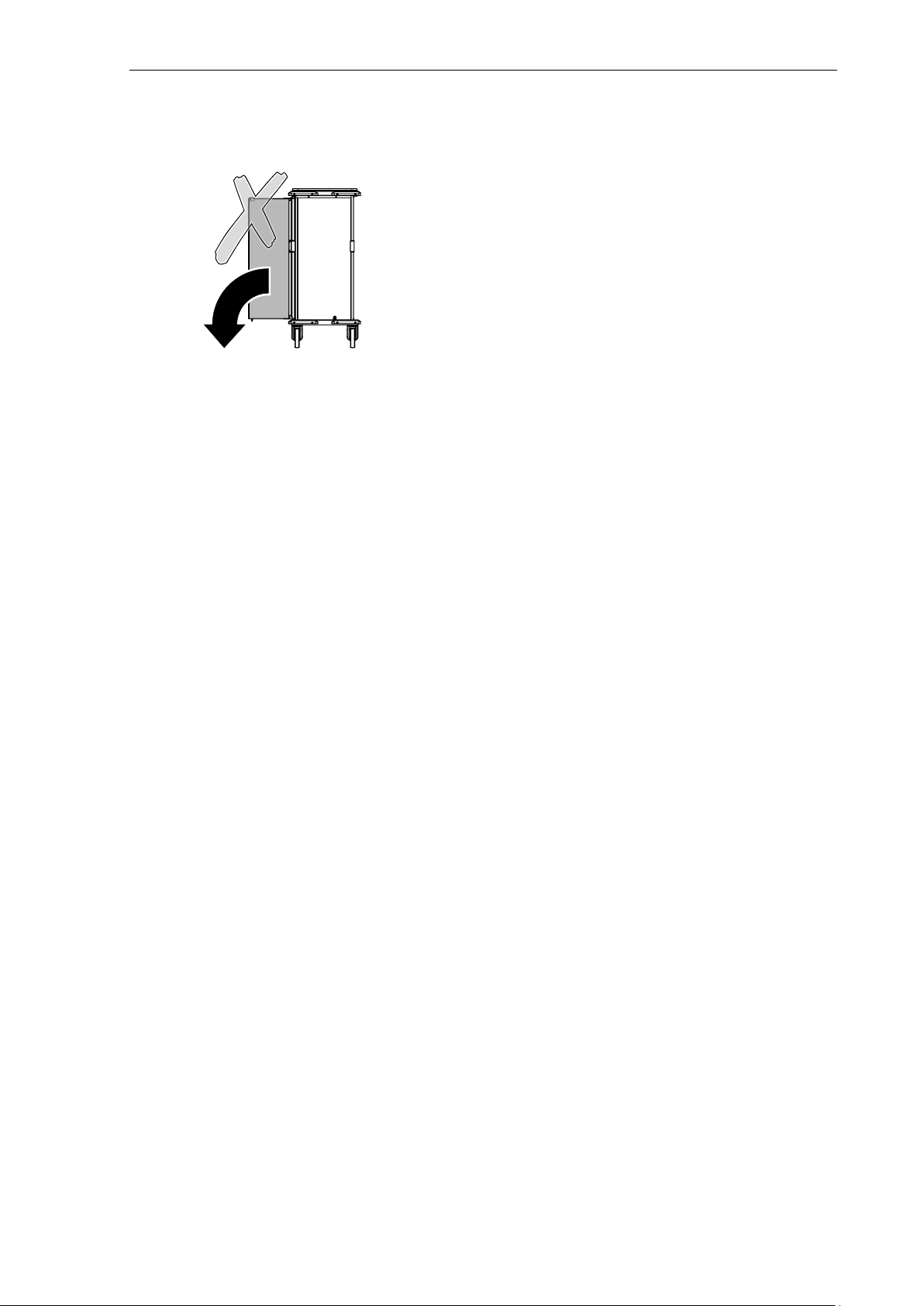
Secure the position of the door at the end positions with a door lock.
Do not tilt the device at the open door.
3.6.7 Risks due to being enclosed or suffocation in the appliance
Safety instructions
→ applies to all appliances
Danger of suffocation if persons get shut inside the appliance. Secure the appliance
against children at play and people with limited sensory and mental abilities. Use in
public areas or for self-service is only permitted under constant supervision.
→ Applies to types TWF-AK (… with cooling device, active convection cooling)
Danger of suffocation if persons get locked in the appliance. Make sure persons with
limited sensory and mental ability have no access to the appliance.
3.6.8 Risks concerning the use of the appliance by children
This appliance may be used by children over 12 and by persons with limited
physical, sensory and intellectual abilities or a lack of experience and/or knowledge
if they are supervised or if they have been instructed in the safe use of the appliance
and have understood the resulting dangers.
Children may not play with the appliance. They could shut themselves inside it.
Cleaning and user maintenance may not be carried out by children without
supervision.
Page 14
Safety instructions
14 Rieber GmbH & Co. KG
Design example TWF-C 3.0-PK
3.6.9 Safety and monitoring devices
# General
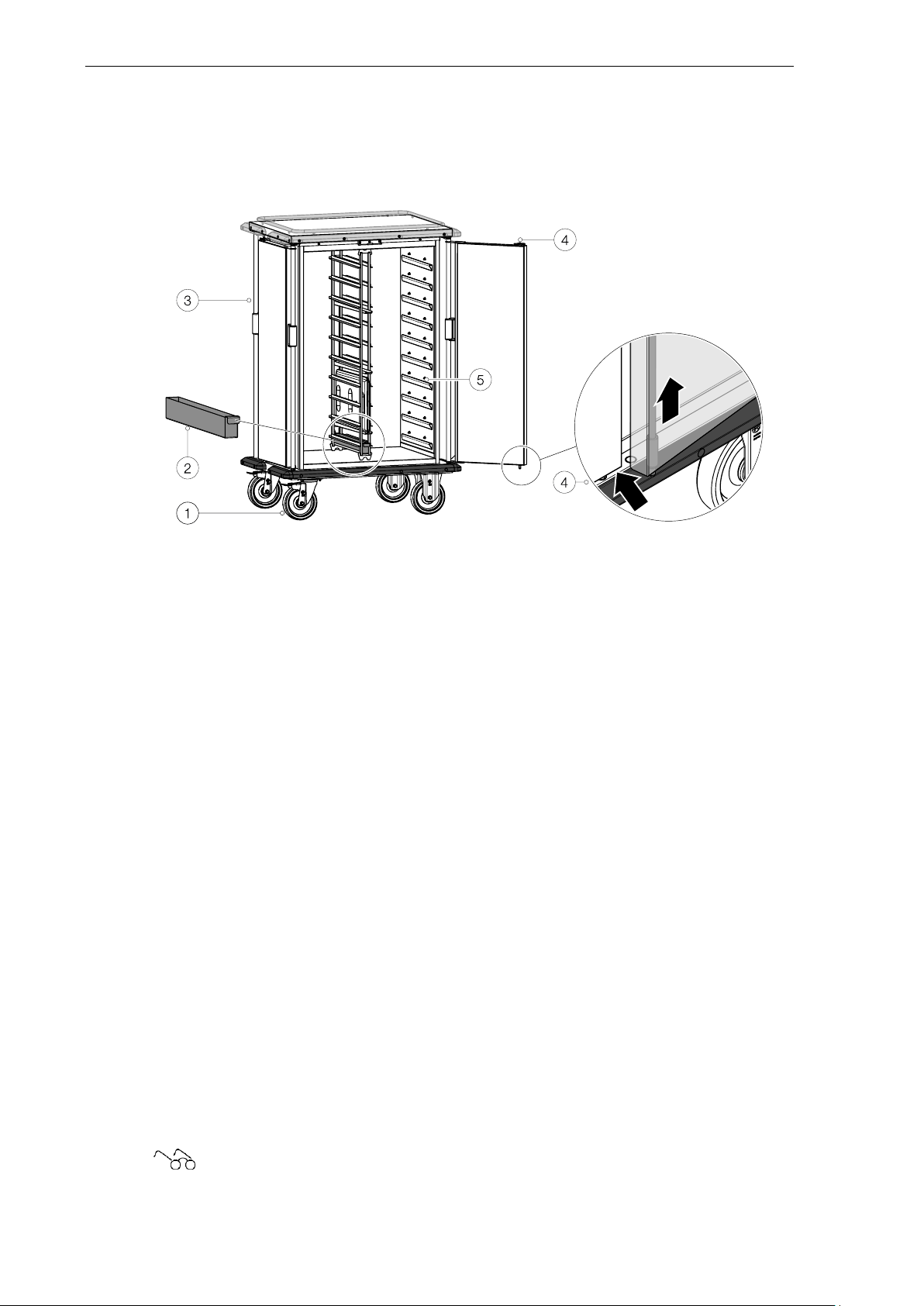
1 2x swivel casters with parking brake → secure appliance in position to prevent it from rolling
away and act as an ‘emergency brake’.
2 Collecting tank for condensation → Condensation running of the cooling pellets is collected.→
Applies to types TWF-C 3.0-PK.
3 Handle → for pushing the appliance. → Push the appliance using the pushing handle; this
gives you direct access to the casters and the parking brakes. If necessary ask someone to
help you.
There are two movable, long guard rollers on the grips to move the device. These are to
protect against pinching/squashing fingers/hands and also against damage from banging
against door locks.
4 Door rod with handle → The door self-locks. Open the door by taking hold of the handle and
pulling it up. Door stop in ed positions.
5 Ledges to fix position and prevent the tray from tipping
The lower 'encompassing bumper rail' protects against impact and avoids property
damage.
The upper 'encompassing bumper rail' (optional) provides additional protection
against property damage, e.g. during transportation by car.
# → Applies to types TWF-AK (… with cooling unit, active convection cooling)
The product switches itself off automatically in the event of a fault in the control
system..
To increase your safety we recommend that you install a residual current device
with a tripping current of 30 mA upstream of the appliance.
Every 6 hours an automatic defrosting operation takes place, which prevents the
evaporator from icing up; the condensation evaporates. The defrosting phase takes
around 20 minutes when the power to the appliance is switched on.
The defrosting LED (3) lights up.
‘Types TWF-AK’, page 40
Page 15
Safety instructions
Rieber GmbH & Co. KG
15
TWF-C 3.0
TWF-C 3.0-PK
TWF-AK
TWF-H-AWT
These product identifications can be ordered by request.
3.7 Note the product identification and ensure its preservation
Page 16
Safety instructions
16 Rieber GmbH & Co. KG
The 'collection tank for condensation' and its position in the appliance are not
marked.
The own weight of the appliance as well as the permissible loading are not marked
on the device.
3.8 Information about regulations to be followed
In addition to this user guide there are a range of health and safety and other regulationsthat are
relevant for the operation of this cooking station; these include HACCP food hygiene regulations for
example.
Maximum keep-warm time according to HACCP is 2 hours.
3.9 Instructions on behaviour in an emergency
Prepare first-aid measures. Scenarios:
Crushing of tips of toes due to being run over
Crushing of parts of the body during movement of the appliance
Contusions, stab and cut injuries from falling tableware; cutlery or sharp, sharp-
edged object.
Risk of burns and scalds from hot parts such as food, soups etc.
Sliding/falling Draining condensation can make the floor slippery if the collection
tank for condensation is not emptied.
An emergency could be a fire in the proximity. Make sure you take precautionary measures.
For electrical appliances: Switch the appliance off immediately in an emergency. Unplug the mains
plug. Switch off the fuse if necessary.
Store the emergency equipment, including the relevant instructions, at a readily accessible place
near the place of use.
Instructions on dealing with faults in the refrigeration system
→ Applies to types TWF-AK (… with cooling device, active convection cooling)
Work at the cooling unit may only be carried out by refrigeration experts.
Refrigerant in the cooling circuit: Contact can cause eye irritation and cardiovascular disorders.
Fire-fighting measures:
Use water spray jet or water mist, alternatively carbon dioxide or powder
extinguisher.
Call the fire brigade; Use self-contained breathing apparatus.
Page 17

Safety instructions
Rieber GmbH & Co. KG
17
Information on the insulating material between inner and outer sheet / carcass:
Polyurethane rigid foam board
This information is intended for the operator in the event of a large fire.
In the event of a fire thick black smoke develops, which contains hazardous decomposition
products. Breathing in the decomposition products can cause a health hazard. In the event of a fire
wear self-contained breathing apparatus if necessary.
Suitable extinguishing media: Alcohol-resistant foam, carbon dioxide (CO2), dry powder, water
spray jet
Information on Armaflex insulation material
→ Applies to types TWF-AK (… with cooling device, active convection cooling)
This information is intended for the operator in the event of a large fire.
This appliance contains around 1 m2 Armaflex, for sealing lines. Armaflex insulation material can
burn and release toxic fumes.
First-aid measures:
Call a doctor.
Move to fresh air after inhalation.
In the event of contact with the skin wash off with water and soap.
After eye contact remove contact lenses, hold eyelids open and rinse for at least
15 minutes with plenty of clean, running water.
Call a doctor.
Fire-fighting measures:
Water spray jet; Carbon dioxide (CO2); Dry powder; Foam
Use self-contained breathing apparatus. Wear protective suit.
Page 18
Designated use
18 Rieber GmbH & Co. KG
4 Designated use
This chapter provides information on the intended use of the product and warns against foreseeable misuse or
abuse, for your safety.
4.1 Generally, the following are intended uses for the product
For mobile meal services in chain and general catering, hotels and restaurants; also
for managed care facilities and schools. Food delivery / food distribution in building.
Only keep either hot or cold food in an appliance at any one time.
To prevent injuries, any use in public and/or for self-service is only allowed under
supervision.
Push the appliance using the pushing handle.
Only spare parts that have been approved and specified by the manufacturer may
be used. Certain repairs may only be carried out by the Rieber service department.
The intended use includes compliance with the technical data.
The person responsible for the work, e.g. the chef, defines how the tray transport
trolley is actually used and is responsible for such use.
For use only by appropriately trained and suitable operating personnel.
4.2 Prevent any predictable misuse and abuse
Water jet can wet insulation materials on the side, which would impair the insulation effect; mould
formation, unpleasant odours etc. could result.
→ Applies to: TWF-C 3.0, TWF-C 3.0-PK, TWF-AK
TWF-C 3.0, TWF-C 3.0-PK, TWF-AK should only be wiped with a moist cloth and
be kept away from the effects of liquids. Do not expose to water jets.
Page 15, 38, 42
Deliver/distribute food packaged/wrapped.
Do not lift the appliance using the pushing handle, as this could cause damage.
Push the appliance using the pushing handle.
Do not pull or push the appliance over sharp edges, danger of material damage.
Do not use this appliance on poor floor conditions.
▌ We are not able to rule out the possibility of marks appearing on the floor due to friction
with casters or the formation of scratches due to split cracks in the casters, for example.
▌ We are not able to rule out the possibility that the casters may be damaged or become
unusable due to thresholds or sharp edges on the floor.
Only transport the appliance in its correct position (operating position).
Page 19
Rieber GmbH & Co. KG
19
Machine-aided transport, using fork lift trucks or lift trucks, is not permitted. The
transportation of TWF-H-AWT may differ depending on the specific order.
Not intended for private domestic use.
Do not use the appliance in aggressive ambient conditions, for example extremely
salt-laden air such as close to the sea or at a swimming pool with a chlorinated
atmosphere, as this could damage the stainless steel.
Incorrect cleaning can substantially and irreparably damage the stainless steel
surfaces.
‘Choose the correct cleaning method’, page 44
4.3 Special intended use for TWF-H-AWT appliances
# Intended uses of the product are as follows:
TWF-H-AWT stands for order-specific special versions in hygiene design H3 for
'automatic goods transport'. This can be, for example, a flexible transport system
(FTS) or an electric overhead conveyor (EHB).
Use the device only for the contractually agreed designation.
Designated use
# Avoid incorrect use and misuse:
A frequently requested use of the product is the transportation of trays of all
variants, sterile goods, pharmaceutical goods, dirty and dirty laundry and waste.
Only use the appliance for the intended or contractually agreed purpose.
The operator of the appliance must meet all legal duties relating to work safety. It
may be necessary to provide special instructions for the operating staff. A special
product identification may be advisable; If necessary, contact the manufacturer.
‘Operator's duties’, page 8
4.4 Special intended use for TWF-AK appliances
# Intended uses of the product are as follows:
For keeping portioned (refrigerated) food cold, not for cooling food down.
The appliance can be brought to temperature beforehand in a cold chamber, down
to +2 °to C.
This appliance is intended for use up to an altitude of 4000 metres above sea level.
# Avoid incorrect use and misuse:
Fill TWF-AK with sufficiently pre-chilled food. Otherwise condensation could run off
and damage the parquet floor. Slipping hazard.
automatic defrosting process. Comply with the HACCP regulations.
‘Types TWF-AK’, page 40
Page 20
Description of appliance
20 Rieber GmbH & Co. KG
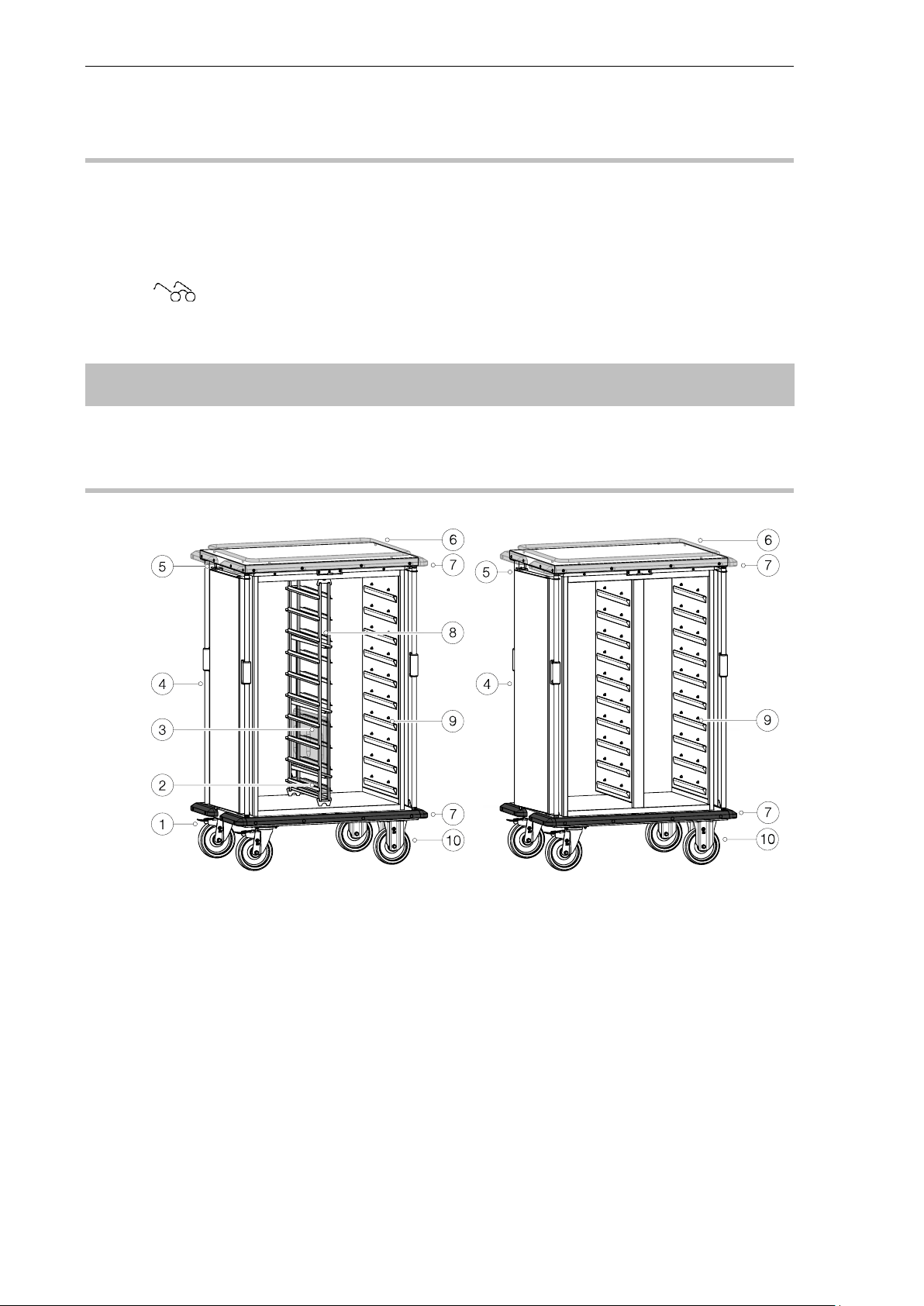
Design example TWF-C 3.0-PK
Design example TWF-C 3.0
4.5 Tray solution for closed facility
# Intended uses of the product are as follows:
For close facilities, for example a hospital for the mentally ill or a prison. Special
solution.
Safe meal trays, containers, lids, set
Chapter ‘Tray solution for closed facilities’, page 27
5 Description of appliance
This chapter has interesting facts about the set-up and functionality of this appliance
5.1 Designations
1 2x caster with parking brake → secures appliance in position to prevent it from rolling away
and acts as 'emergency brake'
2 Collection tank for condensation → applies to TWF-C 3.0-PK
3 Cooling pellets for chilling (accessories) → applies to TWF-C 3.0-PK
4 Pushing handle → for pushing the TWF
5 Door rod with handle →The door self-locks. Otherwise, take hold of the handle and
open/close. Door stop in ed positions.
6 Guard rail (optional)
7 Bumper rail → to prevent damage to property during collisions,
(impact protection at top is optional)
8 Dividing wall → filled with cooling pellets for type TWF-C 3.0-PK
9 Deep-drawn support ledges and anti-tipping mechanisms, to prevent the tray from tipping
10 Fixed caster, 2x
Page 21
Description of appliance
Rieber GmbH & Co. KG
21
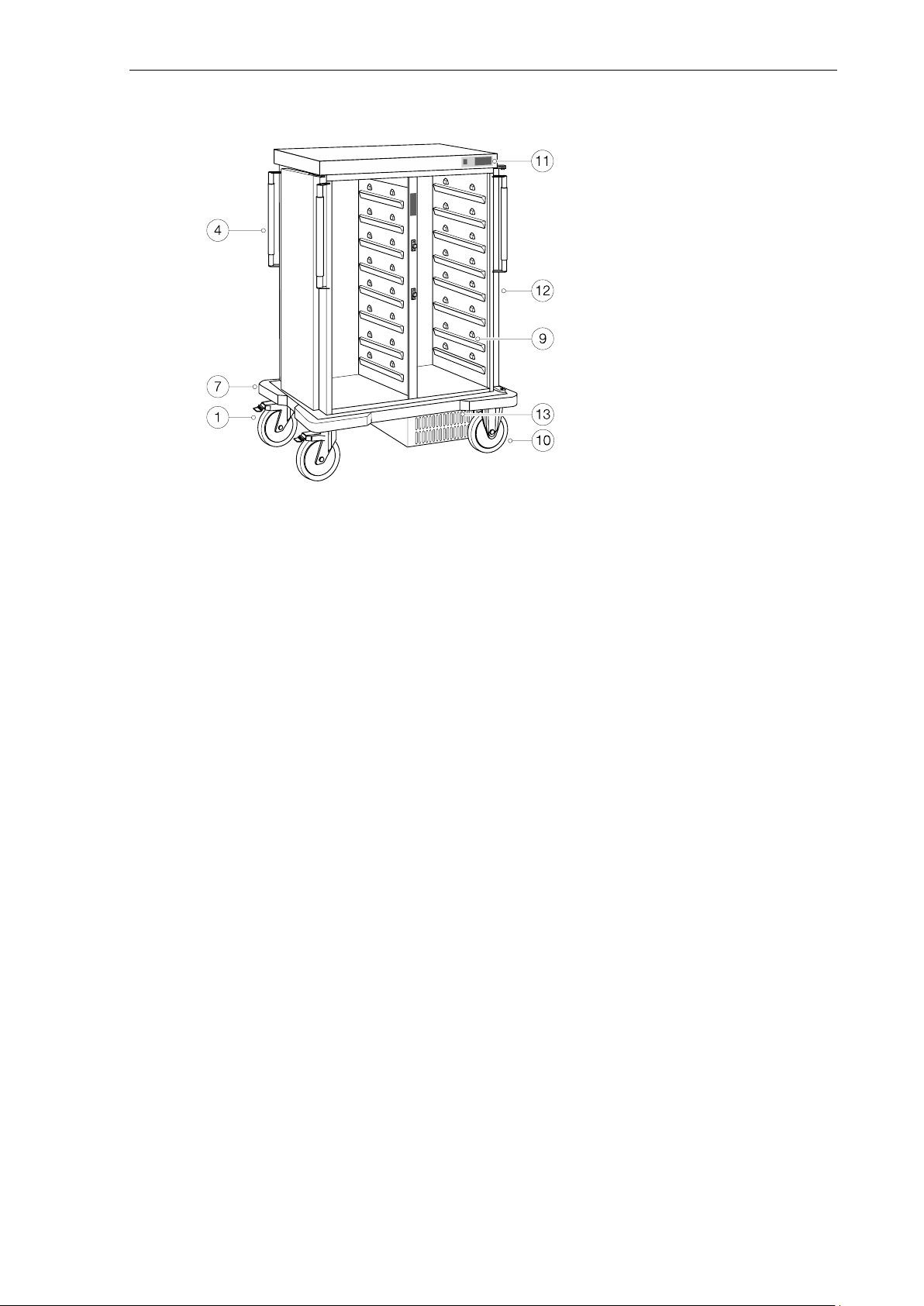
Design example with convection cooling
→ Types TWF-AK
11 Control unit → ON/OFF rocker switch, digital controller, applies to types TWF-AK
12 Electric cable with mains plug and support → applies to types TWF-AK
13 Cooling unit with active convection cooling. → applies to types TWF-AK
Page 22
Description of appliance
22 Rieber GmbH & Co. KG
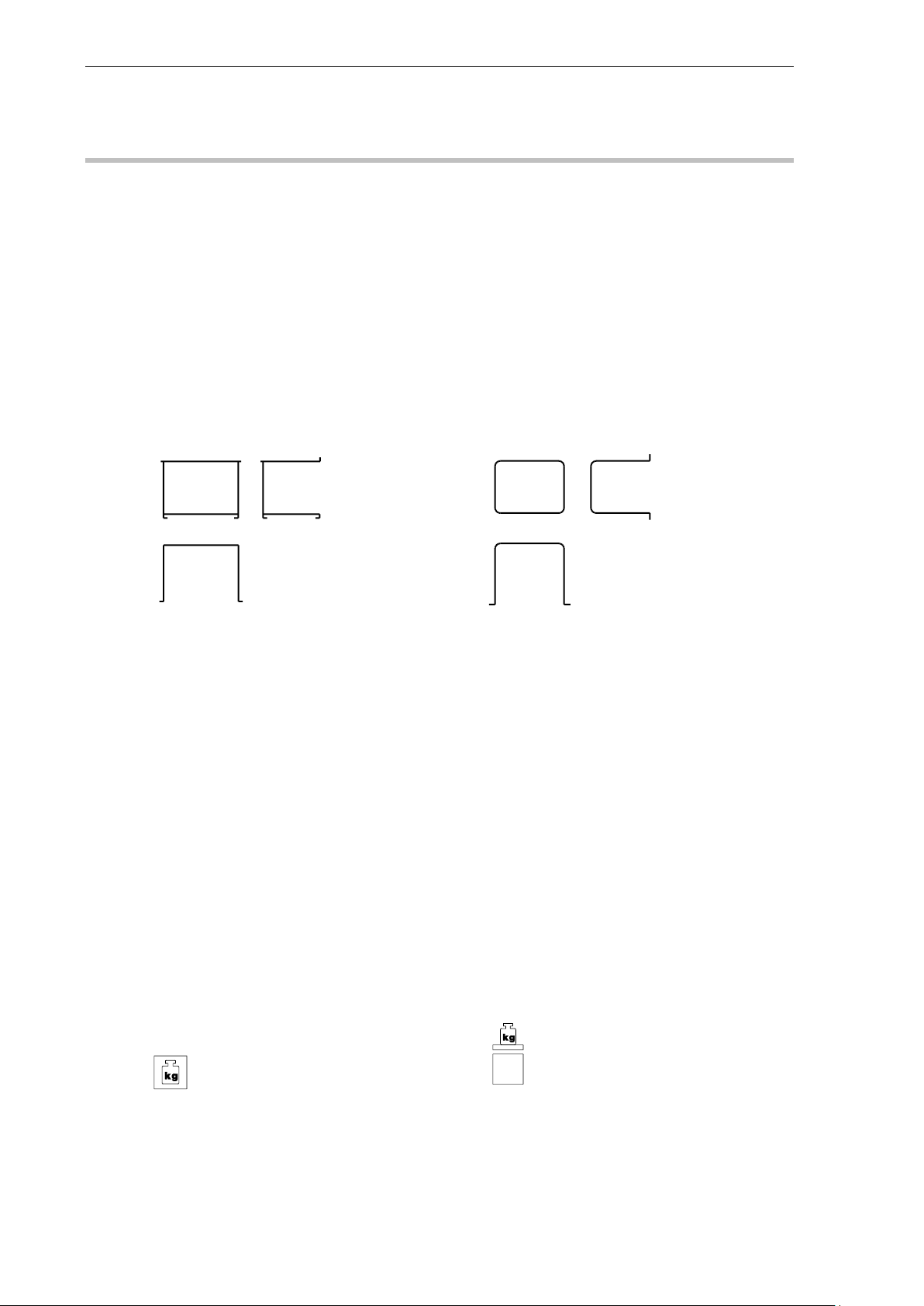
Standard HS design
Hygienic design H3
Empty weight
Maximum loading
5.2 Technical data
5.2.1 General information
Housing made of chromium-nickel steel, material no. 1.4301, double-walled,
thermally insulated.
Secure against tray tipping thanks to deep-drawn rails, rail spacing 115 mm.
Rustproof casters in accordance with DIN 18867, Part 8. Wheel diameter 200 mm.
Ball bearing. Fork and rim made of stainless steel, 2 swivel castors, 2 fixed castors.
DIN 18865-9:1997 Food Distribution Equipment, Part 9 is complied with.
The standard HS design refers to: Floor or walls permanently attached to each other
or detachable. Any curvatures and supports.
→ Applies to: TWF-C 3.0, TWF-C 3.0-PK, TWF-AK
Hygienic design H3 refers to: Floor, walls and cover welded tightly and gap-free.
All curvatures ≥ 10 mm.
→ Applies to: TWF-H-AWT
# Information on standardised dimensions:
Euronorm EN = 530 x 370 mm
Gastronorm GN = 530 x 325 mm
# Abbreviations used
Tray transport trolley is often abbreviated with TWF
# Explanation of graphic symbols used
Page 23
Rieber GmbH & Co. KG
23
Example
Designation
Order no.:
Standard
L x W x H [mm]
TWF-C 3.0
2 x 8
88 44 02 04
EN
1087 x 765 x 1425
124
64
88 44 02 05
GN ” ”
”
TWF-C 3.0
3 x 8
88 44 05 06
EN
1522 x 765 x 1425
168
96
88 44 05 07
GN ” 169
”
TWF-C 3.0
2 x 10
88 44 03 06
EN
1087 x 765 x 1655
138
80
88 44 03 07
GN ” 139
”
TWF-C 3.0
3 x 10
88 44 06 06
EN
1522 x 765 x 1655
188
120
88 44 06 07
GN ” 190
”
TWF-C 3.0
2 x 12
88 44 04 04
EN
1087 x 765 x 1885
153
96
88 44 04 05
GN ” 154
”
TWF-C 3.0
3 x 12
88 44 07 04
EN
1522 x 765 x 1885
208
144
88 44 07 05
GN ” 211
”
TWF-C 3.0
1 x 20
88 44 09 04
EN / GN
827 x 875 x 1655
112
80
TWF-C 3.0
2 x 20
88 44 12 06
EN / GN
1407 x 875 x 1655
182
160
5.2.2 Types TWF-C 3.0
Description of appliance
Encompassing bumper rail at top (optional), standard HS design
Page 24
Description of appliance
24 Rieber GmbH & Co. KG
TWF
―
Tray transport trolley with swing door
TWF
―
C 3.0
… Status 3.0
TWF
―
C 3.0 2
x
10 … 2 x cupboard, each with 10 support ledges, lengthwise
compartments
TWF
―
C 3.0 3
x
10 … 3 x cupboard, each with 10 support ledges, lengthwise
compartments
TWF
―
C 3.0 2
x
20 ... 2 x cupboard, 10 support rails each, cross compartments, 2
trays, one behind the other
Example
# Explanation of the type designation
5.2.3 Types TWF-C 3.0-PK
Encompassing bumper rail at top (optional), standard HS design
Prolonged passive cooling with cooling pellets (accessories) possible.
Page 25
Description of appliance
Rieber GmbH & Co. KG
25
Designation
Order no.:
Standard
L x W x H [mm]
TWF-C 3.0-PK
2 x 8
88 44 02 06
EN
1087 x 765 x 1425
120
64
88 44 02 07
GN ” ”
”
TWF-C 3.0-PK
3 x 8
88 44 05 08
EN
1522 x 765 x 1425
160
96
88 44 05 09
GN ” 161
”
TWF-C 3.0-PK
2 x 10
88 44 03 08
EN
1087 x 765 x 1655
133
80
88 44 03 09
GN ” 134
”
TWF-C 3.0-PK
3 x 10
88 44 06 08
EN
1522 x 765 x 1655
178
120
88 44 06 09
GN ” 180
”
TWF-C 3.0-PK
2 x 12
88 44 04 06
EN
1087 x 765 x 1885
147
96
88 44 04 07
GN ” 148
”
TWF-C 3.0-PK
3 x 12
88 44 07 06
EN
1522 x 765 x 1885
196
144
88 44 07 07
GN ” 198
”
TWF-C 3.0-PK
2 x 20
88 44 12 07
EN / GN
1407 x 875 x 1655
174
160
TWF
―
Tray transport trolley with swing door
TWF
―
C 3.0-PK
… Status 3.0, passive cooling thanks to cooling pellets
TWF
―
C 3.0-PK
2 x 10
… 2 x cupboard, each with 10 support ledges, lengthwise
compartments
TWF
―
C 3.0-PK
3 x 10
… 3 x cupboard, each with 10 support ledges, lengthwise
compartments
TWF
―
C 3.0-PK
2 x 20
… 2 x cupboard, each with 20 support ledges, crosswise
compartments
Cooling pellet
→ Accessories for TWF-C 3.0-PK
See ‘Optional features, accessories’, page 28 et seqq.
# Explanation of the type designation
Page 26
Description of appliance
26 Rieber GmbH & Co. KG
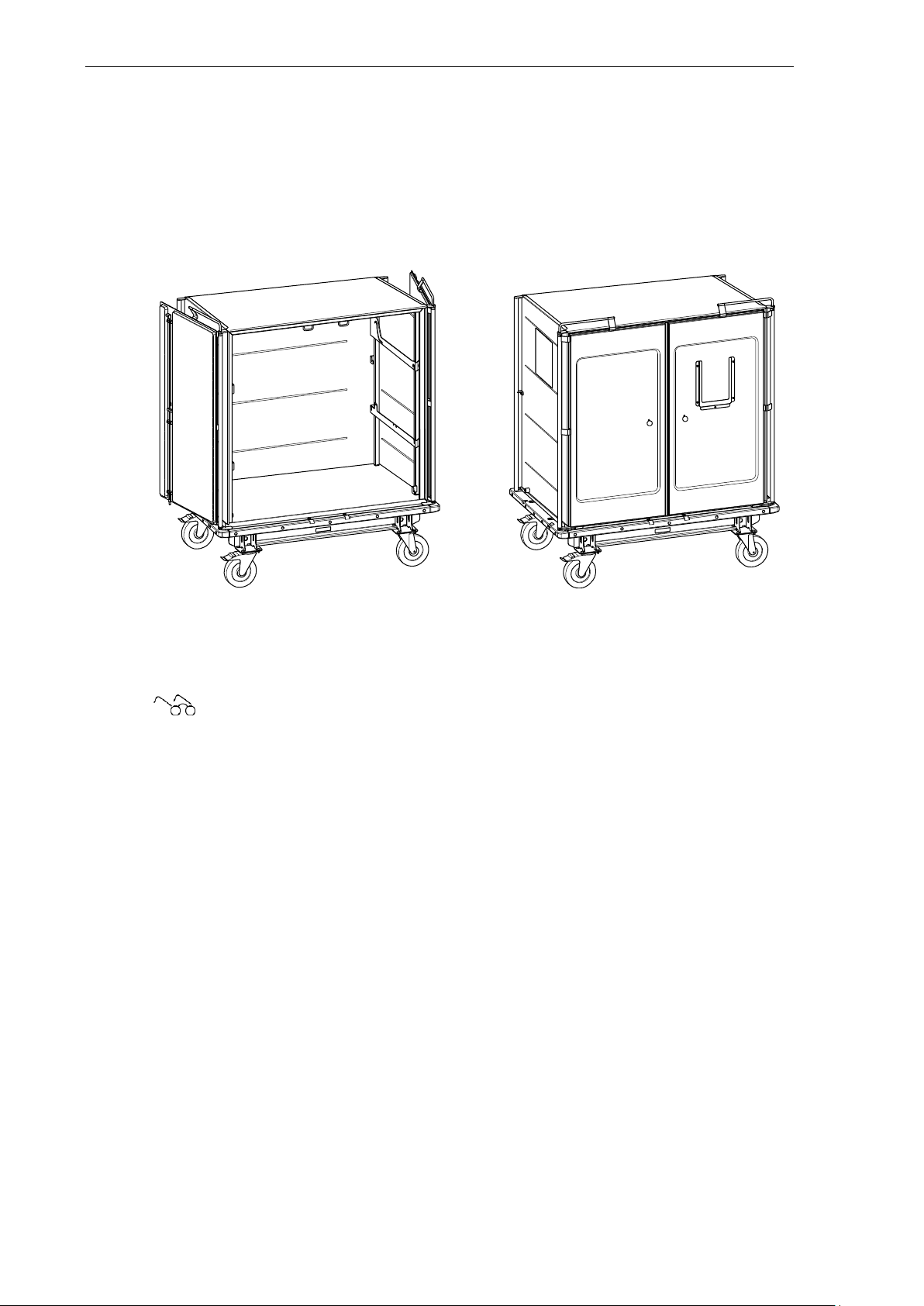
Example
… view of interior
... closed doors
5.2.4 Types TWF-H-AWT
Special versions. Hygienic design H3.
→ Types TWF-H-AWT (automatic transport of goods): Flexible transport system FTS, Overhead
conveyor EHB; washer-compatible
TWF-H-AWT stands for order-specific special versions.
Also refer to ‘Special intended use for TWF-H-AWT appliances’, page 19
Page 27
Rieber GmbH & Co. KG
27
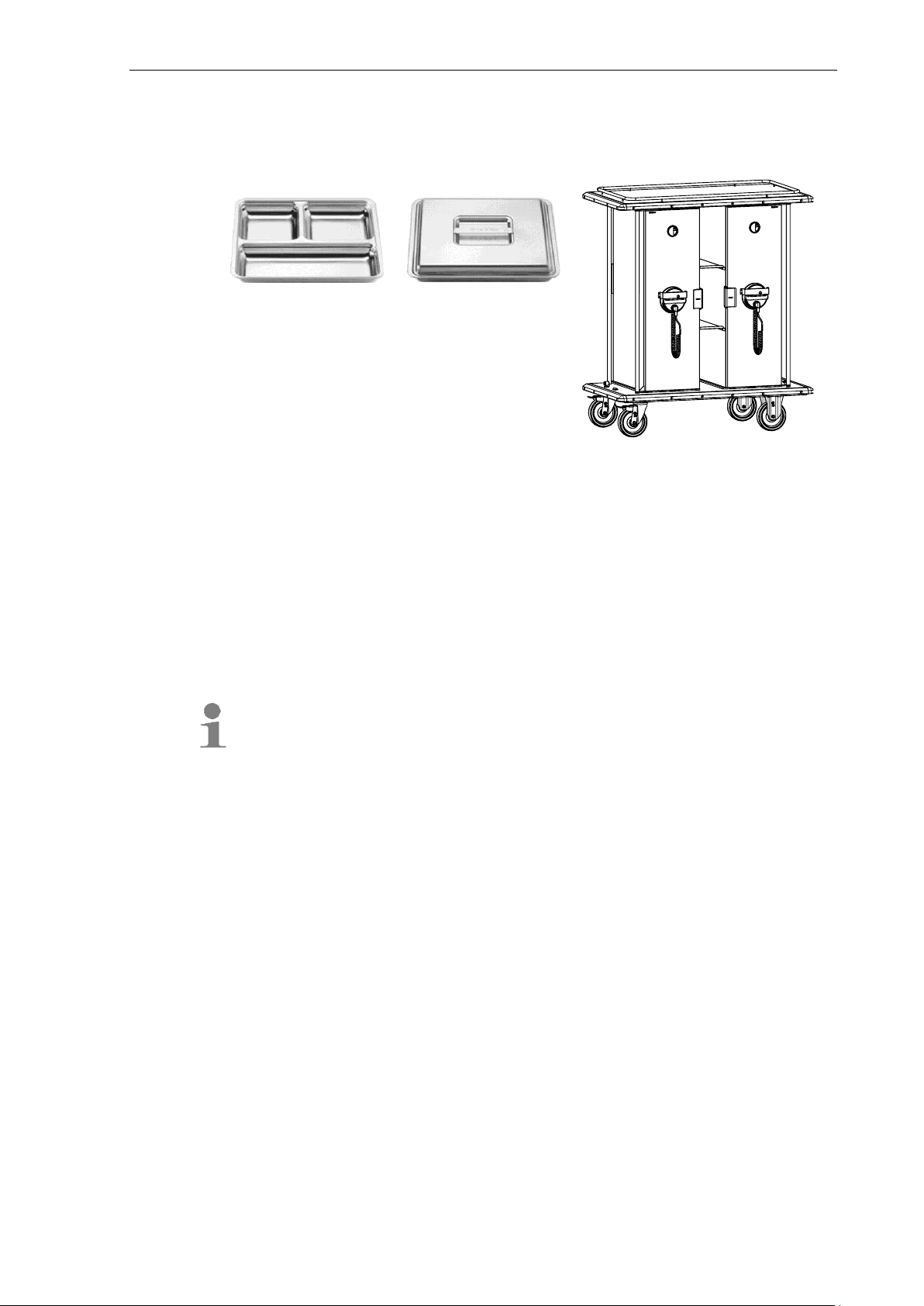
Type
Safe meal tray, 1 mm
stainless steel
With lid
Special accessories
Contents
1.25 l, divided into 3
Special serving trolley, mobile, made of
stainless steel with swing door opening 270°.
Available heated or unheated, as required.
For transporting maximum 60 safe meal trays.
Dimensions
[mm]
325 x 265 x 55
Weight [g]
1 340
Gastronorm-compatible, size GN 1/2, deep-drawn, no sharp
corners or edges, edge flanged, containers and lids
stackable separately.
Version
Set: Container and lid
Container
lid On request
Order no.:
89 08 01 08
89 08 01 64
89 08 01 65
NOTE
Tray solution for closed institutions — customised solutions.
Please contact the manufacturer Rieber GmbH & Co. KG.
5.2.5 Tray solution for closed facilities
Description of appliance
Page 28
Description of appliance
28 Rieber GmbH & Co. KG
NOTE
The order no. can be supplemented by the order numbers of optional
features.
If you have any queries, please contact Rieber customer service.
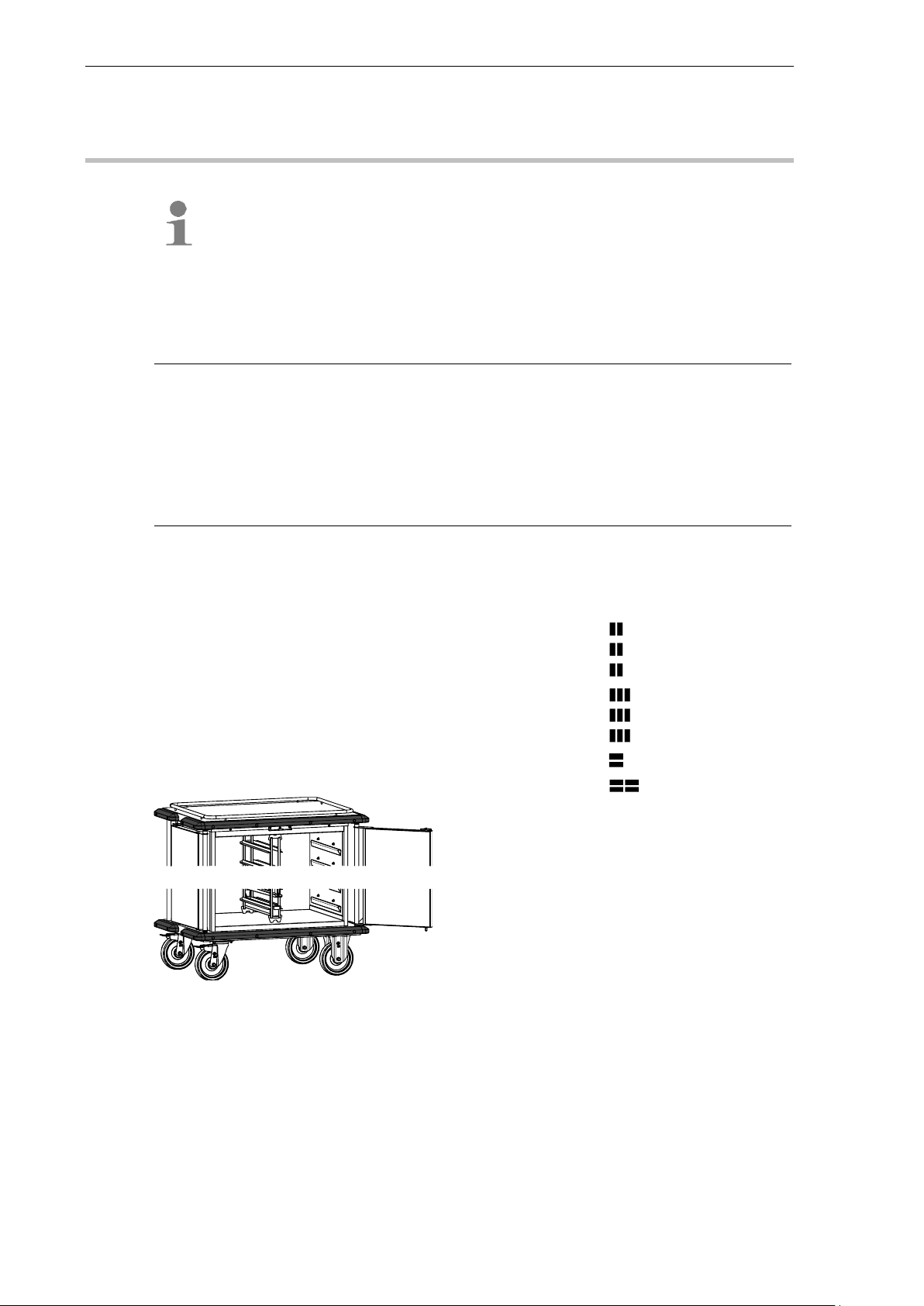
Bumper rails
# can be retrofitted by manufacturer
Order no.:
Bumper rails colour-coded according to intended purpose.
Standard options: Yellow, green, red, brown, blue
→ Applies to: TWF-H-AWT
On request
Bumper rail, encompassing, top
# customer-side, retrofittable
The encompassing bumper rail ensures:
→ Less risk of property damage, e.g. when transporting by car
→ Locking at top/bottom provides more stability
Order no.:
TWF-C 3.0 2x8
TWF-C 3.0 2x10
TWF-C 3.0 2x12
88 44 20 09
TWF-C 3.0 3x8
TWF-C 3.0 3x10
TWF-C 3.0 3x12
88 44 20 10
TWF-C 3.0 1x20
88 44 20 11
TWF-C 3.0 2x20
88 44 20 12
All-round protection
Integrated impact protection made of
plastic.
5.3 Optional features, accessories
Page 29
Description of appliance
Rieber GmbH & Co. KG
29
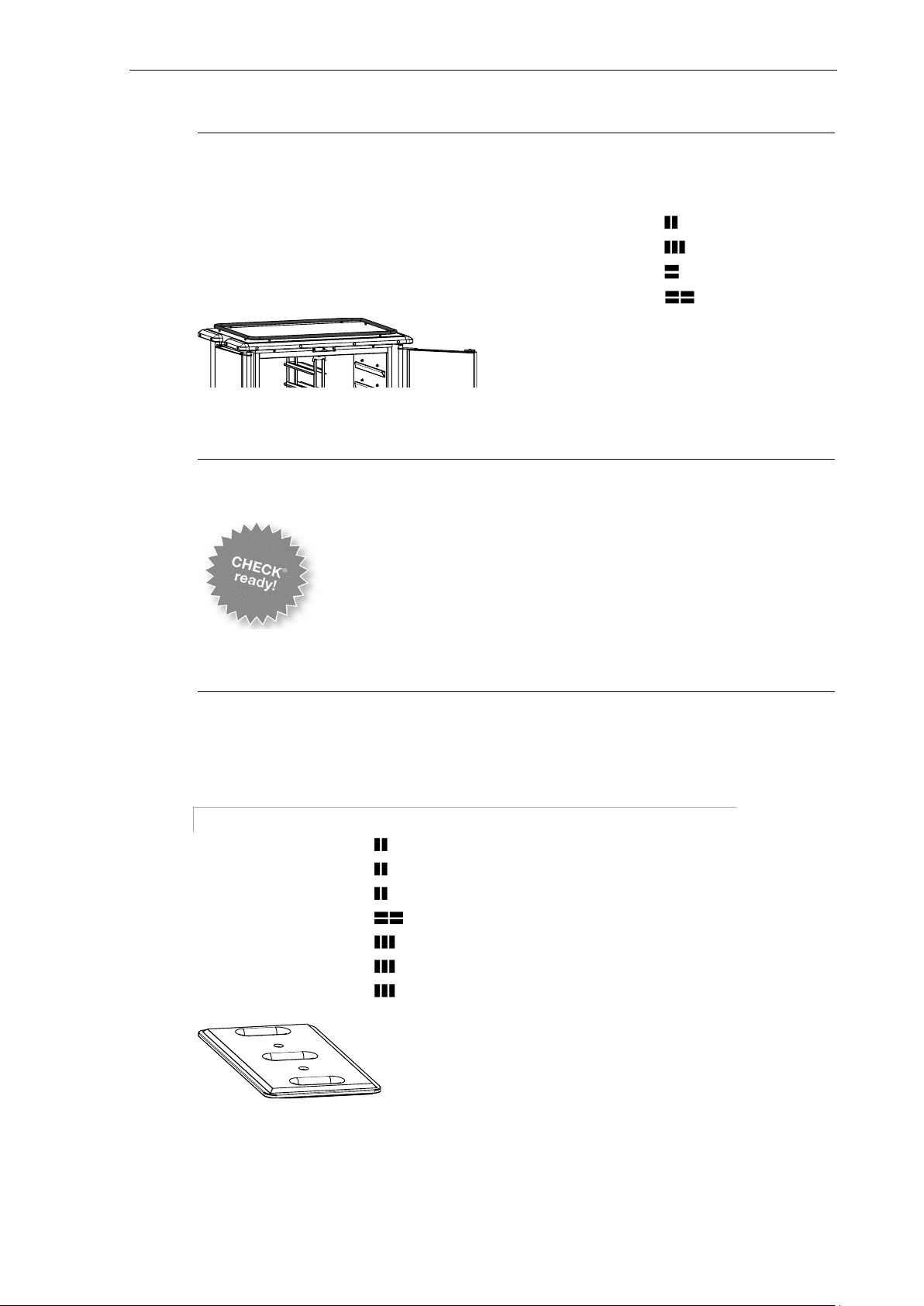
Encompassing guard rail
# can be retrofitted by manufacturer
→ The surface is double-walled, thermally-insulated.
→ Welded type
Order no.:
TWF-C 3.0 series 2
88 44 20 05
TWF-C 3.0 series 3
88 4420 06
TWF-C 3.0 1x20
88 44 20 07
TWF-C 3.0 2x20
88 44 20 08
CHECK HACCP
# customer-side, retrofittable
→ Appliances do not have a QR code and sensor for temperature monitoring.
Order no.:
On request
Cooling pellet
→ Accessories for TWF-C 3.0-PK
# Can be cooled down to ≤ -30 °C. Can be washed in the dishwasher up to ≤ +85 °C.
Size GN 1/1.
Order no.:
Plastic cooling pellet , colour dark grey, 4 kg per piece.
85 02 20 95
Designation:
Required number of cooling pellets per appliance:
TWF-C 3.0
2 x 8-PK
2
TWF-C 3.0
2 x 10-PK
3
TWF-C 3.0
2 x 12-PK
3
TWF-C 3.0
2 x 20-PK
3
TWF-C 3.0
3 x 8-PK
4
TWF-C 3.0
3 x 10-PK
6
TWF-C 3.0
3 x 12-PK
6
Page 30
Description of appliance
30 Rieber GmbH & Co. KG
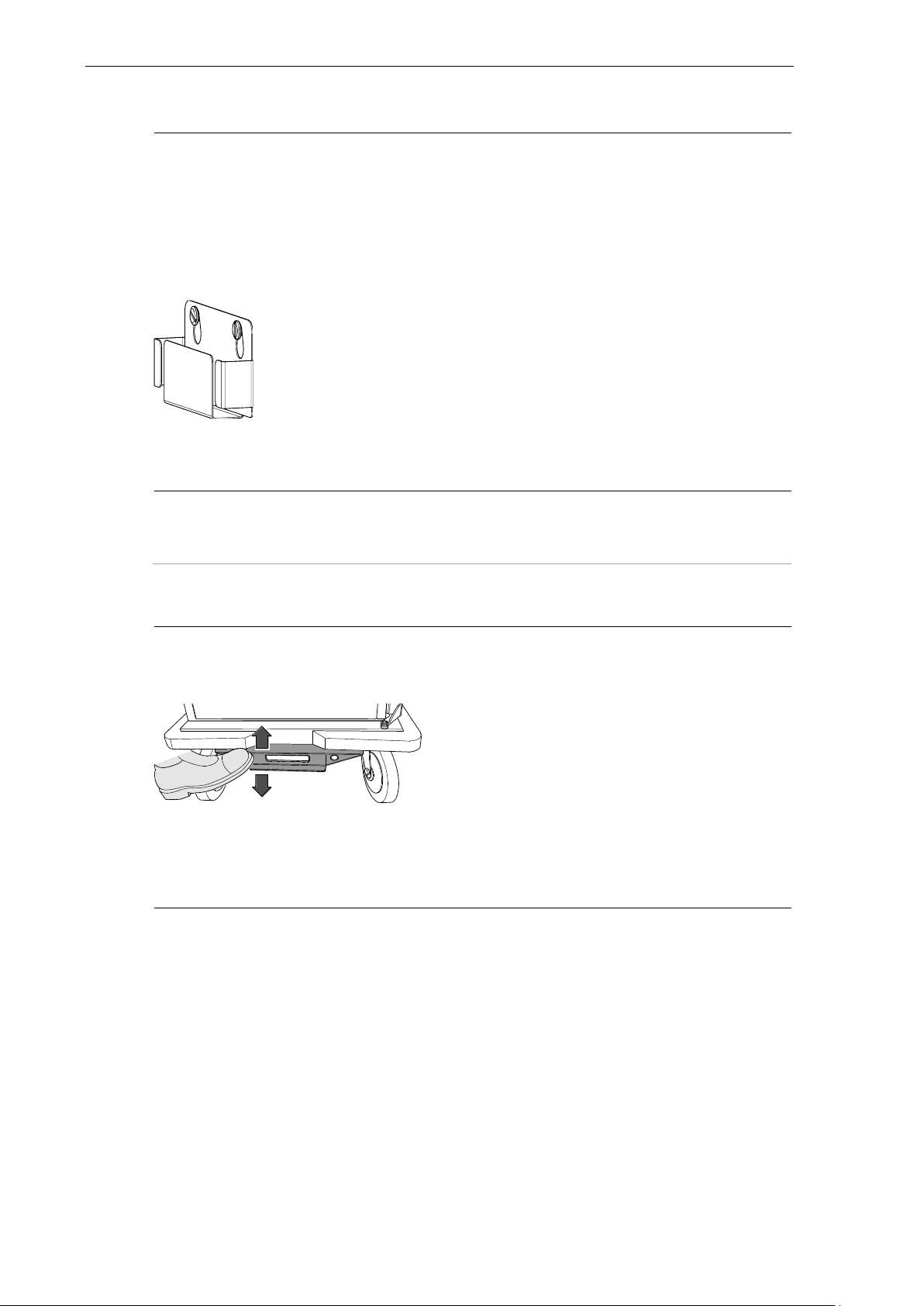
Card box
Type with attachment slot
# can be retrofitted by manufacturer
Order no.:
for A 6 card
→ applies to TWF-C 3.0, TWF-AK
88 22 02 05
for computer card
→ applies to TWF-C 3.0, TWF-AK
88 22 02 06
Numbering
# not upgradeable
Order no.:
Trolley numbering
On request
Caster type
Order no.:
Central stop acting on 2 wheels
# can be retrofitted by manufacturer
On request
Casters entirely smooth running; quality Ø 200 mm, Shore 65°, elastic solid rubber
On request
Coupling-drawbar system
→ applies to TWF-C 3.0 and TWF-C 3.0-PK
# can be retrofitted by manufacturer
Order no.:
Types 2 x 8, 2 x 10, 2 x 12
88 22 06 16
Types 3 x 8, 3 x 10, 3 x 12
88 22 06 18
Types 1 x 20
88 22 06 15
Types 2 x 20
88 22 06 17
Page 31
Description of appliance
Rieber GmbH & Co. KG
31
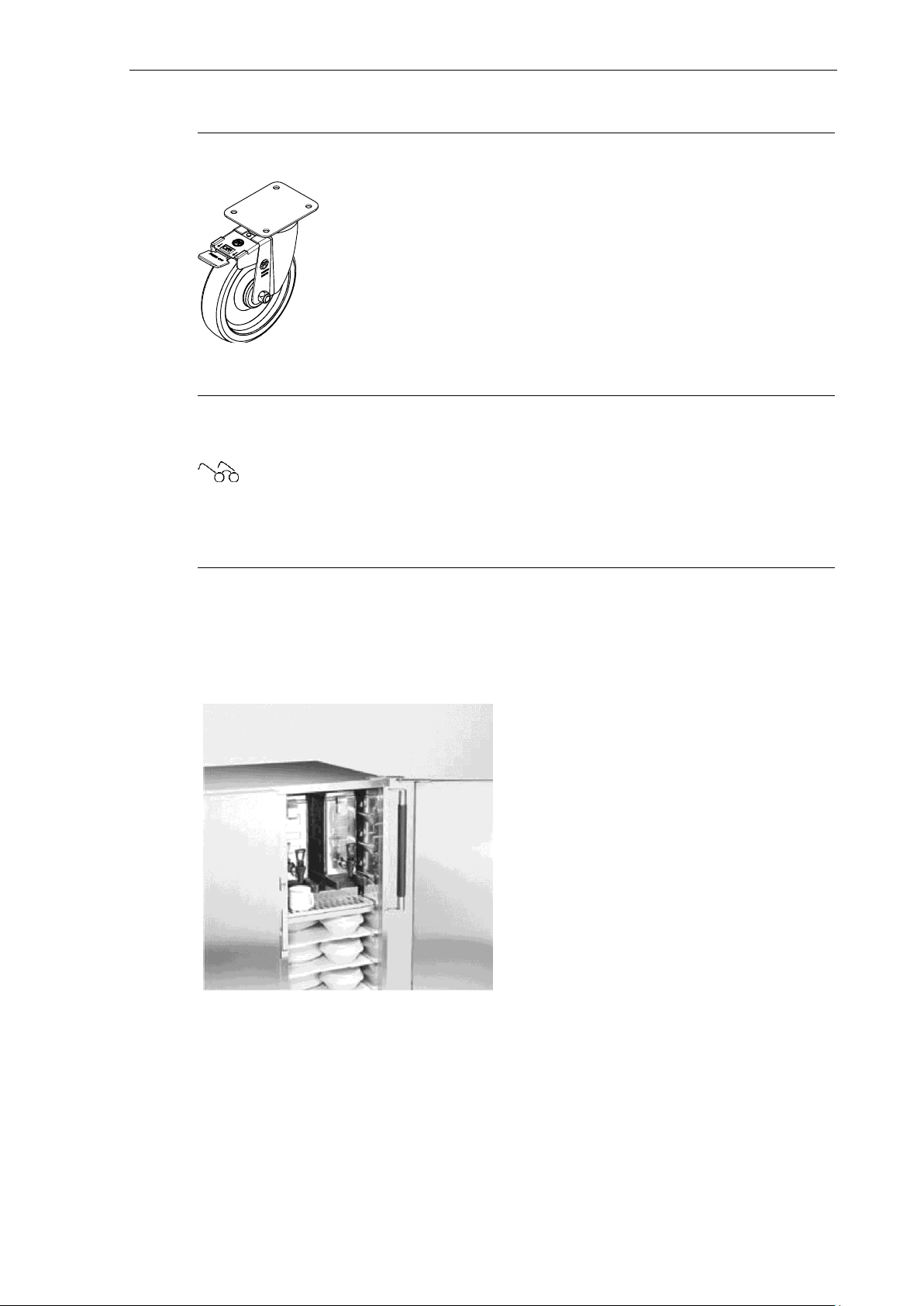
Swivel caster with parking brake
# can be retrofitted by manufacturer
On request
Product identification
Order no.:
Cleaning mode
On request
Page 15
Surfaces for beverage containers
Order no.:
Euro surface, lengthwise, in stainless steel for 2 Thermi 7 l, tray inserted lengthwise,
drip tray with perforated surface.
88 22 01 17
Euro surface, crosswise, in stainless steel for 3 Thermi 7 l, tray inserted crosswise,
drip tray with perforated surface.
88 22 01 20
Example
Page 32
Description of appliance
32 Rieber GmbH & Co. KG
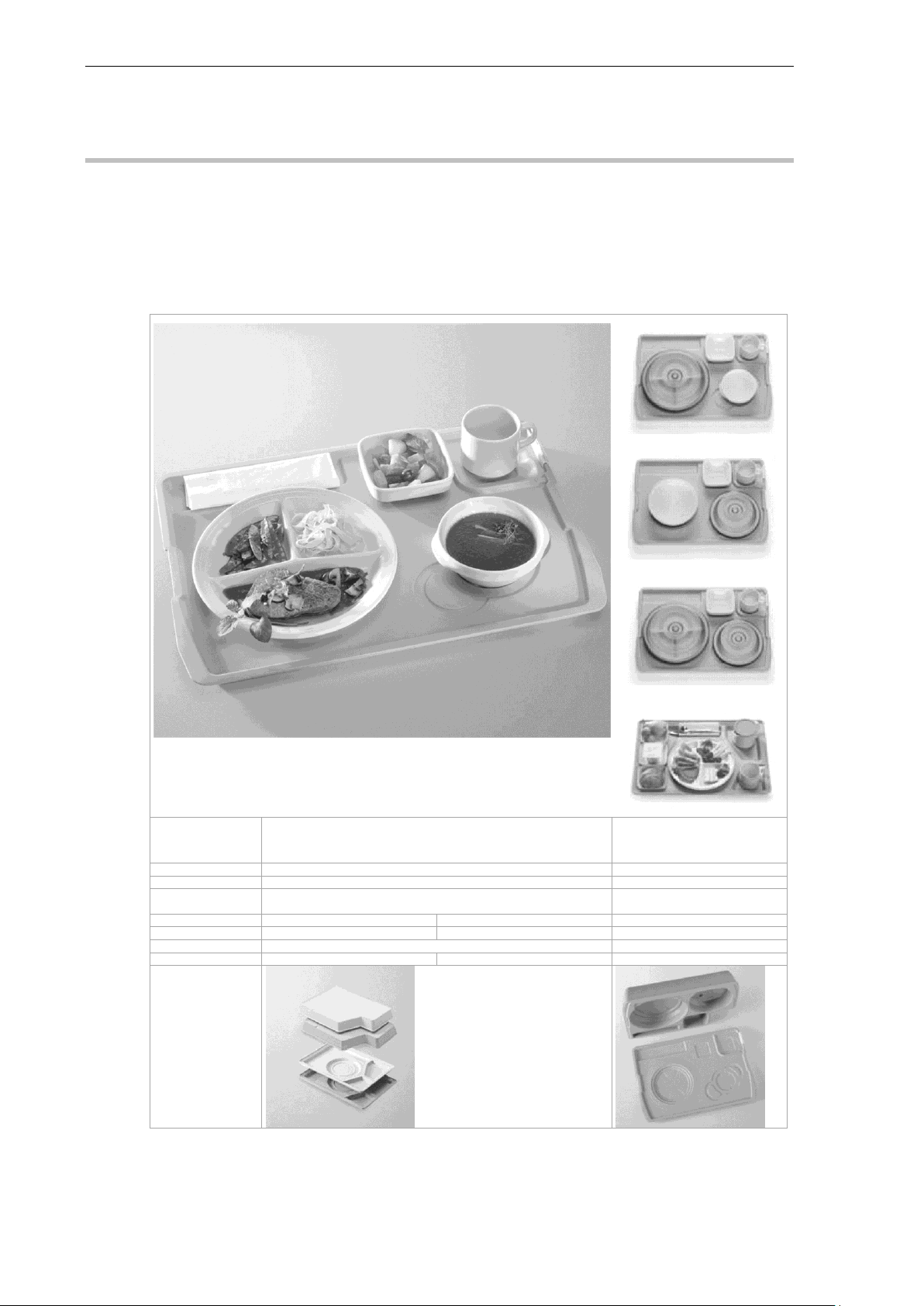
Type
Compact tray PP/C
Thermotray 1
Compact tray PP/C
Thermotray 2
L x W x H [mm]
530 x 370 x 108
530 x 370 x 115
Weight [kg]
0.960 / 1.19
3 / 5
double-walled, CFC-free foam, base, lid
double-walled, CFC-free foam,
base, lid
Version
lilac
light grey
light grey
Order no.:
89 08 02 04
89 08 02 29
85 02 09 03
Heat pellet for Thermotray 1
89 08 01 35
89 08 01 35
5.4 Rieber system crockery
5.4.1 Thermotray 1 and Thermotray 2
# Note on differences:
Thanks to the special imprinting on the bottom of Thermotray 2, not only can it be classically
configured with dinner plate and soup bowl, but it can also have the combinations hotpot bowl and
starter plate or dinner plate with starter plate.
Page 33
Rieber GmbH & Co. KG
33
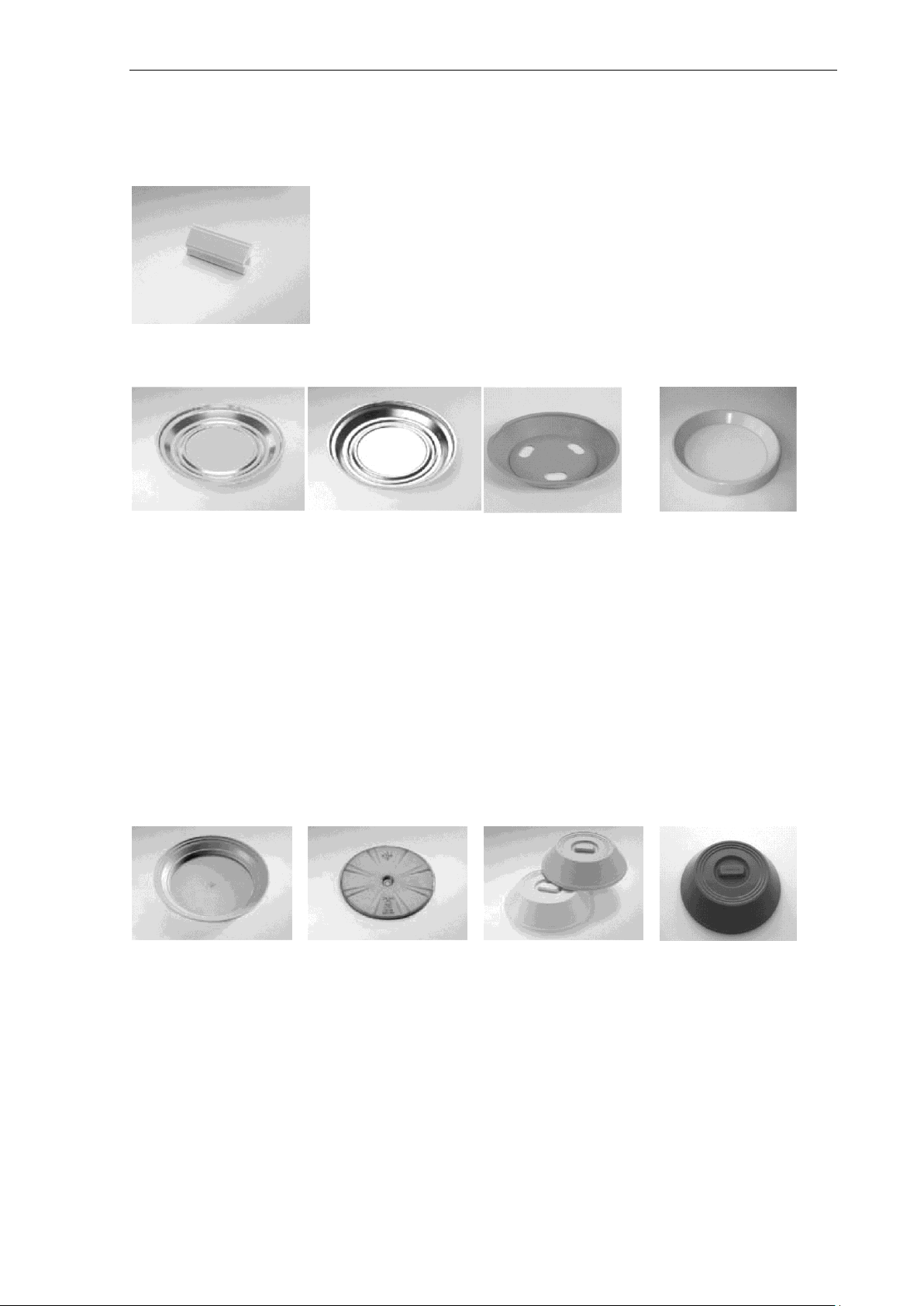
Card holder for Thermotray
Order no.:
0.010 kg, white, plastic
89 08 02 14
Heated/refrigerated dish,
stainless steel, SJ-255
Heated dish, stainless
steel, "Ultra" SJ-255
Plastic bottom part PP/C
Single-walled for ultra
dish
Insulating ring for heated
dish SJ-255/
-"Ultra"
Double-walled, insulated,
aluminium core
Plate on top, diameter
255 mm,
Hotpot bowls diameter
190 mm
Double-walled, high heat
storage capacity
Plate on top, diameter
255 mm,
Hotpot bowls diameter
190 mm
Bottom part single-walled for
Ultra dish SJ 255
Made of silicone
Diameter
[mm]
255 Diameter
[mm]
255 Diameter
[mm]
259 For plate Ø
[mm]
255
Height [mm]
30 Height [mm]
34 Height [mm]
34 Height [mm]
Weight [g]
760 Weight [g]
830 Weight [g]
760 Weight [g]
320
Order no.:
89 08 01 30
matt
Order no.:
89 08 01 41
matt
Order no.:
89 08 02 84
lilac
89 08 02 85
light grey
Order no.:
89 08 02 18
light grey
Plastic bottom part PP for
cooling pellet insertion
Cooling pellet PP, light
grey Polypropylene
Cloche PP/C
for SJ-255
Cooling cloche PP/C
for SJ-255
Double-walled, CFC-free
insulation, plate on top,
diameter 255 mm
Double-walled, CFC-free
foam, with handle
Diameter
[mm]
255 Diameter
[mm]
185 Diameter
[mm]
258 Diameter [mm]
258
Height [mm]
32 Height [mm]
10 Height [mm]
70 Height [mm]
70
Weight [g]
180 Weight [g]
206 Weight [g]
230 Weight [g]
610
Order no.:
89 08 02 66
lilac
89 08 02 82
light grey
Order no.:
Associated
bottom part,
see above
89 08 02 69
89 08 02 66
lilac Cloche
C-2
89 08 02 82
light grey
Order no.:
89 08 02 12
lilac
89 08 02 32
light grey
Order no.:
89 08 02 07
blue
5.4.2 Combitray - insulated crockery
Description of appliance
Page 34
Description of appliance
34 Rieber GmbH & Co. KG
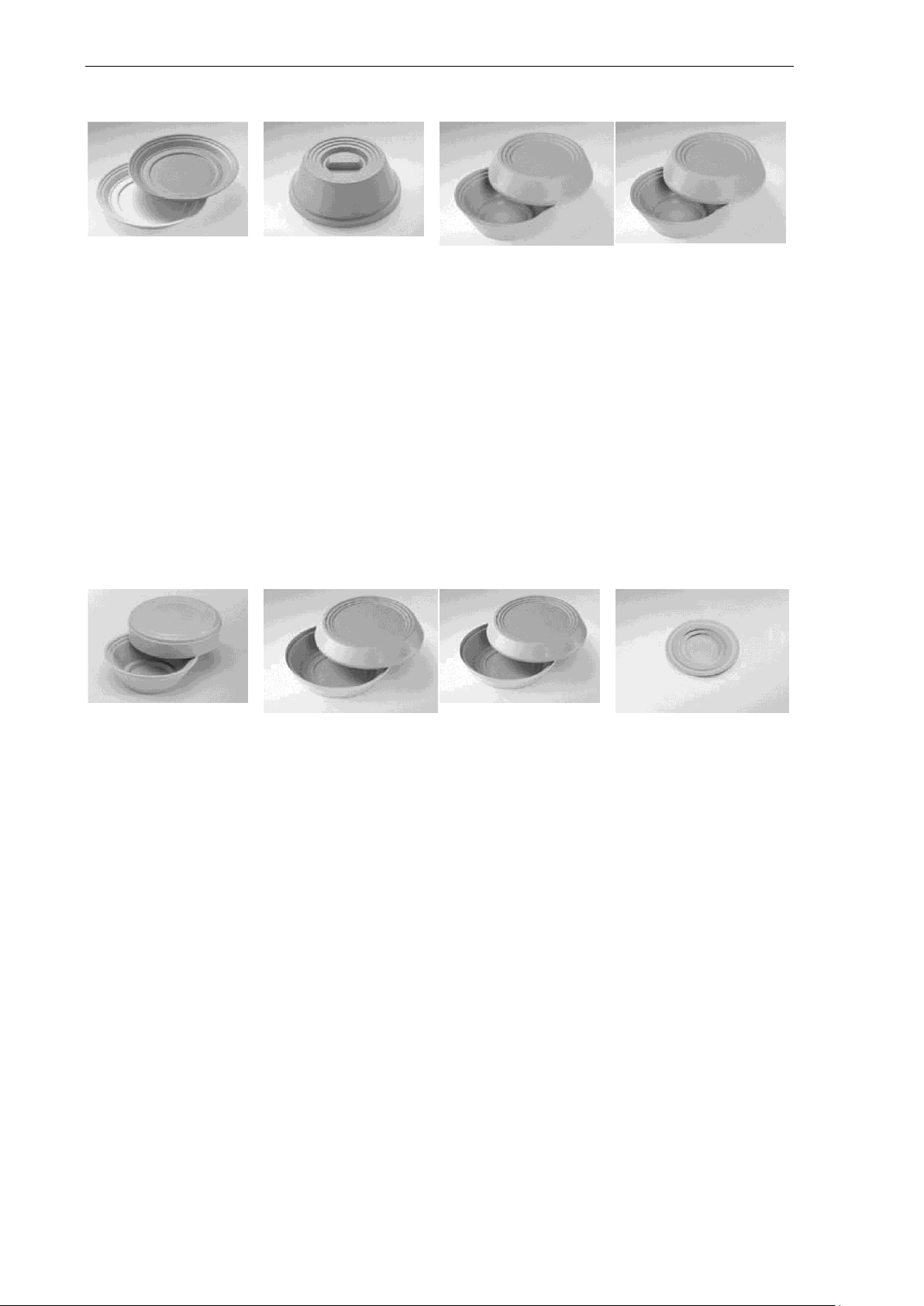
Heated/refrigerated dish,
PP/C, IS-UTEL
Cloche, PP/C 7,75´´
Heat-retaining bottom
section, PP/C, "IS-U-BO"
Heat-retaining top section,
PP/C, "IS-O-BO"
Double-walled, CFC-free
insulation, plate on top,
diameter 255 mm,
Hotpot bowls diameter
190 mm
Single-walled,
For plates diameter 190 mm
For soup bowls diameter
130 mm double-walled,
CFC-free foam
For soup bowls diameter
130 mm double-walled, CFCfree foam
Diameter
[mm]
255 Diameter
[mm]
207 Diameter
[mm]
162 Diameter [mm]
164
Height [mm]
32 Height [mm]
79 Height [mm]
56 Height [mm]
37
Weight [g]
180 Weight [g]
120 Weight [g]
80 Weight [g]
75
Order no.:
89 08 02 13
lilac
89 08 02 33
light grey
Order no.:
89 08 02 02
lilac
89 08 02 36
light grey
Order no.:
89 08 02 11
lilac
89 08 02 31
light grey
Order no.:
89 08 02 10
lilac
89 08 02 30
light grey
Heat-retaining top
section, PP/C, "IS-O-BO"
Heat-retaining bottom
section, PP/C, "IS-U-EI"
Heat-retaining bottom
section PP/C, "IS-O-EI"
Bowl lid, for porcelain soup
bowls
For spill-safe soup bowl,
double-walled,
CFC-free foam
For hotpot bowls diameter
190 mm double-walled,
CFC-free foam
For hotpot bowls diameter
190 mm double-walled,
CFC-free foam
Single-walled
Diameter
[mm]
168 Diameter
[mm]
221 Diameter
[mm]
229 Diameter [mm]
141
Height [mm]
42 Height [mm]
51 Height [mm]
36 Height [mm]
9
Weight [g]
80 Weight [g]
140 Weight [g]
155 Weight [g]
65
Order no.:
89 08 02 20
lilac
89 08 02 21
light grey
Order no.:
89 08 02 17
lilac
89 08 02 35
light grey
Order no.:
89 08 02 16
lilac
89 08 02 34
light grey
Order no.:
89 08 02 50
light grey
Page 35
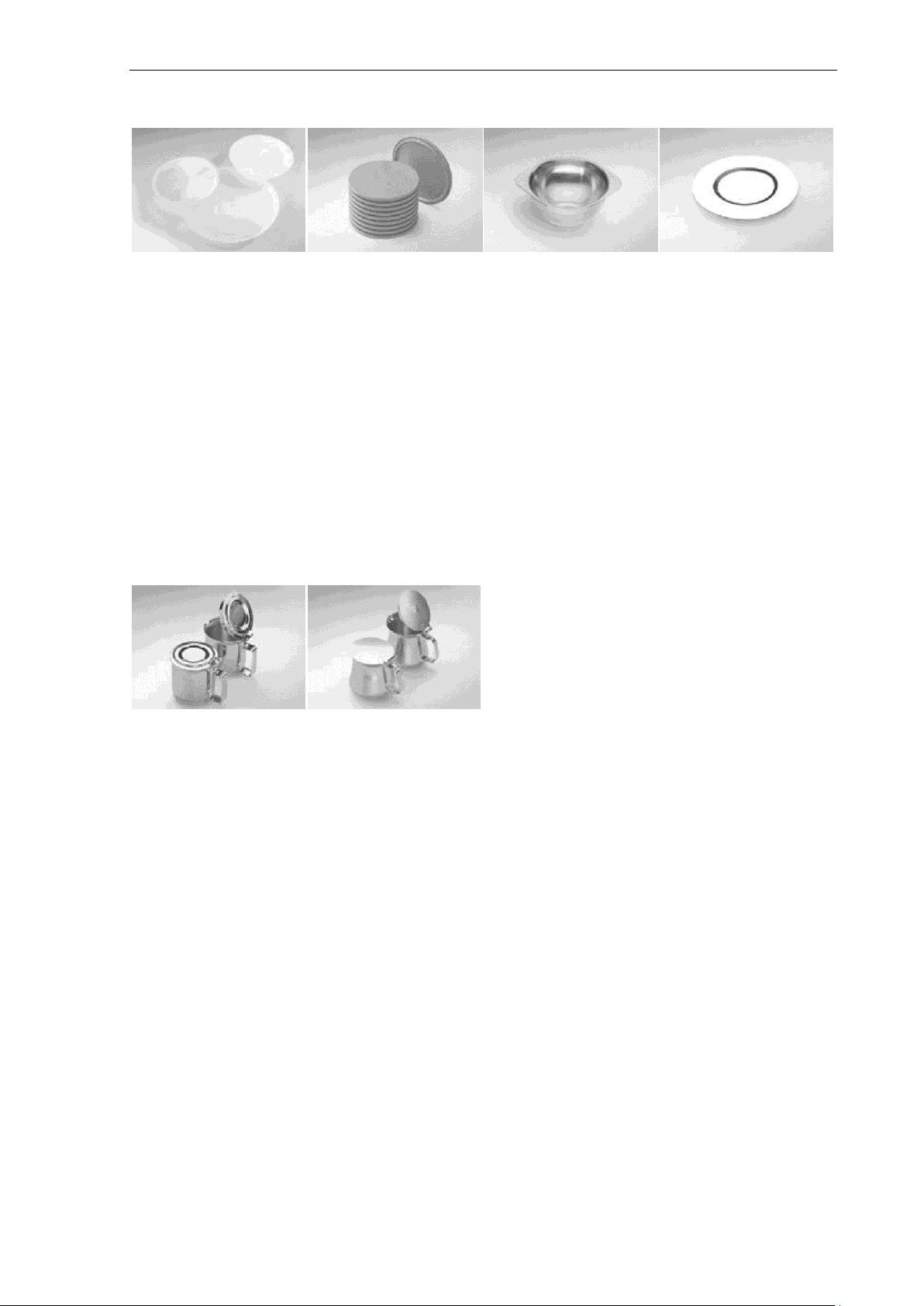
Description of appliance
Rieber GmbH & Co. KG
35
Bowl lid, PP
Bowl lid, for porcelain
soup bowls
Soup bowl, stainless
steel
Lid for soup bowl, stainless
steel
Spill-safe, light grey
Single-walled for
Thermotray
Double-walled, contents
30 cl
Double-walled
Diameter
[mm]
Order no.:
184
89 08 02 63
Diameter
[mm]
144 Diameter
[mm]
132/163
Diameter [mm]
137
Diameter
[mm]
Order no.:
131
89 08 02 62
Height [mm]
10 Height [mm]
61 Height [mm]
10
Weight [g]
80 Weight [g]
300 Weight [g]
180
Diameter
[mm]
Order no.:
125,5
89 08 02 61
Order no.:
89 08 02 19
lilac
89 08 02 39
light grey
Order no.:
89 08 03 08
polished
Order no.:
89 08 03 09
polished
Portion pot, stainless
steel, cylindrical
Portion pot, stainless steel,
"Hotel"
Pot and hinged lid
Double-walled
Pot and hinged lid
Double-walled
Contents [cl]
30 Contents [cl]
30
Weight [g]
360 Weight [g]
400
Order no.:
89 08 01 48
with dot
89 08 01 47
without dot
Order no.:
89 08 01 45
with dot
89 08 01 46
without dot
Page 36
Things to know at delivery
36 Rieber GmbH & Co. KG
Transport with high physical demands should be avoided where possible, as the
risk of an accident or injury is higher.
Lift / deposit a heavy load evenly with your knees bent and your upper body straight
and upright. Your feet should be at least hip-width apart and your abdominal
muscles braced. Breathe out. Do not twist your spine.
WARNING
Heavy appliance. See type plate, see delivery note.
Only suitable and briefed operating staff may load, unload or lift the appliance.
Wear your personal protective equipment (PSA), protective gloves and safety shoes.
Lift the appliance with the necessary number of people. Another person quickly pulls
the pallet together with the 2 profiles away.
6 Things to know at delivery
# Check/handle transport damage
Immediately after delivery, visually check the appliance for any transport damage.
Document any potential transport damage on the consignment note in the presence of the haulage
This chapter describes the measures to be taken before use.
contractor. Have the damage confirmed by the haulage contractor (with signature).
Decide if you wish to keep the appliance and report the defect using the consignment note, or if
you wish to reject the appliance.
▌ By following this procedure you will ensure proper claim settlement.
# Unpack
Open the transport packaging at the positions provided for this purpose. Do not tear or cut.
Remove any packaging remnants.
# Unload appliance from the pallet
Page 37

Things to know at delivery
Rieber GmbH & Co. KG
37
NOTE
Transport the appliance horizontally, as in its working position.
Do not unload or transport the appliance with aids such as a forklift truck, as this could
cause substantial damage to the appliance.
Applies to types TWF-AK: After transport of electrically refrigerated appliances, allow
the coolant to be collected. After transport allow the appliance to stand undisturbed for
at least one hour. Do not switch on until then.
# Note on packaging material
Disposable packaging or Euro-pallet
Decide whether to: Keep the Euro-pallet for subsequent transport or return?
Dispose of the disposable packaging with respect for the environment.
Dispose of packaging material with respect for the environment.
# Clean the appliance
Clean the appliance before first use.
See ‘Cleaning, Maintenance and Care’, page 42 et seqq.
Page 38
Use
38 Rieber GmbH & Co. KG
7 Use
7.1 Safety information with regard to use
Comply with the principles for operation
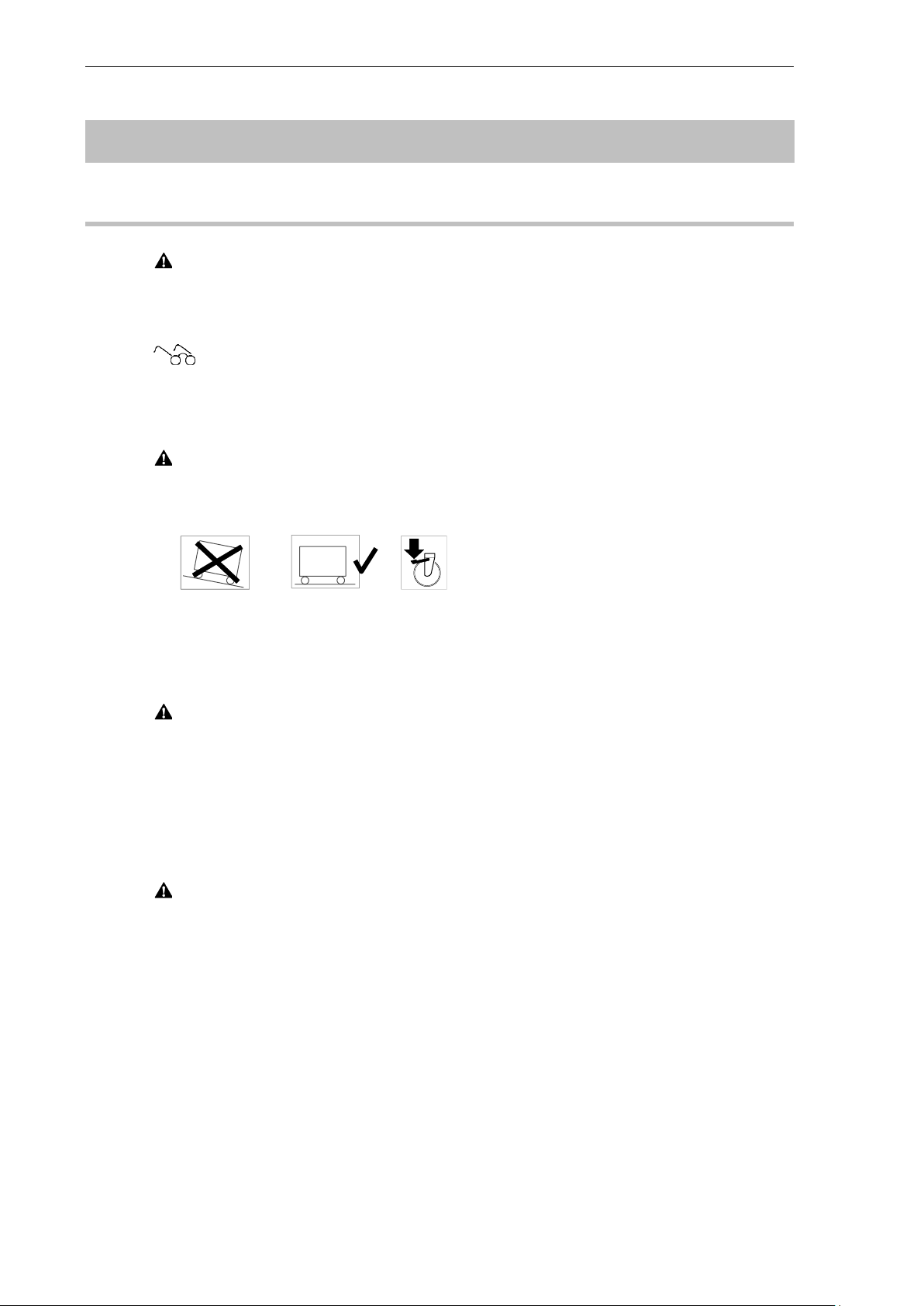
Observe the permissible loading. Only place objects on the appliance if a guard rail
is provided (option), securing them against falling. Permissible loading on the top
maximum 20 kg.
For unladen weight and permissible loading, see chapter
‘Technical data’, page 22
Ensure adequate lighting.
Risks due to unstable position
Prevent the appliance from rolling away accidentally using the two parking brakes.
Only park the device on flat surfaces.
Load the appliance from bottom to top.
Unload the appliance from top to bottom.
Ensure optimal safety against overturning.
Risks during transport of the appliance
Push the appliance using the pushing handle if there is direct access to the casters
with parking brake.
Keep the doors closed during transport.
Do not use the appliance on a sloping surface, only move it on a flat surface. Move
the appliance with 2 people if necessary.
Risk of slipping and falling
→ applies to appliances TWF-C 3.0-PK
Empty the collecting tank for condensation in due time, otherwise condensation
can drain off on to the floor, making it slipper.
Page 39
Rieber GmbH & Co. KG
39
NOTE
The cooling pellet can be cooled down to ≤ -30 °C.
The cooling pellet can be washed in the dishwasher up to ≤ +85 °C.
→ Applies to types TWF-C 3.0-PK
Risks due to electricity
→ applies to appliances TWF-AK
Danger of electric shock
Inspect the appliance before use, particularly the connecting plug and electric cable
for any visible signs of damage. Install the electric cable in such a way that risks like
falling over or tearing off the cable, etc. are avoided.
Keep the socket outlet easily accessible so that the unit can be disconnected from
the power supply at any time.
Risks due to trapped moisture
TWF-C 3.0, TWF-C 3.0-PK, TWF-AK may only be wiped down with a moist cloth.
Do not expose to water jets.
7.2 General instructions for use
Use
Bring the appliance to temperature in the cold/heat chamber beforehand if
necessary, in the range +2 °C to +45 °C.
Immediately after filling the appliance close it and do not open again until just before
serving.
Close the door again immediately after removing the food.
Page 40
Use
40 Rieber GmbH & Co. KG
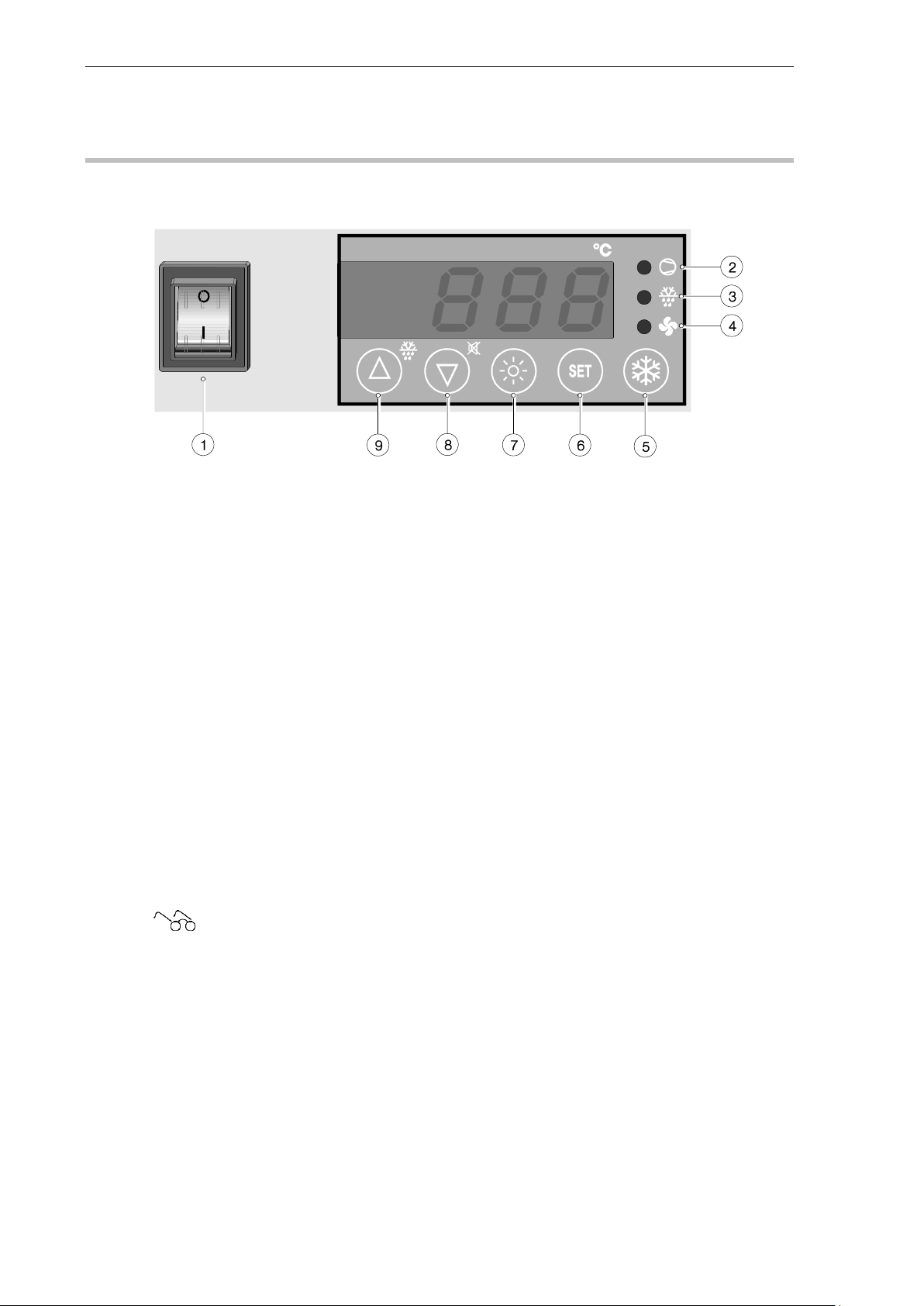
7.3 Types TWF-AK
Tray trolley for refrigerated meals with programmable controller.
1 ON/OFF rocker switch →…lights up green with the power to the appliance is switched on
2 Cooling operation display →LED lights up red during the cooling process.
3 Defrosting operation display →LED lights up red during the defrosting process.
4 Ventilation operation display →LED lights up red when convection cooling is active
5 Button A: Different functions are allocated to button "A" by means of parameterization. The
button must be pressed for at least half a second.
For TWF-AK the button has no function and only indicates cooling.
6 SET button: While the SET button is pressed, the set point value is displayed.
7 Button B: Different functions are allocated to button "B" by means of parameterization. For
TWF-AK, this function is to switch the lighting in the appliance ON/OFF (option).
8 DOWN button: An alarm can be acknowledged with the DOWN button. The internal buzzer is
then switched off.
9 UP button: A defrosting process can be initiated at any time by pressing the UP button for
3 seconds. During defrosting the defrosting operation display LED (3) lights up. The LED (3)
flashes if defrosting is required, but may not yet be started due to disable conditions.
# Observe prerequisites
TWF-AK can be brought to temperature in a cold chamber beforehand, down to
+2 °to C.
Do not place the appliance close to heat sources.
Clean the appliance after use, at least 1x daily.
Page 42 et seqq.
# Important Information
Every 6 hours an automatic defrosting operation takes place, which prevents the evaporator
from icing up. The defrosting phase takes around 20 minutes when the power to the appliance is
switched on. The defrosting LED (3) lights up.
If the power supply is interrupted, for example during transport, this interruption time must also be
taken into account. After switching on again/switching on the power supply, the defrost phase
continues.
The time should not be extended if cooling is unavailable. Take note of the
defrosting operation display (3). Comply with the HACCP regulations.
Page 41

Use
Rieber GmbH & Co. KG
41
# Switch the appliance on
Switch the appliance on. To do this, press the green rocker switch to
POWER OFF (O).
▌ The green rocker switch lights up.
▌ The display on the controller indicates the ACTUAL temperature.
▌ The cooling operation display (2) lights up during the cooling process.
Pre-cool the TWF-AK before filling if possible, for around 20 minutes. Do not bring
to temperature in the cold chamber.
# General mode of operation
Only fill the tray trolley with adequately pre-chilled, packaged/wrapped food.
Leave enough free space in the appliance for air circulation. Due to the air
convection and the filling state of the appliance, the ACTUAL temperature may
deviate from the control temperature.
Immediately after filling the appliance close it and do not open again until just before
serving.
# If you wish to know the programmed set point temperature
Press the SET button (6).
▌ The programmed set point temperature is displayed.
# If you wish to change the set point temperature
To adjust the set point temperature hold the SET button (6) pressed and
adjust the value with the ( ) buttons. Release the buttons.
▌ The adjusted value is saved automatically.
▌ The display shows the ACTUAL temperature.
# Switch the appliance off
Switch the appliance off. To do this, press the green rocker switch to
POWER OFF (O).
▌ The green rocker switch is off. Empty display, no LED will light up. The appliance is off.
▌ Pull out the electrical connection plug and place in the holder.
▌ The appliance will defrost.
Page 42 et seqq.
Page 42
Cleaning, Maintenance and Care
42 Rieber GmbH & Co. KG
Danger of electric shock. Risk of death.
Always disconnect the mains connection before cleaning.
Protect the appliance against moisture. Never direct a water jet at electrical
components such as the operating panel or ventilation grille.
Do not use a steam cleaning unit to clean electrical appliances. Doing so may
allow moisture to get into the electrical system and cause a short circuit.
Have electrical equipment
1
inspected by a qualified electrician in accordance
with DGUV. Define the inspection cycle according to the conditions of use.
Generally this is every 12 months.
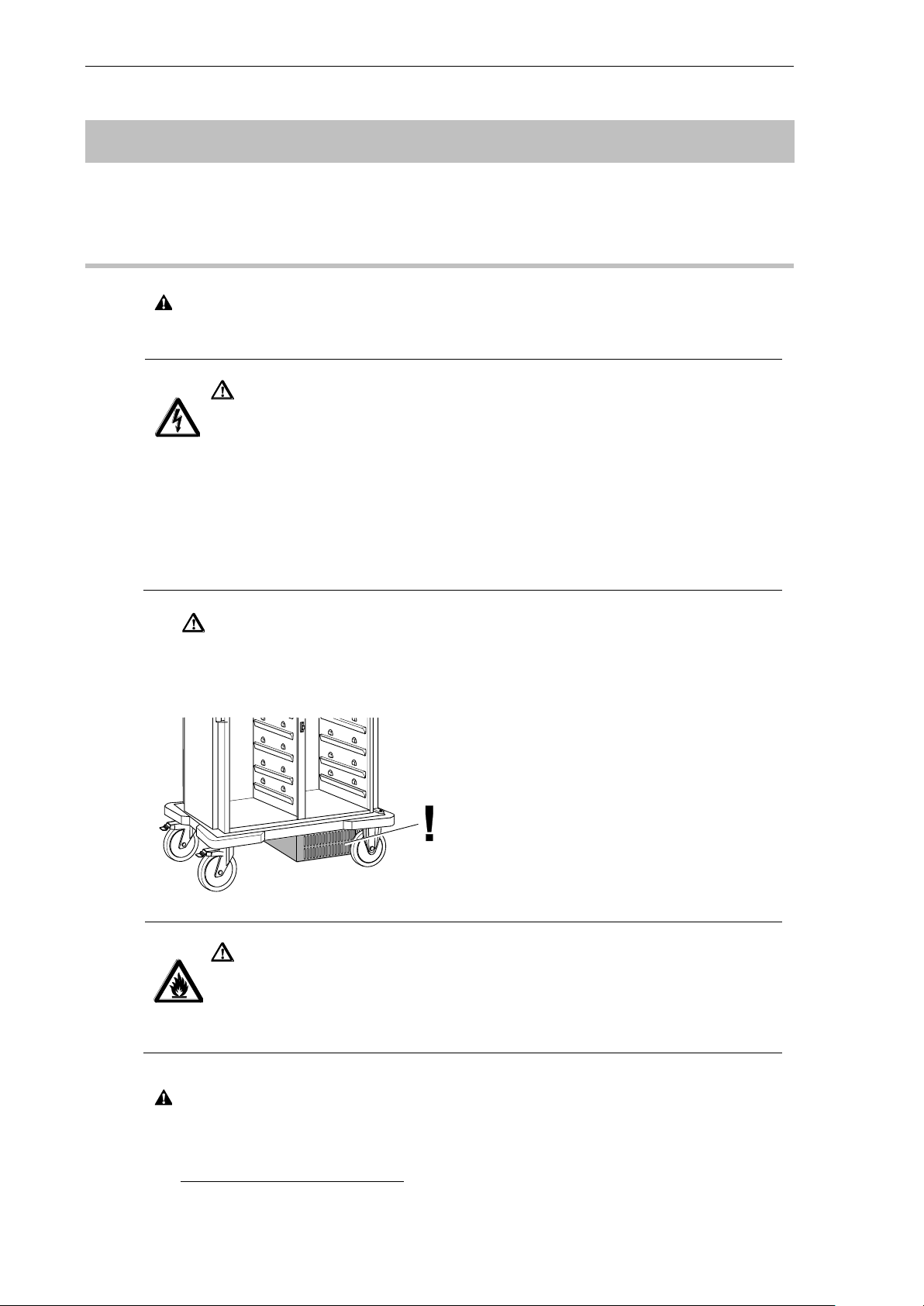
Risk of fire
Fluff in the ventilation area can cause a build-up of heat which could result in a fire.
Clean ventilation grille on refrigerating engine compartment using a cloth,
paintbrush or vacuum cleaner (at least once a month).
1
8 Cleaning, Maintenance and Care
This chapter will help you to meet the hygiene requirements. Please read the chapter ‘General Safety
Instructions’ first of all.
8.1 Safety information relating to cleaning, maintenance and care
Prevent risks due to electricity
→ Applies to types TWF-AK (… with cooling device, active convection cooling)
WARNING
Danger of electric shock. TWF-AK electrical appliances should only be wiped with a
damp cloth.
Source: DGUV Regulation 3. Electrical Systems and Equipment
Avoid risks due to trapped moisture and mould formation
TWF-C 3.0, TWF-C 3.0-PK, TWF-AK may only be wiped down with a moist cloth.
Do not expose to water jets.
Page 43

Rieber GmbH & Co. KG
43
Cleaning agent
Suitable
Brush products
Brushes with natural or synthetic bristles
Textiles
Textile material comprising natural and chemical cleaning fibres and textile
fabrics (knitted and woven fabric, cleaning cloths, floor cloth, fringed
material, fleece). Microfibre cleaning textiles are ideal for removing finger
marks from stainless steel surfaces.
Synthetic fleece
Without abrasives.
Mainly produced in the colours white, beige, yellow.
Other
Natural leather (chamois), synthetic leather, synthetic fleece, sponges,
sponge cloths
Cleaning agent
Areas of application
All-purpose cleaners
Particularly for lighter grease stains.
Neutral cleaners
For surfaces soiled with grease and oil (fingerprints); also suitable as a
dishwashing detergent.
Alcohol cleaners
As all-purpose cleaner
Alkaline cleaners
Especially for heavy grease and oil stains (dried-in oils).
Observe the manufacturer's dosage instructions.
Solvent cleaners
Depending on the type, particularly good for the removal of grease, oil, wax,
tar, adhesives, paints and lacquers.
Not suitable for plastics.
Disinfectant cleaners
Effect on pathogenic germs differs depending on active disinfectant
ingredient.
Long-term exposure to sodium hypochlorite can cause damage to the
material. It should not be used if possible. Products should be used, which
are specified in the list of the German Society of Hygiene and Microbiology
(DHGM).
8.2 Cleaning agents for stainless steel
# The following applies for all cleaning agents:
Observe the instructions for use provided by the cleaning agent manufacturer.
Cleaning, Maintenance and Care
# Chemical cleaners for stainless steel
# Mechanical cleaners for stainless steel
Page 44
Cleaning, Maintenance and Care
44 Rieber GmbH & Co. KG
NOTE
Incorrect cleaning can damage the surface or even destroy the appliance.
Be careful not to scratch the surface with sharp-edged objects. Do not use
sponges with a scratchy surface or steel wool or a steel brush.
Do not use scouring agents of aggressive cleaning agents, such as oven sprays.
Do not mix standard cleaning agents; do not produce your own cleaning agent.
Avoid extended exposure of stainless steel to liquid containing salt, as this can
lead to surface discolouration and corrosion.
Avoid direct, extended contact of stainless steel with corroding iron parts, e.g. steel
kitchen sponge.
NOTE
Incorrect cleaning can cause damage to the surface.
Clean the appliance with a hot, mild detergent diluted in water. After cleaning,
rub surfaces dry with a soft cloth.
8.3 Choose the correct cleaning method
Pretreat any heavily soiled areas.
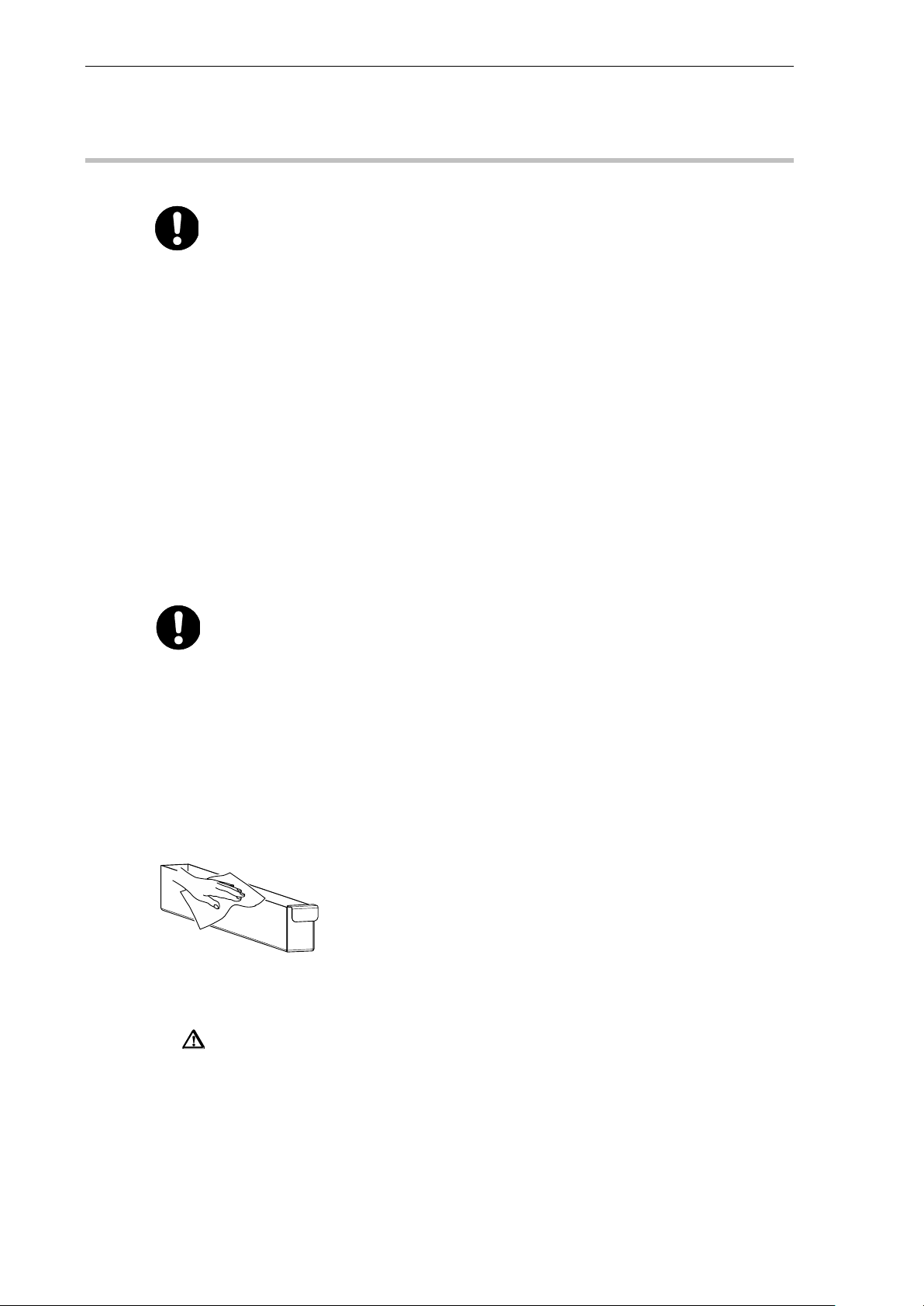
# Clean and service stainless steel parts
The carcass comprises stainless steel, both inside and outside.
# Empty the collection tank for condensation
→ Applies to types TWF-C 3.0-PK
Empty the collection tank for condensation in due time. After cleaning, rub surfaces
dry with a soft cloth.
WARNING
Insert the collection tank into the intended place in the appliance and avoid slipping
hazards from condensation draining off.
Page 45
Cleaning, Maintenance and Care
Rieber GmbH & Co. KG
45
NOTE
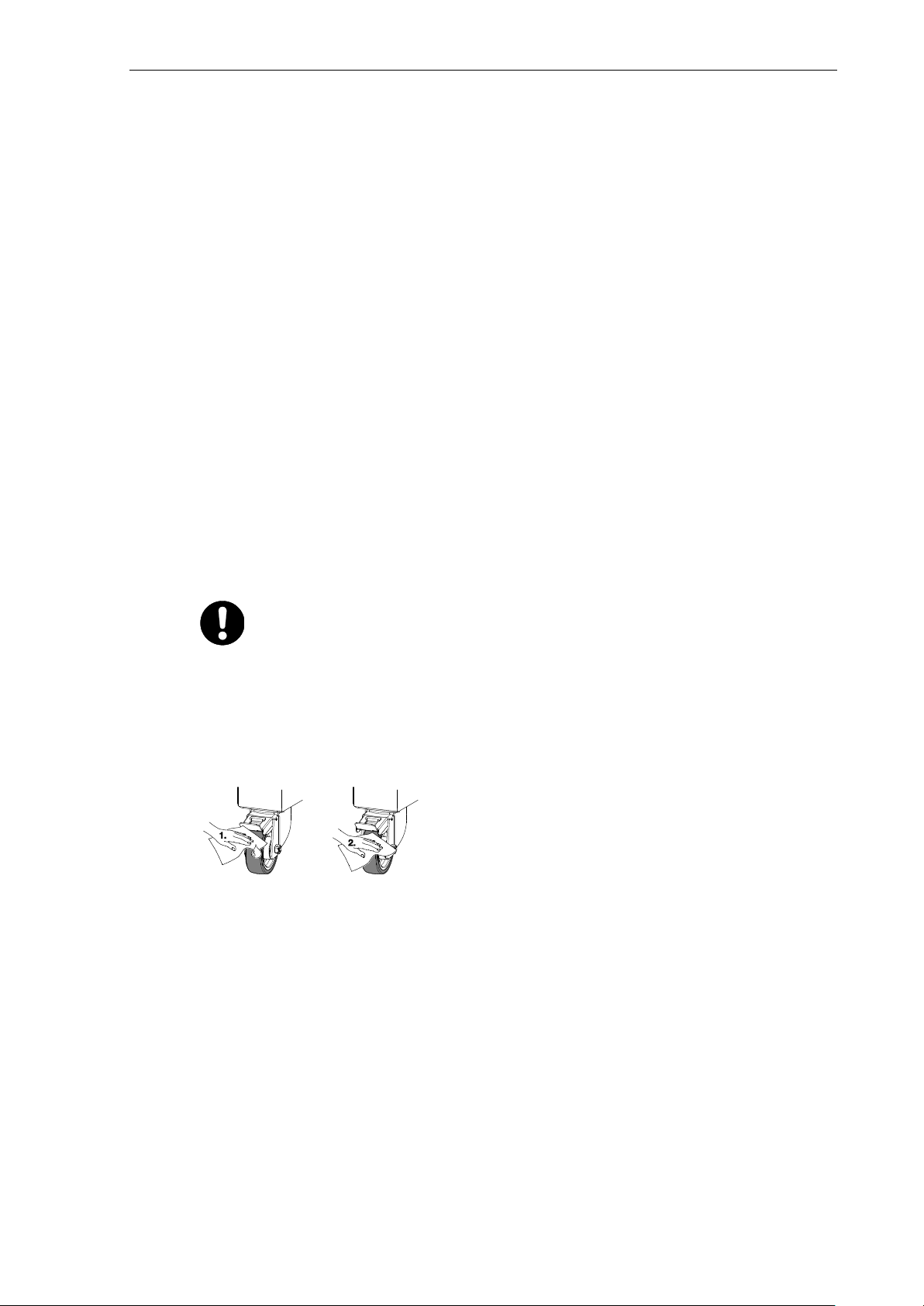
Incorrect cleaning can damage the casters.
A high-pressure cleaner can be used for types TWF-H -AWT.
For other types:
Clean the casters with a hot, mild detergent diluted in water. After cleaning, rub
surfaces dry with a soft cloth.
# Clean cooling pellets
→ Applies to types TWF-C 3.0-PK
Mild washing up detergent diluted in hot water is ideal for cleaning. Afterwards,
rinse with clear water. After cleaning, rub surfaces dry with a soft cloth.
NOTE
The cooling pellet can be washed in the dishwasher up to ≤ +85 °C.
# Clean door seal
→ Applies to types TWF-AK (… with cooling device, active convection cooling)
The door seal is removable.
NOTE
Door seal may not be cleaned with oven spray. The oven spray can destroy the door
seal.
Mild washing up detergent diluted in hot water is ideal for cleaning. After cleaning,
rub surfaces dry with a soft cloth.
# Clean controller operating panel
→ Applies to types TWF-AK (… with cooling device, active convection cooling)
Clean the controller operating panel with a soft, damp (not wet) cloth. Then rub dry
with a soft cloth.
# Clean wheels
# Keep ready for next use in dry condition
Dry the inside of the appliance and leave the door open until the residual moisture
has dried off.
Store appliance at room temperature.
Page 46

Cleaning, Maintenance and Care
46 Rieber GmbH & Co. KG
Interval
Activity to be performed
Page
After daily use
Cleaning method
Page 42 et seqq.
Clean interior and door
Page 42 et seqq.
Remove and clean door seal
→ applies to types TWF-AK
Page 43
Clean the body
Page 42 et seqq.
Clean cooling pellet
→ Applies to types TWF-C 3.0-PK
Page 43 et seqq.
Defrost appliance
→ Applies to types TWF-AK (… with cooling
unit, active convection cooling)
Page 42
Clean controller operating panel
→ Applies to types TWF-AK (… with cooling
unit, active convection cooling)
Page 43
Disinfect the appliance as required
Page 43
If required
Clean wheels
Page 42 et seqq.
Clean ventilation grille and ventilation slots,
remove fluff
→ Applies to types TWF-AK (… with cooling
device, active convection cooling)
Page 42
Every 180 working days
or 6 months
Service electrical system /controller
→ Applies to types TWF-AK (… with cooling
unit, active convection cooling)
Page 42
Inspect condition of product identification
Page 15, 28
8.4 Overview
Page 47
Rieber GmbH & Co. KG
47
WARNING
Danger of electric shock. Dangerous electrical voltage.
A damaged mains cable must be replaced by a qualified electrician.
Have all electrical repairs carried out by an authorised electrician only.
The appliance must be disconnected from the power supply during cleaning and
also maintenance and when renewing parts. To do this, disconnect the connecting
plug.
Fault
Possible cause
Rectification
Door does not close
Rail damaged
Door handle/catch defective
Repair
# Operating personnel
Door seal defective
→ applies to appliances
TWF-AK
Wear, damage
Repair
# Operating personnel
Wheel defective
Wear, damage
Replace
# Rieber Service or
authorized partner
Door deformed, dented
Damage
Replace
# Operating personnel
Trapped moisture, mould
formation in the area of
joints
Insulating material for
thermal insulation is damp,
incorrect cleaning
Rub joints with a dry cloth. If
only light damp is present,
spray it with compressed air.
Dry appliance in the heat
chamber, at maximum +45 °C.
# Operating personnel
Seek assistance in the case of
mould formation.
# Hygiene specialist
Bumper rail defective
Wear, damage
Replace
# Operating personnel
9 Troubleshooting
9.1 Notes on troubleshooting
Any repairs during warranty period may only be carried out by the Rieber service department.
Please contact the Rieber service department.
Troubleshooting
Only spare parts that have been approved and specified by the manufacturer may be used. Only
use spare parts requested from and delivered by the manufacturer's service department.
Page 48
Troubleshooting
48 Rieber GmbH & Co. KG
Fault
Possible cause
Rectification
Temperature not
controllable. Deviation
from control temperature
→ applies to appliances
TWF-AK
Temperature controller
defective
Disconnect connecting plug
and lock appliance. Repair
# Qualified electrician
# Rieber Service or
authorized partner
Cooling does not function
or does not function
sufficiently
→ applies to appliances
TWF-AK
SET temperature incorrectly
set
Inspect
# Operating personnel
Page 40
Defrosting process active
Inspect
# Operating personnel
Page 40
Appliance was not filled with
pre-chilled food
Inspect
# Operating personnel
Not enough coolant in
appliance
Top up coolant.
# Refrigeration expert
# Rieber Service or
authorized partner
Your appliance is made of high-quality material which can be reused / recycled. For
disposal, disconnect the appliance from mains supply. Unplug the mains plug. Cut off the
cable directly at the casing. Dispose of this appliance properly via your local disposal
facility.
# Customer service, spare parts
Visit us on the Internet at http://www.rieber.de
If you have a fault you cannot remedy yourself, please get in touch with your Rieber
partner or Rieber central customer service.
9.2 Disposing of your product
Risks of being shut into the appliance and suffocation
… if persons get locked in the appliance. Make sure persons with limited sensory
and mental ability have no access to the appliance. Destroy the door lock,
alternatively dismount the bumper rail.
Page 49

Rieber GmbH & Co. KG
49
10 Warranty and liability
Manufacturer liability and warranty shall no longer apply if you
do not follow the information and instructions in this user guide,
do not use the device as it is intended,
Warranty and liability
See
chapter "Intended use"
make conversions or functional modifications,
do not use original spare parts.
The "Sales and delivery terms and conditions" of Rieber GmbH & Co. KG shall apply for all
warranty claims made against the manufacturer. For instance, any repairs and/or overhaul during
the warranty period may only be performed by the manufacturer's service department of Rieber,
failing which any claims hereof may be voided. Please contact the manufacturer's service
department at Rieber.
The following wear parts are not included in the warranty:
Caster, caster with parking brake, encompassing bumper rail
11 Excerpt from the EU Declaration of Conformity
EC Declaration of Conformity according to EC Machinery Directive 2006/42/EC
Rieber GmbH & Co. KG hereby declares that the products
TWF 2 x 8 AK
TWF 2 x 10 AK
TWF 3 x 8 AK
TWF 3 x 10 AK
comply with the basic requirements of the EC Machinery Directive 2006/42/EC, Appendix II A,
harmonised standards (DIN EN ISO 12100: Safety of Machinery ― General principles for design ―
Risk assessment and risk minimisation).
EU Declaration of Conformity in accordance with the European Directive on Electromagnetic Compatibility 2014/30/EU.
Rieber GmbH & Co. KG hereby declares that the product
TWF 2 x 8 AK
TWF 2 x 10 AK
TWF 3 x 8 AK
TWF 3 x 10 AK
comply with the basic requirements of the European Directive on Electromagnetic Compatibility
2014/30/EU in respect of their electrical design.
If required, a copy of the EC Declaration of Conformity can be obtained from our sales team.
Page 50

Index
50 Rieber GmbH & Co. KG
12 Index
C
Card box................................................................ 30
Card holder ........................................................... 33
Caster type ...................................................... 30, 31
Caster with parking brake...................................... 20
CHECK HACCP ........................................ 2, 4, 6, 29
Collection tank for condensation ......... 12, 14, 38, 44
Cooling pellet ...................................... 20, 25, 29, 45
Cooling unit ........................................................... 21
D
Designated use ..................................................... 18
Door lock ............................................................... 13
Door seal ............................................................... 45
E
Encompassing bumper rail .................................... 28
Encompassing guard rail ....................................... 29
F
For closed facility ............................................ 20, 27
I
Impact protection
Instructions on behaviour in an emergency ........... 16
Numbering ............................................................. 30
.............................. 14, 20, 28, 48
N
O
Optional features ................................................... 28
P
Product identification ....................................... 15, 31
Pushing handle ..................................................... 20
R
Refrigerant .................................................. 9, 16, 48
Rieber system crockery ......................................... 32
T
Thermi Drink Dispenser ........................................ 31
Thermotray ............................................................ 32
Transport ......................................................... 10, 19
Troubleshooting .................................................... 47
TWF-AK .............................................. 12, 18, 19, 40
TWF-C 3.0 ................................................ 18, 22, 23
TWF-C 3.0-PK .................................... 18, 22, 24, 25
TWF-H-AWT ................................................... 19, 26
U
Use ........................................................................ 38
W
Wheels ............................................................ 22, 45
Page 51

Rieber GmbH & Co. KG
51
Manufacturer:
Rieber GmbH & Co. KG
Hoffmannstraße 44
D72770 Reutlingen, Germany
Phone +49 (0) 7121 518-0
FAX +49 (0) 7121 518-302
Email [email protected]
www.rieber.de
Responsible for Sales and Service:
Rieber GmbH & Co. KG
Hoffmannstraße 44
D72770 Reutlingen, Germany
Phone +49 (0) 7121 518-170
FAX +49 (0) 7121 518-404
Email [email protected]
www.rieber.de
Spare parts orders:
[email protected]
FAX +49 (0) 7121 518-404
Customer service:
[email protected]
FAX +49 (0) 7121 518-404
Phone +49 (0) 7121 518-170
13 Contact Details
Contact Details
To ensure quick processing of your request please have the following ready to hand:
your customer number,
the item, order, invoice or delivery note number
serial number of the appliance
Please add your notes here
 Loading...