

Page 1
Proper Use of Pipe Wrenches
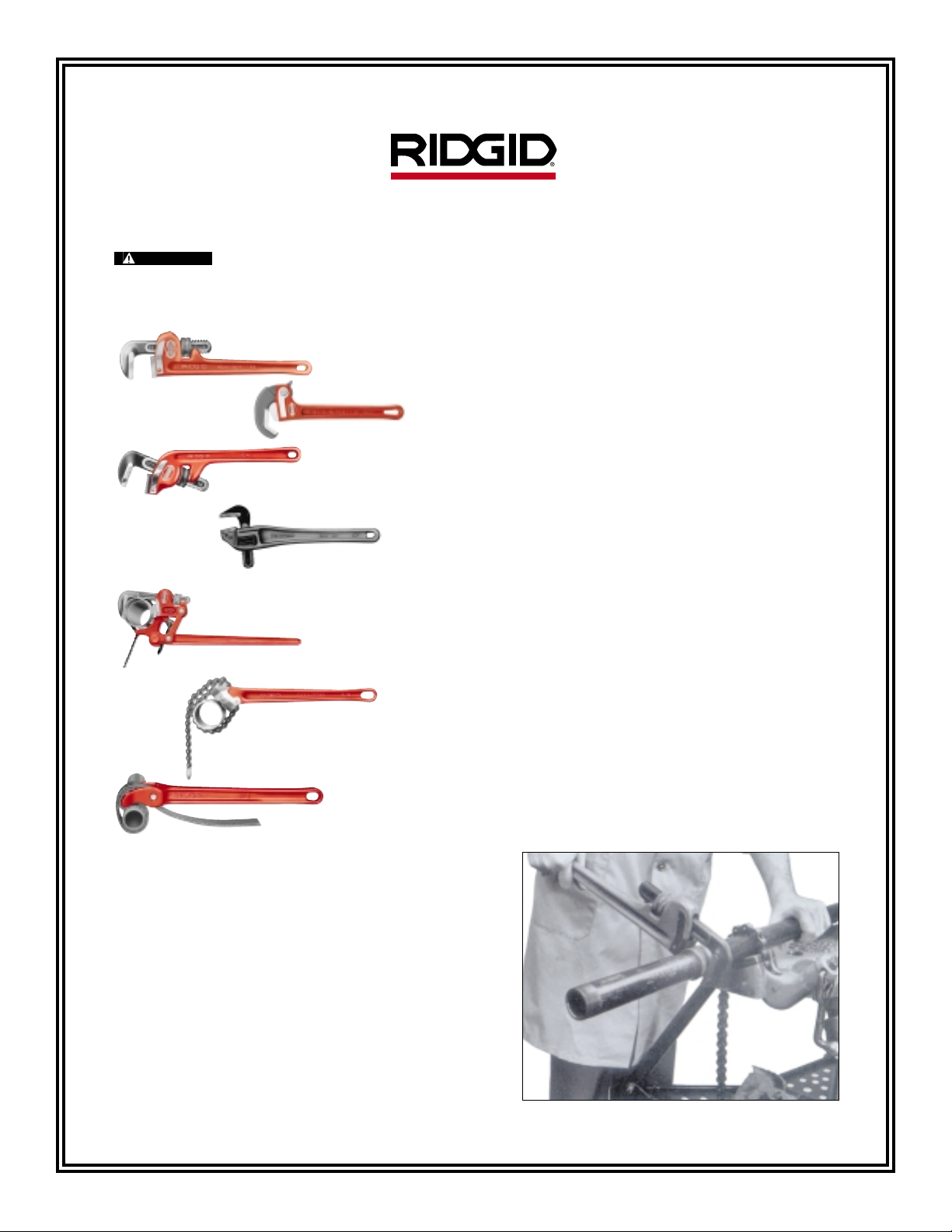
• Straight and RAPIDGRIP Pipe Wrench – suitable for all forms
of pipe work
• End Pipe Wrench – fast easy grip for close to wall and parallel
work
• Offset Wrench – provides easy entry to tight spots and awkward
angles
• Compound Leverage Wrench – multiplies leverage: used for
seized joints
• Chain Pipe Wrench – ideal for extremely tight work
• Strap Wrench – suitable for polished, plastic or plated pipe
10/2005
Always use the correct pipe wrench. Pipe wrenches are available in a number of different styles and sizes
particular to the job they are designed for:
Mount The Pipe Wrench Correctly On
The Work Piece
When using a pipe wrench of any size, a gap must be
maintained between the shank of the hook jaw and the
pipe itself. This permits the pressure of the two gripping
points (the heel jaw and the teeth of the hook jaw) to produce the gripping action of the wrench. Allowing the
back of the hook jaw to contact the pipe greatly reduces
the gripping action of the wrench and can cause the
wrench to slip. It may also result in the failure of the hook
jaw. Maximum grip and turning force is developed by
maintaining a gap of approximately 1/2″ (12mm) between
the back of the hook jaw and the work piece.
Failure to properly use wrenches can result in serious injury.
WARNING
Find Quality Products Online at: [email protected]
www.GlobalTestSupply.com
Page 2
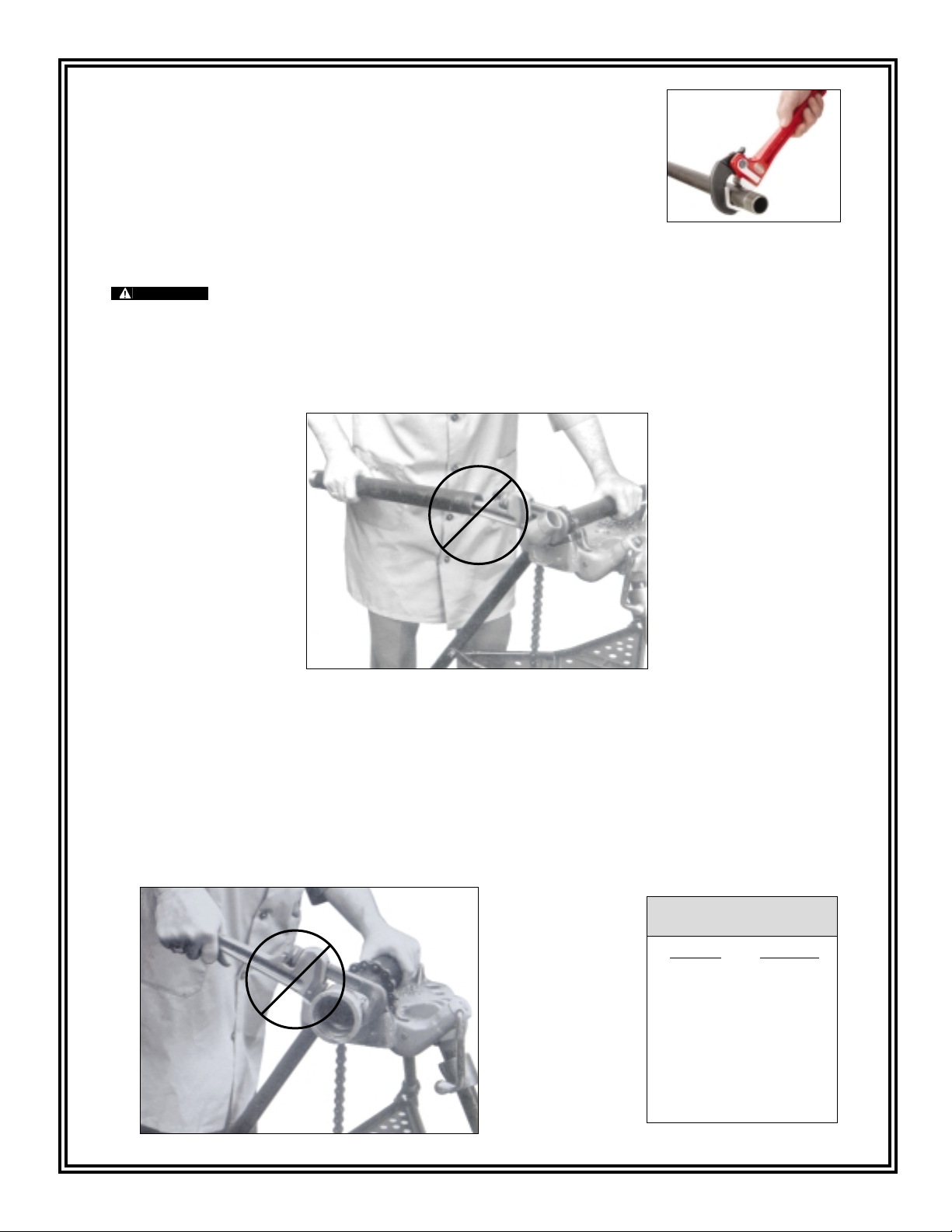
When using a RapidGrip wrench, be sure to center the work piece in the “v” of
the hook. If the work piece is not in contact with both sides of the “v”, it can
reduce wrench gripping action and may result in failure of the hook.
Improper Uses of Pipe Wrenches
Misuse or abuse of a pipe wrench may result in serious injury.The following is a list
of practices that may result in damage or failure of the wrench.
• Do not use cheaters – A “cheater” is usually a piece of pipe slipped over the handle of a pipe wrench to
increase the leverage of the pipe wrench. This may result in the bending and/or breaking of the wrench
handle. A “Cheater” can also slip off the wrench during use, causing injury. If greater leverage is needed
use a larger wrench.
• Do not use the wrench as a hammer – A pipe wrench is designed to turn pipe. Using the wrench as a
hammer could damage the wrench.
• Do not use a wrench with a bent or twisted handle – A bent handle indicates the wrench has been
overloaded and could be damaged. Abent handle should never be straightened. Awrench with a bent or
twisted handle should be taken out of service.
• Do not use an incorrect size wrench – Always insure the correct size of wrench is being used for the
job. Wrench nut should not be located at the very end of the hook jaw. Using a wrench beyond its capacity may result in wrench failure. Using a wrench that is larger than required may result in damage to the
work piece.
WARNING
Wrench too small
for workpiece
Wrench
Pipe Dia.
6″
1
/8″ - 1/
2
″
8″
1
/4″ - 3/
4
″
10″
1
/4″ - 1″
12″
1
/2″ - 11/
2
″
14″
1
/2″ - 11/
2
″
18″ 1″ - 2″
24″ 1
1
/2″ - 21/
2
″
36″ 2″ - 3
1
/
2
″
48″ 3″ - 5″
60″ 3″ - 8″
Suggested Pipe Wrench
Size Reference
Find Quality Products Online at: [email protected]
www.GlobalTestSupply.com
Page 3

• Do not use on hard, square or hexagonal material – Wrench is designed to turn pipe or soft round
stock. Wrench may slip on hardened material or the teeth may chip when used on hex or square stock.
• Do not hit a wrench with a hammer to break loose a fitting – High impact loading may damage a
wrench and result in unexpected handle failure.
• Do not apply a side load to the handle – Putting a strain on the wrench that it was not designed for
can result in a broken housing or twisted handle.
• Do not use as a lever, lifting device or to bend tubing – Wrench is designed to turn pipe. Improper
use may result in damage to the handle.
• Do not use near a flame – Teeth on the hook or heel jaw could become soft. This may result in chipping or flattening of the teeth. Chain on a chain wrench could also become soft. This reduces its strength
which may result in its failure.
• Do not use in conjunction with a power drive, threading machine or any mechanical/hydraulic
device to make or break fittings – Use of a power drive, threading machine/hydraulic devices to apply
force to the handle of a pipe wrench can result in wrench failure and/or serious personal injury.
• Do not modify or alter a pipe wrench – Modifying a pipe wrench may result in wrench failure and serious injury.
Proper Maintenance of Pipe Wrenches
Do not use a pipe wrench that is not properly maintained. Inspect your wrench fre-
quently for damaged or worn parts.
Straight/RapidGrip/End/Offset and Compound Wrenches
• Clean teeth with a wire brush. Dirt in hook or heel jaw may result in the wrench slipping.
• Replace jaws with worn teeth or any other damage. This may result in the wrench slipping or possible
failure of the jaw.
• If the wrench fails to operate with its normal ratchet action, examine the spring assembly and replace if
necessary .
• To prevent rusting, keep non painted parts well lubricated with oil and store in a dry place.
Chain Wrenches
• Clean heel jaw teeth with a wire brush. Dirt in hook or heel jaw may result in the wrench slipping.
• Replace heel jaw if teeth are worn or damaged. This may result in the wrench slipping or possible failure
of the jaw.
• Inspect chain for separation of the links or any other damage. This indicates the chain has been overstressed and should be replaced.
• To prevent rusting, keep chain and jaw well lubricated with oil and store in a dry place.
Strap Wrenches
• Inspect the strap and replace if frayed or cut. This reduces the strength of the strap.
• Replace the strap if the wrench slips due to grease, oil or other dirt that may have impregnated the strap.
WARNING
Find Quality Products Online at: [email protected]
www.GlobalTestSupply.com
 Loading...