

Page 1
SNK America Prodigy GT-27 Tooling Tutorial
The Prodigy GT-27 lathe can be equipped to accomplish common tasks in a variety of
ways. Cutting tools are mounted onto blocks that are secured to the tool plate using
fasteners and a “T-nut” slot machined into the tool plate. The tool blocks discussed
below can be acquired from several sources. The options listed below are examples only
and are not necessarily all options available. This tutorial does not include all available
tooling that can be used on the Prodigy GT-27. We are always learning new and better
ways to utilize our machine and tooling is an on-going process.
One of these sources is: Engineered Concepts, Inc. (ECI) An electronic catalogue can be
found on-line at: www.gangturn.com. All blocks pictured in this tutorial are of ECI
design.
The following information illustrates these options.
Feeding stock
If the Prodigy is equipped with a feeder allowing for production operations from
bar stock:
In this scenario, the bar-stock used is in lengths of from 4 feet to 12 feet dependant on the
capacity of the feeding device.
Option 1: Cut off tool holder. Space and time can be saved by using the side of a
square-shank cut off tool as a stock stop. If this option is used, take care when
programming not to open the collet and actuate the pushing sequence until the surface of
the cut off tool is within .050” of the end of the bar stock. Excessive impact forces can
cause the holder/block to move.
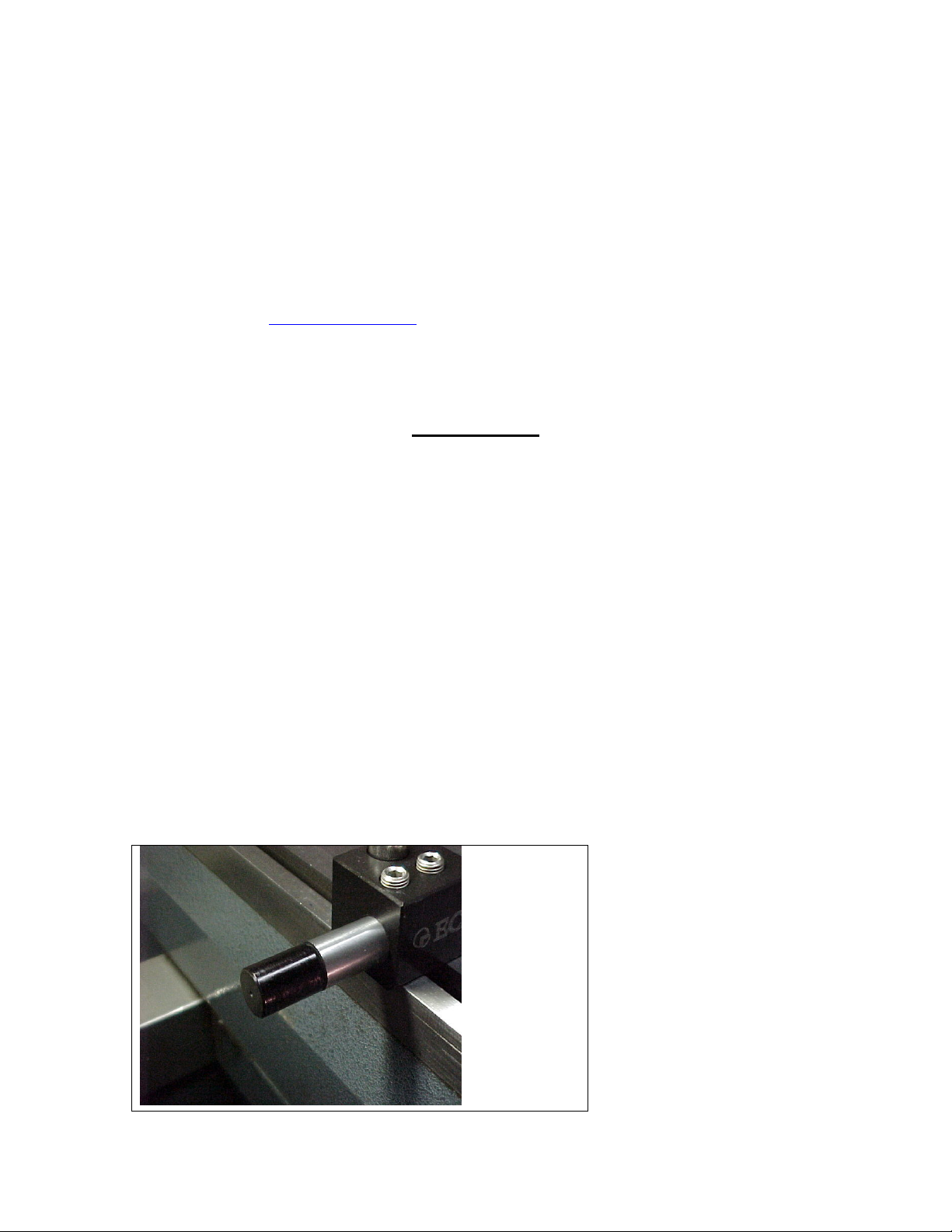
Option 2: Stationary or rotating round-shank device. If it is decided to dedicate a
tool station to the feeding sequence, a round-shank rod (a dowel pin works well) can be
mounted in a block. E.C.I. offers revolving stops in 5/8 and ¾-inch diameter shanks. If
your block is a larger diameter that the device chosen, a bushing can be used to
accommodate. A rotating stop is pictured below.
Revision 01: January, 2005 Page 1 of 9
Page 2
SNK America Prodigy GT-27 Tooling Tutorial
If the Prodigy is to be used without a feeding device that can push the stock out to a
stop:
Option 1: Hand-feeding of stock. The Prodigy can be programmed to position any
of the devices listed in the two options above to position, open the collet and stop the
program (M00). The operator can then open the door and pull the stock out to the stop.
The operator can then close the door and re-start the program to close the collet and
proceed with processing.
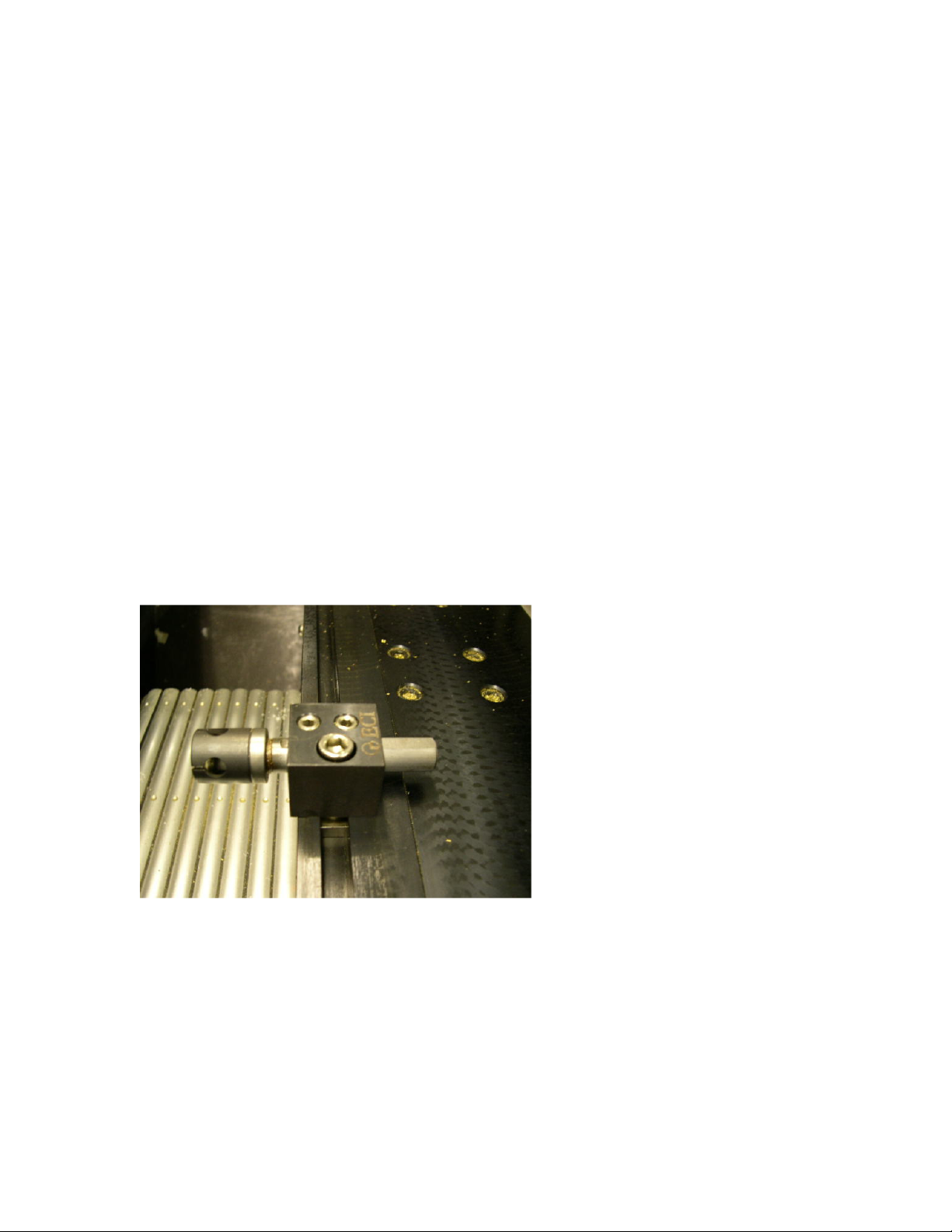
Option 2: Automated feeding of stock. Option 1 would require an operator to be
available to accomplish the task. Another option is to use a pulling device. There are
several designs available from after-market sources. Choices include mechanical devices
that have a split bushing that stretches slightly to grip the part when the Z-axis is moved
in the minus direction. Once the part is gripped the collet is opened. The Z-axis is then
moved the required distance to provide facing stock for the next part. The collet is then
closed followed by moving the Z-axis in the plus direction to separate the bar stock from
the gripper. The program can then continue automatically. This option will allow
unattended operation for as long as it takes to use up a length of stock. Pneumatic
devices exist that can use the programmable air outputs typically used to drive pneumatic
live tooling. A split-bushing type bar puller is pictured below.
Revision 01: January, 2005 Page 2 of 9
Page 3
SNK America Prodigy GT-27 Tooling Tutorial
Turning, Grooving, O.D. Threading
Option 1: Square shank tool holders. Any square-shank tool designed for turning
can be mounted using blocks and extensions that can be acquired from after-market
sources such as ECI. The extension blocks accommodates 5/8” tooling and are available
in a variety of lengths. A smaller square-shank holder may be used. A shim can be
placed under the tool’s shank to compensate for the difference between 5/8” and the
tool’s shank size. (Example: a ½” shank tool holder would require a 1/8” shim.) Some
tooling manufacturers offer tooling that are capable of both turning and cut-off
processing. It is feasible to use one tool as a cut-off tool, a stock stop and a turning tool.
Iscar, Valenite/Carboloy and Kennametal all manufacture tooling with multi-use
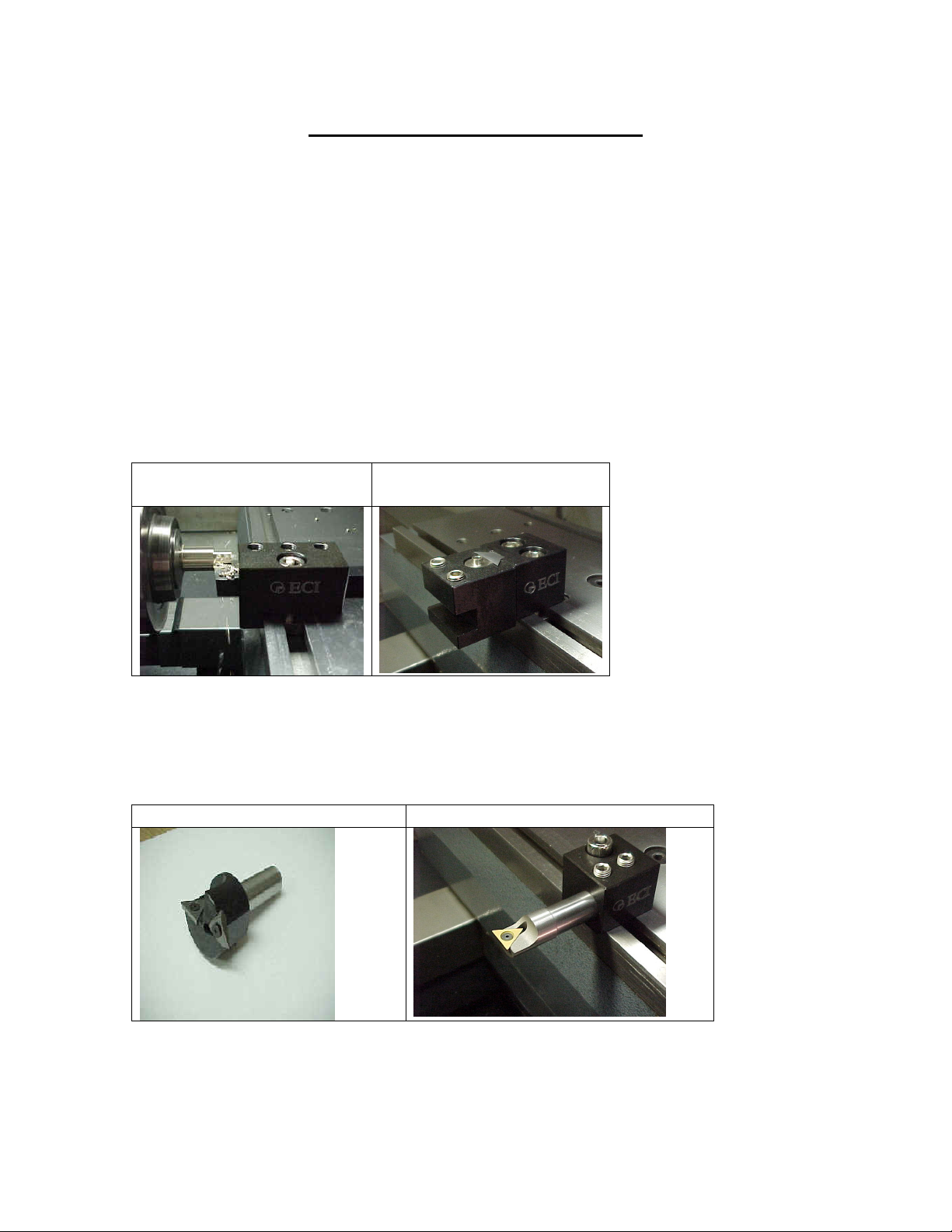
capabilities. Tool blocks are available from ECI that allow for a tool to be mounted upside-down. The following pictures illustrate options for square-shank tooling. Axially
mounted and radially mounted tooling can use either solid or adjustable blocks. The
adjustable blocks are used to mount tool upside-down.
Axially mounted using solid
block
Radial adjustable mount
using posi-lock post
Option 2: Round shank tool holders. Gang-tool machines are a more compact
design than most turret-style lathes. This design places limitations for mounting tooling
not typical of turret-style lathes. A popular concept is to use a round-shank tool to turn
with. If the geometry of the part being machined allows, one tool can both turn and bore.
ECI Combination Turn/Thread Boring bar mounted in solid block
Revision 01: January, 2005 Page 3 of 9
Page 4
SNK America Prodigy GT-27 Tooling Tutorial
Knurling
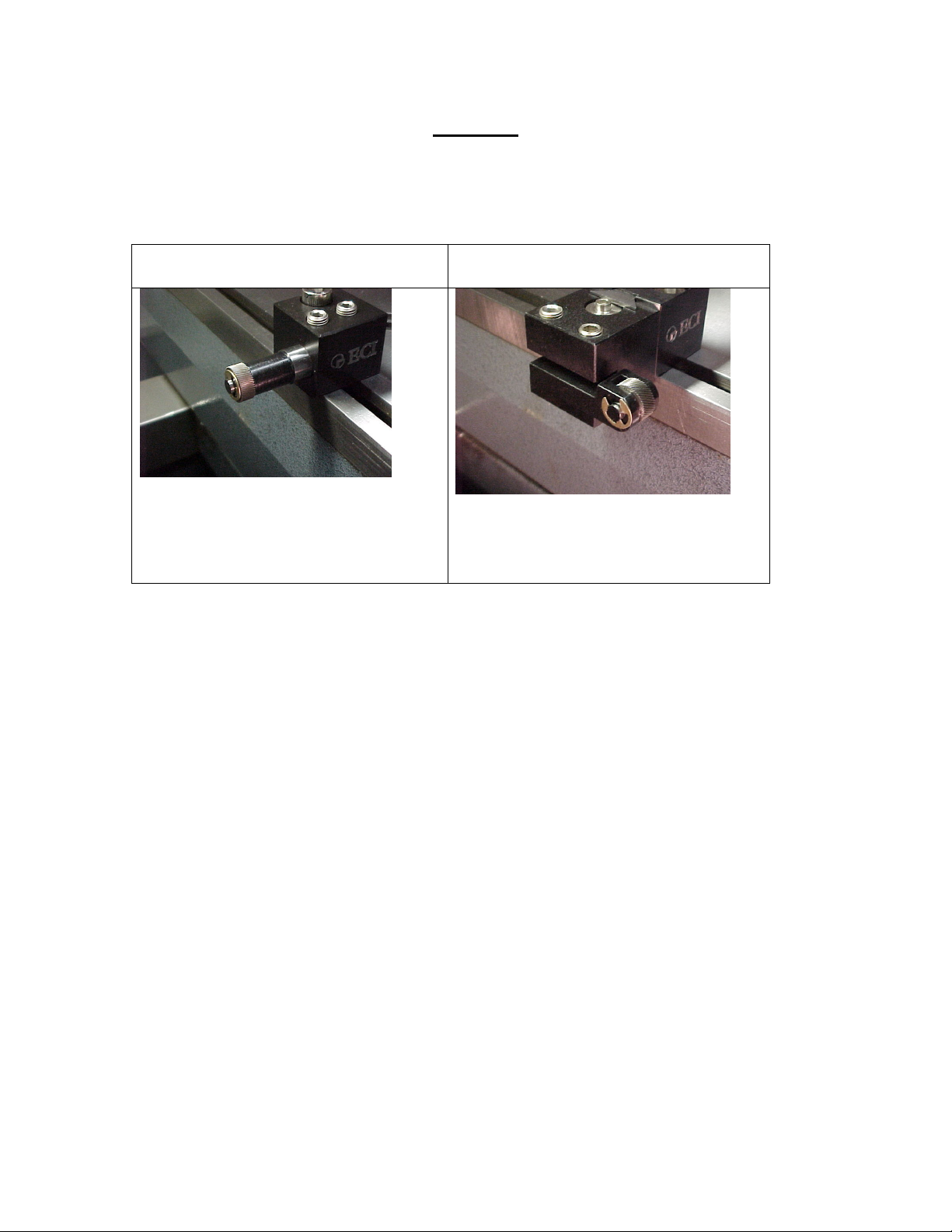
Knurling can be accomplished using either square or round shank tools. Mounting knurl
tools using either option listed above in “Turning.” The pictures below illustrate both
round and square shank knurl tools mounted.
Axially-mounted Knurl tool Radially-mounted Knurl tool using a
posi-lock post and adjustable block
Revision 01: January, 2005 Page 4 of 9
Page 5
SNK America Prodigy GT-27 Tooling Tutorial
Drills, Center-drills and Reamers, etc.
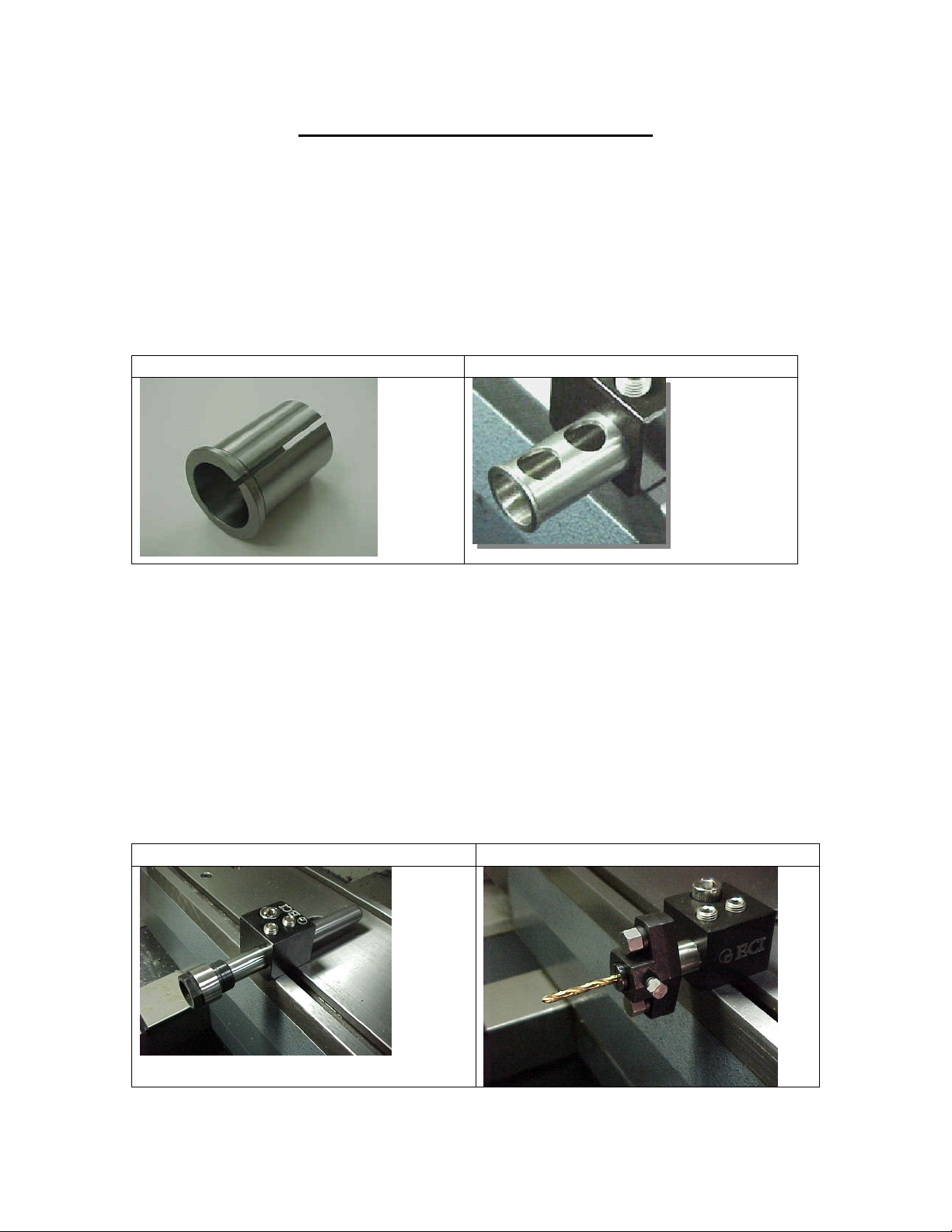
Option 1: Bushing. Drills, center drills, reamers and taps can all be mounted to
either 5/8” or ¾” blocks by mounting the tool in a bushing. Split-bushings or solid
bushings can be used. If using a bushing, take care to choose one that is sized for the
intended tool. A bushing that is more than .005” larger than the shank of the intended
tool will be below center and negatively effect performance. Also, an incorrectly sized
bushing will not be as rigid and the tool will be more prone to “walking” and pushing
back during cutting. If choosing a split bushing, take care not to over-tighten when
mounting a cutting tool. The pictures below illustrates a solid bushing and a split bushing
Split bushing Solid bushing with screw holes shown
Option 2: Collet chuck. Another option for mounting drills and reamers is a collet
chuck. A collet chuck utilizes collapsible collets that accept a range of tooling.
(typically .5mm or .015 inches.) These devices are self-centering and are a better choice
if a wide variety of shank diameters is to be used. A collet chuck is pictured below.
Option 3: Adjustable drill fixture. This type of fixture is has the ability to self-center.
Once center adjustment is performed, split bushings can accommodate a large range of
drill sizes. This device can be used to center-drill, drill or ream. Tapping would most
likely require a more robust clamping design; this device only uses one bolt to secure the
cutting tool in place. The picture below illustrates this device mounted.
Option 2: “ER” Collet chuck Option 3: Adjustable drill fixture
Revision 01: January, 2005 Page 5 of 9
Page 6
SNK America Prodigy GT-27 Tooling Tutorial
Taps and Die heads.
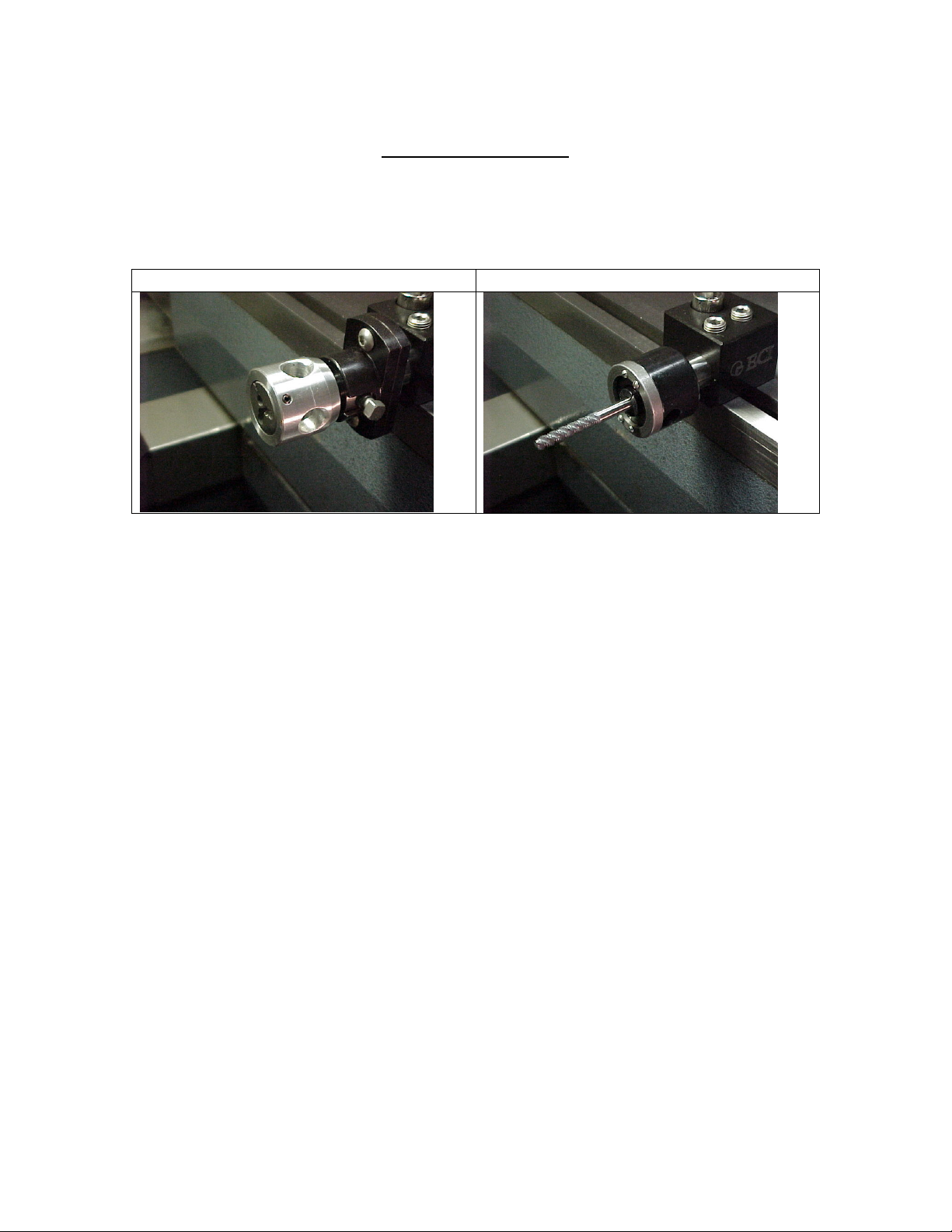
Option 1: Tap collet/”Button” Die. A tap collet holder can be used during tapping
or die chasing. These devices are designed to “float” meaning that the tool has the
capability of moving laterally within the tool holder to compensate for directional change.
“Button” die mounted in adjustable holder Tap mounted with tap collet
Option 2: Bushing. The Prodigy GT-27 is equipped with rigid tapping as a standard
feature. This eliminates the need to use a tap “float.” If this option is chosen, care must
be taken to verify that the tap/die head is correctly centered.
Option 2: Collet chuck. Just as above in “drilling”, this is a more consistent choice
due to the self-centering aspects of collet chucks.
Revision 01: January, 2005 Page 6 of 9
Page 7
SNK America Prodigy GT-27 Tooling Tutorial
Cut-off processing.
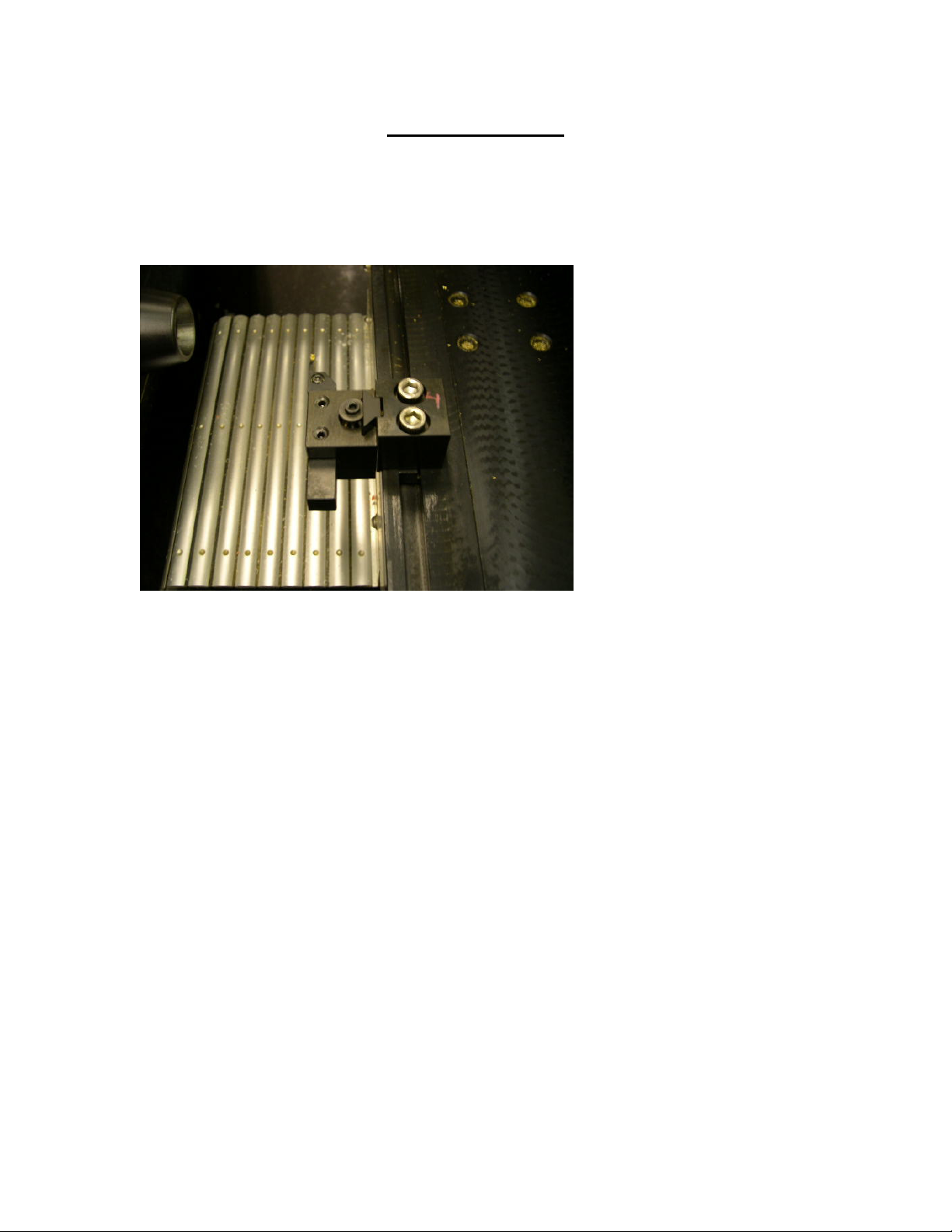
Option 1: Square shank. This is the most common and versatile option. Just as
above in “Turning”, if a cut off holder smaller than 5/8” is chosen, a shim will be needed
to compensate. A cut off tool is pictured below mounted using a posi-lock post and
adjustable block.
Option 2: Round shank. This option is typically only used to process parts smaller
than ¼”. A part can only be processed this way if the diameter of the part at the cut off
end is less than twice the depth of cut capability of the tool or insert chosen. Just as
above in “Turning”, this option will increase the available space available on the tool
plate for other tooling.
Revision 01: January, 2005 Page 7 of 9
Page 8
SNK America Prodigy GT-27 Tooling Tutorial
Live-tools.
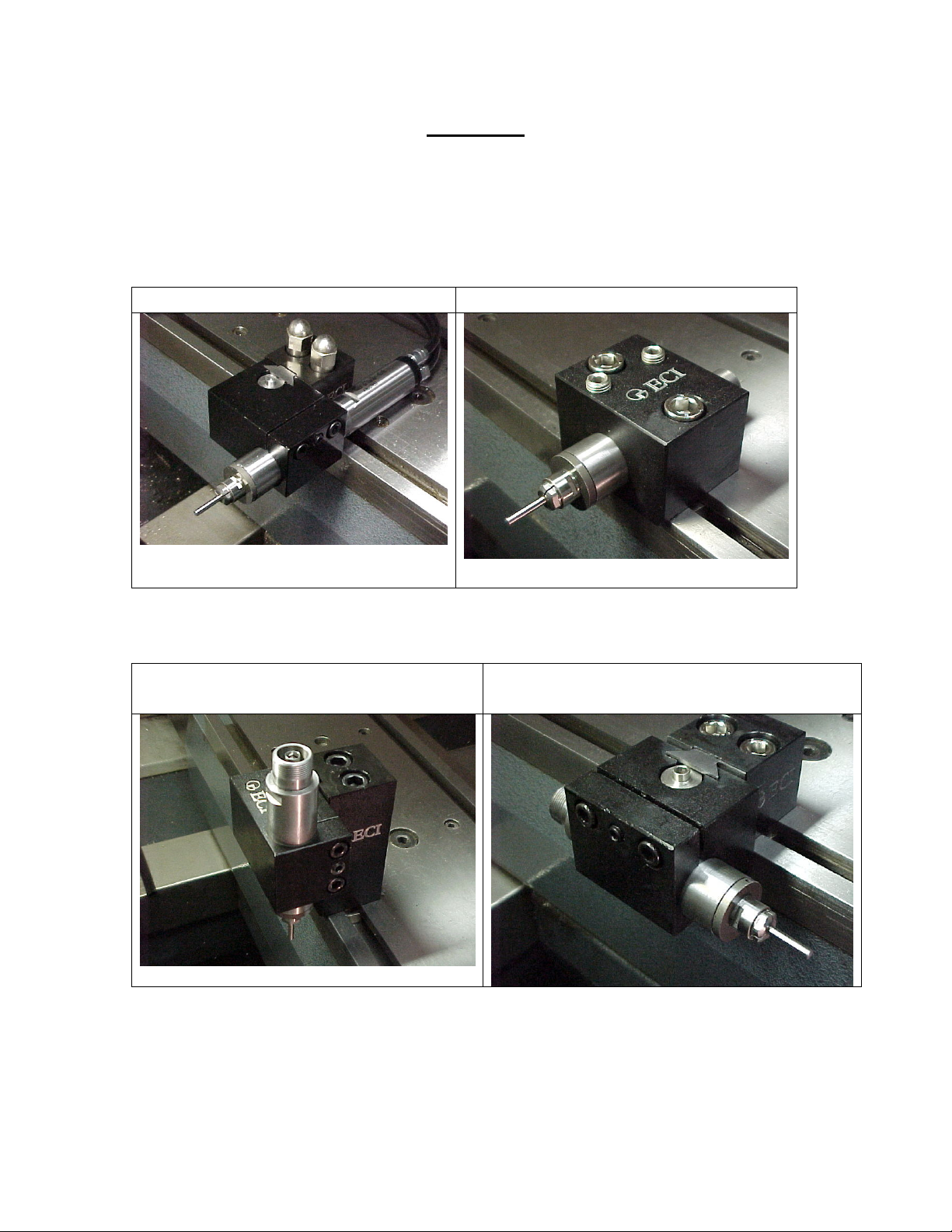
The Prodigy lathe can use either pneumatic or electric live tooling.
Choosing one over the other has little impact on mounting options.
Axially mounted (parallel to the Z-axis)
Mounted using posi-lock post Mounted in solid block
Radially mounted (perpendicular to Z-axis)
Overhead mounted using a tall
version of a posi-lock post
Typical radial mount using standard
posi-lock post
Radial live-tool processing can also be accomplished using a 90-degree
spindle mounted axially as shown above.
Revision 01: January, 2005 Page 8 of 9
Page 9
SNK America Prodigy GT-27 Tooling Tutorial
Additional Options
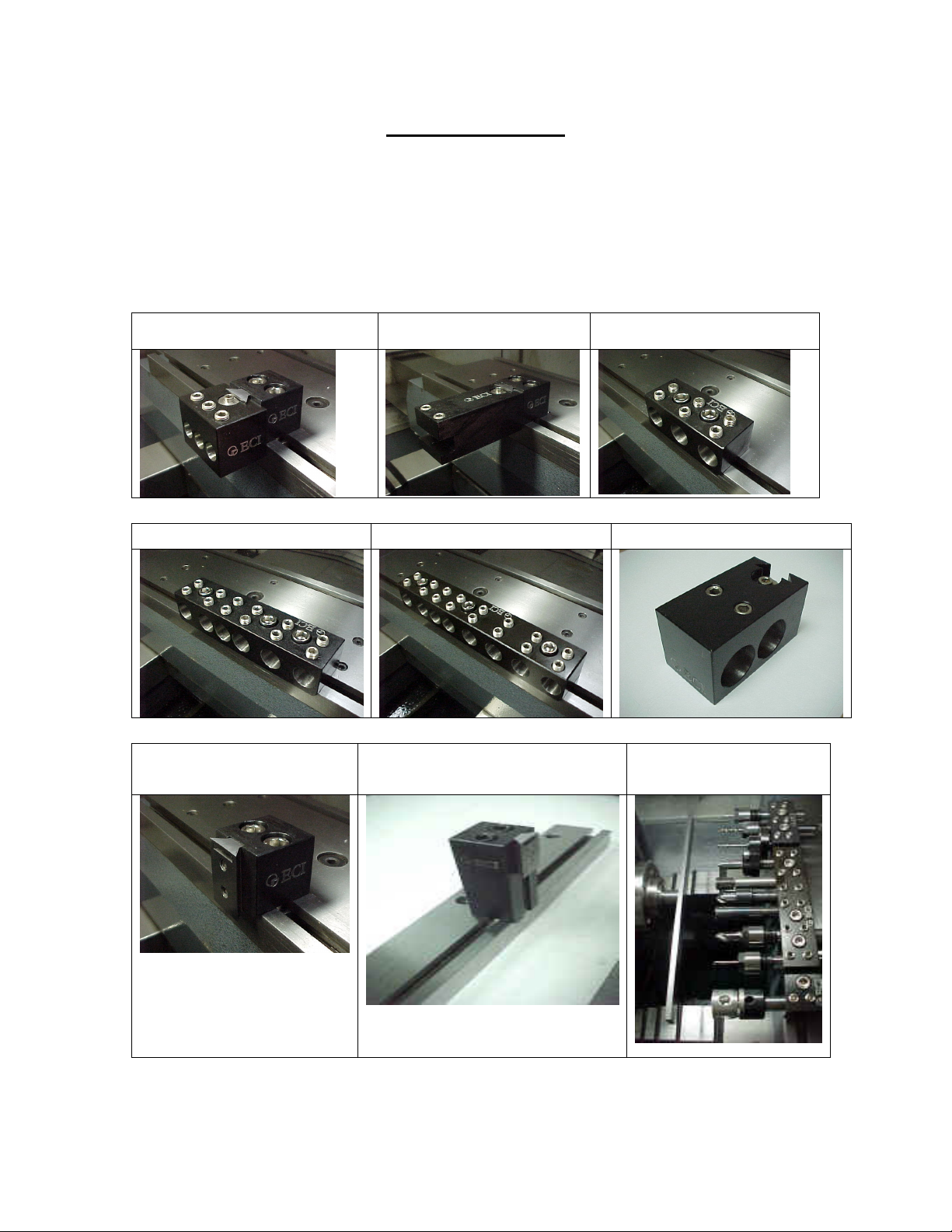
Compound-angle machining can be accomplished using a posi-lock post and
a custom block machined to provide angular mounting other than axially or
radially. Blocks designed to hold round-shank tools come in a variety of
configurations allowing the “grouping” of up to eight tools on one block.
The pictures below illustrate some of the options not mentioned previously.
Mount 3 axial small tools 3” extension 3-hole block
6-hole block 8-hole block Mount 2 live tools
Standard posi-lock Tall posi-lock Z-Zero setting
fixture
Revision 01: January, 2005 Page 9 of 9
 Loading...