

Page 1
User Guide
(B90/B70)
Phonak Virto B-Titanium
Page 2
3
Non wireless models
Phonak Virto B90-Titanium
Phonak Virto B70-Titanium
CE mark applied
2016
2016
This user guide is valid for:
Your hearing aid details
Model
Phonak Virto B-Titanium
Battery size
10
Your hearing care professional:
Page 3

5
Your hearing aids have been developed by
Phonak – the world leader in hearing solutions based
in Zurich, Switzerland.
These premium products are the result of decades of
research and expertise and are designed to keep you
connected to the beauty of sound! We thank you for
making such a great choice and wish you many years
of listening pleasure.
Please read the user guide carefully to make sure that
you understand and get the best out of your hearing aids.
For more information about features and benets, simply
contact your hearing care professional.
Phonak – life is on
www.phonak.com
Contents
Your hearing aid
1. Quick guide
2. Parts of the hearing aid
Using the hearing aid
3. Left & right hearing aid markings
4. On/O
5. Battery
6. Putting on the hearing aid
7. Removing the hearing aid
8. Push button
9. Adjusting the hearing aid with
Phonak MiniControl
Further Information
10. Care and maintenance
11. Service and warranty
12. Compliance information
13. Information and description of symbols
14. Troubleshooting
15. Important safety information
6
8
9
10
11
13
14
15
16
18
20
22
23
28
30
4
Page 4
76
1. Quick guide
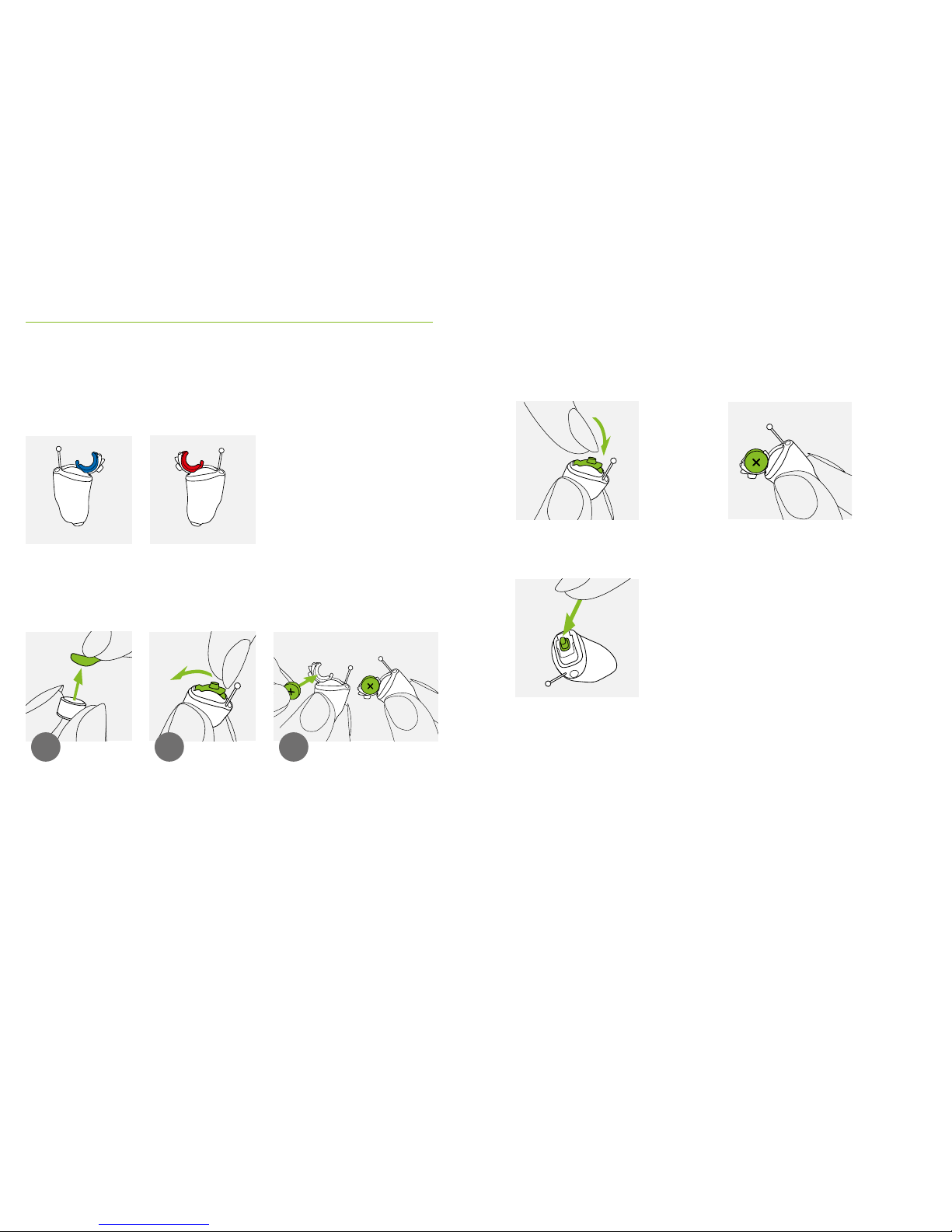
Left & right hearing aid markings
Changing batteries
Blue marking for left
hearing aid.
Red marking for right
hearing aid.
Remove the
sticker from the
new battery
and wait two
minutes.
Left Right
Open the
battery door.
Place battery in the
battery door with the
“+” symbol facing
upwards.
1 2 3
On/O
Push button
Models with this option only:
The push button on your hearing aid
can have various functions.
OOn
Page 5
8 9
2. Parts of the hearing aid
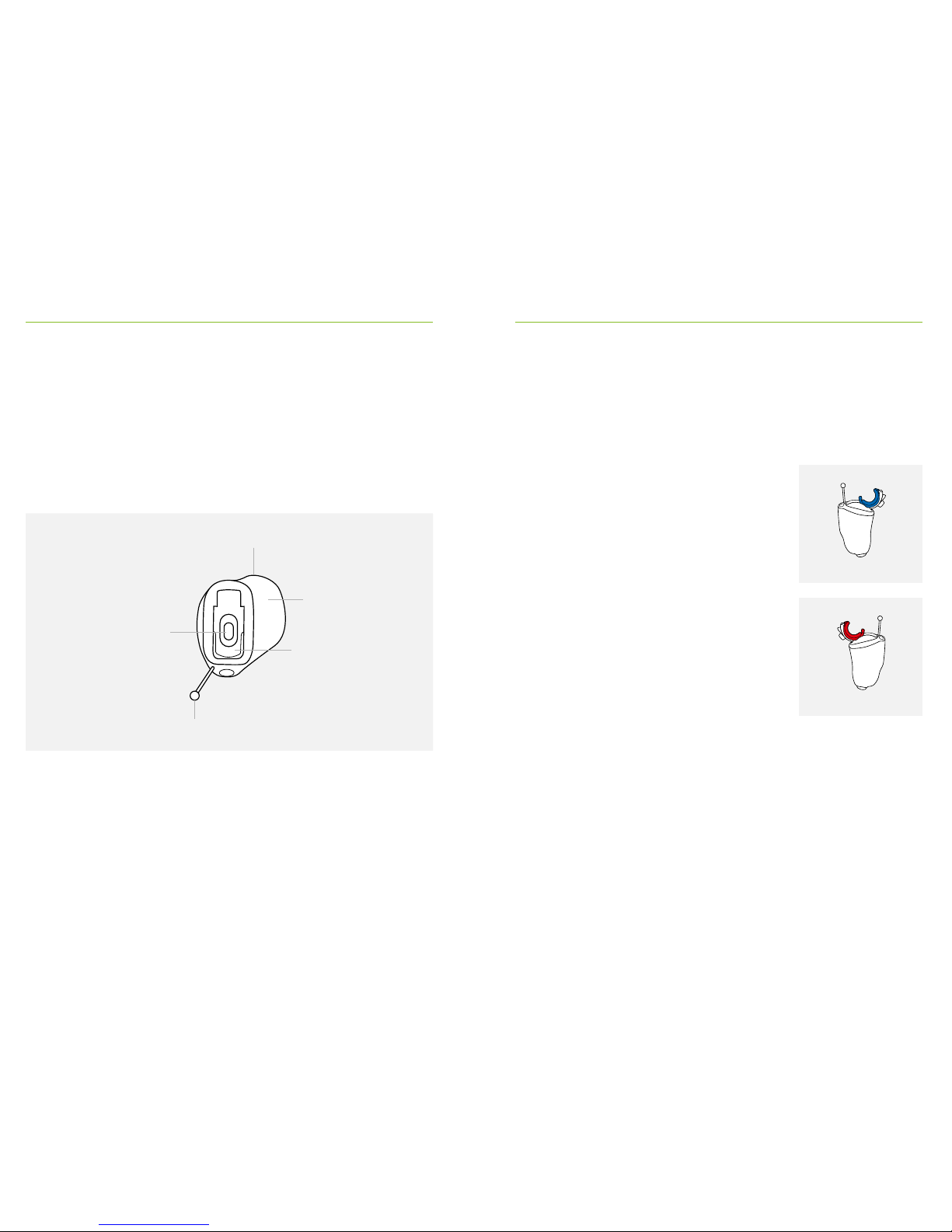
The picture below shows the model described in this user
guide.
Virto B-Titanium
Custom made
shell
Battery door
Push button
(optional)
Removal handle
Sound outlet / wax protection system
3. Left & right hearing aid markings
There is a red or blue inlay in the battery door to tell you
if it is a left or a right hearing aid.
Blue marking for left hearing aid.
Red marking for right hearing aid.
Page 6
10 11
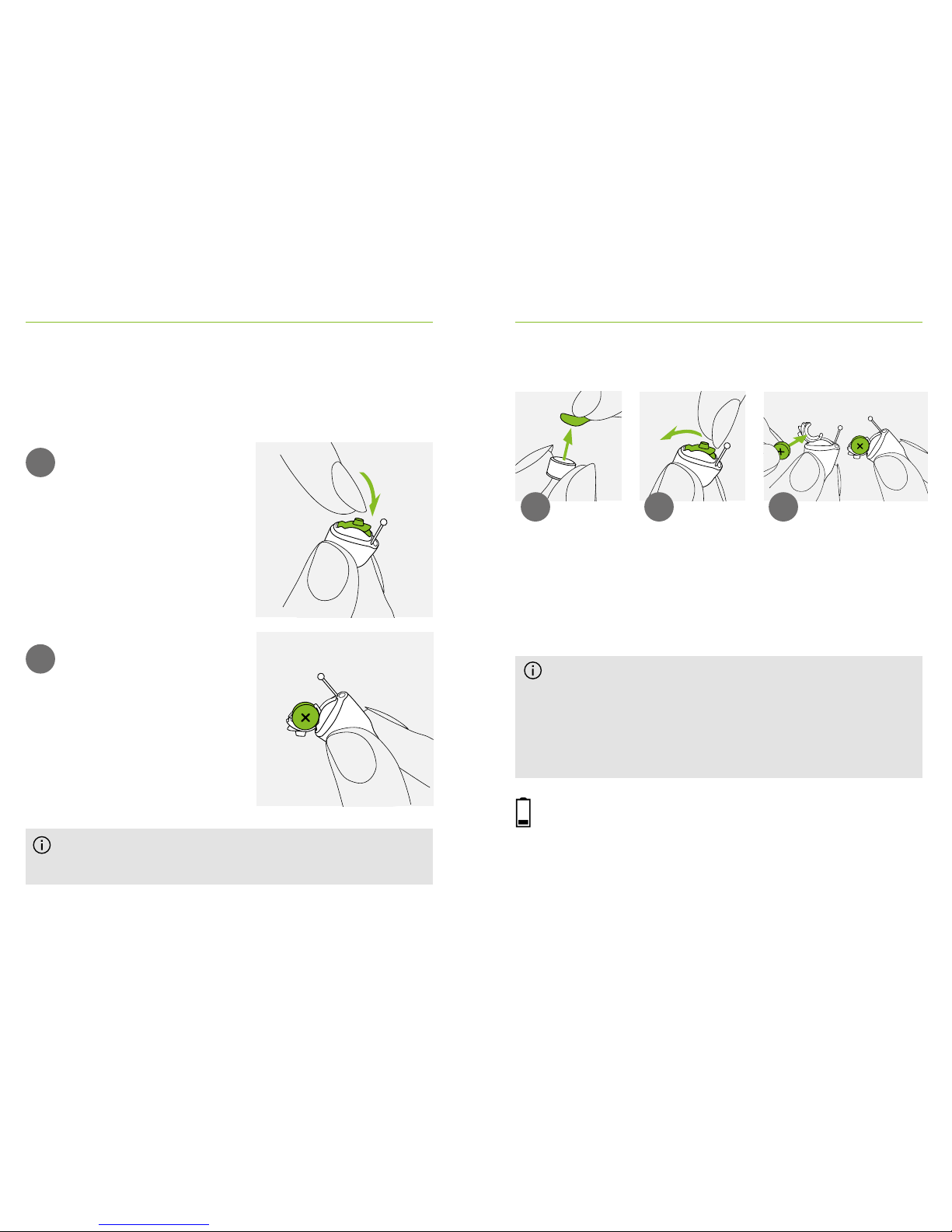
4. On/O
The battery door is also the on/o switch.
1
2
Closed battery door =
hearing aid is on
Opened battery door =
hearing aid is o
When you switch on the hearing aid you may hear
a start-up melody.
5. Battery
Remove the
sticker from the
new battery
and wait two
minutes.
Open the
battery door.
Place battery in the
battery door with the
“+” symbol facing
upwards.
Low power: You will hear two beeps when the battery
is low. You will have approximately 30 minutes to
change the battery (this can vary, depending on the
hearing aid settings and battery). We recommend that
you always have a new battery on hand.
If it is dicult to close the battery door: Check that
the battery is inserted correctly and the “+” symbol
is facing upwards. If the battery is not inserted
correctly, the hearing aid will not work and the
battery door can be damaged.
1 2 3
Page 7
12 13
Model
Phonak Virto
B-Titanium
Zinc air
battery
size
10
Color
marking on
package
yellow
IEC
code
PR70
ANSI
code
7005ZD
Replacement battery
This hearing aid requires zinc-air batteries. Identify the
correct battery size (10) by:
• Checking “Your hearing aid details” on page 5.
• Checking the marking on the inner side of the
battery door.
• Checking the following table.
Please ensure you use the correct type of battery in
your hearing aids (zinc-air). Please also read chapter
15.2 for further information on product safety.
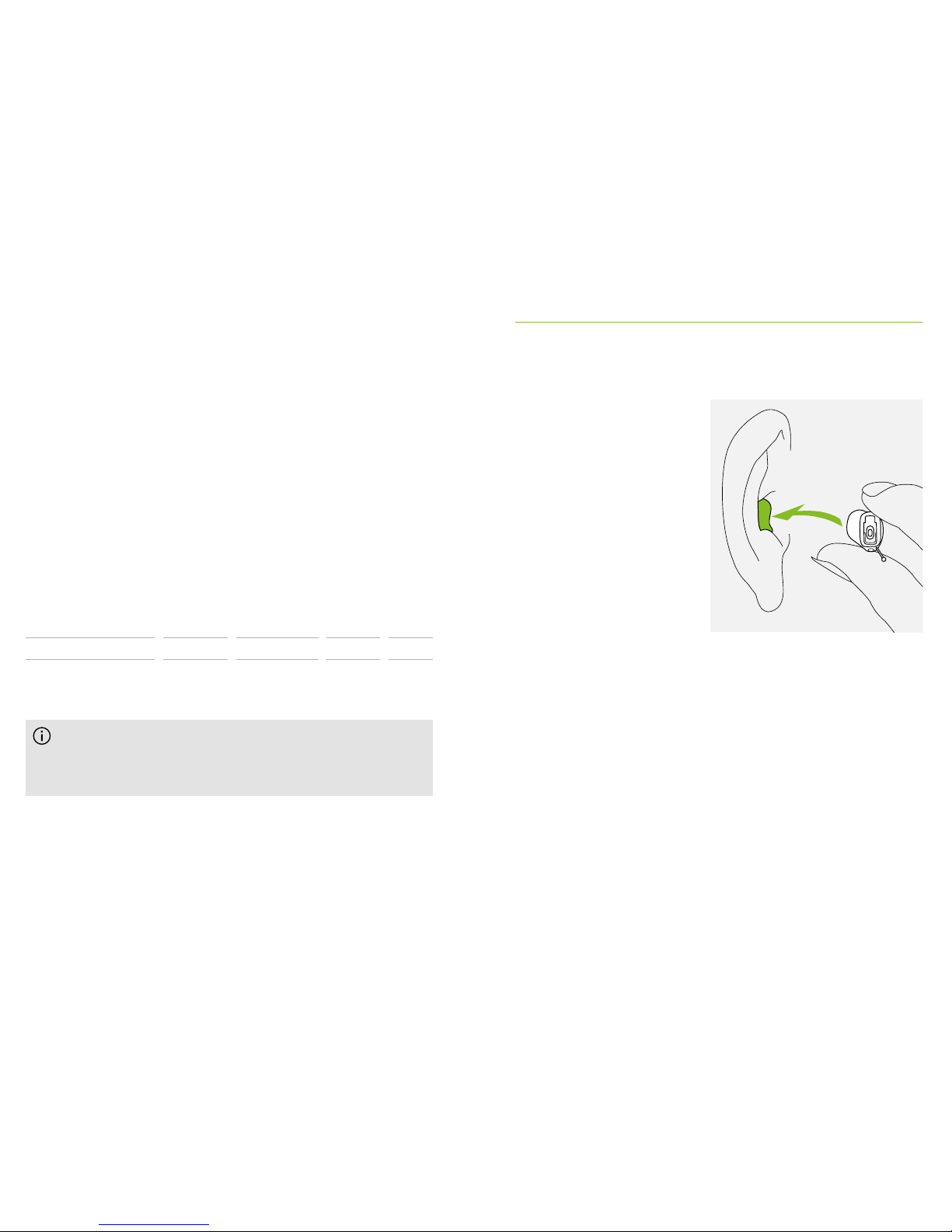
6. Putting on the hearing aid
Take your hearing aid up
to your ear and place the
ear canal part into your
ear canal.
Page 8
14 15
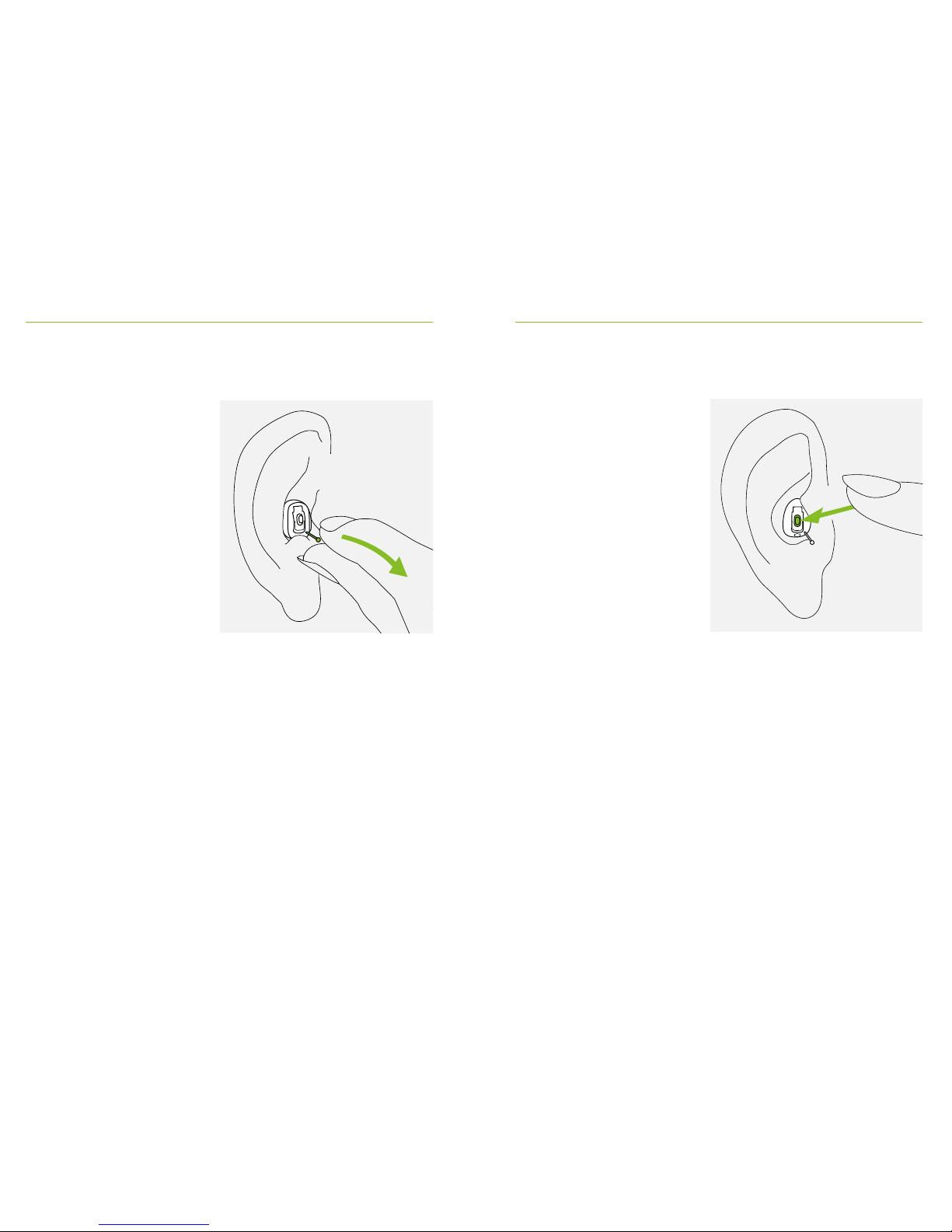
7. Removing the hearing aid
Hold the removal handle
and carefully pull the
hearing aid up and out
of the ear.
8. Push button
Models with this
option only:
The push button on your
hearing aid can have
various functions or is
not active. This depends
on the programming of
the hearing aid, which is
indicated in your
individual “Hearing aid
instructions”. Please ask
your hearing care
professional for this
printout.
Page 9
16 17
9. Adjusting the hearing aid with
Phonak MiniControl
Note: models with this option only.
The MiniControl contains a magnet that functions like a
remote control to change the settings of your hearing aid.
Your hearing aid in combination with MiniControl can
have various functions or can remain inactive. This
depends on your individual settings, which are indicated
in your individual “Hearing aid instructions”. Please ask
your hearing care professional for this print out.
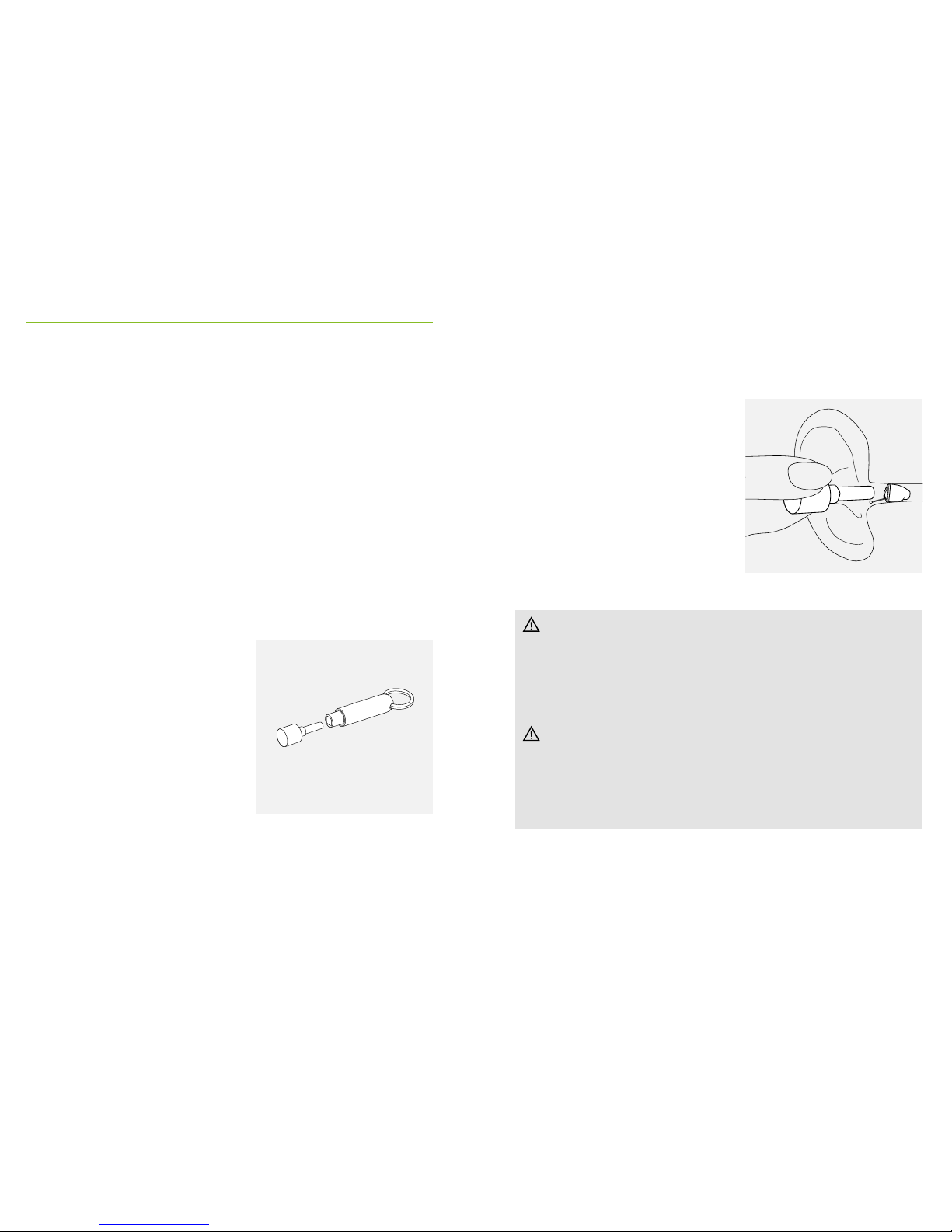
To use the MiniControl,
unscrew the magnet from the
keychain housing and hold it
inside the ear canal without
touching the hearing aid.
MiniControl magnet
Keychain housing
If you use a medical device like a pacemaker or ICD
device (implantable cardioverter debrillator), please
read the specic user guide to clarify possible
impact of magnetic elds to your medical device.
Do not place the MiniControl (neither open nor
closed) in your breast pocket. Keep a distance of at
least 15 cm (6 inches) between the MiniControl and
any medical device.
While the hearing aid is on,
hold the magnet inside the
ear canal without touching
the hearing aid.
Promtly remove the magnet
as soon as your hearing aid is
in the desired program or the
volume is ideal for you.
Page 10

18 19
10. Care and maintenance
Diligent and routine care of your hearing aid contributes
to outstanding performance and a long service life.
Please use the following specications as a guideline.
For further information regarding product safety, see
chapter 15.2.
General information
Before using hair spray or applying cosmetics, you should
remove your hearing aid from your ear, because these
products may damage it.
Daily
Daily cleaning and the use of a drying system is highly
recommended. C&C line from Phonak is a complete set of
cleaning products. Your hearing care professional will be
glad to advise you. Never use household cleaning
products (washing powder, soap, etc.) to clean your
hearing aids.
If your hearing aid is performing weakly or fails to
operate, clean or replace the wax guard system. If your
hearing aid fails to operate after you have correctly
cleaned or replaced your wax protection system and
inserted new batteries, contact your hearing care
professional for advice.
Weekly
For more in depth maintenance instructions or for
more than basic cleaning, please see your hearing
care professional.
Page 11

20 21
11. Service and warranty
Local warranty
Please ask the hearing care professional, where
you purchased your hearing aid, about the terms
of the local warranty.
International warranty
Sonova AG oers a one year limited international
warranty, valid starting from the date of purchase.
This limited warranty covers manufacturing and
material defects in the hearing aid itself, but not
accessories such as batteries, tubes, earmolds and
external receivers. The warranty only comes into
force if a proof of purchase is shown.
The international warranty does not aect any legal
rights that you might have under applicable national
legislation governing sale of consumer goods.
Warranty limitation
This warranty does not cover damage from improper
handling or care, exposure to chemicals or undue stress.
Damage caused by third parties or non-authorized service
centers renders the warranty null and void. This warranty
does not include any services performed by a hearing care
professional in their oce.
Serial number
(left side):
Serial number
(right side):
Date of purchase:
Authorized hearing care
professional (stamp/signature):
Page 12
22
Europe:
Declaration of Conformity
Hereby Sonova AG declares that this product meets the
requirements of the Medical Devices Directive 93/42/EEC.
The full text of the Declaration of Conformity can be
obtained from the manufacturer or the local Phonak
representative whose address can be taken from the list
on www.phonak.com (Phonak worldwide locations).
12. Compliance information
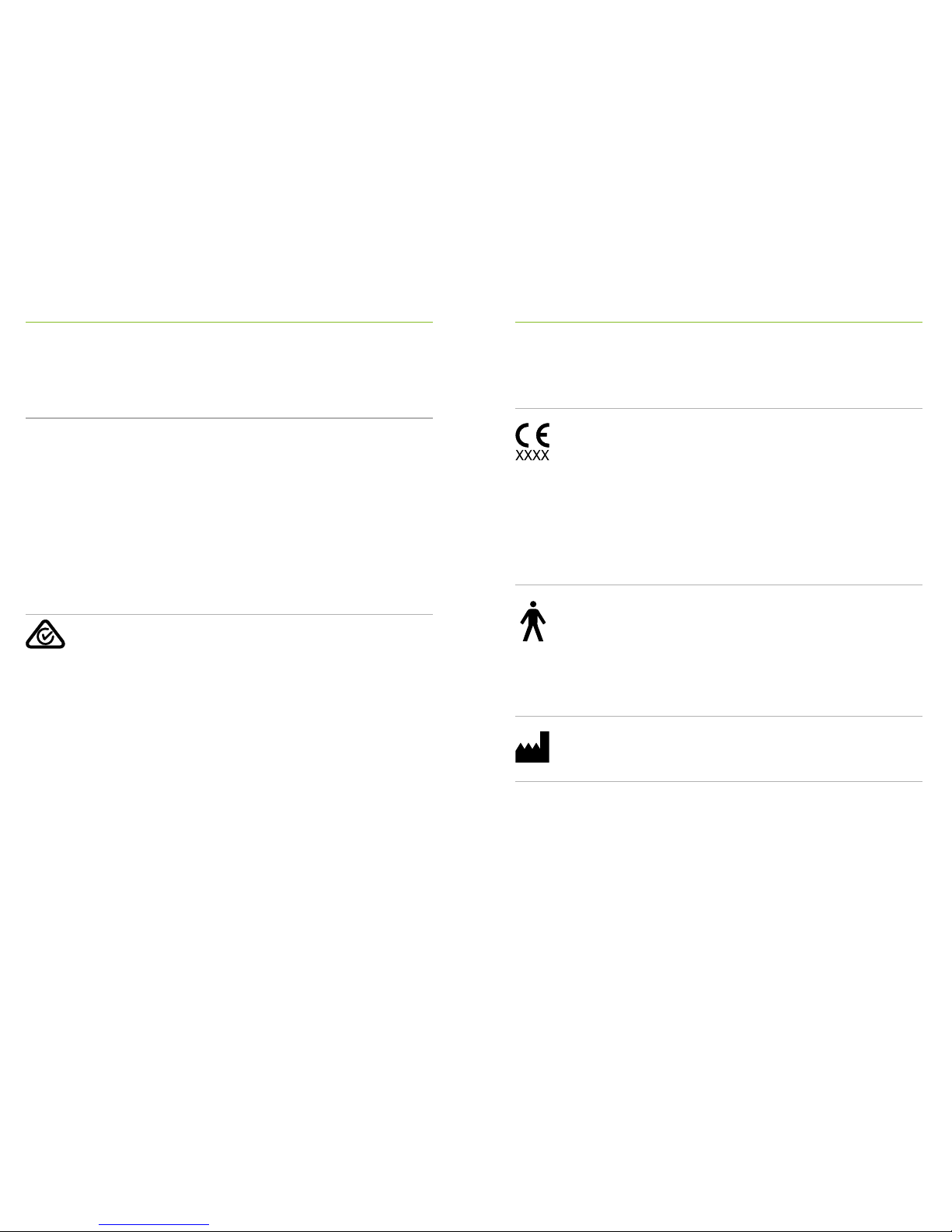
Australia/New Zealand:
Indicates a device’s compliance with applicable
Radio Spectrum Management’s (RSM) and
Australian Communications and Media Authority
(ACMA) regulatory arrangements for the legal sale
in New Zealand and Australia.
With the CE symbol, Sonova AG conrms
that this product – including accessories –
meets the requirements of the Medical Devices
Directive 93/42/EEC. The numbers after the CE
symbol correspond to the code of certied
institutions that were consulted under the
above-mentioned directives.
This symbol indicates that the products
described in these user instructions adhere to
the requirements for an applied part of Type B
of EN 60601-1. The surface of the hearing aid
is specied as an applied part of Type B.
Indicates the medical device manufacturer, as
dened in EU Directive 93/42/EEC.
13. Information and description
of symbols
23
Page 13
24 25
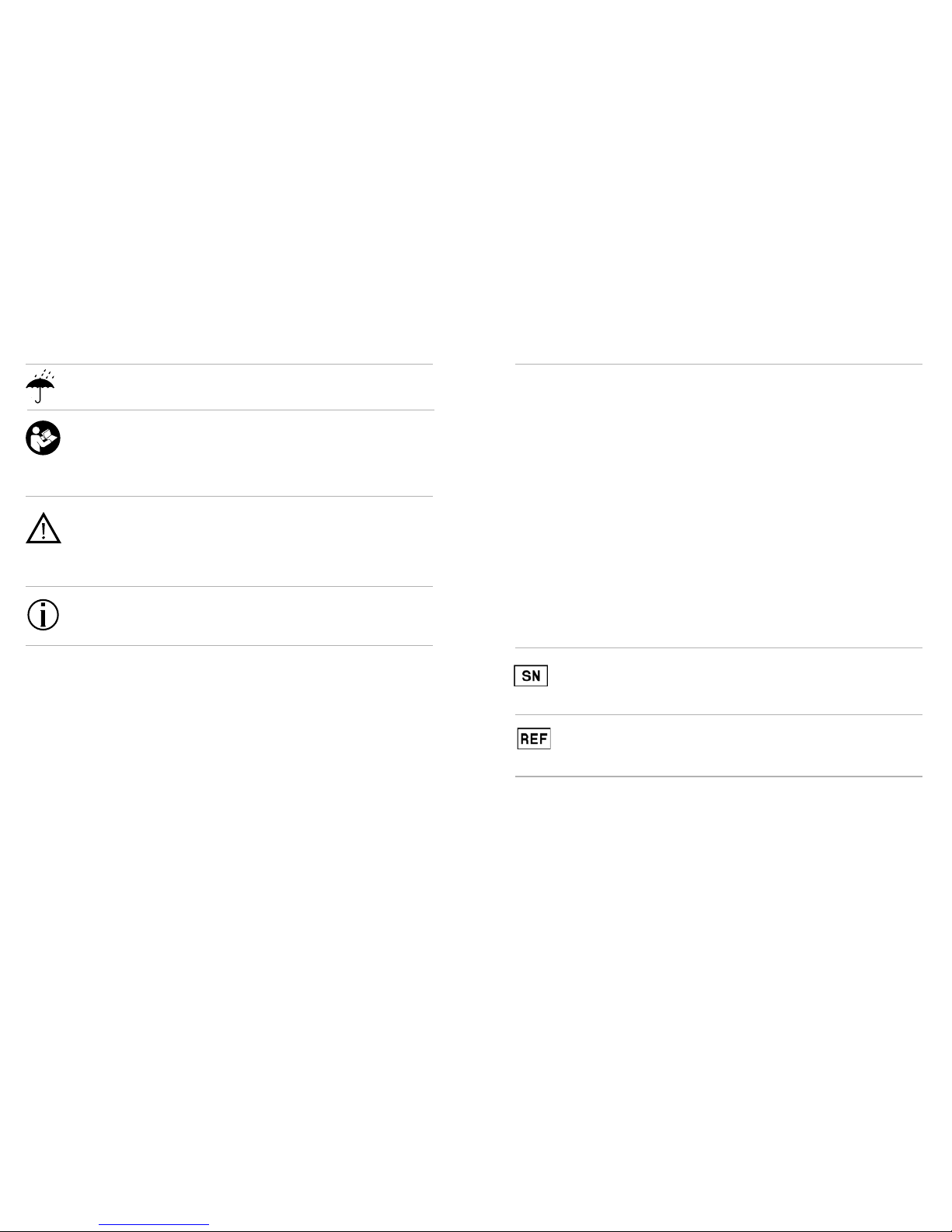
During transportation keep dry.
This symbol indicates that it is important for
the user to read and take into account the
relevant information in these user guides.
This symbol indicates that it is important for
the user to pay attention to the relevant
warning notices in these user guides.
Important information for handling and
product safety.
Operating
conditions
Indicates the manufacturer’s serial number so
that a specic medical device can be identied.
Indicates the manufacturer’s catalogue number
so that the medical device can be identied.
The product is designed such that it functions
without problems or restrictions if used as
intended, unless otherwise noted in these
user guides. The hearing aids are classied
IP68 (depth of 1 meter for 60 minutes) and
designed to be used in all daily life situations.
Therefore you do not have to worry about
getting the hearing aids exposed to a rain
shower or sweat. However, the hearing aid is
not intended to be used in water activities
that includes chlorinated water, soap, salt
water or other liquids with a chemical content.
Page 14
26 27
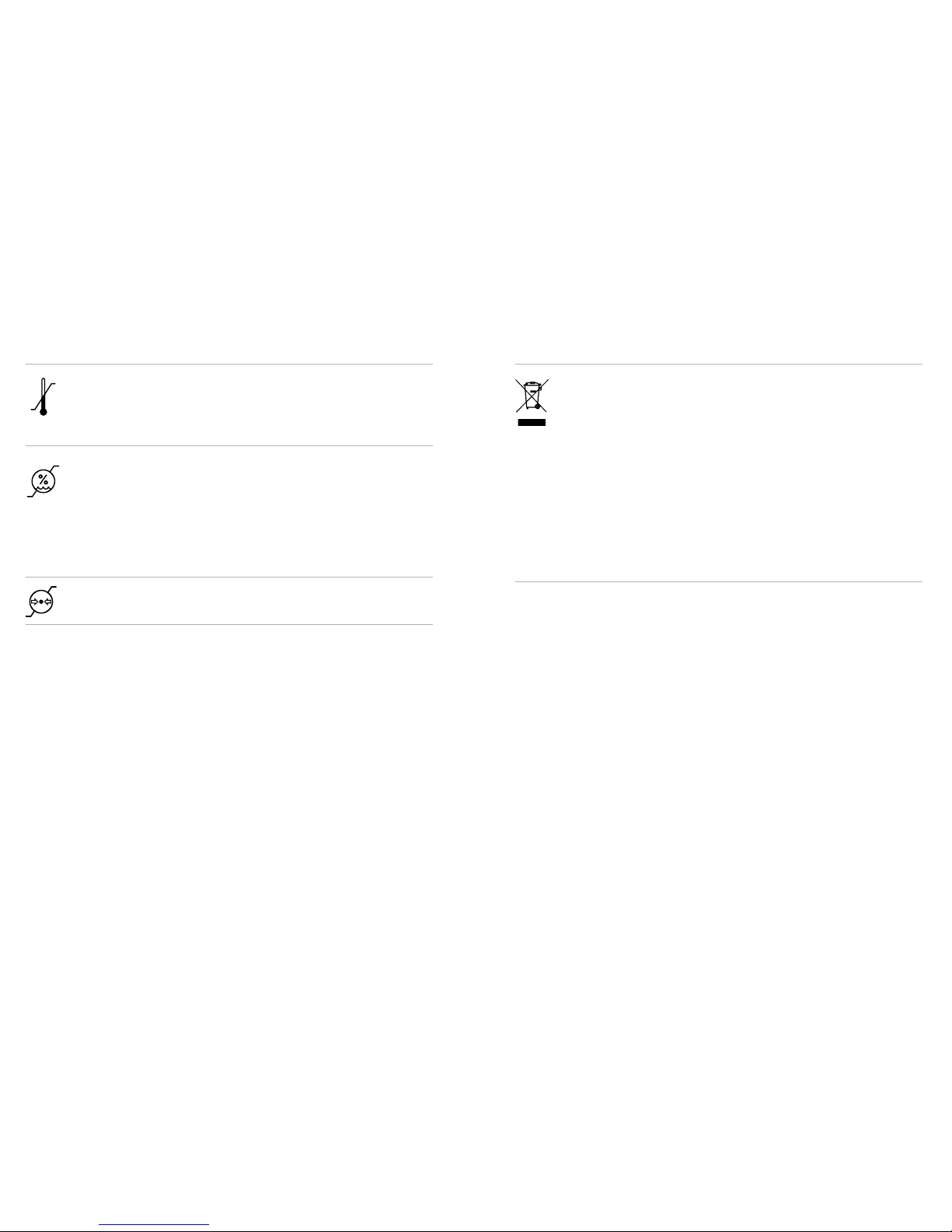
Temperature during transportation
and storage: –20° to +60° Celsius
(–4° to +140° Fahrenheit).
Humidity during transportation: Up to 90%
(non condensing).
Humidity during storage: 0% to 70%, if not in
use. See instruction in chapter 15.2 regarding
drying the hearing aid after use.
Atmospheric pressure: 200 hPA to 1500 hPa
The symbol with the crossed-out garbage
bin is to make you aware that this hearing
aid may not be thrown away as normal
household waste. Please dispose of old or
unused hearing aids, at waste disposal sites
intended for electronic waste, or give your
hearing aid to your hearing care professional
for disposal. Proper disposal protects the
environment and health.
Page 15
28 29
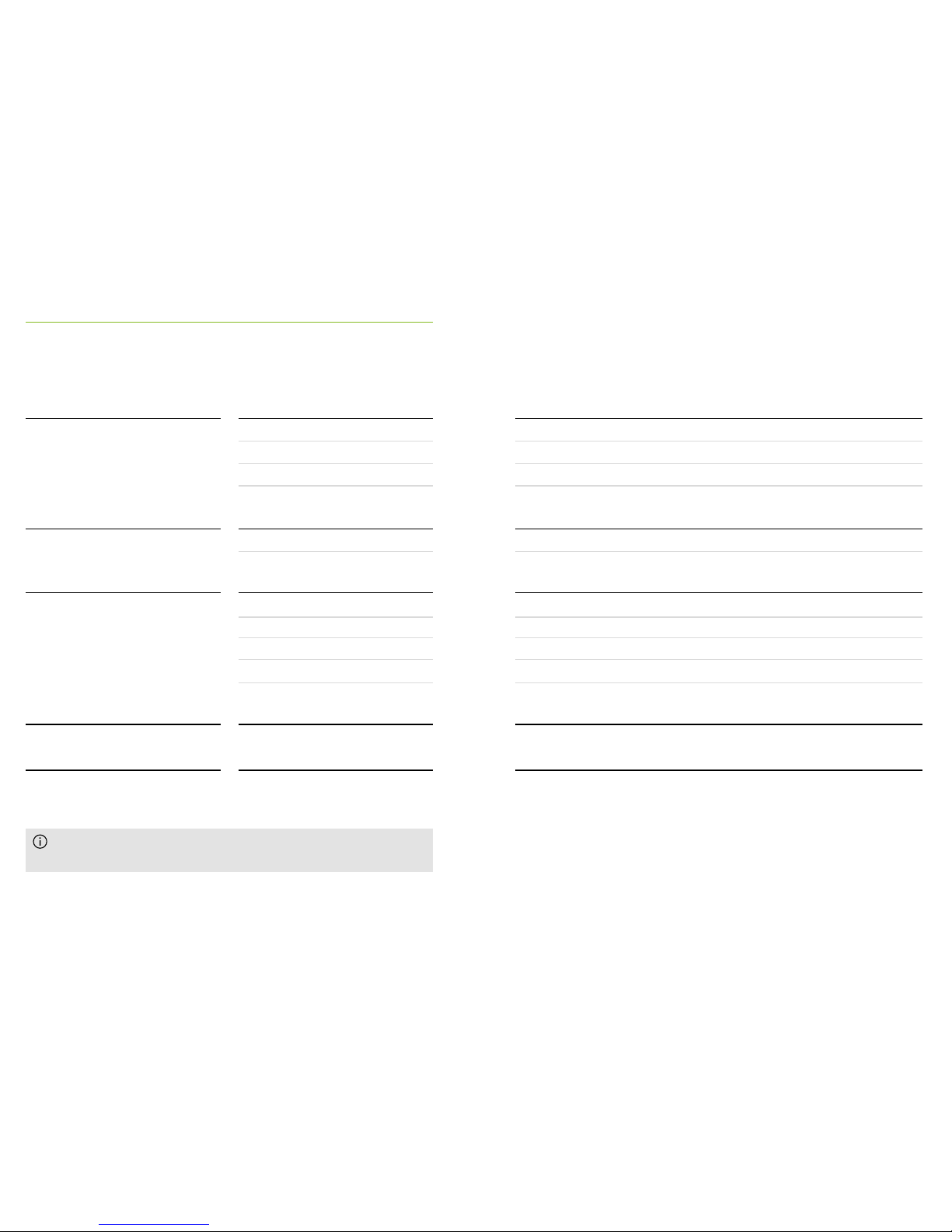
14. Troubleshooting
If the problem persists, contact you hearing care
professional for assistance
Causes
Dead battery
Blocked sound outlet
Battery not inserted correctly
Hearing aid switched o
Hearing aid not inserted correctly
Earwax in ear canal
Volume too loud
Low battery
Blocked sound outlet
Volume too low
Physical hearing condition
has changed
Indication for low battery
Moisture on battery or
hearing aid
Problem
Hearing aid not functioning
Hearing aid whistles
Hearing aid not loud enough
or distorted
Hearing aid plays two beeps
Hearing aid switches on & o
(intermittent)
What to do
Change battery (chapter 1 + 5)
Clean sound outlet
Insert battery correctly (chapter 1 + 5)
Switch hearing aid on by completely closing the battery door
(chapter 4)
Insert hearing aid correctly (chapter 6)
Contact your ENT/GP or hearing care professional
Decrease volume if volume control available (chapter 8)
Change battery (chapter 1 + 5)
Clean sound outlet
Turn volume up if volume control available (chapter 8)
Contact you hearing care professional
Change battery within the next 30 minutes (chapter 1 + 5)
Wipe battery and hearing aid with dry cloth
Page 16
30 31
Please read the information on the following pages before
using your hearing aid.
A hearing aid will not restore normal hearing and will not
prevent or improve a hearing impairment resulting from
organic conditions. Infrequent use of a hearing aid does
not permit a user to attain full benet from it. The use of
a hearing aid is only part of hearing habilitation and may
need to be supplemented by auditory training and
instruction in lipreading.
15. Important safety information
The intended use of
hearing aids is to amplify
and transmit sound to the
ears and hereby
compensate for impaired
hearing. The hearing aids
(specially programmed for
each hearing loss) must
only be used by the
intended person. They
should not be used by any
other person as they could
damage hearing.
Changes or modications
to the hearing aid that
were not explicitly
approved by Sonova AG
are not permitted. Such
changes may damage your
ear or the hearing aid.
Do not use the hearing
aids in explosive areas
(mines or industrial areas
with danger of explosions,
oxygen-rich environments
or areas where ammable
anesthetics are handled).
Hearing aid batteries are
toxic if they are swallowed!
Keep out of the reach of
children, individuals with
cognitive impairment, and
pets. If batteries are
swallowed, consult your
physician immediately!
15.1 Hazard warnings
Page 17
32 33
If you feel pain in or
behind your ear, if it is
inamed or if skin
irritation and accelerated
accumulations of earwax
occur, please check with
your hearing care
professional or physician.
This hearing aid is not for
children below 36 months.
It contains small parts that
can cause choking, if
swallowed by children.
Keep out of the reach of
children, individuals with
cognitive impairment, and
pets. If swallowed, consult
a physician or hospital
immediately.
Do not make a wire
connection from your
hearing aid to any external
audio sources like radio
etc. That could cause
injuries on your body
(electric shock).
The following is only
applicable for persons with
active implantable medical
devices (i.e. pacemakers,
debrillators, etc.):
Keep magnets (i.e. battery
handling tool, EasyPhone
magnet, etc.) at least
15 cm (6 inches) away
from the active implant.
Please, note that
interference can also be
caused by power lines,
electrostatic discharge,
airport metal detectors etc.
Avoid strong physical
impacts to the ear when
wearing in-the-ear hearing
aids. The stability of
in-the-ear shells is
designed for normal use. A
strong physical impact to
the ear (e.g. during sports)
may cause the in-the-ear
shell to break. This may
lead to perforation of the
ear canal or ear drum.
Page 18
34 35
Never immerse your hearing
aid in water! Protect it from
excessive moisture. Always
remove your hearing aid
before showering, bathing,
or swimming, as the hearing
aid contains sensitive
electronic parts.
15.2 Information on product safety
Protect your hearing aid
from heat (never leave near
a window or in the car).
Never use a microwave
or other heating devices
to dry your hearing aid.
Ask your hearing care
professional about suitable
drying methods.
When you are not using
your hearing aid, leave the
battery door open so that
any moisture can evaporate.
Make sure that you always
completely dry your
hearing aid after use. Store
the hearing aid in a safe,
dry and clean place.
Do not drop your hearing
aid! Dropping onto a hard
surface can damage your
hearing aid.
Always use new batteries
for your hearing aid. In
case a battery is leaking,
replace it immediately
with a new one to avoid
any skin irritation. You
can return used batteries
to your hearing care
professional.
The batteries used in these
hearing aids should not
exceed 1.5 Volts. Please do
not use silver-zinc or Li-ion
(lithium-ion) rechargeable
batteries as these may
cause severe damage to
your hearing aids. The
table in chapter 5 explains
exactly which type of
battery your particular
hearing aids require.
Remove the battery if
you are not using your
hearing aid for a long
period of time.
Page 19
36
Special medical or dental
examination including
radiation described below,
may adversely aect the
correct functioning of your
hearing aids. Remove and
keep them outside the
examination room/area
before undergoing:
Medical or dental
examination with X-ray
(also CT scan).
Medical examinations with
MRI/NMRI scans, generating
magnetic elds.
Hearing aids don’t need to
be removed when passing
security gates (airports
etc.). If X-ray is used at all,
it will be in very low doses,
and will not aect the
hearing aids.
Do not use your hearing
aid in areas where
electronic equipment
is prohibited.
Page 20

38 39
Notes
Page 21
Manufacturer:
Sonova AG
Laubisrütistrasse 28
CH-8712 Stäfa
Switzerland
www.phonak.com
029-0480-02/V1.00/2016-11/FO © Sonova AG All rights reserved
Your hearing care professional:
 Loading...