

Page 1

OptiBeam Tech Tip
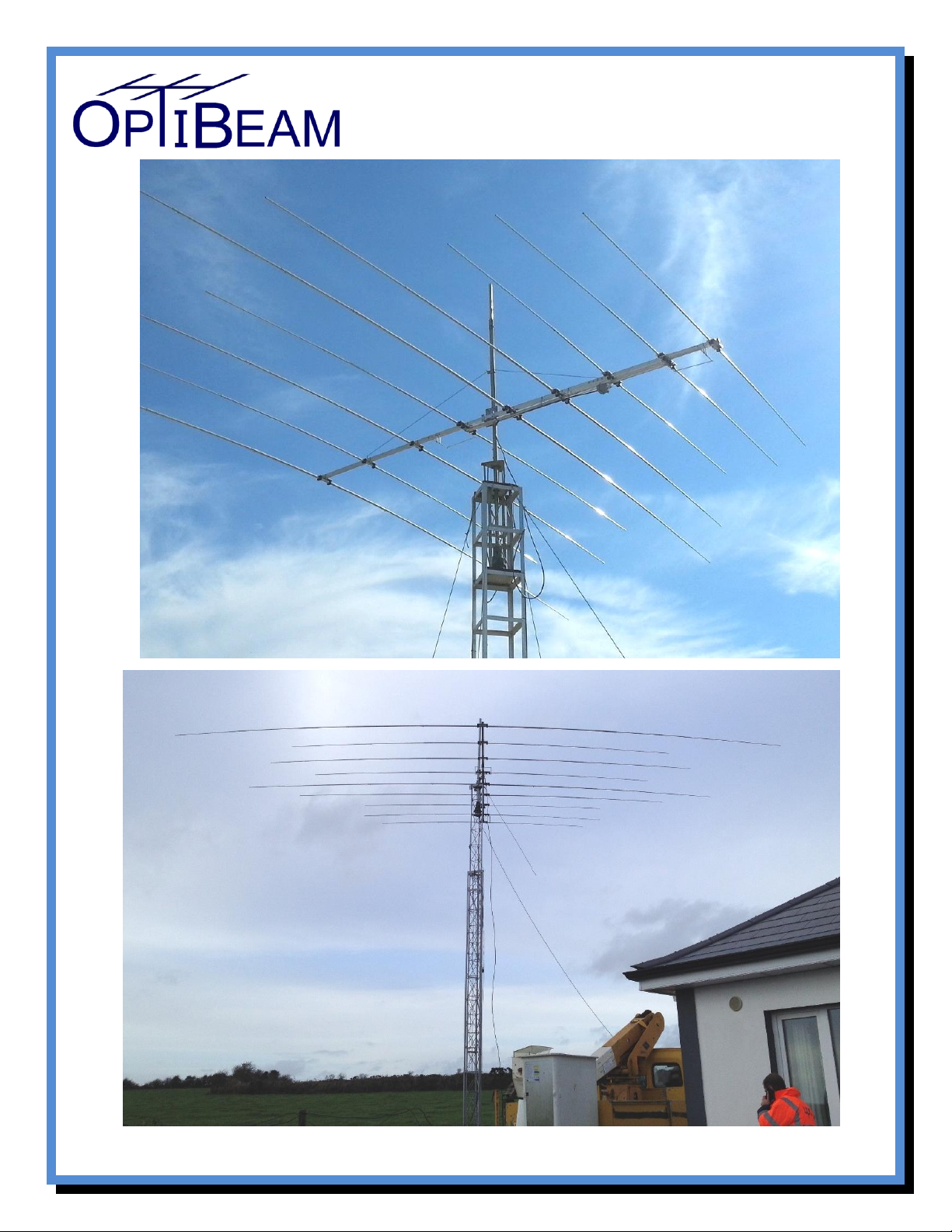
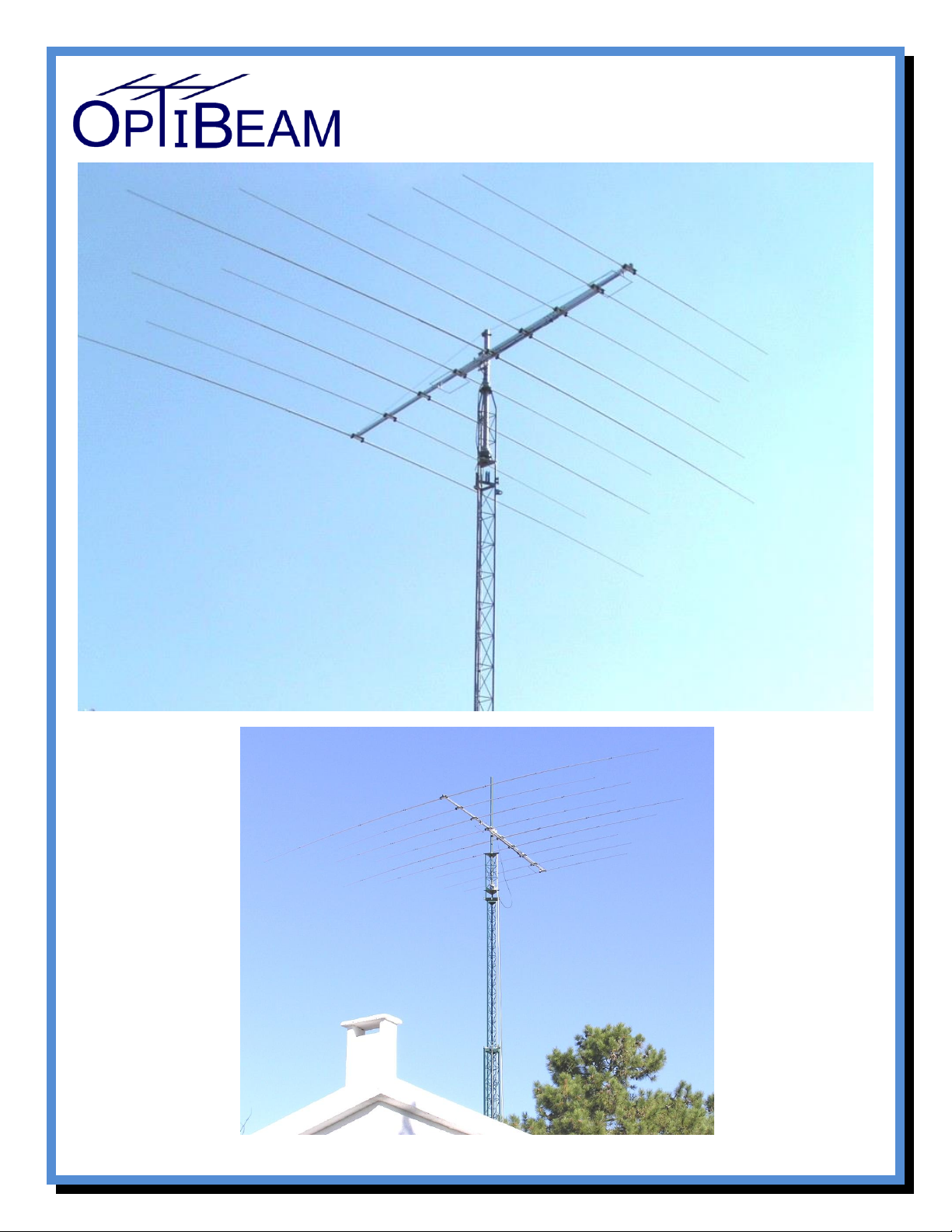
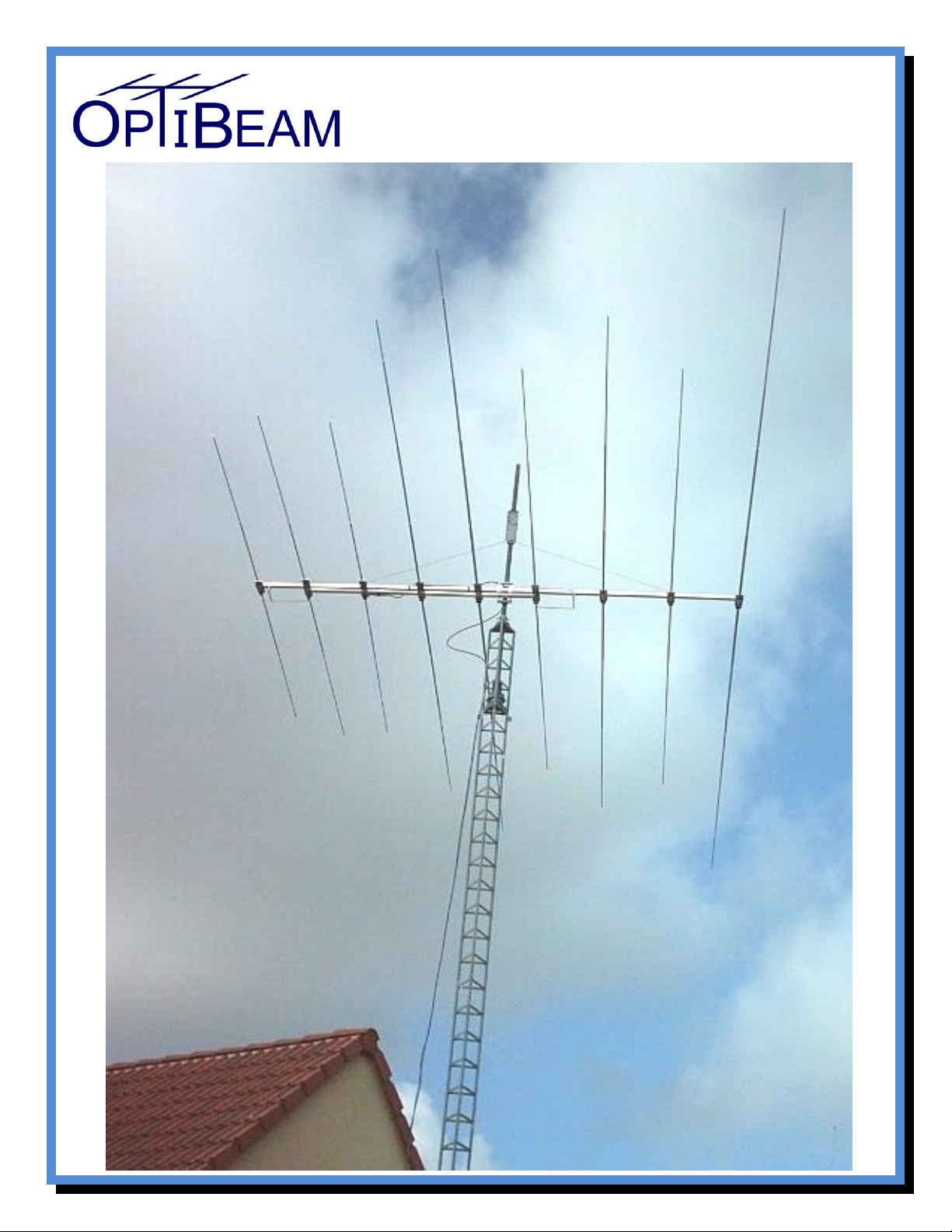
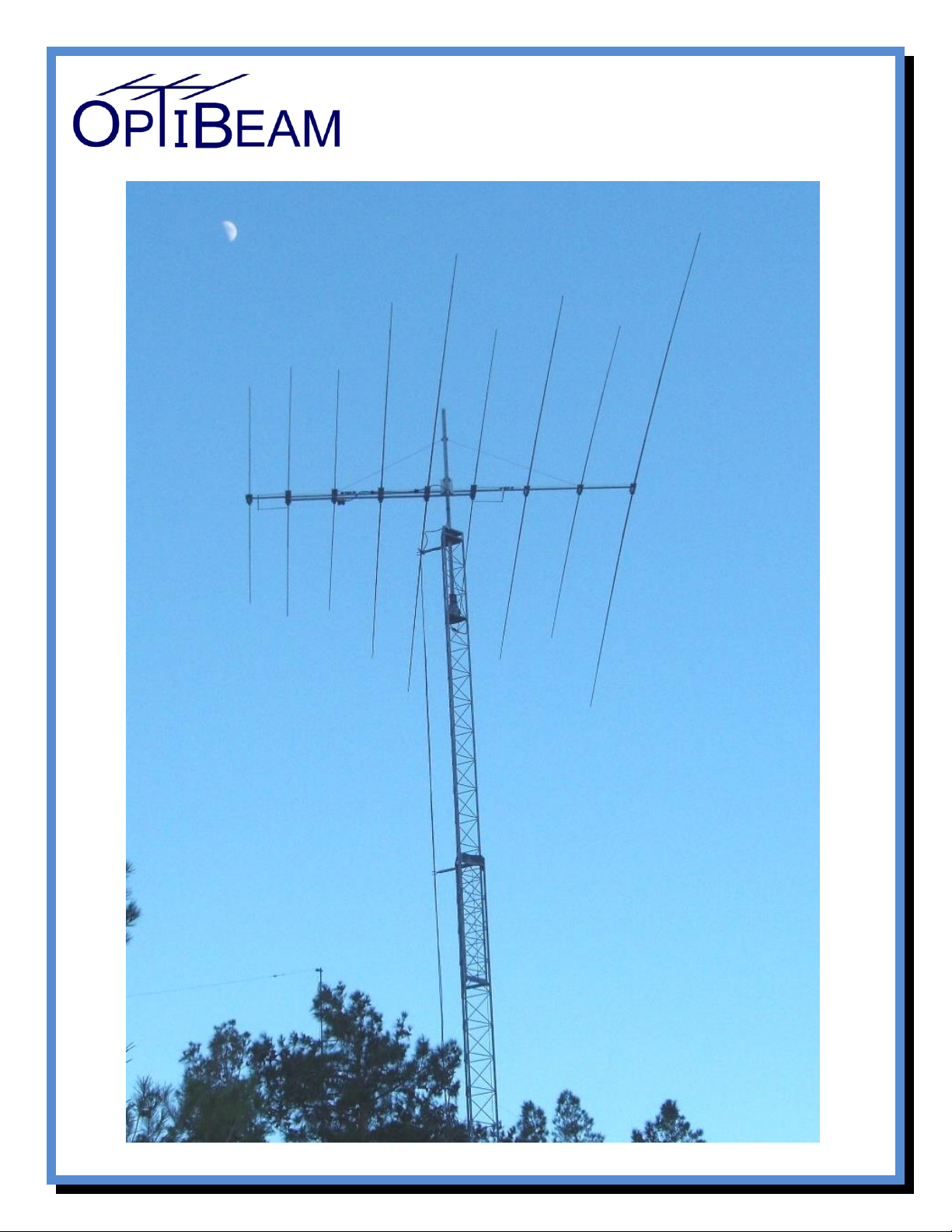
OptiBeam OB9-5HD
9 Element 5-Band Yagi
Yagi, 20/17/15/12/10 meters, 9 Elements
5.1 m (16.73 ft.) Boom Length, 0.72 sq. m (7.8 sq. ft.) Wind Area
Includes Balun
This Tech Tip is from Tom, President of OptiBeam Antenna Technologies, call sign DF2BO,
known on the air as DF2BlueOcean.
=======================================
A customer sent in a message about selecting a new antenna to replace a SteppR :
I currently use (actually did use) a 3 element SteppIR at 100 ft. and it has again developed issues that will require me
to remove it from the tower. I would like to continue to use my Rohn 25g tower at 100' triple guyed and thinking of
replacing the current antenna with another multi band antenna that would not need maintenance once installed and
be able to cover at least 5 bands (20,17,15,12,10). Of course I would like 40M but I am afraid that adds too much
wind load . I also want to have no traps and be able to run legal limit plus. I also have VHF/UHF yagis above the HF
antenna
This is where Optibeam comes in. I like the robust looking quality and have looked at the specifications for the OB95HD. Is it correct to say it operates as a 2 element yagi per band or is there more at work here? It is difficult for me
to compare manufacturers specs when it comes to gain and F/B figures. Some use Dbi and others Dbd and even
when comparing numbers some seem to be either quite low or usually quite high based on the number of active
elements and boom length.
Does the OB9-5HD seem like a good choice for my application or do you have another model to recommend? I
really would like to not give up on gain vs the SteppIR but also don't want to work on it every other year.
=======================================
Thank you for your note and for your interest in OptiBeam antennas. Welcome to the club! You would be
surprised on the number of e-mails we receive from SteppIR and Ultrabeam antenna users who tell us
that they are tired of repairing their dynamic antennas and often give up on a DXpedition or fully
participating in a contest.
Regarding your triple guyed 100 foot high Rohn tower. - I cannot tell how much wind loading this tower
with this kind of guying is able to handle. But I am rather sure way more than just a 3 element SteppIR or
an OptiBeam OB9-5.
Page 2

You have expressed interest regarding the OB9-5, in the following I will supply you with some detailed
information about this antenna model.
We do a lot of computer analyzing followed by a lot of practice measurements. Just for comparison, a
trapped tri-bander with 3 active elements per band has a gain of about 3.5 dbd (gain over dipole in free
space) as an average on all three bands, which counts as long as the traps are new. The older they
become the more they loose efficiency.
And, it also depends on the quality of the traps, most of the companies, sorry to say, really fabricate
poorly in this respect. The good old Hy-Gain traps were of better quality, what measurements have
proven, Mosley traps are of lower quality, also proven by measurements which were done in the US
some years ago.
Trapped Yagis have a rather steep vertical take off angle due to the destroyed current distribution on the
elements and the smaller active antenna surface (reduced capture area).
As another comparison, the usual Log Periodic will have a small active region per band and the
elements, therefore gain is limited and the take off is rather steep as well.
The OptiBeam OB9-5 has about 4.3 dbd on 20 meters and about 4.5 to 4.6 dbd on 17-15-12-10 meters,
clean patterns and very good SWR.
Gain and pattern wise it is situated between a 2 and a 3 element Yagi on all 5 bands.
Theoretically it has 2 active elements per band, but due to the multi element structure and the positive
interaction of elements of close-by frequencies from the one to the other band in practice it has more
than just 2 active elements on each frequency range. I dare to say, it is the one and only solution for the
ham who wants to have all 5 bands in a perfect compact form.
Several practice side by side tests with a 3 element SteppIR realized by a couple of corresponding users
have shown that the OB9-5 is as good, on two bands even better ! Why is that so since the 3 element
SteppIR is a 3 element Yagi?
To the disadvantage of the dynamic antenna, because of the fixed spacing on all five bands (optimum
only on 15 and 17 meters), due to the thin Beryllium bands which do not allow the skin effect to develop
properly and since the surrounding fiberglass tubing absorbs some percentage of the radiated energy.
Besides that, I am not telling you anything new, a dynamic antenna is a ticking time bomb. Failures seem
to be pre-programmed is what the reports from users have proven. Some hams are lucky without any
issues for many years, and others have failures of this and that (hung up electronics, broken motor
shafts, etc.) even after just a few months of use.
Compared to a trap Yagi, the OB9-5 easily will beat it by minimum one S-unit and more ! Likewise it will
beat a 2 element five-band quad on several bands. And a standard log periodic is far behind as well (not
to be compared with our new Log Yagis).
The OB9-5 would be a good choice also in terms of mechanical reliability.
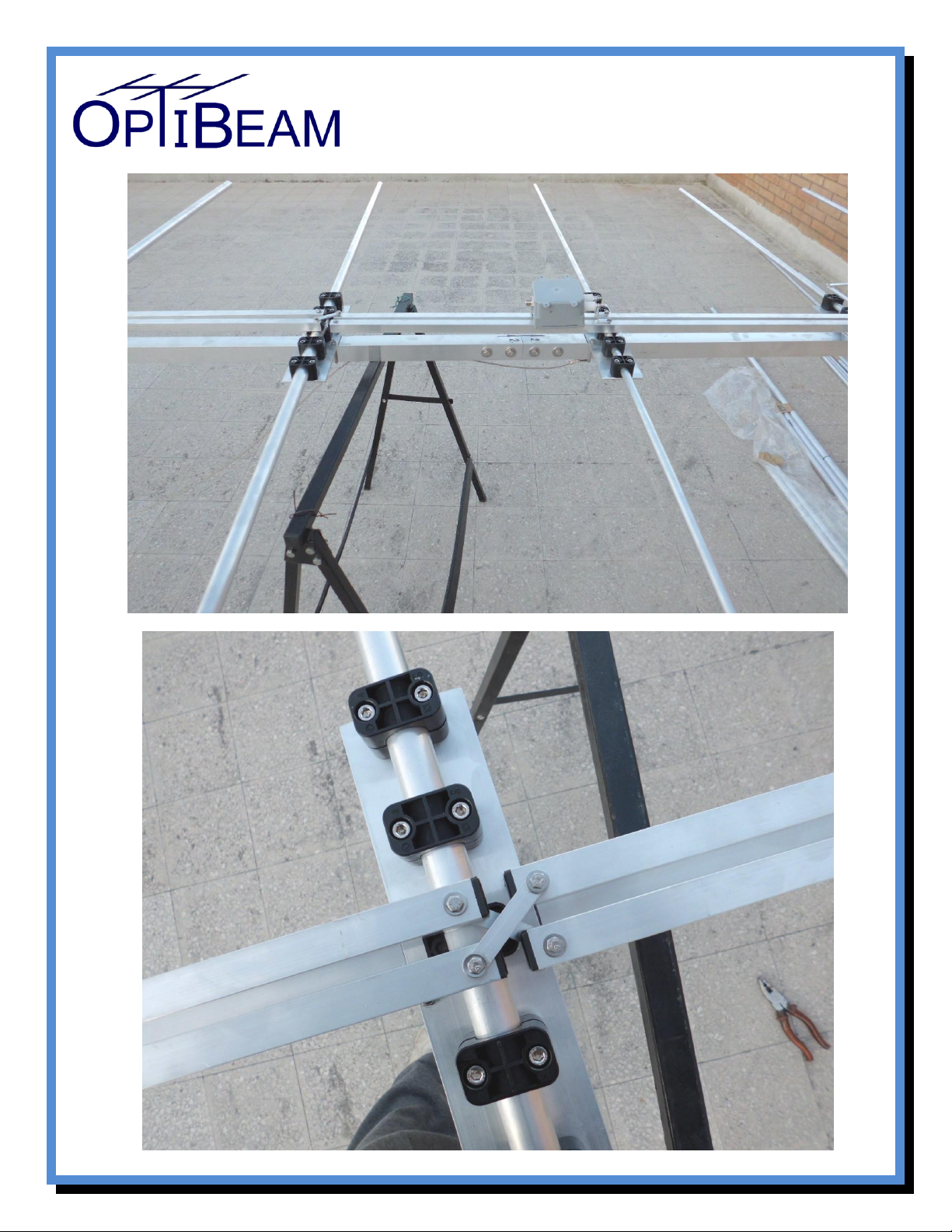
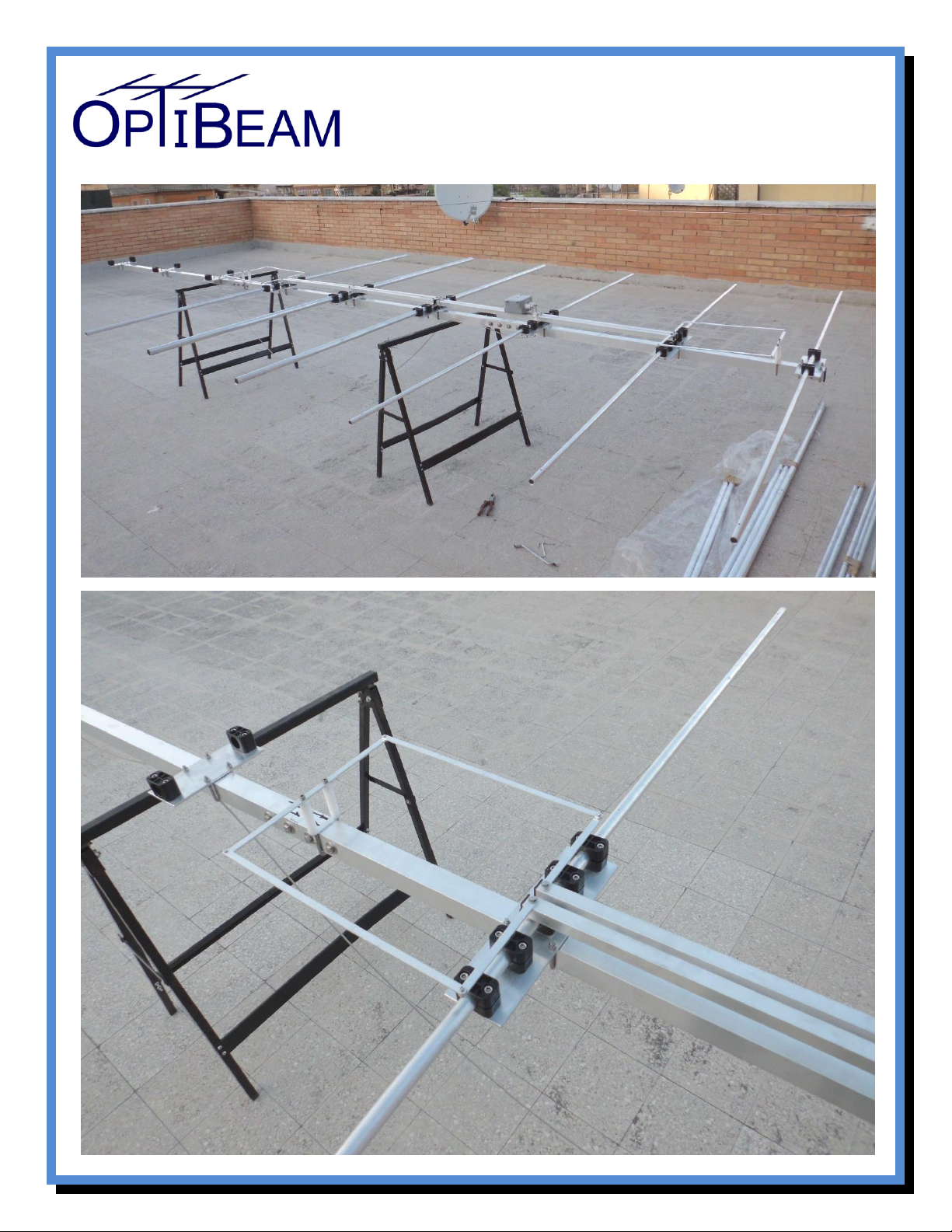
The boom is square and consists of three sections.
It is a 40 x 40 x 2.0 mm boom which also is trussed by a 4 mm stainless steel wire support.
Page 3
We have not lost a single OB9-5 boom since we have this antenna in line.
We have many OB9-5s on the Orkney Islands, and there the wind is just incredible.
Three hams were using 3 element steppers before and lost them due to the severe weather. So
they have switched over to OB9-5s and did not have any more problems (also they have been
reporting that performance wise, they have not lost anything)
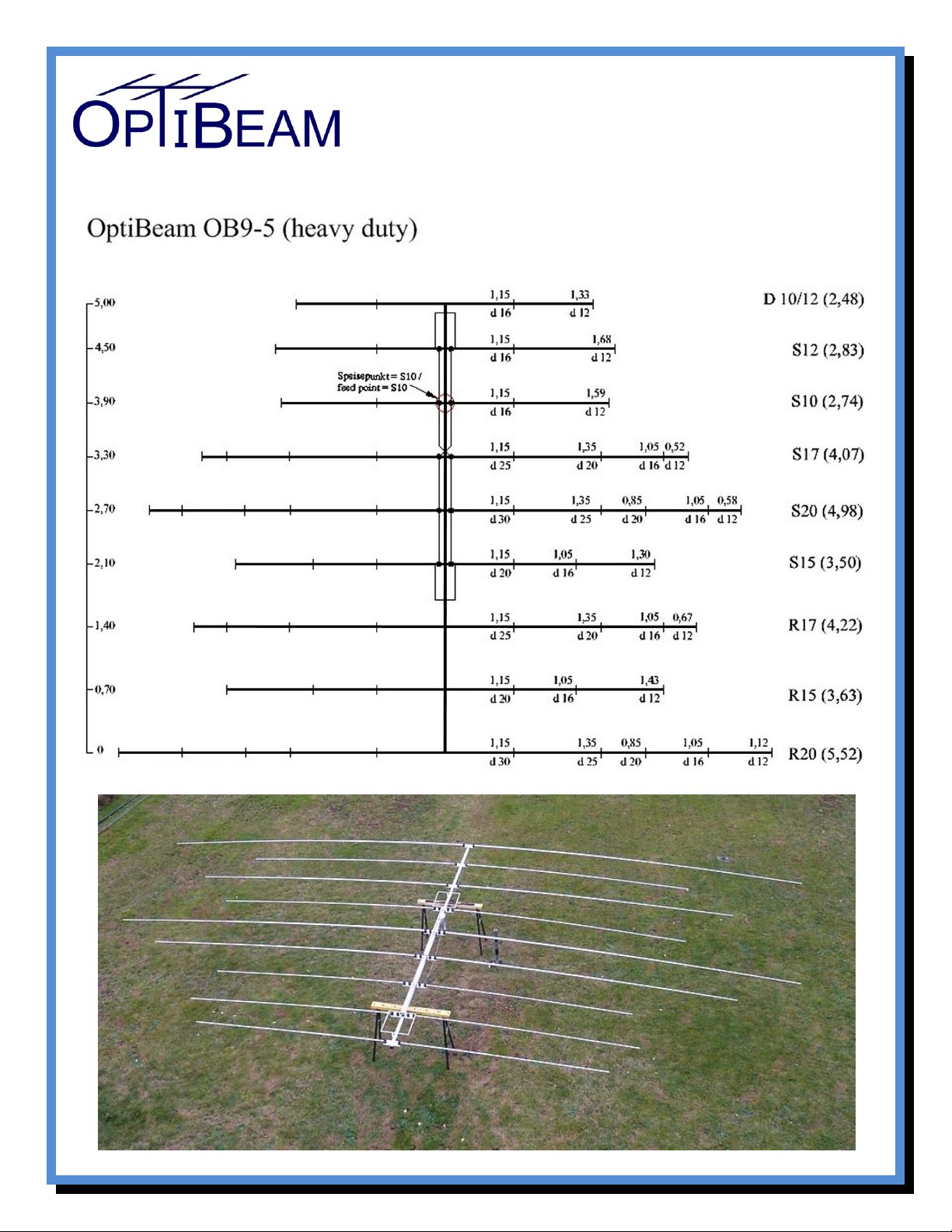
The boom to mast mounting is a 220 x 160 x 8 mm plate, built of extra hard aluminium.
Also the elements are heavy duty designs, tapered mulitple times:
20 meters: from 30 x 2.0 to 12 x 1.5
17 meters: from 25 x 2.0 to 12 x 1.5
15 meters: from 20 x 1.5 to 12 x 1.5
12/10 meters: from 16 x 1.5 to 12 x 1.5
So if there is an antenna which is made to withstand harsh weather environments, it really is the OB9-5.
I hope this supplies the answers to your questions with some additional information regarding the OB9-5.
Best 73s,
OptiBeam Antenna Technologies President (Thomas Schmenger),
Tom, DF2 Blue Ocean
Page 4
Page 5
Page 6
Page 7
Page 8
Page 9
Page 10
Page 11
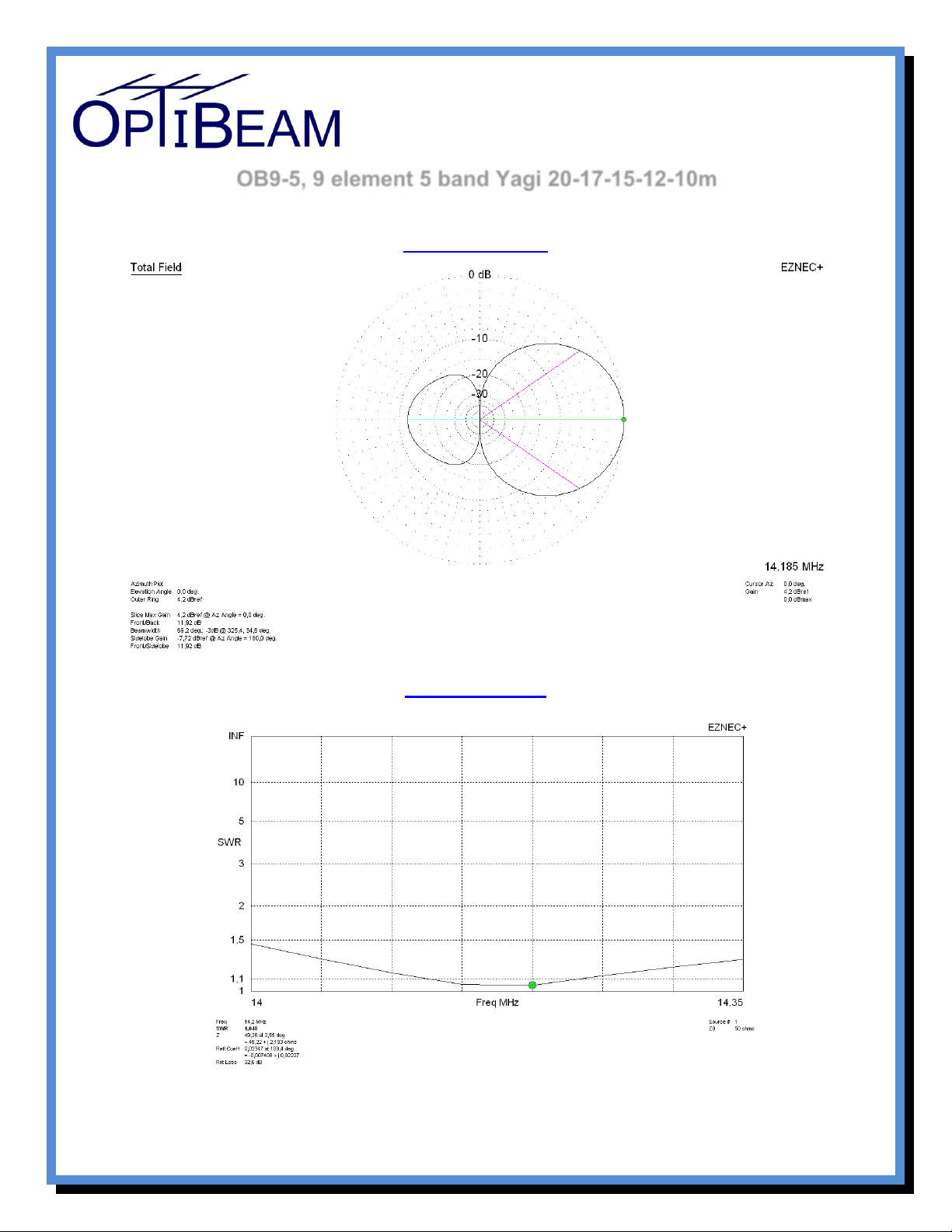
OB9-5, 9 element 5 band Yagi 20-17-15-12-10m
20m Azimut plot
20m SWR curve
Page 12
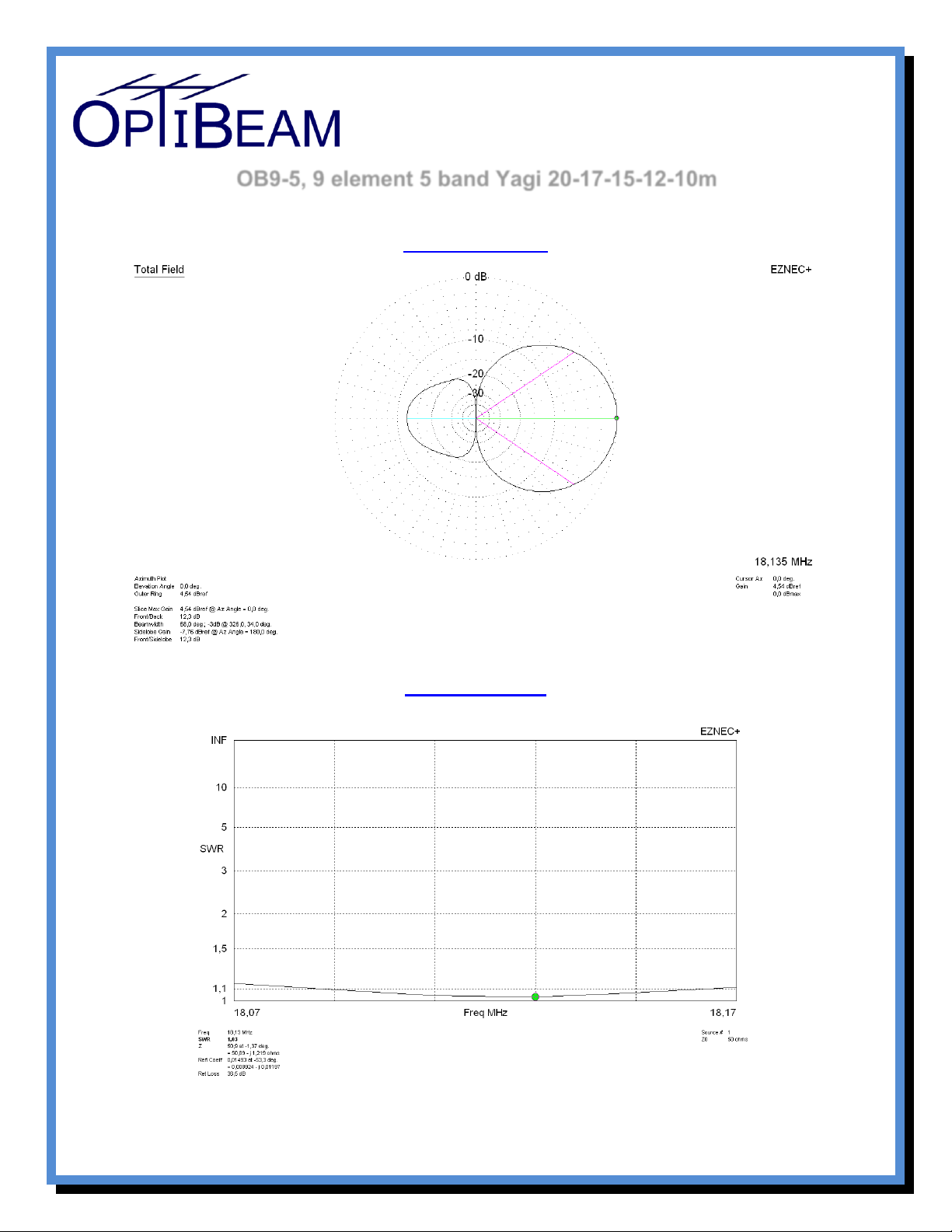
OB9-5, 9 element 5 band Yagi 20-17-15-12-10m
17m Azimut plot
17m SWR curve
Page 13
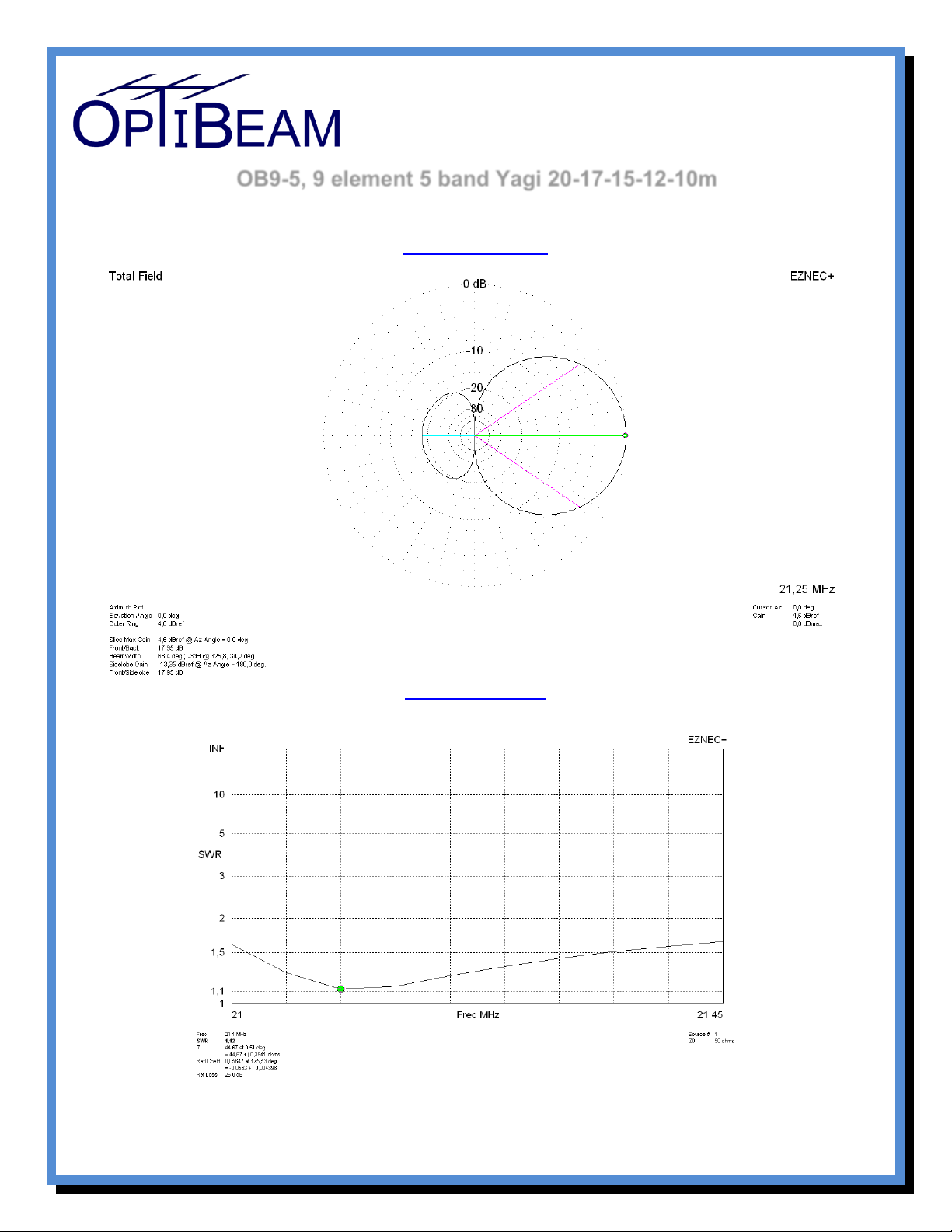
OB9-5, 9 element 5 band Yagi 20-17-15-12-10m
15m Azimut plot
15m SWR curve
Page 14
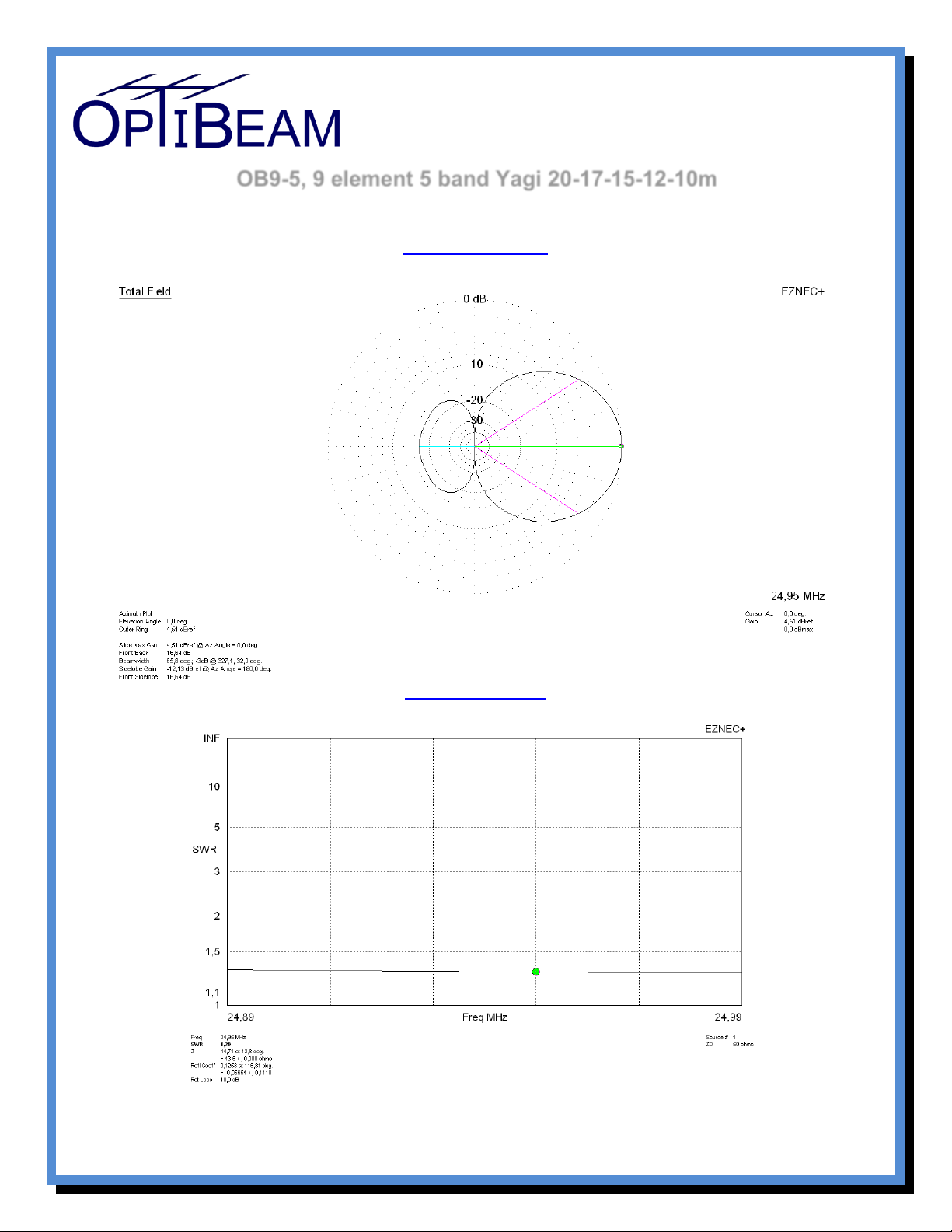
OB9-5, 9 element 5 band Yagi 20-17-15-12-10m
12m Azimut plot
12m SWR curve
Page 15
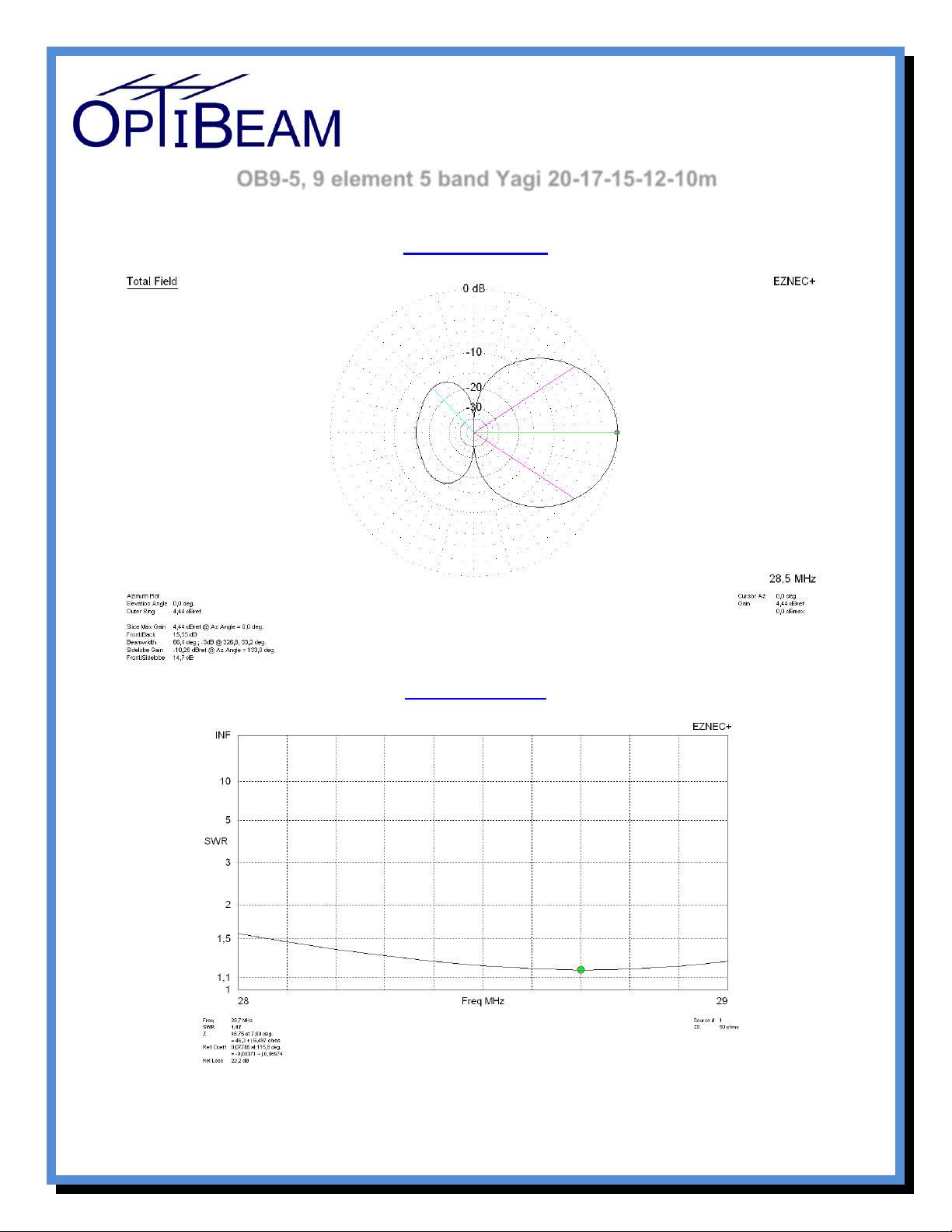
OB9-5, 9 element 5 band Yagi 20-17-15-12-10m
10m Azimut plot
10m SWR curve
Page 16
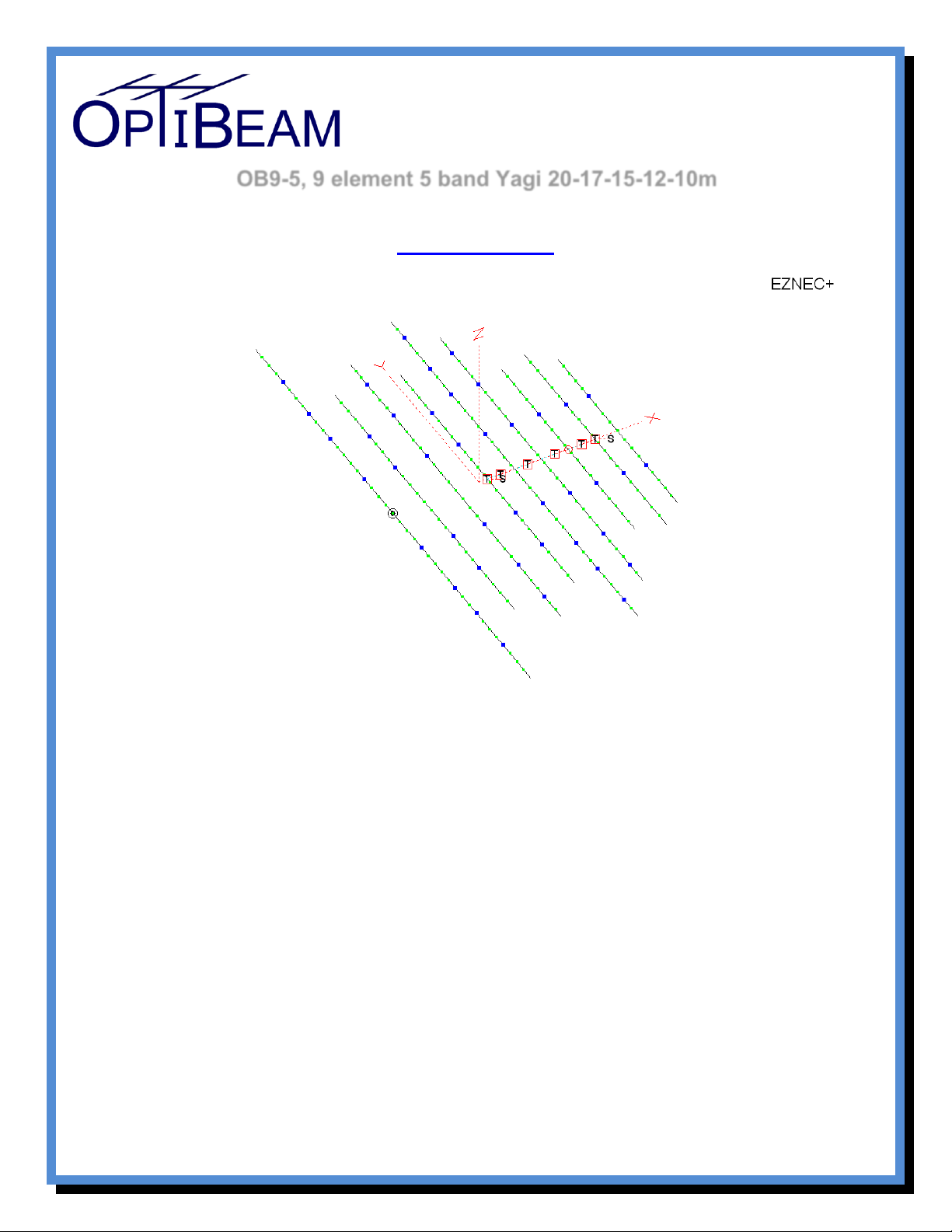
OB9-5, 9 element 5 band Yagi 20-17-15-12-10m
antenna structure
-> Boom length = 5,10 meters (16.7 feet) mechanically / square boom, three sections
-> Element configuration
20 meters = 2 elements
17 meters = 2 elements
15 meters = 2 elements plus a bit of interaction from the 10 meter director
12 meters = 2 elements plus a bit of interaction from the 15 meter reflector plus
strong interaction from the 10 meter director
10 meters = 2 elements plus a bit of interaction from the 15 meter reflector
-> Single coaxial feed line
-> Antenna fed through a high quality 1:1 Balun
-> Weight = 30 kgs (66 lbs)
12 February 2020
 Loading...