

Page 1
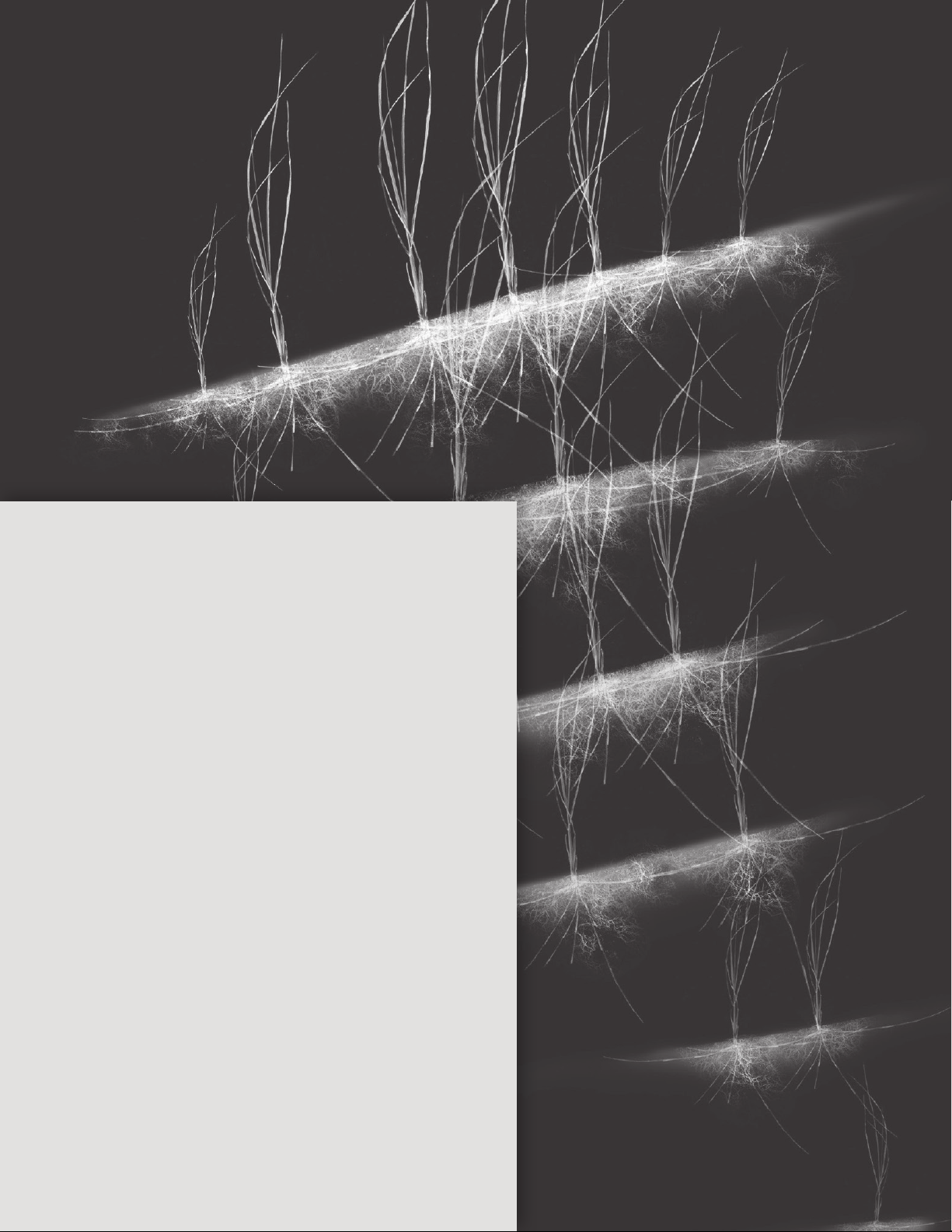
2020/21 MLA THESIS MANUAL
ADV 9341
Preparation of MLA Design Thesis
ADV 9342
MLA Design Thesis
DEPARTMENT OF LANDSCAPE ARCHITECTURE HARVARD UNIVERSITY GRADUATE SCHOOL OF DESIGN
KENT HIPP (MLA '17)
"COASTAL RETREAT: Staging Inundation in Provincetown"
Master's Thesis in Landscape Architecture
Harvard University Graduate School of Design
2017
Page 14 (detail)
Advised by: Gary Hilderbrand
Page 2

MLA THESIS MANUAL
ADV 9341
Preparation of MLA Design Thesis
ADV 9342
MLA Design Thesis
Charles Waldheim Seok Min Yeo, TA
MANUAL EDITORS
Mercedes Peralta
Seok Min Yeo
DEPARTMENT OF LANDSCAPE ARCHITECTURE
HARVARD UNIVERSITY GRADUATE SCHOOL OF DESIGN
Page 3
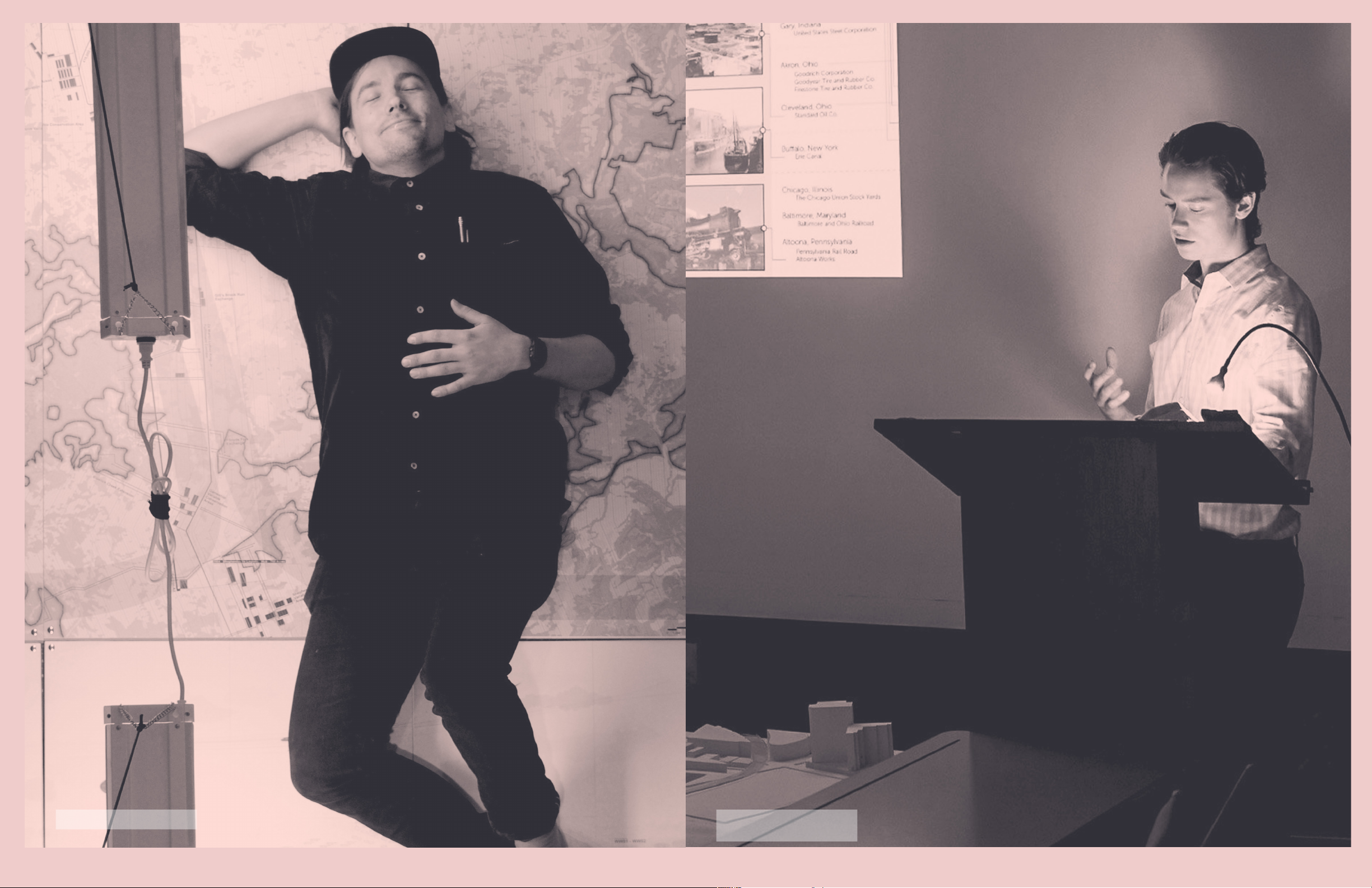
photo courtesy David Zielnicki Keith Scott
MLA / Department of Landscape Architecture Manual
photo courtesy John Wray
Page 4

There are, in principle, at least three fundamental dimensions to any MLA design thesis:
First, what is the subject matter or thematic topic that motivates your research in the thesis?
Second, what is the landscape design project that you could devise to best illuminate that topic or theme?
Third, what critical position or perennial question in landscape will be advanced through this work?
MLA / Department of Landscape Architecture Manual
Page 5

Contents
10 INTRODUCTION TO MLA DESIGN THESIS
a. Overview
12 THE PENULTIMATE YEAR: ESTABLISHING A FOUNDATION FOR DESIGN THESIS
a. Declaring Intention to Pursue Design Thesis
14 THESIS PREP FALL TERM FINAL YEAR
a. Overview
b. Thesis Prep Lecture/Workshop (ADV 9341)
c. Reviews
d. Evaluation
32 DESIGN THESIS SPRING TERM FINAL YEAR
a. Overview
b. Independent Thesis in satisfaction of the Degree in
Landscape Architecture (ADV 9342)
c. Reviews
d. Evaluation
44 ADV 9341 PREPARATION OF MLA DESIGN THESIS
54 FALL 2020 SCHEDULE
114 ADV 9342 MLA DESIGN THESIS
116 SPRING 2021 SCHEDULE
120 RECENT PRECEDENTS
124 GENERAL READINGS
132 BIBLIOGRAPHY
140 RESOURCES
142 LEARNING OBJECTIVES AND OUTCOMES
144 REQUIREMENTS
146 CONTACT INFORMATION
Manual MLA / Department of Landscape Architecture
Page 6

Introduction to MLA
Design Thesis
a.
Overview
This manual serves as a guide for students who
are undertaking a design thesis in the Department
of Landscape Architecture at the Harvard
Graduate School of Design. The thesis provides
an opportunity for candidates in the Master
in Landscape Architecture program to pursue
graduate-level research and explore a topic of
their interest through design research. The design
thesis builds upon the core curriculum in landscape
architecture at the GSD. This manual provides a
summary of key design thesis requirements and
offers an overview of the design thesis process,
from selection of a suitable topic to submission of
the final thesis.
For landscape architecture students interested in
completing a thesis, the planning process begins
in their penultimate year of the MLA Program. The
thesis project itself begins in earnest in their final
year, through thesis prep and design thesis courses,
offered in Fall and Spring terms, respectively. In
the Spring term of their penultimate year of study
(fourth semester for MLA I students, second
semester for MLA I AP and MLA II students),
candidates must formally state their intention to
complete thesis. Interested candidates are also
encouraged to begin consideration of a thesis topic
and potential thesis advisor at this time. In the Fall
term of their final year of study candidates enroll
in ADV 9341 and prepare a design thesis proposal
and secure a design thesis advisor. In the Spring
term of their final year of study candidates enroll in
ADV 9342 Design Thesis and complete, present,
and submit their design thesis. Each of these stages
of work, and their associated requirements, are
described in greater detail below.
ManualMLA / Department of Landscape Architecture
11
Page 7

The Penultimate Year:
Establishing a Foundation for
Design Thesis
a. Declaring Intention to Pursue MLA Design Thesis
While the design thesis is pursued during the final
year of the MLA at the GSD, planning for design
thesis begins in the Spring term of the penultimate
year of study. Students considering pursuing an
MLA design thesis are invited to attend midterm
and final reviews of MLA thesis candidates in
the year ahead of them, as well as meetings with
potential faculty advisors and the MLA design
thesis coordinator, in the Spring term prior to their
final year of study. These reviews, discussions, and
informational sessions survey the potentials and
limits of the MLA design thesis process, as well
as the support offered by the department for the
design thesis.
Students who opt to pursue a design thesis are
required to declare their intentions in the Spring
term of their penultimate year, on or before a date
published by the department office, typically
before the end of May. This deadline, as well as the
MLA thesis declaration form, and other relevant
information can be found on the GSD website under
resources at:
https://www.gsd.harvard.edu/resources/mlathesis-guidelines/
MLA candidates electing to pursue design thesis
are not required to declare a thesis topic or faculty
advisor until the Fall term of their final year of study;
however, they are encouraged to begin reaching
out to faculty before the Fall during the Spring term
of their penultimate year and over the summer
months. In selecting topics for their design thesis,
MLA candidates are encouraged to build upon their
previous academic and professional formation,
and to use the summer months to articulate their
individual interests, appetites, and attitudes. These
are most effectively articulated in dialogue with a
faculty advisor and the design thesis coordinator.
MLA candidates in the professional degree program
(MLA I and MLA I AP) who pursue a design thesis
are required to complete an option studio offered
by the Department of Landscape Architecture in the
Fall term of their final year of study. Candidates in
the post-professional degree program (MLA II) are
not subject to this requirement.
12 13
MLA / Department of Landscape Architecture Manual
Page 8

Thesis Prep
Fall Term Final Year
a. Thesis Prep Overview
During the Fall term of their final year of study,
students begin a formal process of thesis
preparation. Over the semester, students complete
the department’s four-unit thesis preparation
lecture/workshop course, ADV 9341: Preparation
of Design Thesis Proposal for Master in Landscape
Architecture. This research lecture/workshop
course is intended for Master in Landscape
Architecture candidates electing to pursue a
design thesis in their final year of study. The course
defines the parameters of a design thesis and
assists candidates in the development of their own
individual design thesis proposals. The course
addresses a series of broad themes essential to
developing a cogent thesis proposal including
design research, projective practices, discursive
agendas, site contexts, programmatic drivers, and
representational strategies. The lecture/workshop
course examines the role of precedent projects and
design methods in thesis, as well as the status of
design and design research as forms of knowledge
production in the research university.
14 15
MLA / Department of Landscape Architecture Manual
Page 9

b. Thesis Prep Course Structure (ADV 9341)
i. Course Structure
The lecture/workshop course meets weekly for the
purpose of reviewing assignments and proposals
in progress. In addition to the regularly scheduled
workshop presentations and formal reviews,
individual meetings with faculty advisors are an
important aspect of the course. Students will be
invited to identify and recruit a faculty thesis advisor
during the first half of the term. By the end of the
term candidates will have prepared a proposal for
their individual design thesis through word and
image.
FORMAT
A series of thematic lectures on a range of topics is
offered as videos on demand. The hour-and-a-half
weekly group sessions are devoted to individual
student presentations in a workshop format.
VIDEO SEMINARS ON DEMAND
The series of video seminars presents a range of
perennial topics associated with the design thesis.
These include presentation of key conceptual
and disciplinary forms of knowledge, precedent
projects, and selected aspects of recent MLA
Design Theses. These conclude with a presentation
and discussion of the next weekly thematic
assignment and the format and schedule for
upcoming review sessions.
WORKSHOP PRESENTATIONS
The class meets as a group on a weekly basis.
During this session, a small set of individual
students are invited to make brief seminar
presentations (5-10 mins) on the status of their
design thesis proposal to date. These sessions
enable the broader group discussion and feedback
to each of the individual thesis proposals prior to
the midterm review.
16 17
MLA / Department of Landscape Architecture Manual
Page 10

TEACHING ASSISTANTS
The thesis prep course engages one or more TAs
to contribute to a number of aspects of course
preparation, organization, and facilitation. TAs will
assist the faculty in preparing course materials,
syllabi, readings, presentations, and other
materials in support of course conception and
delivery. TAs will manage the course CANVAS site,
course folders, and related contents on the GSD
network. TAs will communicate with students,
faculty, and invited guest critics; organize midterm
and final review sessions. TAs will collect weekly
assignments as well as review presentations and
misc. deliverables from the students and will be
available to support students and faculty in the
organization of their materials for presentation.
ii. Conceptual Framework of the Design Thesis
The first half of the semester introduces the
thesis as a conceptual frame and identifies key
elements common to all design theses. Students
are required to begin drafting a thesis statement,
develop a specific topic for their proposed thesis,
and simultaneously explore and collect a body
of precedent research to help define the form
and type of project they intend to produce. A
thorough examination of precedent material and
simultaneous iterative development of the thesis
statement is emphasized, with the intention of
allowing students to develop broad ideas and
concept of what a thesis is, as well as specific
direction for their individual work. The analysis of
precedent work is an iterative process that leads to
the definition of the thesis.
iii. Precedents
Students are required to review and critically
evaluate relevant literature and projects that
will inform their anticipated thesis project. By
considering a range of project types and format,
students will amass a body of work to draw from
when defining the parameters to which their design
thesis will respond. This body of work should
define a genre within which the individual thesis
project will fall, in this way placing the student’s
work within a larger professional and academic
18 19
MLA / Department of Landscape Architecture Manual
Page 11

context at an early stage. The selected precedents
should demonstrate stylistic qualities, conceptual
approaches, and presentation structure intended
for the final thesis. This literature and project review
serves as a resource to students moving forward
through the thesis prep and into the final thesis
semester. Students are expected to explain their
choice of selected precedents, and communicate
their analysis and critique of each project to the
seminar class. Precedents are critically evaluated
through verbal explanation and analytical drawings
exploring a range of key elements including design,
representation, and site.
iv. Advisor
Students are required to confirm a GSD faculty
member as thesis advisor before the end of August
in the Fall semester. Typically, students will list their
preferred advisors in order of preference. These
are then validated with the advisors, in concert with
their individual teaching roles and responsibilities.
While the student-advisor choices are confirmed
in August, often these discussions begin much
sooner. Students are encouraged to choose an
advisor they might work well with.
v. Site + Subject
The thesis topic is addressed following the
precedent studies. Students iteratively refine both
their thesis statements and precedent analyses
during this section of the seminar.
Students begin to articulate an idea of site
through both the precedent analysis and thesis
topic development. At this point in the thesis prep
semester, the site may remain an abstract concept,
defining parameters that will inform the selection of
a specific project site, or if the site is fundamental
the topic of the thesis, students may identify a
more specific, physical site for their work. After
identifying a site, students continue through the
remainder of the semester to hone in on specific
site selection and study through mapping and
analytical drawing. This section of the seminar
concludes with the Mid-Term Review, where
students present the conceptual framework of the
design thesis, through their precedent analysis,
20 21
MLA / Department of Landscape Architecture Manual
Page 12

thesis statement, preliminary site definition, and
beginnings of a design project.
vi. Articulation of Design Thesis Project
The second half of the semester focuses on
developing the design project, and producing an
outline of the work to be completed in the final
thesis semester for the final design project. At this
stage, the regular thesis prep lecture/workshop
sessions are followed by individual meetings with
the TA(s) rather than the meetings of small groups.
By the end of thesis prep, students are required to
have defined the design project of their thesis, as
well as the methods of research, production, and
representation they intend to use to complete the
final project. This work provides the basic structural
framework for the design project, preparing
students to continue directly into the final design
project in the following semester.
vii. Design Project
Students are required to launch directly from
feedback of the Mid-Term Review toward a more
refined definition of a design project for the design
thesis. The design project will be refined through
iteration over the course of thesis prep, but the idea
of site, program, and scope must all be addressed.
viii. Representation
Students are required to review and discuss the
main representational techniques they intend to use
in their final thesis project. Representation methods
must be analyzed to explain their effectiveness and
appropriateness to each proposed thesis. A number
of lecture/workshop sessions will be dedicated
to exploring various representational techniques
through tutorial and workshop.
ix. Methodology
Students are required to review and discuss their
intended methodology(ies) for research and design
work. The selected methodology should reflect
the anticipated topic and program of the final
thesis. Defining the method simplifies the design
process for students later by defining the manner of
making fundamental decisions and moving forward
22 23
MLA / Department of Landscape Architecture Manual
Page 13

throughout the final thesis project. This basic
decision-making is fundamental to successful
progress of the final thesis.
x. Schedule and Deliverables
Throughout the second half of thesis prep,
students are required to refine a list of media
and deliverables to be produced for the final
thesis project, as well as a draft schedule
for the completion of thesis. The media and
deliverables should reflect, and be heavily
informed by the precedents selected by each
student. The draft schedule will inform the
progression of work for the final semester.
24 25
MLA / Department of Landscape Architecture Manual
Page 14

c. Reviews
i. Thesis Prep Reviews
For the Review, students present their work and
receive feedback from a panel including their thesis
advisor, other MLA thesis advisors, thesis prep TAs,
and additional reviewers from within the Landscape
Architecture Department faculty. Students are
expected to have articulated a thesis statement,
and present precedent projects, site description
and the beginnings of a design proposal at the MidTerm Review.
MID TERM REVIEW
Monday 02 November
13:00-18:00 EST
Each student is invited to prepare and present a
10-minute presentation of their in-progress design
thesis proposal to date. Feedback is provided by
faculty, teaching assistants, and the class as a
whole.
PENULTIMATE TERM REVIEW
Monday 30 November
13:00-18:00 EST
Each student is invited to prepare and present a
10-minute presentation of their in-progress design
thesis proposal to date. Feedback is provided by
faculty, teaching assistants, and invited thesis
advisors. and the class as a whole.
THESIS PREP FINAL REVIEW
Monday 14 December
10:00-18:00 EST
Each student is invited to prepare and present a
20-minute presentation of their in-progress design
thesis proposal to date. Feedback is provided by
faculty, teaching assistants, and invited thesis
advisors.
26 27
MLA / Department of Landscape Architecture Manual
Page 15

ii. December Presentation of Design Thesis
Proposals
For the Final Presentation of Design Proposals in
December, students will present work to a panel of
advisors mostly from within the faculty of the GSD.
Students are expected to present their work from
the semester, encompassing precedents, topic,
method, site, and focusing on the proposed design
project.
iii. Advisor-Advisee Meetings
A regular meeting schedule is encouraged between
advisor and thesis candidate. Once advisors are
selected, students are encouraged to meet regularly
throughout the semester with their advisor and
develop a working relationship and progress the
thesis.
To track progress, students should stay in close
contact with their thesis advisor over the thesis
preparation term. Regular meeting and feedback
will also allow the student to iteratively develop a
final proposal that meets the requirements and
expectations of the department. This semester is
the time for students to work closely with advisors,
whether through office hour appointments or other
meetings, and develop the core ideas underpinning
a student's thesis.
28 29
MLA / Department of Landscape Architecture Manual
Page 16

d. Evaluation
The thesis prep course is evaluated by the faculty
member leading the course on a standard GSD
pass/fail system, with no more than the top 25%
of the class being considered for marks of HIGH
PASS/DISTINCTION. Course requirements include
class discussion and workshop presentations
(25%); weekly class assignments (50%); and final
review (25%). All weekly assignments and review
presentations should be uploaded as PDF to
canvas site by 11:59pm (midnight) the day prior to
the due date/review. Work submitted weekly will
be evaluated by four equally weighted terms of
evaluation:
1. Representation: demonstrating a clear argument
visually as well as verbally;
2. Research: consistent inquiry and engagement
with the topic throughout the term;
3. Proposition: the intellectual and cultural
arguments supporting your project; and
4. Proposal: potential of the project as both an
intervention in the world and a contribution to the
field.
30 31
MLA / Department of Landscape Architecture Manual
Page 17

Design Thesis
Spring Term Final Year
a. Design Thesis Overview
During the Spring term of their final year of study,
MLA candidates pursuing thesis complete the final
design thesis for defense in May. Following the
successful completion of Thesis Prep (ADV 9341)
in the Fall term, each student articulates a specific
topic for their design thesis as advised by a member
of GSD faculty. Students must be enrolled in the
8-unit course, Independent Thesis in Satisfaction of
the Degree Master in Landscape Architecture (ADV
9342).
Throughout the thesis process, student work closely
with their faculty advisors, participate in organized
peer and external reviews, and demonstrate
significant self-directed independent work on the
development and completion of a final design thesis
project. By the end of the Spring term, students will
have developed rigorous design proposals and be
able to present and defend these proposals both
verbally and through a range of representational
media including but not limited to drawings,
models, and diagrams. Completion of the final
design thesis project requires public presentation
of the project and its successful defense, as well
as the submission of the thesis book, documenting
the final thesis for Harvard University’s own record.
This document will be made available to future
years of thesis students in the Frances Loeb Library.
The evaluation of the design thesis is the primary
responsibility of the faculty advisor, in consultation
with the thesis coordinator, other thesis advisors,
and the program director.
32 33
MLA / Department of Landscape Architecture Manual
Page 18

b. Independent Thesis in satisfaction of the Degree in Landscape Architecture (ADV 9342)
Structure of Semester
Building upon the research and work done in the
Fall term, students focus in their final term on the
articulation of a design research project to satisfy
the thesis framework set out by the department,
and outlined by the individual student during Thesis
Prep. Design thesis work is advised by a member of
GSD faculty, yet is largely pursued independently.
Students meet regularly with their advisors on
a mutually agreed schedule, and participate in
reviews of their work arranged throughout the term
by the thesis coordinator.
34 35
MLA / Department of Landscape Architecture Manual
Page 19

c. Reviews
PRELIMINARY DESIGN THESIS REVIEW
Monday 25 January
10:00-18:00 EST
[Individual presentations of up to 15 mins MAX]
ONE-QUARTER THESIS CHECK-IN MEETING
Monday 22 February
12:00-13:00 EST
MID-TERM DESIGN THESIS REVIEW
Monday 22 March
08:30-18:00 EDT
[Individual presentations of up to 20 mins MAX]
THREE-QUARTER THESIS CHECK-IN MEETING
Monday 19 April
12:00-13:00 EDT
FINAL DESIGN THESIS REVIEW
11-14 May SCHEDULES and VENUES TBC
09:00-18:00 EDT
[Individual presentations of up to 25 mins MAX]
36 37
MLA / Department of Landscape Architecture Manual
Page 20

d. Evaluation
A thesis grading meeting will be held shortly after
the date of final thesis reviews and prior to the
Department degree vote and awards discussion.
Each candidate having successfully defended their
thesis project shall be presented at this thesis
grading meeting by their advisor for discussion and
comparative evaluation with the cohort. Successful
candidates completing their design thesis will
be presumed to have earned a grade of PASS.
This meeting will convene faculty advisors, thesis
director, program director, and department chair in
a discussion and evaluation of the thesis projects
successfully defended. This group will vote to
nominate approximately 25% of the students for the
mark of HIGH PASS or DISTINCTION (following the
grading system outlined in the GSD’s Guidelines
for Instruction). The group will similarly vote to
nominate a single student or project from amongst
this group to be recognized with the MLA Thesis
Prize. The recommendation for THESIS PRIZE will
be presented at the Department degree vote and
awards meeting for ratification by the voting faculty
of the Department. These grades will be informed
by:
1. Representation: demonstrating a clear argument
graphically as well as visually;
2. Engagement: showing consistent inquiry
throughout the semester;
3. Proposal: the potential of the design research
project; and
4. Excellence: quality of overall design research
project.
Submission requirements
PDFs of all final boards and presentation materials
are required for final submission. A final digital PDF
thesis book is required for completion of the final
design thesis. In addition to the design project,
this book should document the precedent and
site research begun in the fall semester, as well as
clearly outline the thesis site and subject.
A signed statement of permission allowing Harvard
University’s libraries to archive the thesis work is
38 39
MLA / Department of Landscape Architecture Manual
Page 21

required at the time of submission of the thesis
book for grading, and should also be included
as a page in the printed hard copy. In general,
this statement is included on the thesis internal
cover page. Please see attached addenda with
specific instructions from the library on PDF
creation guidelines and cover page with permission
statement template. Supplemental materials such
as video or additional photos are permitted, and
should be submitted according to library guidelines
included in the appendices of this document.
40 41
MLA / Department of Landscape Architecture Manual
Page 22

“The natural sciences are concerned
with how things are . . . . Design, on
the other hand, is concerned with how
things ought to be.”
—Herbert Simon
The Sciences of the Articial, 1969
42 43
MLA / Department of Landscape Architecture Manual
Page 23

ADV 9341
FALL 2020
Preparation of MLA
Design Thesis
Seok Min Yeo, TA Charles Waldheim
VIDEO LECTURES via CANVAS
VIDEO CAMEO PRESENTATIONS by MLA ALUMNI, GSD FACULTY, PEER REVIEWERS via CANVAS
WORKSHOP PRESENTATIONS via ZOOM
MONDAYS 16:30-18:00 EDT/EST
44 45
MLA / Department of Landscape Architecture Manual
Page 24

VIDEO LECTURES via CANVAS
This series of ten video lectures presents a range of perennial topics
associated with the design thesis. These sessions include presentation of
key conceptual and disciplinary forms of knowledge, precedent projects, and
selected aspects of recent MLA Design Theses. These sessions conclude with
a presentation and discussion of the next weekly thematic assignment and the
format and schedule for upcoming review sessions.
VIDEO CAMEO PRESENTATIONS by MLA ALUMNI, GSD FACULTY, PEER REVIEWERS via CANVAS
In this series of video cameo presentations, select MLA alumni, GSD faculty, and external peer reviewers share their perspectives and experience on the topic of the design thesis in general, and the MLA design thesis in particular.
WORKSHOP PRESENTATIONS
MONDAYS 16:30-18:00 EDT/EST
During this session, a small set of individual students are invited to make brief
workshop presentations (5-7 mins.) on the status of their design thesis proposal to date. These sessions enable the broader group discussion and feedback
to each of the individual thesis proposals prior to the midterm review.
46 47
MLA / Department of Landscape Architecture Manual
Page 25

a. Introduction
A thesis is a thematic proposition offered for
discussion and debate. A thesis is typically
developed through a piece of original research
specific to an academic discipline, often at
the culmination of a program of study. Theses
are produced through various methods as
appropriate to the disciplinary commitments of
academic fields across the research university.
Design theses are pursued through the methods
and media specific to the design disciplines,
through design research. Design research most
often refers to the process and products of
knowledge produced through design, as distinct
from knowledge produced by research methods
associated with the humanities or the sciences.
Design research can be characterized by its
means and methods, as well as by its sites and
subjects for work, as well as the dissemination
and reception of its propositions.
Design research is propositional and projective
rather than simply empirical or descriptive. It is
most often predicated on intervention in the world
rather than simply describing the world as found.
Design research is characterized by its capacity
to propose alternative and better futures while
simultaneously producing disciplinary knowledge
in design. Thesis projects pursued through design
research exhibit a dual valance, standing as a form
of disciplinary knowledge and as propositions
for intervention in the world. Candidates in the
Master in Landscape Architecture Program elect
to pursue independent design theses at the
culmination of their graduate work. The projects
presented here represent original thematic
propositions put forward through design research
to stimulate discussion and debate. In this sense,
they are as much about design discourse and
disciplinary formation as they are propositions for
how things ought to be.
48 49
MLA / Department of Landscape Architecture Manual
Page 26

This research seminar is intended for Master in
Landscape Architecture candidates electing to
pursue a design thesis in their final year of study.
The course defines the parameters of a design
thesis and assists candidates in the development
of their own individual design thesis proposals.
The course addresses a series of broad themes
essential to developing a cogent thesis proposal
including design research, projective practices,
discursive agendas, site contexts, programmatic
drivers, and representational strategies. The
seminar examines the role of precedent projects
and design methods in thesis, as well as the
status of design and design research as forms of
knowledge production in the research university.
The seminar meets weekly for four and a half
hours, with 90-minute lecture sessions with the
entire class between a pair of 90-minute workshop
sections for small individual feedback. In addition
to the regularly scheduled class lectures, tutorial
workshop sections, and formal reviews, individual
meetings with faculty advisors are an important
aspect of the course. Students will be invited to
identify and secure a GSD faculty thesis advisor
during the first half of the term. By the end of the
term candidates will have prepared a proposal for
their individual design thesis through word and
image.
50 51
MLA / Department of Landscape Architecture Manual
Page 27
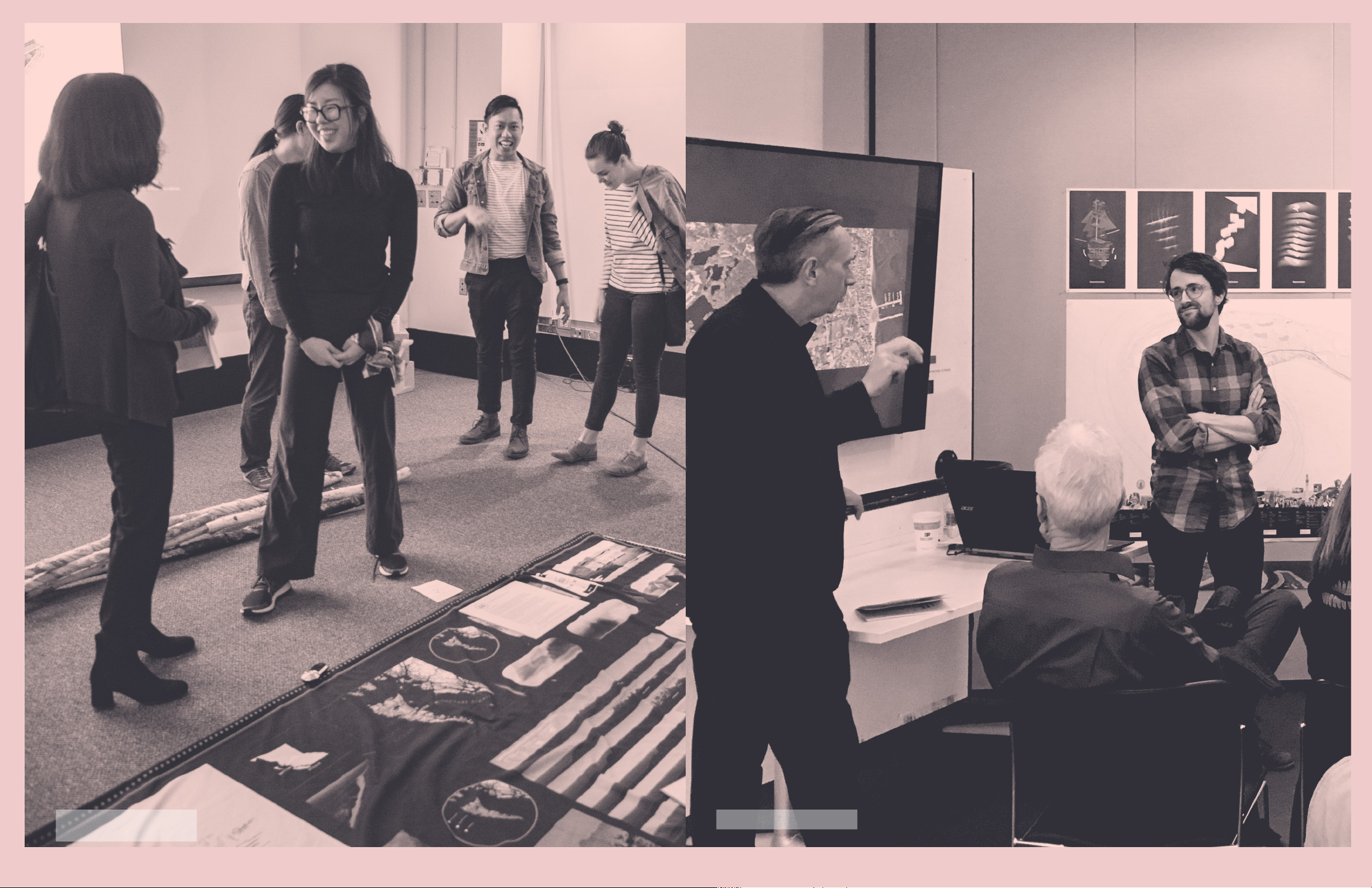
Anita Kan
photo courtesy Annie Liang
52 53
MLA / Department of Landscape Architecture Manual
photo courtesy John Wray
Page 28

Fall 2020
~
14 SEPTEMBER
21 SEPTEMBER
28 SEPTEMBER
Schedule
05 OCTOBER
Design Contexts
02 NOVEMBER
Midterm Reviews
30 NOVEMBER
Penultimate Term Reviews
Design Thesis
12 OCTOBER
Design Drivers
09 NOVEMBER
Sites + Subjects
~
Design Research
19 OCTOBER
Design Methods
16 NOVEMBER
Programs + Publics
14 DECEMBER
Thesis Prep Final Reviews
Design Projection
26 OCTOBER
Design Media
23 NOVEMBER
Modes + Measures
54 55
MLA / Department of Landscape Architecture Manual
Page 29

Week 01
14 SEPTEMBER
Design Thesis
+ Course Introduction 16:30-18:00 EDT LIVE via ZOOM:
https://harvard.zoom.us/j/92495251136?pwd=MWY2VHpZWmpkUVJqWWQvZGZLWXAvUT09
> introduction to the design thesis > three modes of MLA design thesis > elements, aspects, advisors, etc. > criteria for evaluation of quality > overview and structure of course
Readings:
Carole Gray and Julian Malins, “Locating Your Position: Orienting and Situating Research,” Visualizing Research: A Guide to the Research Process in Art and Design (Ashgate, 2004), 66–92.
Sergio Lopez-Pineiro, “How to do a Thesis: Practice Models as Instigators for Academic Theses,” paper presented at the 2010 Association of Collegiate Schools of Architecture (ACSA) Annual Meeting in New Orleans (March 7, 2010), n.p.
David Salomon, “Experimental Cultures: On the ‘End’ of the Design Thesis and the Rise of the Research Studio,” Journal of Architectural Education, vol. 65, no. 1 (October 2011): 33-44.
Sarah Whiting, “Welcome to the Banquet (or, How to Increase the Relative Happiness of the M.Arch. Thesis
Student),” Robert Gutman, Architecture from the Outside In: Selected Essays by Robert Gutman, ed. Dana
Cuff and John Wriedt (New York: Princeton Architectural Press, 2010), 313-317.
response #1 (DUE: Sunday 20 September by 11:59pm):
> three questions (revised + refined)
What do you want to do?
How do you want to do it?
How would you like it to be received?
> self-assessment (revised + refined)
Recent Thesis Projects:
Alexandra Mei, “Accessing the Past” (advised by Robert Pietrusko, 2017). *
Min Yeo, “Wild” (advised by Craig Douglas, 2018). *
Emily Hicks and Melody Stein, “Wild Rice Waters” (advised by Rosetta Elkin, 2019). *
Chelsea Kilburn, “That Sinking Feeling” (advised by Danielle Choi, 2020). *
Advice on Thesis:
Sergio Lopez-Pineiro, GSD Sarah Whiting, GSD
Alexandra Mei, MLA '17 Min Yeo, MLA '18 Chelsea Kilburn, MLA '20
Clare Lyster, University of Illinois at Chicago Jason Young, University of Tennessee
56 57
MLA / Department of Landscape Architecture Manual
Page 30
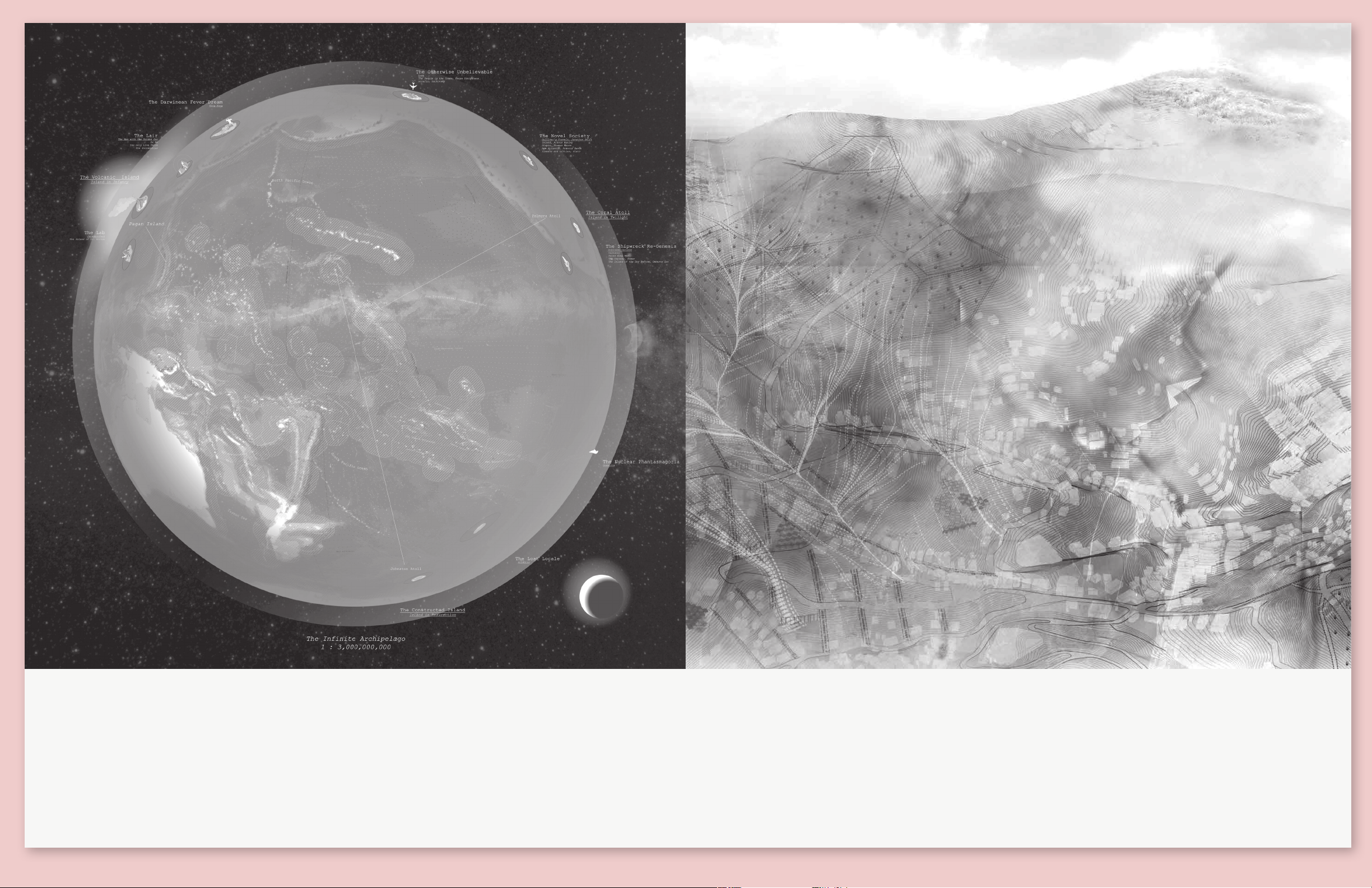
ALEXANDER AGNEW (MLA '17)
"GOD FROM THE ISLAND: Realizing Mythological Space" "LATENT MARGINS: Eroding the static city"
Master's Thesis in Landscape Architecture Harvard University Graduate School of Design 2017 Page 23 (detail)
58 59
MLA / Department of Landscape Architecture Manual
Advised by: Francesca Benedetto
CARLOS ESPINOZA BARDALES (MLA '18)
Master's Thesis in Landscape Architecture Harvard University Graduate School of Design 2018 Page 5 (detail)
Advised by: Belinda Tato
Page 31

Week 02
21 SEPTEMBER
Design Research
> Introduction to design as a form of research
+ Individual Workshop Presentations 1:3 [5-7 mins. MAX] 16:30-18:00 EDT LIVE via ZOOM:
https://harvard.zoom.us/j/96266593489?pwd=OG1IQlJ5Y05SOS9rdlEzWUJ3REpGQT09
response #2 (DUE: Sunday 27 September by 11:59pm):
brief notes on five individual ingredients:
What body of design precedent or projective practice will your project join?
What discourse or debate in design will your project contribute to?
What is the site or sites for your design thesis project?
What is the programmatic agenda shaping intervention upon that site(s)?
What representational/methodological strategies will you use?
Readings:
AMO/Rem Koolhaas, “The Ultimate Atlas for the 21st Century,” Wired, (June 2003): 132-169.
Elen Deming and Simon Swaffield, “Introduction,” and “Knowing Landscape Architecture,” Landscape
Architectural Research: Inquiry, Strategy, Design (John Wiley & Sons, 2011), 1-16, 17-29.
Massimo Negrotti, “Introduction,” “The Place of the Artificial,” The Theory of the Artificial: Virtual
Replications and the Revenge of Reality (Intellect Books, 1999), 1-7, 8-39.
Herbert Simon, “Understanding the Natural and Artificial Worlds,” “The Science of Design: Creating the
Artificial,” (1969) The Sciences of the Artificial (MIT Press, 1996), 1-24, 111-138.
Structures of Creativity:
Marshall McLuhan, Distant Early Warning (McLuhan, 1969).
Recent Thesis Projects:
David Zielnicki, “Gradually, Fiercely” (advised by Sergio Lopez-Pineiro, 2017).
Sonny Meng Qi Xu, “Borderhood” (advised by Sergio Lopez-Pineiro, 2018).
Joshua Stevens, “The Tropical Arboretum of Vegetal Dwelling,” (advised by Rosalea Monacella, 2019).
Michael Ahn, “A Benthic Agriculture” (advised by Montserrat Bonvehi, 2020).
Advice on Thesis:
Rosalea Monacella, GSD
Chris Reed, GSD
Sonny Meng Qi Xu, MLA /M.Arch II '18 Michael Ahn, MLA '20
Luis Callejas, AHO Oslo Conor O’Shea, University of Illinois
60 61
MLA / Department of Landscape Architecture Manual
Page 32

KENT HIPP (MLA '17)
"COASTAL RETREAT: Staging Inundation in Provincetown"
Master's Thesis in Landscape Architecture Harvard University Graduate School of Design 2017 Page 14 (detail) Page 5 (detail)
62 63
MLA / Department of Landscape Architecture Manual
Advised by: Gary Hilderbrand
KELLY CLIFFORD (MLA '18)
"Waste / Wealth Accumulations: Labor Ecologies + the Remaking of the Public Realm"
Master's Thesis in Landscape Architecture Harvard University Graduate School of design 2018
Advised by: Rosalea Monacella
Page 33

Week 03
28 SEPTEMBER
Design Projection
> Introduction to design as proposition through precedent
+ Individual Workshop Presentations 1:3 [5-7 mins. MAX] 16:30-18:00 EDT LIVE via ZOOM:
https://harvard.zoom.us/j/94520615240?pwd=TWFzam02Y1BQOUx4Tld1cGVOUnBMQT09
response #3 (DUE: Sunday 27 September by 11:59pm):
facsimile of spring 2020 option studio brief
Readings:
Nigel Cross, “Designerly Ways of Knowing,” “Natural and Artificial Intelligence in Design,” Designerly Ways
of Knowing (Springer, 2006), 1-14, 29-42.
Elen Deming and Simon Swaffield, “Projective Design,” Landscape Architectural Research: Inquiry,
Strategy, Design (John Wiley & Sons, 2011), 205-222.
Peter Rowe, “Part 2: Procedural Aspects of Design Thinking,” Design Thinking (MIT Press, 1987), 39-114.
Massimo Scolari, “Chapter 3: Oblique Drawing,” and “Chapter 4: The Idea of Model,” Oblique Drawing: A History of Anti-Perspective (Cambridge: MIT Press, 2012), 47-135, 137-183.
Structures of Creativity:
Charles and Ray Eames, House of Cards (Venice, California: Eames Office, 1952).
Recent Thesis Projects:
Chris Reznich, “Solar Frameworks” (advised by Charles Waldheim, 2017).
Alison Malouf, “Ghostworlds” (advised by Silvia Benedito, 2018).
Isabel Preciado, “Airscapes,” (advised by Danielle Choi, 2019).
Andy Lee, “Interior” (advised by Robert Pietrusko, 2020).
Advice on Thesis:
Silvia Benedito, GSD Emily Wettstein, GSD
Alison Malouf, MLA '18
Fadi Masoud, University of Toronto Albert Pope, Rice University
64 65
MLA / Department of Landscape Architecture Manual
Page 34
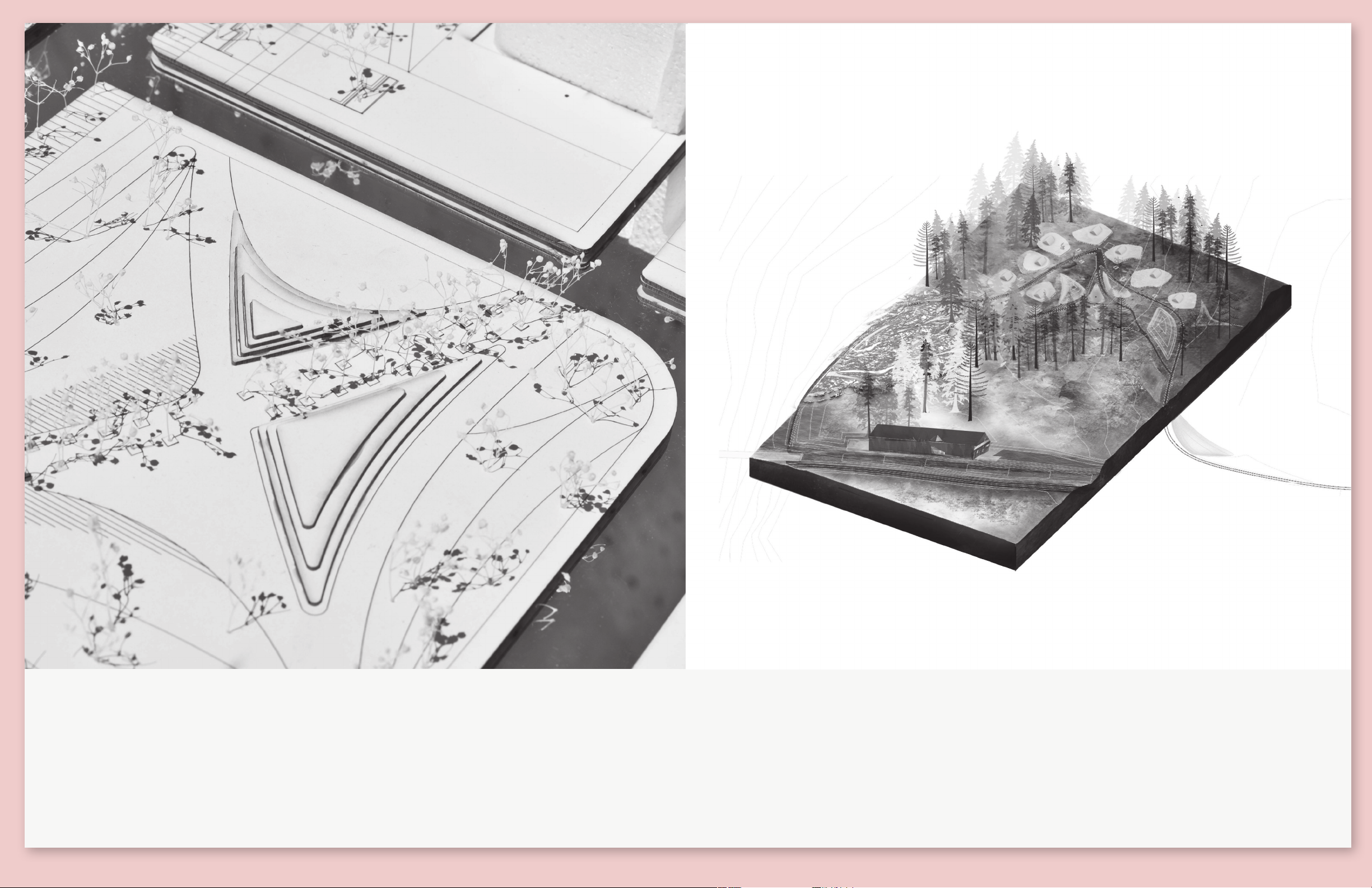
WILLIAM S. BAUMGARDNER (MLA '18)
"TIRANA FREESCAPE: Reconstructing Socialist Space" "KNOWLEDGE GROUNDS, A LANDSCAPE BASED ART SCHOOL ON HAIDA GWAII"
Master's Thesis in Landscape Architecture Harvard University Graduate School of Design 2018 Page 22 (detail)
66 67
MLA / Department of Landscape Architecture Manual
Advised by: Anita Berrizbeitia
ANNIE LIANG (MLA '18)
Master's Thesis in Landscape Architecture Harvard University Graduate School of Design 2018 Page 74 (detail)
Advised by: Robert Pietrusko
Page 35

Week 04
05 OCTOBER
Design Contexts
> introduction to design contexts, sites, situations
+ Individual Workshop Presentations 1:3 [5-7 mins. MAX] 16:30-18:00 EDT LIVE via ZOOM:
https://harvard.zoom.us/j/94906358863?pwd=L1BWQTczMlZxOEZkVzUzUGE4aUJkUT09
response #4 (DUE: Sunday 11 October @11:59pm):
word + image dossier on site
Readings:
Luis Callejas, “Islands and Atolls,” Pamphlet Architecture, no. 33 (New York: Princeton Architectural Press,
2013).
John Dixon Hunt, “Reading and Writing the Site,” (1992) Theory in Landscape Architecture: A Reader, ed.
Simon Swaffield (University of Pennsylvania, 2002), 131-135.
Miwon Kwon, “One Place After Another: Notes on Site Specificity,” October, no. 80 (Spring 1997), 85–110.
Lola Sheppard and Mason White/Lateral Office, “The (New) idea of North(s),” “Urbanism Timeline,” and
“Urbanism Below Zero,” Many Norths: Spatial Practice in a Polar Territory (New York: Actar, 2017), 4-19, 2025, 26-41.
Structures of Creativity:
Jane Wolff, Delta Primer Playing Cards (San Francisco: William Stout, 2003); and Jane Wolff, Delta Primer: A Field Guide to the California Delta (San Francisco: William Stout Publishers, 2003).
Recent Thesis Projects:
Carlo Urmy, “Dry Bones” (advised by Fionn Byrne, 2017).
William Baumgardner, “Tirana Freescape” (advised by Anita Berrizbeitia, 2018).
Ann Lynch, “Inveterate Scars” (advised by Danielle Choi, 2019).
Benjamin Hackenberger, The Collective Garden” (advised by Rosalea Monacella, 2020).
Advice on Thesis:
Anita Berrizbeitia, GSD Sara Zewde, GSD
William Baumgardner, MLA '18 Ann Lynch, MLA '19 Benjamin Hackenberger, MLA '20
Mason White, University of Toronto
Jane Wolff, University of Toronto
68 69
MLA / Department of Landscape Architecture Manual
Page 36
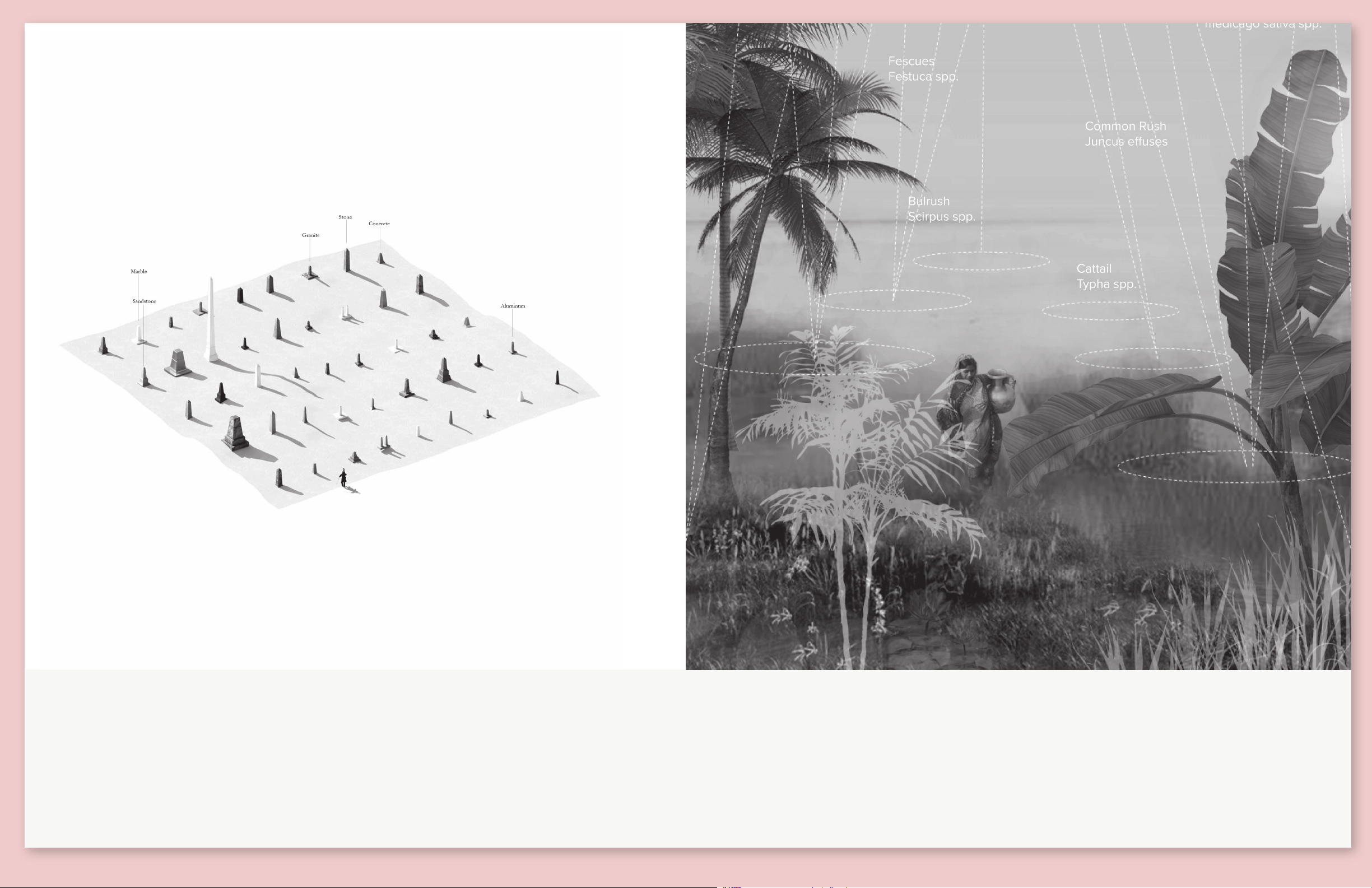
Machle
Sandstone
Granite
I...
L
SONNY MENG QI XU (MLA '18)
"Borderhood, Re-imagining the Canada-US Borderlands"
Master's Thesis in Landscape Architecture Harvard University Graduate School of Design 2018 Page 119 (detail) Page 1 (detail)
70 71
MLA / Department of Landscape Architecture Manual
Advised by: Sergio Lopez-Pineiro
RAYANA HOSSAIN (MLA '17)
"Projecting Upazilas: A New Town Ecology For Economic Growth and Environmental Sustainability in Bangladesh"
Master's Thesis in Landscape Architecture, Harvard University Graduate School of Design 2017
Advised by: Anita Berrizbeitia
Page 37

Week 05
12 OCTOBER
Design Drivers
> introduction to design drivers, programs, publics
+ Individual Workshop Presentations 2:3 [5-7 mins. MAX] 16:30-18:00 EDT LIVE via ZOOM:
https://harvard.zoom.us/j/95698680140?pwd=MEtEV25ZUm11WTJPVjJLS3gyOFBRdz09
response #5 (DUE: Sunday 18 October @11:59pm):
word + image dossier on program
Readings:
Neeraj Bhatia, “New Investigations in Collective Form,” New Investigations in Collective Form: The Open Workshop (New York: Actar, 2019), 24-33.
Rania Ghosn and El Hadi Jazairy, “Another Architecture for the Environment” and “After Oil,” Geostories: Another Architecture for the Environment (New York: Actar, 2020), 10-27, 28-41.
Elizabeth Meyer, “The Public Park as Avant-Garde (Landscape) Architecture: A Comparative Interpretation
of Two Parisian Parks, Parc de la Villette (1983-1990) and Parc des Buttes-Chaumont (1864-1867),”
Landscape Journal, vol. 10, no. 1 (Spring 1991): 16-26.
Lola Sheppard and Mason White/Lateral Office, “Coupling: Strategies for Infrastructural Opportunism,”
Pamphlet Architecture, no. 28 (New York: Princeton Architectural Press, 2011).
Structures of Creativity:
Arup, Drivers of Change (Gustavo Gili, 2006).
Recent Thesis Projects:
Kent Hipp, “Coastal Retreat” (advised by Gary Hilderbrand, 2017).
Annie Liang, “Knowledge Grounds” (advised by Robert Pietrusko, 2018).
Isaac Stein and Maggie Tsang, “Lines in the Sand,” (advised by Rosetta Elkin, 2019).
Zhaodi Wang, “Mutual Dependence” (Advised by Craig Douglas, 2020).
Advice on Thesis:
Danielle Choi, GSD Gary Hilderbrand, GSD
Annie Liang, MLA '18 Isaac Stein, MLA/MDes '20 & Maggie Tsang, MDes '19
Neeraj Bhatia, Univ. of California at Berkeley Rania Ghosn, MIT
72 73
MLA / Department of Landscape Architecture Manual
Page 38
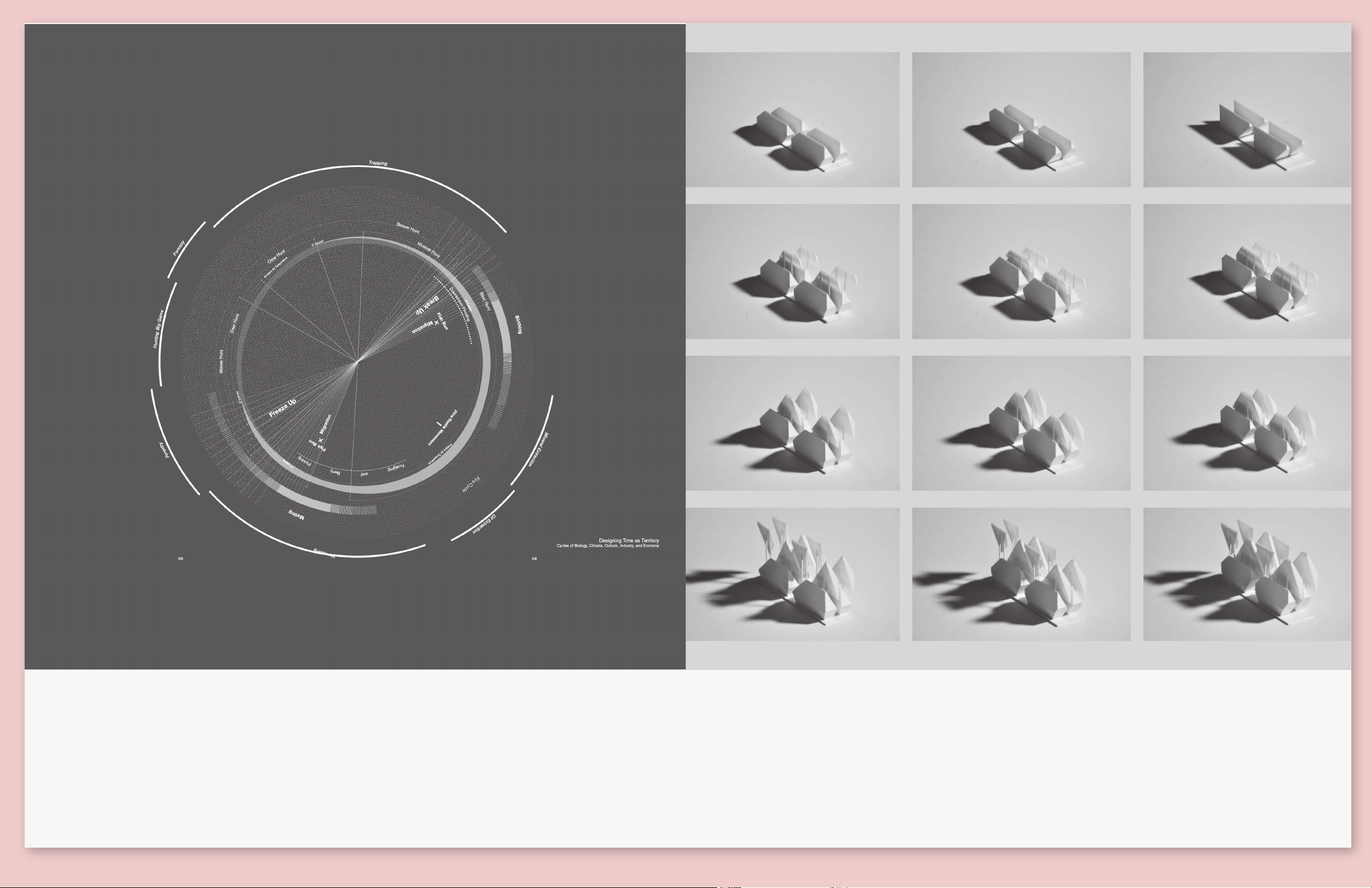
TIFFANY KAEWEN DANG (MLA '17)
"BEWILDERED IN BANFF: Displacing the Contours of Colonization in Canada's National Parks System"
Master's Thesis in Landscape Architecture Harvard University Graduate School of Design 2017 Page 37 (detail) Pages 130-131 (detail)
74 75
MLA / Department of Landscape Architecture Manual
Advised by: Pierre Bélanger
SEOK MIN YEO (MLA '18)
"Manhattanism, Unhinged"
Master's Thesis in Landscape Architecture Harvard University Graduate School of Design 2018
Advised by: Craig Douglas Rosalea Monacella
Page 39
- - -
----
-
------------
l'urta/,
Jor111
ing lt,f/oresce11c-,,
·,.";:/.:.
..,
-
·.
,I
Timely
Dent/,
; •
...
V
...
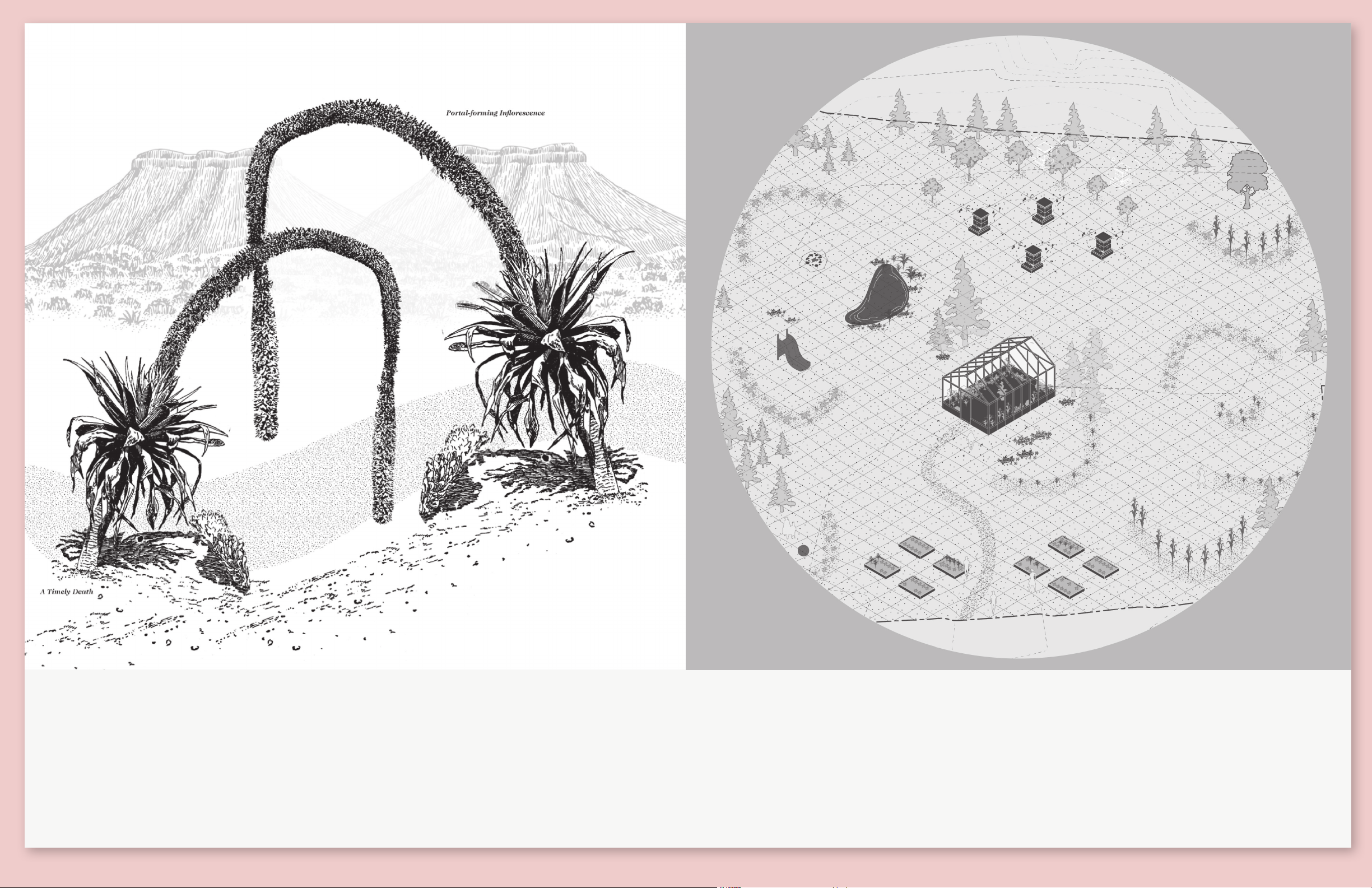
JOSHUA STEVENS (MLA '19)
"THE TROPICAL ARBORETUM OF VEGETAL DWELLING"
Master's Thesis in Landscape Architecture Harvard University Graduate School of Design 2019 Page 14 (detail) Page 13 (detail)
...
Advised by: Rosalea Monacella
CHRISTIN HU (MLA '19)
"Landscape games: Tools for collabboratively shaping our environment"
Master's Thesis in Landscape Architecture Harvard University Graduate School of Design 2019
Advised by: Craig Douglas
76 77
MLA / Department of Landscape Architecture Manual
Page 40

Week 06
19 OCTOBER
Design Methods
> introduction to methods and strategies of design
+ Individual Workshop Presentations 2:3 [5-7 mins. MAX] 16:30-18:00 EDT LIVE via ZOOM:
https://harvard.zoom.us/j/99401819188?pwd=SW03OWQ1L241UzI5OGg1a2xyOUpwZz09
response #6 (DUE: Sunday 25 October @11:59pm):
word + image dossier on design methods
Readings:
Pierre Belanger, “Going Live: From States to Systems,” Pamphlet Architecture, no. 35 (New York: Princeton Architectural Press, 2015).
Bradley Cantrell and Adam Mekies, “Coding Landscape,” Codify: Parametric and Computational design in Landscape Architecture, ed. Adam Mekies and Bradley Cantrell (Milton: Routledge, 2018), 5-33.
Dorothee Imbert, “Conversations with Michel Desvigne,” A Landscape Inventory: Michel Desvigne Paysagiste (Columbus, OH: Knowlton School and Applied Research + Design Publishing, 2018), 19-69.
Alex Lehnerer, “The City of Averuni and Its Code,” Grand Urban Rules (Rotterdam: nai010 Publishers, 2013), 9-55.
Structures of Creativity:
IDEO, Method Cards (William Stout, 2003).
Recent Thesis Projects:
Lex Agnew, “God from the Island” (advised by Francesca Benedetto, 2017).
Emily Drury, “How to do Things with Plants” (advised by Silvia Benedito, 2018).
Isabel Brostella, “The Multiplicity of a Line” (advised by Montserrat Bonvehi, 2019).
Yoni Angelo Carnice, “Vulgar: A Garden” (advised by Alex Wall, 2020).
Advice on Thesis:
Belinda Tato, GSD
Alex Wall, GSD
Lex Agnew, MLA '17 Emily Drury, MLA '18
Bradley Cantrell, University of Virginia Christophe Girot, ETH Zurich
78 79
MLA / Department of Landscape Architecture Manual
Page 41
. •
, : )
•.•,:/'j~
' . "
,.
" ~
'"";"\.
,,.-
.,
. .
;
'I,
'/
jo • . ) •
..
.
. .
.
'
/(
•'
.,,.
..
,
'·
.
. '
~-·•··~'y..-
)= -.:-:.
~
. -~--. \
~-{(t_:·
.....
" +
~
~
' ....
.
\;·_
);-~l.
• , •
-·
. .
\,-~~-::
+ ( J)'.,
;;
Q.,:.
..
'-" .
l
~L ; __
'~\:\:._
:._·
1;·'
·:
(
·~
. ·
........
~
..
'
.·.·
.
.
>·
,....,
'
•. • J.
. . .
·.
•
-~
..
:,:;
..
,::).:::::
..
,·(_ ··,·.?
\
..
1\·
.
··
..
··,
-.
,_
..
~
',~-.
I .
I
I I
. I
~
" I
STATION
.. :.>
~
'
..
:,
.. i ..
-:t\
.
. -~+
'{:,
·.•
,;_•I'
)z'',
~-
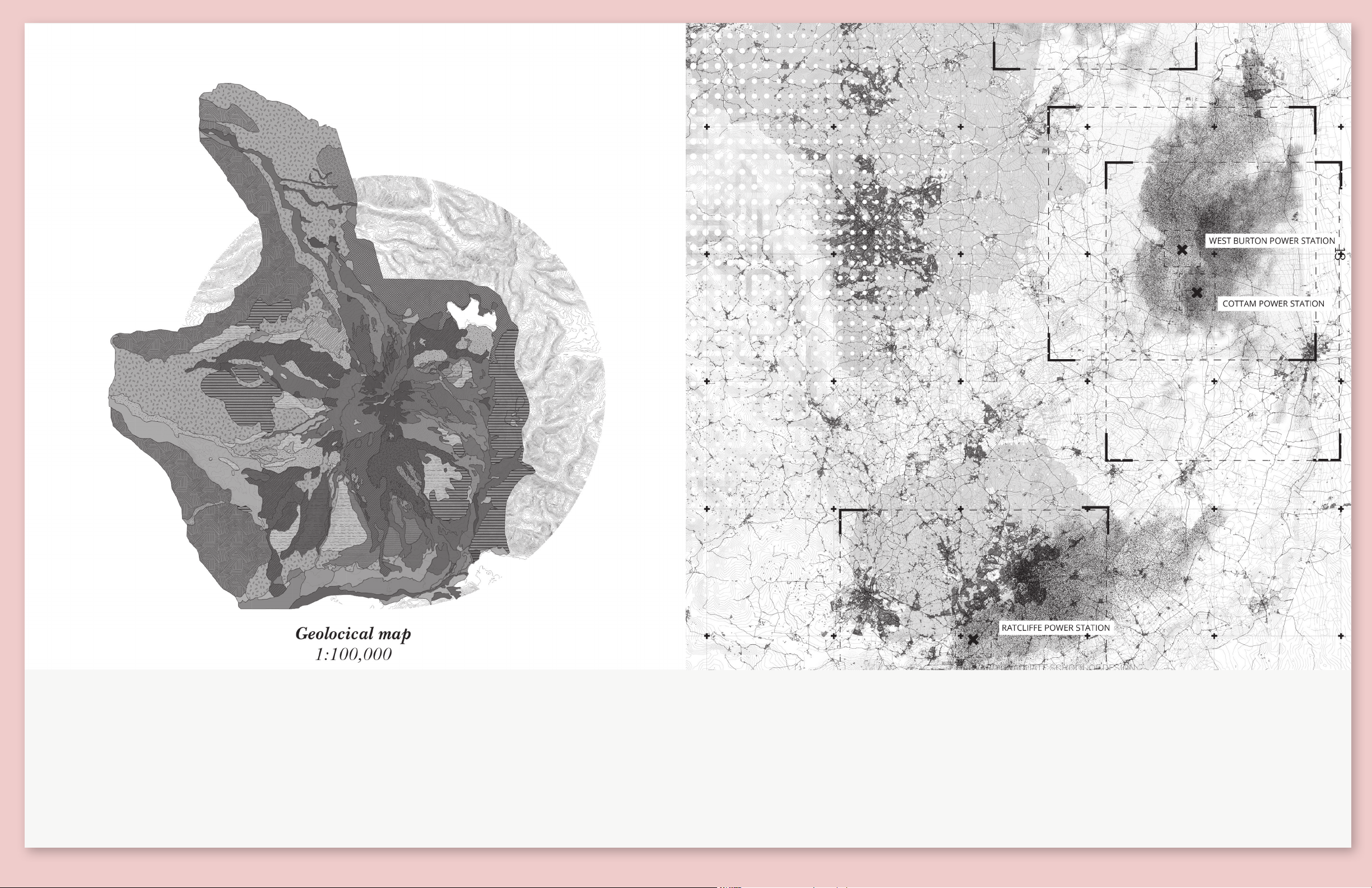
Geolocical map
1:100,000
MARIA DE LA LUZ LOBOS MARTINEZ (MLA '19)
"DESIGN WITH DISTURBANCE: Atlas of Shape, time, and perception in the volcanic landscape"
Master's Thesis in Landscape Architecture Harvard University Graduate School of Design 2019 Page 14 (detail) Page 13 (detail)
Advised by: Jill Desimini
ISABEL PRECIADO ARIAS (MLA '19)
"Airscapes: Rendering the materiality of Air"
Master's Thesis in Landscape Architecture Harvard University Graduate School of Design 2019
..
I ·1
Advised by: Craig Douglas Danielle Choi
80 81
MLA / Department of Landscape Architecture Manual
Page 42

Week 07
26 OCTOBER
Design Media
> introduction to design as media
+ Individual Workshop Presentations 2:3 [5-7 mins. MAX] 16:30-18:00 EDT LIVE via ZOOM:
https://harvard.zoom.us/j/92243830274?pwd=L2lNcE1MbDNoUTRTTDBLcmtwU29hZz09
response #7 (DUE: Sunday 01 November @11:59pm):
word + image dossier on design media
Readings:
John McMorrough, “Introduction: In Media Res,” and “Mediums,” Kelly Bair, Kristy Balliet, Adam Fure, Kyle Miller, Possible Mediums (New York: Actar, 2018), 21-28, 29-36.
Karen M’Closkey and Keith VanDerSys, “Introduction,” Dynamic Patterns: Visualizing Landscapes in a Digital Age (London: Routledge, 2017), 1-38.
Charles Waldheim, “Foreword: Ecologies, Plural and Projective,” Chris Reed and Nina-Marie Lister,
“Introduction: Ecological Thinking, Design Practices,” “Parallel Genealogies,” Projective Ecologies, ed. Reed
and Lister, (Barcelona: Actar, 2014), 6-9, 14-21, 22-39.
Charles Waldheim and Andrea Hansen, “Introduction: Photomontage and Landscape Architecture,” and
Karen M’Closkey, “Structuring Relations: From Montage to Model in Composite Imaging,” Composite
Landscapes: Photomontage and Landscape Architecture, ed. Waldheim and Hansen (Berlin: Hatje Cantz,
2014), 14-23, 116-131.
*NOTE on DAYLIGHT SAVINGS TIME CHANGE: Cambridge is on Eastern Daylight Savings Time [EDT] through October 31, 2020 Cambridge shifts one hour later to Eastern Standard Time [EST] on November 1, 2020
Structures of Creativity:
Color Aid Swatches (Color Aid Corp., 1948); and Josef Albers, Interaction of Color, (1963) fiftieth
anniversary edition (New Haven: Yale University Press, 2013).
Recent Thesis Projects:
Hannah Gaengler, “Rigged New World” (advised by Bradley Cantrell, 2017).
Ernest Haines, “Turnpike Metabolism” (advised by Robert Pietrusko, 2018).
Sarah Diamond, “Her Home,” (advised by Emily Wettstein, 2019).
Colin Chadderton, “Reveal/Transform/Respond” (advised by Craig Douglas, 2020).
Advice on Thesis:
Craig Douglas, GSD Paola Sturla, GSD
Hannah Gaengler, MLA '17 Ernest Haines, MLA '18 Colin Chadderton, MLA '20
Karen M’Closkey, University of Pennsylvania Nina-Marie Lister, Ryerson University
82 83
MLA / Department of Landscape Architecture Manual
Page 43
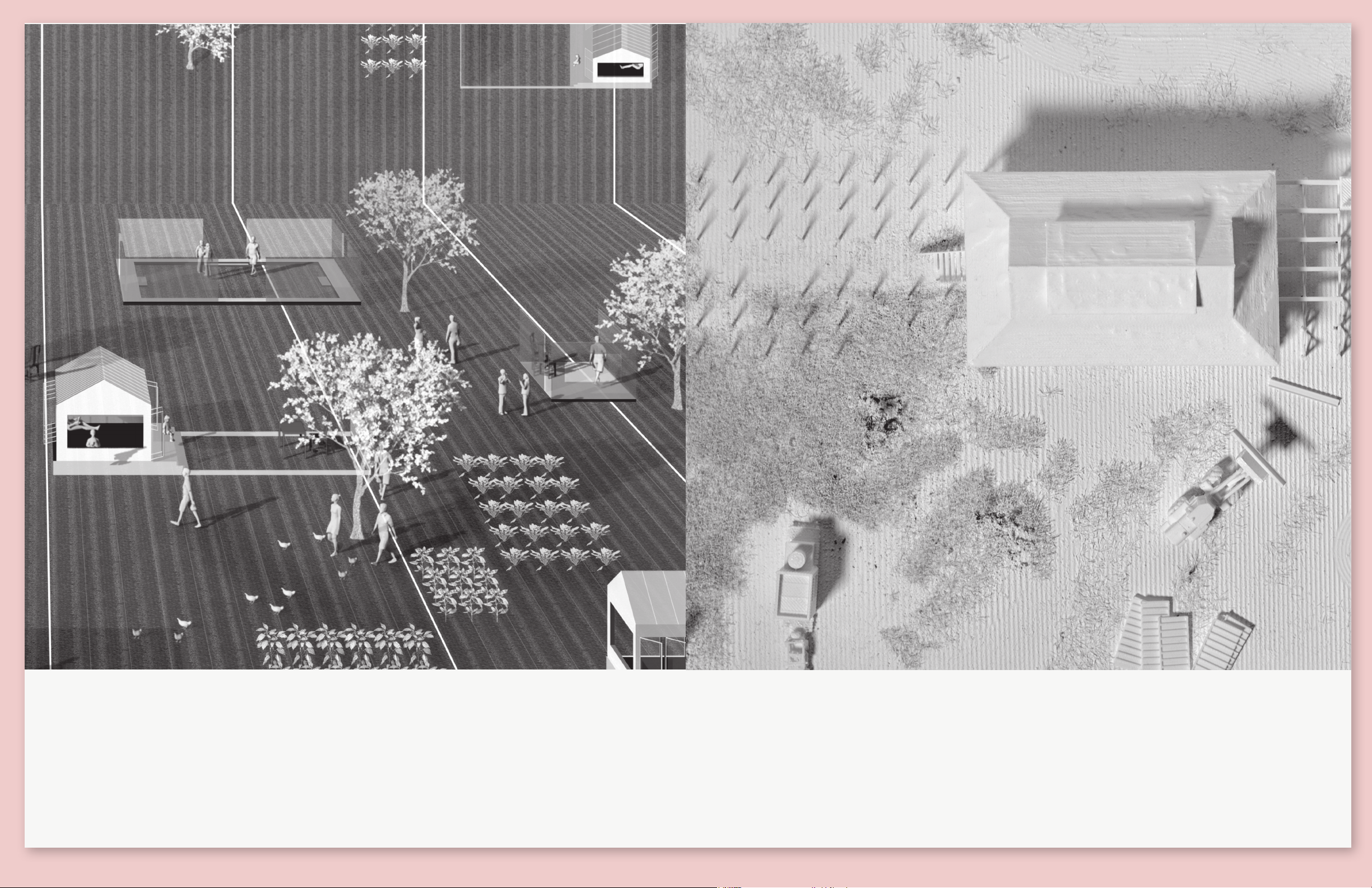
TING LIANG (MLA '19)
"People's Agri-topia: An Equitable Field"
Master's Thesis in Landscape Architecture Harvard University Graduate School of Design 2019 Page 3 (detail) Page 97 (detail)
84 85
MLA / Department of Landscape Architecture Manual
Advised by: Sergio Lopez-Pineiro
ISAAC STEIN (MLA '19, MDES '20), MAGGIE TSANG (MDES '19)
"Lines in the Sand: Rethinking Private Property on Barrier Islands"
Master's Thesis in Landscape Architecture Harvard University Graduate School of Design 2019
Advised by: Rosetta S. Elkin
Page 44

02 NOVEMBER
MIDTERM REVIEWS
Week 08
+ Individual Project Reviews [10 mins MAX] 13:00-18:00 EST* LIVE via ZOOM
https://harvard.zoom.us/j/94914259878?pwd=YXI2MmFTYXM5WUlqbm5OWlAvOHVVZz09
Each student will prepare a 10-minute presentation [MAX], uploaded to Canvas by 23:59 (midnight) EST* on Sunday November 1st, and join for reviews on Monday 2nd via Zoom from 10:00-18:00 EST.*
Work submitted will be evaluated by four equally weighted terms:
1. Representation: demonstrating a clear argument visually as well as verbally;
2. Research: showing consistent inquiry and engagement with the topic throughout the semester;
3. Proposal: the potential of the project as an intervention in the world and a contribution to the field; and
4. Proposition: the intellectual and cultural arguments supporting your project.
*NOTE on DAYLIGHT SAVINGS TIME CHANGE: Cambridge is on Eastern Daylight Savings Time [EDT] through October 31, 2020 Cambridge shifts one hour later to Eastern Standard Time [EST] on November 1, 2020
86 87
MLA / Department of Landscape Architecture Manual
Page 45
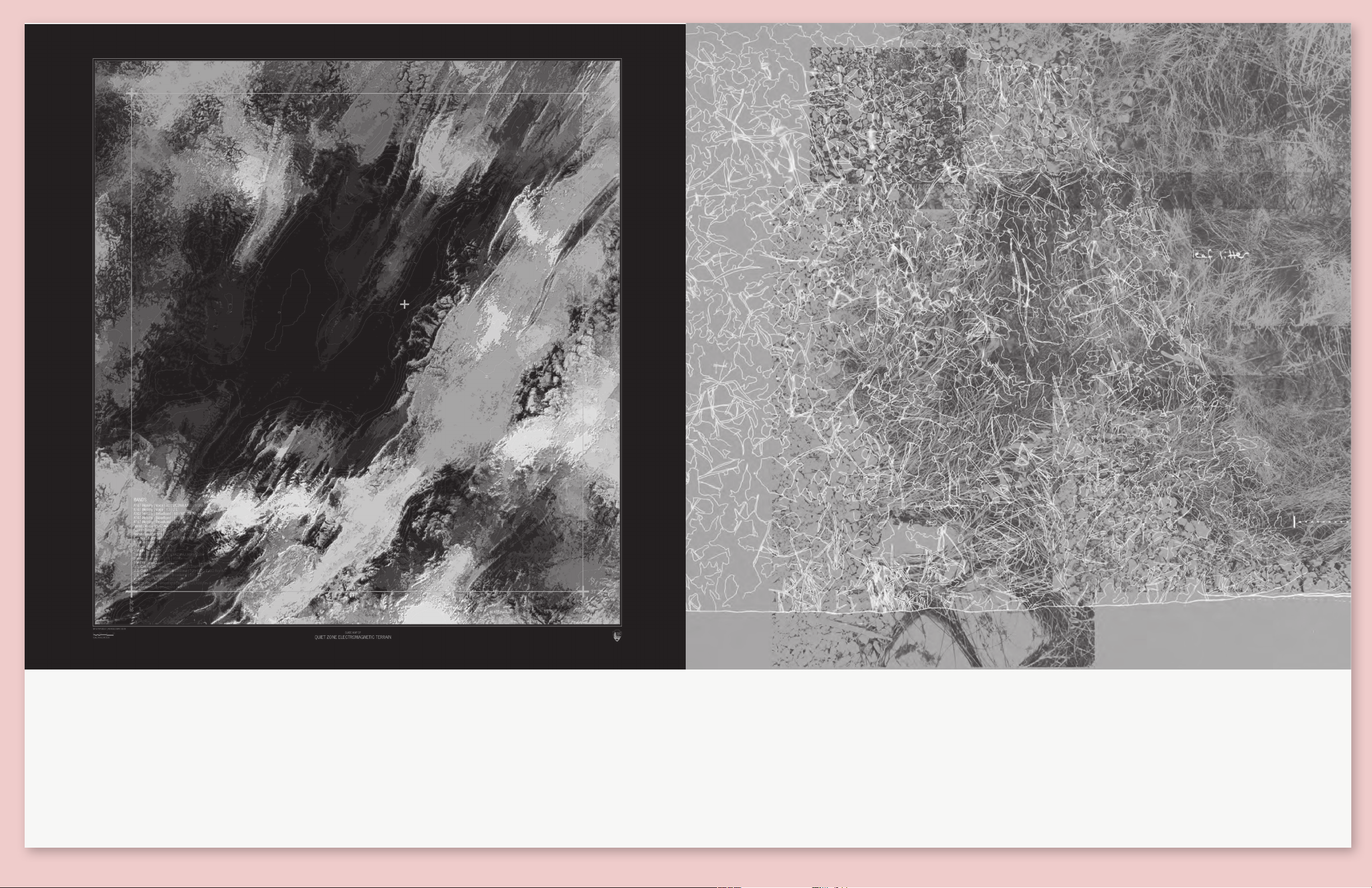
MARK D. HELLER (MLA '19)
"NO SERVICE" "Rise: A Guide to Boundary Resistance"
Master's Thesis in Landscape Architecture Harvard University Graduate School of Design 2019 Page 27 (detail)
88 89
MLA / Department of Landscape Architecture Manual
Advised by: Robert Pietrusko
ALEXANDRA MEI (MLA '17)
Master's Thesis in Landscape Architecture Harvard University Graduate School of Design 2017 Page 56 (detail)
Advised by: Robert Pietrusko
Page 46

Week 09
09 NOVEMBER
Sites + Subjects
> introduction to scales and themes associated with sites
+ Individual Workshop Presentations 3:3 [5-7 mins. MAX] 16:30-18:00 EST* LIVE via ZOOM:
https://harvard.zoom.us/j/94544443684?pwd=YkhZUzhBdkFJc1grVzZIL25OU21qUT09
response #8 (DUE: Sunday 15 November @11:59pm):
title: subtitle one sentence thesis statement single frontispiece image precedent projects for sites + subjects word + image dossier on sites + subjects
Readings:
Eva Castro, José Alfredo Ramírez, and Eduardo Rico, “The Grounds of a Renewed Practice: Groundlab’s Approach Towards Landscape and Infrastructure,” Architectural Design, vol. 83, no. 4 (2013): 78-85.
Teresa Gali-Izard, Los Mismos Paisajes: Ideas E Interpretaciones/The Same Landscapes: Ideas and Interpretations (Barcelona: Editorial Gustavo Gili, 2005).
Gunther Vogt and Alice Foxley, “Foreword: Between Search and Research” and “Introduction: The Way We
Work,” Distance & Engagement: Walking, Thinking, and Making Landscape (Zurich: Lars Muller Publishers,
2010), 7-23, 25-33.
Kongjian Yu, “Creating Deep Forms in Urban Nature: The Peasant’s Approach to Urban Design,” Nature and
Cities: The Ecological Imperative in Urban Design and Planning, ed. Frederick R. Steiner, et al. (Cambridge,
Mass.: Lincoln Institute of Land Policy and George F. Thompson Publishing, 2016), 95-117.
Structures of Creativity:
Chris Raschka, Circus Mixies (eeBoo Corp., 2003).
Recent Thesis Projects:
Rawan Alsaffar, “Oil and Salt” (advised by Robert Pietrusko, 2017).
Rhea Shah, “Decolonizing the Forest” (advised by Dilip daCunha, 2018).
Danica Liongson, “Eulogy for the Olive,” (advised by Montserrat Bonvehi, 2019).
Camila Huber Horta Barbosa, “High-Low: Blurring the Line” (advised by Pablo Perez-Ramos).
Advice on Thesis:
Montserrat Bonvehi Rosich, GSD
Stephen Gray, GSD Pablo Perez-Ramos, GSD
Rhea Shah, MLA '18 Danica Liongson, MLA/MDes '20 Camila Huber Horta Barbosa, MLA '20
Julia Czerniak, Syracuse University Teresa Gali-Izard, ETH Zurich
90 91
MLA / Department of Landscape Architecture Manual
Page 47
LAND DEVELOPMENT
Low
Occupation
Fla
cov
FAR
Sun
Time
COV
FAR
Sun. Very
Time
..
Moclerate
1-2
Year
--
High
1-2
Years
I
I
I
I
COV Low
FAR·
Moderate
Sun
Moclerate
Time
4-5
Years
COV H,gh
FAR. High
Sun
Mode
rate
Time
6-7
Years
I
LAND
DEVE
LOPMENT
High
Occupa
tion
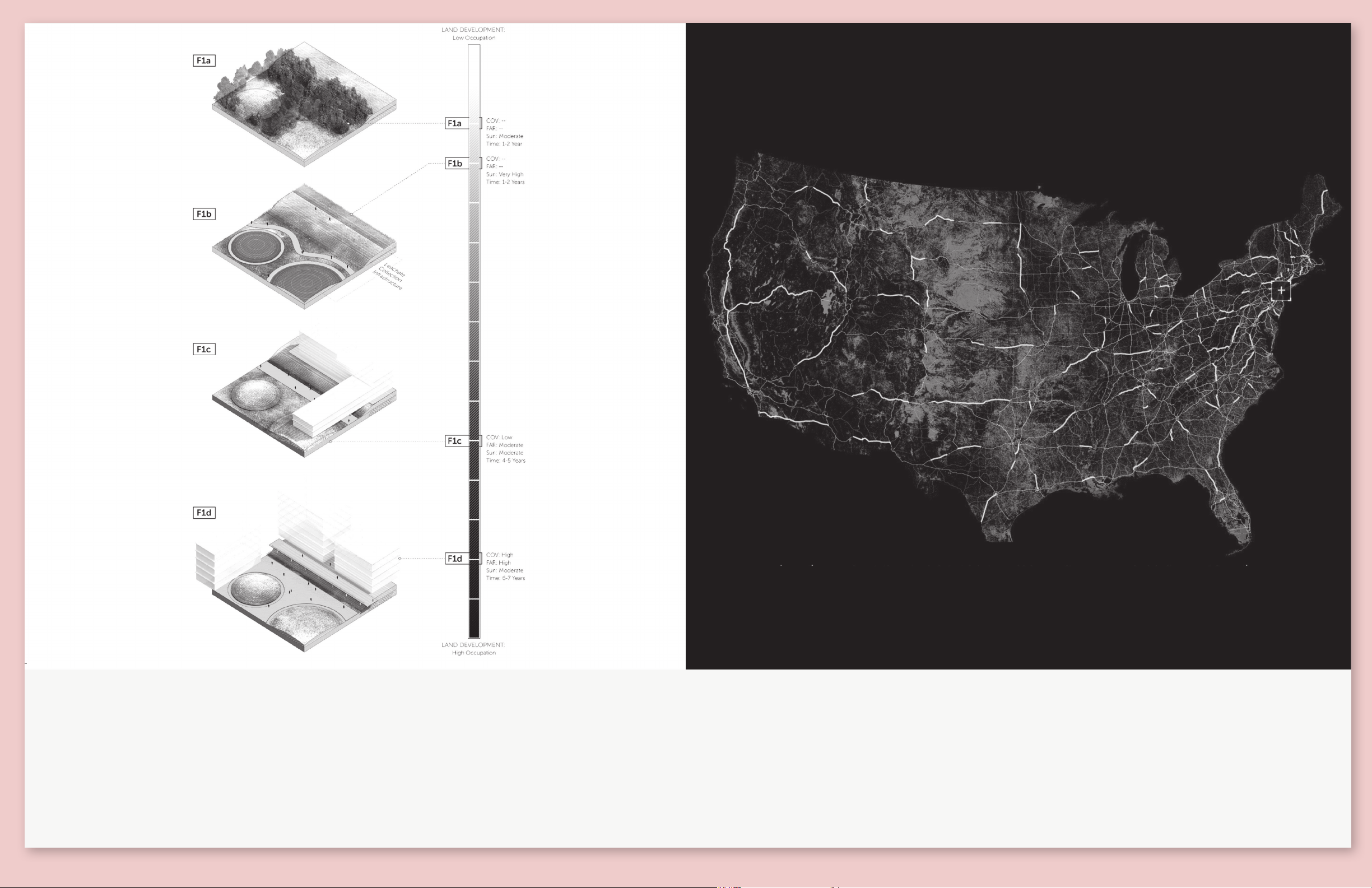
JOHN WRAY IV (MLA '17)
"CORRECTIVE COLLECTIVE: Remediation as Generator of Urban Form"
Master's Thesis in Landscape Architecture Harvard University Graduate School of Design 2017 Page 29 (detail) Page 12 (detail)
92 93
MLA / Department of Landscape Architecture Manual
Advised by: Fyonn Byrne
ERNEST WILLIAM HAINES (MLA '18)
"Turnpike Metabolism: Reconstituting National Infrastructure Through Landscape"
Master's Thesis in Landscape Architecture Harvard University Graduate School of Design 2018
Advised by: Robert Pietrusko
Page 48

Week 10
16 NOVEMBER
Programs + Publics
> introduction to public audiences and programmatic agendas
+ Individual Workshop Presentations 3:3 [5-7 mins. MAX] 16:30-18:00 EST* LIVE via ZOOM:
https://harvard.zoom.us/j/94663430568?pwd=K1UydDBHQ3g0Vy81MGRhV3JlZnZJQT09
response #9 (DUE: Sunday 22 November @11:59pm):
title: subtitle one sentence thesis statement single frontispiece image precedent projects for programs + publics word + image dossier on programs + publics
Readings:
Hilary Ballon, “The Commissioners’ Plan of 1811,” and “Surveying the Streets,” The Greatest Grid: The Master Plan of Manhattan, 1811-2011 (New York: Museum of the City of New York and Columbia University Press, 2012), 27-55, 57-71.
Rosetta Sarah Elkin, Tiny Taxonomy (New York: Actar, 2017).
Cannon B. Ivers, “The Rise of Flexible Space” and “The Culture of Change: A Personal Reading,” Staging
Urban Landscapes: The Activation and Curation of Flexible Public Spaces (London: Routledge, 2018), 1019, 20-37.
Daniel Rosenberg and Anthony Grafton, “Time in Print” and “Time Tables,” Cartographies of Time: A History of the Timeline (New York: Princeton Architectural Press, 2010), 10-25, 26-69.
Structures of Creativity:
a+t, 50 Urban Blocks (a+t publishers, 2017).
Recent Thesis Projects:
Tiffany Dang, “Bewildered in Banff” (advised by Pierre Belanger, 2017).
Greta Ruedisueli, “L’Enfant’s Leftovers” (advised by Jill Desimini, 2018).
Ting Liang, “People’s Agri-topia” (advised by Sergio Lopez-Pineiro, 2019).
Carson Fisk-Vittori, “Shifting Kind” (advised by Emily Wettstein, 2020).
Advice on Thesis:
Jill Desimini, GSD
Toni Griffin, GSD
Rahul Mehrotra, GSD
Marshall Brown, Princeton University David Gissen, Yale University Ed Wall, University of Greenwich
94 95
MLA / Department of Landscape Architecture Manual
Page 49
1/
SOUTH
BAY
TRAIL
•
•
•
i-93 SOUTHEAST EXPRESSWAY
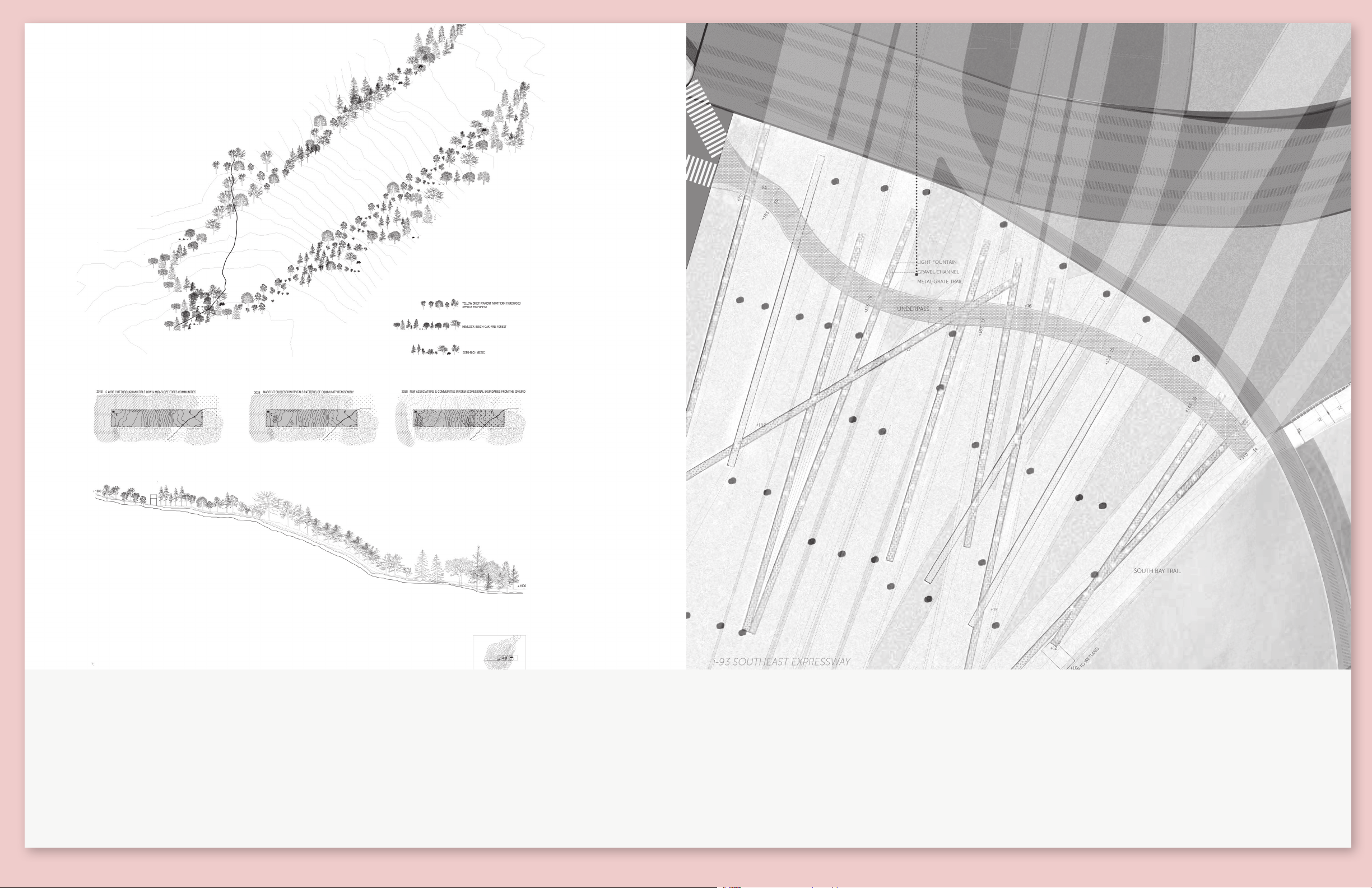
EMILY DRURY (MLA '18)
"How to do things with Plants"
Master's Thesis in Landscape Architecture Harvard University Graduate School of Design 2018 Page 13 (detail) Page 81 (detail)
96 97
MLA / Department of Landscape Architecture Manual
Advised by: Silvia Benedito
KIRA M. SARGENT (MLA '17)
"Dynamic Landscape as Resilient Infrastructure"
Master's Thesis in Landscape Architecture Harvard University Graduate School of Design 2017
Advised by: Bradley Cantrell
Page 50

Week 11
23 NOVEMBER
Modes + Measures
> introduction to modes of production and measures of reception
+ Individual Workshop Presentations 3:3 [5-7 mins. MAX] 16:30-18:00 EST* LIVE via ZOOM:
https://harvard.zoom.us/j/99798195310?pwd=enV2cHZwMFJZZXVYSFNFVnBzNW04Zz09
response #10 (DUE: Sunday 29 November @11:59pm):
title: subtitle one sentence thesis statement single frontispiece image precedent projects for modes + measures word + image dossier on modes + measures
Readings:
T.J. Demos, “Welcome to the Anthropocene!” and “Geoengineering the Anthropocene,” Against the Anthropocene: Visual Culture and Environment Today (Berlin: Sternberg Press, 2017), 7-23, 25-37.
Manuel Lima, “The Tree of Life” and “From Trees to Networks,” Visual Complexity: Mapping Patterns of Information (New York: Princeton Architectural Press, 2011), 21-41, 43-71.
John May, “Three Axioms X Three Storage Formats” and “What Orthography Was,” Signal. Image. Architecture. (Everything is Already an Image) Columbia Books on Architecture and the City (New York: Columbia GSAPP, 2020), 31-56, 59-70.
Katharine Harmon, “Introduction” and “Conflict and Sorrow,” The Map as Art: Contemporary Artists Explore
Cartography (New York: Princeton Architectural Press, 2009), 9-17, 19-33.
~
Structures of Creativity:
Ken Garland and Robert Chapman, Connect (James Galt, 1969).
~
Recent Thesis Projects:
Jonah Susskind, “Forward from Woodward” (advised by Fionn Byrne, 2017).
Tami Banh, “Water Assemblage” (advised by Robert Pietrusko, 2018).
Mark Heller, “No Service” (advised by Robert Pietrusko, 2019).
Andreea Vasile Hoxha, “After Plastics” (advised by Rosalea Monacella, 2020).
~
Advice on Thesis:
John May, GSD
Robert Pietrusko, GSD
Tami Banh, M.Arch II/MLA '18 Mark Heller, MLA '19 Andreea Vasile Hoxha, MLA '20
Michael Ezban, University of Virginia Jonathan Solomon, Art Institute of Chicago
98 99
MLA / Department of Landscape Architecture Manual
Page 51
Roof
Water Collector
CoUecttd from
rai,i
---
2
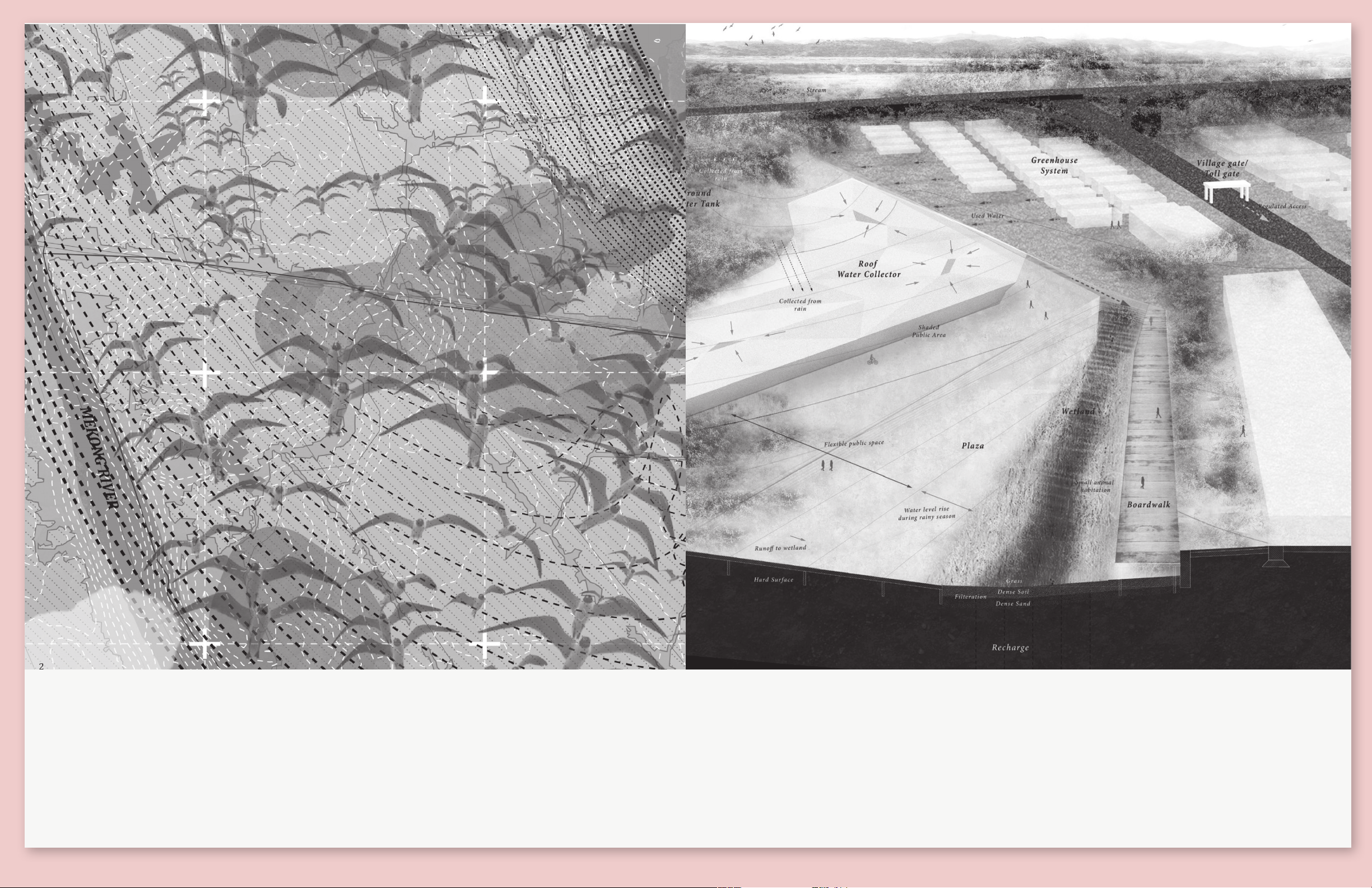
TAM N. BAHN (MLA '18)
"WATER ASSEMBLAGE: A new politic for the Mekong River Collective" "TRAVERSING PINATUBO"
Master's Thesis in Landscape Architecture Harvard University Graduate School of design 2018 Page 2 (detail)
100 101
MLA / Department of Landscape Architecture Manual
Advised by: Robert Pietrusko
NAM JUNG KIM (MLA '19)
Master's Thesis in Landscape Architecture Harvard University Graduate School of Design 2019 Page 30 (detail)
Advised by: Rosalea Monacella
Page 52

30 NOVEMBER
PENULTIMATE TERM REVIEWS
Week 12
+ Individual Project Reviews [10 mins MAX] 13:00-18:00 EST* LIVE via ZOOM:
https://harvard.zoom.us/j/92542522090?pwd=a2E0YndDTW9DL1VrUHNDVWticEp5UT09
Each student will prepare a 10-minute presentation [MAX], uploaded to Canvas by 23:59 EST (midnight) on Sunday November 29th, and join for reviews via Zoom on Monday 30th from 13:00-18:00 EST.
Work submitted will be evaluated by four equally weighted terms of evaluation:
1. Representation: demonstrating a clear argument visually as well as verbally;
2. Research: showing consistent inquiry and engagement with the topic throughout the semester;
3. Proposal: the potential of the project as an intervention in the world and a contribution to the field; and
4. Proposition: the intellectual and cultural arguments supporting your project.
102 103
MLA / Department of Landscape Architecture Manual
Page 53
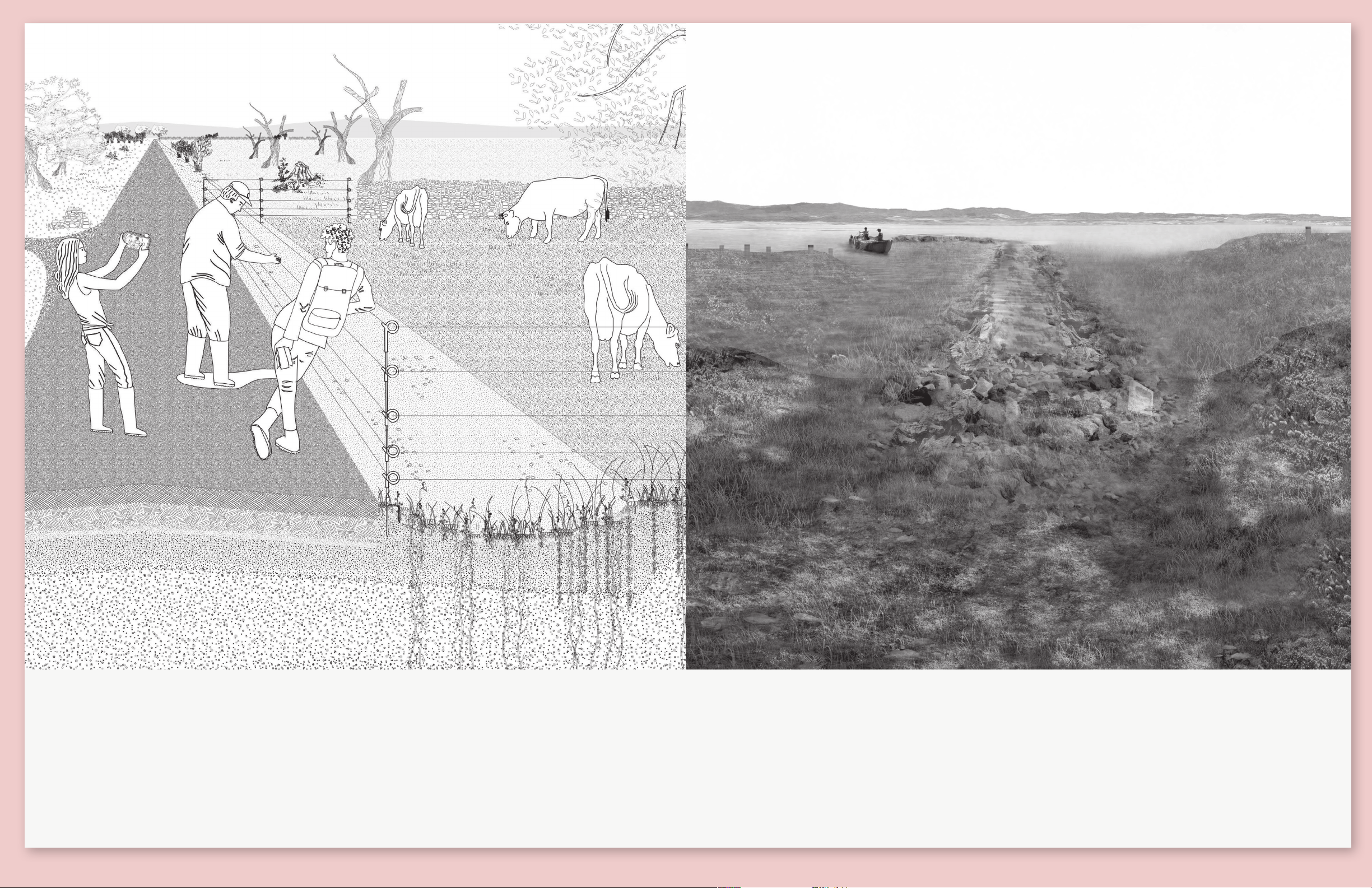
DANICA LIONGSON (MLA '19)
"Eulogy for the Olive: A Territorial Common for Rebuilding Soils in the Mediterranean" "THE MULTIPLICITY OF A LINE"
Master's Thesis in Landscape Architecture Harvard University Graduate School of Design 2019 Page 26 (detail)
104 105
MLA / Department of Landscape Architecture Manual
Advised by: Montserrat Bonhevi Rosich
ISABEL BROSTELLA (MLA '19)
Master's Thesis in Landscape Architecture Harvard University Graduate School of Design 2019 Page 50 (detail)
Advised by: Montserrat Bonhevi Rosich
Page 54

14 DECEMBER
FINAL THESIS PREP REVIEWS
Week 14
+ Individual Project Reviews [15 mins MAX] 10:00-18:00 EST* LIVE via ZOOM:
https://harvard.zoom.us/j/93688864559?pwd=Ym5Gay9BTGtMclE4M0pEZEFRK2xLUT09
Each student will prepare a 15-minute presentation [MAX], uploaded to Canvas by 23:59 EST (midnight) on Sunday December 13th, and join for reviews via Zoom on Monday 14th from 10:00-18:00 EST.
Work submitted will be evaluated by four equally weighted terms of evaluation:
1. Representation: demonstrating a clear argument visually as well as verbally;
2. Research: showing consistent inquiry and engagement with the topic throughout the semester;
3. Proposal: the potential of the project as an intervention in the world and a contribution to the field; and
4. Proposition: the intellectual and cultural arguments supporting your project.
106 107
MLA / Department of Landscape Architecture Manual
Page 55
1
t!tl
if
illt
ji
..
::::::··:::
~~i~
.
.......
..
,
..........•.......
:1
111i1!llll!lllillllllll!!l!l!lllll!ll
.. -.-
...
.•.
...
...
,-.
-,·,
-.·,·.·.
i
iltl1iilill
-;·,-;-
,
lilii
1ti•:
:;:;:i;
--:
;l{~:~t-::
::::::
\_;=_
.-.
= .
..
-.
=-~~~
~~
---
1•
- The Anishinab,
gov,rnmmt
well,
I will sell
of
cutting a tree down
th,
tree.
"'0 It
~
knew, however, that they ha
Artick V of
the
wild
ric,, upon
is
guarantied
11
States."
Likewise,
lndiam
stipulate for the right
privikges
of occu
and
States,
to their trade
- -
=::::======':'".
~=:=-
interpr~n
is
contained in an
him
th,
is
clear our
the
1837
Treaty
th,
[sic]
to
the lndiam, du
Ar
pancy,
that
the laws
and
intercourse
-----
ll1'5~"'111!il'l·ent
Pin,
Timber
and
upwards
ancestors
states
lands, the riv
tick
II
of
th,
of
hun
until
requir
of
th,
Unit
with
of
,;;;,,
w,
had
and
,st,
, what l sell you, I
IUUrStand
;'
' ranteed themselves
I
'!
'
vikg,
h,
/aim included in
pkasure
Tm11y
the ceded ttrritory, with the other usual
remove
es
shalt be continued
until otherwise ordered
: "
did
as
to
signed with
includes this
m,
to.
From [the] usual h,ight
they
had
of
hunting. fishing
of
the President
secured
those
by
the Presidmt
passage:
reserv
e the
sold the
th,
use
of
21(4) 715
and
th,
territory
of
same rights:
of
in
forct,
by
loamy sand
me
fineloomy
th,
U.S.
"V,ry
root
land
th,
land
gathering
mud,
the United
"Th,
the
Unittd
in
respect
Congress.
Aeolian
Aeolian
diumond
so
nd
of
12
"
·~~
,A.
,. "\;
.-
,-
- ·
':;i.
.,.
~-11111111111
·=
::::==
;.;i•
1 1
=~~
I
!ill!~!!!
...
.,...:-:··
.x\
}t<::
/// ·
,,,,
,
,,,,
'
-~
){,
.· g,
·.:::::\::~:-
~ -
',
..
_,..;_
11111
:
::::;::::u:::::::::r:nw+<1:n::::::;;::::::1trn<<::I::J1ttJJttt?
··
I I
~~r;~iiii
~/e-~
=~:e~===-~:.en~~:!j.~~=Taoo~:e~~
pim;onisca/leda"q1JIHa,"theyarethough/olasbad~
Tbeybreed
mamals,
;nas/hatlis
ilkl
d
= = .:
a:==
0
1-26mes
a'je.J1
reptiles,
~andinl'OOibt;//es(soo,pioos}. ¥ ~nttyroden_is:jetbaa
ava
labu,ldnestitllrees,bddueloscarnfy~nesbiw,caw
=~~roixt~~~~n:
itlthearea;1.Ngestnoc!unal1'eda1or;loodsanamyriadof
I I
§
r:;::
3
sooh,gher.ll
lJ.
' : ! !
, ,
,•"
-,,,,
-:>:"'•
Medi um ond
flne,ond,
Ponded and
""''"
-
NO
DEFINITE
TA~OO
TO
ROOT FANS
IN B EXTEND
T, BUT NU"4EAOUS CENTRAL
10
FT. ARE
PRES
ABUNDANT
ENT.
THROUGHOUT B
TO
35 FT.
DESCENDING
- FI
NE
-
LATERALS
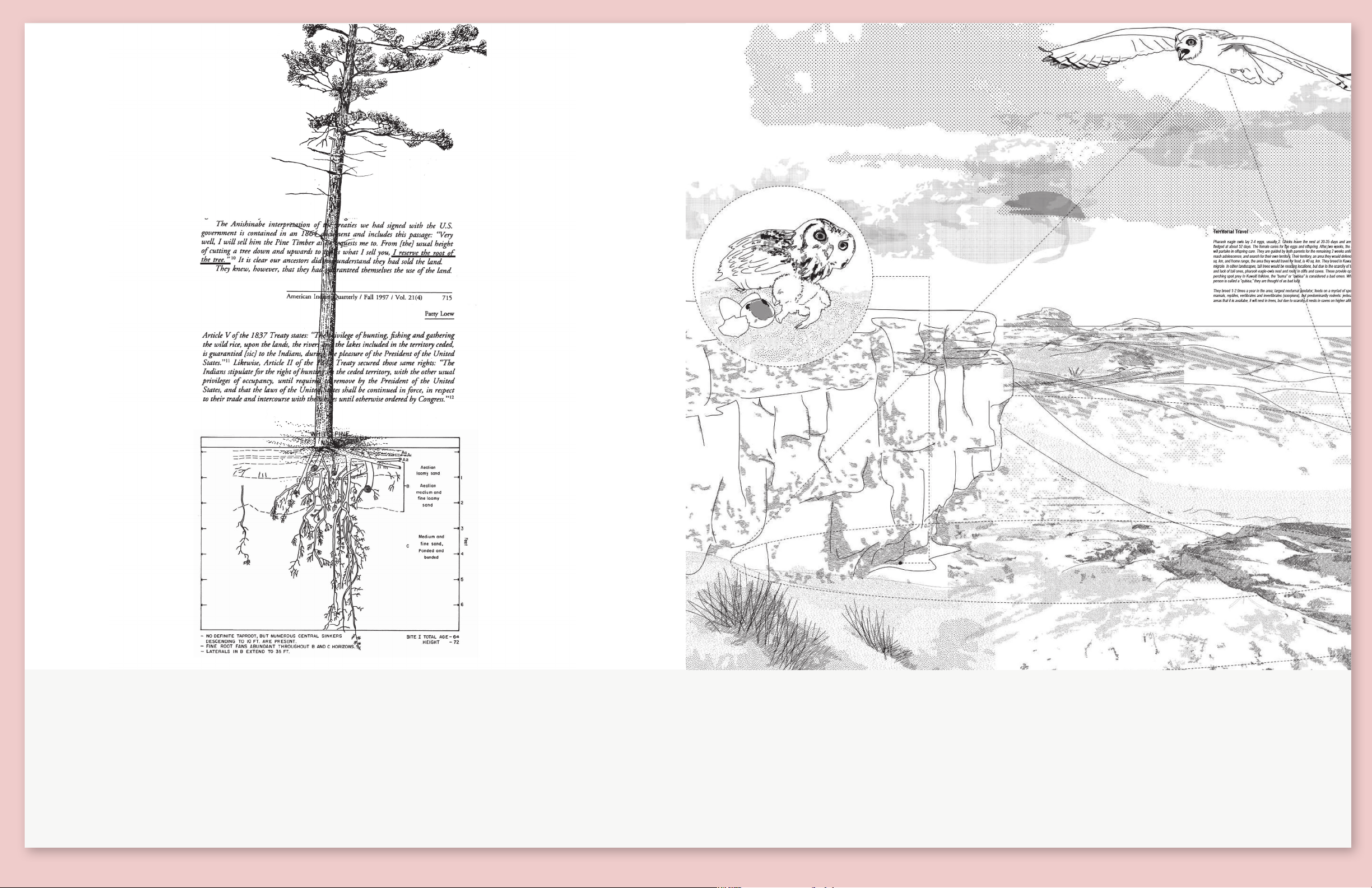
EMILY HICKS AND MELODY STEIN (MLA '19)
"Wild Rice Waters"
Master's Thesis in Landscape Architecture Harvard University Graduate School of Design 2019 Page 50 (detail) Page 64 (detail)
SINKERS
ANO
C HORIZONS.
SITE I
TOTAL
AG
HEIGHT -
f -
64
72
Advised by: Rosetta S. Elkin, John Koepke
AIYSHA ALSANE (MLA '19)
"Emptiful. Changing the paradigm in a post-oil landscape"
Master's Thesis in Landscape Architecture Harvard University Graduate School of Design 2019
_--~
ii_~~
:
Advised by: Montserrat Bonhevi Rosich
108 109
MLA / Department of Landscape Architecture Manual
Page 56
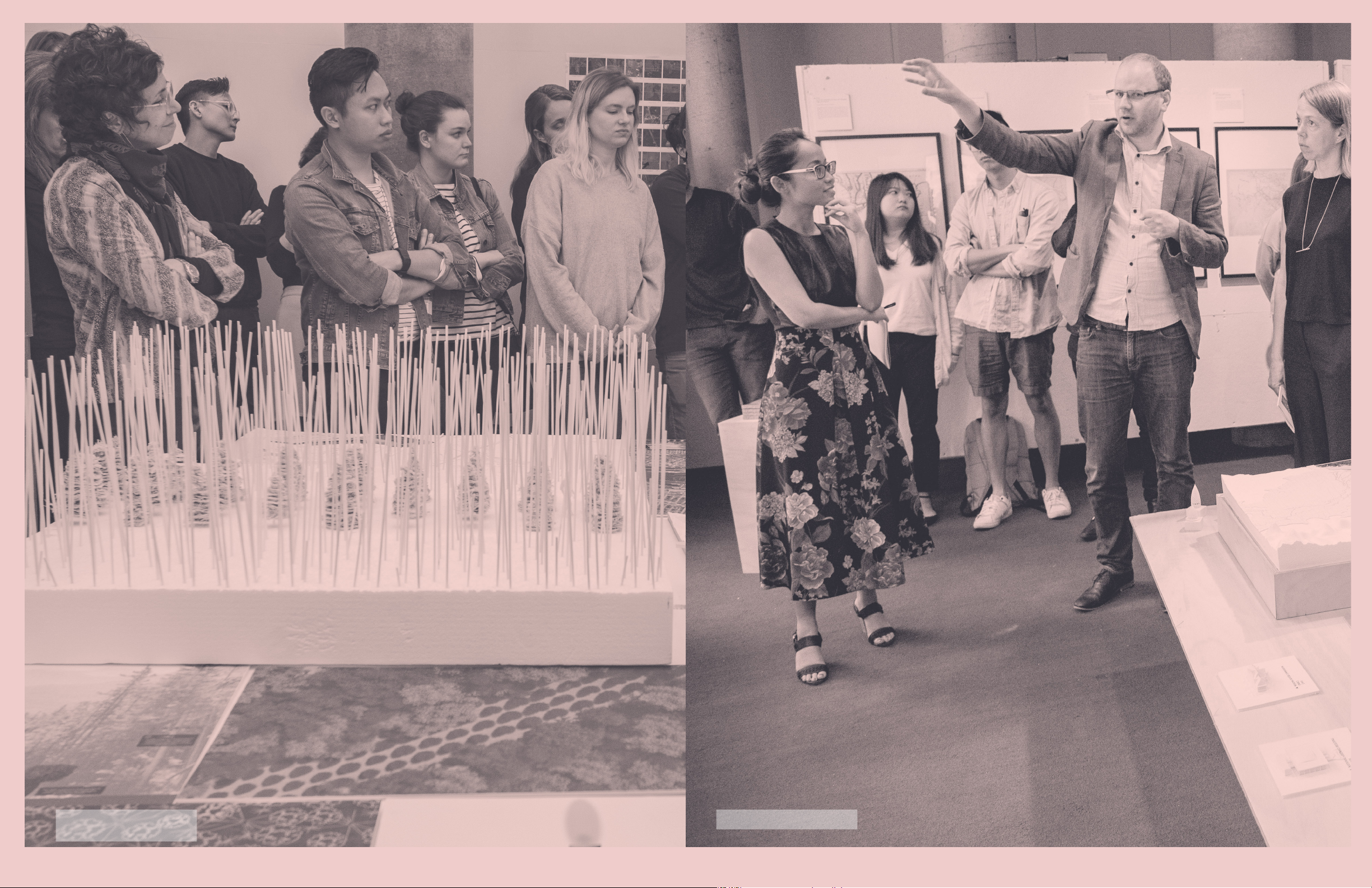
photo courtesy Sonny Xu
110 111
MLA / Department of Landscape Architecture Manual
photo courtesy Tami Banh Anita Kan
Page 57

“Interdisciplinarity is not the calm of an easy security; it begins effectively . . . when the solidarity of the old disciplines breaks down—perhaps even violently, via the jolts of fashion—in the interests of a new object and a new language.”
—Roland Barthes, 1971
112 113
MLA / Department of Landscape Architecture Manual
Page 58

ADV 9342 Design Thesis
SPRING 2021
Schedules TBC with individual primary thesis advisors
Seok Min Yeo, TA Charles Waldheim
114 115
MLA / Department of Landscape Architecture Manual
Page 59

Spring 2021
Schedule
25 JANUARY
Preliminary
Design Thesis
Reviews
10:00-18:00 EST
22 FEBRUARY
One Quarter
Check-In
Meeting
12:00-13:00 EST
22 MARCH
Midterm
Design Thesis
Reviews
08:30-18:00 EDT
19 APRIL
Three Quarter
Check-In
Meeting
12:00-13:00 EDT
11-14 MAY
Final
Design Thesis
Reviews
09:00-18:00 EDT
116 117
MLA / Department of Landscape Architecture Manual
Page 60
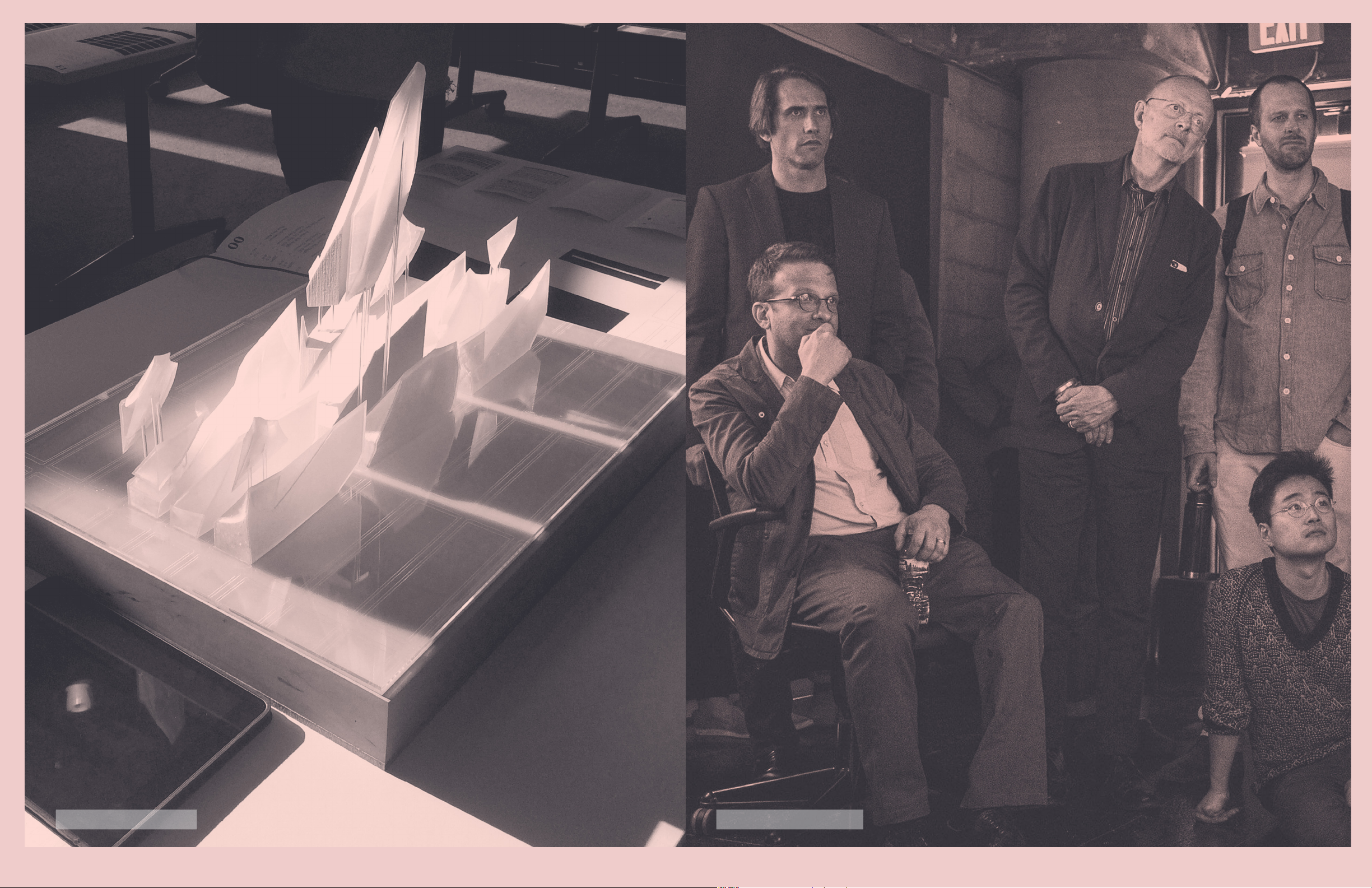
photo courtesy Seok Min Yeo photo courtesy Hannah Gaengler
118 119
MLA / Department of Landscape Architecture Manual
Page 61

Recent
Selected MLA Thesis Projects
2016-17
Precedents
Lex Agnew, “God from the Island” (Francesca Benedetto)
Rawan Alsaffar, “Oil and Salt” (Robert Pietrusko)
Tiffany Dang, “Bewildered in Banff” (Pierre Belanger)
Hannah Gaengler, “Rigged New World”
Kent Hipp, “Coastal Retreat” (Gary Hilderbrand)
Alexandra Mei, “Accessing the Past” (Robert Pietrusko) *
Chris Reznich, “Solar Frameworks” (Charles Waldheim)
Jonah Susskind, “Forward from Woodward” (Fionn Byrne)
Carlo Urmy, “Dry Bones” (Fionn Byrne)
David Zielnicki, “Gradually, Fiercely” (Sergio Lopez-Pineiro)
2017-18
Tami Banh, “Water Assemblage” (Robert Pietrusko)
William Baumgardner, “Tirana Freescape” (Anita Berrizbeitia)
Emily Drury, “How to do Things with Plants” (Silvia Benedito)
Ernest Haines, “Turnpike Metabolism” (Robert Pietrusko) *
Annie Liang, “Knowledge Grounds” (Robert Pietrusko)
Alison Malouf, “Ghostworlds” (Silvia Benedito)
Greta Ruedisueli, “L’Enfant’s Leftovers” (Jill Desimini)
Rhea Shah, “Decolonizing the Forest” (Dilip daCunha)
Sonny Meng Qi Xu, “Borderhood” (Sergio Lopez-Pineiro)
Min Yeo, “Wild” (Craig Douglas) *
2018-19
Isabel Brostella, “The Multiplicity of a Line,” (Montserrat Bonvehi)
Sarah Diamond, “Her Home,” (Emily Wettstein)
Mark Heller, “No Service,” (Robert Pietrusko)
Emily Hicks and Melody Stein, “Wild Rice Waters” (Rosetta Elkin) *
Ting Liang, “People’s Agri-topia,” (Sergio Lopez-Pineiro)
Danica Liongson, “Eulogy for the Olive,” (Montserrat Bonvehi)
Ann Lynch, “Inveterate Scars,” (Danielle Choi)
Isabel Preciado, “Airscapes,” (Danielle Choi)
Isaac Stein and Maggie Tsang, “Lines in the Sand,” (Rosetta Elkin)
Joshua Stevens, “The Tropical Arboretum of Vegetal Dwelling,” (Rosalea Monacella)
* MLA thesis prize
120 121
MLA / Department of Landscape Architecture Manual
Page 62

2019-20
Michael Ahn, “A Benthic Agriculture” (Montserrat Bonvehi)
Yoni Angelo Carnice, “Vulgar” (Alex Wall)
Camila Huber Horta Barbosa, “High-Low” (Pablo Perez-Ramos)
Chelsea Kilburn, “That Sinking Feeling” (Danielle Choi) *
Andy Lee, “INTERIOR” (Robert Pietrusko)
Zhaodi Wang, “Mutual Dependence” (Craig Douglas)
Carson Fisk-Vittori, “SHIFTING KIND” (Emily Wettstein)
Benjamin Hackenberger, “The Collective Garden” (Rosalea Monacella)
Andreea Vasile Hoxha, “After Plastics” (Rosalea Monacella)
Colin Chadderton, “Reveal | Transform | Respond” (Craig Douglas)
* MLA thesis prize
122 123
MLA / Department of Landscape Architecture Manual
Page 63

On Thesis
General
Readings
Geoff Dyer, Out of Sheer Rage: Wrestling with D.H. Lawrence (New York: Picador, 1997) 1-28.
Umberto Eco, “The Definition and Purpose of the Thesis,” How to Write a Thesis (1977), trans. Caterina
Mongiat Farina and Geoff Farina (MIT Press, 2015), 1-8.
Verlyn Klinkenborg, Several Short Sentences About Writing (New York: Vintage, 2013) 1-38.
Additional resources:
The Chicago Manual of Style, 17th edition (Chicago: University of Chicago Press, 2017).
Steven Pinker, The Sense of Style: The Thinking Person’s Guide to Writing in the 21st Century (New
York: Penguin Books, 2014).
Willian Strunk, Jr. and E. B. White, The Elements of Style, 4th edition (New York: Pearson, 2000).
Virginia Tufte, Artful Sentences: Syntax as Style (Cheshire, CT: Graphics Press, 2006).
On Design
Bruno Latour, “A Cautious Prometheus? A Few Steps Toward a Philosophy of Design (with Special Attention to Peter Sloterdijk),” keynote lecture for the Networks of Design meeting of the Design History Society (September, 2008), 1-13.
Beatriz Colomina and Mark Wigley, “The Mirror of Design,” Are We Human? Notes on an Archaeology of Design (Zurich: Lars Muller Publishers, 2017), 9-23.
Charles Waldheim, “On Design and the Ends of Architecture,” LA+ Journal, no. 5, Identity (Spring
2017): 118-121.
Additional resources:
Jacques Bertin, Semiology of Graphics: Diagrams, Networks, Maps (1967) facsimile edition, trans. William J. Berg (Redlands, CA: Esri Press, 1983).
Jill Desimini and Charles Waldheim, Cartographic Grounds: Projecting the Landscape Imaginary (New York: Princeton Architectural Press, 2016).
Arthur R. Robinson, The Look of Maps (1952) facsimile edition (Redlands, CA: Esri Press, 2010).
Edward Tufte, The Visual Display of Quantitative Information (Cheshire, CT: Graphics Press, 1982,
2001); Envisioning Information (Cheshire, CT: Graphics Press, 1990); and Visual Explanations: Images
and Quantities, Evidence and Narrative (Cheshire, CT: Graphics Press, 1997).
124 125
MLA / Department of Landscape Architecture Manual
Page 64

Word + Image
Roland Barthes, “The Photographic Message,” and “The Rhetoric of the Image,” Image Music Text, trans. Stephen Heath (New York: Hill and Wang, 1977), 15-31, 32-51.
John Berger, “Chapter 1,” Ways of Seeing (London: Penguin Books, 1977), 7-34.
Susan Sontag, “Against Interpretation,” and “On Style,” Against Interpretation and Other Essays (1961)
reprinted (New York: Picador, 2001). 3-14, 15-36.
Additional resources:
Roland Barthes, Camera Lucida: Reflections on Photography, trans. (New York: Hill and Wang, 2010).
John Berger, About Looking (1980) reprinted (New York: Vintage Edition, 1991).
Geoff Dyer, “Foreword,” Roland Barthes, Camera Lucida: Reflections on Photography, trans. Richard
Howard (New York: Hill and Wang, 2010), ix-xix.
Susan Sontag, On Photography (1973) reprinted (New York: Picador, 1990).
Design Thesis
Carole Gray and Julian Malins, “Locating Your Position: Orienting and Situating Research,” Visualizing Research: A Guide to the Research Process in Art and Design (Ashgate, 2004), 66–92.
Sergio Lopez-Pineiro, “How to do a Thesis: Practice Models as Instigators for Academic Theses,” paper presented at the 2010 Association of Collegiate Schools of Architecture (ACSA) Annual Meeting in New Orleans (March 7, 2010), n.p.
David Salomon, “Experimental Cultures: On the ‘End’ of the Design Thesis and the Rise of the Research Studio,” Journal of Architectural Education, vol. 65, no. 1 (October 2011): 33-44.
Sarah Whiting, “Welcome to the Banquet (or, How to Increase the Relative Happiness of the M.Arch.
Thesis Student),” Robert Gutman, Architecture from the Outside In: Selected Essays by Robert
Gutman, ed. Dana Cuff and John Wriedt (New York: Princeton Architectural Press, 2010), 313-317.
Design Research
Elen Deming and Simon Swaffield, “Introduction,” and “Knowing Landscape Architecture,” Landscape
Architectural Research: Inquiry, Strategy, Design (John Wiley & Sons, 2011), 1-16, 17-29.
Rem Koolhaas, editor, “The Ultimate Atlas for the 21st Century,” Wired (June 2003): 132-169.
Massimo Negrotti, “Introduction,” “The Place of the Artificial,” The Theory of the Artificial: Virtual
Replications and the Revenge of Reality (Intellect Books, 1999), 1-7, 8-39.
Herbert Simon, “Understanding the Natural and Artificial Worlds,” “The Science of Design: Creating
the Artificial,” (1969) The Sciences of the Artificial (MIT Press, 1996), 1-24, 111-138.
126 127
MLA / Department of Landscape Architecture Manual
Page 65

Design Projection
Nigel Cross, “Designerly Ways of Knowing,” “Natural and Artificial Intelligence in Design,” Designerly
Ways of Knowing (Springer, 2006), 1-14, 29-42.
Elen Deming and Simon Swaffield, “Projective Design,” Landscape Architectural Research: Inquiry,
Strategy, Design (John Wiley & Sons, 2011), 205-222.
Peter Rowe, “Part 2: Procedural Aspects of Design Thinking,” Design Thinking (MIT Press, 1987), 39-
114.
Massimo Scolari, “Chapter 3: Oblique Drawing,” and “Chapter 4: The Idea of Model,” Oblique Drawing: A History of Anti-Perspective (Cambridge: MIT Press, 2012), 47-135, 137-183.
Design Contexts
Luis Callejas, “Islands and Atolls,” Pamphlet Architecture, no. 33 (New York: Princeton Architectural Press, 2013).
John Dixon Hunt, “Reading and Writing the Site,” (1992) Theory in Landscape Architecture: A Reader,
ed. Simon Swaffield (University of Pennsylvania, 2002), 131-135.
Miwon Kwon, “One Place After Another: Notes on Site Specificity,” October, no. 80 (Spring 1997),
85–110.
Lola Sheppard and Mason White/Lateral Office, “The (New) idea of North(s),” “Urbanism Timeline,”
and “Urbanism Below Zero,” Many Norths: Spatial Practice in a Polar Territory (New York: Actar, 2017),
4-19, 20-25, 26-41.
Design Drivers
Neeraj Bhatia, “New Investigations in Collective Form,” New Investigations in Collective Form: The Open Workshop (New York: Actar, 2019), 24-33.
Rania Ghosn and El Hadi Jazairy, “Another Architecture for the Environment” and “After Oil,” Geostories: Another Architecture for the Environment (New York: Actar, 2020), 10-27, 28-41.
Elizabeth Meyer, “The Public Park as Avant-Garde (Landscape) Architecture: A Comparative
Interpretation of Two Parisian Parks, Parc de la Villette (1983-1990) and Parc des Buttes-Chaumont
(1864-1867),” Landscape Journal, vol. 10, no. 1 (Spring 1991): 16-26.
Lola Sheppard and Mason White/Lateral Office, “Coupling: Strategies for Infrastructural
Opportunism,” Pamphlet Architecture, no. 28 (New York: Princeton Architectural Press, 2011).
128 129
MLA / Department of Landscape Architecture Manual
Page 66

Design Methods
Pierre Belanger, “Going Live: From States to Systems,” Pamphlet Architecture, no. 35 (New York: Princeton Architectural Press, 2015).
Bradley Cantrell and Adam Mekies, “Coding Landscape,” Codify: Parametric and Computational design in Landscape Architecture, ed. Adam Mekies and Bradley Cantrell (Milton: Routledge, 2018), 5-33.
Dorothee Imbert, “Conversations with Michel Desvigne,” A Landscape Inventory: Michel Desvigne Paysagiste (Columbus, OH: Knowlton School and Applied Research + Design Publishing, 2018), 19-69.
Alex Lehnerer, “The City of Averuni and Its Code,” Grand Urban Rules (Rotterdam: nai010 Publishers,
2013), 9-55.
Design Media
John McMorrough, “Introduction: In Media Res,” and “Mediums,” Kelly Bair, Kristy Balliet, Adam Fure, Kyle Miller, Possible Mediums (New York: Actar, 2018), 21-28, 29-36.
Karen M’Closkey and Keith VanDerSys, “Introduction,” Dynamic Patterns: Visualizing Landscapes in a Digital Age (London: Routledge, 2017), 1-38.
Charles Waldheim, “Foreword: Ecologies, Plural and Projective,” Chris Reed and Nina-Marie Lister,
“Introduction: Ecological Thinking, Design Practices,” “Parallel Genealogies,” Projective Ecologies, ed.
Reed and Lister, (Barcelona: Actar, 2014), 6-9, 14-21, 22-39.
Charles Waldheim and Andrea Hansen, “Introduction: Photomontage and Landscape Architecture,”
and Karen M’Closkey, “Structuring Relations: From Montage to Model in Composite Imaging,”
Composite Landscapes: Photomontage and Landscape Architecture, ed. Waldheim and Hansen
(Berlin: Hatje Cantz, 2014), 14-23, 116-131.
130 131
MLA / Department of Landscape Architecture Manual
Page 67

Bibliography
Josef Albers, Interaction of Color, (1963) fiftieth anniversary edition (New Haven: Yale University Press,
2013).
Arup, Drivers of Change (Barcelona: Gustavo Gili, 2006).
a+t, 50 Urban Blocks (Bilbao: a+t publishers, 2017).
Hilary Ballon, “The Commissioners’ Plan of 1811,” and “Surveying the Streets,” The Greatest Grid:
The Master Plan of Manhattan, 1811-2011 (New York: Museum of the City of New York and Columbia
University Press, 2012), 27-55, 57-71.
Roland Barthes, Image Music Text (New York: Hill and Wang, 1977).
______________, Camera Lucida: Reflections on Photography (New York: Hill and Wang, 2010).
Pierre Belanger, “Going Live: From States to Systems,” Pamphlet Architecture, no. 35 (New York:
Princeton Architectural Press, 2015).
John Berger, Ways of Seeing (London: Penguin Books, 1977).
___________, About Looking (1980) reprinted (New York: Vintage Edition, 1991).
Jacques Bertin, Semiology of Graphics: Diagrams, Networks, Maps, trans. William J. Berg (Redlands,
CA: Esri Press, 1983).
Neeraj Bhatia, “New Investigations in Collective Form,” New Investigations in Collective Form: The
Open Workshop (New York: Actar, 2019), 24-33.
Luis Callejas, “Islands and Atolls,” Pamphlet Architecture, no. 33 (New York: Princeton Architectural
Press, 2013).
Bradley Cantrell and Adam Mekies, editors, Codify: Parametric and Computational Design in
Landscape Architecture (Milton: Routledge, 2018).
Eva Castro, José Alfredo Ramírez, and Eduardo Rico, “The Grounds of a Renewed Practice:
Groundlab’s Approach Towards Landscape and Infrastructure,” Architectural Design, vol. 83, no. 4
(2013): 78-85.
The Chicago Manual of Style, 17th edition (Chicago: University of Chicago Press, 2017).
Beatriz Colomina and Mark Wigley, Are We Human? Notes on an Archaeology of Design (Zurich: Lars
Muller Publishers, 2017).
Color Aid Swatches (Hudson Falls, New York: Color Aid Corp., 1948).
Nigel Cross, Designerly Ways of Knowing (Springer, 2006).
Elen Deming and Simon Swaffield, Landscape Architectural Research: Inquiry, Strategy, Design (John Wiley & Sons, 2011).
132 133
MLA / Department of Landscape Architecture Manual
Page 68

T.J. Demos, Against the Anthropocene: Visual Culture and Environment Today (Berlin: Sternberg Press,
2017.
Jill Desimini and Charles Waldheim, Cartographic Grounds: Projecting the Landscape Imaginary (New York: Princeton Architectural Press, 2016).
Geoff Dyer, Out of Sheer Rage: Wrestling with D.H. Lawrence (New York: Picador, 1997).
__________, “Foreword,” Roland Barthes, Camera Lucida: Reflections on Photography, trans. Richard
Howard (New York: Hill and Wang, 2010), ix-xix.
Charles and Ray Eames, House of Cards (Venice, California: Eames Office, 1952).
Umberto Eco, How to Write a Thesis (1977), trans. Caterina Mongiat Farina and Geoff Farina (MIT
Press, 2015).
Rosetta Sarah Elkin, Tiny Taxonomy (New York: Actar, 2017).
Brian Eno and Peter Schmidt, Oblique Strategies (London: Eno & Schmidt, 1975).
Teresa Gali-Izard, Los Mismos Paisajes: Ideas E Interpretaciones/The Same Landscapes: Ideas and
Interpretations (Barcelona: Editorial Gustavo Gili, 2005).
Ken Garland and Robert Chapman, Connect (New York: James Galt, 1969).
Rania Ghosn and El Hadi Jazairy, Geostories: Another Architecture for the Environment (New York:
Actar, 2020).
Carole Gray and Julian Malins, “Locating Your Position: Orienting and Situating Research,” Visualizing
Research: A Guide to the Research Process in Art and Design (Ashgate, 2004), 66–92.
Katharine Harmon, The Map as Art: Contemporary Artists Explore Cartography (New York: Princeton
Architectural Press, 2009).
John Dixon Hunt, “Reading and Writing the Site,” (1992) Theory in Landscape Architecture: A Reader,
ed. Simon Swaffield (University of Pennsylvania, 2002), 131-135.
IDEO, Method Cards (San Francisco: William Stout, 2003).
Dorothee Imbert, “Conversations with Michel Desvigne,” A Landscape Inventory: Michel Desvigne
Paysagiste (Columbus, OH: Knowlton School and Applied Research + Design Publishing, 2018), 19-69.
Cannon B. Ivers, “The Rise of Flexible Space” and “The Culture of Change: A Personal Reading,”
Staging Urban Landscapes: The Activation and Curation of Flexible Public Spaces (London: Routledge,
2018), 10-19, 20-37.
Verlyn Klinkenborg, Several Short Sentences About Writing (New York: Vintage Books, 2012).
Rem Koolhaas, editor, Wired (June 2003).
134 135
MLA / Department of Landscape Architecture Manual
Page 69

Miwon Kwon, “One Place After Another: Notes on Site Specificity,” October, no. 80 (Spring 1997),
85–110.
Bruno Latour, “A Cautious Prometheus? A Few Steps Toward a Philosophy of Design (with Special Attention to Peter Sloterdijk),” keynote lecture for the Networks of Design meeting of the Design History Society (September, 2008), 1-13.
Alex Lehnerer, Grand Urban Rules (Rotterdam: nai010 Publishers, 2013).
Manuel Lima, Visual Complexity: Mapping Patterns of Information (New York: Princeton Architectural
Press, 2011).
Sergio Lopez-Pineiro, “How to do a Thesis: Practice Models as Instigators for Academic Theses,” paper
presented at the 2010 Association of Collegiate Schools of Architecture (ACSA) Annual Meeting in New
Orleans (March 7, 2010), n.p.
John May, Signal. Image. Architecture. (Everything is Already an Image) Columbia Books on
Architecture and the City (New York: Columbia GSAPP, 2020).
Karen M’Closkey and Keith VanDerSys, Dynamic Patterns: Visualizing Landscapes in a Digital Age (London: Routledge, 2017).
Marshall McLuhan, Distant Early Warning (Toronto: McLuhan, 1969).
John McMorrough, “Introduction: In Media Res,” and “Mediums,” Kelly Bair, Kristy Balliet, Adam Fure,
Kyle Miller, Possible Mediums (New York: Actar, 2018), 21-28, 29-36.
Elizabeth Meyer, “The Public Park as Avant-Garde (Landscape) Architecture: A Comparative
Interpretation of Two Parisian Parks, Parc de la Villette (1983-1990) and Parc des Buttes-Chaumont
(1864-1867),” Landscape Journal, vol. 10, no. 1 (Spring 1991): 16-26.
Massimo Negrotti, The Theory of the Artificial: Virtual Replications and the Revenge of Reality (Intellect
Books, 1999).
Steven Pinker, The Sense of Style: The Thinking Person’s Guide to Writing in the 21st Century (New
York: Penguin Books, 2014).
Chris Raschka, Circus Mixies (New York: eeBoo Corp., 2003).
Chris Reed and Nina-Marie Lister, editors, Projective Ecologies (Barcelona: Actar, 2014).
Arthur R. Robinson, The Look of Maps (1952) facsimile edition (Redlands, CA: Esri Press, 2010).
Daniel Rosenberg and Anthony Grafton, Cartographies of Time: A History of the Timeline (New York:
Princeton University Press, 2010).
Peter Rowe, Design Thinking (MIT Press, 1987).
David Salomon, “Experimental Cultures: On the ‘End’ of the Design Thesis and the Rise of the Research
Studio,” Journal of Architectural Education, vol. 65, no. 1 (October 2011): 33-44.
136 137
MLA / Department of Landscape Architecture Manual
Page 70

Massimo Scolari, Oblique Drawing: A History of Anti-Perspective (Cambridge: MIT Press, 2012).
Lola Sheppard and Mason White/Lateral Office, “Coupling: Strategies for Infrastructural
Opportunism,” Pamphlet Architecture, no. 28 (New York: Princeton Architectural Press, 2011).
_________________________, Many Norths: Spatial Practice in a Polar Territory (New York: Actar, 2017).
Herbert Simon, The Sciences of the Artificial (MIT Press, 1996).
Susan Sontag, Against Interpretation and Other Essays (1961) reprinted (New York: Picador, 2001).
____________, On Photography (1973) reprinted (New York: Picador, 1990).
Willian Strunk, Jr. and E. B. White, The Elements of Style, 4th edition (New York: Pearson, 2000).
Edward Tufte, The Visual Display of Quantitative Information (Cheshire, CT: Graphics Press, 1982,
2001).
____________, Envisioning Information (Cheshire, CT: Graphics Press, 1990).
____________, Visual Explanations: Images and Quantities, Evidence and Narrative (Cheshire, CT:
Graphics Press, 1997).
Virginia Tufte, Artful Sentences: Syntax as Style (Cheshire, CT: Graphics Press, 2006).
Gunther Vogt and Alice Foxley, “Foreword: Between Search and Research” and “Introduction: The Way
We Work,” Distance & Engagement: Walking, Thinking, and Making Landscape (Zurich: Lars Muller
Publishers, 2010), 7-23, 25-33.
Charles Waldheim and Andrea Hansen, editors, Composite Landscapes: Photomontage and
Landscape Architecture (Berlin: Hatje Cantz, 2014).
Charles Waldheim, “Foreword: Ecologies, Plural and Projective,” Projective Ecologies, ed. Reed and
Lister, (Barcelona: Actar, 2014), 6-9.
________________, “On Design and the Ends of Architecture,” LA+ Journal, no. 5, Identity (Spring
2017): 118-121.
Sarah Whiting, “Welcome to the Banquet (or, How to Increase the Relative Happiness of the M.Arch. Thesis Student),” Architecture from the Outside In: Selected Essays by Robert Gutman (New York: Princeton Architectural Press, 2013), 313-317.
Jane Wolff, Delta Primer Playing Cards (San Francisco: William Stout, 2003); and Jane Wolff, Delta
Primer: A Field Guide to the California Delta (San Francisco: William Stout Publishers, 2003).
Kongjian Yu, “Creating Deep Forms in Urban Nature: The Peasant’s Approach to Urban Design,” Nature
and Cities: The Ecological Imperative in Urban Design and Planning, ed. Frederick R. Steiner, et al.
(Cambridge, Mass.: Lincoln Institute of Land Policy and George F. Thompson Publishing, 2016), 95-
117.
138 139
MLA / Department of Landscape Architecture Manual
Page 71

Resources
Chicago Manual of Style
http://www.chicagomanualofstyle.org.ezp-prod1.hul.harvard.edu
GSD Design Research Resources
http://guides.library.harvard.edu/gsd/databases#s-lg-box-6335467
GSD Research Support Services
http://www.gsd.harvard.edu/frances-loeb-library/resources-services/research-support-services/
GSD Write and Cite
http://guides.library.harvard.edu/gsd/write
The course is evaluated on a standard GSD pass/fail system. Course requirements include ten weekly
response assignments (5% each or 50% total); two interim reviews (12.5% each or 25% total) and a final
term review (25%).
140 141
MLA / Department of Landscape Architecture Manual
Page 72

Learning Objectives
and Outcomes
Upon successful completion of the course, students
should be able to . . .
. . . describe, develop, and defend an original design
thesis in landscape architecture;
. . . identify, interpret, and analyze a thematic topic
or subject of their design research;
. . . propose, program, and perform a specific
landscape design project; as well as
. . . assess, articulate, advocate for the relevance
and reception of their work in the discipline.
Through reading of the weekly course readings,
students will be able to recognize and rehearse a
range of positions found in the literature across
topics and associated with the making of original
design research projects in landscape architecture.
Through participation in the weekly discussion
sections, students will be able to survey and
summarize a range of perennial topics relevant to
the making of an original design research project in
landscape architecture.
Through comprehension of the weekly class
lectures, students will be able to compare and
contrast the subject and specific aspects of various
design project precedents as they relate to the
formulation of their own individual design thesis
projects.
Through completion of the weekly assignments,
students will be able to conceive and communicate
the various constituent elements informing the
design research, precedent study, and disciplinary
contribution of their own individual design thesis
projects.
Through the development and presentation of their
design thesis proposal, students will be able to
recruit and retain a suitable faculty thesis advisor
and to develop and defend those design thesis
projects through peer review evaluation.
142 143
MLA / Department of Landscape Architecture Manual
Page 73

Requirements
All weekly assignments and review presentations
should be uploaded as PDF to canvas site by
midnight Sunday the day prior to the class meeting/
review.
Work submitted weekly will be evaluated by four
equally weighted terms of evaluation:
1. Representation: demonstrating a clear argument
visually as well as verbally;
2. Research: showing consistent inquiry and
engagement with the topic throughout the
semester;
3. Proposal: the potential of the project as an
intervention in the world and a contribution to the
field; and
4. Proposition: the intellectual and cultural
arguments supporting your project.
Students are expected to be familiar with and abide
by the school’s standards for academic honesty
and conduct. Cheating, plagiarism, unauthorized
collaboration or paid assistance, deliberate
interference with the integrity of the work of others,
fabrication or falsication of data, and other forms
of academic dishonesty are considered serious
oenses for which disciplinary penalties will be
imposed. A work is understood as the original
expression of an author; a copy of the work is a
physical manifestation of the expression. Copies
of work submitted by a student in satisfaction
of admission, course, or degree requirements,
such as papers, drawings, models, digital images
and other materials, become the property of the
school. The GSD may use such copies for GSD
non-commercial, academic or research purposes
such as in exhibitions of GSD student work, GSD
publications, reports to sponsors of studios and
other forms of GSD outreach, provided that each
student must be appropriately credited as the
creator of the student’s work. Any other use of
student work, for example, by faculty in their own
publications, requires the written consent of each
student contributor, in addition to appropriate
credit. The school, faculty, and sta assume no
responsibility for the physical safeguarding of such
copies of student work and may, at their discretion,
retain such copies, return them to their creators, or
discard them.
144 145
MLA / Department of Landscape Architecture Manual
Page 74

Charles Waldheim
Contact Information
John E. Irving Professor of Landscape Architecture
Director of the Office for Urbanization
Charles Waldheim is an American-Canadian architect
and urbanist. Waldheim’s research examines
the relations between landscape, ecology, and
contemporary urbanism. He is author, editor, or
co-editor of numerous books on these subjects,
and his writing has been published and translated
internationally. Waldheim is John E. Irving Professor
at Harvard University’s Graduate School of Design
where he directs the School’s Office for Urbanization.
Waldheim is recipient of the Rome Prize Fellowship
from the American Academy in Rome; the Visiting
Scholar Research Fellowship at the Study Centre of the
Canadian Centre for Architecture; the Cullinan Chair
at Rice University; and the Sanders Fellowship at the
University of Michigan.
617-496-0315
#302 7 Sumner
office hours Wednesdays 15:00-17:00 EDT/EST;
by appointment at [email protected]
This course is the joint copyright of The President and Overseers of Harvard College and the
Instructor of Record. No reproduction of any part of this course in any form is allowed without
the express permission of the Instructor of Record. September 2020.
146 147
MLA / Department of Landscape Architecture Manual
Page 75
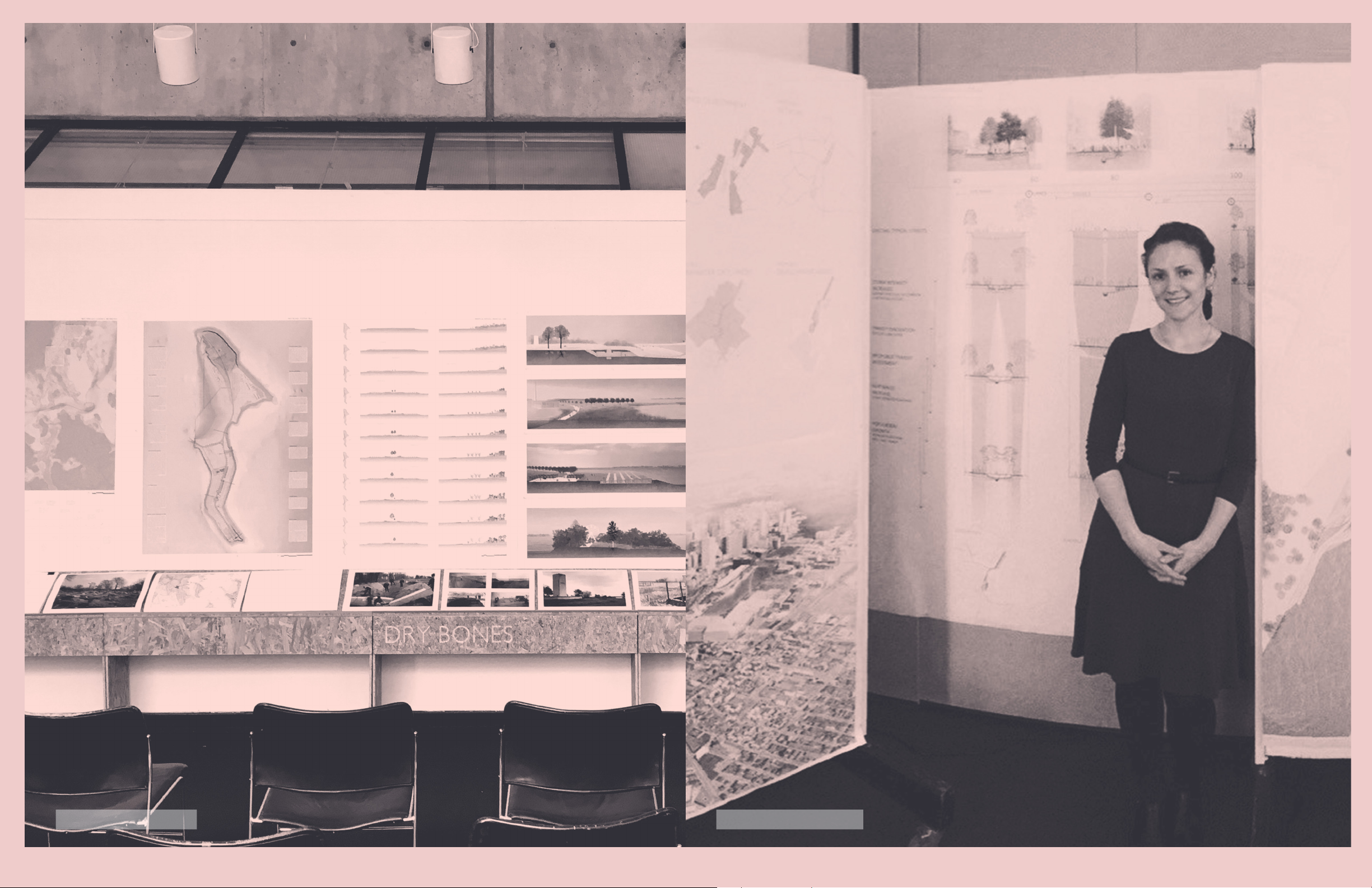
..
..
•
0
~
~
.
Ph. courtesy of photo courtesy Kira Sargent
148 149
Carlo Urmyphoto courtesy Carlo Urmy
MLA / Department of Landscape Architecture Manual
Page 76

Notes
150 151
MLA / Department of Landscape Architecture Manual
Page 77

152 153
MLA / Department of Landscape Architecture Manual
Page 78

154 155
MLA / Department of Landscape Architecture Manual
Page 79

MLA Thesis Manual
2020/2021
ADV 9341
Preparation of MLA Design Thesis
ADV 9342
MLA Design Thesis
DEPARTMENT OF LANDSCAPE ARCHITECTURE HARVARD UNIVERSITY GRADUATE SCHOOL OF DESIGN
Page 80

Anita Berrizbeitia, LA Department Chair Gareth Doherty, MLA Program Director Charles Waldheim, MLA Thesis Director Sarah Hutchinson, MLA Program Coordinator Seok Min Yeo, TA
 Loading...