

Page 1
Line Launch System Installation Instructions
The McLeod Racing Line Launch System will allow you to hold the released clutch at the starting line and
release the clutch when you let pressure off the momentary switch. This system is engineered to operate with
hydraulic clutch linkage only. The purpose of this system is to improve reaction time when drag racing. It is
quicker to release a switch than it is to let your foot off the clutch pedal. The momentary switch included with
this kit is designed to control both the hydraulic throw out bearing/slave cylinder and a Line Lock for the brake
system.
1) Determine a location on the vehicle to mount the Line Launch System. Usually near the master
cylinder for the slave cylinder. The McLeod Line Launch System must be mounted vertically! It cannot
be mounted in a horizontal position! Be sure to leave space for hydraulic lines and electrical
connections. Hard lines or high pressure braided stainless lines are recommended. The Line Launch
system includes AN-4 male fittings.
Page 2
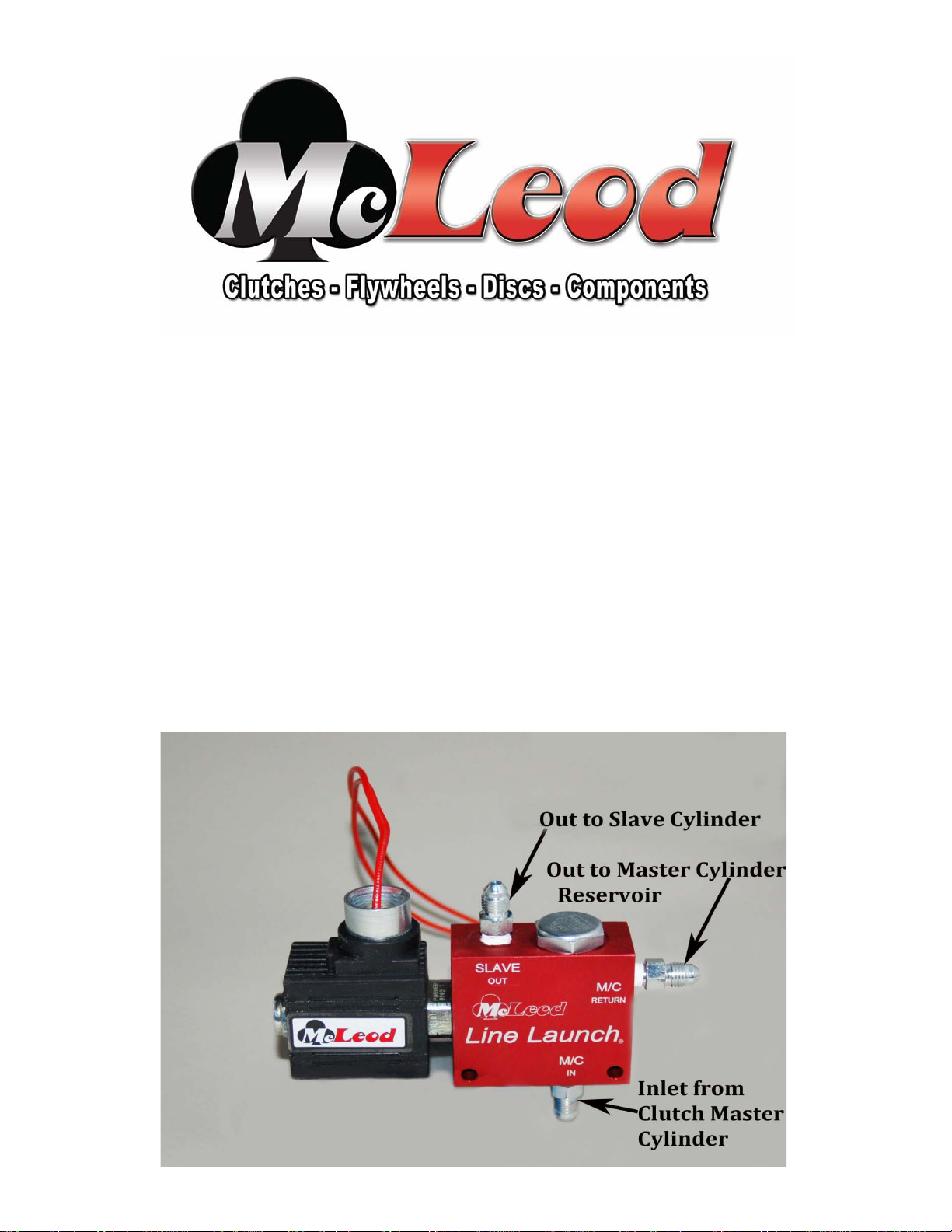
2) Route a line from the clutch master cylinder to the inlet on the Line Launch (M/C IN). Route another
line from the Line Launch (M/C RETURN) to the master cylinder reservoir. Route a line from the (SLAVE
OUT) port to the hydraulic slave cylinder (this may be the existing line). Tighten all fittings, bleed the
system using DOT 3 or 4 fluid and check for leaks. At this point the hydraulic slave cylinder will
function normally.
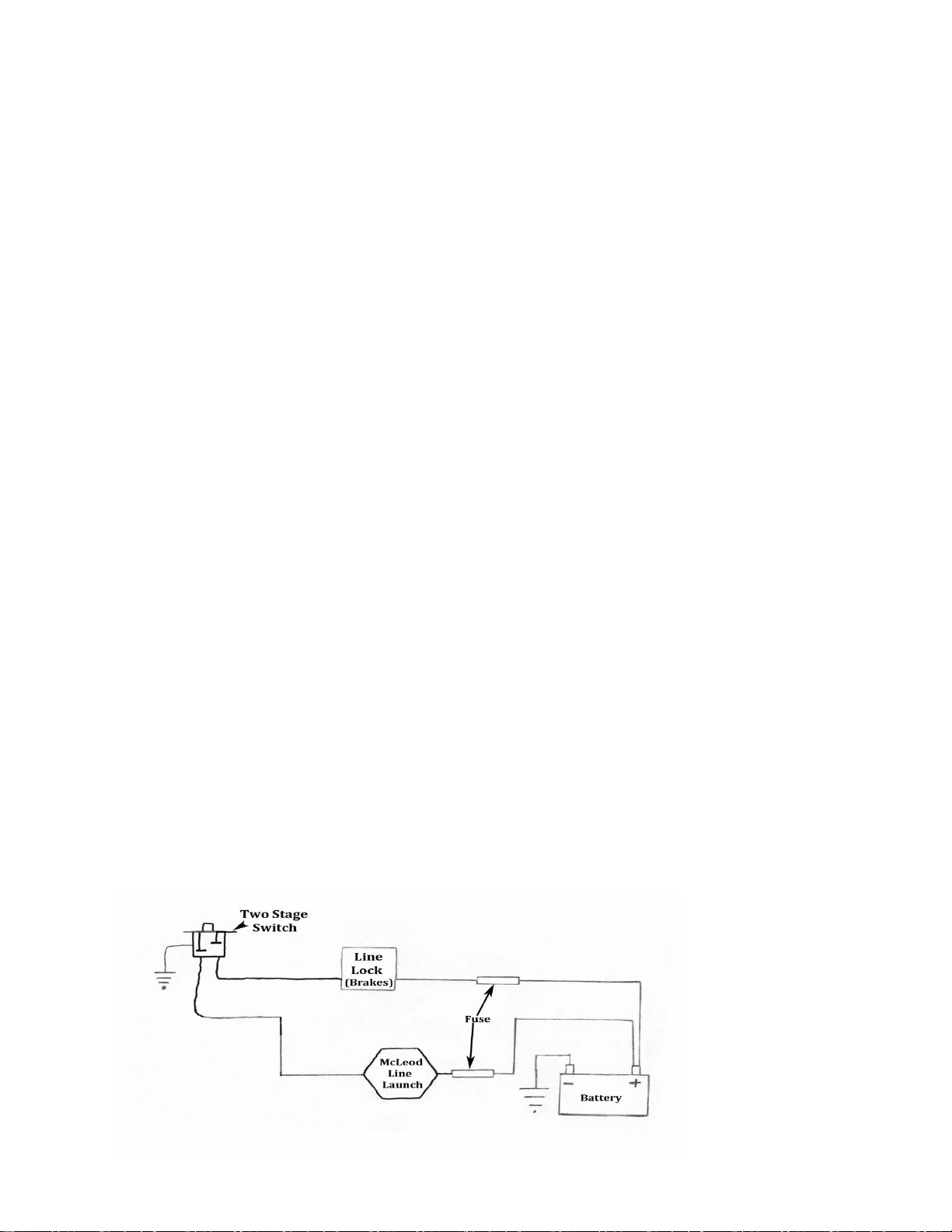
3) Switch wiring is very simple. The switch is a two position momentary switch designed to control both
the Line Launch (Clutch) and a Line Lock (Brakes). Determine a comfortable location for the switch
(Steering wheel or Shifter knob). A 20 amp in-line fuse is recommended to protect the system from
overload or short. 18 AWG wire is recommended for all connections. This wire diagram is intended to
use the switch as a ground source, there will always be power to the solenoids. When the switch is
pressed it will ground the circuit and energize the solenoids. Inspect the switch, you will notice when
you look closely at the switch it contains two micro switches that are activated in a sequence. One
short contact and one long contact. (See Fig 2) The first (short) contact energizes the Line Lock (brake
system), the second (long) contact energizes the McLeod Line Launch (clutch system). When pressing
the switch button the first click you feel energizes the Line Lock circuit, pressing the switch further will
result in a second click. The second click will energize the McLeod Line Launch circuit. Route a wire
(connected to one of the red wires) to the solenoid on the McLeod Line Launch to the positive battery
terminal. Route a wire on the Line Lock (if equipped) to the positive battery terminal. The second wire
on the McLeod Line Launch must be routed to the switch with the long (second) contact. Route an
additional wire from the Line Lock to the switch wire operating the short (first) contact. Route a wire
from the black wire on the switch to a good ground source, not a painted surface! A chassis
component, frame or other uninterrupted ground location is best. Be sure the wires are protected
from heat sources and moving components. Engage the switch and you will hear an audible click from
the Line Launch. You should also hear the Line Lock engage as well.
4) To operate the Line Launch press the clutch pedal and engage the system by pressing the switch
button. Lift your foot off of the clutch pedal and the clutch will remain disengaged. If the clutch begins
to engage before you release the switch button you may have air in the system or a leak. Bleed the
system to be certain there is no air in the lines or throw out bearing assembly. Recheck the clutch master cylinder reservoir to be sure the system has enough fluid to operate properly. With the button
pressed and the clutch released you can immediately engage the clutch by releasing the switch
button. Clutch engagement is immediate and 100% engaged! It is not a slow or timed engagement.
Be ready for the clutch to completely engage.
Figure 2 I0009
 Loading...