

Page 1
LVO Manufacturing, Inc.
FL14 Pan-Washer
Owner’s Manual
Page 2
LVO Manufacturing, Inc.
808 N. 2
Rock Rapids, IA 51246
www.lvomfg.com
(712) 472-3734
__________________________________________________________________________________________________________________________________________________________________
Warranty
LVO Manufacturing Inc. warrants equipment manufactured by it to be free from defects in
material and workmanship for a period of one (1) year from date of delivery except as noted below.
LVO will not be held responsible for damage or unsatisfactory performance due to negligence,
accident, alteration, unauthorized repair, improper installation or startup (see owner’s manual),
improper application, or improper maintenance (see owner’s manual).
Parts found, on factory inspection, to be defective in workmanship or materials during the
warranty period will be replaced (parts and labor, not overtime), provided the Buyer returns the
defective parts to LVO Manufacturing Inc. within 30 days, transportation prepaid. LVO
Manufacturing Inc. will pay UPS 2nd Day Air shipping charges for parts (with the exception of
excessively large or heavy items) covered on warranty if the machine is not operational.
LVO Manufacturing Inc. reserves the right to make changes in design and construction of its
products without imposing any obligation upon itself toward products previously manufactured.
This warranty is in lieu of any other warranties, expressed or implied, made on the part of
LVO Manufacturing Inc. who does not accept responsibility to any purchaser of its products for any
representation or warranty made by dealers or salespersons beyond those herein expressed including
any implied warranties of merchantability or fitness for a particular purpose.
nd
Avenue E., P.O. Box 188
1-800-346-5749 Fax (712) 472-2203
Warranty Procedure
1) Locate and record the 12 digit serial number located on the upper left-hand side of the pan washer.
2) Gather as much information about the problem as possible.
3) Call LVO Manufacturing Inc. at 1-800-346-5749 and request
technical service. Prior to performing any warranty work, you must
call the factory for a warranty authorization number (WA-____). This
warranty authorization number must be on every invoice we receive for
services rendered on the machine. Without this authorization number
the invoice will not be paid. The warranty number must also be
included with the defective part returned.
2
Page 3
LVO Manufacturing, Inc.
808 N. 2
Rock Rapids, IA 51246
www.lvomfg.com
(712) 472-3734
__________________________________________________________________________________________________________________________________________________________________
Table of Contents
Warranty ................................................................................................................................................... 2
Table of Contents ..................................................................................................................................... 3
FL14 Specifications ................................................................................................................................. 4
Electrical Data .......................................................................................................................................... 5
Warnings & Cautions ............................................................................................................................... 6
Introduction .............................................................................................................................................. 7
Installation Instructions ............................................................................................................................ 8
Startup Procedures ................................................................................................................................. 11
Sequence of Operation ........................................................................................................................... 13
Operation of Machine ............................................................................................................................ 14
Preventative Maintenance ...................................................................................................................... 17
Trouble Shooting – Electric Machines ................................................................................................... 18
Trouble Shooting – Gas Machines ......................................................................................................... 19
Trouble Shooting – Steam Machines ..................................................................................................... 19
Trouble Shooting Flowchart .................................................................................................................. 20
Parts List ................................................................................................................................................ 22
Drawings:
(Drawing scales are approximate)
General View ......................................................................................................................................... 26
Four View – Electric .............................................................................................................................. 27
Four View – Gas .................................................................................................................................... 28
Door Weight & Cable Assembly ........................................................................................................... 29
Bun Pan Rack ......................................................................................................................................... 30
Cake Pan Rack ....................................................................................................................................... 31
Hold-Down Rack ................................................................................................................................... 32
Ladder Diagram – Electric ..................................................................................................................... 33
Ladder Diagram – Gas ........................................................................................................................... 34
nd
Avenue E., P.O. Box 188
1-800-346-5749 Fax (712) 472-2203
3
Page 4
LVO Manufacturing, Inc.
808 N. 2
Rock Rapids, IA 51246
www.lvomfg.com
(712) 472-3734
__________________________________________________________________________________________________________________________________________________________________
FL14 Specifications
Overall Dimensions
Width – 36” Depth – 53” (54 ¾” Gas)
Height – 84 ¾” Height with door open – 106”
Door opening – 32” wide x 30” high
Hot Water System
½” hot water supply required, union provided
140°F water required at the machine
78 GPH at 20 PSI (6 ½ gal/cycle x 12 cycle/hr)
Rinse booster: (1) 9 kW heating element in a 9 ½ gallon rinse tank OR
½” steam coil in a 9 ½ gallon rinse tank (Recirculating Steam Only)
Full Load Amps
208 Volt 230 Volt 460 Volt
Electric 79.1 71.5 36.8
Gas/Injected Steam 54.1 48.9 25.5
Recirculating Steam 29.1 26.3 14.2
Gas System (Gas Machines Only)
½” gas supply
Natural: 7” W.C. minimum inlet, 6” W.C. main manifold – 48,000 BTU
Propane: 11” W.C. minimum inlet, 10” W.C. main manifold – 46,000 BTU
3” stainless steel chimney on back of machine
Steam System (Steam Models Only)
¾” steam line, 10-15 PSI 23 lbs/hr average – Injected
43 lbs/hr average – Recirculating
Wash System
10 Hp pump recirculates approximately 180 GPM @ 55 PSI
Heat: Electric – (1) 9 kW heating element
Gas – (2) 24,000 BTU rated infrared burners – 48,000 BTU total
Injected & Recirculating Steam – 10 to 15 PSI, 23 lbs/hr average
40 gallon wash tank
1 ½” copper drain
6” steam exhaust vent companion flange
(Requires PVC, CPVC, or stainless steel field installed duct)
nd
Avenue E., P.O. Box 188
1-800-346-5749 Fax (712) 472-2203
4
Page 5
LVO Manufacturing, Inc.
808 N. 2
Rock Rapids, IA 51246
www.lvomfg.com
(712) 472-3734
__________________________________________________________________________________________________________________________________________________________________
Electrical Data
Electrical Data for models FL14, PT14, FL25, & PT25 – Electric
208 Volt 230 Volt 460 Volt
Pump Motor 27.1 24.3 12.2
Control Circuit 2.0 2.0 2.0
Wash Heater (one 9 kW) 25.0 22.6 11.3
Rinse Heater (one 9 kW) 25.0 22.6 11.3
Total Running Current 79.1 71.5 36.8
Electrical Data for models FL14, PT14, FL25, & PT25 – Gas or Injected Steam
208 Volt 230 Volt 460 Volt
Pump Motor 27.1 24.3 12.2
Control Circuit 2.0 2.0 2.0
Rinse Heater (one 9 kW) 25.0 22.6 11.3
Total Running Current 54.1 48.9 25.5
Electrical Data for models FL14, PT14, FL25, & PT25 – Recirculating Steam
208 Volt 230 Volt 460 Volt
Pump Motor 27.1 24.3 12.2
Control Circuit 2.0 2.0 2.0
Total Running Current 29.1 26.3 14.2
Electrical Supply to the machine should exceed the figures by the amount required by local codes.
Note: Changing the voltage of the machine in the field requires different heating elements. Contact
the factory if this situation arises.
nd
Avenue E., P.O. Box 188
1-800-346-5749 Fax (712) 472-2203
5
Page 6
LVO Manufacturing, Inc.
WARNING: IF YOU SMELL GAS, SHUT OFF THE GAS SUPPLY TO THE
APPLIANCE, EXTINGUISH ANY OPEN FLAME, AND TEST ALL JOINTS WITH A
SOAP SOLUTION. IF ODOR PERSISTS, CALL YOUR GAS SUPPLIER
IMMEDIATELY.
AVERTISSEMENT: SI UNE ODEUR DE GAZ EST DÉCELÉE, COUPER
L’ALIMENTATION EN GAZ DE L’APPAREIL, ÉTEINDRE TOUTES LES FLAMMES
ET VÉRIFIER TOUS LES RACCORDS À L’AIDE D’UNE SOLUTION SAVONNEUSE.
SI L’ODEUR PERSISTE, AVERTIR IMMÉDIATEMENT LE FOURNISSEUR DE GAZ.
FOR YOUR SAFETY: DO NOT STORE OR USE GASOLINE OR OTHER
FLAMMABLE VAPORS OR LIQUIDS IN THE VICINITY OF THIS OR ANY OTHER
APPLIANCE.
808 N. 2
Rock Rapids, IA 51246
www.lvomfg.com
(712) 472-3734
__________________________________________________________________________________________________________________________________________________________________
Warnings & Cautions
General Warnings and Cautions:
1. Service work on the machine should be done by either a factory representative or qualified local
service company. Contact the factory if the machine is under warranty.
2. Failure to follow the cleaning guidelines described in this manual will damage the machine and
will void the warranty.
Gas Model Warnings and Cautions:
1. Installation must conform to local codes and the National Fuel Gas Code, ANSI Z223.1.
In Canada: Installation must be in accordance with CGA Standard CAN/CGA-B149.1, Natural Gas
Installation Code or CAN/CGA-B149.2, Propane Installation Code.
nd
Avenue E., P.O. Box 188
1-800-346-5749 Fax (712) 472-2203
2. Instructions should also be posted in a prominent location describing what to do in the event that
the smell of gas is detected in the vicinity of the machine. (This information can be obtained from
your local gas supplier).
3. Do not obstruct the flow of ventilation and combustion air to the machine.
4. Gas model pan washers are equipped with an electronic ignition that automatically lights the
burners when the power switch is turned to the “ON” position and there is enough water in the
machine. To shut the burners off, the power switch should be turned to the “OFF” position.
6
Page 7
LVO Manufacturing, Inc.
808 N. 2
Rock Rapids, IA 51246
www.lvomfg.com
(712) 472-3734
__________________________________________________________________________________________________________________________________________________________________
Introduction
This manual should be read and understood by everyone involved with the installation and operation
of the pan washer. Keep this manual in a safe place for future reference. Extra copies or replacement
copies can be purchased from the manufacturer.
Service work on the machine should be done by either a factory representative or qualified local
service company. Contact the factory if the machine is under warranty.
The LVO pan washer is designed for use in bakeries, restaurants, schools, hospitals, and hotels, to
clean pots, pans, bowls, and utensils. LVO pan washers are constructed of 14 gauge stainless steel
(cabinets) and 12 gauge stainless steel (framework). The interior piping, rinse system, wash arms, and
screens are stainless steel. Because of its sturdy construction, it will deliver years of powerful,
thorough cleaning.
The machine is equipped with a heating element in the rinse tank to boost the rinse water to a
sanitizing 180°F at the inlet to the machine. A rinse tank heated with recirculated steam is an option
available on some models.
The wash tank on electric models incorporates a 9 kW electric heating element for heating the wash
water. The gas models use a series of (2) 24,000 BTU infrared burners. Steam models use either a
direct injection system or a recirculated steam heating coil.
The pump recirculates wash water at approximately 55 pounds per square inch of pressure.
Each machine is equipped with two safety switches. The first is a low water cut-off, which shuts the
machine off when the water level in the wash tank falls below the required level. The other safety
device is a door switch, which prevents the machine from operating when the door is not completely
closed. An electrical schematic for your machine is posted inside the control box cover.
Detergent Feeders
This machine must be operated with an automatic detergent feeder, which is supplied by the customer,
including a visual means to verify that detergent is delivered or a visual or audible alarm to signal that
detergent is not available for delivery. Power for the feeder can be provided by the pump supply
connection in the control panel. See feeder equipment manual for additional information.
nd
Avenue E., P.O. Box 188
1-800-346-5749 Fax (712) 472-2203
7
Page 8
LVO Manufacturing, Inc.
808 N. 2
Rock Rapids, IA 51246
www.lvomfg.com
(712) 472-3734
__________________________________________________________________________________________________________________________________________________________________
Installation Instructions
Step 1 READ: Read and understand these instructions thoroughly before attempting any part of the
installation process.
WARNING: Not following these instructions may void warranty, cause
damage to the equipment and/or cause injury to anyone involved in the
installation or operation of this machine.
A copy of the installation instructions and start-up procedure is printed on the sheet attached to
the side of the machine. EVERYONE involved with the installation must be familiar with all
aspects of the installation procedure.
Step 2 POSITIONING: The factory recommends leaving as much room as possible around the
machine for future service work. No less than 16” should be allowed along the sides of the
machine (36” for side with control box), and no less than 12” between the rear of the machine
and the wall. Extra room around the machine will facilitate cleaning the washer area.
Step 3 UNCRATING: Leave the machine fully crated until the washer is placed in the location
where it is to be installed. After the washer is uncrated, remove the banding that holds the
door weight stationary on the back of the machine. This will allow the door to open. Inside
you will find the accessories for the machine. Among these will be the fan (if ordered) and the
legs. Remove the machine from the pallet, install the legs, and level the machine. The legs are
adjustable by turning the small end one way or the other.
Step 4 DRAIN: Provisions for the drain should be made next. The pan washer has a copper drain
located as shown on the drawings (see specifications page for drain size). The drain should be
plumbed according to local code. Local ordinance may require a grease trap, vent, and/or a
floor sink. If required, these should be installed before the machine is installed. It is strongly
recommended that unions be used to allow the machine to be easily moved. Failure to do so
may void the warranty.
Step 5 WATER SUPPLY HOOK-UP: The factory recommends 140°F hot water at the machine
(see specifications page for water line size). This may require a dedicated water heater for the
pan washer. If hard water is present, the manufacturer recommends installing a water softener
or calcium filter. Hard water deposits will shorten the life of many of the components on the
pan washer, resulting in higher maintenance costs. Please note that a union is installed at the
point of hook-up (see drawings). This will allow the machine to be moved for service and
cleaning. The customer must furnish a shut-off valve on the supply side of the union. This
8
nd
Avenue E., P.O. Box 188
1-800-346-5749 Fax (712) 472-2203
Page 9
LVO Manufacturing, Inc.
808 N. 2
Rock Rapids, IA 51246
www.lvomfg.com
(712) 472-3734
__________________________________________________________________________________________________________________________________________________________________
shut-off should be easily accessible to the operator of the machine. Additionally, if the
machine is located a long distance from the water main, it may be necessary to supply a larger
line to the machine to insure proper water pressure and flow for the machine to operate
correctly.
Step 6 STEAM VENT: The machine is equipped with a collar for 6” duct work as shown on the
drawings. This duct should be directly vented to the outside of the building. DO NOT vent
into a wall, attic, or any other concealed space of the building, and avoid horizontal runs of
duct.
The factory recommends 6” plastic pipe or stainless steel duct for the vent. If stainless steel is
used, the duct work should be installed with reverse joints so that the condensate inside the
vent can drain back into the machine without leaking, and all seams should be sealed with
silicone sealant.
Generally, the machine will ship with fractional hp inline fan option. This fan should be
mounted and sealed with silicone directly into the two adapters sent with the fan with the side
with the fan blade pointing up, and the adapter into the flange on the top of the machine before
the ductwork is installed. The longer 12” adaptor should be placed between the machine and
the fan, with the shorter 3” adaptor placed into the discharge side of the fan. The fan is
powered from the control circuit. Wire is provided to connect the fan to the two terminals
marked “FAN”
The fan is designed to run at two different speeds. The lower speed is to remove excess steam
from the machine during the wash cycle, which is determined by the speed control located
inside the panel. The speed control should be set so that it just removes any steam coming
from around the door when the machine is running fully loaded. The higher speed is
controlled by a timer and runs at the end of each cycle and when the door to the machine is
open.
Note: Consult the factory before connecting any fan not supplied with the machine.
While the machine is designed to be directly connected to a vent, local or state codes may
require a hood to be installed. Always check the local regulations prior to installing the vent.
Step 7 ELECTRICAL CONNECTIONS: The electrical connection to the machine should be made
by a qualified electrician. All steps should be taken to insure that the supply voltage to the
machine is the same as the rated voltage of the machine. Also, check that sufficient amperage
is supplied to the machine (see specifications page for ratings).
nd
Avenue E., P.O. Box 188
1-800-346-5749 Fax (712) 472-2203
9
Page 10
LVO Manufacturing, Inc.
808 N. 2
Rock Rapids, IA 51246
www.lvomfg.com
(712) 472-3734
__________________________________________________________________________________________________________________________________________________________________
A main power shut-off, supplied by the customer, must be installed near the machine in a
place easily accessible by anyone operating or servicing the machine. The line from the main
shut-off to the machine should be watertight flex conduit. The factory strongly recommends
that a few extra feet be used to allow the machine to be moved if necessary. The wire used to
supply the machine must be heavy enough to carry the amperage load of the machine. The
supply should be run into the back of the machine at the bottom, between the rinse tank and
the side of the machine, and through the back of the control box.
The first connection should be the main ground to the grounding lug at the lower right hand
corner of the control panel. Next, the hook-up can be made to the main power block.
Once the hook-up is complete, the circuit breakers in the control box of the washer must be
checked to make sure they are in the “OFF” position. The main switch on the wall can then be
turned on to power the machine.
Step 8 GAS CONNECTION (Gas Machines Only): A certified gas technician is required for the
hook-up and final adjustments of the burners. This is necessary to insure proper inlet and
manifold pressure for the gas machines (see spec page for gas pressure settings).
Verify the type of gas supply to be used, either natural or LP, and make sure the marking on
the gas data plate agrees with that of the supply. The gas line hook-up must be made with a
union at the location shown on the gas machine drawing (see spec page for gas line size). This
line must have a shut-off valve (supplied by the customer) installed near the machine and
accessible by anyone operating or servicing the machine.
A 3” stainless steel gas chimney runs up the back of the machine. A draft diverter is included
with the machine (shipped inside the machine with the other accessories). The draft diverter
must be installed on top of the factory installed chimney. The Type B gas flue can then be
continued to the outside of the building per local codes.
The initial start-up of the burners should not be done until the start-up procedures for the
machine on the following pages have been completed.
Step 9 STEAM CONNECTION (Steam Machines Only): A steam line is required to supply the
steam injector or recirculated steam heat exchanger coil (see spec page for size of steam line).
A strainer is already built into the machine but a union will be required in the supply line
(supplied by the customer). The specification sheet above lists the rated pressure and average
steam consumption rate for the machine.
nd
Avenue E., P.O. Box 188
1-800-346-5749 Fax (712) 472-2203
10
Page 11
LVO Manufacturing, Inc.
808 N. 2
Rock Rapids, IA 51246
www.lvomfg.com
(712) 472-3734
__________________________________________________________________________________________________________________________________________________________________
Startup Procedures
Warning: These instructions must be followed or damage to the machine will result.
Step 1: Close drain valve. See drawings for location.
Step 2: With the circuit breakers in the control panel of the machine in the “OFF” position and the
main power supply to the machine connected, the ON-OFF switch on the button panel can
be turned to the “ON” position. Then wait approximately 5 seconds for the machine
controller to power up.
Note: The amber power light will not turn on until there is sufficient water in the machine.
Step 3: Fill the machine by pressing the Auto Fill button. The machine will continue to fill for 90
seconds past the point where the low water protection device is energized, turning on the
power light and temperature controllers. The machine is equipped with a low water
protection device and will not run without sufficient water in the wash tank.
Note: The machine has a door switch and will not operate with the door partially open.
Step 4: With the machine full of water and with the door closed, press the start button and let the
machine go through a complete cycle. The timers in the control panel will go through their
sequence, lighting the wash and rinse lights on the front of the machine. The cycle is
complete when the red light goes off and the amber light stays on. The pump will not run at
this time because the pump circuit breaker in the control panel is in the “OFF” position.
Step 5: Repeat Step 4 at least two times or until water can be heard spraying out of the rinse nozzles.
This ensures that the rinse tank is full of water before the heating element is energized.
Step 6: All circuit breakers in the control panel can now be switched to the “ON” position. This will
energize the heating system in the wash and rinse tanks.
Step 7: Check the pump for proper rotation by pressing the start button and observing the wash
pressure gauge on the front of the machine for 5 to 10 seconds. Then press the stop button.
The wash pressure should be 45-60 psi. If the pressure is erratic and only rises to about 20
psi, the pump is running backwards. The pump will also have a noticeable growl when
running backwards. Disconnect power to the machine and reverse the outside two wires that
feed the power block in the control panel. Reconnect power and run the pump again to
confirm that it is operating correctly.
nd
Avenue E., P.O. Box 188
1-800-346-5749 Fax (712) 472-2203
11
Page 12
LVO Manufacturing, Inc.
808 N. 2
Rock Rapids, IA 51246
www.lvomfg.com
(712) 472-3734
__________________________________________________________________________________________________________________________________________________________________
Step 8: With the power on, the wash and rinse heating systems should be checked. The rinse tank
should take 5 to 10 minutes to reach 200°F and the wash should take approximately 40 to 45
minutes to reach 160°F. The times will vary depending on the temperature of the incoming
water. Note: The rinse manifold gauge measures the temperature of the rinse water just
before it enters the machine. Therefore, this temperature reading is only accurate while the
machine is rinsing.
If the machine is not reaching temperature, check to make sure that all the breakers in the
control panel are in the “ON” position. If the wash tank is gas heated, make certain the main
gas valve is open. During initial start-up, gas machines may have to be turned on and off
several times to bleed the air out of the gas lines. Wait about a minute after turning the
machine off before turning it back on. If the machine still does not appear to be heating up
properly, call LVO Manufacturing at 1-800-346-5749.
Step 9: Set the rinse pressure by changing the pressure adjustment valve located on the top of the
machine. The pressure should be set at 20 psi on the rinse gauge while the machine is
rinsing. Variations in building water pressure may require the pressure to be increased or
decreased from its factory setting.
Step 10: Machines are equipped with an Auto Fill and have a timer in the electrical panel that
controls the fill valve. Adjust the timer so that the machine fills to the overflow tube (or
until water just begins to run out of the machine’s drain) when the Auto Fill button is
pressed.
Step 11: If the machine is equipped with the fan option (see Step 6 in the Installation Instructions for
a description of the fan option) verify that it is running correctly during the wash and at the
end of the cycle. If necessary, adjust fan speed so that excess steam from around the door is
removed during wash cycle when machine is loaded. NOTE: Do not set fan speed too high,
as this may remove too much heat from the machine, which may result in excessive
temperature drop.
Step 12: Replace all covers and peel off the plastic protective coating, tape, etc. from the machine that
may have been used to prepare the machine for shipping.
nd
Avenue E., P.O. Box 188
1-800-346-5749 Fax (712) 472-2203
12
Page 13
LVO Manufacturing, Inc.
808 N. 2
Rock Rapids, IA 51246
www.lvomfg.com
(712) 472-3734
__________________________________________________________________________________________________________________________________________________________________
Sequence of Operation
Power switch is switched “ON”
Control panel logic control is energized
Fill button energizes the fill solenoid
Low water safety switch closes terminals 1 and 4 in the control panel if there is sufficient
water in the wash tank
Amber indicator light comes on
Wash and rinse temp controls are energized
Temp controls energize wash and rinse heating systems
Door safety switch is energized
Stop and Start buttons are energized
Start button is pushed energizing the internal timing functions of the logic control
Red indicator light is energized
Wash timer (Light, Medium, or Heavy) starts, energizing the pump contactor for set amount of
time
Wash time runs out energizing the rest timer
After set amount of rest time, the rinse timer starts, energizing the rinse solenoid valve and
clear indicator light
If the machine is equipped with the exhaust fan option, the fan timer runs for the set time when
the rinse cycle is completed
After the rinse timer (or optional fan timer) has timed out, all timers are reset, and the red
indicator light is de-energized
nd
Avenue E., P.O. Box 188
1-800-346-5749 Fax (712) 472-2203
13
Page 14
LVO Manufacturing, Inc.
808 N. 2
Rock Rapids, IA 51246
www.lvomfg.com
(712) 472-3734
__________________________________________________________________________________________________________________________________________________________________
Operation of Machine
Initial Daily Startup
1. Check if the inside of the machine has been properly cleaned since its last use. If not, clean
the machine (refer to Final Clean-Up on the following page for cleaning information).
2. Make sure scrap tray screens and the pump inlet screens are in place.
WARNING: Do not operate washer without all screens in place.
3. Close the drain valve.
4. Turn power switch to “ON” position, allow approximately 5 seconds for the internal logic
controller to power up, and push the Auto Fill button to fill the unit.
5. Allow wash and rinse temperatures to come up to recommended levels.
6. While machine is warming up, the first load can be prepared and placed in the machine. If the
pans are excessively dirty, they should be pre-soaked and scraped before being placed in
the rack. Pan preparation will reduce the need to change the wash water and will speed-up
the entire washing process. The correct manner for loading the racks is illustrated on the
drawings later in this manual.
7. Once the machine has reached the recommended temperatures, detergent should be added to
the wash water. Detergent should be used according to the recommendations of the
chemical supplier. A non-suds detergent is necessary and local water conditions should be
considered when selecting the concentration of the detergent. An automatic soap dispenser
should be installed at the job site by the chemical supplier. There should be a visible or
audible means of determining detergent delivery. If they have any questions concerning
the installation of their dispenser to the LVO pan washer, they can call the factory for
advice (800-346-5749).
8. The rack of pans can now be placed in the machine. The rack should be centered in the
machine to subject the pans to the full force of the spray arms. The hold-down rack should
be placed over the pans in the lowest position possible (see Hold-down drawing).
Note: The hold-down rack is not designed for use as a shelf to support heavy objects.
WARNING: Loose items and glassware should not be put in the washer. The high
pressure wash cycle will damage them and potentially the machine.
Bowls or buckets can be washed by placing them upside down on the main support rack
with the hold down rack installed above them in the lowest possible position.
The utensil basket is to be used to contain smaller items such as paddles, whisks, scrapers,
etc. The utensil basket may need to be held in place by the hold down rack to prevent it
from moving in the machine.
14
nd
Avenue E., P.O. Box 188
1-800-346-5749 Fax (712) 472-2203
Page 15
LVO Manufacturing, Inc.
808 N. 2
Rock Rapids, IA 51246
www.lvomfg.com
(712) 472-3734
__________________________________________________________________________________________________________________________________________________________________
CAUTION: When loading the machine make sure that nothing will obstruct the path of
the wash arms. This will avoid damage to the machine and to the items being washed.
When loading bowls, pans, or buckets into the machine make sure they are loaded in a
manner that will allow the wash water to drain out of them.
9. The machine cycle is completely automatic with adjustable wash, rest, and rinse timers. The
timers are located in the control panel and are factory set to the following recommended
values:
Wash: Light 3 Min
Medium 5 Min
Heavy 7 Min
Rest: 20 Sec
Rinse: 60 Sec
Fan (Optional) 30 Sec
Select length of wash (Light/Medium/High) with the 3 position selector on the button
panel and push the green start button to initiate the wash cycle. The red indicator light will
come on. At the end of the wash cycle, the red light will stay on and the 20 sec rest will
begin. The rest period allows the wash water and suds to drain from the pans. After the
rest cycle, the rinse cycle begins. During the rinse cycle, the clear indicator light will come
on. If the machine is equipped with a fan timer (see above for a description of the fan), the
fan will start after the rinse is finished. After the rinse or fan cycle is finished, the red light
will go off. The cycle is now complete. The amber power light will stay on as long as the
power switch is in the “ON” position and there is enough water in the machine.
10. Throughout the day as the machine is being used, the scrap tray screens should be periodically
removed from the machine, dumped out, washed out in the sink and replaced in the
machine.
Final Cleanup
At the end of each day’s use, the operator of the machine must clean the machine according to the
following procedure:
1. Check and clean any plugged wash nozzles. Use a piece of wire to push any obstruction
out of the nozzle into the wash arm. When all of the nozzles have been cleared, close
the door; push the start button running the machine for a few seconds to blow the
debris out of the wash arms. Push the red “STOP” button. If necessary, the wash arm
nd
Avenue E., P.O. Box 188
1-800-346-5749 Fax (712) 472-2203
15
Page 16
LVO Manufacturing, Inc.
808 N. 2
Rock Rapids, IA 51246
www.lvomfg.com
(712) 472-3734
__________________________________________________________________________________________________________________________________________________________________
assembly can be removed by pulling out the grip ring pin and sliding the assembly out
of the hub.
2. Turn the machine off and open the drain valve.
3. Remove the scrap trays, dump them out, and wash them off in the sink.
4. Spray down the inside of the machine.
5. Brush off the heating element (electric models) and anywhere that doesn’t come clean
from spraying with the hose.
Note: On electric models, brushing the element is very important in prolonging
the life of the element.
6. Check and clean the rinse nozzles.
7. Spray down the inside of the machine again.
8. Remove the pump inlet screen and clean it thoroughly in the sink.
Note: While removing the screen be careful not to allow any debris to fall into the
pump inlet opening.
9. Replace the pump inlet screen and the scrap tray screens.
10. Close the drain and leave the machine empty of water until it is to be used again.
nd
Avenue E., P.O. Box 188
1-800-346-5749 Fax (712) 472-2203
16
Page 17
LVO Manufacturing, Inc.
808 N. 2
Rock Rapids, IA 51246
www.lvomfg.com
(712) 472-3734
__________________________________________________________________________________________________________________________________________________________________
Preventative Maintenance
● Turn off power and drain machine, making sure it drains freely.
● Check machine for general cleanliness. Make sure the pump screen and scrap trays are clean and
properly in place. Wash heating elements (electric models only) must be cleaned on a daily basis
for proper operation. Check for plugged wash and rinse nozzles. If necessary, the entire wash arm
assembly can be removed by pulling out the grip ring pin and sliding the assembly out of the hub.
These items are part of the daily maintenance schedule.
○ Check for excessive play in the hub/wash arm assemblies. Excessive wear can affect the wash
pressure and shorten the life of some hub components. Hub repair kits are available from the
factory.
○ Close drain valve and fill machine, making sure drain does not leak (some water may initially run
out of the drain through the overflow). Run through a Light, Medium, and Heavy wash cycle,
checking for proper timer operation.
● Check if Power, Wash, and Rinse lights are working.
● Check if pump pressure during wash cycle is within recommended range (45-60 psi).
● Check if rinse pressure is approximately 20 psi. Note: This must be checked during rinse cycle for
accurate reading.
○ Make sure steam exhaust fan is working properly. See Step 6 in the Installation Instructions for
proper operation.
● Allow machine to heat up to recommended temperatures, making sure the temperature controls are
operating properly. Wash temperature and Rinse Tank temperature should be noted at this time.
The rinse water temperature gauge is accurate only during rinse cycle and should be checked
while machine is rinsing.
Note: If a qualified technician is available, current readings for heating elements should be taken
to ensure they are heating properly.
○ Machines with slide-up doors, door cables and connections should be inspected for damage or
excessive wear and replaced if necessary. Make sure cable pulleys turn freely and door switch is
still adjusted properly.
○ Pump motor(s) should be greased occasionally depending on usage. Once or twice yearly should
be sufficient under normal use.
Note:
Items above marked ● are easily identified visually and should be checked on a daily basis. Other
items should be checked periodically, depending on usage.
Time required for complete inspection may vary, depending on wash timer settings, heat up time, etc.
One to two hours is a reasonable amount of time unless problems are encountered that need attention.
If any problems or questions arise, call the factory for assistance.
17
nd
Avenue E., P.O. Box 188
1-800-346-5749 Fax (712) 472-2203
Page 18
LVO Manufacturing, Inc.
808 N. 2
Rock Rapids, IA 51246
www.lvomfg.com
(712) 472-3734
__________________________________________________________________________________________________________________________________________________________________
Trouble Shooting – Electric Machines
Problem Cause Cure
Machine won’t run No power to machine Check building power supply
Not enough water Fill machine until overflowing
Door open Close door tightly
Wash pressure too high Nozzles plugged Remove debris from nozzles
Wash pressure too low Pump running backwards See Installation Instructions
Pump screen clogged See Cleaning Instructions
Excessive suds Change soap or use less
Missing wash nozzles Replace nozzles or wash arm
Wash temperature too low Thermostat set too low Adjust wash thermostat*
Wash element blown Replace wash heating element
Rinse temperature too low Thermostat set too low Adjust rinse thermostat*
Water supply too cold Set building hot water at 140°F
Rinse element blown Replace rinse heating element
No rinse water Nozzles plugged See Cleaning Instructions
Solenoid valve stuck Clean or replace solenoid valve
Rinse strainer clogged Clean pressure regulator/strainer
Rinse does not shut off Rinse solenoid stuck open Clean or replace solenoid valve
Utensils not clean Wash time too short Use longer wash
Water too hard Install softener
Wash temperature too low Adjust thermostat*
Detergent problem Consult chemical supplier
Improper stacking of utensils See racking instructions
* WARNING: Do not set rinse thermostat above the boiling point of water. The boiling point of
water decreases with increased elevation at approximately 2°F per 1000 ft of elevation.
nd
Avenue E., P.O. Box 188
1-800-346-5749 Fax (712) 472-2203
18
Page 19
LVO Manufacturing, Inc.
808 N. 2
Rock Rapids, IA 51246
www.lvomfg.com
(712) 472-3734
__________________________________________________________________________________________________________________________________________________________________
Trouble Shooting – Gas Machines
(Same as electric model except for the following)
Low wash temperature:
1. Check temperature control set point.
2. Check switches, fuses, and breakers that control the burners.
3. Check to be sure electrical power and gas supply have not been interrupted to the burners.
4. Check that all shut-off valves in the gas line and main gas valve are in the “OPEN”
position.
5. Reset ignition control & try again. To reset control:
a. Turn On-Off switch to “Off” position.
b. Wait one minute, turn switch to “On” position.
6. If above steps do not light the main burner, call your local gas appliance service technician.
Provide the person working on the machine with the ignition system information included
with this owner’s manual.
nd
Avenue E., P.O. Box 188
1-800-346-5749 Fax (712) 472-2203
WARNING: DO NOT ATTEMPT TO LIGHT BURNER MANUALLY
Trouble Shooting – Steam Machines
(Same as electric model except for the following)
Low wash temperature:
1. Check temperature control set point.
2. Check boiler pressure.
3. Check to be sure electric signal is being sent to the steam solenoid.
4. Verify that the strainer in the steam line is open.
5. Check steam solenoid.
WARNING: Do not set rinse thermostat above the boiling point of water. The boiling point of water
decreases with increased elevation at approximately 2°F per 1000 ft of elevation.
19
Page 20
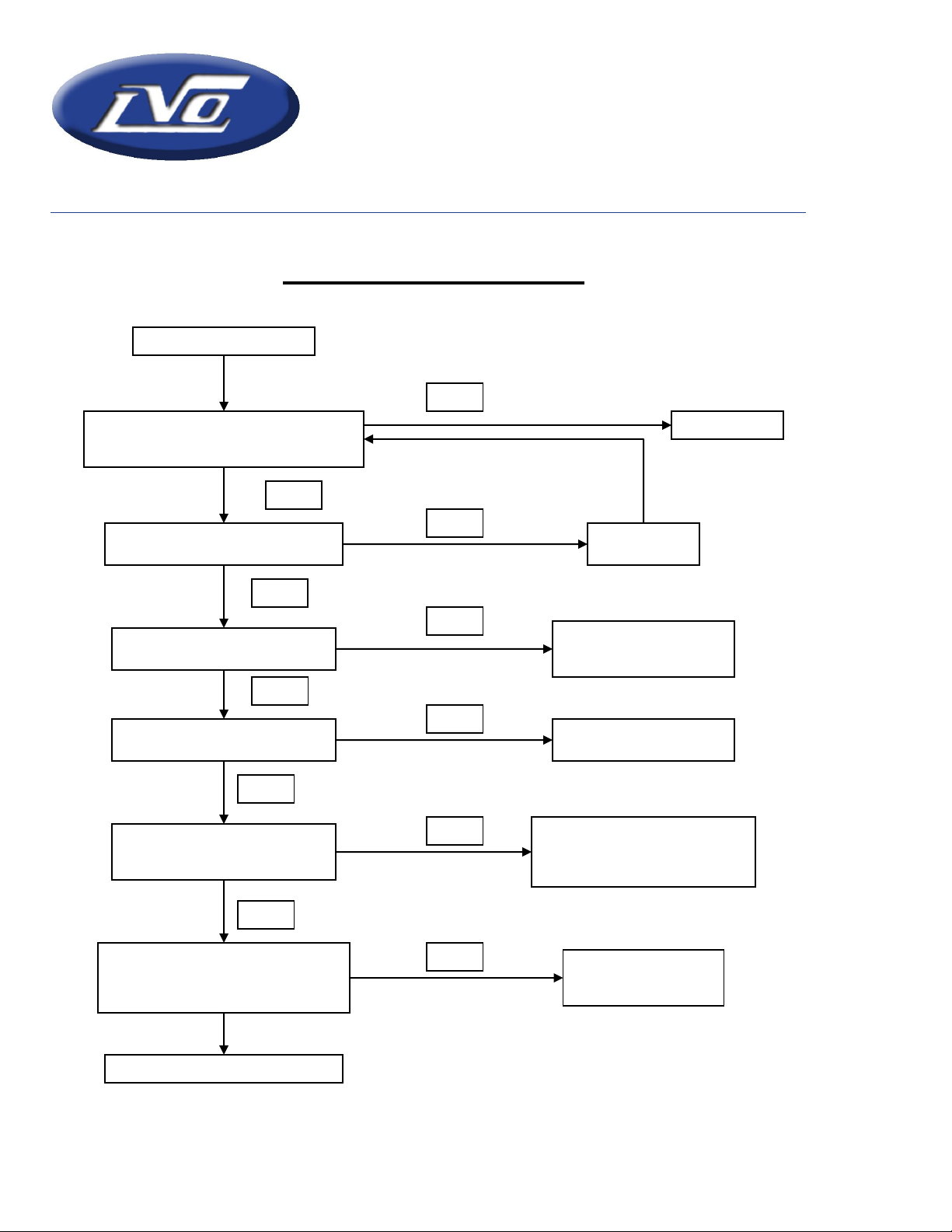
LVO Manufacturing, Inc.
Pan Washer Doesn’t Run
Does the power light illuminate when the
power switch is turned to the “on” position?
Is the wash tank filled with water
(water visible above scrap trays)?
Is there incoming 3-phase power at
the control panel?
Is there power on the primary side
of the transformer?
Is there power on the output side of
the secondary transformer fuse?
Verify the low water cut-off is working
by checking for power at terminal #4 on
the lower terminal block strip.
No
Yes
Yes
Yes
Yes
Fill the wash
tank.
No
Correct incoming power
supply problems
Check primary fuses on
control panel
Secondary transformer fuse is
blown or the transformer is
defective.
Defective or damaged
low water cut-off
Call LVO Mfg. for technical support
No
No
No
No
See Next Page
Yes
808 N. 2
Rock Rapids, IA 51246
www.lvomfg.com
(712) 472-3734
__________________________________________________________________________________________________________________________________________________________________
Trouble Shooting Flowchart
nd
Avenue E., P.O. Box 188
1-800-346-5749 Fax (712) 472-2203
20
Page 21
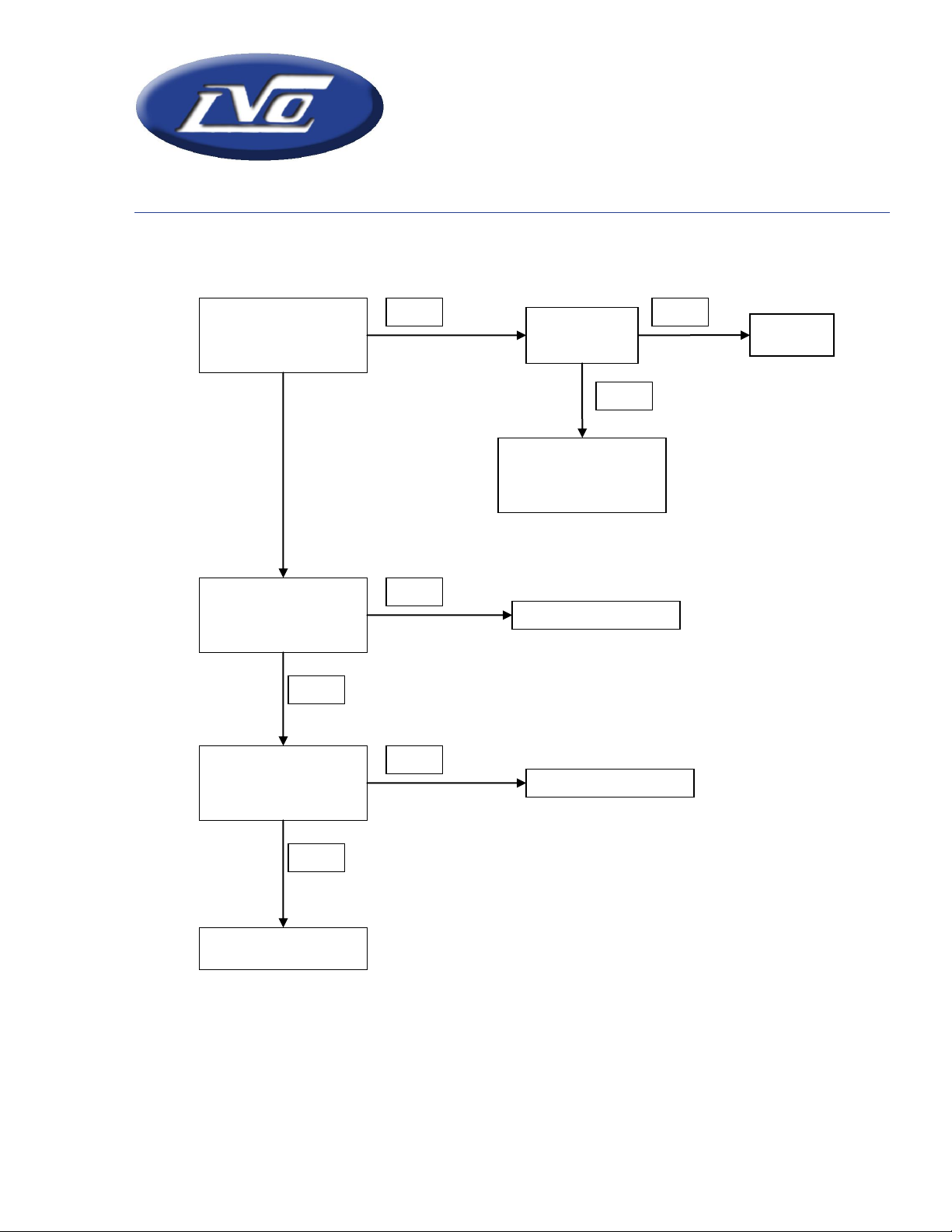
LVO Manufacturing, Inc.
Does the wash light
illuminate when the start
button is pushed?
Is the pump circuit
breaker tripped in the
control panel?
Is the overload relay
tripped on the motor start
for the pump?
Call LVO Mfg. for
technical support.
Is the door
fully closed?
Close the
door
Check the door switch
for proper adjustment
and function.
Reset the circuit breaker
Push the reset button.
No
No
No
No
Yes
Yes
Yes
808 N. 2
Rock Rapids, IA 51246
www.lvomfg.com
(712) 472-3734
__________________________________________________________________________________________________________________________________________________________________
nd
Avenue E., P.O. Box 188
1-800-346-5749 Fax (712) 472-2203
21
Page 22
LVO Manufacturing, Inc.
808 N. 2
Rock Rapids, IA 51246
www.lvomfg.com
(712) 472-3734
__________________________________________________________________________________________________________________________________________________________________
Pan Washer Replacement Parts List
FL14, PT14
Miscellaneous Parts
Part Number Description
517-5001 Adjustable Leg
517-5004 Utensil Basket
103-2009 Pump Screen
103-2002 Scrap Tray – FL14
101-2002 Scrap Tray – PT14
105-2011 Button Guard Assembly
103-2008 Rinse Tank – Electric Heat (Threaded Heater)
103-2045 Rinse Tank – Electric Heat (Clamp Heater)
103-2030 Rinse Tank – Recirculating Steam
112-2201 Support Rack – FL14
112-2211 Support Rack – PT14
112-2301 Hold-Down Rack – FL14
112-2311 Hold-Down Rack – PT14
103-2055 PVS-6 Fan
512-5046 PVS-6 Fan Motor
512-5045 6” Blade – PVS-6 Fan
Gauge Parts
Part Number Description
509-5153 Temperature Control
509-5133 Temperature Display – Rinse Manifold
509-5155 Temperature Sensor
509-5060 Pressure Gauge, 2 ½”
nd
Avenue E., P.O. Box 188
1-800-346-5749 Fax (712) 472-2203
22
Page 23
LVO Manufacturing, Inc.
808 N. 2
Rock Rapids, IA 51246
www.lvomfg.com
(712) 472-3734
__________________________________________________________________________________________________________________________________________________________________
Heating Parts
Part Number Description
509-5004 Wash & Rinse Element, 9 kW 208 Volt – Threaded
509-5005 Wash & Rinse Element, 9 kW 230 Volt – Threaded
509-5006 Wash & Rinse Element, 9 kW 460 Volt – Threaded
509-5220 Wash & Rinse Element, 9 kW 208 Volt – Clamp
509-5221 Wash & Rinse Element, 9 kW 230 Volt – Clamp
509-5224 Wash & Rinse Element, 9 kW 460 Volt – Clamp
507-5007 2 ½” Sanitary Clamp Gasket for Heaters
507-5001 2 ½” Sanitary Clamp for Heaters
509-5132 High Limit Thermostat
509-5016 Infrared Burner
509-5026 ½” Steam Injector – Injected Steam
510-5164 ½” Steam Solenoid
509-5050 Direct Spark Ignition Gas Valve
509-5051 Direct Spark Ignition Control Module
509-5052 Spark Igniter
509-5053 Flame Sensor
509-5054 Ignition Cable, 36”
509-5094 5”-7” Gas Regulator Conversion Kit
509-5097 7”-11” Gas Regulator Conversion Kit
511-5127 Sensor Wire
509-5099 LP Gas Orifice, #54
509-5100 Natural Gas Orifice, #45
Drain System Parts
Part Number Description
510-5145 1 ½” NPT Ball Valve
nd
Avenue E., P.O. Box 188
1-800-346-5749 Fax (712) 472-2203
23
Page 24
LVO Manufacturing, Inc.
808 N. 2
Rock Rapids, IA 51246
www.lvomfg.com
(712) 472-3734
__________________________________________________________________________________________________________________________________________________________________
Wash System Parts
Part Number Description
103-2025 Hub Assembly
103-2049 Hub Repair Kit
510-5081 10 Hp Pump Motor, 208-230/460 Volt
510-5087 10 Hp Pump & Motor Assembly
510-5100 10 Hp Pump Impeller
510-5096 Pump Seal Kit
510-5092 Pump Motor Shaft Sleeve
510-5094 Extension Bracket Gasket
519-5038 Hub Grip Ring Pin
103-2042 Upper Wash Arm Assembly
103-2043 Lower Wash Arm Assembly
Rinse & Fill System Parts
Part Number Description
510-5011 Rinse Nozzle, ¼”
510-5183 ½” 24VAC Solenoid
510-5016 ½” Vacuum Breaker
510-5009 ½” Ball Valve
514-5057 ⅜” x 12’ Spray Hose
519-5009 Brass Swivel
519-5027 Spray Gun
519-5024 Spray Gun Repair Kit
Door & Weight Parts
Part Number Description
517-5003 Door Handle
103-2048 Door Cable – 8’ (FL14)
101-2023 Door Cable – 9’ (PT14)
128-2030 Door Cable – 5 ½’ (PT14)
511-5252 Limit Switch
513-5702 ⅛” Cable Clamp
105-6023 2 ½” Cable Pulley
nd
Avenue E., P.O. Box 188
1-800-346-5749 Fax (712) 472-2203
24
Page 25
LVO Manufacturing, Inc.
808 N. 2
Rock Rapids, IA 51246
www.lvomfg.com
(712) 472-3734
__________________________________________________________________________________________________________________________________________________________________
Electrical Parts
Part Number Description
511-5257 Low Water Cut-Off Float
511-5272 On-Off Selector
511-5273 Wash Selector
511-5239 White LED Bulb
511-5214 Clear Indicator Light
511-5215 Amber Indicator Light
511-5216 Red Indicator Light
511-5270 Start Push Button
511-5269 Stop Push Button
511-5271 Auto Fill Push Button
511-5274 Clear Button Cover
511-5314 24 VAC Logic Controller
511-5256 Fan Speed Control
511-5179 24 VAC Fan Relay
511-5149 Circuit Breaker, 4 Amp, 1 Pole
511-5150 Circuit Breaker, 10 Amp, 3 Pole
511-5151 Circuit Breaker, 20 Amp, 3 Pole
511-5153 Circuit Breaker, 40 Amp, 3 Pole
511-5294 Heater Contactor
511-5295 Pump Contactor – 208/230 Volt
511-5293 Pump Contactor – 460 Volt
511-5307 Pump Overload – 208/230 Volt
511-5304 Pump Overload – 460 Volt
511-5056 0.250 KVA Control Circuit Transformer
511-5133 0.350 KVA Control Circuit Transformer (Dual Pressure Only)
511-5045 Fuse, 2 Amp, 500 Volt
511-5130 Fuse, 3 Amp, 250 Volt
511-5112 Fuse, 4 Amp, 250 Volt
511-5115 Fuse, 5 Amp, 500 Volt
511-5207 Fuse, 10 Amp, 250 Volt
nd
Avenue E., P.O. Box 188
1-800-346-5749 Fax (712) 472-2203
25
Page 26
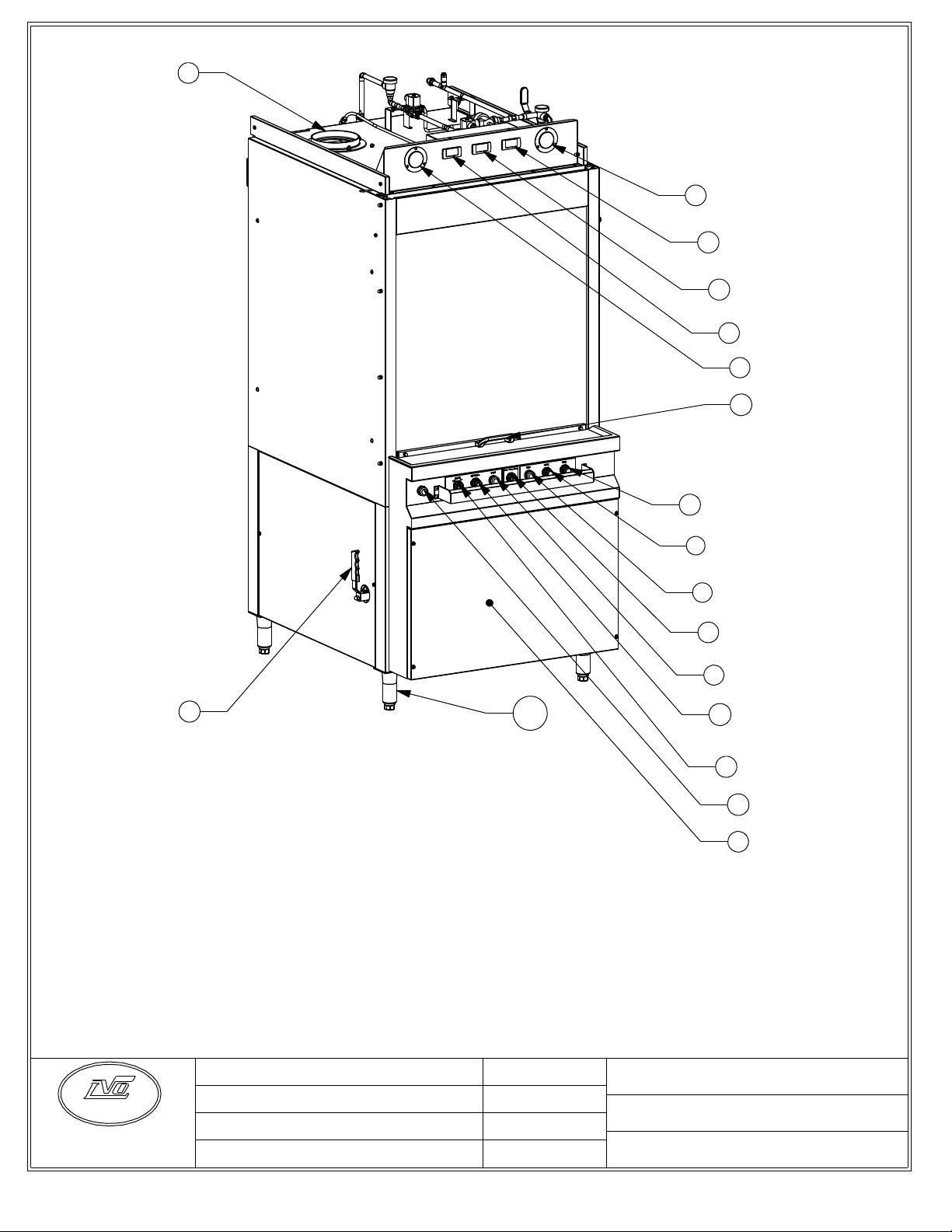
6" STEAM VENT STACKA.
RINSE PRESSURE GAUGEB.
RINSE TANK TEMP GAUGEC.
RINSE MANIFOLD TEMP GAUGED.
WASH WATER TEMP GAUGEE.
PUMP PRESSURE GAUGEF.
DOOR HANDLEG.
RINSE CYCLE LIGHTH.
WASH CYCLE LIGHTI.
STOP BUTTONJ.
WASH CYCLE SELCTORK.
START BUTTONL.
POWER LIGHTM.
POWER SWITCHN.
FILL BUTTONO.
CONTROL PANEL COVERP.
6" STAINLESS LEGQ.
1 1/2" DRAIN VALVER.
Name: Overview
FL10 & FL14
103-1000-7No.
Mat.
-
Ga.
-
Scale
1:16
4/20/2010
C. Woiwood
-
Finish
Rev.
-
Pan Washers
LVO Manufacturing, Inc.
808 N 2nd Ave E
Rock Rapids, IA 51246
Phone: (712) 472-3734
A
B
C
D
E
F
G
H
I
J
K
L
M
N
P
R
O
Q
26
Page 27
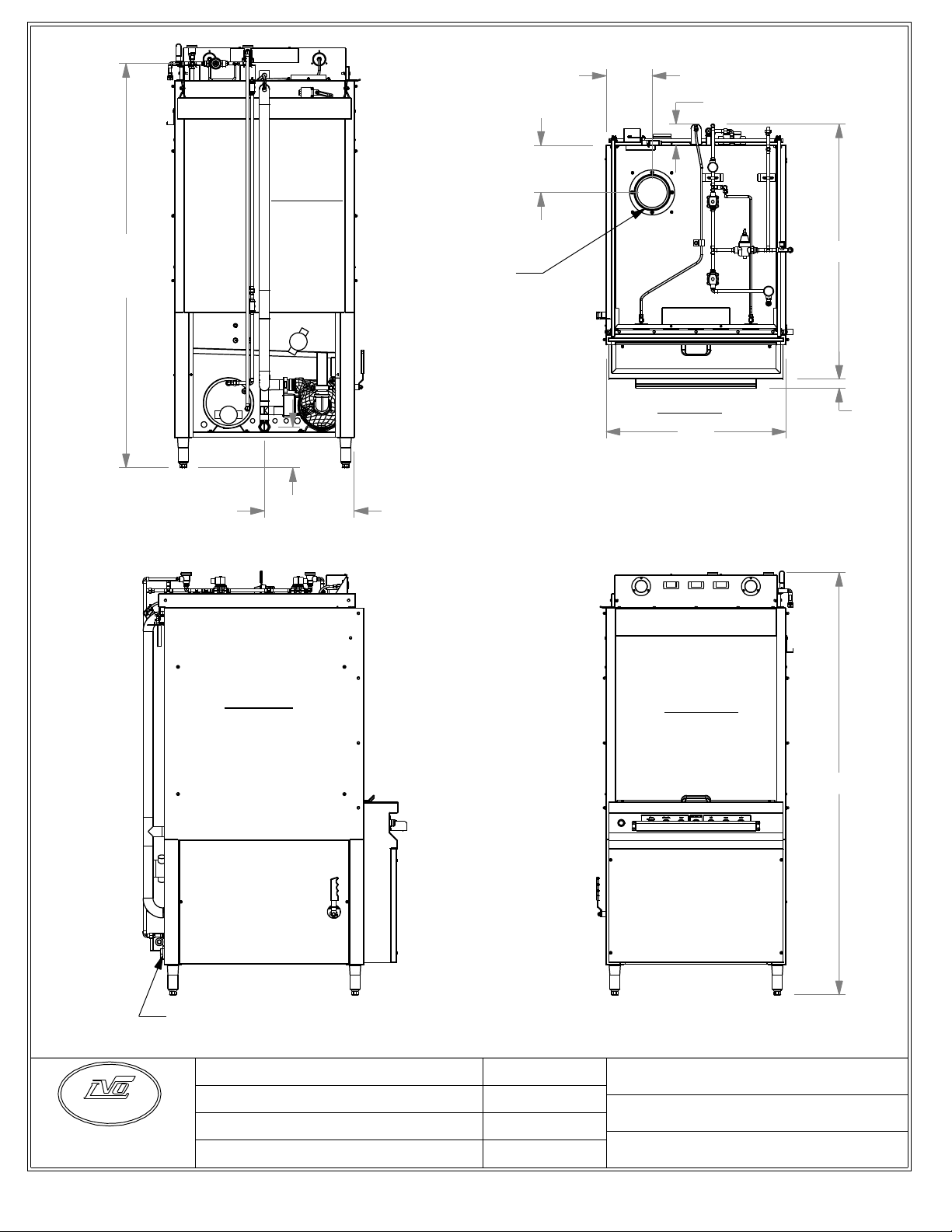
Door opening width - 32"
Note: Height with door open - 106"
Door opening height - 30"
Rear View
81"
Hot Water
Connection
18"
Drain
8 1/4"
Top View
6" Steam
Vent
36"
9 1/2"
9 1/4"
51 1/4"
4 1/4"
1 3/4"
1 1/2" Drain
Side View
Front View
84 3/4"
Rock Rapids, IA 51246
Name: Informative
FL14 Electric
103-1000-1No.
Mat.
-
Ga.
-
Scale
1:22
4/21/2010
C. Woiwood
-
Finish
Rev.
-
Pan Washers
LVO Manufacturing, Inc.
808 N 2nd Ave E
Phone: (712) 472-3734
27
Page 28
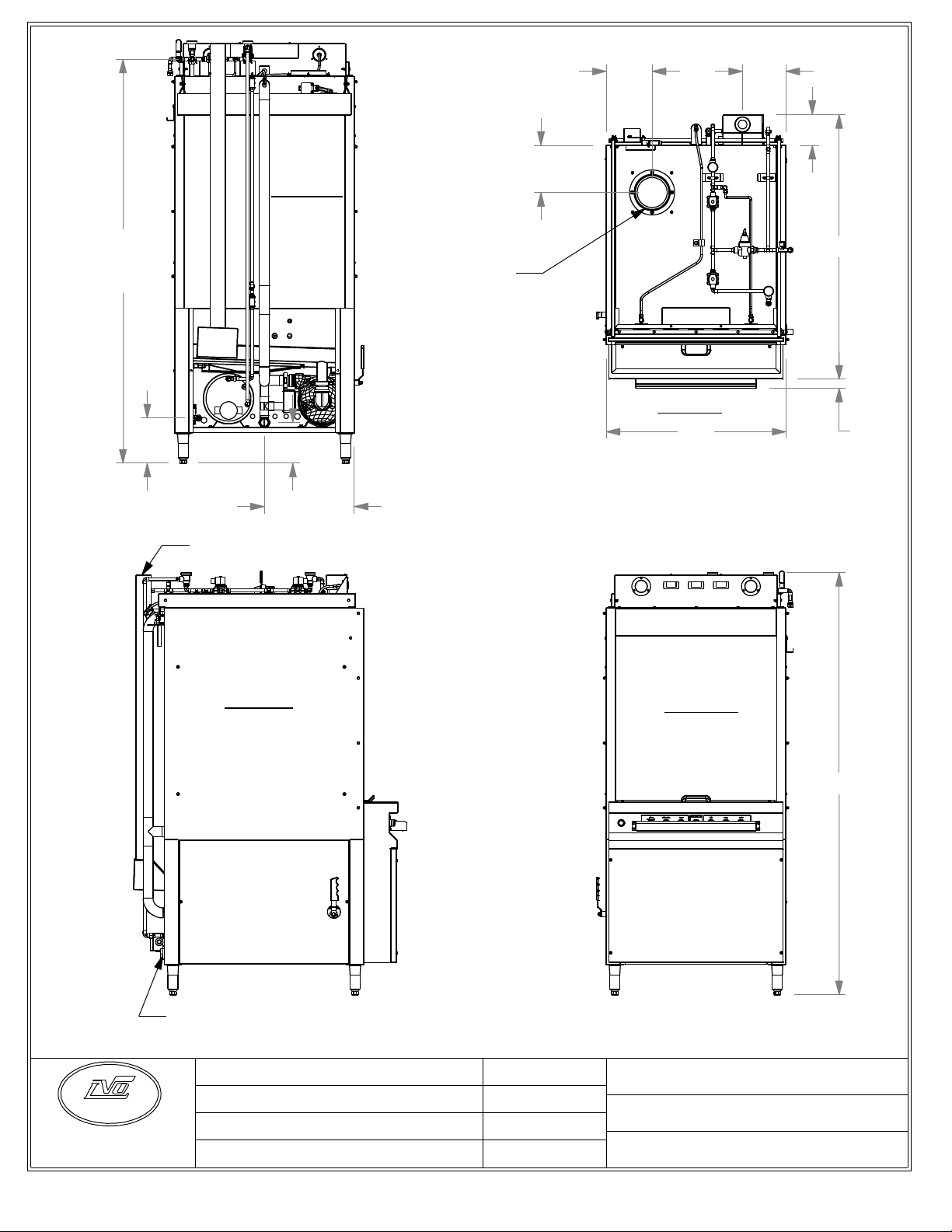
Rear View
81"
Hot Water
Connection
18"
Drain
8 1/4"
9"
Top View
6" Steam
Vent
53"
36"
6 1/4"
8 3/4"9 1/4"
9 1/2"
1 3/4"
1 1/2" Drain
Side View
3" Gas Chimney
Front View
84 3/4"
Rock Rapids, IA 51246
Name: Informative
FL14 Gas
103-1100-1No.
Mat.
-
Ga.
-
Scale
1:22
4/21/2010
C. Woiwood
-
Finish
Rev.
-
Pan Washers
LVO Manufacturing, Inc.
808 N 2nd Ave E
Phone: (712) 472-3734
Note: Height with door open - 106"
Door opening width - 32"
Door opening height - 30"
28
Page 29
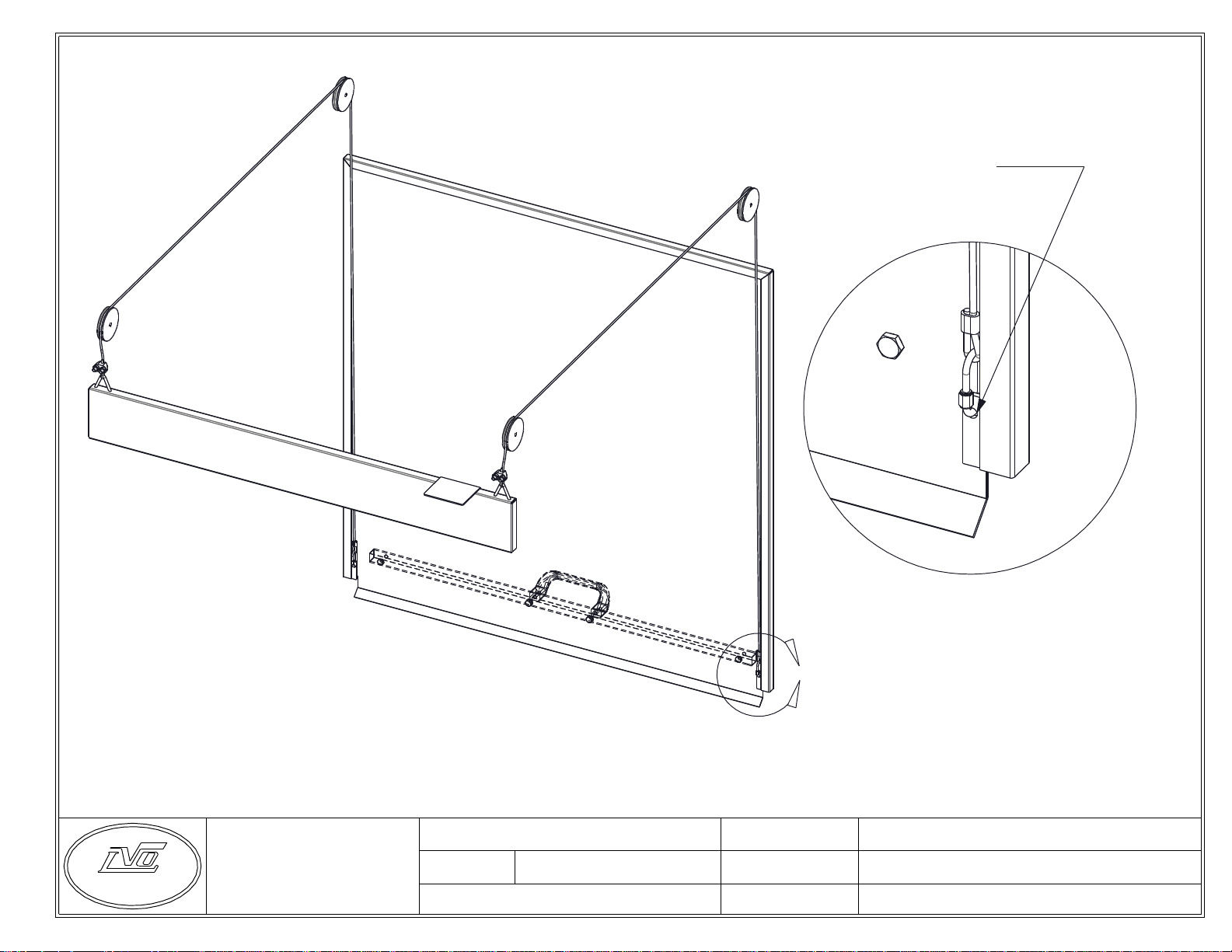
29
A
Detail A
Scale 1:2
Hole May Need to be Drilled On Old
Style Doors with Three Holes
LVO Manufacturing, Inc
808 N 2nd Ave E
Rock Rapids, IA 561246
Phone: (712) 472-3734
Mat.
Ga. Finish
Rev.
Scale Name:
No.
C. Woiwood
4/21/2010
1:8
-
-
-
-
Pan Washers
Door & Weight
Assembly
Door Weight
Page 30
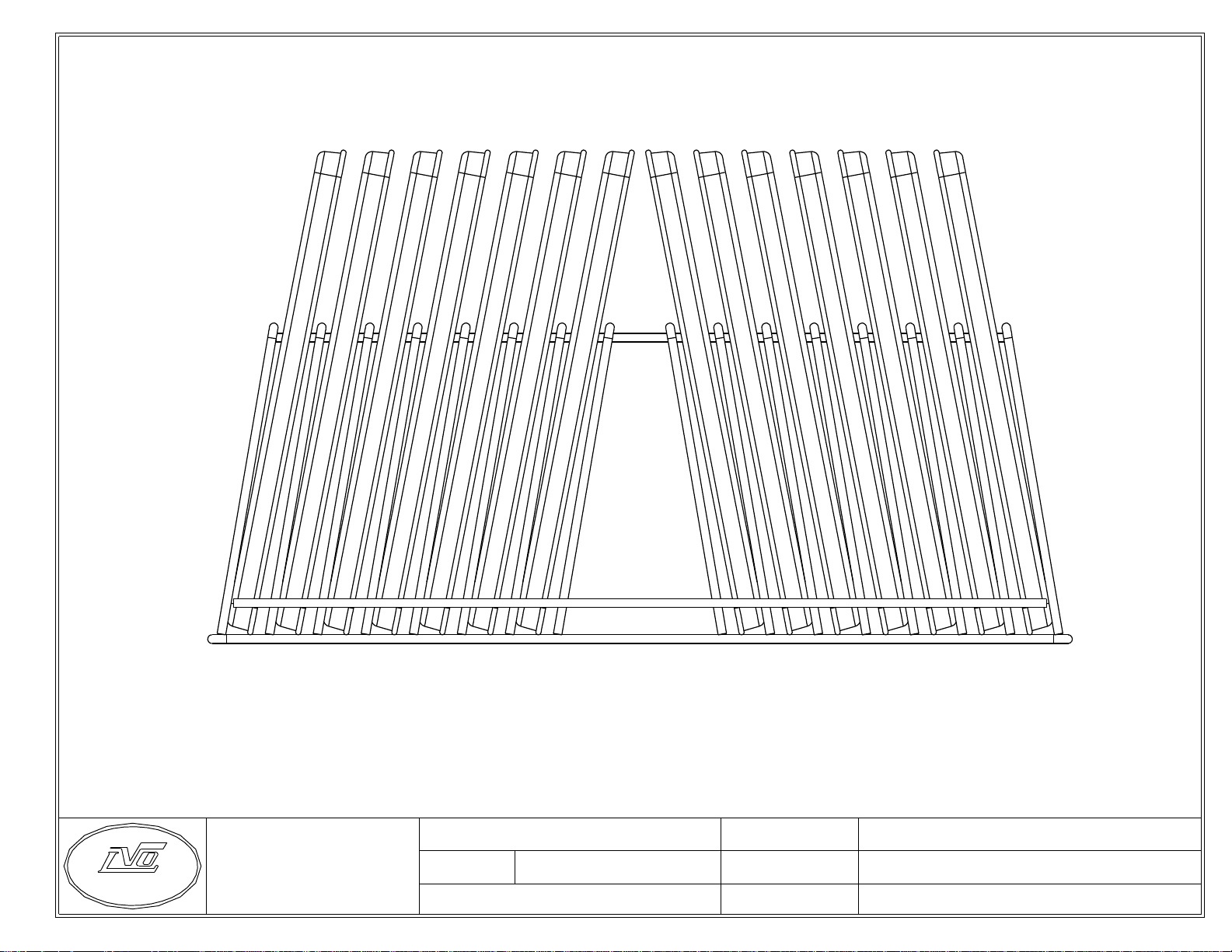
30
Informative
Bun Pan Rack
Pan Washers
-
Phone: (712) 472-3734
Mat.
Ga. Finish
Rev.
Scale Name:
No.
C. Woiwood
4/21/2010
1:4
-
-
-
LVO Manufacturing, Inc
808 N 2nd Ave E
Rock Rapids, IA 561246
112-2001P
Pans are to be inserted facing each other as shown.
If Necessary for extremely soiled pans, place a pan in every other slot.
Page 31
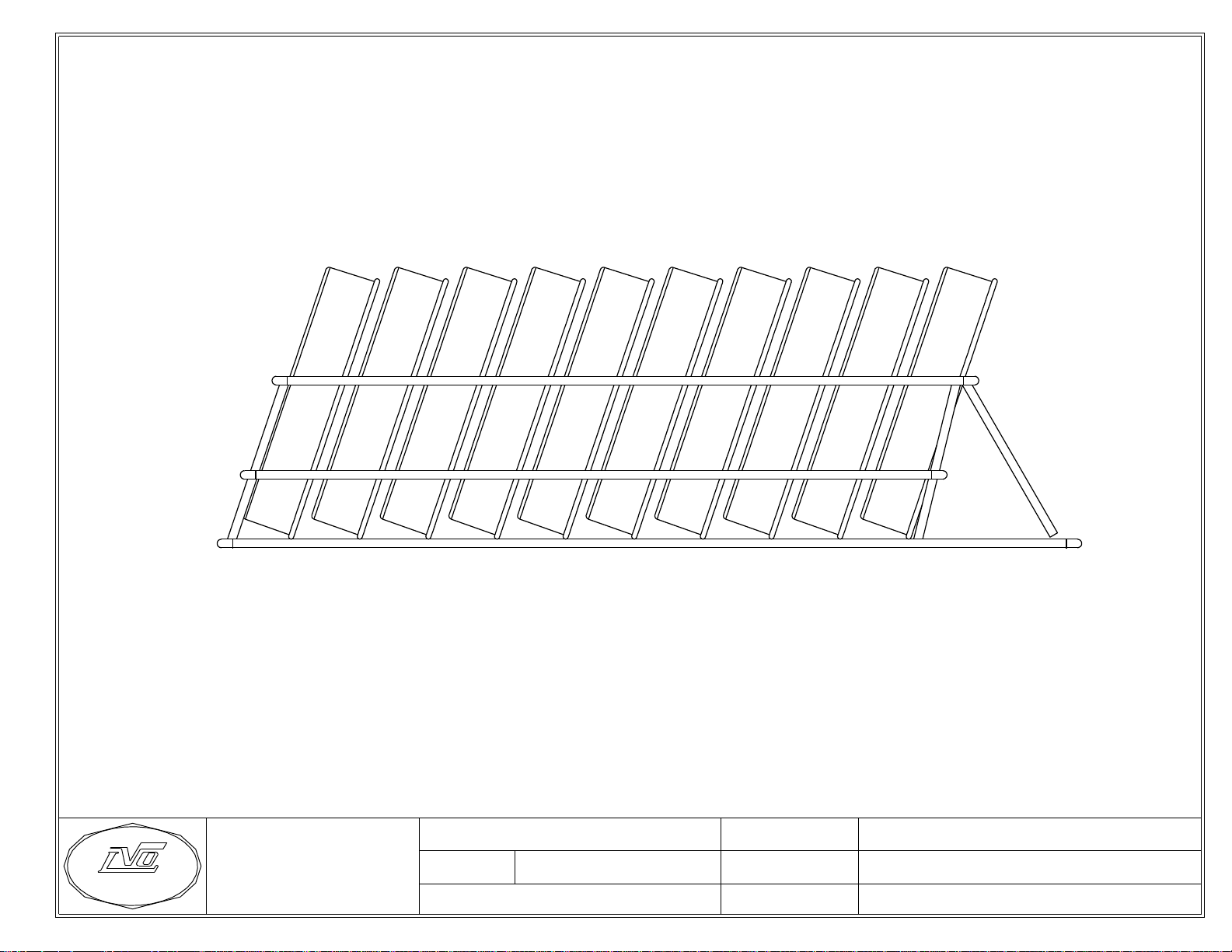
31
Informative
Cake Pan Rack
Pan Washers
-
Phone: (712) 472-3734
Mat.
Ga. Finish
Rev.
Scale Name:
No.
C. Woiwood
112-2101P
4/21/2010
-
-
-
LVO Manufacturing, Inc
808 N 2nd Ave E
Rock Rapids, IA 561246
1:4
Insert pans as shown so bottom wash arms spray inside of pans.
If necessary for extremely soiled pans, place pans in every other row.
Page 32
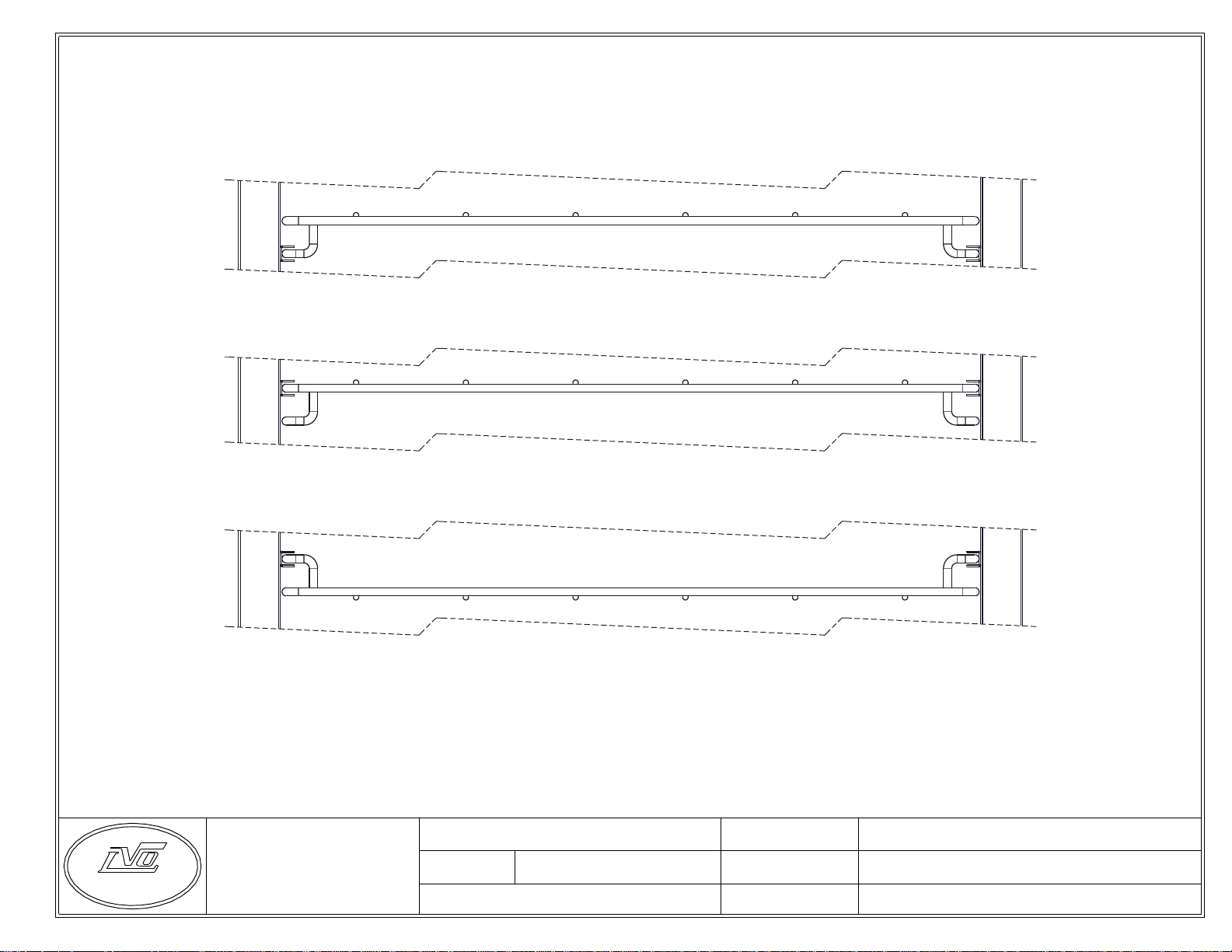
32
MIDDLE POSITION
USED AS A SHELF TO SUPPORT HEAVY ITEMS
LOWER POSITION
NOTE: THIS HOLDDOWN RACK IS NOT TO BE
UPPER POSITION
LVO Manufacturing, Inc
808 N 2nd Ave E
Rock Rapids, IA 561246
Phone: (712) 472-3734
Mat.
Ga. Finish
Rev.
Scale Name:
No.
Marlin E.
03-12-97
1:5
-
-
-
-
Pan Washers
Holddown Rack
Informative
HDR-INF
Page 33
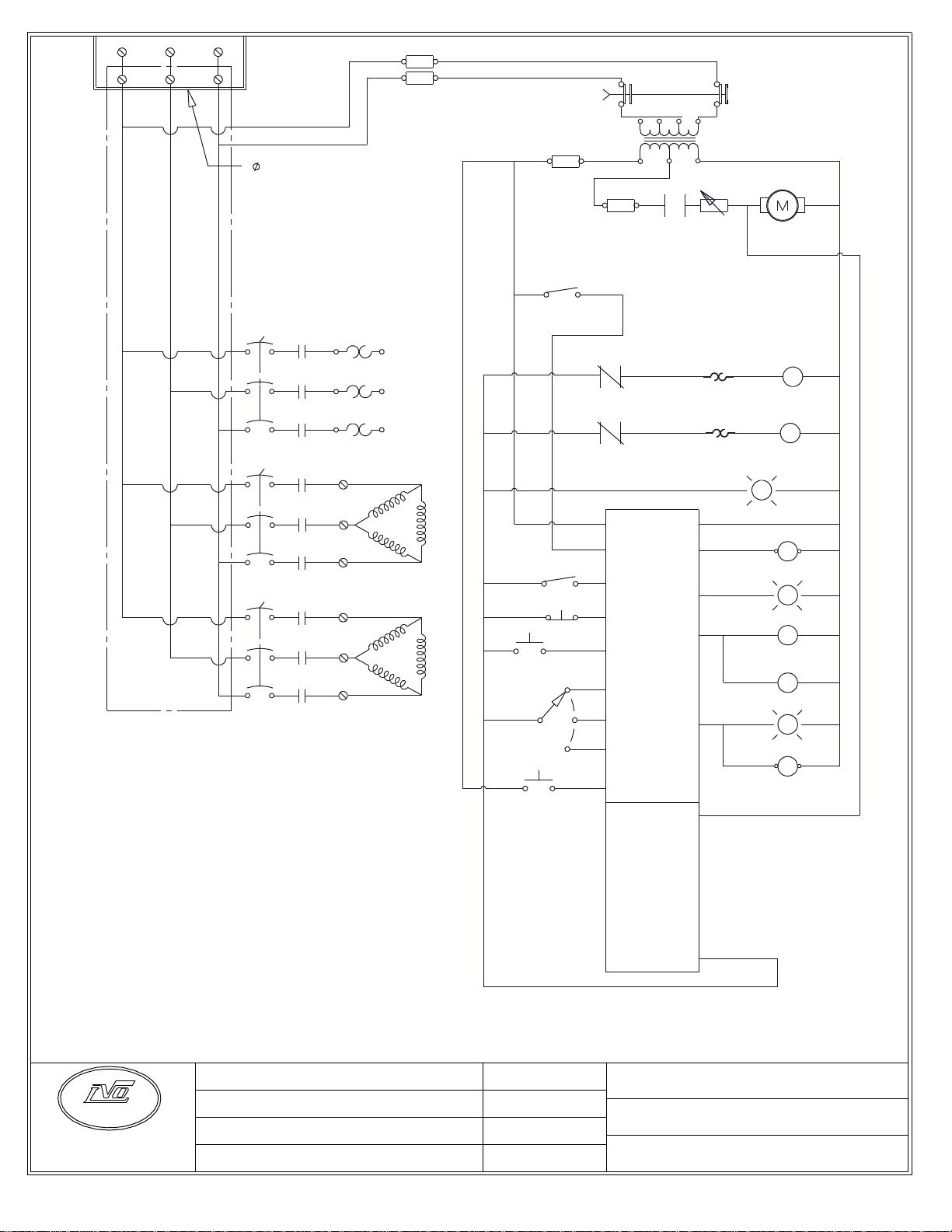
RINSE TEMP CONTROL
HHW
R
DOOR SWITCH
T1 T2
STOP
START
WSH
PWR
PUMP
CONTACTOR
ON
OFF
POWER
PUMP
MOTOR
BREAKER
PUMP
L1 L2
L3
3 POWER
FUSE
FUSE
.250 KVA
WSH TEMP CONTROL
24V
FUSE
RNS
RINSE
SOLENOID
T3 T4
FILL
SOLENOID
LOGO
Q1 Q2
Q3
Q4
Q5 Q6
Q7
I1 I2
I3
I4
I5 I6
I7
I8 I9
I10
I11 I12
Q8
DISTRIBUTION
LINE N
BREAKER
RINSE HEAT
BREAKER
WASH HEAT
RINSE
HEATER
9KW
WASH
HEATER
9KW
LOW WATER
CUTOFF
1 4
WASH
SELECTOR
LT
MED
HVY
RINSE
CONTACTOR
HIGH LIMIT
HIGH LIMIT
WASH
CONTACTOR
115V
FAN MOTOR
208230460 0
24V
C
FUSE
FAN
RELAY
FAN
CONTROL
SPEED
BLOCK
FILL
Name: Ladder Diagram
FL, PT, CL Electric
124L1101No.
Mat.
-
Ga.
-
Scale
1:1
08-21-07
M. Elbers
-
Finish
Rev.
-
Pan Washers
LVO Manufacturing, Inc.
808 N 2nd Ave E
Rock Rapids, IA 51246
Phone: (712) 472-3734
33
Page 34
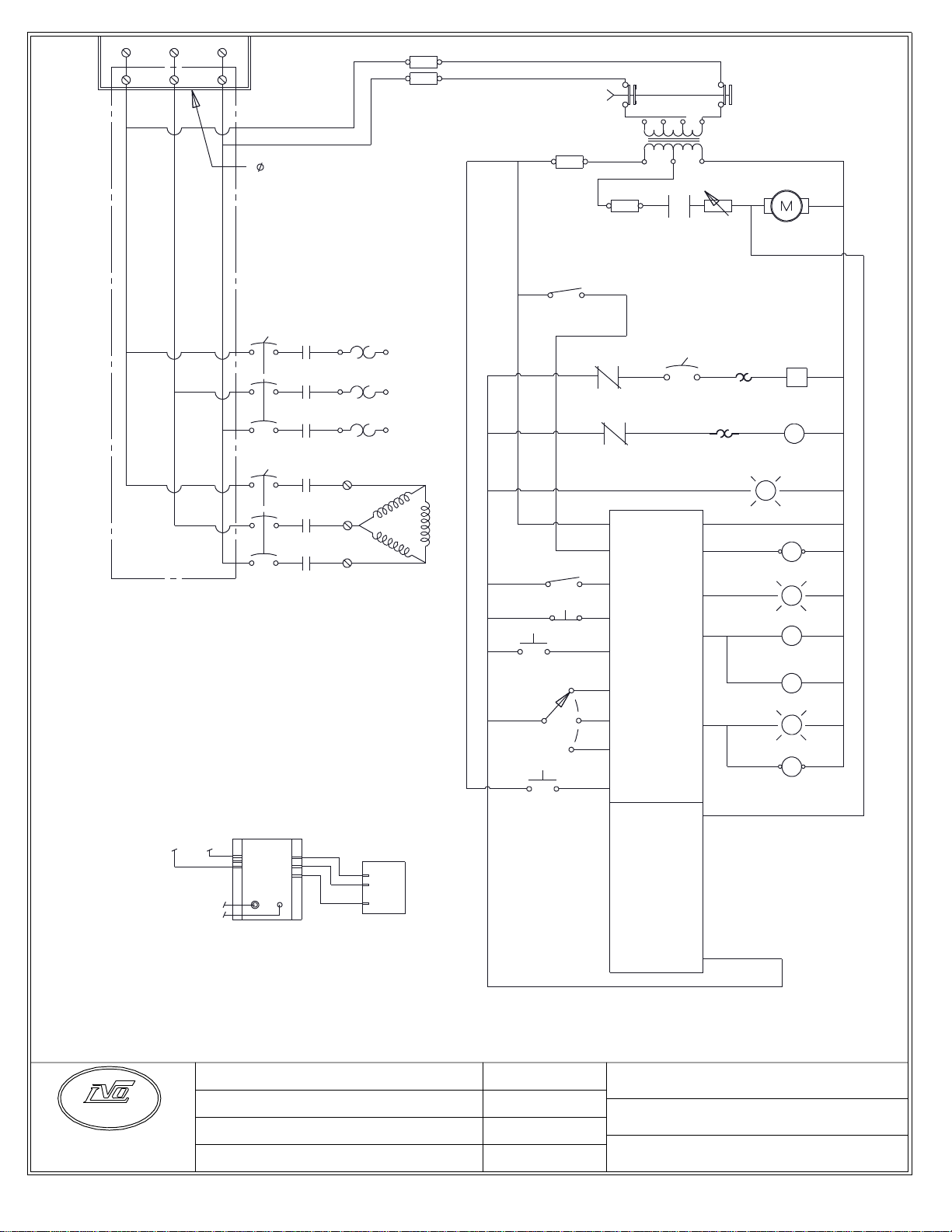
RINSE TEMP CONTROL
H R
WASH HEAT
T1 T2
STOP
START
WSH
PWR
PUMP
CONTACTOR
ON
OFF
POWER
PUMP
MOTOR
BREAKER
PUMP
L1 L2
L3
3 POWER
DISTRIBUTION
BLOCK
FUSE
FUSE
.250 KVA
24V
FUSE
RNS
RINSE
SOLENOID
T3 T4
FILL
SOLENOID
FILL
Q1 Q2
Q3
Q4
Q5 Q6
Q7
I1 I2
I3
I4
I5 I6
I7
I8 I9
I10
I11 I12
Q8
LOGO
LINE N
BREAKER
RINSE HEAT
RINSE
HEATER
9KW
LOW WATER
CUTOFF
1 4
WASH
SELECTOR
LT
MED
HVY
RINSE
CONTACTOR
HIGH LIMIT
115V
FAN MOTOR
208230460 0
24V
C
FUSE
FAN
RELAY
FAN
CONTROL
SPEED
H W
WASH TEMP CONTROL
IGNITION
MODULE
HIGH LIMIT
25V
VALVE
VALVE
GND
25V
CONTROL MODULE
S87D IGNITION
MAIN GAS
VALVE
MV
MV
GND
TO WASH
BREAKER
TO IGNITOR
TO FLAME SENSOR
COMMON
BREAKER
DOOR SWITCH
Name: Ladder Diagram
FL, PT, CL - Gas
124L1107No.
Mat.
-
Ga.
-
Scale
1:1
08-21-07
M. Elbers
-
Finish
Rev.
-
Pan Washers
LVO Manufacturing, Inc.
808 N 2nd Ave E
Rock Rapids, IA 51246
Phone: (712) 472-3734
34
 Loading...