

Page 1

Installation and operating instructions
ELECTRIC BAIN-MARIE FOR
PROFESSIONAL USE
SV-11 SV-12 SV-13 SV-23 SV-113 SV-123
Model LIBR.ISTR.SV
Code 563009900
Review 1
Edition date 06/02/2020
Language English
LOTUS S.p.A.
Via Calmaor, 46
31020 San Vendemiano
+39 0438 778020
+39 0438 778277
Translation of the original instructions
Page 2

Contents
Contents
1 INTRODUCTION......................................................................................................................... 3
1.1 Installation drawing...................................................................................................................... 3
2 GENERAL INFORMATION ......................................................................................................... 6
2.1 Declaration of compliance............................................................................................................ 6
2.2 User information, RAEE Directive on waste electrical and electronic equipment ........................ 7
2.3 Technical data table ..................................................................................................................... 7
3 INSTALLATION........................................................................................................................... 8
3.1 Delivery checks ............................................................................................................................ 8
3.2 Removing the packaging ............................................................................................................. 8
3.3 Mechanical installation ................................................................................................................. 8
3.4 Electrical/gas connections ........................................................................................................... 8
4 INSTRUCTIONS FOR USE......................................................................................................... 10
4.1 General information ..................................................................................................................... 10
4.2 Turning the appliance on/off......................................................................................................... 10
4.3 Emptying the tank........................................................................................................................ 10
4.4 Characteristics of the feed water ................................................................................................. 10
5 MAINTENANCE.......................................................................................................................... 11
5.1 Routine......................................................................................................................................... 11
6 CLEANING.................................................................................................................................. 12
6.1 Routine cleaning.......................................................................................................................... 12
Translation of the original instructions
2
Page 3
INTRODUCTION
1 INTRODUCTION
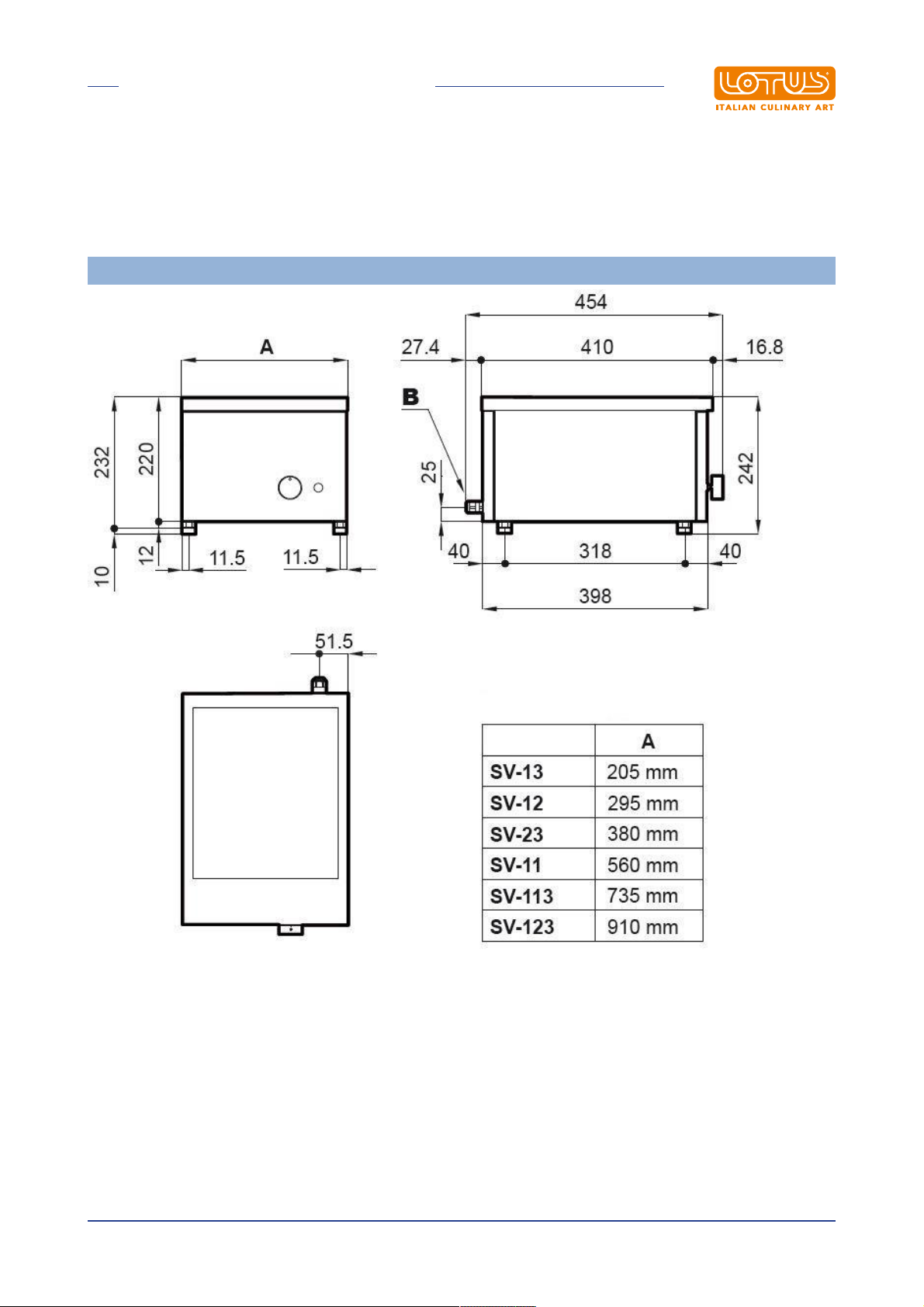
1.1 Installation drawing
FIG. 1
B Electrical connection
Translation of the original instructions
3
Page 4
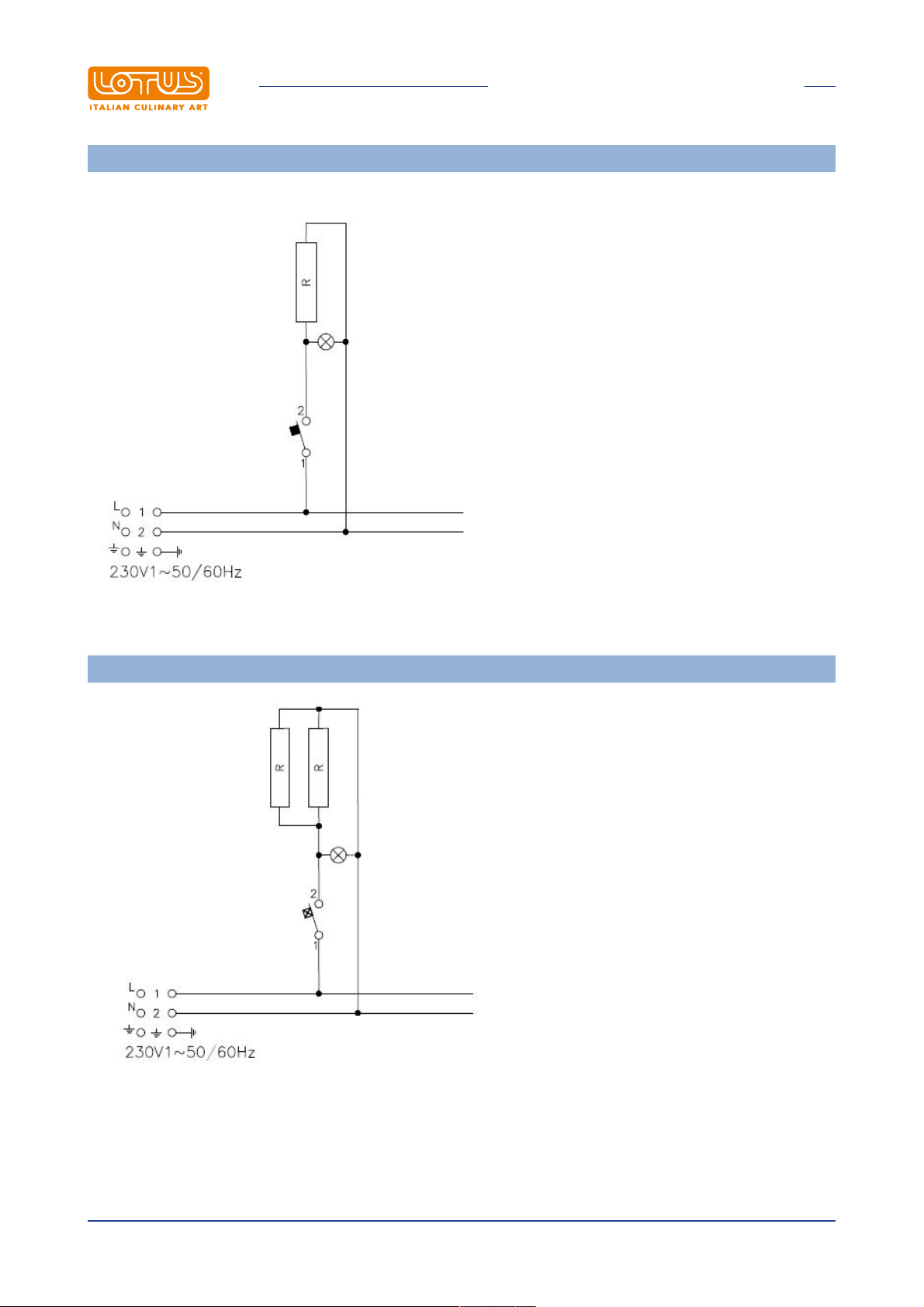
WIRING DIAGRAM SV-12, SV-13, SV-23
INTRODUCTION
WIRING DIAGRAM SV-11
Translation of the original instructions
4
Page 5
INTRODUCTION
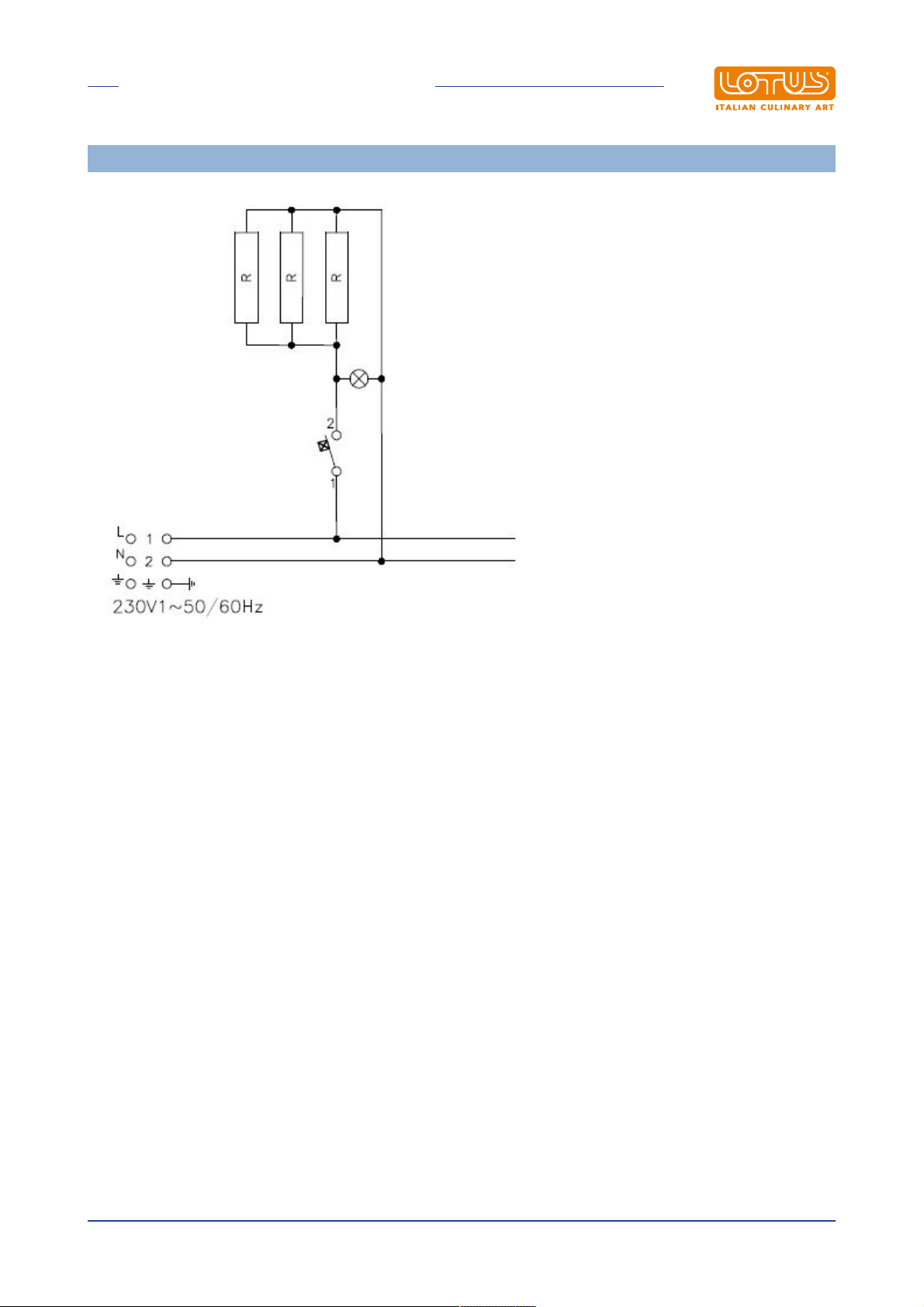
WIRING DIAGRAM SV-113, SV-123
Translation of the original instructions
5
Page 6
GENERAL INFORMATION
2 GENERAL INFORMATION
2.1 Declaration of compliance
The manufacturer declares that the appliances comply with the requirements of the regulation GAR
2016/426 for the gas part and directive 2014/30/EU,2014/35/EU for the electrical part. Installation must be
performed in compliance with current regulations, especially with regard to ventilation of the premises and
the exhaust gas evacuation system.
· Read the warnings in this manual carefully. They provide important information about safe installation,
use and maintenance.
· The instruction manual must be kept for the entire duration of the equipment and made available to users
for every possible consultation. The manual should be consulted for any information concerning
installation, use and maintenance of the appliance.
· After removing the packaging, check the integrity of the equipment.
· All packaging materials (plastic bags, polystyrene, staples, etc.) must be disposed of in compliance with
current regulations.
· Before connecting the appliance, make sure that the information on the data plate matches the electricity
and gas mains where the appliance is installed. The manufacturer accepts no liability if the
equipment is not connected in accordance with current regulations.
· Always keep all parts of the equipment clean to avoid the risk of oxidation/rust and/or aggression by
chemical agents.
· The equipment must only be used by personnel trained for the purpose.
· The installation must be implemented by professionally qualified personnel in accordance with
the manufacturer's instructions and current reference standards.
· The electrical safety of this equipment is only ensured when it is correctly connected to an effective
ground/earth system as required by current electrical safety standards. The manufacturer cannot be held
liable for any damage caused if the system is not connected to ground/earth.
· Before carrying out any cleaning or maintenance tasks on the equipment, unplug it from the electricity
mains. In the event of faults or malfunctions, always deactivate the appliance.
· Repair work of any kind must only be performed by qualified personnel.
· This appliance must only be used for its expressly intended purpose for cooking or heating food. Any
other use is considered improper.
· The appliance is intended for professional use and must be used by trained personnel.
· The installation and possible transformation to another power supply voltage (if envisaged), or
transformation for operation with another type of gas, must be implemented exclusively by qualified and
authorised professional personnel.
· Before using the appliance, carefully clean all surfaces intended to come into contact with food.
· The manufacturer declines any and all liability for any direct or indirect damage resulting from improper
use of the equipment. The manufacturer declines any and all liability for damage caused by incorrect
installation, tampering, poor maintenance and unskilled use. Moreover, the manufacturer declines any
liability for possible inaccuracies that may be contained in this booklet attributable to errors in
transcription or printing and equally reserves the right to make any changes to the product it deems
useful and/or necessary without compromising its essential characteristics.
· The manufacturer cannot be held liable for any damage caused by failure to comply with these
basic standards and all other use and maintenance standards contained in this booklet.
Translation of the original instructions
6
Page 7
GENERAL INFORMATION
2.2 User information, RAEE Directive on waste electrical and
electronic equipment
With regard to the regulatory framework of reference of the European Community, we remind the user of the
following:
· Used AAE (Electrical and Electronic Equipment) products must be collected separately
· The user can carry out this collection in the RAEE collection systems and return the equipment to the
distributor when purchasing a new one
· Plus being RoHS compatible, (in accordance with Directive 2011/65/EU on the restriction of the use of
certain hazardous substances in electrical and electronic equipment) the potential effects on the
environment and human health may be due to the misuse of the same equipment or parts of it
· The symbol next to the rating plate indicates the obligation of separate collection
· The penalties provided for in the event of improper disposal of RAEE (Waste Electrical and Electronic
Equipment) are those provided for by the national transpositions of European Directives 2012/19/EU
2.3 Technical data table
Electrical technical data table SV
Silicon
MODEL DIMENSIONS POWER SUPPLY
SV-11 56x41x22h 230V~ 50Hz 7,2 1,66 1GN1/1 3 x 1 mm²
SV-12 29,5x41x22h 230V~ 50Hz 3,6 0,83 1GN1/2 3 x 0,75 mm²
SV-13 20,5x41x22h 230V~ 50Hz 3,6 0,83 1GN1/3 3 x 0,75 mm²
SV-23 38x41x22h 230V~ 50Hz 5,2 1,19 1GN2/3 3 x 0,75 mm²
SV-113 73,5x41x22h 230V~ 50Hz 10,8 2,49 1GN1/1+1GN1/3 3 x 1,5 mm²
SV-123 91x41x22h 230V~ 50Hz 10,8 2,49 1GN1/1+1GN2/3 3 x 1,5 mm²
MAXIMUM INPUT
(A)
MAXIMUM
POWER (kW)
CONTAINERS
GN
POWER
SUPPLY
CABLE
Translation of the original instructions
7
Page 8
INSTALLATION
3 INSTALLATION
3.1 Delivery checks
On delivery, it is important to check the following:
· External conditions of the packaging
· The general status of the equipment
· The conformity of the model with the information in the technical data plate and the instruction manual
· The conformity of the equipment and components to the order form
3.2 Removing the packaging
While removing the packaging, take care not to damage the appliance. Remove the protective film from the
stainless steel and eliminate any traces of glue. Do not smoke. Perform this operation away from sources of
heat and wear protective gloves. Do not disperse packaging material in the environment, keep it out of the
reach of children and dispose in compliance with current legislation.
3.3 Mechanical installation
Place the appliance on a flat base. Adjust and stabilise the appliance by acting on the support feet. Make
sure that the surrounding walls and/or equipment are capable of withstanding the heat emitted by this
appliance. Connect the water supply (if necessary).
Caution
Do not install the appliance near equipment/machines used in cold processes. If the appliance
has to be installed close to cold process equipment, it is advisable to install non-combustible
thermal insulating material and/or neutral elements between them.
3.4 Electrical/gas connections
Before being offered for sale on the market, the appliance was subjected to gas and electrical testing (as
required). The appliance is supplied without a power cable. The installation technician must connect the
equipment in compliance with current safety regulations on the basis of the power of the appliance.
Note
The ID plate is located in the compartment inside the door for appliances with compartments, or on
the left side for appliances with an oven or a top. A second plate with the model and serial number is
located inside the dashboard and a third is included with the certificate of conformity. The serial
number can also be tracked from the sales document (after 2008). The plate has all the data needed
for correct electrical installation. The installation and possible conversion to another power supply
voltage (if envisaged) must be implemented exclusively by professionally qualified and authorized
personnel. Before using the appliance, carefully clean all surfaces intended to come into contact with
food.
Translation of the original instructions
8
Page 9
INSTALLATION
Warning
Installation operations, any conversion to other types of gas and start-up must only be
performed by qualified personnel, in accordance with current regulations.
Gas systems, electrical connections and premises where the appliances are installed must comply with
current regulations in the country of installation; in particular, the appliance must be installed in a room with
good ventilation, if possible under a suction hood to ensure complete evacuation of the exhaust gases
formed during combustion. The air required for combustion is 2 m3/h per kW of installed power. The
appliance can be installed alone or in series with other appliances in our production range. A minimum
distance of 10 cm between appliances must be respected to prevent contact with any walls made of
flammable material; furthermore, appropriate measures should also be adopted to ensure the thermal
insulation of flammable parts, such as the installation of heat shields; take special care to ensure that
appliances are installed in an appropriate and safe manner. The support feet can be adjustable in height and
any unevenness can therefore be eliminated.
ELECTRICAL CONNECTION
Caution
In accordance with international provisions, when connecting the appliance an automatic
device must be installed up-line of it so that the device can be fully disconnected from the
mains; this device must have a contact aperture of at least 3 mm.
The connection terminal is located behind the rear wall. Proceed as follows to install the power supply cable:
· Remove the rear panel.
· Pass the new connection cable through the cable gland, connect the leads to the corresponding terminal
on the terminal block and fasten them securely.
· Lock the cable with the cable gland and refit the panel. The earth/ground lead must be longer than the
others so that if the cable gland breaks it is disconnected after the power cables.
Note
Make sure that the mains voltage complies with the data on the appliance's ID plate and that there is
good conductivity to earth/ground. Pay attention when inserting leads to ensure they do not obstruct
the normal course of work and routine appliance cleaning operations. Also make sure that the power
cable is never pulled taut and is not placed in contact with sources of heat.
Note
The connection cable must have the following characteristics: it must be silicone type (to
withstand temperatures of 180 °C), and must have an appropriate cross-section for the power
of the appliance (see technical data table).
EQUIPOTENTIAL
The appliance must be connected to an equipotential system. The connecting screw is located on the rear of
the appliance and is marked by the yellow symbol above it.
Warning
The manufacturer is not liable for and does not indemnify damages caused by incorrect
inadequate installations that do not comply with these instructions.
Translation of the original instructions
9
Page 10
INSTRUCTIONS FOR USE
4 INSTRUCTIONS FOR USE
4.1 General information
This appliance must only be used for its expressly intended purpose for cooking or heating food. Any other
use is considered improper. The appliance is also intended for industrial use and must only be used by
personnel trained for use and aware of the risks that the hot element entails.
Warning
The appliance operates at high temperatures, so the following is necessary:
· Pay attention to the areas surrounding the hot surface during routine normal operation
(danger of scalding);
· RISK OF BURNS Do not touch hot surfaces floor with your hands or other parts of the body
to avoid burns caused by high temperatures;
· After switching off the appliance, wait for a sufficient time for it to cool before carrying out
any cleaning or maintenance operation.
· Do not operate the appliance without water in the tank
4.2 Turning the appliance on/off
· Check that the water drain valve, which is located in the compartment below the appliance (lever in
horizontal position), is closed
· Fill the bowl with water (max. 60°C) up to the level indicated by the symbol stamped in the bowl --
· Turn on the switch located upstream of the appliance. Turn the knob from "0" to the desired position
between 30° and 90°C, the white and green indicator lights will turn on
· Turn the knob to “0” to switch off the appliance
4.3 Emptying the tank
To perform this operation, open the drain tap (lever in vertical position) which can only be reached from the
door of the cabinet underneath the appliance
Note
It is advisable to perform this operation using water that is not excessively hot
4.4 Characteristics of the feed water
The inlet must be supplied with drinkable water having the specific characteristics listed below, otherwise
the warranty will be forfeited
· Total hardness between 0.5 and 5 French degrees to reduce the formation of scale
· Pressure between 50 and 250 kPa (0.5-2.5 bar)
· pH above 7
· Electrical conductivity between 50 and 2000 μS/cm (20 °C)
· Chloride ion concentration (Cl-) not too high (acceptable reference value: 10ppm) to avoid attacking
the internal steel structures
Translation of the original instructions
10
Page 11
MAINTENANCE
5 MAINTENANCE
5.1 Routine
When using the appliance over time, it is essential to perform regular maintenance to ensure safe operation.
We therefore recommend stipulating a service contract.
Caution
Maintenance must only be performed by specialist personnel in compliance with current
Before carrying out any maintenance and/or cleaning operation:
· Disconnect the appliance from the mains power supply and/or close the gas.
· Wait for a sufficient time for the appliance to cool down.
· Do not wash the appliance with direct or high-pressure jets of water, since any infiltration of water into the
Replacing parts must exclusively be performed by authorised and/or qualified personnel. When replacing the
electrical components of the machine and the electrical panels, scrupulously follow the technical
characteristics for the replacement component indicated on the component itself. The appliance does not
require any special maintenance but during the use of the equipment it is advisable to check the following at
least once a year (possibly increasing the frequency depending on the degree of use):
· The status of connections especially on the terminal board and the power supply cable, as well as the
· The operating condition of the various components (perform a functional test);
· For appliances fitted with rotary resistances, remove the hub, grease it and replace the three o-ring seals
regulations and our own instructions.
electrical components could jeopardise correct operation of the appliance and its safety systems.
Warning
For maintenance/replacement of components, order and use only original spare parts.
status of the gas connections;
to avoid possible leaks.
Caution
WHAT TO DO IN THE EVENT OF FAULTS:
Close the gas connection cock and/or switch off the power using the up-line device. Notify
customer service.
Warning
MEASURES TO BE TAKEN IF THE APPLIANCE IS NOT TO BE USED FOR A LONG TIME:
Close the gas cock and/or disconnect the power supply. Clean the system as specified above.
Translation of the original instructions
11
Page 12

CLEANING
6 CLEANING
6.1 Routine cleaning
Caution
The use of flammable fluids to clean the appliance is forbidden
To ensure hygiene and the durability of the appliance, perform external cleaning on a regular basis, taking
care not to damage the cables and the electrical connections. Before starting cleaning, disconnect the
appliance from the power supply. Parts in steel can be washed with warm water and a neutral detergent:
Rinse them thoroughly to eliminate all traces of detergent and then dry with a dry cloth. Do not use abrasive
and corrosive detergents. Enamelled parts must be washed with soapy water. For appliances that included
an oven, cleaning it is made easier by removing the support grid. Thorough, daily cleaning prevents faults
and accumulated deposits of fat and/or food. The steels used in the manufacture of professional equipment
are tried and tested materials of the highest quality. Thanks to their characteristics, they are ideal materials
for use with food substances.
Consequently, when using stainless steel appliances, the following suggestions must be observed:
· Stainless steel surfaces must always be kept clean, also ensuring contact with the air. The lack of oxygen
under layers of scale, starch, egg white or other deposits means that surfaces can be affected by
corrosion
· Do not use products containing salt or sulphuric acid to remove scale. Suitable products are available
commercially but a diluted solution of acetic acid can also be used
· To clean STAINLESS STEEL appliances, it is advisable to use detergents specifically formulated for this
material. For "minor cleaning", a mild washing up liquid solution may also be used
· Do not wash the appliance with jets of water under pressure
· Avoid using detergents containing abrasive powders or bleaches of any kind
· Lockable stainless steel appliances, during periods of inactivity, must be left uncovered so that air can
freely access internal metal surfaces
· Stainless steel must not remain in contact for long periods with concentrated acids or with aromatised
concentrates such as salt solutions, mustard, spice mixtures or the like. At certain temperatures and
concentrations, these substances can damage the passive layer. Contact surfaces must therefore be
immediately rinsed with clean water and then dried
· It is inadvisable to use stainless steel pots exclusively to cook foods in salt water (pasta, rice, potatoes,
etc.). From time to time, these pots must also be used to cook foods containing fats or vegetables. This
helps to prevent damage caused by corrosion
· After cooking foods in salt water, rinse the tanks with fresh water since salt water residues from cooking
form layers of highly concentrated saline solution that can cause spotting corrosion
· To prevent so-called secondary corrosion, prolonged contact of stainless steel with ferritic steels should
be avoided
· Any secondary corrosion spots must be eliminated immediately
· Do not use sharp objects that may scratch stainless steel parts and consequently give rise to
deterioration
Translation of the original instructions
12
 Loading...