

Page 1
Page 2

The information in this document is proprietary to Leidos. It may not be used, reproduced, disclosed, or exported without the written approval of Leidos.
MFLC-OPS-UMG-0023 MFLC Operational Manual | i
MFLC Operational Manual
TABLE OF CONTENTS
1 THE MFLC PROGRAM & TEAM LEIDOS WELCOMES YOU! ............................... 1
MFLC Program Mission .................................................................................... 1
Team Leidos! ..................................................................................................... 2
2 YOUR FIRST FEW DAYS ........................................................................................ 3
Onboarding ........................................................................................................ 3
Required Government Training ....................................................................... 3
Required Leidos Training ................................................................................. 3
Safety, Crisis, and Emergency Management .................................................. 5
Human Resources ............................................................................................. 5
New Employee Orientation (NEO) .................................................................... 5
Ordering Your Leidos Badge ........................................................................... 5
Corporate Charge Card ..................................................................................... 6
Update Your Contact Information .................................................................... 6
Change Contact Information .......................................................................... 6
Change Name ................................................................................................ 6
Change Personal Information ........................................................................ 7
My Professional Information, Interests, and Preferences ............................... 7
Benefits Enrollment .......................................................................................... 7
Retirement Plan Enrollment ............................................................................. 7
Requesting Paid Time Off (PTO) ...................................................................... 8
Using Your Leave Balance ............................................................................ 8
Compensation Merit Raises ............................................................................. 9
Setting Up Your Direct Deposit Account ......................................................... 9
Timecharging ..................................................................................................... 9
Timecharging Policy and Process Overview .................................................. 9
Timecharging Training ................................................................................. 10
Timecharging and Charge Code Guidance .................................................. 10
Types of Charge Codes ............................................................................... 10
When to Use Your Direct Charge Code ....................................................... 10
Page 3

The information in this document is proprietary to Leidos. It may not be used, reproduced, disclosed, or exported without the written approval of Leidos.
MFLC-OPS-UMG-0023 MFLC Operational Manual | ii
MFLC Operational Manual
When to use Indirect Charge Codes ............................................................ 11
3 Managing Your Travel .......................................................................................... 14
Leidos’ Travel Policy .................................................................................... 14
Updating Your Travel Profile ........................................................................ 14
Travel Support ............................................................................................. 14
Travel Outside the Continental United States (OCONUS) ........................... 15
OCONUS Travel Policy ................................................................................ 15
Status of Forces Agreements (SOFAs) ......................................................... 15
Cultural Sensitivity ....................................................................................... 16
Security and Safety ...................................................................................... 16
Emergency Contact Information .................................................................. 16
Home of Record (HoR) .................................................................................... 17
Registration of Travel ................................................................................... 17
International Assignment Agreements (IAAs) .............................................. 17
OCONUS Expenses .................................................................................... 18
Finding Housing ........................................................................................... 18
International Sponsors and Bribery Risks .................................................... 18
Letter of Authorization (LOA) ....................................................................... 19
Counselor Task Assignments (CTA) ............................................................ 19
Home of Record (HoR) ................................................................................ 19
Meals and Incidental Expenses ................................................................... 20
4 MFLC CODE OF CONDUCT ................................................................................. 21
Use of CONUS Government Facilities ........................................................... 21
MFLC Roles and Responsibilities .................................................................. 21
MFLC Team Leads Roles and Responsibilities ............................................ 21
MFLC Dress Code ........................................................................................... 22
Conflicts of Interest ........................................................................................ 22
Service Confidentiality and its Limitations ................................................... 23
Limits of Confidentiality Statement ............................................................... 23
Politics ............................................................................................................. 24
Written and Other Material Development ...................................................... 24
Page 4

The information in this document is proprietary to Leidos. It may not be used, reproduced, disclosed, or exported without the written approval of Leidos.
MFLC-OPS-UMG-0023 MFLC Operational Manual | iii
MFLC Operational Manual
External Communications .............................................................................. 25
Social Media .................................................................................................... 25
Leidos Mobile Device Usage Policies ........................................................... 26
Limited Touch Policy ...................................................................................... 26
Line of Sight .................................................................................................... 26
5 MFLC CREDENTIALS ........................................................................................... 27
License Renewals ........................................................................................... 27
How to Submit a Request for License Renewal Cost Reimbursement: ....... 27
6 COUNSELOR ASSIGNMENTS ............................................................................. 28
Rotational MFLC Assignments ...................................................................... 28
School Support ............................................................................................... 28
Summer Program and Camp Support ........................................................... 28
Surge Counselor Assignments ...................................................................... 28
On-Demand Counselor Assignments ............................................................ 28
Counselor Work Schedule .............................................................................. 28
Travel in Support of Authorized Counseling Activities ............................... 30
Remote or Telework ........................................................................................ 30
7 MFLC PROGRAM ROLES AND RESPONSIBILITIES .......................................... 32
Counseling Services MFLCs Provide ............................................................ 32
Adult Counseling .......................................................................................... 32
Child Youth Behavioral (CYB) Counseling ................................................... 32
Duty to Warn (DTW) and Mandated Reporting (MR) ................................... 32
Warm Hand-offs for DTW/MR Situations ..................................................... 33
Restricted Reporting .................................................................................... 34
MFLC Program Service Delivery and Scope ................................................. 34
Service Eligibility ............................................................................................ 34
Program Presentations, Briefings and Walkabouts ..................................... 35
8 MFLC PROGRAM – INSTALLATION ACCESS AND POC .................................. 36
Installation Access .......................................................................................... 36
Installation Point of Contact (POC) ............................................................... 36
Service Headquarters Point of Contact ......................................................... 37
Page 5

The information in this document is proprietary to Leidos. It may not be used, reproduced, disclosed, or exported without the written approval of Leidos.
MFLC-OPS-UMG-0023 MFLC Operational Manual | iv
MFLC Operational Manual
Military Community Support Programs ......................................................... 37
Virtual Support Services (VSS) ...................................................................... 37
9 Service Activities .................................................................................................. 39
Daily Activity Reporting (DAR) ....................................................................... 39
10 Adverse and Significant Incident Reports .......................................................... 40
11 WHERE TO FIND SUPPORT AND RESOURCES ................................................ 42
MFLC Central ................................................................................................... 42
Community Engagement Center (CEC) ....................................................... 42
Job Aids and Resources .............................................................................. 42
Approved MFLC Presentations .................................................................... 42
MFLC Toolkit ............................................................................................... 42
MFLC University .......................................................................................... 43
Military OneSource ...................................................................................... 43
Leidos Service Links .................................................................................... 43
Counseling Center of Excellence (CCE) ........................................................ 44
Acronym List ..................................................................................................... 1
LIST OF TABLES
Table 1: Direct MFLC Program Charge Code ............................................................... 11
Table 2: Leidos Indirect or Overhead Charge Codes .................................................... 12
Table 3. Internal Time Off Request Guidelines ............................................................. 30
Table 4. Adverse and Significant Incidents – Differences and Similarities .................... 40
Table 5. Leidos and MFLC Program Support ................................................................ 44
Table 6: Document Identification ..................................................................................... 1
Table 7: Change History .................................................................................................. 1
LIST OF FIGURES
Figure 1 – Adverse Incident Report Notification Email Template .................................. 41
Page 6

The information in this document is proprietary to Leidos. It may not be used, reproduced, disclosed, or exported without the written approval of Leidos.
MFLC-OPS-UMG-0023 MFLC Operational Manual 1
MFLC Operational Manual
1 THE MFLC PROGRAM & TEAM LEIDOS WELCOMES YOU!
Welcome to the Military and Family Life Counseling (MFLC) Program and Team Leidos! The
need for a knowledgeable and qualified non-medical counseling team to support our service
members and their families is evident by the strong commitment the Department of Defense
(DoD) has made to the MFLC Program and its continued success. You are the backbone of
that success, and Leidos is excited to build on your passion for this mission and your
expertise, by adding cutting-edge technology, responsive leadership, and unwavering support.
For more information about the Military and Family Life Counseling
Program.
*This manual is a reference guide for present and newly hired
counselors. Employees represented by a union are covered by the
terms and conditions of their collective bargaining agreement.
MFLC Program Mission
The MFLC Program provides face-to-face, non-medical counseling, consultation and outreach
services at U.S. military installations or nearby civilian communities, with a global footprint of
counselors serving in states west of the Mississippi, Guam, the Virgin Islands and overseas
locations in eastern Asia, the Pacific Islands, and the Middle East.
MFLCs help service members and their families with the unique challenges of military life. This
Program is based on a preventative model that strengthens service members and family
problem-solving skills through every part of the military lifecycle. Reducing escalations and
building coping abilities is a force multiplier, enhancing military capabilities across the board.
What is Non-Medical Counseling?
Non-medical counseling is short term, non-therapeutic, non-diagnostic, counseling that is not
appropriate for individuals needing clinical therapy. It is supportive in nature and addresses
general conditions of living, such as life skills, improving relationships at home and at work,
stress management, adjustment issues (such as those related to upcoming deployments or
returning from a deployment), marital problems, parenting and grief and loss.
Non-medical counseling provides:
• Face-to-face counseling, education, and outreach services
• Brief interventions and referrals to appropriate resources
• Flexibility in duration
• Need based and confidential
• Delivered based on an indication of need and wherever confidentiality can be
maintained
• A free, solution-focused service for any service member and their family
• Skill (i.e., coping) development and problem solving
Page 7

The information in this document is proprietary to Leidos. It may not be used, reproduced, disclosed, or exported without the written approval of Leidos.
MFLC-OPS-UMG-0023 MFLC Operational Manual 2
MFLC Operational Manual
Team Leidos!
Team Leidos makes the world safer, healthier, and more efficient through information
technology, engineering, and science. As a global leader in the development and application of
technology, we work to solve the most demanding challenges of military life.
Our values — essentially, our DNA — make us who we are as individuals and collectively as a
team. They capture what we value most and what you bring with you to the MFLC Program:
• Integrity: Being courageous, taking pride and respecting everyone.
• Inclusion: welcoming ALL employees and their perspectives.
• Innovation: acting as a catalyst for change and new ideas.
• Agility: using your creativity to be flexible and resilient.
• Collaboration: building relationships and staying connected with each other. AND
• Commitment: showing your passion for helping our customers and our team members.
This is what sets all of us at Team Leidos apart.
Page 8

The information in this document is proprietary to Leidos. It may not be used, reproduced, disclosed, or exported without the written approval of Leidos.
MFLC-OPS-UMG-0023 MFLC Operational Manual 3
MFLC Operational Manual
2 YOUR FIRST FEW DAYS
Onboarding
Leidos requires that all employees complete onboarding activities on their first day, such as
account setup, token activation and access to Leidos/MFLC applications and systems. For a
comprehensive checklist of onboarding activities, visit MFLC Central and read through the
MFLC Onboarding Information Technology Guide.
The preferred browser is Google Chrome.
Along with onboarding activities, Leidos employees are required to complete several forms and
inputs within the Leidos HR system of record, Workday. They include:
• Employee PIIN (Proprietary Information, Inventions, and Non-Solicitation Agreement)
• Arbitration Agreement
• State mandated forms, as applicable
• Emergency Contacts
• Telework Agreement (if applicable Work Location = Home Office)
• Career Profile (within 30 days)
Instructions for completing these items should be included in emails from your onboarding
specialist.
Required Government Training
Read through the MFLC Training FAQs for information on required government training.
Required Leidos Training
All new employees should participate in a New Employee Orientation
(NEO) session either live or On Demand. Please review the new hire
checklist on the MFLC Central Welcome page for all new hire actions
(the link is provided in your Day 1 instructions).
As a new Leidos employee, you are required to take a series of mandatory training courses to
be completed within your first 30 days. Required training courses are assigned and will be
displayed in the Required for You section within the learning system (Workday).
The learning system is available through the Leidos Portal and is therefore mobile enabled.
Workday can be accessed via a web browser on iPad, iPhone (web@work), and your personal
computer or tablet with an OTP token.
Page 9

The information in this document is proprietary to Leidos. It may not be used, reproduced, disclosed, or exported without the written approval of Leidos.
MFLC-OPS-UMG-0023 MFLC Operational Manual 4
MFLC Operational Manual
If you don’t have your iPhone or iPad set up, you can access
Workday from your personal computer with your Leidos username,
password, and activated OTP token.
Training Course Summary
Course Title Description
Key principles of Privacy,
iSecure Security
Awareness Training
Cybersecurity and Security
through a series of lessons. An
informed workforce is a secure
workforce!
Ethics Awareness
Training & Code of
Conduct
Certification
Time charging Policy
Training
Overview of Leidos ethics policies
and procedures. Employees must
also certify their awareness and
understanding of the Leidos Code
of Conduct.
Overview of Leidos time charging
policies and procedures.
Overview of Environmental Health
EH&S Overview for New
Hires
& Safety training on topics such as
incident reporting and emergency
procedures.
Length
(min)
60
60
30
15
Who
All
Employees
All
Employees
All
Employees
All
Employees
Inclusion Acumen
Sexual
Harassment/Assault
Response and
Prevention
Equips learners to recognize and
address the effects of unconscious
bias by challenging assumptions.
Overview of harassment
prevention and the Leidos policies
and procedures.
30
60-120
All
Employees
All
Employees
Page 10

The information in this document is proprietary to Leidos. It may not be used, reproduced, disclosed, or exported without the written approval of Leidos.
MFLC-OPS-UMG-0023 MFLC Operational Manual 5
MFLC Operational Manual
Leidos-required training MUST be completed by all Leidos employees
and is accessible through your Workday Learning page.
Safety, Crisis, and Emergency Management
This information is being provided to assist in keeping you aware of Leidos policies and
principles that govern Environmental, Health, and Safety Management (EH&S) systems that
comply with applicable laws and regulations.
For more information about Leidos policies and procedures see:
Crisis and Emergency Management.
For Covid-19 policies see: Leidos Covid-19 Guidance.
Human Resources
New Employee Orientation (NEO)
Attend a live virtual Leidos New Employee Orientation (NEO) session. You may choose from
two identical sessions each Monday, one at 8:45 a.m. ET and one at 2 p.m. ET. Virtual NEO is
provided through a Microsoft Teams meeting (requires internet-enabled device). You should
have received a link in your Day 1 Details attachment.
Ordering Your Leidos Badge
All Leidos MFLCs need to submit a badge request to make sure that their photo is on file with
Leidos Security. Though you may not be required to display your Leidos badge at your MFLC
location, make sure you always keep your badge in a safe and accessible place.
The photo on your Leidos badge will automatically be loaded to Workday, our HR system.
Badge Request Form:
https://prism.leidos.com/hr_bp/security/workplace_security/workplace_security_wiki_articles/re
quest_a_corporate_id_badge.
When taking your badge picture, make sure to use a white or gray
background. Double check your shipping address to make sure your
badge goes to the right place. Email the Leidos Badging Office for
support at: [email protected].
Page 11

The information in this document is proprietary to Leidos. It may not be used, reproduced, disclosed, or exported without the written approval of Leidos.
MFLC-OPS-UMG-0023 MFLC Operational Manual 6
MFLC Operational Manual
Corporate Charge Card
Leidos policy requires employees who frequently travel and incur annual expenses more than
$1,000 to use a Leidos corporate charge card for all Leidos business expenses. Charge cards
have an $11,000 limit and may only be used for business purposes.
If you are on a traveling MFLC assignment, apply for a Leidos corporate credit card on your
third day of employment. Please note it is the employee's responsibility to monitor their
corporate card balances and ensure they are paid in a timely manner. They can reach out to
[email protected] for assistance in processing Expense Reports (ERs) to be paid
directly to US Bank for charges incurred while on travel.
For support, email Corporate Card Support at [email protected]. You may also
contact US Bank at 800-344- 5696 (or 701-461-2010).
For more information on Corporate Charge Cards:
• If needed for travel, please apply for a US Bank corporate card.
• Corporate Charge Cards
• Corporate Charge Card FAQs
Update Your Contact Information
Updated contact information is vital for communication across your team and region. Leidos
updates Workday (our HR system) with information from your job application, but you are
responsible for ensuring the accuracy of your data. Click on the About Me icon on your
Workday homepage to review your information and make any necessary updates.
Change Contact Information
1. If you need to make a change, select Edit.
2. By default, home phone numbers and home email addresses are private. Click on the
pencil icon to edit and expand the Details section to set the Visibility to public if
desired.
3. Under Work Contact Information, the Business Location and Primary Email fields
cannot be edited. You can edit work phone numbers.
4. By default, work phone numbers are public. Click on the pencil icon to edit and expand
the Details section to set the Visibility to private if desired.
Change Name
1. If your Legal Name is incorrect, you may update it in Change Legal Name.
2. Your Preferred Name defaults to your Legal Name. To make an update, select Change
Preferred Name.
Page 12

The information in this document is proprietary to Leidos. It may not be used, reproduced, disclosed, or exported without the written approval of Leidos.
MFLC-OPS-UMG-0023 MFLC Operational Manual 7
MFLC Operational Manual
Change Personal Information
Additional options to change other information such as marital status and military service.
My Professional Information, Interests, and Preferences
Provides an opportunity to update your professional background and interests.
In some cases, changes to information above must be verified. In
those situations, a member of Human Resources Services will
contact you if additional documentation or verification is required to
process your request.
Benefits Enrollment
The Leidos Workday portal provides benefit details, including costs, links to provider
directories, network details, plan options, and more. After setting up your account and
activating your token, you should log into Workday after your first day to review benefit options
and make your benefit elections. Benefit elections must be made within 31 days from your hire
date. Keep in mind that once submitted, your elections cannot be changed until Open
Enrollment unless you experience an IRS qualified event.
Additional information about Leidos benefits and summary plan descriptions can be found
below:
• Workday
• Benefits: Health & Welfare on Prism
• Benefits Summary Plan Description Site
• ALEX Virtual Benefits Counselor
The Employee Stock Purchase Plan is an employee benefit that offers
eligible employees the opportunity to purchase Leidos stock at a 10%
discount on each quarterly purchase date by utilizing convenient
payroll deductions.
Retirement Plan Enrollment
Elections for the Leidos Retirement Plan are made directly through Vanguard, our retirement
plan administrator. You can enroll in the plan or change your election at any time during the
year. You will be able to enroll in the Retirement Plan on the Vanguard website by mid-week of
the week following your hire date.
You will be offered the option to roll over existing 401(k) balances into the Leidos Retirement
Plan upon becoming an employee of Leidos. After enrolling in the Leidos Retirement Plan, to
Page 13

The information in this document is proprietary to Leidos. It may not be used, reproduced, disclosed, or exported without the written approval of Leidos.
MFLC-OPS-UMG-0023 MFLC Operational Manual 8
MFLC Operational Manual
initiate a rollover, you will have to contact both your previous plan provider to request a rollover
check and Vanguard, the retirement plan provider for Leidos, to complete the rollover into your
account.
Based on 850 hours worked, the vesting schedule is three-year
graded: 25%, 50%, and 100%. Also, your balance will become 100%
vested at age 59½, disability, or death.
Additional information about the Leidos retirement plan can be found below:
• Leidos Retirement Plan on Prism
• Leidos Online Retirement Guide
• ALEX Virtual Retirement Counselor
Requesting Paid Time Off (PTO)
MFLCs will begin to accrue PTO hours each pay period based on the standard Leidos accrual
schedule below, which is service based. PTO is an accrued benefit and rolls over from year to
year up to the maximum accrual.
• Up to 2 years: 15 days per year; maximum accrual 400 hours
• 2–3 years: 16 days per year; maximum accrual 400 hours
• 4–9 years: 18 days per year; maximum accrual 400 hours
• More than 10 years: 20 days per year; maximum accrual 400 hours
Make sure to schedule your paid time off in advance with your Team Lead to minimize
interference with Program operations. Charge your PTO to ZLEAVE.CMP.
Leidos U.S. employees receive ten paid holidays per calendar year (CY) including seven
predesignated holidays and three alternate/floating holidays. The precise alignment of holidays
to Leidos fiscal years may vary depending on the annual Accounting Calendar start and end
dates.
Although U.S. federal workers and therefore many of our customers observe Juneteenth as a
holiday, currently it is not part of the existing Leidos fixed holiday. The Juneteenth holiday will
be like other federal holidays such as Presidents’ Day and Veterans Day. For those who would
like to honor and celebrate the holiday away from work alternate/floating holidays or accrued
Personal Time Off (PTO) can be used.
Using Your Leave Balance
The amount of your PTO balance is shown on your payroll check stub and under Leave in
Deltek time charging system. If you have an insufficient accrued balance to cover requested
time off, your Team Lead may authorize up to 40 hours of advance PTO for special
circumstances.
Page 14

The information in this document is proprietary to Leidos. It may not be used, reproduced, disclosed, or exported without the written approval of Leidos.
MFLC-OPS-UMG-0023 MFLC Operational Manual 9
MFLC Operational Manual
You may use your PTO balance to cover partial day absences for personal reasons.
Your PTO balance may be carried over from year to year, but your floating holidays do not
carry over to the next year.
Compensation Merit Raises
Leidos reviews salaries annually, and any resulting changes to salary are typically effective in
March. Under certain circumstances, such as a change in responsibilities, leadership may
choose to review salaries that deviate from this schedule.
Setting Up Your Direct Deposit Account
The Leidos payroll system is UltiPro. Leidos issues pay every two weeks. Review the Leidos
Accounting Calendar to see when you will receive your first paycheck.
You will have access to UltiPro on your second day of employment, after successfully setting
up your Leidos account and activating your OTP token. You can use UltiPro Self-Service to:
• View paycheck information
• Add direct deposit
• Update tax withholding (federal and state, if applicable)
Timecharging
Leidos financial systems are an important component of daily business processes, and
accurate time charging is critical to continued success. As a Leidos employee and MFLC you
will be required to enter your time in Deltek — the Leidos time charging system — at the end of
each day. Entering time and submitting timesheets in Deltek is required to be paid.
Make sure to bookmark the site for Deltek access https://te.leidos.com. To navigate to your
timesheet, select Time, Timesheets, Manage Timesheets.
Timecharging Policy and Process Overview
The Leidos time charging policy is based upon three cornerstone concepts: "Charge it all,
charge it right, charge it daily." Please be aware of how to integrate these concepts into
your daily schedule.
Time should be entered at the end of each day or by 10 a.m. ET the
following business day. Employees and managers will receive daily
timesheet reminders if time has not been entered for the day. Failure
to submit a timesheet will impact your pay. Find out more about
Deltek Timecharging at: Deltek Timecharging Resources.Find out
more about Deltek Timecharging at: Deltek Timecharging Resources.
Page 15

The information in this document is proprietary to Leidos. It may not be used, reproduced, disclosed, or exported without the written approval of Leidos.
MFLC-OPS-UMG-0023 MFLC Operational Manual 10
MFLC Operational Manual
Timecharging Training
To support your transition to Deltek and ensure compliance with Leidos timecharging policies,
you will be required to take a self-guided timecharging training course via the learning system
in Workday within your first week. Approvers will be required to take an additional course.
You will need to complete the required time charging course(s) and certify completion at the
end of the course(s).
You also have the option to take a voluntary time entry course on when to record direct vs.
indirect charges.
Timecharging and Charge Code Guidance
By your third day, you should receive your MFLC program charge codes in your Leidos email
from Fusion, titled Fusion Notification: Work Authorization for <name>. Save this important
email as it is your authorization to work on the Leidos MFLC Program and contains the codes,
or numbers, you will use to input your daily time into the Leidos time-charging system, Deltek.
You will receive separate emails from Fusion, one WAD for your direct
charge code and one WAD for your indirect charge codes.
Types of Charge Codes
There are two types of charge codes used on the MFLC Program:
1. Direct charge code – An individual 22-digit number that is unique to the MFLC’s
assignment. This code changes when MFLCs change their assignment.
2. Indirect charge code (also referred to as Overhead) – Three alpha/numeric codes that
are determined by the MFLC’s division, based on their employee type (e.g., fulltime
employee, consulting employee, or school CYB).
The important difference between these codes is that the direct charge code impacts the
MFLC program and the indirect charge codes impact Leidos.
When to Use Your Direct Charge Code
As MFLCs, you will charge the majority of your time to the individual direct charge code you
receive from Fusion that is unique to your assignment. When in doubt if your direct charge
code should be used, ask, “Would I be doing this work or activity if I were not on the Leidos
MFLC program?” If the answer is “No”, charge the direct charge code.
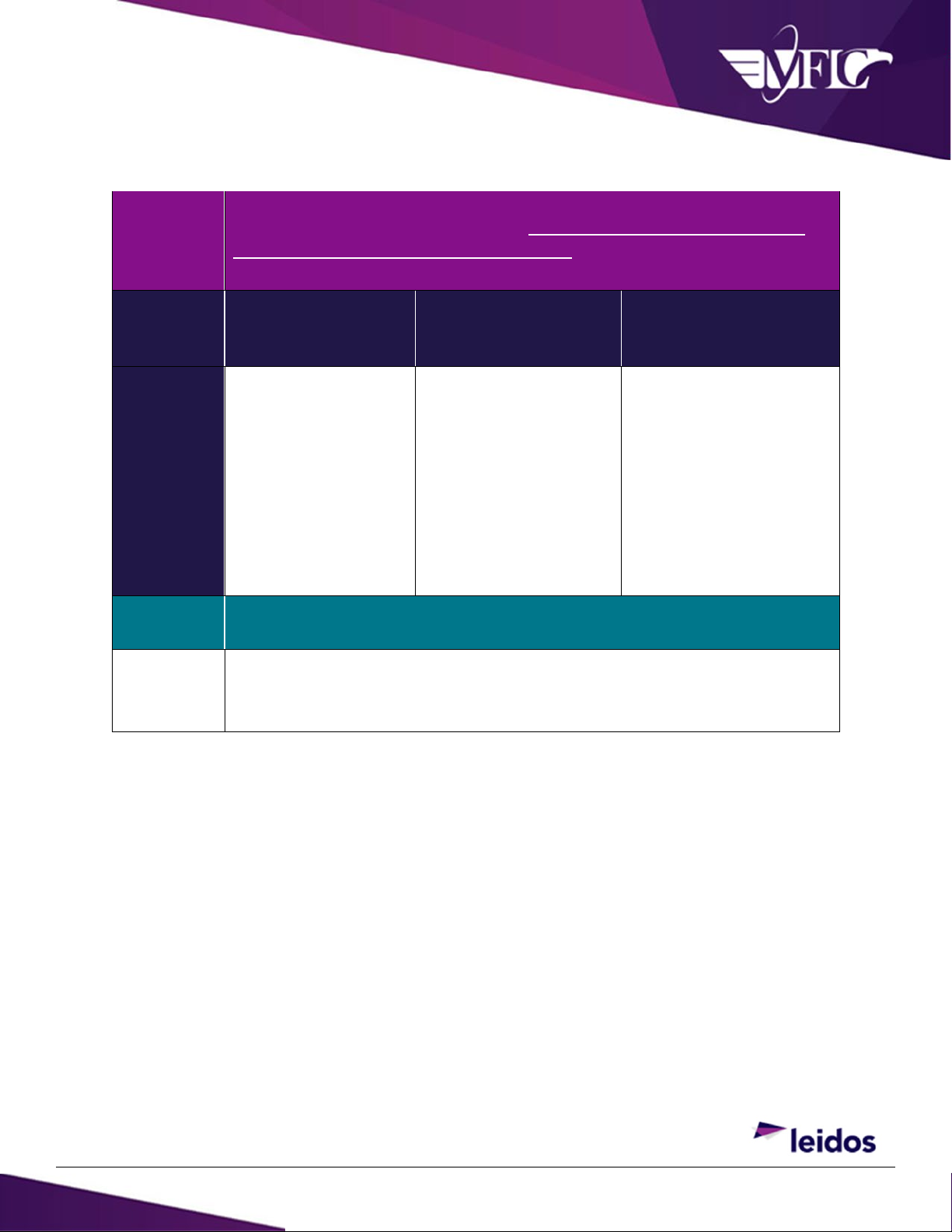
The following table provides additional information and examples of when a direct charge
code should be used on the Leidos MFLC Program.
Page 16
The information in this document is proprietary to Leidos. It may not be used, reproduced, disclosed, or exported without the written approval of Leidos.
MFLC-OPS-UMG-0023 MFLC Operational Manual 11
MFLC Operational Manual
Direct
Type of
Filling out expense
MFLC staff meetings,
Mandatory government-
Employee
Direct charge codes are NOT based on employee type, e.g., Consulting
Direct
EXAMPLE: 123456.00.7.008.00.00.000.0.09
Table 1: Direct MFLC Program Charge Code
Charge
Code
Definition
work /
activity
Examples
of when to
use the
direct
charge
code
Type
Any work or activities performed specifically for the support and
benefit of the MFLC contract/program.
Training &
Administrative Mandatory Meetings
Development*
reports, travel time,
completing status
reports
MFLC All Hands
meetings, regional
meetings
and program-required
training and nonmandatory program
virtual training/coaching
sessions (MFLC Cafés;
DAR, CALM, CYB
sessions, etc.)
Pilot training **
Employee/MRR vs school (CYB) vs full-time employee.
Charge
Code
*Training and Development: This T&D does not include continuing education units (CEUs) for
licensing credentials associated with being a counselor, or other education/training completed
based on personal choice. Time spent on completing this type of education or training should
not be charged to any of the above charge codes.
**Pilot Training: All MFLCs should use their individual direct charge code unless they otherwise
receive a different work authorization (WAD) from Fusion via their Leidos email.
When to use Indirect Charge Codes
There are times when MFLCs have activities that cannot be charged to the direct charge code
because the time is not directly related to the MFLC program. When in doubt, ask “Does this
activity directly impact the MFLC program, or does it benefit Leidos as a whole?” If it benefits
Leidos as a whole, the indirect charge codes, also sent from Fusion, should be used.
Use the individual direct charge code that is unique to your assignment
to report time spent completing any of the above activities in Deltek.
Page 17

The information in this document is proprietary to Leidos. It may not be used, reproduced, disclosed, or exported without the written approval of Leidos.
MFLC-OPS-UMG-0023 MFLC Operational Manual 12
MFLC Operational Manual
Any work or activity that DOES NOT relate specifically to the
Training &
Onboarding,
Health all-hands
Mandatory Leidos
Leidos indirect or overhead charge codes DO vary based on the type
Full-time
C0XXXX.A.N210.000
C0XXXX.A.N220.000
C0XXXX.A.N230.000
Consulting
C0XXXX.A.N210.000
C0XXXX.A.N220.000
C0XXXX.A.N230.000
School (CYB)
C0XXXX.A.N210.000
C0XXXX.A.N220.000
C0XXXX.A.N230.000
Changes to
An MFLC’s indirect charge codes are generally consistent across the
The following table provides additional information and examples of when each indirect
charge code should be used. These charge codes are applicable to Leidos MFLC employees
only.
Table 2: Leidos Indirect/Overhead Charge Codes
Indirect
Charge Code
Definition
Type of work /
activity
Examples of
when to use
the indirect
charge code
Employee
Type
MFLC program/contract and is associated with administrative
time for mandatory work or activities that benefit Leidos as a
whole.
Administrative Mandatory Meetings
Development*
completion of annual
performance review
and attending
meetings with
manager,
participating in labor
audit interviews, and
resolving device/IT
issues
meetings, Division
Manager All Hands
meetings, or other
meetings that involve
operations or division
Training (Ethics &
Compliance, New
Employee Orientation,
Time-charging,
iSecure, etc.) and
career development
and mentoring training
pre-approved by
manager
of employee and the four-digit division number the employee is
assigned (represented by XXXX in the examples below).
Employee
Employee/MRR
Charge Code
Indirect
duration of the program. They will only change if the MFLC’s employee
type changes, e.g., a consulting employee becomes a full-time
employee, an adult counselor changes to a CYB counselor, etc. If the
employee type changes, they will be assigned a different division
number.
Page 18

The information in this document is proprietary to Leidos. It may not be used, reproduced, disclosed, or exported without the written approval of Leidos.
MFLC-OPS-UMG-0023 MFLC Operational Manual 13
MFLC Operational Manual
*Training and Development: This T&D does not include continuing education units (CEUs) for
licensing credentials associated with being a counselor, or other education/training completed
based on personal choice. Time spent on completing this type of education or training should
not be charged to any of the above charge codes.
Additional information about the Deltek time charging system can be found below:
Entering, Saving and Submitting Time
Adding Charge Codes and Saving Favorites
Set Default View
Deltek Training
Correcting Hours in Deltek
Your manager of record, e.g., Regional Supervisor or Team Lead, in
Leidos HR system, Workday, will also receive an email copy of these
notifications. If you do not receive a direct and indirect WAD by close
of business on your third day of employment, contact your manager.
Page 19

The information in this document is proprietary to Leidos. It may not be used, reproduced, disclosed, or exported without the written approval of Leidos.
MFLC-OPS-UMG-0023 MFLC Operational Manual 14
MFLC Operational Manual
3 MANAGING YOUR TRAVEL
In certain cases, travel may be necessary for your MFLC duties. You will need to provide travel
details (airport, flight preference, etc.) to your Team Lead to compile a travel cost estimate.
Once your cost estimate is approved, you can begin booking travel through Leidos systems.
All MFLC travel and related expenses must be approved by the
government and your Team Lead. Please follow all government and
Leidos procedures before booking travel through Leidos systems.
Upon joining Leidos — and soon after activating your Leidos user account and token — you
will have access to the Leidos travel and expense system, Concur. The system will be
available within 24 hours of your start date. This is the system you will use to arrange travel
and process business expenses.
Sign up for STEP (Smart Traveler Enrollment Program) Notifications @ STEP (Smart Traveler
Enrollment Program.
If you need to book travel soon or have a need on an existing travel
assignment and would like assistance from Leidos, please contact the
MFLC Travel team at [email protected].
Leidos’ Travel Policy
Leidos travel policy requires that all travel be booked through Leidos Travel Services.
Corporate rates and polices are built into Concur, and all bookings are made online using sites
that are automatically reviewed and ticketed by Leidos Travel Services.
Updating Your Travel Profile
When you gain access to Concur, update your travel profile, including seat preferences and
frequent flier information.
Ask your Team Lead about designating the MFLC Leidos Travel Coordinator, who can book
travel and perform other travel-related actions on your behalf.
Travel Support
Support is available through the Leidos Travel Desk at 866-400-9373 (or 919-861-7700) or via
email at [email protected], Monday–Friday, 8 a.m. until 8 p.m. ET.
Page 20

The information in this document is proprietary to Leidos. It may not be used, reproduced, disclosed, or exported without the written approval of Leidos.
MFLC-OPS-UMG-0023 MFLC Operational Manual 15
MFLC Operational Manual
Additional information about Leidos travel management can be found below:
• Corporate Travel Page
• Concur System
• How to create an expense report
• Travel Policy
Travel Outside the Continental United States (OCONUS)
In certain cases, your MFLC duties may require travel Outside the Continental United States
(OCONUS). Leidos is committed to facilitating successful arrival to the host country and
ensuring the safety of MFLCs while they are traveling in OCONUS areas.
Dependent travel is not part of Leidos’ covered OCONUS travel and
must be managed separately by the MFLC.
OCONUS Travel Policy
MFLCs must be familiar with, and abide by regulations specific to air travel, vehicle rentals,
vehicle maintenance and traffic laws during OCONUS assignments. It is your responsibility to:
• Maintain an active/valid U.S. driver’s license and international driver’s license while on
your assignment.
• Maintain an active/valid U.S. passport.
• Confirm you have current, active coverage under a medical plan (Leidos or individual)
that meets minimum international coverage required for the program; and that you will
continue to have coverage throughout your entire assignment.
• Obtain all required immunizations/vaccinations prior to travel.
• Know country-specific driving nuances (e.g., traffic signs/lights, speed limits, weather
issues, “rush hours,” type of fuel, etc.).
• Return your rental car in a clean/undamaged condition and with a full tank of gas/fuel.
Status of Forces Agreements (SOFAs)
A SOFA is an agreement between the United States of America and a host jurisdiction. A
SOFA includes rights, privileges, and restrictions of military personnel while they are providing
services in the host country. In certain cases, SOFA agreements apply to OCONUS MFLCs.
Leidos will notify you if a SOFA is applicable to your assignment and describe the related
terms, conditions, and restrictions. You will also be apprised of resources you may and may
not use. It’s your responsibility to:
• Know if a SOFA is applicable to your assignment and agree to terms and conditions.
Page 21

The information in this document is proprietary to Leidos. It may not be used, reproduced, disclosed, or exported without the written approval of Leidos.
MFLC-OPS-UMG-0023 MFLC Operational Manual 16
MFLC Operational Manual
• Know if a SOFA is not applicable to your assignment and agree to terms and conditions
of the alternative set of regulations by which you are to abide by (e.g., “fax back”
process).
Cultural Sensitivity
Leidos is committed to preparing OCONUS MFLCs to provide services that are culturally
sensitive and consistent with geographical, military, and site–specific norms. Make sure to
attend all trainings specific to your OCONUS assignment. This will enable you to:
• Appropriately incorporate cultural knowledge when providing MFLC services to military
members/families and installation staff.
• Seamlessly assimilate into the installations and communities where you work.
• Become knowledgeable of cultural issues and customs (both military culture and social
culture) of the individuals with whom you interact.
Security and Safety
Abiding by Leidos’ and the government’s OCONUS regulations/protocols minimizes safety and
security risks. Make sure to attend all trainings on installation-specific and location-specific
security issues and protocols. Additionally, follow these steps to ensure security and safety at
your OCONUS location:
• Ask your point of contact (POC) any questions that you have on security protocols.
• Know who to contact in case of an emergency or crisis situation.
• Report all observances that potentially represent safety risks to your POC and Team
Lead.
• Do not involve yourself in political demonstrations.
• Refrain from wearing clothes with logos of the installation or from the U.S.
• Keep credit cards, passports, ID badges and other valuables in a safe place.
Make sure to download the ISOS Mobility Application. This app provides timely alerts and risk
updates specific to your location while you travel and any location-based developing medical
or security situations so you can take measures to protect yourself.
You can download the app from the Apple or Google Play stores.
Emergency Contact Information
Update your emergency contacts in Workday by going to Prism, then under Quick Links, select
HR System (Workday). From Workday, select About Me, Change My Emergency Contacts,
then update the contact information of people who need to be reached should an emergency
arise.
Page 22

The information in this document is proprietary to Leidos. It may not be used, reproduced, disclosed, or exported without the written approval of Leidos.
MFLC-OPS-UMG-0023 MFLC Operational Manual 17
MFLC Operational Manual
Home of Record (HoR)
Expatriate employees must notify Global Mobility (GM) anytime their Home of Record (HoR)
changes. Even though you may have updated Workday with your new information, GM is
responsible for your state tax records and needs to update the IAA panel then notify Payroll of
the change. Please contact your GM Analyst so these changes can be made, and your
agreement can be updated.
Registration of Travel
Employees on business travel to international locations, including U.S. territories, Guam,
Puerto Rico, and the U.S. Virgin Islands, are required to register their travel using the Leidos
International Travel Request System (ITRS). International travel is defined as crossing over
any international border from one country or territory to another, and is governed by three key
compliance objectives:
• Employee safety and security
• Export compliance of International Traffic in Arms (ITAR) and commerce regulations
• Employer duty of care/employee duty of loyalty
For expatriates, an active ITR profile documenting their overseas location is required for the
duration of their assignment, in addition to International Assignment Agreement (IAA).
For detailed information on ITRS, please see the training videos and materials on Prism,
including the ITRS article, ITRS FAQs, and the International Business Policy.
International Assignment Agreements (IAAs)
IAAs and ITMs (International Travel Memo) document the provisions, terms, and conditions to
be applied while working and living in the host country. IAA terms and conditions are specific to
the program, country, employment/assignment status, and the company’s compliance position
in the home and host country. An ITM applies to employees conducting international business
travel for less than 183 consecutive days.
The IAA applies to any assignment outside an employee’s home country of 183 or more
consecutive days or 183 days or more on the aggregate in a rolling 12-month period, with the
intent to return the employee to the Home of Record (HoR) at assignment conclusion.
An IAA or ITM will be required when the following conditions exist:
• Business travelers who trigger host country social taxes, wage/payroll tax, and/or
work/residency authorization requirements
• Business travelers or short-term international assignees that are required to obtain
SOFA accreditation to exempt host country work authorization, residency, social
insurance, and/or wage/payroll taxes
• Assignees (expatriates) hired in the host country (“local hires”)
Page 23

The information in this document is proprietary to Leidos. It may not be used, reproduced, disclosed, or exported without the written approval of Leidos.
MFLC-OPS-UMG-0023 MFLC Operational Manual 18
MFLC Operational Manual
• Secondments (sponsorship/co-employment or loan agreement)
• International telecommuters/commuters
• “Temporary Duty Travel (TDY)” or “Rotators”
OCONUS Expenses
Leidos is committed to helping MFLCs plan for safe and cost-effective purchasing of
incidentals and unexpected necessities in OCONUS locations. We will discuss any pertinent
financial related issues or procedures specific to your assignment. Make sure to proactively
plan for the financial situations you will encounter at your OCONUS location. It’s your
responsibility to:
• Alert credit card companies and your bank of dates you will be out of the country and
ask for a non-toll-free number in case there is an issue.
• Use ATM machines for the best exchange rates.
• Set your maximum withdrawals with your bank ahead of time.
• Check your credit card transaction fees.
• Locate authorized resources (on or off base) and use them.
• Arrange to have a reasonable amount of reserve in your bank account.
Both dollars and the local currency are used on base.
Finding Housing
Leidos will offer assistance for finding housing OCONUS. The type and form of assistance will
vary by location and may include reimbursement of housing costs in accordance with the Joint
Travel Regulations (JTR) Volume 2, Department of Defense (DoD) Civilian Personnel,
Appendix A - prescribed by the DoD, for travel in Alaska, Hawaii, and outlying areas of the
U.S.
Realtor fees only applies to HOLA/COLA.
International Sponsors and Bribery Risks
In support of U.S. Government contracts in international locations, Leidos requires the services
of international sponsors to provide in-country services to Leidos employees, including
immigration support, payroll services, vehicle licenses and rentals, and housing. These
services are critical to maintaining the required workforce in country, particularly in those
countries where Leidos does not have a legal entity.
Page 24

The information in this document is proprietary to Leidos. It may not be used, reproduced, disclosed, or exported without the written approval of Leidos.
MFLC-OPS-UMG-0023 MFLC Operational Manual 19
MFLC Operational Manual
While vital to supporting our overseas contracts, international sponsors also pose a significant
risk of violations of international corruption and bribery laws including the Foreign Corrupt
Practices Act (FCPA) and the United Kingdom Bribery Act. These laws outlaw bribery of
foreign government officials and carry severe civil and criminal penalties for companies, as
well as individuals who violate them. Companies are strictly liable for the actions of third
parties, such as international sponsors. Since the FCPA was enacted in 1977, 90% of all
enforcement actions have involved illegal activities committed by third party intermediaries.
International sponsors who perform immigration and payroll services for Leidos represent an
exceptionally high risk given their need to directly interact with foreign government officials on
our behalf. Immigration services often require several administrative steps with local
government authorities in jurisdictions known for bribery and corruption providing both the
temptation and opportunity for wrongdoing.
For this reason, it is very important that international sponsors are properly vetted through the
International Business Review Board (IBRB) system for every engagement. In accordance with
the Leidos Business Framework and Code of Conduct, it is the responsibility of every Leidos
employee to strictly follow international business procedures to ensure compliance with
international anti-corruption laws.
For more details, read the Procedure PR-CP-5.1: International Business and Policy LP-LG-6:
International Anti-Corruption.
Letter of Authorization (LOA)
LOA will be initiated as soon as essential onboarding tasks are completed, clearances are
approved, and your travel authorizations are approved.
Counselor Task Assignments (CTA)
MFLCs will receive CTAs close to the beginning of the assignment. This is one of the last
documents you receive before you start your assignment.
Home of Record (HoR)
MFLCs on Traveler status with Leidos may have tax implications related to “tax homes” as
determined by the IRS based on “the intent of an assignment” rather than company. It’s
recommended that you discuss implications of your “tax home” with your tax advisor,
especially if you are close to the 364 days in country.
Page 25

The information in this document is proprietary to Leidos. It may not be used, reproduced, disclosed, or exported without the written approval of Leidos.
MFLC-OPS-UMG-0023 MFLC Operational Manual 20
MFLC Operational Manual
Meals and Incidental Expenses
You will receive reimbursement for meals and incidental expenses for every day you are on
business travel. These expenses will be processed through an expense report in our Concur
system every couple of weeks. For Per Diem Rates Calculations read through Per Diem Rates
Query (DoD.mil).
This does not apply to MFLCs on HOLA/COLA.
Page 26

The information in this document is proprietary to Leidos. It may not be used, reproduced, disclosed, or exported without the written approval of Leidos.
MFLC-OPS-UMG-0023 MFLC Operational Manual 21
MFLC Operational Manual
4 MFLC CODE OF CONDUCT
Use of CONUS Government Facilities
MFLCs are not civilian members of the military or active-duty service members and are not
entitled to the benefits conferred on military personnel. MFLCs should purchase their own
food, clothing and supplies, and refrain from asking service members to purchase items for
them.
MFLC Roles and Responsibilities
• You must maintain a drug-free workplace. Any conviction of a criminal drug statute
violation occurring in the workplace will be reported to the Federal Government, and you
will face disciplinary action, up to termination.
o Current or recent use or possession of Narcotics, Drugs, or Other Controlled
Substances, without evidence of substantial rehabilitation would ordinarily be
disqualifying.
o Current marijuana use would be an automatic disqualifier in the
background/suitability, security clearance, and installation records checks. Each
check is conducted pursuant to federal law or regulation and, as such, is not
altered by state laws regarding medical marijuana.
• You must maintain professional and respectful relationships with your point of
contact (POC), installation personnel and service members and their families. Accepting
gifts, discussing politics, and socializing off-base is not permitted.
• Family members, friends, pets, including service animals, should not accompany you to
your installation or on your assignment. This applies to both CONUS and OCONUS
positions.
• You are expected to arrive at work on time. You must request time off according to
Leidos’ employee leave policies. Even during unexpected events such as installation
closures, weather issues, or school in-service days, you are still expected to report to
work. In such cases, check your military installation’s guidance and contact your Team
Lead for further instructions.
• You should notify your Team Lead and POC when you need to flex and/or work
outside of your regular schedule.
• Make sure to sign in and out of your work locations (i.e., schools, centers, etc.).
• If you have a conflict with your POC or other personnel, make sure that your Team Lead
is aware of the situation.
MFLC Team Leads Roles and Responsibilities
• Ensures counselors work required hours
• Provides initial orientation and ongoing training for counselors
• Ensures counselors have an established work schedule
• Ensures counselors charge to the correct Charge number, PLC and Pay type
Page 27

The information in this document is proprietary to Leidos. It may not be used, reproduced, disclosed, or exported without the written approval of Leidos.
MFLC-OPS-UMG-0023 MFLC Operational Manual 22
MFLC Operational Manual
• Ensures the ERs are accurate and appropriate receipts are provided
• Provides regular administrative and clinical supervision to counselors
• Consults with counselors regarding duty-to-warn and mandated reporting situations
• Maintains ongoing communication with installation points of contact, including
addressing any issues or concerns
MFLC Dress Code
During work hours, MFLCs are expected to present a clean and neat appearance and to dress
in business casual, or customary business attire.
What You Can Wear What You Cannot Wear
Sports Jackets
Dress and Sport Shirts
Sweaters
Polo Shirts
Dress Shirts with Ties
Suits with Ties
Dress Pants
Slacks
Linen Pants
Casual Dresses
Dresses
Sport Jackets with Ties
Skirts/Blouses
Capris
Closed toed shoes
Leggings
Jeans
Open-toed Shoes (Flip Flops, Sandals, etc.)
Tank Tops
Low cut tops
Dresses/shorts shorter than 4 inches above the knee
T-shirts
Shirts with logos
Conflicts of Interest
Make sure to be aware of and avoid conflicts of interest. Here are situations that you should
avoid due to conflicts of interest:
MFLCs are not to market their private practice—for example, distributing business cards at
their assigned location. Do not refer clients to your private practice. MFLCs should refer clients
to community and/or Installation services.
Page 28

The information in this document is proprietary to Leidos. It may not be used, reproduced, disclosed, or exported without the written approval of Leidos.
MFLC-OPS-UMG-0023 MFLC Operational Manual 23
MFLC Operational Manual
When you accept and sign your contract to work full-time as an MFLC, you are expected to
adhere to our 40-hour flexible work schedule. If you have a second job including owning a
private practice, your MFLC assignment takes precedence. Falsifying your hours worked for
your assignment is considered fraud.
Family, friends, and pets, including service animals, cannot accompany you and are not
permitted on the installation or at your assigned site. MFLCs should not work at an assigned
location where their family member (spouse, partner, child, sibling, etc.) is present, enrolled or
being supported. For example, an MFLC cannot be assigned to a school or center where their
children attend or support their spouse/partner’s Unit.
If the above does not pertain to you, but you have a conflict-of-interest concern, please notify
your Team Lead immediately.
Service Confidentiality and its Limitations
MFLCs provide confidential, off-the-record, services. The nature of the program is intended to
increase accessibility and destigmatize services.
MFLCs do not keep written records or files and can neither confirm nor deny providing
services. Military leadership may inquire about utilization, and beyond discussing current
trends, MFLCs do not report specific utilization.
Limits of Confidentiality Statement
MFLCs are required to read the following Limits of Confidentiality (LOC) statement at the
beginning of each session or when casual conversation seems to be moving into topics that
are more personal:
“Information you provide to me, or other counselors will be kept confidential,
except to meet legal obligations or to prevent harm to self or others. Legal
obligations include requirements of law and DoD or Military regulations. Harm to
self and others include suicidal thoughts or intent, a desire to harm oneself,
domestic violence and abuse, child abuse or neglect, sexualized behavior in
children and youth, violence against any person, and any present or future illegal
activity.”
A separate LOC must be read for Air Force participants because the United States Air
Force requires additional directives regarding Informed Consent:
Are you covered by PRP?
If the participant is covered by PRP, then the MFLC will read the following additional
statement to the participant, before providing any counseling services:
"As a Personnel Reliability Program (PRP) certified or administrative qualified
individual, you are personally responsible for advising your Certifying Official or
Page 29

The information in this document is proprietary to Leidos. It may not be used, reproduced, disclosed, or exported without the written approval of Leidos.
MFLC-OPS-UMG-0023 MFLC Operational Manual 24
MFLC Operational Manual
supervisor of any factors that could have an adverse impact on your
performance, reliability, or safety while you are performing PRP duties. This
includes factors that impact your physical and mental wellness, your
dependability, your personal financial circumstances, or other legal concerns.
When you receive any type of medical/dental treatment or evaluation, to include
mental health or family related counseling, you are personally responsible for
reporting the treatment or evaluation to your Certifying Official and for providing
appropriate documentation concerning the treatment or evaluation to the
competent medical authority (CMA) at your military treatment facility responsible
for consulting with the certifying official on this matter. Failure to make these
notifications or to provide the appropriate documentation may cast doubt on your
reliability and may violate the provisions of DoD Regulation 5210.42 as
supplemented by Air Force Manual 10-3902. If you have any questions regarding
these requirements you should consult with your Certifying Official for more
information."
The statement should also be included at the beginning of a presentation/briefing or when a
phone call has progressed beyond scheduling an appointment.
The LOC is mandated to make participants understand times when a counselor must break
confidentiality and inform leadership, medical personnel community services, or law
enforcement about the communication received from the participant. It is like informed
consent that is used in other mental health practices. These situations include mandated
reporting (MR) and duty to warn (DTW).
It is important to confirm the understanding of the LOC, even when working with children. In
the case of children and/or youth it is best practice to review the LOC in age-appropriate
language, even if their permission slip serves as consent. Make sure to ask whether the
participant understood the LOC and whether any of the LOC statement applies to their
situation.
Politics
In accordance with military regulations, MFLCs should not discuss politics or opinions about
elected officials and political affiliations with service members or their families in their
professional capacity. Counselors should also avoid wearing or displaying buttons, T-shirts,
bumper stickers, or any other items that express political beliefs or preferences.
Written and Other Material Development
MFLC Program and Team Leidos materials, presentations and handouts follow professional
standards and offer a consistent message. MFLCs should not develop or distribute their own
materials.
Page 30

The information in this document is proprietary to Leidos. It may not be used, reproduced, disclosed, or exported without the written approval of Leidos.
MFLC-OPS-UMG-0023 MFLC Operational Manual 25
MFLC Operational Manual
If you need materials, such as brochures or business cards, reach out to your Team Lead.
Brochures can also be found on Military OneSource.
External Communications
MFLCs are prohibited from communicating with the media about the MFLC program,
publishing program information, or disseminating program information in any external venue. It
is expected that you refuse all interviews, questions, comments to the media (print, electronic,
radio, television or any other) about the MFLC program and your assignments.
Also, make sure to:
• Refuse discussion about military activities, the installation or mission details. Take
caution if a stranger walks up to you and asks you questions. Report requests for
information to your Team Lead and Installation.
• Report requests for information to the assigned MFLC program Regional Supervisor.
• Avoid publishing any MFLC program information, assignment information, assignment
locations, participant information, opinions about persons or structure, or other
information in any way related to MFLC activities. This includes publishing or
disseminating information through seminars, workshops, or any other media.
• Be aware that emails can be intercepted and/or forwarded without your permission or
knowledge to media sources. Be discriminating and cautious when communicating with
family, friends, and colleagues.
Social Media
Social media can be an unforgiving and dangerous landscape to navigate as a professional —
be sure to follow the Leidos social media guidelines. Remember, you represent more-than37,000 global employees when posting about Leidos on your personal social media channels.
Also, keep the following in mind:
• Do not disclose sensitive programs or the customers you support. Sensitive programs
include any government program that requires access to classified information, or for
which the deliverable is classified. Sensitive programs may also include any other
program in which the loss or compromise of information could cause harm to national
security or reputational damage to the company.
• Do not cite or reference participants, partners, or suppliers without their approval.
• Do not friend or follow service members, spouses, children, staff at our location on
social media.
• We must follow limitations related to taking pictures and videos. Do not take pictures or
videos of anyone at your installation with your personal or Leidos devices. This includes
children, parents, service members and staff. Do not take pictures of buildings or
anything else that is on the installation. This can be considered an installation security
breach. You can take pictures of yourself and another MFLC to share working at an
event together, a reward you received, etc. You can take a picture of staff and children if
a staff member asks you to take it, as long as it is with their device and not yours.
Page 31

The information in this document is proprietary to Leidos. It may not be used, reproduced, disclosed, or exported without the written approval of Leidos.
MFLC-OPS-UMG-0023 MFLC Operational Manual 26
MFLC Operational Manual
Leidos Mobile Device Usage Policies
MFLCs will receive mobile devices encrypted with the Leidos activity application at the start of
each assignment. You must use your Leidos equipment for business purposes only, personal
use is prohibited.
Follow these best practices to ensure that you don’t need additional support or violate mobile
device usage policies:
• Always keep your Leidos issued mobile devices (i.e., iPad and iPhone) in your
possession (e.g., do not leave it lying on a table unattended).
• Handle your smartphone with care to prevent damage or breakage.
• Use only Leidos pre-loaded applications; do not download and/or install additional
unapproved applications.
• Do not save any participant PII or PHI on your phone.
• Taking pictures or videos on Leidos devices of service members, children, installation
stakeholders, or anyone that meets program eligibility requirements is not permitted.
• If your Leidos-issued smartphone is not functioning properly, contact the Leidos IT
service desk at 855-9-LEIDOS (855-953-4367).
Limited Touch Policy
MFLCs must refrain from lifting, holding, feeding, and rocking children. MFLCs also cannot
initiate hugs or allow children to sit on their lap. In situations when others initiate the action,
such as when a school-age child runs up and gives the MFLC a hug, the MFLC must ensure
the engagement is brief. High fives, fist bumps and elbow bumps are acceptable.
Should you have questions about a situation, reach out to your Team Lead for guidance.
Line of Sight
MFLCs must always remain in the line of sight of a staff member, parent, or guardian.
Surveillance cameras do not suffice for line of sight.
Child Youth and Behavioral (CYB) MFLCs must remain in the line of sight of a child/youth
participant’s parent, guardian, or an individual with purview over the child (e.g., staff working at
your school or Child Development center).
• Keep the door open so parent or staff can see you and the participant.
• You and the participant can meet in a room with a window where the parent and staff
can see both of you.
Page 32

The information in this document is proprietary to Leidos. It may not be used, reproduced, disclosed, or exported without the written approval of Leidos.
MFLC-OPS-UMG-0023 MFLC Operational Manual 27
MFLC Operational Manual
5 MFLC CREDENTIALS
All counseling services are delivered by master’s- or doctoral-level counselors, educated by an
accredited graduate program in a mental-health-related field such as social work, psychology,
marriage/family therapy, or counseling. Counselors are licensed at the independent practice
level and credentialed by Team Leidos Behavioral Health. The following statements must also
be true for counselors to provide MFLC services:
• Counselors must be U.S. citizens.
• Counselors’ licenses must be unimpaired.
• Counselors must be licensed in the state in which they are providing services.
• Counselors must submit to and pass a criminal history and background check, including
an FBI fingerprint check.
License Renewals
Leidos will reimburse counselors for license renewal fees that are required for the role. All fulltime (12-month and 9-month school-based counselors) and Mission Ready Reserve for OnDemand/Surge/Summer Camps may request reimbursement if you are working on the Leidos
MFLC Program at the time of your renewal.
For every Program Year (February 1 – January 31) Leidos will reimburse the cost of license
renewal in the state where you are providing MFLC services. If you are licensed in multiple
states, Leidos will reimburse you for license renewal fees in the states where you provided
MFLC services, based on your UNI Code assignments. Reimbursement is retroactive for the
Program year.
How to Submit a Request for License Renewal Cost Reimbursement:
3. Request a copy of the MFLC License Renewal Form from your supervisor.
1. Fill the form out in its entirety and submit back to your supervisor.
2. Your supervisor will review and approve your request based on the above guidelines.
3. Fill out your profile, including bank information for direct deposit in Concur, Leidos’
expense management system.
4. Request reimbursement for your approved request via Concur, using the Non-Travel
Expense Report Guideline and charge number provided at time of approval.
Include necessary documentation, such as the payment receipt and approved request form.
Page 33

The information in this document is proprietary to Leidos. It may not be used, reproduced, disclosed, or exported without the written approval of Leidos.
MFLC-OPS-UMG-0023 MFLC Operational Manual 28
MFLC Operational Manual
6 COUNSELOR ASSIGNMENTS
Rotational MFLC Assignments
These assignments deploy counselors on rotations of varying lengths. Rotations are full-time
assignments with 40-hour-per-week schedules providing MFLC services. The most common
length for a rotational assignment is a 12-month term, with a 12-month extension, unless
discontinued. Rotational counseling also includes short-term specialized programs which
operate during the summer months to support summer school, camps, and child and youth
programs. Services include walk-around non-medical counseling support, psycho-educational
presentations, and program briefings.
School Support
School-based counselors may be in place up to two days prior to the beginning of the school
year. Rotations are the length of the academic year.
Summer Program and Camp Support
These assignments provide support for military children during child and youth summer
programs, DoDEA summer school, Operation Purple Camps and Family Retreats, National
Guard and Reserve camps, and Operation Military Kids camps.
Surge Counselor Assignments
These assignments deploy counselors short-term to military installations. Assignments are
usually 30-90 days but may be extended. Support is provided for short-term or unanticipated
needs, such as natural disaster response.
On-Demand Counselor Assignments
These assignments deploy counselors to military installations or the community for events,
such as the Yellow Ribbon Reintegration Program and family events. On-demand assignments
are hourly or daily assignments (some very short notice requirements) typically up to three
days both CONUS and OCONUS. They usually last one to three days during weekdays,
weekends and on drill weekends. MFLCs provide support for service members and their
families. Services include non-medical counseling and psycho-educational presentations that
cover a variety of topics including deployment and reintegration, communication, and
grief and loss.
Counselor Work Schedule
The counselor work schedule is a highly flexible 40-hour work week. Alternate schedules must
be approved by supervisors/leads and require a written agreement signed by management.
Page 34

The information in this document is proprietary to Leidos. It may not be used, reproduced, disclosed, or exported without the written approval of Leidos.
MFLC-OPS-UMG-0023 MFLC Operational Manual 29
MFLC Operational Manual
Appointments, meetings, and briefings may extend beyond typical work hours and may include
evenings and weekends. You should take into consideration the unique nature of the work and
recognize that mission requirements may necessitate work outside normal hours, including
work on federal holidays. In these situations, work hours may be adjusted to accommodate the
workload by notifying your supervisor and with their approval. Overtime beyond 40 hours is not
authorized.
School rotations for CYB-MFLCs cover the entire academic year, which may range from nine
to 12 months. In coordination with installation points of contact, counselors assigned to a
school during the academic school year may remain on the installation during school recesses
or breaks and provide services throughout the assignment rotation. This would include
providing presentations and walk-around coaching services throughout the installation.
Employees should schedule their personal leave and vacations to minimize interference with
the operation of the organizational unit to the extent practicable. Employees should coordinate
vacation schedules with their managers and should receive management approval prior to
finalizing leave plans. In authorizing PTO leave, Leidos will act consistent with applicable law.
For both overtime-eligible and salaried employees, if the employee's accrued PTO balance is
insufficient to cover the absence, the manager may authorize up to 40 hours of advanced PTO
for special circumstances. Advanced PTO above 40 hours may be authorized by the next level
supervisor for special circumstances. Salaried employees taking full-day absences for
personal (non-sick related) reasons may charge to voluntary Leave Without Pay (LWOP) if the
accrued PTO balance or any available PTO advance is insufficient to cover full-day absences.
Leidos employees receive 10 holidays a year (based on date of hire), Refer to Procedure PRHR-4.6: Holidays for a list of holiday. In the event that a Leidos fixed holiday occurs while an
employee is on PTO, that day is charged to holiday rather than PTO.
To ensure operational readiness Counselors should submit time off request no earlier than 90
days in advance, but a minimum of 30 days in advance. To the fullest extent possible
leadership will work with the MFLC to accommodate the request.
The chart below is a guide but we do understand we may have emergency situations that arise
in which case we will evaluate on a case-by-case basis.
Page 35
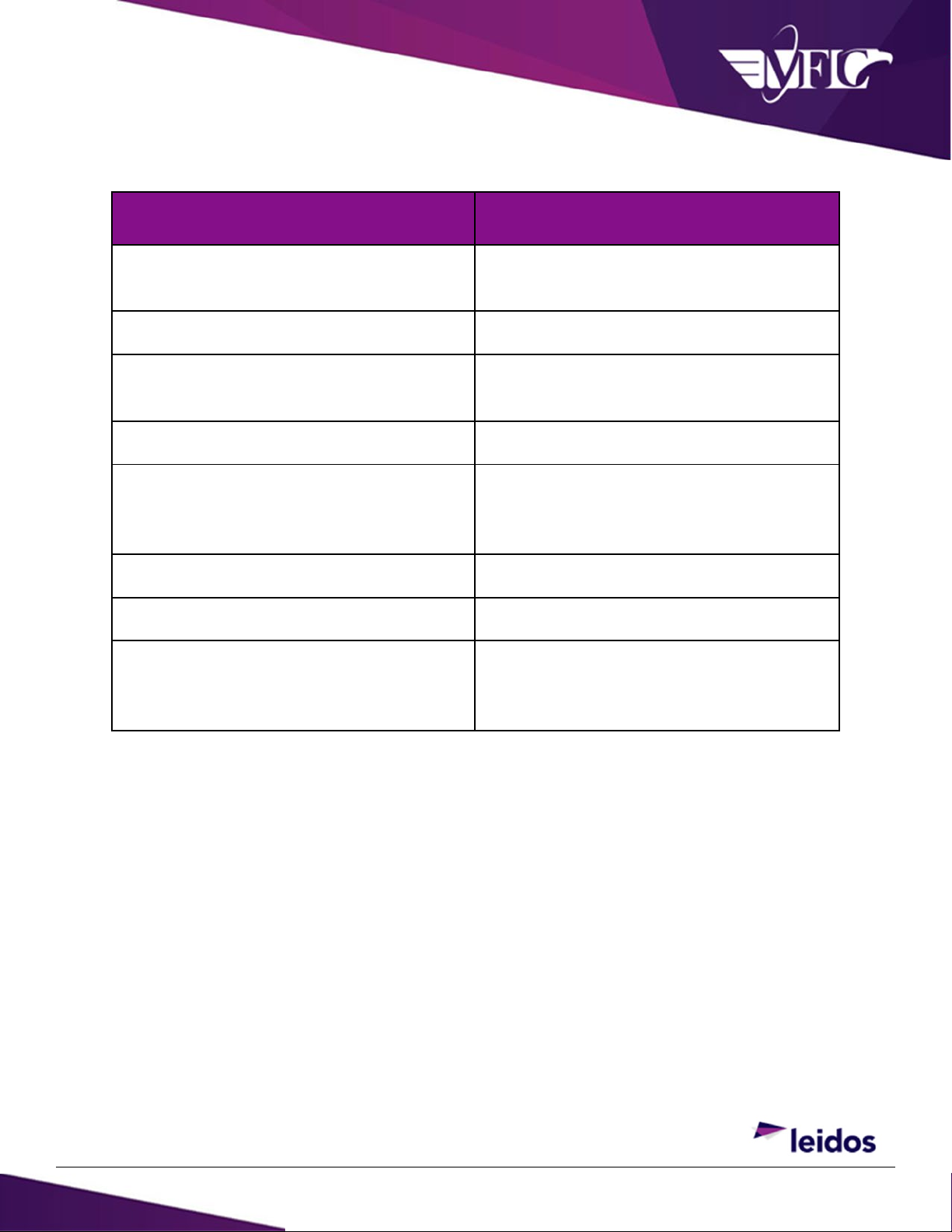
The information in this document is proprietary to Leidos. It may not be used, reproduced, disclosed, or exported without the written approval of Leidos.
MFLC-OPS-UMG-0023 MFLC Operational Manual 30
MFLC Operational Manual
Table 3. Internal Time Off Request Guidelines
Internal Time Off Request Guidelines Submit request
Holidays No earlier than 90 days in advance, but
minimum 30 days in advance
Vacation (full one – two weeks out) Minimum 60 days in advance
Extended weekend (Friday before,
Minimum 30 days in advance
Monday after, or both)
Single day off Minimum 10 days in advance
Regularly scheduled time off
(e.g., every Tuesday from 1:00-2:00)
Please let your Team Lead or Regional
Supervisor know as soon as possible so
they can block the time off
OCONUS – Personal Break (30 days) 90 days in advance or earlier
OCONUS – Home Leave up to 2 weeks Minimum 60 days in advance
CBA – Locations Employees represented by a union are
covered by the terms and conditions of
their collective bargaining agreement.
Travel in Support of Authorized Counseling Activities
All travel must be in direct support of your counselor assignments and be approved in advance
by the contracting officer representative. MFLCs are authorized to provide support for activities
within a 50-mile radius of their assignment location.
Approval for travel beyond 50 miles during a rotation is required (see Managing Your Travel). If
service members and their families need non-medical support in a location beyond 50 miles,
commanders on active-duty installations, state family program directors and reserve
headquarters points of contact, or their designees, may submit a request for travel in advance
through their chain of command to Military Community Support Programs (MC&SP).
Remote or Telework
The nature of counseling on the MFLC program is intended to be face-to-face. The
government and your POCs may build in an option for virtual support if/when needed. The
Page 36

The information in this document is proprietary to Leidos. It may not be used, reproduced, disclosed, or exported without the written approval of Leidos.
MFLC-OPS-UMG-0023 MFLC Operational Manual 31
MFLC Operational Manual
exact mixture remains to be determined based on federal, state, and installation guidance,
which may differ from location to location.
Page 37

The information in this document is proprietary to Leidos. It may not be used, reproduced, disclosed, or exported without the written approval of Leidos.
MFLC-OPS-UMG-0023 MFLC Operational Manual 32
MFLC Operational Manual
7 MFLC PROGRAM ROLES AND RESPONSIBILITIES
Counseling Services MFLCs Provide
Adult Counseling
Non-medical counseling provided through the MFLC program is an adjunct and supplemental
to the formal military behavioral and physical health treatment system. The focus is on
enhancing operational readiness and increasing individual and family resiliency by offering
support on issues such as:
• Relationships
• Stress management
• Parenting and parent-child communications
• Child behavioral issues
• Frequent deployments
• Financial and budget issues
• Job stress
Child Youth Behavioral (CYB) Counseling
Child and youth behavioral (CYB) counselors provide support to military children for a variety
of issues. CYB counseling services may be needed at installations, Department of Defense
Education Activity (DoDEA) schools, summer schools, camps, and programs DoD-wide,
addressing issues such as:
• Identifying feelings
• Bullying
• Conflict resolution
• Self-esteem
• Managing anger and aggression
• Separation from parents
• Problem-solving
• Coping with deployment and reunification
• Transition and moving
• Sibling and parental relationships
• Time management
Duty to Warn (DTW) and Mandated Reporting (MR)
As mental health providers, MFLCs are committed to ensuring the safety of service members
and their families in accordance with professional ethics and pursuant to state guidelines and
military and Department of Defense (DoD) guidelines.
Page 38

The information in this document is proprietary to Leidos. It may not be used, reproduced, disclosed, or exported without the written approval of Leidos.
MFLC-OPS-UMG-0023 MFLC Operational Manual 33
MFLC Operational Manual
Department of Defense and military regulations provide an exception to confidentiality
requirements when a client poses a threat of harm to oneself or harm to others, as disclosed to
the MFLC. When this occurs, it becomes a DTW. When a MFLC has a suspicion or awareness
of abuse, neglect, sexual assault/rape, behaviors that potentially impact suitability for mission,
or present or future illegal activity this is a Mandated Report.
Duty to Warn and Mandated Reporting are expected circumstances within mental health work.
Participants must be informed of confidentiality limitations from the start, without discouraging
them from seeking the help they need. Although direct clinical intervention will not be provided
in DTW and/or MR cases, MFLCs must facilitate the process by connecting participants to the
resources they need.
• Duty to Warn is the requirement to escalate urgent, imminent incidences that are
beyond the scope of the program. DoD and military regulations provide an exception to
confidentiality requirements when a client poses a threat of harm to oneself or harm to
others, as disclosed to the MFLC. When this occurs, it becomes a DTW.
• Mandatory reporting is the requirement for reporting per DoD and military regulations
when a mental health professional has a suspicion or awareness of abuse, neglect,
sexual assault/rape, behaviors that potentially impact suitability for mission, or present
future illegal activity.
Upon arriving at your installation, meet with your Point of Contact
(POC) to discuss installation-reporting protocols. Be sure to obtain
the correct contact numbers for emergency services, including the
POC, MPs, SARC, SAPR, and FAP.
Warm Hand-offs for DTW/MR Situations
A DTW/MR warm hand-off is the transfer of care and should only take place after the MFLC
has spoken to their Team Lead. Once a referral and warm hand-off resource is established
with the Team Lead, the MFLC can begin the warm hand-off process. In DTW and/or MR
situations, MFLCs are required to make a warm hand-off to a higher level of care or other
resources, such as the installation’s Point of Contact (POC), an Emergency Room or to
Behavioral Health.
When a warm hand-off is conducted, the participant must be escorted by non-MFLC personnel
as MFLCs are not able to escort participants. In a MR situation, MFLCs are required to make a
warm hand-off to a referral source such as a Sexual Assault Response Coordinator (SARC), a
Victim Advocate (VA), or the Family Advocacy Program (FAP). For a MR, participants do not
need to be escorted to the referral source.
Non-medical counseling (NMC) is not appropriate for DTW or MR
circumstances regardless of an MFLC’s training, expertise, and/or
experience in dealing with such issues.
Page 39

The information in this document is proprietary to Leidos. It may not be used, reproduced, disclosed, or exported without the written approval of Leidos.
MFLC-OPS-UMG-0023 MFLC Operational Manual 34
MFLC Operational Manual
Restricted Reporting
Restricted Reporting is a DOD program, which allows for adult victims of sexual assault or
domestic abuse to seek medical and counseling support from specific individuals, known as
restricted reporters, without triggering an official investigative process or notification of
command, which typically accompanies such disclosure. Restricted Reporting is available for:
• Victims of sexual assault who are service members or military dependents (18 years or
older).
• Adult victims of domestic abuse who are service members.
• Current or former spouses, current or former intimate partners with whom a service
member has cohabitated.
• Parents of children with service members.
• Contractors or civilians eligible for OCONUS medical treatment.
MFLCs are not restricted reporters. It is a good practice to explain this to adult participants
at the beginning of a session, along with the LOC. If a participant reports they are a victim of
domestic abuse or sexual assault (18 years or older), counselors should pause the session
and offer a Warm Hand-off to a restricted reporter, if requested. No further questions should be
asked about the situation.
If the participant discloses any details, MFLCs must follow a Mandated Report protocol.
MFLC Program Service Delivery and Scope
Service Eligibility
The following individuals or groups are eligible for MFLC services:
• U.S. active military service members and their immediate families.
• Non-active military service members and their immediate families (within 180 days of
discharge).
• National Guard and Reserve service members and their immediate families.
• DoD Civilian Expeditionary Workforce during the 90 days prior to deployment and 180
days post-deployment, and their immediate families.
• Caregivers for military personnel and their immediate families.
• Foreign military members and their families authorized in the Defense Enrollment
Eligibility Reporting System (DEERS).
• U.S. Coast Guard members on active duty and activated reserve personnel deployed or
mobilized.
• Youth who are in a classroom and/or group setting with other military service member’s
dependents.
• Non-remarried surviving spouses and children of active duty, National Guard, and
reserve service members, regardless of activation status and cause of death of the
service member.
Page 40

The information in this document is proprietary to Leidos. It may not be used, reproduced, disclosed, or exported without the written approval of Leidos.
MFLC-OPS-UMG-0023 MFLC Operational Manual 35
MFLC Operational Manual
• MFLC PM approved populations, as required (i.e., civilian populations at austere
locations).
The MFLC Program is meant to augment, rather than replace existing services. If service
members and family members are “in the system” meaning that they are actively being seen
through military social work services, behavioral/mental health clinics, the Family Advocacy
Program (FAP), a Chaplain, or a Sexual Assault Response Coordinator (SARC). Individuals
involved in an investigation conducted by the Military Police (MP), Judge Advocate General
(JAG) or the Command. Although a service member or their family may be “in the system”,
they may only obtain services from the military program with which they are already involved.
Service members and family members who are “in the system” can
receive MFLC services if they are referred to the Program through
their current treatment.
Program Presentations, Briefings and Walkabouts
Program outreach is an important part of the role for MFLCs. Make sure that you are frequently
and accurately sharing benefits of the program. Begin by working with your POCs to do a
program briefing on what the MFLC Program offers, such as:
• Who we serve
• Where we are located
• Specific models of engagement
• Free service
• Non-medical, solution-focused counseling and consultation
• And so much more
Stay visible by performing walkabouts at the places you find service members (e.g., the food
court, the bowling alley, in the rec areas, etc.).
Remember, only use presentations approved by the Office of the
Secretary of Defense (OSD). Approved MFLC presentations can be
downloaded from MFLC Central.
Page 41

The information in this document is proprietary to Leidos. It may not be used, reproduced, disclosed, or exported without the written approval of Leidos.
MFLC-OPS-UMG-0023 MFLC Operational Manual 36
MFLC Operational Manual
8 MFLC PROGRAM – INSTALLATION ACCESS AND POC
Installation Access
Make sure to complete all required government program training before you go to your
installation. Your supervisor will help facilitate installation access. Make sure to bring:
• Valid driver’s license,
• Proof of auto insurance/registration (for base and parking pass),
• One additional form of ID,
• Your Social Security card, and
• Your Criminal Background Acknowledgement Letter.
Once you’re on the installation, the current MFLC and/or your supervisor will facilitate an
introduction to your military point of contact (POC). Your POC will assist you with standing
base access instructions, office space, and other program needs.
Your POC is an important relationship that connects you to your
military community, partners, and resources. Make sure to develop a
rapport so that your working relationship is positive and
communicative.
Installation Point of Contact (POC)
An installation point of contact (POC) or designee maintain a robust communication system
that has been established to guide MFLCs to where support is needed. Always keep
installation designees aware of their roles and responsibilities related to the scope of the
program and effective utilization. This is accomplished by building relationships on
communication, collaboration, and trust.
The MFLC Program contract is a non-personal services contract, centrally managed by the
Office of the Deputy Assistant Secretary of Defense for Military Community and Family Policy;
therefore, the government does not direct or supervise MFLCs.
Installation or Designated Point of Contact (POC) Responsibilities
• Requests MFLC Program support
• Remains current on program policies, guidelines, and resources
• Reports any compliance and performance issues
• Reports any issues with compliance in duty-to-warn protocol
• Communicates to families and staff the role of MFLCs and CYB-MFLCs
• Coordinates access for counselors onto military installations
• Possesses knowledge of the whereabouts and schedule of assigned counselors
• Maintains contact and coordinates with the regional and service headquarters program
point of contact, contractor representative and Military Community Support Programs
(as appropriate) to address issues that cannot be resolved locally
Page 42

The information in this document is proprietary to Leidos. It may not be used, reproduced, disclosed, or exported without the written approval of Leidos.
MFLC-OPS-UMG-0023 MFLC Operational Manual 37
MFLC Operational Manual
• Serves as the liaison for all community contact and coordination for the MFLC Program
• Ensures a variety of logistical and communications activities are in place for counselors,
as well as coordinating and guiding work schedules
• The information in this document is proprietary to Leidos. It may not be used,
reproduced, disclosed, or exported without the written approval of Leidos.
• Trains counselors on procedures and protocols for the local child and youth program,
DoDEA, and local education authorities
• Ensures parental consent for CYB-MFLC services
• Provides counselors with community and unit orientations, including information on the
installation mission and demographics
• Provides information on installation reporting procedures for domestic abuse and child
abuse or neglect, potential harm to self and others, and other duty-to-warn situations
• Coordinates space for counselors’ use
• Serves as the liaison between the counselor and the local community
• Provides training on service-specific positive guidance and touch policies for counselors
working with children and youth
• Assists in prioritizing community support needs
• Maintains an awareness of issues encountered by counselors
• Informs Military Community Support Programs via service headquarters point of contact
of temporary or permanent changes in reporting location
Service Headquarters Point of Contact
• Reviews and forwards requests for MFLC support
• Receives data and monitors trends
• Communicates trends and makes suggestions to stakeholders on how to use data to
improve support services
• Keeps Military Community Support Programs apprised of curricula and training requests
(the program office must approve counselor attendance at installation trainings in
advance.)
• Approves access of installation points of contact to Data Warehouse
Military Community Support Programs
• Centrally manages the MFLC contract
• Establishes policy, guidance, and scope
• Reviews MFLC Program performance
• Reviews and approves requests for support
Virtual Support Services (VSS)
When approved by the government, MFLCs may provide Virtual Support Services by Virtual
Telephonic Counseling (VTC), for their assignment. VTC services can be provided for:
Page 43

The information in this document is proprietary to Leidos. It may not be used, reproduced, disclosed, or exported without the written approval of Leidos.
MFLC-OPS-UMG-0023 MFLC Operational Manual 38
MFLC Operational Manual
• Briefings and Presentations
• Meetings with Points of Contact (POCs) and Stakeholders
• Consultations with Staff, Parents/Guardians, and Teachers
• Individual Counseling (Adults and Children 13+)
• Couple and Family Counseling (Adults and Children)
• Group Counseling (Adults and Children 13+) and
• Group Activities (Children under 13, with supervisor guidance).
All requirements for MFLC sessions apply to VTC sessions, including Duty to Warn (DTW) and
Mandated Reporting (MR). In addition, further compliance is required for confidentially and
securely delivering non-medical services in a virtual environment. Read through the Virtual
Support Services User Guide for detailed instructions on providing VTC services.
MFLC VTC services are provided through the Zoom for Government
platform. Instructions for setting up your Zoom for Government
account are sent to your Leidos email during onboarding.
Page 44

The information in this document is proprietary to Leidos. It may not be used, reproduced, disclosed, or exported without the written approval of Leidos.
MFLC-OPS-UMG-0023 MFLC Operational Manual 39
MFLC Operational Manual
9 SERVICE ACTIVITIES
There are three different types of activities that are reported separately by MFLCs on their
Daily Activity Reports (DARs):
• Admin & Support — Values are defined by the Government
• Outreach & Engagement — Presentations, brochures, etc.
• Sessions — Counseling and Consultations
Outreach & Engagement, and Admin & Support are not included or reported together with the
counseling or consulting session. Instead, this activity is reported separately.
Session activity type collects data related to providing counseling and consulting sessions.
This data compiles all information regarding the counseling or consulting session conducted by
MFLC for the submission of the MFLC DAR. Session follow-up information may include Duty to
Warn, Referral or Child and Youth Problematic Sexual Behavior as needed.
Daily Activity Reporting (DAR)
As a counselor for the MFLC Program, your daily activity should reflect an average of 8 hours
of MFLC activities daily. Within your 8 hours of daily MFLC work, it is expected that you
complete 4 hours or more of Sessions (Counseling or Consultation). The remainder of your
workday should be captured as a combination of Outreach & Engagement and Administrative
& Support activities. Daily Activity Reports (DARs) must be created for every session you hold.
Access the MFLC Toolkit by Signing into the MFLC Toolkit.
How to access the MFLC Toolkit.
For more information about Completing a Daily Activity Report (DAR).
Page 45
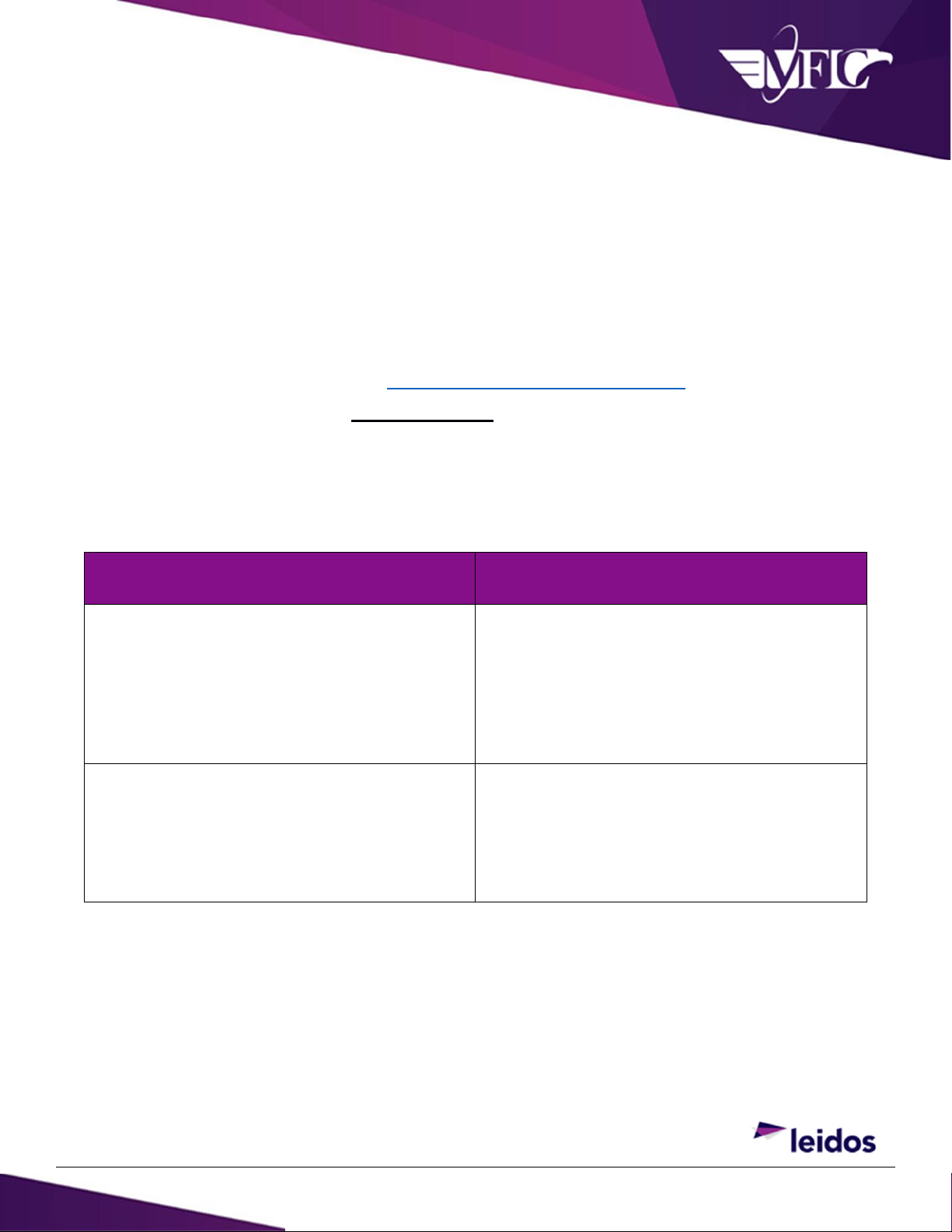
The information in this document is proprietary to Leidos. It may not be used, reproduced, disclosed, or exported without the written approval of Leidos.
MFLC-OPS-UMG-0023 MFLC Operational Manual 40
MFLC Operational Manual
10 ADVERSE AND SIGNIFICANT INCIDENT REPORTS
An Adverse or Significant Incident is a range of events and situations that may cause harm
or injury to a participant or MFLC, or that may directly or through media attention, may
negatively impact the Department of Defense or the Military and Family Life Counseling
program.
An Adverse or Significant Incident Report serves as an immediate notification of any
adverse activity that could result in a negative consequence on the MFLC Program. For
examples of situations that constitute Adverse or Significant Incidents that must be reported,
read Appendix A, pages 1 – 2 of the MFLC Incident Reporting Procedure.
Make sure to identify and report ALL INCIDENTS to your supervisor immediately, Adverse or
Significant. Prioritize speed, then completeness. Your supervisor will complete the final
Adverse or Significant Incident Report after you notify them.
Table 4. Adverse and Significant Incidents – Differences and Similarities
The Differences The Similarities
Adverse Incidents are a range of events and
situations that may cause harm or injury to a
participant or MFLC. Significant Incidents are
more specific to contracting or internal
company affairs and outside the delivery of
Both Adverse and Significant Incidents may
negatively impact the Department of Defense
or the MFLC program and must be reported
on immediately.
MFLC services.
Adverse Incident Reports (AIRs) are different
from Significant Incident Reports (SIRs) but
will be completed by your supervisors once
you properly and timely report the event to
them.
Team Leads must be contacted immediately,
no matter how severe you believe a situation
is. The Operations Team will determine
whether it is an Adverse or Significant
Incident.
Page 46
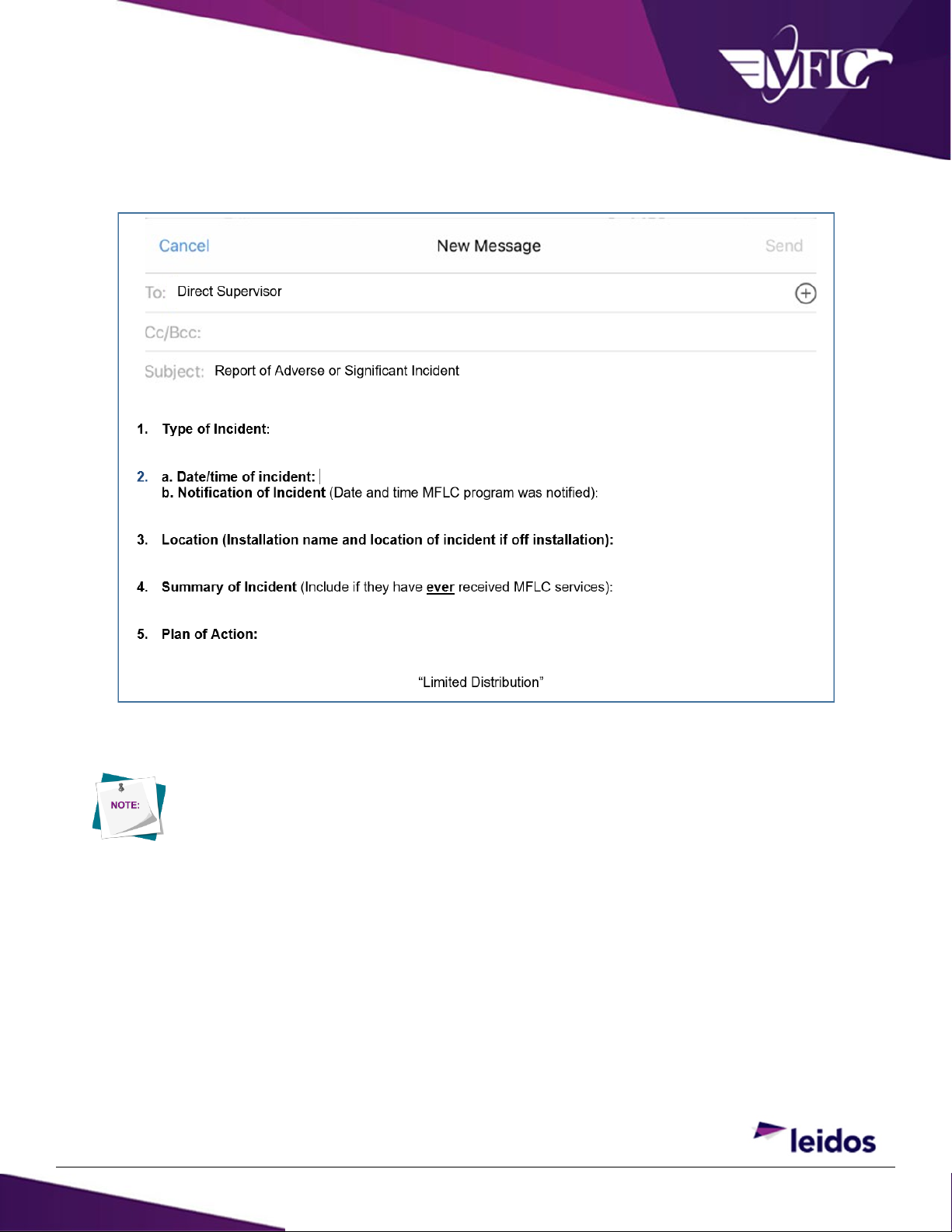
The information in this document is proprietary to Leidos. It may not be used, reproduced, disclosed, or exported without the written approval of Leidos.
MFLC-OPS-UMG-0023 MFLC Operational Manual 41
MFLC Operational Manual
You can use the email template below to notify your supervisors of Adverse or Significant
Incidents. Remember to always protect PII/PHI and classified information.
Figure 1 – Adverse Incident Report Notification Email Template
Adverse incidents can be challenging and stressful situations. If you
need support after reporting an adverse incident, talk to your Team
Lead about available resources, such as your Employee Assistance
Program or a debrief with MFLC Program leadership.
Page 47
The information in this document is proprietary to Leidos. It may not be used, reproduced, disclosed, or exported without the written approval of Leidos.
MFLC-OPS-UMG-0023 MFLC Operational Manual 42
MFLC Operational Manual
11 WHERE TO FIND SUPPORT AND RESOURCES
MFLC Central
MFLC Central is a single source site for access to everything needed to be successful as an
MFLC. It supports your service and performance of all non-medical counseling activities. Be
sure to bookmark MFLC Central on your iPad and iPhone according to the instructions
provided in the MFLC Information Technology Guide.
Chrome is the preferred browser. On a mobile device, MFLC Central
should be accessed through the pre-loaded browser inside the Leidos
activity application. The browser icon will load once you set up the
Leidos activity application.
Community Engagement Center (CEC)
The MFLC Central CEC page provides the latest information and news on the MFLC Program.
You can find interesting content such as success stories from around the Program, the MFLC
Newsletter, as well as links to learning opportunities and resource downloads. Check here
often for Program news and updates.
Job Aids and Resources
Use the Job Aids/Resources page on MFLC Central to discover important MFLC resources to
improve your effectiveness and efficiency. Each tab contains related resources and tools for
your professional use.
Documents marked with a “For Internal Use Only" label should not be
distributed to participants or anyone else.
Approved MFLC Presentations
The Approved MFLC Presentations page contains a library of Office of the Secretary of
Defense (OSD)-approved MFLC presentations. Remember to only use these approved
presentations.
MFLC Toolkit
The MFLC Toolkit website can be used to document the completion of daily activities, including
counseling and consulting sessions, outreach & engagement, administration & support, and
other tasks.
Page 48

The information in this document is proprietary to Leidos. It may not be used, reproduced, disclosed, or exported without the written approval of Leidos.
MFLC-OPS-UMG-0023 MFLC Operational Manual 43
MFLC Operational Manual
Sign in to the MFLC Toolkit at https://mflc.leidos.com/.
Make sure to bookmark MFLC Toolkit on your iPad and iPhone
according to the instructions provided in the MFLC Information
Technology Guide.
MFLC University
MFLC University serves as the training delivery platform and learning management system for
all online training the Leidos MFLC workforce will take. It is where all MFLCs are required to
complete their government- and program-required training. In addition to the required training,
a variety of training and other resources are also available to MFLCs. As importantly, MFLC
University is where training compliance is tracked and reported on to MFLC managers and the
government. This reporting reflects whether we are meeting our contractual Service Level
Agreement (SLA) with the government for 100% compliance.
Access MFLC University at: https://mflcuniversity.mlearning.com
MFLC University can be accessed from any computer with an internet
connection. MFLC University provides training assignments,
completion reminders, and compliance notifications via email.
Military OneSource
Military OneSource provides comprehensive information on every aspect of military life at no
cost to service members and their families.
Find out more about Military OneSource at: https://www.militaryonesource.mil.
Leidos Service Links
• CIO Central - CIO Central is an employee self-service tool provided by the CIO (IT)
Services organization within Leidos.
• Leidos Deltek – Leidos employees use Deltek for timekeeping.
• PRISM – Leidos intranet for employee connection, collaboration, and communication.
Only links that are applicable to your role will display on your MFLC
Central homepage.
Page 49
The information in this document is proprietary to Leidos. It may not be used, reproduced, disclosed, or exported without the written approval of Leidos.
MFLC-OPS-UMG-0023 MFLC Operational Manual 44
MFLC Operational Manual
• Vector, the Leidos SharePoint system
Counseling Center of Excellence (CCE)
The Counseling Center of Excellence is an MFLC’s centralized hub of community support,
resource-sharing, learning, and collaboration. The CCE will:
• Provide access to a reliable and responsive support hub.
• Coordinate access to and delivery of all online and virtual training.
• Foster collaboration with fellow counselors, MFLC leadership, and key program
partners.
Table 5. Leidos and MFLC Program Support
Support for… Contact Information…
Leidos onboarding topics
• Benefits
• Leidos-required training
• Payroll
• Travel booking
• 401(k) retirement plan
Leidos systems and equipment
• Activating your Leidos account
• Setting your password and secret
word
• Leidos token support (token
activation, token troubleshooting and
using a token)
Access to the Leidos Web Portal and the
following services:
• CIO Central, the Leidos IT Service
Management system
• Concur, the Leidos travel booking
system
• Deltek, the Leidos time charging
system
• Prism, the Leidos employee intranet
• UltiPro, the Leidos payroll system
Your onboarding specialist
MFLC IT Guide
Leidos IT Service Desk:
U.S.: 855-9-LEIDOS (855-953-4367)
U.K.: 0800 999 5533
AU: +61 (1) 800 LEIDOS (534 367)
Africa, Europe, Middle East: + 44 1489
568564
Other Non-U.S.: + 1 601-460-2000
Leidos IT Service Live Chat
• You can use Live Chat to send an
instant message to a Service Desk
Agent
• Live Chat cannot be used to perform
password changes or unlock
accounts. Please call the Service
Desk or use the Leidos Password
Manager (https://qpm.leidos.com) for
these types of situations.
Page 50
The information in this document is proprietary to Leidos. It may not be used, reproduced, disclosed, or exported without the written approval of Leidos.
MFLC-OPS-UMG-0023 MFLC Operational Manual 45
MFLC Operational Manual
Workday, the Leidos human
Self Service via CIO Central. Use CIO
Support for… Contact Information…
•
resources and learning system
Central to:
• Report an issue and request
assistance
• Request software and services
MFLC Program-specific questions
• Government- and program-required
training
• MFLC Central, counselor information,
and tools
MFLC Help Desk:
855-300-4463
When promoted, press 2 to be connected to
an MFLC Help Desk agent
Page 51

The information in this document is proprietary to Leidos. It may not be used, reproduced, disclosed, or exported without the written approval of Leidos.
MFLC-OPS-UMG-0023 MFLC Operational Manual | A-1
MFLC Operational Manual
Acronym List
Acronym Definition
AFB Air Force Base
CDC Child Development Centers
CLIN Contract Line-Item Number
CO Contracting Officer
COR Contracting Officer’s Representative
CYB Child and Youth Behavioral
DEER Defense Enrollment Eligibility Reporting System
DoD Department of Defense
DoDIs Department of Defense Instructions
DSSR Department of State Standardized Regulations
DTM Directive-Type Memorandum
DTW Duty to Warn
FAP Family Advocacy Program
FTR Federal Travel Regulation
IAW In Accordance With
JTR Joint Travel Regulation
KIA Killed in Action
MC&F Military Community and Family Policy
MCAS Marine Corps Air Station
MCB Marine Corps Base
MCCS Marine Corps Community Services
MCLB Marine Corps Logistics Base
MCRD Marine Corps Recruit Depot
MCSP Office of Military Community Support Programs
MFLC Military and Family Life Counseling
MFLCs Military and Family Life Counselors
MOS Military OneSource
Page 52

The information in this document is proprietary to Leidos. It may not be used, reproduced, disclosed, or exported without the written approval of Leidos.
MFLC-OPS-UMG-0023 MFLC Operational Manual | A-2
MFLC Operational Manual
Acronym Definition
MOU Memorandum of Understanding
MRR Mission Ready Reserve
MSR Monthly Status Report
MTF Medical Treatment Facility
MWTC Mountain Warfare Training Center
NSN Naval Station
NSA Naval Support Activity
NSB Naval Submarine Base
NWS Naval Weapons Station
POC Point of Contact
PRS Performance Reference Summary
PTSD Post-Traumatic Stress Disorder
RCC Recovery Care Coordinators
SAPR Sexual Assault Prevention and Response
SECO Spouse Education Career Opportunities
SLA Service Level Agreement
SOW Statement of Work
TBIT Traumatic Brain Injury
TDL Technical Direction Letter
TPOC Technical Point of Contact
U.S. United States
U.S.C. United States Code
VSS Virtual Support Services
VTC Virtual Telephonic Counseling
Page 53
The information in this document is proprietary to Leidos. It may not be used, reproduced, disclosed, or exported without the written approval of Leidos.
MFLC-OPS-UMG-0023 MFLC Operational Manual | B-1
MFLC Operational Manual
Title:
MFLC Operational Manual
Functional/Service Area:
Operations
Content Approver(s):
Tory Walker
Repository:
Process Asset Library (PAL)
.01
05/20/2022
Shelley Bonner
Initial draft and adjudication of PRs
.02
06/10/2022
Shelley Bonner
Final Draft Submission – Peer Review
.03
06/15/2022
Shelley Bonner
Final Draft PR Adjudication
.04
06/16/2022
Shelley Bonner
Final review, prepare for QA review
QA Review, pg 9 Resourses
working.
.06
06/22/2022
Nora Mount
Corrections made to QA edits.
1.0
06/22/2022
Robin Osborne
QA Reviewed and Published
.06
06/22/2022
Nora Mount
Made QA changes listed for .05
DOCUMENTATION CONTROL
Table 6: Document Identification presents identifying details about this document.
Table 6: Document Identification
Category Detail
DOCUMENT CHANGE HISTORY AND CONTROL
The Leidos Document Review Process governs maintenance of this document, to
include Quality Assurance (QA) and Documentation Management Group (DMG)
reviews and approvals. The Service Area Manager or Lead provides content approval.
Table 7: Change History lists changes to this document.
Table 7: Change History
Version # Date Change Author Change Summary
misspelled in link, Pg 27 License
.05 06/22/2022 Robin Osborne
Renewal Form link and Non travel
Expense Report Guideline link not
 Loading...