

Page 1
Two-door refrigerator/freezer
Use and maintenance
Page 2
Contents Special instructions 1
Appliance description 2
Proper use of the appliance 3
Guide for placing foodstuffs in the refrigerator
compartment 6
Maintenance 7
Special instructions and advice 8
Page 3

If this appliance is to replace a lock-fitted refrigerators
before getting rid of the old model, break or remove the
lock as a safety measure to protect children who, when
playing, might have access to the refrigerator and lock
themselves inside.
The purchaser is responsible for installing the appliance.
The manufacturer assumes no responsibility for incorrect
installation or for failure to complete the earth connections
as described in this handbook.
At the end of the functional life of your appliance containing
cyclopentane gas in the insulation foam and perhaps gas
R600a (isobutane) in the refrigeration circuit the latter
should made safe before being sent to the dump.
For this operation, please contact your dealer or the Local
Organisation in charge of waste disposal.
After unpacking your new fridge-freezer the interior should
be washed with a weak solution of sodium bicarbonate in
warm water.
Rinse with clean water and dry thoroughly. Position the
appliance away from heat sources, at least 50 cm (20 inc)
and in a ventilated spot, not in niches or recesses.
Position the appliance in such a way that you can
access the socket where it is plugged in.
Wait about three hours before plugging the appliance in
to the mains to ensure proper performance.
Make sure the mains voltage corresponds with the voltage
indicated on the rating plate which is located inside the
refrigerator compartment on the lower left-hand side.
Insert the plug in an electric socket provided with earth
contact and suitable for a current of a least 10A.
Do not use adapters or shunts which could cause
overheating and burning.
If the wall socket has no earth contact, or if the plug is not
suitable for your mains, we suggest you call an electrician
for assistance.
Installation
Special instructions
1
Page 4

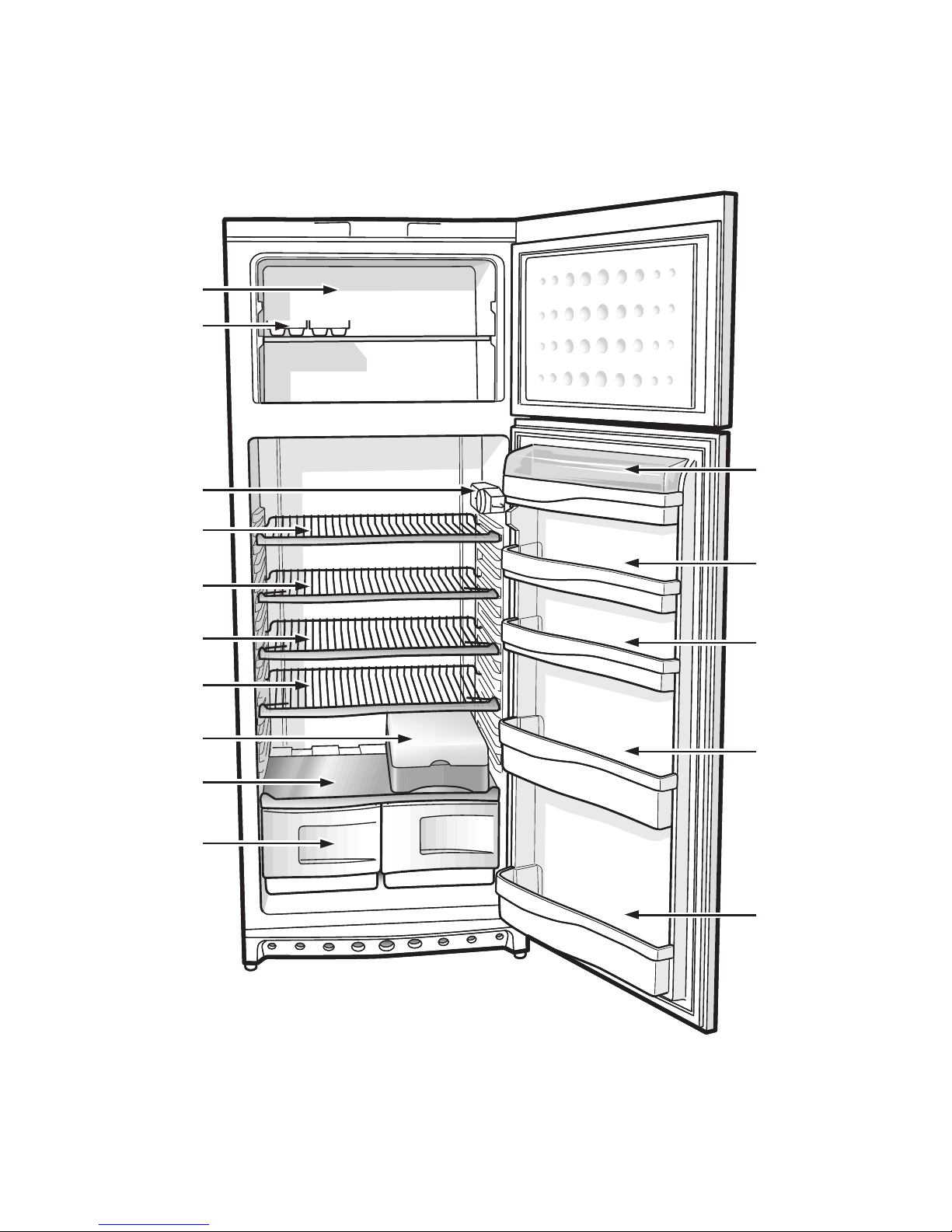
A Compartment for storing frozen foods, for freezing
fresh foods an for making ice.
B Thermostat box and interior light
C Sliding, height-adjustable shelves
D Removable fruit/vegetable bin top
E Crisper
F Compartment for bottles
G Removable door shelves for small food products and
bottles.
H Removable door shelf with egg tray
I Meat box
J Ice tray
2
Appliance description
Page 5
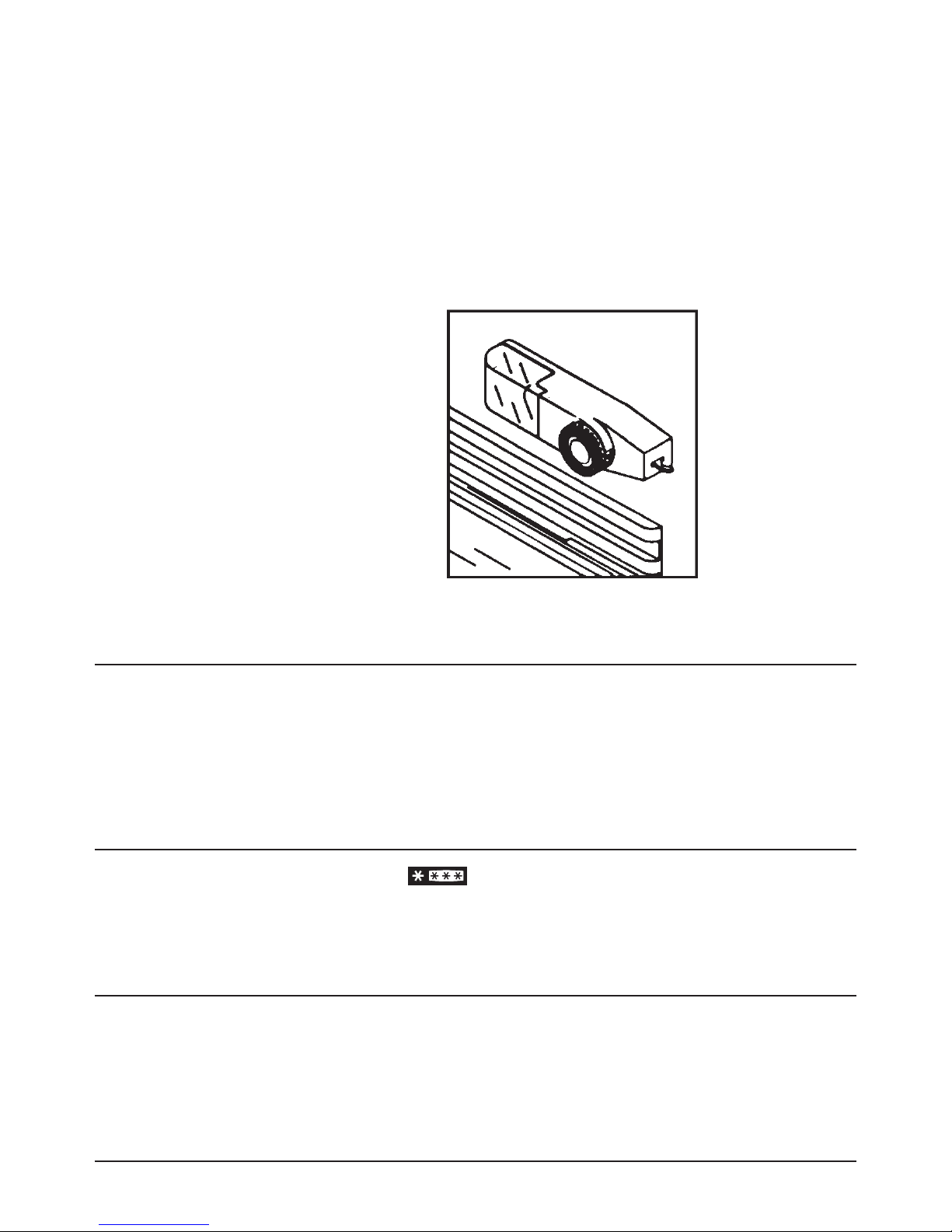
The thermostat automatically regulates the temperature
inside the appliance.
Turn the knob from setting 1 to setting 5 to obtain
increasingly colder temperatures (Fig. 1).
If the freezer compartment is empty, to obtain the optimum
temperatures inside the refrigerator, set the thermostat
knob indicator on a middle setting.
The setting should be regulated taking into account how
often the refrigerator door is opened, how much food is on
the shelves and the room temperature is.
Use of the
refrigerator
compartment
Proper use of the appliance
3
The symbol on the freezer door means that this
compartment permits fast freezing of fresh foods and the
storing of frozen and deep-frozen foods for long periods of
time
Use of the
freezer
compartment
If frozen or deep-frozen foods are to be stored in the
freezer compartment, set the thermostat knob between 4
and 5.
Storage
Fig. 1
R 45
Page 6
To package foods for freezing, consult a specialized
manual. Before placing fresh foods in the compartment for
freezing, to prevent the temperature of already frozen
foodstuffs from rising irregularly in contact with the
unfrozen food, these frozen foodstuffs should be removed
from the freezing space and placed below the divider.
Never freeze more foodstuffs than the amount
indicated on the rating plate at one time. Once the
space is loaded, regardless of the ambient temperature,
move the thermostat knob back about a quarter setting
compared to the setting used for freezing.
The fresh foods will be completely frozen 24 hours after
their placement in the freezing space. If you changed the
thermostat setting for the freezing operation, return the
thermostat to its original setting.
Freezing fresh
foods
Proper use of the appliance
4
a) The temperature of the ice made in the freezer is
exteremely low; when removing ice, handle with care
as contact with your skin could cause frost burns and
cuts.
b) Avoid placing full glass bottles in the freezer, especially
if they are sealed and contain fizzy or carbonated
drinks (mineral water, orange ade, coca cola) because
as the liquid freezes, it expands and could cause the
glass to explode.
Special advice
and instructions
on using the
freezer
Remember to remove the frost from the walls of the top
compartment periodically; do not use sharp metal tools
which can seriously damage the cooling circuit.
Defrosting is necessary to assure the best performance
from your refrigerator and avoid wasting electricity.
To defrost the top compartment, which should be done
once or twice a year, unplug the appliance from the mains
and leave the door open until all the frost has thawed.
Defrosting
Page 7
A pot of warm water placed in the freezer will speed up the
defrosting operation. During defrosting, wrap the frozen
foodstuffs removed from the freezer in newspaper and
keep them in a cool place. Since the rise in temperature will
shorten their storage life, these foods should be used fairly
soon, even after their return to the freezer.
The refrigerator compartment defrosts automatically while
running; the defrost water is collected by a drainer and
evaporated automatically to the outside.
WARNING: do not damage the refrigeration circuit.
Do not use mechanical devices or other tools to speed
up the defrosting process, unless they have been
recommended by the manufacturer.
5
Page 8
6
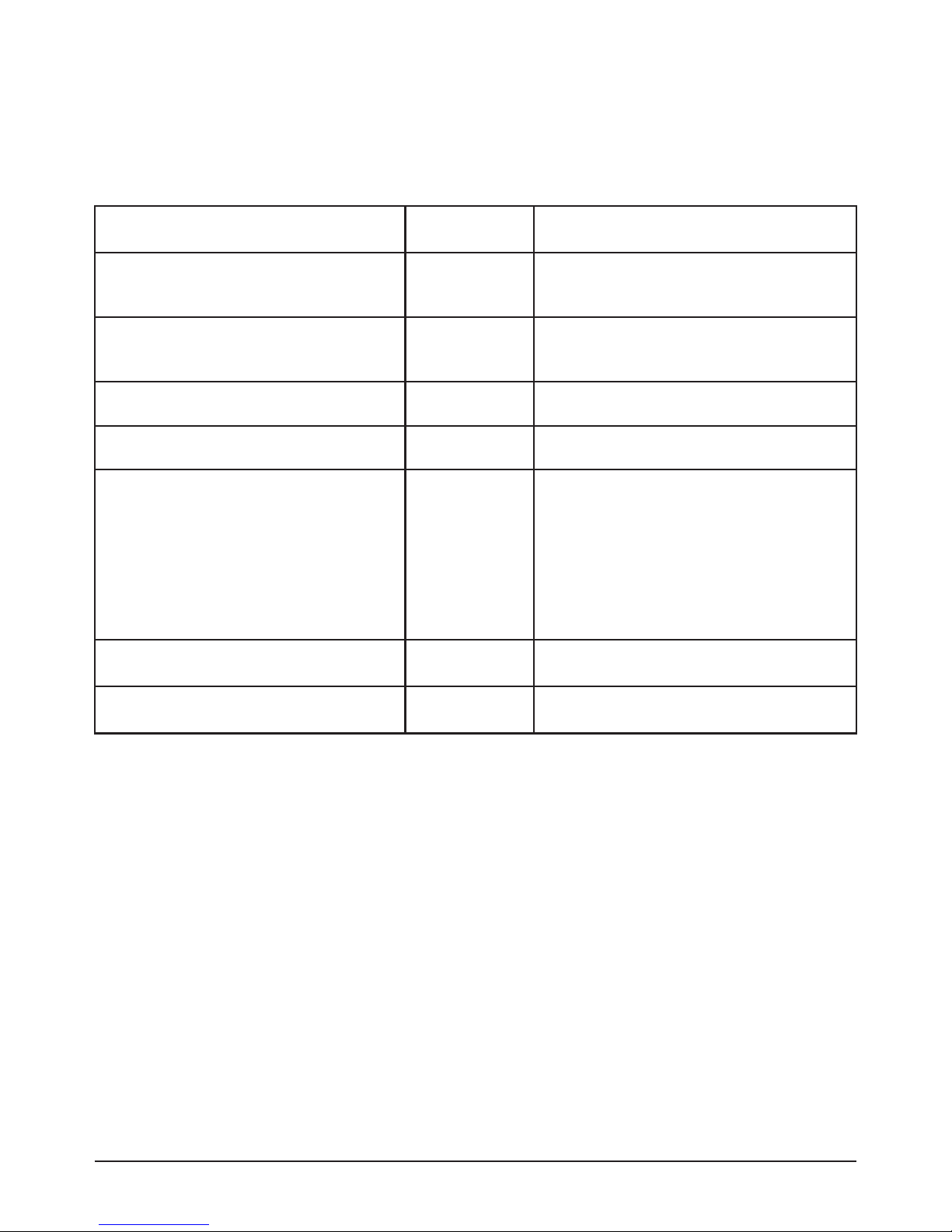
Guide for placing foodstuffs in the
refrigerator compartment
Food
Dressed meat and fish (wrap in
plastic foil or pack in plastic bags)
Fresh cheese
Eggs
Butter, margarine
Cooked or precooked food (place in
air-tight containers and when cool
store in refrigerator).
Sausages, salami, sandwich meats
in general, resh pasta, custards,
puddings, chocolates, ream pastries,
lard, bread, dry pastries, red
tomatoes.
Bottled products, milk, drinks, yogurt
Fruit and vegetables
Storage time
2 or 3 days
3 or 4 days
1 month
1 week
3 or 4 days
Placement in refrigerator
In the bottom of the refrigerator
over the vegetable bin
(which is the coldest area)
In special egg tray on door
On door shelf
On any shelf
On special door shelves
In vegetable drawer
In the bottom of the refrigerator
over the vegetable bin
(which is the coldest area)
N.B.: potatoes, garlic and onions do not have to be stored in the
refrigerator.
Page 9
Before performing any cleaning operations, unplug
the appliance from the mains (by removing the plug or
disconnecting the general switch).
The refrigerator should be cleaned periodically with a
solution of bicarbonate of soda and warm water. Never
use abrasives, detergents or soaps; after washing, rinse
with clean water and dry with care. At least once a year
the condenser (black, finned part on the back) should be
cleaned using a vacuum cleaner or dry brush. This
preserves the efficiency of the appliance in time and
saves energy.
The bulb for lighting the interior of the appliance is
located at the back of the thermostat box.
To change, remove the plug from the socket and unscrew
the bulb. Replace with a maximum 15 Watt bulb (Fig. 2).
Changing the
light bulb
Maintenance
7
Cleaning
Fig. 2
R 45
Page 10
l To increase the space available and improve the
appearance, the "cooling section" of this appliance is
inside the back wall of the refrigerator compartment. When
the refrigerator is running this wall will be covered with frost
or drops of water, depending on whether the compressor is
operating or not. Do not worry! Your refrigerator is running
normally. You should defrost only when the layer is more
than 5 mm. To do this, set back the thermostat knob.
l Never place hot food in the refrigerator, let it cool first to
room temperature. Arrange the food to assure sufficient air
circulation inside the appliance. Avoid placing sheets of
paper or plastic on the shelves. Make sure no foodstuffs
touch the back wall of the refrigerator compartment.
During use, open the refrigerator door as little as possible.
l In addition to the number of stars the compartment is
marked with, the storage life of deep-frozen foods
depends on the room temperature, the thermostat setting,
how often the compartment door is opened, the type of
food, and how long the food has been at room temperature
from the time it was purchased to bringing home. Always
follow the instructions printed on the package and never
exceed the maximum storage time indicated.
l If the room temperature is less than 14° for a long
period of time, the freezing compartment will not reach
the temperature required for deep freezing and the storing
time will be less. In this case, remember to use frozen
foods within a relatively short period of time.
Special instructions and advice
8
Page 11
9
l To prevent increase in moisture and consequently
increased frost, never place liquids in uncovered
containers in the refrigerator. The frosttends to
concentrate in the coldest parts of with time.
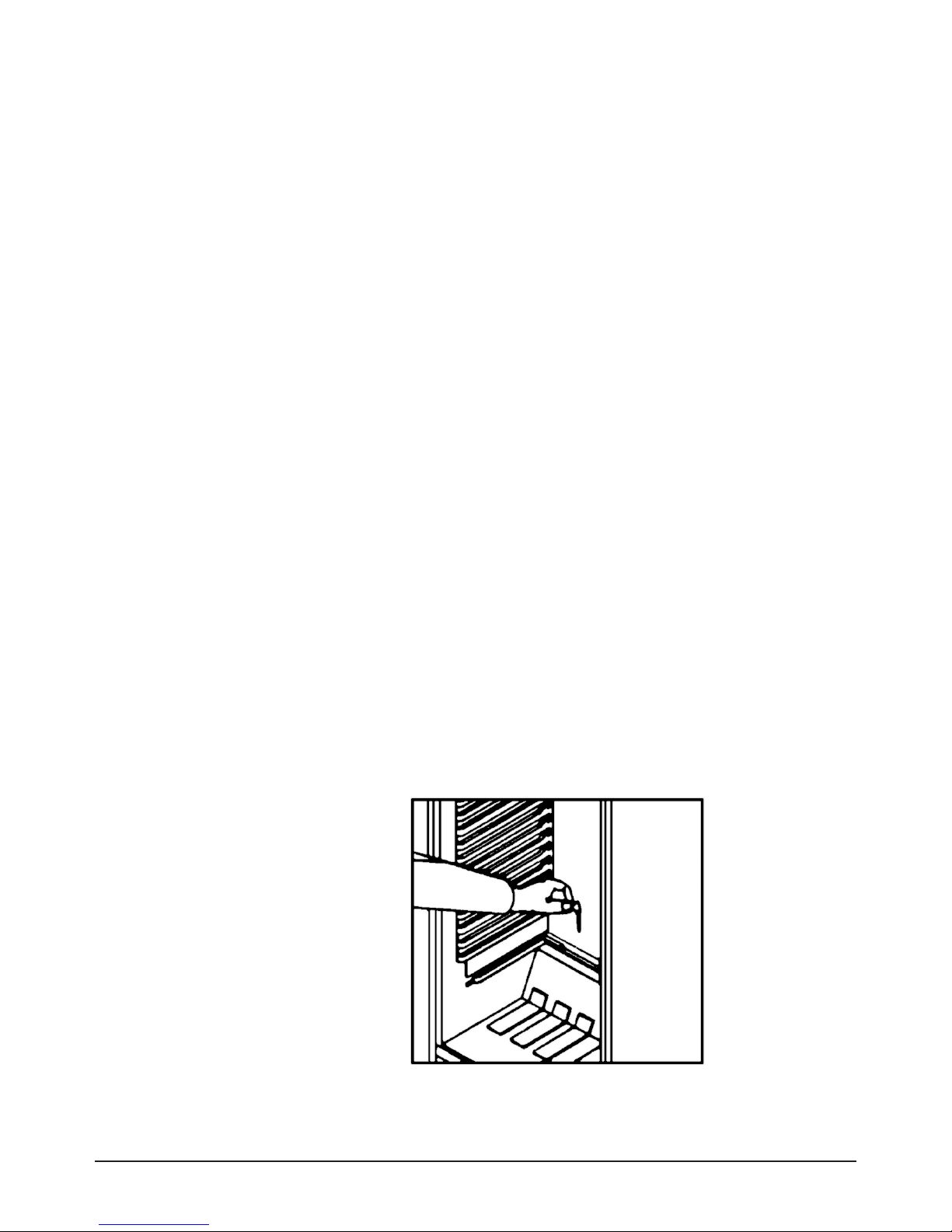
l Before calling for technical assistance, if the appliance
is not working, first make sure the supply plug is properly
inserted in the socket and that the thermostat is not on
setting " 0 "; if the refrigerator is noisy, check the level and
make sure there is no object on the outside in contact with
the back; if the refrigerator performs poorly, make sure the
interior is not overly crammed, the door closes tightly and
the condenser at the back of the fridge is not full of dust.
l The refrigerating gas circulating inside the cooling
circuit causes a slight bubbling sound, even when the
compressor is not working. This is quite normal!
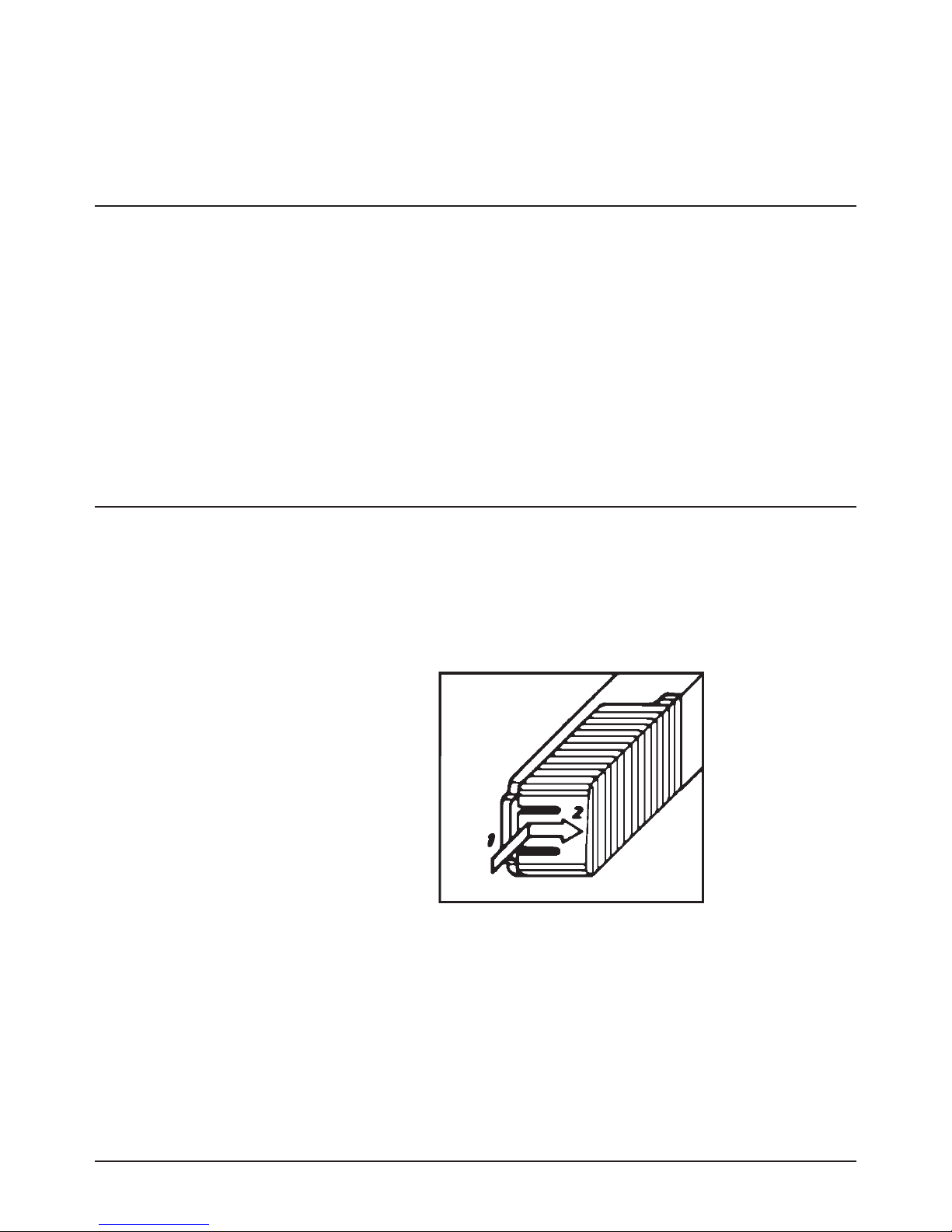
l If you notice water in the bottom of the refrigerator,
make sure the defrost water drain hole is not plugged;
if plugged, clean with the special cleaning rod as
shown in (Fig. 3).
Fig. 3
Page 12
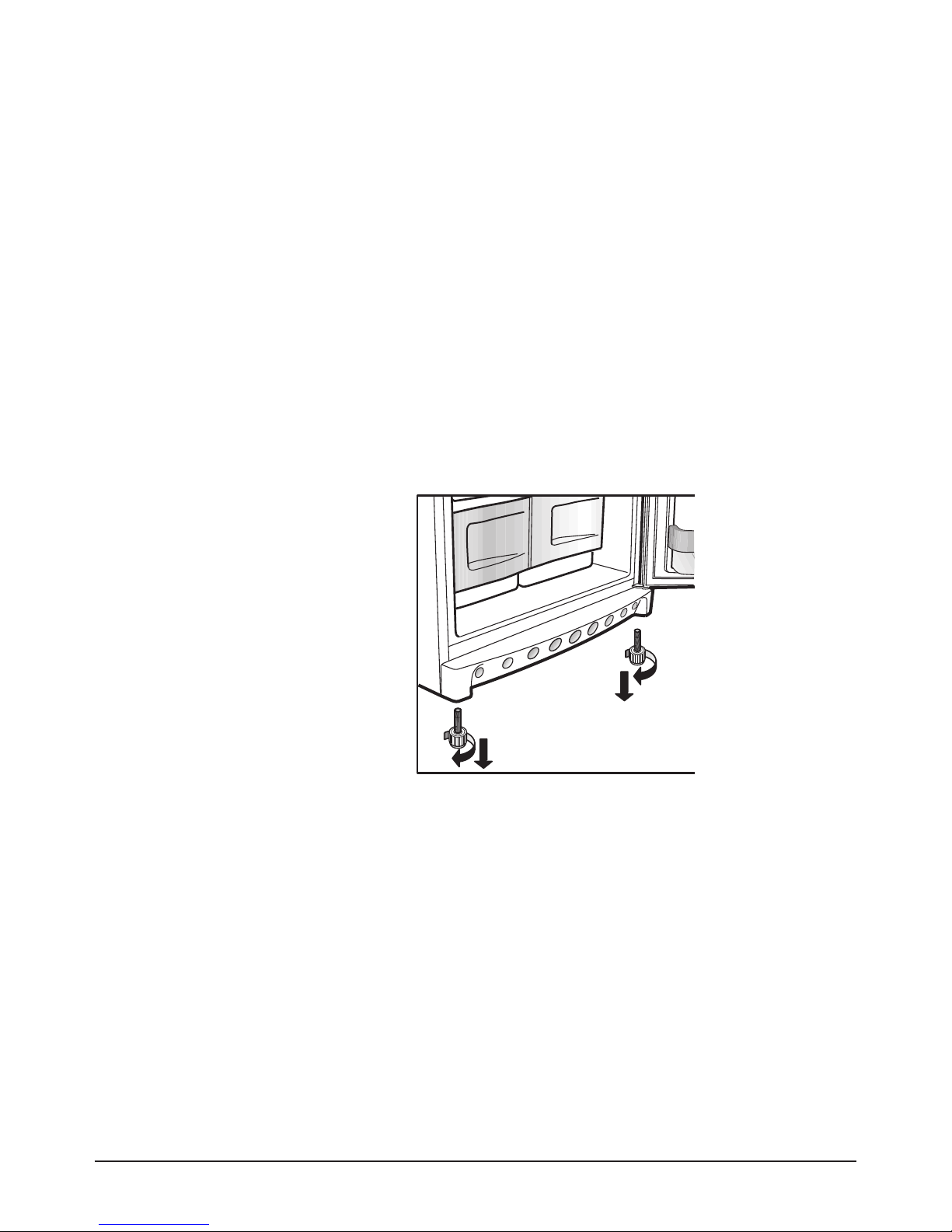
l Your refrigerator contains 2 wheels that make it easier to
place, move and clean your appliance.
To avoid the movement of the refrigerator while using it,
you can fix it by turning the front legs counter clockwise. So
that, you will avoid the refrigerator to move back and front
when opening and closing the door. As well, you will have
the balanced placement of the refrigerator.
When you want to clean and move your refrigerator, you
can simply turn the front legs towards clockwise.
Special instructions and advice
10
Fig. 4
l Your refrigerator is designed according to the
optimum performance at the ambient temperature
between +43°C and +5°C. Above or below these
temperatures, optimum refrigeration performance
can not be achieved.
NOTE: The lifetime or employment of your refrigerator is
10 years.
Page 13
C
D
D
D
E
G
H
H
I
F
J
A
B
D
I
R 45 (UK)
R 45 S (UK)
C
D
D
D
E
G
H
H
I
F
J
A
B
D
I
Page 14
19503053101
 Loading...