

Page 1
Instructions
EW52
EW45
EW42
EW34
EW32
Page 2

PLEASE READ THIS BOOKLET CAREFULLY.
Contents Page
Introduction 3
Installation 4-5
Safety Information - Always 6
Never 7
Features - EW32 8
Features - EW34 9
Features - EW42 & EW45 10
Features - EW52 11
Controls 12
Hotplates General Information (EW32 & EW34) 13-14
Ceramic Hobs General Information (EW42, EW45 & EW52) 15-19
Choosing Your Utensils 20-21
Temperature Conversion Chart 22
Top Oven / Grill Cookery Notes (EW34 & EW52) 23-24
Grill Chart (EW34) 25
Grilling (EW32, EW42 & EW45) 26
Grill Chart (EW32, EW42 & EW45) 27
Solarplus Grill (EW52) 28
Grill Chart (EW52) 29
Oven Temperature Charts 30-31
Main Oven Cookery Notes 32-33
Using the Main Oven for other Functions 34
Care and Cleaning 35-38
Cooking Results not Satisfactory 39
If Something Goes Wrong 40
Hotpoint Service Cover 42
Key Contacts Back Cover
To the User
You must read the instructions prior to installing and using the appliance and then
retain them for future reference.
Retention of this Instruction Book
This Instruction Book must be kept handy for reference as it contains important
details on the safe and proper use of the appliance.
If you sell or pass the appliance to someone else, or move house and leave it
behind, make sure this Book is also provided so the new owner can become
familiar with the appliance and safety warnings.
2
Page 3
Introduction
Your new appliance is guaranteed* and will give lasting service. This guarantee is only applicable
if the appliance has been installed in accordance with the installation instructions detailed in this
booklet.
To help make best use of your cooking equipment, please read this booklet carefully.
The appliance is designed specifically for domestic use and responsibility will not be accepted for
use in any other installation.
When the cooker is first used an odour may be emitted,
When first using the cooker, ensure that the room is well ventilated (e.g. open a window or use
an extractor fan) and that persons who may be sensitive to the odour avoid any fumes.
It is suggested that any pets be removed from the room until the smell has ceased.
This odour is due to temporary finish on oven liners and elements and also any moisture
absorbed by the insulation.
* The guarantee is subject to the provisions that the appliance:
(a) Has been used solely in accordance with the Users Instruction Book.
(b) Has been properly connected to a suitable supply voltage as stated on the
rating plate attached to this equipment.
(c) Has not been subjected to misuse or accident or been modified or repaired by
any person other than the authorised employee or agent.
(d) Has been correctly installed.
this will cease after a period of use
3
Page 4
Installation
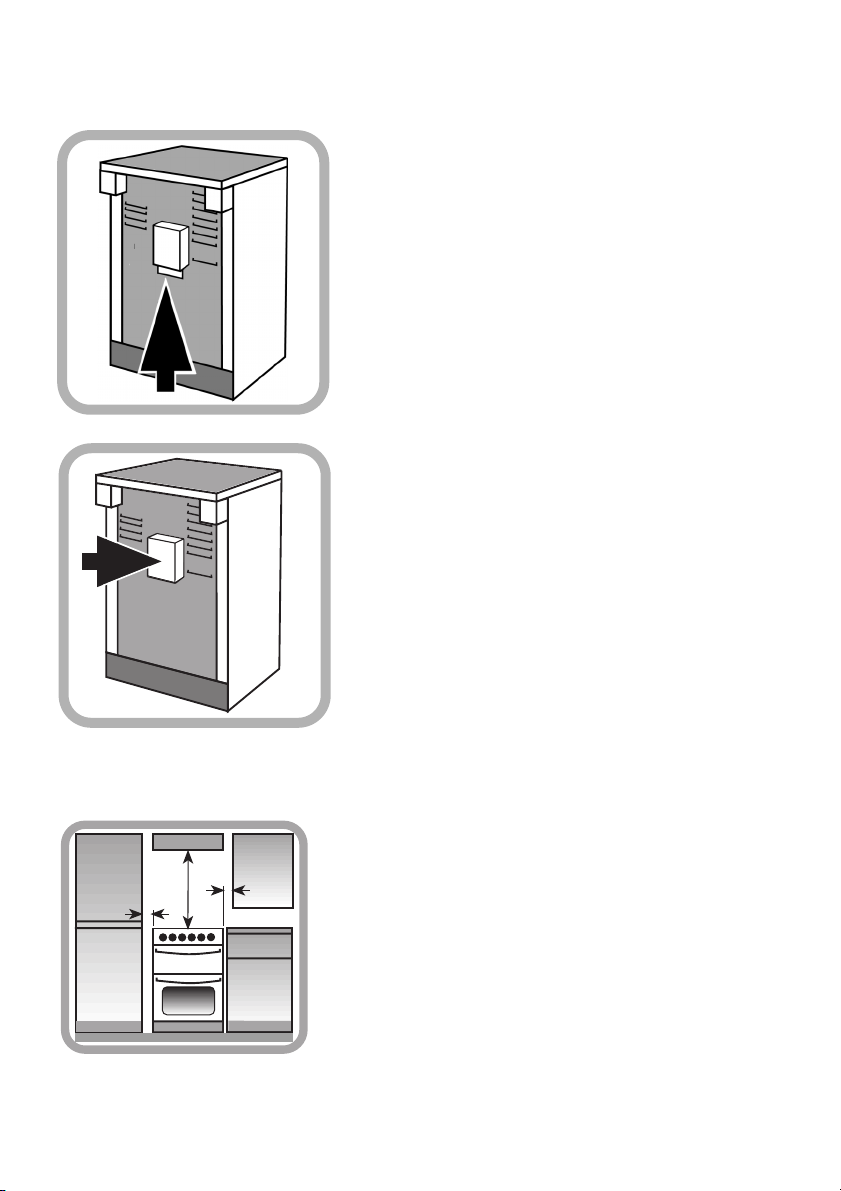
150 mm
150 mm
650 mm
WARNING – THIS APPLIANCE MUST BE EARTHED.
Your cooker should have been checked to ensure
voltage corresponds with your supply volt
on the rating plate, which is situated
age,
on the plinth. The
that the
this is stated
cooker must be connected by a competent person, such as
one who is a NICEIC registered contractor, to a suitable
double-pole control unit with a minimum rating of 32A
and a minimum contact clearance of 3mm (applicable to
newer properties, older properties where a 30A double
pole control unit and a minimum contact clearance of
3mm is acceptable).
The double pole control unit should be fitted adjacent to
the cooker, in accordance with IEE regulations. The control
unit must be within 2 metres of, but not directly above the
appliance and should be easily accessible in the event of
an emergency.
The power supply cable should conform to B.S.6004 with a
conductor size of 6mm2minimum.
This appliance conforms to EN 55014 regarding
suppression of radio and television interference.
Access to the mains terminals is gained by removing the
rear access cover.
The mains cable must pass through the cable clamp
adjacent to the terminal block. Sufficient cable should be
used to allow the cooker to be pulled out for
servicing.
Ensure that the mains cable is routed away from any
brackets affixed to the rear panel and is not trapped to the
rear wall when pushing the cooker into
position between cabinets.
Siting the Cooker
4
The height of the cooker can be adjusted by means of
adjustable feet in the plinth (900mm - 915mm). Adjust the
feet by tilting the cooker from the side. Then install the
product into position.
NOTE: This appliance must not be fitted on a platform.
The cooker is designed to fit between kitchen
cabinets spaced 500mm apart. The space either side need
only be sufficient to allow withdrawal of the
cooker for servicing. It can be used with cabinets one side
or both as well as in a corner setting. It can also be used
free-standing.
Adjacent side walls which project above hob level, must
not be nearer to the cooker than 150mm and should be
protected by heat resistant material. Any overhanging
surface or cooker hood should not be nearer 650mm.
Page 5
Installation
Moving the Cooker
Splash Panel
Kit (Wall Mounted)
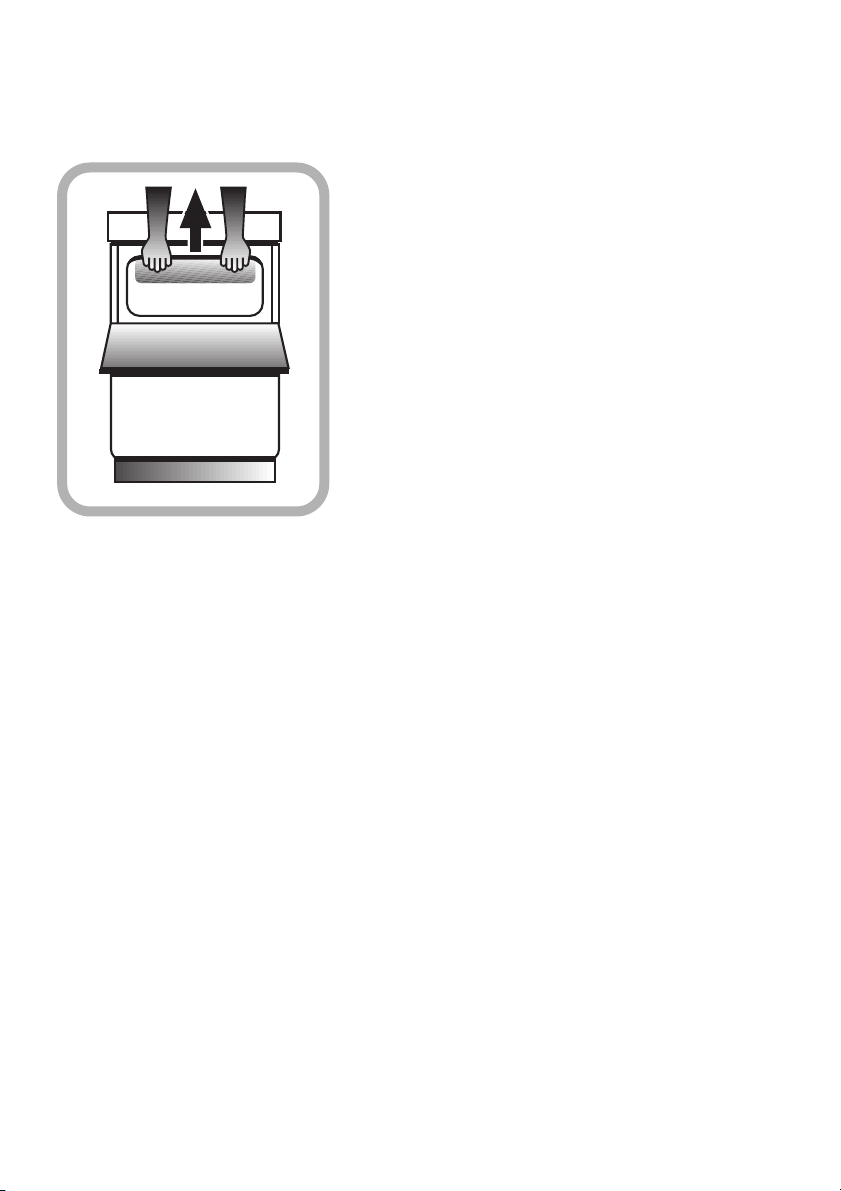
Before moving your cooker check that it is cool, and switch
off at the cooker control unit.
Movement of your cooker is most easily achieved by lifting
the front as follows:
Open the grill door sufficiently to allow a comfortable grip
on the underside front edge of the oven roof, avoiding any
grill elements.
Note: Take care in moving the cooker as it is heavy.
Take care to ensure that any floor covering is not
damaged.
Splashplate optional, apply to Parts Department
(see Back Cover for contact number.)
5
Page 6

Safety Information
When used properly your appliance is completely safe but as with any electrical product
PLEASE READ THE PRECAUTIONS BELOW BEFORE USING YOUR APPLIANCE.
there are certain precautions that must be observed.
Always
Always make sure you remove all packaging and literature from inside the oven
●
and grill compartments before switching on for the first time.
Always make sure you understand the controls prior to using the appliance.
●
Always keep children away from the appliance when in use as the surfaces will
●
get extremely hot during and after cooking.
Always make sure all controls are turned off when you have finished cooking
●
and when not in use.
Always stand back when opening an oven door to allow any build up of steam or
●
heat to disperse.
Always use dry, good quality oven gloves when removing items from the
●
oven/grill.
Always place pans centrally over the hotplate, making sure handles are kept away
●
from the edge of the hob and cannot be heated by other hotplates/pans.
Always take care to avoid heat/steam burns when operating the controls.
●
Always turn off the electricity supply at the wall switch before cleaning and
●
allow the appliance to cool.
Always make sure the shelves are in the correct position before switching on the
●
oven.
Always keep the oven and grill doors closed when the appliance is not
●
Always take care when removing items from the grill/top oven when the main
●
oven is in use as the contents may be hot.
Always keep the appliance clean as a build up of grease or fat from cooking can
●
cause a fire.
Always follow the basic principles of food handling and hygiene to prevent the
●
possibility of bacterial growth.
Always keep ventilation slots clear of obstructions.
●
Always refer servicing to a qualified appliance service engineer.
●
During use the oven becomes hot. Care should be taken to avoid touching
●
heating elements inside the oven,
in use.
SAFETY ADVICE
IN THE EVENT OF A CHIP PAN OR ANY OTHER PAN FIRE:
1. TURN OFF THE COOKER APPLIANCE AT THE WALL SWITCH.
2. COVER THE PAN WITH A FIRE BLANKET OR DAMP CLOTH, this will smother the
flames and extinguish the fire.
3. LEAVE THE PAN TO COOL FOR AT LEAST 60 MINUTES BEFORE MOVING IT.
Injuries are often caused by picking up a hot pan and rushing outside with it.
NEVER USE A FIRE EXTINGUISHER TO PUT OUT A PAN FIRE as the force of
the extinguisher is likely to tip the pan over.
Never use water to extinguish oil or fat fires.
6
Page 7

Safety Information
Never
Never leave children unsupervised where a cooking appliance is installed as all
●
cooking surfaces will be hot during and after use.
Never allow anyone to sit or stand on any part of the appliance.
●
Never store items above the appliance that children may attempt to reach.
●
Never leave anything on the hob surface when unattended and not in use.
●
Never remove the oven shelves whilst the oven is hot.
●
Never heat up unopened food containers as pressure can build up causing the
●
container to burst.
Never store chemicals, food stuffs or pressurised containers in or on the
●
appliance, or in cabinets immediately above or next to the appliance.
Never place flammable or plastic items on or near the hob.
●
Never fill a deep fat frying pan more than a
●
DO NOT LEAVE UNATTENDED WHILE COOKING.
Never operate the grill with the door closed as this will cause the appliance to
●
overheat.
Never use the appliance as a room heater.
●
Never use the grill to warm plates.
●
Never dry any items on either the hob or the oven doors.
●
Never install the appliance next to curtains or other soft furnishings.
●
Never allow children to play with the appliance controls.
●
Never use ‘steam cleaners’.
●
1
/3 full of oil, or use a lid.
7
Page 8
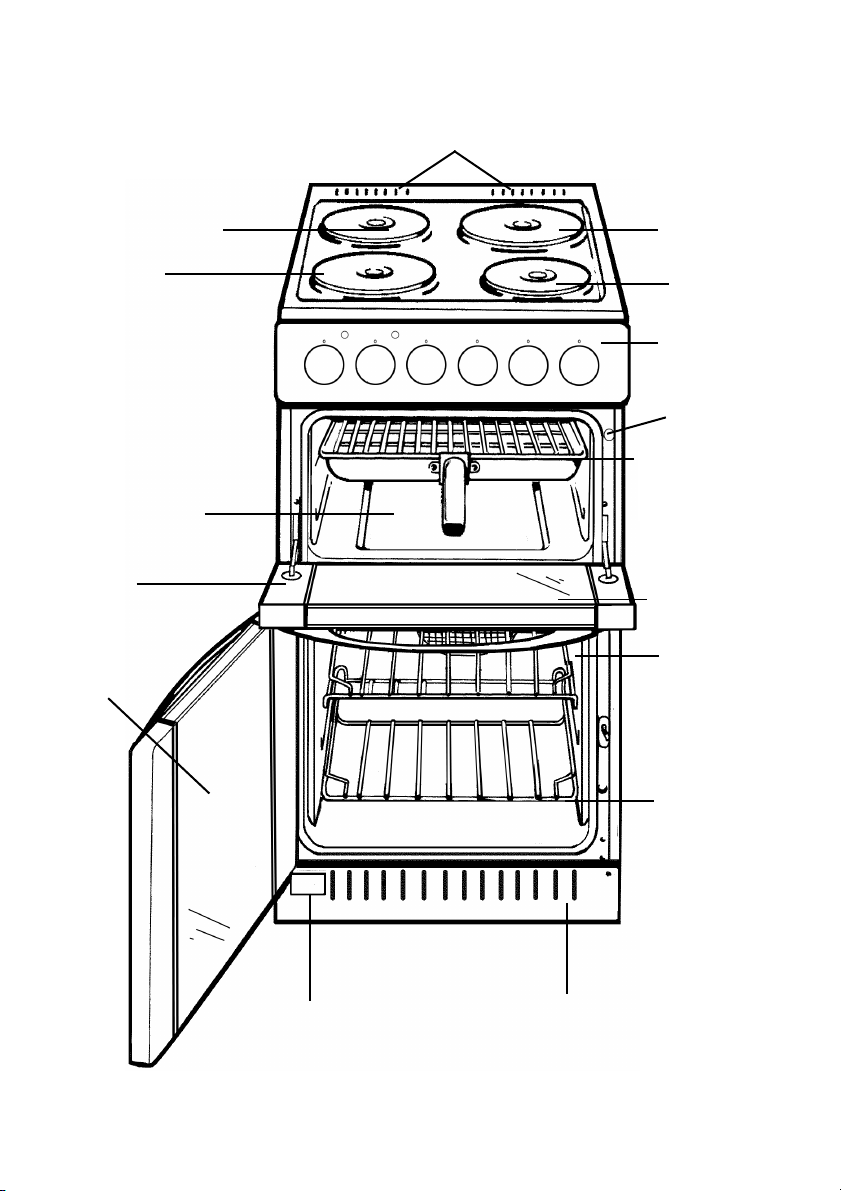
Features EW32
HOB VENTILATION SLOTS
2000W
(Red Spot)
GRILL
DOOR
REMOVABLE
INNER GLASS
DOOR
1000W
GRILL
1500W
1000W
CONTROL
PANEL
GRILL DOOR
SWITCH
GRILL/MEAT PAN
WITH REMOVABLE
HANDLE AND WIRE
FOOD SUPPORT
REMOVABLE INNER
GLASS DOOR
STAY CLEAN LINERS
OVEN ROD
SHELVES
RATING PLATE
PLINTH VENTILATION SLOTS
8
Page 9
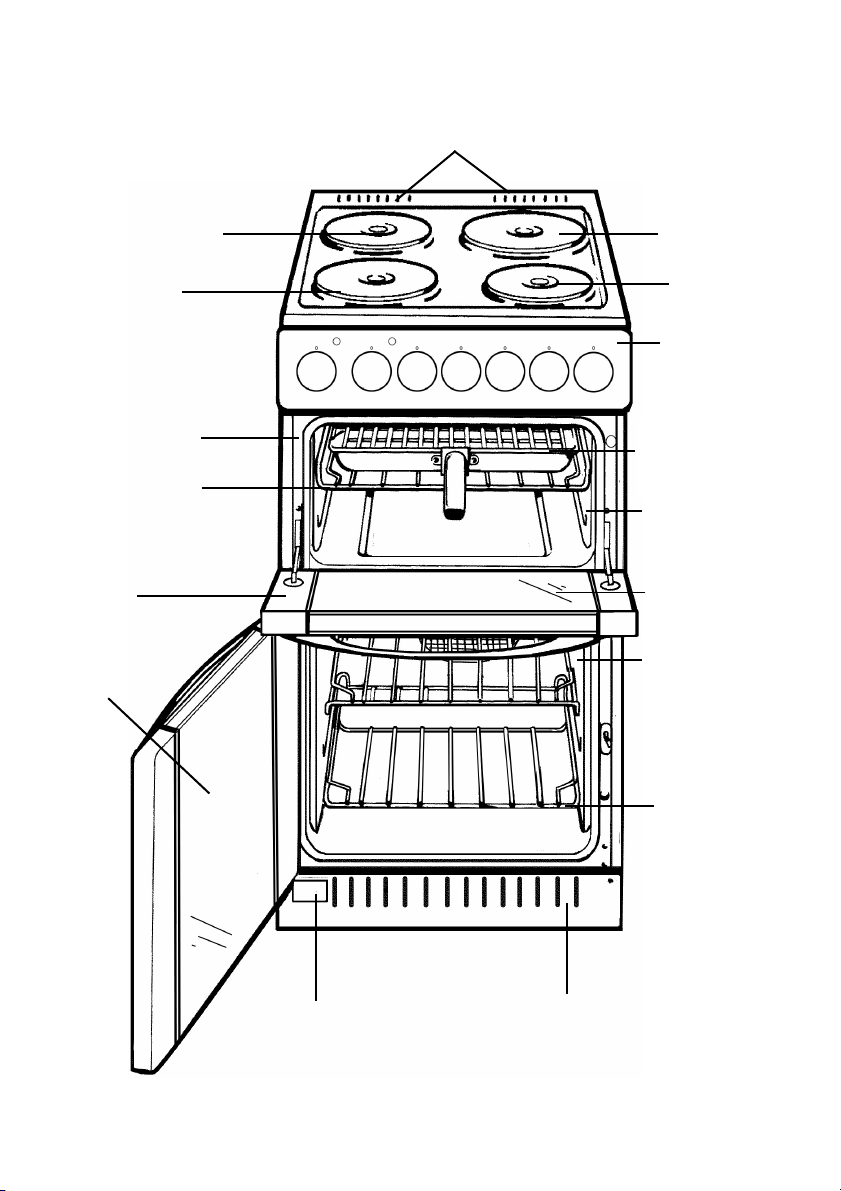
Features EW34
HOB VENTILATION SLOTS
2000W
(Red Spot)
GRILL/TOP OVEN
OVEN ROD SHELF
GRILL/TOP OVEN
DOOR
REMOVABLE
INNER GLASS
DOOR
1000W
1500W
1500W
(Red Spot)
CONTROL
PANEL
GRILL/MEAT PAN
WITH REMOVABLE
HANDLE AND WIRE
FOOD SUPPORT
STAY CLEAN LINERS
REMOVABLE INNER
GLASS DOOR
STAY CLEAN LINERS
OVEN ROD
SHELVES
RATING PLATE
PLINTH VENTILATION SLOTS
9
Page 10
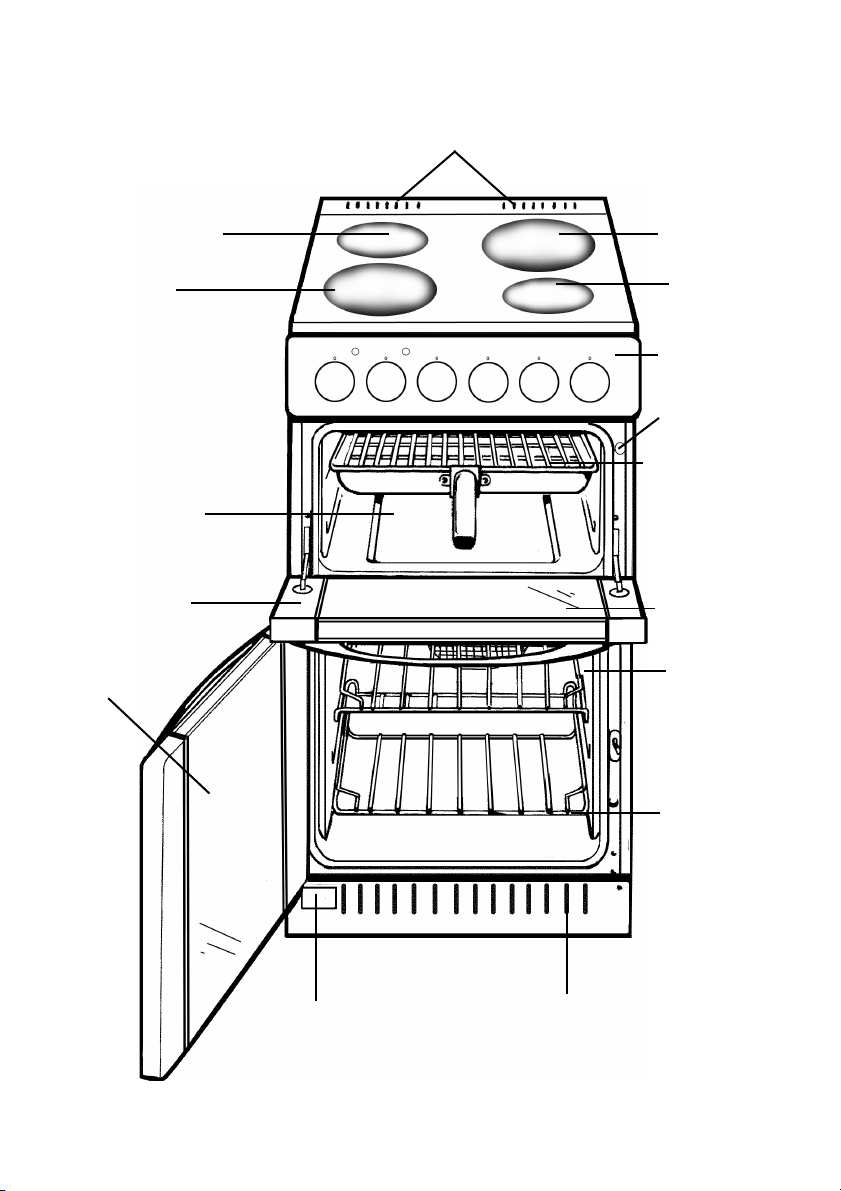
Features EW42 & EW45
HOB VENTILATION SLOTS
1800W
GRILL DOOR
REMOVABLE
INNER GLASS
DOOR
1200W
GRILL
1800W
1200W
CONTROL
PANEL
GRILL DOOR
SWITCH
GRILL/MEAT PAN
WITH REMOVABLE
HANDLE AND WIRE
FOOD SUPPORT
REMOVABLE INNER
GLASS DOOR
STAY CLEAN
LINERS
OVEN ROD
SHELVES
10
RATING PLATE
PLINTH VENTILATION SLOTS
Page 11
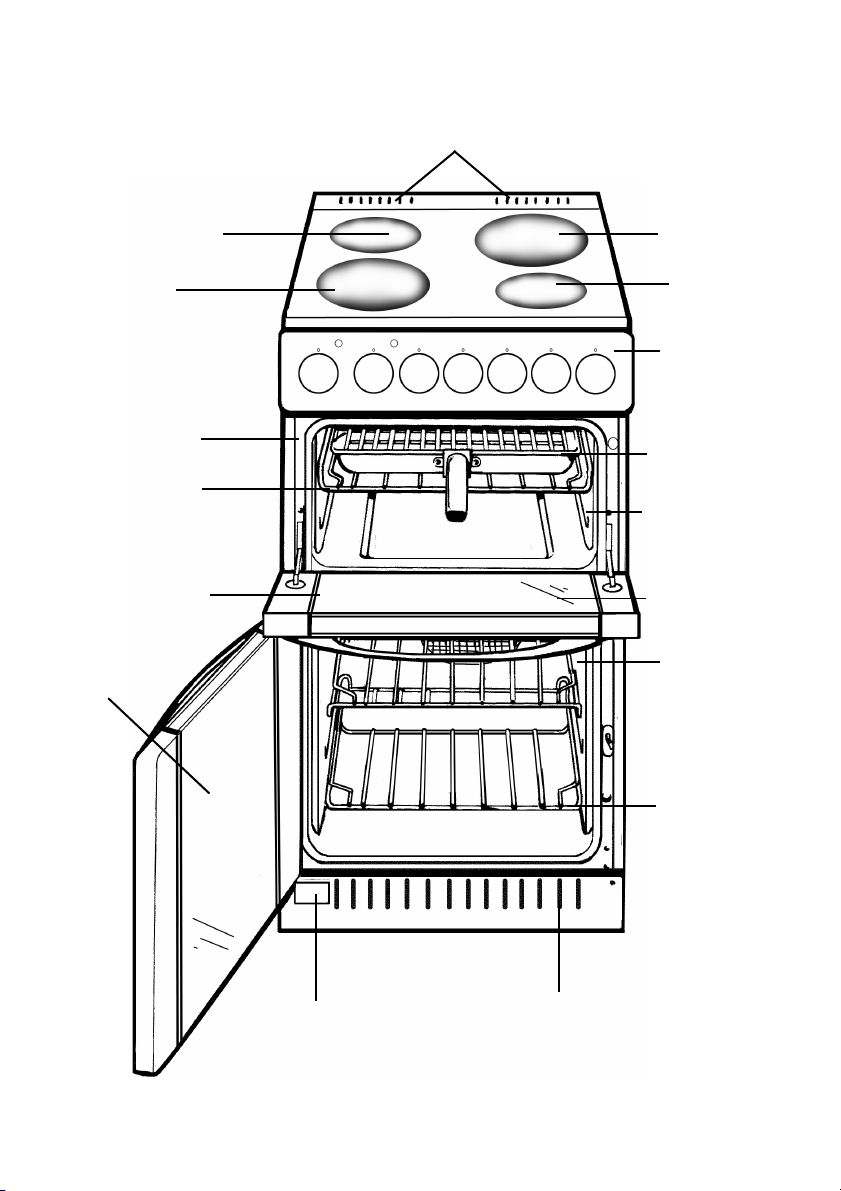
Features EW52
HOB VENTILATION SLOTS
1800W
GRILL/TOP OVEN
OVEN ROD SHELF
GRILL /TOP OVEN
DOOR
REMOVABLE
INNER GLASS
DOOR
1200W
1800W
1200W
CONTROL
PANEL
GRILL/MEAT PAN
WITH REMOVABLE
HANDLE AND WIRE
FOOD SUPPORT
STAY CLEAN LINERS
REMOVABLE INNER
GLASS DOOR
STAY CLEAN
LINERS
OVEN ROD
SHELVES
RATING PLATE
PLINTH VENTILATION SLOTS
11
Page 12
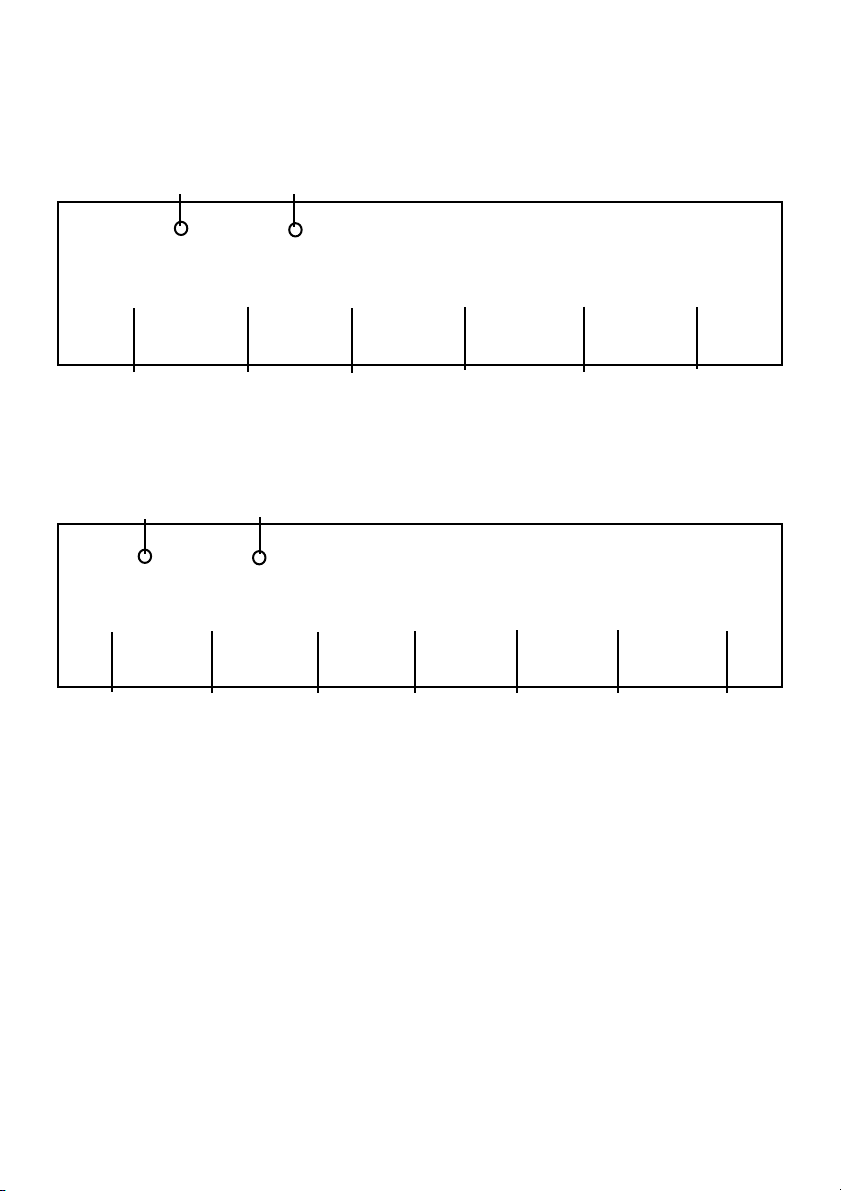
Controls
EW32, EW42 & EW45
MAIN OVEN
INDICATOR
LIGHT
GRILL
INDICATOR
LIGHT
❍
MAIN
OVEN
EW34 & EW52
MAIN OVEN
INDICATOR
LIGHT
❍❍
MAIN
OVEN
Control Knobs The knobs for the hotplates can be rotated in either direction to
❍
GRILL
TOP OVEN
INDICATOR
LIGHT
TOP
OVEN
provide variable heat control, the Main Oven and Top Oven knobs can
only be rotated clockwise from the Off position.
Note: Always ensure that all controls are in the OFF position,
when the appliance is not in use.
❍❍
LEFT
FRONT
PLATE
❍
GRILL
❍
LEFT
REAR
PLATE
LEFT
FRONT
PLATE
❍
RIGHT
REAR
PLATE
❍
LEFT
REAR
PLATE
❍
❍
RIGHT
REAR
PLATE
RIGHT
FRONT
PLATE
❍
RIGHT
FRONT
PLATE
Operating the In common with all cookers having controls sited above the grill
control when the compartment, care must be taken when setting the controls, due
grill is in use to hot air being emitted from the grill compartment.
Slow cooking ‘S’ The main oven has a ‘S’ setting specially designed to reduce energy
Cooling Fan A gentle flow of air will be blown from below the control panel when
(EW34 & EW52 only) either oven and/or grill controls are in use.
12
usage. Full details of this can be found in the Slow cooking section of this
book.
Page 13
Hotplates General Information Notes
(EW32 & EW34)
Note:
Use of Hotplates
Control Settings
Guide
Under no circumstances should the hob be used with aluminium foil
in contact with the hob surface.
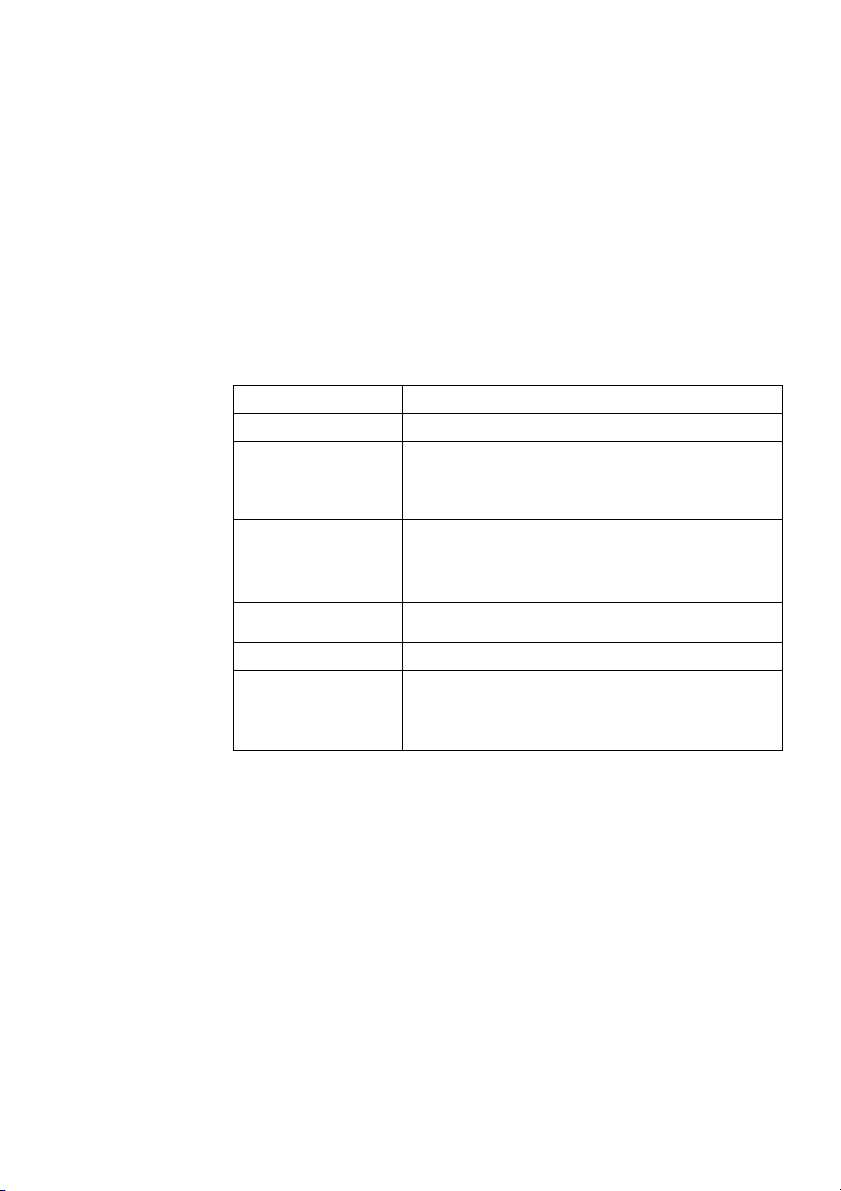
The controls set the hotplates at six pre-set power levels. Each
control can be used to select one of six temperature settings from a
minimum at position 1 to a maximum at position 6, the redspot hotplates
heat up more rapidly to give faster boiling.
This table is provided only as a guide – settings also depend on the
type of pan used and the quantity of food.
Knob Position
1 To melt butter, chocolate, etc.
1 or 2 To heat food gently.
3 To heat solid and liquid foods.
4 or 5 To cook foods, just above simmering.
5 or 6 To seal meat and fry fish.
6 Frying potatoes.
Type of food
To keep small amounts of water simmering.
To heat sauces, containing egg yolks and butter,
To simmer: stews, meat, fish, vegetables, fruit.
Keep water boiling.
Thaw frozen vegetables.
Make 2-3 egg omelettes.
To maintain 'rolling' boil for preserve making.
Bringing water to the boil.
Deep fat frying.
Dissolve sugar for preserve making.
Safety 1. Use a deep pan, large enough to completely cover the
requirements for appropriate heating area.
deep fat frying 2. Never fill the pan more than one-third full of oil.
3. Never leave oil or fat unattended during the heating or cooking
period.
4. Never try to fry too much food at a time, especially frozen food.
This only lowers the temperature of the oil or fat too much,
resulting in greasy food.
5. Always dry food thoroughly before frying, and lower it slowly
into the hot oil or fat. Frozen foods, in particular, will cause
frothing and spitting, if added to quickly.
6. Never heat fat, or fry, with a lid on the pan.
7. Keep the outside of the pan clean and free from streaks of oil or
fat.
13
Page 14
Hotplates General Information Notes (EW32 & EW34)
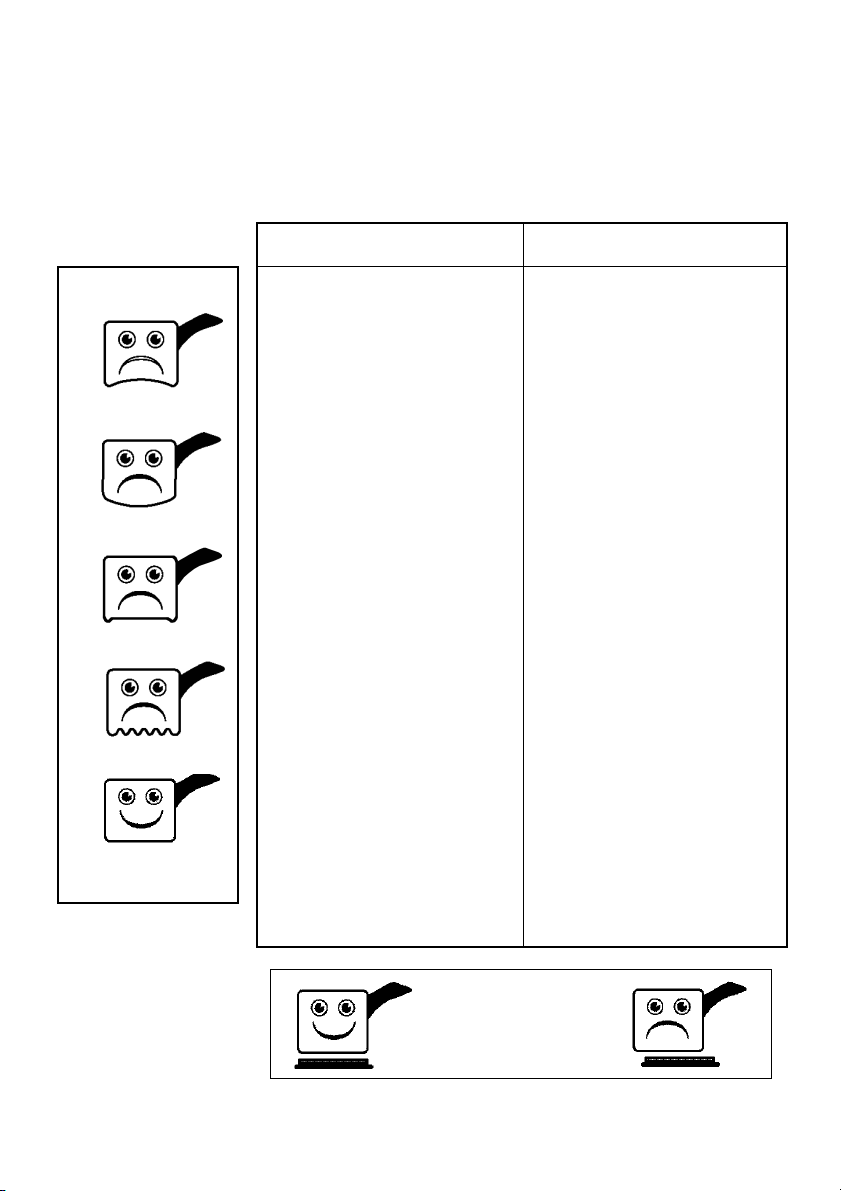
CHOICE OF UTENSILS
Every Electric Hob deserves the right choice of utensils. We recommend for optimum
performance the use of good quality utensils.
PANS SHOULD NOT
Be concave
(bowed in)
Be convex
(bowed out)
Be rimmed
Be deeply ridged
Always ✓
● Use good quality flat-based
cookware on all electric heat
sources.
● Ensure pans have clean, dry
bases before use.
● Ensure pans match size of
heating area.
● Remember good quality pans
retain heat well, so generally
only a low or medium heat is
necessary.
● Ensure pan handles are
positioned safely and away
from heat sources.
● Lift pans, do not drag.
● Use pan lids except when frying.
● Deal with spillage immediately
but with care.
Never ✗
● Use gauze, metal pan diffusers,
asbestos mats and stands e.g.
Wok stands – they can cause
overheating.
● Use utensils with skirts or rims
e.g. buckets and some kettles.
● Use badly dented or distorted
pans.
● Leave an element switched on
when not cooking.
● Cook food directly on the
hotplate.
● Drag or slide utensils across
the hob surface.
● Place large preserving pans or
fish kettles across two
hotplates.
● Place plastic vessels or utensils
on a hot hob.
But essentially Flat
14
● Use the hob as an area for
storage
Always place pans
centrally on the
hotplate
Page 15

Ceramic Hob (EW42, EW45 & EW52)
CAUTION: IF AT ANY TIME A CRACK IN THE SURFACE BECOMES VISIBLE, DISCONNECT THE
APPLIANCE IMMEDIATELY FROM THE SUPPLY.
Under no circumstances should the hob be used with aluminium foil in contact with the hob
surface as damage can occur.
The following boiling plates are located beneath the decorative circular patterned cooking
areas:-
Front left 6 heat 1800W
Rear left 6 heat 1200W
Rear right 6 heat 1800W
Front right 6 heat 1200W
The cooking areas change colour when heated (become red) indicating which heating element is
switched on. The cooking area returns to its original colour when the heating element is switched
Off.
Warning: Even though the cooking area has returned to its original colour it may still be hot.
The controls for the hotplates can be turned in either direction.
Turn the control to 6 for fast cooking. To reduce the heat to cook more slowly or simmer, turn the
control to a lower setting according to the size of the saucepan and the amount of liquid.
Pans can be placed on the unheated areas of the panel when cooking is finished and before serving
food. It is inadvisable at any time to leave a heating element switched on without a pan in position
as this wastes energy, and could make soil or rub-off from aluminium pans more difficult to
remove. To protect elements against over-heating, safety cut-outs have been incorporated with
each element. After several minutes with the control at setting 6 the safety cut-out switches the
element Off and On continuously, thus preventing any adverse effects that may be caused by an
excessive build-up of heat in the cooking area.
15
Page 16
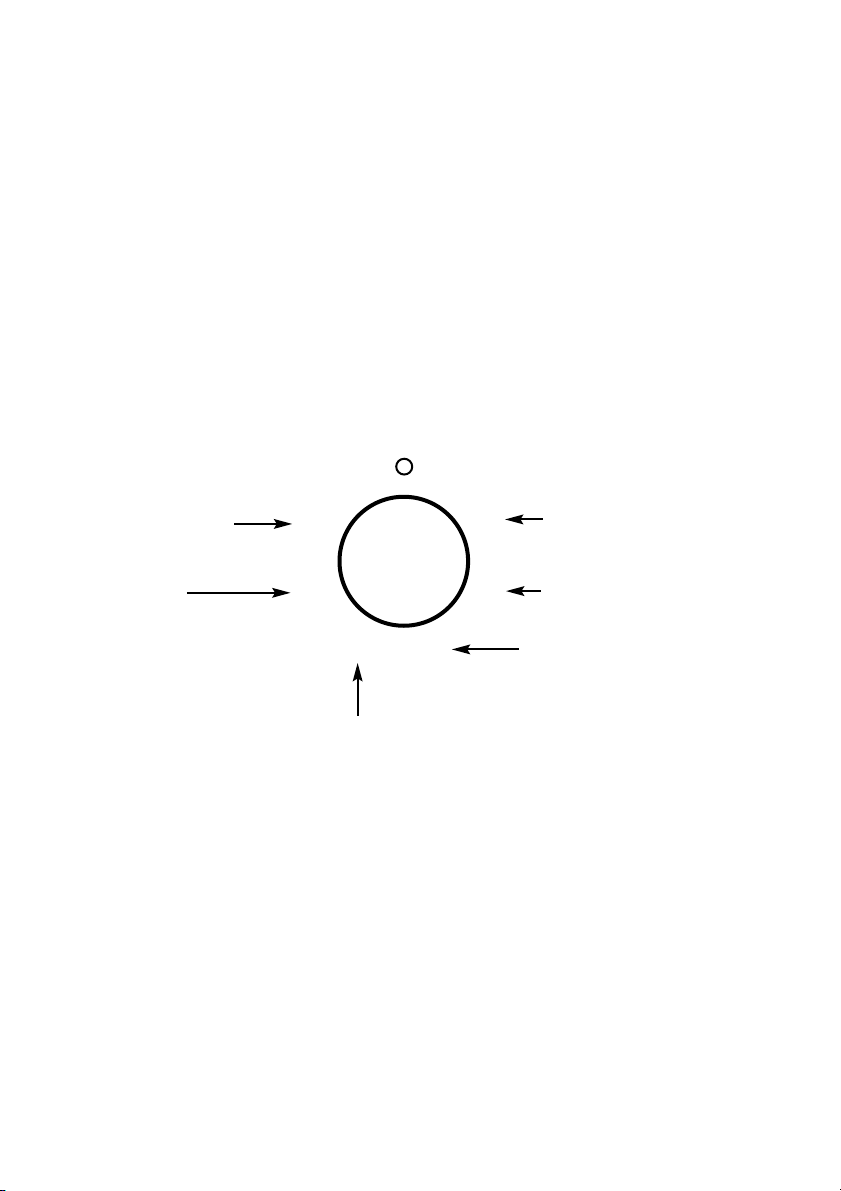
Hotplates General Information Notes
(EW42, EW45 & EW52)
USE OF HOTPLATES
Under no circumstances should the hob be used with aluminium foil in contact with the hob
surface.
Turn the control to 6 for fast cooking. To cook more slowly or simmer, turn the control to a lower
setting according to the size of the saucepan and the amount of liquid. The two small Hotplates are
specially for smaller pans, low temperature cooking and simmering.
Do Not leave a hotplate switched on without a pan as this wastes energy and may shorten the life
of the hotplate.
CONTROL SETTINGS GUIDE
This is provided only as a guide – settings also depend on the type of pan used and the
quality of food.
Frying potatoes.
Bringing water to the boil.
Deep fat frying.
To melt butter chocolate etc.
1
6
Dissolve sugar for preserve
making
To heat food gently.
To keep small amounts of water
simmering.
To heat sauces containing egg
yolks & butter.
To simmer stews, meat, fish,
vegetables & fruit.
16
2
3
Keep water boiling.
Make 2-3 egg omelettes.
Thaw frozen vegetables.
To heat solid & liquid foods.
5
4
To seal meat and to fry fish.
To cook foods just above
simmering.
To maintain a ‘rolling boil’
for preserve making.
Page 17
General Information Notes - Ceramic Hobs
(EW42, EW45 & EW52)
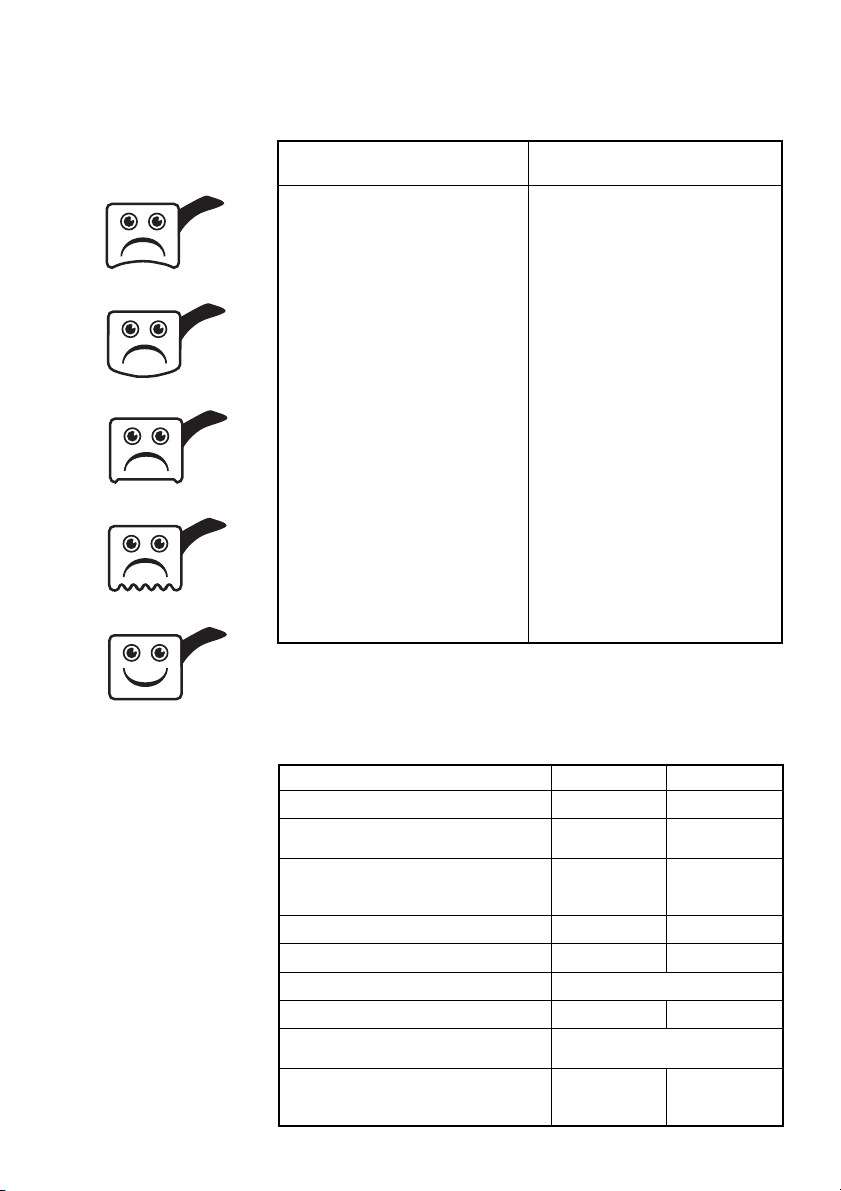
PANS SHOULD
Not be concave (bowed in)
Not be convex (bowed out)
Not be rimmed
Not be deeply ridged
But essentially Flat
Always ✓ Never ✗
● Use good quality flatbased cookware on all
electric heat sources.
● Always ensure pans have
clean, dry bases before
use.
● Ensure pans match size of
heating area.
● Remember good quality
pans retain heat well, so
generally only a low or
medium heat is necessary.
● Ensure pan handles are
positioned safely and
away from heat sources.
● Always lift pans, do not
drag.
● Always use pan lids
except when frying.
● Deal with spillages
immediately but with
care.
THE BEST COMBINATIONS
This table is a general guide to the types of pan suitable for
different types of hobs and cookers. Remember pans should be
good quality, with smooth, flat bases. For any further information
refer to manufacturers’ instructions.
● Use gauze, metal pan
diffusers, asbestos mats
and stands e.g. Wok
stands – they can cause
overheating.
● Use utensils with skirts or
rims e.g. buckets and
some kettles.
● Use badly dented or
distorted pans.
● Leave an element
switched on when not
cooking.
● Cook food directly on the
ceramic glass.
● Drag or slide utensils,
along the hob surface.
✓suitable ✗ unsuitable
*care should be taken
when using any pans
on these surfaces not to
drag and cause
scratching.
Aluminium
Stainless steel with single layer
copper base
Stainless steel with sandwich bases
of aluminium and stainless or
aluminium and copper.
Enamelled steel
Enamelled aluminium
Enamelled based cast iron
Copper
Toughened glass or ceramic/
glass/pottery
Mild steel, Ferro-magnetic or
stainless with a magnetic
sandwich base
Ceramic*
Halogen*
✓✓
✗
✗
✓✓
✓✓
✓
✓
✓ With Extra Care
✗✗
Not Recommended
✓✓
17
Page 18
General Information Notes - Ceramic Hobs
(EW42, EW45 & EW52)
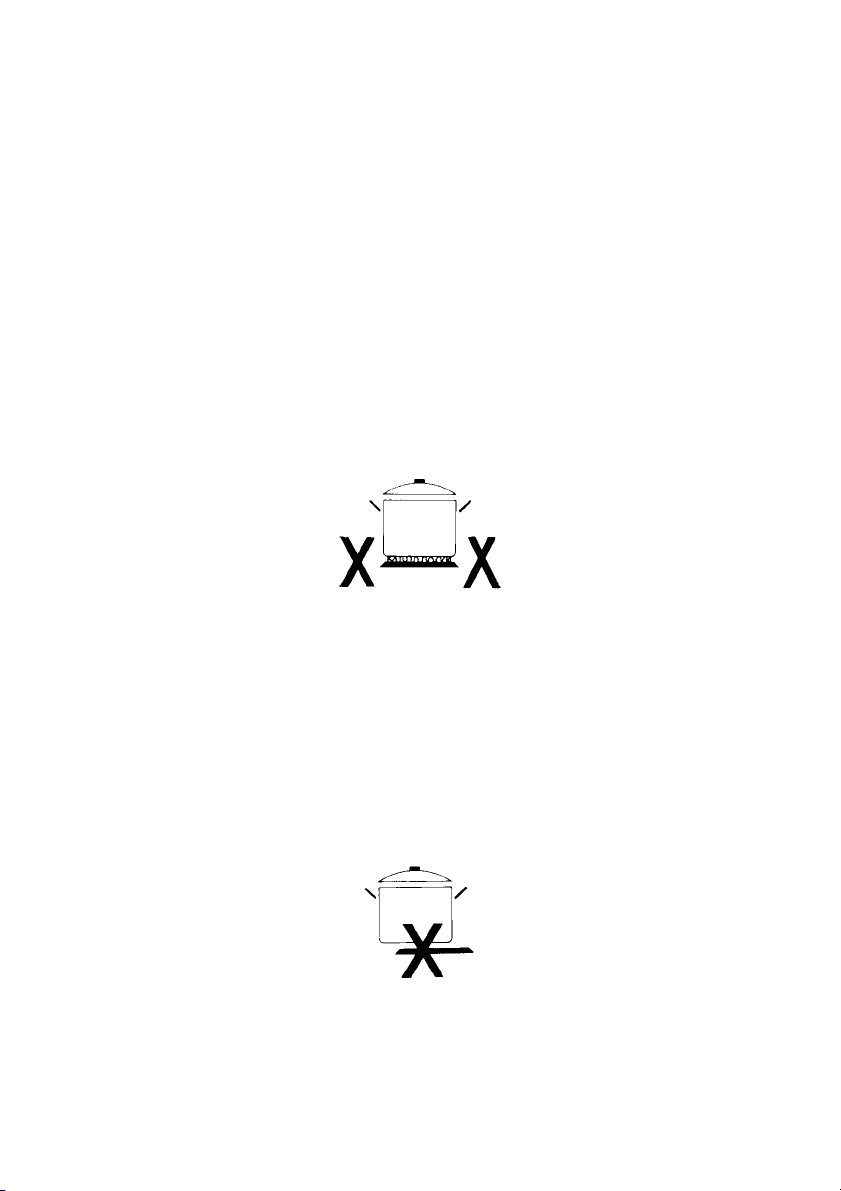
Do Not
Do not cook directly on the hob surface without a cooking utensil, as this will result in damage
Do not use the hob as a worktop surface as damage may occur to the smooth surface of the hob.
Do not drag or slide utensils on the hob surface, as this will cause scratches in the surface of the
Do not allow a cooking utensil to come into contact with the hob surround.
Do not place anything between the base of the utensil and the ceramic hob, e.g. do not use
Do not leave any utensils, food or combustible items on the hob when it is not in use.
Do not place aluminium or plastic foil, or plastic containers on the hob.
Do not leave the hotplates or cooking areas switched On unless they are being used.
We recommend not to place large preserving pans or fish kettles across two heating areas.
Do not leave utensils partly covering the heated areas. Always ensure that they are placed
to the surface of the hob.
hob.
asbestos mats, aluminium or wok stand.
centrally over the heated areas and have the same diameter as the heating area used.
We recommend not to use a utensil with a base diameter greater than 25cm (l0ins).
Pressure cookers or other large pans should be used on the front cooking areas.
Always ensure that saucepan handles are positioned safely.
18
Page 19

General Information Notes - Ceramic Hobs
(EW42, EW45 & EW52)
Safety requirements for deep fat frying
IMPORTANT – As with any cooking appliance there could be some fire risk attached to the heating
of oil, particularly for deep fat frying, cooking utensils containing oil must not be left unattended
(e.g. to answer the telephone) on or in close proximity to the patterned cooking areas.
1. Use a deep pan, large enough to completely cover the appropriate heating area.
2. Never fill the pan more than one-third full of fat or oil.
3. Never leave oil or fat unattended during the heating or cooking period.
4. Do not try to fry too much food at a time, especially frozen food. This only lowers the
temperature of the oil or fat too much, resulting in greasy food.
5. Always dry food thoroughly before frying, and lower it slowly into the hot oil or fat. Frozen foods,
in particular, will cause frothing and spitting, if added to quickly.
6. Never heat fat, or fry, with a lid on the pan.
7. Keep the outside of the pan clean and free from streaks of oil or fat.
SAFETY ADVICE IN CASE OF A CHIP-PAN FIRE
In the event of a chip pan fire or any other pan fire.
1. TURN OFF THE COOKER APPLIANCE AT THE WALL SWITCH.
2. COVER THE PAN WITH A FIRE BLANKET OR DAMP CLOTH, this will smother the flames and
extinguish the fire.
3.
LEAVE THE PAN TO COOL FOR AT LEAST 60 MINUTES BEFORE
caused by picking up a hot pan and rushing outside with it.
MOVING IT. Injuries are often
NEVER USE A FIRE EXTINGUISHER TO PUT OUT A PAN FIRE as the force
of the extinguisher is likely to tip the pan over.
Never use water to extinguish oil or fat fires.
19
Page 20
Choosing your Utensils
Choosing your utensils
Below are some guidelines to help you make the right choice of utensils.
To obtain a satisfactory performance from a ceramic hob and to avoid unnecessary damage, we
recommend the use of good quality utensils with smooth flat bases.
Remember
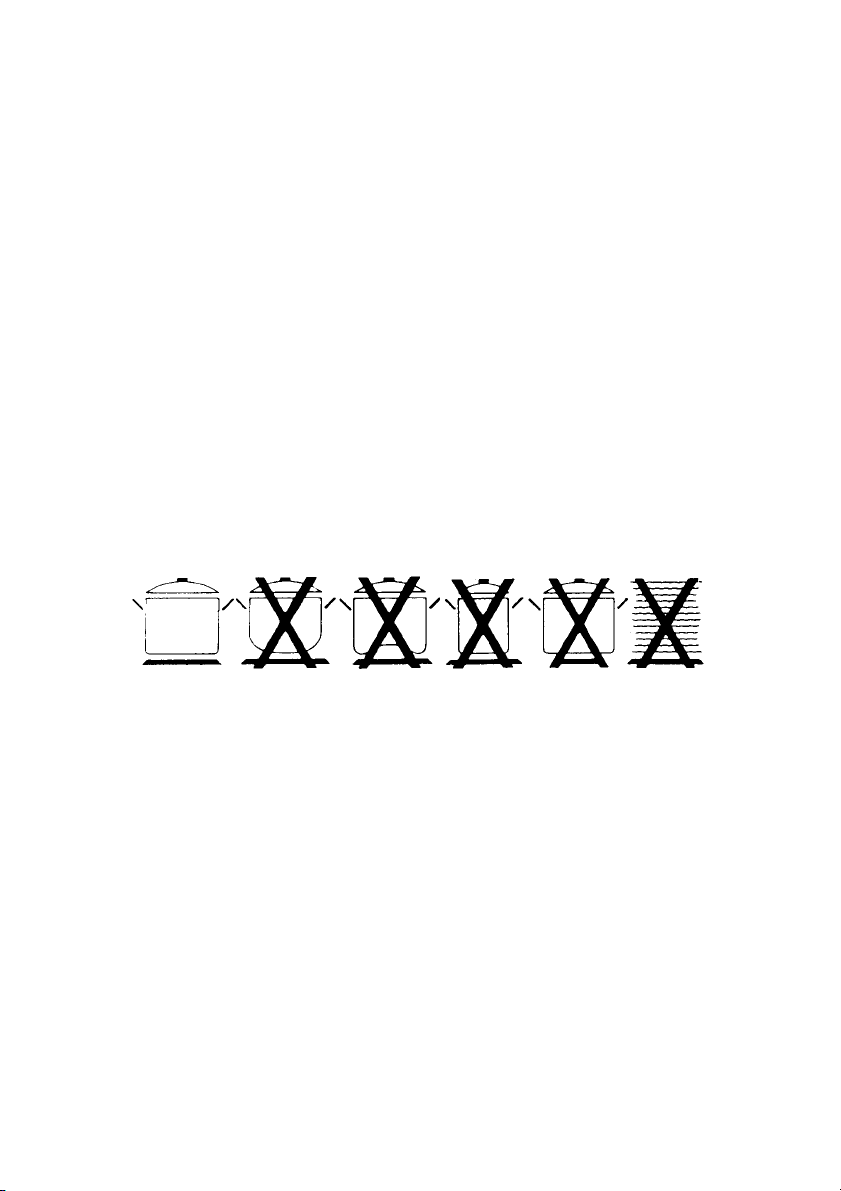
1. Purchasing a new pan will not necessarily mean it will have a flat base, always check before
buying. See diagram below.
2. Using the correct pans and utensils will result in maximum contact with the hob and maximum
efficiency as with any type of electric hob.
Do use good quality smooth flat based utensils.
Do use a utensil which has approximately the same base area as the heating area zone being used.
Do use utensils which have more than sufficient capacity for the amount of food being cooked to
prevent boil over or spillage.
Do use utensils with good fitting lids.
Do use a low dome pressure cooker for best results.
Good quality
flat base
same size as
element
Convex
base too
small
Concave
base
Too
small
Too
large
No pan
Element ON
WARNING: Extreme caution should be used when cleaning the hot hob.
Important
1. Always clean up any spillage immediately with a clean cloth or a paper towel to avoid
unnecessary damage to the hob.
Extreme care should be taken to avoid steam burns and hot surfaces when cleaning spillage from
the hob.
2. When cooking food which contains sugar (most food) or syrup, use a utensil which is large
enough to prevent boil over or spillage. Sugar spillage will permanently damage the hob
and therefore should be cleaned off with care immediately. If sugar spillage has occurred,
remove it as long as it is still hot. This will avoid any damage.
NEVER LET IT COOL BEFORE REMOVING.
3. Always ensure that the base of the utensil is dry before placing on the ceramic hob.
20
Page 21

Choosing your Utensils
Do not use utensils with rough bases.
Do not use lightweight utensils with thin, distorted or uneven bases.
Do not use lightweight enamelled steel utensils.
Do not use cast iron utensils.
Do not use utensils with recessed, scrolled or ridged bases.
Do not use a utensil which has a base concavity greater than l mm as this will reduce the
Do not use a utensil with a convex base.
Do not use glass ceramic utensils.
Do not use use lightweight saucepans with plain thin copper bases on ceramic or halogen hot
Note: All copper pans are excellent conductors of heat, and are hard wearing and strong, but need
quite a lot of care. They can be very heavy and do not usually have completely flat bases. The
interiors are usually lined with a different material such as tin.
A stainless steel pan with a sandwich base of aluminium and stainless steel is an excellent conductor
of heat and is suitable for use on ceramic and halogen hobs, providing they are used in
accordance with the saucepans manufacturers’ recommendations.
Stainless steel pans with a sandwich base of aluminium and copper are excellent conductors of heat.
If using stainless steel saucepans with aluminium and copper sandwich bases on ceramic and
halogen hobs, the use of these pans must be in accordance with the saucepan manufacturers’
recommendations. Extra care should be taken to ensure the base of the pan and the
hob is cleaned, and the hob conditioned, after each and every use, when using this type of saucepan.
If these recommendations are not followed, the result will be a build up of small copper deposits on
the surface of your hob which, if not cleaned after each use, will result in permanent marking of your
hob.
Always lift the pan from the hob, do not drag or slide across the hob surface as damage may occur.
performance of the hob.
plates.
21
Page 22
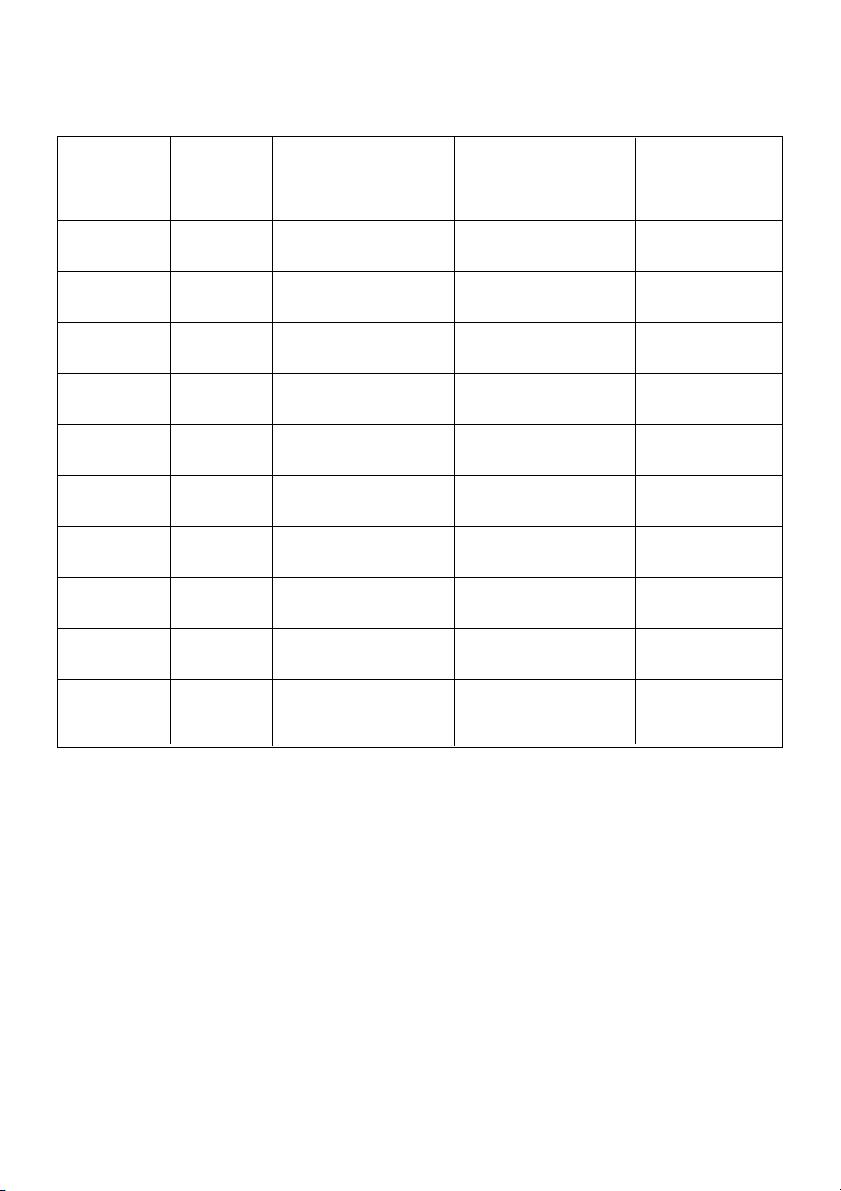
Temperature Conversion Chart
Gas
Mark
1
2
/
1
2
3
4
5
6
7
8
9
˚F
250
275
300
325
350
375
400
425
450
475
Main
Convection
Oven
120
140
150
160
180
190
200
220
–
–
Top
Convection
Oven
110
130
140
150
170
180
190
210
220
–
Main
Fan
Oven
100
120
130
140
160
170
180
200
210
220
22
Page 23

Top Oven/Grill Cookery Notes (EW34 & EW52)
The Top Oven is fitted with fixed ‘Stayclean’ sides, a removable
roof, and one rod shelf. It is heated by two elements – the grill
element and an element under the floor of the oven—and has a fully
variable temperature control like the main oven. To heat the oven,
the control knob clockwise, selecting the required temperature
as recommended in the Top Oven temperature chart. The indicator
light will immediately come on and remain on until the oven reaches
the required temperature. The light will then automatically go off and
on during cooking as the oven thermostat maintains the correct
temperature.
Top Oven for The Top Oven is used in exactly the same way as the Main Oven to
Cooking cook all types of food. It can either be used alone, to cook small
quantities of food, or in conjunction with the main oven to provide
additional cooking space, so often necessary when entertaining.
There are two cooking positions – the shelf placed directly on the
floor of the oven, or runner 1 from the floor of the oven. To correctly
position the rod shelf the side rods with “indents” must be
uppermost and to the rear, this forms an ‘arrest’ position in
conjunction with the embossed side liners. The correct positioning of
food is indicated in the temperature charts on pages 30 and 31.
These charts are a guide only giving approximate cooking temperatures
and times. To suit personal taste and requirements, it
may be necessary to increase or decrease temperatures by 10°C.
Food must never be placed directly on the floor of the oven with
out a shelf in position, and there should always be at least 25mm
(1”) between the top of the food and the grill element. Most foods
are cooked at a lower temperature in the smaller top oven
than in a larger conventional main oven. Always ensure a
7.5cm (3") gap is left at the front of the baking tray to ensure even
cooking. Do not use utensils larger than 300mm (12") x 230mm
(9"). Large utensils should be used in the main oven.
turn
Cooking Meat/
Poultry in the for cheaper cuts of meat – casserole cooking, pot roasting, braising
Top Oven etc.
The Top Oven is most useful for the longer, slower cooking required
Small joints of meat up to 1.5kg (3 lbs) or poultry up to 2.5kg (6 lbs)
in weight can be roasted in a small meat pan in the Top Oven, but
should preferably be ‘slow roasted’ or covered with a lid of
aluminium foil (one or two incisions in the top of the foil will allow
the meat or poultry to brown). Always ensure that there is at least
25mm (1”) between the top of the foil and the grill element. Do not
use the meat pan supplied for the main oven or the grill pan for
roasting in the Top Oven. Larger joints of meat weighing more than
l.5kg (3 lbs) or poultry weighing more than 2.5kg (6 lbs) should be
roasted in the main oven.
23
Page 24
Top Oven/Grill Cookery Notes (EW34 & EW52)
Top Oven as a Plates and dishes placed on the floor of the top oven will be heated
Hotcupboard when the main oven is in use. When the main oven is not in use (for
Grilling (EW34) GRILLING SHOULD NOT BE UNDERTAKEN WITH THE GRILL/TOP OVEN
instance when a meal is being cooked on the hob) place the plates
and serving dishes on the rod shelf using the bottom runner, and turn
the top oven control to approximately 100°C (200°F). A maximum
time of 10-12 minutes is all that is required to heat the plates and
dishes.
CAUTION: Accessible parts may become hot when the grill is in
use. Children should be kept away.
DOOR CLOSED.
Never line the grill pan with aluminium foil.
The grill control is designed to provide variable heat control of the grill
element. Please note that the grill will not operate unless the top oven
control is in the OFF position.
Open the top oven/grill door, preheat the grill at 6 setting for
approximately 5 minutes. When toasting the rod shelf is placed in the top
runner. Position the pan centrally below the grill element.
Leave the control at 6 for toast, sealing and fast cooking of foods. For
thicker cuts requiring longer cooking, turn the control to a lower setting
after the initial sealing on both sides at 6. The thicker the food the lower
the control should be set.
See chart on guide to grilling.
Remember to switch off the grill control at the end of cooking.
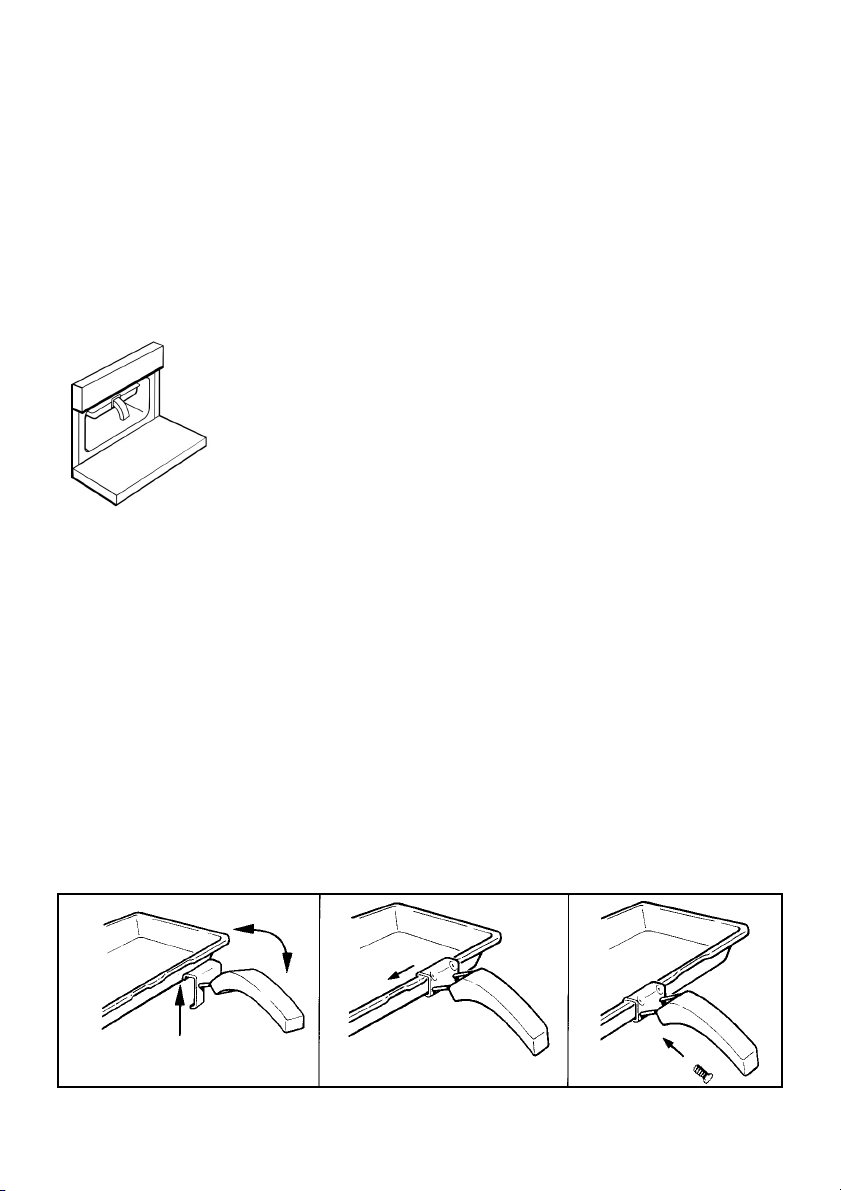
Grill Pan Handle
Fig. A Fig. B Fig. C
The grill pan handle is detachable from the pan to facilitate cleaning
and storage. The handle can be either detachable from or fixed to
the pan. For a fixed handle remove the screw and washers from the
grill pan bracket, tilt the handle over the recess adjacent to the
bracket, slide it towards the centre of the pan and let the handle
locate over the bracket. Replace screw and washers and ensure that
they are fully tightened up. For a detachable handle remove screw
and washers from the grill pan and retain for future use.
Please note, if a fixed handle is required, grill pan is unable to be
kept in the Main Oven with door closed. It may be stored in the
Top Oven with door closed.
24
Page 25
Grill Chart (EW34)
Shelf Position
from Base
of Oven
2
1
2
Approx.
Cooking
Time
3-10 mins.
depending on type/
thickness of food
15-20 mins.Small cuts of meat,
20-25 mins.Chops, etc
Cook on base of pan
15-20 mins.
10-20 mins.Pre-cooked
Preheat pan first
8-12 mins.
5-7 mins.Browning of food
Food
Toasting of
Bread Products
sausages, bacon, etc.
Fish whole
Fillets
potato products
Pizzas
Preheat
for
5 mins.
6
4/5 2
4/5 1
4/5
4/5 2
4/5 1
61
The temperatures below relate to heat settings recommended on food packs.
High = 6
Medium High = 5
Medium = 4/5
Medium Low = 3
Low = 2
Very Gentle = 1
NEVER LINE THE GRILL PAN WITH ALUMINIUM FOIL.
25
Page 26
Grilling (EW32, EW42 & EW45)
GRILLING MUST BE DONE WITH THE GRILL DOOR OPEN.
CONTROL KNOBS MAY BECOME HOT DURING GRILLING.
CAUTION: ACCESSIBLE PARTS WILL BECOME HOT WHEN
THE GRILL IS USED – CHILDREN SHOULD BE KEPT AWAY.
To operate the grill proceed as follows:
● Open the grill door.
● Pre-heat the grill on setting 6 for approximately 5 minutes. (see chart
Grill Pan Handle
Fixing the Grill Pan
Handle
on guide to grilling).
● Fix the grill pan handle securely in position. See below.
● Food which only requires browning should be placed directly on/in
the grill pan in the grill pan runner, or on the floor of the grill
compartment. (the grill pan grid may be removed.)
● Leave the control on setting 6 for toast, sealing and fast cooking of
foods. For thicker foods requiring longer cooking turn the control to a
lower setting after the initial sealing, on both sides, on setting 6. The
thicker the food the lower the control should be set.
Warning: Take care as the grill will be hot – always wear oven gloves.
Always ensure that the grill pan is clean BEFORE use. Excess fat
build up in the bottom of the pan could cause a fire hazard.
Never line grill pan with foil.
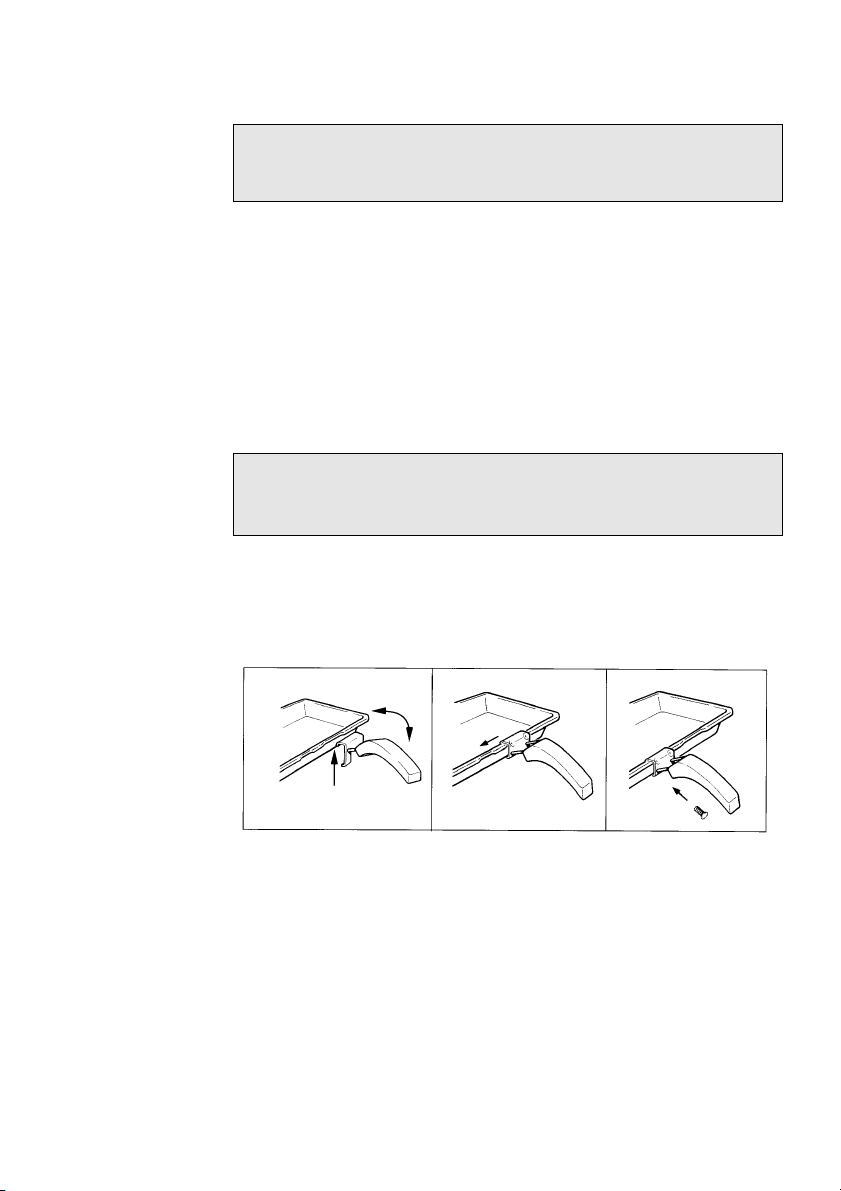
The grill pan handle is detachable from the pan, to facilitate cleaning and
storage. Fix the grill pan handle securely in position before use.
The handle fits onto the grill pan edge with the small recess, Fig.1.
Tilt the handle over the recess and slide it towards the centre, Fig.2.
Ensure the handle is fully located. Insert the washer and fixing screw and
tighten fully to ensure handle is secured, Fig.3.
Grill Compartment
as a ‘Hotcupboard’
26
Fig. 1
Recess
Fig. 2 Fig. 3
Always fit the screw prior to use.
The food to be cooked should be placed on the grill pan/grill pan food
support.
Place the grill pan on the runners and push back to the stop position
when the grill pan is correctly positioned beneath the grill
element.
Plates and dishes placed on the floor of the grill compartment will be
heated when the oven is in use.
Do not operate the grill control when using the compartment as a
hotcupboard.
Do take care when removing plates, dishes and utensils from the grill
compartment when the oven is in use as they may become quite hot.
You may need to use oven gloves when removing warmed items.
Page 27
Grill Chart
Pre - heat the grill for 5 minutes on maximum control setting before grilling
GRILL CHART
(EW32, EW42 & EW45)
Food
Toasting of Bread
products
Small cuts of meat,
sausages, bacon, etc.
Chops etc.
Gammon steaks
Chicken pieces
Fish: fingers
Whole
Fillets
Fish in breadcrumbs
Pre - Cooked potato
products
Pizzas
Browning of food
Grill Setting
6
5-6
5
5
5
5
5
6
Approximate Cooking time
3 - 10 mins.
15 - 20 mins.
20 - 25 mins. Wire food support used in upturned
position for chicken.
10 - 20 mins. Whole fish and fillets placed in the
base of the grill pan.
15 - 20 mins.
15 - 20 mins.
12 - 15 mins. in the base of the grill pan.
8 - 10 mins. Dish placed directly on base of the
grill pan and pan placed on the base of the grill
compartment.
The settings in the above guide have been developed to cook food successfully without
excessive fat spitting and splashing.
27
Page 28

Solarplus Grill
CAUTION: ACCESSIBLE PARTS MAY BECOME HOT WHEN
GRILL IS IN USE. CHILDREN SHOULD BE KEPT AWAY.
Your cooker is not fitted with a conventional type of grill. The Solarplus
high speed grill which is designed to reduce your grilling times. It is
quicker because it takes less time to warm up from cold. Conventional
grills require 5 minutes
for normal grilling the Solarplus grill can be used directly from cold
without any pre-heat.
However, when toasting, optimum performance is achieved by
preheating the grill for about 1 minute.
You will notice that the grill elements are protected by a wire mesh.
This stops you from touching live parts, so under no circumstances
should pointed objects be inserted into the mesh. During use the
mesh may become soiled. Do not attempt to clean it while the grill
is still on. Turn the cooker off at the control unit and wait until it has
cooled down before cleaning.
Care must be taken to ensure the grill mesh is not distorted – do not
store the grill pan handle on the grill pan grid when the rod shelf is
in the top runner position.
There are two halves to the grill, one on the left and one on the right.
You can choose to have both sides on or just the left side on.
Turning the control knob clockwise, will switch both sides on.
Turning it anti-clockwise, will only switch the left side on.
The numbers indicate the heat setting: 4 is the hottest 1 the coolest.
(EW52)
preheat before food is placed beneath them, but
IMPORTANT GRILLING SHOULD NEVER BE UNDERTAKEN WITH THE
GRILL/TOP OVEN DOOR CLOSED. This will cause overheating.
The grill will not operate unless the top oven control is in the Off
position.
Grilling Procedure
1. Open the grill/top oven door fully.
2. Position the rod shelf as recommended in the grill chart for food being
cooked.
3. Place the grill pan on the rod shelf, ensuring it is positioned centrally
under the grill element.
4. NEVER line the grill pan with aluminium foil as this may cause
overheating of fat in the grill pan.
28
Page 29
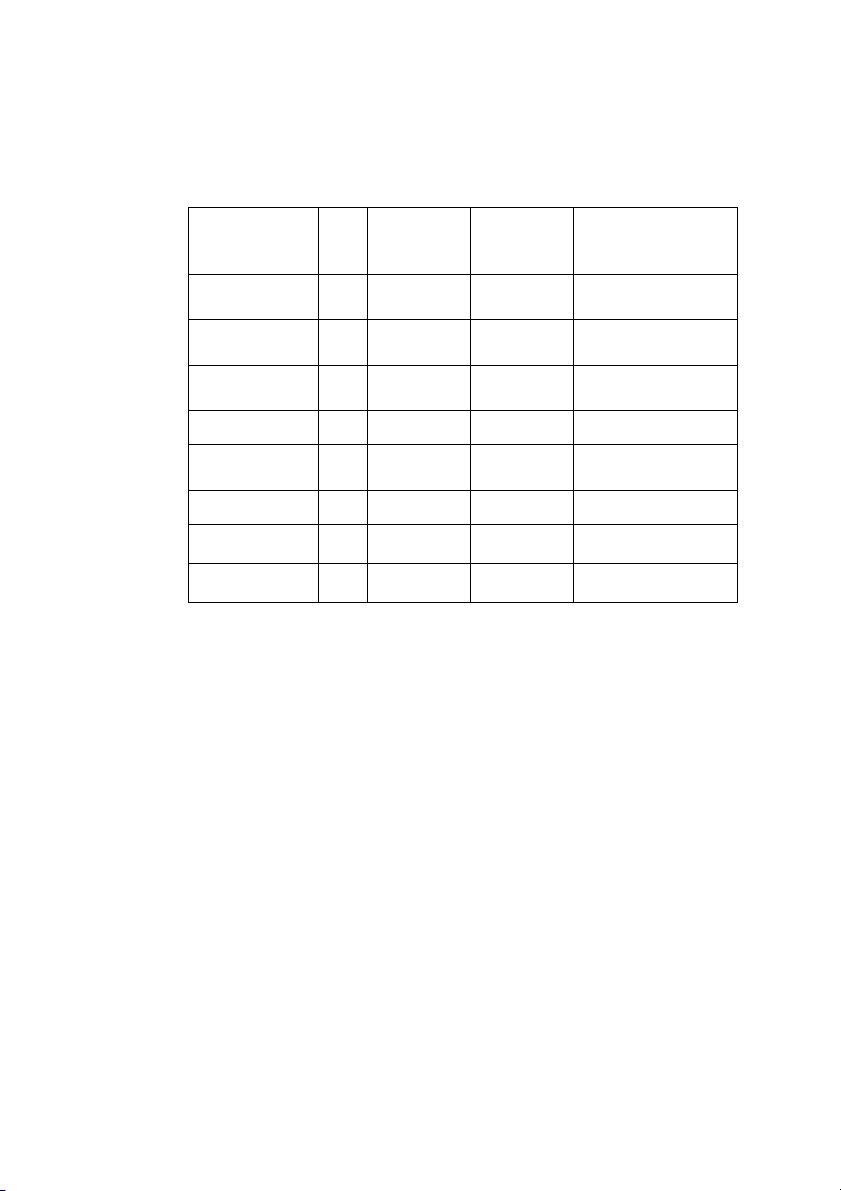
Grill Chart
(EW52)
Guide to grilling successfully
Food
Toasting of Bread
Products
Small cuts of meat
– Sausages, Bacon
Chops, etc.
Gammon Steaks,
Chicken pieces
Fish. Whole,
Fillets
Fish in
breadcrumbs
Pre-cooked Potato
Products
Pizzas
Browning of Food
Pre-
heat
1 min.
None
None
None
None
None
None
1 min.
Shelf Position
from base
of oven
2
2 or 1
1
1
1
1 3
2 or 1 3
1
1
Setting
4
4 for 4 mins.
reduce to lower
setting
4 for 6-8 mins.
reduce to lower
setting
4
3
4
Approx. Cooking Time
3-5 mins. Grill pan and
grid.
10-15 mins. Grill pan
and grid.
25-30 mins. Grill pan
and grid.
6-8 mins. in base of grill
pan.
10-15 mins. Grill pan
and grid.
10-12 mins. in base of
grill pan
10-15 mins. Grill pan
and grid.
5-7 mins. Dish placed
directly on shelf.
29
Page 30
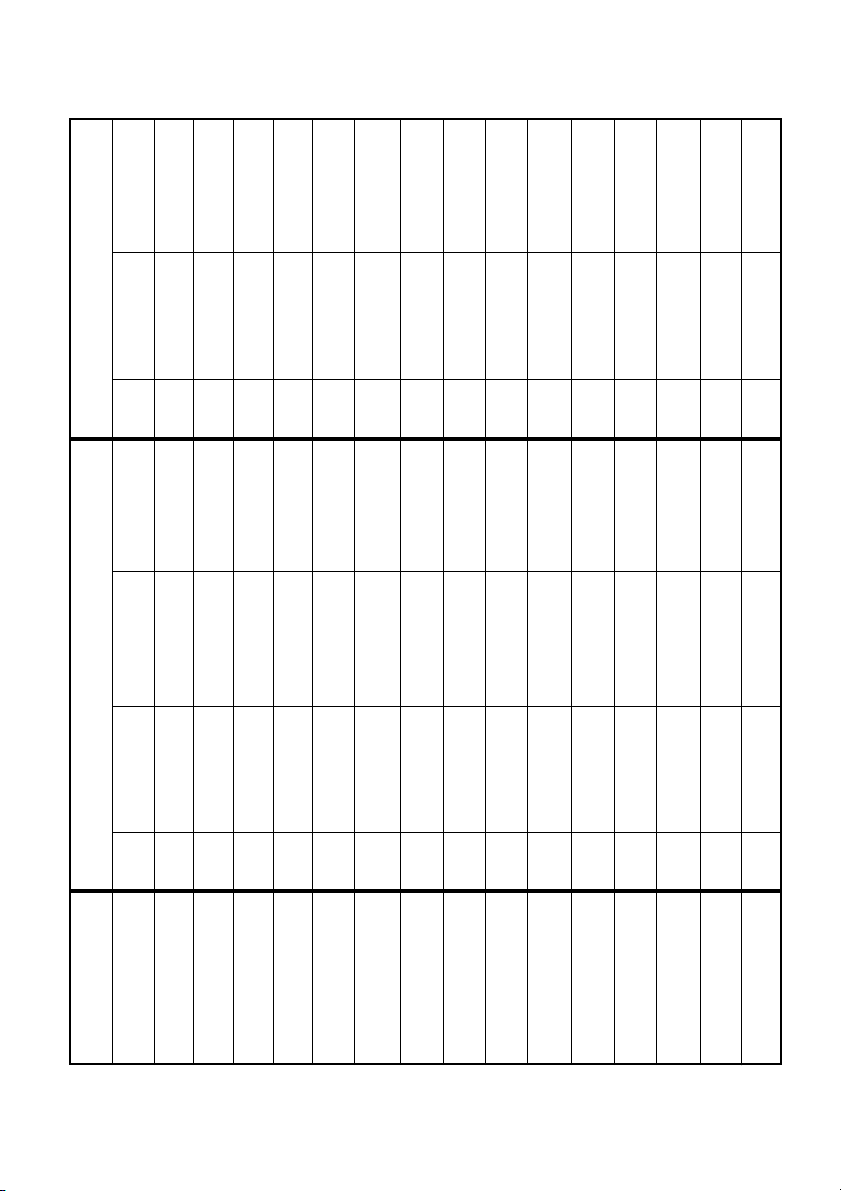
8-10
15-20
Time in mins.
20-25
15-20
12-15
75-90
45-50
on size
Depending
40-45
on use
Dependent
20-25
40-50
105-135
45-50
180-240
˚C
Temperature
Pre-
heat
Oven
Position in
Time in mins.
˚C
Top Oven Cooking (EW34 & EW52) Fan Oven Cooking
Oven Temperature Charts – Baking
Temperature
Pre-
heat
210/220
170/180
Yes
Runner 1 from
Runner 1 from
bottom of oven.
bottom of oven.
Shelf placed directly
9-12
15-20
180
200
Yes
Yes
160/170
170/190
Yes
on floor of oven
Runner 1 from
bottom of oven.
20
15
170
180/190
Yes
Yes
180/200
140/150
Yes
on floor of oven
Runner 1 from
bottom of oven.
Shelf placed directly
9-12
60-90
190/200
150/170
Yes
Yes
130/140
190/200
190/200
on floor of oven
on floor of oven
Runner 1 from
Shelf placed directly
120-135
bottom of oven.
Shelf placed directly
40-45
on use
Depending
150
190/200
200/210
Yes
Yes
Yes
180/190
190/200
Yes
Yes
Runner 1 from
Runner 1 from
bottom of oven.
bottom of oven.
40-45
40-45
190/200
200/210
Yes
Yes
130/140
140/150
200/210
Yes
on floor of oven
Shelf placed directly
105-135
140
on floor of oven
Runner 1 from
bottom of oven.
Shelf placed directly
45-50
25-30
150
200/210
Yes
Yes
Yes
80-90
No
Runner 1 from
bottom of oven.
150-180
100
Yes
Small Cakes
Victoria Sandwich
Sponge Sandwich
Swiss Roll
Semi-rich Fruit Cake
Rich Fruit Cakes
Shortcrust Pastry
Puff Pastry
Yorkshire Pudding
Individual Yorkshire
Puddings
Milk Pudding
Baked Custard
Scones
Food
Baking
Note: If soft margarine is used for cake making, temperatures recommended by the manufacturers should be followed.
Temperatures recommended in this chart refer to cakes made with block margarine or butter only.
Bread
30
Meringues
Page 31
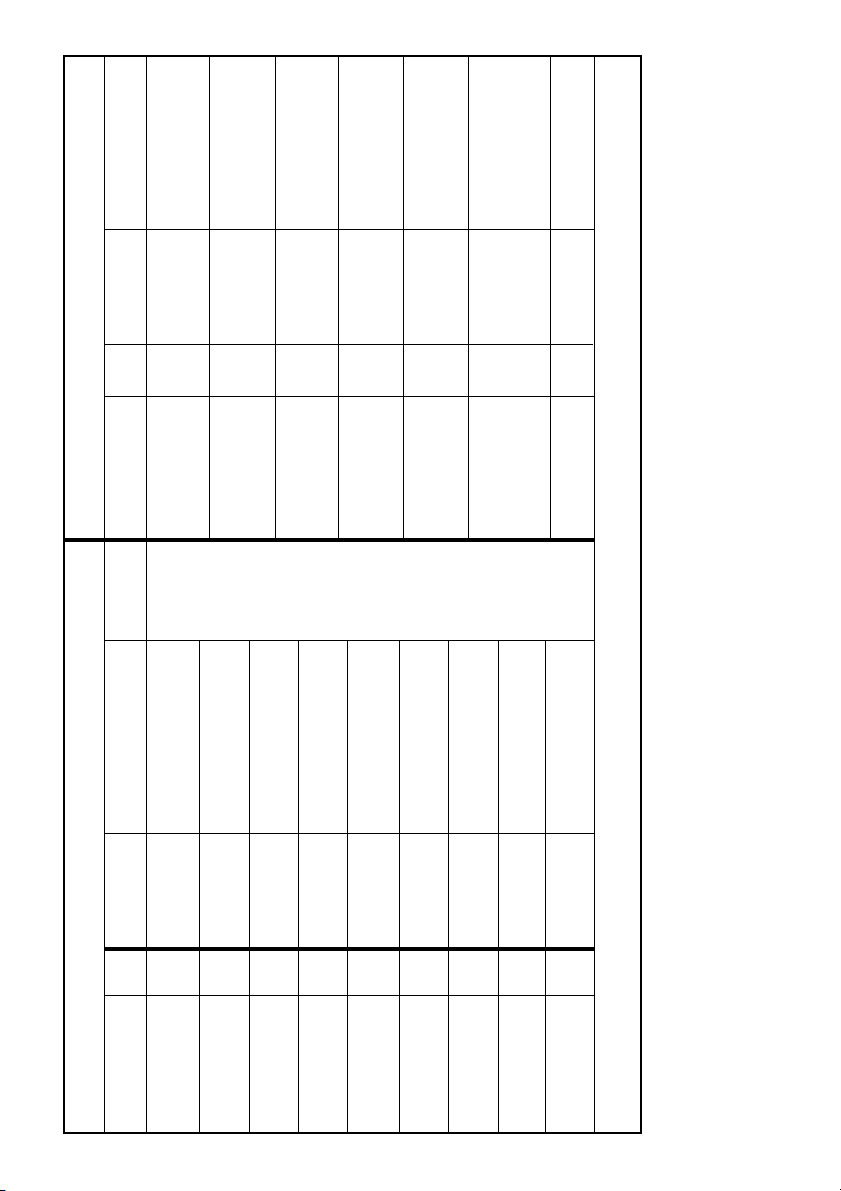
Time (approx.)
(1lb) + 20 mins extra
20-25 mins per 450g
+ 25 mins extra
25 mins per 450g (1lb)
+ 25 mins extra
25 mins per 450g (1lb)
25-30 mins per 450g
(1lb) + 25 mins extra
(1lb) + 20 mins extra
18-20 mins per 450g
eg. 5kg (11 lb) = 143-165mins
13-15 mins per 450g (1 lb)
- 2 hrs
2
/
1
1
12 mins per 450g (1 lb)
eg. 10kg (22 lb) = 264 mins
˚C
Temperature
Pre-
heat
Fan Oven Cooking
Meat
Oven
Position in
Time (approx.)
Oven Temperature Charts – Meat
160/180
No
Beef
160/180
No
Lamb
160/180
No
Pork
(1 lb)
35 mins over.
35-40 mins per 450g
35 mins per 450g (1 lb) +
+ 40 mins over
40 mins per 450g (1 lb)
40 mins per 450g (1 lb)
160/170
No
Veal
directly on
Shelf placed
160/180
No
Chicken / Turkey
floor
of oven.
up to 4kg (8 lb)
(1 lb)
40-45 mins per 450g
(1 lb) + 40 mins over
40-45 mins per 450g
25-30 mins per 450g
150
150/160
No
Turkey
up to 5.5kg (12 lb)
(1 lb) + 25 mins over
140-150
No
over 5.5kg (12 lb)
Casserole Stews
hrs
2
/
1
(1 lb)
2-2
25-30 mins per 450g
˚C
170/180
Temperature
Yes
Pre-
heat
Beef/ Lamb
Meat
Top Oven Cooking (EW34 & EW52)
190/200
170/180
Yes
Yes
(slow roasting)
Beef/ Lamb
(foil covered)
Pork
190/200
170/180
Yes
Yes
(slow roasting)
Pork
(foil covered)
Veal
190/200
170/180
Yes
Yes
(slow roasting)
Veal
(foil covered)
Poultry/Game
150
190/200
Yes
Yes
(slow roasting)
Poultry/Game
(foil covered)
Casserole
If using aluminium foil, never: 1. Allow foil to touch sides of oven. 2. Cover oven interior with foil. 3. Cover shelves with foil.
Cooking
The most accurate method of testing the readiness of joints of meat or whole poultry is to insert a meat thermometer into the thickest part of a
joint, or the thickest part of poultry thighs, during the cooking period. The meat thermometer will indicate when the required internal temp has
Medium: 70˚C Pork: 90˚C
Well Done: 75˚C Veal: 75˚C
been reached.
Beef - Rare: 60˚C Lamb: 80˚C Poultry: 90˚C
31
Page 32

Main Oven Cookery Notes
The oven is fitted with ‘Stayclean’ liners and two rod shelves.
To heat the oven, turn the control knob clockwise,
required temperature 80˚C (175˚F) and 230˚C (450˚F) as
recommended in the temperature chart. The indicator light will
immediately come on and remain on until the oven reaches the required
temperature. This light will then automatically go off and on during
cooking as the oven thermostat maintains the correct temperature.
It should be noted that at the end of a cooking period there may be
a momentary puff of steam when the oven door is opened. This will
disperse in a few seconds and is a perfectly normal characteristic
of an oven with a good door seal.
Since a fan oven heats up more quickly, and generally cooks food at
a lower temperature than a conventional oven, preheating the oven is
often unnecessary. However food such as bread, scones, Yorkshire
pudding, do benefit from being placed in a pre-heated oven.
The charts are a guide only, giving approximate cooking temperatures
and times. To suit personal taste and requirements, it may be necessary to
increase or decrease temperatures by 10˚C
Unless otherwise indicated in the charts, food is placed in a cold
oven, i.e. without pre-heating. If food is placed in an already hot
oven, the suggested cooking time should be reduced, depending
on the type and quantity of food being cooked.
Oven Positions Since the distribution of heat in the circulaire ovens is very even,
most foods will cook satisfactorily on any shelf position, but the
shelves should be evenly spaced. Do not fit shelves upside down.
The Top Oven rod shelf can be used in the Main Oven when cooking large
quantities of food. Additional shelves can be purchased through your
oven supplier or Spares Centre. Never use more than 3 shelves in the oven
as air circulation will be seriously restricted. To ensure even circulation do
not use meat pans larger than 390 x 300mm (15" x 12") and baking trays
no larger than 330 x 255mm (13" x 10"), these should be positioned
centrally on the oven shelf. Food should not be placed directly on the floor
of the oven. To avoid unnecessary cleaning, rod shelves which are not in
use should be removed from the oven.
selecting the
Temperature When three shelves are used to cook large quantities of food for
and Time home freezing or parties, it may be necessary to increase the
cooking times given in the charts by a few minutes, to allow for the loss of
heat due to the extra time taken to load the oven, and the large mass of
food. Baking trays should allow an equal gap at either side of the oven.
N.B. Recipes in cookery books give times and temperatures for
cooking in ordinary ovens. The introduction of improved thermal
insulation on fan ovens makes it possible, in most cases, to reduce
(a) the recommended temperature by 25˚C (45˚F) and
(b) the recommended time by approximately 10 minutes per hour.
32
Page 33

Main Oven Cookery Notes
To prepare meat and poultry for roasting in your fan oven.
(a) Wipe the meat or poultry, dry well and weigh it. Meat which has
been stored in a refrigerator should be allowed to come to room
temperature before cooking, and frozen meat or poultry must be
completely defrosted before placing in the oven.
(b) The weight of any stuffing used should be added before calculating the
cooking time.
(c) Place meat/poultry in the meat pan supplied with your cooker.
Small joints weighing less than 1.75kg (3
roasted in a smaller meat pan/tin - or they may be 'pot roasted' a small joint in a large meat pan causes unnecessary oven
splashing and evaporation of meat juices.
(d) Additional fat should not be added, except for veal, very lean
meat or poultry which can either be 'larded' with fat bacon or
brushed very sparingly with cooking oil or melted fat.
(e) Beef, lamb, mutton and poultry may be dusted lightly with
seasoned flour to give a crisp outer surface. The skin of duck and
goose should be pricked to release excess fat during cooking,
and the rind of pork should be scored, brushed lightly with oil,
and rubbed with salt, to give crisp crackling.
(f) Meat and poultry wrapped in, or covered with a tent of
aluminium foil will be juicy and tender. Roasting bags offer the
same advantages. Always follow the manufacturers pack instructions,
and remember to reduce the temperatures given for conventional
ovens by approximately 25˚C and the time by approximately 10
minutes per hour.
(g) Potatoes for roasting only require to be brushed with cooking oil
or melted fat.
(h) It is not necessary to baste when roasting in an electric oven and
stock or liquid should not be added to the meat pan since this
only causes unnecessary soiling, steam and condensation.
1
/2lbs) should be
Frozen Meat
and Poultry in a domestic refrigerator (allowing 5 - 6 hours per 450g, 1lb), or at
Joints of meat and whole birds should be defrosted slowly, preferably
room temperature (allowing 2-3 hours per 450g, 1lb).
The breast should be covered with foil, held in position by skewers or
string, and the giblets removed after defrosting but before cooking.
THIS METHOD OF DEFROSTING IS ONLY RECOMMENDED
FOR MEAT/POULTRY UP TO 2kg (4lb) IN WEIGHT, AND IT IS
ESSENTIAL TO COOK IT THOROUGHLY, IMMEDIATELY
AFTERWARDS.
33
Page 34

Using the Main Oven for Other Functions
‘S’ SLOW COOK SETTING
This is used for slow cooking, keeping food warm and warming plates for short periods.
Extra care should be taken when warming bone china, as it may be damaged in a hot
oven.
DO NOT place food or plates directly on the oven floor as this could damage both the oven
lining and the plates which are being warmed.
ADVANTAGES OF SLOW COOKING ARE:
The oven stays cleaner because there is less splashing.
Timing of food is not as critical, so there is less fear of overcooking.
Inexpensive joints of meat are tenderised.
Fully loading the oven can be economical.
Cooking times can be extended in some cases by up to 2 hours.
OPERATION:
1. Place the prepared food in the main oven and ensure the door is fully closed.
2. Select ‘S’ (Slow Cooking Temperature) by turning Main Oven Control clockwise
ensuring the oven door is fully closed.
STORAGE & RE-HEATING OF FOOD:
1. If food is to be frozen or not used immediately, place it in a clean container
and cool as soon as possible.
2. Always thaw frozen food completely in the refrigerator before re-heating.
3. Always reheat food thoroughly and ensure it is piping hot before serving.
4. Only re-heat food once.
POINTS TO CONSIDER WHEN PREPARING FOOD FOR SLOW COOKING
1. Make sure that the dishes to be used will fit into the oven ensuring enough room for air
to circulate.
2. All dishes cooked on the slow setting will require a minimum of 6 hours, however, it
they are cooked for 1-2 hours longer then deterioration in their appearance may be
noticed.
3. Never cook joints of meat over 2.7kg (6 lb) or poultry over 2.0kg (4lb 8oz).
We do not recommend that joints of meat or poultry are stuffed before cooking on the
slow setting.
4. To seal in the meat juices, always cook meat or poultry at 170˚C for 30 minutes before
wrapping in foil and placing on a rack over a tin (to allow good air circulation) before
turning the control to the slow setting and cooking immediately.
5. Always ensure that joints of pork and poultry are thoroughly cooked by checking with a
meat thermometer before serving.
6. Always thaw frozen foods completely before cooking. We do not recommend placing
frozen food in the oven to cook.
7. Always bring soups, liquids and casseroles to the boil before placing in the oven.
8. Ensure that casserole dishes have a good seal (not airtight) and cover to the top with
foil to prevent loss of moisture.
9. Ensure that fruit and vegetables are cut into even sized small pieces to cook properly.
10. Always adjust seasoning before serving.
11. If using dried red kidney beans it is important that the beans are soaked and then
boiled for a minimum of 10 minutes before using in any dish to destroy any toxins.
12. When cooking fish or egg dishes it may be necessary to check during cooking to avoid
overcooking.
34
Page 35

Care and Cleaning
Warning: Before cleaning, please ensure that the electricity supply to the appliance is switched off
Before switching on again, ensure that all controls are in the OFF position.
DO NOT use biological washing powder, harsh abrasives, scouring pads, aerosol cleaners or
chemical oven cleaners of any kind (unless specified below), as this could damage the
Cleaning materials
to avoid
Electric sealed
hotplates
(EW32 & EW34)
1. Plastic or nylon pads / scourers, these may scratch the surface.
2. Household abrasive powders.
3. Oven chemical cleaners, aerosols and oven pads.
Caustic cleaners such as these will etch the surface and attack the
metal frame.
4. Bath and sink cleaners may mark the surface.
The cleaning of sealed hotplates should be done when they are cold,
using a soap filled Brillo pad, following the
ensure that any stubborn,
a damp clean cloth, making sure that all the cleaner has been removed.
Finally, turn on hotplate to warm for a few minutes, then smear with a
little cooking oil to provide a protective coating, or the restorative agent
Homecare Four Hob, available from Genuine Parts & Accessories (see Key
Contacts, back page) or leading supermarkets. The bezels will mellow with
use to a burnished gold colour, a soap filled Brillo pad will help to keep
them bright, care should be taken not to damage the vitreous enamel hob
surface.
Note: We do not recommend the use of decorative covers over the hot
hotplates as these can hold condensation and cause corrosion. Accidental
operation with a cover in place can cause intense heat. Never place
saucepan lids on the hotplates, as this may cause corrosion.
and the appliance is fully cold.
“Stayclean” oven liners.
grain of the hotplate. This will
burnt on spillages are removed. Wipe over with
Ceramic hob
(EW42, EW45 &
EW52)
To reduce the amount of cleaning always ensure that the hob and
cooking utensils are clean and dry before use. Regular use of cleaner
conditioner is recommended for proper care and protection of the hob
surface. Apply conditioner before using the hob for the first time. It
contains a mild cleaning agent, so that subsequent applications may
clean off soil and apply a protective film at the same time. For stubborn
stains or heavy soiling use any of the following materials, and finish off
with conditioner.
1. Cif, non-scratch scouring cream.
2. Liquid Gumption Kitchen Cleanser.
3. Special Powder Cleanser.
Powder Cleanser – Mineral deposits that are present in hard water, and
some foods, may cause ‘discolourations’ that appear in the form of grey
or brown stains. The stains sometimes appear to be in or under the glass
surface. If there are some persistent stains after using any of the other
recommended cleaning materials, powder cleanser may be applied,
following the manufacturers instructions. Do not use abrasive cleaners
or the powder cleanser on the painted metal framework.
Cleaner Conditioner – Regular use of the conditioner will make the
surface easier to clean thus ensuring that years of heavy abrasive
cleaning do not progressively dull the surface.
35
Page 36

Care and Cleaning
Grill
Control Panel
Decorative Trims
Remove the grill pan and the wire grid food support, it is best to wash
these items immediately after use to prevent stains from being burnt on
when used again. Wipe out the Grill compartment, use a fine steel wool
soap pad to remove stubborn stains from the grill runners (EW32, EW42 &
EW45), the grill deflector plate (EW34)and the floor of the compartment.
Wipe over the control panel with a damp cloth and polish with a dry cloth.
Do not use cream cleaners, oven cleaners or aerosols, scouring pads or
abrasive powder for cleaning the plastic knobs as damage will occur.
It is advisable to clean the decorative trims regularly to prevent any build
up of soiling. The recommended method of cleaning is to wipe over the
trims with a soft cloth wrung out in warm water or mild non-abrasive
cleaner. (If in doubt try the cleaner on a small area of trim which is not
noticeable in normal use). Then, after wiping with a cloth wrung out in
clear water, dry with a soft clean cloth.
Take care during cleaning not to damage or distort the door seals. Do not lift
the door seal from the oven chassis, if necessary remove the seal by carefully
unhooking the corner clips.
Take care that the rating label edges are not lifted during cleaning, and
furthermore that the lettering is not blurred or removed.
36
Page 37

Care and Cleaning
Ovens
Oven Liners
Oven Lamp
Replacement
Remove the rod shelves and grill pan.
Use a fine steel wool soap pad to remove stubborn stains from the
rod shelves, grill pan and the floor of the oven.
The surface of the ‘Stayclean’ oven liners are treated on the mottled face with a
special vitreous enamel which absorbs cooking soils. At temperatures of 220˚C
(425˚F) or above, the special surface enables these soils to be slowly destroyed.
The higher the temperature the more effective it is. In most cases normal
cooking operation at this temperature will permit this cleaning operation to
proceed during cooking. However if higher cooking temperatures are not used
regularly it may be necessary, to prevent heavy soiling, to run the oven without
a meat pan at maximum setting for a couple of hours. This may be necessary
once a month or once every two or three months depending on the type and
amount of oven cooking.
It should not normally be necessary to clean the ‘Stayclean’ panels in water. If
desirable remove the rod shelves and the side panels and wash them in warm
soapy water, followed by rinsing in clean water.
Open the oven door and remove the rod shelves. Using a suitable cloth to
protect the fingers grip the light glass dome, unscrew anti-clockwise and
lift. Reach into the aperture with fingers, and unscrew the lamp anticlockwise. Fit replacement lamp (15W 300˚C rated SES), refit dome.
WARNING: To avoid electric shocks - please ensure that the
electricity supply to the appliance is switched off and the
appliance is fully cold, before removing the lamp lens.
37
Page 38
Care and Cleaning
CLEANING THE DOORS
Take particular care not to damage the inner surface of the door inner glass that is coated
with a heat reflective layer. Do not use scouring pads, or abrasive powder, which will
scratch the glass. Ensure that the glass panel is not subjected to any sharp mechanical
blows.
Stubborn stains can be removed by using a fine steel wool pad.
panel may be cleaned, while still warm, without removing it from the door. After cleaning, rinse
and dry with a soft cloth.
SIDE OPENING DOORS
Cleaning the door glass is the same as the drop down doors, except take care to support
the weight of the inner glass when removing and refitting.
DROP DOWN DOORS
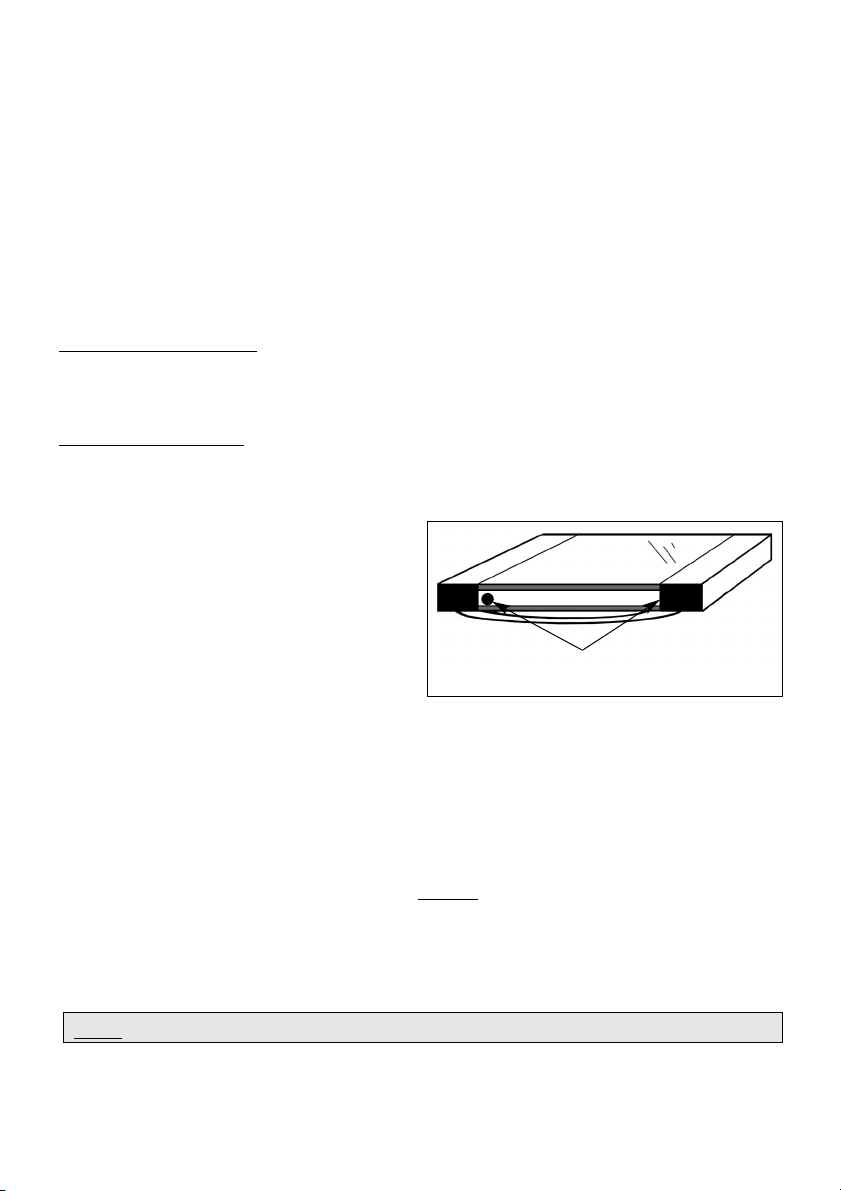
Remove the door inner glass as follows:
1. Open the door fully
2. Press and release the left and right hand
door trim mouldings, the release button is
situated between the inner and outer door
glass at the top of the door trims.
Carefully lift the door trim top moulding and
remove the inner glass from the door trim
bottom mouldings.
Ensure that the door is not allowed to slam
shut due to the reduction in door weight.
Clean the glass as described above.
For slight soiling the inner glass
Door trim moulding
release buttons
3. Hold the door open. The inside of the door outer glass can now be cleaned, taking care the
door does not slam shut trapping fingers.
Refit the door inner glass as follows:
1. Open the door fully.
2. Locate the door inner glass into the door trim bottom mouldings.
Ensure the printing is readable from the face nearest
positioned at the bottom of the door).
3. Carefully re-locate the door trim top mouldings back into position.
Ensure the door inner glass is now held in place by the top and bottom door mouldings
and cannot fall out.
the oven (NB. printing MUST be
NEVER OPERATE THE COOKER WITHOUT THE INNER DOOR GLASS IN POSITION.
38
Page 39

Cooking Results Not Satisfactory?
PROBLEM: CHECK:
Grilling...
Uneven cooking front
to back
Fat splattering Ensure that the grill is not set to too high a temperature.
Top Oven Baking...
(EW34 & EW52 only)
Uneven cooking from
front to back
Uneven cooking of
cakes
Uneven rising of cakes Ensure that the shelf is level (see below*) and that the food is positioned
Food is taking too long
to cook
Oven Baking...
Uneven rising of cakes Ensure that the oven shelves are level by using a spirit level* on the the
Sinking of cakes The following may cause cakes to sink:
Over/under cooking
Fast/Slow cooking
Ensure that Grill pan has been positioned centrally below the grill
element.
Ensure the cooking utensil is at least 3ins from the front of the shelf.
1. Too large baking sheet used (see ‘Cookery Notes’).
2. Over loading of the oven, always ensure even air gaps around baking
tins.
centrally in the oven.
Ensure that the cooking utensil used in the top oven is not larger than
12ins x 9ins. eg. the main oven meat pan.
Only cook one item at a time to avoid overloading the oven.
rod shelf and adjust if necessary, using suitable packing eg. wood under
the feet of the appliance. This should be checked both left to right and
front to back.
Ensure that the food is positioned centrally in the oven.
1. Preheat of fan ovens.
2. Cooking at too high a temperature.
3. Using normal creaming method with soft margarine.
Refer to the cooking times and temperatures given in the oven
Temperature Charts. However, it may be necessary to increase or
decrease temperatures by 10˚C to suit personal taste.
DO NOT use utensils greater than 21/
4ins in height.
39
Page 40

If something goes wrong...
Before calling a Service Engineer, please check through the following lists.
THERE MAY BE NOTHING WRONG.
PROBLEM: CHECK:
Slight odour or small
amount of smoke when
grill / oven used first
time
Nothing Works Is the main cooker wall switch turned on?
Oven temperatures
seems too high or low
Oven does not cook
evenly
(EW34 & EW52)
(EW32, EW42 & EW45)
Grill keeps turning on
and off.
Hotplates are slow to
boil or will not simmer.
This is normal and should cease after a short period.
There may be no electricity supply.
Check temperature and shelf positions are as recommended in the Oven
Temperature Charts.
It may be necessary to increase or decrease the recommended temperature
slightly to suit your taste.
Check:
- Temperature and shelf positions are as recommended in the Oven
Temperature Charts.
- Oven utensils being used allow sufficient air flow around them.
- Check the cooker is level.
Ensure that the top oven control is in the OFF position.Grill does not work
The door MUST be open.Grill does not work
When the Grill control is operating at less than its maximum setting, the Grill
will cycle on and off, this is normal and not a fault.
Check that your pans conform to the recommendations in these instructions.
Marks appearing on
hotplates.
Cannot clean hob /
hotplates.
Cooling fan continues
running after all controls
are turned off
(EW34 & EW52)
Condensation on the
wall at the rear of the
cooker.
Steam / Condensation in
the oven after use.
If you have been through the above list and there is still a problem,
40
The hob surround can be cleaned with warm soapy water and a cream cleaner,
such as ‘Cif’. Sealed hotplates should be cleaned regularly (please refer to the
Care and Cleaning section for further information.
Please note that hob cleaning kits are available from our parts department, see
Key Contacts back page.
This is normal and not a fault. The cooling fan will stop when the cooker has
cooled.
Steam and / or condensation may appear from the vent at the rear of the
appliance when using an oven particularly for foods with a high water content
e.g. frozen chips, roast chicken etc. This is normal, and any excess should be
wiped off.
Steam is a by - product of cooking any food with a high water contact.
To help minimise always:
a) Try to avoid leaving food in the oven to cool after being cooked.
b) Use a covered container, wherever possible.
contact Service (see ‘Key Contacts’, back page).
Page 41
Disposal of your product
To minimise the risk of injury to children please dispose of your product carefully and safely.
Remove all doors and lids. Remove the mains cable (where fitted) by cutting off flush with the
appliance and always ensure that no plug is left in a condition where it could be connected to
the electricity supply.
To help the environment, Local Authority instructions should be followed for the disposal of
your product.
This appliance conforms to the following EEC Directives:
Electromagnetic Compatibility Low Voltage Equipment
89/336/EEC 73/23/EEC
92/31/EEC 93/68/EEC
93/68/EEC
41
Page 42

Hotpoint Service Cover
Satisfaction Guaranteed or Your
Money Back
Hotpoint gives you a unique ‘Satisfaction
Guaranteed’ promise – valid for ninety days after
you have purchased your Hotpoint product. If there is a
technical problem with your Hotpoint appliance, just call
Hotpoint Service (see back page). If necessary we will
arrange for an engineer to call. If the technical problem is
not resolved under this Guarantee, Hotpoint will replace
your appliance or, if you prefer, give you your money back.
Your statutory rights are not affected, and the Guarantee is
additional and subject to the terms of Hotpoint’s Five Year
Parts Guarantee.
Hotpoint’s Free Five Year Guarantee
From the moment your appliance is delivered
Hotpoint guarantees it for FIVE YEARS.
• In the Five Years all replacement parts are FREE
provided that they are fitted by our own
Service Engineer. During the first year our
Engineer’s time and labour is also free.
• Our guarantee covers loss of food in our
refrigeration and freezer products up to £250
during the first year, subject to verification by
one of our engineers.
• After the first year we will charge for our
Engineer’s time and labour. We do, however,
operate a range of Service Plans (see opposite)
which, for an annual payment, enables you to
cover any repair costs which may be necessary.
• All our service repairs are guaranteed for
twelve months in respect of our labour and any
parts fitted.
• The appliance must be used in the United
Kingdom, and must not be tampered with or
taken apart by anyone other than our own
Service Engineers.
• You may, however, buy parts which can be
safely fitted without specialist knowledge or
equipment. The correct fitting of such parts,
provided they are genuine Hotpoint spares, will
not affect your Guarantee. Parts are available
from our Hotpoint Spares Centres (see back
page).
• Our guarantee does not cover the cost of any
repair, or loss of food in refrigeration products,
due to power failure, accidents or misuse. Nor
does it cover the cost of any visits to advise
you on the use of your appliance. Please read
thoroughly the instruction book supplied with
this appliance.
• If at any time during the Guarantee period we
are unable to repair your appliance, we will
refund any repair costs paid to us in the
previous twelve months. We will also offer you
a new appliance at a reduced charge instead of
a repair.
• Our Guarantee is in addition to and does not
affect your legal rights.
• Should you need independent advice on your
consumer rights, help is available from your
Consumer Advice Centre, Law Centre, Trading
Standards Department and Citizens Advice
Bureau.
• All Hotpoint servicing is carried out by our own
Service Organisation located throughout the
United Kingdom and Eire. We will be happy to
deal with any problems which you may have.
42
Hotpoint’s Extended Warranties
Whether you have just one or a number of Hotpoint
appliances in your kitchen, Hotpoint has a range of
Service Plans to give you complete peace of mind. They
enable you to extend your one year labour guarantee so
that you can have repairs completed FREE during the
membership period.
Service Cover
We offer a number of payment methods; cheque, credit
card or you can spread the cost and pay by direct debit
(full details can be obtained on Free phone 0800
716356). This covers you for all repairs during the period
of cover, which can be from 1 to 4 years. Service Cover
also includes loss of food, up to the value of £250, in
refrigeration appliances. There is also an option of
Service Cover with Maintenance at an additional cost.
This includes an annual Electrical and Safety check and
replacement of any parts as necessary.
Kitchen Cover
An annual payment covers you for all repairs for all your
Hotpoint appliances which are less than ten years old. It
also covers the cost of loss of food up to £250 in our
refrigeration and freezer products. There is also the
option of Kitchen Cover with Maintenance at an
additional cost. Any additional Hotpoint appliances
purchased after you have joined Hotpoint Kitchen Cover
will automatically be included during the annual period
of cover without further charge.
Appliance Registration
To ensure that you have the opportunity to benefit from
any of the above Service Schemes and other offers you
should complete and return immediately the Appliance
Registration Form/Questionnaire supplied with this
appliance. Full details and costs of our Service Schemes,
together with an application form, will be sent to you at
the end of the first year of the guarantee.
Annual Safety/Maintenance Checks
Hotpoint strongly recommends that all its
appliances are regularly checked for electrical and
mechanical safety, whether or not they are covered by a
Service Plan. Worn door gaskets or hoses may cause a
leak on an appliance, which could become dangerous if
neglected.
Proof of Purchase
For future reference please attach your purchase receipt
to this booklet and keep it in a safe place.
Spares and Accessories
Spares and accessories can be ordered from your local
Hotpoint Spares Centre (see back page), using the order
form enclosed.
NOTE: Our Engineers will use every effort to avoid
damage to floor coverings and adjacent units when
carrying out repairs/service work, but in locations where
the Engineer advises you that it will be impossible to
move appliances without risk of
damage, he will only proceed with your approval
that no liability is accepted.
Page 43

Page 44
Key Contacts
After Sales Service
Over 1100 trained specialists, directly employed by us, ensure that you can have
complete confidence in both the appliances and services we offer.
Repair Service and Information Help Desk
UK: 08709 066 066
Monday to Friday, 8am to 7.30pm
Saturday, 8.30am to 5.30pm
Sunday, 9.30am to 3.30pm
www.hotpointservice.co.uk
Republic of Ireland: 1850 302 200
Note: Our operators will require the following information:
Model number
Serial number
Extended Warranties
UK: 08709 088 088
Monday to Sunday, 8am to 8pm
www.hotpointservice.co.uk
Republic of Ireland: 1850 502 200
Genuine Parts and Accessories
Monday to Friday, 8.30am to 5pm
Republic of Ireland: (01) 842 6836
Indesit Company UK Limited, Morley Way, Peterborough, PE2 9JB
PRINTED BY SIMLEX .FOUR ASHES, WOLVERHAMPTON. 01/2005 Part no. 195044178.01
UK: 08709 077 077
Saturday, 8.30am to 12noon
www.hotpointservice.co.uk
www.hotpoint.co.uk
 Loading...