

Page 1

KS57C01502/C01504/P01504 PRODUCT OVERVIEW
1-1
1PRODUCT OVERVIEW
The KS57C01502/C01504 single-chip CMOS microcontroller has been designed for high-performance using
Samsung's newest 4-bit CPU core, SAM47 (Samsung Arrangeable Microcontrollers).
The KS57P01504 is the microcontroller which has 4 Kbyte one-time-programmable ROM and the functions are
the same to KS57C01502/C01504. With a four-channel comparator, eight LED direct drive pins, serial I/O
interface, and its versatile 8-bit timer/counter, the KS57C01502/C01504 offers an excellent design solution for a
wide variety of general-purpose applications.
Up to 24 pins of the 30-pin SDIP package can be dedicated to I/O. Five vectored interrupts provide fast response
to internal and external events. In addition, the KS57C01502/C01504's advanced CMOS technology provides for
very low power consumption and a wide operating voltage range — all at a very low cost.
Page 2

PRODUCT OVERVIEW KS57C01502/C01504/P01504
1-2
FEATURES SUMMARY
Memory
• 512 × 4-bit data memory (RAM)
• 2048 × 8-bit program memory
(ROM):KS57C01502
4096 × 8-bit program memory
(ROM):KS57C01504
24 I/O Pins
•• I/O: 18 pins, including 8 high current pins
• Input only: 6 pins
Comparator
• 4-channel mode:
Internal reference (4-bit resolution)
16-step variable reference voltage
• 3-channel mode:
External reference
150 mV resolution (worst case)
8-bit Basic Timer
• Programmable interval timer
• Watch-dog timer
8-bit Timer/Counter 0
• Programmable interval timer
• External event counter function
Timer/counter clock output to TCLO0 pin
Watch Timer
• Time interval generation: 0.5 s, 3.9 ms at 4.19
MHz
• 4 frequency outputs to BUZ pin
8-bit Serial I/O Interface
• 8-bit transmit/receive mode
• 8-bit receive-only mode
• LSB-first or MSB-first transmission selectable
• Internal or external clock source
Bit Sequential Carrier
• Supports 16-bit serial data transfer in arbitrary
format
Interrupts
• Two external interrupt vectors
• Three internal interrupt vectors
• Two quasi-interrupts
Memory-Mapped I/O Structure
• Data memory bank 15
Two Power-Down Modes
• Idle mode: Only CPU clock stops
• Stop mode: System clock stops
OSCILLATION SOURCES
• Crystal, Ceramic for system clock
• Crystal/ceramic: 0.4 - 6.0 MHz
• CPU clock divider circuit (by 4. 8, or 64)
Instruction Execution Times
• 0.95, 1.91, 15.3 µs at 4.19 MHz
• 0.67, 1.33, 10.7 µs at 6.0 MHz
Operating Temperature
• – 40
°
C to 85 °C
Operating Voltage Range
• 1.8 V to 5.5 V
Package Type
• 30 SDIP, 32 SOP
Page 3

KS57C01502/C01504/P01504 PRODUCT OVERVIEW
1-3
FUNCTION OVERVIEW
SAM47 CPU
All KS57-series microcontrollers have the advanced SAM47 CPU core. The SAM47 CPU can directly address up
to 32 K bytes of program memory. The arithmetic logic unit (ALU) performs 4-bit addition, subtraction, logical, and
shift-and-rotate operations in one instruction cycle and most 8-bit arithmetic and logical operations in two cycles.
CPU REGISTERS
Program Counter
A 11-bit program counter (PC) stores addresses for instruction fetch during program execution. Usually, the PC is
incremented by the number of bytes of the instruction being fetched. An exception is the 1-byte instruction REF
which is used to reference instructions stored in a look-up table in the ROM. Whenever a reset operation or an
interrupt occurs, bits PC11 through PC0 are set to the vector address. Bit PC13–12 is reserved to support future
expansion of the device's ROM size.
Stack Pointer
An 8-bit stack pointer (SP) stores addresses for stack operations. The stack area is located in the general-purpose
data memory bank 0. The SP is read or written by 8-bit instructions and SP bit 0 must always be set to logic zero.
During an interrupt or a subroutine call, the PC value and the program status word (PSW) are saved to the stack
area in RAM. When the service routine has completed, the values referenced by the stack pointer are restored.
Then, the next instruction is executed.
The stack pointer can access the stack regardless of data memory access enable flag status. Since the reset
value of the stack pointer is not defined in firmware, it is recommended that the stack pointer be initialized to 00H
by program code. This sets the first register of the stack area to data memory location 0FFH.
PROGRAM MEMORY
In its standard configuration, the 4096 × 8-bit ROM is divided into three functional areas:
— 16-byte area for vector addresses
— 96-byte instruction reference area
— 1920-byte general purpose area (KS57C01502)
— 3968-byte general purpose area (KS57C01504)
The vector address area is used mostly during reset operations and interrupts. These 16 bytes can also be used
as general-purpose ROM.
The REF instruction references 2 × 1-byte and 2-byte instructions stored in locations 0020H–007FH. The REF
instruction can also reference 3-byte instructions such as JP or CALL. In order for REF to be able to reference
these instructions, however, JP or CALL must be shortened to a 2-byte format. To do this, JP or CALL is written to
the reference area with the format TJP or TCALL instead of the normal instruction name. Unused locations in the
instruction reference area can be allocated to general-purpose use.
Page 4

PRODUCT OVERVIEW KS57C01502/C01504/P01504
1-4
DATA MEMORY
Overview
Data memory is organized into three areas:
— 32 × 4-bit working registers
— 224 × 4-bit general-purpose area in bank 0
— 256 × 4-bit general-purpose area in bank 1
— 128 × 4-bit area in bank 15 for memory-mapped I/O addresses
Data stored in data memory can be manipulated by 1-, 4-, and 8-bit instructions.
Data memory is organized into two memory banks — bank 0, bank 1 and bank 15. The select memory bank in-
struction (SMB) selects the bank to be used as working data memory. After power-on reset operation, initialization
values for data memory must be redefined by code.
Data Memory Addressing Modes
The enable memory bank (EMB) flag controls the addressing mode for data memory banks 0, 1 or 15.
When the EMB flag is logic zero, restricted area can be accessed. When the EMB flag is set to logic one, all two
data memory banks can be accessed according to the current SMB value. The EMB = "0" addressing mode is
used for normal program execution, whereas the EMB = "1" mode is commonly used for interrupts, subroutines,
mapped I/O, and repetitive access of specific RAM addresses.
Working Registers
The RAM's working register area in data memory bank 0 is further divided into four register banks. Each register
bank has eight 4-bit registers that are addressable either by 1-bit or 4-bit instructions. Paired 4-bit registers can be
addressed as double registers by 8-bit instructions.
Register A is the 4-bit accumulator and double register EA is the 8-bit extended accumulator. Double registers
WX, WL, and HL are used as data pointers for indirect addressing. Unused working registers can be used as
general-purpose memory.
To limit the possibility of data corruption due to incorrect register bank addressing, register bank 0 is usually used
for the main program and banks 1, 2, and 3 for interrupt service routines.
Page 5

KS57C01502/C01504/P01504 PRODUCT OVERVIEW
1-5
CONTROL REGISTERS
Program Status Word
The 8-bit program status word (PSW) controls ALU operations and instruction execution sequencing. It is also
used to restore a program's execution environment when an interrupt has been serviced. Program instructions can
always address the PSW regardless of the current value of data memory enable flags.
Before an interrupt or subroutine is processed, the PSW values are pushed onto the stack in data memory bank 0.
When the service routine is completed, the PSW values are restored.
IS1 IS0 EMB ERB
C SC2 SC1 SC0
Interrupt status flags (IS1, IS0), the enable memory bank and enable register bank flags (EMB, ERB), and the
carry flag (C) are 1- and 4-bit read/write or 8-bit read-only addressable. You can address the skip condition flags
(SC0–SC2) using 8-bit read instructions only.
Select Bank (SB) Register
Two 4-bit registers store address values used to access specific memory and register banks: the select memory
bank register, SMB, and the select register bank register, SRB.
'SMB n' instruction selects a data memory bank (0 or 15) and stores the upper four bits of the 12-bit data memory
address in the SMB register. To select register bank 0, 1, 2, or 3, and store the address data in the SRB, you can
use the instruction 'SRB n'.
The instructions "PUSH SB" and "POP SB" move SRB and SMB values to and from the stack for interrupts and
subroutines.
CLOCK CIRCUITS
System oscillation circuit generates the internal clock signals for the CPU and peripheral hardware.
The system clock can use a crystal, or ceramic oscillation source, or an externally-generated clock signal. To drive
KS57C01502/C01504 using an external clock source, the external clock signal should be input to Xin, and its
inverted signal to X
out
.
4-bit power control register controls the oscillation on/off, and select the CPU clock. The internal system clock
signal (fx) can be divided internally to produce three CPU clock frequencies — fx/4, fx/8, or fx/64.
INTERRUPTS
Interrupt requests may be generated internally by on-chip processes (INTB, INTT0, and INTS) or externally by
peripheral devices (INT0 and INT1). There are two quasi-interrupts: INTK and INTW. INTK (KS0–KS2) detects
falling edges of incoming signals and INTW detects time intervals of 0.5 seconds or 3.91 milliseconds. The
following components support interrupt processing:
— Interrupt enable flags
— Interrupt request flags
— Interrupt priority registers
— Power-down termination circuit
Page 6

PRODUCT OVERVIEW KS57C01502/C01504/P01504
1-6
POWER-DOWN
To reduce power consumption, there are two power-down modes: idle and stop. The IDLE instruction initiates idle
mode; the STOP instruction initiates stop mode.
In idle mode, the CPU clock stops while peripherals continue to operate normally. In stop mode, system clock
oscillation stops completely, halts all operations except for a few basic peripheral functions. A power-down is
terminated either by a or by an interrupt (with exception of the external interrupt INT0).
RESET
When is input during normal operation or during power-down mode, a reset operation is initiated and the
CPU enters idle mode. When the standard oscillation stabilization time interval (31.3 ms at 4.19 MHz) has elapsed,
normal CPU operation resumes.
I/O PORTS
The KS57C01502/C01504 has seven I/O ports. Pin addresses for all I/O ports are mapped to locations FF0H–
FF6H in bank 15 of the RAM. There are 6 input pins and 18 configurable I/O pins including 8 high current I/O pins
for a total of 24 I/O pins. The contents of I/O port pin latches can be read, written, or tested at the corresponding
address using bit manipulation instructions.
TIMERS and TIMER/COUNTER
The timer function has three main components: an 8-bit basic timer, an 8-bit timer/counter, and a watch timer.
The 8-bit basic timer generates interrupt requests at precise intervals, based on the selected internal clock
frequency.
The programmable 8-bit timer/counter is used for counting events, modifying internal clock frequencies, and
dividing external clock signals. The 8-bit timer/counter generates a clock signal ( ) for the serial I/O interface.
The watch timer consists of an 8-bit watch timer mode register, a clock selector, and a frequency divider circuit. Its
functions include real-time, watch-time measurement, and clock generation for frequency output for buzzer sound.
SERIAL I/O INTERFACE
The serial I/O interface supports the transmission or reception of 8-bit serial data with an external device. The
serial interface has the following functional components:
— 8-bit mode register
— Clock selector circuit
— 8-bit buffer register
— 3-bit serial clock counter
The serial I/O circuit can be set to transmit-and-receive, or to receive-only mode. MSB-first or LSB-first
transmission is also selectable.
The serial interface can operate with an internal or an external clock source, or using the clock signal generated by
the 8-bit timer/counter. Transmission frequency can be modified by setting the appropriate bits in the SIO mode
register.
Page 7

KS57C01502/C01504/P01504 PRODUCT OVERVIEW
1-7
BIT SEQUENTIAL CARRIER
The bit sequential carrier (BSC) is a 16-bit register that can be manipulated using 1-, 4-, and 8-bit instructions.
Using 1-bit indirect addressing, addresses and bit locations can be specified sequentially. In this way, programs
can process 16-bit data by moving the bit location sequentially and then incrementing or decrementing the value of
the L register. BSC data can also be manipulated using direct addressing.
COMPARATOR
The KS57C01502/C01504 contains a 4-channel comparator which can be multiplexed to normal input port.
— Conversion time: 15.2 µs, 121.6 µs at 4.19 MHz
— Two operation modes:
Three channels for analog input and one channel for external reference voltage input
Four channels for analog input and internal reference voltage level
— 16-level internal reference voltage generator
— 150 mV accuracy for input voltage level difference detection (maximum)
— Comparator enable and disable
The comparison results are read from the 4-bit CMPREG register after the specified conversion time.
Page 8

PRODUCT OVERVIEW KS57C01502/C01504/P01504
1-8
BLOCK DIAGRAM
Program
Status Word
Flags
Arithmetic
and
Logic Unit
Instruction Decoder
Internal
Interrupts
RESET
Interrupt
Control
Block
Stack
Pointer
Clock
Program Memory
KS57C01502: 2 KByte
KS57C01504: 4 KByte
512 x 4-Bit
Data
Memory
Input Port 2
Comparator
P2.0/KS0/CIN0
P2.1/KS1/CIN1
P2.2/KS2/CIN2
P2.3/KS3/CIN3
I/O Port 5
P4.0 - P4.3
P6.0/KS0
P6.1/KS1
P6.2/KS2
P6.3/KS3
I/O Port 4
I/O Port 6
X
OUT
X
IN
Program
Counter
8-Bit
Timer/Counter
I/O Port 3
I/O Port 0
P0.0/CLO
P0.1/TIO
P0.2/INT1
P3.0/TCL0
P3.1/TCLO0
P3.2/CLO
P5.0 - P5.3
Serial I/O Port
Input Port 1
P0.0/SCK
P0.1/SO
P0.2/SI
Basic Timer Watch Timer
Figure 1-1. KS57C01502/C01504 Simplified Block Diagram
Page 9
KS57C01502/C01504/P01504 PRODUCT OVERVIEW
1-9
Pin Assignments
V
SS
Xout
Xin
TEST
P1.0/INT0
P1.1/INT1
RESET
P0.0/
SCK
P0.1./SO
P0.2/SI
P2.0/CIN0
P2.1/CIN1
P2.2/CIN2
P2.3/CIN3
P3.0/TCL0
1
2
3
4
5
6
7
8
9
10
11
12
13
14
15
V
DD
P6.3/BUZ
P6.2/KS2
P6.1/KS1
P6.0/KS0
P5.3
P5.2
P5.1
P5.0
P4.3
P4.2
P4.1
P4.0
P3.2/CLO
P3.1/TCLO0
32
31
30
29
28
27
26
25
24
23
22
21
20
19
18
KS57C01502
KS57C01504
(Top View)
30-SDIP
V
SS
Xout
Xin
TEST
P1.0/INT0
P1.1/INT1
RESET
NC
P0.0/
SCK
P0.1./SO
P0.2/SI
P2.0/CIN0
P2.1/CIN1
P2.2/CIN2
P2.3/CIN3
P3.0/TCL0
1
2
3
4
5
6
7
8
9
10
11
12
13
14
15
16
V
DD
P6.3/BUZ
P6.2/KS2
P6.1/KS1
P6.0/KS0
P5.3
P5.2
P5.1
P5.0
P4.3
P4.2
P4.1
P4.0
NC
P3.2/CLO
P3.1/TCLO0
32
31
30
29
28
27
26
25
24
23
22
21
20
19
18
17
KS57C01502
KS57C01504
(Top View)
32-SOP
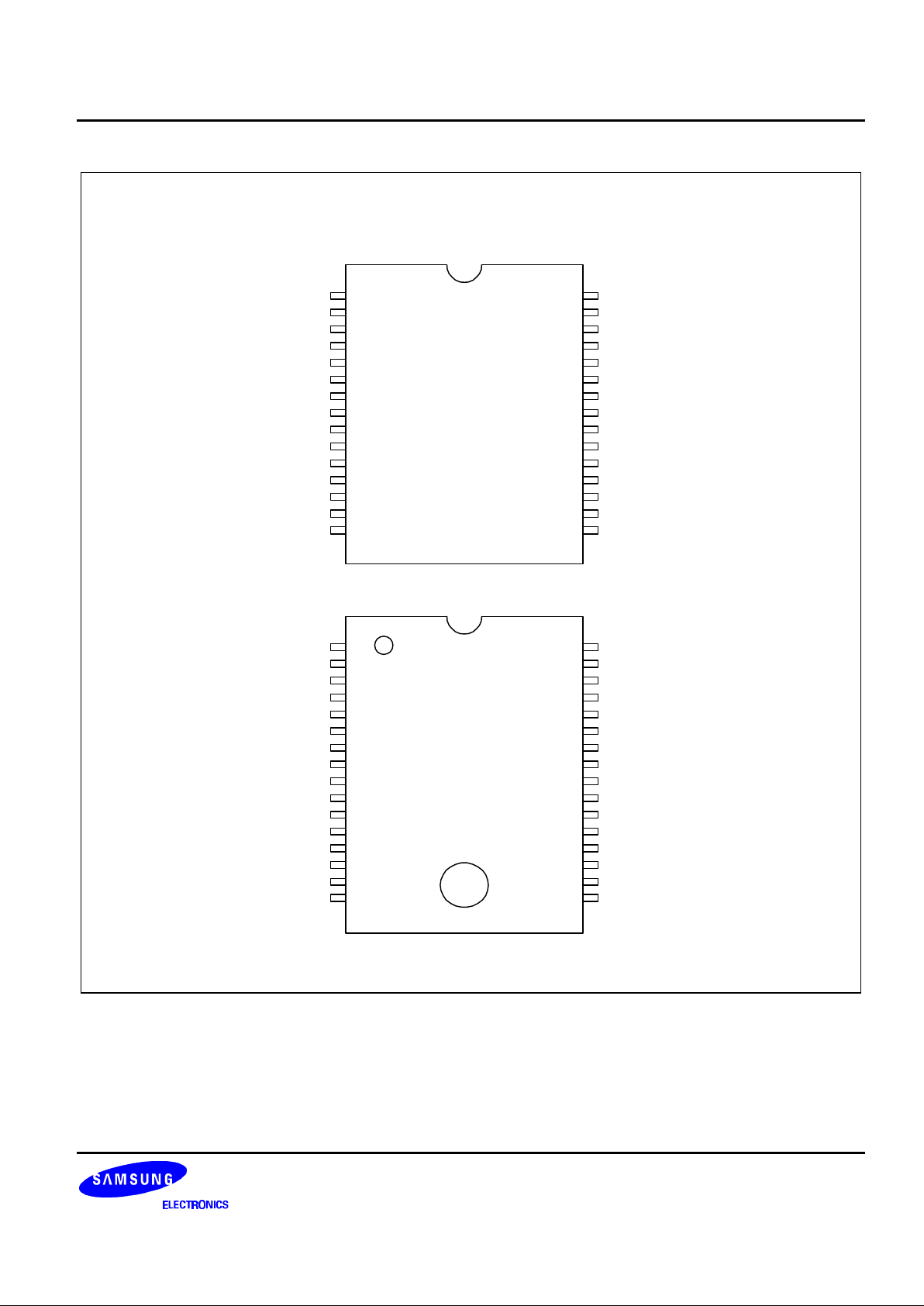
Figure 1-2. KS57C01502/C01504 Pin Assignment Diagram
Page 10

PRODUCT OVERVIEW KS57C01502/C01504/P01504
1-10
PIN DESCRIPTIONS
Table 1-1. KS57C01502/C01504 Pin Descriptions
Pin Name Pin
Type
Description Number Share Pin
P0.0
P0.1
P0.2
I/O 3-bit I/O port. 1-bit or 3-bit read/write and test are
possible. Pull-up resistors are assignable to input pins by
software and are automatically disabled for output pins.
Pins are individually configurable as input or output.
8(9)
9(10)
10(11)
SO
SI
P1.0
P1.1
I 2-bit input port. 1-bit or 2-bit read and test are possible.
Pull-up resistors are assignable by software.
5(5)
6(6)
INT0
INT1
P2.0–P2.3 I 4-bit input port. 1-bit or 4-bit read and test are possible. 11-14
(12-15)
CIN0–CIN3
P3.0
P3.1
P3.2
I/O Same as port 0 15(16)
16(17)
17(18)
TCL0
TCLO0
CLO
P4.0–P4.3
P5.0–P5.3
I/O 4-bit I/O ports. 1-, 4-, or 8-bit read/write and test are
possible. Pins are individually configurable as input or
output. 4-bit pull-up resistors are assignable to input pins
by software and are automatically disabled for output
pins. The N-channel open-drain or push-pull output can
be selected by software (1-bit unit)
18-21(20-23)
22-25(24-27)
–
P6.0
P6.1
P6.2
P6.3
I/O 4-bit I/O port.
1-bit or 4-bit read/write and test are possible.
Pull-up resistors are assignable to input pins by software
and are automatically disabled for output pins. Pins are
individually configurable as input or output.
26(28)
27(29)
28(30)
29(31)
KS0
KS1
KS2
BUZ
INT0 I External interrupts with detection of rising and falling
edges
5(5) P1.0
INT1 I External interrupts with detection of rising or falling edges 6(6) P1.1
CIN0–CIN3 I 4-channel comparator input.
CIN0–CIN2: comparator input only.
CIN3: comparator input or external reference input
11-14(12-15) P2.0–P2.3
I/O Serial interface clock signal P0.0
SO I/O Serial data output 9(10) P0.1
SI I/O Serial data input 10(11) P0.2
TCL0 I/O External clock input for timer/counter 15(16) P3.0
TCLO0 I/O Timer/counter clock output 16(17) P3.1
CLO I/O CPU clock output 17(18) P3.2
BUZ I/O 2 kHz, 4 kHz, 8 kHz, or 16 kHz frequency output at 4.19
MHz for buzzer sound
29(31) P6.3
NOTE: Pn numbers shown in parentheses '( )' are for 32-pin SOP package; other pin numbers are for the 30-pin SDIP.
Page 11
KS57C01502/C01504/P01504 PRODUCT OVERVIEW
1-11
Table 1-1. KS57C01502/C01504 Pin Descriptions (Continued)
Pin Name Pin
Type
Description Number Share Pin
Quasi-interrupt input with falling edge detection 26-28(28-30) P6.0–P6.2
V
DD
— Main power supply 30(32) —
V
SS
— Ground 1(1) —
I Reset signal 7(7) —
TEST I
Test signal input (must be connected to VSS)
4(4) —
Xin, X
out
— Crystal or ceramic oscillator signal for system clock 3,2(3,2) —
NOTE: Pin numbers shown in parentheses '( )' are for 32-pin SOP package; other pin numbers are for the 30-pin SDIP.
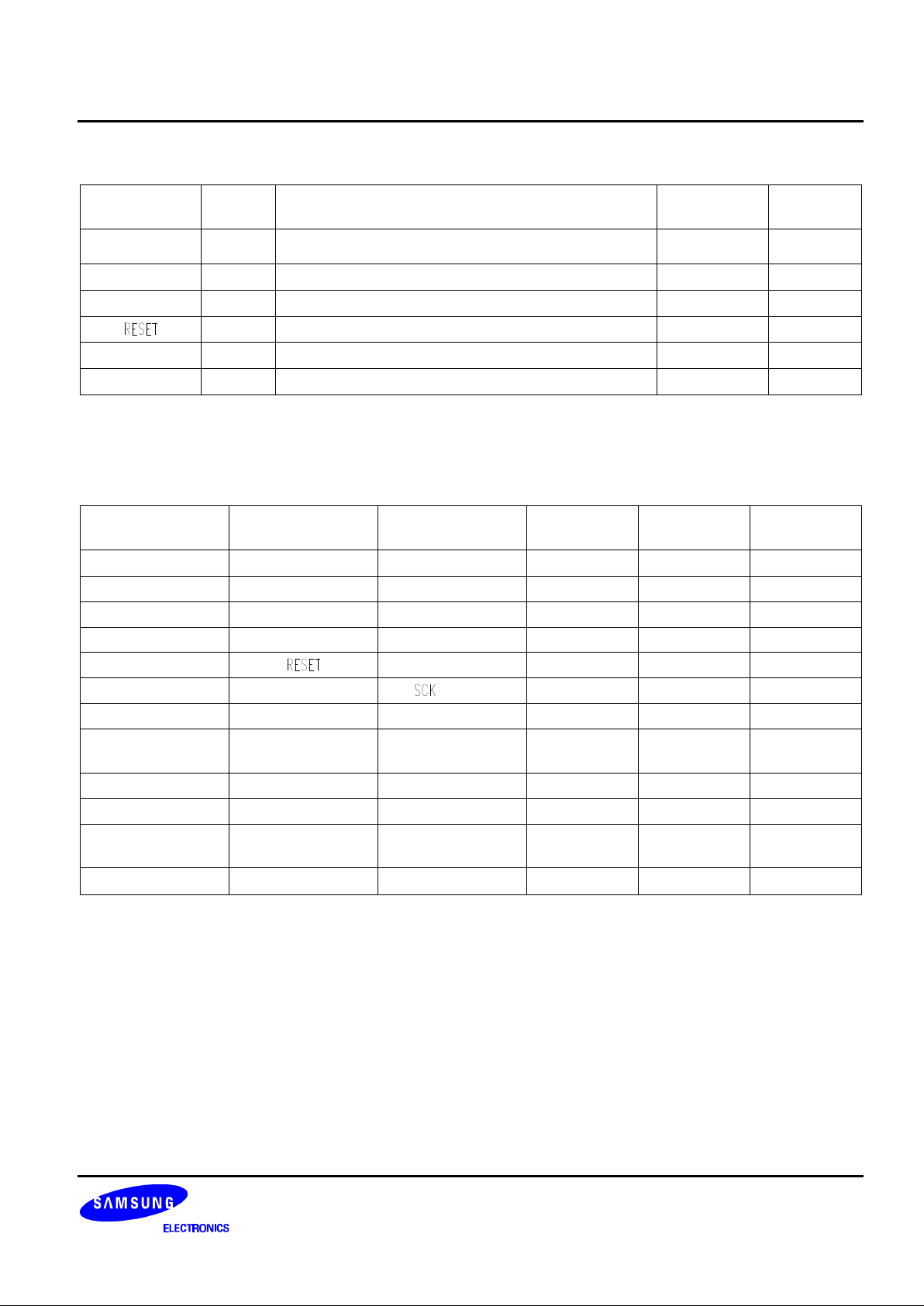
Table 1-2. Overview of KS57C01502/C01504 Pin Data
SDIP Pin
Numbers
Pin
Names
Share
Pins
I/O
Type
Reset
Value
Circuit
Type
1
V
SS
2,3 Xout, Xin
4 TEST
I
5,6 P1.0, P1.1 INT0, INT1 I Input A-3
7
I
B
8-10 P0.0 - P0.2
, SO, SI
I/O Input D-1
11-14 P2.0 - P2.3 CIN0 - CIN3 I Input
F-1, F-2
(note)
15-17 P3.0 - P3.2 TCL0, TCLO0,
CLO
I/O Input D-1
18-21 P4.0 - P4.3
I/O Input E
22-25 P5.0 - P5.3
I/O Input E
26-29 P6.0 - P6.3 KS0, KS1, KS2,
BUZ
I/O Input D-1
30
V
DD
NOTE: I/O circuit type F-2 is implemented for P2.3 only.
Page 12

PRODUCT OVERVIEW KS57C01502/C01504/P01504
1-12
PIN CIRCUIT DIAGRAMS
V
DD
P-CHANNEL
IN
N-CHANNEL
Figure 1-3. Pin Circuit Type A
P-CHANNEL
RESISTOR
ENABLE
V
DD
PULL-UP
RESISTOR
SCHMITT TRIGGER
IN
Figure 1-4. Pin Circuit Type A-3
V
DD
PULL-UP
RESISTOR
SCHMITT TRIGGER
IN
Figure 1-5. Pin Circuit Type B
DATA
OUTPUT
DISABLE
OUT
V
DD
P-CHANNEL
N-CHANNEL
Figure 1-6. Pin Circuit Type C
Page 13

KS57C01502/C01504/P01504 PRODUCT OVERVIEW
1-13
V
DD
PULL-UP
RESISTOR
P-CHANNEL
CIRCUIT
TYPE 4
RESISTOR
ENABLE
DATA
OUTPUT
DISABLE
SCHMITT TRIGER
I/O
Figure 1-7. Pin Circuit Type D-1
DATA
OUTPUT
DISABLE
V
DD
P-CHANNEL
PULL-UP
RESISTOR
ENABLE
N-CHANNEL
PNE
V
DD
PULL-UP
RESISTOR
I/O
Figure 1-8. Pin Circuit Type E
DIGITAL INPUT
ANALOG INPUT
Figure 1-9. Pin Circuit Type F-1
DIGITAL INPUT
ANALOG INPUT
EXTERNAL V
REF
Figure 1-10. Pin Circuit Type F-2
Page 14

KS57C01502/C01504/P01504 ELECTRICAL DATA
14-1
14 ELECTRICAL DATA
Table 14-1. Absolute Maximum Ratings
(TA = 25 °C)
Parameter Symbol Conditions Rating Units
Supply Voltage
V
DD
– – 0.3 to + 6.5 V
Input Voltage
V
I
All I/O ports
– 0.3 to V
DD
+ 0.3
V
Output Voltage
V
O
–
– 0.3 to VDD + 0.3
V
Output Current High
I
OH
One I/O port active – 5 mA
All I/O ports active – 15
Output Current Low
I
OL
Ports 0, 3, and 6 5 mA
Ports 4 and 5 30
All ports, total + 100
Operating Temperature
T
A
– – 40 to + 85
°
C
Storage Temperature
T
stg
– – 65 to + 150
°
C
Table 14-2. D.C. Electrical Characteristics
(TA = – 40 °C to + 85 °C, VDD = 1.8 V to 5.5 V)
Parameter Symbol Conditions Min Typ Max Units
Input High
Voltage
V
IH1
Ports 4 and 5
0.7V
DD
–
V
DD
V
V
IH2
Ports 0, 1, 2, 3, 6, and
0.8V
DD
–
V
DD
V
IH3
Xin and X
out
V
DD
– 0.1
–
V
DD
Input Low
Voltage
V
IL1
Ports 4 and 5 – –
0.3V
DD
V
V
IL2
Ports 0, 1, 2, 3, 6,
0.2V
DD
V
IL3
Xin and X
out
0.1
Output High
Voltage
V
OH
V
DD
= 4.5 V to 5.5 V
IOH = – 1 mA
Ports 0, 3, 4, 5, 6
V
DD
- 1.0
– – V
Page 15

ELECTRICAL DATA KS57C01502/C01504/P01504
14-2
Table 14-2. D.C. Electrical Characteristics (Continued)
(TA = – 40 °C to + 85 °C, VDD = 1.8 V to 5.5 V)
Parameter Symbol Conditions Min Typ Max Units
Output Low
Voltage
V
OL
V
DD
= 4.5 V to 5.5 V
IOL = 15 mA
Ports 4, 5
– – 2 V
VDD = 4.5V to 5.5 V
I
OL
= 4.0mA
All output pins except Ports 4, 5
– 2
Input High
Leakage
Current
I
LIH1
VIN = V
DD
All input pins except Xin and X
out
– – 3
µA
I
LIH2
VIN = V
DD
Xin and X
out
20
Input Low
Leakage
Current
I
LIL1
V
IN
= 0 V
All input pins except X
in
, X
out and
– – – 3
µA
I
LIL2
V
IN
= 0 V
Xin and X
out
– 20
Output High
Leakage
Current
I
LOH
VO = V
DD
All output pins
– – 3
µA
Output Low
Leakage
Current
I
LOL
VO = 0 V
– – – 3
µA
Pull-Up
Resistor
R
L1
V
I
= 0 V; V
DD
= 5 V
Port 0, 1, 3, 4, 5, 6
25 50 100
kΩ
V
DD
= 3 V
50 100 200
R
L2
V
DD
= 5 V; V
I
= 0 V; RESET
100 250 400
V
DD
= 3 V
200 500 800
Page 16

KS57C01502/C01504/P01504 ELECTRICAL DATA
14-3
Table 14-2. D.C. Electrical Characteristics (Concluded)
(TA = – 40 °C to + 85 °C, VDD = 1.8 V to 5.5 V)
Parameter Symbol Conditions Min Typ Max Units
Supply
I
DD1
Run mode; V
DD
= 5.0 V ± 10%
6.0MHz – 3.0 8.0
mA
Current
(1)
Crystal oscillator; C1=C2=22pF 4.19MHz 2.0 5.5
V
DD
= 3 V ± 10%
6.0MHz 1.3 4.0
4.19MHz 1.0 3.0
I
DD2
Idle mode; V
DD
= 5.0 V ± 10%
6.0MHz – 0.8 2.5
mA
Crystal oscillator; C1=C2=22pF 4.19MHz 0.6 1.8
V
DD
= 3 V ± 10%
6.0MHz 0.6 1.5
4.19MHz 0.4 1.0
I
DD3
Stop mode; V
DD
= 5.0 V ± 10%
– 0.5 3.0
µA
Stop mode; V
DD
= 3.0 V ± 10%
0.3 2.0
NOTES:
1. D.C. electrical values for Supply current (I
DD1
to I
DD3
) do not include current drawn through internal pull-up resistor,
output port drive currents and comparator.
2. The supply current assumes a CPU clock of fx/4.
CPU CLOCK = 1/n x oscillator frequency (n = 4, 8 or 64)
SUPPLY VOLTAGE (V)
1.05 MHz
15.625 kHz
CPU CLOCK
4.2 MHz
6 MHz
400 kHz
Main Osc. Freq. ( Divided by 4 )
1.5 MHz
1 2
2.7
3 4 5 6 7
Figure 14-1. Standard Operating Voltage Range
Page 17

ELECTRICAL DATA KS57C01502/C01504/P01504
14-4
Table 14-3. Oscillators Characteristics
(TA = – 40 °C + 85 °C, VDD = 1.8 V to 5.5 V)
Oscillator Clock
Configuration
Parameter Test Condition Min Typ Max Units
Ceramic
Oscillator
Xin Xout
C1 C2
Oscillation frequency
(1)
VDD = 2.7 V to 5.5 V
0.4 – 6.0 MHz
VDD = 1.8 V to 5.5 V
0.4 – 4.2
Stabilization time
(2)
VDD = 3.0 V
– – 4 ms
Crystal
Oscillator
Xin Xout
C1 C2
Oscillation frequency
(1)
VDD = 2.7 V to 5.5 V
0.4 – 6.0 MHz
VDD = 1.8 V to 5.5 V
0.4 – 4.2
Stabilization time
(2)
VDD = 3.0 V
– – 10 ms
External
Clock
Xin Xout
Xin input frequency
(1)
VDD = 2.7 V to 5.5 V
0.4 – 6.0 MHz
VDD = 1.8 V to 5.5 V
0.4 – 4.2
Xin input high and low
level width (tXH, tXL)
– 83.3 – 1250 ns
NOTES:
1. Oscillation frequency and Xin input frequency data are for oscillator characteristics only.
2. Stabilization time is the interval required for oscillating stabilization after a power-on occurs, or when stop mode is
terminated.
Page 18

KS57C01502/C01504/P01504 ELECTRICAL DATA
14-5
Table 14-4. Input/Output Capacitance
(TA = 25 °C, V
DD
= 0 V )
Parameter Symbol Condition Min Typ Max Units
Input
Capacitance
C
IN
f = 1 MHz; Unmeasured pins
are returned to V
SS
– – 15 pF
Output
Capacitance
C
OUT
15 pF
I/O Capacitance
C
IO
15 pF
Table 14-5. Comparator Electrical Characteristics
(TA = – 40 °C to + 85 °C, VDD = 4.0 V to 5.5V, VSS = 0 V)
Parameter Symbol Condition Min Typ Max Units
Input Voltage Range – – 0 –
V
DD
V
Reference Voltage
Range
V
REF
– 0 –
V
DD
V
Input Voltage Accuracy
V
CIN
– – –
±150
mV
Input Leakage Current
I
CIN, IREF
– – 3 – 3
µA
Table 14-6. A.C. Electrical Characteristics
(TA = – 40 °C to + 85 °C, V
DD
= 1.8 V to 5.5 V)
Parameter Symbol Conditions Min Typ Max Units
Instruction Cycle
Time
t
CY
V
DD
= 2.7 V to 5.5 V
0.67 – 64
µs
VDD = 1.8 V to 5.5 V
0.95
TCL0 Input
Frequency
f
TI
V
DD
= 2.7 V to 5.5 V
0 – 1.5 MHz
VDD = 1.8 V to 5.5 V
1 MHz
TCL0 Input High,
Low Width
t
TIH, tTIL
V
DD
= 2.7 V to 5.5 V
0.48 – –
µs
VDD = 1.8 V to 5.5 V
1.8
Cycle Time
t
KCY
VDD = 2.7 V to 5.5 V
External source
800 – – ns
Internal source
670
VDD = 1.8 V to 5.5 V
External source
3200
Internal source
3800
Table 14-6. A.C. Electrical Characteristics ( Concluded)
Page 19

ELECTRICAL DATA KS57C01502/C01504/P01504
14-6
(TA = – 40 °C to + 85 °C, V
DD
= 1.8 V to 5.5 V)
Parameter Symbol Conditions Min Typ Max Units
High, Low
Width
tKH, t
KL
VDD = 2.7 V to 5.5 V
External source
335 – – ns
Internal source
t
KCY
/2 – 50
VDD = 1.8 V to 5.5 V
External source
1600
Internal source
t
KCY
/2 – 150
SI Setup Time to
High
t
SIK
VDD = 2.7 V to 5.5 V
External source
100 – – ns
Internal source
150
VDD = 1.8 V to 5.5 V
External source
150
Internal source
500
SI Hold Time to
High
t
KSI
VDD = 2.7 V to 5.5 V
External source
400 – – ns
Internal source
400
VDD = 1.8 V to 5.5 V
External source
600
Internal source
500
Output Delay for
to SO
t
KSO
(1)
VDD = 2.7 V to 5.5 V
External source
– – 300 ns
Internal source
250
VDD = 1.8 V to 5.5 V
External source
1000
Internal source
1000
Interrupt Input
High, Low Width
t
INTH
,
t
INTL
INT0
(2)
– –
µs
INT1, KS0–KS2 10
Input Low
Width
t
RSL
Input 10 – –
µs
NOTES:
1. R (1 Kohm) and C (100 pF) are the load resistance and load capacitance of the SO output line.
2. Minimum value for INT0 is based on a clock of 2t
CY
or 128 / fx as assigned by the IMOD0 register setting.
Page 20

KS57C01502/C01504/P01504 ELECTRICAL DATA
14-7
Table 14-7. RAM Data Retention Supply Voltage in Stop Mode
(TA = – 40 °C to + 85 °C)
Parameter Symbol Conditions Min Typ Max Unit
Data retention supply voltage
V
DDDR
– 1.8 – 5.5 V
Data retention supply current
I
DDDR
V
DDDR
= 1.8 V
– 0.1 10
µA
Release signal set time
t
SREL
– 0 – –
µs
Oscillator stabilization wait
time
(1)
t
WAIT
Released by
–
217 / fx
– ms
Released by interrupt –
(2)
– ms
NOTES:
1. During oscillator stabilization wait time, all CPU operations must be stopped to avoid instability during oscillator startup.
2. Use the basic timer mode register (BMOD) interval timer to delay execution of CPU instructions during the wait time.
TIMING WAVEFORMS
t
SREL
t
WAIT
V
DD
RESET
EXECUTION OF
STOP INSTRUCTION
V
DDDR
DATA RETENTION MODE
STOP MODE
INTERNAL RESET
OPERATION
IDLE MODE
OPERATING
MODE
Figure 14-2. Stop Mode Release Timing When Initiated by
Page 21

ELECTRICAL DATA KS57C01502/C01504/P01504
14-8
V
DD
EXECUTION OF
STOP INSTRUCTION
V
DDDR
DATA RETENTION MODE
STOP MODE
t
WAIT
t
SREL
IDLE MODE
NORMAL
OPERATING
MODE
POWER-DOWN MODE TERMINATING SIGNAL
(INTERRUPT REQUEST)
Figure 14-3. Stop Mode Release Timing When Initiated By Interrupt Request
MEASUREMENT
POINTS
0.8 VDD
0.8 VDD
0.2 VDD
0.2 VDD
Figure 14-4. A.C. Timing Measurement Points (Except for Xin)
Xin
t
XL
t
XH
1 / fx
0.2 V
VDD - 0.2 V
Figure 14-5. Clock Timing Measurement at X
in
Page 22

KS57C01502/C01504/P01504 ELECTRICAL DATA
14-9
TCL
t TIL t TIH
1 /
f TI
0.8 VDD
0.2 VDD
Figure 14-6. TCL Timing
t
RSL
RESET
0.2
V
DD
Figure 14-7. Input Timing for Signal
INT0, 1
KS0 to KS2
t INTL tINTH
0.2 VDD
0.8 VDD
Figure 14-8. Input Timing for External Interrupts
Page 23

ELECTRICAL DATA KS57C01502/C01504/P01504
14-10
SCK
t
KL
t
KH
t
CKY
0.8
V
DD
INPUT DATA
OUTPUT DATA
0.2
V
DD
0.8
V
DD
0.2
V
DD
SI
SO
t
SIK
t
KSI
t
KSO
Figure 14-9. Serial Data Transfer Timing
Page 24

KS57C01502/C01504/P01504 MECHANICAL DATA
15-1
15 MECHANICAL DATA
OVERVIEW
The KS57C01502/C01504/P01504 microcontroller is available in a 30-pin SDIP package (Samsung part number
30-SDIP-400) and a 32-SOP package (Samsung part number 30-SOP-450A).
NOTE: Dimensions are in millimeters.
27.88 MAX
27.48
± 0.20
(1.30)
30-SDIP-400
8.94 ± 0.20
#30
#1
0.56 ±
0.10
1.12 ±
0.10
3.81 ± 0.20
5.21 MAX
1.778
0.51 MIN
3.30 ± 0.30
#16
#15
0-15
0.25
+ 0.10
- 0.05
10.16
Figure 15-1. 30-SDIP-400 Package Dimensions
Page 25

MECHANICAL DATA KS57C01502/C01504/P01504
15-2
32-SOP-450A
20.30 MAX
19.90 ±
0.20
#17
#16
0-8
0.25
+ 0.10
- 0.05
11.43
8.34
±
0.20
0.90
±
0.20
0.05 MIN
2.00
±
0.10
2.20 MAX
0.10 MAX
1.27
NOTE: Dimensions are in millimeters.
12.00 ± 0.30
#32
#1
(0.43)
0.40 ± 0.10
Figure 15-2. 30-SOP-450A Package Dimensions
Page 26

KS57C01502/C01504/P01504 KS57P01504 OTP
16-1
16 KS57P01504 OTP
OVERVIEW
The KS57P01504 single-chip CMOS microcontroller is the OTP (One Time Programmable) version of the
KS57C01502/C01504 microcontroller. It has an on-chip OTP ROM instead of masked ROM. The EPROM is
accessed by serial data format.
The KS57P01504 is fully compatible with the KS57C01502/C0504, both in function and in pin configuration.
Because of its simple programming requirements, the KS57P01504 is ideal for use as an evaluation chip for the
KS57C01502/C01504.
NOTE: The bolds indicate an OTP pin name.
VSS/V
SS
Xout
Xin
VPP/TEST
P1.0/INT0
P1.1/INT1
RESET
/RESET
P0.0/
SCK
P0.1./SO
P0.2/SI
P2.0/CIN0
P2.1/CIN1
P2.2/CIN2
P2.3/CIN3
P3.0/TCL0
1
2
3
4
5
6
7
8
9
10
11
12
13
14
15
V
DD/VDD
P6.3/BUZ/SCLK
P6.2/KS2/SDAT
P6.1/KS1
P6.0/KS0
P5.3
P5.2
P5.1
P5.0
P4.3
P4.2
P4.1
P4.0
P3.2/CLO
P3.1/TCLO0
32
31
30
29
28
27
26
25
24
23
22
21
20
19
18
KS57P01504
(30-SDIP)
Figure 16-1. KS57P01504 Pin Assignments (30-SDIP Package)
Page 27

KS57P01504 OTP KS57C01502/C01504/P01504
16-2
VSS/V
SS
Xout
Xin
VPP/TEST
P1.0/INT0
P1.1/INT1
RESET
/RESET
NC
P0.0/
SCK
P0.1./SO
P0.2/SI
P2.0/CIN0
P2.1/CIN1
P2.2/CIN2
P2.3/CIN3
P3.0/TCL0
1
2
3
4
5
6
7
8
9
10
11
12
13
14
15
16
V
DD/VDD
P6.3/BUZ/SCLK
P6.2/KS2/SDAT
P6.1/KS1
P6.0/KS0
P5.3
P5.2
P5.1
P5.0
P4.3
P4.2
P4.1
P4.0
NC
P3.2/CLO
P3.1/TCLO0
32
31
30
29
28
27
26
25
24
23
22
21
20
19
18
17
KS57P01504
(32-SOP)
NOTE: The bolds indicate an OTP pin name.
Figure 16-2. KS57P01504 Pin Assignments (32-SOP Package)
Page 28

KS57C01502/C01504/P01504 KS57P01504 OTP
16-3
Table 16-1. Descriptions of Pins Used to Read/Write the EPROM
Main Chip During Programming
Pin Name Pin Name Pin No. I/O Function
P6.2 SDAT 28 (30) I/O Serial data pin. Output port when reading and
input port when writing. Can be assigned as a
Input / push-pull output port.
P6.3 SCLK 29 (31) I/O Serial clock pin. Input only pin.
TEST
VPP(TEST)
4 (4) I
Power supply pin for EPROM cell writing
(indicates that OTP enters into the writing mode).
When 12.5 V is applied, OTP is in writing mode
and when 5 V is applied, OTP is in reading mode.
(Option)
RESET RESET
7 (7) I Chip initialization
VDD / V
SS
VDD / V
SS
30/1 (32/1) I
Logic power supply pin. VDD should be tied to +5
V during programming.
NOTE: ( ) means the 32-SOP OTP pin number.
Table 16-2. Comparison of KS57P01504 and KS57C01502/C01504 Features
Characteristic KS57P01504 KS57C01502/C01504
Program Memory 4 K-byte EPROM 2 K-byte mask ROM: KS57C01502
4 K-byte mask ROM: KS57C01504
Operating Voltage (VDD)
2.0 V to 5.5 V 1.8 V to 5.5V
OTP Programming Mode
VDD = 5 V, VPP(TEST)=12.5V
–
Pin Configuration 30 SDIP, 32 SOP 30 SDIP, 32 SOP
EPROM Programmability User Program one time Programmed at the factory
OPERATING MODE CHARACTERISTICS
When 12.5 V is supplied to the VPP(TEST) pin of the KS57P0504, the EPROM programming mode is entered.
The operating mode (read, write, or read protection) is selected according to the input signals to the pins listed in
Table 16–3 below.
Table 16-3. Operating Mode Selection Criteria
V
DD
VPP
(TEST)
REG/
MEM
ADDRESS
(A15-A0)
R/W MODE
5 V 5 V 0 0000H 1 EPROM read
12.5 V 0 0000H 0 EPROM program
12.5 V 0 0000H 1 EPROM verify
12.5 V 1 0E3FH 0 EPROM read protection
NOTE: "0" means Low level; "1" means High level.
Page 29

KS57P01504 OTP KS57C01502/C01504/P01504
16-4
OTP ELECTRICAL DATA
Table 16-4. Absolute Maximum Ratings
(TA = 25 °C)
Parameter Symbol Conditions Rating Units
Supply Voltage
V
DD
– – 0.3 to + 6.5 V
Input Voltage
V
I
All I/O ports
– 0.3 to V
DD
+ 0.3
V
Output Voltage
V
O
–
– 0.3 to VDD + 0.3
V
Output Current High
I
OH
One I/O port active – 5 mA
All I/O ports active – 15
Output Current Low
I
OL
Ports 0, 3, and 6 5 mA
Ports 4 and 5 30
All ports, total + 100
Operating Temperature
T
A
– – 40 to + 85
°
C
Storage Temperature
T
stg
– – 65 to + 150
°
C
Table 16-5. D.C. Electrical Characteristics
(TA = – 40 °C to + 85 °C, VDD = 2.0 V to 5.5 V)
Parameter Symbol Conditions Min Typ Max Units
Input High
Voltage
V
IH1
Ports 4 and 5
0.7V
DD
–
V
DD
V
V
IH2
Ports 0, 1, 2, 3, 6, and
0.8V
DD
–
V
DD
V
IH3
Xin and X
out
V
DD
– 0.1
–
V
DD
Input Low
Voltage
V
IL1
Ports 4 and 5 – –
0.3V
DD
V
V
IL2
Ports 0, 1, 2, 3, 6,
0.2V
DD
V
IL3
Xin and X
out
0.1
Output High
Voltage
V
OH
V
DD
= 4.5 V to 5.5 V
IOH = – 1 mA
Ports 0, 3, 4, 5, 6
V
DD
- 1.0
– – V
Page 30

KS57C0502/C0504/P0504 MICROCONTROLLER KS57P0504 OTP
16–5
Table 16-5. D.C. Electrical Characteristics (Continued)
(TA = – 40 °C to + 85 °C, VDD = 2.0 V to 5.5 V)
Parameter Symbol Conditions Min Typ Max Units
Output Low
Voltage
V
OL
V
DD
= 4.5 V to 5.5 V
IOL = 15 mA
Ports 4, 5
– – 2 V
VDD = 4.5 V to 5.5 V
I
OL
= 4.0mA
All output pins except Ports 4, 5
– 2
Input High
Leakage
Current
I
LIH1
VIN = V
DD
All input pins except Xin and X
out
– – 3
µA
I
LIH2
VIN = V
DD
Xin and X
out
20
Input Low
Leakage
Current
I
LIL1
V
IN
= 0 V
All input pins except X
in
, X
out and
– – – 3
µA
I
LIL2
V
IN
= 0 V
Xin and X
out
– 20
Output High
Leakage
Current
I
LOH
VO = V
DD
All output pins
– – 3
µA
Output Low
Leakage
Current
I
LOL
VO = 0 V
– – – 3
µA
Pull-Up
Resistor
R
L1
V
I
= 0 V; V
DD
= 5 V
Port 0, 1, 3, 4, 5, 6
25 50 100
kΩ
V
DD
= 3 V
50 100 200
R
L2
V
DD
= 5 V; V
I
= 0 V; RESET
100 250 400
V
DD
= 3 V
200 500 800
Page 31

KS57P01504 OTP KS57C01502/C01504/P01504
16–6
Table 16-5. D.C. Electrical Characteristics (Concluded)
(TA = – 40 °C to + 85 °C, VDD = 2.0 V to 5.5 V)
Parameter Symbol Conditions Min Typ Max Units
Supply
I
DD1
Run mode; V
DD
= 5.0 V ± 10%
6.0MHz –
3.0 8.0
mA
Current
(1)
Crystal oscillator; C1=C2=22pF 4.19MHz 2.0 5.5
V
DD
= 3 V ± 10%
6.0MHz 1.3 4.0
4.19MHz 1.0 3.0
I
DD2
Idle mode; V
DD
= 5.0 V ± 10%
6.0MHz – 0.8 2.5
mA
Crystal oscillator; C1=C2=22pF
4.19MHz
0.6 1.8
V
DD
= 3 V ± 10%
6.0MHz 0.6 1.5
4.19MHz
0.4 1.0
I
DD3
Stop mode; V
DD
= 5.0 V ± 10%
– 0.5 3.0
µA
Stop mode; V
DD
= 3.0 V ± 10%
0.3 2.0
NOTES:
1. D.C. electrical values for Supply current (I
DD1
to I
DD3
) do not include current drawn through internal pull-up registers,
output port drive currents and comparator.
2. The supply current assumes a CPU clock of fx/4.
CPU CLOCK = 1/n x oscillator frequency (n = 4, 8 or 64)
SUPPLY VOLTAGE (V)
1.05 MHz
15.625 kHz
CPU CLOCK
4.2 MHz
6 MHz
400 kHz
Main Osc. Freq. ( Divided by 4 )
1.5 MHz
1 2
2.7
3 4 5 6 7
Figure 16-3. Standard Operating Voltage Range
Page 32

KS57C0502/C0504/P0504 MICROCONTROLLER KS57P0504 OTP
16–7
Table 16-6. Oscillators Characteristics
(TA = – 40 °C + 85 °C, VDD = 2.0 V to 5.5 V)
Oscillator Clock
Configuration
Parameter Test Condition Min Typ Max Units
Ceramic
Oscillator
Xin Xout
C1 C2
Oscillation frequency
(1)
VDD = 2.7 V to 5.5 V
0.4 – 6.0 MHz
VDD = 2.0 V to 5.5 V
0.4 – 4.2
Stabilization time
(2)
VDD = 3.0 V
– – 4 ms
Crystal
Oscillator
Xin Xout
C1 C2
Oscillation frequency
(1)
VDD = 2.7 V to 5.5 V
0.4 – 6.0 MHz
VDD = 2.0 V to 5.5 V
0.4 – 4.2
Stabilization time
(2)
VDD = 3.0 V
– – 10 ms
External
Clock
Xin Xout
Xin input frequency
(1)
VDD = 2.7 V to 5.5 V
0.4 – 6.0 MHz
VDD = 2.0 V to 5.5 V
0.4 – 4.2
Xin input high and low
level width (tXH, tXL)
– 83.3 – 1250 ns
NOTES:
1. Oscillation frequency and Xin input frequency data are for oscillator characteristics only.
2. Stabilization time is the interval required for oscillating stabilization after a power-on occurs, or when stop mode is
terminated.
Page 33

KS57P01504 OTP KS57C01502/C01504/P01504
16–8
Table 16-7. Input/Output Capacitance
(TA = 25 °C, V
DD
= 0 V )
Parameter Symbol Condition Min Typ Max Units
Input
Capacitance
C
IN
f = 1 MHz; Unmeasured pins
are returned to V
SS
– – 15 pF
Output
Capacitance
C
OUT
15 pF
I/O Capacitance
C
IO
15 pF
Table 16-8. Comparator Electrical Characteristics
(TA = – 40 °C to + 85 °C, VDD = 4.0 V to 5.5V, VSS = 0 V)
Parameter Symbol Condition Min Typ Max Units
Input Voltage Range – – 0 –
V
DD
V
Reference Voltage
Range
V
REF
– 0 –
V
DD
V
Input Voltage Accuracy
V
CIN
– – –
±150
mV
Input Leakage Current
I
CIN, IREF
– – 3 – 3
µA
Table 16-9. A.C. Electrical Characteristics
(TA = – 40 °C to + 85 °C, V
DD
= 2.0 V to 5.5 V)
Parameter Symbol Conditions Min Typ Max Units
Instruction Cycle
Time
t
CY
V
DD
= 2.7 V to 5.5 V
0.67 – 64
µs
VDD = 2.0 V to 5.5 V
0.95
TCL0 Input
Frequency
f
TI
V
DD
= 2.7 V to 5.5 V
0 – 1.5 MHz
VDD = 2.0 V to 5.5 V
1 MHz
TCL0 Input High,
Low Width
t
TIH, tTIL
V
DD
= 2.7 V to 5.5 V
0.48 – –
µs
VDD = 2.0 V to 5.5 V
1.8
SCK Cycle Time
t
KCY
VDD = 2.7 V to 5.5 V
External SCK source
800 – – ns
Internal SCK source
670
VDD = 2.0 V to 5.5 V
External SCK source
3200
Internal SCK source
3800
Page 34

KS57C0502/C0504/P0504 MICROCONTROLLER KS57P0504 OTP
16–9
Table 16-9. A.C. Electrical Characteristics ( Concluded)
(TA = – 40 °C to + 85 °C, V
DD
= 2.0 V to 5.5 V)
Parameter Symbol Conditions Min Typ Max Units
SCK High, Low
Width
tKH, t
KL
VDD = 2.7 V to 5.5 V
External SCK source
335 – – ns
Internal SCK source
t
KCY
/2 - 50
VDD = 2.0 V to 5.5 V
External SCK source
1600
Internal SCK source
t
KCY
/2 - 150
SI Setup Time to
SCK High
t
SIK
VDD = 2.7 V to 5.5 V
External SCK source
100 – – ns
Internal SCK source
150
VDD = 2.0 V to 5.5 V
External SCK source
150
Internal SCK source
500
SI Hold Time to
SCK High
t
KSI
VDD = 2.7 V to 5.5 V
External SCK source
400 – – ns
Internal SCK source
400
VDD = 2.0 V to 5.5 V
External SCK source
600
Internal SCK source
500
Output Delay for
SCK to SO
t
KSO
(1)
VDD = 2.7 V to 5.5 V
External SCK source
– – 300 ns
Internal SCK source
250
VDD = 2.0 V to 5.5 V
External SCK source
1000
Internal SCK source
1000
Interrupt Input
High, Low Width
t
INTH
,
t
INTL
INT0
(2)
– –
µs
INT1, KS0–KS2 10
RESET Input
Low Width
t
RSL
Input 10 – –
µs
NOTES:
1. R(1Kohm) and C (100pF) are the load resistance and load capacitance of the SO output line.
2. Minimum value for INT0 is based on a clock of 2t
CY
or 128 / fx as assigned by the IMOD0 register setting.
Page 35

KS57P01504 OTP KS57C01502/C01504/P01504
16–10
Table 16-10. RAM Data Retention Supply Voltage in Stop Mode
(TA = – 40 °C to + 85 °C)
Parameter Symbol Conditions Min Typ Max Unit
Data retention supply voltage
V
DDDR
– 2.0 – 5.5 V
Data retention supply current
I
DDDR
V
DDDR
= 2.0 V
– 0.1 10
µA
Release signal set time
t
SREL
– 0 – –
µs
Oscillator stabilization wait
time
(1)
t
WAIT
Released by RESET
–
217 / fx
– ms
Released by interrupt –
(2)
– ms
NOTES:
1. During oscillator stabilization wait time, all CPU operations must be stopped to avoid instability during oscillator start-up.
2. Use the basic timer mode register (BMOD) interval timer to delay execution of CPU instructions during the wait time.
Page 36

KS57C0502/C0504/P0504 MICROCONTROLLER KS57P0504 OTP
16–11
START
Address= First Location
VDD=5V, VPP=12.5V
x = 0
Program One 1ms Pulse
Increment X
x = 10
Verify 1 Byte
Last Address
V
DD
= VPP= 5 V
Compare All Byte
Device Passed
Increment Address
Verify Byte
Device Failed
PASS
FAIL
NO
FAIL
YES
FAIL
NO
Figure 16-4. OTP Programming Algorithm
 Loading...