

Page 1
XJ INTRODUCTION 1
INTRODUCTION
TABLE OF CONTENTS
page page
DESCRIPTION AND OPERATION
VEHICLE IDENTIFICATION NUMBER ..........1
VEHICLE SAFETY CERTIFICATION LABEL ......2
INTERNATIONAL SYMBOLS.................2
FASTENER USAGE ........................3
THREADED HOLE REPAIR ..................3
METRIC SYSTEM .........................6
TORQUE REFERENCES.....................6
FASTENER IDENTIFICATION.................3
DESCRIPTION AND OPERATION
VEHICLE IDENTIFICATION NUMBER
The Vehicle Identification Number (VIN) plate is
located on the lower windshield fence near the left
A-pillar. The VIN contains 17 characters that provide
data concerning the vehicle. Refer to the VIN decoding chart to determine the identification of a vehicle.
The Vehicle Identification Number is also
imprinted on the:
• Body Code Plate.
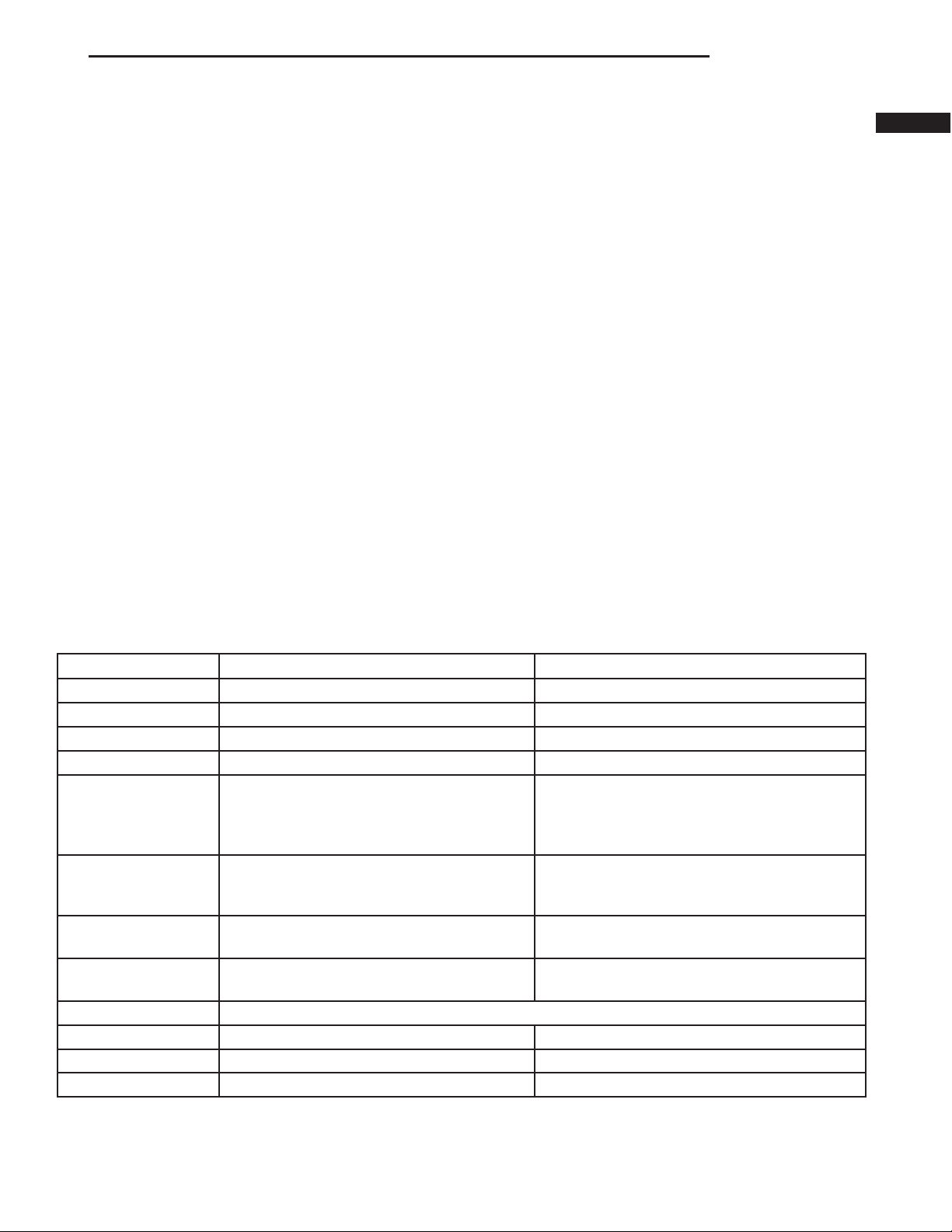
VEHICLE IDENTIFICATION NUMBER DECODING CHART
POSITION INTERPRETATION CODE = DESCRIPTION
1 Country of Origin 1 = United States
2 Make J = Jeep
3 Vehicle Type 4 = MPV
4 Gross Vehicle Weight Rating F = 4001-5000 lbs.
5 Vehicle Line F= Cherokee 4X4 (LHD)
6 Series 2 = SE
7 Body Style 7 = 2dr Sport Utility
8 Engine P = 2.5L Gasoline
9 Check Digit
10 Model Year Y=2000
11 Assembly Plant L = Toledo #1
12 thru 17 Vehicle Build Sequence
• Vehicle Safety Certification Label.
• Frame rail.
To protect the consumer from theft and possible
fraud the manufacturer is required to include a
Check Digit at the ninth position of the Vehicle Identification Number. The check digit is used by the
manufacturer and government agencies to verify the
authenticity of the vehicle and official documentation. The formula to use the check digit is not
released to the general public.
N = Cherokee 4X4 (RHD)
B = Cherokee 4X2 (RHD)
T = Cherokee 4X2 (LHD)
6 = Sport/Classic
7 = Limited
8 = 4dr Sport Utility
S = 4.0L Gasoline
Page 2
2 INTRODUCTION XJ
DESCRIPTION AND OPERATION (Continued)
VEHICLE SAFETY CERTIFICATION LABEL
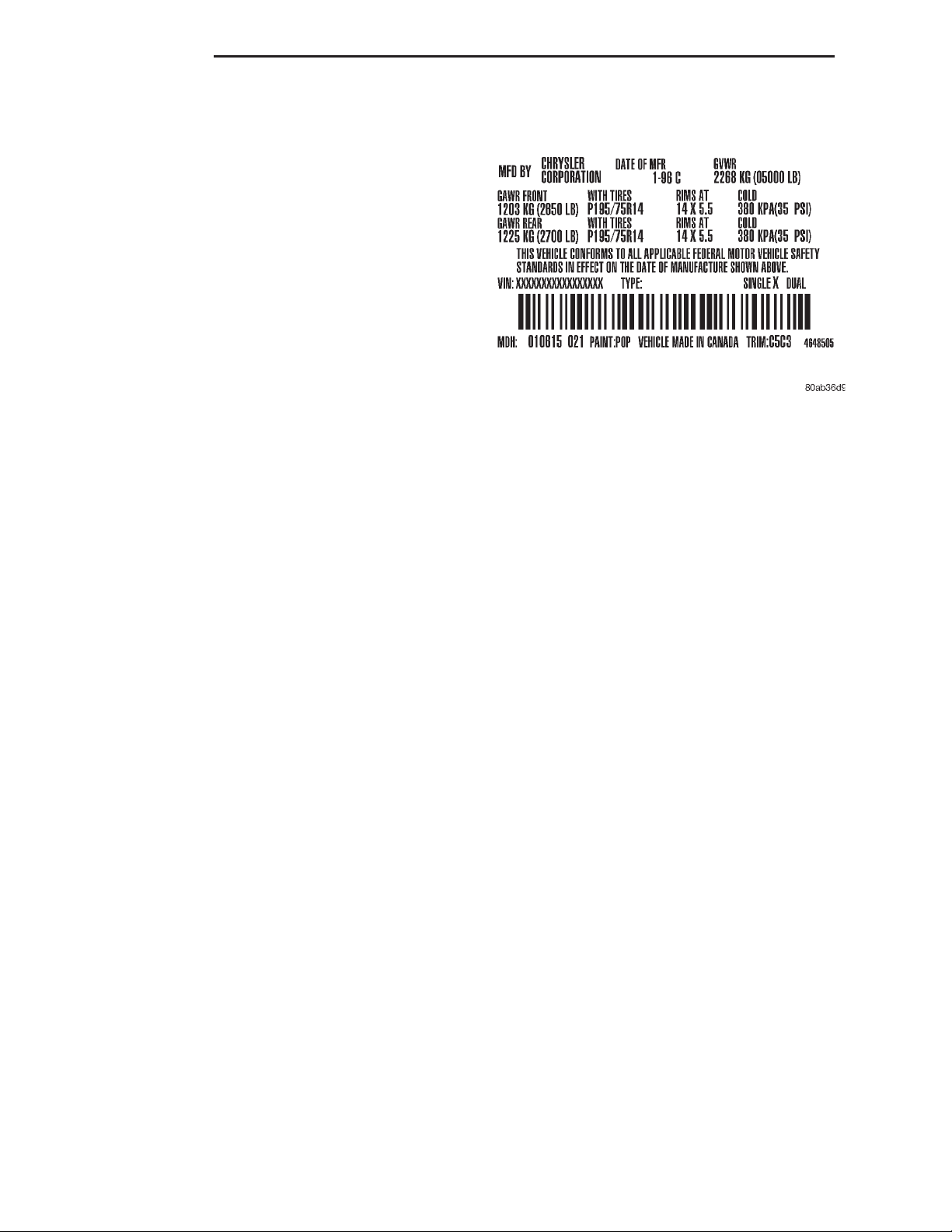
A vehicle safety certification label (Fig. 1) is
attached to every DaimlerChrysler Corporation vehicle. The label certifies that the vehicle conforms to all
applicable Federal Motor Vehicle Safety Standards.
The label also lists:
• Month and year of vehicle manufacture.
• Gross Vehicle Weight Rating (GVWR). The gross
front and rear axle weight ratings (GAWR’s) are
based on a minimum rim size and maximum cold tire
inflation pressure.
• Vehicle Identification Number (VIN).
• Type of vehicle.
• Type of rear wheels.
• Bar code.
• Month, Day and Hour (MDH) of final assembly.
• Paint and Trim codes.
• Country of origin.
The label is located on the driver-side door shut-
face.
Fig. 1 Vehicle Safety Certification Label—Typical
INTERNATIONAL SYMBOLS
DESCRIPTION
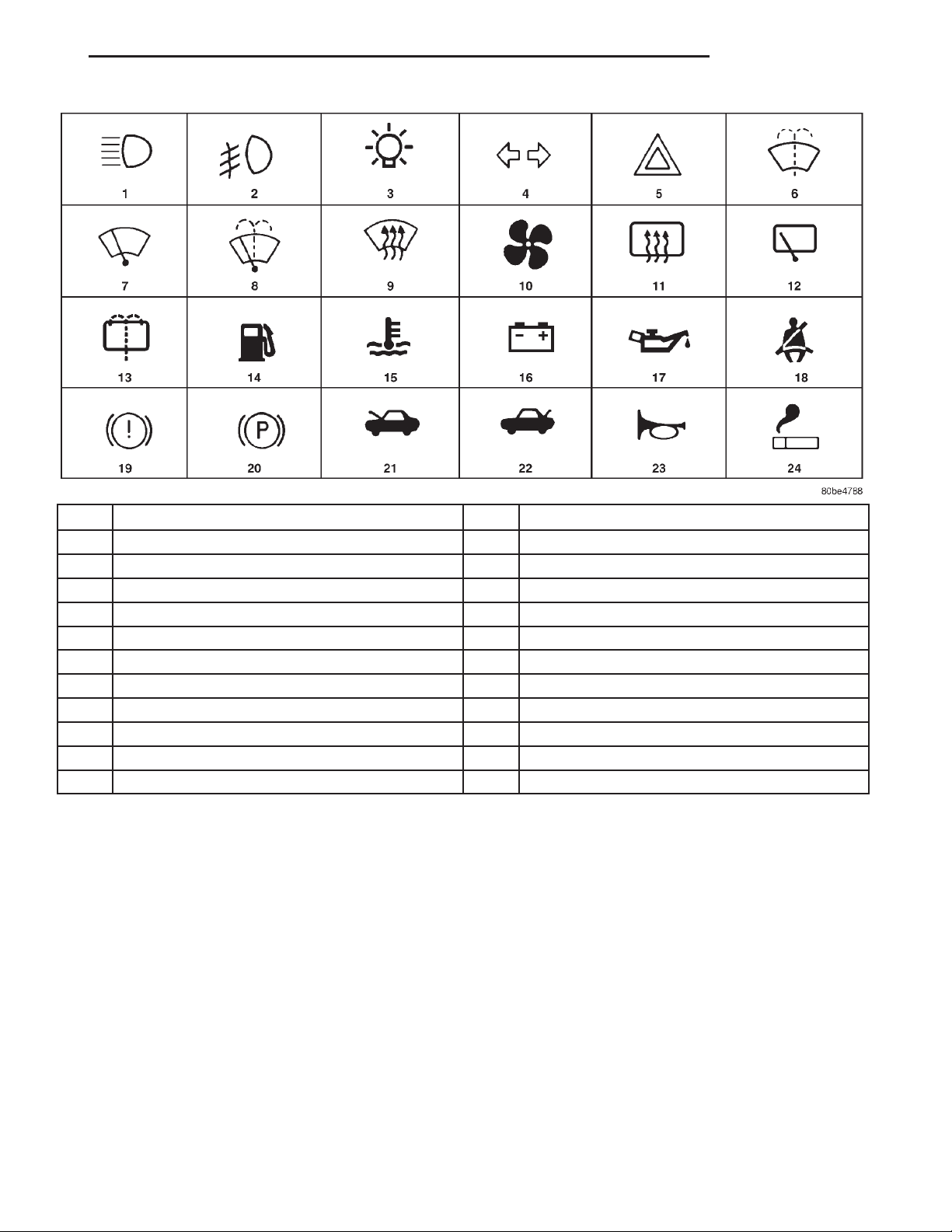
The graphic symbols illustrated in the following
International Control and Display Symbols Chart are
used to identify various instrument controls. The
symbols correspond to the controls and displays that
are located on the instrument panel.
Page 3
XJ INTRODUCTION 3
DESCRIPTION AND OPERATION (Continued)
1 High Beam 13 Rear Window Washer
2 Fog Lamps 14 Fuel
3 Headlamp, Parking Lamps, Panel Lamps 15 Engine Coolant Temperature
4 Turn Warning 16 Battery Charging Condition
5 Hazard Warning 17 Engine Oil
6 Windshield Washer 18 Seat Belt
7 Windshield Wiper 19 Brake Failure
8 Windshield Wiper and Washer 20 Parking Brake
9 Windscreen Demisting and Defrosting 21 Front Hood
10 Ventilating Fan 22 Rear hood (Decklid)
11 Rear Window Defogger 23 Horn
12 Rear Window Wiper 24 Lighter
FASTENER IDENTIFICATION
DESCRIPTION
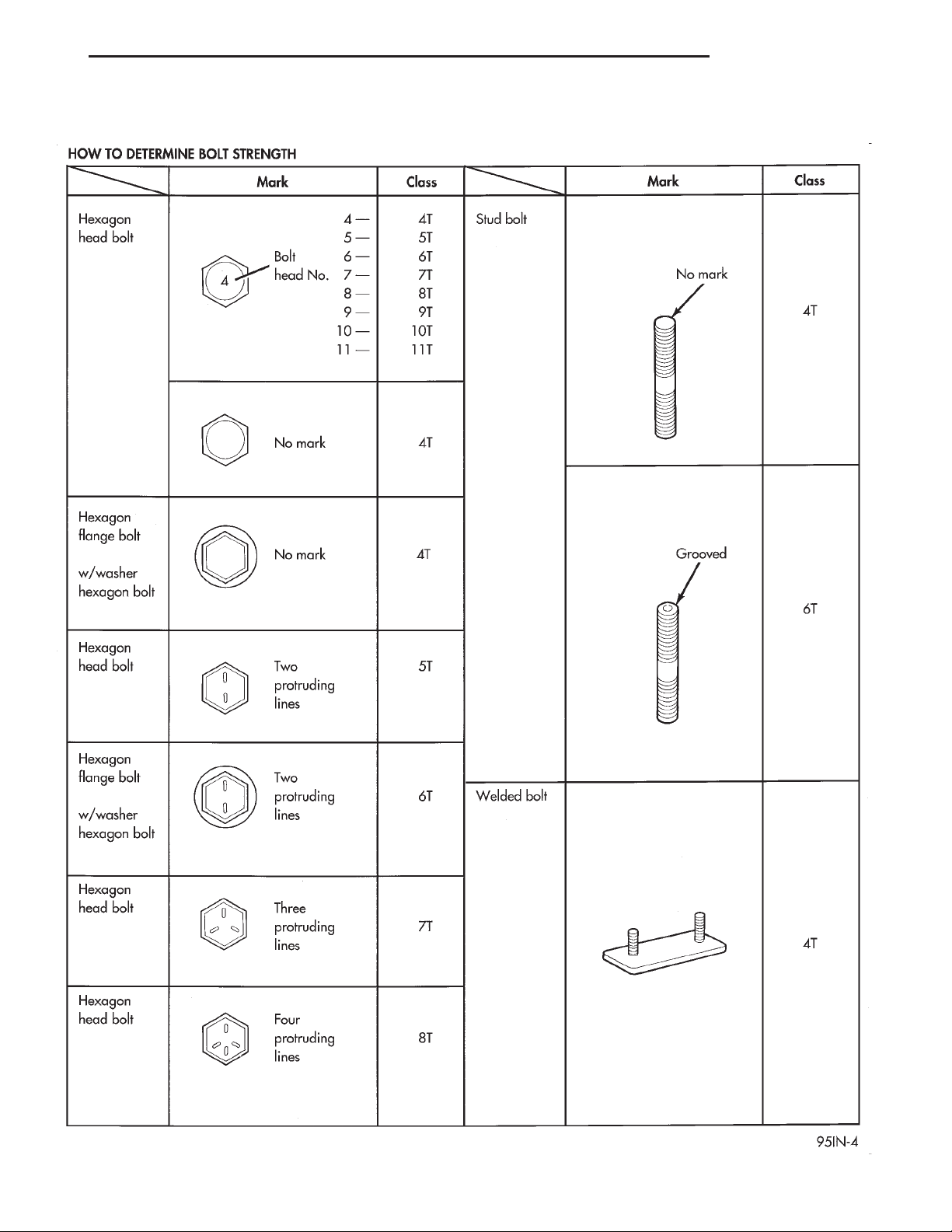
GRADE/CLASS IDENTIFICATION
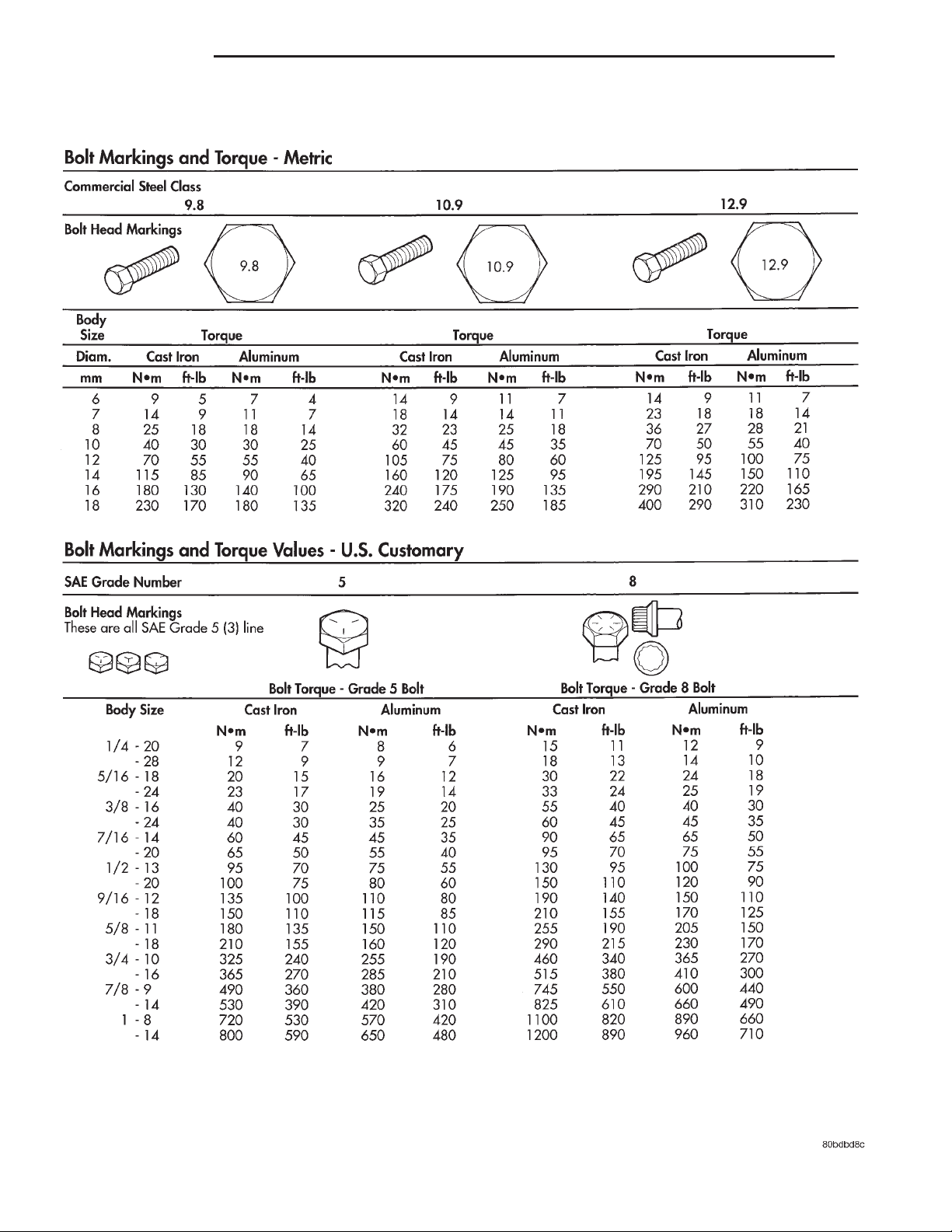
The SAE bolt strength grades range from grade 2
to grade 8. The higher the grade number, the greater
the bolt strength. Identification is determined by the
line marks on the top of each bolt head. The actual
bolt strength grade corresponds to the number of line
marks plus 2. The most commonly used metric bolt
strength classes are 9.8 and 10.9. The metric
strength class identification number is imprinted on
the head of the bolt. The higher the class number,
the greater the bolt strength. Some metric nuts are
imprinted with a single-digit strength class on the
nut face. Refer to the Fastener Identification and
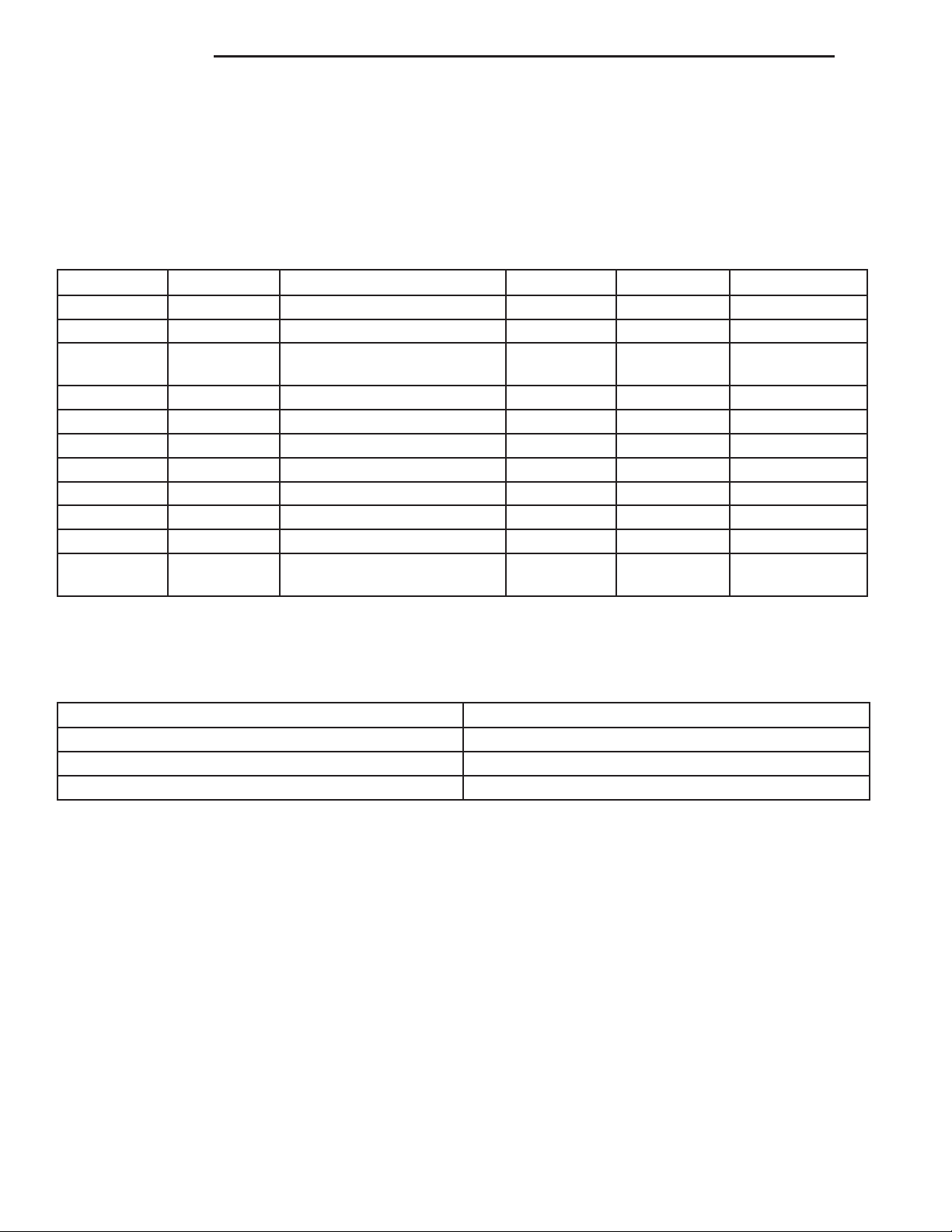
Fastener Strength Charts.
FASTENER USAGE
WARNING: USE OF AN INCORRECT FASTENER
MAY RESULT IN COMPONENT DAMAGE OR PERSONAL INJURY.
Figure art, specifications and torque references in
this Service Manual are identified in metric and SAE
format.
During any maintenance or repair procedures, it is
important to salvage all fasteners (nuts, bolts, etc.)
for reassembly. If the fastener is not salvageable, a
fastener of equivalent specification must be used.
THREADED HOLE REPAIR
Most stripped threaded holes can be repaired using
a Helicoilt. Follow the manufactures recommendations for application and repair procedures.
Page 4
4 INTRODUCTION XJ
DESCRIPTION AND OPERATION (Continued)
FASTENER IDENTIFICATION
Page 5
XJ INTRODUCTION 5
DESCRIPTION AND OPERATION (Continued)
FASTENER STRENGTH
Page 6
6 INTRODUCTION XJ
DESCRIPTION AND OPERATION (Continued)
METRIC SYSTEM
DESCRIPTION
The metric system is based on quantities of one,
ten, one hundred, one thousand and one million.
CONVERSION FORMULAS AND EQUIVALENT VALUES
MULTIPLY BY TO GET MULTIPLY BY TO GET
in-lbs x 0.11298 = Newton Meters (N·m) N·m x 8.851 = in-lbs
ft-lbs x 1.3558 = Newton Meters (N·m) N·m x 0.7376 = ft-lbs
Inches Hg
(60° F)
psi x 6.895 = Kilopascals (kPa) kPa x 0.145 = psi
Inches x 25.4 = Millimeters (mm) mm x 0.03937 = Inches
Feet x 0.3048 = Meters (M) M x 3.281 = Feet
Yards x 0.9144 = Meters M x 1.0936 = Yards
mph x 1.6093 = Kilometers/Hr. (Km/h) Km/h x 0.6214 = mph
Feet/Sec x 0.3048 = Meters/Sec (M/S) M/S x 3.281 = Feet/Sec
mph x 0.4470 = Meters/Sec (M/S) M/S x 2.237 = mph
Kilometers/
Hr. (Km/h)
x 3.377 = Kilopascals (kPa) kPa x 0.2961 = Inches Hg
x 0.27778 = Meters/Sec (M/S) M/S x 3.600 Kilometers/Hr.
The following chart will assist in converting metric
units to equivalent English and SAE units, or vise
versa.
(Km/h)
COMMON METRIC EQUIVALENTS
1 inch = 25 Millimeters 1 Cubic Inch = 16 Cubic Centimeters
1 Foot = 0.3 Meter 1 Cubic Foot = 0.03 Cubic Meter
1 Yard = 0.9 Meter 1 Cubic Yard = 0.8 Cubic Meter
1 Mile = 1.6 Kilometers
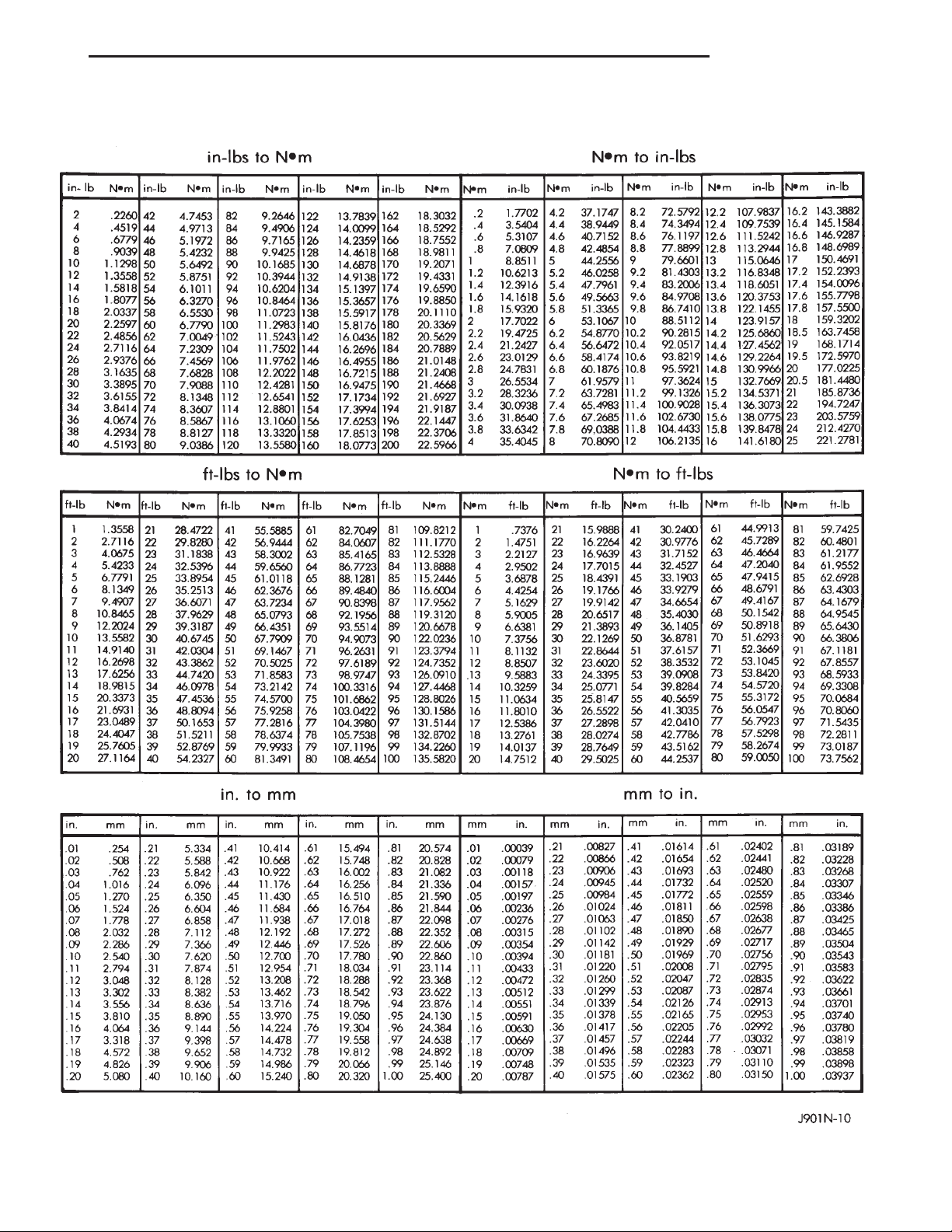
Refer to the Metric Conversion Chart to convert
torque values listed in metric Newton- meters (N·m).
Also, use the chart to convert between millimeters
(mm) and inches (in.)
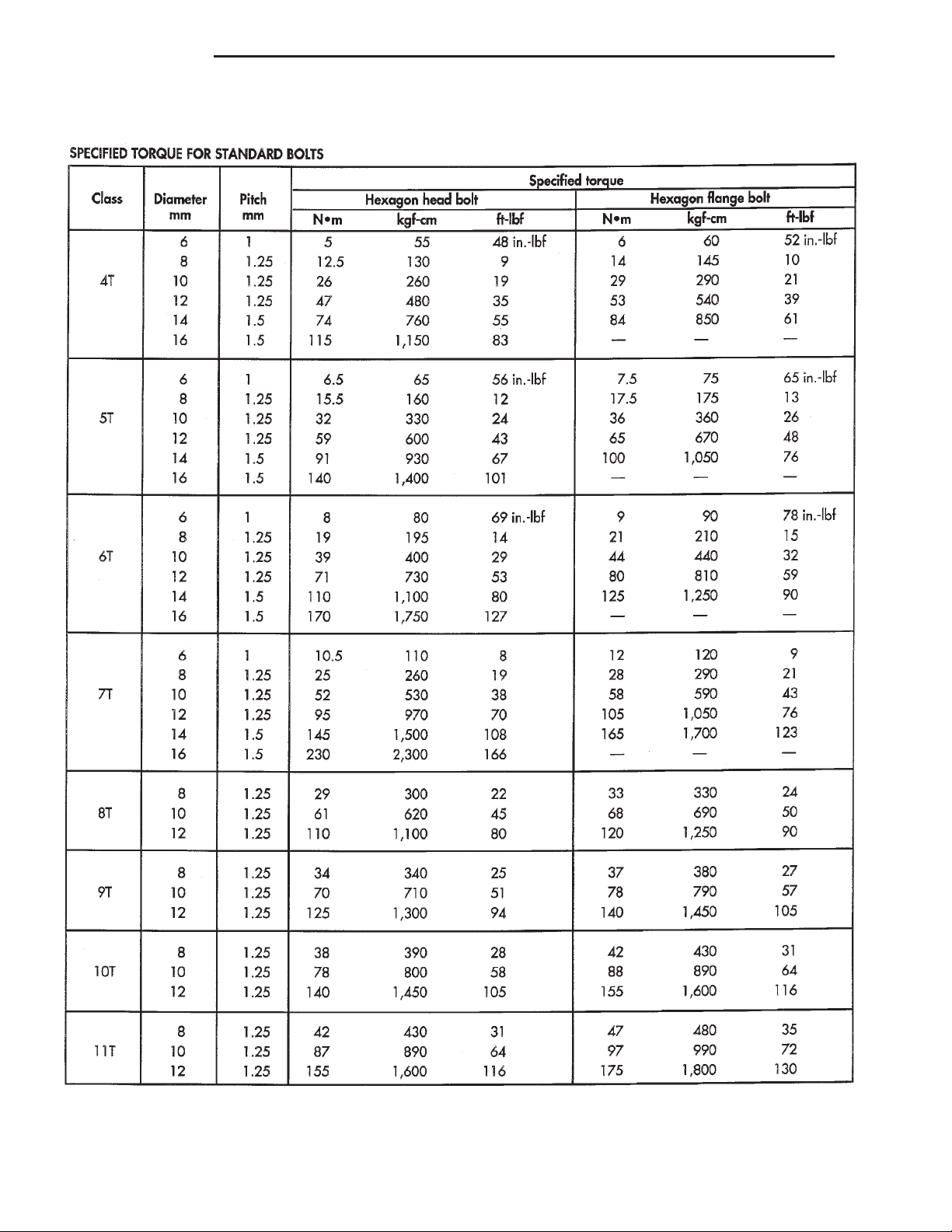
cations Chart for torque references not listed in the
individual torque charts.
TORQUE REFERENCES
DESCRIPTION
Individual Torque Charts appear at the end of
many Groups. Refer to the Standard Torque Specifi-
Page 7
XJ INTRODUCTION 7
DESCRIPTION AND OPERATION (Continued)
METRIC CONVERSION CHART
Page 8
8 INTRODUCTION XJ
DESCRIPTION AND OPERATION (Continued)
TORQUE SPECIFICATIONS
 Loading...