

Page 1
DISCRETE SEMICONDUCTORS
M3D118
DATA SH EET
handbook, 2 columns
BYM63
Ripple blocking diode
Product specification
Supersedes data of December 1995
File under Discrete Semiconductors, SC01
1996 Jun 10
Page 2
Philips Semiconductors Product specification
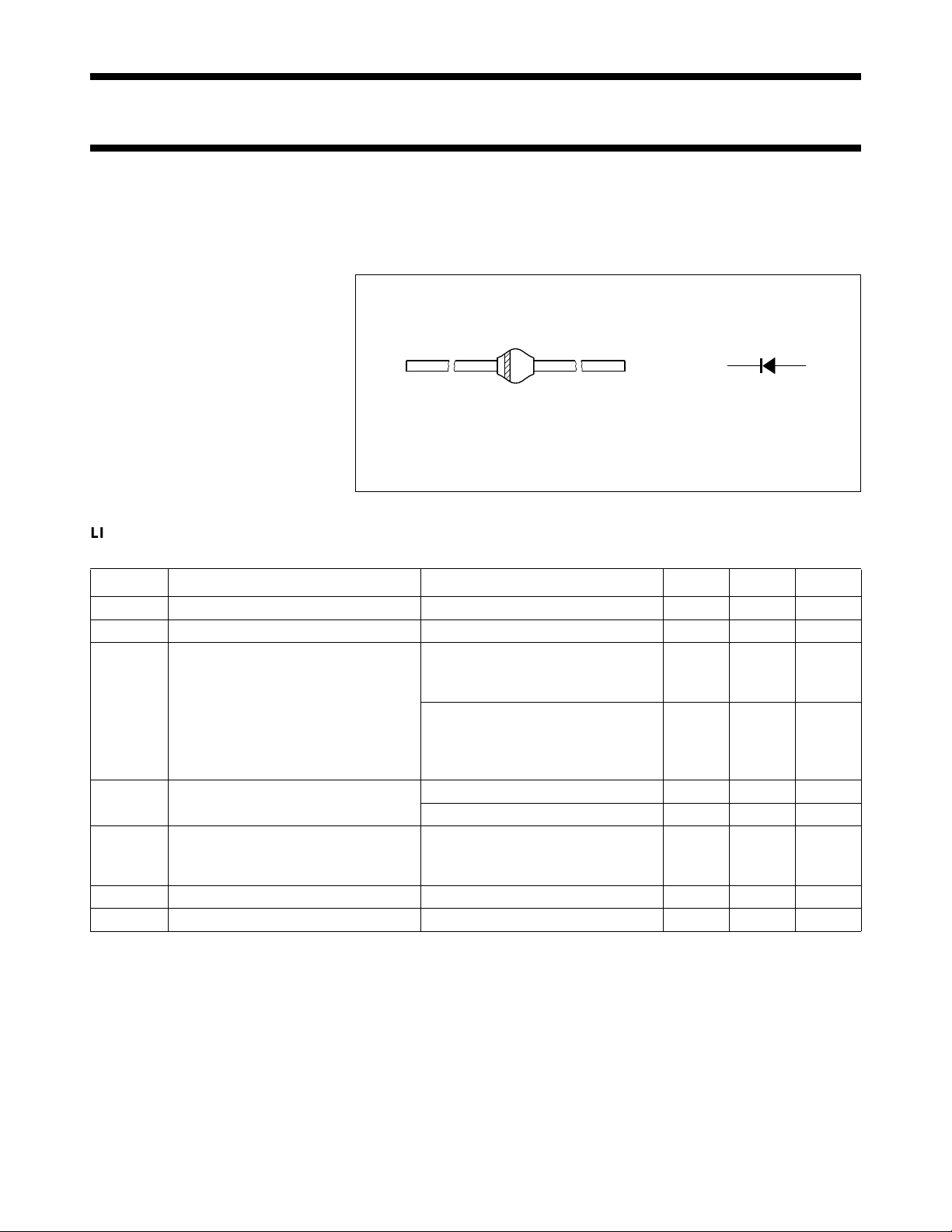
Fig.1 Simplified outline (SOD64) and symbol.
2/3 page (Datasheet)
MAM104
k a
Ripple blocking diode BYM63
FEATURES
• Glass passivated
• High maximum operating
temperature
DESCRIPTION
Rugged glass SOD64 package, using
a high temperature alloyed
construction.
This package is hermetically sealed
and fatigue free as coefficients of
expansion of all used parts are
matched.
• Low leakage current
• Excellent stability
• Guaranteed minimum turn-on time
for absorbing forward current
transients and oscillations
• Specially designed as rectifier in
the auxiliary power supply in e.g.
switched mode power supplies
• Available in ammo-pack.
• Also available with preformed leads
for easy insertion.
LIMITING VALUES
In accordance with the Absolute Maximum Rating System (IEC 134).
SYMBOL PARAMETER CONDITIONS MIN. MAX. UNIT
V
RRM
V
R
I
F(AV)
repetitive peak reverse voltage − 300 V
continuous reverse voltage − 300 V
average forward current averaged over any 20 ms period;
− 2.4 A
Ttp= 55 °C; lead length = 10 mm;
see Fig.2; see also Fig.4
averaged over any 20 ms period;
T
= 65 °C;
amb
− 1.0 A
PCB mounting (Fig.8);
see Fig.3; see also Fig.4
I
FRM
I
FSM
T
T
stg
j
repetitive peak forward current Ttp= 55 °C − 21 A
T
= 65 °C − 8.5 A
amb
non-repetitive peak forward current t = 10 ms half sine wave;
Tj= T
VR= V
prior to surge;
j max
RRMmax
− 45 A
storage temperature −65 +175 °C
junction temperature −65 +175 °C
1996 Jun 10 2
Page 3

Philips Semiconductors Product specification
Ripple blocking diode BYM63
ELECTRICAL CHARACTERISTICS
Tj= 25 °C unless otherwise specified.
SYMBOL PARAMETER CONDITIONS MIN. TYP. MAX. UNIT
V
F
I
R
t
fr
t
on
t
rr
C
d
forward voltage IF= 2 A; Tj= T
; see Fig.5 − − 1.34 V
j max
IF= 2 A; see Fig.5 − − 2.30 V
reverse current VR= V
RRMmax
;
− − 10 µA
see Fig.6
VR= V
RRMmax
; Tj= 165 °C;
− − 150 µA
see Fig.6
forward recovery time when switched to IF= 5 A
− − 1.5 µs
in 50 ns; see Fig.9
turn-on time when switched from VF= 0 V to
400 − − ns
VF= 3 V; measured between
10% and 90% of I
F max
;
see Fig.11
reverse recovery time when switched from IF= 0.5 A to
− − 150 ns
IR= 1 A; measured at
IR= 0.25 A; see Fig.11
diode capacitance f = 1 MHz; VR= 0 V; see Fig.7 − 65 − pF
THERMAL CHARACTERISTICS
SYMBOL PARAMETER CONDITIONS VALUE UNIT
R
R
th j-tp
th j-a
thermal resistance from junction to tie-point lead length = 10 mm 25 K/W
thermal resistance from junction to ambient note 1 75 K/W
Note
1. Device mounted on an epoxy-glass printed-circuit board, 1.5 mm thick; thickness of Cu-layer ≥40 µm, see Fig.8.
For more information please refer to the
‘General Part of Handbook SC01.’
1996 Jun 10 3
Page 4

Philips Semiconductors Product specification
a =1.42; VR= V
RRMmax
; δ = 0.5.
Switched mode application.
Fig.2 Maximum permissible average forward
current as a function of tie-point temperature
(including losses due to reverse leakage).
handbook, halfpage
0 200
3
0
1
MBD421
100
I
F(AV)
(A)
T ( C)
o
tp
2
lead length 10 mm
Fig.3 Maximum permissible average forward
current as a function of ambient temperature
(including losses due to reverse leakage).
handbook, halfpage
0 200
2.0
0
0.4
1.6
MBD416
100
I
F(AV)
(A)
T ( C)
o
amb
0.8
1.2
a = 1.42; VR= V
RRMmax
; δ = 0.5.
Device mounted as shown in Fig.8.
Switched mode application.
a = I
F(RMS)/IF(AV)
; VR= V
RRMmax
; δ = 0.5.
Fig.4 Maximum steady state power dissipation
(forward plus leakage current losses,
excluding switching losses) as a function
of average forward current.
0
5
0
2
4
MBD430
I (A)
F(AV)
2.40.6
1.8
P
(W)
3
1
1.2
a = 3 2.5 2 1.57 1.42
Dotted line: Tj= 175 °C.
Solid line: Tj= 25 °C.
Fig.5 Forward current as a function of forward
voltage; maximum values.
handbook, halfpage
0 2
VF (V)
4
10
(A)
I
F
0
8
MBD426
6
4
2
Ripple blocking diode BYM63
GRAPHICAL DATA
1996 Jun 10 4
Page 5

Philips Semiconductors Product specification
VR= V
RRMmax
.
Fig.6 Reverse current as a function of junction
temperature; maximum values.
handbook, halfpage
MGC549
0 100 200
10
3
10
2
10
1
(µA)
I
R
Tj (°C)
f = 1 MHz; Tj= 25 °C.
Fig.7 Diode capacitance as a function of reverse
voltage; typical values.
handbook, halfpage
1
MBD435
10 10
2
10
3
1
10
2
10
V (V)
R
C
d
(pF)
Fig.8 Device mounted on a printed-circuit board.
Dimensions in mm.
handbook, halfpage
MGA200
3
2
7
50
25
50
Fig.9 Forward recovery time definition.
handbook, halfpage
t
fr
t
100%
110%
V
F
t
10%
I
F
MGC500
Ripple blocking diode BYM63
1996 Jun 10 5
Page 6

Philips Semiconductors Product specification
Fig.10 Test circuit and turn-on time waveform and definition.
Input impedance oscilloscope: 1 MΩ, 22 pF; tr≤ 7 ns.
Source impedance: 50 Ω; tr≤ 10 ns.
handbook, full pagewidth
MBH530
50 Ω 10 Ω
DUT
0
I
F
(A)
V
F
(V)
0
100%
90%
10%
3V
t
on
Fig.11 Test circuit and reverse recovery time waveform and definition.
Input impedance oscilloscope: 1 MΩ, 22 pF; tr≤ 7 ns.
Source impedance: 50 Ω; tr≤ 15 ns.
handbook, full pagewidth
10 Ω
1 Ω
50 Ω
25 V
DUT
MAM057
+
t
rr
0.5
0
0.5
1
I
F
(A)
I
R
(A)
t
0.25
Ripple blocking diode BYM63
1996 Jun 10 6
Page 7

Philips Semiconductors Product specification
Fig.12 SOD64.
Dimensions in mm.
The marking band indicates the cathode.
handbook, full pagewidth
MBC049
4.5
max
k a
28 min28 min 5.0 max
1.35
max
Ripple blocking diode BYM63
PACKAGE OUTLINE
DEFINITIONS
LIFE SUPPORT APPLICATIONS
These products are not designed for use in life support appliances, devices, or systems where malfunction of these
products can reasonably be expected to result in personal injury. Philips customers using or selling these products for
use in such applications do so at their own risk and agree to fully indemnify Philips for any damages resulting from such
improper use or sale.
Data Sheet Status
Objective specification This data sheet contains target or goal specifications for product development.
Preliminary specification This data sheet contains preliminary data; supplementary data may be published later.
Product specification This data sheet contains final product specifications.
Limiting values
Limiting values given are in accordance with the Absolute Maximum Rating System (IEC 134). Stress above one or
more of the limiting values may cause permanent damage to the device. These are stress ratings only and operation
of the device at these or at any other conditions above those given in the Characteristics sections of the specification
is not implied. Exposure to limiting values for extended periods may affect device reliability.
Application information
Where application information is given, it is advisory and does not form part of the specification.
1996 Jun 10 7
 Loading...