

Page 1

ENGINE DRIVEN SEMI TRASH 3” PUMP
MODEL NO: PS75A
PART NO: 7230162
OPERATION & MAINTENANCE
INSTRUCTIONS
ORIGINAL INSTRUCTIONS
LS0120 - ISS 1
Page 2
INTRODUCTION
Thank you for choosing this CLARKE Pump.
The function of this pump is to move clean /dirty water (with solids in
suspension upto 15 mm in diameter).
DO NOT use it to pump:
•Sewage
• Dangerous liquids.
• Salt water.
Before you use this pump, read the manual fully.
GUARANTEE
This pump is guaranteed against faulty manufacture for a period of 12 months
from the date of purchase.
Please keep your receipt which will be required as proof of purchase.
This guarantee is invalid if the pump has been abused, tampered with, or not
used for its primary function.
Faulty goods must be returned to their place of purchase, no pump can be
returned to us without prior permission.
This guarantee does not effect your statutory rights.
INVENTORY
You should find the items in the list below in the carton.
1 x Petrol Powered 3" Water Pump 1 x Tommy Bar
1 x Spark Plug Box Wrench 2 x Rubber Sealing Rings
2 x 3" BSP Hose adaptors 2 x 3" BSP Locking Rings
1 Plastic x Inlet Strainer (in two pieces) with 3"
Hose adaptor
Speak to your CLARKE dealer If items are missing or damaged.
2
Parts & Service: 020 8988 7400 / E-mail: [email protected] or [email protected]
3 x Hose Clips
Page 3
GENERAL SAFETY RULES
WARNING: WHEN USING PUMPS, ALWAYS FOLLOW BASIC SAFETY
PRECAUTIONS TO REDUCE THE RISK OF FIRE, ELECTRIC SHOCK AND
PERSONAL INJURY. READ ALL INSTRUCTIONS BEFORE YOU
OPERATE THIS PUMP AND SAVE THEM FOR FUTURE REFERENCE.
1. ALWAYS obey all safety precautions for the handling of fuel.
2. ALWAYS make sure that you are familiar with this pump, and follow all
instructions in this manual.
3. ALWAYS make sure that the pump is positioned correctly to prevent it from
moving during operation.
4. Keep the area adjacent to the pump clear.
5. ALWAYS connect the strainer to the suction hose to stop stones and other
solids from being pulled into the pump. These can cause damage to the
pump.
6. ALWAYS keep the pump dry and clear of discharge hose.
7. Only use parts supplied by the manufacturer. Using non-standard parts can
be dangerous.
8. ALWAYS use at least 300mm of flexible hose to make plumbing connections
to the pump. Rigid piping can put stress on the pump, causing damage. If
you use rigid piping, it must be supported to eliminate stress on the
connections.
9. DO NOT refuel the engine while it is operating and let the engine cool
sufficiently before refuelling.
10. DO NOT use to pump petrol (or other flammable liquids), or corrosive
chemicals. The function of this pump is to pump WATER ONLY.
11. DO NOT operate this pump in an explosive atmosphere, near combustible
materials, or where there is insufficient ventilation.
12. DO NOT let children use this pump.
13. DO NOT run the pump dry. Always fill the pump with water before starting.
14. DO NOT direct the discharge flow towards another person.
15. DO NOT over-tighten drain or filler plugs. Excessive force can damage the
threads or the pump body.
16. DO NOT direct the water discharge towards electrical wiring or equipment.
3
Parts & Service: 020 8988 7400 / E-mail: [email protected] or [email protected]
Page 4
GENERAL SAFETY IN THE WORKPLACE
1. ALWAYS keep work area clean & tidy. Cluttered work areas invite
accidents.
2. NEVER over-reach. Keep proper footing and balance at all times.
3. ALWAYS make sure that the workplace is well lit. Make sure that that lighting
is placed so that you will not be working in your own shadow.
4. Dress correctly. Loose clothing or jewellery can get caught in moving parts.
Non-slip footwear is recommended. Wear protective hair covering to
contain long hair.
5. ALWAYS wear safety glasses. (Everyday glasses are not safety glasses).
CARE OF PUMPS
1. The CLARKE service department must replace damaged components.
2. ALWAYS examine the pump for damage that can effect the operation of
the pump. Repair any damaged parts.
3. Have your pump repaired by a qualified person. Repairs must only be
carried out by qualified persons using original spare parts.
Keep the instructions for future reference.
SAFETY SYMBOLS
The meanings of the markings and symbols on the pump are shown below
Read this manual before use and keep it for future reference
4
Parts & Service: 020 8988 7400 / E-mail: [email protected] or [email protected]
Page 5

ASSEMBLY
INSTALL THE SUCTION HOSE
1. Put the rubber washer into the
adaptor.
• Make sure that it is seated
correctly.
2. Screw the adaptor onto the
pump securely.
3. Slide the hose on to the adaptor
and lock in position with the
jubilee clip supplied.
4. Install the strainer on to the other
end of the hose following the
picture on the right.
5
Parts & Service: 020 8988 7400 / E-mail: [email protected] or [email protected]
Page 6

INSTALL THE DISCHARGE HOSE
1. Put the rubber washer into the
adaptor.
• Make sure that it is seated
correctly.
2. Screw the adaptor onto the
pump securely.
3. Slide the hose on to the adaptor
and lock in position with the
jubilee clip supplied.
6
Parts & Service: 020 8988 7400 / E-mail: [email protected] or [email protected]
Page 7

BEFORE USE
PUMP PLACEMENT
For best pump performance, place the pump near the water level, and use
hoses that are no longer than necessary. That will enable the pump to
produce the greatest output with the least self-priming time.
As head (pumping height) increases, pump output decreases. The length,
type, and size of the suction and discharge hoses can also significantly affect
pump output.
Discharge head capability is always greater than suction head capability, so it
is important for suction head to be the shorter part of total head
7
Parts & Service: 020 8988 7400 / E-mail: [email protected] or [email protected]
Page 8

CHECK THE ENGINE OIL LEVEL
WARNING: TO DO THIS CHECK, PUT THE PUMP ON LEVEL GROUND
WITH THE ENGINE SWITCHED OFF.
WARNING: TAKE CARE NOT TO TOUCH ANY HOT PARTS OF THE
PUMP WHEN CHECKING THE OIL LEVEL.
1. Turn the oil filler cap anticlockwise and remove from the oil
fill tube.
2. Clean the dipstick with a clean
cloth.
3. Put the dipstick into the oil fill tube
and then remove it again. Do not
screw in the oil filler cap/dipstick
when doing this.
4. If the oil level is at or below the ‘L’
mark on the dipstick, add oil to
the crankcase.
• Fill until the oil touches the
threads in the oil fill tube.
• Oil capacity (See page 20).
• We recommend you use
SAE15W40 oil in this pump.
available from your CLARKE
dealer.
5. Replace the oil filler cap.
8
Parts & Service: 020 8988 7400 / E-mail: [email protected] or [email protected]
Page 9

ADD FUEL
WARNING: REFUEL IN A VENTILATED AREA, AWAY FROM SOURCES
OF IGNITION.
WARNING: IF THE ENGINE IS HOT, LET IT COOL BEFORE REFUELING.
WARNING: KEEP FUEL OUT OF THE REACH OF CHILDREN.
RECOMMENDED FUEL
Only use unleaded petrol.
1. Remove the fuel tank cap.
• In the fuel tank is a fuel filter
which collects contaminants as
you refuel.
2. Slowly add fuel to the fuel tank.
• Make sure that the fuel level is
not above the maximum fuel
level mark in the fuel filter.
3. Replace the fuel tank cap.
9
Parts & Service: 020 8988 7400 / E-mail: [email protected] or [email protected]
Page 10
OPERATION
WARNING: WHEN YOU OPERATE THE PUMP, THE EXHAUST MUFFLER
WILL BE VERY HOT.
WARNING: DO NOT OPERATE THE ENGINE IN A CLOSED SPACE,
MAKE SURE THAT THERE IS SUFFICIENT AIRFLOW AROUND THE
PUMP.
PRIME THE PUMP
1. The pump MUST be primed before
use
2. Before starting the engine,
remove the filler cap from the
pump chamber.
3. Fill the pump chamber and inlet
hose with water.
NOTE: A foot valve (not supplied)
connected to the lower end
of the inlet hose between
the hose and the strainer will
help to maintain priming,
4. Replace the filler cap and tighten
it securely.
.
WARNING: OPERATING THE PUMP DRY WILL DESTROY THE PUMP
SEAL. IF THE PUMP IS OPERATED DRY, STOP THE ENGINE
IMMEDIATELY, AND LET THE PUMP COOL BEFORE PRIMING
10
Parts & Service: 020 8988 7400 / E-mail: [email protected] or [email protected]
Page 11
START THE ENGINE
1. Set the fuel valve to the ON
position.
2. To start a cold engine, move the
choke lever to the ‘OFF’ position.
• To restart a warm engine, leave
the choke lever in the ‘ON’
position.
3. Move the throttle lever away from
Slow about 1/3 of the way.
4. Set the engine switch to ‘ON’.
11
Parts & Service: 020 8988 7400 / E-mail: [email protected] or [email protected]
Page 12

5. Pull the starting handle lightly until
you start to feel resistance. Then
pull up and away suddenly to
start the engine.
NOTE: You might need to do this
more than once.
WARNING: WHEN THE PUMP HAS STARTED, RELEASE THE STARTING
HANDLE SLOWLY TO PREVENT INJURY/DAMAGE AS IT RETURNS.
6. Once the engine has warmed up from a cold start, move the choke lever
to the ‘ON’ position.
SETTING THE ENGINE SPEED
After starting the engine, move the throttle lever to the FAST position for selfpriming and check pump output.
Pump output is controlled by
adjusting engine speed.
• Moving the throttle lever in the
FAST direction will increase
pump output.
• Moving the throttle lever in the
SLOW direction will decrease
pump output.
12
Parts & Service: 020 8988 7400 / E-mail: [email protected] or [email protected]
Page 13

SHUT DOWN THE PUMP
To stop the pump in an emergency, set the engine switch to ‘OFF’.
1. Use the throttle lever to decrease
engine speed to minimum.
2. Set the engine switch to “OFF”.
3. Turn the fuel valve to “OFF”.
AFTER USE
1. Remove the pump drain plug and
drain the pump chamber.
2. Remove the filler cap and flush
the pump chamber with clean,
fresh water.
• Allow the water to drain from
the pump chamber.
3. Reinstall the filler cap and drain
plug.
13
Parts & Service: 020 8988 7400 / E-mail: [email protected] or [email protected]
Page 14

MAINTENANCE
CLEARING BLOCKAGES
1. Remove the hoses and adaptors
from the pump.
2. Remove the four bolts shown in
the picture.
3. Remove the front cover.
4. Clear debris and clean the inner
parts using clean water.
5. Replace the front cover and
secure using the four bolts
removed in step 2.
14
Parts & Service: 020 8988 7400 / E-mail: [email protected] or [email protected]
Page 15

CHANGING THE ENGINE OIL
CAUTION: PROLONGED EXPOSURE TO USED ENGINE OIL IS DANGEROUS,
ALWAYS WASH YOUR HANDS THOROUGHLY AFTER HANDLING USED
ENGINE OIL.
Change the oil in the engine after the first 20 hours use and thereafter every 6
months or 100 running hours.
1. Unscrew and remove the oil filler
cap/dipstick.
2. Put a oil collection tray below the
drain plug.
3. Unscrew the drain plug and let
the used engine oil drain from the
crankcase into the oil collection
tray.
NOTE: Drain the engine oil when the
engine is warm, this will make
sure that the oil flows out faster.
4. Replace the drain plug.
5. Fill the crankcase with engine oil.
• Fill until the oil touches the threads in the oil fill tube.
• Oil capacity (0.6l).
• We recommend that you use SAE15W40 oil in this pump available
from your CLARKE dealer.
6. Replace the oil filler cap/dipstick.
ENVIRONMENTAL PROTECTION
One of the most damaging sources of pollution is oil, do not throw away or
pour it down drains. Put it in a leak proof container and take it to your local
waste disposal site.
15
Parts & Service: 020 8988 7400 / E-mail: [email protected] or [email protected]
Page 16
CHANGING THE SPARK PLUG
Replace the spark plug after the first month or every 50 hours of use.
1. Remove the spark plug cap from
the spark plug.
2. Use the spark plug spanner
supplied to remove the spark
plug.
3. Remove any carbon that has
collected around the electrode.
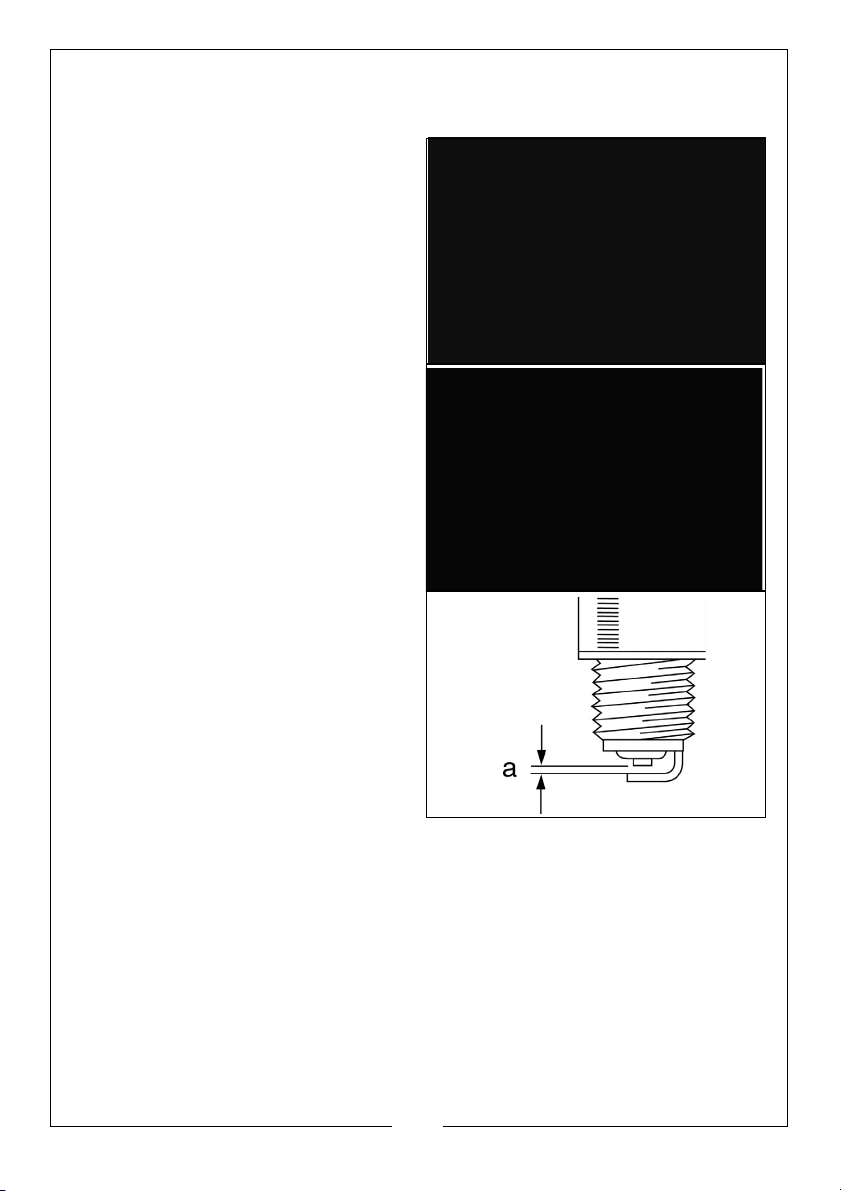
4. Check the spark plug gap (a), it
should be between 0.7 and 0.8
mm, adjust if necessary.
5. Check the overall condition of the
spark plug for erosion or pitting
and replace if necessary.
6. Reinstall the spark plug and
replace the spark plug cap.
16
Parts & Service: 020 8988 7400 / E-mail: [email protected] or [email protected]
Page 17

CHANGING THE AIR FILTER
Clean the air filter after 50 hours of operation (or more often in unusually dusty
conditions) as follows.
1. Unscrew the wingnut and lift off
the air filter cover.
2. Remove the wingnut that holds
the air filter in position.
3. Remove the air filter element.
4. Clean the air filter or replace if
necessary.
• If the filter is dirty, wash the filter
in a solution of warm water and
mild detergent and rinse
thoroughly. Leave the filter to
dry completely,
5. Once it is dry, Dip in clean engine
oil and squeeze out excess oil.
• Do not operate the pump without the air cleaner installed as this will
cause premature wear to the engine.
STORAGE
1. Always keep the pump in a clean condition, checking regularly for loose
bolts etc.
17
Parts & Service: 020 8988 7400 / E-mail: [email protected] or [email protected]
Page 18
TROUBLESHOOTING
PROBLEM CAUSE SOLUTION
The engine does
not start.
The engine stops
and will not
restart.
The pump fails to
prime.
No fuel in tank. Add fuel.
Fuel valve is set to OFF Set the fuel valve to ON
Engine switch is in the
OFF position.
Lack of spark at the
spark plug.
No fuel in tank. Add fuel to the tank.
Priming chamber not
filled correctly.
Air leaking due to
damaged hose,
broken hose clamps,
split/ill-fitting gasket.
Blocked inlet hose. Clean strainer and make sure that
Engine speed too low. Increase engine speed.
Damaged impeller. Disassemble the pump and
Air leaking through
damaged seal.
Set engine switch to the ON
position.
Make sure that the spark plug
cover is fitted on to the plug.
With the engine switch in the ON
position, hold the spark plug
electrode against the engine and
pull the starter cord. If a spark is
present but engine will not start,
consult your CLARKE dealer.
Fill priming chamber leaving no
air gap.
Repair as necessary.
it is not submerged in mud or
sediment. Make sure that there
are no kinks in the delivery hose.
replace the impeller.
Replace seal.
18
Parts & Service: 020 8988 7400 / E-mail: [email protected] or [email protected]
Page 19
PROBLEM CAUSE SOLUTION
Low output from
pump.
If you cannot correct the fault, speak to your local dealer or the CLARKE
International service department.
The engine speed is
too low.
Pickup or delivery hose
obstructed.
Suction lift too high. Set the pump nearer to the water
Congested material
inside pump.
Damaged impeller. Disassemble the pump and
Increase the engine speed.
Clear obstruction and make sure
that there are no kinks in hose.
level.
Disassemble the pump and clean
out.
replace the impeller.
ENVIRONMENTAL PROTECTION
At the end of its working life, do not discard this pump or its components with
general household waste. Packaging must be taken to a recycling centre and
discarded appropriately.
One of the most dangerous sources of pollution is oil. Do not discard used oil
with domestic refuse or flush down a sink or drain. Collect the oil in a leak-proof
container and take it to your local waste disposal site.
19
Parts & Service: 020 8988 7400 / E-mail: [email protected] or [email protected]
Page 20
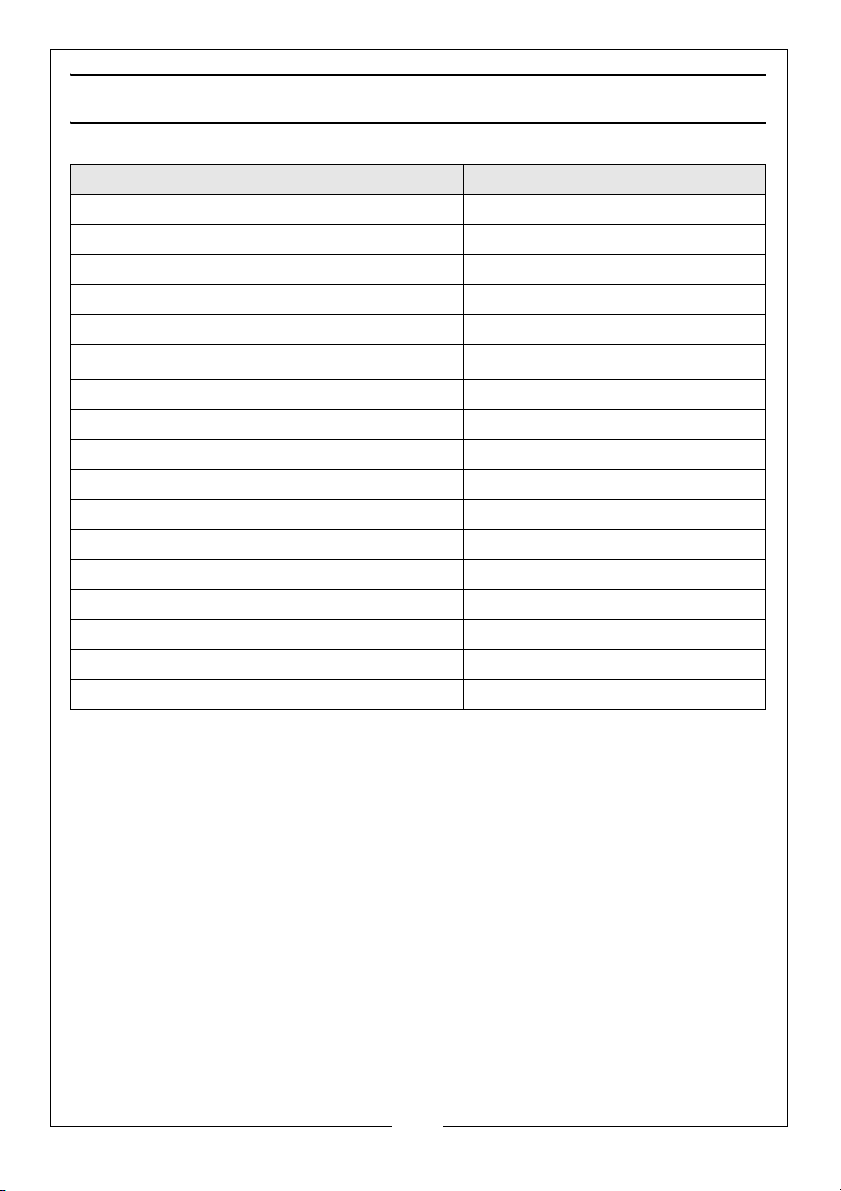
SPECIFICATION
Item Spec
Pump Dimensions (L X W X H) 550 X 430 X 452 mm
Pump Weight (Kgs) 27.4 kg
Water Classification Dirty / Clean (NOT SEWAGE)
Max Solids In Suspension 15 mm
Inlet/outlet Size 3” BSP
Maximum Flow
Max Head 23 m
Suction Head 7-8 m
Max Pressure 2.3 bar
Run Time @75% Rated Load 3 hrs
Engine Type/speed 7HP (4 stroke) 3600 rpm
Fuel Tank Capacity (Petrol) 3.6 L
Lubrication Oil Capacity/grade 0.6 L (SAE 15W40)
Sound Pressure Level 89.5 dB LpA
Sound Power Level 103 dB LWA
Guaranteed Sound Power Level 105 dB LWA
Uncertainty Factor (K) 2.5 dB
750l/min (45m
3
/h) max
20
Parts & Service: 020 8988 7400 / E-mail: [email protected] or [email protected]
Page 21
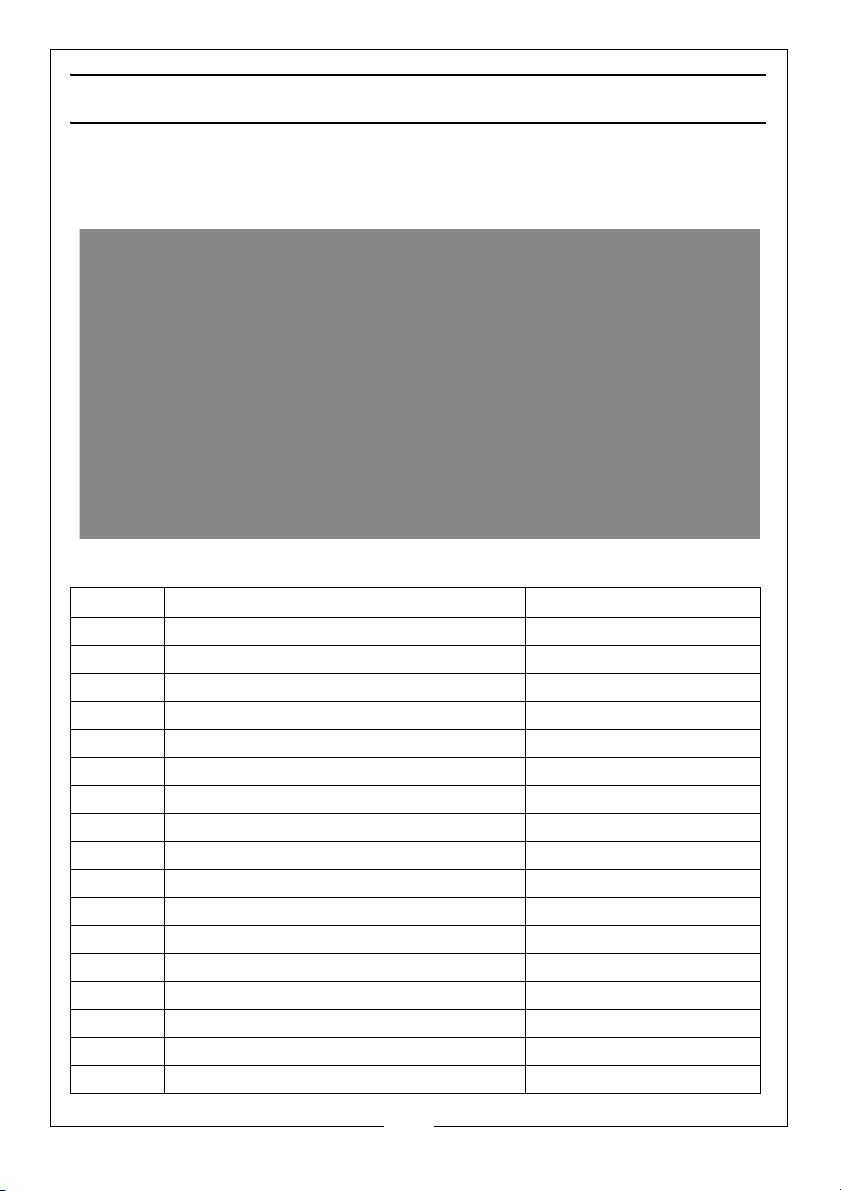
EXPLODED DIAGRAMS AND PARTS LIST
A full set of parts list and diagrams are available from the CLARKE International
service department.
WATER PUMP ASSEMBLY
NUMBER DESCRIPTION PART NUMBER
1 HOSE CLIP, ZGGMQGZ804525F6801
2 STRAINER COVER, ZGGMQGZ804525F6802
3 STRAINER ZGGMQGZ804525F6803
4 BOLT ZG90001082501F6804
5 WASHER ZGGMQGZ804525F6805
6 WASHER ZG90408080001F6806
10 WATER INLET, ZGGMQGZ804525F6810
11 INLET WATER GASKET? ZGGMQGZ804525F6811
12 THREAD PLUG, ZGGMQGZ804525F6812
13 SCREW PLUG WASHER, ZGGMQGZ804525F6813
14 WATER OUTLET ZGGMQGZ804525F6814
15 OUTLET GASKET ZGGMQGZ804525F6815
16 PUMP BODY ZGGMQGZ804525F6816
17 WHORL CASE SEALING RING ZGGMQGZ804525F6817
18 WHORL CASE, ZGGMQGZ804525F6818
19 BOLT ZGGMQGZ804525F6819
20 WASHER ZGGMQGZ804525F6820
21
Parts & Service: 020 8988 7400 / E-mail: [email protected] or [email protected]
Page 22
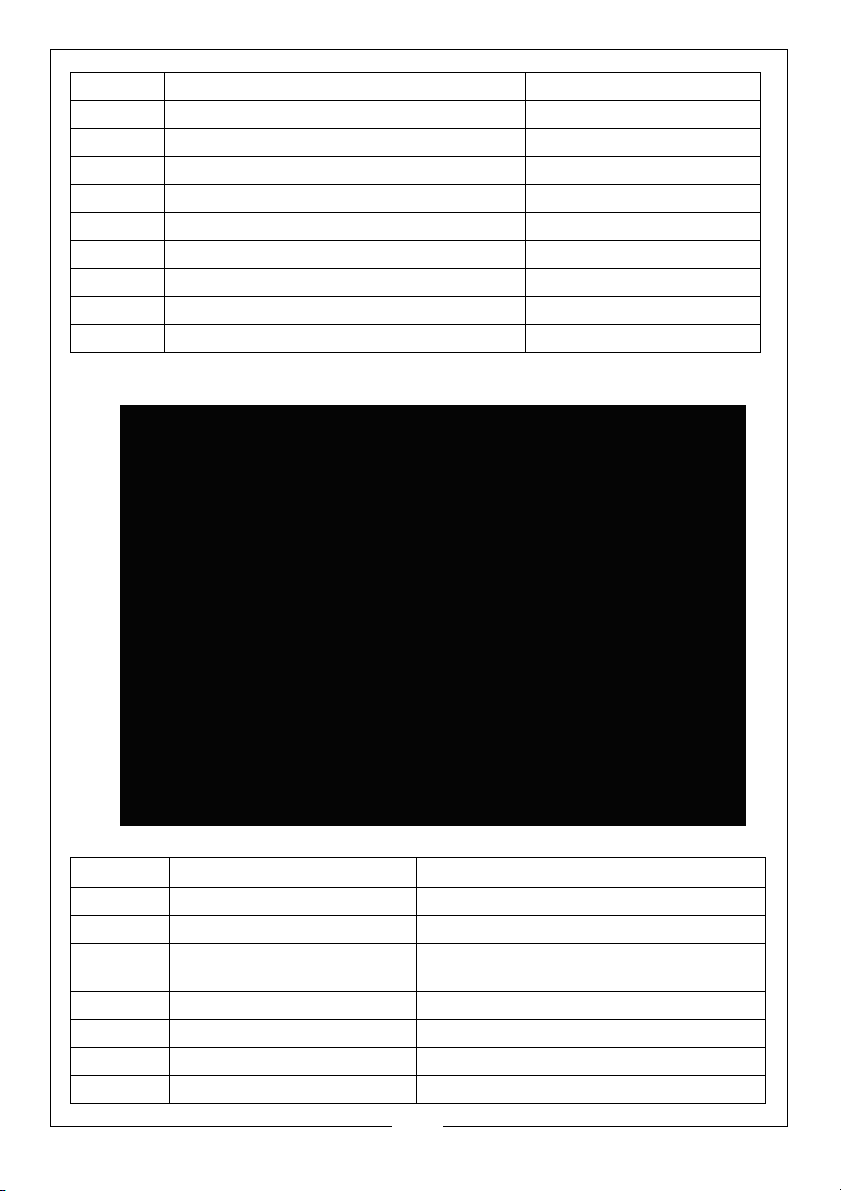
21 WATER PUMP IMPELLER, ZGGMQGZ804525F6821
22 KEY ZGGMQGZ804525F6822
23 WATER PUMP JOINT CUSHION, ZGGMQGZ804525F6823
24 IMPELLER SEAL ZGGMQGZ804525F6824
25 PORCELAIN SEAL, ZGGMQGZ804525F6825
26 MECHANISM SEAL ASSEMBLY, ZGGMQGZ804525F6826
27 WATER PUMP JOINT, ZGGMQGZ804525F6827
28 WASHER ZGGMQGZ804525F6828
29 BOLT ZGGMQGZ804525F6829
30 WATER PUMP ASSEMBLY, ZGGMQGZ804525F6830
ENGINE FRAME ASSEMBLY
NUMBER DESCRIPTION PART NUMBER
1 ENGINE FRAME ASSEMBLY, ZG51100V010110H700
2 DECORATIVE FRAME ZG210GM720423-0002
3 ENGINE FRAME SHOCK
ABSORPTION SEAT,
4 BOLT ZG90001061201
5 BOLT ZG90001085001
6 NUT ZG90305060031
7 NUT ZG90327080031
ZG51014HY450110GMQGZ804525
22
Parts & Service: 020 8988 7400 / E-mail: [email protected] or [email protected]
Page 23

DECLARATION OF CONFORMITY
23
Parts & Service: 020 8988 7400 / E-mail: [email protected] or [email protected]
Page 24

 Loading...