

Page 1

Page 2

T38 WAVE GUIDE
L’avvento del nuovo millennio ha definitivamente
sancito in ambito audio il passaggio dalla stereofonia
bi-canale alla stereofonia multi-canale.
Sebbene la riproduzione multicanale fosse già
impiegata da molti anni nell’industria cinematografica per veicolare verso la platea gli effetti di ambiente (surround), solo in tempi recenti gli studi di psicoacustica hanno messo a disposizione degli audiofili sistemi di ripresa/codifica/riproduzione atti a
ricostruire in ambienti domestici eventi musicali in
3D, preservando l’essenza fondamentale di ogni
campo acustico riprodotto : la fedeltà all’evento originale.
Questa nuova tecnologia, pur ereditando l’esperienza acquisita con la “vecchia” stereofonia, impone
nuovi standard qualitativi, ma soprattutto sposta il
fulcro dell’attenzione dal sistema-audio al sistemaambiente. Mai come oggi l’ambiente domestico ha
ricoperto tanta importanza nell’audio consumer, al
punto da forzare la ricerca verso sistemi di altoparlanti “pensati” per l’audio multicanale.
La Chario Loudspeakers, da decenni in prima linea
sul fronte di studio della percezione audio, ha risposto prontamente, offrendo agli audiofili la Serie
Constellation, la cui punta di diamante è costituita
dal tweeter T38 Wave Guide.
Ciliegio
Cherry
Noce
Walnut
1975
E’ trascorso più di un quarto di secolo dai primi
sistemi di altoparlanti realizzati nella originaria
sede di Milano. Grazie allo sviluppo della nascente
Tecnologia Audio, la Chario Loudspeakers acquisì
presto il know-how necessario per sviluppare progetti avanzati, ed alla fine degli anni ottanta il
“Chario Sound” era conosciuto ed apprezzato dagli
Audiofili di tutto il Mondo.
Persone di culture diverse, che parlano lingue diverse, ma provano le stesse emozioni quando ascoltano
la Musica, e trovano nei nostri diffusori acustici gli
strumenti più idonei per rivivere la
Magia del Suono.
Ma non di magia si tratta, bensì di costante impiego
di avanzate tecnologie dei materiali e di impegno
assiduo nello studio di aggiornati modelli di percezione audio e di simulazione acustica. Ma soprattutto di passione,
Passione per la Musica.
1975
More than a quarter of century ago we started
producing the early systems in the old factory in
Milan. Then, thanks to the growing Audio
Technology, Chario Loudspeakers developed the
necessary know-how for designing and
manufacturing the most advanced loudspeaker
systems. At the end of 80’s the “chario sound” was
well recognised by the
Audiophiles all over the world.
People of different cultures that speak different
languages but sharing the same “feeling” for Music,
and they all look at our systems as the best suitable
means for living again the
Magic of Sound.
However there is no magic at all. Any performance
improvement of our products is the result of an
everlasting application of updated technologies
together with our
well-known engagement in psychoacoustic research.
But above all we have a feeling,
A deep feeling for Music.
T38 WAVE GUIDE
At the beginning of the Third Millennium we have
witnessed the definitive passage from two-channel
stereophony to multi-channel stereophony.
Though multi-channel stereophony have been
used long before in movie theatres to convey
sound effects to the audience (surround sound)
only recently psychoacoustic studies have given
the consumer market the right means for
recording /encoding/reproducing a believable 3D
acoustic field in ordinary domestic rooms, with
the essential characteristic to preserve the
original musical event.
This brand new technology even though has kept
intact the “old” stereophony is asking for new
quality standard, but overall, it draws our
attention to the listening room as the last link of
any audio chain. Never before our domestic
environments have played the leading role to the
point that audio research is now forced to
conceive loudspeaker systems especially designed
for multi-channel stereophony.
Chario Loudspeakers as a leading company in
psychoacoustic research has promptly met the
Audiophiles’ requirements with the Constellation
Page 3
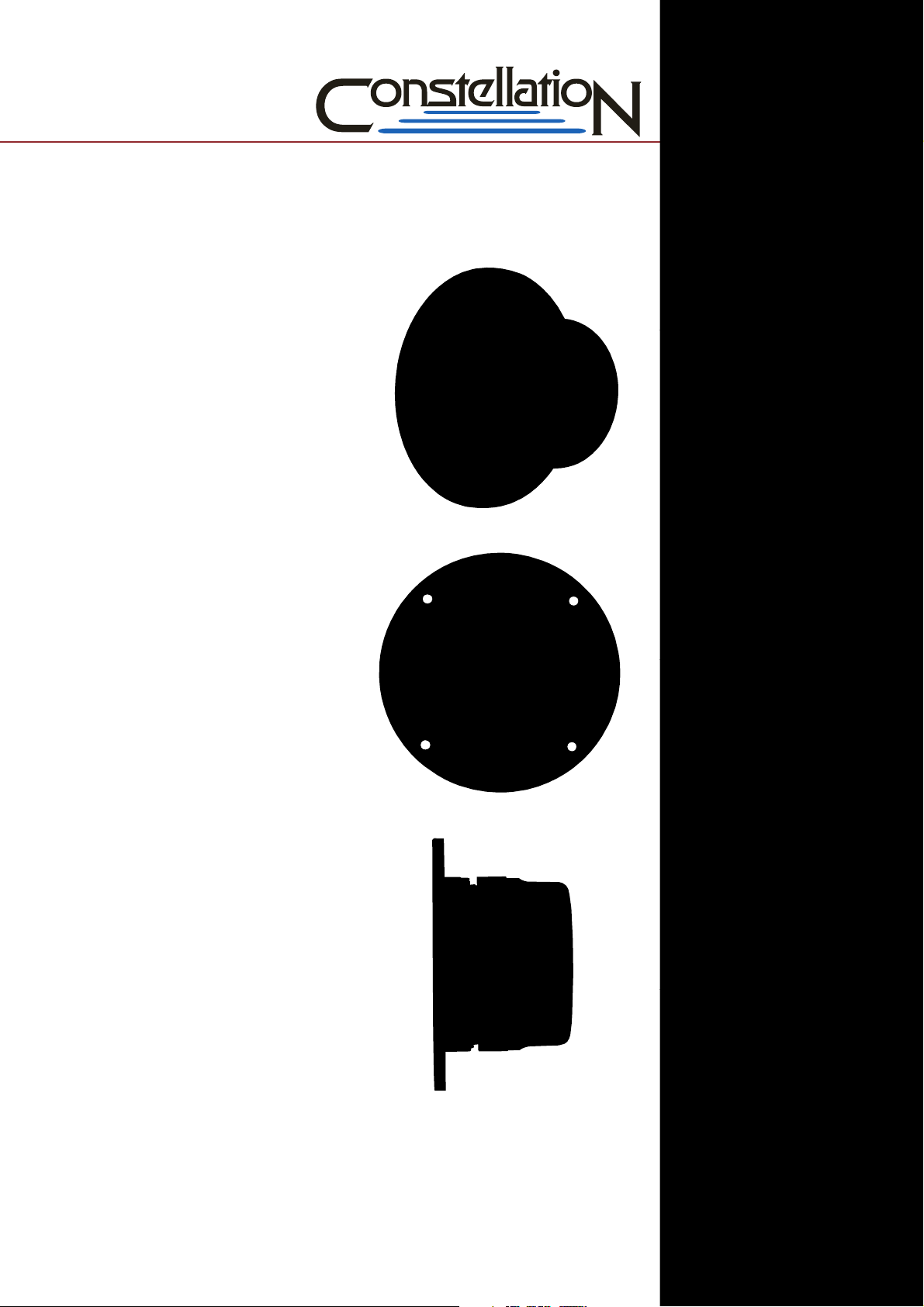
Di dimensioni superiori a qualsiasi altro tweeter a bobina mobile, possiede due caratteristiche :
• incrementa la dinamica delle medio-alte frequenze
• controlla l’energia irradiata in ambiente
Questi due fattori sono responsabili del marcato effetto
3D durante la riproduzione sia di colonne sonore di film
sia di concerti musicali.
Tutti i sistemi Chario Constellation, pur offrendo prestazioni migliori con l’aumentare delle dimensioni,
garantiscono la stessa qualità e precisione, grazie all’apporto determinante di un altoparlante assolutamente
unico nel suo genere, che ha aperto nuovi orizzonti alla
riproduzione domestica : il T38 Wave Guide.
Ma ciò che stupirà ogni vero appassionato, sarà la totale riscoperta dei brani musicali preferiti della propria
collezione perché la Serie Constellation, nativa di questa entusiasmante tecnologia audio, è in grado di
“estrarre” grandi quantità di informazioni contenute
nelle normali incisioni stereofoniche, altrimenti destinate a rimanere per sempre nascoste agli orecchi degli
audiofili.
Fieri di averlo fatto per primi.
Fieri di averlo fatto per voi.
Series introducing the astonishing T38 WAVE GUIDE
soft dome tweeter.
Bigger than any other currently available moving coil
tweeter the T38 WAVE GUIDE features:
• extended dynamic at mid-high frequencies
• accurate energy radiation control off-axis
These two factors together are mainly involved in 3D
effect during reproduction of moving picture sound
tracks or live musical concerts.
Though delivered acoustic power obviously increases
with size, all Chario Constellation systems guarantee
the same feeling during reproduction, thanks to the
absolute performance of the unique driver T38 WAVE
GUIDE.
But anyone who is keen on music will be amazed by
totally discovering all preferred tunes of his/her
recording collection. The Constellation Series coming
directly from this intriguing new technology is able to
pull out a great deal of information originally present
in ordinary two channel recordings, which otherwise,
would be definitely hidden to music lover’s ears.
We are proud to have done it first.
We are proud to have done it for you.
Page 4
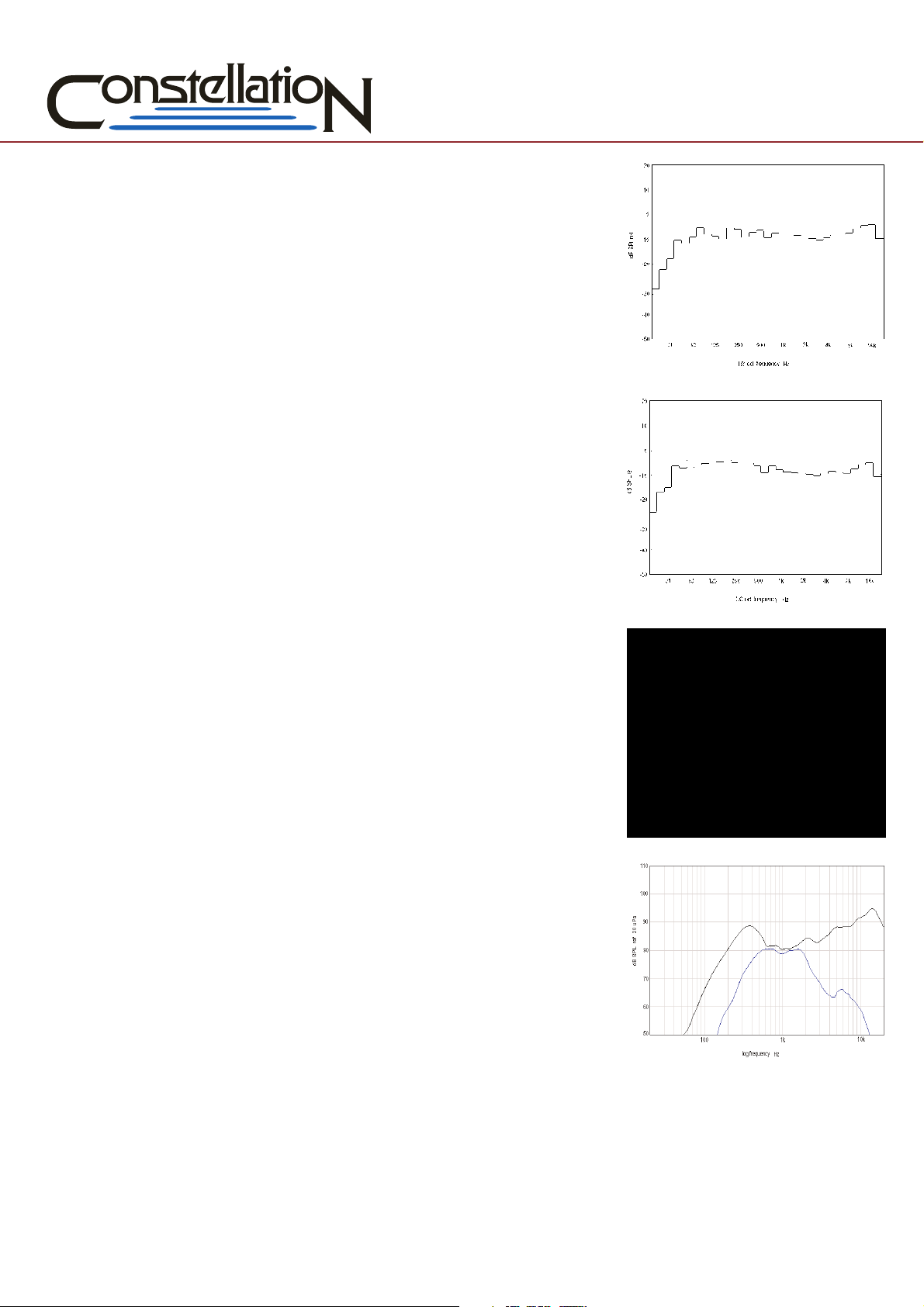
Il sistema Ursa Major è l’ammiraglia della Serie
Constellation ed è basata su tre soluzioni proprietarie
frutto della ricerca nel campo della psicoacustica che rendono questo progetto il più avanzato sistema elettrodinamico nella sua categoria.
Prima Ipotesi Percettiva
Prima riflessione dal pavimento ed equilibrio timbrico
Le misure sui sistemi di altoparlanti sono eseguite in speciali camere prive di riflessioni . Questa condizione è irrinunciabile per indagare l’esatto funzionamento dell’intero sistema senza che esso dipenda dal luogo in cui viene
effettuato il test. Ma la geometria degli ambienti domestici ne altera la risposta, sovrapponendo la propria
“carta di identità” e modificando permanentemente la
sensazione di ascolto. Poiché le possibili combinazioni
diffusore/ambiente/arredamento sono infinite,ogni simulazione condotta con l’ausilio del computer si limita a
descrivere un generale andamento utile per valutare l’equilibrio della riproduzione, ma del tutto insufficiente a
descriverne la sensazione uditiva . I modelli psicoacustici disponibili sono ancora incompleti e forniscono risultati attendibili nei soli casi in cui l’evento acustico sia
studiato in condizioni controllate. Ma a ben guardare,
per un diffusore “a torre”, la quota di ciascun altoparlante rispetto alla superficie di appoggio è fissa, quindi
una volta stabilita la distanza di ascolto è possibile conoscere a priori l’alterazione dovuta alla prima riflessione
dal pavimento. Se è verificata l’ipotesi che non vi siano
altre superfici riflettenti ad una distanza inferiore ad 1
metro, il primo arrivo di ener gia riflessa può essere controllato con una opportuna combinazione tra il filtro di
crossover e la disposizione verticale degli altoparlanti
In fig. 1 è riportata la misura ad 1 metro dal diffusore. La
curva segue con ottima approssimazione la risposta
“vera” effettuata in condizioni anecoiche. Lievi variazioni di livello testimoniano l’effetto dell’energia circolante
nell’ambiente.
In fig. 2 la stessa misura è stata effettuata allontanando
il microfono alla distanza di circa 3 metri, in modo da
evidenziare le perturbazioni dovute alla presenza delle
pareti e del soffitto. Si nota chiaramente un rinforzo alle
frequenze medio basse con un aumento del livello generale, ma senza alcuna perturbazione degna di nota.
Poiché le condizioni di rilevamento sono state predisposte per ridurre al minimo l’influenza delle pareti della
stanza, le figg. 1 e 2 dimostrano che la prima riflessione
proveniente dal pavimento è strettamente controllata e
quindi “virtualmente” assente durante la riproduzione.
A conferma della attendibilità del risultato, in fig. 3 è
mostrato il confronto tra il sistema Constellation Ursa
Major (traccia superiore) ed un prototipo di laboratorio
(traccia inferiore) costruito secondo la configurazione a
torre classica, con i due woofer posizionati sotto il tweeter: in rosso è evidenziato il doppietto buco-picco di
entità sufficiente a modificare stabilmente l’equilibrio
energetico generale.
Ciò che rende questo interferenza particolarmente nociva, deriva dal fatto che l’ascoltatore percepisce l’azione
contemporanea di un difetto e di un eccesso di energia in
una intervallo di frequenze pari ad un ottava, che mediamente coincide con l’ottava centrale del pianoforte,
ovvero l’insieme di toni musicali più frequenti nelle
composizioni occidentali. La relazione di ottava musicale tra “il buco” ed il “picco” implica che il timbro del
tono complesso generato dalla sorgente sia alterato, poiché la riflessione dal pavimento aggiunge alla fondamentale ed alla sua seconda armonica un differenziale di
livello di 10dB nei casi peggiori.
Seconda Ipotesi Percettiva
Configurazione WMT e correlazione energia diretta/riflessa
La fig. 4 mostra il principio esclusivo della Chario
Loudspeakers per il controllo dell’energia irradiata dai
tre altoparlanti Woofer , Midrange e Tweeter.
La traccia superiore (nera) è la somma acustica del
Woofer e del Tweeter mentre la traccia inferiore (blu) è
l’emissione del singolo midrange. Come si nota chiaramente la sovrapposizione dei tre altoparlanti non avviene
in modo classico mediante l’unione di tre bande distinte
e separate, ma alla risposta quasi completa del woofer e
The Ursa Major is the flagship of the Constellation
Series featuring three original design solutions based on
proprietary research into the field of psychoacoustics
which make it to be the most advanced electro-dynamic
loudspeaker system in its category
First Hypothesis on Perception
Floor bounce control vs. timbre coloration
Acoustical measurements on loudspeaker system are
normally made in suitable reflection free environments.
But in real life, the finite physical sizes of all domestic
rooms actually change the speaker response, and this in
turn heavily modifies the listening experience. Since we
face a great variety of speaker/room/furniture
combinations, any computer aided simulation can’t tell
the exact story of the reproduction, limiting our overall
knowledge of the listening process to a mere picture of
energy equilibrium within the living room. Updated
psycho acoustic models are powerful but still incomplete
and can provide us with good results only when the
acoustical event is under fully control. Now, because any
floor standing system keeps the distance from drivers to
floor unchanged (disregarding its placement ) we can
think of this as a well controlled event. So, if one knows
the distance between the speaker and the listening
position it is easy to compute the interaction with the
early reflection from the floor. Assuming by default that
any other reflecting surface is far one meter away at
least, the first arrival of ener gy fr om the floor can be taken
under control by means of the right choice of cross over
topology together with the vertical array of the drivers.
Fig. 1 shows the frequency response one meter away (3 ft)
on tweeter axis.
Fig. 2 shows the same measurement but taken three
meter away (9 ft ).
There is a general level incr ease in the mid-low fr equency
band due to the room long-term acoustical field but
without any significant perturbation. Since the two
measurements were both arranged in order not to be
influenced by the test room sidewalls fig. 1 and 2 show
that the first reflection from the floor is strictly under
control and hence it is “virtually” eliminated during
listening performance.
To further confirm this result fig. 3 shows a comparison
between the Ursa Major (upper trace) and a lab
prototype floor standing three-way system (lower trace)
made up of a tweeter and the two woofers placed below.
It is clearly recognizable the twin “dip and peak” couple
(red line) whose level difference is large enough to
definitely change the overall equilibrium.
This type of interference is mostly harmful because the
listener is aware of both a loss and an excess of energy
within a frequency band an octave wide. Unfortunately,
this frequency span is very close to the piano centreoctave and in general to the set of fundamental musical
tones more recurrent in the western music compositions.
The “musical octave” relationship between the dip and
the peak implies a dramatic timbre alteration of the
complex tone generated by the sound source because of
the incremental difference of almost 10 dB between the
fundamental and the second harmonic of the power
spectrum. To some extent we could say that the speaker
plays an altered version of the original tune. Addressed
our way, the result is a noticeable decrease of listening
fatigue.
Second Hypothesis of Perception
WMT energy control vs. spatial jittering
Fig. 4 shows the Chario Loudspeakers unique solution
for the control of total energy radiated by the sub-system
Woofer/Midrange/Tweeter.
The black trace is the acoustical sum of woofer and
tweeter while the blue trace is the response of the
midrange alone. The three drivers don’t merge in a
classical manner by the superimposition of three distinct
frequency intervals, instead they work to g ether within the
octave from roughly 800Hz to 1,800 Hz where the saddle
in the woofer-tweeter response is filled up by the
midrange contribution. This proprietary crossover
topology let the designer to “modulate” both amplitude
and phase of the three sources to achieve a target energy
envelope for off axis contr ol r adiation in or der to keep the
early reflection field as close as possible to the dir ect field
for a wider stage presentation.
fig. 1
fig. 2
fig. 3
fig. 4
Page 5

Page 6

background noise becomes dominant. This procedure is
not dissimilar from the “spatial equalisation” introduced
by other researchers at the recording stage. This unique
feature is also useful in reducing the intrinsic paradox of
music reproduction throughout loudspeakers. When we
attend a musical performance in a closed space our ear is
concerned with two acoustical fields:
1. the direct field coming straight from the source(s)
2. the reflected field coming from all directions
except the front path
Now, when listening to a musical programme throughout
a loudspeaker stereo set up, our auditory system has to
cope with a strange acoustical event for which both dir ect
and reflected energy arrive from the same locus of points
in space. This physical paradox gets the auditory pr ocess
confused, so our brain is pushed to concentrate itself
toward the source,switching on the “intentional listening
behaviour” i.e. focalising more attention to the sound
characteristics than normal.
If the ambience information is reproduced by a
loudspeaker system whose frequency response is different
from that shown in fig. 7 ( i.e. more linear or perfectly
linear or upward tilting) our brain will be too much
sensitive to middle frequencies and the stage collapses
between the right and the left speaker missing both depth
and width. Luckily, the ear-brain loudness contour
depicted in fig. 7 becomes increasingly linear at higher
reproduction levels and this counterbalances almost
perfectly the dynamic losses at low frequencies due to
thermal, mechanical and inertial limits of the subwoofer,
hence keeping the correct performance up to the highest
sound pressure levels.
di emettere pressioni molto elevate
E’ quindi ragionevole ipotizzare un valore massimo di
110 dB SPL durante brevi passaggi di un fortissimo
musicale (fff). Inoltre, per quanto silenziosa sia una stanza di appartamento durante le ore diurne, sarà sempre
presente un rumore di fondo di almeno 45-50 dB SPL, di
conseguenza la dinamica di segnale realmente disponibile per un ascolto di qualità non supera i 60 dB ( differenza tra 110 e 50 ).
Non a caso, lo stesso valore di 60 dB determina le caratteristiche di riverberazione di uno spazio chiuso, e se
quest’ultimo è il luogo di ripresa dell’evento acustico,
all’informazione di riverberazione captata dai microfoni
il nostro sistema audio percettivo associa la sensazione di
spazialità. La corretta riproduzione di questi segnali particolarmente deboli è utile per ricreare nella sala di
ascolto l’illusione di ambienza, ovvero la proiezione
mentale in un luogo di dimensioni maggiori. Il senso dell’udito presenta modalità di funzionamento estremamente complesse, di certo però sappiamo che la nostra
sensibilità ai suoni varia al variare dell’intensità dello stimolo e della frequenza emessa.
In fig. 7 è riportata la risposta in frequenza del sistema
Constellation Ursa Major (curva nera) e la curva di sensibilità dell’orecchio (curva rossa) per suoni prossimi al
rumore di fondo di un appartamento.
Se i due andamenti vengono fatti coincidere ( con gli inevitabili limiti di funzionamento dei sistemi reali) si
approssima l’obiettivo di riprodurre le debolissime
informazioni di ambienza secondo la sensibilità che il
nostro orecchio presenta a livelli di emissione di 40-50
dB SPL, ovvero prima che esse si perdano sovrastate dal
rumore di fondo tipico delle nostre abitazioni.
main reasons:
1. small rooms are very fast saturated with level increase
2. high resolution/correct timbre/high level reproduction
can’t be allowed at the same time by currently
available electro-acoustic technology.
Therefore it is reasonable to take as the upper limit of
feasible domestic sound level the figure of 110 dB SPL
during a fortissimo passage(fff). Moreover any domestic
environment is af fected by an almost constant backgr ound
noise of around 45-50 dB SPL all day long, so the actual
signal dynamic range is not greater than 60 dB ( the
difference between 110 and 50 ).
It’s not accident that the same figure of 60 dB is the
reverberation decay of any closed space. If we consider
the recording venue, any signal captured by the
microphone array after the direct sound from the
source(s) is recognized by our auditory system as the
“identity card” of that space which adds “warmth and
spaciousness” to any playing musical instrument. The
correct reproduction of these extremely weak signals is
useful for recreating in the listening room the “ambience
effect” i.e. the illusion to be seated within the original
recording venue . We know our auditory system works in a
very complex manner and - among the other things - it
changes its sensitivity response accor ding to intensity and
frequency content of the sound
Fig. 7 shows the overlay of Constellation Ursa Major
frequency response (black trace) and ear-brain equal
loudness contour (red trace) referr ed to a sound le vel next
to background noise in ordinary living rooms .
If they do coincide for the most part of the audio range,
the speaker system will then be able to correctly
reproduce the recorded ambience signals by simulating
the auditory sensitivity at 45-50 dB SPL i.e. before the
del tweeter si aggiunge quella del midrange che opera in
un intervallo di una sola ottava. Questa particolare tipologia di filtro crossover consente di ottenere una riduzione uniforme e graduale della risposta del sistema fuori
asse, garantendo così una omogenea distribuzione di
energia nella stanza, a beneficio del campo di prime
riflessioni , come è mostrato dalle curve di dispersione sul
piano verticale in fig. 5.
Grazie alla configurazione WMT è possibile controllare
l’energia diretta verso il pavimento,riducendo il livello di
emissione associato alla prima riflessione.
La curva rossa in fig. 6 mostra il livello dell’energia dell’onda riflessa che interferisce con l’emissione principale nel punto di ascolto. La configurazione WMT consente di attenuare notevolmente la prima riflessione nell’intorno della banda in cui i tre altoparlanti operano in
sovrapposizione. L’effetto psicoacustico associato a questo esclusivo principio di funzionamento si traduce nell’immediata fruizione di maggior trasparenza e maggior
dettaglio delle medie frequenze, senza la necessità di
incrementarne il livello a discapito della profondità della
scena sonora e della correttezza timbrica.
Terza Ipotesi Percettiva
Correlazione tra i segnali di ambienza ed il profilo
isofonico
Gli strumenti musicali possono emettere suoni a livelli di
pressione di 140-150 dB SPL. Esistono però due limiti di
ordine fisico per cui non è possibile riprodurre pressioni
così elevate negli ambienti domestici:
a) negli ambienti molto piccoli si raggiunge rapidamente
il limite di saturazione per variazioni elevate di
pressione acustica incrementale
b) la tecnologia a disposizione non consente ai sistemi di
altoparlanti per impiego audio ad alta risoluzione (HI-FI)
WMT principle relies mostly on the fact that sound source
localization on vertical plane is somewhat reduced within
the 800-2,000 Hz frequency span due to the smooth
transition from phase difference to amplitude difference
localization cues. Three or mor e vertically aligned drivers
covering a narrow bandwidth can exploit this specificity
of human perception to allow a simultaneous energy
radiation. Our brain will reco gnize the three sources as if
they were just a single one , giving it an“apparent
vertical size” of the whole array. This psychoacoustic
performance is very useful in eliminating image shifting
of fast varying spectrum audio signals and related
spatial-jittering of the perceived stage.
Fig. 5 shows the uniform energy reduction as the
measuring microphone moves along the vertical plane .
By means of the WMT configuration it is also possible
controlling the downward energy emission with a
substantial level reduction of the floor bounce.
The red line in fig. 6 shows the reduction in level of the
interfering energy from the floor which merges with the
direct field at the listener’s ears. It is a “de facto”
reduction of reflected energy around the frequency span
of maximum ear sensitivity. The psychoacoustic effect
from the listening stand-point is recognized as great
“detail and transparency” at middle frequencies without
ruining both timbre and stage depth by unnaturally
raising their level.
Third Hypothesis on Perception
Original recording venue ambience vs. equal
loudness contour
Musical instruments can produce sound levels as high as
140-150 dB SPL. However this huge amount of energy is
not available for ordinary home listening because of two
La particolarità di questa originale soluzione si rivela
molto efficace nel contrastare il paradosso insito nel principio di riproduzione attraverso i sistemi di altoparlanti.
Sappiamo infatti che durante un concerto di musica in un
luogo chiuso al nostro sistema percettivo giungono due
campi acustici distinti, quello diretto proveniente in linea
ottica dalle sorgenti e quello riverberato proveniente da
tutte le superfici dello spazio chiuso. Il campo riverberato oltre a subire un ritardo dovuto alle molteplici riflessioni, non presenta un unica direzione di provenienza ma
– dal punto di vista statistico – proviene da “ogni” direzione, tranne da quella ottica già “occupata” dal campo
diretto.
E’ evidente quindi che durante l’ascolto domestico il
nostro cervello si trovi di fronte ad un fenomeno per il
quale non possiede memoria di confronto, poiché campo
diretto e campo riverberato provengono dallo stesso
punto. Questa nuova realtà confonde il sistema percettivo, che nel tentativo di ovviare al non senso fisico attiva
il processo di “ascolto direzionale” focalizzando oltre
misura l’attenzione verso le sorgenti.
A questo punto risulta semplice comprendere che, se le
informazioni di ambienza vengono restituite secondo una
curva via via più lineare e diversa da quella mostrata in
fig. 7, le frequenze medie riceveranno troppa attenzione
da parte del cervello, con il conseguente collasso del
fronte stereofonico “in mezzo” ai diffusori .
Fortunatamente, la curva di sensibilità dell’orecchio di
fig. 7 si linearizza con l’aumentare del livello di riproduzione compensando quasi perfettamente la perdita di
dinamica alle basse frequenze dovuta ai limiti termici,
meccanici ed inerziali del subwoofer, garantendo così
una risposta equilibrata a livelli di ascolto medio-alti.
fig. 5
fig. 6
fig. 7
Page 7
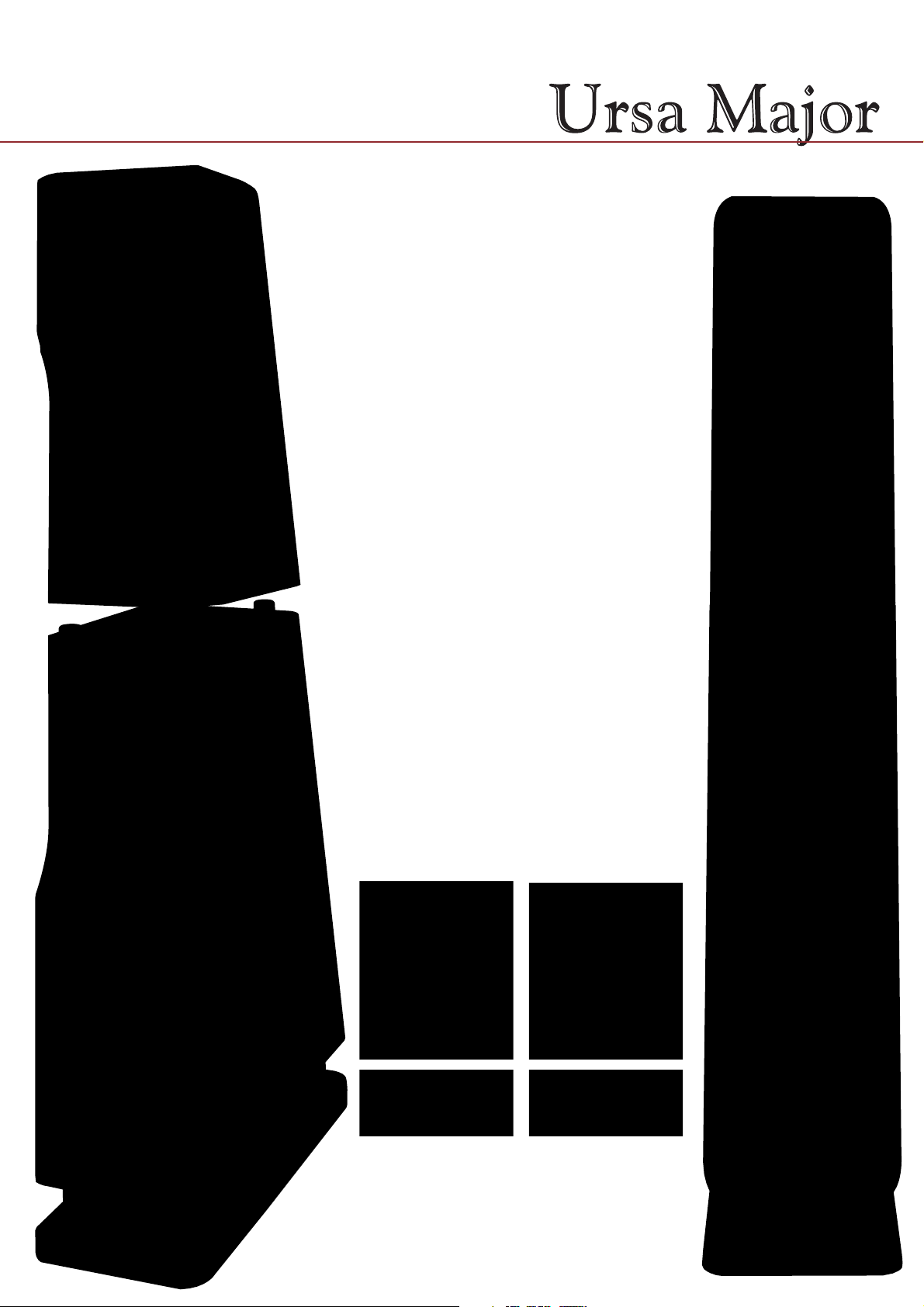
Technical Data
Acoustical load
Bottom firing vented cabinet
Configuration
WMT non-conventional 4 way floor-standing (proprietary)
Drivers 1 Tweeter
38 mm (1.5 in) soft dome T38 WAVE GUIDE
1 Midrange
130 mm (5 in) paper-carbon compound
1 Woofer
170 mm (6.5 in) treated paper
2 Sub
170 mm (6.5 in) polymeric compound
Sensitivity
91 dB SPL / normalized to 1 m (3 ft) / 2.83 Vrms de-correlated
Left & Right pink noise within IEC 268-13 Listening Room
Low frequency cut off
35 Hz @ -3dB referred to C4 diatonic tone
Interdriver Frequencies
280 / 800 / 1250 / 1450 Hz (unconventional)
Rated Impedance
4Ω (minimum 3.2)
Size
1400 x 250 x 610 mm (55 x 9.8 x 24 in) (H x W x D)
Cabinet finishing
Solid walnut or solid cherry and HDF
Weight
60 kg (132 lb)
Speakers orientation
The speakers should be tilted inward facing the listener
Listening distance
Optimum speaker-listener distance is about 3 m (9ft)
Listening layout
A carpeted floor in front of the speakers is recommended
Side and Back walls
Should stay 1 m away from the speaker front baffle at least
Suggested Amplifier
Normal amping 180 W / 4
Ω max
Bi-amping
Sub 100 W / 4Ω max
Woofer & Mid-High 100 W / 4Ω max
Cabinet structure
Each Ursa Major system is made up of two cabinets: the lower,
containing two subwoofers and the upper, containing one woofer,
one midrange and one tweeter. The two wooden structures are
separated by means of four cylindrical proprietary-engineered
elastomer puffers which act as vibration de-couplers dissipating
mechanical energy by orthogonal elongation.
Bi-amping
un amplificatore Sub
un amplificatore
Woofer & Mid-High
Sub dedicated power-amp
Woofer & Mid-High
dedicated power-amp
Normal Amping
un solo amplificatore
single power amp
Page 8
Technical Data
Acoustical load Vented NRS
Configuration Two way
Drivers 1 Tweeter 38 mm (1.5 in) soft dome T38 WAVE GUIDE
1 Woofer 130 mm (5 in) paper compound
Sensitivity 87 dB SPL / normalized to 1 m (3 ft) / 2.83 Vrms de-correlated d
Left & Right pink noise within IEC 268-13 Listening Room
Low frequency cut off 67 Hz @ -3dB referred to C4 diatonic tone
Crossover Frequencies 1500 Hz
Alignment 4th order all pass
Rated Impedance 4Ω
Suggested amplifiers Rated for 50-100 W/4Ω average power
Size 360 x 200 x 260 mm (14.2 x 7.9 x 10.2 in) (H x W x D)
Weight 10 kg (4.5 lb)
Cabinet finishing Solid walnut or solid cherry and HDF
Speakers orientation The speakers should be tilted inward facing the listener
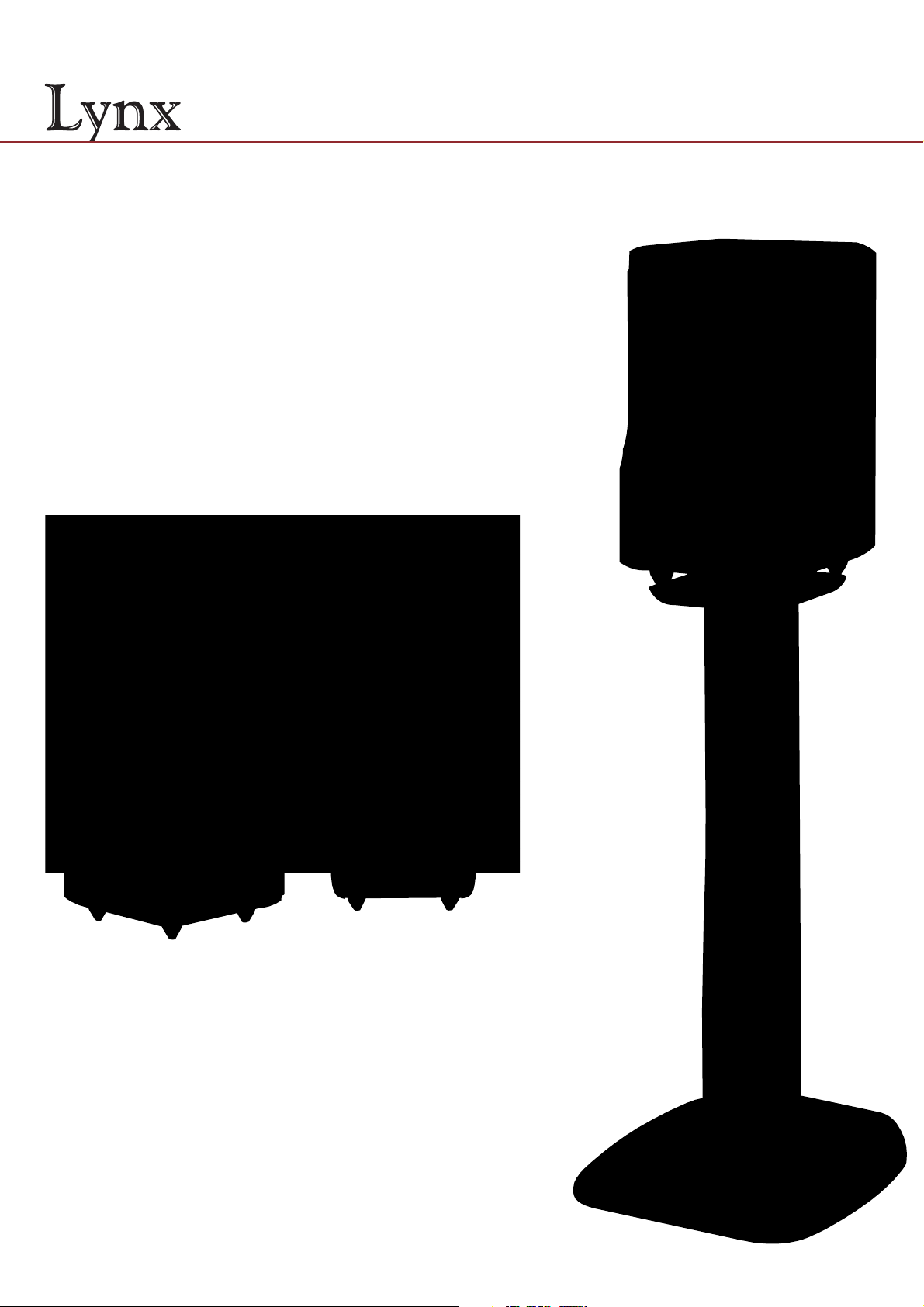
Entry Level della famiglia Constellation, la Lynx si è imposta immediatamente per le doti di
altissima risoluzione e per la capacità di emettere un fronte sonoro grande.
Le nuove conoscenze percettive acquisite nei nostri laboratori, una volta applicate al T38
Wave Guide rivelano la correttezza della filosofia progettuale della Chario Loudspeakers, che
risulta “scalabile” e quindi adatta sia a grandi sia a piccoli sistemi.
La minuscola Lynx racchiude in sé tutto ciò che di grande rappresenta la filosofia
Constellation.
E non ci crederete….
As the entry-level system of Constellation Series, the Lynx was immediately successful
because of its high resolution capability, together with the ability of recreating a deep and
wide sound stage. The psychoacoustic knowledge gained in our laboratories during recent
years, has led to the T38 WAVE GUIDE transducer, which gives to Chario’s designing
philosophy the possibility to be scaled, from big expensive systems to small compact ones.
We can state that the little Lynx holds all the innovative and non-conventional
features which make The Constellation Series a world apart in the audio panorama.
You won’t believe your ears…
Page 9
Technical Data
Acoustical load Vented NRS
Configuration Two way
Drivers 1 Tweeter 38 mm (1.5 in) soft dome T38 WAVE GUIDE
1 Woofer 170 mm (7 in) paper compound
Sensitivity 90 dB SPL / normalized to 1 m (3 ft) / 2.83 Vrms de-correlated
Left & Right pink noise within IEC 268-13 Listening Room
Low frequency cut off 55 Hz @ -3dB referred to C4 diatonic tone
Crossover Frequencies 1500 Hz
Alignment LKR 4th order
Rated Impedance 4Ω
Suggested amplifiers Rated for 50-120 W/4Ω average power
Size 410 x 230 x 330 mm (16 x 9 x 13 in) (H x W x D)
Weight 12 kg (5.4 lb)
Cabinet finishing Solid walnut or solid cherry and HDF
Speakers orientation The speakers should be tilted inward facing the listener
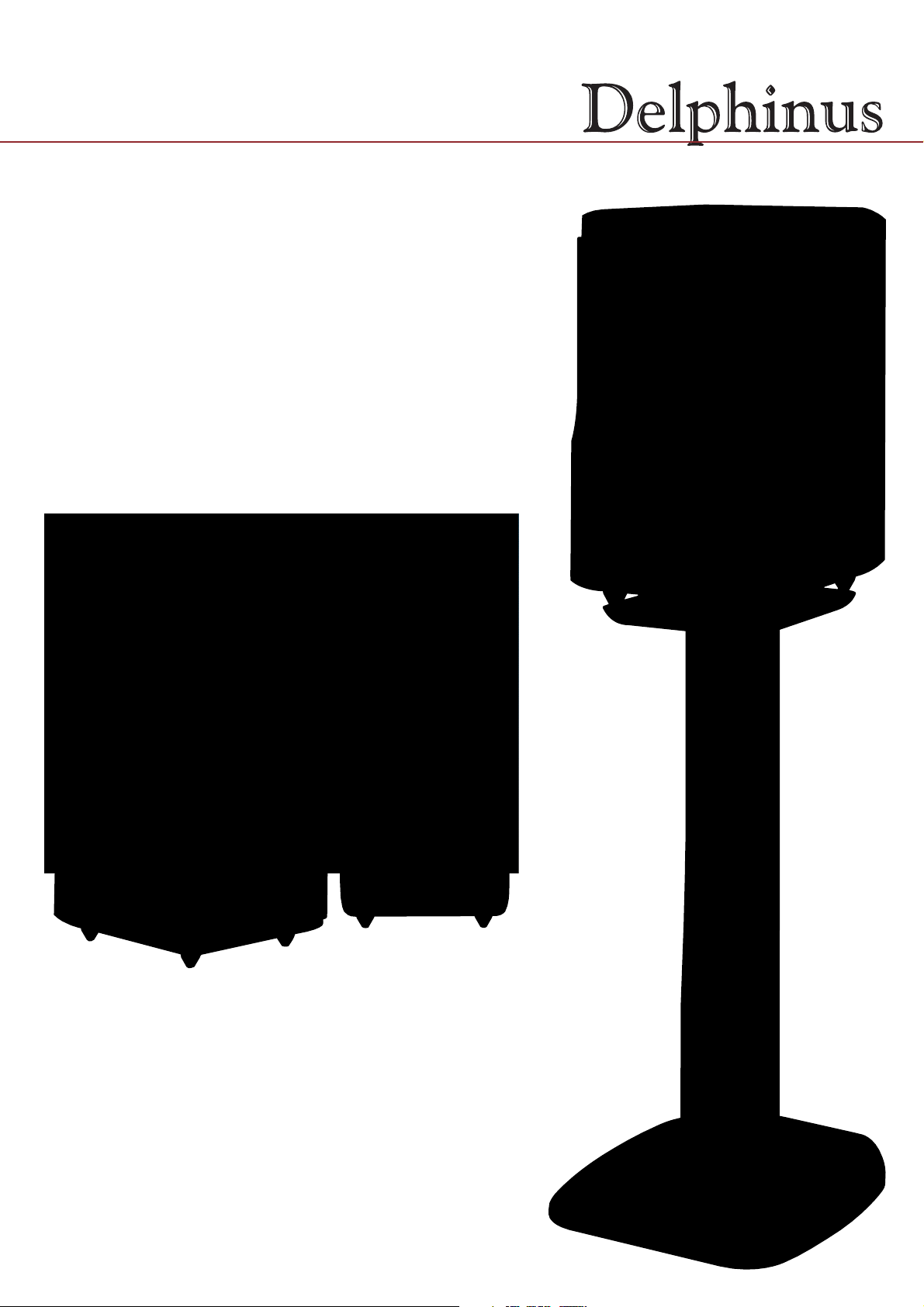
Dotata di un woofer di diametro maggiore la Delphinus accresce sensibilmente le prestazioni dinamiche, conferendo al fronte sonoro maggior precisione e profondità. Di dimensioni ancora compatte ben si adatta all’inserimento in libreria, anche se, posizionata sul proprio stand dedicato, garantisce prestazioni difficilmente superabili nella categoria di appartenenza.
Anche in questo caso l’esclusiva tecnologia T38 WAVE GUIDE consente di percepire dettagli difficilmente rilevati dall’orecchio in presenza di woofer di diametro crescente.
Featuring a larger diameter woofer the Delphinus is capable of increased dynamics, which
in turn makes the front stage wider and deeper.
Being of reasonable small size it performs pretty well on a bookshelf, even though better
performance can be achieved on dedicated stands, exceeding all expectations in its
category.
Also in this case the incomparable T38 WAVE GUIDE technology allows the ears to
perceive fine details rarely pointed out by loudspeaker systems with increasingly large
diameter woofers.
Page 10
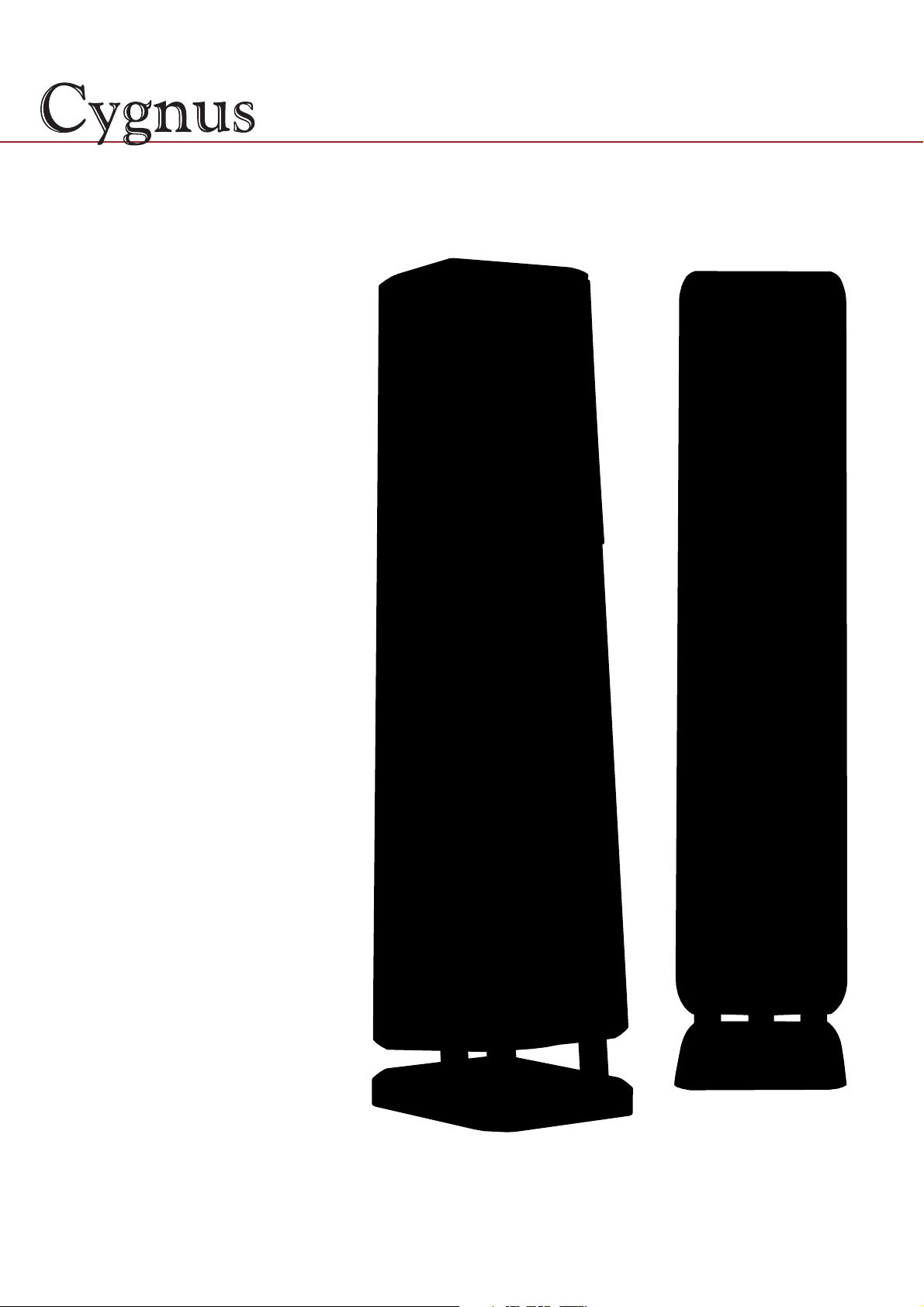
Naturale evoluzione della Lynx, sfrutta lo sviluppo
verticale per aggiungere alla radiazione il contributo
di un subwoofer dedicato, posto alla base del mobile. Snella ed elegante si inserisce perfettamente in
ogni ambiente, offrendo sempre una riproduzione
sonora ricca di dettaglio e al tempo stesso sorprendente per estensione e dinamica alle basse frequenze. Le pregiate doghe laterali in legno massello e la
struttura in High Density Fiber costituiscono un
composto inerte alle vibrazioni, che garantisce la
stabilità dell’immagine acustica anche a livelli sonori molto elevati.
Rimarrete stupiti da tanta raffinata potenza…
Coming directly from Lynx project, the Constellation
Cygnus exploits a floor standing design to increase
low frequency radiation by adding a dedicated
subwoofer at the bottom of the cabinet. Slim and
gently back slanted it perfectly stands in any living
room, offering to the listener both a detailed
reproduction and a powerful low frequency range.
The valuable solid wood of the cabinet sides together
with the HDF supporting frame make the whole
structure to be virtually motionless, allowing a
recognizable sturdy front stage during any
demanding low frequency / high level musical
passages.
A jewel of stunning power…
Technical Data
Acoustical load
Vented 2π sr
Configuration
Three way floor-standing
Drivers 1 Tweeter 38 mm (1.5 i ) soft dome
T38 WAVE GUIDE
1 Midrange 130 mm (5 in)
paper compound
1 W oofer 130 mm (5 in)
paper compound
Sensitivity
87 dB SPL / normalized to 1 m (3 ft) / 2.83 Vrms
de-correlated
Left & Right pink noise within IEC 268-13
Listening Room
Low frequency cut off
50 Hz @ -3dB referred to C4 diatonic tone
Crossover Frequencies
170 / 1500 Hz
Alignment
LKR 4th order
Rated Impedance
4Ω
Suggested Ampilfier
Rated for 50-120 W/4Ω average power
Size
955 x 200 x 270 mm
(37.6 x 7.9 x 10.5 in) (H x W x D)
Cabinet finishing
Solid walnut or solid cherry and HDF
Weight
17 kg (7.6 lb)
Speakers orientation
The speakers should be tilted inward facing the
listener
Page 11
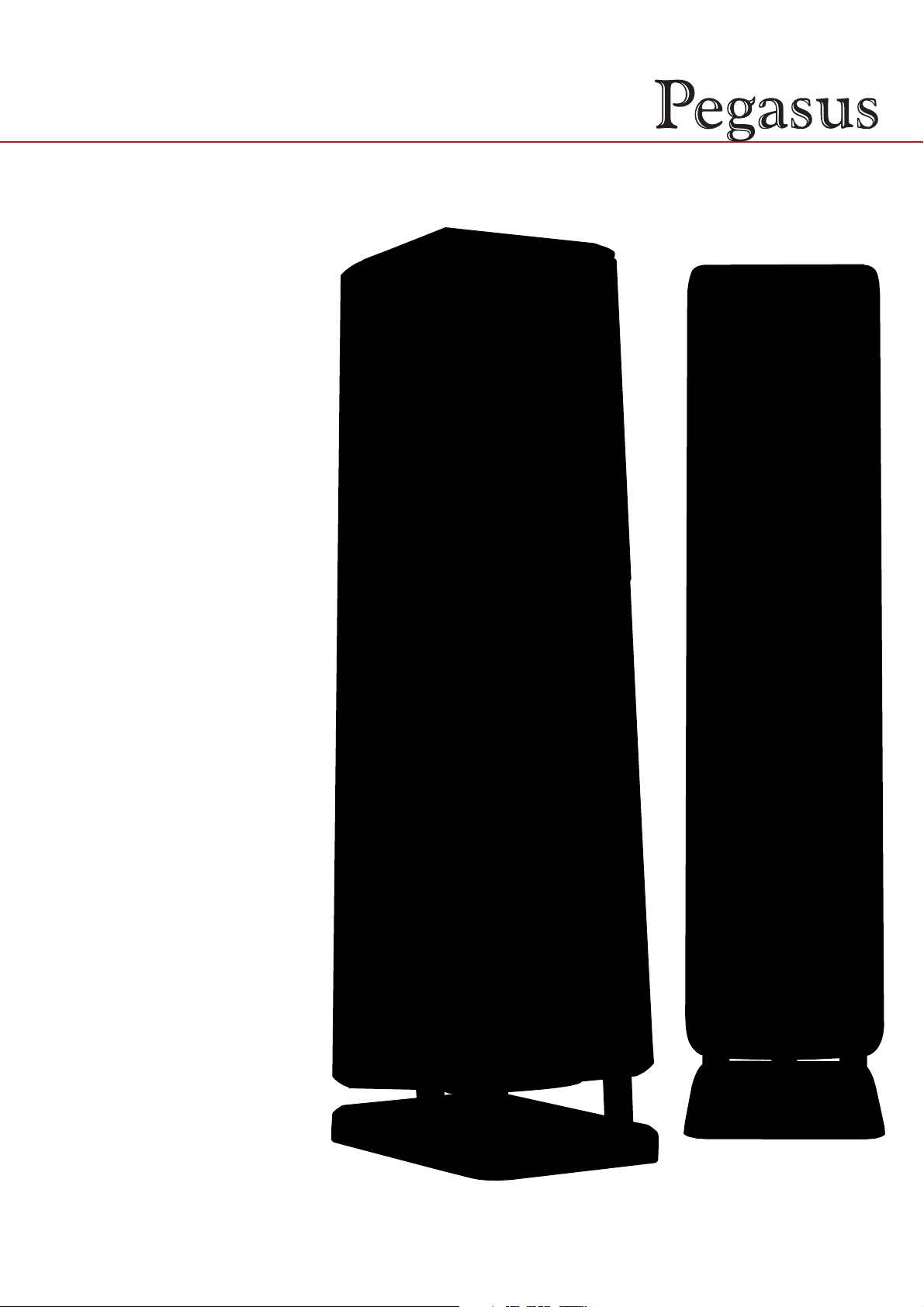
Sintesi perfetta tra “piccolo e bello “ e “grande e
potente” che soltanto il principio di scalabilità consente di realizzare. Le Pegasus ricreano in ambiente
domestico campi acustici di eventi reali estremamente attendibili senza la necessità di elevata potenza elettrica. La profondità dello stage sonoro ereditata dalle Delphinus si coniuga senza incertezze con la
“spazialità” intrinseca delle Lynx, con un risultato
esaltante.
Un sistema definitivo nella sua categoria, che vi
offrirà emozioni insospettate, grazie alla tecnologia
T38 WAVE GUIDE
The Pegasus system is a perfect synthesis between
the mighty bass of Delphinus and the detailed finesse
of Lynx. Once again this alliance is made possible
thanks to the scaling property of T38 WAVE GUIDE
technology.
Each pair of Pegasus can create into your listening
room very high listening levels with very few
electrical power.
Superb stage depth presentation comes with
unbelievable spaciousness effect.
Try to believe…
Technical Data
Acoustical load
Vented 2π sr
Configuration
Three way floor-standing
Drivers 1 Tweeter 38 mm (1.5 in) soft dome
T38 WAVE GUIDE
1 Midrange 170 mm (7 in)
paper compound
1 W oofer 170 mm (7 in)
paper compound
Sensitivity
90 dB SPL / normalized to 1 m (3 ft) / 2.83 Vrms
de-correlated
Left & Right pink noise within IEC 268-13
Listening Room
Low frequency cut off
45 Hz @ -3dB referred to C4 diatonic tone
Crossover Frequencies
170 / 1500 Hz
Alignment
LKR 4th order
Rated Impedance
4Ω
Suggested Ampilfier
Rated for 50-140 W/4Ω average power
Size
1030 x 230 x 370 mm
(40 x 9 x 14.5 in) (H x W x D)
Cabinet finishing
Solid walnut or solid cherry and HDF
Weight
26 kg (11,7 lb)
Speakers orientation
The speakers should be tilted inward facing the
listener
Page 12
Technical Data
Acoustical load Vented NRS
Configuration Two way symmetrical cosine-like radiation (proprietary)
Drivers 1 Tweeter 38 mm (1.5 in) soft dome T38 WAVE GUIDE
2 Woofer 130 mm (5 in) paper compound
Sensitivity 90 dB SPL / normalized to 1 m (3 ft) / 2.83 Vrms de-correlated
pink noise within IEC 268-13 Listening Room
Low frequency cut off 80 Hz @ -3dB referred to C4 diatonic tone
Crossover Frequencies 1500 Hz
Alignment 4th order all pass
Rated Impedance 8Ω
Suggested amplifiers Rated for 50-120 W/8Ω average power
Size 215 x 490 x 260 mm (8.5 x 19.3 x 10.2 in) (H x W x D)
Weight 11 kg (5 lb)
Cabinet finishing Solid walnut or solid cherry and HDF
Magnet assembly Shielded for close TV screen positioning
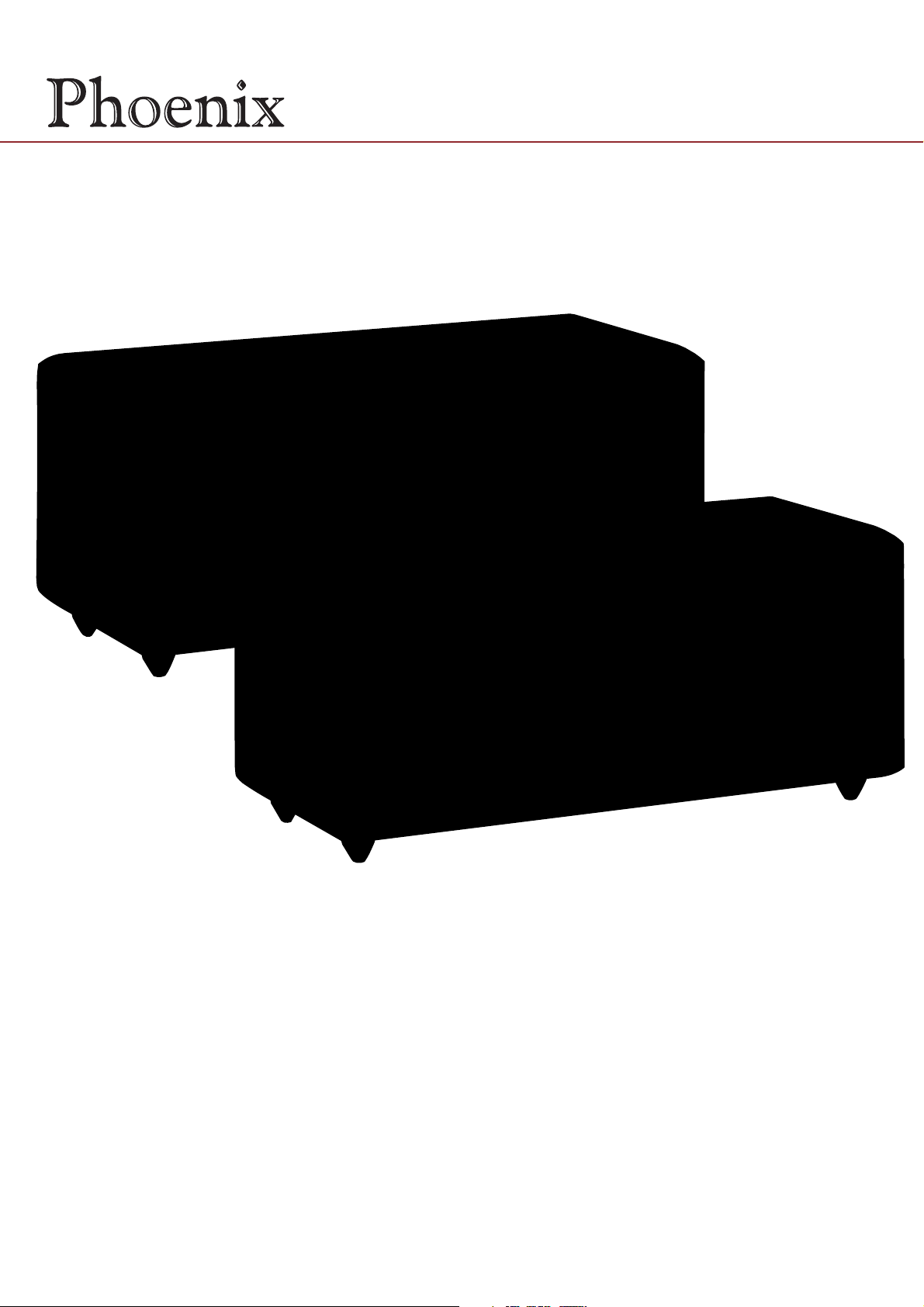
Il sistema Phoenix nato come canale centrale per un sistema
“multichannel”, deve possedere particolari doti di trasparenza
nella delicata gamma di frequenze interessate alla riproduzione
del parlato. Niente di meglio di una Lynx a sviluppo orizzontale,
con l’aggiunta di un secondo woofer per rendere omogenea l’emissione sonora in presenza di più persone che fruiscono del
programma audio-video.
Il Phoenix può essere posizionato sia sopra sia sotto il monitor TV.
The Phoenix system is a multi-channel stereophony dedicated
central speaker. Because its primary job is to deliver a full
intelligible message, both transparency and detail were assumed
as absolute design target. Nothing is better than a small speaker
for reproducing sound nuances. So we decided for a symmetrical
horizontal array of Lynx drivers. This solution let the viewers at
both sides of the “sweet spot” to wholly perceive dialogue
information or centre-line musical sources without altered
timbre or fuzzy localization cues.
Either of top or under TV screen positioning is allowed,
preferably at the same height of front speakers.
Page 13
Technical Data
Electronic section
Amplifier type discrete power circuit (unit SW2)
Average electrical power 200 W
Protection circuit Yes
Volume control Yes
Frequency cut off control Yes
Polarity switch Yes
Auto power on/off Yes
Line level input stereo unbalanced RCA pin jack
Acoustical section
Type Bass reflex with bi-exponential vent
Driver 320 mm (12 in) coated paper shielded
Low pass xover 40–180 Hz 2nd order
Cabinet
Size 410 x 410 x 600 mm (16 x 16 x 23.6 in) (H x W x D)
Weight 30 kg (13.5 lb)
Finishing Solid walnut or cherry and HDF
Magnet assembly Shielded for close TV screen positioning
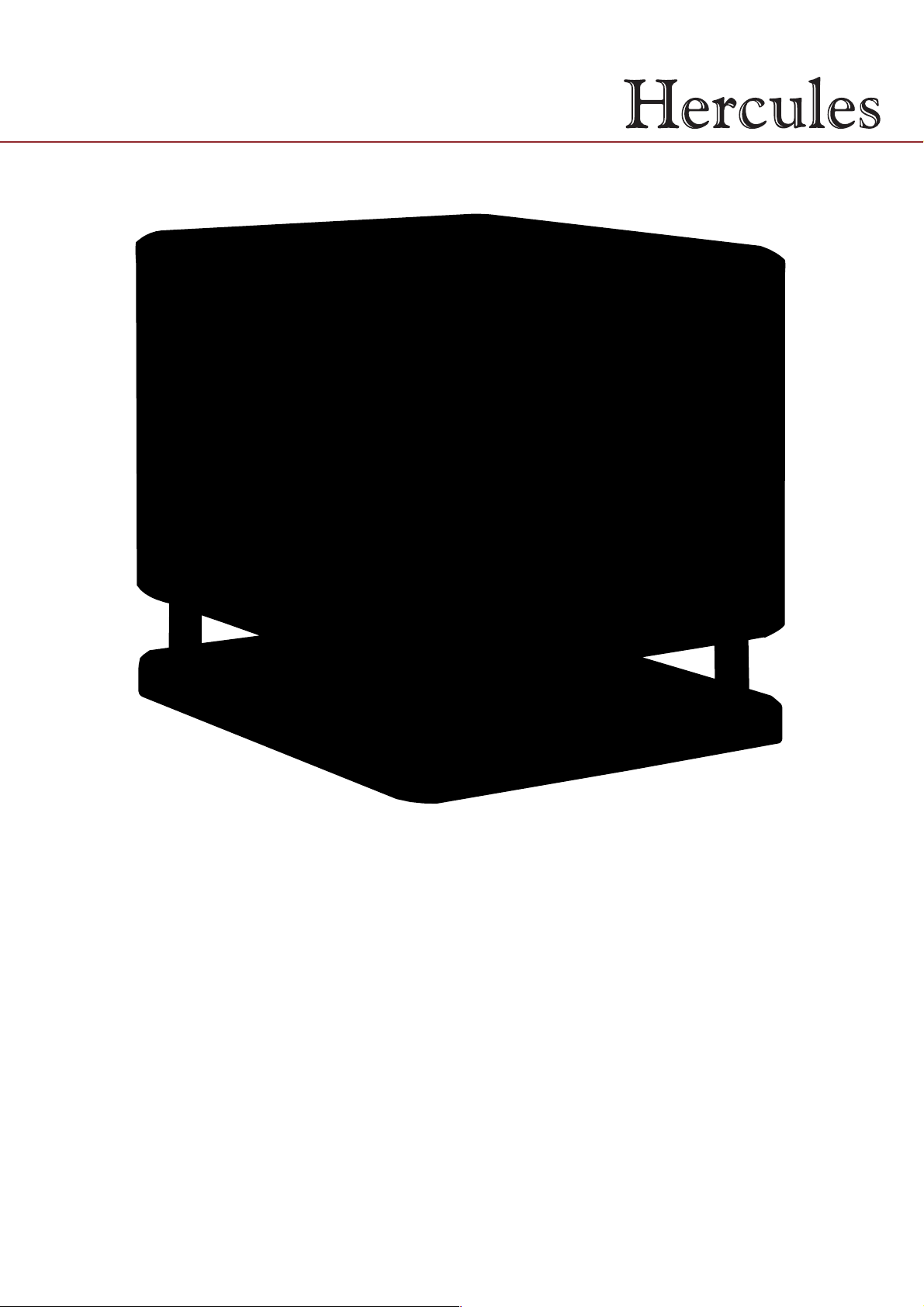
La necessità di riprodurre le basse frequenze a livelli sonori elevati e senza apprezzabile distorsione, ha spinto la ricerca audio
verso altoparlanti dalle caratteristiche esclusive, provvisti di
amplificatori di potenza dedicati. Sono nati così i subwoofer attivi ai quali affidare la riproduzione degli effetti speciali delle
colonne sonore dei filmati oppure le componenti a frequenza
bassissima dei brani musicali.
La Chario Loudspeakers ha affidato questo difficile compito al
sistema Constellation Hercules, un subwoofer attivo di esuberante potenza la cui sezione acustica adotta l’esclusiva tecnologia Bi-Exponential Vent (proprietaria).
I risultati non hanno bisogno di commenti…
The need for increased dynamics at very low frequencies has
forced the audio research toward exclusive loudspeakers driven
by dedicated power amplifiers. Active subwoofers is the name
given to these systems, whose job is the reproduction of special
effects accompanying any home-standard movie picture
soundtrack or the extremely low components of musical tones.
Chario Loudspeakers entrusted Constellation Hercules with this
difficult task, a powerful top class active subwoofer featuring the
proprietary Bi-Exponential Vent acoustic technology.
The achieved results don’t need further comments…
Page 14

Lo standard domestico per la riproduzione di programmi audio-video è stato chiamato Home Theater 5.1 e
necessita di sei sistemi di altoparlanti:
5 canali principali
Frontale sinistro (Front Left)
Frontale destro (Front Right)
Centrale (Center)
Posteriore sinistro (Rear Left)
Posteriore destro (Rear Right)
1 canale ausiliario
Subwoofer (Low Frequency Effects)
La teoria prevede che i cinque sistemi siano esattamen-
te uguali, in pratica si può agevolmente eludere questa
regola, consentendo diverse combinazioni. È così possibile allestire un sistema Home Theater partendo dai
sistemi frontali , cui associare sistemi posteriori identici oppure di costo e dimensioni inferiori ( lasciando
invariati sia il centrale Phoenix sia il subwoofer
Hercules).
Home standard for Audio/Video programmes has been
given the name Home Theater 5.1 and it calls for six
loudspeaker systems:
5 main channels
Front Left
Front Right
Center
Rear Left
Rear Right
1 ancillary channel
Subwoofer for low frequency effects
Even though theory would request five identical
systems, in practise it’s possible to avoid this constr aint
allowing different combinations. You can easily set up
your own Home Theater System starting from the front
loudspeakers. Rear loudspeakers can be the same or
less expensive and small sized, of course Phoenix
central speaker and Hercules subwoofer will be
unchanged.
Page 15

Page 16

chario srl via Bergamo, 44 I-23087 Merate (LC)
tel. +39-039 92 75 370 Fax +39-039 99 08 741 - www.chario.it E-mail: [email protected]
 Loading...