

Page 1

Page 2

Table of Contents
General Tool Safety Warnings......................................................................................................2
Work Area........................................................................................................................................2
Electrical Safety.............................................................................................................................2
Personal Safety..............................................................................................................................3
Power Tool Use and Care..........................................................................................................3
Battery Tool Use and Care........................................................................................................4
Additional Warnings Applicable for the Circular Saw...................................................4
Important Safety Instructions for Battery Charger.........................................................5
Important Safety Instructions for the Battery Pack.......................................................6
Symbols.................................................................................................................................................6
Product Information.........................................................................................................................8
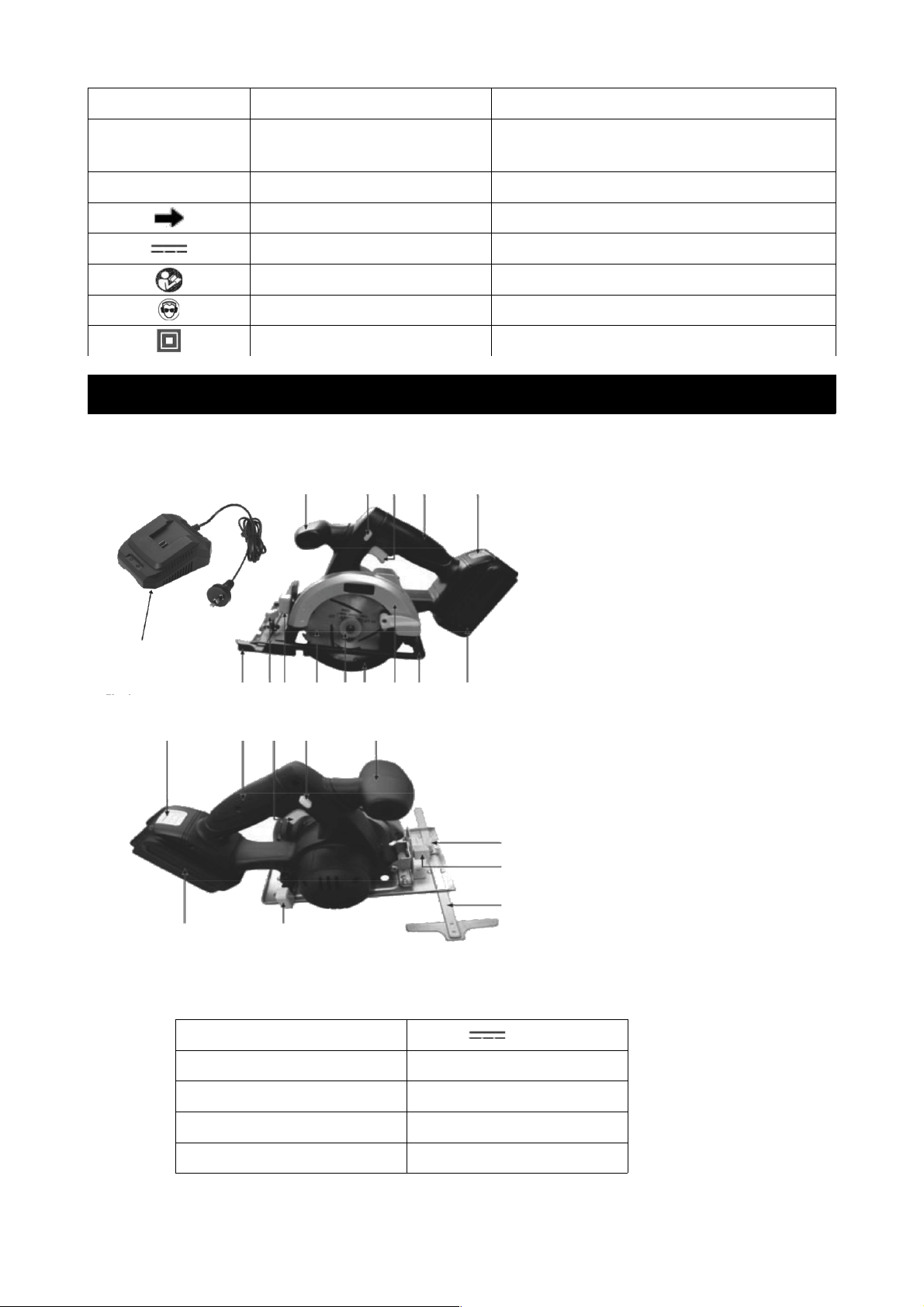
Layout................................................................................................................................................8
Technical Specifications.............................................................................................................8
Battery & Charger Technical Specifications......................................................................8
Charging Battery Pack.....................................................................................................................9
Circular Saw Operation...................................................................................................................9
Assembling and Removing the Saw Blade........................................................................9
Adjusting the Cutting Depth..................................................................................................10
Adjusting the Bevel Cutting...................................................................................................10
Lock-Off Button...........................................................................................................................10
Variable Speed Controlled Switch Trigger........................................................................11
General Cutting.............................................................................................................................11
Plunge Cutting...............................................................................................................................11
Maintenance and Servicing..........................................................................................................12
Troubleshooting................................................................................................................................12
1
Page 3

General Tool Safety Warnings
Save all warnings and instructions for future reference.
The term “power tool” refers to your mains operated (corded) power tool or
battery-operated (cordless) power tool.
Work Area
1. Keep your work area clean and well lit. Cluttered benches and dark areas
invite accidents.
2. Do not operate power tools in explosive atmospheres, such as in the
presence of flammable liquids, gases, or dust. Power tools create sparks
which may ignite the dust or fumes.
3. Keep bystanders and children away while operating a power tool.
Distractions can cause you to lose control.
Electrical Safety
1. Power tool plugs must match the outlet. Never modify the plug in any
way. Do not use any adapter plugs with earthed (grounded) power tools.
Unmodified plugs and matching outlets will reduce risk of electric shock.
2. Avoid body contact with grounded surfaces such as pipes, radiators,
ranges and refrigerators. There is an increased risk of electric shock if your
body is grounded.
3. Do not expose power tools to rain or wet conditions. Water entering a
power tool will increase the risk of electric shock.
4. Do not abuse the cord. Never use the cord to carry the tools or pull the
plug from an outlet. Keep cord away from heat, oil, sharp edges or moving
parts. Replace damaged cords immediately. Damaged cords increase the
risk of electric shock.
5. When operating a power tool outdoors, use an extension cord suitable for
outdoor use. Use of a cord suitable fir outdoor use reduces the risk of
electric shock.
6. If operating a power tool in a damp location is unavoidable, use a Ground
Fault Circuit Interrupter (GFCI) protected supply. Use of a GFCI reduces
the risk of electric shock.
Personal Safety
1. Stay alert, watch what you are doing and use common sense when
operating a power tool. Do not use tool while tired or under the influence
of drugs, alcohol, or medication. A moment of inattention while operating
power tools may result in serious personal injury.
2. Use personal protective equipment. Always wear eye protection. Safety
equipment such as dust mask, non-skid safety shoes, hard hat, or hearing
protection used for appropriate conditions will reduce personal injuries.
3. Prevent unintentional starting. Ensure the switch is in the off-position
before connecting to power source and/or battery pack, picking up or
carrying the tool. Carrying power tools with your finger on the switch or
2
Page 4

energizing power tools that have the switch on invites accidents.
4. Dress properly. Do not wear loose clothing or jewellery. Keep your hair,
clothing, and gloves away from moving parts. Loose clothes, jewelry, or
long hair can be caught in moving parts.
5. Remove adjusting keys or wrenches before turning the tool on. A wrench
or a key that is left attached to a rotating part of the tool may result in
personal injury.
6. Do not overreach. Keep proper footing and balance at all times. The
enables better control of the power tool in unexpected situations.
7. Only use safety equipment that has been approved by an appropriate
standards agency. Unapproved safety equipment may not provide
adequate protection. Eye protection must be ANSI-approved and
breathing protection must be NIOSH-approved for the specific hazards in
the work area.
Power Tool Use and Care
1. Do not force tool. Use the correct tool for your application. The correct
tool will do the job better and safer at the rate for which it is designed.
2. Do not use tool if switch does not turn it on or off. Any power tool that
cannot be controlled with the switch is dangerous and must be repaired.
3. Disconnect the plug from the power source and/or the battery pack from
the power tool before making any adjustments, changing accessories, or
storing the tool. Such preventive safety measures reduce risk of starting
the tool accidentally.
4. Store idle power tools out of the reach of children and other untrained
persons. Power tools are dangerous in the hands of untrained users.
5. Maintain tools with care. Check for misalignment or binding of moving
parts, breakage of parts and any other condition that may affect the
power tool’s operation. If damaged, have the power tool repaired before
use. Many accidents are caused by poorly maintained power tools.
6. Keep cutting tools sharp and clean. Properly maintained tools with sharp
cutting edges are less likely to bind and are easier to control.
7. Use only accessories that are recommended by the manufacturer for your
model. Accessories that may be suitable for one tool may become
hazardous when used on another tool.
Battery Tool Use and Care
1. Ensure the switch is in the off position before inserting battery pack. Insert
the battery pack into power tools that have the switch on invites
accidents.
2. Recharge only with the charger specified by the manufacturer. A charger
that is suitable for one type of battery pack may create a risk of fire when
used with another battery pack.
3. Use power tools only with specifically designated battery packs. Use of
any other battery packs may create a risk of injury and fire.
4. When battery pack is not in use, keep it away from other metal objects
like paper clips, coins, keys, nails, screws, or other small metal objects that
can make a connection from one terminal to another. Shorting the battery
3
Page 5

terminals together may cause burns or a fire.
5. Under abusive conditions, liquid may be ejected from the battery, avoid
contact. If contact accidentally occurs, flush with water. If liquid contacts
eyes, additionally seek medical help. Liquid ejected from the battery may
cause irritation or burns.
Additional Warnings Applicable for the Circular Saw
• Always wear safety goggles or eye protection when using this tool. Use a
dust mask or respirator for applications which generate dust. This saw
may throw up debris that could lodge in the eyes causing severe pain or
injury.
• Inspect the bolts and blade washers before each use. Damaged or
incorrect bolts or blade washers can cause injury.
• When using the Circular Saw, always maintain a firm grip on the tool
with both hands. Never put your hands or feet in the cutting area. Do not
grasp the tool or place your hands too close to the blade. Keep your
hands well away from the blade. Never reach underneath the tool while
the blade is in motion. Do not use your legs or feet to stabilize the work
piece.
• Keep the handle of the Cordless Circular Saw dry, clean and free from oil
and grease.
• Disconnect battery pack from tool and place the switch in the locked or
“OFF” position before making any assembly adjustments, changing
accessories, performing any inspection, maintenance or cleaning
procedures. Such preventive safety measures reduce the risk of starting
the tool accidentally which could cause serious personal injury.
• Be extra careful when cutting in high or hard-to-reach locations. Avoid
sawing overhead. Be on the lookout for hidden wires and falling debris.
• Do not use the Cordless Circular Saw if it has been damaged, left
outdoors in the rain, snow, wet or damp environments, or immersed in
liquid.
• Maintain labels and nameplates on the Cordless Circular Saw. These carry
important information. If unreadable or missing, contact All trade for a
replacement.
• Keep your body positioned to either side of the saw blade, but not in
line with the saw blade. KICKBACK could cause the saw to jump
backwards.
• Check lower guard for proper closing before each use. Do not operate
saw if lower guard does not move freely and close instantly. Never clamp
or tie the lower guard into the open position. If saw is accidentally
dropped, lower guard may be bent. Raise the lower guard with the
Retracting Lever and make sure it moves freely and does not touch the
blade or any other part, in all angles and depths of cut.
• Check the operation and condition of the lower guard spring. If the
guard and the spring are not operating properly, they must be serviced
before use. Lower guard may operate sluggishly due to damaged parts,
gummy deposits, or a buildup of debris.
• Lower guard should be retracted manually only for special cuts such as
4
Page 6

"Pocket Cuts" and "Compound Cuts". Raise the lower guard by
Retracting Lever. As soon as blade enters the material, lower guard must
be released. For all other sawing, the lower guard should operate
automatically.
• Always observe that the lower guard is covering the blade before
placing saw down on bench or floor. An unprotected, coasting blade will
cause the saw to walk backwards, cutting whatever is in its path. Be aware
of the time it takes for the blade to stop after switch is released.
• NEVER hold piece being cut in your hands or across your leg. It is
important to support the work properly to minimize body exposure, blade
binding, or loss of control.
• Hold tool by insulated gripping surfaces when performing an operation
where the cutting tool may contact hidden wiring. Contact with a “live”
wire will also make exposed metal parts of the tool "live" and shock the
operator.
• When ripping, always use a rip fence or straight edge guide. This
improves the accuracy of the cut and reduces the chance for blade
binding.
• Always use blades with correct size and shape (diamond vs. round) arbor
holes. Blades that do not match the mounting hardware of the saw will
run eccentrically, causing loss of control.
Important Safety Instructions for Battery Charger
• Before using battery charger, read all instructions and cautionary
markings on battery charger, battery pack, and product using battery.
• Use only the charger which accompanied your product or direct
replacement. Do not substitute any other charger. Use only same supplier
approved chargers with your product.
• Do not disassemble charger or operate the charger if it has received a
sharp blow, been dropped or otherwise damaged in any way. Incorrect
reassembly may result in a risk of electric shock, electrocution or fire.
• Do not recharge battery in damp or wet environment. Do not expose
charger to rain or snow. If battery case is cracked or otherwise damaged,
do not insert into charger. Battery short or fire may result.
• Charge only same supplier approved rechargeable batteries. See
Functional Description and Specifications. Other types of batteries may
burst causing personal injury and damage.
• Charge battery pack in temperatures above 0ºC and below 45ºC. Store
tool and battery pack in locations where temperatures will not exceed
49ºC. This is important to prevent serious damage to the battery cells.
• Pull by plug rather than cord when disconnecting charger or when
disconnecting cords using the daisy chain feature. This will reduce risk of
damage to electric plug and cord.
• Make sure that cord is located so that it will not be stepped on, tripped
over, or otherwise subjected to damage or stress.
• Do not use an extension cord unless it is absolutely necessary. Use of
improper extension cord could result in risk of fire, electric shock, or
electrocution.
5
Page 7

• Do not operate charger with damaged cords or plugs — have them
replaced immediately.
• Disconnect the charger from the outlet before attempting any cleaning.
This will reduce the risk of electric shock. Removing the battery pack will
not reduce this risk.
Important Safety Instructions for the Battery Pack
• Do not incinerate the battery pack even if it is severely damaged or is
completely worn out. The battery pack can explode in a fire. Toxic fumes
and materials are created when lithium ion battery packs are burned.
• Do not charge or use battery in explosive atmospheres, such as in the
presence of flammable liquids, gases or dust. Inserting or removing the
battery from the charger may ignite the dust or fumes.
• If battery contents come into contact with the skin, immediately wash
area with mild soap and water. If battery liquid gets into the eye, rinse
water over the open eye for 15 minutes or until irritation ceases. If medical
attention is needed, the battery electrolyte is composed of a mixture of
liquid organic carbonates and lithium salts.
• Contents of opened battery cells may cause respiratory irritation.
Provide fresh air. If symptoms persist, seek medical attention.
• Charge the battery packs only in the charger which accompanied your
product.
• DO NOT splash or immerse in water or other liquids. This may cause
premature cell failure.
• Do not store or use the tool and battery pack in locations where the
temperature may reach or exceed 40°C (such as outside sheds or metal
buildings in summer).
• When batteries are not in tool or charger, keep them away from metal
objects.
• DO NOT put batteries into fire or expose to high heat. They may explode.
Symbols
The following symbols or initials may be used on the tool. Please see below to
learn their meaning. Proper interpretation of these symbols will allow you to
operate the tool better and safer.
Symbol Name Designation/Explanation
V Volts Voltage
A Amperes Current
Hz Hertz Frequency (cycles per second)
Kg Kilograms Weight
Min Minutes Time
s Seconds Time
Ø Diameter Size of drill bits, grinding wheel etc..
6
Page 8
no No load speed Rotational speed at no load
…/min Revolutions or
reciprocation per minute
Revolutions, strokes, surface speed,
orbits etc.. per minute
0 Off position Zero speed, zero torque...
Arrow Action in the direction of the arrow
Direct current Type or a characteristic of current
Read manual symbol Alerts user to refer to the manual
Wear eye protection Alerts user to wear eye protection
Class II contruction Double insulated construction tools
Product Information
Layout
1. Front Handle
2. Lock-Off Button
3. Switch Trigger
4. Main Handle
5. Battery Release Button
6. Battery Pack
7. Base Plate
8. Upper Guard
9. Lower Guard
10. Blade Washer
11. Saw Blade
12. Bevel Adjustment Knob
13. Lock Knob for Rip Guide
14. Rip Guide
15. Depth Adjustment Knob
16. Battery Charger
Technical Specifications
Rated Voltage 18V
No Load Speed 0-3800/min
Blade Size 136mm
Depth of Cut 38mm at 90°
Bevel Range 0° - 50°
7
1
2
3
4
5
16
6
7
89
10
11
1213
14
1
2
3
4
5
6
15
13
12
14
Page 9
Battery & Charger Technical Specifications
Battery Pack 18V 1300mAh Li-ion
Battery Pack
Charging Time 1 hour
Charger Adapter Input: 100-240V 50-60Hz
Output: 21V 2A
Charging Battery Pack
Place battery pack and charger on flat non-flammable surfaces and away from
flammable materials when re-charging battery pack.
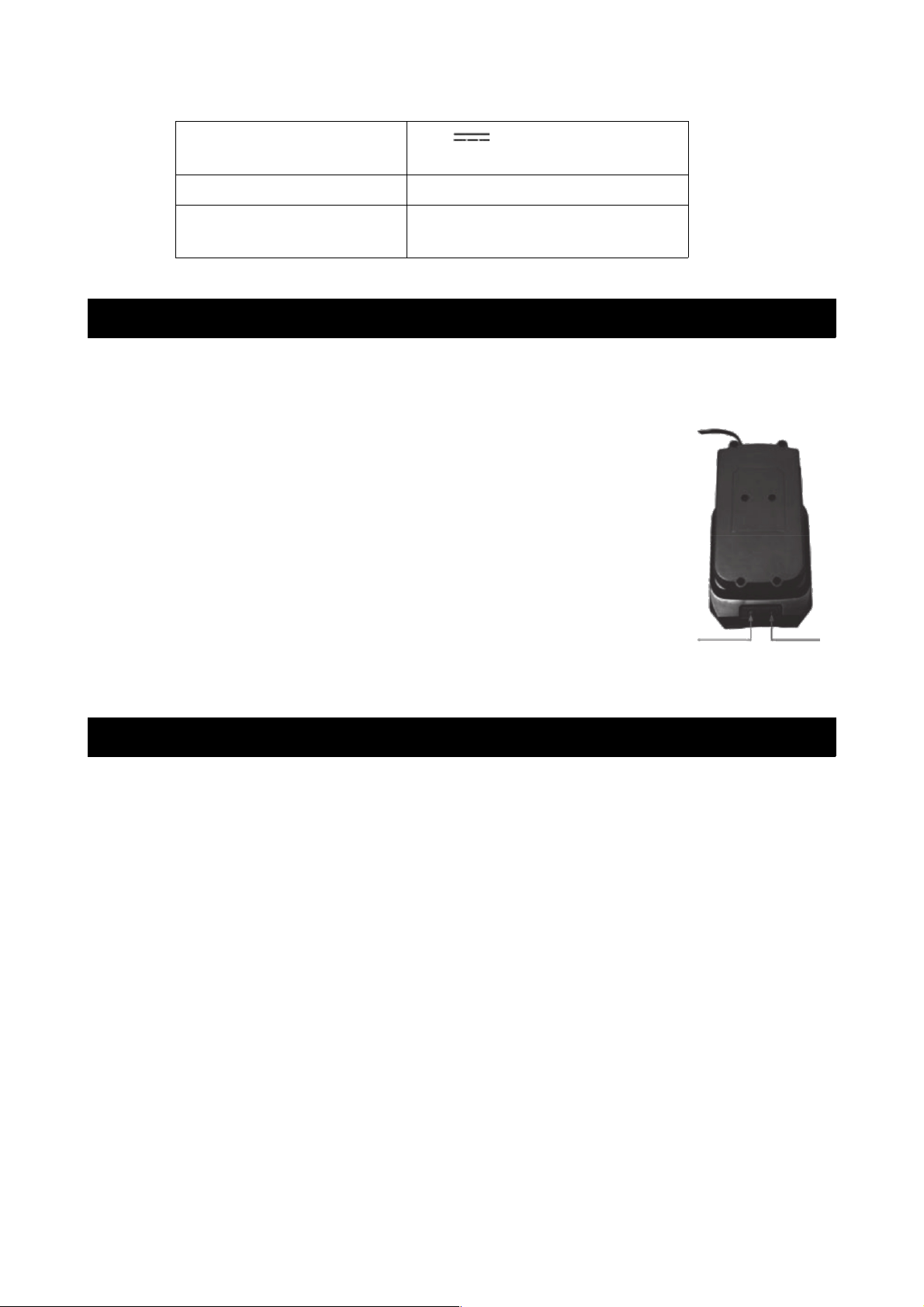
1. Remove the battery pack (6) from the handle, press the
battery release button (5) downwards to do so.
2. Check that your mains voltage is the same as that marked
on the rating plate of the battery.
3. Plug the mains plug of the charger (16) into the mains
socket outlet, turn on the power, the green LED will
illuminate.
4. Push the battery pack onto the battery charger. The
green LED extinguishes and the red LED will illuminate,
which indicates that the battery pack is being charged.
5. When the charging period is completed after approx 1
hour, the green LED will illuminate and the red LED will extinguish.
Circular Saw Operation
• Always wear eye protection while operating this power tool.
• Always remove battery pack before assembling and removing blade.
Failure to remove battery pack from saw could result in accidental
starting, causing possible serious personal injury.
• A 5-3/8 inch blade is the maximum blade capacity of your saw. Never
use a blade that is too thick to allow outer blade washer to engage with
the flats on the spindle. Larger blades will come in contact with the
blade guard, while thicker blades will prevent blade screw from securing
blade on spindle. Either of these situations could result in a serious
accident.
Kogan.com accepts no liability for accidents caused through misuse or not
following the instructions supplied here. Usage of power tools carries the risk
of property damage, serious injury or even death.
8
Green
Red
Page 10
Assembling and Removing the Saw Blade
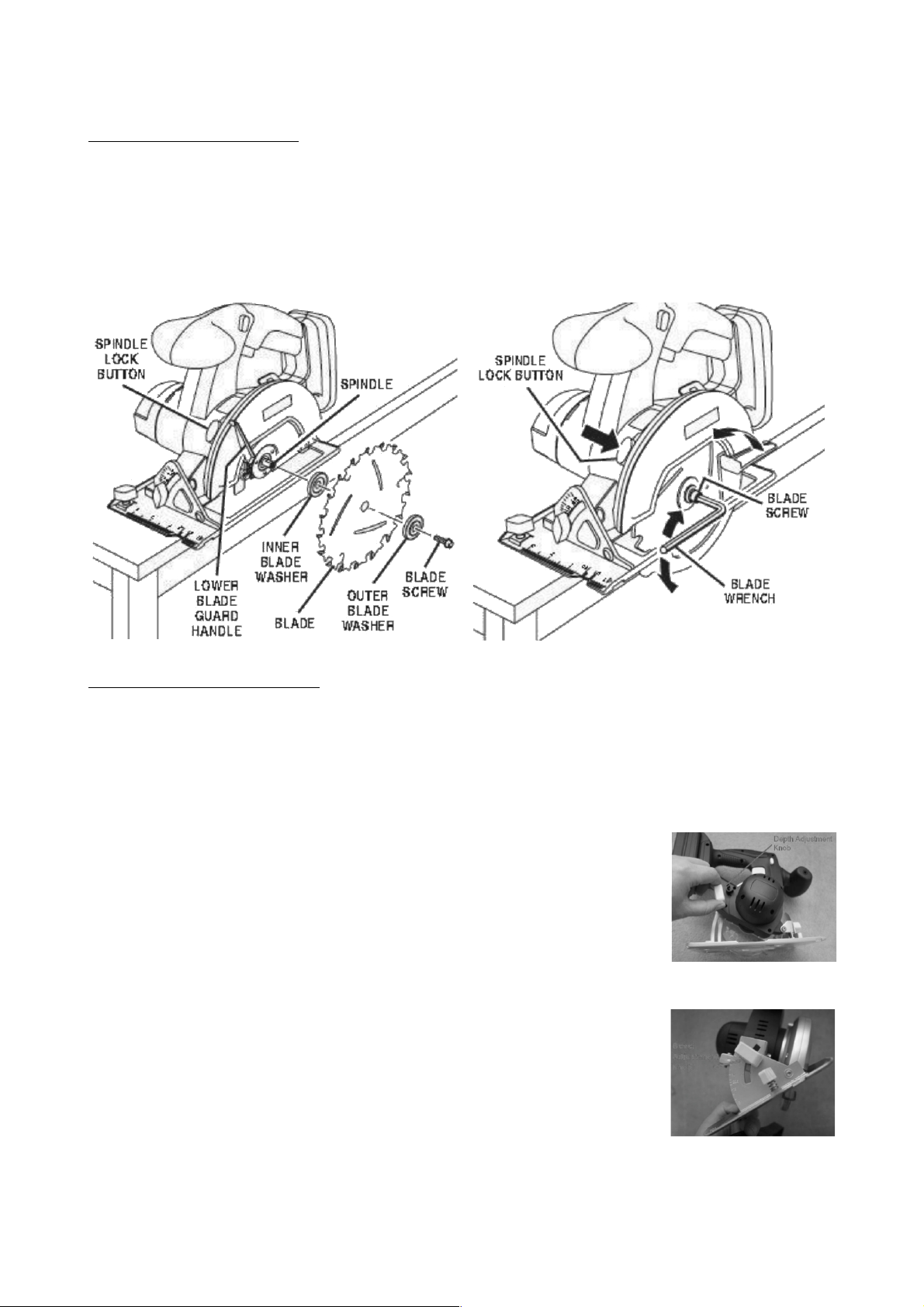
Assembling Saw Blade
1. Remove battery pack from saw.
2. Retract the lower guard (9).
3. Slip the saw blade onto the inner blade washer.
4. Replace the outer blade washer.
5. Depress the spindle lock button, then replace the blade screw. Turn the
blade screw counter-clockwise with the blade wrench.
Removing the Saw Blade
1. Remove the battery pack from the saw.
2. Depress the spindle lock button, then turn the blade screw clockwise to
loosen with the blade wrench.
3. Remove the outer blade washer then the saw blade.
Adjusting the Cutting Depth
1. Remove the battery pack.
2. Hold the saw firmly and loosen the depth adjustment
knob (15), by turning it counter-clockwise.
3. Move the baseplate to obtain the desired depth of cut.
4. Tighten the depth adjustment knob securely by turning
is clockwise before operating the saw.
Adjusting the Bevel Cutting
1. Remove the battery pack.
2. Loosen the bevel adjustment knob (12) by turning it
counter-clockwise.
3. Adjust the bevel to set the cutting angle in the range of
0° to 50°, with the angle scale showing the current
angle set in degrees.
4. Tighten the bevel adjustment knob securely by turning clockwise.
9
Page 11

Lock-Off Button
Your saw is equipped with a lock-off button (2) which reduces the possibility of
accidental starting.
The lock-off button is located on the handle above the switch trigger. You must
depress the lock-off button in order to pull the switch trigger.
The lock resets each time the trigger is released.
Note: You can depress the lock-off button from either the left or right side.
Variable Speed Controlled Switch Trigger
This tool has a variable speed switch (3) that delivers higher speed with
increased trigger pressure. Speed is controlled by the pressure you apply to the
trigger.
To turn your saw ON, depress the lock-off button and pull switch trigger down.
Release switch trigger to turn your saw OFF.
General Cutting
• Before cutting any type of material, be sure it is firmly anchored or
clamped to prevent slipping. Always hold the saw in front of you and
away from your body. Keep your hands and feet well away from the work
piece.
• Never feed the blade into the work piece until the blade is at full speed. If
the blade is not at full speed, the saw may kick back causing serious
personal injury.
• Put on eye protection.
• Clear the saw of any foreign material.
• Make sure the work piece is held securely in place. Hold smaller pieces in a
vice or attach to the workbench with clamps.
• Mark out the line to be cut so it is easily visible.
• Always use the right blade for the material.
• Make sure all bolts, screws and locking levers are secure before starting
tool.
• Depress the lock-off button and press the switch trigger down to start the
saw.
• Set the baseplate against the work piece.
• When the blade reaches full speed, slowly feed the blade into the work
piece.
• After you complete your cut release the trigger and allow the blade to
come to a complete stop.
Plunge Cutting
1. Mark out the line to cut so it is easily visible.
2. Start inside the area to be cut.
3. Set the baseplate against the work piece at an angle.
4. Lift the lower blade guard with the handle.
5. Depress the lock-off button and press the switch trigger down to start the
saw.
10
Page 12

6. When the blade reaches full speed, slowly feed the blade into the work
piece.
7. After you complete your cut, release the trigger and allow the blade to
come to a complete stop. After the blade has stopped, you can remove it
from the work piece.
Maintenance and Servicing
To prevent serious injury or death from accidental operation, turn the Power
Switch of the tool to its “OFF” position and disconnect battery pack from tool
before performing any inspection, maintenance, or cleaning procedures.
• Clean out dust and debris from vents and electrical contacts by blowing
with compressed air. Always wear safety goggles when cleaning tools
with compressed air.
• Keep tool handles clean, dry and free of oil or grease.
• Use only mild soap and a damp cloth to clean the tool, keeping away from
all electrical contacts.
Note: Certain cleaning agents and solvents are harmful to plastics and other
insulated parts. Some of these include gasoline, turpentine, lacquer thinner,
paint thinner, chlorinated cleaning solvents, ammonia and household detergents
containing ammonia.
Tool maintenance must only be performed by qualified repair personnel. If the
tool is not working properly, do not attempt to repair it yourself. Contact the
Kogan customer support team.
11
Page 13

Troubleshooting
Problem Possible Causes Likely Solutions
Tool will not start.
• Battery pack not
installed properly.
• Battery pack not
charged.
• Check battery pack
installation.
• Check battery pack
charging requirements.
Battery pack will
not charge.
• Battery pack not
inserted into charger.
• Charger not plugged
in.
• Surrounding air
temperature.
• Battery pack too hot
or too cold.
• Insert battery pack
into charger until red
LED appears.
• Plug charger into a
working outlet. Refer
to “Important
Charging Notes” for
more details.
• If chargers are daisy
chained together
check all connections.
• Check current at
receptacle by plugging
in a lamp or other
appliance.
• Check to see if
receptacle is
connected to a light
switch which turns
power off when you
turn out the lights.
• Move charger and
battery to a
surrounding air
temperature of above
4.5°C or below 40.5°C.
• The charger will not
charge a battery pack
if the cell temperature
is below approximately
0°C or above 60°C.
• The battery pack
should be left in the
charger and the
charger will begin to
charge automatically
when the cell
temperature warms up
or cools down.
12
 Loading...