

Page 1

CHRONO
FS00
Instruction book pag. 1 • Mode d'emploi pag. 13
Gebrauchsanleitung pag. 25 • Manuale di funzionamento pag. 37
Manual de instrucciones pag. 49
Page 2
I
I
I
I
I
I
I
I
45 15
I
I
I
9
I
I
I
I
I
I
I
I
I
I
I
I
I
I
12
45 15
I
6
I
I
I
I
I
I
I
I
I
I
24
18
I
6
12
3
60
30
I
22
I
I
I
I
I
I
I
I
I
I
I
I
(1) (2)
I
I
I
I
I
I
I
I
60
30
I
I
Page 3

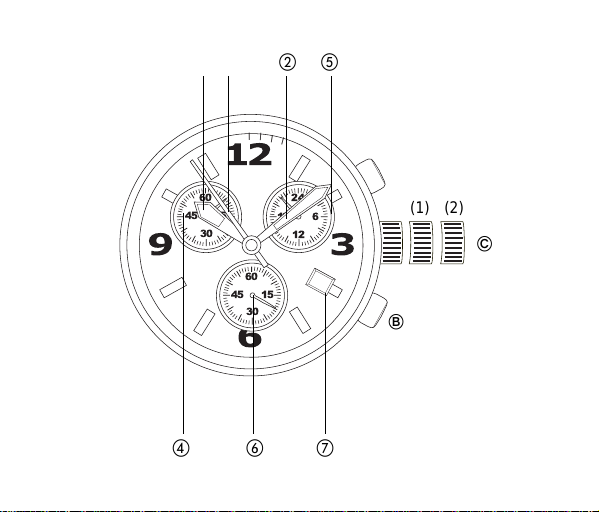
When reading this instruction booklet, keep the watch diagram on the left
unfolded and in full view. The symbols (A, B, etc.) on the diagram are
those referred to in the section describing the operating instructions.
Pendant la lecture de ce mode d'emploi, gardez le schéma d'illustration
de la montre ci-contre ouvert et bien en vue. Les symboles (A, B, etc.)
utilisés dans les différents chapitres du mode d'emploi correspondent à
ceux indiqués sur ce schéma.
Zur Lektüre dieser Gebrauchsanleitung sollten Sie die nebenstehend
gezeigte Übersichtsdarstellung der Uhr ausklappen und im Blick
behalten. Die in den einzelnen Abschnitten der Gebrauchsanleitung
verwendeten Zeichen (A, B, usw.) entsprechen den Kennzeichnungen in
dieser Übersicht.
Durante la lettura di questo manuale di istruzioni, tenere lo schema
illustrativo dell’orologio a sinistra aperto e in vista. I simboli (A, B, ecc.)
usati nelle sezioni delle istruzioni sul funzionamento corrispondono a
quelli indicati in questo schema.
Mientras lee este manual de instrucciones, mantenga el esquema
ilustrativo del reloj aquí presentado al lado izquierdo, abierto y bien
visible. Los símbolos (A, B, etc.) utilizados en las secciones de
instrucciones sobre el funcionamiento, corresponden a los que se
utilizan en este esquema.
Page 4

Thank you very much for purchasing a BREIL WATCH. To ensure its correct use, please
read these instructions carefully.
In order to be able to make full use of the guarantee service (subject to the guarantee
terms), please ensure that the Breil international guarantee card is supplied with the
watch at the time of purchase.
Nous vous remercions de la préférence que vous nous avez accordée en achetant une
montre BREIL. En vue d'une utilisation correcte de celle-ci, lire attentivement les
instructions contenues dans ce livret.
Lors de l'achat, contrôlez que la montre soit accompagnée de la garantie qui devra être
présentée pour obtenir les prestations qui y sont décrites.
Wir danken Ihnen für das Vertrauen, daß Sie uns mit dem Kauf einer BREIL Uhr
erwiesen haben. Damit Sie Ihre Uhr immer einwandfrei gebrauchen können, möchten wir
Sie bitten, die in dieser Gebrauchsanleitung enthaltenen Anweisungen gewissenhaft zu
lesen.
Beim Kauf sollten Sie kontrollieren, ob Ihnen zusammen mit der Uhr auch die
Garantiekarte ausgehändigt wurde, denn diese Karte müssen Sie vorlegen, um die darin
genannten Leistungen in Anspruch nehmen zu können.
Vi ringraziamo per la preferenza accordataci con l’acquisto di un orologio BREIL.
Per un corretto uso dello stesso, Vi preghiamo leggere attentamente le istruzioni
contenute in questo libretto.
Al momento dell’acquisto controllate che insieme all’orologio Vi venga fornita anche la
garanzia, da presentare per ottenere le prestazioni in essa descritte.
Le agradecemos su preferencia por un reloj BREIL. Para poder utilizar correctamente el
reloj, le rogamos leer atentamente las instrucciones contenidas en este folleto.
Al comprarlo, controle que junto al reloj le sea entregada la garantía que debe ser
presentada para obtener los servicios que en la misma se describen.
Page 5
CONTENTS
A
MAIN COMPONENTS . . . . . . . . . . . . . . . . . . . . . . . . . . . . . . . . . .2
B
SETTING THE TIME AND DATE . . . . . . . . . . . . . . . . . . . . . . . . . .3
C
USING THE CHRONOGRAPH . . . . . . . . . . . . . . . . . . . . . . . . . . . .4
D
CHRONOGRAPH RESET
(INCL. AFTER REPLACING BATTERY) . . . . . . . . . . . . . . . . . . . .5
E
TACHYMETER . . . . . . . . . . . . . . . . . . . . . . . . . . . . . . . . . . . . . . . .6
F
TELEMETER . . . . . . . . . . . . . . . . . . . . . . . . . . . . . . . . . . . . . . . . .7
G
PRECAUTIONS AND USEFUL INFORMATION . . . . . . . . . . . . . . .8
H
TECHNICAL DATA . . . . . . . . . . . . . . . . . . . . . . . . . . . . . . . . . . . .12
GB
Page 6

A
MAIN COMPONENTS
Hour hand Button
Minute hand Button
Chronograph second hand Crown
Chronograph minute hand
24-hour hand
Continuous second hand
Calendar
2
Page 7

B
SETTING THE TIME AND DATE
To set the time:
1. Pull the crown out to the 2nd position so that the second hand stops at “0” position.
2. Turn the crown to set the hour and minute hands.
3. After the date has been set, push the crown back to the normal position.
To set the date:
1. Pull the crown out to the 1st position (1).
2. Turn the crown by clockwise to set the date.
* If the date is set between the hours of around 9:00 PM and 1:00 AM, the date may
not change on the following day.
3. After the date has been set, push the crown back to the normal position.
3
Page 8
C
USING THE CHRONOGRAPH
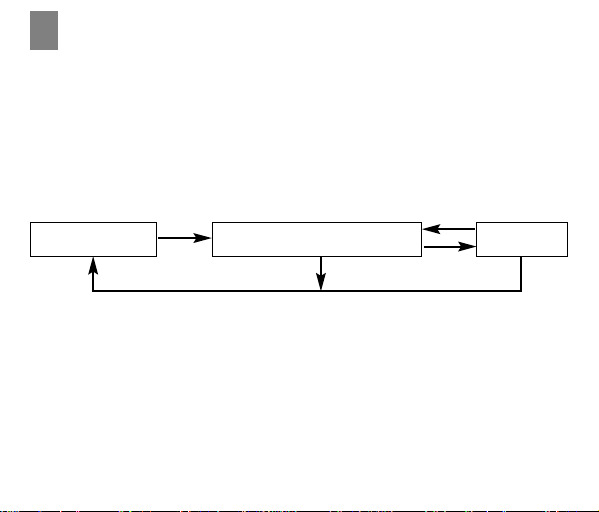
• This chronograph is able to measure and display time in 1/1 second united up to
maxinum of 1 hour.
Measuring time with the chronograph
1. The chronograph can be started and stopped each time button is pressed.
2. To reset, press button and the chronograph second and minute hands return to
their “0” positions.
RESET TIME MEASUREMENT STOP
4
Page 9

D
CHRONOGRAPH RESET
(INCL. AFTER REPLACING BATTERY)
This procedure shoud be performed when the chronograph second hand do not return
to the 0 second position after the chronograph has been reset, and including after the
battery has been replaced.
1. Pull the crown out to the 2nd position (2).
2. Press button to set the chronograph second hand to the “0” position.
3. The chronograph hands can be advanced rapidly by continuously pressing
button .
4. Once the hands have been zeroed, reset the time and return the crown to its normal
position.
* Do not return crown to normal position while chronograph second hand returns to
12:00 (“0” position).
Hand stops on the way when crown are returned to normal position and these
positions are recognized as 12:00 (“0” position).
5
Page 10
E
TACHYMETER*
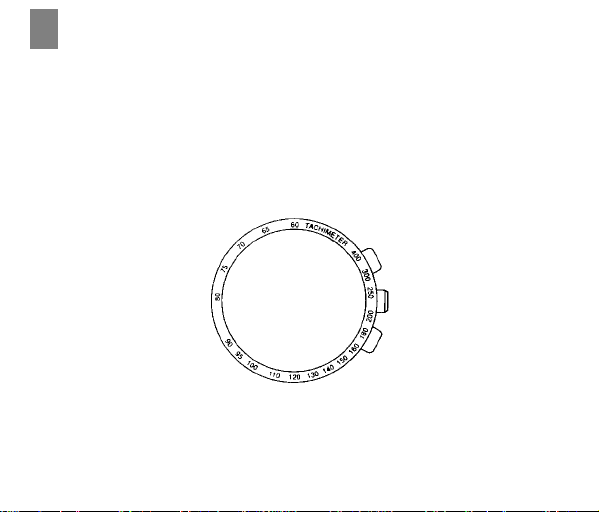
The Tachymeter is the device which measures the speed of an automobile. Knowing is
how many seconds the car covers a distance of 1km, the meter can measure the
approximate average speed per hour during a journey (up to the maxinum measurable
range of tachymeter is 60 seconds).
If the chronograph is started at the same time as measurement, and stopped after 1km,
the average speed per hour can be determined according to the position of the second
hand. If the car covers the distance of 1km in 45 seconds, the average hourly speed
during the journey will be about 80 km.
* Not available on all models.
6
Page 11
F
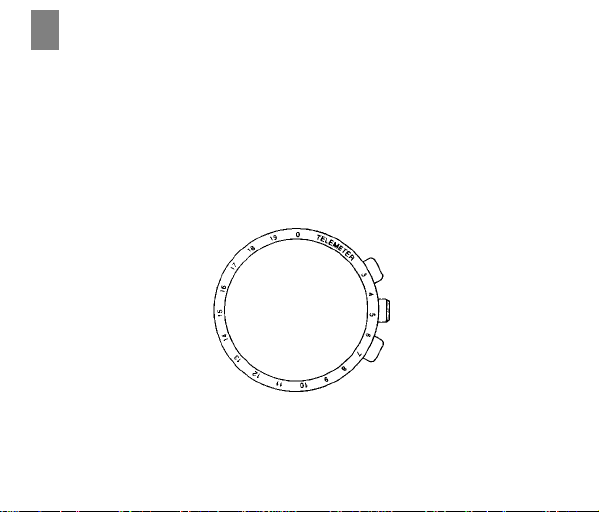
TELEMETER*
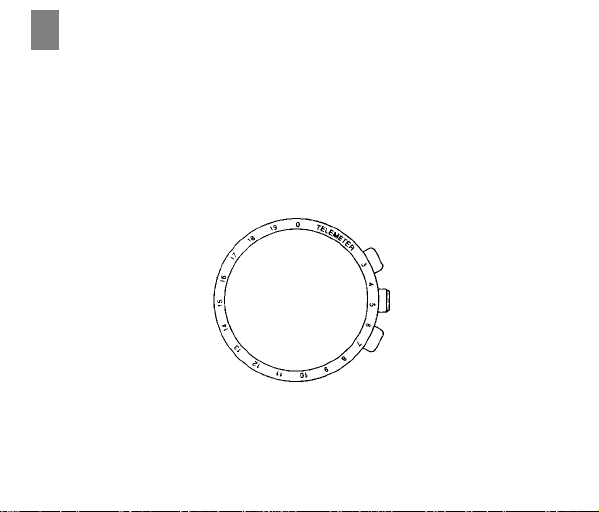
The Telemeter is a distance indicator wich allows distance to be calculated on the basis
of the speed of sound. It is useful, therefore, for aviation, navy, army and artillery
purposes. It can also measure how far away a thunderstorm is.
The hand is started the second a flash, smoke or lightning is seen and stopped when
the actual sound is heard. The distance, from 1 to 20 kilometres, between the observer
and the explosion or storm is read from the telemetry scale.
* Not available on all models.
7
Page 12
O
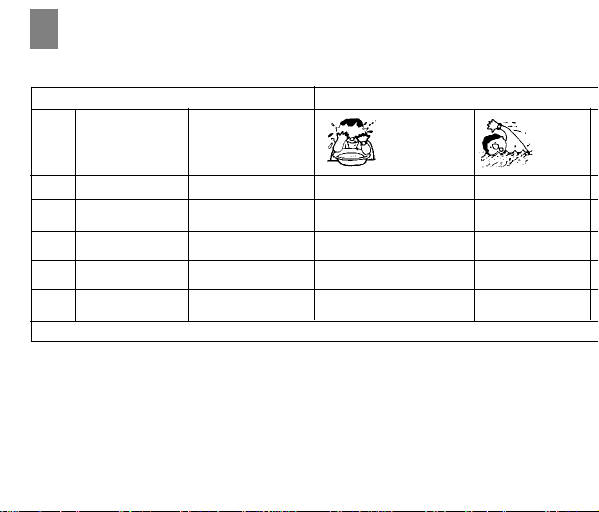
PRECAUTIONS AND USEFUL INFORMATION
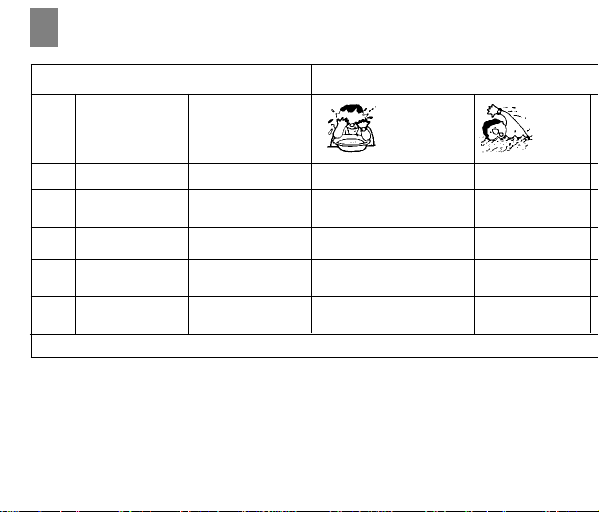
Indication Use
Dial
Degree of
water
resistance
A
B
C
D
E
“WATER RESISTANT” may sometimes be abbreviated to “WATER RESIST”
-
WATER RESISTANT
30M (3ATM)
WATER RESISTANT
50M (5ATM)
WATER RESISTANT
100M (10ATM)
WATER RESISTANT
200M (20ATM) or more
Case
-
WATER RESISTANT
WATER RESISTANT
WATER RESISTANT
WATER RESISTANT
Spray, sweat, light
rain, washing, etc.
NO
YES
YES
YES
YES
Swimming,
etc.
NO
NO
YES
YES
YES
- In order to prevent water coming into contact with the internal mechanism, never
pull the crown out when the watch is wet.
- If any watches designed for sportswear or use in water come into contact with salt
water or heavy sweating, they should be rinsed in fresh water and dried
thoroughly.
8
Page 13
in water
Skin-diving
Scuba diving
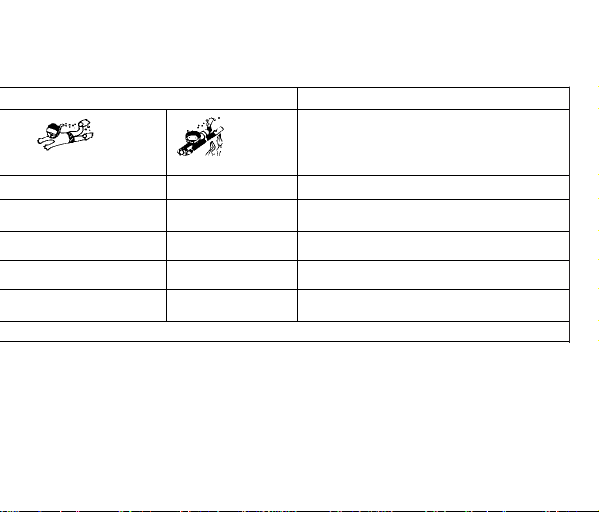
Water-resistance
characteristics
NO
NO
NO
YES
YES
* Always keep the crown in its normal position. * Full tighten crown screw lock.
NO
NO
NO
NO
YES
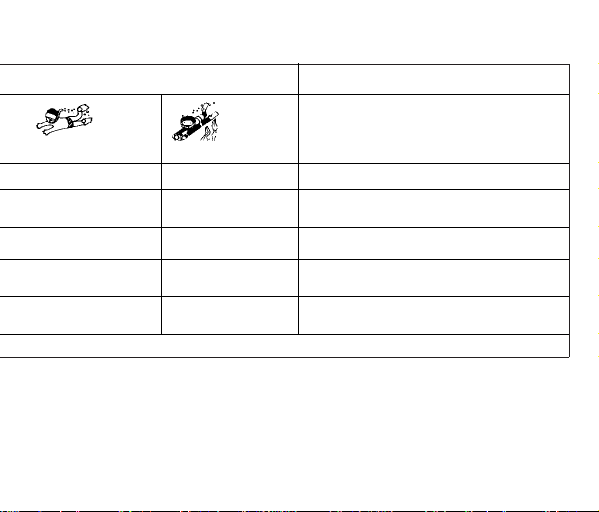
Not water resistant. Must be kept away from water and
moisture
Average water resistance. Can withstand spray, sweat, light
rain, washing, etc. during daily use
Can be worn while swimming but not diving
Suitable for skin-diving.
- Contact with water may cause a deterioration in the quality of some leather straps.
- As internal parts of the watch can retain moisture, when the outside temperature is
lower than the inside, the watch glass may mist-up.
This phenomenon is purely temporary and should not create any problems.
However, if it persists for any length of time, the watch should be checked by the
shop where it was purchased or by the nearest Authorised Service Centre.
9
Page 14

Temperature
Do not leave the watch exposed to direct sunlight or temperature extremes for long
periods of time.
Long exposure, in fact, may adversely affect the operation of the watch and actually
shorten battery life, causing it to gain or lose time and affect its other functions.
Impact
This watch can withstand normal everyday impacts and shocks and those normally
imparted by non-contact sports. Serious damage, however, may result if the watch is
dropped or subjected to severe shock.
Magnetic fields
This watch is antimagnetic up to 60 gauss, and is therefore not affected by magnetic
fields produced by normal domestic appliances. If used near strong magnetic fields,
its operation may be temporarily affected.
Static electricity
The integrated circuits present inside the watch are sensitive to static electricity. If the
watch is exposed to intense electrical fields, the time display may temporarily lose
some of its accuracy.
Chemicals and gases
Avoid wearing the watch in the presence of strong gases or chemical substances. Parts
of the watch may discolour, dissolve or even break if brought into contact with benzol or
petroleum based products such as solvents, thinners, detergent, adhesives etc.
Pay special attention to avoiding contact with chemicals.
10
Page 15

The watch case and strap may discolour if they come into contact with mercury from
a broken thermometer or other equipment.
Keeping the watch clean
Use an absorbent soft cloth to clean off any dirt or damp from the watch glass.
Wearing the watch when the strap or back of the case is dirty can cause skin
irritation.
Cleaning the watch strap:
• Metal bands: use a toothbrush and soapy warm to wash the dirt off.
• Plastic or rubber straps: wash with water. Do not use solvents.
• Leather straps: gently rub the face of the strap using a soft dry cloth. Clean the
opposite side with a cloth and alcohol.
Periodic inspection
In order to guarantee long trouble-free operation, it is advisable to have the watch
checked by an Authorised Assistance Centre once every two years.
Keep batteries out of the reach of children
If a battery is accidentally swallowed, consult a doctor immediately
11
Page 16

H
TECHNICAL DATA
Time standard
Type of quartz: Tuning fork type quartz crystal
Frequency: 32.768Hz
Accuracy: +/-20 s/month worn under normal circumstances
Function
CAL.FS00: Chronograph 1/1 sec. basis (Up to 59 min. 59 sec.)
Powercell Saving Reset Mechanism (PSRM)
Over-loading Compensation Device (OLCD)
Digital Frequency Control (DFC) for time adjustment
* In order to improve the product, the technical specifications may be modified without
prior notice.
12
Page 17
INDEX
A
PIECES PRINCIPALES . . . . . . . . . . . . . . . . . . . . . . . . . . . . . . . .14
B
REGLAGE DE L’HEURE ET DE LA DATE . . . . . . . . . . . . . . . . . .15
C
UTILISATION DU CHRONOGRAPHE . . . . . . . . . . . . . . . . . . . . .16
D
REMISE A ZERO DU CHRONOGRAPHE
(APRES LE REMPLACEMENT DE LA PILE) . . . . . . . . . . . . . . . .17
E
TACHYMETRE . . . . . . . . . . . . . . . . . . . . . . . . . . . . . . . . . . . . . . .18
F
TELEMETRE . . . . . . . . . . . . . . . . . . . . . . . . . . . . . . . . . . . . . . . .19
G
PRECAUTIONS D’UTILISATION ET INFORMATIONS UTILES . .20
H
DONNÉES TECHNIQUES . . . . . . . . . . . . . . . . . . . . . . . . . . . . . .24
F
Page 18

A
PIECES PRINCIPALES
Aiguille des heures Bouton
Aiguille des minutes Bouton
Aiguille des secondes du chronographe Couronne
Aiguille des minutes du chronographe
Aiguille des 24 heures
Aiguille des secondes continues
Calendrier
14
Page 19

B
REGLAGE DE L’HEURE ET DE LA DATE
Pour régler l’heure:
1. Extraire la couronne jusqu’à la position (2) pour arrêter l’aiguille des secondes en
position zéro “0”.
2. Faire pivoter la couronne pour régler les aiguilles des heures et des minutes.
3. Après avoir réglé la date, remettre la couronne à sa position normale.
Pour régler la date:
1. Extraire la couronne jusqu’à la position (1).
2. Faire pivoter la couronne dans le sens horaire pour régler la date.
* Si l’heure est réglée sur une heure comprise entre 21 heures et 1 heure du matin, la
date pourrait ne pas changer le jour suivant.
3. Après avoir réglé la date, remettre la couronne à sa position normale.
15
Page 20
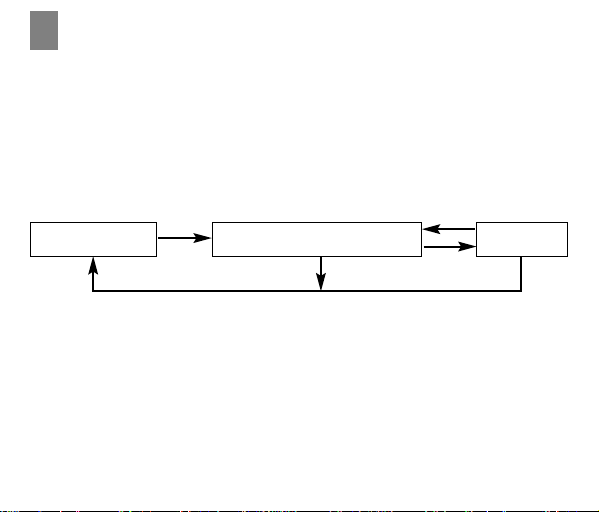
C
UTILISATION DU CHRONOGRAPHE
• Ce chronographe peut mesurer et visualiser cumulativement le temps de seconde
en seconde jusqu’à un maximum d’une heure.
Mesure du temps avec le chronographe
1. Le chronographe peut être activé et arrêté en pressant .
2. Pour la remise à zéro, c’est-à-dire pour remettre les aiguilles des minutes et des
secondes en position “0”, appuyez sur .
MISE A ZERO MESURE DU TEMPS ARRET
16
Page 21

D
REMISE A ZERO DU CHRONOGRAPHE
(APRES LE REMPLACEMENT DE LA PILE)
Appliquer la procédure illustrée ci-dessous aussi bien lorsque l’aiguille des secondes ne
reprend pas la position “0” après la mise à zéro du chronographe qu’après le
remplacement de la pile.
1. Extraire la couronne jusqu’à la seconde position (2).
2. Presser pour régler l’aiguille des secondes du chronographe sur “0”.
3. En tenant enfoncée la touche , les aiguilles du chronographe avancent
rapidement.
4. Après avoir porté les aiguilles en position “0”, régler à nouveau l’heure et remettre la
couronne à sa position normale.
* Ne pas remettre la couronne à sa position normale lorsque les aiguilles des secondes
du chronographe retournent sur 12:00 (position “0”), étant donné qu’elles
s’arrêteraient à l’endroit où elles se trouvent et leur point d’arrêt serait identifié à 12:00
(position “0”).
17
Page 22
E
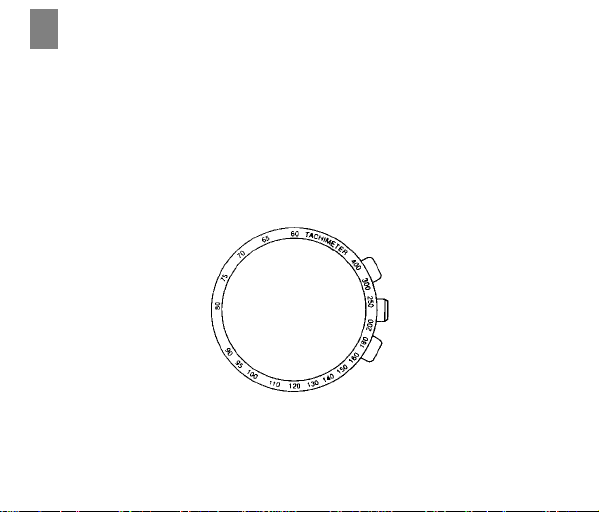
TACHYMETRE*
Le Tachymètre est une fonction qui mesure la vitesse d’un véhicule automobile. En
mesurant le nombre de secondes nécessaire à la voiture pour parcourir 1 km, l’échelle
du tachymètre peut indiquer la vitesse moyenne approximative à l’heure durant un
voyage (si ce tronçon d’1 km est parcouru en un maximum de 60 secondes).
Si le chronographe est activé au début de la mesure du tronçon et arrêté après 1 km, la
vitesse moyenne à l’heure peut être déterminée à l’aide de la position de l’aiguille des
secondes du chronographe. Si 1 km est parcouru en 45 secondes, la vitesse moyenne
sera d’environ 80 km/heure.
* Fonction disponible seulement sur certain modèles.
18
Page 23
F
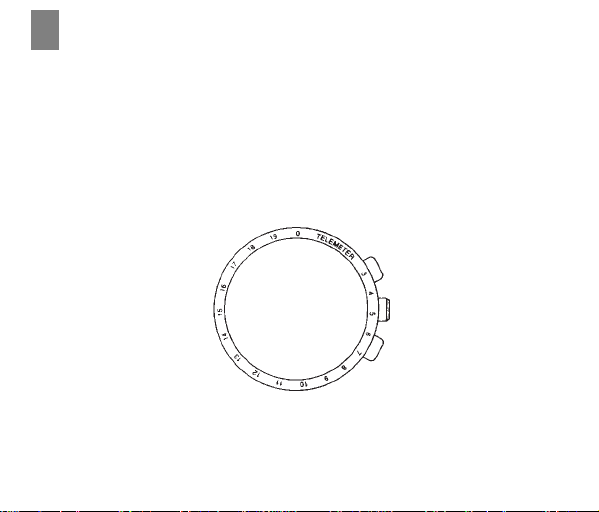
TELEMETRE*
Le Télémètre, indicateur des distances, permet le calcul des distances en fonction de
la vitesse du son. Il est donc utile dans l’aviation, dans la marine, dans l’armée et dans
l’artillerie. Il indique également à quelle distance se trouve un orage. Si l’on fait partir
l’aiguille au moment où l’on aperçoit une flamme, de la fumée, ou un éclair et si on
l’arrête au moment où l’on entend le son, on aura l’indication de la distance entre le lieu
où a eu lieu l’explosion ou bien où est tombée la foudre et le point d’observation. Cette
lecture sera effectuée sur l’échelle télémétrique spéciale qui porte des indications de
1 à 20 km.
* Fonction disponible seulement sur certain modèles.
19
Page 24
G
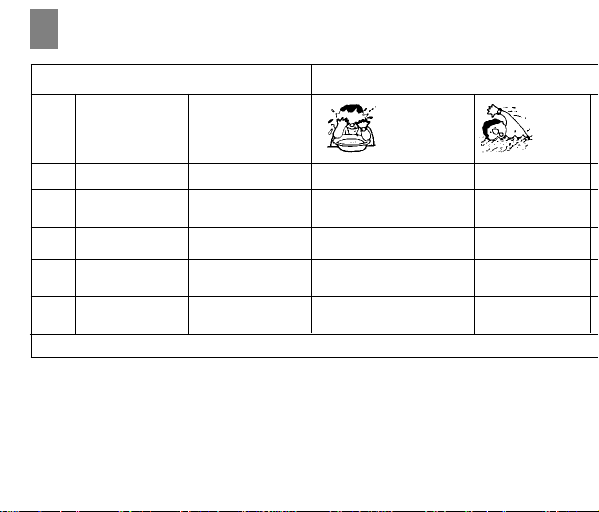
PRECAUTIONS D’UTILISATION ET INFORMATIONS UTILES
Indicacion Utilisation
Cadran
Niveau
d’étanchéité
A
B
C
D
E
L’indication “WATER RESISTANT” (étanche) peut parfois être abrégée en “WATER RESIST”.
-
WATER RESISTANT
30M (3ATM)
WATER RESISTANT
50M (5ATM)
WATER RESISTANT
100M (10ATM)
WATER RESISTANT
200M (20ATM) ou plus
Boîtier
-
WATER RESISTANT
WATER RESISTANT
WATER RESISTANT
WATER RESISTANT
Eclaboussure,
sueur, pluie légère,
ablutions, etc.
NON
OUI
OUI
OUI
OUI
NON
NON
OUI
OUI
OUI
Natation
etc.
- Pour éviter que l’eau n’entre dans les mécanismes intérieurs de la montre, la couronne
ne doit jamais être extraite et les boutons ne doivent jamais être enfoncés quand la
montre est mouillée ou plongée dans l’eau (sauf en cas d’autres spécifications).
- Si les montres conçues pour le sport ou pour fonctionner sous l’eau sont exposées
à l’eau salée, ou à une sueur abondante, elles doivent être rincées à l’eau douce
puis complètement essuyées.
20
Page 25
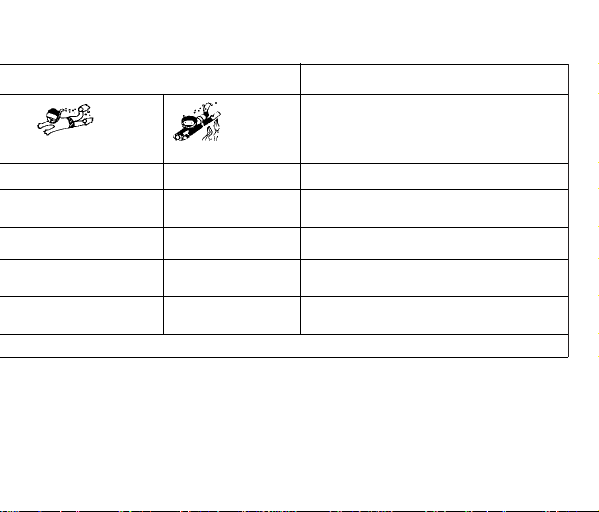
sous l’eau
Immersion
Immersion en
profondeur
Caractéristiques
d’étanchéité
NON
NON
NON
OUI
OUI
* Toujours placer le remontoir dans sa position normale. * Serrer complètement la vis de la couronne.
NON
NON
NON
NON
OUI
Non étanche. Doit être protégée de l’eau et de l’humidité.
Etanchéité normale. Résiste aux éclaboussures, à la sueur, à la
pluie légère, aux ablutions, etc. pendant l’utilisation quotidienne.
Utilisation possible pendant la natation.
Adaptée à la plongée peu profonde.
Adaptée à la plongée en profondeur.
- Dans certains cas, l’eau peut provoquer un endommagement de la qualité de
certains bracelets en cuir.
- Les parties internes de la montre peuvent retenir l’humidité quand la température
externe est plus basse que celle interne et le verre du cadran peut parfois
s’embuer. Si le phénomène est momentané, cela ne crée aucun problème,
mais s’il persiste dans le temps, il faut informer le revendeur de la montre ou
le Centre d’Assistance Autorisé le plus proche.
21
Page 26

Température
Ne pas laisser la montre exposée aux rayons directs du soleil ou dans des endroits
extrêmement chauds ou extrêmement froids pendant une longue période. Cela
pourrait en effet provoquer un mauvais fonctionnement de la montre ou réduire la
durée de la pile, ou encore un ralentissement ou une accélération de la montre et
des conséquences sur les autres fonctions.
Chocs
Cette montre peut supporter les chocs et les secousses qui ont lieu normalement
pendant l'utilisation quotidienne et lors de la pratique de sports ne comportant pas de
contact directs. Si la montre tombe par terre ou est soumise à des chocs très forts,
elle peut être endommagée ou mal fonctionner.
Champs magnétiques
Cette montre est anti-magnétique jusqu'à 60 Gauss et n'est donc pas influencée par
les champs magnétiques produits par les appareils électroménagers normaux.
Si elle est utilisée près de champs magnétiques très forts, ses fonctions peuvent
momentanément être altérées.
Electricité statique
Les circuits intégrés utilisés dans la montre sont sensibles à l'électricité statique. Si la
montre est exposée à une électricité intense, l'indication de l'heure peut perdre en
précision.
Substances chimiques et gaz
Ne pas porter la montre en présence de substances chimiques fortes ou de gaz. Si la
montre entre en contact avec des solvents, comme le benzène, ou avec des produits
22
Page 27

contenants des substances telles que essence, cires, détergents, adhesifs, ses
pièces peuvent se décolorer, se dissoudre ou se rompre. Faire particulièrement
attention à éviter les substances chimiques. Le boîtier de la montre et le bracelet
peuvent se décolorer s'ils entrent en contact avec le mercure d'un thermomètre
cassé ou de toute autre provenance.
Maintenir la montre propre
Frotter avec un chiffon doux et absorbant la terre et l'humidité sur le verre de la montre.
Si la montre est portée quand l'arrière du boîtier et le bracelet sont sales, cela peut
provoquer une irritacion cutanée car ils sont en contact direct avec la peau.
Comment nettoyer le bracelet:
• Bracelet en métal: laver les endroits sales avec une brosse à dents mouillée avec
de l'eau tiède savonneuse.
• Bracelet en plastique ou en caoutchouc: laver à l'eau. Ne pas utiliser de solvants.
• Bracelets en cuir: frotter délicatement sur le côté extérieure avec un chiffon doux
et sec. Pour le nettayage du côté opposée, utiliser un chiffon humidifié avec de
l'alcohol.
Inspection périodique
Nous recommendons de faire contrôler la montre par un Centre d'Assistance Autorisé
une fois tout les deux ans pour assurer une utilisation prolongée et sans problèmes.
Tenir les piles hors de la portée des enfants
Dans le cas où une pile serait accidentellement avalée, consulter immédiatement un
médecin.
23
Page 28

H
DONNÉES TECHNIQUES
Caractéristiques du mouvement
Type de quartz : cristal de quartz au diapason
Fréquence : 32.768Hz.
Précision : +/-20 s/mois en conditions normales d’utilisation
Fonction
CAL.FS00: Chronographe avec avancement progressif d’1 seconde à la fois
Mécanisme de remise à zéro pour l’épargne énergétique (PSRM, Powercell Saving
Reset Mechanism).
Dispositif de compensation de la surcharge (OLCD, Over-loading Compensation
Device).
Contrôle numérique de la fréquence (DFC, Digital Frequency Control) pour le réglage
du temps.
* Les donées techniques peuvent être modifiées sans aucun préavis afin d’améliorer le
produit.
(jusqu’à 59 minutes et 59 secondes).
24
Page 29
INHALTSVERZEICHNIS
A
HAUPTDESTANDTEILE . . . . . . . . . . . . . . . . . . . . . . . . . . . . . . .26
B
EINSTELLUNG DER UHRZEIT UND DES DATUMS . . . . . . . . . .27
C
BENUTZUNG DES CHRONOGRAPHS . . . . . . . . . . . . . . . . . . . .28
D
ZURÜCKSETZEN DES CHRONOGRAPHS
(AUCH NACH ERSETZEN DER BATTERIE) . . . . . . . . . . . . . . . .29
E
TACHOMETER . . . . . . . . . . . . . . . . . . . . . . . . . . . . . . . . . . . . . . .30
F
ENTFERNUNGSMESSER . . . . . . . . . . . . . . . . . . . . . . . . . . . . . .31
G
HINWEISE ZUM TRAGEN DER UHR . . . . . . . . . . . . . . . . . . . . .32
H
TECHNISCHE DATEN . . . . . . . . . . . . . . . . . . . . . . . . . . . . . . . . .36
D
Page 30

A
HAUPTDESTANDTEILE
Stundenzeiger Knopf
Minutenzeiger Knopf
Sekundenzeiger des Chronographs Stellkrone
Minutenzeiger des Chronographs
24-Stundenzeiger
Dauersekundenzeiger
Kalender
26
Page 31

B
EINSTELLUNG DER URHZEIT UND DES DATUMS
Einstellung der Urhzeit:
1. Ziehen Sie die Krone bis zum zweiten Klicken heraus, um den Sekundenzeiger in
der Position Null (“0”) zu stoppen.
2. Drehen Sie die Krone, um Stunden- und Minutenzeiger einzustellen.
3. Wenn Sie das Datum eingestellt haben, bringen Sie die Krone in die Normalposition
zurück.
Einstellung des Datums:
1. Ziehen Sie die Krone bis zur Position (1) heraus.
2. Drehen Sie die Krone im Uhrzeigersinn, um das Datum einzustellen.
* Wenn das Datum auf eine Stunde zwischen 21:00 und 1:00 Uhr eingestellt wird, kann
es den folgenden Tag nicht ändern.
3. Wenn Sie das Datum eingestellt haben, bringen Sie die Krone in die Normalposition
zurück.
27
Page 32
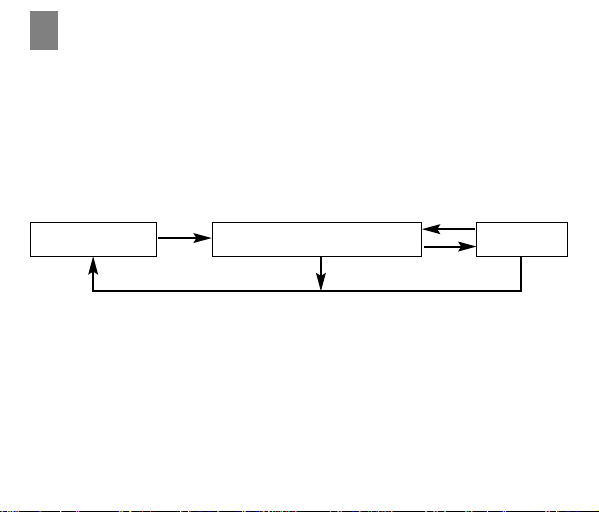
C
BENUTZUNG DES CHRONOGRAPHS
• Dieses Chronograph kann die Zeit von Sekunde zu Sekunde bis zu maximal einer
Stunde messen und kumulativ anzeigen.
Zeitmessung mit dem Chronograph
1. Das Chronograph kann durch Drücken von gestartet und gestoppt werden.
2. Zum Nullstellen oder um Minuten- und Sekundenzeiger in Position “0”
zurückzubringen, drücken Sie .
NULLSTELLUNG ZEITMESSUNG STOPP
28
Page 33

D
ZURÜCKSETZEN DES CHRONOGRAPHS
(AUCH NACH ERSETZEN DER BATTERIE)
Führen Sie die im folgenden dargestellte Prozedur durch, wenn der Sekundenzeiger
nach dem Nullstellen des Chronographs nicht in Position “0” zurückkehrt oder wenn Sie
die Batterie ersetzt haben.
1. Die Krone bis zur zweiten Position herausziehen.
2. Drücken Sie , um den Sekundenzeiger des Chronographs auf “0” zu stellen.
3. Wenn Sie gedrückt halten, bewegen sich die Chronographzeiger schnell
vorwärts.
4. Wenn Sie die Zeiger in Position “0” gebracht haben, stellen Sie die Stunde wieder
ein und bringen Sie die Krone in ihre Normalposition zurück.
* Bringen Sie die Krone nicht in Normalposition zurück, während die Sekundenzeiger
des Chronographs auf 12:00 Uhr (Position “0”) zurückkehren; wenn sie an der Stelle
anhalten, wo sie sich befinden, wird der Punkt ihres Anhaltens als 12:00 Uhr
(Position “0”) interpretiert.
29
Page 34
E
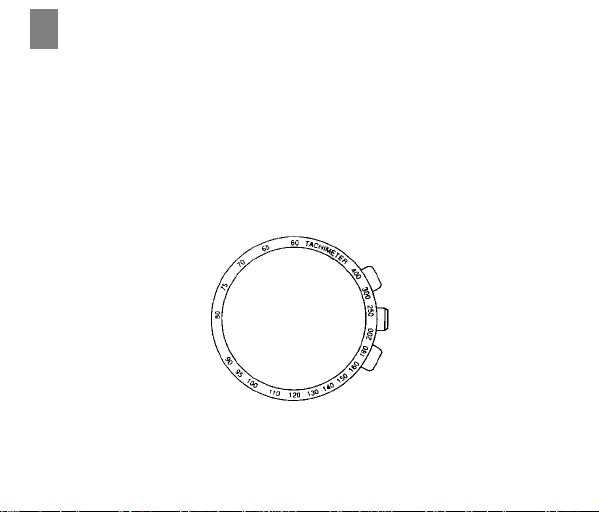
TACHOMETER*
Der Tachometer ist eine Funktion zur Messung der Geschwindigkeit eines
Kraftfahrzeugs. Durch die Messung der Anzahl von Sekunden, die das Fahrzeug
braucht, um eine Strecke von 1 km zurückzulegen, kann die Tachometerskala
näherungsweise die mittlere Geschwindigkeit pro Stunde während einer Reise angeben
(wenn diese Strecke von 1 km innerhalb maximal 60 Sekunden zurückgelegt wird).
Wenn das Chronomete bei Beginn der Streckenmessung gestartet und nach 1 km
gestoppt wird, kann die mittlere Geschwindigkeit pro Stunde mittels der Position des
Sekundenzeigers des Chronometers bestimmt werden. Wird 1 km in 45 Sekunden
zurückgelegt, beträgt die mittlere Geschwindigkeit ca. 80 km/h.
* Diese Funktion ist nur auf einigen Modellen verfügbar.
30
Page 35
F
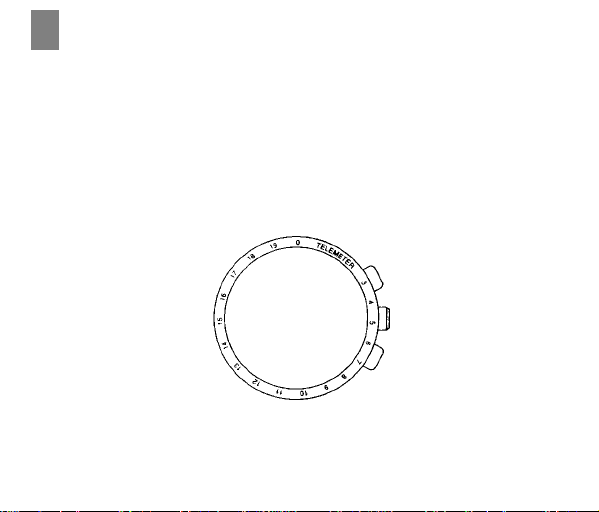
ENTFERNUNGSMESSER*
Der Entfernungsmesser ermöglicht die Berechnung von Entfernungen mittels der
Ausbreitungsgeschwindigkeit des Schalls. Diese Messung wird in der Luft- und Seefahrt
sowies beim Militär eingesetzt. Es ist damit auch möglich, die Entferning eines
Gewitters festzustellen. Wenn man den Zeiger in dem Moment loslaufen läßt, in dem
man eine Flamme, Rauch, oder das Aufleuchten eines Blitzes sieht, und ihn wieder
stoppt, wenn man den Donner hört, so kann man die Entfernung zwischen dem Ort der
Explosion oder des Blitzeinschlags und dem eigenen Standort ablesen. Die Ablesung
erfolgt auf einer speziellen Entfernungsmeßskala mit einer Unterteilung von 1 bis 20
km.
* Diese Funktion ist nur auf einigen Modellen verfügbar.
31
Page 36
G
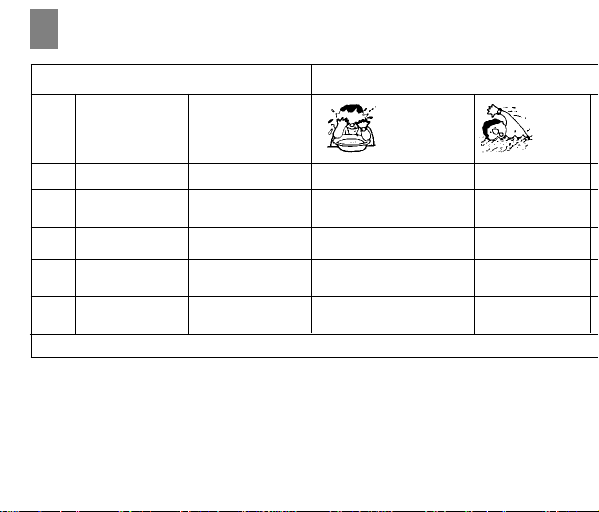
HINWEISE ZUM TRAGEN DER UHR
Angabe Gebrauch
Ziffernblatt
Wasser-
dichtheit
A
B
C
D
E
Die Angabe “WATER RESISTANT” (wasserdicht) wird gelegentlich als “WATER RESIST” abgekürzt.
-
WATER RESISTANT
30M (3ATM)
WATER RESISTANT
50M (5ATM)
WATER RESISTANT
100M (10ATM)
WATER RESISTANT
200M (20ATM) oder mehr
Gehäuse
-
WATER RESISTANT
WATER RESISTANT
WATER RESISTANT
WATER RESISTANT
Spritzwasser,
Schweifl, leichter
regen, Waschen,
usw.
NEIN
JA
JA
JA
JA
Schwimmen
usw.
NEIN
NEIN
JA
JA
JA
- Damit kein Wasser in die inneren Uhrmechanismen gelangt, darf man die Krone niemals
abziehen und auch nicht auf die Knöpfe drücken, wenn die Uhr naß ist oder sich im
Wasser befindet (wenn nicht anders angegeben).
- Uhren, die für Sportaktivitäten oder zum Tauchen geeignet sind, muß man bei
Kontakt mit Salzwasser oder viel Körperschweiß nach dem Gebrauch mit
Süßwasser abwaschen und anschließend vollständig abtrocknen.
32
Page 37
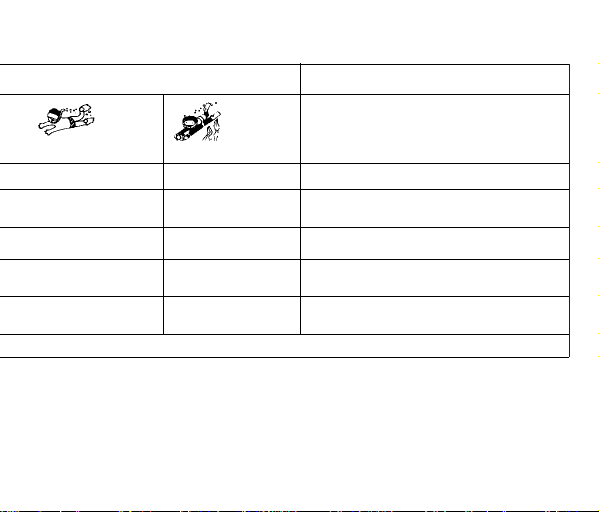
in Wasser
Tauchen
Tieftauchen
Dichtheit
NEIN
NEIN
NEIN
JA
JA
* Bringen Sie die Stellkrone immer in ihre Normalstellung. * Ziehen Sie dei Schraube der Stellkrone vollständig fest.
NEIN
NEIN
NEIN
NEIN
JA
Nicht wasserdicht. Vor Wasser und Feuchte schützen.
Normal wasserdicht. Widersteht Spritzwasser, Schweib,
leichtem Regen, Waschen usw. im täglichen Gebrauch.
Kann zum Schwimmen eingesetzt werden, zum Tauchen
nicht empfohlen.
Zum Tauchen ohne Flaschen geeignet.
Zum Tieftauchen geeignet
- Wasser kann in einigen Fällen eine Qualitätsminderung der Lederbänder bewirken.
- Die inneren Bauteile der Uhr können Feuchtigkeit enthalten. Wenn die
Außentemperatur niedriger als die Innentemperatur ist, kann das Glas über dem
Ziffernblatt beschlagen.
Wenn diese Erscheinung nur kurz anhält, ist sie nicht von Bedeutung. Sollte Sie
dagegen länger andauren, so sollten Sie das Problem Ihrem Fachhändler, bei
dem sie die Uhr gekauft haben, oder dem nächsten Kundendienst mitteilen.
33
Page 38

Temperatur
Setzen Sie die Uhr nie längerer Zeit direkter Sonneneinstrahlung aus und legen Sie
nicht an besonders heißen oder kalten Orten ab.
Dies kann die Funktionsweise der Uhr beeinträchtigen und die Lebensdauer der
Batterie verkürzen, was einen schnelleren oder langsameren Lauf der Uhr bewirkt
und auch Auswirkungen auf ihre sonstige Funktionen hat.
Stoßfestigkeit
Diese Uhr widersteht allen Stößen und Schlägen, die bei normalem täglichem
Gebrauch oder Sportarten ohne direkten Körperkontakt.
Falls die Uhr hingegen auf den Boden fällt oder sehr schweren Stößen ausgesetzt
wird, kann sie Uhr Schaden nehmen und ihre Funktionweise beeinträchtigt werden
sein.
Magnetfelder
Diese Uhr ist bis zu einer induktiven Feldstärke von 60 Gauss antimagnetisch und
wird daher durch magnetische Felder, die von üblichen Haushaltsgeräten erzeugt
werden, nicht beeinflußt. Kommt die Uhr in sehr starke magnetische Felder, so
können ihre Betriesfunktionen vorübergehend verändert sein.
Elektrostatische Aufladung
Die in der Uhr verwendeten integrierten Schaltkreise reagieren empfindlich auf
elektrostatische Aufladung. Wird die Uhr einen starken elektrischen Feld ausgesetzt,
kann die Zeitanzeige an Genauigkeit verlieren.
34
Page 39

Chemikalien und Gase
Tragen Sie die Uhr nicht in Räumen, in denen aggressive chemische Substanzen
oder Gase vorhanden sind. Kommt die Uhr mit Lösungsmittel wie Benzol oder
chemischen Substanzen wie Benzin, Poliermittel, Waschflüssigkeiten oder
Klebstoffen in Berührung, können ihre Komponenten entfärben, sich auflösen oder
zerbrechen.
Achten Sie besonders darauf, daß Sie Chemikalien meiden.
Gehäuse und Armband der Uhr können entfärben, wenn sie z. B. mit dem
Quecksilber eines zerbrochenen Thermometers in Berührung kommen.
Sauberkeit der Uhr
Reinigen Sie das Uhrglas mit einem weichen, saugfähigen Tuch von Staub und
Feuchtigkeit. Wenn die Uhr mit verschmutztem Gehäuseboden und Band anlegen,
kann dies an den Berührungsstellen zu Hautreizungen führen.
Reinigung des Armbandes:
• Metallband: Die verschmutzen Stellen mit einer Zahnbürste und lauwarmer
Seifenlauge waschen.
•
Kunststoff- oder Gummiband: Mit Wasser abwaschen. Keine Lösungsmittel verwenden.
• Lederband:
Zur Reininung der Innenseite ein mit Alkohol angefeuchtetes Tuch verwenden.
Regelmäßige Inspektion:
Wir raten Ihnen, die Uhr alle ein bis zwei Jahre von einen autorisierten Kundendienst
überprüfen zu lassen. Dies sichert eine langjährige Benutzung der Uhr, ohne daß
Funktionsstörungen auftreten.
Die Batterien von Kindern fern halten
Falls eine Batterie versehentlich verschluckt wurde, unverzüglich einen Artz verständigen.
Die Au
ß
enseite leicht mit einem weichen und trockenen Tuch abreiben.
35
Page 40

H
TECHNISCHE DATEN
Eigenschaften des Uhrwerks
Quartztyp: Stimmgabel-Quartzkristall
Frequenz: 32,768Hz
Genauigkeit: +/- 20 s / Monat unter normalen Betriebsbedingungen
Funktion
CAL.FS00: Chronograph mit Vorrücken im Sekundentakt
Rücksetzmechanismus zur Energieeinsparung (PSRM, Powercell Saving Reset
Mechanism).
Vorrichtung zur Überlast-Kompensation (OLCD, Over-loading Compensation Device).
Digitale Frequenzüberwachung (DFC, Digital Frequency Control) zur Zeiteinstellung.
* Die technischen Daten können ohne Vorankündigung im Sinne einer kontinuierlichen
Verbesserung des Produkts variieren.
(bis zu 59 Minuten und 59 Sekunden).
36
Page 41
INDICE
A
COMPONENTI PRINCIPALI . . . . . . . . . . . . . . . . . . . . . . . . . . . . .38
B
IMPOSTAZIONE DELL’ORA E DELLA DATA . . . . . . . . . . . . . . .39
C
USO DEL CRONOGRAFO . . . . . . . . . . . . . . . . . . . . . . . . . . . . . .40
D
AZZERAMENTO DEL CRONOGRAFO
(ANCHE DOPO LA SOSTITUZIONE DELLA BATTERIA) . . . . . .41
E
TACHIMETRO . . . . . . . . . . . . . . . . . . . . . . . . . . . . . . . . . . . . . . .42
F
TELEMETRO . . . . . . . . . . . . . . . . . . . . . . . . . . . . . . . . . . . . . . . .43
G
PRECAUZIONI PER L’USO E NOTIZIE UTILI . . . . . . . . . . . . . . .44
H
DATI TECNICI . . . . . . . . . . . . . . . . . . . . . . . . . . . . . . . . . . . . . . .48
I
Page 42

A
COMPONENTI PRINCIPALI
Lancetta delle ore Pulsante
Lancetta dei minuti Pulsante
Lancetta dei secondi del cronografo Corona
Lancetta dei minuti del cronografo
Lancetta 24-ore
Lancetta dei secondi continui
Data
38
Page 43

B
IMPOSTAZIONE DELL’ORA E DELLA DATA
Per impostare l’ora:
1. Estrarre completamente la corona e arrestare la lancetta dei secondi in
posizione “0”.
2. Ruotare la corona per regolare le lancette delle ore e dei minuti.
3. Dopo aver regolato l’ora, riportare la corona in posizione normale.
Per impostare la data:
1. Per impostare la data estrarre la corona fino a portarla in posizione (1).
2. Ruotare la corona in senso orario per impostare la data desiderata.
* Se viene impostata su un’ora compresa fra le 9:00PM e l’1:00 AM, la data potrebbe
non cambiare il giorno successivo.
3. Una volta impostata la data, riportare la corona in posizione normale.
39
Page 44
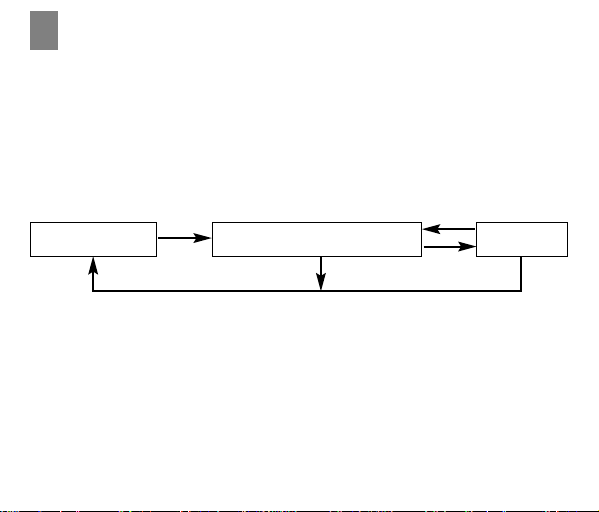
C
USO DEL CRONOGRAFO
• Il cronografo è in grado di misurare e visualizzare cumulativamente il tempo di
secondo in secondo fino a un massimo di 1 ora.
Misurazione del tempo con il cronografo
1. Il cronografo può essere avviato e interrotto premendo il pulsante .
2. Per azzerarlo, ovvero per riportare le lancette dei minuti e dei secondi in posizione
“0”, premere il pulsante .
AZZERAMENTO MISURAZIONE DEL TEMPO ARRESTO
40
Page 45

D
AZZERAMENTO DEL CRONOGRAFO (ANCHE
DOPO LA SOSTITUZIONE DELLA BATTERIA)
Attuare la procedura illustrata qui di seguito sia nel caso in cui la lancetta dei secondi
non ritorni in posizione “0” dopo l’azzeramento del cronografo, sia dopo la sostituzione
della batteria.
1. Estrarre la corona fino alla seconda posizione (2).
2. Premere il pulsante per impostare la lancetta dei secondi del cronografo su “0”.
3. Tenendo premuto il pulsante le lancette del cronografo avanzano più
rapidamente.
4. Dopo aver portato le lancette in posizione “0”, reimpostare l’ora e riportare la corona
nella sua normale posizione.
* Non riportare la corona in posizione normale mentre le lancette dei secondi del
cronografo ritornano su 12:00 (posizione “0”), dato che si fermerebbero dove si
trovano e il loro punto di arresto verrebbe riconosciuto come 12:00 (posizione “0”).
41
Page 46
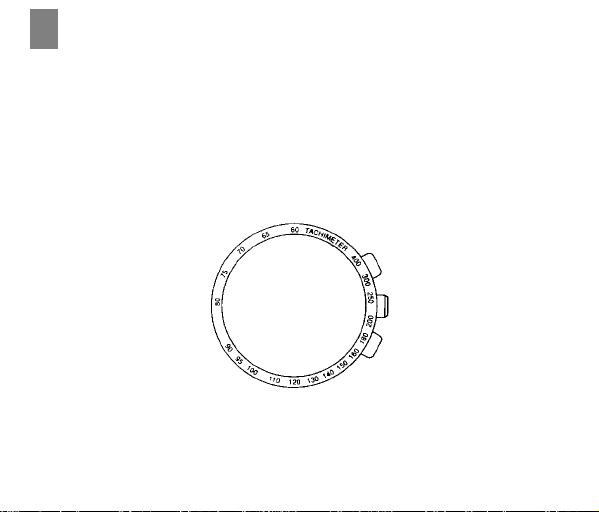
E
TACHIMETRO*
Il Tachimetro è una funzione che misura la velocità di un’automobile. Misurando in
quanti secondi la macchina percorre un tratto di 1 km, la scala del tachimetro può
indicare la velocità media approssimativa all’ora durante un viaggio (se questo tratto di
1 km viene percorso entro un massimo di 60 secondi).
Se il cronografo viene avviato all’inizio della misurazione del tratto e viene fermato dopo
1 km, la velocità media all’ora può essere determinata mediante la posizione della
lancetta dei secondi del cronografo. Se 1 km viene percorso in 45 secondi, la velocità
media sarà di circa 80 km all’ora.
* Funzione disponibile solo su alcuni modelli
42
Page 47
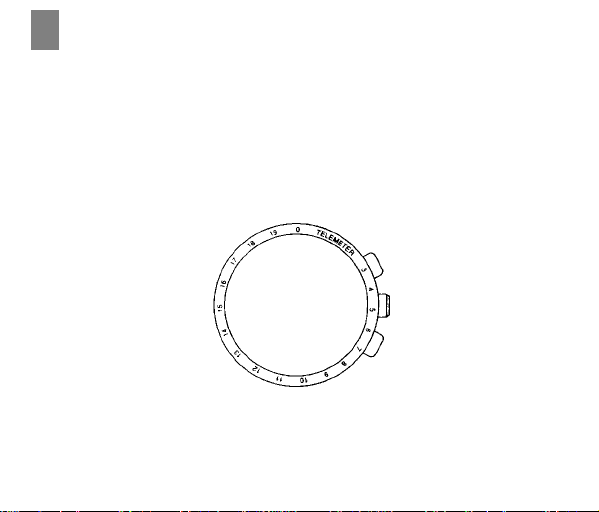
F
TELEMETRO*
Il Telemetro permette il computo delle distanze in base alla velocità del suono. Serve
dunque nell’aviazione, nella marina, nell’esercito e nell’artiglieria. Indica anche a quale
distanza è in corso un temporale. Mettendo in moto la lancetta quando si scorge una
fiammata, del fumo oppure il balenare di un lampo, arrestandola al momento in cui si
percepisce il suono, si avrà l’indicazione della distanza fra la località dove è avvenuta
l’esplosione o è caduto il fulmine, ed il punto di osservazione. Tale lettura viene
effettuata sull’apposita scala telemetrica che visualizza indicazioni da 1 a 20 km.
* Funzione disponibile solo su alcuni modelli
43
Page 48
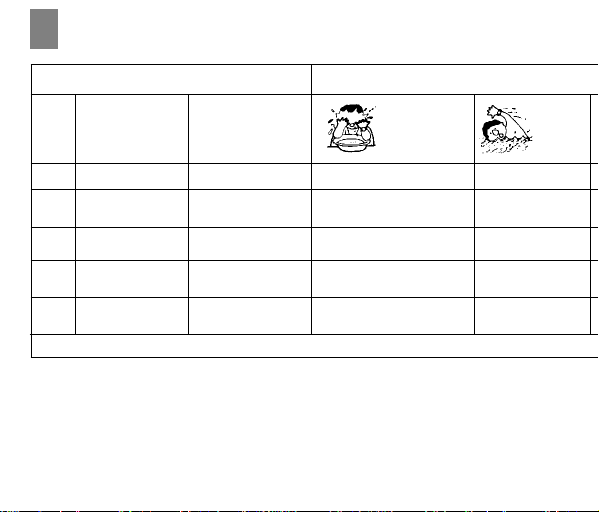
G
PRECAUZIONI PER L’USO E NOTIZIE UTILI
Indicazione Uso
Quadrante
Grado di
impermeabilità
A
B
C
D
E
L’indicazione “WATER RESISTANT” (impermeabile) può essere a volte abbreviata in “WATER RESIST”.
- Per evitare che l’acqua entri nei meccanismi interni dell’orologio, la corona non deve essere mai
estratta ed i pulsanti premuti quando l’orologio è bagnato o immerso in acqua (salvo diversamente specificato).
- Se gli orologi che sono stati concepiti per lo sport o per funzionare in acqua vengono esposti
all’acqua salata o ad abbondante sudore, devono essere risciacquati con acqua dolce e quindi
completamente asciugati.
44
-
WATER RESISTANT
30M (3ATM)
WATER RESISTANT
50M (5ATM)
WATER RESISTANT
100M (10ATM)
WATER RESISTANT
200M (20ATM) e oltre
Cassa
-
WATER RESISTANT
WATER RESISTANT
WATER RESISTANT
WATER RESISTANT
Spruzzi, sudore,
pioggia leggera,
abluzione, ecc.
NO
SI
SI
SI
SI
NO
NO
SI
SI
SI
Nuoto
ecc.
Page 49
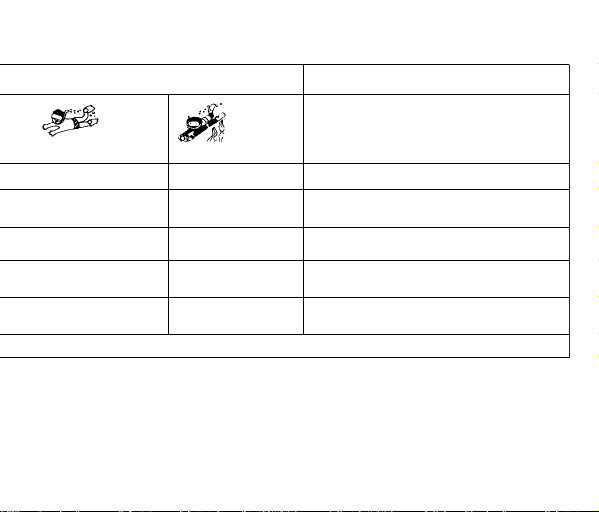
in acqua
Immersione
Immersione in
profondità
Caratteristiche
di impermeabilità
NO
NO
NO
SI
SI
* Portare sempre la corona nella sua posizione normale. * Stringere del tutto la vite della corona.
- L’acqua può in taluni casi provocare un deterioramento della qualità di alcuni cinturini in cuoio.
- Le parti interne dell’orologio possono trattenere umidità, quando la temperatura esterna è più
bassa di quella interna, il vetro del quadrante a volte può appannarsi. Se il fenomeno è momentaneo, ciò non crea alcun problema, ma se invece perdura a lungo, occorre far presente il problema al negoziante presso cui l’orologio è stato acquistato o al Centro Assistenza Autorizzato
più vicino.
NO
NO
NO
NO
Non impermeabile. Va protetto da acqua e umidità
Impermeabilità normale. Resiste a spruzzi, sudore, pioggia
leggera, abluzioni ecc. durante l’uso quotidiano.
Utilizzabile durante il nuoto ma sconsigliato per immersioni.
Adatto ad immersioni poco impegnative.
SI
Adatto a tutte le immersioni.
45
Page 50

Temperatura
Non lasciare l’orologio sotto i raggi diretti del sole o in luoghi estremamente caldi o
estremamente freddi per un lungo periodo di tempo.
Ciò potrebbe infatti creare degli inconvenienti al funzionamento dell’orologio ed
accorciare la durata della batteria, provocando anche un rallentamento o
un’accelerazione dell’orologio e conseguenze sulle altre funzioni.
Urti
Questo orologio può sopportare gli urti e gli scossoni che normalmente avvengono
durante l’uso quotidiano ed anche quando si pratichino sport in cui non ci sia contatto
diretto. Se l’orologio cade per terra o riceve colpi molto forti, può subire danni o guasti
al funzionamento.
Campi magnetici
Questo orologio è antimagnetico fino a 60 gauss e quindi non viene influenzato dai
campi magnetici prodotti dai normali elettrodomestici. Se viene usato nelle vicinanze di
campi magnetici molto forti, le sue funzioni possono venire momentaneamente alterate.
Elettricità statica
I circuiti integrati usati nell’orologio sono sensibili all’elettricità statica. Se l’orologio
viene esposto a intensa elettricità, l’indicazione del tempo può perdere in precisione.
46
Page 51

Sostanze chimiche e gas
Non indossare l’orologio quando ci si trova in presenza di forti sostanze chimiche e di
gas. Se l’orologio viene a contatto di solventi, come benzene, oppure con prodotti
contenenti sostanze come benzina, lucidi, detergenti, adesivi, le sue parti possono
scolorarsi, dissolversi o spaccarsi.
Fare particolare attenzione ad evitare le sostanze chimiche.
La cassa dell’orologio e il cinturino possono scolorirsi se vengono a contatto con il
mercurio di un termometro rotto o di altra provenienza.
Tenere l’orologio pulito
Strofinare con un panno soffice assorbente il terriccio e l’umidità dal vetro dell’orologio.
Se l’orologio viene indossato quando il retro della cassa e il cinturino sono sporchi,
questi possono provocare un’irritazione cutanea in quanto a contatto diretto con la pelle.
Come pulire il cinturino:
• Cinturino in metallo: Lavare le zone sporche con uno spazzolino da denti bagnato
con acqua tiepida saponata.
• Cinturino in plastica o in gomma: Lavare con acqua. Non usare solvente.
• Cinturino in cuoio: Strofinare delicatamente sul lato frontale con un panno soffice ed asciutto.
Per la pulizia del lato opposto, servirsi di un panno inumidito con alcool.
Ispezione periodica
Si raccomanda di far controllare l’orologio da un centro assistenza autorizzato ogni due
anni per assicurare un uso prolungato e senza problemi.
Tenere le batterie fuori la portata dei bambini
Qualora una batteria fosse accidentalmente ingerita, consultare subito un medico.
47
Page 52

H
DATI TECNICI
Caratteristiche del movimento
Tipo di quarzo: cristallo di quarzo a diapason
Frequenza: 32.768Hz
Precisione: +/-20 s/mese in normali condizioni d’uso
Funzione
CAL.FS00: Cronografo con avanzamento progressivo di 1 secondo alla volta
Meccanismo di ripristino per il risparmio energetico (PSRM, Powercell Saving Reset
Mechanism).
Dispositivo di compensazione del sovraccarico (OLCD, Over-loading Compensation
Device).
Controllo digitale della frequenza (DFC, Digital Frequency Control) per la regolazione
del tempo.
* I dati tecnici possono subire modifiche senza preavviso.
(fino a 59 minuti e 59 secondi)
48
Page 53
INDICE
A
COMPONENTES PRINCIPALES . . . . . . . . . . . . . . . . . . . . . . . . .50
B
CONFIGURACIÓN DE LA HORA Y DE LA FECHA . . . . . . . . . . .51
C
USO DEL CRONÓGRAFO . . . . . . . . . . . . . . . . . . . . . . . . . . . . . .52
D
PUESTAEN CERO DEL CRONÓGRAFO
(AÚN LUEGO DE LA SUSTITUCIÓN DE LA BATERIA) . . . . . . .53
E
TAQUÍMETRO . . . . . . . . . . . . . . . . . . . . . . . . . . . . . . . . . . . . . . .54
F
TELEMETRO . . . . . . . . . . . . . . . . . . . . . . . . . . . . . . . . . . . . . . . .55
G
PRECAUCIONES PARAEL USO E INFORMACIONES UTILES .56
H
DATOS TÉCNICOS . . . . . . . . . . . . . . . . . . . . . . . . . . . . . . . . . . .60
E
Page 54

A
COMPONENTES PRINCIPALES
Aguja de las horas Botón
Aguja de los minutos Botón
Aguja de los segundos del cronógrafo Corona
Aguja de los minutos del cronógrafo
Aguja de las 24 horas
Aguja de los segundos continuos
Calendario
50
Page 55

B
CONFIGURACIÓN DE LA HORAY DE LA FECHA
Como regular la hora:
1. Extraiga la corona hasta colocarla en posición (2) para detener la aguja de los
segundos en posición cero (“0”).
2. Gire la corona para configurar las agujas de las horas y de los minutos.
3. Una vez configurada la fecha, coloque nuevamente la corona en su posición
normal.
Como regular la fecha:
1. Extraiga la corona hasta colocarla en posición (1).
2. Gire la corona en sentido horario para programar la fecha.
* Si se configura en una hora comprendida entre las 9:00PM y l’1:00 AM, la fecha
podría no cambiar el día sucesivo.
3. Una vez configurada la fecha, coloque nuevamente la corona en su posición
normal.
51
Page 56
C
USO DEL CRONÓGRAFO
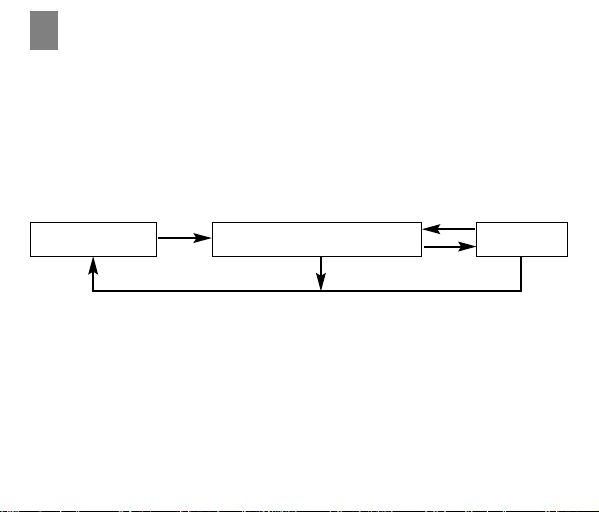
• Este cronógrafo es capaz de medir y visualizar el tiempo acumulativamente de
segundo en segundo hasta un máximo de 1 hora.
Medición del tiempo con el cronógrafo
1. El cronógrafo puede ponerse en marcha y detenerse presionando .
2. Para ponerlo en cero, o bien para llevar las agujas de los minutos y de los
segundos en posición “0”, presione .
PUESTAA CERO MEDICIÓN DEL TIEMPO DETENCIÓN
52
Page 57

D
PUESTA EN CERO DEL CRONÓGRAFO (AÚN
LUEGO DE LA SUSTITUCIÓN DE LA BATERIA)
Realice el procedimiento ilustrado a continuación tanto cuando la aguja de los
segundos no retorne a su posición “0” luego de la puesta a cero del cronógrafo como
luego de la sustitución de la batería.
1. Extraiga la corona hasta la segunda posición (2).
2. Presione para configurar la aguja de los segundos del cronógrafo en “0”.
3. Manteniendo presionado , las agujas del cronógrafo avanzan rápidamente.
4. Luego de haber llevado las agujas en posición “0”, configure nuevamente la hora y
coloque nuevamente la corona en su posición normal.
* No lleve la corona en posición normal mientras que las agujas de los segundos del
cronógrafo retornan sobre las 12:00 (posición “0”), ya que se detendrían donde se
encuentran y su punto de detención sería reconocido como 12:00 (posición “0”).
53
Page 58
E
TAQUÍMETRO*
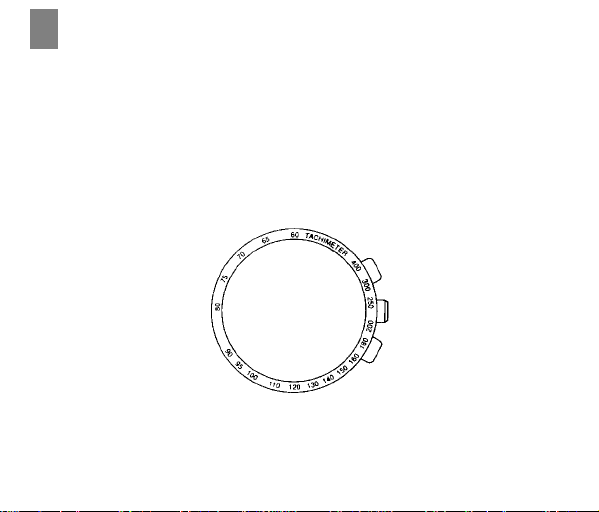
El Taquímetro es una función que mide la velocidad de un automóbil. Midiendo en
cuantos segundos el automóvil recorre un tramo de 1 km, la escala del taquímetro
puede indicar la velocidad media aproximada por hora durante un viaje (si dicho tramo
de 1 km se recorre dentro de un máximo de 60 segundos).
Si el cronógrafo se pone en marcha cuando inicia la medición del tramo y se detienen
luego de 1 km, la velocidad media por hora puede determinarse mediante la posición
de la aguja de los segundos del cronógrafo. Si 1 km se recorre en 45 segundos, la
velocidad media será de aproximadamente 80 km por hora.
* Sólo algunos modelos disponen de esta función.
54
Page 59
F
TELEMETRO*
El Telémetro, indicador de las distancias, permite calcular las distancias en base de la
velocidad del sonido. Por lo tanto, sirve en la aviación, en la marina, en el ejército y en
la artillería. Indica también la distancia de un temporal.
Poniendo en movimiento la aguja cuando se descubre una llamarada, humo o la
sinuosidad de un rayo y deteniéndola cuando se percibe el sonido, se tendrá la
indicación sobre la distancia entre la localidad donde se ha verificado la explosión o ha
caído el relámpago y el punto de observación. Dicha lectura se efectúa en la escala
telemétrica especifica que contiene indicaciones desde 1 hasta 20 kilómetros.
* Sólo algunos modelos disponen de esta función.
55
Page 60
G
PRECAUCIONES PARA EL USO
E INFORMACIONES UTILES
Indicación Uso
Esfera
Grado de
impermeabilidad
A
B
C
D
E
Algunas veces la indicación “WATER RESISTANT” (impermeable) puede ser abreviada en “WATER RESIST”.
-
WATER RESISTANT
30M (3ATM)
WATER RESISTANT
50M (5ATM)
WATER RESISTANT
100M (10ATM)
WATER RESISTANT
200M (20ATM) o más
Caja
-
WATER RESISTANT
WATER RESISTANT
WATER RESISTANT
WATER RESISTANT
- Para evitar que el agua entre en los mecanismos internos del reloj, nunca hay que
extraer la corona ni pulsar los botones cuando el reloj está mojado o sumergido en agua
(salvo diversamente especificado).
- Si los relojes concebidos para el deporte o para funcionar en el agua se exponen
al agua salada o a la transpiración abundante, después del uso deben ser
enjuagados con agua dulce y secados completamente.
56
Salpicaduras,
transpiración,
llovizna,
abluciones, etc.
NO
SI
SI
SI
SI
NO
NO
SI
SI
SI
Natación
etc.
Page 61
en agua
Inmersión
NO
NO
NO
SI
SI
* Lleve siempre la corona a su posición normal. * Apriete completamente el tornillo de la corona.
Inmersión
en
profundidad
NO
NO
NO
NO
SI
No es impermeable. Debe protegerse del agua y la humedad.
Impermeabilidad normal. Durante el uso cotidiano resiste a
salpicaduras, transpiración, llovizna, abluciones, etc.
Utilizable durante la natación pero no para inmersiones.
Idóneo para inmersiones poco importantes.
Idóneo para inmersiones importantes de profundidad.
Características
de impermeabilidad
- En algunos casos, el agua puede deteriorar la calidad de algunas correas de
cuero o de piel.
- Cuando la temperatura ambiente externa es más baja que la interna, las partes
internas del reloj pueden conservar humedad y, a veces, el vidrio de la esfera se
empaña. Si el fenómeno es pasajero, no crea ningún problema. Si, viceversa,
perdura por largo tiempo, es necesario señalar el problema al negociante en
cuyo local se adquirió el reloj o al Centro de Asistencia Técnica más cercano.
57
Page 62

Temperatura
No exponga nunca el reloj a los rayos directos del sol ni lo deje en lugares
extremadamente calurosos o fríos durante un largo período de tiempo.
En todos estos casos, se podría afectar el funcionamiento del reloj y acortar la
duración de la pila. Además, podría verificarse una reducción o una aceleración del
reloj con consecuencias sobre las demás funciones.
Golpes
Este reloj puede soportar los impactos y los movimientos que suceden normalmente
durante el uso cotidiano y también aquellos derivados de prácticas deportivas en las
cuales no haya contacto directo.
Si el reloj se cae al suelo o recibe golpes muy fuertes, puede sufrir daños o averías
de funcionamiento.
Campos magnéticos
Este reloj es antimagnético hasta 60 gauss. Por lo tanto no sufre la influencia de los
campos magnéticos producidos por los aparatos electrodomésticos normales. Si se
usa cerca de campos magnéticos muy fuertes sus funciones pueden alterarse
momentáneamente.
Electricidad estática
Los circuitos integrados usados en el reloj son sensibles a la electricidad estática. Si
se expone el reloj a cargas eléctricas intensas, la indicación del tiempo podría perder
precisión.
Substancias químicas y gases
No se ponga el reloj cuando se encuentra en presencia de fuertes substancias
químicas o de gas.
58
Page 63

Si el reloj entra en contacto con solvente como el benceno, o con productos que
contienen substancias como bencina, barnices, bruñidores, detergentes o adhesivos,
sus partes pueden desteñirse, disolverse o romperse.
Ponga mucha atención para evitar las substancias químicas.
La caja y la correa del reloj pueden desteñirse si entran en contacto con el mercurio
de un termómetro roto o de otra proveniencia.
Mantenga limpio el reloj
Frote el polvo y la humedad del vidrio del reloj con un paño absorbente delicado. Si se pone
el reloj cuando la parte posterior de la caja y la correa están sucias, dado que éstas están
en contacto directo con la piel podrían provocarle una irritación cutánea.
Como limpiar la correa:
• Correa metálica: lave las partes sucias con un cepillo de dientes mojado con agua
tibia jabonosa.
• Correa de plastico o de goma: lave con agua. No use solventes.
• Correa de cuero: frote suavemente el lado frontal con un paño delicado y seco.
Para limpiar el lado opuesto utilice un paño humedecido en alcohol.
Inspección periódica
Para garantizarse un uso prolongado y exento de problemas, se recomienda hacer
controlar el reloj cada dos años por un Centro de Asistencia Autorizado.
Mantenga la pila fuera del alcance de los niños
Si accidentalmente una pila fuese ingerida, contacte inmediatamente el médico.
59
Page 64

H
DATOS TÉCNICOS
Características del movimiento
Tipo de cuarzo: cristal de cuarzo a diapasón
Frecuencia: 32.768Hz
Precisión: +/-20 s/mes en condiciones normales de uso
Función
CAL.FS00: Cronógrafo con avance progresivo de 1 segundo a la vez
Mecanismo de restablecimiento para el ahorro energético (PSRM, Powercell Saving
Reset Mechanism).
Dispositivo de compensación de la sobrecarga (OLCD, Over-loading Compensation
Device).
Control digital de la frecuencia (DFC, Digital Frequency Control) para la regulación del
tiempo.
* Los datos técnicos pueden sufrir modificaciones sin previo aviso.
(hasta 59 minutos y 59 segundos)
60
 Loading...