

Page 1
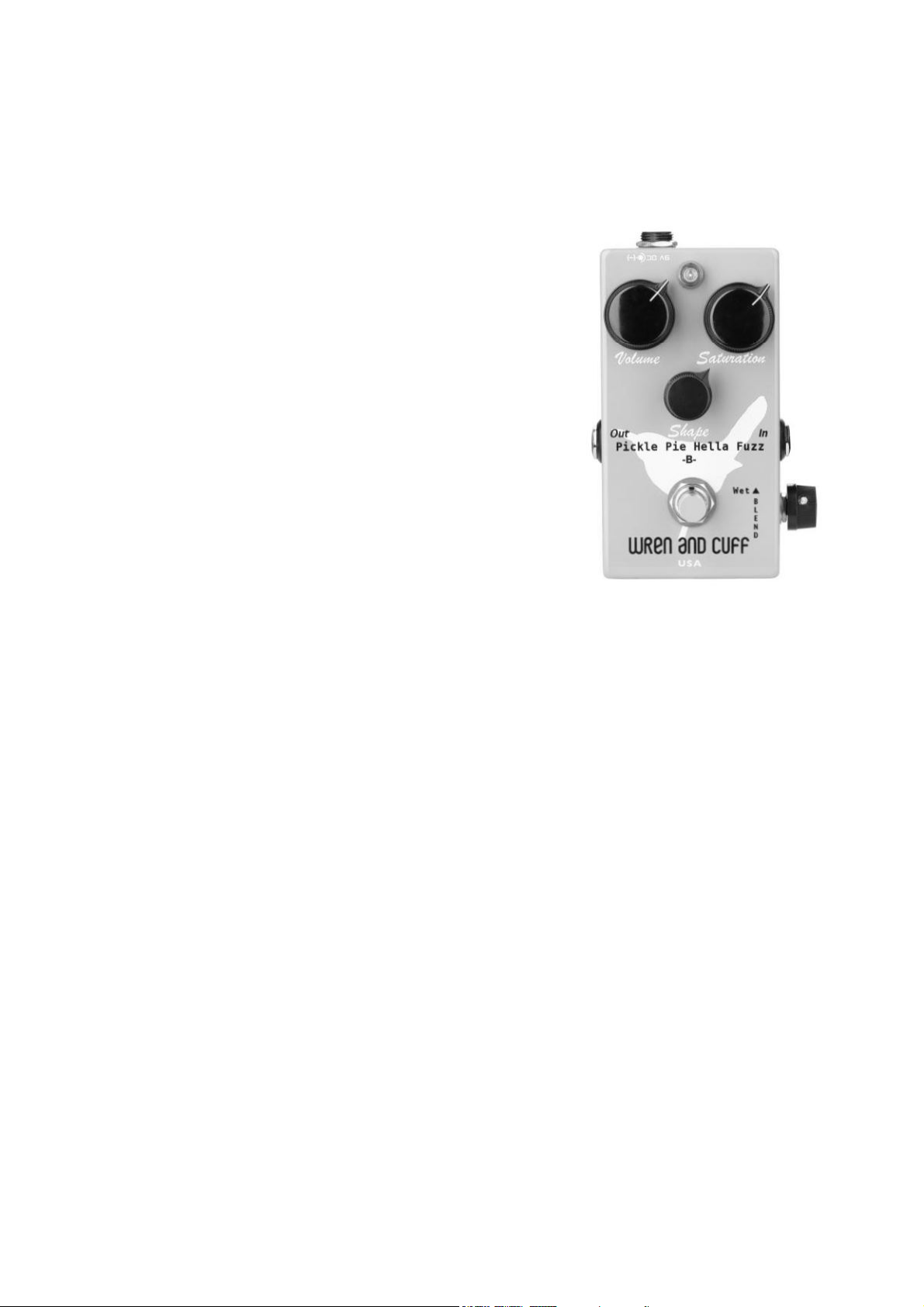
Pickle Pie B Hella Fuzz
Congratulations on your purchase of one of the best bass
distortions ever made.
One of the very first pedals in our line, this pedal has been
made since 2006 even though Wren and Cuff wasn’t
technically a company until 2008!
The Pickle Pie B he been designed from the ground up with
only two things in mind. Make a bass distortion/fuzz that can
get glorious layers of rich distortion, as well as super subtle
textured grind, and everything in between. The other goal of
this design was to make a pedal that allows a nice thick fuzz,
without your instrument getting lost in the mix.
Part of the way this is accomplished is with a line-level clean
blend to help you balance how much fuzz vs how much of
your untouched bass tones to pass through the pedal as well
as the distortion circuit itself being designed in a way that is most conducive to the low octave
realm that the bass resides in.
Here are some tips to get the most out of your Pickle Pie B:
When using the clean-blend it is important to remember that the clean volume stays wherever
you set it on the pedal with the clean blend. For instance, if you set the clean blend about half
way, approx. a 50/50 mix of dirty and clean, you'll hear quite a bit of clean signal mixed in. Start
fiddling around with the regular "volume" knob on the pedal, the fuzzy sound will go up and
down around that clean sound, but the clean volume would not change. Pretty cool huh?
Another way to approach it, if you had the pedal set all the way to dirty, no clean signal at all,
then turn the blend knob toward clean, the fuzzy volume would drop out quite a bit. To get it
good and loud again you'd just push up the regular volume on the pedal, and the clean part of
the mix would be unchanged.
Keep in mind that this pedal has plenty of low end on it’s own without the clean- blend. What
introducing the clean signal will do is add tightness, focus, and presence to your fuzzed-out
sound. That being said, use the clean-blend sparingly to achieve the richest sounds.
Page 2

DRAW
POWER
Here’s a good method to use while you’re getting
comfortable with the pedal:
•
Start off with the blend knob set to 100% “wet”
Get a sound you like.
•
•
Begin to blend some clean into the signal a little at a time. You’ll then have to turn up the
volume knob on the pedal to balance the wet/dry mix.
If you think you’ve got a good mix, hit the bypass switch. Play something, kick in the
•
pedal...any drop-out in your signal? If yes, add a bit more clean, adjust level again etc. until
you’re happy with the sound.
Enjoy your new pedal feel free to reach out if you have any questions
Thank you!
The Controls:
VOLUME
Makes it louder or not so loud when ya turn it.
SHAPE
SATURATION
BLEND
Other Info:
CURRENT
BYPASS
Controls the tone/EQ
Controls how much gain is let into the circuit
Balances your clean vs. wet signal levels
The Pickle B will draw around 5.5mA
Requires a center-negative 2.1mm barrel regulated power supply (typical
guitar pedal power unit). Please use a supply intended for effects pedals.
May also be operated with a 9V battery
Effect on/off switching is done via a 100% mechanical 3PDT foot-switch,
otherwise known as “true- bypass”
Wren and Cuff
3529 Old Conejo Rd • STE 101 • Newbury Park • CA • 91320 • USA
www.wrenandcuff.com • [email protected]
 Loading...