

Page 1
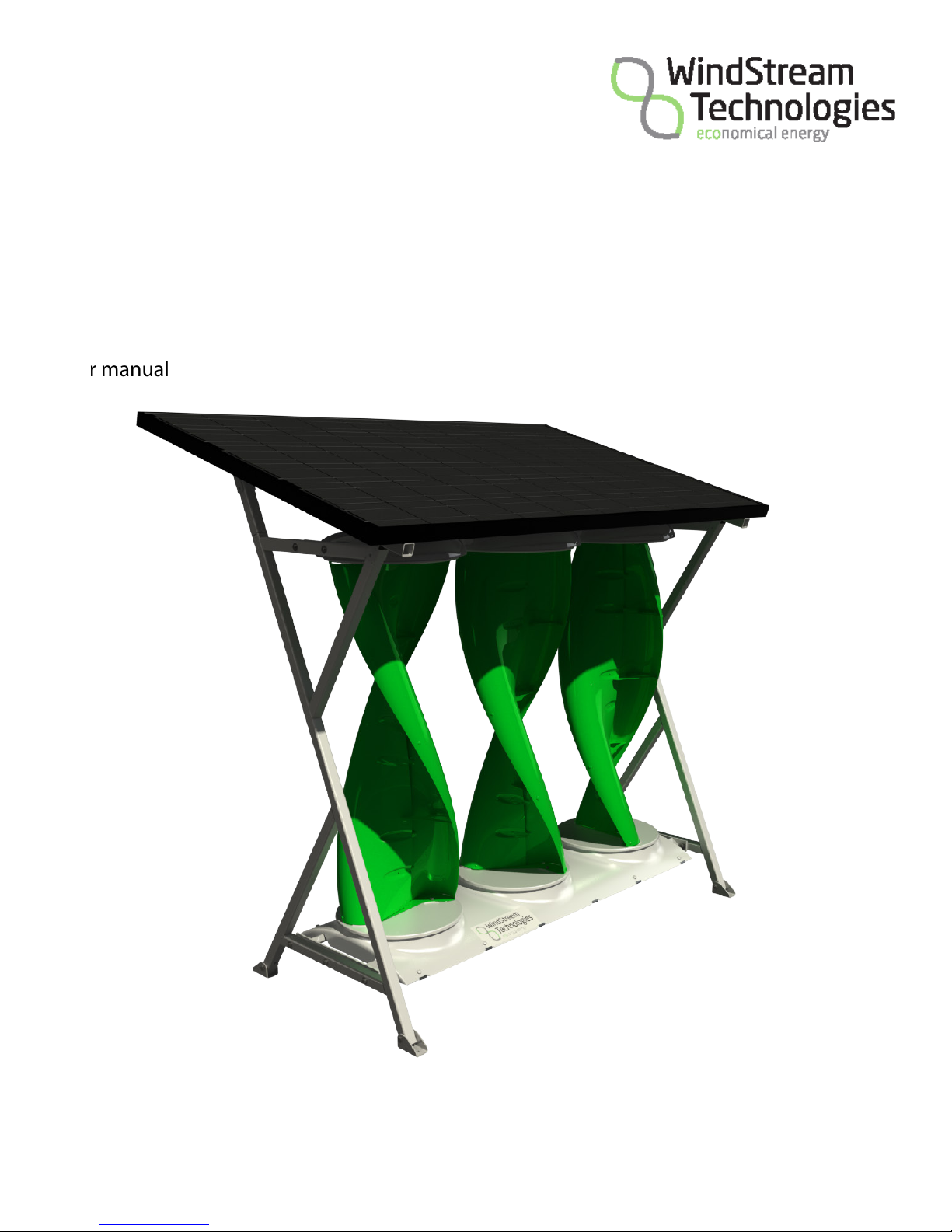
SolarMill
SM1-1P, SM1-2P, SM2-3P, SM2-5P, SM2-6P
User manual
®
Draft
SM1 - Product shown may vary slightly from specic model shipped
Version 2.01 REV 11.3.13 All rights reserved. WindStream Technologies
Page 2

Page 3

WindStream Technologies
Table of Contents
Welcome! 4
Distributor/Installer contact information: 4
Product Overview 5
Document Scope 6
Renewable Energy Incentives 6
Safety Information 7
SolarMill Siting 8
Electrical Use Cases 10
What To Expect / Troubleshooting 11
SolarMill Specications 12
Limited Warranty 13
Draft
3User Guide V2.01 Rev 11.3.13
Page 4
WindStream Technologies
Welcome!
Dear Customer,
Thank you for your purchase, and congratulations on becoming a SolarMill® owner!
We are excited that you have chosen to purchase WindStream’s renewable, hybrid energy generation
system. This manual will provide a basic overview of the product, available product congurations,
siting, installation, and operation of your SolarMill. Please read through this manual to ensure the
best possible performance and results from your installation. Technical assistance will be provided
via our customer service team. Please email us [email protected] if you need any assistance.
Thank you for your purchase, and congratulations on becoming a SolarMill owner!
Sincerely,
Team Windstream
Installers, please write down the Serial Number(s) installed and service contact information in this booklet
and give to the customer. The Serial Number is located on the underside of the frame in the base of the unit.
SolarMill Serial Number(s)
Serial number(s) Installed by
Distributor/Installer contact information:
Commissioning
date
Draft
4 User GuideV2.01 Rev 11.3.13
Page 5
WindStream Technologies
Product Overview
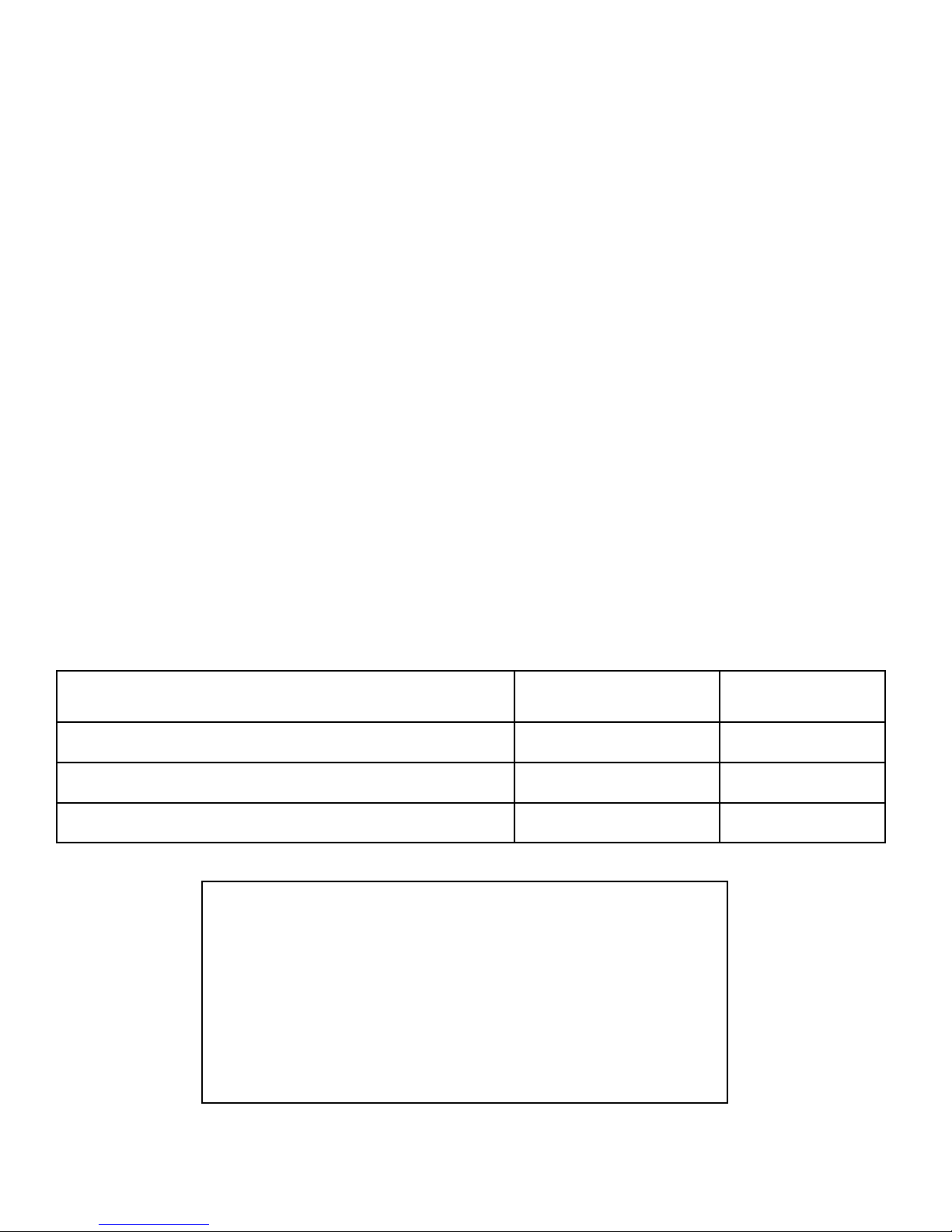
WindStream Technologies has created the SolarMill, a low-cost, highly ecient means of harnessing
both the sunlight on your site and the wind energy available from the turbulent winds present at low
altitude in both urban and rural environments.
The SolarMill is a modular, renewable energy system designed for both on and o grid applications.
This system will provide you with the lowest possible up front and operating costs, leading to a fast
return on your investment. The SolarMill utilizes 3 low-prole (one meter tall) Vertical Axis Wind
Turbines (VAWTs) mounted on a single base to collect wind power. The unique mounting geometry
allows for various solar panel congurations. The system is completely modular, allowing the system
to be daisy-chained to maximize total energy production in the simplest possible circuit.
SolarMills are highly ecient and produce power from wind speeds as low as four and a half (4.5) mph.
The company’s patented platform is a cost-eective and highly ecient distributed energy solution
currently unmatched in the marketplace. SolarMills are designed to supplement your energy needs,
reduce your energy costs and lower your overall environmental impact.
Draft
SM2-3P Conguration
5User Guide V2.01 Rev 11.3.13
Page 6

WindStream Technologies
Document Scope
This manual provides an operation overview of the SolarMill in the following congurations:
• SM1-1P
• SM1-2P
• SM2-3P
• SM2-5P
• SM2-6P
Please keep this manual in a convenient place for future reference.
Target Group
This manual is for the end user, and contains important information regarding siting, use cases,
and visual inspection of the SolarMill unit. Installation and maintenance is to be performed by an
authorized distributor or their approved professional installers.
Renewable Energy Incentives
To support and encourage the deployment of renewable energy many governments and local utilities
oer a range of incentive programs. Your authorized WindStream distributor can help you to identify
and understand the programs and requirements you may be eligible for in your local area.
In the USA www.dsireusa.org provides a resource for researching Federal state and Local
incentive programs
Draft
6 User GuideV2.01 Rev 11.3.13
Page 7
WindStream Technologies
Safety Information
WARNING: Hazardous voltages, currents, or other conditions that could cause serious bodily injury or
death exist in the equipment or may be associated with its use.
Fast moving parts. Do not install this device in a location accessible to children and/or pets.
ONLY qualied personnel such as a WindStream Technologies’ employee, Authorized installer, licensed
contractor, or WindStream certied engineer should install the TurboMill or system of TurboMills.
The installation must be installed following the guidelines established by state and local regulations.
Consult a local electrical contractor, the local planning and zoning oce and local Electric Utility for
details and regulations. This manual is not intended to be used for the installation of this product but
to serve as an overview of the Turbomill, it’s functionality, hook-up and maintenance. The SolarMill
Technical Guide is required to properly install this product.
Once installed, use caution when approaching the device. The rotating turbines can present a serious
threat that can cause injury, even at low speeds.
WARNING: Never touch the rotating turbines.
WARNING: Never try to stop the turbines by hand.
Warranty related
The warranty and safety are dependent upon the proper installation of the product.
Installations not performed by qualied personnel will not be covered under WindStream
Technologies’ limited warranty .
Turbines must not be allowed to turn until the low voltage bus is connected to charged batteries.
Turbines should be secured if the voltage drops below 30 VDC to avoid damage to the electronic
controller.
Draft
7User Guide V2.01 Rev 11.3.13
Page 8
WindStream Technologies
SolarMill Siting
Siting of a SolarMill requires knowledge of the prevailing wind, an eye toward sun exposure, and an
assessment of the architecture available for mounting the units. Talk with a distributor, or see our
siting tools at www.windstream-inc.com for help with siting.
Prevailing winds
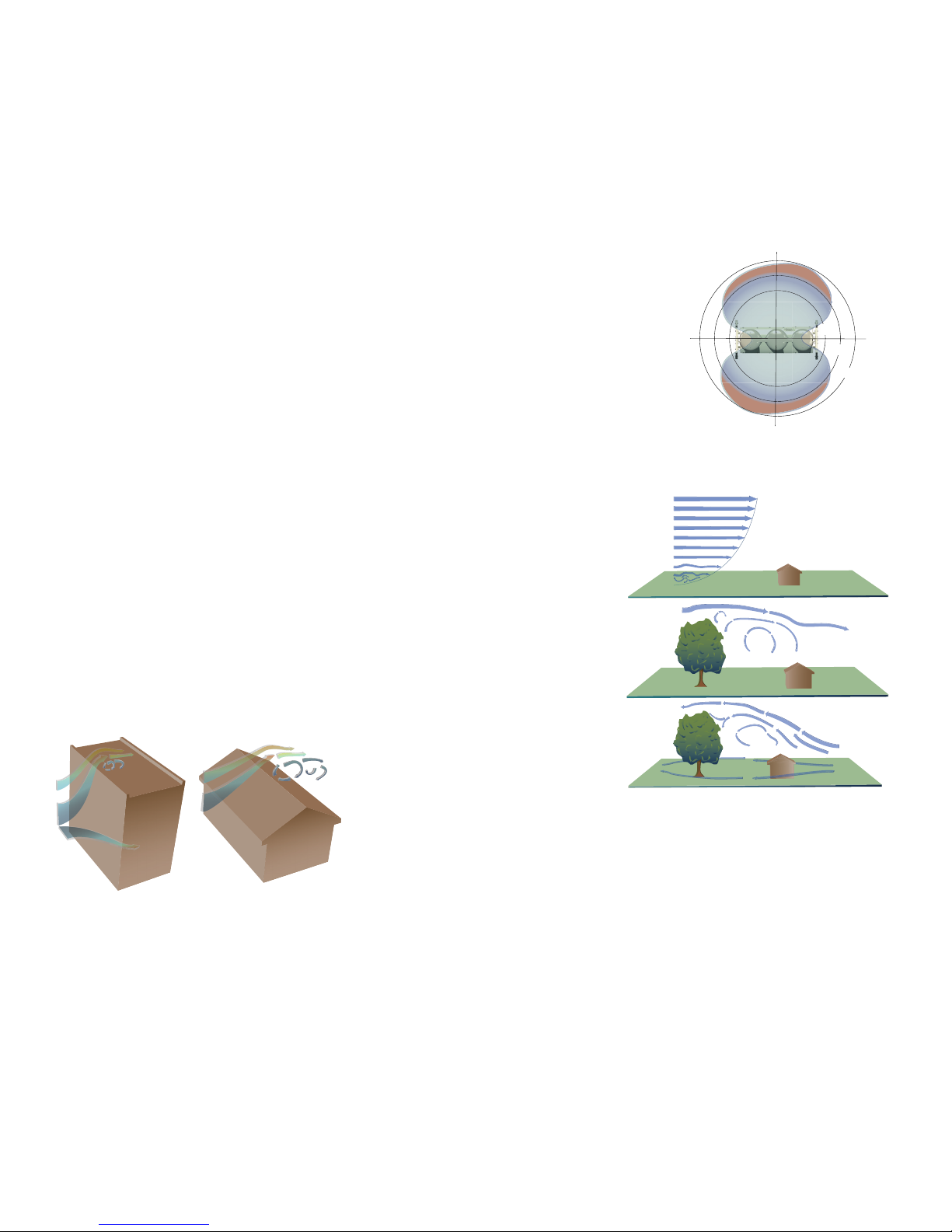
Most locations have a large proportion of their available wind power coming
from a single direction, (or sometimes 2 opposite directions). This is termed
the prevailing wind direction. The SolarMill turbines are omnidirectional, but
the row of turbines does result in some directionality. The line of SolarMills
should optimally be set up within 45 degrees of perpendicular to the
prevailing wind direction. Ultimately, the aerodynamics of the architectures
dictates positioning choices.
Architecture aerodynamics
The TurboMill is designed specically to mount directly to the roof
of a building or other structure. Consideration must be given to
the geometry of the roof structures and obstacles surrounding the
installation. Placing the turbines in a location where trees and other
structures would block the prevailing winds should be avoided.
Expected power with wind
at suboptimal angles
60%
80%
100%
The higher
the better
An ideal siting location for a building mounted turbine is on a
building that is taller than the surrounding buildings and natural
obstructions both upwind and downwind. This will minimize the
eect of the surroundings on the wind ow eects immediately
above the roof.
A location at the peak of
a pitched roof or on the
windward edge of a at
rooftop is optimal as the wind there is accelerated. Other
locations on the roof, as the gure shows, have only small
wind velocities and high turbulence. Following these siting
guidelines will help to minimize avoidable energy losses for
building-mounted wind systems.
Sun Exposure
Solar panels need to be placed where they get sun exposure throughout the day. Shading for any
portion of the day will automatically eliminate power produced during that period.
In terms of direction, xed-angle solar installations are usually optimized when they face due
south in the northern hemisphere, and due north in the southern hemisphere. Furthermore, when
balanced for winter/summer exposure, panels are tilted up at the same angle as the latitude of the
Draft
Downwind
eects
Upwind
eects
8 User GuideV2.01 Rev 11.3.13
Page 9
WindStream Technologies
location. However, deviations from optimal solar panel direction only result in very modest reduction
in power produced, allowing the units the exibility to follow the architecture when needed. For
more information on siting, see the siting resources on www.windstream-inc.com, or speak with a
distributor.
Installation Overview
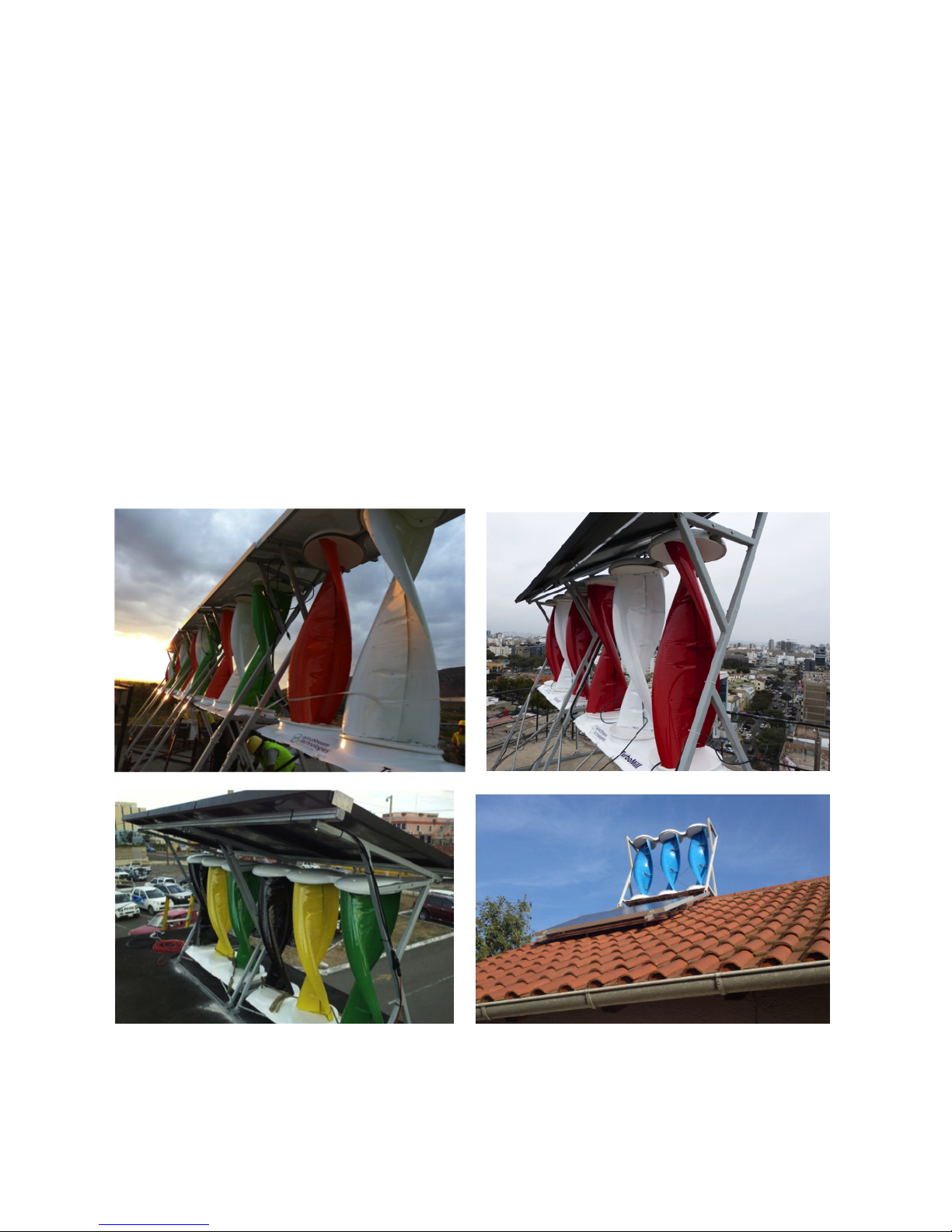
The SolarMill is designed to provide considerable exibility in it’s mounting congurations. Generally
rooftops will fall into two categories: Flat and pitched. In both cases, the product generates signicant
tipping forces in high winds, so the installation must be strong enough to withstand both considerable
tensile forces and compressive forces. This often requires adding members below the units to spread
the loads. Windstream distributors can provide these as well as any leg extension kits needed to
position the units properly. The resulting structure can be connected directly to the structure of the
building, or if it is preferred to not penetrate the roof surface and the roof is suciently strong, the
structure can be freestanding, and ballasted.
All congurations require installation by distributor approved technicians, and involvement with
permitting bodies where localities require. Discuss mounting options with your distributor.
Draft
9User Guide V2.01 Rev 11.3.13
Page 10
WindStream Technologies
Electrical Use Cases
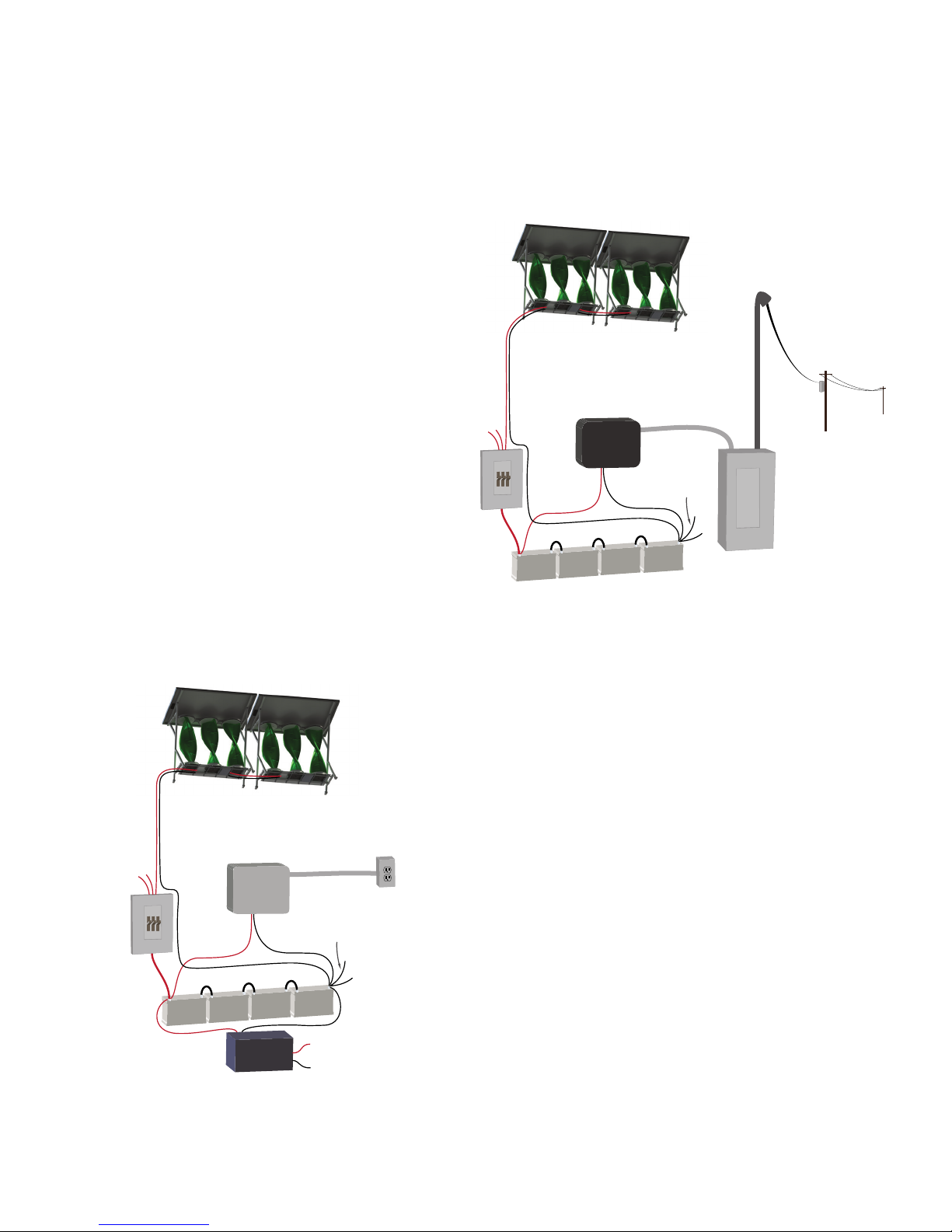
The SolarMill unit outputs DC power and that power is used to charge to a set of (4) 12V deep cycle
lead acid batteries. After the batteries, the customer has two choices on how to use this available
energy.
Grid tied
In this conguration, the bank of batteries
is connected to a grid tie inverter which
connects to the user’s electrical panel*.
This inverter pushes power back to the
grid eciently when the batteries become
fully charged. Check with your distributor
for WindStream approved inverter models
compatible with this type of connection.
*Grid connected systems may require
application and agreement with the local
power utility.
To other
SolarMill
strings
30A DC
Circuit
Breakers
Grid tie
inverter
To other
SolarMill
strings
Main
Electrical
Panel
To other
SolarMill
strings
30A DC
Circuit
Breakers
+
+
+
+
Grid-tied application
O-grid storage, with DC or AC loads
The batteries can be used to supply power to electrical
devices in o grid settings. This electrical energy can
power DC powered devices through a voltage converter
(if necessary), or can power AC devices through a
WindStream approved non-grid tie inverter**. It is
Non-Grid tie
inverter
+
+
+
+
Draft
AC Loads
To other
SolarMill
strings
important to stress that if loads are not continuously
discharging the batteries, it will likely result in wasted
energy producing potential. A full charge cycle on the
battery can occur in a short amount of time. When
the batteries are fully charged, the system will cease
energy production to protect the batteries.
**Non-grid-tie inverters are not intended to push
power to the grid.
12 VDC Loads
DC-DC Converter
O-Grid application
10 User GuideV2.01 Rev 11.3.13
Page 11

WindStream Technologies
What To Expect / Troubleshooting
The SolarMill unit is designed to be maintenance free to the user. However, it is important to know
what to look for when observing your SolarMill Installation.
Normal operation
The wind turbines should run silently and easily. All turbines should begin spinning in a light breeze.
Note that at the very lowest wind speeds, it is not unusual for the turbines to start up at slightly different wind speeds. However, if a turbine still is not turning at a higher windspeed, or is wobbling or
causing a persistent noise, please call your distributor or installer for service to ensure the product
is operating properly and all the fasteners are tightened.
Stormy weather
The turbines are equipped with an automatic mechanical brake to prevent excessive turbine rpm
in extremely windy conditions. Each turbine may make a “click” noise in high winds when the brake
engages. The brake resets automatically when the wind goes below 5 mph. Equipment should be
secured or removed in the event of an impending hurricane. Please call your distributor with
assistance.
Power production
If you have purchased an add-on monitoring package, your SolarMill should be producing at least
some power whenever the sun is shining. If the monitoring graph shows no power being produced, it
is possible that there is an electrical connection problem. It is important to contact your distributor
or installer to investigate the cause, because a wiring problem can damage the SolarMill control
electronics..
Draft
11User Guide V2.01 Rev 11.3.13
Page 12
WindStream Technologies
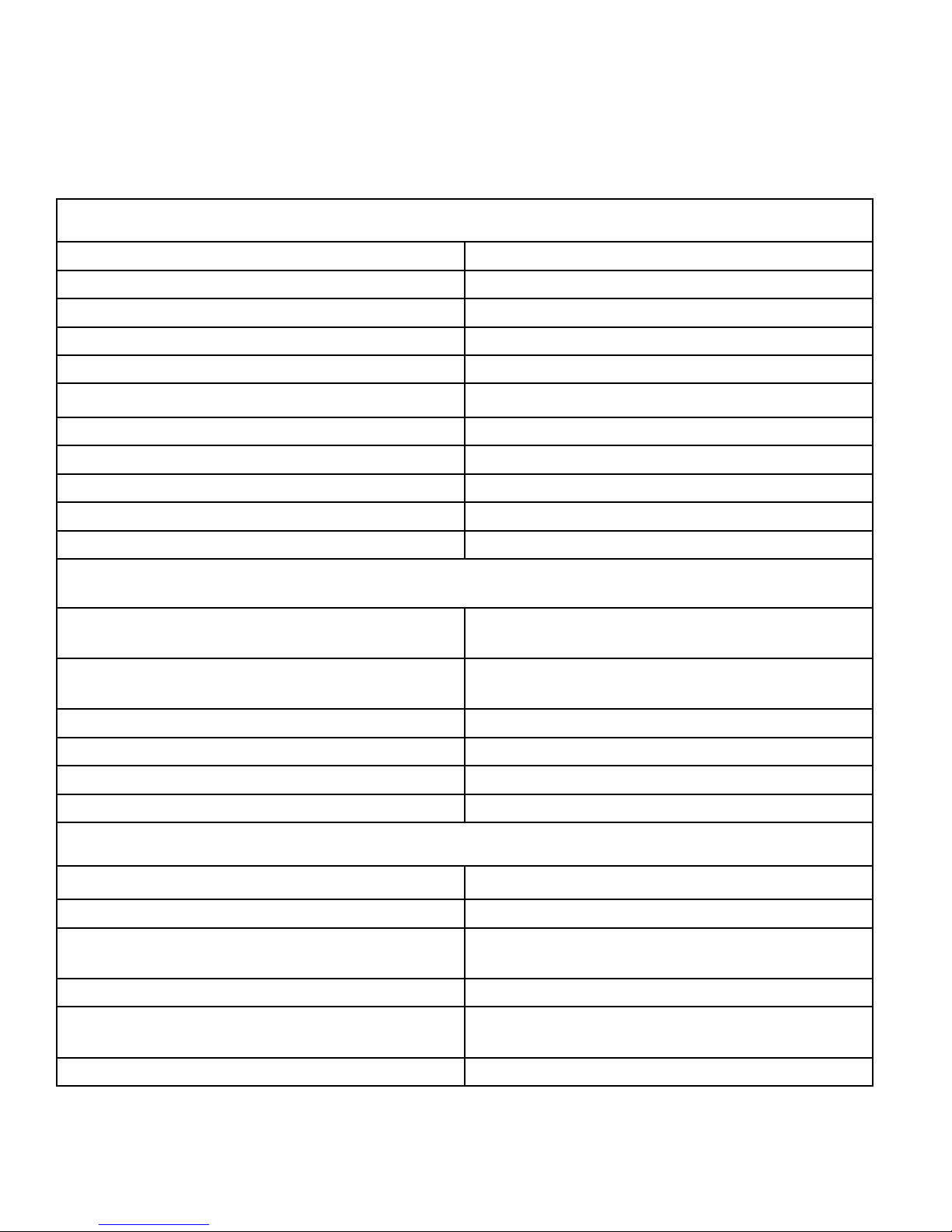
SolarMill Specications
WIND GENERATION OVERVIEW
Axis Vertical Axis
Height (wind portion only) 51.2 in (1.3 m)
Footprint width (SM1) 52 in (1.3 m)
Footprint width (SM2-3P) 116 in (2.95m)
Footprint depth 28 in (0.70 m)
Swept Area 1,519 in2 (0.98 m2)
Rotor Diameter 12.99 in (0.33 m)
Blade Materials Galvanized G-90 Steel
Corrosion Prevention PPG Spectracron® 360 2K
Weight 101 lbs (45.8 kg) Turbine and structure only
Design Life 20 Years
PERFORMANCE
Energy Potential (Per SM1 Unit)
3 turbines, 1 panel
Energy Potential (Per SM2-3P Unit) -
6 turbines, 3 panels
Rated Power Output (wind only) 143 W @ 11 m/s
Maximum Power Output (wind only) 500 W @ 17 m/s
Cut-In Wind Speed 4.5 mph or 2 m/s
Cut-Out Wind Speed 38 mph or 17 m/s
ELECTRICAL INFORMATION
Maximum Bus Voltage 56 VDC
Maximum Current 30 Amps per string (more in parallel)
Electrical Connection
700 kWh per year @ 5 m/s ave wind and optimal
sun exposure
1600 kWh per year @ 5 m/s ave wind and
optimal sun exposure
On-Board Battery Charge Controllers
Grid-Tied Inverter (Optional)
Generator Type Brushless, Permanent Magnet Generator
Draft
PV module type
Recommended battery type 12V Deep Cycle AGM Lead acid
12 User GuideV2.01 Rev 11.3.13
Monocrystalline, 250 W
(may dier in some markets)
Page 13

WindStream Technologies
LIMITED WARRANTY. WindStream Technologies, Inc. warrants to the original Purchaser only
that the Products will be free from defects in workmanship and material for 5 years after
the shipment date (the “Warranty Period”). WindStream’s warranty will not extend to any
Products that have been subjected to: (a) improper installation or storage; (b) ordinary wear,
tear or deterioration of the Products; (c) operation or maintenance not in accordance with
applicable operating instructions; (d) accident, damage, abuse or misuse; (e) modication
by any party other than WindStream or (f) abnormal or unusual operating conditions or
applications, including any application in any way dierent from that for which such
Product was designed. Any modication, tampering or manipulation of the Products, any
alteration of any parts or any substitution of parts not provided by WindStream or not
authorized by WindStream shall render void all of WindStream’s warranties with respect
to the Products. WindStream MAKES NO OTHER WARRANTIES, EXPRESS OR IMPLIED,
REGARDING THE PRODUCTS AND WindStream SPECIFICALLY DISCLAIMS THE IMPLIED
WARRANTIES OF MERCHANTABILITY, FITNESS FOR A PARTICULAR PURPOSE AND FREEDOM
Limited Warranty
FROM INFRINGEMENT CLAIMS.
Draft
All specications and content of this document are subject to change without notice
13User Guide V2.01 Rev 11.3.13
 Loading...