

Page 1
© by WilTec Wildanger Technik GmbH Seite 1
http://www.wiltec.info
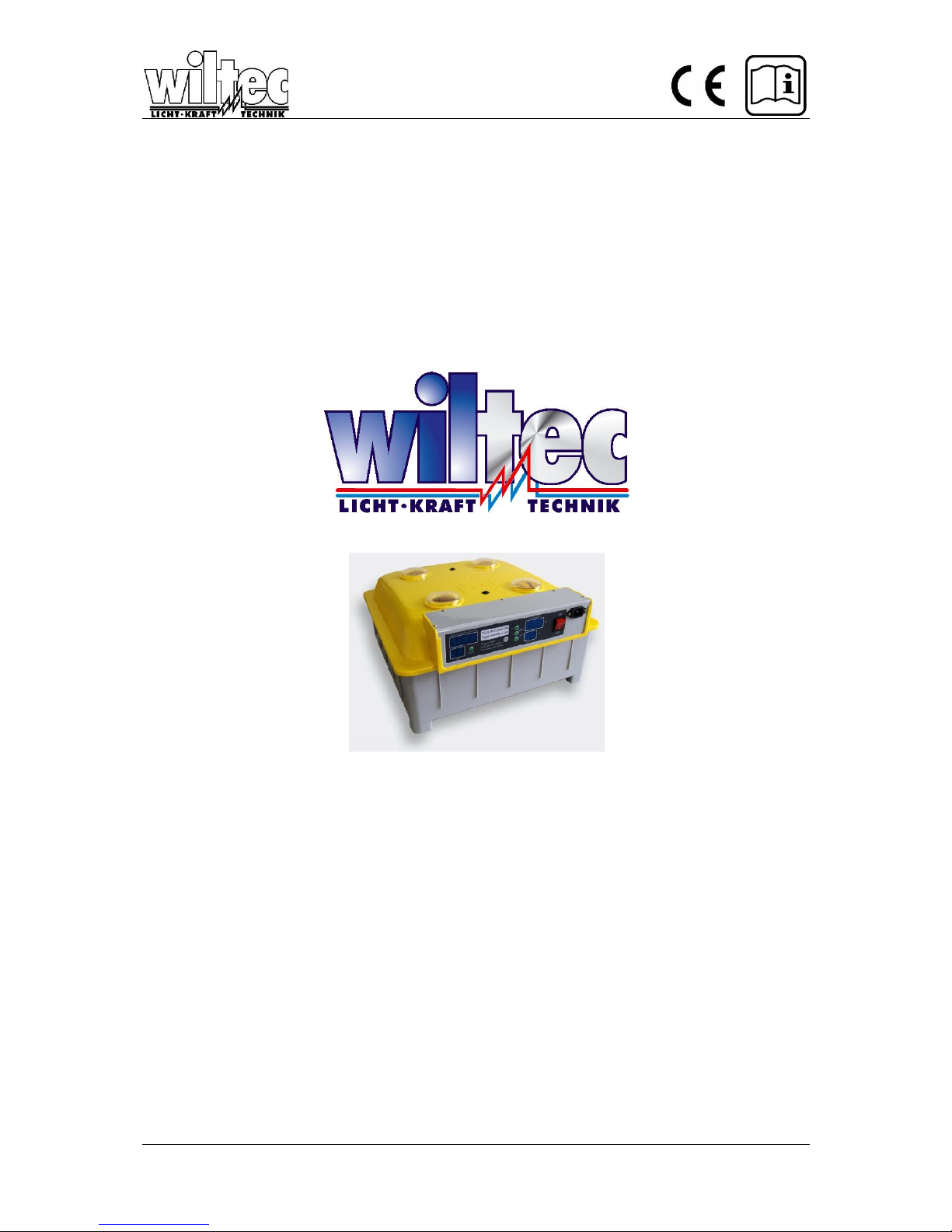
Bedienungsanleitung
Brutmaschine
Artikel 5003
6
Vor Inbetriebnahme Bedienungsanleitung und Sicherheitshinweise lesen und beachten
Read and follow the operating instructions and safety information before using for the first time.
Avant la mise en service, lisez le mode d’emploi et les consignes de sécurité et respectez-les.
Technische Änderungen vorbehalten!
Durch stetige Weiterentwicklungen können Abbildungen, Funktionsschritte und technische Daten geringfügig abweichen.
Aktualisierung der Dokumentation
Haben Sie Vorschläge zur Verbesserung oder haben Sie Unregelmäßigkeiten festgestellt, nehmen Sie
bitte Kontakt mit uns auf.
Page 2

© by WilTec Wildanger Technik GmbH Seite 2
http://www.wiltec.info
The information contained in this document is subject to change without prior notice. No part of this
document can be copied or duplicated in another form without the prior written consent of Wiltec Wildanger Technik GmbH. The Wiltec Wildanger Technik GmbH assumes no liability for any errors in this
user manual or the connection diagram.
Although Wiltec Wildanger Technik GmbH has made every effort to make sure that this user manual is
complete, accurate and updated, errors cannot always be avoided. In the event of problems with this
user manual please complete and send this form back to us.
FAX-notification (+++49 2403 55592-15),
from: ________________________________________
Name: ________________
Firm:_____________________
Tel/Fax:__________________
I would like to report the following mistakes:
___________________________________________________________________
Customer Service Wiltec Wildanger Technik GmbH
e-mail: [email protected]
Tel:++ +49 2403 55592-0
Introduction
Thank you for purchasing this quality product. To minimize the risk of injury by means of fire or
electric shock we urge that our clients take some basic safety precautions when using this
device. Please read the operation instructions carefully and make sure you have understood its
content.
Always use a grounded power connection with the appropriate mains voltage. You can find the corresponding mains voltage on the type plate. If you have any doubts about the connection being
grounded, have it checked by a qualified professional. Never use a faulty electric cable.
Do not inspect the electrical part of the pressure pond filter in a wet or damp environment or when you
are wet yourself and protect it from direct sunlight. Install this device in a safe location so that nobody
can step on the cable, fall over or damage it. Disconnect the power plug before cleaning it and use
only a damp cloth for cleaning. Avoid using cleaning agents and make sure that no liquid enters the
electrical part of the pump.
The electric part of the device contains no parts that can be inspected or serviced by the user. Leave
the maintenance, adjustment and repair to qualified technical personnel. In case of unauthorised intervention the 2-year warranty is no longer valid! Keep these operation instructions safe.
Page 3

© by WilTec Wildanger Technik GmbH Seite 3
http://www.wiltec.info
Sicherheitshinweise
VORSICHT:
The device is not intended for use by persons (including children) with impaired or limited physical,
sensory and mental abilities or lack of experience and/or real knowledge, unless they are supervised
by a person responsible for their safety or you follow the instructions made by this person how to use
the device correctly.
Children should be supervised to make sure that they do not play with the device.
ATTENTION:
Run a visual inspection of the device before every use. Do not use the device if the safety ap-
pliances are damaged or worn out. Never override safety regulations.
Use the device exclusively according to the intended purpose stated in the instructions for
use.
You are responsible for the safety of the working environment.
If the cable or the plug is damaged due to external influences the cable must not be repaired!
It has to be replaced with a new one. This work can be carried out only by an electrician.
The voltage indicated on the type plate of the device of 230 Volt alternating voltage has to cor-
respond to the existent mains voltage.
Never lift, carry or fixate the device by using the power cable.
Avoid exposing the appliance to a direct water jet or rain.
The user is responsible for the compliance with location specific safety and installing regula-
tions. (Ask an electrician).
In case of malfunction the repair work can be carried out only by a qualified electricial or the
WilTec-service.
Please do not try to adjust the temperature parameters in the machine when hatching eggs.
The parameters are set by the factory. Chicken could be hatch successfully
Page 4

© by WilTec Wildanger Technik GmbH Seite 4
http://www.wiltec.info
Instruction:
What you will find inside your packaging:
Incubator
Power cord
Instruction booklet
KEY:
1. Testing your unit for the first time.
2. Setting the temperature.
3. Temperature alarm parameter settings (AL and AH)
4. Humidity alarm parameter settings (AS)
5. Calibrating temperature sensor reading (CA)
6. Temperature Upper and lower limit set (HS and LS)
7. Heating Element (HU and HD)
8. Display Symbols
9. Using your incubator
1. Testing you unit for the first time:
1.1 Connect the egg turner plug to the control plug inside the egg compartment.
1.2 Connect the provided power supply to the back of the unit and your power source.
1.3 Switch on your power source.
1.4 Switch your unit on.
1.5 You will hear an alarm sounding due to low temperature/humidity.
1.6 Press any of the green buttons to cancel the alarm.
1.7 By opening the incubator and filling the water channels you will notice the humidity
reading increase.
1.8 Let the unit run for 2 hours to note the egg turner turning.
2. Setting the temperature
2.1 Push “SET” once.
2.2 Push “+” or “-“ to select the desired temperature.
2.3 Push “SET” once more to exit.
- These incubators are factory set at 38
o
C, I found the chicks hatch at day 19 to
20 meaning the temperature being to high. Using the method as described
above. I recommend you set the temperature at 37.6oC.
3. Temperature alarm parameter settings
(AL and AH)
The temperature alarm is factory set to sound at 1oC over or below the set temperature. This
is sufficient and you do not need to make any changes to these settings.
Page 5

© by WilTec Wildanger Technik GmbH Seite 5
http://www.wiltec.info
3.1 Low temperature alarm parameter setting. (AL)
3.1.1 Press and hold “SETT” for 3 sec.
3.1.2 Push “+” or “-“ until code “AL” appears in the temperature screen.
3.1.3 Push “SET”
3.1.4 Push “+” or “-“ to adjust to your desired lower alarm setting.
3.2 Higher temperature alarm parameter setting (AH)
3.2.1 Press and hold “SETT” for 3 sec.
3.2.2 Push “+” or “-“ until code “AH” appears in the temperature screen.
3.2.3 Push “SET”
3.2.4 Push “+” or “-“ to adjust to your desired higher alarm setting.
4. Humidity alarm parameter settings
(AS)
The humidity alarm is factory set to sound at 45% humidity. This is sufficient and you should
not deed to make any changes to these settings.
4.1 Low humidity alarm parameter setting. (AS)
4.2 Press and hold “SETT” for 3 sec.
4.3 Push “+” or “-“ until code “AS” appears in the temperature screen.
4.4 Push “SET”
4.5 Push “+” or “-“ to adjust to your desired lower alarm setting.
- By filling both water channels the humidity should rise to 60% dependant on the
local humidity levels and the time of year. I tend to fill both my water channels
every 4 to 5 days and at day 18 when I remove the egg trays I over fill them to
increase the humidity to about 65%.
5. Calibrating temperature sensor reading
(CA)
The thermometer correct reading is set at 0oC. The reading given by the thermometer can be
adjusted if you find that the temperature reading is incorrect using a calibrated thermometer.
5.1 Calibrating the temperature sensor measurement. (CA)
5.2 Press and hold “SETT” for 3 sec.
5.3 Push “+” or “-“ until code “CA” appears in the temperature screen.
5.4 Push “SET”
5.5 Push “+” or “-“ to adjust to the correct measurement.
- Note that the adjustment is the difference between the thermometer readings
and should be adjusted with “- “ if the temperature reading of the incubator is to
high and normal value (indicating + value) if the incubator reading is too low.
6. Temperature Upper and lower limit set
(HS and LS)
HS - (High Set) and LS - (Low Set) set the limit of the setting range of the desired temperature setting (incubating temperature adjustment)
If HS is set as 38.2 and LS is set as 37.4, then the desire temperature (incubating temperature
adjustment) can only be changed from 38.2 to 37.4, so the minimum temperature shall be
limited to 37.2 even if the “-“ is kept on pressing. The same goes for the High Set Limit.
Page 6

© by WilTec Wildanger Technik GmbH Seite 6
http://www.wiltec.info
- This is to prevent accidental out of range temperature setting.
7. Heating Element
(HU and HD)
Parameter HU and HD, set by factory and is not supposed to be modified by user.
HU - Default setting is 18 ( I believe it’s Heat Up power setting, controlling the start up power
to the heater to bring it up to the desired temperature setting (incubating temperature adjustment). Setting Range 1~90.
HD - Default setting is 11 ( I believe it’s Heat Down power setting, controlling the power to
maintain the heater at the desired temperature setting (incubating temperature adjustment).
Setting Range 1~80.
- These are settings I have never adjusted or attempted to adjust as the heating
unit starts and stops within 1
o
C of my set temperature of 37.6oC.
8. Display Symbols
Number
Symbol
Meaning
Factory Setting
3.1
(above)
AL
Low temperature alarm parameter setting
1oC
3.2
(above)
AH
Higher temperature alarm parameter se
t-
ting
1oC
4.1
(above)
AS
Low humidity alarm parameter setting
45%
5.1
(above)
CA
Calibrating the temperature sensor reading
0oC
6
(above)
HS
Temperature higher limit set
39.5oC
6
(above)
LS
Temperature lower limit set
30oC
7
(above)
HU
Heating starts
18
7
(above)
HD
Heating stops
11
9. Using your Incubator
1. Test your incubator to see if it functions properly.
2.Connect the egg turner plug to the control plug inside the egg compartment.
3. Fill one or both water channels depending on local humidity levels.
4. Set the eggs with the pointy side down.
5. Close the lid and switch on the incubator.
6. Press the reset button (left green button) to reset and start the day counter from “0”.
(this will also rest the egg turning countdown back to 1:59)
7. Keep an eye on the humidity reading and fill the water channels when needed.
(normally every 4 days)
8. At day 18 you should remove the tray with the turning mechanism and place the
eggs on top of he bottom grid.
Page 7

© by WilTec Wildanger Technik GmbH Seite 7
http://www.wiltec.info
9. At the same time it is important to fill both water channels to increase the
humidity. (this is very important to ensure that the eggshells are soft enough for
the chicks to break through.)
10. You should never open the lid when the chicks start to hatch. If you do, the loss of
humidity will cause the eggshells of the unhatched eggs to dry out and they won’t
able to break through the egg.
Incubating tips
Egg and incubator hygiene
Proper hygiene is essential to achieve good hatching results. Poor hygiene causes chicks to die
in their first 10 days of life.
Only clean eggs should be used for incubation. Dirty eggs are potential carriers of diseases
that thrive and multiply in the ideal heat and moisture conditions of the incubator. If you need
to incubate dirty eggs, wash them first in warm water (44-49
o
C) that contains disinfectant at a
rate recommended by the manufacturer (most household disinfectants are suitable), and dry
the eggs quickly after washing using separate paper towels.
Do not soak eggs for longer than four minutes to avoid affecting fertility and do not soak eggs
in cold water, as it encourages bacterial penetration through the eggshell.
Fumigating eggs immediately after collection also helps with hygiene. A suitable fumigant is
formaldehyde gas, which is made by mixing 1 part (by weight) of potassium permanganate
(Condy´s crystals) with 1.5 parts (by volume) of formalin (see Table 1 for the correct amounts
for each application). Place the chemicals in a dish on the floor of the incubator. Place the
Condy´s crystals into the dish first and then pour the formalin over it. Shut the incubator door
quickly and vacate the room.
For proper fumigation, run the machine normally with the correct temperature and humidity.
After 20 minutes, open the vents or the door and air the machine for a few minutes. Again,
vacate the room.
Healthy stock
It is important that eggs from only a healthy flock are used for hatching, as some diseases can
be transmitted through the egg. The egg-transmittable diseases to be most aware of are salmonella infections, fowl typhoid and Mycoplasma gallisepticum.
Eggs laid by birds infected with disease may fail to hatch. Of those that do hatch, some birds
may die during brooding, and the survivors may act as carriers and infect healthy chicks.
Do not add eggs from unknown sources to make up numbers, as you risk infecting your flock.
Breeding stock nutrition
The egg provides a complete food store for proper embryo development except gaseous oxygen, which enters the egg through pores in the shell. Breeding stock must be fed a wellbalanced diet to fully meet the embryos' nutrient requirements.
The deficient nutrients are usually vitamins or minerals. A deficiency of these in the breeders'
diet may not show any ill effects in the breeders, though hatchability may be affected, which
is why different categories are fed specific diets. Nutritional deficiencies, such as a lack of
riboflavin, are the main causes of embryo mortality during the middle stage of incubation (i.e.
between the 12th and 14th days).
Hens' vitamin and mineral requirements for laying eggs are lower than those of breeders. The
breeder's diet should begin six to eight weeks before hatching eggs are required, with particu-
Page 8

© by WilTec Wildanger Technik GmbH Seite 8
http://www.wiltec.info
lar attention to vitamin A, D3, riboflavin, pantothenic acid, biotin, folic acid, vitamin B12 and
the mineral manganese.
Deficient
nutrient
Result
Riboflavin
Leads to poor hatchability with a high incidence of malformed embryos,
which are excessively moist
Pantothenic acid
Lowers hatchability and causes a high incidence of apparently normal embryos to die over the last two or three days of incubation
Biotin, choline
and manganese
Leads to abnormal development of the embryo and a condition known as
enlarged hock/slipped Achilles tendon
B12
Leads to a rapid decrease in hatchability and a progressively poorer survival
of chicks that do hatch
Age of breeding stock
If the male bird is active, not too large or overweight, and fertile, his age has little or no effect
on hatchability or the vigour of the chicks. The older the cock bird, the fewer hens he can mate effectively without loss of fertility. Fertility and hatchability also decrease, as the hen's egg
production drops with age, and is highest during her first and second laying season.
Hatching eggs selection
It is important to consider the size, shape and shell texture when selecting eggs for hatching.
Best results are obtained by setting eggs that are around the average egg weight for the type of
poultry.
Since egg size is highly heritable, the rejection of small eggs will help to maintain good egg
size in the progeny. Extra large or small eggs are a handicap in the incubator. The egg shape
is hereditary, so continual use of badly shaped eggs perpetuates and increases this fault.
Only eggs with good shell texture should be used for hatching. Shell texture is not heritable;
however, weak-shelled eggs may crack, enabling bacteria to enter or excessive moisture to be
removed from the egg. Porous-shelled eggs increase the rate of moisture loss during storage
and incubation. Hair cracks that are too small for the naked eye to detect can be found by
placing a strong light behind the egg. Egg colour does not affect hatchability.
First Season Eggs
Any fertile egg will hatch in the right conditions but "best practice" is to only hatch hen eggs
of 12 months and older, even 12 month old hen eggs can be smallish depending on when she
hatched. If a chook is hatched in August, Sept Oct, it will produce hatchable eggs at a younger
age than one hatched in January Feb Mar. They will have matured and got their pullet size
eggs over and done with through winter, whereas a January hatched pullet is too young to
have started laying before winter therefore their pullet eggs won't start until Spring, BUT because they are older and stronger when they come into lay, their eggs get bigger quicker if
that makes sense. Pullet eggs will produce small chicks and more often than not these will
become smaller hens, who will in turn have smaller eggs who will have smaller chicks and so
on.
In saying that the chicks seem to be just as healthy and if the eggs are a reasonable size I
would just go for it, start adding meat bird crumble to their starter crumble at about 4 weeks
old and that will give them a really good protein boost and they will grow better. Just don't
hatch any very petite eggs.
Collection and storage of hatching eggs
Page 9

© by WilTec Wildanger Technik GmbH Seite 9
http://www.wiltec.info
Embryonic development continues if fertile eggs are maintained above 20°C. Therefore, it is
essential to collect eggs frequently and store them under cool conditions.
Eggs should be collected at least twice daily, and preferably three or four times. For best
hatchability, eggs should be stored no longer than a week before setting.
The best temperature for storing hatching eggs is 10 to 16°C. Storage humidity is also important. Humidity below 70 per cent causes the eggs to lose excessive moisture. Below are the
correct wet-bulb readings for a given humidity at the storage temperature. If you do not have a
specific cool room, store the eggs in a cool, dry place. Eggs stored under conditions where the
temperature and humidity vary tend to start and stop incubation, resulting in pre-incubation
and lower hatchability.
Dry bulb
Wet-bulb reading
60% relative humidity 70% relative humidity 80% relative humidity
°C °C °C °C
10 6.8 7.4 8.2
11.1 7.6 8.3 9.3
12.2 8.4 9.4 10.5
13.3 9.6 10.6 11.4
14.3 10.7 11.5 12.1
15.3 11.5 12.2 13.3
Other factors affecting success
Rough or careless handling when transferring eggs to the hatching compartment or prolonged
delays during transfer, resulting in chilling, may cause embryo deaths.
Excessive inbreeding of poultry may result in lethal or semi-lethal genes, which also cause
mortality during incubation.
Consistent temperature
A hen's normal body temperature varies between 40.5 and 41.7oC, depending on the bird and
her degree of activity at the time. The optimum temperature at the centre of an incubated egg
is approximately 37.8
o
C. When hatching under a broody hen, the upper surface of the egg
may reach 39.2 to 39.4
o
C but the egg's centre will not exceed 37.8°C.
In modern fan-forced incubators, the manufacturer's recommended temperature setting is between 37.5 and 37.64oC. The lethal temperature for eggs is 39.4oC. The constant and rapid air
movement in this type of incubator keeps the eggs' temperature the same as the incubator's.
An embryo's heat production increases as incubation progresses. The temperature increase is
greatest during the last two days due to embryo activity. Egg temperature rises up to 2
o
C
above the incubator's ambient air temperature, which is why the temperature is often lowered
by up to 1
o
C.
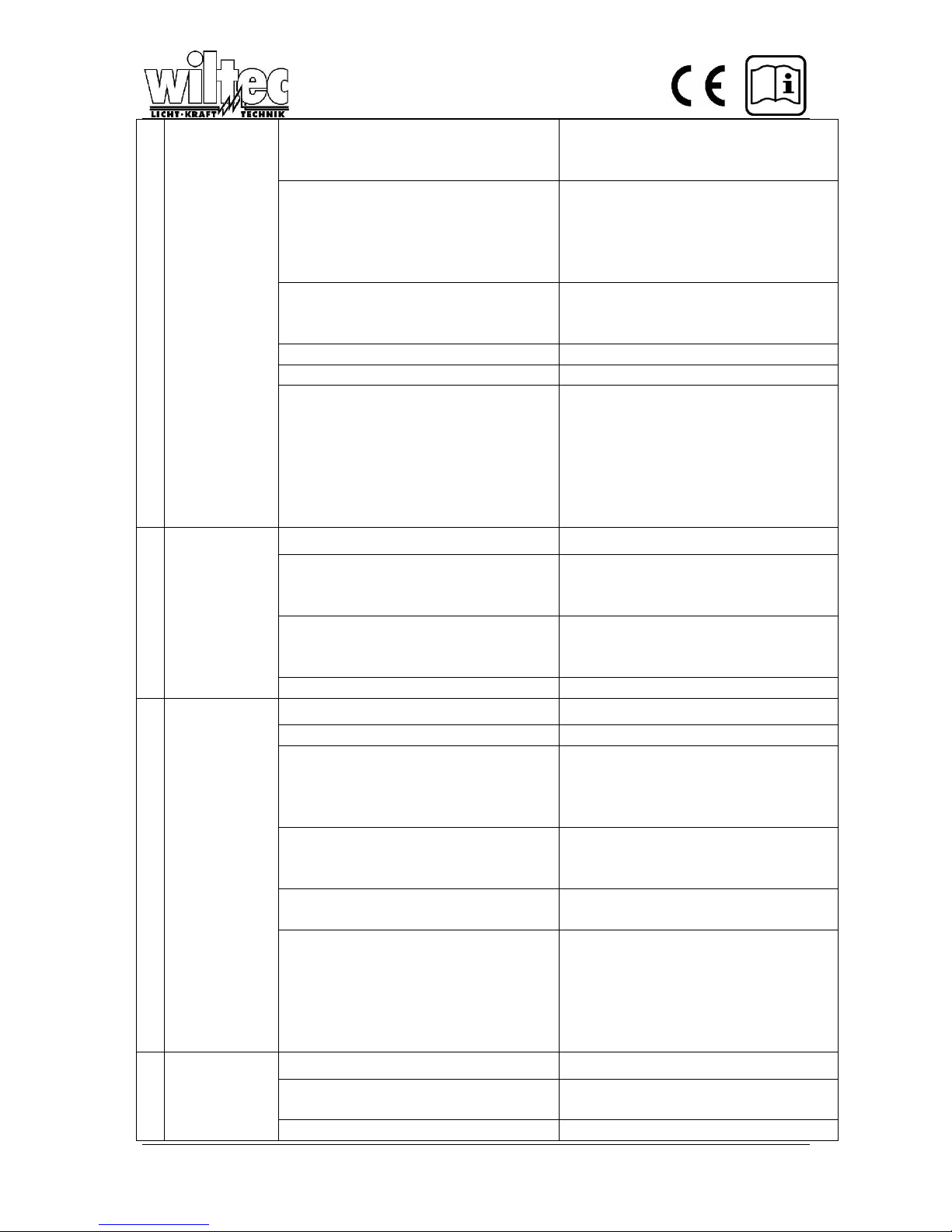
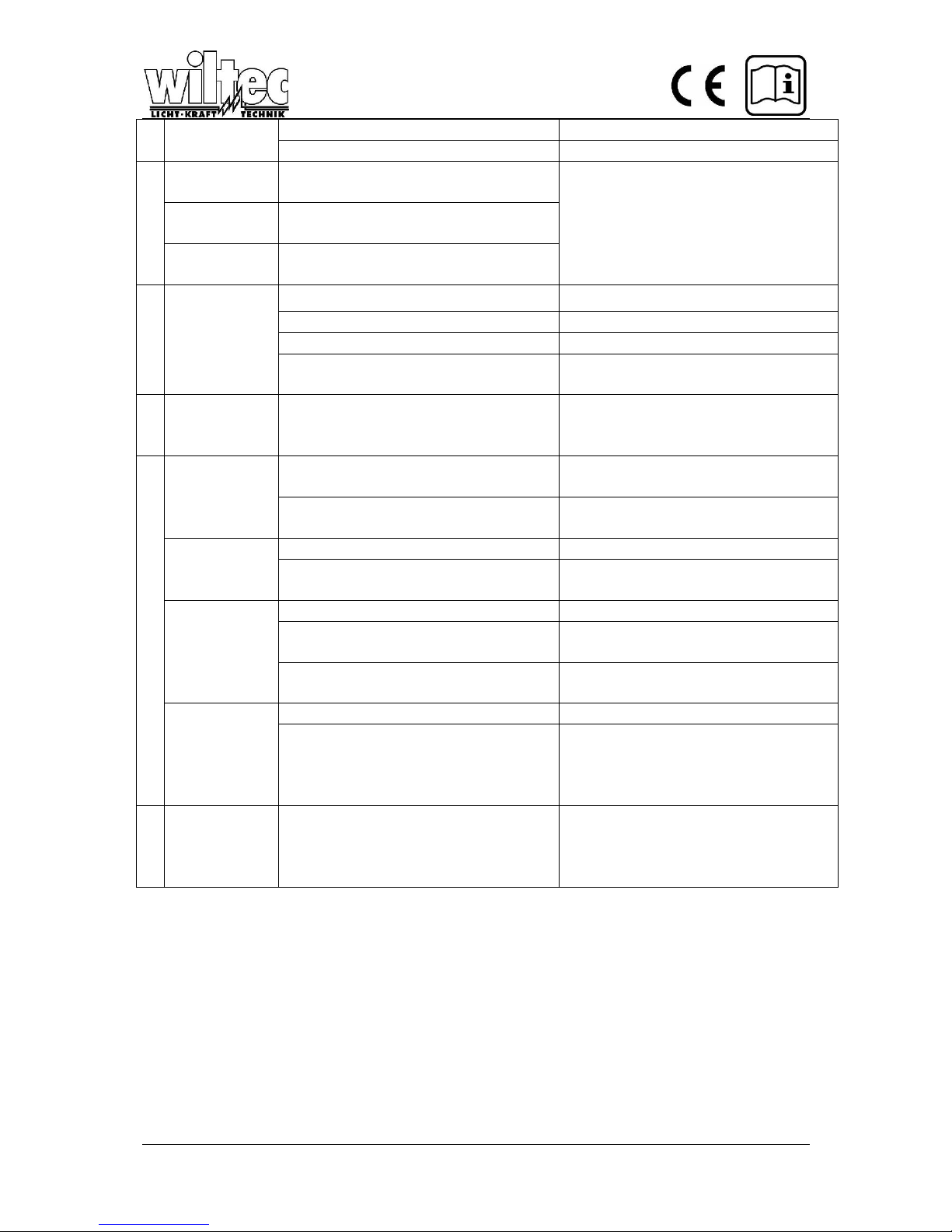
Incubation faults and causes checklist
How to locate and rectify faults in incubation technique
# Problem Probable causes Action
1
Too many
(a) Wrong proportion of males to
females
(a) Check mating ratios according to
breeder’s recommendations
Page 10
© by WilTec Wildanger Technik GmbH Seite 10
http://www.wiltec.info
clears or
infertile
eggs
(b) Male is undernourished
(b) See that cockerels are able to feed
separately, otherwise hens may eat
all the feed
(c) Interference among males during
mating
(c) Do not use too many males; always rear breeding males together;
erect temporary solid partitions between breeding pens or inside large
pens
(d) Damaged combs and wattles
among males
(d) See that housing is comfortable
and proper drinking fountains are
provided for breeding pens
(e) Male is too old (e) Replace old birds
(f) Male is sterile (f) Replace with another male
(g) Eggs kept too long or under the
wrong conditions before setting
(g) Do not keep hatching eggs longer
than seven days; store them in a cool
temperature (10-l5.6°C) at relative
humidity around 75-80%
2
Blood rings,
which indicate very
early embryonic death
(a) Incubator temperature too high or
low
(a) Check thermometers, thermostats
and electricity supply; follow manu-
facturer’s instructions
(b) Incorrect fumigation procedure
(b) Use the correct amount of fumi-
gant. Do not fumigate between 24
and 96 hours after setting
(c) As in 1(g) (c) As in 1(g)
3
Many deadin-shell
(a) As in 2(a) (a) As in 2(a)
(b) Eggs not properly turned
(b) Turn the eggs regularly at least
three to five times a day; always turn
the eggs in the reverse direction each
time
(c) Breeding stocks' nutrition is deficient if deaths are high in days 10
and 14
(c) Check that feeding is sound
(d) Incubator's ventilation faulty
(d) Increase ventilation by normal
means
(e) Infectious diseases
(e) Use eggs only from healthy
stock; check that hatchery hygiene is
sound and carried out regularly
4
Piped eggs
failing to
hatch
(a) Insufficient moisture in the incubator
(a) Increase the evaporating surface
of water or the sprays
(b) Too much moisture at earlier (b) Check wet-bulb readings
Page 11
© by WilTec Wildanger Technik GmbH Seite 11
http://www.wiltec.info
stages
(c) Nutrition problem (c) Check flock feeding
5
(a) Hatching
too soon
(a) Incubator's temperature too high
(a) (b) (c) Ensure the temperature
regulating gear is working and set at
the correct operating temperature
when the control switches off
(b) Hatching
too late
(b) Incubator's temperature too low
(c) Sticky
chicks
(c) Incubator's temperature probably
too high
6
Malformed
chicks
(a) Incubator's temperature too high (a) As in 2(a)
(b) Incubator's temperature too low (b) As in 2(a)
(c) Eggs set incorrectly or not
properly turned after setting
(c) As in 3(b); also, take care to set
the eggs broad-end up;
7
Spraddling
chicks
Hatching trays too smooth
use wire-meshed tray floors or cover
slippery floors with burlap or other
similar material
8
Weak chick
(a) Incubator or hatching unit overheating
(a) As in 5
(b) Setting small eggs
(b) Only set eggs of the breed aver-
age size
Small chick
(c) Too little moisture in incubator (c) As in 4
(d) Too much fumigant left in
hatcher
(d) As in 2(b)
Heavy
breathing
chicks
(e) Too much moisture in hatcher (e) As in 4
(f) Possibly infectious disease
(f) Send chicks to a veterinary labor-
atory for diagnosis
(g) Low average temperature during
period of incubation
(g) As in 2(a)
Mushy chicks
(h) Incubator has poor ventilation (i) Omphalitis (navel infection)
(h) As in 3(d)
(i) Carefully clean out and fumigate
the incubator using formaldehyde at
the higher strength; disinfect all
equipment;
9
Hatch not
coming off
evenly
Setting eggs too diverse in age or
size
set eggs at least once a week and
never retain hatching eggs longer
than 10 days before setting; incubate
only average-size eggs
Incubating Your Eggs
1. How must I store eggs?
Your eggs need to settle for at least 24 hours if they came through the post. This allows the air
cell inside the egg to return to its normal size. Eggs should always be stored with the pointy
end down while they are "in the hold". It's a good practice to follow and it will help your
hatch!
If you receive eggs that are getting old, you may only let them settle overnight.
2. When is my incubator ready to start incubating?
Page 12

© by WilTec Wildanger Technik GmbH Seite 12
http://www.wiltec.info
By the time you have gotten your eggs your incubator should have been running at least 24
hours. A week is even better. This gives you time to learn what's going to happen in your incubator and allows you to make any necessary adjustments before setting your eggs. A surefire way to ruin hatching eggs is to put them in the incubator without having it properly adjusted.
Take note of the term "internal" temperature. Don't confuse internal egg temperature with
internal incubator temperature. The temperature in an incubator changes constantly, rising and
lowering. The temperature inside the egg will be an average of this temperature swing in your
incubator.
3. What must the temperature and humidity be inside my incubator?
This is plain and simple, yet the MOST important part of hatching.
Fan Forced incubator: 37.5 degrees C measured anywhere in the incubator.
Humidity: 55% for the first 18 days, 60-65% for the last 3 days in the hatcher.
4. Is my thermometer accurate?
Thermometers go bad. Keeping the temperature accurate can be a struggle, even with very
good thermometers. A nice part about running a big incubator over an extended period is that
you can tweak the temperature regardless of what thermometers tell you.
After the first hatch, you can raise or lower the temperature by what the hatch tells you. If
they hatched early the temperature needs to be lowered. If they hatch late the temperature
needs to be raised.
You can check your Thermometer this way. Keep notes on everything you do during the incubation period. As you learn you'll have these notes to look back on. They will be the most
valuable tool that you can have. It won't be long until you can say "I know what happened, all
I need to do is change this one little thing". Soon you will be able to make adjustments by
knowing what to do, instead of guessing!!!
5. How do I check humidity?
Humidity is checked by way of a hygrometer (wet-bulb thermometer) in conjunction with a
regular "dry-bulb" thermometer. A hygrometer is simply a thermometer with a piece of wick
attached to the bulb. The wick hangs in water to keep the bulb wet (hence the name "wet-bulb
thermometer"). When you read the temperature on the thermometer and hygrometer, you must
then compare the readings to a chart to translate from wet-bulb/dry-bulb reading to "percentage humidity".
From the relative humidity table, you can see.....
60% humidity reads about 30.5 degrees C on a wet-bulb at 37.5degrees C.
60% humidity reads about 31.6degrees C on a wet-bulb at 38.6degrees C.
80% humidity reads about 33.8degrees C on a wet-bulb at 37.5degrees C.
80% humidity reads about 35degrees C on a wet-bulb at 38.6degrees C.
Getting your humidity to become as accurate as your temperature is nearly impossible. It is
almost completely impossible with a small incubator. Try to get your humidity as close as you
can, and you'll be fine. Just being aware that humidity is important, and trying to get the numbers to come in close will be a huge help to your hatch.
If you can hold within 10-15% things should turn out fine.
Temperature on the other hand, is CRITICAL!!!!! We hate to beat this point to death, but a
small deviation in temperature (even a couple degrees) can and will ruin a hatch. Or, at least
turn a potentially great hatch into a lousy one.
6. An important point about incubator humidity
Page 13

© by WilTec Wildanger Technik GmbH Seite 13
http://www.wiltec.info
As seasons change, so goes humidity. When you are incubating eggs in January and February
it will be very difficult to maintain a humidity that is as high as you like. That's because the
outside humidity is so low. (Depending on where you live). By the same token, when you are
incubating in June and July the outside humidity is usually much greater and the humidity in
your incubator will most likely get much higher than you would like. Hatching problems will
change as the season progresses. If you are doing things the same way in July as you were in
January, you have to expect different results. All we are trying to say here is that your incubator humidity changes directly according to the outside humidity. Low outside, low in the incubator. High outside, high in the incubator. To adjust for these problems, you need to change
the surface area of water in your incubator.
7. What is surface area?
Surface area is "the amount of surface of water exposed to air in your incubator". The depth
of water has absolutely no bearing on the humidity in the incubator (unless the depth is zero).
If the humidity is too low in your incubator, add surface area. Place another pan of water in
the incubator, or some small, wet sponges. This will help. Alternatively you can spray the
eggs with a fine mist. To decrease the humidity, remove surface area. Use smaller containers
of water, or
undo some of the things you've added.
8. How long will it take to incubate chicken eggs?
The incubation period for chicken eggs is 21 days. You should turn your eggs at least three
times a day for the first 18 days, and stop turning after the 18th day (or use a hatcher if you
have eggs from different days in the same machine). This allows the chick time to orient itself
inside the egg before piping.
After day 18, KEEP THE INCUBATOR CLOSED except to add water. This will help bring
the humidity up to help the chicks hatch. I know it will kill you not to open the incubator 1000
times when it's this close to hatch time, but it's not good for the chicks. If you haven't bought
an incubator yet, invest the extra couple bucks in the picture window model. Then you can
"see it all" without causing harm to your hatch.
General Tips About Egg Incubation
Correct incubation conditions are important for development and hatching of eggs. The required conditions vary considerably between species, and some species appear more exacting
in their requirements than others. Minor deviations in correct temperature may lead to a
slightly shortened or lengthened incubation period, while greater variation may cause failure
to develop or hatch, or result in weak chicks. Incorrect incubation conditions have also been
implicated in some developmental problems of neonatal birds.
In general, correct incubation conditions are most crucial early in incubation, with small variations being tolerated better by the embryo later in development. For this reason, eggs are
sometimes left with the parents initially for seven to ten days until they have been "set" and
transferred to an artificial incubator after this most crucial period, in the hope that the birds
will then lay again. Alternatively, eggs are placed under a broody hen initially, before being
placed in an artificial incubator. Both procedures may improve hatching success compared to
complete artificial incubation.
Egg cleanliness is of vital importance; it has been shown that poor hygiene and dirty eggs
may significantly reduce the percentage of eggs hatching successfully. It is important that the
laying sites are clean as well as conditions following egg collection. Eggs cool down once
laid, therefore the contents shrink and air is drawn into the egg: bacteria may be drawn in at
Page 14

© by WilTec Wildanger Technik GmbH Seite 14
http://www.wiltec.info
the same time. Invasion of bacteria such as Staphylococcus spp., Salmonella spp. and Escherichia coli may lead to death of embryos or neonates. Eggs may be cleaner if they are collected immediately after laying rather than after they have been "set".
Eggs, which are deformed, should not be incubated or placed in incubator.
Eggs which are noted to be cracked at the time of collection are generally discarded, and
grossly contaminated eggs may also be discarded at this time. If such eggs are particularly
valuable, they should be separated from other eggs for incubation, due to the greater risk of
infection.
Eggs which become cracked during incubation may be repaired, if the crack is small, with e.g.
surgical grade cyanoacrylate glue, candle wax dripped onto the crack, nail varnish, correction
fluid or sticky tape (it has been suggested that products containing acetone should be avoided,
due to possible toxicity. Eggs which are cracked should be incubated in an incubator (not under parent or broody), with extra care taken in their handling and monitoring. It is important
to ensure that the material used to cover the crack is applied to the minimum surface of the
shell required to seal the crack. A thin layer of bone cement may be applied over a crushed
area of shell and a hole in the shell may be repaired by gluing an appropriate piece if sterilized
shell, parafilm, tissue or gauze over the defect. Care should be taken to avoid sealing over
larger areas of the shell than absolutely necessary as this prevents necessary gaseous exchange.
If the shell membranes have been penetrated the egg is likely to have become contaminated
with pathogens and the yolk, embryo or blood vessels may have been physically damaged.
Hatchability is greatly reduced.
A piped egg which is being parent or broody incubated and becomes damaged should be
moved to a hatching incubator.
Records: Accurate and detailed records are very important in incubation. All eggs should be
individually identified and details recorded including the identity of the parents, and details of
their pedigree, nutrition and breeding and incubation behavior, initial weight, date of setting,
details of incubation such as results of candling, incubator used, weight loss (if this is being
monitored) expected and actual hatching dates, as well as evaluation of the hatched chick or
results of investigation into eggs which fail to hatch.
Parent incubation generally provides the ideal conditions of temperature and humidity for
development and hatching. However, not all species or individuals are equally good sitters,
particularly in captive situations, in which birds may be disturbed and not feel secure. Additionally, small species in particular are vulnerable to predation while sitting, especially if nesting in an open site. Also, normal incubation behavior may not be suitable for birds being
maintained in an environment very different from their native habitat.
If allowed to sit, hatch and rear their chicks, most birds will produce only one clutch a year,
whereas two, three or even more clutches of eggs may be produced if the eggs are removed.
It may be less easy to monitor parent-sat eggs for fertility and continued development, with an
attendant risk of disturbing the birds.
In captive conditions it may be more likely that nesting materials will not be fresh and clean,
but contaminated with droppings, or include mouldy vegetation.
Page 15

© by WilTec Wildanger Technik GmbH Seite 15
http://www.wiltec.info
Vorschriften zur Entsorgung
Die EU-Richtlinie über die Entsorgung von Elektro-Altgeräten (WEEE, 2002/96/EC) wurde mit dem
Elektro-Gesetz umgesetzt.
Alle von der WEEE betroffenen Wiltec Elektro-Geräte, sind mit dem Symbol einer durchgestrichenen
Mülltonne gekennzeichnet worden. Dieses Symbol besagt, dass dieses Gerät nicht über den Hausmüll
entsorgt werden darf.
Bei der deutschen Registrierungsstelle EAR hat sich die Firma Wiltec Wildanger Technik GmbH unter
der WEEE-Registrierungsnummer DE45283704 registrieren lassen.
Entsorgung von gebrauchten elektrischen und elektronischen Geräten (Anzuwenden in den Ländern der
Europäischen Union und anderen europäischen Ländern mit einem separaten Sammelsystem für diese
Geräte).
Das Symbol auf dem Produkt oder seiner Verpackung
weist darauf hin, dass dieses Produkt nicht als normaler Haushaltsabfall zu behandeln ist, sondern an einer
Annahmestelle für das Recycling von elektrischen und
elektronischen Geräten abgegeben werden muss.
Durch Ihren Beitrag zum korrekten Entsorgen dieses
Produkts schützen Sie die Umwelt und die Gesundheit Ihrer Mitmenschen. Umwelt und Gesundheit
werden durch falsches Entsorgen gefährdet.
Materialrecycling hilft den Verbrauch von Rohstoffen zu verringern.
Weitere Informationen über das Recycling dieses Produkts erhalten Sie von Ihrer Gemeinde, den
kommunalen Entsorgungsbetrieben oder dem Geschäft, in dem Sie das Produkt gekauft haben.
Anschrift:
WilTec Wildanger Technik GmbH
Königsbenden 12 / 28
D-52249 Eschweiler
Wichtiger Hinweis:
Nachdruck, auch auszugsweise, und jegliche kommerzielle Nutzung, auch von Teilen der Anleitung,
nur mit schriftlicher Genehmigung, der Wiltec Wildanger Technik GmbH.
Page 16

© by WilTec Wildanger Technik GmbH Seite 16
http://www.wiltec.info
EG-Konformitätserklärung
(gemäß den Richtlinien 2006/95/EG und 2006/42/EG)
Hersteller / verantwortliche Person WilTec Wildanger Technik GmbH
Koenigsbenden 12
52249 Eschweiler, Deutschland
erklärt, dass das Produkt: Pumpe
Type:
CTP 280
3
, 380
3
, 480
3
, 580
3
, 500
3
, 600
3
, 700
3
,
8003
Verwendungszweck: Pumpen von Wasser in offenen Gewässern und
Teichen
bei bestimmungsgemäßer Verwendung den grundlegenden Anforderungen und den
weiteren entsprechenden Vorgaben gemäß den Richtlinien
2006/95/EG und 2006/42/EG
aufgrund seiner Konzipierung und Bauart sowie der von uns in Verkehr gebrachten Ausführung entspricht.
Bei der Bewertung des Produkts hinsichtlich der Anforderung der Richtlinien kamen die folgenden
Standards zur Anwendung:
EN
60335
-
1:2012
EN 60335-2-41:2003 + A1:2004 + A2:2010
EN 62233:2008
Bei einer Änderung des Produktes verliert diese Erklärung Ihre Gültigkeit.
Eschweiler, 02. Dezember 2013
__________________________
Bernd Wildanger
Geschäftsführer
 Loading...