

Page 1
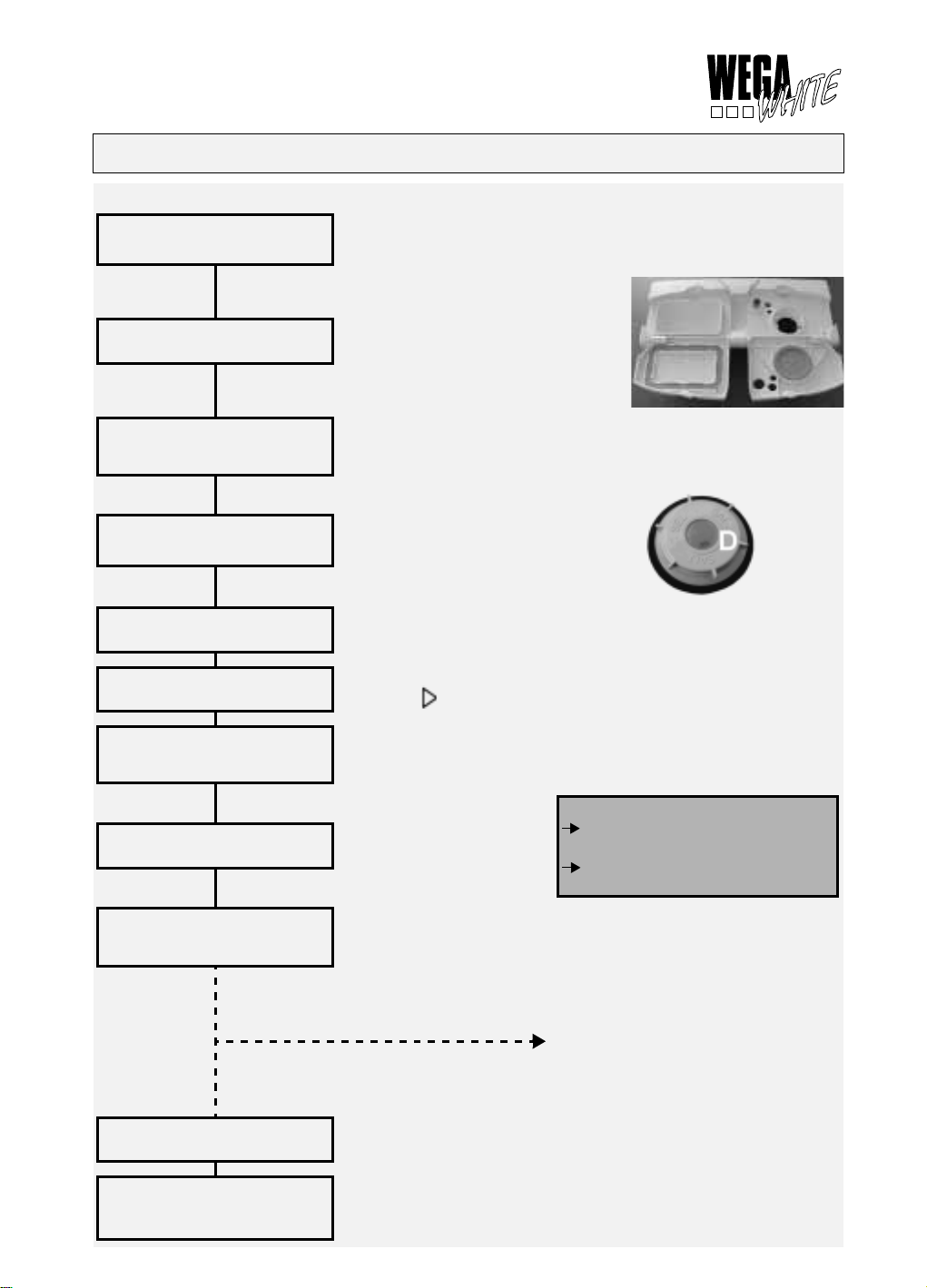
How to use the appliance
Further indications are given in the single chapters and in the user instructions.
Open the door,
switch on the appliance
How to fill the
detergent dispenser
Check the rinse aid level
Check the regeneration
salt level
Load the racks
Select a programme
Select additional options
Press the ON button.
Compartment
With each wash cycle.
Compartment
For programmes with pre-wash only.
If using combined action dishwasher
tabs, follow the user instructions!
Mechanical indicator C.
Electric indicator on control panel (if provided).
On models with water softener
system only.
Mechanical indicator D. Electric
indicator on control panel (if provided).
Refer to the dishwasher loading instructions.
The display shows the last programme selected.
Press P or until the selected programme lights up.
If necessary the corresponding indicator lights up.
A:
B:
ABC
Press the Start button
Turn on the water tap
close the dishwasher door
Wash cycle
Switch off the appliance
Turn off the water tap,
unload the racks
The selected programme is
then memorised (even in the
event of power failure).
At the end of the programme an acoustic signal will sound.
Only after the START button has switched off: press the
All the indicator lamps switch off.
Warning: when the door is opened steam comes out!
Unload the appliance, starting from the lower rack.
“Change programme in pr ogress”
Press the ST ART button for 2 sec. until
the Start indicator lamp switches off;
Select another programme and press
the START button again.
- Only open the dishwasher if necessary
(Warning: beware of hot steam).
- If the appliance is switched off during a
wash cycle, when switched on again it
will resume the cycle from where it was
interrupted.
OFF
button.
Page 2
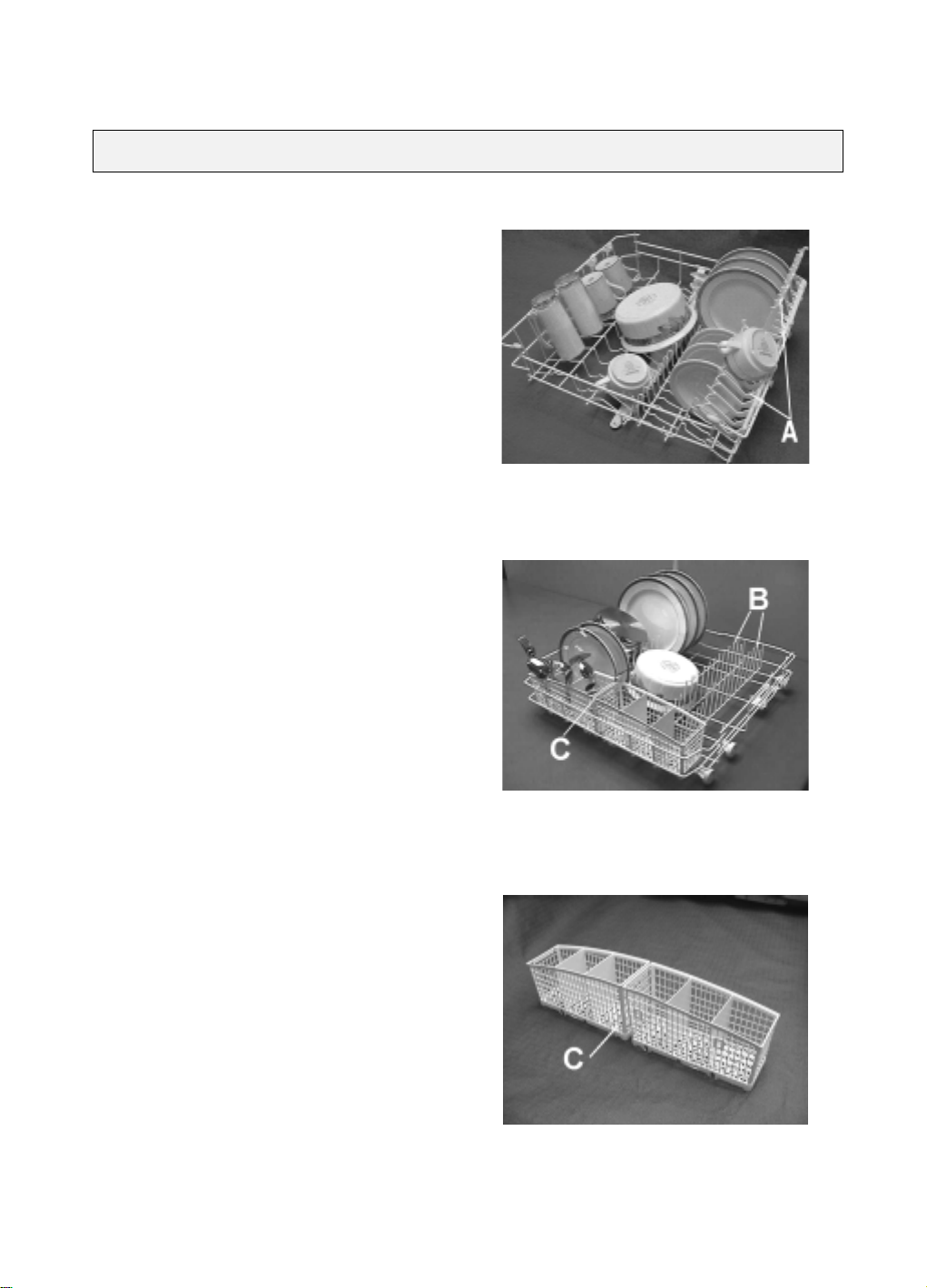
Dishwasher loading instructions and racks provided
Upper rack:
Crockery holders (A):
Depending on the position, for example plates, cups
and long-stemmed glasses.
Long-handled utensils (e.g. carving forks, knives)
must be arranged with the sharp end facing in
towards the appliance.
Lower rack:
Plate holders
(B)
.
Cutlery basket (C):
The cutlery basket can be removed to increase
available space.
Sharp knives and forks that might cause injury
must be placed in the cutlery basket with the
sharp end facing downwards.
Only use dishwasher-proof crockery and dishes. Do not use the appliance for items not suitable for
washing in a dishwasher, for example wooden items, aluminium, plastic utensils, tin, hand-decorated
crockery (unglazed), silver cutlery.
Page 3
What to do if...
If a fault occurs, before contacting our After-Sales Service, make the following checks to try and remedy the problem
(* see also the corresponding chapter in the user instructions).
Problem Cause Remedy
The appliance is not
• No water supply. • Open the tap.
working
If crockery is not
• The appliance does not load
sufficient water.
• There is a power failure. • Insert the plug into the mains socket.
• Starting the selected programme. • The programme can be set to “0” to start.
• Insufficient rinse aid. •Increase dosage *.
• Clean the water supply tap filter.
• Ensure there are no kinks in the water hose.
• Press the Start button.
• Close the door.
• Check the domestic circuit fuse.
perfectly dry
• Residual water in cavities. • Load crockery at an angle.
If crockery is not
perfectly clean
Sandy or grainy residues
Colour of plastic parts
faded
• The water jet does not reach
the crockery.
• Insufficient detergent. • Follow recommended detergent dosage.
• Unsuitable programme. • Select a more intense wash cycle.
• Spray arms blocked. • The spray arms must be able to turn freely.
• Spray arm nozzles clogged. • Remove any impurities obstructing the water flow *.
• Incorrect detergent/detergent too old. • Use a good quality detergent.
• Clogged filters. • Check filters regularly/if necessary clean *.
• Filters incorrectly assembled. • Insert the filter correctly *.
• Tomato/carrot juice,... • Depending on the material, if necessary use a
• Arrange crockery so that items do not touch each
other. Load crockery upside down.
detergent with a greater whitening power.
Deposits on crockery
•removable • Streaks on the crockery/glasses. • Increase the rinse aid dosage *.
• Streaks on glasses. • Reduce the rinse aid dosage *.
• Layer of salt on crockery/glasses. • Close the salt container lid properly *.
• not removable • Insufficient water softenin g,
calcium deposits.
• Change water hardness setting, if necessary add
salt *.
Opaque glasses/ glasses
• Cannot be washed in the dishwasher. • Use suitable glasses.
not sparkling
Rust on cutlery
Identifying appliance
faults
If after carrying out the above checks the malfunction persists or appears again, turn the appliance off and turn off the water
supply tap, then call our After-Sales Service (see guarantee).
Before contacting our After-Sales Service, take note of the following:
• The nature of the fault.
• The appliance type and model.
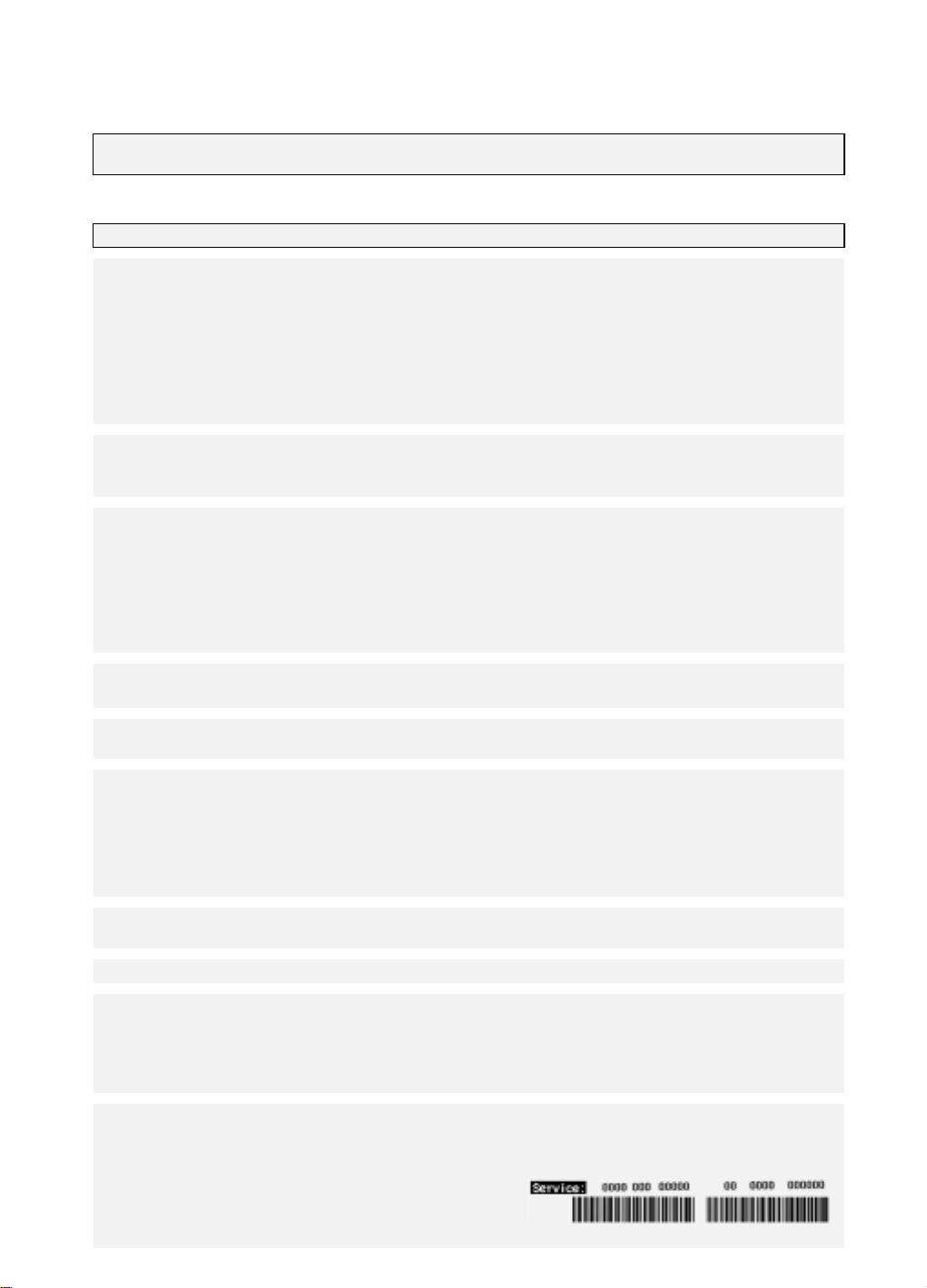
• The service code (the number indicated on the adhesive rating plate)
inside the door on the right-hand side.
• Not made of stainless steel. •Use suitable cutlery.
• The START indicator lamp flashes.
• Indicator F... (if provided).
• Ensure the filter assembly is not clogged and that
there is no interruption to the water supply
(if necessary, clean the filters *). Start the programme
again. Press the START button for 2 seconds, until the
START indicator lamp switches off. Select a new
programme and press the Start button again.
Page 4
Before using the dishwasher, read the user instructions!
WW 53
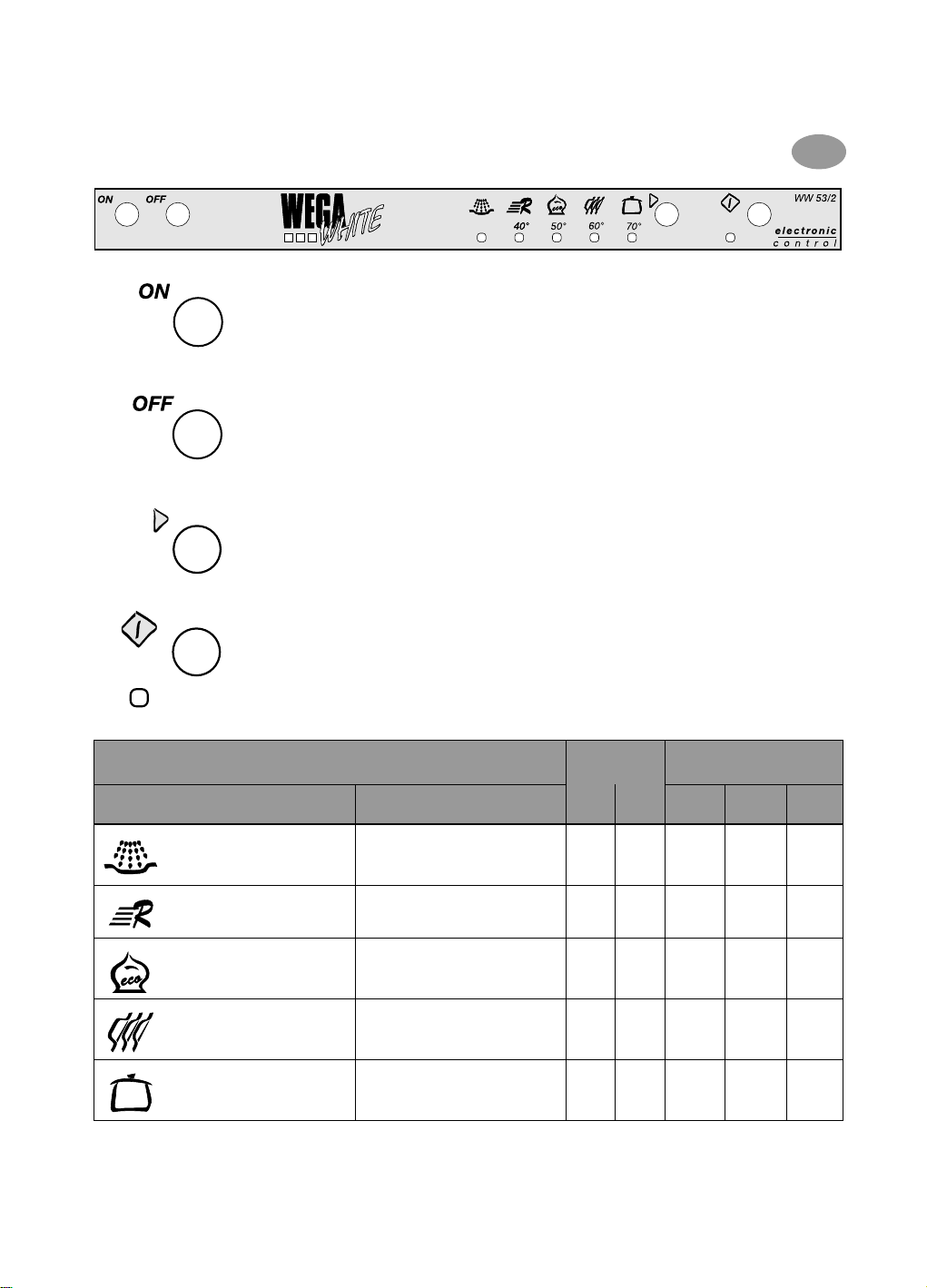
Quick Reference Guide
On button
Off button
Programme selection button
Start button
Switches “on” when the dishwasher
is operating. Flashes when a fault
occurs. Switches off at the end of the
programme.
GB
Programme chart
Programmes Loading instructions A B
Pre Rinse cold
Quickwash 40°C
Normal
1)
Daily 60°C
Intensive 70°C
1) Reference programme for energy label in c ompliance with
EN 50242 regulations.
2) Refer to “User instructions”.
Crockery to be washed later. - - 5.0 0.02 10
Lightly soiled crockery with no
dried-on food.
Normally soiled crockery. X X 16.0 1.24 133
50°C
Normally or heavily soiled
crockery.
Recommended programme for
heavily soiled crockery, especially
suitable for pans and saucepans.
Detergent
X - 13.0 0.70 30
X X 16.0 1.35 120
X X 17.0 1.65 145
3) The data relevant to programmes are values obtained in
the laboratory in conformity with Standard EN 50242. In
practice there may be time variations or leaps depending
on different loads, function options, sensor calibration (only
for sensor-controlled programmes) water temperatures or
hardness and different power supply voltages.
2)
Consumption
Litres kWh Minutes
3)
5019 696 01527
(We reserve the right to make technical modifications)
 Loading...