

Whirlpool ARL 404/G/NT RD32/AL, ARL 404/G/NT RD31, ART 290/G-TKC, RD28, ARL 406/G/1 User Manual
...Page 1
Page 2
ENGLISH 3
Instructions for use Page
FRANC¸AIS 10
ESPAN×OL 18
Notice d’emploi Page
Instrucciones para el uso Pa´gina
Page 3
CONTENTS GB
BEFORE USING THE APPLIANCE Page 4
PROTECTING THE ENVIRONMENT Page 4
PRECAUTIONS AND GENERAL SUGGESTIONS Page 4
HOW TO USE THE REFRIGERATOR COMPARTMENT Page 5
HOW TO USE THE LOW TEMPERATURE COMPARTMENT Page 6
HOW TO DEFROST AND CLEAN THE LOW TEMPERATURE
COMPARTMENT
Page 7
HOW TO CLEAN THE REFRIGERATOR COMPARTMENT Page 7
CARE AND MAINTENANCE Page 8
TROUBLESHOOTING GUIDE Page 8
AFTER SALES SERVICE Page 9
INSTALLATION Page 9
3
Page 4
BEFORE USING THE APPLIANCE
x Your new fridge is designed exclusively for use
in the home.
The low temperature compartment may be used
to make ice cubes and store both deep-frozen
and frozen products. The low temperature
compartment is defrosted manually.
The refrigerator compartment defrosts
automatically and is used to store fresh food
and drinks.
For maximum satisfaction from your
appliance carefully read these user
instructions which contain a description of
your appliance and useful food storage tips.
PROTECTING THE ENVIRONMENT
1. Packing
Thepackingboxmaybefullyrecycledas
confirmed by the recycling symbol.
Follow local disposal regulations.
Keep potentially hazardous packaging (plastic
bags, polystyrene etc.) out of the reach of
children.
2. Appliance
The appliance is built from reusable materials.
If you decide to scrap the refrigerator, it must be
disposed of in compliance with local waste
disposal laws. Before scrapping, cut off the
power cable so that the appliance cannot be
connected to the mains. Dispose of the
appliance at an authorised collection centre for
refrigerant.
Ù
Keep this booklet in a safe place for future
consultation.
1. After unpacking, make sure the appliance is
undamaged and that the door closes correctly.
Any damage must be communicated to your
retailer within 24 hours of delivery.
2. Wait at least 2 hours before connecting the
appliance to the power supply.
3. Make sure appliance installation and electrical
connections are made by a qualified technician in
compliance with the manufacturer’s instructions
and current local safety regulations.
Information
This appliance is free of CFC’s (refrigerant circuit
contains R134a) or free of HFC’s (refrigerant
circuit contains R600a – Isobutane). For more
details, please refer to the rating plate on the
appliance.
PRECAUTIONS AND GENERAL RECOMMENDATIONS
x Only use the refrigerator compartment to
store fresh food and the low temperature
compartment to store frozen food and make ice
cubes.
x Do not cover or close the air vents.
x Do not store liquids in glass containers in the
low temperature compartment since they may
explode.
x Do not eat ice cubes or ice lollies immediately
after taking them out of the low temperature
since they may cause “cold” burns.
x Do not allow children to play or hide in the
refrigerator to prevent the risk of trapping and
suffocation.
x Before cleaning or servicing the appliance,
always unplug it or switch off the mains
power supply.
x The mains power cable may be replaced only by
a trained service technician.
4
Declaration of conformity
x This appliance is designed to store food products
and complies with EC Directive 89/109.
n
This appliance has been designed, built and
marketed in compliance with:
- the safety targets of the “Low Voltage” EEC
Directive 73/23;
- the protection requirements of the “EMC”
EEC Directive 89/336 amended by EEC
Directive 93/68.
For appliances with Isobutane (R600a)
The refrigerant Isobutane is a natural gas of high
environmental compatibility but which is
inflammable. Therefore, it is essential to ensure that
the ducts of the refrigerant circuit do not get
damaged.
Page 5
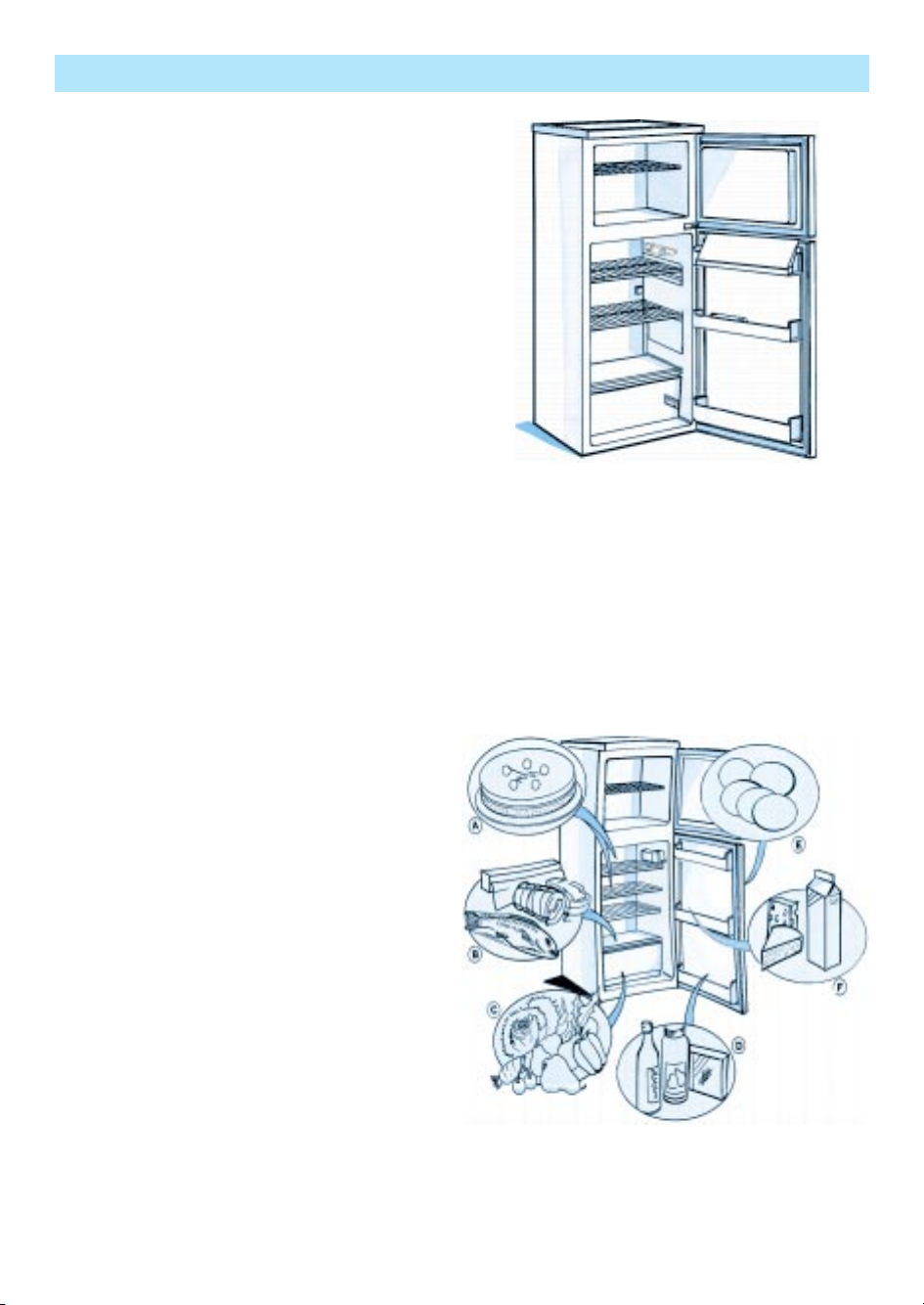
HOW TO USE THE REFRIGERATOR COMPARTMENT
This refrigerator is equipped with a low temperature
compartment.
The refrigerator compartment defrosts
automatically.
Switching on the refrigerator
Insert the plug in the mains outlet.
The thermostat sets the temperature in both the
refrigerator and low temperature compartments.
Setting the temperature:
1.
For correct operation and optimum food
storage in both compartments.
enclosed product sheet for thermostat
setting instructions.
2.
If you wish to change the temperature setting
in the compartments, turn the thermostat
adjustment knob as required:
x
For WARMER TEMPERATURES turn the
thermostat knob down to positions 1or2.
x
For COLDER TEMPERATURES turn the
thermostat knob up to positions 5to7.
When the thermostat is s et to
and internal light switch off.
Note:
The temperature insi de the two compartments is in
part determined by the position of the appliance,
the room temperature and frequency with which
the doors are opened.
Use the thermostat to adjust the temperature in
relation to these factors.
How to store food in the refrigerator
compartment
1.
Fill the refrigerator as illustrated in the adjacent
figure:
A. Cooked food
B. Meat and fish
C. Fruit and vegetables
D. Bottles
E. Eggs
F. Butter, cheese etc.
Notes:
x
Air circulates freely between the shel ves and
back wall of the refrigerator interior.
x
Do not store food against the back wall of the
refrigerator compartment.
x
Do not s tore warm food in the refrigerator
compartment.
x
Store liquids in closed containers.
x
The storage of greens with a high water content
may cause condensation to form inside the
bottom drawer. This is quite normal however,
and in no way impairs refrigerator performance.
Refer to
x
both the appl i ance
5
Page 6
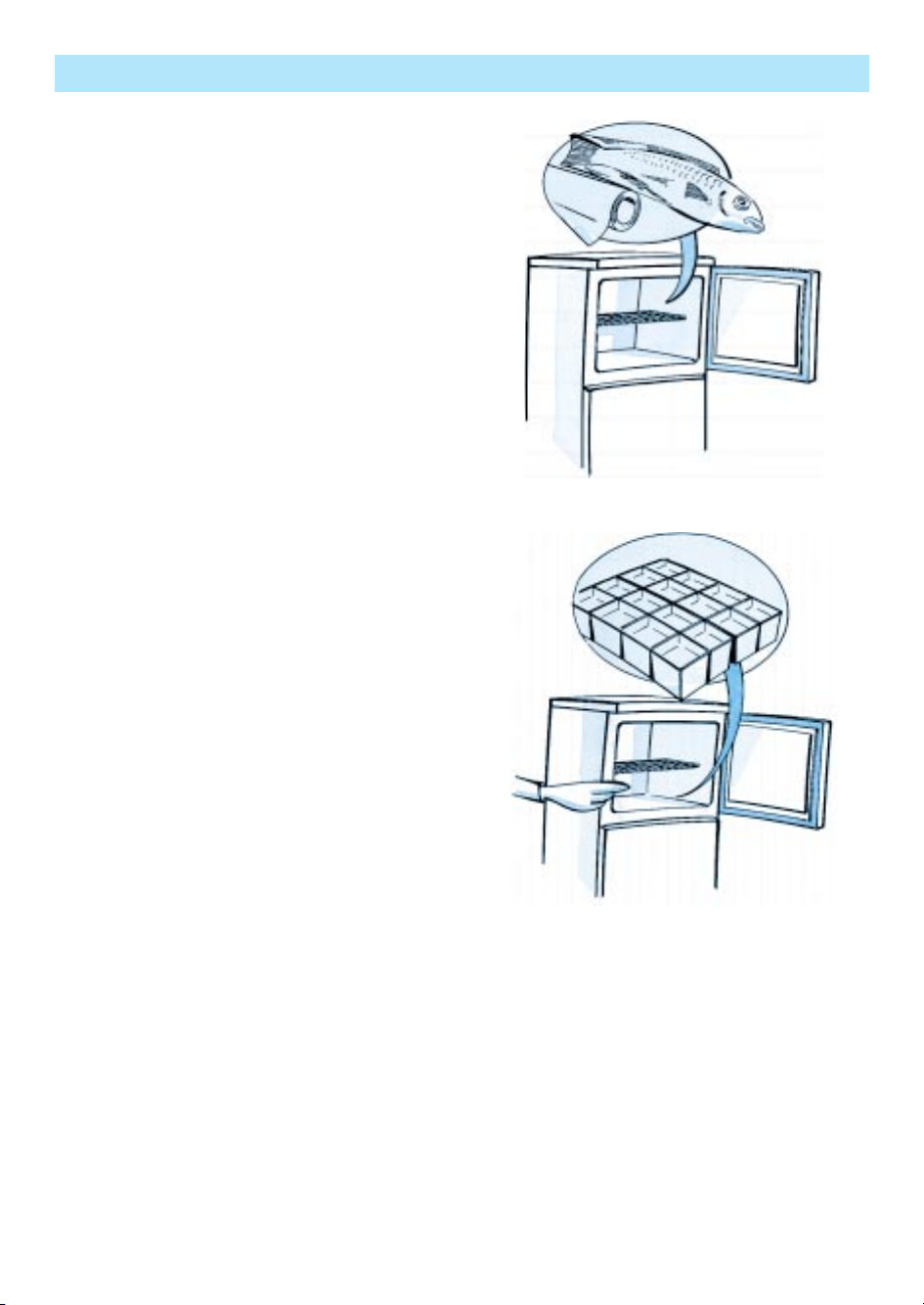
HOW TO USE THE LOW TEMPERATURE COMPARTMENT
The low temperature compartment may be
used to store frozen products for the time
indicated on the packaging.
When you purchase frozen food, make
sure:
x
The packaging is undamaged (frozen food in
damaged packaging may have deteriorated).
If the package bulges or is marked by liquid
stains, the product has not been correctly
stored and may have partially thawed.
x
When shopping, leave frozen food purchases
until last and transport items in insulated bags.
x
Place items in the low temperature
compartment as soon as you get home.
x
If food has partially thawed, do not refreeze.
Consume within 24 hours.
x
Avoid subjecting frozen foods to temperature
variations. Observe the “Best before date” on
the packaging.
x
Always observe the storage information on
packages.
Making ice cubes
x
Fill the ice cube tray three quarters full with
water and place in t he bottom of the low
temperature compartment.
If the ice cube tray sticks to the bottom of the
compartment do not use pointed or sharp
instruments to detach them.
6
Page 7
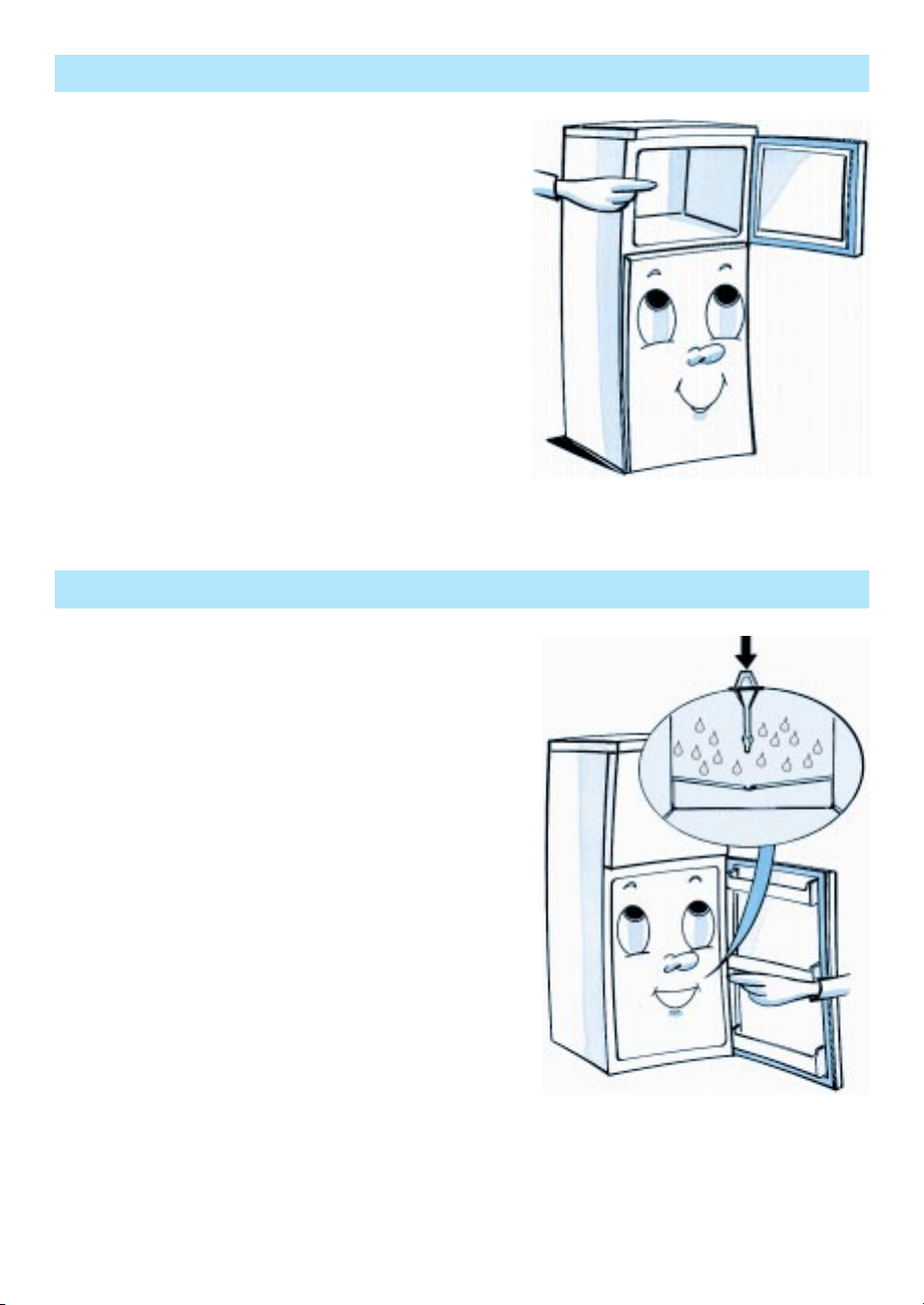
HOW TO DEFROST AND CLEAN THE LOW TEMPERATURE COMPARTMENT
We recommend defrosting the low
temperature compartment once or twice a
year when ice has built up to about 3 mm
on the walls and when the contents are low.
1. Open the door, remove the food from the
low temperature compartment, wrap in
paper and pack together in an insulated bag
or cool part of the house.
2. Unplug the appliance.
3. Leave the door open to allow the ice on the
low temperature walls to thaw.
4. Remove the defrost water from the bottom
of the low temperature compartment.
5. Clean with a sponge soaked in a solution of
lukewarm water and neutral detergent.
Do not use abrasive products.
6. Rinse and dry thoroughly.
x Note: To avoid irreparable damage to
the low temperature compartment, do
not use pointed or sharp metal
instruments to scrape off ice or heat
the compartment artificially.
HOW TO CLEAN THE REFRIGERATOR COMPARTMENT
Regularly clean the refrigerator
compartment. The refrigerator
compartment defrosts automatically.
The formation of water droplets on the back
wall of the refrigerator compartment indicates
that the automatic defrosting cycle is underway.
The defrost water is channelled to a run-off and
collected in a container where it evaporates.
Keep the run-off channel clean using the special
tool supplied. This ensures that defrost water is
drained efficiently.
Before cleaning the appliance, unplug it from
the mains.
x Clean the refrigerator interior with a sponge
soaked in a solution of lukewarm water and/
or neutral detergent.
x Rinse and dry thoroughly with a soft cloth.
Do not use abrasive products.
7
Page 8
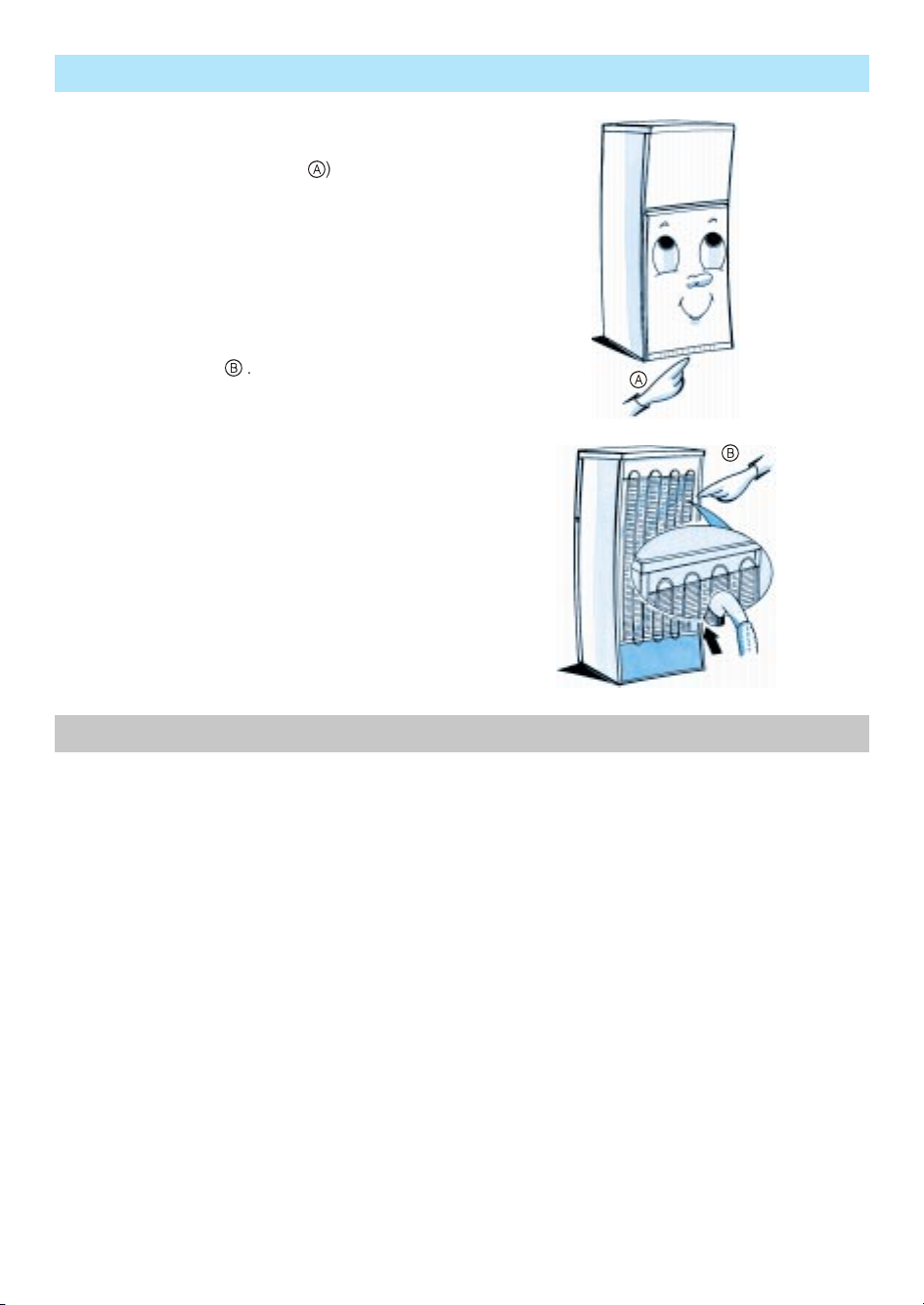
CARE AND MAINTENANCE
Built-in appliances
x Regularly clean the air vents using a vacuum
cleaner or brush (see figure
x Clean the exterior with a soft cloth.
Free-standing appliances
x Regularly clean the condenser at the rear of
the appliance using a vacuum cleaner or
brush (see figure
b
).
PROLONGED DISUSE
1. Empty the refrigerator and low temperature
compartments.
2. Unplug from the mains.
3. Defrost the low temperature compartment
and clean and dry the interior of both
compartments.
4. Leave the doors open to prevent the
formation of unpleasant odours.
a
).
a
b
TROUBLESHOOTING GUIDE
1. The appliance does not work
x Is there a power failure?
x Is the plug properly inserted in the socket?
x Is the two-pole circuit breaker connected
x Has the fuse blown?
x Is the power cable damaged?
x Is the thermostat set on position x?
2. The temperature inside the
compartments is not cold enough
x Do the doors close properly?
x Is the appliance installed near a heat source?
x Is the thermostat correctly set?
x Is air circulation inhibited?
3. The refrigerator compartment
temperature is too cold
x Is the thermostat correctly set?
8
4. Water collects in the bottom of the
refrigerator compartment
x Is the defrost water run-off clogged?
5. The internal light does not work
Refer to point 1 and then:
x Unplug the appliance from the mains.
x Follow the instructions and drawing in the
enclosed table to gain access to the bulb.
x Check the bulb and, if necessary, replace.
Do not use a bulb which exceeds 15 W.
Note:
x The edge of the refrigerator door may
be hot. This is not a fault but is intended
to prevent the formation of
condensation.
x Gurgling noises etc. inside the
refrigerating circuit are quite normal.
Page 9
AFTER SALES SERVICE
Before contacting our after sales service:
1. Try to remedy the problem (see
“Troubleshooting guide”).
2. Restart the appliance to see if the fault
repeats.
If the malfunction persists, switch off the
appliance and switch on again after an hour.
3. If the malfunction still persists, contact our
Customer Service, specifying:
x the nature of the problem
x the appliance model
x The Service number (the number after the
word SERVICE on the rating plate located on
the side of the fruit and vegetable drawer).
x Your full address
x Your telephone number complete with area
code.
INSTALLATION
l
Note: Door opening direction changes
effected by our Customer Service are not
covered by the terms of guarantee.
x Do not install the appliance in the vicinity of a
heat source.
x Install the appliance in a dry and well
ventilated room.
x Make sure there is sufficient clearance above
and below the refrigerator to ensure free air
circulation.
x Clean the appliance interior (see “How to clean
the refrigerator compartment”).
x Mount the accessories.
ELECTRICAL CONNECTION
x Electrical connections must be made in
accordance with local regulations.
x Voltage and power consumption information is
shown on the rating plate on the side of the
fruit and vegetable drawer.
x The appliance must be earthed as
prescribed by law. The manufacturer
declines all liability for injury to persons
and animals or damage to property
resulting from failure to comply with this
requirement.
x If the appliance plug and wall socket are
incompatible, the socket must be replaced by a
qualified electrician.
x Do not use extension leads or multiple
adapters etc.
FREE-STANDING APPLIANCES
(only)
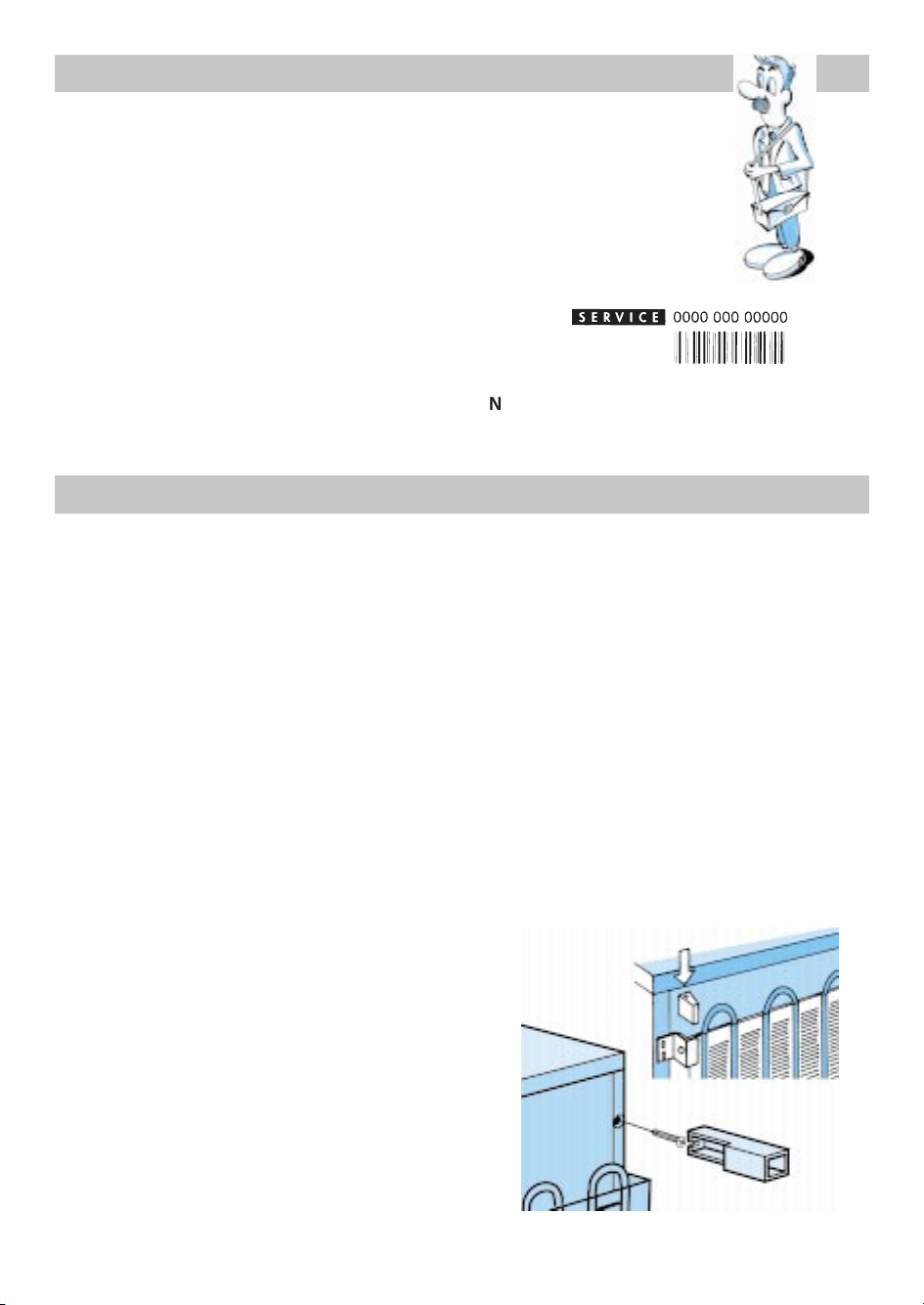
x Mount the spacers (if provided) on the back
of the condenser behind the appliance (see
figure).
x For best performance, leave a clearance of at
least 5 cm above the appliance and enough
spacebetweentheapplianceandthe
adjacent furniture to allow air to circulate.
x Make sure the appliance is perfectly level
andifnecessary,adjustthefrontfeet.
ELECTRICAL DISCONNECTION
x Disconnect the appliance from the mains by
removing the plug or disconnecting the twopole circuit breaker upstream of the socket.
9
 Loading...