

Page 1
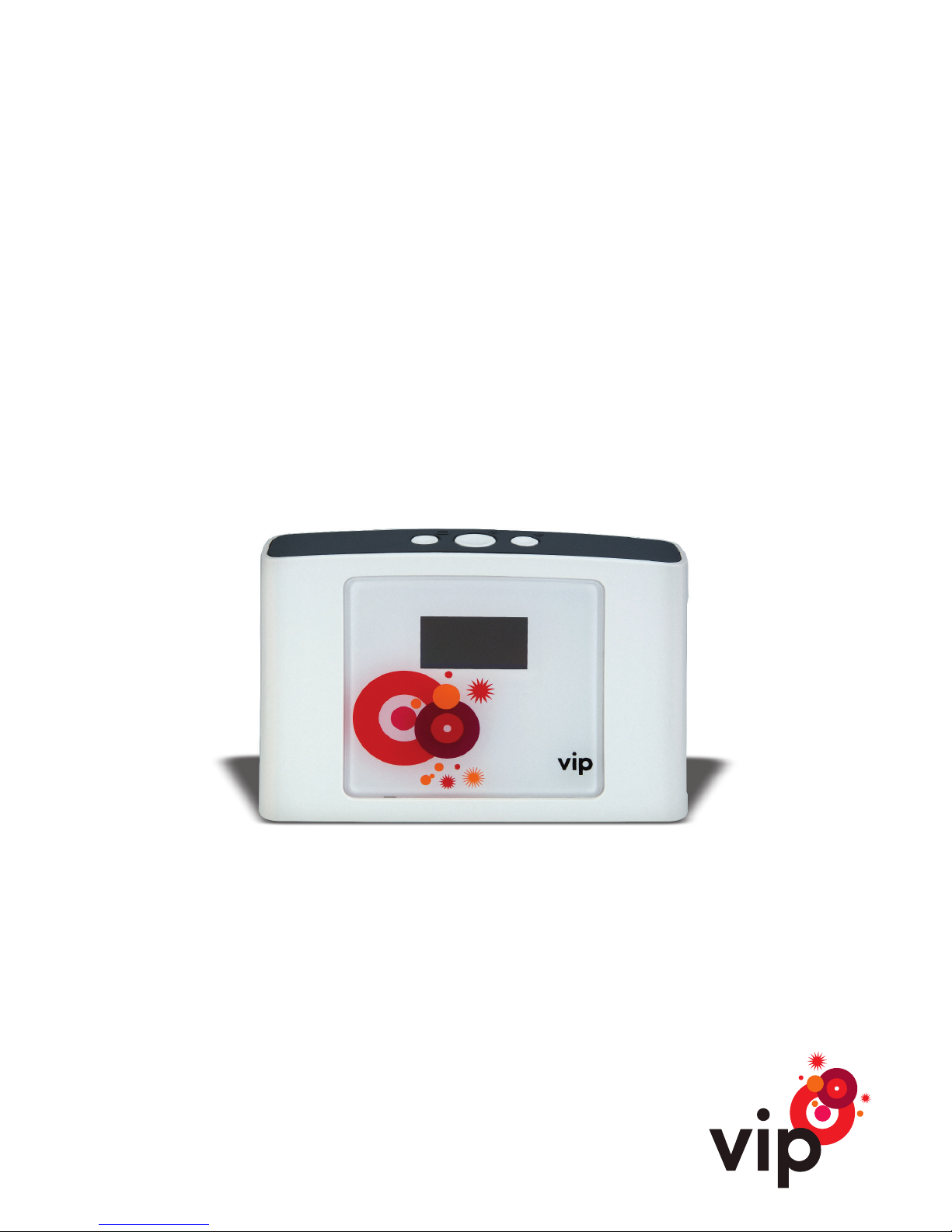
Officebox
Users’ manual
Page 2

2
Contents
Welcome to the world of Officebox! 3
Contents of the box 4
Closer look at the Officebox device 4
How to start using Officebox for telephone calls? 5
What you should know about Officebox and telephony... 7
What do indicators on the LCD screen stand for 7
How to connect to the Internet for the first time 8
Internet connection speed 13
Advanced user instructions 14
Wireless LAN connection of Officebox and computer 14
Advanced functions of the device 16
Help and support 17
Glossary 18
General use recommendations 21
Page 3

3
Welcome to the world of Officebox!
Dear user, we would first like to thank you for trusting us and choosing Officebox solution for your voice calls and Internet
access - fixed line service in your office.
Officebox activation and use is simple and fast! Look for the instructions inside this Manual.
For additional information please visit http://officebox.vipnet.hr or call Customer Support at 091 77 22.
It is good to know:
When buying the Officebox device, each customer has the right to return it and terminate the subscription
contract within 5 working days from the purchase made, in case of dissatisfaction with the service or
coverage of the area in which the device is to be used.
Page 4
4
- The Officebox device
- Power supply adapter for the Officebox device
- LAN cable for the Officebox device and computer connection
- Plastic card containing PIN and PUK code
- User manual
- Quick start guide
- CD with detailed instructions for advanced users (in English)
Contents of the box
Note:
It is not possible to connect a fax machine to Officebox or to send and receive fax messages as you usually do.
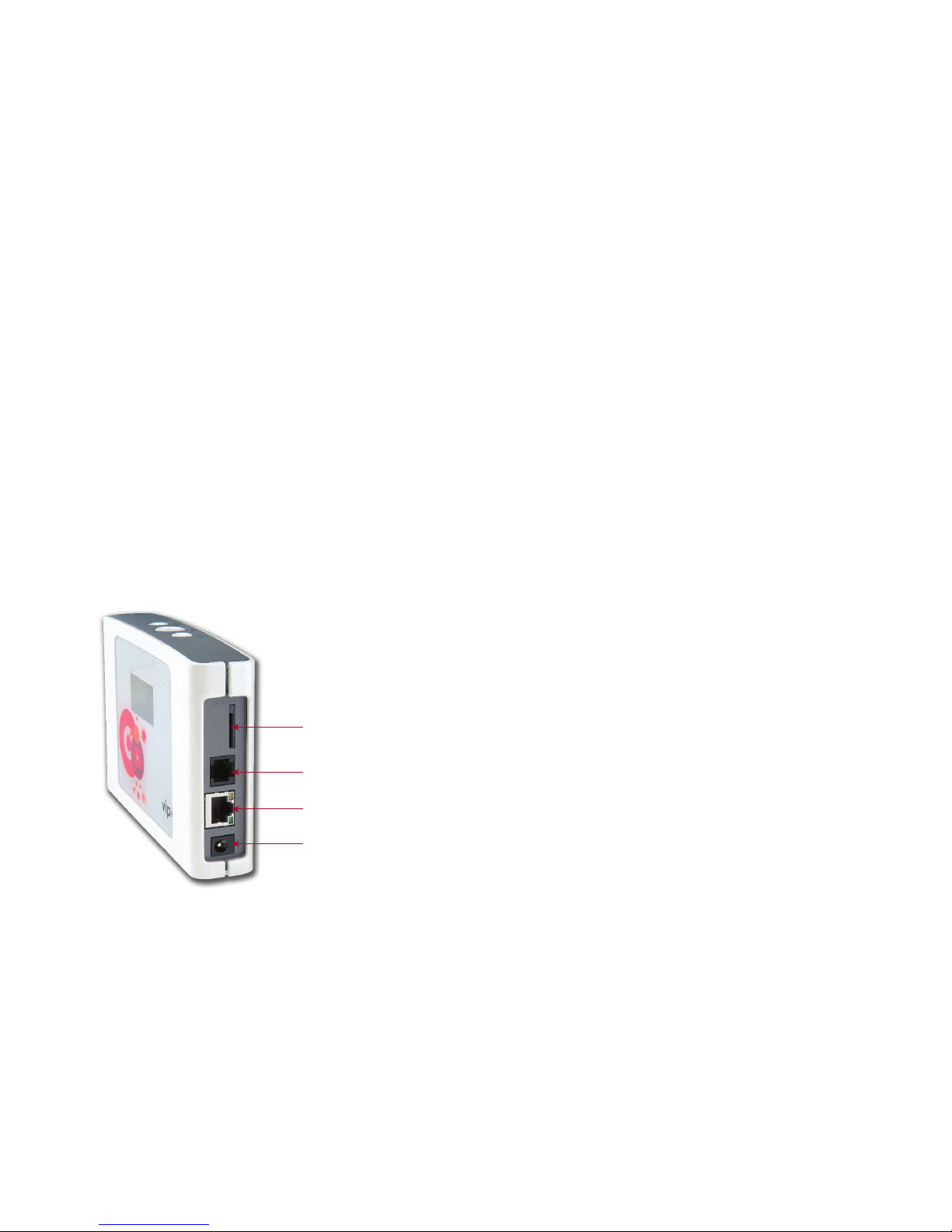
3. Socket for LAN network
Connect LAN Ethernet network cable that came with the device, and by which you connect your computer to Officebox.
You should use exclusively LAN cable for the first connection of Officebox and computer. After the first connection, it is
possible to connect computer and Officebox via wireless LAN connection (WLAN).
Closer look at the Officebox device
0. What is beneath the sticker?
Beneath the sticker you can find the holder for the SIM card, necessary for
voice services and data connection via Officebox.
Note:
Removal of the sticker is not allowed.
According to Conditions of use the use of the SIM card received
with the Officebox device is not allowed in other devices.
Please study Conditions of Use for more details.
1. Power supply
Plug in the adapter that came with the Officebox device (DC 5V).
In case of power outage, it is not possible to make a call via Officebox or
connect to the Internet.
2. Telephone socket
Disconnect your fixed telephone from the wall socket and plug it into the
upper socket, for telephone.
0
2
3
1
Page 5
5
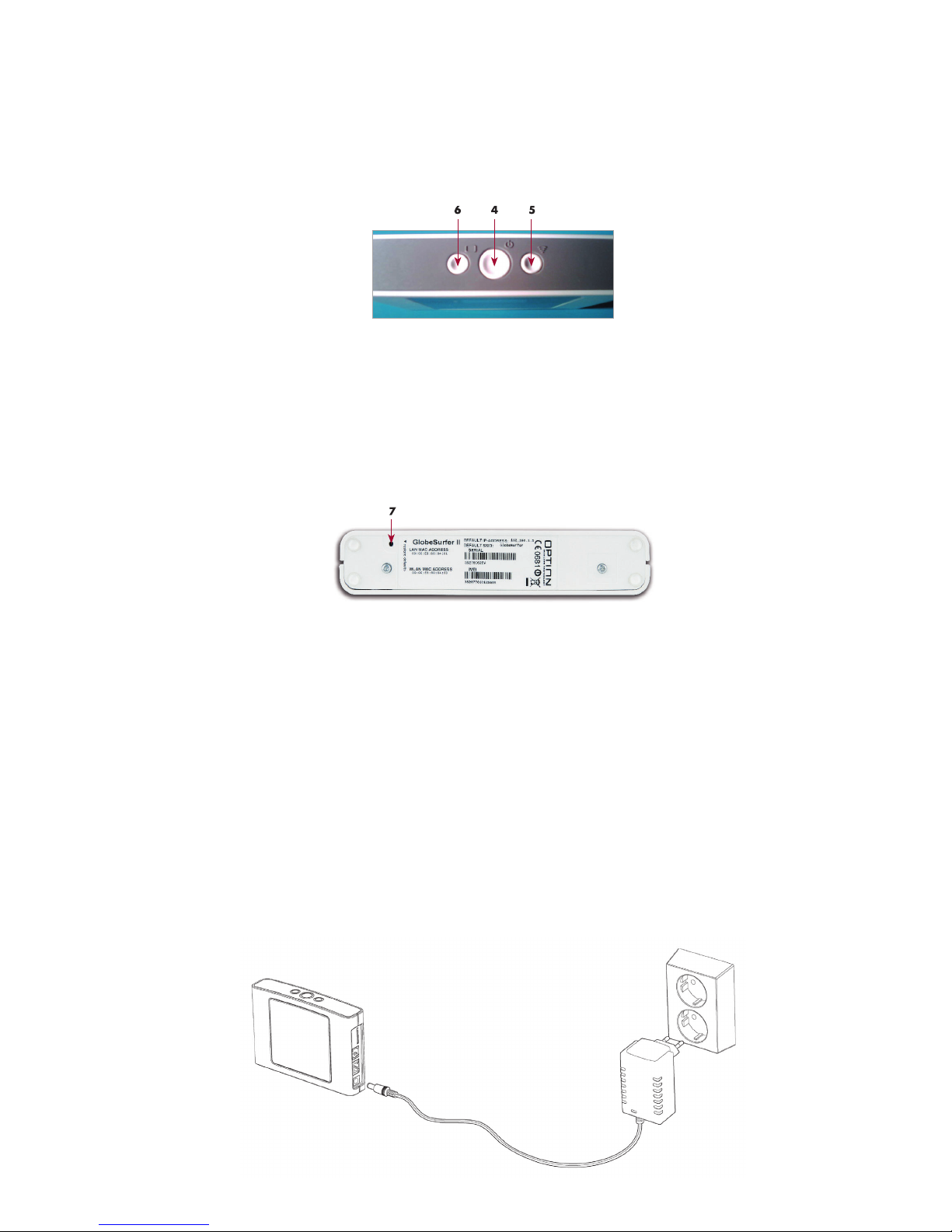
4. Turn on/off button
5. Button for connection to the Internet (or LAN), or disconnection from the Internet
By simply pressing the button, you launch the connection to the Internet via HSDPA/UMTS or EDGE/GPRS network.
6. Button for display change on LCD screen
The network you are connected to, Internet connection status as well as missed phone calls will be displayed on the LCD
screen of the device
By pressing the button for information change, you will scroll through the options - for ex. from the home screen to the
screen displaying missed calls.
7. Reset button (restoring the initial setup of the device)
Reset button is located on the lower part of the device; in order to press this button and activate resetting use a sharp
object, like a paper clip.
Note: By activating the reset button you will restore the initial setup of the device. By doing so, you will lose all settings
and passwords created in the meantime.
How to start using Officebox for
telephone calls?
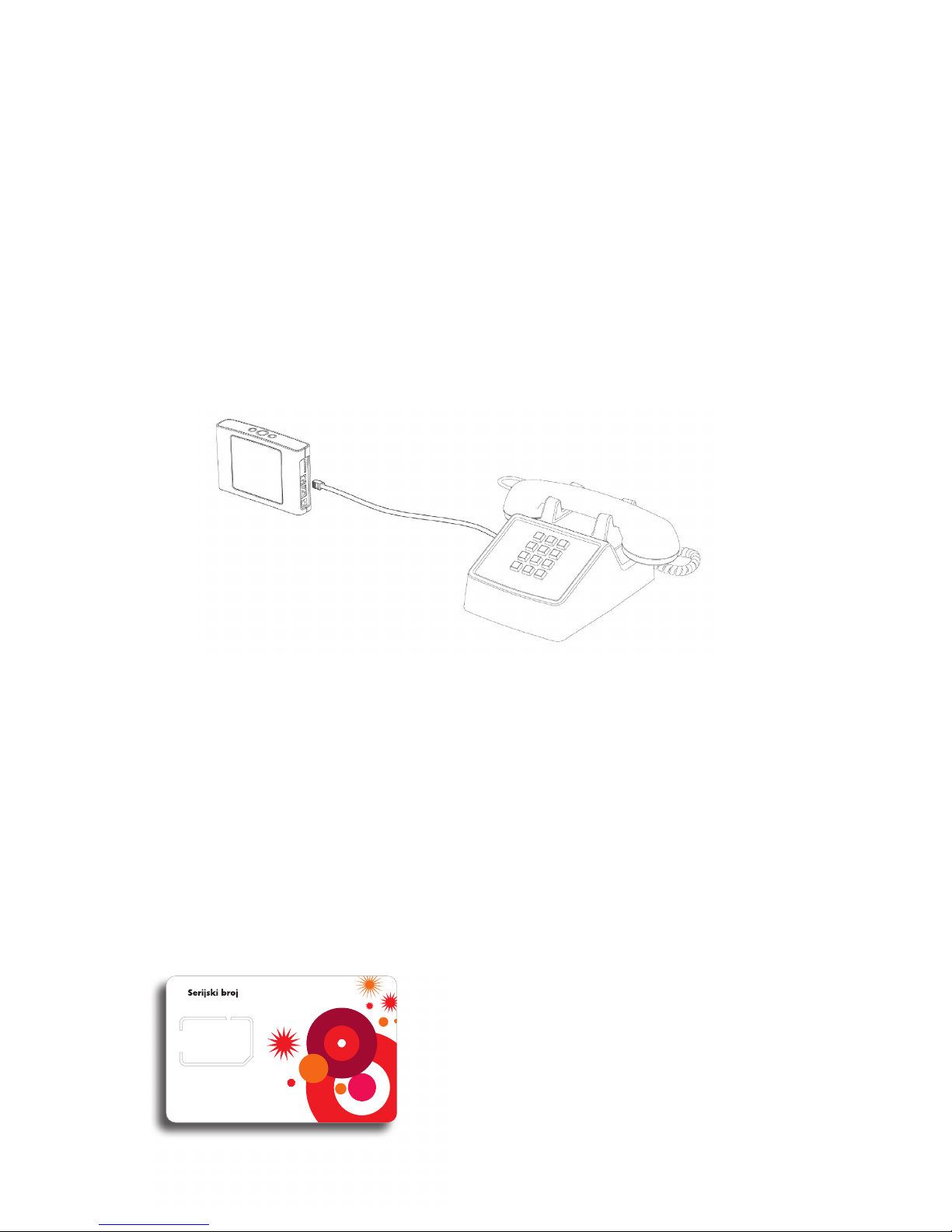
Step 1: Connect the power supply
Page 6
6
Plug the power adapter into the power supply socket on the Officebox device. Then plug the adapter into the standard
grounded power socket (220V).
CAUTION: Use exclusively the network adapter that came with the Officebox device. Using other network adapters may
cause damage to your device.
Officebox will be initialized in about thirty seconds.
After the welcome message, the message “Enter PIN code“ will be displayed on the LCD screen.
Step 2: Connect the fixed telephone
It is possible to connect cordless or wired fixed telephone to Officebox. Simply plug the standard telephone cable of
the wired telephone into the telephone socket. For cordless or DECT telephone connect the telephone base station to
Officebox.
(Note: It is not possible to connect ISDN telephone to the Officebox device).
Step 3: Enter PIN code
In order to make phone calls and to access the Internet via the Officebox device, it is necessary to use the SIM card.
PIN code protects every SIM card against unauthorized use and it is necessary to enter PIN code upon activation of the
Officebox device.
You will find PIN code of your SIM card on the plastic card, on the inner side of the package cover.
Pick up the receiver of the fixed telephone connected to Officebox, and simply type *PINcode# and press the dial
key
(following the example below you would type *1239#).
Messages “Initialization“, then “Searching“, and finally the sign of the network HR VIP will appear on the device display.
And - that’s it.
You are ready to make phone calls via Officebox!
PIN: 1239
PUK: 57881472
PIN2: 1627
PUK2: 27235917
8938591006010175011
Page 7

7
What you should know about Officebox and
telephony...
- Free telephone dial tone in Officebox device differs from the normal fixed telephone line signal by being a flat
tone
.
- You dial numbers as you usually do via fixed line - if you call a number in the county, it is not necessary to dial the
prefix.
- When you receive a call, the caller’s number is displayed on the screen of the device.
- You will be able to see missed calls on the LCD screen, or via computer, after having it connected to Officebox
(System configuration/Telephone). You will also be able to delete messages on missed, incoming and outgoing
calls.
- The Officebox device does not support fax service.
- During an active Internet connection via GPRS/EDGE network, you will not be able to receive and make
phone calls. The caller will receive the message “the person you have called is temporarily not available“ or “the
person you have called has turned off the phone“ (The information about the network through which you are connected
is displayed on the lower left corner of the LCD screen of the device).
For further information and FAQ visit http://officebox.vipnet.hr
What do indicators on the LCD screen
stand for
- HR VIP is the name of the network through which you are connected.
-
Indicators (the number of bars) on the right side indicate signal strength of the Vip network.*
-
Telephone icon stands for missed call and it will disappear from the screen after you have checked all missed calls
on the LCD screen or on the computer
- Computer icon and the number next to it stand for the number of computers connected to Officebox via WLAN
connection
- The sign of technology through which you are connected is displayed in the lower left corner such as GPRS, EDGE or
UMTS.
When you connect to the Internet:
- if you are located in the HSDPA coverage area, the network sign will change from UMTS to HSDPA
It is good to know...
* Officebox makes wireless telephone and Internet connection via Vip UMTS/ HSDPA or GSM/GPRS/EDGE
network. Check the signal level of the network on the device screen. For better signal reception, place
your Officebox near the window.
HR VIP
Page 8
8
How to connect to the Internet for the first time
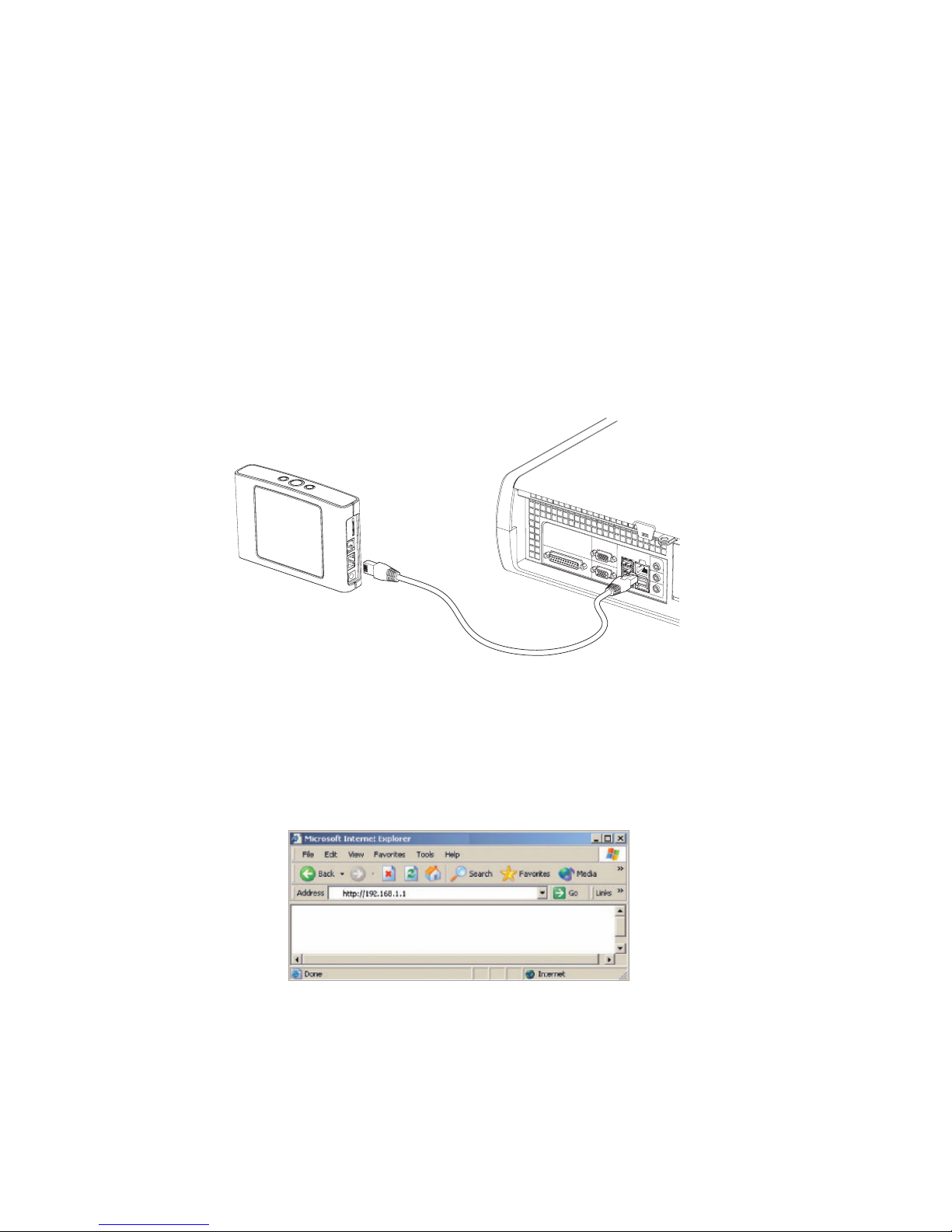
Step 1: Connect Officebox to the computer
1a)
If you have already connected fixed telephone to Officebox, connect your computer and Officebox with the network
cable that came with the device.
1b) If you have not connected fixed telephone to Officebox yet, first turn Officebox on (connect power supply and press
middle key on the top of the device).
When the message Enter PIN appears on the device display, connect the computer and Officebox with the network
cable that came with Officebox.
You must necessarily use the network cable for the first connection of Officebox and computer. If you
wish to use wireless LAN connection to connect to Officebox, look for further information in the chapter “Wireless
connection of Officebox and computer via WLAN connection
“, on the page 14.
Step 2: Settings set-up
The interface for access to the Officebox device settings opens in web-browser.
Start your web-browser, for e.g. Internet Explorer, or Opera, or any browser that you usually use to surf the Internet.
Check if the web-browser allows the so called cookies (if you are not sure what this means or how to setup the required
settings look for the explanation on the page 29).
Type http://start or http://192.168.1.1 in your web-browser and click “Go” or press Enter:
Page 9
9
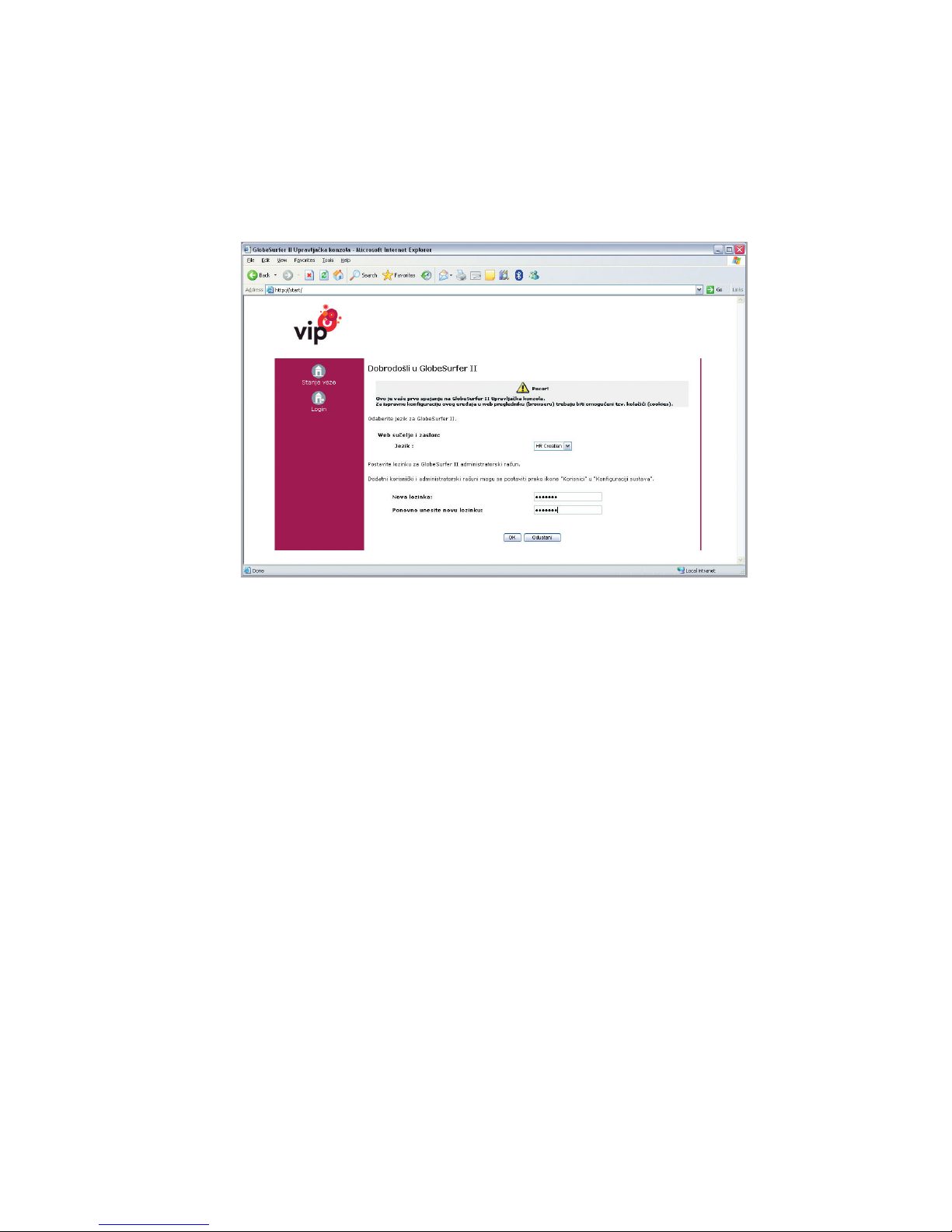
The Officebox interface will open, as shown at the picture below:
What is GlobeSurfer II?
The producer’s factory name GlobeSurfer II is The company Option produced Officebox used for the Officebox device.
(www.option.com) for Vipnet.
Step 3: The window “Welcome“ - what should you do?
1. Select the language that you will use when working with Officebox.
2. If you wish you can enter your new administrator account password.
User name: admin and password: admin are automatically pre-entered in the new Officebox device. You have the
possibility to change the password here.
User name and password are necessary for access to Advanced options of the device. However, you do not have to
enter them each time you connect to the Internet, but only if you want to change a certain setting.
3. Click “OK“ to save the password.
About password:
Next time you log in to Officebox enter user name
admin and password that you can now choose and
save.
Piece of advice:
Save the address of the Officebox interface home page as bookmark (save the
http://start in your web-
browser). This enables easier access to Officebox in case you want to enter some changes or to setup
new Officebox settings.
Page 10
10
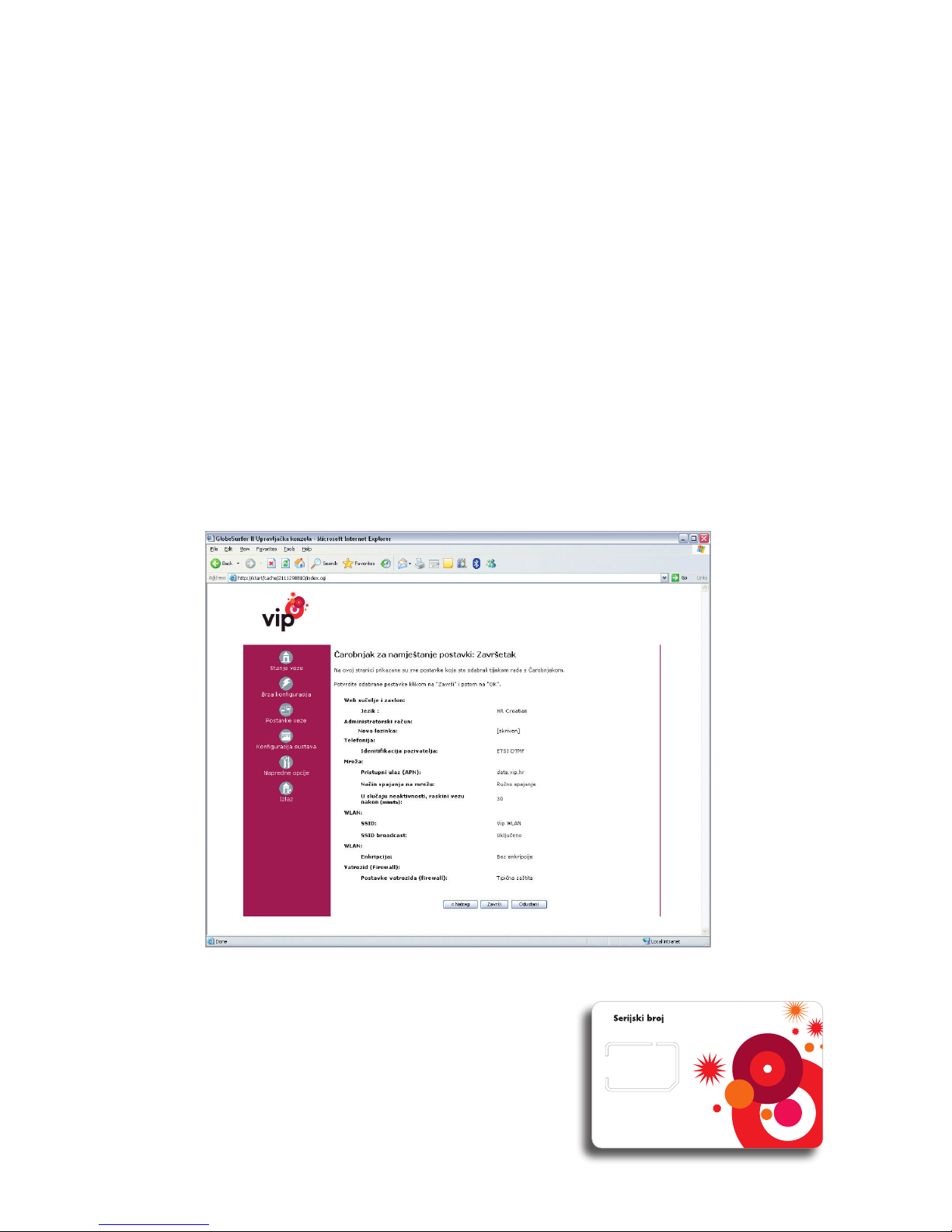
Step 4: Setup wizard
When you connect to Officebox for the first time, you will setup the settings. Your Wizard will lead you through the
settings setup. Simply follow the instructions on the screen which explain each setting in detail.
When you select or enter a setting, click Next to continue stepping through the Wizard until the final window.
Note:
Do not change the settings in the windows
Telephony (ETSI DTMF) and Network (APN: data.vip.hr),
because they were originally set to function properly with the Vip network.
WLAN (Wireless Local Area Network) is initially turned off on the Officebox device. If you wish to establish wireless
connection from the computer to Officebox, read the instructions in this chapter through, and then look for further
instructions on using WLAN on the page 14.
Step 5: The last window displays the list of click “Finish“ and “OK“ again in the next
all chosen settings. To save the settings click “Finish“ and “OK“ again in the next window.
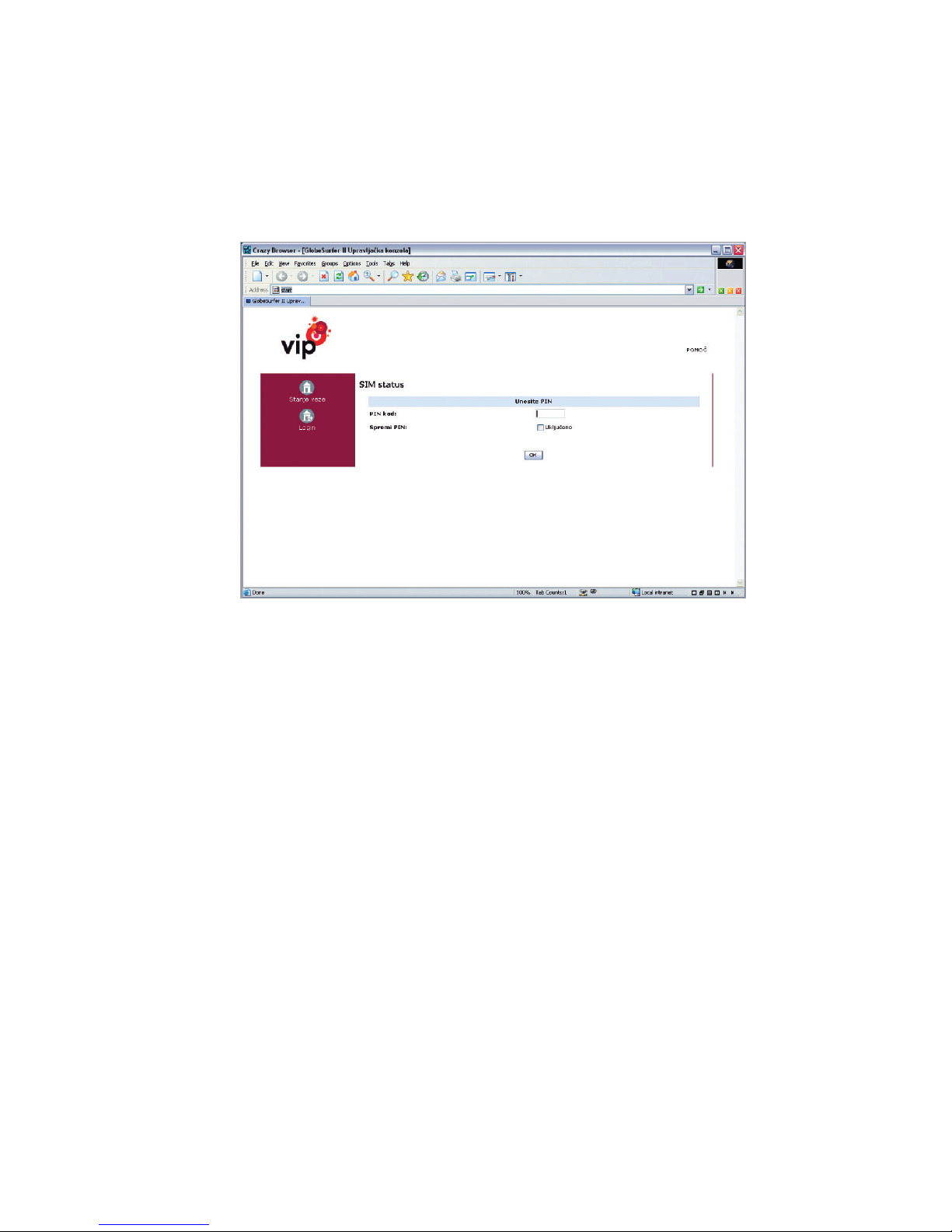
Step 6: Enter PIN (if you have not already entered PIN via telephone)
The Officebox device uses the SIM card to make phone calls and to access
the Internet.
The PIN code protects every SIM card from the unauthorized use and it is
necessary to enter it upon activation of the Officebox device, via telephone
or via computer, depending on which one you connect to Officebox first.
You will find the PIN code of your SIM card on the plastic card, that came
in the Officebox package.
PIN: 1239
PUK: 57881472
PIN2: 1627
PUK2: 27235917
8938591006010175011
Page 11
11
Enter PIN via the Officebox interface as shown in the window below:
And - that’s it!
You are ready to connect to the Internet via Officebox.
If you have carefully followed all the steps described in the previous chapter, your Officebox is ready for connection to
the Internet.
- If you wish you can use only the cable to connect computer and Officebox, further configuration is not necessary.
It is simple - open the web-browser, and surf the Internet.
- If you wish to establish wireless connection between Officebox and computer via WLAN, read this chapter through
and look for further instructions on WLAN in this chapter, on the page 14.
It is good to know:
For successful e-mail messages sending in the program you already use for sending e-mails, set up the
outgoing mail SMTP server:
mail.vip.hr
For access to newsgroups set up the server:
news.vip.hr
Under incoming server (POP3 server) enter the address of the incoming server of the Internet service
provider that hosts your current e-mail address.
Page 12
12
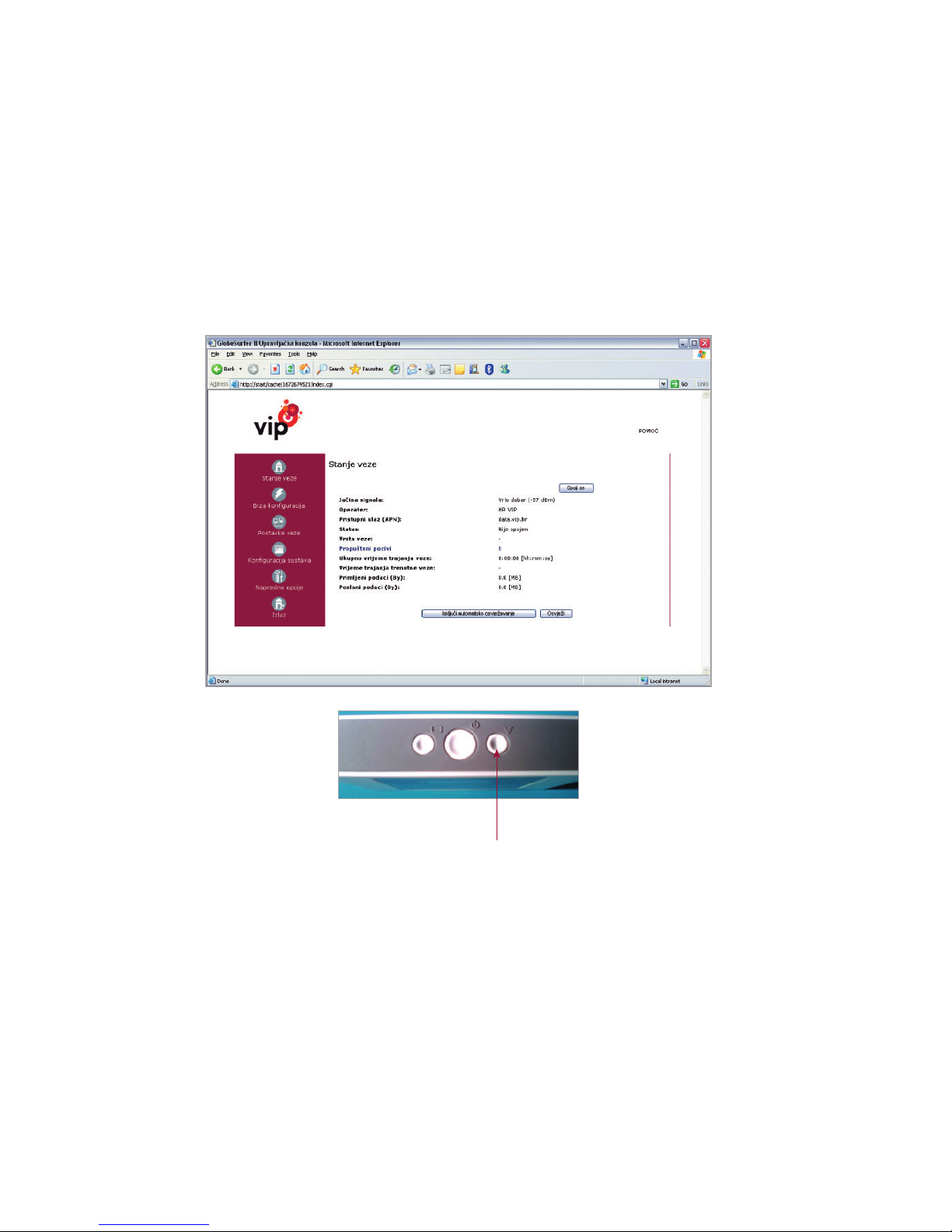
Step 7: connecting to the Internet
Choose the way to connect that suits you best:
1. Via Officebox interface in the web-browser on the computer (choose the window “Connection status“ and then press
“Connect”).
2. or simply press the key for connecting to the Internet on the upper side of the device.
It is good to know:
- For everyday use of Officebox as fixed telephone and connection to the Internet you do not have to log
in to the computer.
Once you have connected Officebox to the computer and set up the settings, it is enough to press the
button for the Internet connection - and connect.
- Date and time can be displayed on the LCD screen of the Officebox device. Set them up in the following
manner:
System configuration/ Date and time
Set up hour and date manually
Page 13

13
Internet connection speed
Officebox supports all wireless technologies implemented in the Vip network - through which technology the device
connects to the network will depend on the coverage in your area.
HSDPA and UMTS networks are available in the cities, EDGE and GPRS on almost entire Croatian territory. For further
information on coverage visit www.vipnet.hr
Maximum achievable speeds in the Vip network depend on the area coverage by some of the following wireless
technologies:
HSDPA - download speed of up to 1,8 Mbit/s, upload speed of up to 384 kbit/s
UMTS - download speed of up to 384 kbit/s, upload speed of up to 64 kbit/s
EDGE - download speed of up to 220 kbit/s, upload speed of up to 110 kbit/s
GPRS - download speed of up to 80 kbit/s, upload speed of up to 40 kbit/s
* Note: the above mentioned speeds are maximum, and not the guaranteed ones.
How can you find out the network through which you are connected?
You will be able to see the type of the network and signal strength on the device LCD screen.
- The sign of technology through which you are connected is displayed in the lower left corner such as GPRS, EDGE or
UMTS.
If you are located in the HSDPA coverage area when you connect to the Internet, the network sign will change from
UMTS to HSDPA
HR VIP
Page 14
14
Advanced user instructions
Wireless LAN connection of Officebox
and computer
If you want to establish wireless connection between the Computer and Officebox, via WLAN network, follow these
instructions.
It is important to know:
You can perform the first connection of Officebox and computer exclusively via the Ethernet cable that
came with the device. For more detailed instructions please read the chapter “How to connect to the
Internet for the first time“.
WLAN is initially turned off on the new Officebox that you buy in a Vip sales outlet.
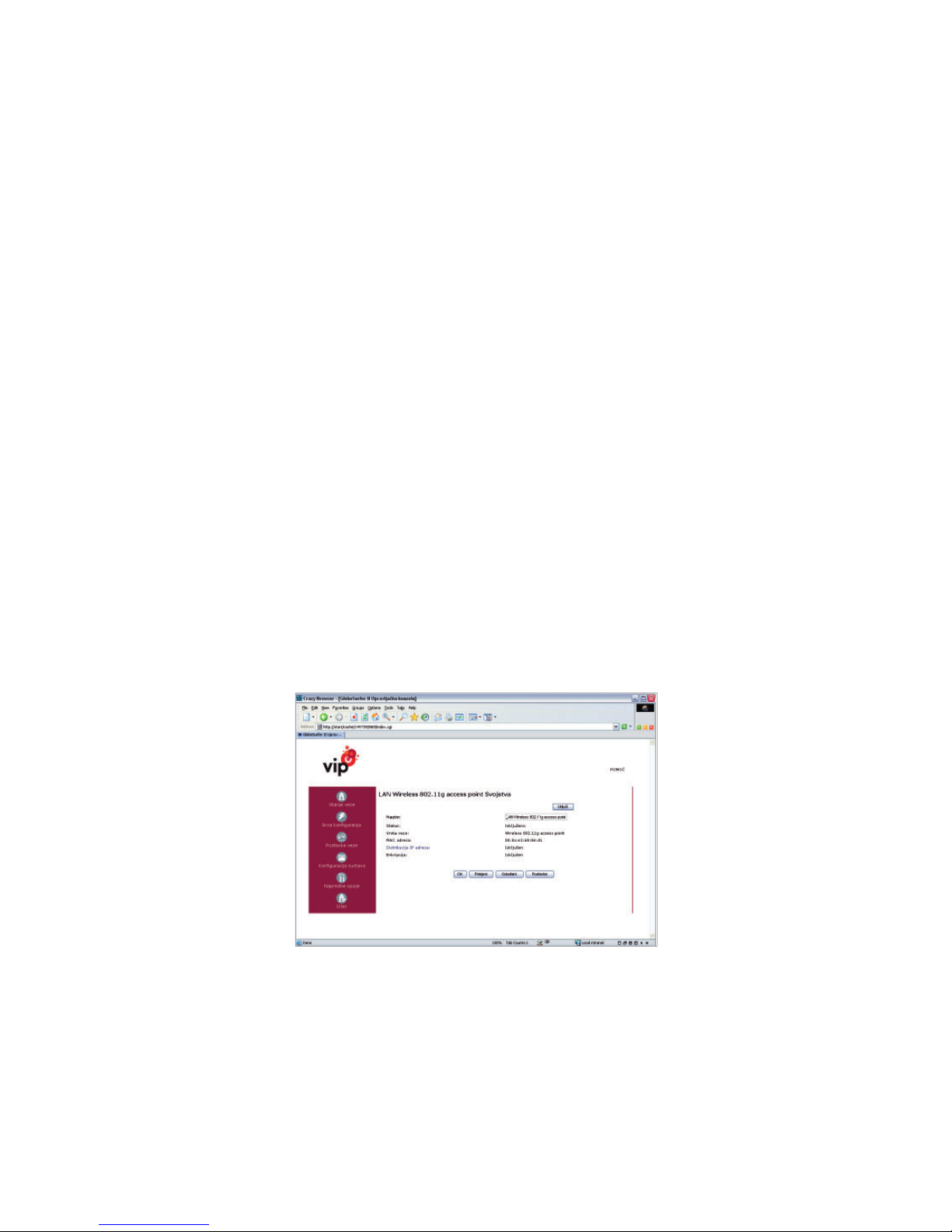
Activate WLAN following these instructions:
1. Log in to Officebox which you connected with the cable (start web-browser. Type in http://start. Click Login.
Enter user name and password).
2. Choose the menu Connection settings, then the option Network connections/LAN bridge.
3. Click on LAN Wireless 802.11g access point.
4. Press the key Turn on.
For wireless connection of Officebox to the computer, computer should be equipped with WLAN adapter that supports
IEEE 802.11 b/g.
If you wish to set up a higher security level for Officebox WLAN, and thus possibly prevent other computers nearby to
connect to your Officebox, we recommend that you follow the instructions provided on the interface by selecting
Quick
configuration menu/Wizard for settings setup: WLAN
. You can choose WEP, WPA or WPA2 encryption - they
are all explained in detail in the Wizard window.
If you use encryption, make sure that every computer that you plan to connect to Officebox uses the same type of
encryption that you have chosen through the Wizard.
Page 15
15
Note:
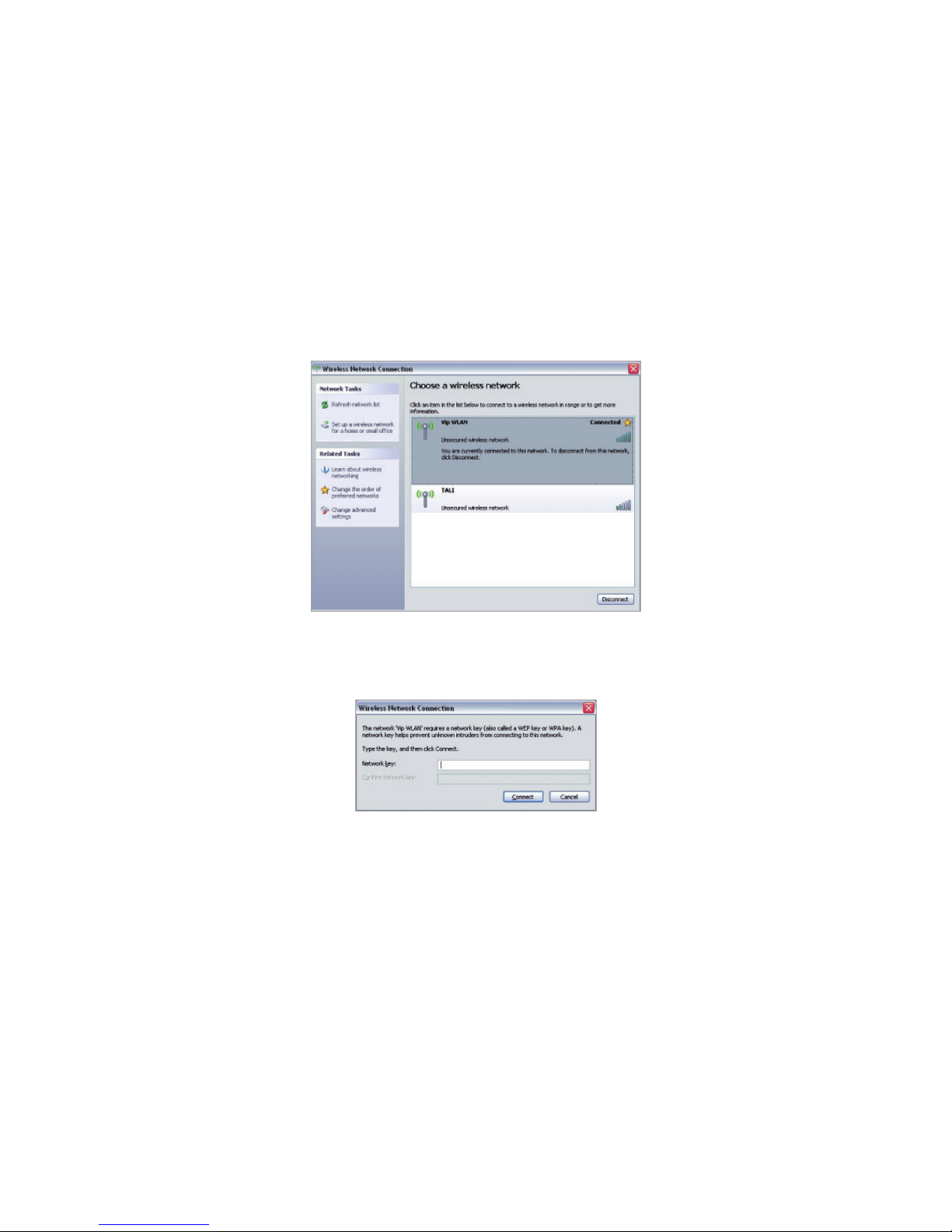
Settings setup applies to computers using Windows If you use Windows® XP, you will connect Officebox to the
computer in the following way:
1. Turn on the computer and WLAN adapter.
2. On the Start menu select Control Panel.
3. Click on Network Connections.
4. Click on Wireless Network Connection, and then Show Wireless Networks.
The list of available wireless networks will be displayed. Officebox WLAN is available under the name Vip WLAN.
5. Select Vip WLAN connection, and click Connect.
If you set up the encryption on the Officebox device, you will be asked to enter the “Network key”.
Type in the same key that you entered in the Wizard.
6. Enter the requested key in both fields and click “Connect”. After a few minutes the message Connected will appear in
the lower right corner of the window.
In the future, your computer and Officebox will be automatically connected.
Page 16

16
Advanced functions of the device
The CD that came with Officebox contains the document called Reference Manual, with detailed description of
advanced functions of Officebox and settings setup. The Manual is in English. For further information about advanced
functions visit http://officebox.vipnet.hr
List of advanced functions:
LAN interface:
- IEEE 802.11b/g WLAN Access Point
- WEP, WPA, WPA2, 802.11i
- MAC address blocking
Ethernet
- 10 / 100 Mbps Auto MDIX
- DHCP server and proxy
- DNS server and proxy
Firewall and Gateway functionalities
- advanced NAT
- MAC address filtering
- DeMilitarized Zone (DMZ)
- DoS and Intrusion Prevention
- Stateful Packet Inspection
- Configurable security policies
- Application Level Gateway (ALG) modules
- Event logging
- DHCP server and proxy
- DNS server and proxy
- Time
VPN functionality
- VPN pass-through
- PPTP and IPSec client and server
- L2TP client
Page 17
17
Help and support
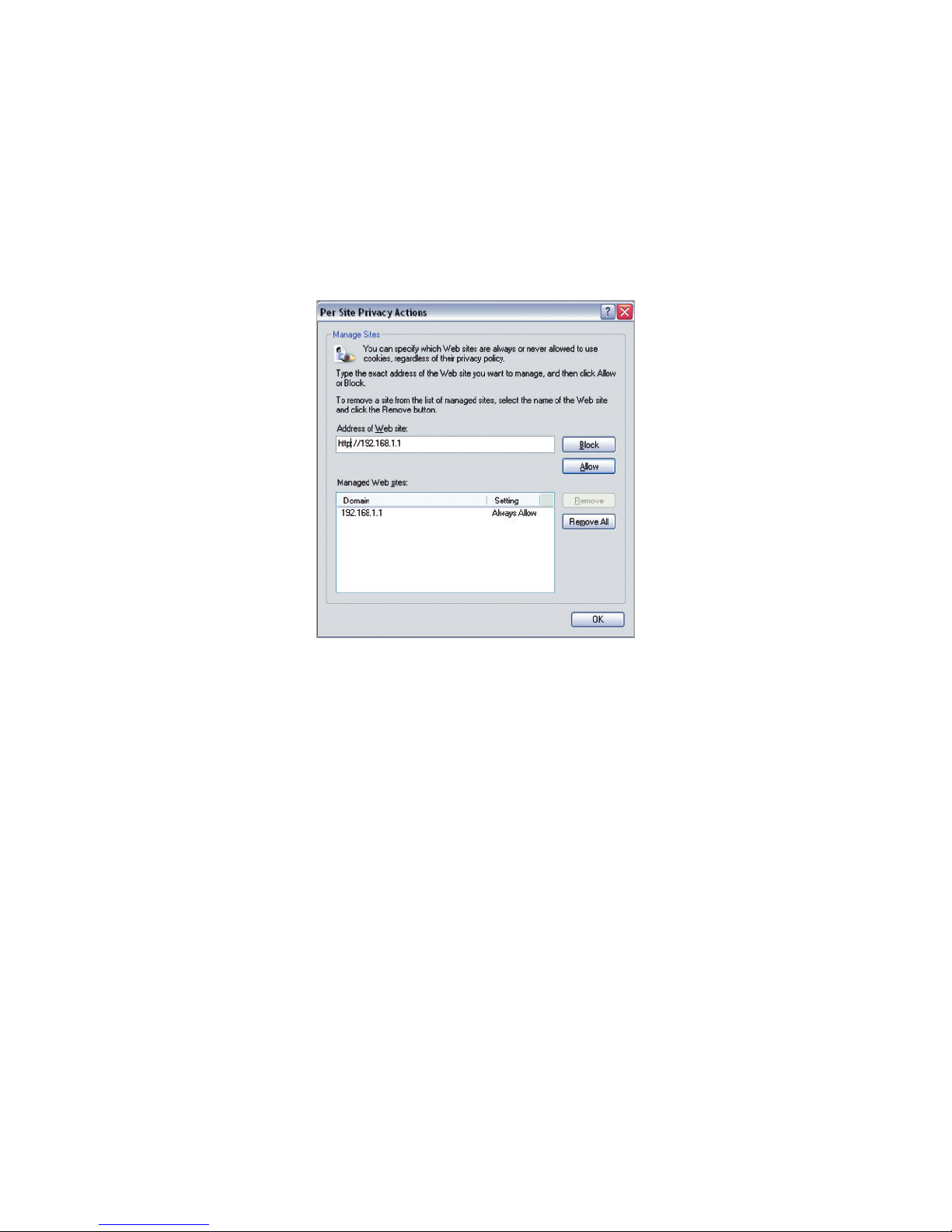
1. How to enable Cookies on your web browser?
For instance, you can enable Cookies for Internet Explorer in the following way: Tools -> Internet Options -> Privacy
-> Sites
.
Enter http://192.168.1.1 in the field Address of Web site and then click Allow.
2. I reset the device. Now I can not log in (the device does not accept the password).
Resetting the device will restore all settings back to their initial, factory configurations. The user name is: admin, and the
password is: admin.
3. How to upgrade the firmware?
Program updates for the Officebox device will be occasionally uploaded to the web page
http://officebox.vipnet.hr (latest firmware versions issued by the device producer).
You can download the latest firmware to your device in the following way:
- save the upgrade file (it always ends in s .rmt) to your computer
- Select the window
System configuration/Firmware upgrade
- Download *.rmt file - and follow the instructions on the display.
Page 18

18
Glossary
802.11b The WLAN standard. It enables the data transmission speed of up to 11 Mbit/s at the 2.4 GHz
frequency. WLAN is used for computer and Officebox connection.
802.11g The WLAN standard. It enables the data transmission speed of up to 54 Mbit/s (typically 22 Mbit/s) at
the 2.4 GHz frequency. The standard is compatible with 802.11b and it is considered as its successor.
It enables the fast data transmission between computer and Officebox at a distance of up to 100 meters
from the base station.
DHCP Dynamic Host Configuration Protocol. DHCP protocol is used for the dynamic configuration of IP
addresses. Instead of using its fixed IP address, DHCP client receives its IP address from DHCP server.
DNS Domain Name System. Internet service which is used to assign IP addresses to corresponding domain
names.
EDGE Enhanced Data rates for Global Evolution. The upgrade of GPRS system which allows increased data
transmission rates (download speed of up to 220 kbit/s; upload speed of up to 110 kbit/s).
Ethernet The most expanded standard of networking for local area networks (LAN; local area network). Ethernet
is standardized as IEEE 802.3.
Firewall Firewall is software which inspects data traffic between computer and LAN network, or Internet and
prevents the intrusion from the Internet to the computer based on a set of rules.
Firmware Software which is embedded in the very device and which serves for operating the device.
GPRS General Packet Radio Service. The upgrade of the packet data transmission. GPRS allows the constant
flow of IP data packets via application systems like web browser and file transfer.
HSDPA High Speed Down-link Packet Access. The upgrade of UMTS Network. Achievable speeds depend
on the network connection device; it is possible to achieve download speed of up to 1,8 Mbit/s, and
upload speed of up to 384 kbit/s.
IP address IP address identifies every device connected to the Internet and it is unique for every device.
LAN Local Area Network. Local computer network which can have a few or no connection with an external
network.
MAC address Media Access Control (MAC) address is the 48-bit network card identification number assigned by the
producer and it can not be changed. It is usually expressed in hexadecimal form.
NAT Network Address Translation (NAT). The method of converting (mostly private) IP addresses of one
network into other IP addresses of another network (mostly public).
Port Interface between operating system, applications and Internet.
SSID Service Set Identifier; a network name in WLAN network that enables certain WLAN devices to find
access point to the network.
TCP/IP Transmission Control Protocol/Internet Protocol; transport protocol that manages data transfer on the
Internet.
UMTS Universal Mobile Telecommunication System. Basic standard of the so-called 3G mobile networks. It
enables the data transfer download speed of up to 384 kbit/s and upload speed of up to 64 kbit/s.
URL Uniform Resource Locator is an Internet address, for ex. www.vipnet.hr
WAN Wide Area Network is a computer network that covers a broad area.
WEP Wired Equivalent Privacy; a standard which describes 64-bit or 128-bit encryption process used for
wireless LAN networks.
Page 19

19
WLAN
Wireless Local Area Network is the technology for wireless computer networking.
WPA Wi-Fi Protected Access is 256-bit encryption method used for WLAN.
WPA2 Safer version of WPA protocol implemented with the 802.11i standard.
Page 20

20
Device specifications
UMTS
LAN
WLAN
Security
LCD screen
Keys
Connectors
User interface
Power supply
Dimensions
Weight
Working environment
FDD UMTS, 850/1900/2100 MHz, HSDPA speed up to 1.8 Mbit/s
Ethernet 10BaseT/100BaseT, Auto MDIX
IEEE 802.11 b/g WLAN
64 bit-na i 128 bit-na WEP encryption
WPA/WPA2 Encryption
Port i URL Filter
DMZ support
Firewall, thre pre-defined levels
VPN tunneling, PPTP, Ipsec, L2TP
Monochrome 128 x 64 piksela OLED screen
Status
Missed/incoming calls
Time (hours:minutes)
Signal strength
Number of WLAN connections
Turned on/off
Connection/Disconnection
Information display
Device resetting (settings restored to factory configurations)
Power suply
RJ-45 Ethernet
RJ-11 POTS telephony
Outside connector for the antenna (GSM/UMTS)
The device is operated via web-browser. There is no need to install a special software.
Inlet 110-240V, 50-60Hz
Outlet 5V DC, 2.4A
150 x 100 x 32 (W x H x T in mm)
255g, without power supply
inside, 0 °C - 60 °C;
humidity 5% - 95%
For the support for the device please visit http://officebox.vipnet.hr or web pages of the producer www.option.com
Page 21

21
General use recommendations
Read and follow these simple guidelines. Not following them can be dangerous or illegal. Further
information are available on the web pages www.vipnet.hr
- The Officebox device is not intended for outdoor use (outside the buildings).
- Treat the Officebox device with care and keep it in the clean place protected from dust.
- Keep the device away from open flame sources or lighted tobacco products.
- Keep the device away from liquids or moisture.
- Keep the device away from rain or spilled liquids.
- Do not drop, throw or try to bend the Officebox device.
- Do not paint the Officebox device.
- Do not try to dissemble the Officebox device. Failure to do so will nullify the warranty. It can be done only by the
authorized person.
- Use only network adapter that came with your Officebox device (producer name GlobeSurfer® II).
Power supply Producer
GS2 AC/DC adapter KOSH POWER CE105B0050V2400
Input voltage
Highest input voltage 5 VDC
- Officebox is intended to be used with telephone (POTS) and computer connected via the cable (LAN) at the longest distance of 3 meters.
Connection Category Type
DC input connector SELV 5.5/1.2mm DC jack
Connector for the SIM card SELV SIM type (ISO7816)
Connector for the outside antenna SELV MC-CARD type
LAN connector SELV RJ45
Telephone connector TNV2 RJ11
SELV interconnections (connections) should be connected only to the equipment compatible with SELV requirements, as
defined by the directive EN60950.
TNV2 interconnections (connections) should be connected only to the equipment compatible with SELV requirements, as
defined by the EN60950 directive.
Page 22

More information on www.vipnet.hr or dial 091 77 22.
E-mail: business @vipnet.hr
VIPnet d.o.o.
Vrtni put 1, HR-10000 Zagreb
Officebox Call&Fax Users” manual v1 4.2008. Vipnet reserves the right to change the information stated in the brochure.
 Loading...