

Page 1
Eaton Filtration, LLC
900 Fairmount Avenue, Elizabeth, NJ 07207
Phone: 908-787-1000 Fax: 908-351-7893
E-Mail: [email protected]
Web: www.filtration.eaton..com
Installation, Operation &
Service Manual
Models 80 & 85
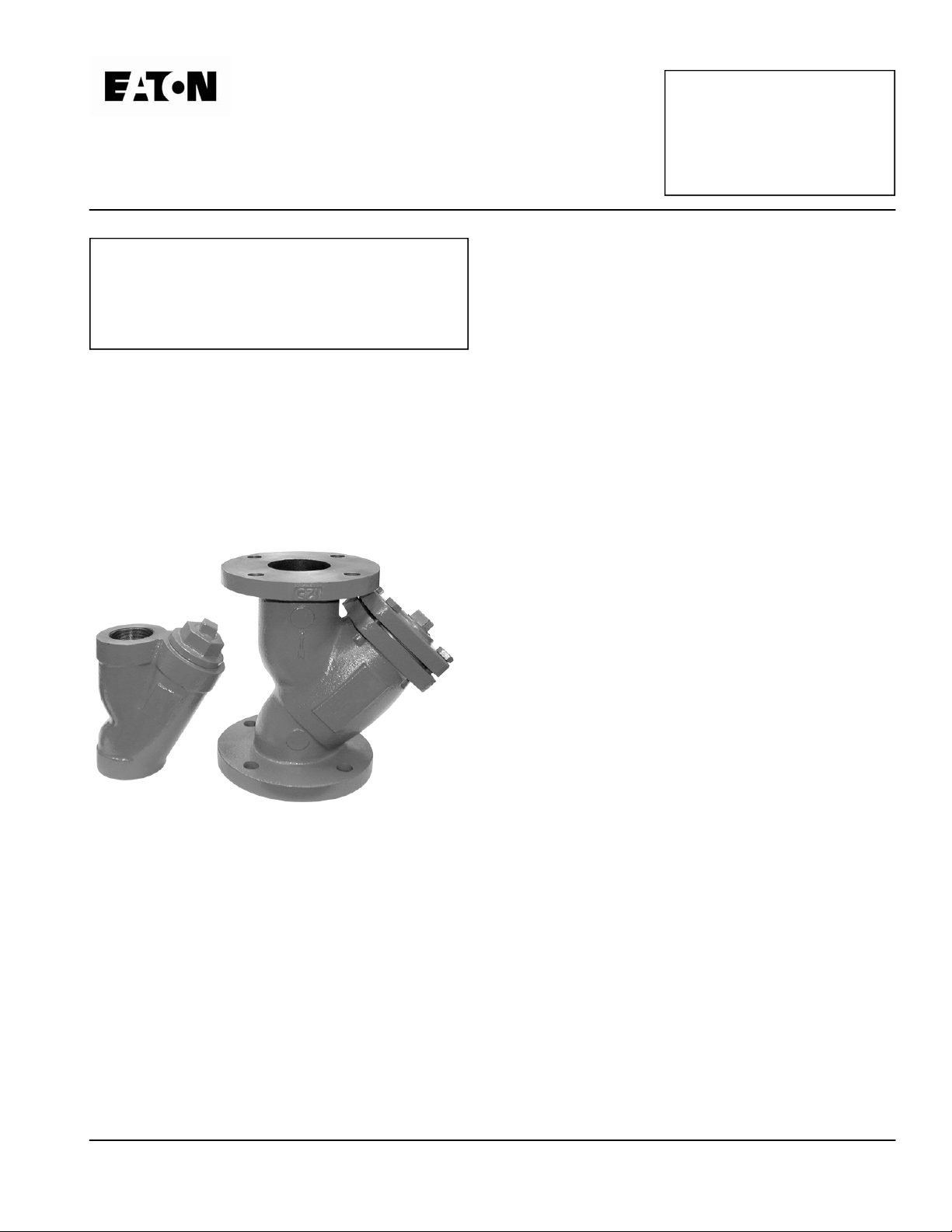
Y-Strainers
Read all instructions before installation or
operation of equipment. Failure to comply
with these instructions could result in
bodily injury or property damage.
Table of Contents
Introduction……………………………….. 1
Receiving, Handling & Inspection ……… 2
Installation ………………………………… 2
Start-Up . …………………………………. 3
Screen Cleaning …………………………. 3
Shut-Down Periods ……………………… 3
Recommended Spare Parts ……………. 3
Introduction
The Eaton Models 80 & 85 Y-Strainers are devices installed in a pipeline to remove dirt and
other unwanted debris from fluids. They are designed for the full ANSI pressure rating @ 100°F
that is shown on the strainer. Straining is accomplished by directing the fluid through sized openings in a screen. Y-Strainers are installed where
fluid flow can be interrupted while the screen is
removed for cleaning. Y-Strainers are designed
to withstand the pressures of the piping system.
For additional information regarding Y-Strainers
visit out website at:
www.filtration.eaton.com
Page No.
1
IOM 80/85 01/06
Page 2
Receiving, Handling and Inspection
Unpack the strainer and inspect for damage occurring during transit. Report damage to the carrier. If the strainer is not installed immediately,
see “Storage” instructions.
Remove any preservatives with solvent dampened cloths. Exercise care when using solvent
and follow solvent manufacturer’s instructions.
Verify that the rating of the strainer is greater
than or equal to the maximum pressure & temperature of the installation.
Inspect strainer by checking for and removing
any foreign or loose material that could be carried down stream when fluid is introduced into
the strainer.
Storage
Replace protective wrap, flange protectors etc.
which may have been removed during receiving,
handling and inspection. Store the strainer in a
clean, dry environment.
Installation
CAUTION: Before installation, review the ap-
plication and chemical compatibility of the
process fluid to the materials of construction
of the strainer.
Remove protective wraps etc. before installing
the strainer. Position the strainer in the pipeline
so that the fluid enters the connection marked
“IN”, “INLET” or in the direction of the Arrow cast
into the strainer.
Installation, Continued
Always install the strainer with the blow-off (drain)
in the lowest position. Flow must be downward
into the inlet of the strainer for satisfactory operation for vertical piping installations.
CAUTION: To lift the strainer, put slings under the inlet and outlet connections.
Be sure sufficient clearance is provided for easy
opening of the cover (blow-off) and screen removal. Refer to the Sales Drawing for removal
clearances.
For larger sized strainers, support the strainer
firmly in the pipeline. Piping must allow for adjustments due to strainer connection tolerances.
Strainer supports must prevent piping forces and
movements from acting on the strainer.
Connect the strainer to the pipeline. On flanged
strainers, be sue to use the same type of flange
faces. Do not bolt a raised face flange to a flat
face flange. Be sure flange gaskets are in place
and fasteners are tight.
On strainers with other line connections use standard piping practice when installing the strainer.
CAUTION: Eaton Y-Strainers are not designed
to be anchor supports in the piping line. Be
sure to properly support process piping on
both sides of the strainer. Use care to prevent piping forces and movements from acting on the strainer connections. Damage may
occur to the strainer if improperly connected.
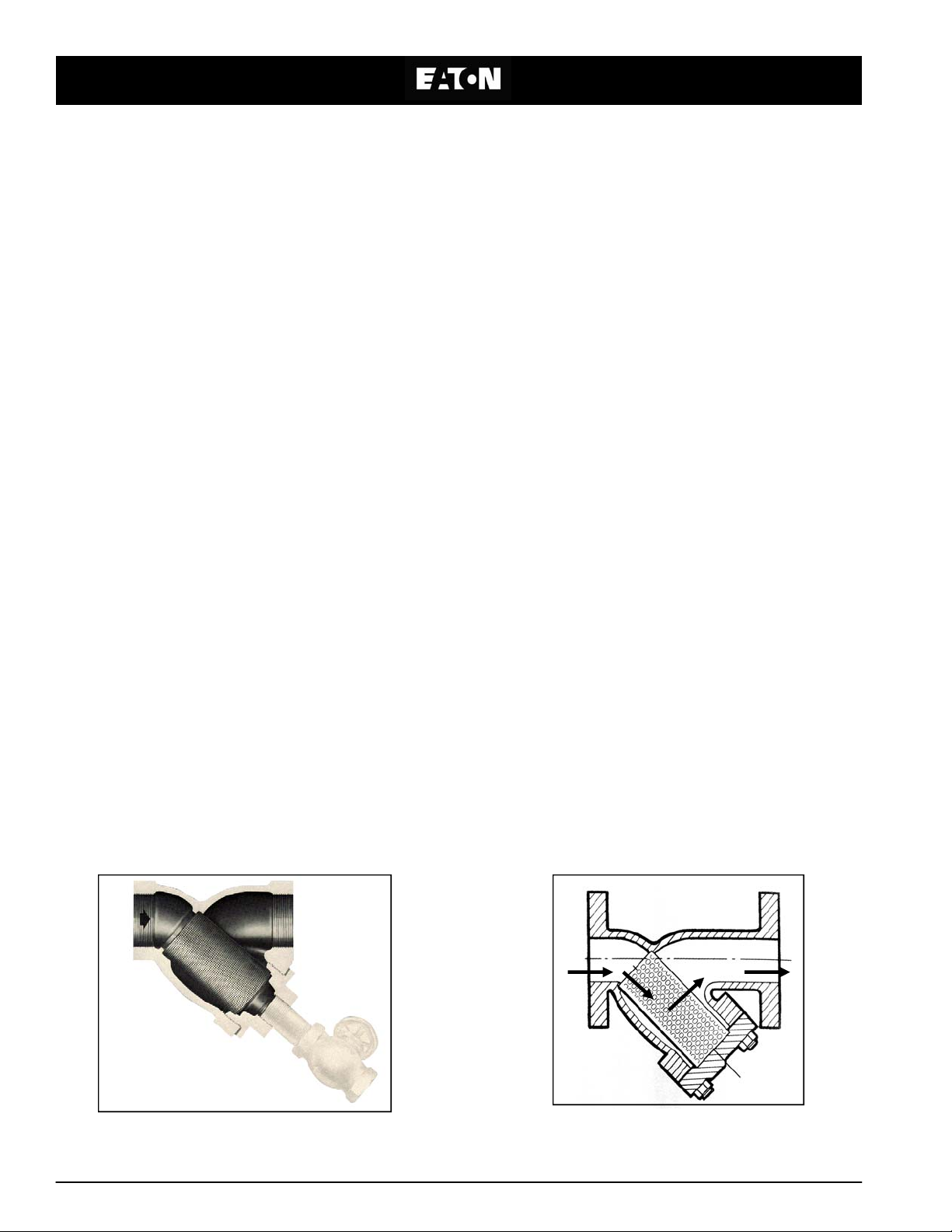
Figure 1. Cross-section of threaded YStrainer with blow-off valve connected for
quick clean-out.
Figure 2. Direction of flow through a
typical Y-Strainer
2
Page 3
Installation, Continued
Y-strainers have no provision to accept gauges.
Pressure gauges near the strainer inlet & outlet
are required to determine differential pressure
across the strainer and cleaning frequency.
Pressure gauges are essential for the safe operation of the strainer and should be installed using standard piping practices.
It recommended that a compatible valve (and
piping as needed) be installed in the cover (blowoff) for safe, quick clean out (normal blow-off
cleaning).
CAUTION: To protect the operator during
draining and clean-out, the fluid must be
piped to a safe area by using the valve installed on the cover as described above. This
requirement is for all fluids and water
(temperatures above 120° F). The operator
should wear appropriate protective equipment (goggles, gloves, vests, clothing etc.)
consistent with the process fluid for strainer
operation and servicing.
Start-Up
Open the blow-off valve to expel air from the
strainer and slowly allow fluid to enter the
strainer.
CAUTION: Start system GRADUALLY. This
eliminates sudden shock to the strainer and
other equipment in the line. This is EXTREMELY important for steam service.
Close vent when air is expelled and fluid begins
to flow.
Shut-Down Periods
Slowly close the pipeline valves upstream and
downstream from the strainer. Make sure these
valves are tightly closed.
Relieve fluid pressure in the strainer by first
opening the drain, then vent if provided. The
strainer must be drained and internal pressure
relived prior to cleaning. Proceed to clean the
screen.
When to Clean the Screen
A differential pressure increase of 5 to 10 psi
across the strainer indicates that the screen is full
of debris and needs to be cleaned.
3
When to Clean the Screen, Continued
CAUTION: To prevent screen damage, DO
NOT permit differential pressure across the
strainer to exceed 20 psi.
Normal Blow-Down Cleaning
To avoid shutting down the piping system when
possible, clean the screen of debris by opening
the blow-down valve. Valve is to stay open until
all debris has been blown out from the screen.
Then close the valve and resume normal operation.
Screen Removal, Cleaning and Replacement
Follow the shut-down procedures above. When
the strainer’s internal pressure is relieved, drain
the fluid and loosen fasteners. Remove the cover
(blow-off) and remove the debris laden screen.
Note: Do not permit the screen debris to dry, as
it would be difficult to remove and clean the
screen.
Invert the screen and wash out debris by directing a stream of air or water against the screen
exterior. Use solvent if stained fluid is fuel or a
chemical. Follow manufacturer’s instructions
when using a solvent to clean the screen.
Inspect screen at each cleaning for holes or
tears. Replace as required. Inspect sealing surfaces and cover gasket. Clean sealing surfaces
and cover (blow-off) seat. Replace cover (blowoff) gasket as necessary.
Note: If Model 80 Strainers have spiral wound
gaskets, these gaskets must be replaced using
only a genuine Eaton part each time the cover
(blow-off) is removed.
Place the cleaned/new screen squarely on the
seat in the cover (blow-off). Replace cover
(blow-off) and tighten the fasteners uniformly.
Close the valve (if provided) and follow the startup instructions.
Recommended Spare Parts
1 Eaton Replacement Screen
1 Eaton Replacement Gasket
When ordering spare parts specify all nameplate
data as well as the description and quantity of
parts. Always use genuine Eaton replacement
parts for guaranteed fit and performance.
Page 4
More From Eaton Filtration
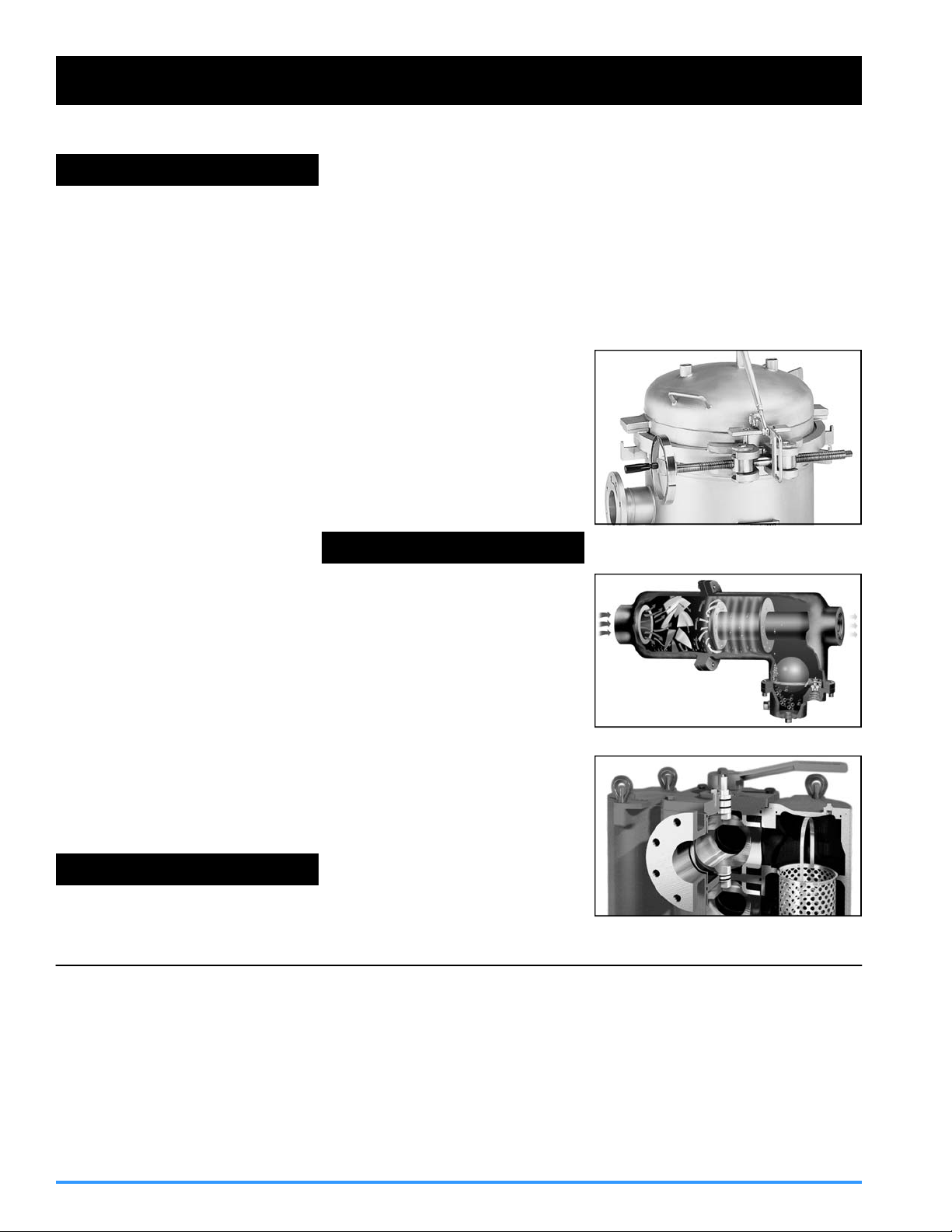
Pipeline Strainers
Eaton provides the most complete
range of standard cast pipeline
strainers for coarse filtration available
from any manufacturer. These include Simplex, Duplex and Y Type
Strainers, in Iron, Bronze, Carbon
and Stainless Steel. For ultra-pure
applications, strainers of all plastic
construction are available. Cast
Pipeline Strainers range in size from
1/2” to 36” and larger.
When a cast strainer won’t meet the
applications requirements because of
size, weight or design Eaton offers
standard fabricated strainers to meet
exact customer requirements. without
any trade-offs. When a standard design fabricated strainer will not meet
an application’s requirements Eaton’s
design team can work with customers to create a unique one that will.
Eaton also offers Automatic SelfCleaning strainers. These are motorized strainers designed for the continuous removal of entrained solids
from liquids in pipeline systems. The
strainer operates un-attended and
the system flow never has to be shut
down for strainer element cleaning.
These strainers are available in both
cast and fabricated types.
Find out more on the web at:
www.Filtration.Eaton.com
Gas/Liquid Separators
Eaton’s Gas/Liquid Separators have
been the “Industry Standard” for over
100 years. Nobody knows more
about gas/liquid separation than us.
Eaton Gas/Liquid Separators are
used to remove 99% of damage
causing moisture and particulate
matter from air, gas and steam pipelines. They protect valuable system
components like air compressors and
turbines from damage.
Eaton has a wide selection with hundreds of different Gas/Liquid Separators. When a standard model isn’t
right for an application, Eaton Engineers can work with customers to
create a custom fabricated model
that fits the application requirements
exactly.
Find out more on the web at:
www.Filtration.Eaton.com
Filtration Systems
With Eaton Filter Housings you have
your choice of high grade investment
cast construction or engineered fabricated construction in stainless steel
or carbon steel. Or, for extremely
corrosive or ultra-pure services, you
can choose all-plastic construction.
You can be sure Eaton Filter Housings will meet specifications because
they are all made to ISO 9001:2000
Standards. Eaton has representatives in over 40 countries, experienced professionals to provide the
filtration help you need, when and
where you need it.
Choosing the correct filter bag is critical to the success of you application.
Don’t trust anything less than a filter
bag from Eaton. They’re made under
ISO 9001:2000 Standards to ensure
the consistent, reliable performance
that you demand. Eaton Filter Bags
fit all Eaton Filter Housings and the
housings of most other manufacturers as well.
Find out more on the web at:
www.Filtration.Eaton.com
Eaton Filtration warranties its products against defective material and workmanship only. Eaton assumes no responsibility for damage or injury
resulting from improper installation, abuse, or misapplication of any product. Eaton assumes no responsibility for damage or injury resulting
from chemical incompatibility between its products and the process fluids to which they are subjected. The end user should always test to determine application suitability. Contact your Eaton Representative for complete warranty information.
900 Fairmount Avenue, Elizabeth, NJ 07207 Tel: 908-787-1000 Fax: 908 351 7893
E-Mail: [email protected] Web: www.filtration.eaton.com
Eaton Filtration, LLC
©Copyright 2005 Eaton Filtration LLC, All rights reserved.
2
4
 Loading...