

Page 1
FIR913
IGNIS 5I
Wood & Multi Fuel
Cassette Inset Stove
DEFRA
Approved
Instructions for
Use, Installation
& Servicing
Page 2

FIR913
Valiant Ignis 5i
Technical Specication
EN13229:2001 + EN13229-A2:2004
Parameter - Tested on wood Valiant 5i (5kW)
Test Duration h 1
Total Eciency % 82.7
Nominal Heat Output kW 5
Nominal Heat Output to Space kW 5
Mean CO emission (at 13%O2 ) % 0.6
Mean ue gas temperature ºC 254
Flue mass gas ow g/s 3.2
Stove Weight (Packaged) Kg 75
This Stove must not be used in a Shared Flue. Only 1 Appliance may be used per Flue.
An accredited competent person must carry out the installation of this appliance;
Local building regulations must be adhered to.
Page 3
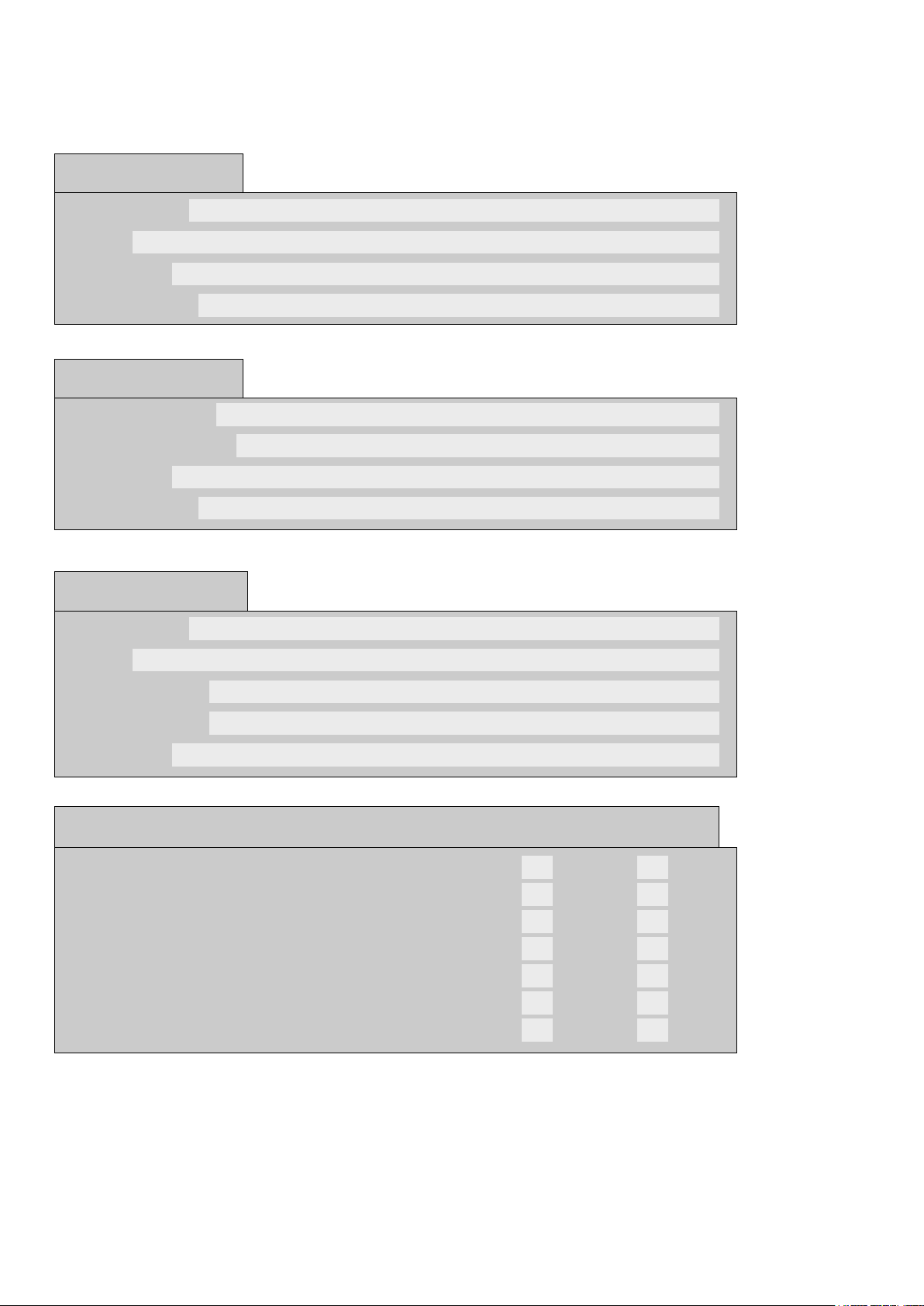
Appliance Commissioning Checklist
Purchase Record
Name of retailer:
Address:
Telephone no:
Date of purchase:
Product Record
Valiant model name:
Product serial number:
Date installed:
Address of install:
Installation Record
Company name:
Address:
Telephone number:
Name of installer:
Date installed:
Commissioning Checklist – to be completed & signed by the installer:
Is the ue suitable for the appliance? YES NO
Has the ue been swept? YES NO
Smoke test completed on the installed appliance? YES NO
Spillage test completed? YES NO
Appliance use and features demonstrated? YES NO
Clearance to combustible materials checked? YES NO
Instruction manual given to customer? YES NO
Name: _____________________________ Signature: _____________________________ Date:_______
Page 4

IMPORTANT
THE OUTER CASING, FRONT AND GLASS PANEL BECOME EXTREMELY HOT DURING
OPERATION AND WILL RESULT IN SERIOUS INJURY AND BURNS IF TOUCHED. IT IS
THEREFORE RECOMMENDED THAT A FIREGUARD COMPLYING WITH BS 8423:2010
IS USED IN THE PRESENCE OF YOUNG CHILDREN, THE ELDERLY, VULNERABLE OR
INFIRM.
Please read these Instructions carefully before installation or use.
Keep in a safe place for future reference and when servicing the re.
User Guide
Thank you for purchasing a Valiant Ignis stove.
The Ignis range of stoves has been designed and
manufactured using the nest materials from
Denmark, Germany and Sweden and tested in
Holland to the most rigorous standards to give you
many years of reliable heat and service.
Please take a few minutes to carefully read and
understand these instructions to enable safe, easy
and effective use of your Valiant Ignis stove.
Installation
The appliance must be tted by a registered
installer to comply with all applicable building
regulations. All works must be carried out with care
to meet the requirements of current Health and
Safety rules. A faulty installation can cause danger
to the inhabitants and structure of the building.
Your building insurer may require notication that
a new heating appliance has been installed on your
property. Check that your cover is still valid after
installing the appliance.
Your Appliance Commissioning Checklist (previous
page) should be completed and kept safe, along
with this manual. Should any conict occur
between these instructions and the building
regulations then the regulations must apply. Your
local Building Control Oce can advise regarding
the requirements of the regulations.
Register by email in order to validate the guarantee
on your installed stove: See guarantee details on
page 4.
General Safety Points
• Ensure your chimney/ue is swept every year and
that any air vents are free to provide fresh air for
ecient operation.
• Ensure there is a functioning and approved
carbon monoxide monitor within 3m of the stove
and around 300mm from ceiling level – this will
give warning if dangerous, poisonous air is in the
room – ensure that you read the instructions for
this safety device.
• Use only clean, dry fuels such as logs, untreated
wood, coal, smokeless coal and briquettes. Do
not use liquid fuels. We recommend that you
use a Valiant Moisture Meter to test and ensure
that wood fuel contains less than 20% moisture
content.
• Do not use to burn household waste material –
this may cause damaging acids in the ue and
the stove. Doing so will nullify your warranty and
damage the environment.
• Ensure that any combustible items – such as
toys, TVs, furniture, ornaments or valuables - are
placed a safe distance from the stove, at least
900mm away.
• We recommend the use of a suitable reguard if
young children or inrm persons are present.
Operating Your Stove
Using Your Stove for the First Few Times
• The rst 3 or 4 res should be small, allowing the
stove to operate at a low temperature and allow
the paint and re cement to cure gently. This
will prolong the nish and the integrity of the re
cement seals.
• It is important to note that there may be an
unpleasant odour from the rst few res. This is
nothing to be alarmed about, it is just part of the
curing process. Keep the room well ventilated to
avoid the build-up of fumes.
Lighting Your Stove
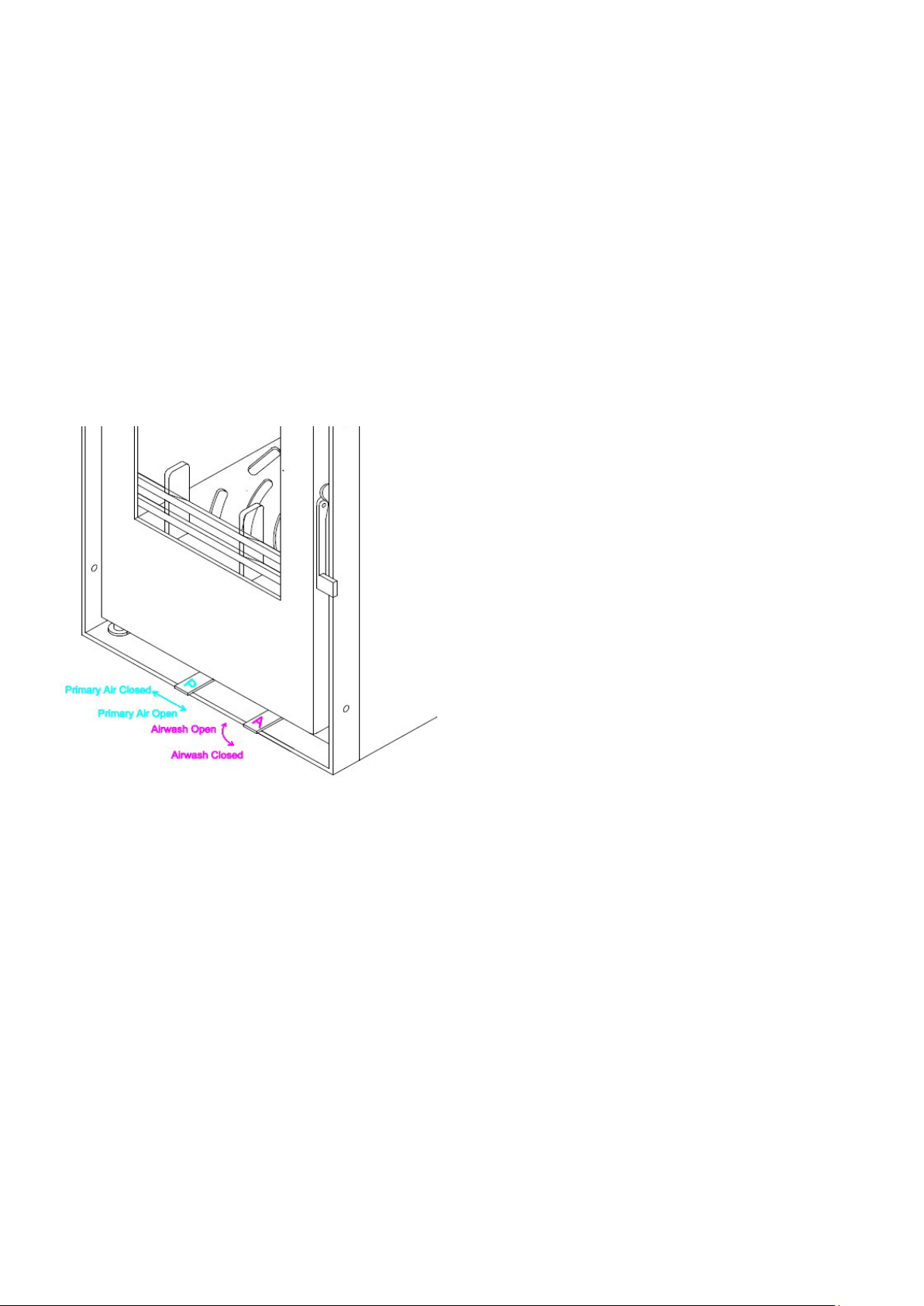
• Open the air wash vent approximately 50%.
Page 5
• Place re lighters or loose paper in the grate and
put dry kindling on top.
• Light the re lighters or paper.
• Leave the door slightly open as the re establishes
and the stove warms, this will prevent condensation
on the glass doors.
• Never leave a lit stove unattended with the door
open.
• Close the stove door as soon as possible while the
re warms and builds.
• As the re establishes, add small pieces of wood,
do not add so much that it entirely lls stove, make
sure that it does not displace or come into contact
with the brick bae plate. Avoid adding too much
fuel as this will smother the re-do not ll above
clean burn vents.
• Wood is burned more eciently when the primary
air lever is closed and using the air-wash lever to
control the stove.
• Certain sites may need increased airow when
being started. This can be done by adjusting both
levers (Airwash Lever & Primary Air Lever).
Primary Vent Control
• Open the primary air vent to feed in extra air to
revive a failing re or to accelerate the burn.
• Operate with the primary air vent open when
burning coal.
• Adjust the primary air vent to achieve a controlled
burn rate while burning cleanly.
use a Valiant Moisture Meter to test and ensure
that wood fuel contains less than 20% moisture
content.
• We advise that you burn your stove at high output
for at least 30 minutes each time it is used to avoid
the excessive build-up of tar and creosote in the
stove and ue system.
• Do not operate the stove with the door open.
• Do not operate the stove with bae or rebricks
removed.
• For best results leave a small bed of ash in the
stove when burning wood.
• Coal: Burn only good quality household coal and
smokeless briquettes. If in doubt refer to the HETAS
website.
Care and Maintenance
Good housekeeping is essential to get the best
from your appliance, so as part of normal use we
recommend (after allowing all re to be extinguished
and the stove to cool):
• Regularly remove most of the ash from the ash pan;
always leave a small bed of ash on the grate as
wood burns better this way.
• Ensure that the stove rope seal on the door is in
good condition – the rope should be a continuous
band with no gaps, breaks or pieces missing. Any
air leaks will allow the stove to run out of control,
bypassing the air vents and may allow leakage of
fumes into the room.
• Carefully clean the glass, if required with Valiant
glass cleaning solution and a damp clean cloth to
keep the stove glass in top condition.
• Broken or cracked glass should be replaced as soon
as possible – replacement glass is available from
Valiant.
• Check the bae plate is in place, has not become
dislodged through overlling and is in good
condition. Some deterioration, scung and
discolouration is normal – all rebricks and baes
are consumable parts, which are replaceable and
available from Valiant. Do not use without bricks or
bae.
• Wipe the stove with a damp cloth, never with
abrasive materials; use Valiant metal cleaner for
optimum results.
• Any minor scratches or paint damage can be
touched up with stove paint. Do not use normal
household paints.
Servicing
Running the Stove
• Burn only dry, well-seasoned wood that is cut and
dried for at least a year. We recommend that you
Before the start of the heating season we
recommend that you strip, inspect and clean the
appliance:
Page 6

• The appliance and chimney should be swept at
least once per year by a competent person.
• Allow the appliance to cool and for any re to be
totally extinguished.
• Remove all internal parts: bae, log guard and
rebricks.
• Take care when handling rebricks as they can
become fragile after a period of use.
• Sweep the chimney/ue at this point, if necessary.
• Vacuum clean any remaining ash and debris from
the inside of the appliance.
• Check the parts for any damage. Replace any
damaged parts only using genuine replacement
parts.
• Check and clean the rebricks with a soft brush.
Some surface damage will occur during use; the life
of the bricks will depend on the type of fuels burnt
and the level of use. Replace damaged bricks as
soon as possible.
• Re-t cleaned internal parts.
• Clean glass stove doors, using Valiant Glass
Cleaner which is formulated for this application.
(Do not use abrasive cleaners to remove tar or soot
deposits from the glass.)
• If required, t new door rope seal.
• Lightly oil the door catch mechanism and hinge
pins - avoiding glass and rope seals.
• Immediately close all air vents on the appliance.
• Move furniture and rugs away from the replace
and remove any nearby ornaments – only if it is
safe to do so.
• Place a reguard or spark guard in front of the
stove, if available.
• Evacuate the building.
• Do not re-enter the building until it is deemed safe
to do so.
• Do not use the appliance after a chimney re until
it has been inspected by a registered installer
and the appliance is conrmed safe to use. The
chimney must also be inspected and swept by a
chimney sweep who conrms that the chimney is
structurally sound and safe to use.
Guarantee
• Your Valiant multifuel stove is guaranteed for a
period of 2 years against faulty materials and
workmanship, subject to the stove being installed
by a recognised qualied installer and registered to
Valiant.
• Register your stove install by emailing
registration@valiantreside.com with the following
details:
1. HETAS installer name
2. Installer registration number
3. Date of install
4. Model name
5. Model serial number
6. Address of property
• The Guarantee does not cover wear and tear or
damage/deterioration caused to consumable items,
including glass, rebricks and bae.
Chimney Fire
In the event of a chimney re:
• Raise the alarm to let others in the building know.
• Call the Fire Brigade.
Page 7

Troubleshooting Tips
Issue Cause Solution
Creosote build-up in
the chimney
Tar around ue joints
OR
Strong pungent odour
when the appliance
is lit
Burning wet wood
(over 20% moisture
content)
Appliance operated
at continuously low
temperatures
Using poor quality or
unseasoned wood
Use dry seasoned wood (less
than 20% moisture content).
Operating the appliance at a
high temperature for a short
period of time each time it is
used will avoid the build-up
of tar and creosote
Use dry seasoned wood (less
than 20% moisture content).
Operating the appliance at a
high temperature for a short
period of time each time it is
used will avoid the build-up
of tar and creosote
See operating instructions
for the correct use of air
control vents.
Use dry seasoned wood (less
than 20% moisture content)
Dirty rebricks or
dirty stove glass
Glass blackening Using poor quality or
Using poor quality or
unseasoned wood
unseasoned wood
High ue draught Consult your stove installer
Incorrect use of air
control vents
Appliance operated
at continuous low
temperatures
Use dry seasoned wood (less
than 20% moisture content)
Use dry seasoned wood (less
than 20% moisture content)
for advice on the ue system
See operating instructions
for the correct use of air
control vents.
Use dry seasoned wood (less
than 20% moisture content).
Operating the appliance at a
high temperature for a short
period of time each time it is
used will avoid the build-up
of tar and creosote
Page 8

Installation Guide
**IMPORTANT: THIS AND ANY SOLID
FUEL APPLIANCE MUST BE INSTALLED
IN ACCORDANCE TO CURRENT BUILDING
REGULATIONS AND ANY LOCAL
AUTHORITY REGULATIONS AND THE
WORK NOTIFIED TO THE RELEVANT
AUTHORITY**
Failure to install to the regulations could lead to a
potentially dangerous situation, arising from re,
poisonous gases etc.
When selling or moving from the property the new
residents may require certication that the work
was carried out by a competent installer.
It is strongly recommended that a registered
engineer completes this work.
All ue pipework and sealing materials, shields and
products used to t the appliance and associated
equipment must be compliant with current building
regulations.
These instructions cover the basic instructions
to ensure the satisfactory installation of the
appliance, although details may need slight
modication to suit particular local site conditions.
In all cases the installation must comply with
current Building Regulations, Local Authority
Bylaws, European and National Standards, other
specications or regulations and best practice as
they affect the installation and the safe, ecient
operation of the stove.
Particular attention should be drawn to:
• Handling: The appliance is heavy. Adequate
facilities must be available for loading, unloading
and on site handling.
• Fire Cement: Some re cement is caustic and
must not come into contact with the skin.
Protective gloves must be worn. Wash hands
thoroughly with plenty of water after contact with
skin.
• Asbestos: This appliance contains no asbestos. If
there is the possibility of disturbing any asbestos
in the course of installation seek specialist
guidance and use appropriate equipment and
procedures.
• Metal Parts: Take care when installing or servicing
the stove to avoid personal injury.
Modications
Any unauthorized modication to the appliance
voids the warranty and could pose a threat of
serious injury or death.
Chimney and Flue
Ensure that the hearth, chimney, chimney terminal
(pot) and all clearances to combustibles are
appropriate, permanent and safe before attempting
to install the appliance.
Valiant stoves are designed for tting only into
a single chimney (not shared with any other
appliance) and a standard masonry replace
conforming to BS1251 and BS8303, which must
be made of incombustible materials (such as tile,
brick or stone).
Ensure the chimney has been swept to remove
corrosive soot and other debris.
It is recommended that all chimneys are lined
with a suitable ue liner to ensure that all exhaust
products are sent smoothly and directly up the
chimney. This also ensures that any soot and or
combustion products will be totally removed during
regular sweeping.
All Valiant stoves must be ued into the chimney
using a minimum 130 diameter pipe and sealed
into the ue liner using a clay pot adaptor. This
ue pipe should be of 316 grade stainless steel or
vitreous enamelled, nominal thickness 1.2mm. It is
vital that there are no gaps between the at surface
and the stove. It is essential that all connections
between the stove and chimney-ue are sealed and
made airtight. If the connection between the pipe
and the ue liner is not air- tight then the warranty
is void.
Chimneys with voids or a cross section larger than
230mm x 230mm should be lined with a suitable
ue liner in accordance with building regulations.
Adequate draw on the chimney is required to allow
the safe exit of fumes; too much draw may result in
over ring and diculty in controlling the burn.
Both the chimney and ue pipe must be accessible
for cleaning and if ANY parts of the chimney
cannot be reached through the stove (with the
bae removed ), a soot door must be tted in a
suitable position to enable access.
All Valiant stoves are certied with a chimney
draught reading of 12-14 Pascals – where the
chimney draught exceeds this reading a draught
stabiliser MUST be installed – please contact an
accredited chimney specialist for further details.
An excessive draught will cause the appliance to
over re. An over red stove will void the appliance
warranty.
Page 9
Air Supply
125mm
Combustible Materials
Non-Combustible Materials
All stoves require adequate fresh air for ecient
and safe combustion. It is essential that an
appropriate sized air supply is permanently
provided, as close to the appliance as possible to
reduce unpleasant draughts and enable the stove
to burn fuel cleanly and safely.
In some cases it is a legal requirement to t a
permanent appropriate sized air supply – please
check with the local authority and building
regulations.
There must not be an extractor fan tted in the
same room as the appliance as this can cause the
stove to emit fumes and smoke into the room.
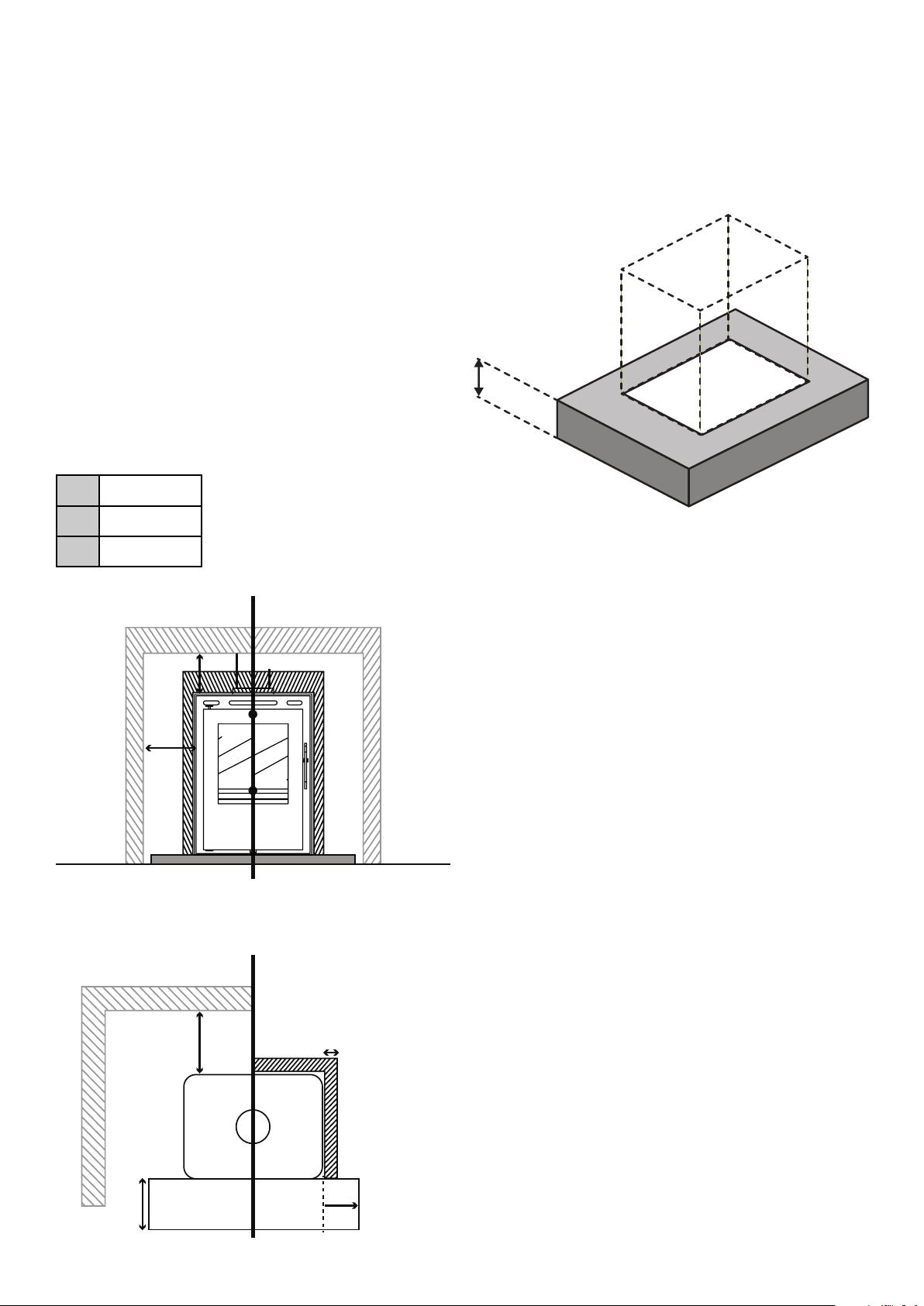
Clearances
Minimum clearances for installing in a recess or
replace:
A. 250mm
Distances to combustibles may be reduced if
a suitable heatshield or insulation is tted in
accordance with building regulations.
Constructional Hearth
B. 250mm
C. 250mm
Combustible Materials Non-Combustible Materials
B
A
Min
300mm
C
Min 75mm
Fill voids at side or behind cassette
with vermiculite or similar
Min 150mm
Page 10
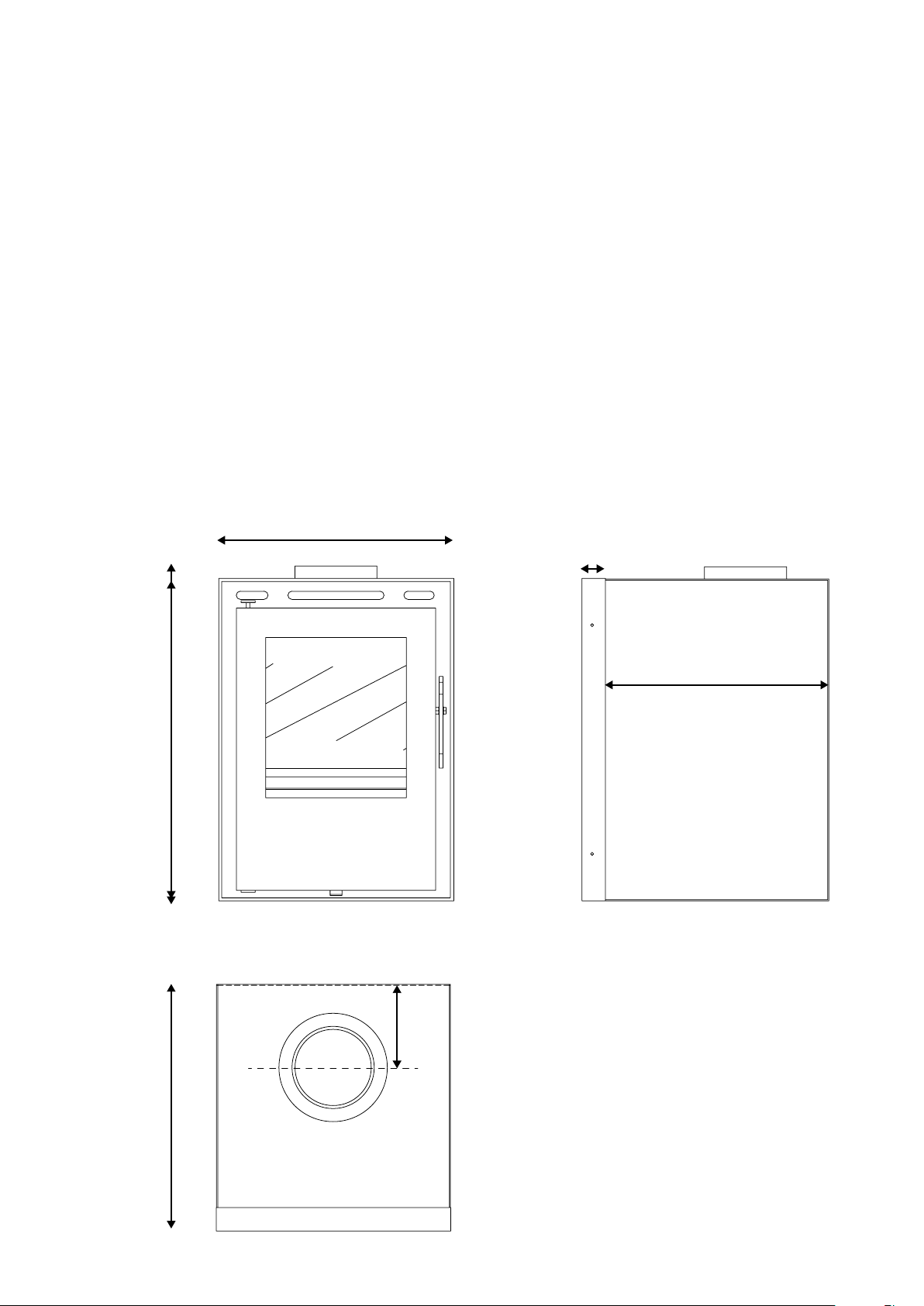
Installation
• Remove all packaging and transport fasteners,
remove re bricks and baes.
• Place the stove in its location and adjust the
feet (if required) to ensure that the stove is
stable and level.
• Ensure the clearances and hearth dimensions
are appropriate.
Ignis 5 Technical Dimensions
• Internal ue collar diameter 133mm
• The appliance is factory supplied with a top
ue outlet, connection to the chimney or
ue liner must be made using a vitreous or
stainless steel ue pipe of the same diameter
as the ue collar. An adaptor collar may be
used to increase the ue diameter but not
decrease. All connections must be made gas
tight using stove cement.
• Position re bricks and bae in place.
• Ensure that the door, handle and all controls
operate correctly.
555mm
550mm
400mm
40mm
381mm
421mm
142mm
Page 11

Testing
Disposal
Test the appliance and complete the Appliance
Commissioning Checklist on page 2.
• Check the soundness of door seals and joints.
• Check the operation of the air controls.
Carry out a smoke draw test: - See BS5440
• Warm the ue with a blowlamp, or similar, for
about 10 minutes.
• Place a smoke pellet on the centre of the grate,
with the air controls open.
• Close the door. Smoke should now be drawn
up the ue and be seen to exit from the ue
terminal.
• Complete the test with all doors and windows
closed in the room where the appliance is tted.
• If there are any extractor fans in adjoining
rooms the test must be repeated with the fans
running on maximum and with interconnecting
doors open.
• If any test fails, re-check the suitability of the
ue system and ventilation as inadequate air
supply to the room is potentially dangerous.
All packaging materials and cardboard are
recyclable. The appliance should be treated as
an electrical good and will be accepted at your
recycle centre which will reduce our impact on the
environment and minimise landll.
We reserve the right to update and amend the
product design and the manual, which are subject to
change without further notication.
Contact
Valiant Stoves Ltd
Solution House, Sandon Road, Thereld,
Hertfordshire, SG8 9RE. UK
Tel: (01763) 284184
Email: enquiries@valiantreside.com
www.valiantreside.com
• Explain to the user the safe operation of the
appliance, use of the controls and the importance
of only using suitable fuels.
• Ensure that a CO monitor has been tted and the
user is aware of its operation and importance.
• Explain the cleaning and routine maintenance
requirements.
• Explain the requirement to use a suitable reguard
when children, inrm, elderly or vulnerable persons
are near the appliance.
• Record the retailer/supplier and installer details in
Appliance Commissioning Checklist.
• Record the appliance’s serial number in Appliance
Commissioning Checklist.
• Give this instruction manual to the customer to
keep in a safe place.
Replacement Parts
Only genuine replacement Valiant parts may be
used in this appliance. Contact your local dealer for
details.
 Loading...