

Page 1
安徽力普拉斯电源技术有限公司
ANHUI UPLUS ENERGY TECHNOLOGY CO., LTD
NO.1 NVZHEN ROAD ECONOMIC DEVELOPMENT ZONE,SUIXI,HUAIBEI CITY,ANHUI
PROVINCE,P.R.CHINA
MATERIAL SAFETY DATA SHEET
VALVE-REGULATED SLA BATTERIES
MAINTENANCE-FREE NON-SPILLABLE
SECTION 1: PRODUCT IDENTIFICATION
Product Name: Maintenance Free Battery:
Common Synonyms: SEALED LEAD ACID BATTERY, GEL BATTERY,DRY BATTERY、 CAR&TRUCK BATTERIES、 SEALED
LEAD-ACID RECHARGEABLE BATTERY,CAR BATTERY,GOLF CART BATTERY,BATTERIES, ,AUTOMOTIVE BATTERY,GEL
BATTERY,VRLA LEAD ACID BATTERIES,AUTOMOTIVE BATTERY ,UPS BATTERY,PURE LEAD ACID BATTERY ,NON-
DANGEROUS CARGO DRY BATTERY,MOTORCYCLE BATTERY,UPS BATTERY 、VRLA LEAD ACID BATTERIES VRLA
BATTERY,MAINTENANCE FREE BATTERY,VRLA BATTERY
DOT Description: Non-Spillable
Chemical Family: Electrical Battery Standby
Manufacturer’s Name:
Address:
PROVINCE,P.R.CHINA
Emergency tel no: 0517-86986326
Date Issued: January 01, 2022
US,USL,USC,USF,USDC,USG,USCG,UPBH,USX Series
ANHUI UPLUS ENERGY TECHNOLOGY CO., LTD
NO.1 NVZHEN ROAD ECONOMIC DEVELOPMENT ZONE,SUIXI,HUAIBEI CITY,ANHUI
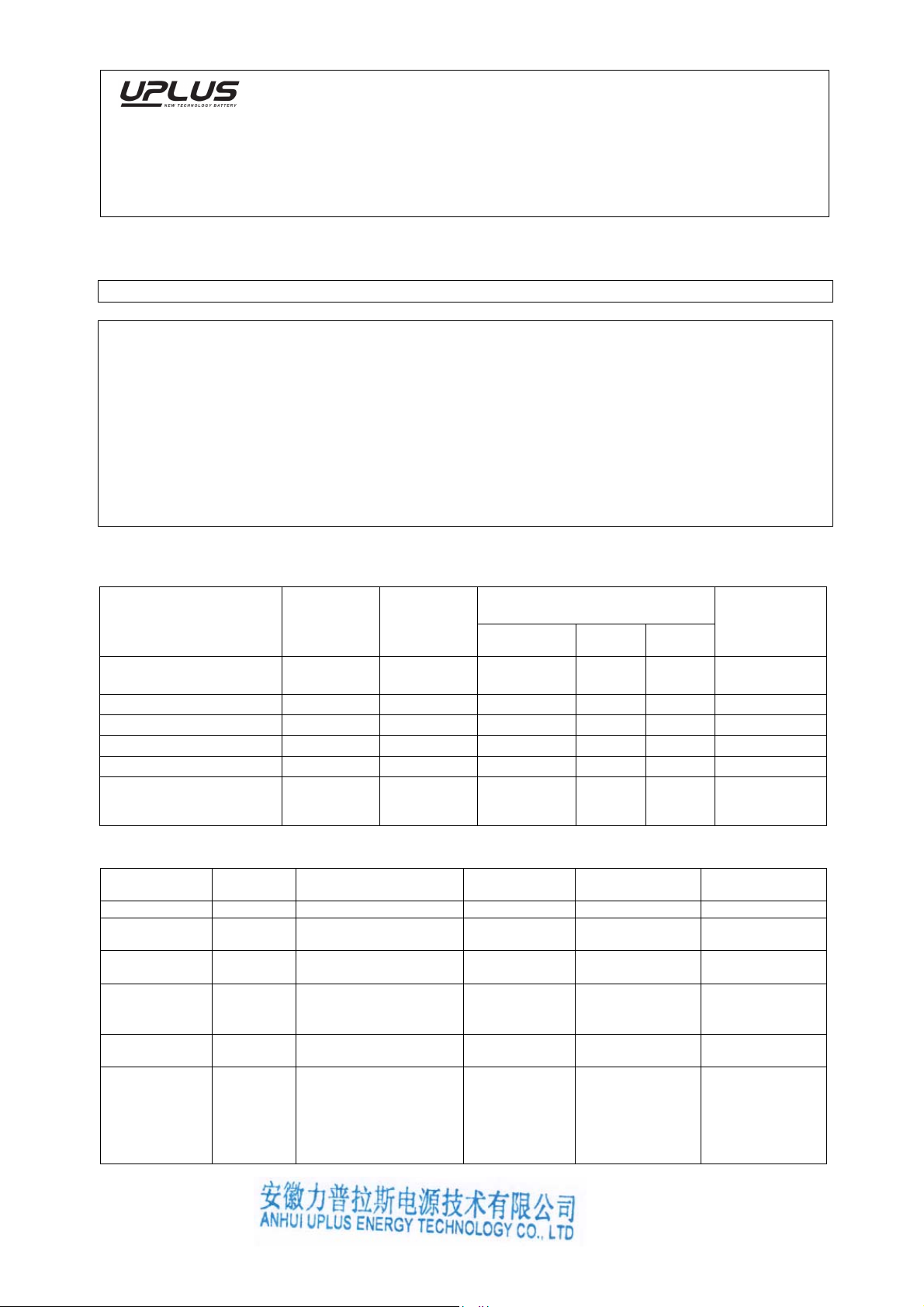
SECTION 2: HAZARDOUS INGREDIENTS/ IDENTITY INFORMATION
COMPONENTS
Inorganic Lead/Lead
Compounds
Dilute Sulfuric Acid 2.141000100010007664-93-9~20%
Fiberglass Separator ~ 5% -- -- ---- -Case Material: Acrylonitrile
Butadine Styrene (ABS) or
Polypropylene(PP)
Approx % by
Wt.
<0.5%Tin 7440-31-5 2000 2000 -- --
<0.1%Calcium 7440-70-2 -- -- -- --
~5%
CAS Number
9003-56-9
9003-07-0
Air Exposure Limits (μg/m3)
ACGIH TLV OSHA NIOSH
LD50 ORAL
(mg/kg)
50010501507439-92-165%-75%
--------
SECTION 3: PHYSICAL DATA
MELTING/BOILINGDENSITYCOMPONENTS
(M/B) POINT
Lead 327.46 °C, 621.43 °F (M11.34 NoneNone) Sliver-Gray Metal
1170 °C, 2138 °F (B)6.20Lead Sulfate
~1.3Sulfuric Acid
Fiberglass
Separator
Case Material:
Acrylonitrile
Butadine
Styrene (ABS)
or
Polypropylene(
95°C -115°C , 203°F 240°F (B)
---- SolidNoneNone
SOLUBILITY
(H2O)
40 mg/l (15 °C,
59 °F)
None290 °C, 554 °F (M)9.40Lead Dioxide None
100%
None
Sharp, penetrating,
pungent odor
APPEARANCEODOR
White crystals or
powder
Dark brown
Powder
Clear Colorless
Liquid
White FibrousNoneSlight----
Page 1 of 6
Page 2
安徽力普拉斯电源技术有限公司
ANHUI UPLUS ENERGY TECHNOLOGY CO., LTD
NO.1 NVZHEN ROAD ECONOMIC DEVELOPMENT ZONE,SUIXI,HUAIBEI CITY,ANHUI
PROVINCE,P.R.CHINA
MATERIAL SAFETY DATA SHEET
VALVE-REGULATED SLA BATTERIES
MAINTENANCE-FREE NON-SPILLABLE
PP)
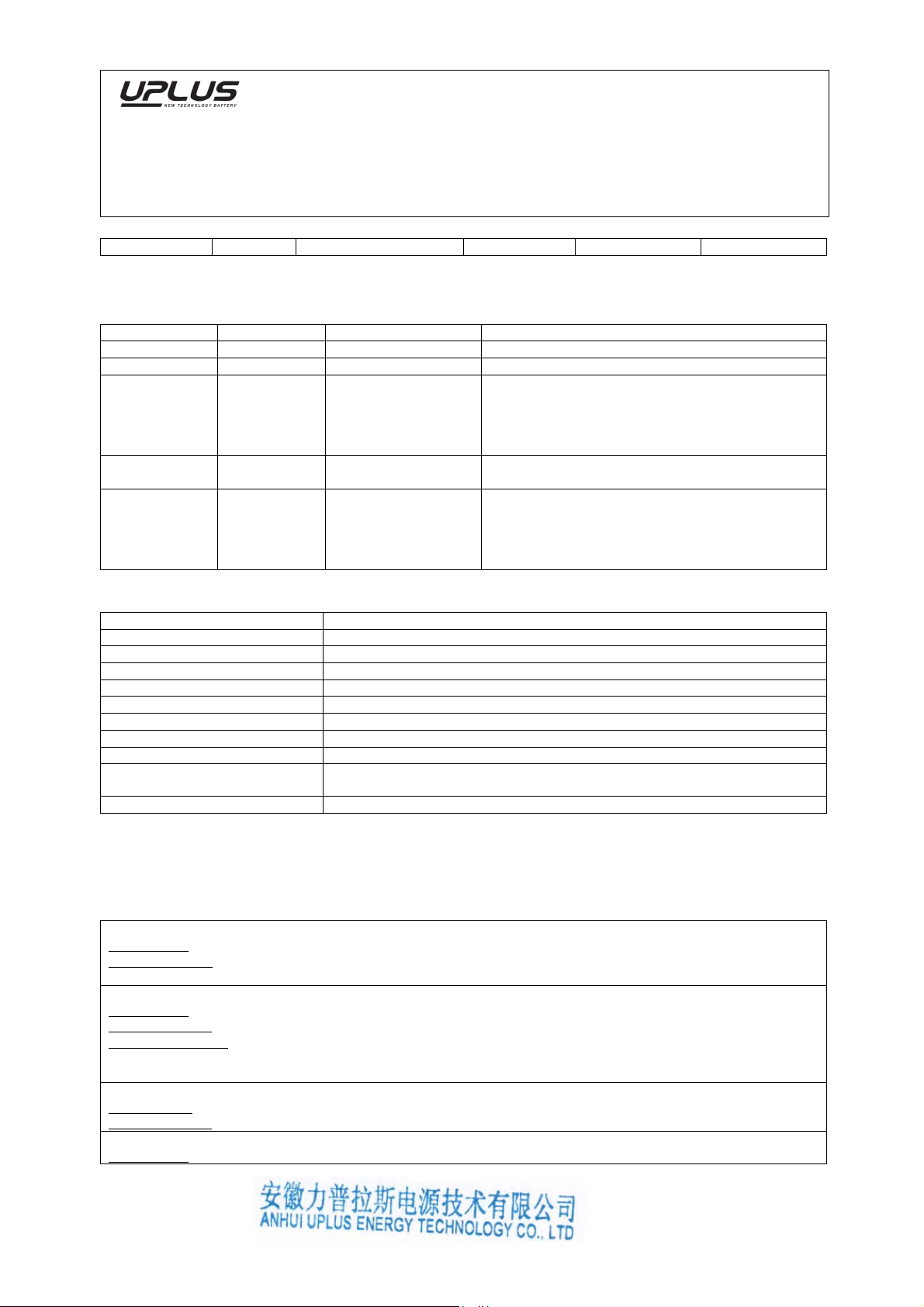
SECTION 4: FLAMMABILITY DATA
COMPONENTS FLASHPOINT EXPLOSIVE LIMITS COMMENTS
Lead None None None
Sulfuric Acid None None None
Hydrogen -- LEL=4.1% Sealed batteries can emit hydrogen only if over charged
(float voltage> 2.4 VPC). The gas enters the air through
the vent caps. To avoid the chance of a fire or explosion,
keep sparks and other sources of ignition away from the
battery. Extinguishing Media: Dry chemical, foam, CO2
Fiberglass
Separator
Acrylonitrile
Butadine Styrene
(ABS) or
Polypropylene(
PP)
-- -- Toxic vapors may be released.
In case of fire: wear self-contained breathing apparatus.
None --
Temperatures over 300 ~ 380 °C (572 ~ 653°F) may
release combustible gases. In case of fire: wear positive
pressure self-contained breathing apparatus.
SECTION 5: REACTIVITY DATA
COMPONENT Lead/lead compounds
Stability Stable
Incompatibility Potassium, carbides, sulfides, peroxides, phosphorus, sulfurs, ketone, ester, petrolatum
Decomposition products Oxides of lead and sulfur.
Condition to avoid High temperature, Sparks and other sources of ignition.
COMPONENT Sulfuric Acid
Stability Stable
Incompatibility Reactive metals, strong bases, most organic compounds
Decomposition products Sulfuric dioxide, trioxide, hydrogen sulfide, hydrogen
Condition to avoid Prohibit smoking, sparks, etc. from battery charging area. Avoid mixing acid with
other chemicals.
POLYMERIZTION Sulfuric acid will not polymerize
SECTION 6: HEALTH HAZARD DATA
Battery is considered as sealed non-spillable one. Under normal operating conditions, the materials sealed inside should not be
hazardous to people’s health. Only when these materials exposed during production or under case broken condition or being
extremely heated (fired), they may be hazardous to people’s health.
Routes of Entry:
Sulfuric Acid:
Lead Compounds: Hazardous Exposure can occur only when product is heated, oxidized, or otherwise processed or damaged
to create dust, vapor or fume.
Inhalation:
Sulfuric Acid: Breathing sulfuric acid vapors and mists may cause severe respiratory problems.
Lead Compounds: Dust or fumes may cause irritation of upper respiratory tract or lungs.
Fiberglass Separator: Fiberglass is an irritant to the upper respiratory tract, skin and eyes. For exposure up to 10F°/ use MSA
Comfoll with type H filters. Above 10F use Ultra Twin with type H filter. This product is not considered carcinogenic by NTP
or OSHA.
Skin Contact:
Sulfuric Acid: Severe irritation, burns and ulceration.
Lead Compounds: Not absorbed through the skin.
Ingestion:
Sulfuric Acid:
Harmful by all routes of entry.
May cause severe irritation of the mouth, throat, esophagus, and stomach.
Page 2 of 6
Page 3
安徽力普拉斯电源技术有限公司
ANHUI UPLUS ENERGY TECHNOLOGY CO., LTD
NO.1 NVZHEN ROAD ECONOMIC DEVELOPMENT ZONE,SUIXI,HUAIBEI CITY,ANHUI
PROVINCE,P.R.CHINA
MATERIAL SAFETY DATA SHEET
VALVE-REGULATED SLA BATTERIES
MAINTENANCE-FREE NON-SPILLABLE
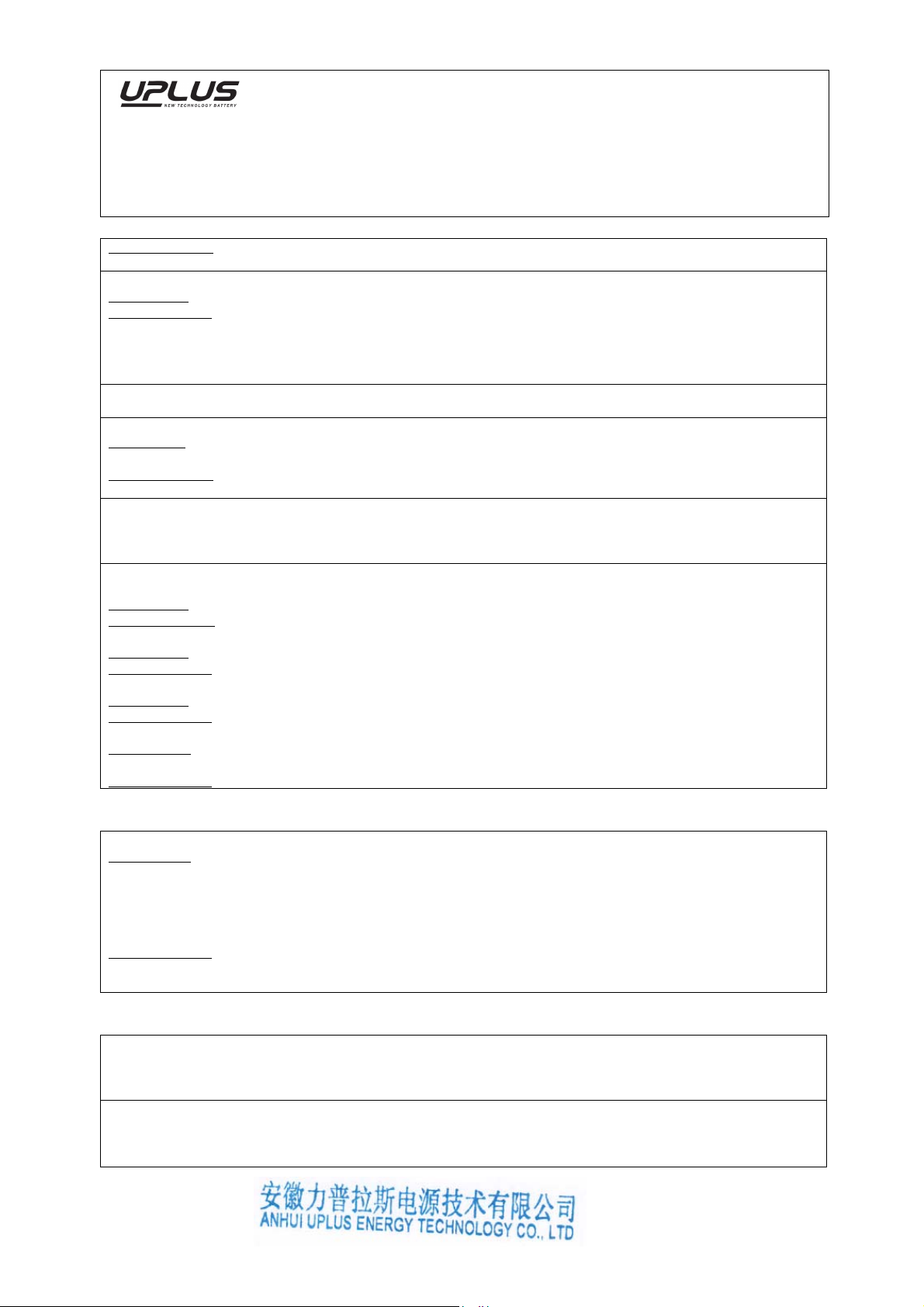
Lead Compounds: May cause abdominal pain, nausea, vomiting, diarrhea, and severe cramping. Acute ingestion should be
treated by a physician.
Acute Health Hazards:
Sulfuric Acid: Severe skin irritation, burns, damage to cornea may cause blindness, upper respiratory irritation.
Lead Compounds: May cause abdominal pain, nausea, headaches, vomiting, loss of appetite, severe cramping, muscular aches
and weakness, and difficulty sleeping. The toxic effects of lead are cumulative and slow to appear. It affects the kidneys,
reproductive and central nervous systems. The symptoms of lead overexposure are listed above. Exposure to lead from a
battery most often occurs during lead reclamation operations through the breathing or ingestion of lead dust or fumes.
SECTION 7 ACCIDENTAL RELEASE MEASURES
Chronic Health Hazards:
Sulfuric acid: Possible scarring of the cornea, inflammation of the nose, throat and bronchial tubes, possible erosion of tooth
enamel.
Lead Compounds: May cause anemia, damage to kidneys and nervous system, and damage to reproductive system in both
males and females.
Medical Conditions Generally Aggravated by Exposure
Inorganic lead and its compounds can aggravate chronic forms of kidney, liver, and neurological diseases. Contact of battery
electrolyte (acid) with the skin may aggravate skin diseases such as eczema and contact dermatitis. Overexposure to sulfuric
acid mist may case lung damage and aggravate pulmonary conditions.
Emergency and First Aid Procedures
Inhalation
Sulfuric Acid: Remove to fresh air immediately. If breathing is difficult, give oxygen
Lead Compounds: Remove from exposure, gargle, wash nose and lips, consult physician
Ingestion
Sulfuric Acid: Do not induce vomiting, consult a physician immediately.
Lead Compounds: Consult a physician immediately
Eyes
Sulfuric Acid: Flush immediately with water for 15 minutes, consult a physician.
Lead Compounds:
Skin
Sulfuric Acid: Flush with large amounts of water for at least 15 minutes, remove any contaminated clothing. If irritation
develops seek medical attention.
Lead Compounds: Wash with soap and water.
Flush immediately with water for 15 minutes, consult a physician
SECTION 8: CARCINOGENICITY
Carcinogenicity
Sulfuric Acid: The National Toxicological Program (NTP) and The International Agency for Research on Cancer (IARC)
have classified strong inorganic acid mist containing sulfuric acid as a Category 1 carcinogen, a substance that is carcinogenic
to humans. The ACGIH has classified strong inorganic acid mist containing sulfuric acid as an A2 carcinogen (suspected
human carcinogen). These classifications do not apply to liquid forms of sulfuric acid or sulfuric acid solutions contained
within a battery. Inorganic acid mist (sulfuric acid mist) is not generated under normal use of this product. Misuse of the
product, such as overcharging, may result in the generation of sulfuric acid mist.
Lead Compounds:
International Agency for Research on Cancer (IARC) have categorized lead and inorganic lead compounds as a B2
classification (probable/possible human carcinogen) based on sufficient animal evidence and inadequate human evidence.
Human studies are inconclusive regarding lead exposure and an increased cancer risk. The EPA and the
SECTION 9: PRECAUTIONS FOR SAFE HANDLING AND USE
Spill or Leak Procedures
In case the release occurs, stop flow of material: contain/absorb small spills with dry sand, earth, and vermiculite. If possible,
carefully neutralize spilled electrolyte with soda ash, sodium bicarbonate, lime, etc. Wear acid-resistant clothing, boots,
gloves, and face shield. Do not allow discharge of unneutralized acid to sewer.
Waste Disposal Method
Spent Batteries - send to secondary lead smelter for recycling. Follow applicable federal, state and local regulations
Neutralize as in preceding step. Collect neutralized material in sealed container and handle as hazardous waste as applicable.
A copy of this MSDS must be supplied to any scrap dealer or secondary lead smelter with the battery. Or, consult state
Page 3 of 6
Page 4
安徽力普拉斯电源技术有限公司
ANHUI UPLUS ENERGY TECHNOLOGY CO., LTD
NO.1 NVZHEN ROAD ECONOMIC DEVELOPMENT ZONE,SUIXI,HUAIBEI CITY,ANHUI
PROVINCE,P.R.CHINA
MATERIAL SAFETY DATA SHEET
VALVE-REGULATED SLA BATTERIES
MAINTENANCE-FREE NON-SPILLABLE
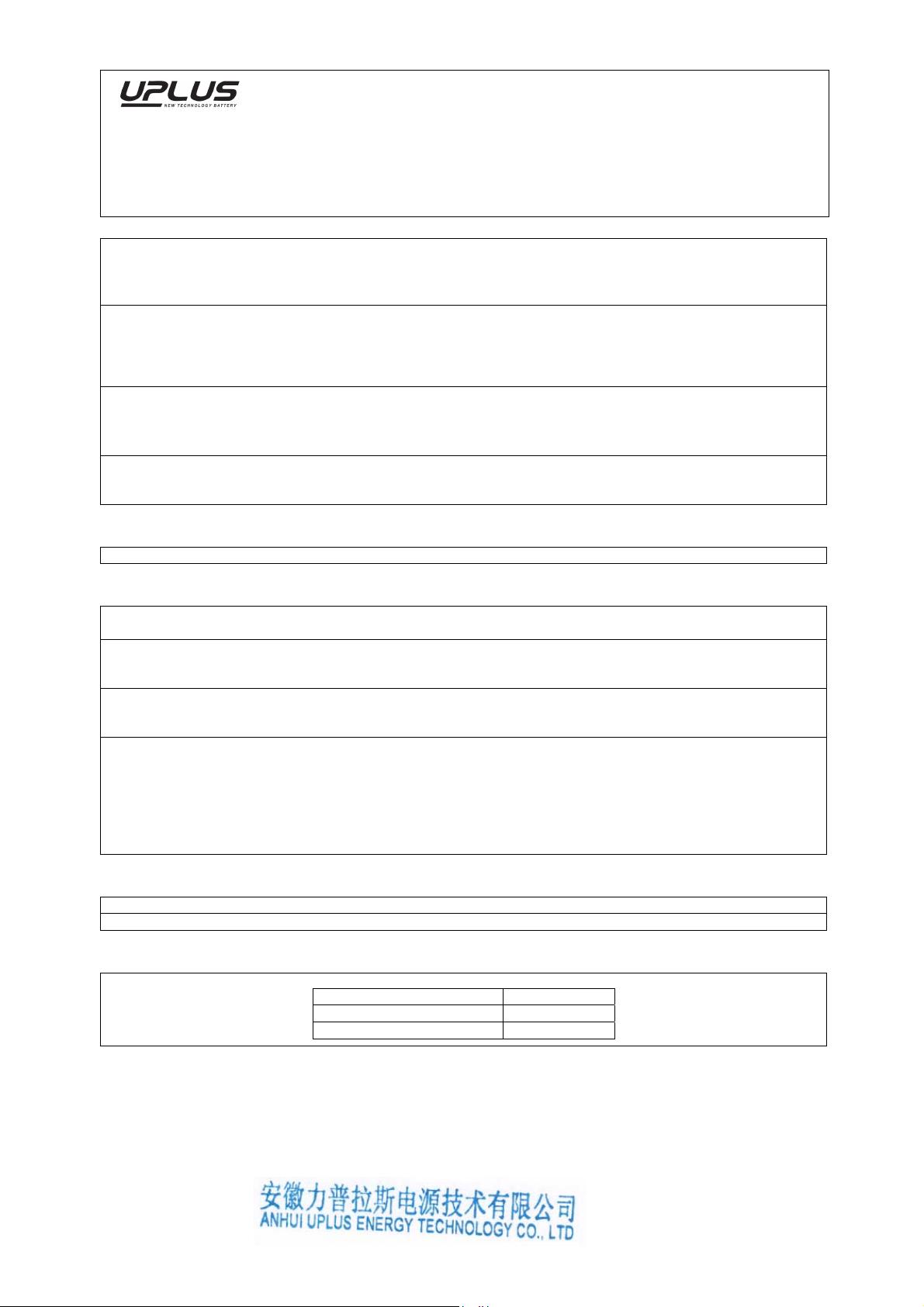
environment agency and/ or federal EPA.
Handling and Storing
Store batteries in a cool, dry, well ventilated area that are separated from incompatible materials and any activities which may
generate flames, sparks, or heat. Keep all metallic articles that could contact the negative and positive terminals on a battery
and create a short circuit condition. Battery should be stored under roof for protection against adverse weather conditions.
Store and handle only in areas wit adequate water supply and spill control. Avoid damage to battery case.
Electrical Safety
Due to the battery’s low internal resistance and high power density, high levels of short circuit current can be developed across
the battery terminals. Do not rest tools or cables on the battery. Use insulated tools only. Follow all installation instructions
and diagrams when installing or maintaining battery systems.
Fiberglass Separator
Fiberglass is an irritant to the upper respiratory tract, skin and eyes. For exposure up to 10F°/ use MSA Comfoll with type H
filters. Above 10F use Ultra Twin with type H filter. This product is not considered carcinogenic by NTP or OSHA.
SECTION 10: ECOLOGICAL INFORMATION
Lead and its compounds can pose a threat if released to the environment. See Waste Disposal Method in Section 8.
SECTION 11: CONTROL MEASURES
Engineering Controls:
Store and handle in well-ventilated area. If mechanical ventilation is used, components must be acid resistant
Work Practices:
Handle batteries cautiously to avoid damaging the case. Avoid contact with internal components. Do not allow metallic
articles to contact the battery terminals during handling.
Respiratory Protection:
None required under normal conditions. When concentrations of sulfuric acid mist are known to exceed PEL, use NIOSH or
MSHA-approved respiratory protection.
Personal Protection and Equipment: None needed under normal conditions. If battery case is damaged,
Protective gloves: use rubber or plastic acid-resistant gloves with elbow-length gauntlet.
Eye protection: use chemical goggles or face shield.
Other protection: Acid-resistant apron. Under severe exposure or emergency conditions, wear acid –resistant
clothing and boots.
In areas where sulfuric acid is handled in concentrations greater than 1%, emergency eyewash stations and showers
should be provided, with unlimited water supply.
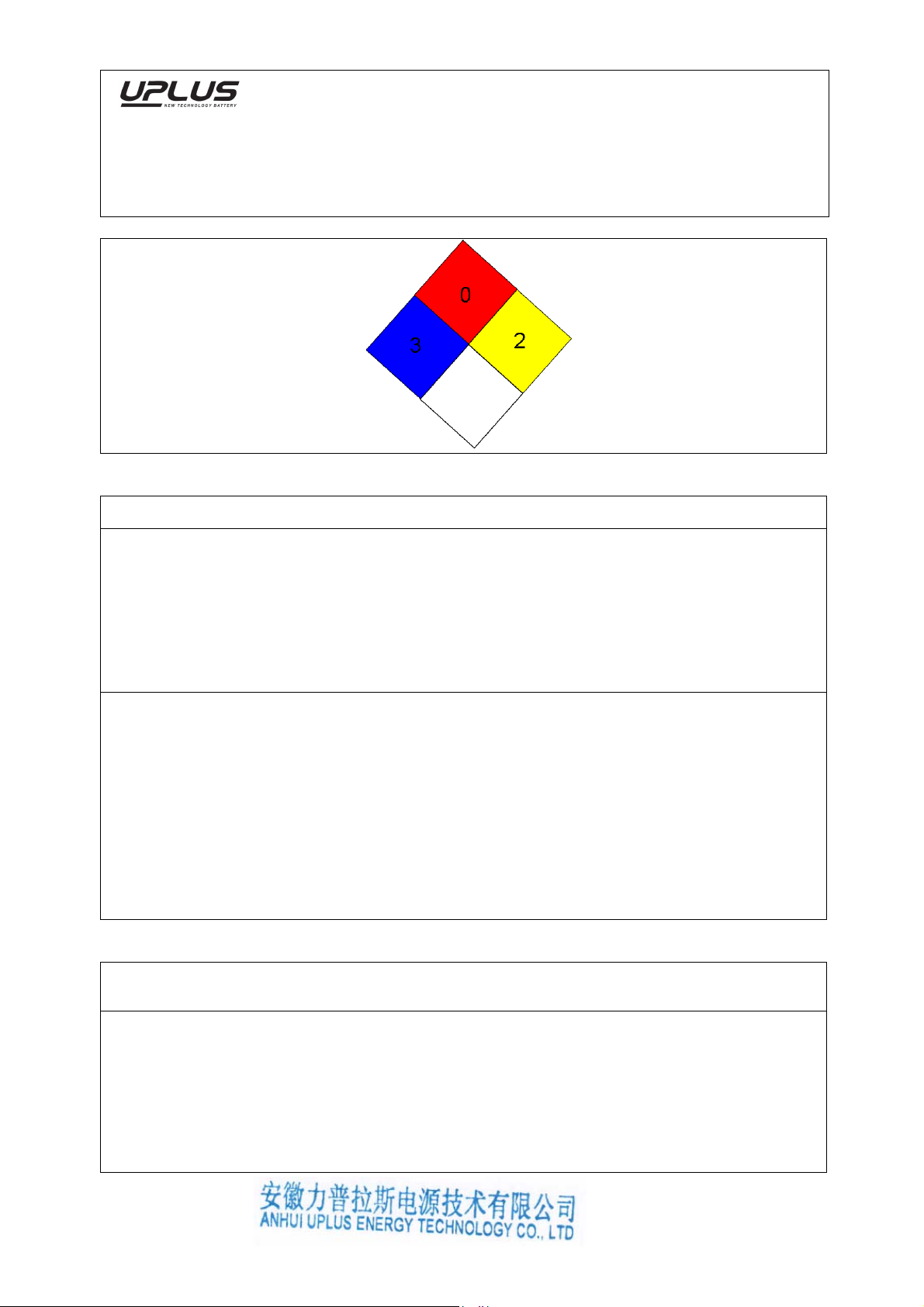
SECTION 12: NFPA HAZARD RATING FOR SULFURIC ACID
A. Not applicable under normal conditions.
B. Incase of damage resulting in breakage of the battery container, see section10, personal protection and equipment.
SECTION 13: NFPA HAZARD RATING FOR SULFURIC ACID
Flammability (Red) 0
Health (Blue) 3
Reactivity (Yellow) 2
Page 4 of 6
Page 5
安徽力普拉斯电源技术有限公司
ANHUI UPLUS ENERGY TECHNOLOGY CO., LTD
NO.1 NVZHEN ROAD ECONOMIC DEVELOPMENT ZONE,SUIXI,HUAIBEI CITY,ANHUI
PROVINCE,P.R.CHINA
MATERIAL SAFETY DATA SHEET
VALVE-REGULATED SLA BATTERIES
MAINTENANCE-FREE NON-SPILLABLE
SECTION 14: TRANSPORTATION REGULATIONS (Non-Restricted Status)
Proper Shipping Name:
Batteries, dry, Non-Spillable, and dry storage
North America Ground and Air Shipment
Our non-spillable lead acid batteries are under the U.S. Department of Transportation’s (DOT) hazardous materials
regulations but are excepted from these regulations since they meet all of the following requirements found at 49 CFR
173.159(d) – NMFC # 60680 Class 65.
When offered for transport, the batteries are protected against short circuits and securely packaged as required by
49 CFR 173.159(d) (1);
The batteries and outer packaging are marked with the words NONSPILLABLE BATTERY as required by 49 CFR
173.159(d) (2);
The batteries comply with the vibration and pressure differential tests found in 49 CFR 173.159(d) (3) and “crack test” found
at 49 CFR 173.159(d) (4).
International Shipments
Our non-spillable lead acid batteries also are excepted from the international hazardous materials (also known as “dangerous
goods”) regulations since they comply with the following requirements:
The vibration and pressure differential tests found in Packing Instruction 806 and Special Provision A67 of the
International Air Transport Association (IATA) Dangerous Goods Regulations;
The vibration and pressure differential tests found in Packing Instruction 806 and Special Provision A67 of the
International Civil Aviation Organization (ICAO) Technical Instructions for the Safe Transport of Dangerous Goods
by Air;
The vibration, pressure differential, and “crack” tests found in Special Provision 238.1 and 238.2 of the
International Maritime Dangerous Goods (IMDG) Code.
SECTION 15: Regulatory Information
RCRA
Spent lead acid batteries are not regulated as hazardous waste by the EPA when recycled, however state and international
regulations may vary.
CERCLA (superfund) and EPCRA
(a) Reportable Quantity (RQ) for spilled 100% sulfuric acid under CERCLA (superfund) and EPCRA (Emergency Planning
Community Right to Know Act is 1,000lbs. State and local reportable quantities for spilled sulfuric acid may vary.
(b) Sulfuric acid is a listed “Extremely Hazardous Substance” under EPCRA with a Threshold Planning Quantity (TPQ) of
1,000lbs.
(c) EPCRA Section 302 Notification is required if 1,000lbs. or more of sulfuric acid is present at one site. The quantity of
sulfuric acid will vary by battery type. Contact Power-Sonic Corporation for additional information.
(d) EPCRA Section 312 Tier 2 reporting is required for batteries if sulfuric acid is present in quantities of 500lbs. or more
and/or lead is present in quantities of 10,00lbs. or more.
(e) Supplier Notification: This product contains toxic chemicals which may be reportable under EPCRA Section 313 Toxic
Page 5 of 6
Page 6
安徽力普拉斯电源技术有限公司
ANHUI UPLUS ENERGY TECHNOLOGY CO., LTD
NO.1 NVZHEN ROAD ECONOMIC DEVELOPMENT ZONE,SUIXI,HUAIBEI CITY,ANHUI
PROVINCE,P.R.CHINA
MATERIAL SAFETY DATA SHEET
VALVE-REGULATED SLA BATTERIES
MAINTENANCE-FREE NON-SPILLABLE
Chemical Release Inventory (Form R) requirements. If you are a manufacturing facility under SIC codes 20 through 39 the
following information is provided to enable you to complete the required reports:
Toxic Chemical CAS Number Approximate % by weight
Lead 7439-92-1 60
Sulfuric Acid 7664-93-9 10 - 30
Arsenic 7440-38-2 <0.01
If you distribute this product to other manufacturers in SIC codes 20 through 39, this information must be provided with the
first shipment in a calendar year. The Section 313 supplier notification requirement does not apply to batteries which are
“consumer products”. Not present in all battery types. Contact Power-Sonic Corporation for further information.
TSCA
Components CAS Number TSCA Status
Electrolyte Sulfuric Acid (H2SO4) 7664-93-9 Listed
Inorganic Lead Compound: Lead (Pb) 7439-92-1 Listed
Lead Oxide (PbO) 1917-36-8 Listed
Lead Sulfate (PbSO4) 7446-14-2 Listed
Calcium (Ca) 7440-70-2 Listed
Tin (Sn) 7440-31-5 Listed
Arsenic (As) 7440-38-2 Listed
SECTION 16: OTHER INFORMATION
The above information is believed to be correct but does not purport to be all-inclusive and shall be used only as a guide
Page 6 of 6
 Loading...