

Page 1
USER’S GUIDE
Page 2

Congratulations
on your purchase from Trojan Battery Company, the manufacturer of the
world’s most trusted deep-cycle batteries. The battery you purchased was
engineered by Trojan to deliver superior power, performance, durability
and reliability for use in a broad range of demanding applications. From the
T2 Technology™ in our ooded batteries to the C-Max Technology™ in the
Reliant™ AGM line, our goal is to provide clean and reliable energy storage
solutions that enhance the way people live and work around the world.
Page 3
This User’s Guide
was created by Trojan’s application engineers and contains vital information
regarding proper care and maintenance of your new battery. Please read through
this User’s Guide carefully and completely before using your battery. It will help
you achieve optimum performance and long life from your new investment.
800-423-6569 Ext. 3045 / +1-562-236-3045
TECHNICAL SUPPORT
Page 4

Contents
01 Safety . . . . . . . . . . . . . . . . . . 5
02 Equipment Needed. . . . . . . . . . . . 5
03 Battery Installation . . . . . . . . . . . 6
3.1 Battery Connections . . . . . . . . . . . . . 6
3.2Terminal Types . . . . . . . . . . . . . . . 6
3.4Cable Size . . . . . . . . . . . . . . . . .10
3.5Torque Values . . . . . . . . . . . . . . . .11
3.6Terminal Protection . . . . . . . . . . . . .12
3.7Connecting Batteries to Increase System Power . . .12
3.8Ventilation . . . . . . . . . . . . . . . . .13
3.9Battery Orientation. . . . . . . . . . . . . .13
3.10Battery Environment . . . . . . . . . . . .13
3.11Temperature. . . . . . . . . . . . . . . . 13
04 Preventative Maintenance . . . . . . . . 14
4.1Inspection . . . . . . . . . . . . . . . . .14
4.2Watering . . . . . . . . . . . . . . . . . 14
4.3Cleaning. . . . . . . . . . . . . . . . . .16
4.4Charging & Equalizing. . . . . . . . . . . . .16
4.4.1Boost Charging . . . . . . . . . . . . . .16
4.4.2Charging . . . . . . . . . . . . . . . .18
4.4.3Equalizing . . . . . . . . . . . . . . . .22
05 Storage . . . . . . . . . . . . . . . . . 24
5.1 Storage in Hot Environments . . . . . . . . . .24
5.2Storage in Cold Environments . . . . . . . . .24
06 How to Maximize the Performance of your
Trojan Battery . . . . . . . . . . . . . . 24
07 What to Expect from your Trojan Battery . 25
08 Trouble-Shooting. . . . . . . . . . . . . 26
8.1Preparation for Testing . . . . . . . . . . . .26
8.2On-Charge Voltage Testing . . . . . . . . . . .26
8.3Specic Gravity . . . . . . . . . . . . . . .27
8.4Open Circuit Voltage Testing . . . . . . . . . .27
8.5Discharge Testing . . . . . . . . . . . . . .28
09 Battery Recycling . . . . . . . . . . . . 29
10 Battery Acronyms . . . . . . . . . . . . 30
Page 5
5
USER’S GUIDE
5
01 Safety
Since batteries deliver large amounts of power that can cause injury and even death, observing safety
rules is of paramount importance. For your safety and the safety of those around you, please observe the
following checklist when working on or around batteries.
Always Never
Always wear protective clothes, gloves & safety goggles Never smoke near batteries
Always use insulated tools when working on batteries Never wear jewelry or other metal objects when working on
or around batteries
Always check connections for proper torque Never make direct contact with the electrolyte (sulfuric acid). If this occurs,
ush with large amounts of water.
Always charge batteries in well-ventilated areas Never place objects on top of batteries, which can cause a short circuit
Always keep sparks and ames* away from batteries Never add acid to a battery
Always use largest cable size of shortest length to minimize voltage drop Never charge a frozen battery
Always ensure plates are covered in water before charging Never charge a ooded battery without securing vent caps on the cells
Always make sure charger is set for the appropriate battery type (ooded,
AGM or gel)
Never charge a battery when the temperature is above 122° F (50°C)
Always charge batteries before installing Never store batteries unless they are fully charged
Always neutralize acid spills with baking soda and water Never leave an acid spill unattended
WARNING Risk of re, explosion, or burns. Do not disassemble, heat above 70° C (160° F),
or incinerate.
02 Equipment Needed
Before installation or maintenance of your batteries, have the following equipment available:
î Proper personal protective equipment
(eye protection and acid resistant gloves)
î Distilled or treated water (deionized or
reverse osmosis)
î Insulated wrench
î Baking soda
î Terminal protector spray
î Voltmeter
î Hydrometer (deep-cycle
ooded/wet batteries)
î Discharge tester (if available)
î Battery charger
Page 6
TROJAN BATTERY
6
03 Battery Installation
To ensure you install your batteries properly and safely, please use the following guidelines.
3 .1 Battery Connections
Battery cables provide the link between the batteries, equipment and charging system. Faulty
connections can lead to poor performance and terminal damage, meltdown or re. To ensure proper
connections, please use the following guidelines for cable size, torque values and terminal protection.
3.2 Terminal Types
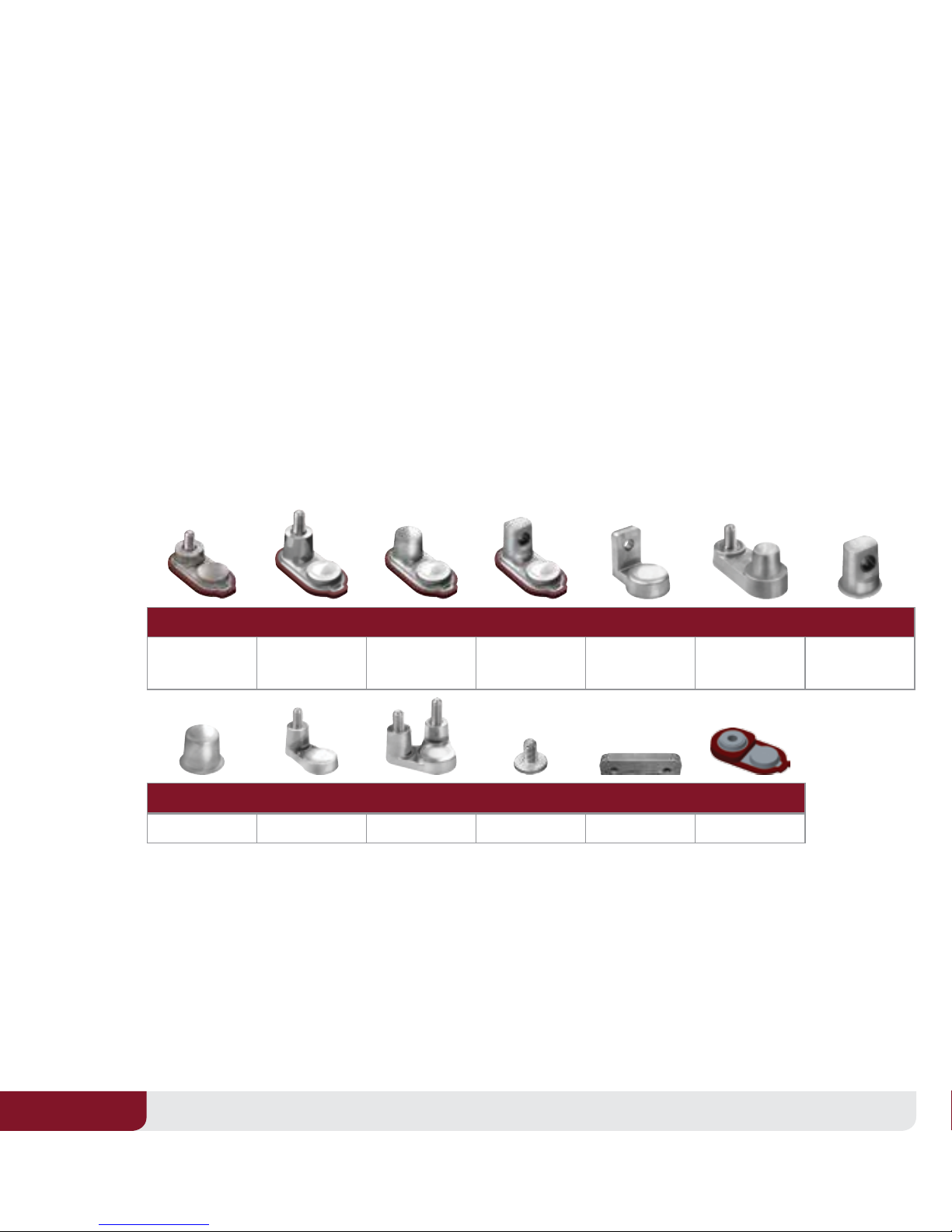
Below are the various terminal types found on Trojan batteries. Refer to the appropriate terminal type
when determining proper torque in Section 3.5 below.
1 ELPT 2 EHPT 3 EAPT 4 EUT 5 LT 6 DT 7 UT
Embedded Low
Prole
Embedded High
Prole
Embedded Auto
Post
Embedded
Universal
L-Terminal Automotive Post
& Stud
Universal
8 AP 9 WNT 10 DWNT 11 ST 14 IND 15 M6/M8 15
Automotive Post Wingnut Dual Wingnut Stud Industrial
6mm/8mm Insert
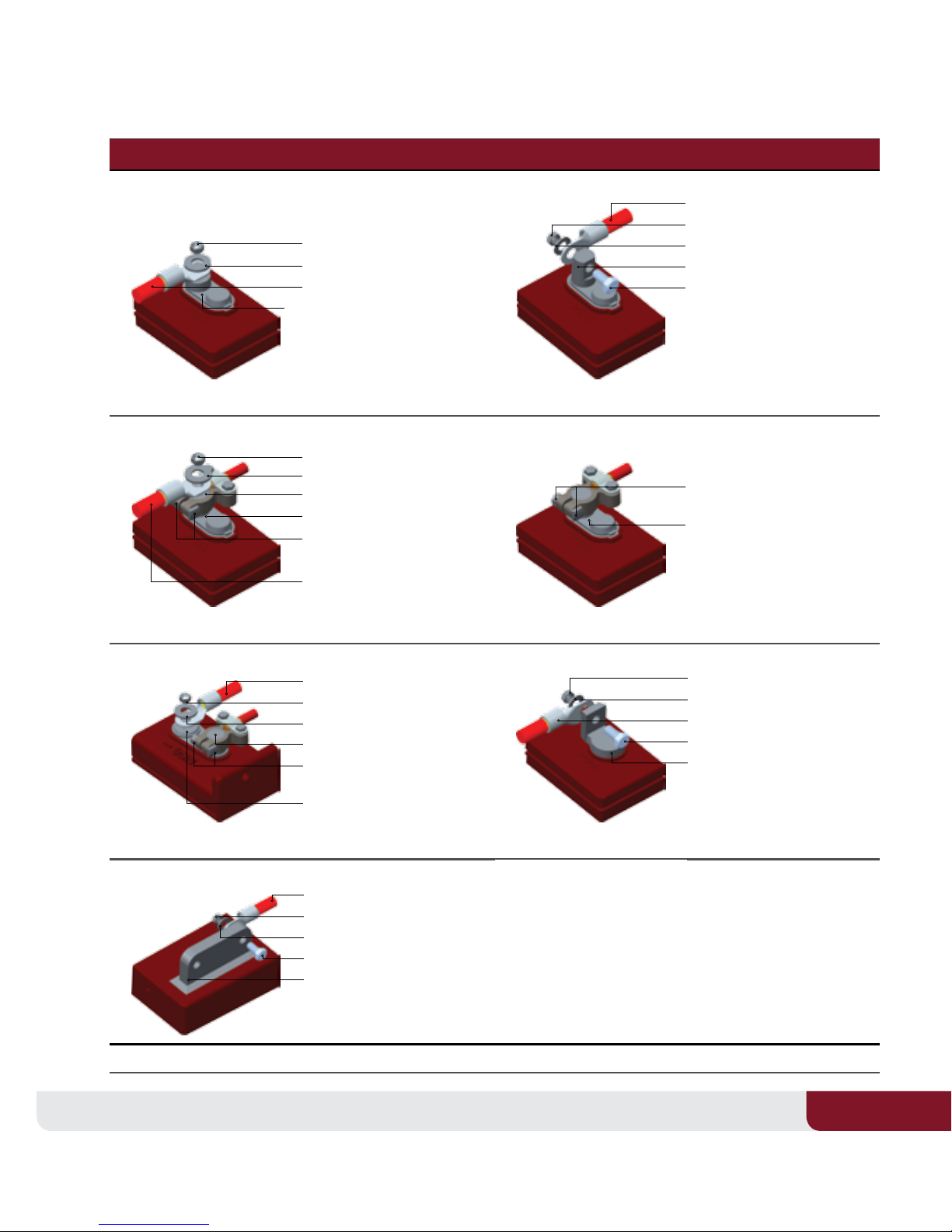
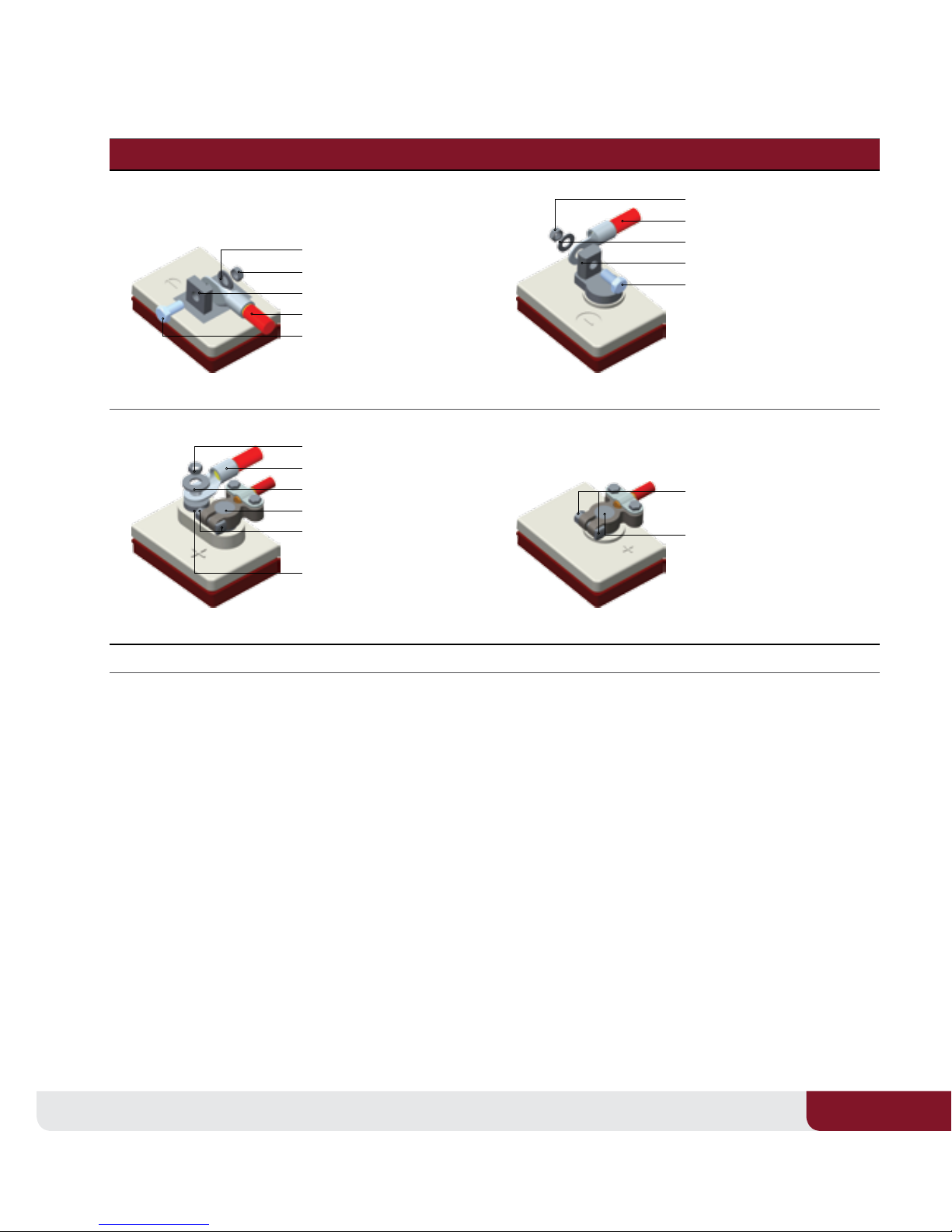
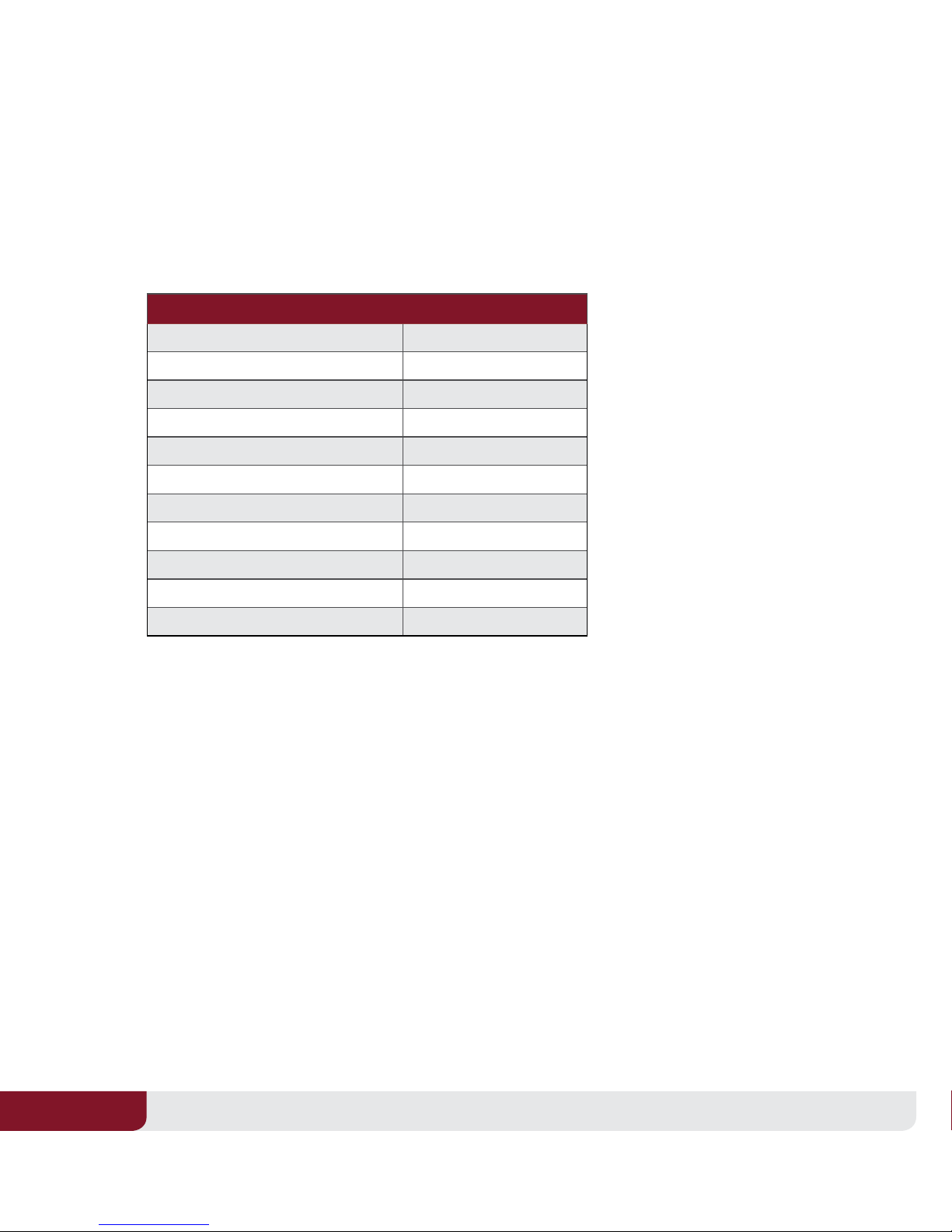
3.3 Correct Hardware* Installation
If using at washers, it is very important to ensure the battery cable lug connection is contacting the lead
surface of the terminal, and the washer is placed on top of the wire connection. Do not place washer
between the battery terminal and the battery wire, which creates high resistance and can cause
terminal meltdown. It is important that fasteners be tightened to the appropriate torque for each
terminal type, as dened in Table 2.
Page 7
7
USER’S GUIDE
7
Flooded
ELPT EUT
EHPT EAPT
DT LT
IND
Images shown reect correct hardware placement. *Hardware not supplied by Trojan Battery Company.
Nut - Torque to 95 -105 in -lbs (11-12 Nm)
Nut - Torque to 95 -105 in -lbs (11-12 Nm)
Washer*
Washer*
AP Connector
Torque to 5 0-70 in-lbs (6 -8 Nm)
Cable Lug
Cable Lug
Terminal
Terminal
Stud Portion
Cable Lug
Nut - Torque to 95 -105 in -lbs (11-12 Nm)
Washer*
Terminal
Bolt
Nut - Torque to 95 -105 in -lbs (11-12 Nm)
Washer*
Cable Lug
Bolt
Terminal
Cable Lug
Nut - Torque to 10 0-120 in-lbs (11-14 Nm)
Washer*
Bolt
Terminal
Terminal
AP Connector
Torque to 5 0-70 in-lbs (6 -8 Nm)
Cable Lug
Nut - Torque to 95 -105 in -lbs (11-12 Nm)
Washer*
AP Terminal
AP Connector
Torque to 5 0-70 in-lbs (6 -8 Nm)
Stud Terminal
Page 8

TROJAN BATTERY
8
AGM
LT DT
M6 M8
AP (RELIANT) AP
ST
Images shown reect correct hardware placement. All hardware supplied for Reliant AGM. Hardware for non Reliant AGM is optional.
Nut - Torque to 55-70 i n-lbs (6-8 Nm) Nut - Torque to 95 -105 in -lbs (11-12 Nm)
Washer Cable LugLock Washer
Cable Lug Lock Washer
Bolt - 20 mm AP Terminal
M8 Terminal
AP Connector
Torque to 5 0-70 in-lbs (6 -8 Nm)
Bolt - 16mm - Torque t o 85-95 in-l bs (10-11 Nm)
Washer
Lock Washer
Stud Terminal
AP Connector
Torque to 5 0-70 in-lbs (6 -8 Nm)
Lock Washer
Bolt - Torque to 85 -95 in-lbs (10 -11 Nm)
Washer
Cable Lug
Terminal
Lock Washer
Bolt - Torque to 2 5-35 in-lbs (3- 4 Nm)
Washer
Cable Lug
Terminal
LT Adapter
AP Adapter
Torque to 8 5-95 in-lbs (10 -11 Nm)
M8 Terminal
Nut
- Torque to 120 -180 i n-lbs (14-20 Nm)
Cable Lug
Terminal
AP Connector
Torque to 4 4-62 in- lbs (5-7 Nm)
Terminal
Page 9
9
USER’S GUIDE
9
Gel
LT UT
DT AP
Images shown reect correct hardware placement. *Hardware not supplied by Trojan Battery Company.
Washer*
Nut - Torq ue to 95-105 in -lbs (11-12 Nm)
Nut - Torq ue to 95-105 in -lbs (11-12 Nm)
Nut - Torq ue to 95-105 in -lbs (11-12 Nm)
Cable Lug
Cable Lug
Terminal
Washer*
Washer*
Cable Lug
Terminal
AP Connector
Torque to 5 0-70 in-lbs (6 -8 Nm)
Terminal
Bolt
Bolt
AP Connector
Torque to 5 0-70 in-lbs (6 -8 Nm)
Stud Terminal
AP Terminal
Page 10
TROJAN BATTERY
10
3.4 Cable Size
Battery cables should be sized to handle the expected load. Refer to Table 1 for the maximum amps
based on the cable/wire gauge size.
Table 1
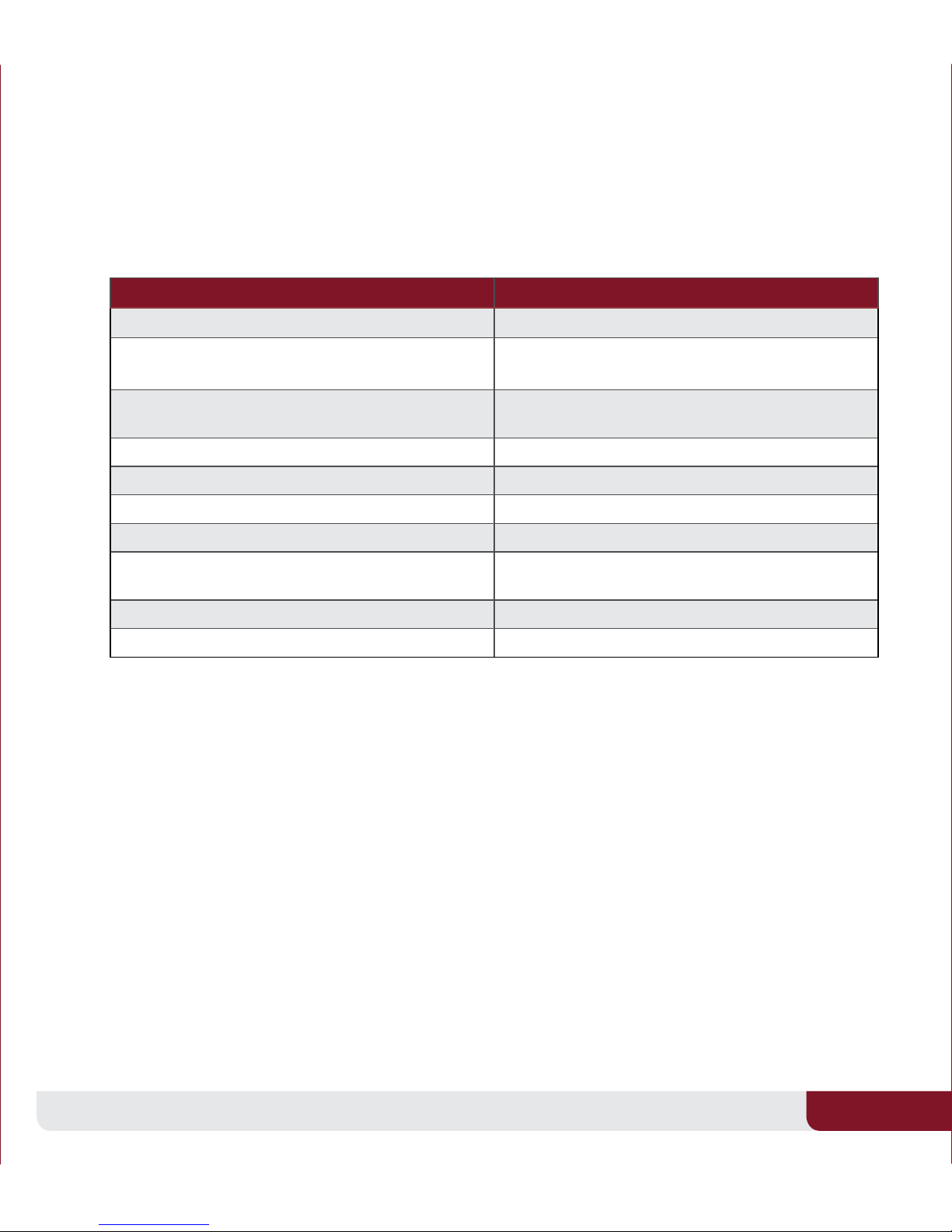
Cable/Wire Gauge Size (AWG) Ampacity (amps)
14 25
12 30
10 40
8 55
6 75
4 95
2 130
1 150
1/0 170
2/0 265
4/0 360
Table values are for cable lengths
less than 6 feet (1829 mm). In
series/parallel battery banks, it
is preferable for all series cables
to be the same length, and all
parallel cables to be the same
length.
For more information refer to the
National Electric Code for correct
cable/wire size, which can be
located at www.nfpa.org.
Page 11
11
USER’S GUIDE
11
3.5 Torque Values
Tighten all cable connections to the proper specication to make sure there is good contact with the
terminals. Over-tightening terminal connections can cause terminal breakage and loose connections
can result in terminal meltdown or re. Refer to Table 2 for the proper torque values based on the type of
terminal on your battery.
Table 2
Terminal Type Dry Torque (in-lb) Dry Torque (Nm)
Flooded
DWNT, ELPT, EUT, LT, UT, WNT 95 - 105 11 - 12
EAPT, AP 50 - 70 6 - 8
DT, EHPT
50 - 70 (AP Connector)
95 - 105 (Stud Portion)
6 - 8 (AP Connector)
11-12 (Stud Portion)
IND 100 - 120 11 - 14
AGM
M8 85 - 95 10 - 11
AP (Adapter) Reliant
50 - 70 (AP Connector)
95 - 105 (AP Adapter)
6 - 7 (AP Connector)
11 - 12 (AP Adapter)
AP 44 - 62 5 - 7
DT
50 - 70 (AP Connector)
95 - 105 (Stud Portion)
6 - 8 (AP Connector)
11-12 (Stud Portion)
LT (Adapter)
55 - 70 (Nut)
85 - 95 (Bolt)
6 - 8 (Nut)
10 - 11 (Bolt)
M6 25 -35 3 - 4
ST 120 - 180 14 - 20
Gel
AP 50 - 70 6 - 8
LT, UT 95 - 105 11 - 12
DT
50 - 70 (AP Connector)
95 - 105 (Stud Portion)
6 - 8 (AP Connector)
11-12 (Stud Portion)
WARNING
Use an insulated wrench when making battery connections.
Page 12
TROJAN BATTERY
12
3.6 Terminal Protection
Corrosion can build up on terminals if they are not kept clean and dry. To prevent corrosion, after
tightening the fasteners, apply a thin coat of terminal protector spray that can be purchased through
your local battery dealer.
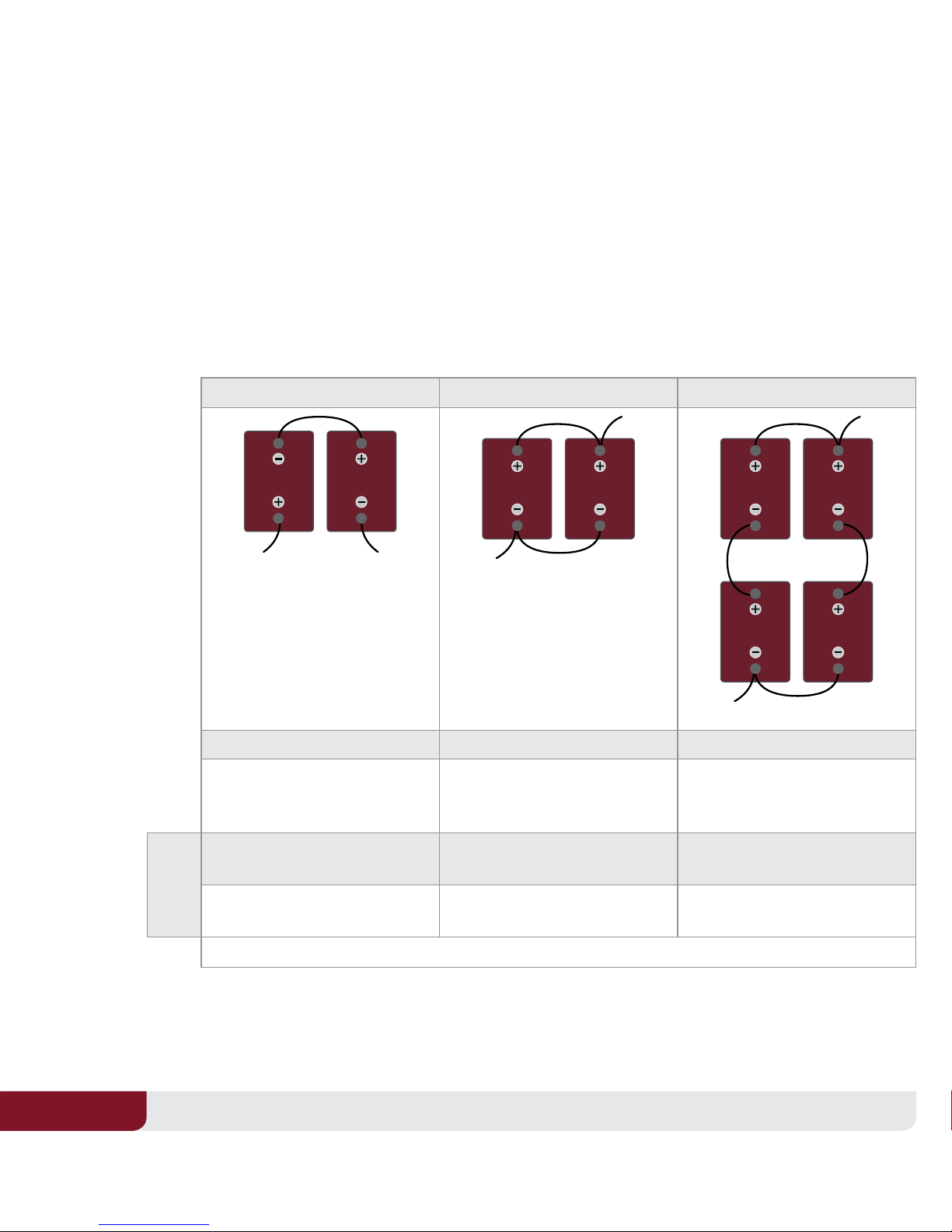
3.7 Connecting Batteries to Increase System Power
You can increase capacity and voltage, or both, by conguring your batteries as follows:
Series Connect Parallel Connect Series/Parallel Connect
Note: maximum of three parallel strings
To increase voltage, connect batteries in
series. This will not increase the system
capacit y.
To increase capacity, connect batteries
in parallel. This will not increase the
system voltage.
To increase both voltage and capacity,
connect additional batteries in series
and parallel.
EXAMPLE
Two T-105, 6V Batteries rated at 225AH
Connected in Series
Two T-105, 6V Batteries rated at 225AH
Connected in Parallel
Four T-105, 6V Batteries rated at 225A
Connected in Series/Parallel
Voltage 6V + 6V = 12V System
Capacity = 225AH
Voltage 6V System
Capacity = 225AH + 225AH = 450AH
Voltage 6V + 6V = 12V System
Capacity = 225AH + 225AH = 450AH
Call Tech Support for Additional Congurations
Page 13

13
USER’S GUIDE
13
3.8 Ventilation
Deep-cycle ooded/wet lead acid batteries release small amounts of gas during usage, particularly
during the charging process. Deep-cycle AGM and gel batteries do release gas, but at a much lower rate
than the ooded types. It is critical to charge batteries in a properly ventilated area. For more assistance in
determining ventilation needs, please contact Trojan Battery Company’s technical support engineers.
3.9 Battery Orientation
Deep-cycle ooded/wet batteries must be placed upright at all times. Fluid in the battery will spill if the
battery is placed on its side or at an angle. Deep-cycle AGM or gel batteries are non-spillable and can be
placed either upright or on their side.
3 .10 Battery Environment
Batteries should be stored and installed in a clean, cool and dry place, keeping water, oil, and dirt away
from the batteries. If any of these materials are allowed to accumulate on the batteries, tracking and
current leakage can occur, resulting in self-discharge and possible short-circuits. Battery chargers should
also be installed in well-ventilated, clean areas that are easily accessible.
3 .11 Temperature
The recommended operating temperature range is between -4°F to 122°F (-20°C to +50°C) with a
humidity of <90%. Elevated battery electrolyte temperatures of >80°F (27°C) will reduce operating life,
while lower battery electrolyte temperatures of <80°F (27°C) will reduce battery performance.
It is important to minimize temperature variations between the cells, therefore, do not arrange the
batteries where they are too tightly packed together which restricts airow. The batteries should have a
minimum of 0.50” (12.7 mm) of space between them to allow for adequate airow.
Page 14
TROJAN BATTERY
14
04 Preventative Maintenance
4 .1 Inspection
î Examine the outside appearance of the battery. The tops of the batteries and terminal connections
should be clean and dry, as well as free of dirt and corrosion. Refer to Cleaning Section 4.3.
î If uids are present on the top of a deep-cycle ooded/wet battery, it may mean that the battery is
being over-watered or overcharged. Refer to Watering Section 4.2 for the proper watering procedure.
î If uid is present on the top of a deep-cycle AGM or gel battery, it may mean that the battery is being
overcharged, which can reduce battery performance and life.
î Check battery cables and connections. Replace any damaged cables and tighten any loose
connections. Refer to Torque Values Section 3.5.
4.2 Watering (ooded/wet batteries only)
Deep-cycle ooded/wet batteries need to be watered periodically. The
frequency depends on battery usage, charging and operating temperature.
Check new batteries every few weeks to determine the watering frequency for
your application. It is normal for batteries to need more watering as they age.
Water should NEVER be added to deep-cycle AGM or gel batteries.
î Use only distilled or deionized water. Tap water can contain contaminants
that will damage the battery.
î Fully charge the batteries prior to adding water. Only add water to
discharged or partially charged batteries if the plates are exposed. In this
case, add just enough water to cover the plates and then charge the
batteries. Once completed, continue with the watering procedure below.
î Check the electrolyte levels by removing the vent caps and placing them upside down so that dirt
does not accumulate on the underside of the cap. For Plus Series™ batteries, simply ip open the cap.
î If the electrolyte level is well above the plates, then it is not necessary to add more water.
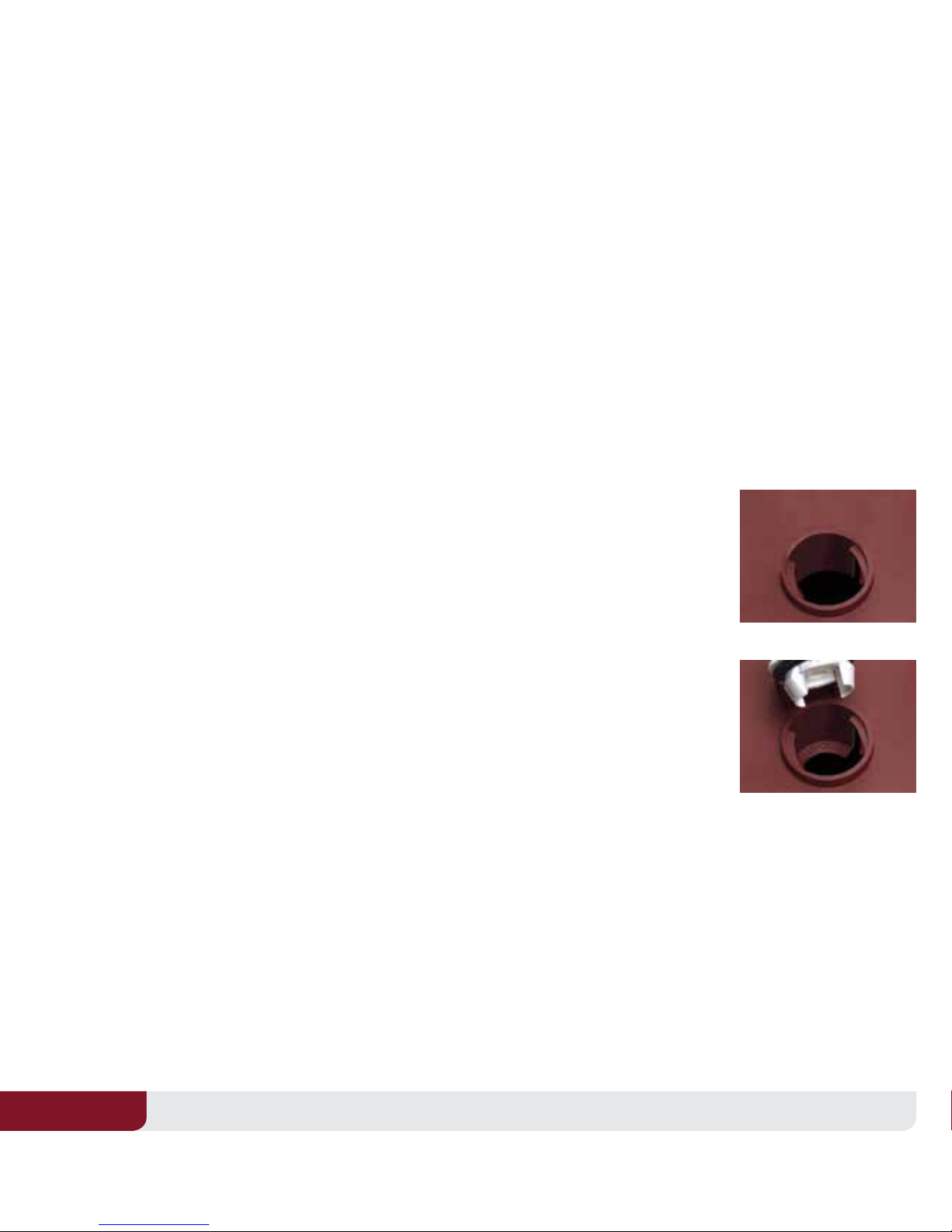
î If the electrolyte level is barely covering the plates, add distilled or de-ionized water to a level of
1/8” (3 mm) below the vent well. See right.
î After adding water, secure vent caps back onto batteries.
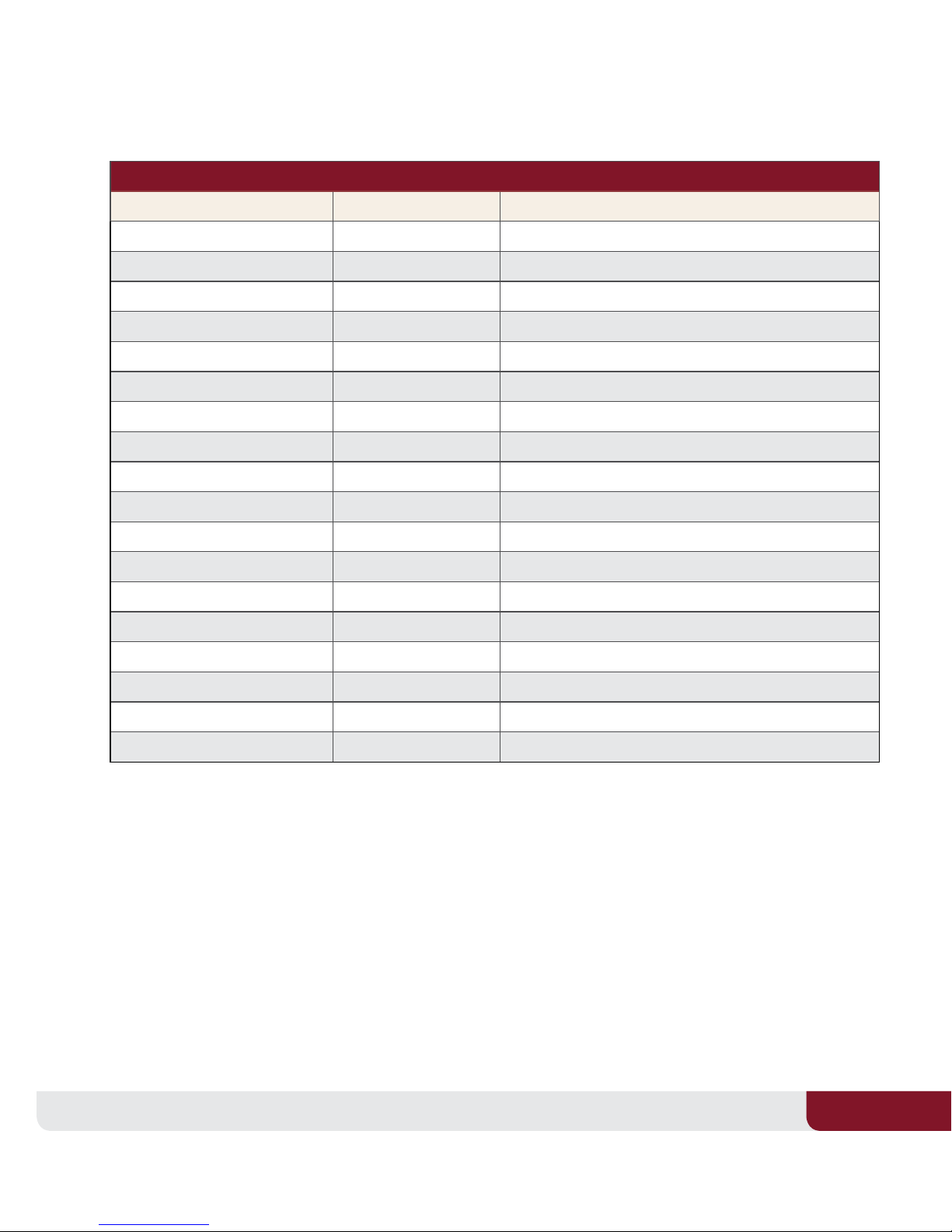
î If tap water is used, it must be tested to ensure that impurities are within acceptable limits. Refer to
Table 3 for Water Impurity Limits.
Standard Batteries
Plus Series™ batteries
Page 15
15
USER’S GUIDE
15
Table 3
Recommended Maximum Allowable Impurities in Water for Battery Use
Impurity Parts Per Million Eects of Impurity
Color Clear and “White” -
Suspended Matter Trace -
Total Solids 100 -
Organic and Volatile Matter 50 Corrosion of positive plate
Ammonia 8.0 Slight self-discharge of both plates
Antimony 5.0 Increased self-discharge, reduces life, lower on-charge voltage
Arsenic 0.5 Self-discharge, can form poisonous gas at negative plate
Calcium 40 Increase of positive plate shedding
Chloride 5.0 Loss of capacity in both plates, greater loss on the positive plate
Copper 5.0 Increased self-discharge, lower on-charge voltage
Iron 3.0 Increased self-discharge at both plates, lower on-charge voltage
Magnesium 40 Reduced life
Nickel None Allowed Intense lowering of on-charge voltage
Nitrates 10 Increased sulfation on the negative plate
Nitrites 5.0 Corrosion of both plates, loss of capacity, reduced life
Platinum None Allowed Increased self-discharge, lower on-charge voltage
Selenium 2.0 Positive plate shedding
Zinc 4.0 Slight self-discharge of negative plate
Page 16

TROJAN BATTERY
16
4.3 Cleaning
Check the battery for cleanliness at regular intervals and keep terminals and connectors free of corrosion.
Terminal corrosion may adversely aect the performance of the battery and present a safety hazard.
î Check that all vent caps are secured properly on the battery.
î Clean the top of the battery, terminals and connections with a cloth or brush, and a solution of
baking soda and water (1 cup of baking soda to 1 gallon of water).
Do not allow cleaning solution to get inside the battery.
î Rinse with water and dry with a clean cloth.
î Apply a thin coat of terminal protector spray that can be purchased through your local battery dealer.
î Keep the area around batteries clean and dry.
4.4 Charging & Equalizing
4.4.1 Boost Charging
The term boost charging refers to fully charging your batteries before they are used or when they are in
storage.
Flooded Batteries
Two methods can be used to boost charge ooded batteries, either automatically or manually. If
using the automatic method (charger is preprogrammed), simply allow the charger to go through the
complete charge cycle.
If you use the manual method (charger has adjustable settings) follow the steps below:
î Boost charge at CONSTANT CURRENT, without voltage limit, at 3% of C until the voltage stops
increasing for three consecutive hourly readings. If using CONSTANT VOLTAGE, the recommended
boost charge voltage is 2.45 2.58 V/cell with the charger output current limited to 3 - 5% of C.
Using voltages at the lower end of this range will result in an extended boost time.
î The boost charge is not complete until the specic gravity readings of each cell remain constant over
three successive hourly readings and all cells are gassing freely. If you have questions concerning
boost charging, contact Trojan Battery Company Technical Support.
Page 17

17
USER’S GUIDE
17
AGM / Gel Batteries
Similarly, two methods can be used to boost your AGM/gel product, automatically or manually. If using
the automatic method (charger is preprogrammed), just allow the charger to go through the complete
charge cycle. Make sure the proper battery type, AGM or gel, is selected on the charger.
If you use the manual method (charger has adjustable settings) follow the steps below:
î Boost charge at a CONSTANT VOLTAGE of (2.40 V/cell) with the current limited to 20% of C.
Example: 20 amps for a battery with a C of 100Ah.
î The time needed to boost charge the cells can be determined using the equation below.
Depth of discharge (DOD) can be determined using the information in Table 7.
Boost Charge Time in Hours =
+ 5 Hours
DOD X Capacity at 20Hr Rate
Maximum Charge Current
For example, a 100Ah battery taken down to a 25% depth of discharge (DOD) or 75% state of charge
(SOC) will need to be boost charged for 7½ hours with a 10A charger, or for 6¼ hours with a 20A charger.
Page 18

TROJAN BATTERY
18
4.4.2 Charging
Proper charging is imperative to maximize battery performance. Both under- or over-charging batteries
can signicantly reduce the life of the battery. Most chargers are automatic and pre-programmed, while
others are manual and allow the user to set the voltage and current values.
AGM and gel batteries should always have temperature compensated charging.
î Batteries should be fully charged after each use. “Use” is dened as at least 30 minutes
of runtime.
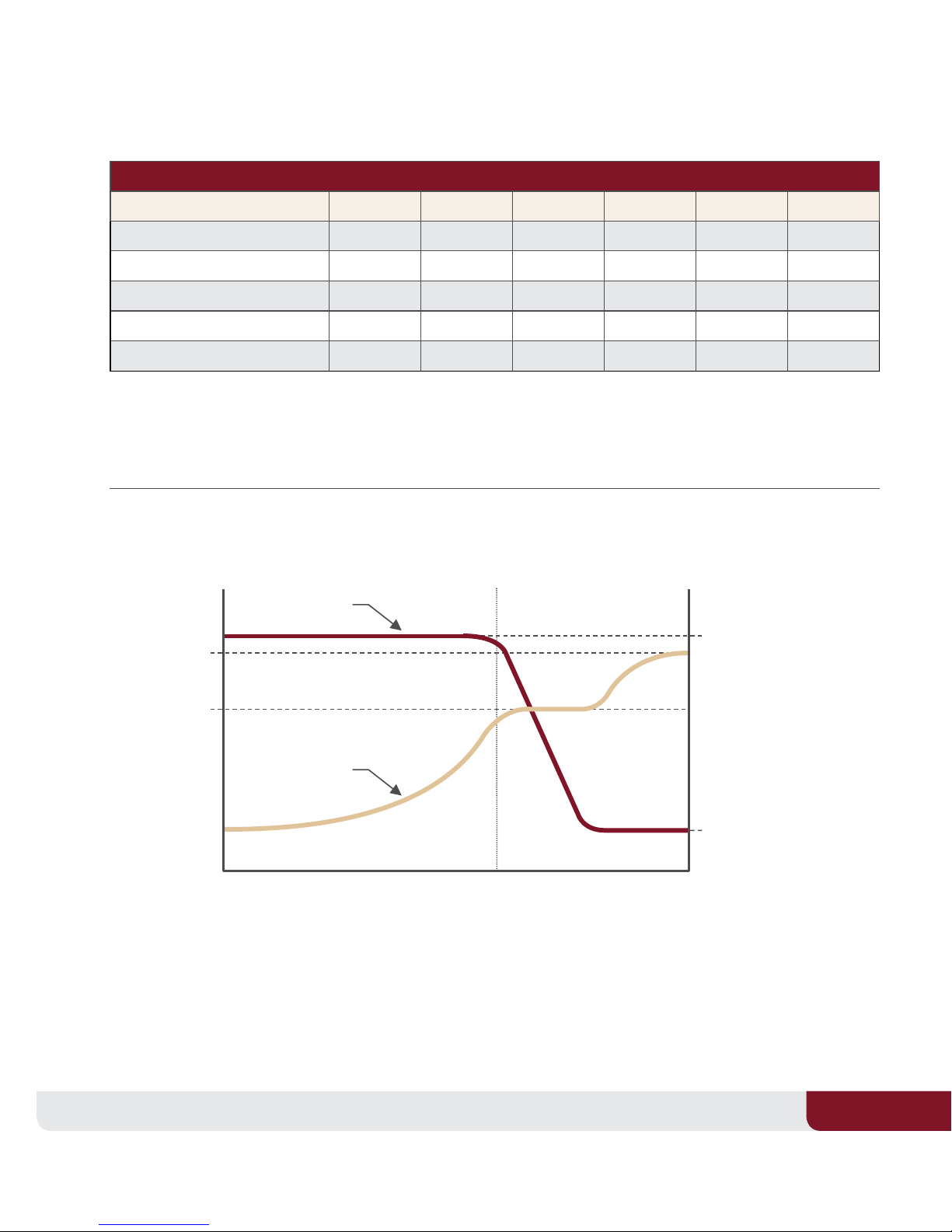
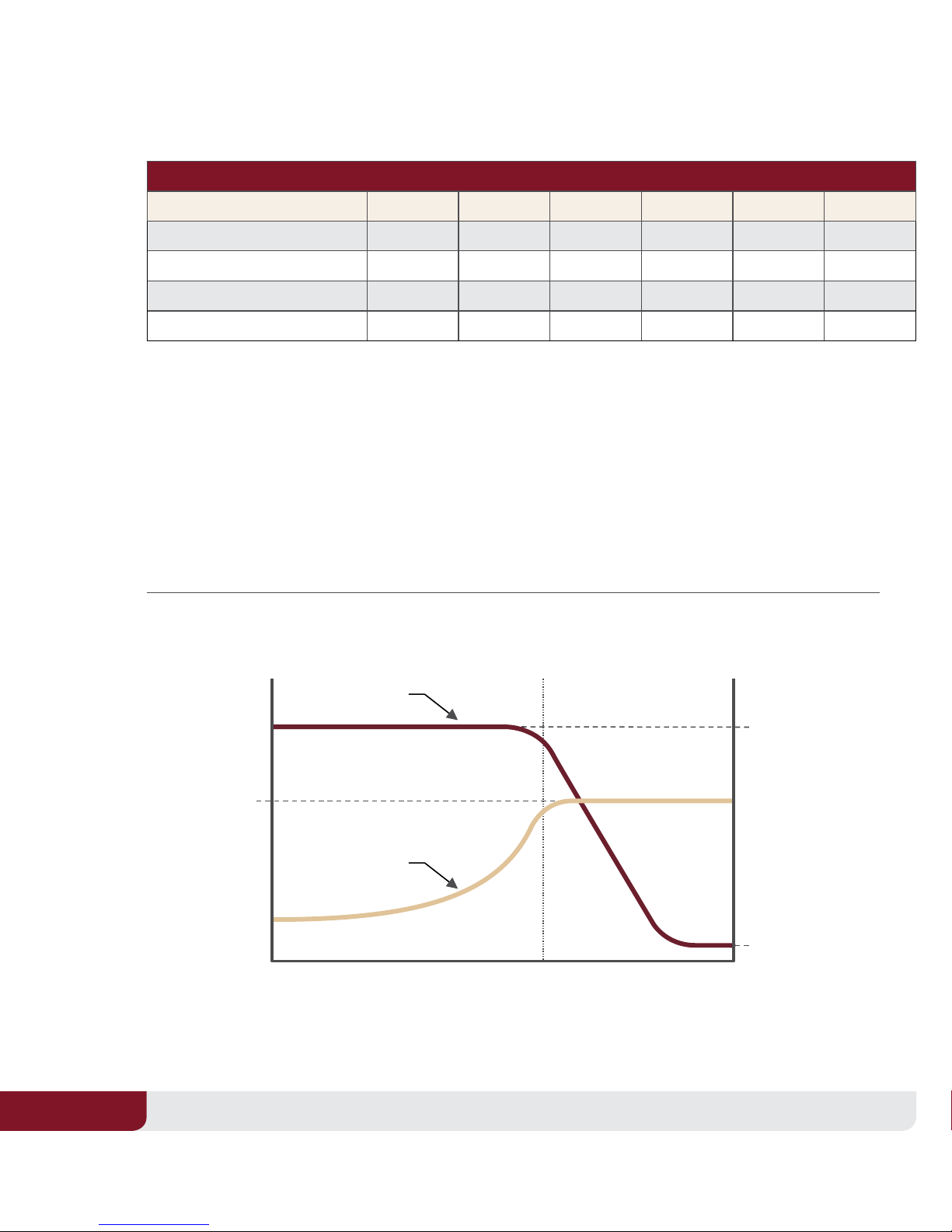
î Deep-cycle ooded/wet charging guidelines: Refer to Table 4 and Diagram 4.
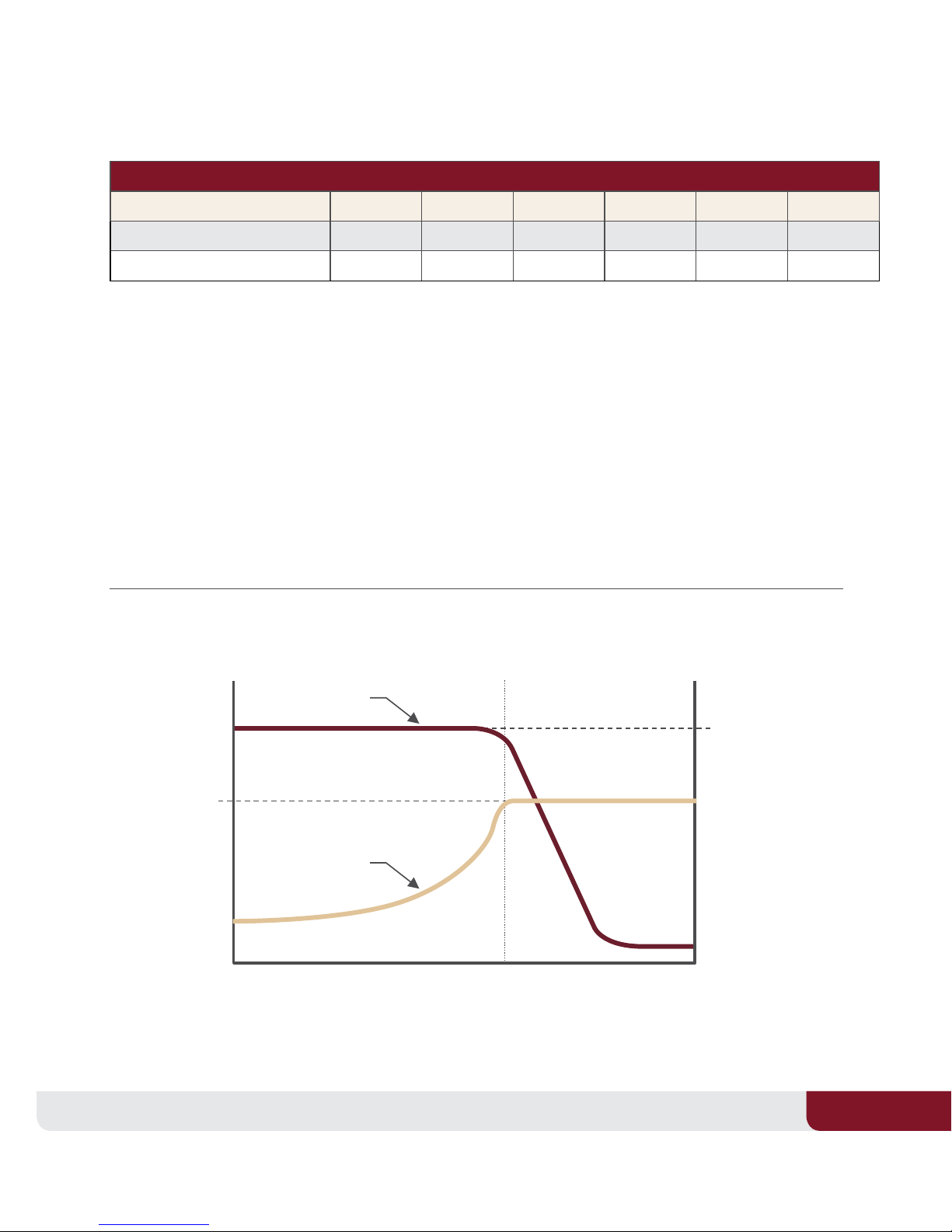
î Deep-cycle AGM charging guidelines: There are various ways to charge AGM batteries. For
optimum performance and life, Trojan recommends a 3-step prole as shown in Diagram 5 and
following the guidelines in Table 5.
î Deep-cycle gel charging guidelines: Refer to Table 6 and Diagram 6.
î Before charging, make sure the charger is set to the appropriate program for deep-cycle ooded/wet,
AGM or gel, depending on the type of battery you are charging.
î Lead acid batteries (deep-cycle ooded/wet, AGM or gel) do not have a memory eect and therefore
do not need to be fully discharged before recharging.
î Charge only in well-ventilated areas.
î Check electrolyte levels in deep-cycle ooded/wet batteries to make sure plates are covered with
water before charging. Refer to Section 4.2.
î Check that all vent caps are secured properly on the battery before charging.
î Deep-cycle ooded/wet batteries will gas (bubble) towards the end of charge to ensure proper
mixing of the electrolyte.
î Never charge a frozen battery.
î Avoid charging at temperatures above 122°F (50°C).
Page 19
19
USER’S GUIDE
19
Table 4
Deep-Cycle Flooded/Wet Batteries - Charger Voltage Settings @ 25°C (77°F)
System Voltage 6 Volt 8 Volt 12 Volt 24 Volt 36 Volt 48 Volt
Bulk Charge (2.47 VPC) 7.41 9.88 14.82 29.64 44.46 59.28
Absorption Charge (2.35 – 2.45 VPC) 7.0 5 – 7.35 9.40 – 9.80 14.10 – 14.70 28.20 – 29.40 42.30 – 44.10 56.40 – 58.80
Finish Charge (2.70 VPC) 8.10 10.80 16.20 32.40 48.60 64.80
Equalize Charge (2.70 VPC) 8.10 10.80 16.20 32.40 48.60 64.80
Float Charge (if desired 2.25 VPC) 6.75 9.00 13.50 27.00 40.50 54.00
The chart below illustrates a typical recharge prole:
Diagram 4
Recommended Deep-Cycle Flooded/Wet Charging Prole
Voltage
(per cell)
Current
(Amps)
2.45V to 2.70V
(@25°C, 77°F)
2.35V to 2.45V
(@25°C, 77°F)
20% 90% 100%
State of Charge (%)
1-3% C
20
10-13% C
20
Charge Current
Charge Voltage
Page 20
TROJAN BATTERY
20
Table 5
Deep-Cycle AGM Batteries - Charger Voltage Settings
**
System Voltage 6 Volt 8 Volt 12 Volt 24 Volt 36 Volt 48 Volt
Bulk Charge (2.40 VPC) 7.20 9.60 14.40 28.80 43.20 57.6 0
Absorption Charge (2.35 – 2.45 VPC) 7.0 5 – 7.35 9.40 – 9.80 14.10 – 14.70 28.20 – 29.40 42.30 – 44.10 56.40 – 58.80
Finish Charge (2.45 VPC) 7.35 9.80 14.70 29.40 4 4.10 58.80
Float Charge (2.25 – 2.3 VPC) 6.75 9.00 13.50 27.00 40.50 54.00
** AGM batteries should always use temperature compensated charging per the following rule:
5.0 mV per cell / °C or 2.8 mV per cell / °F
Subtract 0.005 volt per cell from the voltage reading for every 1°C above 25°C, or add 0.005 volt per cell for every 1°C
below 25°C. Subtract 0.0028 volt per cell for every 1°F above 77°F, or add 0.0028 volt per cell for every 1°F below 77°F.
The chart below illustrates a typical recharge prole:
Diagram 5
Recommended Trojan Deep-Cycle AGM Charging Prole
Note: Charging time will vary depending on battery size, charger output, and depth of discharge.
Voltage
(per cell)
Current
(Amps)
2.35V to 2.45V
(@25°C, 77°F)
Charge Current
Charge Voltage
20% 80%
100%
State of Charge (%)
Approximately
C20/200
Will increase
with age
20% C
20
Page 21
21
USER’S GUIDE
21
Table 6
Deep-Cycle Gel Batteries - Charger Voltage Settings
**
System Voltage 6 Volt 8 Volt 12 Volt 24 Volt 36 Volt 48 Volt
Bulk Charge (2.40 VPC) 7.20 9.60 14.40 28.80 43.20 57.6 0
Float Charge (if desired 2.25 VPC) 6.75 9.00 13.50 27.00 40.50 54.00
** Gel batteries should always use temperature compensated charging per the following rule:
5.0 mV per cell / °C or 2.8 mV per cell / °F
Subtract 0.005 volt per cell from the voltage reading for every 1°C above 25°C, or add 0.005 volt per cell for every 1°C
below 25°C. Subtract 0.0028 volt per cell for every 1°F above 77°F, or add 0.0028 volt per cell for every 1°F below 77°F.
The chart below illustrates a typical recharge prole:
Diagram 6
Recommended Trojan Deep-Cycle Gel Charging Prole
Note: Charging time will vary depending on battery size, charger output, and depth of discharge.
Voltage
(per cell)
Current
(Amps)
2.40V
(@25°C, 77°F)
Charge Current
Charge Voltage
20% 80%
100%
State of Charge (%)
10-13% C
20
Page 22

TROJAN BATTERY
22
4.4.3 Equalizing (deep-cycle ooded/wet batteries only)
Equalizing is an overcharge performed after fully charging deep-cycle ooded/wet batteries. An
equalizing charge prevents battery stratication and reduces sulfation which are leading causes of
battery failure. Trojan recommends equalizing every 30 days or when batteries have a low specic
gravity reading after fully charging, below 1.235, or have a wide ranging specic gravity of >0.030 points
between cells. Reference Section 8.3 for instructions on specic gravity measurement.
Deep-cycle AGM or gel batteries should NEVER be equalized.
Equalization can be performed either automatically (as programmed on the charger) or by following the
procedure below:
î Check the battery’s electrolyte level in each cell to make sure the plates are covered before charging.
î Check that all vent caps are secured properly on the battery before charging.
î Set charger to equalizing mode.
î The batteries will gas (bubble) during the equalization process.
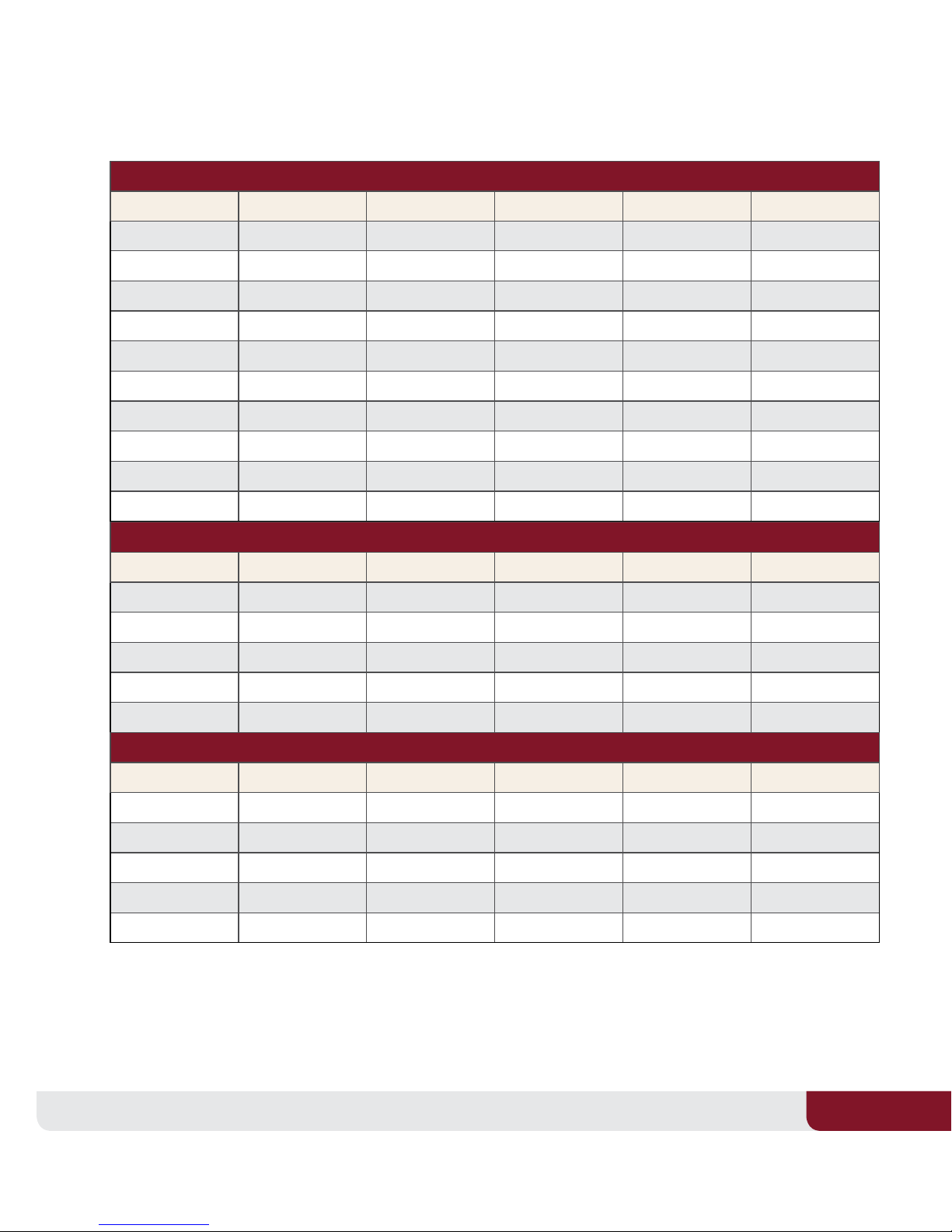
î Measure the specic gravity every hour. Refer to Table 7 for specic gravity and voltage
measurements. Discontinue the equalization charge when the specic gravity no longer rises.
WARNING Do not equalize deep-cycle AGM or gel batteries.
Page 23
23
USER’S GUIDE
23
Table 7
Flooded/Wet State of Charge as a Measure of Specic Gravity and Open-Circuit Voltage
Percentage Charge Specic Gravity Cell 6 Volt 8 Volt 12 Volt
100 1.277 2.12 2 6.37 8.49 12.73
90 1.258 2.103 6.31 8.41 12.62
80 1.238 2.083 6.25 8.33 12.50
70 1.217 2.062 6 .19 8.25 12.37
60 1.195 2.04 6.12 8.16 12.24
50 1.172 2.017 6.05 8.07 12 .10
40 1.14 8 1.993 5.98 7.97 11.96
30 1.124 1.969 5.91 7.8 8 11.81
20 1.098 1.943 5.83 7.7 7 11.66
10 1.073 1.918 5.75 7.67 11.51
AGM State of Charge as a Measure of Open-Circuit Voltage
Percentage Charge Specic Gravity Cell 6 Volt 8 Volt 12 Volt
100 NA 2.14 6.42 8.56 12.84
75 NA 2.09 6.27 8.36 12.54
50 NA 2.04 6.12 8.16 12.24
25 NA 1.99 5.97 7.9 6 11.94
0 NA 1.94 5.82 7.76 11.64
Gel State of Charge as a Measure of Open-Circuit Voltage
Percentage Charge Specic Gravity Cell 6 Volt 8 Volt 12 Volt
100 NA 2.14 6.42 8.56 12.84
75 NA 2 .11 6.33 8.44 12.66
50 NA 2.06 6.18 8.24 12.36
25 NA 2.00 6.00 8.00 12.00
0 NA 1.97 5.91 7.8 8 11.82
Page 24
TROJAN BATTERY
24
05 Storage
î Charge batteries before placing in storage.
î Store in a cool, dry location, protected from the elements.
î Disconnect from equipment to eliminate potential parasitic loads that
may discharge the battery.
î Batteries gradually self-discharge during transit and storage, so
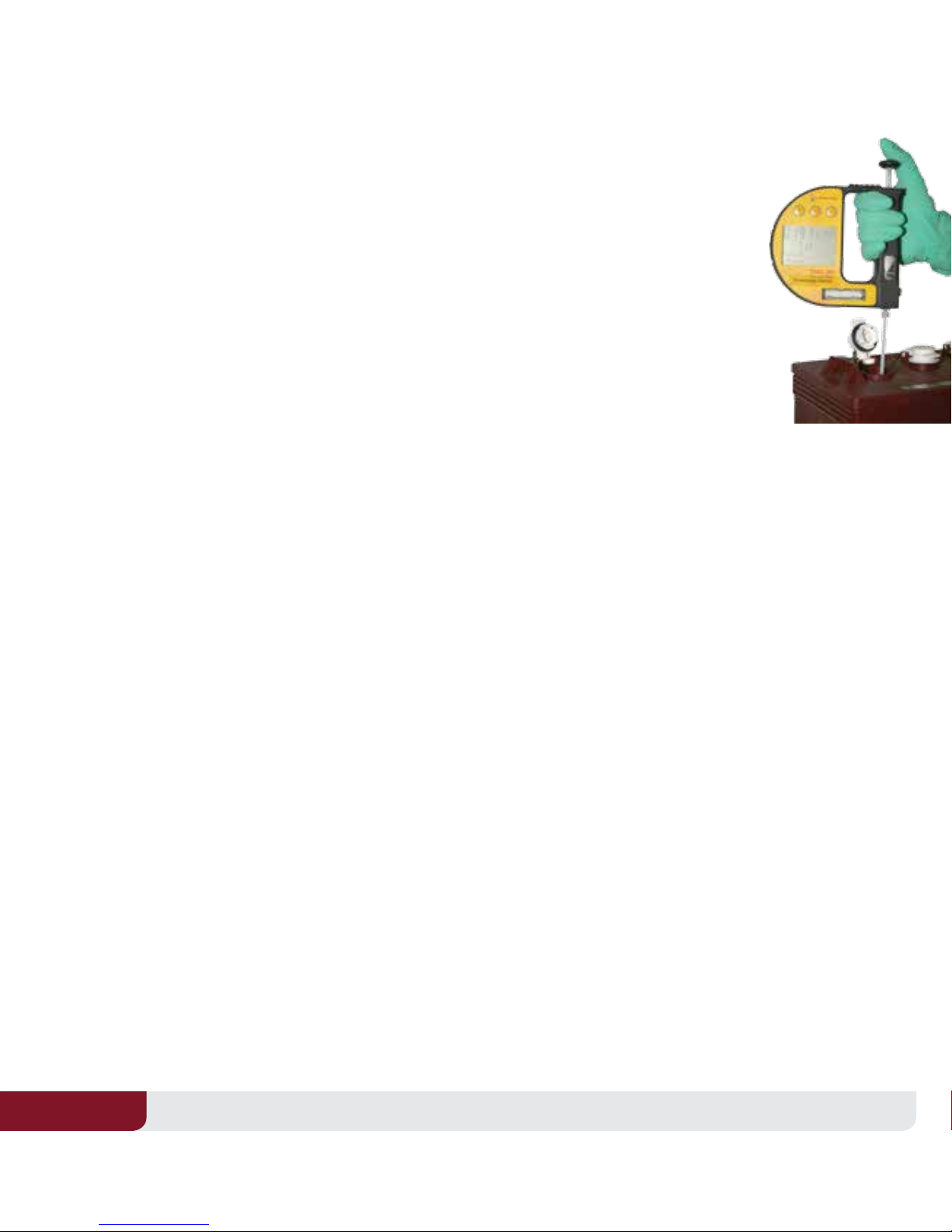
monitor the specic gravity or voltage in ooded batteries every 4 - 6
weeks. Monitor the open circuit voltage for AGM or gel batteries every
2 - 3 months.
î Batteries in storage should be given a boost charge when they are at
70% SOC for ooded and 75% for AGM or gel. Refer to Table 7 for specic
gravity (ooded only) and voltage measurements for ooded batteries
and AGM or gel batteries. If boosting is needed, refer to Section 4.4.1 for
boosting instructions.
î When batteries are taken out of storage, recharge before use.
5 .1 Storage in Hot Environments (greater than 90°F or 32°C)
Avoid direct exposure to heat sources, if possible, during storage. Batteries self-discharge faster in
high temperatures. If batteries are stored during hot summer months, monitor the specic gravity or
voltage more frequently (approximately every 2 - 4 weeks).
5.2 Storage in Cold Environments (less than 32°F or 0°C)
Avoid locations where freezing temperatures are expected, if possible, during storage. Batteries can
freeze in cold temperatures if they are not fully charged. If batteries are stored during cold winter
months, it is critical that they are kept fully charged at all times.
06 How to Maximize the Performance of your
Trojan Battery
î Follow all the procedures in this User’s Guide for proper installation, maintenance and storage.
î Do not discharge your battery more than 80%. This safety factor will eliminate the chance of over-
discharging and damaging your battery.
î If you have any questions or concerns about battery care, please contact Trojan Battery
Company’s technical support engineers at 800-423-6569 Ext. 3045 or +1-562-236-3045 before a
problem develops.
Page 25
25
USER’S GUIDE
25
07 What to Expect from your Trojan Battery
î A new deep-cycle battery will not immediately deliver its full rated capacity. This is normal and
should be expected since it takes time for a deep-cycle battery to reach maximum performance or
peak capacity.
î Trojan’s deep-cycle AGM and gel batteries will reach rated capacity in less than 10 cycles.
î Trojan’s deep-cycle ooded batteries take between 50 – 100 cycles to achieve full, peak capacity.
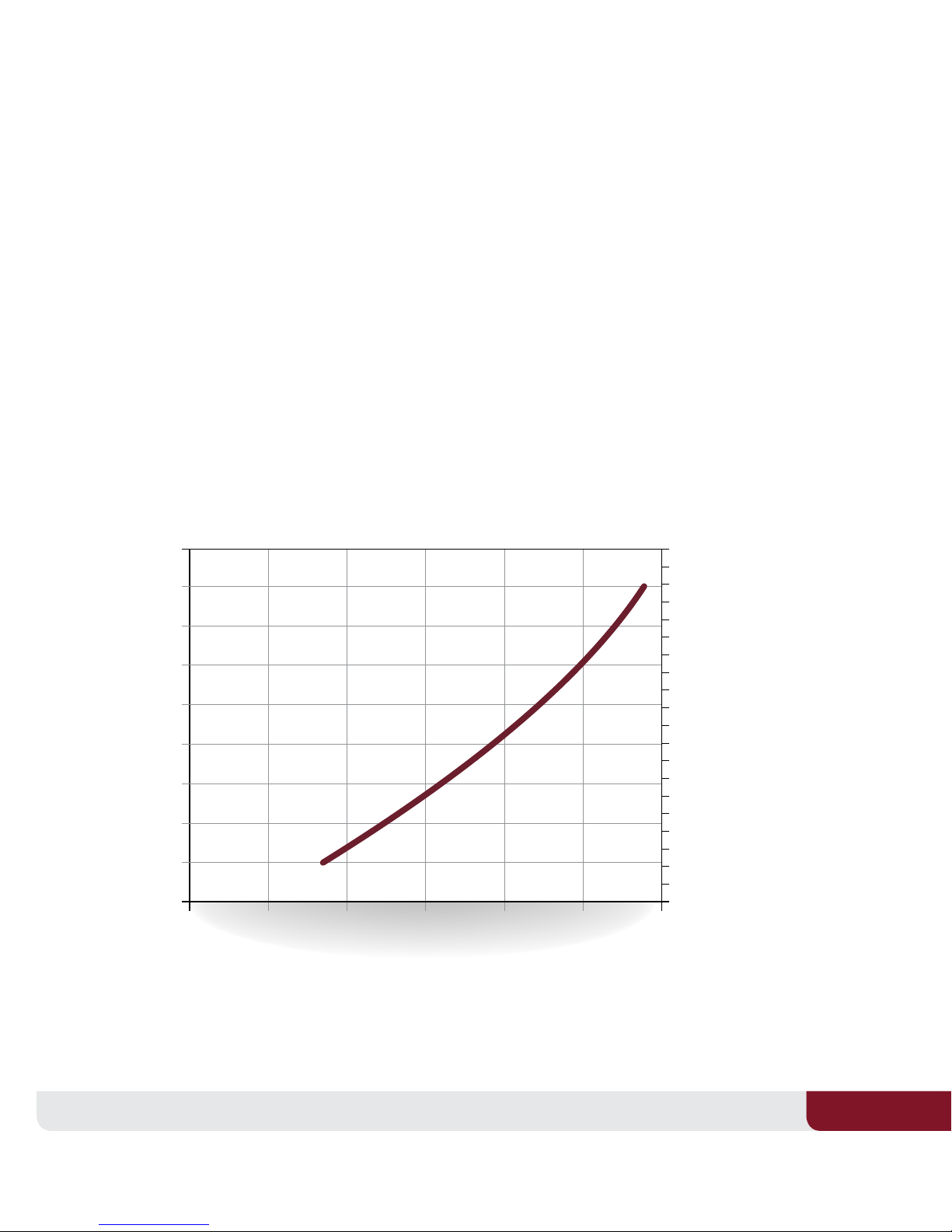
î When operating batteries at temperatures below 80°F (27°C), they will deliver less than the rated
capacity. For example at 0°F (-18°C) the battery will deliver 50% of its capacity and at 80°F (27°C) it
will deliver 100% of its capacity.
î When operating batteries at temperatures above 80°F (27°C), they will deliver more than the rated
capacity but battery life will be reduced.
î The life of a battery is dicult to predict and will vary by application, frequency of usage and
level of maintenance.
Capacity vs. Temperature
20%0% 40% 60% 80% 100% 120%
0
20
-20
-40
40
60
80
100
120
140
0
-20
-10
-30
-40
10
20
30
40
50
60
Percent of Available Capacity
Temperature (F)
Temperature (C)
Note: Typical behavior at 5-H r rate.
Page 26

TROJAN BATTERY
26
08 Trouble-Shooting
These battery testing procedures are guidelines only for identifying a deep-cycle battery that may need
to be replaced. Unique situations may be observed that are not identied within this procedure. Please
contact Trojan Battery Company’s technical support engineers at 800-423-6569 Ext. 3045 or +1-562-236-
3045 for help interpreting the test data.
8 .1 Preparation for Testing
î Check that all vent caps are secured properly on the battery.
î Clean the top of the battery, terminals and connections with a cloth or brush and a solution of baking
soda and water (1 cup of baking soda to 1 gallon of water). Do not allow cleaning solution to get
inside the battery. Rinse with water and dry with a clean cloth.
î Check battery cables and connections. Replace any damaged cables. Tighten any loose connections
with an insulated wrench. Refer to Torque Values Section 3.5.
î For deep-cycle ooded/wet batteries, check the electrolyte level and add water if necessary. Refer to
Watering Section 4.2.
î Ensure batteries are fully charged before discharge testing to obtain accurate results.
8.2 On-Charge Voltage Testing
î Disconnect and reconnect DC plug to restart charger.
î While the batteries are on-charge, record the current in the last ½ hour of charge cycle (if possible),
and measure the battery set voltage.
î If the current at the end of the charge is below 5 amps, and the battery set voltage is above the
following readings, proceed to the next step:
î 56V for a 48V system
î 42V for a 36V system
î 28V for a 24V system
î 14V for a 12V battery
î 9.3V for a 8V battery or 7V for a 6V battery
î If the current at the end of the charge does not match these readings, check the charger for proper
output and recharge the batteries. If the set voltages are still low, you may have a failed battery.
î While the batteries are on-charge, measure the individual battery voltages.
î If any battery voltage is below 7V for 6V battery, 9.3V for 8V battery and 14V for 12V battery, and a
voltage variation is greater than 0.5V for 6V battery or 1.0V for a 12V battery, from any other
battery in set, it may be a failed battery.
Page 27

27
USER’S GUIDE
27
8.3 Specific Gravity (flooded/wet batteries only)
î Fill and drain the hydrometer 2 - 3 times before drawing a sample from the battery.
î Measure specic gravity readings for all battery cells.
î Correct specic gravity readings for temperature by adding 0.004 for every 10°F (5°C) above
80°F (27°C), and subtract 0.004 for every 10°F (5°C) below 80°F (27°C).
î If every cell in the battery set is below 1.235, the batteries may be undercharged and require
recharging.
î If any battery has a specic gravity variation of more than 0.030 between cells, equalize the set.
î If there is still a variation there may be a failed battery.
8.4 Open Circuit Voltage Testing
This is the least preferred method of evaluating the condition of a deep-cycle ooded/wet battery, but is
the only method for AGM and gel batteries.
î For accurate voltage readings, batteries must remain idle at least 6 hours, preferably up to 24 hours.
î Measure the individual battery voltages.
î If any battery voltage is greater than 0.3V compared to other batteries in set, equalize the set (deep-
cycle ooded/wet batteries ONLY). Refer to Equalizing Section 4.4.3.
î Measure the individual battery voltages again.
î If any battery voltage is still greater than 0.3V compared to any other battery in the set, you may have
a failed battery.
Page 28

TROJAN BATTERY
28
8.5 Discharge Testing
î Follow the procedure below to determine battery capacity.
î Connect and start discharger.
î Record the runtime (minutes) when discharge is complete.
î Correct runtime minutes for temperature using the following formula (valid between 75°F (24°C)
and 90°F (32°C):
M
c
= Mr [1 – 0.005* (T1 - 80*)] *(For Celsius, use 0.009 & 27°C)
Where M
c
= Discharge time corrected to 80°F (or 27°C)
M
r
= Actual discharge time
T
1
= Battery temperature at end of discharge (°F or °C)
î If the discharge runtime is greater than 50% of the batteries’ rated capacity at that discharge rate, then
all the batteries are operational.
î Restart the discharger to record the individual battery voltages while still under load
(current being drawn).
î If the discharge runtime is less than 50% of the batteries’ rated capacity, the battery with a voltage
that is 0.5V lower than the highest voltage may be a failed battery.
There are other methods of testing batteries including internal resistance (i.e. C.C.A. testers) and carbon
pile discharge testers. However these are not suitable testing methods for deep-cycle batteries.
Page 29
29
USER’S GUIDE
29
09 Battery Recycling
Lead acid batteries are the environmental success story of our time since more than 97% of all battery
lead is recycled. In fact, lead acid batteries top the list as one of the most highly recycled consumer
products. Trojan Battery supports proper recycling of your battery to keep the environment clean.
Please contact your nearest Trojan Distributor, at www.trojanbattery.com, to learn how to properly
recycle your batteries.
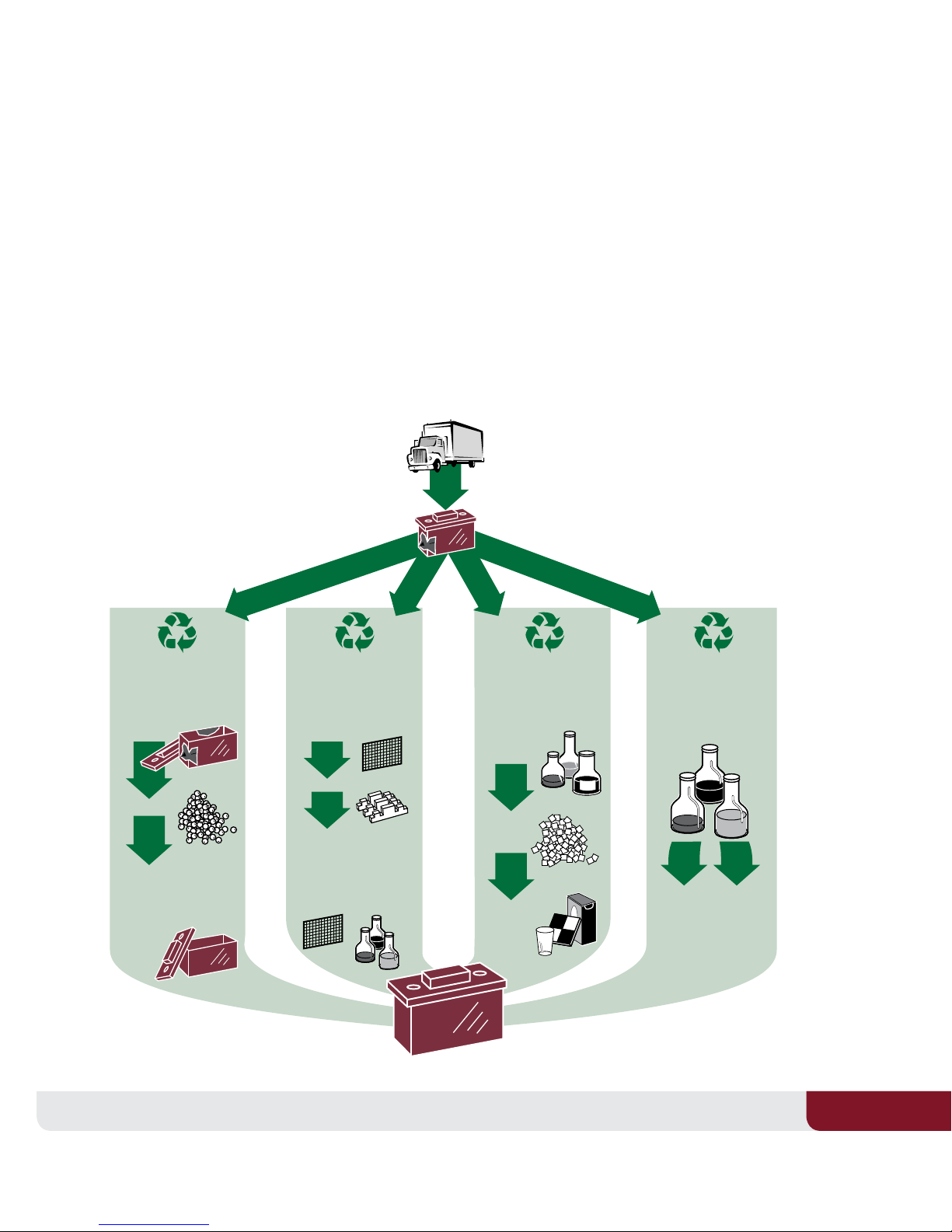
Below is the process in which your Trojan battery will be recycled:
Recycling For A
Better Environment
Transportation
The same network that distributes
new batteries also safely collects and
returns used batteries for recycling
At the recycling facility, used batteries are
broken apart and separated into components
to begin the recycling process
Plastic
Plastic pellets recycled from
battery cases and covers are
used to manufacture new
cases and covers
Lead
Lead ingots recycled from
battery grids, other battery
parts (e.g., posts and terminals)
and lead-oxide are used to
manufacture lead for new
grids, parts, and lead oxide
Electrolyte:
Option 1
Sodium sulfate crystals
separated from used electrolyte
(dilute sulfuric acid) is recycled
and sold for use in textiles,
glass and detergent
manufacturing
Electrolyte:
Option 2
At some recyclers, used
electrolyte is reclaimed and
reused in manufacturing new
batteries. At others, it is
neutralized and managed
according to federal and state
water permits
New Battery
New Grids and
Lead Oxide
New battery grids are
manufactured from recycled
lead. Recovered lead oxide
is also used in new
battery manufacturing
Crush the case
and covers
Plastic pellets
New Covers
and Cases
New battery covers and cases
are manufactured using
recycled plastic pellets
New cases
and covers
Lead Oxide
New grids
Lead ingots
Melt grids
Neutralize
electrolyte
Electrolyte
is chemically
treated and
reused
Electrolyte
is neutralized
and sent to
a water
treatment
plant
Sodium
sulfate
crystals
Glass, textiles,
detergent
OR
Graphics provided by Battery Council International
Page 30

TROJAN BATTERY
30
AGM Absorbed Glass Mat
AMP Ampere
AH Amp-Hours
AWG American Wire Gauge
AP Automotive Post Terminal
°C Degrees Celsius
C.C.A. Cold Cranking Amps
DOD Depth of Discharge
DT Automotive Post & Stud Terminal
DWNT Dual Wingnut Terminal
EAPT Embedded Automotive Post Terminal
EHPT Embedded High Prole Terminal
ELPT Embedded Low Prole Terminal
EUT Embedded Universal Terminal
°F Degrees Fahrenheit
IND Industrial Terminal
LT L-Terminal
M6/M8 6mm - 8mm Teminal
Mc Corrected Minutes
Mr Minutes Recorded
SOC State of Charge
ST Stud Terminal
T Temperature
UT Universal Terminal
V Volt
WNT Wingnut Terminal
10 Battery Acronyms
Notes
Page 31

31
USER’S GUIDE
31
Trojan Battery Company
TROJAN BATTERY COMPANY
12380 Clark Street, Santa Fe Springs, CA 90670 USA
Call 800-423-6569 Ext. 3045 or +1-562-236-3045
or Visit www.trojanbattery.com
This publication is protec ted by copyright and all rights are reserved. No part of it may be reproduced or transmitted by any means or in any form, without
prior consent in writing from Trojan Battery Company.
Trojan Batter y Company is not liable for direct, indirec t, special, exemplar y, incidental or consequential damages that may result from any information
provided in or omitted from this manual, under any circumstances.
Trojan Batter y Company reser ves the right to make adjustments to this manual at any time, without notices or obligation.
Trojan Batter y Company and the Trojan Batter y logo are registered trademarks of Trojan Batter y Company.
T2 Technology, C-Max Technology, Reliant AGM, and Plus Series are trademarks of Trojan Battery Company in the United States and other countries.
would like to thank you for selecting our battery. With over 90 years of experience, Trojan Battery is the
world’s most trusted name in deep-cycle battery technology backed by our outstanding technical
support. We look forward to serving your battery needs.
Page 32

TRJ-N0109_Users Guide EN 2016_0822
Trojan batteries are available worldwide
through Trojan’s Master Distributor
Network. We oer outstanding technical
support, provided by full-time
application engineers.
© 2016 Trojan Battery Company, LLC. All rights reserved. Trojan Battery Company is not liable for damages that may result from any information provided in or omitted from this publication, under any circumstances.
Trojan Battery Company reserves the right to make adjustments to this publication at any time, without notice or obligation. Please check the Trojan Battery website (www.trojanbattery.com) for the most up-to-date information.
trojanbattery.com
800.423.6569 or + 1.562.236.3000
12380 Clark Street, Santa Fe Springs, CA 90670 • USA
 Loading...