

Page 1
October 2007
entertainment, presentation, communication
www.lsionline.co.uk
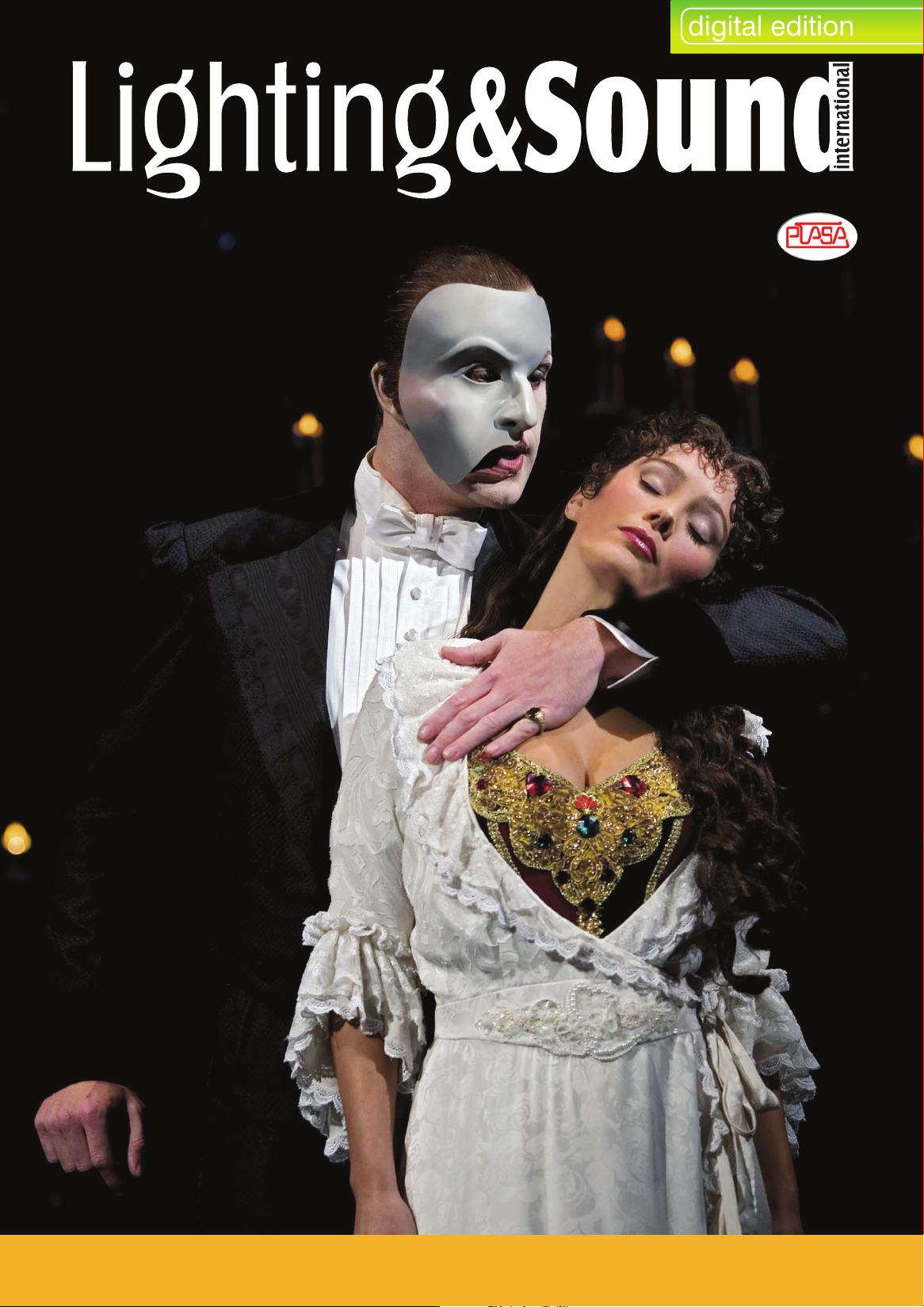
Phantom
L&SI takes a look at this epic
production, 21 years on
from its first performance
PLASA07 in Review
The news from Earls Court
Technical Focus:
Martin Pro’s Stagebar 54
& Point Source Systems
On Tour: John Mayer
A US export hits London
Scout Jamboree
L&SI visits the 100th
anniversary bash
PLUS!
QVC goes shopping;
Peter Schaufuss Ballet:
Event Concept in profile;
Rigging Call & more . . .
L&SI has gone digital! Register online FREE at www.lsionline.co.uk/digital
Page 2
Theatre is essentially a transient industry. Even the
most epic, stunning-looking scenery will at some
point be in pieces, whether to fit on the truck, get
through the dock door, be hidden in the wings
after a scene change or stored longer term by a
rep theatre. And it will have to be put together with
as little fuss - and as quickly - as possible.
Stage carpenters have many techniques for
allowing scenery to be joined and pulled apart
quickly. Throwing a cleat allows flats to be tied
together quickly. Where a little more time is
available, a pin hinge provides a more solid join. It’s
one of those ideas that’s been around forever: take a hinge, pull out the
pin, attach one of the hinge plates to each piece of scenery. Push the pin
slots together, insert a pin. Job done.
For years, theatres made their own pin hinges, buying standard back
flap hinges then making two saw cuts to remove the fixed pin and create
some clearance. A replacement pin, with a top loop for easy handling,
would be fashioned using coat hangers or purchased from suppliers
such as Hall Stage. It worked - but it wasn’t ideal, giving a less than
perfect join and involving a lot of effort all round.
But everyone just lived with it - until 1984. David Edelstein had been
working as technical director at the Leicester Haymarket Theatre. In the
early morning hours of a big fit-up, the theatre ran out of pin hinges;
everything came to a stop while someone hacked apart a batch of
hinges. While waiting, Edelstein came to wonder if every theatre in the
country was doing the same thing and, if so, whether there might be
a market for a purpose-made version . . .
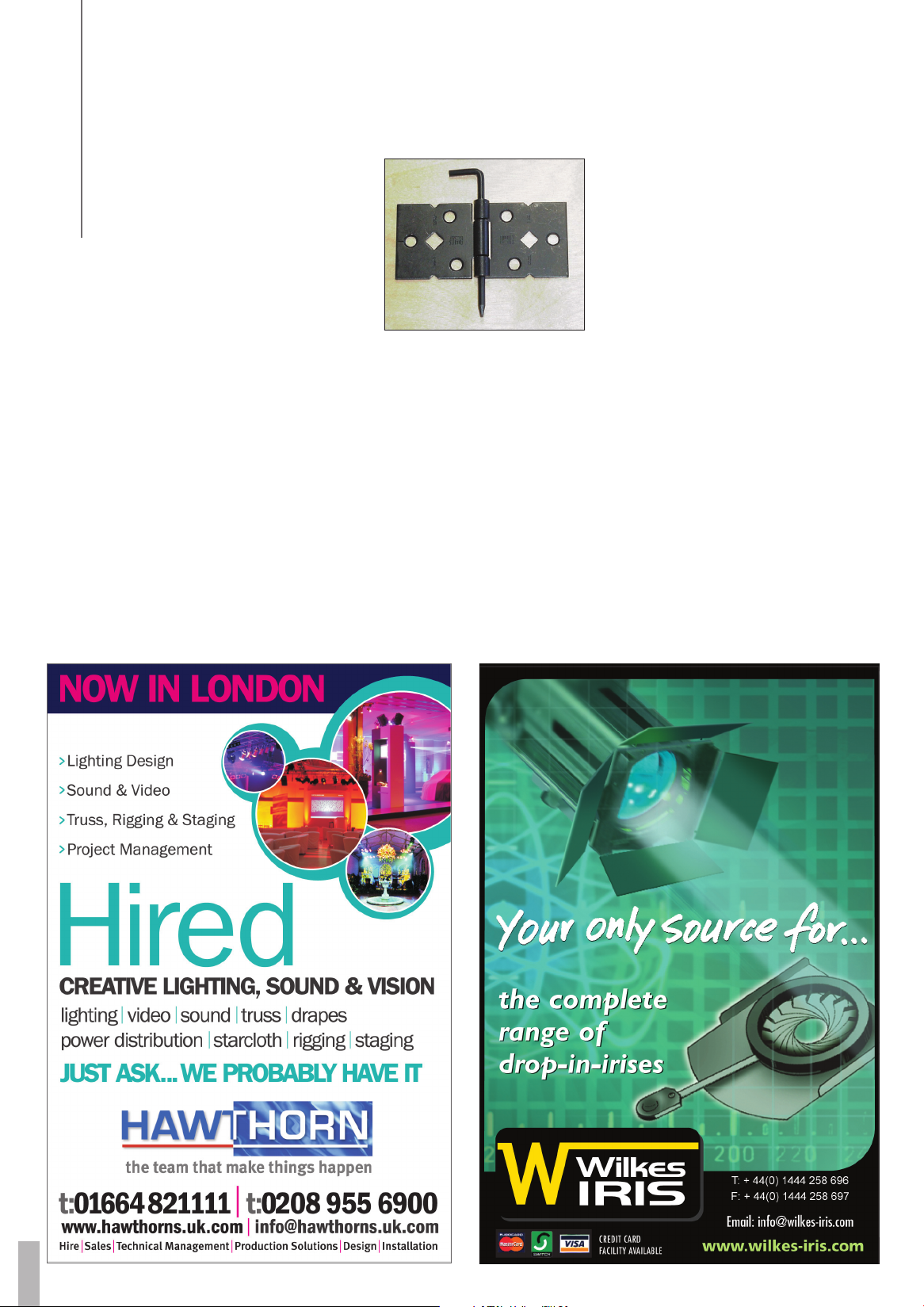
The result was the Edelstein Engineering Pin
Hinge. Edelstein improved just about everything:
he added a centre line notch for positioning the
hinges to pencil marks; alignment marks for
bending the flaps in half or cutting them down;
a central square bolt hole in addition to the screw
holes - these offset to avoid splitting the timber;
a black finish; high quality engineering giving a
precise alignment between the flaps - and a thick
steel pin with a sharpened end for easy fitting, a right-angled top and as he puts it - “enough strength that you can belt it with a hammer to
bring two pieces of warped scenery together.”
The new Pin Hinge was named Product of the Year on launch at ABTT
1984. The US market demanded a brand name: the hinge’s marking,
two Es for ‘Edelstein Engineering’ with ‘England’ stamped underneath
gave ‘TripleE’, and so the company gained the name that continues to
this day.
Wood is no longer the material of choice for all scenic construction, and
Edelstein notes that the use of steel and other materials means that the
Pin Hinge is not used as extensively as it was a decade ago.
Nonetheless, the company still sells around 50,000 a year around the
world. It’s a relatively small part of TripleE’s business - but it’s the
product that started the company, and they have no plans to stop
making it any time soon.
>>>>>>
www.3-eee.com/pin hinge.htm
Lighting&Sound
-
October 2007
30
www.lsionline.co.uk
industrynews
••••••
Classic Gear:
The Triple E Pin Hinge
Rob Halliday takes a nostalgic but instructive look back at the tools that have shaped the industry . . .
Left: The triple E Pin Hinge.
 Loading...