

Page 1
(406)755-4258
(406)257-2711
www.timberlinetool.com
90 Conesto
g
a Ct. Kalispell, MT 59901 USA
Instruction
Manual
Model TR170
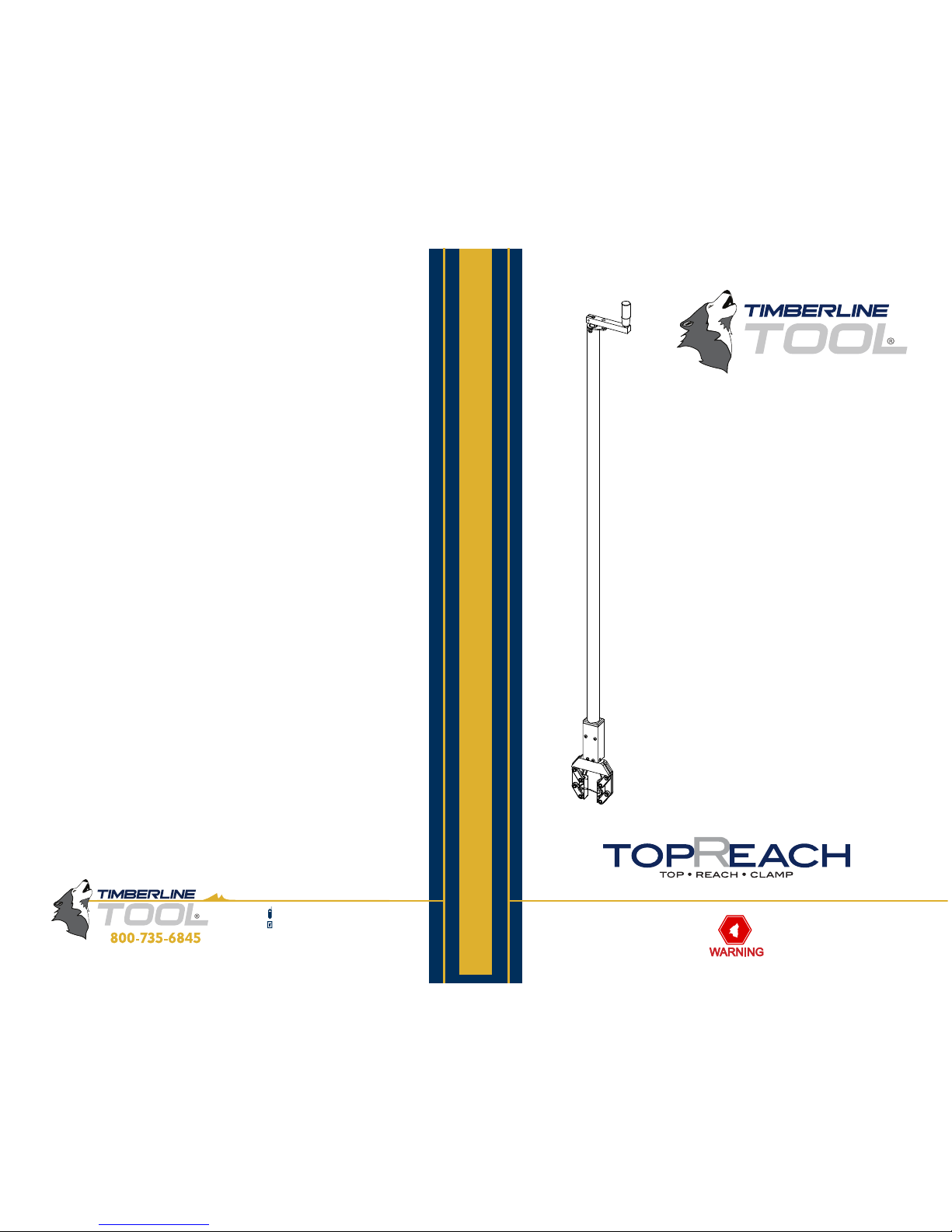
TopReach Clamp
SAVE these instructions
for future reference.
For your personal safety
READ and UNDERSTAND
instructions before using tools.
Page 2
© 2008 Timberline Tool All Rights Reserved.
2
SPECIFICATIONS
Table 1 : Squeeze-o Tool for 1/2” to 1” IPS (15mm - 25mm) and
1/2” to 1 1/4” CTS (15mm - 31.75mm) PE Pipe *
Table 2 : Rate of Closure
Pipe Size
# of Revo-
lutions to
Close
Maximum # of
Revolutions per
minute to Close per
ASTM Specifi cations
Revolu-
tions per
second
1/4" CTS 42 168 2.8
1/2" CTS 42 84 1.4
1/2" IPS 42 84 1.4
1/2" SIDR 42 84 1.4
3/4" CTS 42 56 .9
3/4" IPS 42 56 .9
3/4" SIDR 42 56 .9
1" CTS 42 42 .7
1" IPS 42 42 .7
1" SIDR 42 42 .7
1-1/4" CTS 42 33 .5
a
* Manufacturer reserves the right to change specifi cations without notice.
Length: 70.0 in 177.8 cm
Width: 5.3 in (at yoke)
6.0 in (at handle)
13.5 cm
15.3 cm
Thickness: 1.5 in 3.81 cm
Weight: 10.5 lb 4.77 kg
page intentionally left blank
TIMBERLINE TR170
11
Page 3

© 2008 Timberline Tool All Rights Reserved.
10
TIMBERLINE LIMITED WARRANTY
Warranty Poli c y
Every product manufactured by Timberline Tool is thoroughly inspected and tested before
leaving the factory. Our products are warranted to be free of defects from workmanship
and materials for the period of ONE YEAR from the date of original purchase. Should any
trouble develop with our tools, handles, or accessories during this one-year period please
call 800.735.6845 to obtain return authorization for repair. If inspection shows the trouble
is caused by defective workmanship or material, Timberline Tool will repair or, at our option,
replace the product without charge.
This Warranty does not apply where:
• Repairs have been made or attempted by others.
• Repairs are required because of normal wear and tear.
• The tool has been abused, misused, or improperly maintained.
• Alterations have been made to the tool.
IN NO EVENT SHALL TIMBERLINE TOOL BE LIABLE FOR ANY INDIRECT, INCIDENTAL
OR CONSEQUENTIAL DAMAGES FROM THE SALE OR USE OF THE PRODUCT. THIS
DISCLAIMER APPLIES BOTH DURING AND AFTER THE TERM OF THIS WARRANTY.
TIMBERLINE TOOL DISCLAIMS LIABILITY FOR ANY IMPLIED WARRANTIES, INCLUDING IMPLIED WARRANTIES OF “MERCHANTABILITY” AND “FITNESS FOR A SPECIFIC
PURPOSE,” AFTER THE ONE-YEAR TERM OF THIS WARRANTY.
This Warranty gives you specifi c legal rights, and you may also have other rights which
vary from state to state. Some states do not allow the exclusion or limitation of incidental or
consequential damages, so the above limitation or exclusion may not apply to you. Some
states do not allow limitation on how long an implied warranty lasts, so the above limitation
may not apply to you.
GENERAL SAFETY RULES
For all Tools
READ and UNDERSTAND all instructions. Failure to follow all instructions listed
below may result in serious personal injury and/or damage to the tool.
The following ASTM standards provide guidance and requirements for squeeze-off
tools, operating procedures, and qualifi cation procedures.
• ASTM F1041, “Standard Guide for Squeeze-off of Polyolefi n Gas Pressure
Pipe and Tubing”
• ASTM F1563, “Standard Specifi cation for Tools to Squeeze-Off Polyethylene
(PE) Gas Pipe or Tubing”
• ASTM F1734, “Standard Practice for Qualifi cation of a Combination of Squeeze
Tool, Pipe, and Squeeze-Off Procedures to Avoid Long-Term Damage in Polyethylene (PE) Gas Pipe”
* The SDR is the ratio of pipe diameter to wall thickness. SDR can be be expressed
as SDR = D/s where D = pipe outside diameter and s = pipe wall thickness.
TIMBERLINE TR170
3
INTRODUCTION
Timberline squeeze-off tools are designed to temporarily stop the pressurized fl ow of
liquid or gas in polyethylene (PE) pipe.
Squeeze-off is a technique used to control the fl ow of gas or liquid in polyethylene
pipe by compressing the pipe between parallel bars until the inside surfaces make
contact. The fl exibility and toughness of most polyethylene pipes allow the pipe to
recover from a properly made squeeze-off without a measurable loss in service life.
Squeeze-off is useful for making installation tie-ins and emergency repairs.
Timberline squeeze-off tools are made from high strength aluminum for superior
durability and will not bend or break under normal use. However, care must be taken
to ensure that the pipe is free of foreign material and the slap on jaw matches the
diameter and wall thickness / SDR of the pipe to be squeezed. *
Please read the following suggested procedure for squeezing off polyethylene plastic
pipe using Timberline Squeeze-off Tools.
Page 4
© 2008 Timberline Tool All Rights Reserved.
4
SAFETY INSTRUCTIONS
SAVE THESE FOR FUTURE REFERENCE
Static Electricity Safety
Use a proper grounding rod at all times to insure personal safety.
PE pipe is a relatively low conductor of electricity. As a result PE
pipe does build up a static charge when it is in gas service due to
the gas fl ow on the inside of the pipe. During squeeze-off a larger amount of static
charge builds up.
In addition to the potential for pipe damage due to static discharge, the build up
of a static charge represents an ignition source. Timberline Tool recommends
that you follow all of your company grounding techniques and that all personnel
involved in squeeze-off operations receive training on those grounding procedures
so that they understand the hazards involved.
Workpla c e Saf e t y
Prior to using any squeeze-off tool, consult ASTM Standards F104102, F1563-01 and F1734-03.
Always follow applicable company and OSHA safety procedures.
Observe pipe manufacturers’ recommendations and precautions for squeeze-off of
polyethylene pipe, exercising particular caution when leaking gas is present.
Safety fi rst. Timberline squeeze-off tools must be used by qualifi ed, trained per-
sonnel only and must never be left on the pipe unattended. Refer to pipe manufacturers’ recommendations for locating squeeze-off distances from fi ttings and joints.
Personal Safety
Stay Alert, watch what you are doing, and do not use tools while
tired or under the infl uence of narcotics, alcohol, or medication.
Use proper clothing, eye protection, and safety equipment when
using squeeze-tools.
A moment of inattention while operating squeeze-off tools may result in personal injury.
Store idle tools out of reach of children and other untrained persons.
TIMBERLINE TR170
9
SERVICE
1. Clean the tool with a mild detergent after each
use.
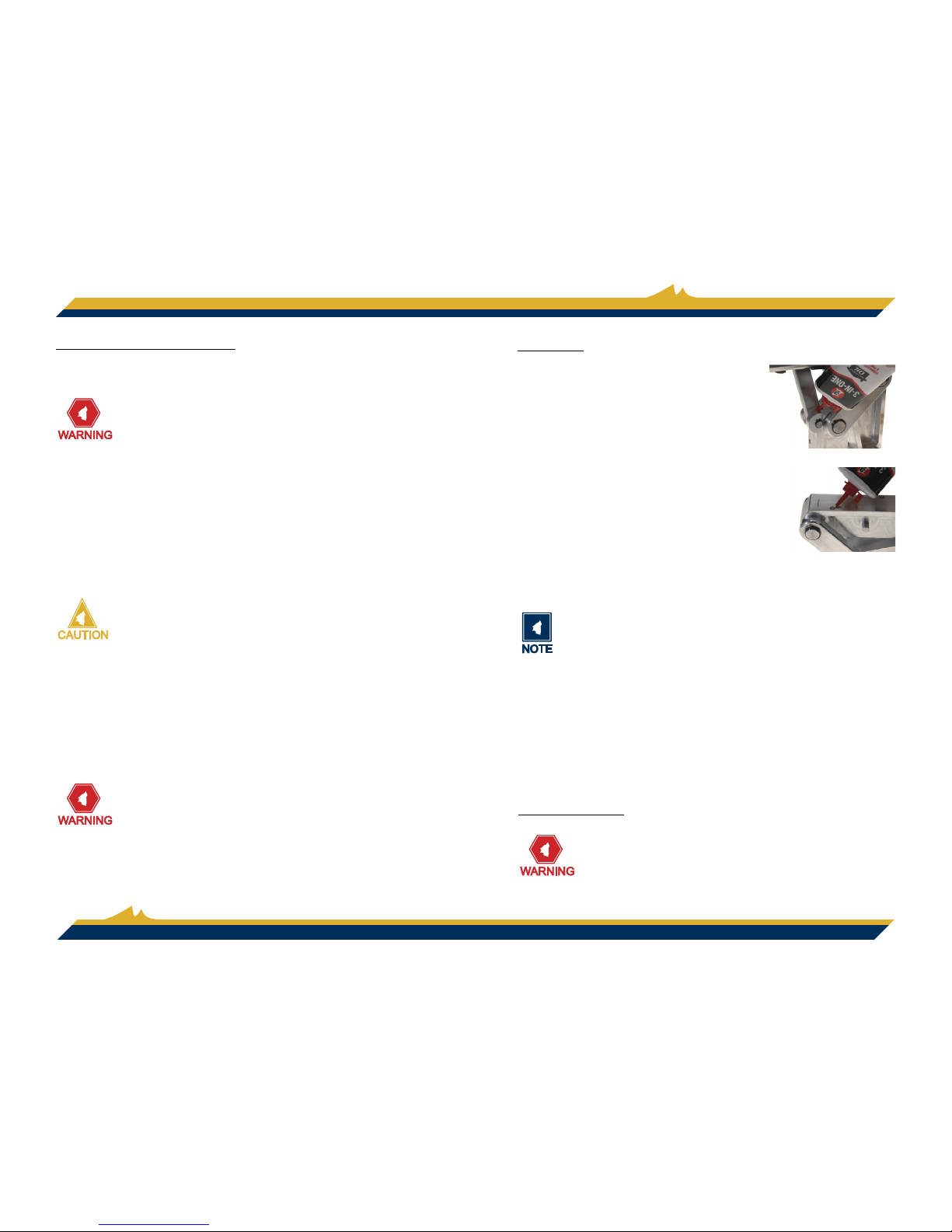
2. Lubricate the pins and bushings with light oil if
the tool is diffi cult to open and close. (
Fig 8 & 9)
3. Keep the Rotating Handles free of debris to
avoid interference during assembly.
4. Test and calibrate the tool at least once a year
by measuring the gap of the tool, measuring
the tips of the yoke, and or performing a test
squeeze on a piece of pipe.
If you have questions, please feel free to
contact our customer service representatives at 1-800-735-6845 or by email at
[email protected].
ACCESSORIES
Any accessories or attachments recommended for use with your
Timberline Tool are specifi ed in this manual. The use of any other
accessories or attachments might present the risk of injury. Only
use accessories or attachments for their stated purpose.
Fig 8
Fig 9
Page 5
© 2008 Timberline Tool All Rights Reserved.
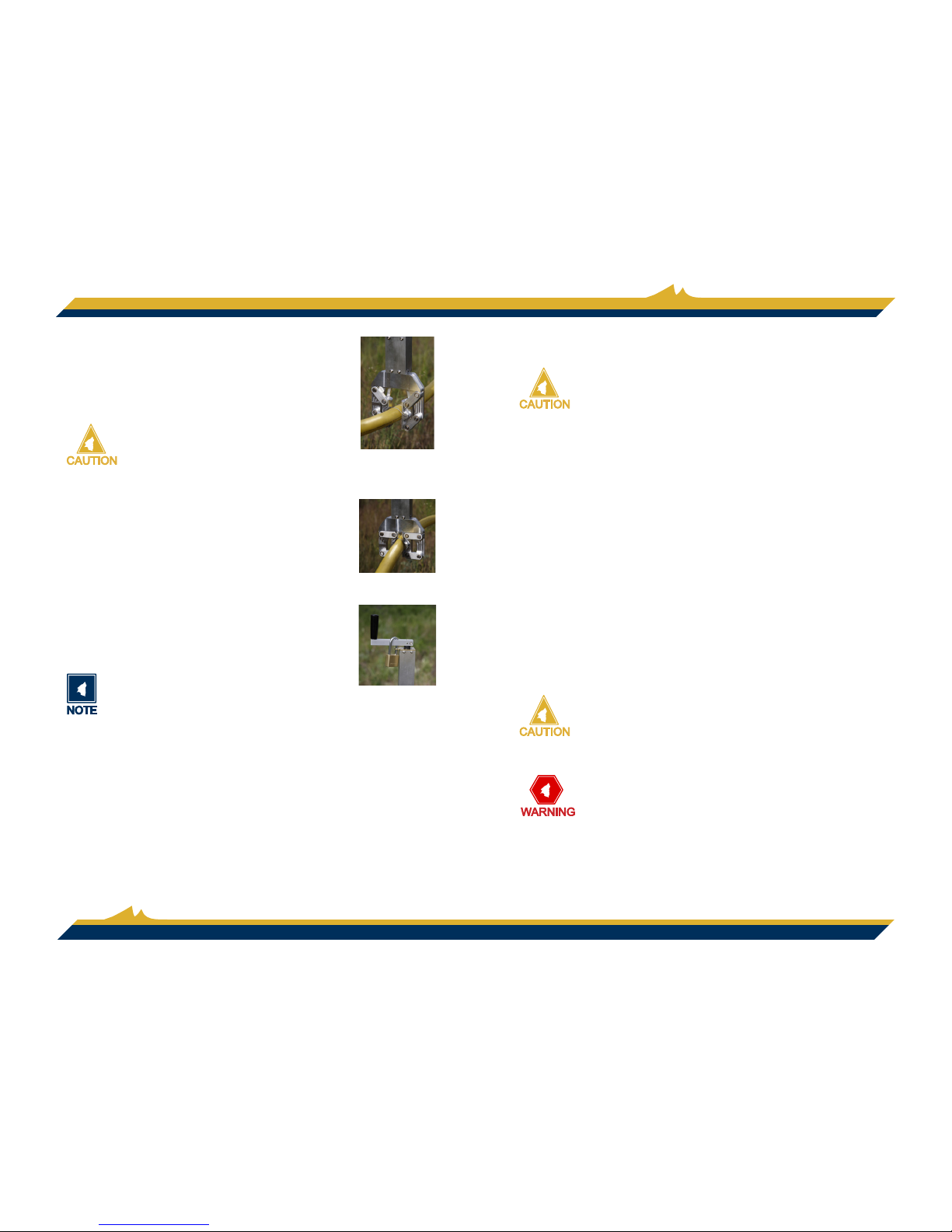
1. Lower the TR170 onto the pipe until the cable is resting
on the pipe. The cable keeps the pipe centered in the
jaws. It is best if the tool is perpendicular. (
Fig 5)
2. Turn the Rotating Handle (A1) clockwise
to squeezed-off at a rate of 5 revolutions/
minute. (
Fig 6)
3. A padlock for lock-out/tag-out may be placed through
the Handle and tab to prevent accidental
release. (
Fig 7)
4. Once it is safe to release the tool, remove any lock-out/
tag-out devices.
5. To remove the tool from the pipe turn the
Rotating Handle counter clockwise at half the closing rate until the cables are taught or the tool hits its’
mechanical stops, per ASTM specifi cations.
8
Fig 5
Fig 7
Fig 6
TIMBERLINE TR170
5
Speci c Tool Safety
If you have used other Timberline products please be aware that the
operation of this tool may differ from others and that you may need
to follow different rules. Always consult the manual to insure you are
following the correct safety instructions to avoid personal injury.
Tool Usage Safety
Do not force the tool to perform a squeeze-off. The tool will operate safer and better if
the rate of squeeze in these instructions is followed.
Maintain the tool with care. A properly maintained tool will be less likely to cause
damage and is easier to control.
Check for misalignment, binding of parts, breakage of parts, and other conditions
that might affect the operation of the tool. Accidents may be caused by improperly
maintained tools.
Use only the accessories, slap-on jaws, or extension handles that correspond to your
product. Accessories specifi c for one tool may be hazardous if used on a different
tool.
Failure to use the TR170 in the manner specifi ed in this manual may result in injury
and/or permanent damage to the tool.
This tool complies with ASTM F1563-01.
Always make sure to use the slap-on jaw that corresponds to the
pipe size and SDR or wall thickness of the pipe to be squeezed-off.
Tool Service Safety
Tool service must only be performed by qualifi ed repair personnel.
Service or maintenance performed by unqualifi ed personnel could
result in a risk of injury.
Page 6
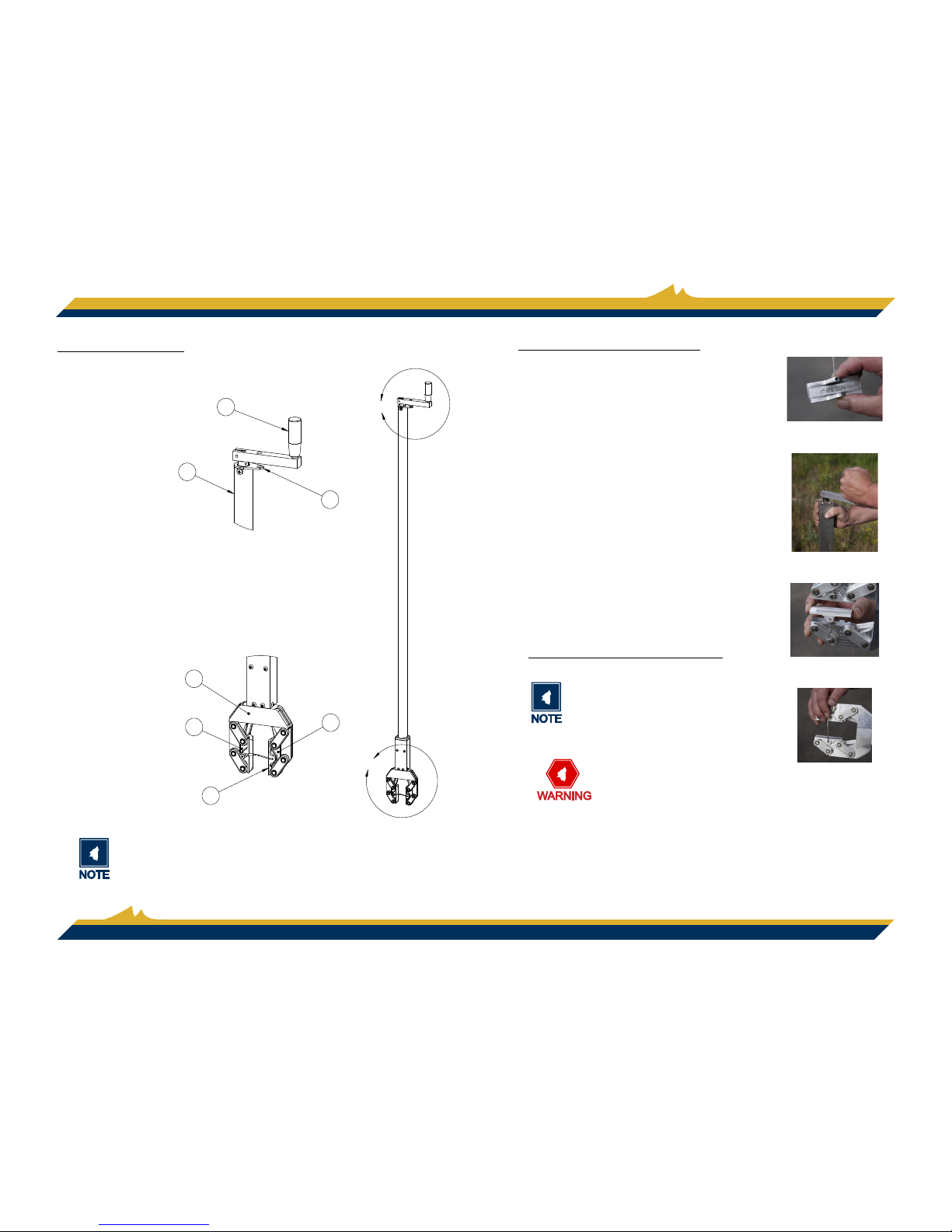
© 2008 Timberline Tool All Rights Reserved.
Familiarize yourself with all parts, names, and numbers. Refer to this
diagram for the assembly and operation procedures that follow.
TR170 DIAGRAM
A1 – Handle
A2 – Outer Tube
A3 – Lock Out/Tag Out Tab
B1 – Bearing House
B2 – Fixed Jaw
B3 – Slap-On Jaw Post
B4 – Slap-On Jaw
$
$
$
'(7$,/$
$
%
%
%
%
%
'(7$,/%
6
ASSEMBLY PROCEDURE
1. Remove the Slap-On Jaw (B4) from the case. (Fig 1)
2. Turn the Handle counterclockwise to open the tool
until it stops.
(Fig 2)
3. Attach the Slap-On Jaw (B4) to the Slap-On Jaw
Post (B3). (
Fig 3)
4. Attach the cable to the Fixed Jaw Post (B2). (Fig 4)
OPERATING PROCEDURE
Remember this is only a recommended
procedure for a safe and effective
squeeze-off. Always follow your specifi c
company safety rules when working
around natural gas.
• If the cables are tight and
the clamp is dropped on the
pipe the cables will break.
• Make sure the pipe is clear of
any debris, rock, dirt, etc.
TIMBERLINE TR170
7
Fig 1
Fig 2
Fig 3
Fig 4
 Loading...