

Page 1
WINE COOLER
RW044M
User Manual
HU
ENG
Product images are for illustrative purposes only and may differ from the actual product.
Page 2
ENG
SAFETY WARNINGS
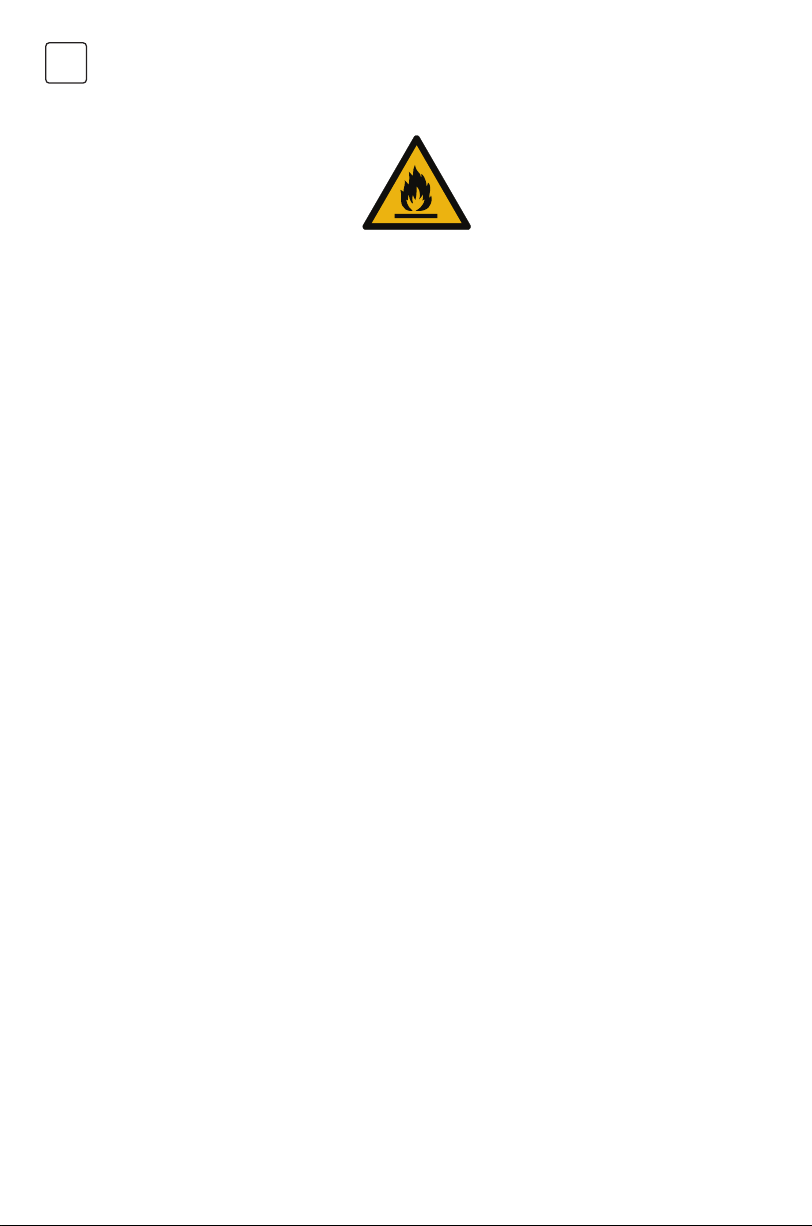
WARNING: Risk Of Fire / Flammable Materials
• THIS appliance is intended to be used in
household and similar applications such as
staff kitchen areas in shops, offices and other
working environments; farm houses and by
clients in hotels, motels and other residential
type environments; bed and breakfast type
environments; catering and similar non- retail
applications.
• THIS appliance is not intended for use by
persons (including children) with reduced
physical, sensory or mental capabilities, or lack
of experience and knowledge, unless they
have been given supervision or instruction
concerning use of the appliance by a person
responsible for their safety.
• CHILDREN should be supervised to ensure
that they do not play with the appliance.
• IF the supply cord is damaged, it must be
replaced by the manufacturer, its service agent
or similarly qualified persons in order to avoid
a hazard.
• DO not store explosive substances such as
aerosol cans with a flammable propellant in
this appliance.
• THE appliance has to be unplugged after use
and before carrying out user maintenance on
the appliance.
• WARNING: Keep ventilation openings, in the
appliance enclosure or in the built-in structure,
clear of obstruction.
• WARNING: Do not use mechanical devices
or other means to accelerate the defrosting
process, other than those recommended by
the manufacturer.
• WARNING: Do not damage the refrigerant
circuit.
• WARNING: Do not use electrical appliances
inside the food storage compartments of
the appliance, unless they are of the type
recommended by the manufacturer.
• WARNING: Please abandon the refrigerator
according to local regulators for it use
flammable blowing gas and refrigerant.
• WARNING: When positioning the appliance,
ensure the supply cord is not trapped or
damaged.
• WARNING: Do not locate multiple portable
socket-outlets or portable power supplies at
the rear of the appliance.
• DO not use extension cords or ungrounded
(two prong) adapters
• DANGER: risk of child entrapment. Before you
throw away old refrigerator or freezer:
- Take off the doors
- Leave the shelves in place so that children
may not easily climb inside
• The refrigerator must be desconnected
from the source of electrical supply before
attempting the installation of accessory
• REFRIGERANT and cyclopentane foaming
material used for the appliance are flammable.
Therefore, when the appliance is scrapped, it
shall be kept away from any fire source and be
recovered by a special recovering company
with corresponding qualification other than
be disposed by combustion, so as to prevent
damage to the environment or any other harm.
• THE necessity that, for doors or lids fitted with
locks and keys, the keys be kept out of the
reach of children and not in the vicinity of the
refrigerating appliance, in order to prevent
children from being locked inside.
• FOR EN standard: This appliance can be used
by children aged from 8 years and above
and persons with reduce physical sensory
or mental capabilities or lack of experience
and knowledge if they have been given
supervision or instruction concerning use of
the appliance in a safe way and understand the
hazards involved. Children shall not play with
the appliance. Cleaning and user maintenance
shall not be made by children without
supervision. Children aged from 3 to 8 years
are allowed to load and unload refrigerating
appliances.
• FOR a freestanding appliance: this
refrigerating appliance is not intended to be
used as a built-in appliance
• FOR wine storage appliances: this appliance is
intended to be used exclusively for the storage
of wine.
• ANY replacement or maintenance of the
LED lamps is intended to be made by the
manufacturer, its service agent or similar
qualified person.
2
Page 3
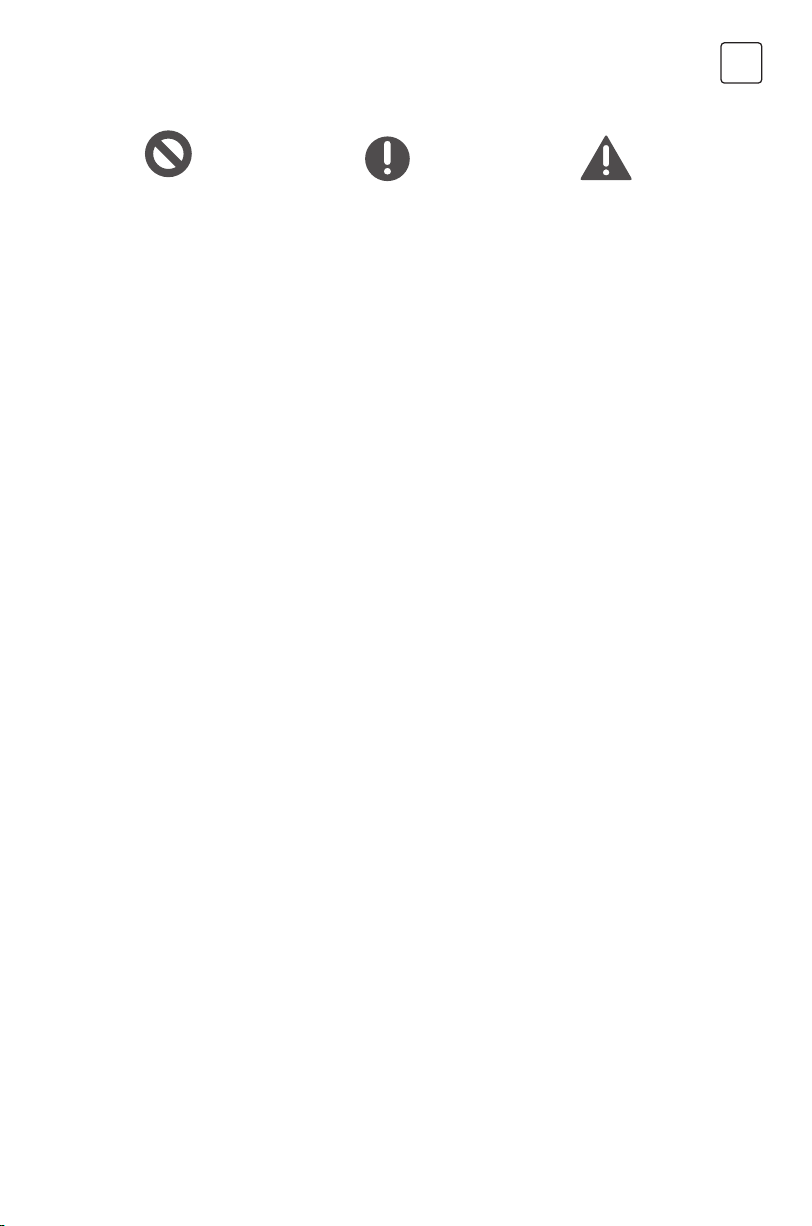
Meaning of safety warning symbols
ENG
This is a prohibition symbol.
The symbols indicate
prohibited matters, and those
behaviors are forbidden.
Non-compliance with the
instructions may result in
product damages or endanger
the personal safety of users.
This is a warning symbol.
The symbols indicate matters
that must be followed, and those
behaviors must be strictly executed in
line with the operation requirements.
Non-compliance with the instructions
may result in product damages or
endanger the personal safety of users.
Electricity related warnings
• Do not pull the power cord when pulling the
power plug of the wine cooler. Please firmly
grasp the plug and pull out it from the socket
directly.
• Do not damage the power cord under any
condition so as to ensure safety use, do not use
when the power cord is damaged or the plug
is worn.
• Worn or damaged power cord shall be
replaced in manufacturer-authorized
maintenance stations.
• The power cord should be firmly contacted
with the socket or else fires might be caused.
Please ensure that the grounding electrode of
the power socket is equipped with a reliable
grounding line.
• Please turn off the valve of the leaking gas and
then open the doors and windows in case of
leakage of gas and other flammable gases.
Do not unplug the cooler and other electrical
appliances considering that spark may cause
a fire.
• To ensure safety, it is not recommended that
to place socket, regulators, rice cookers,
microwave ovens and other appliances at the
top of the wine cooler, those recommended by
the manufacturer are not included. Do not use
electrical appliances in the food pantry.
Related warnings for use
• Do not arbitrarily disassemble or reconstruct
the wine cooler , nor damage the refrigerant
circuit; maintenance of the appliance must be
conducted by a specialist.
• Damaged power cord must be replaced by the
manufacturer, its maintenance department or
related professionals in order to avoid danger.
• The gaps between wine cooler door and wine
cooler body are small, be noted not to put your
hand in these areas to prevent from squeezing
the finger. Please be gentle when close or open
This is a Note symbols.
The symbols indicate matters
to pay attention to, and these
behaviors shall be specially
noted. Due precautions are
needed or minor or moderate
injuries or damages of the
product will be caused.
the wine cooler door to avoid falling articles.
• Do not give package and other components
to children to play. The bending board and
plastic film may lead to suffocation! Do not
allow children to enter or climb the wine cooler
to prevent that children are sealed in the wine
cooler or children are injured by the falling
cooler.
• Do not spray or wash the cooler; do not put the
cooler in moist places easy to be splashed with
water so as not to affect the electrical insulation
properties of the cooler.
• Do not use the wine cooler body, wine cooler
door, etc. as pedal or support.
• Do not place heavy objects on the top of the
cooler considering that objects may fall when
open or close the door, and accidental injuries
might be caused.
• Please pull out of the plug in case of power
failure or cleaning. Do not connect the cooler
to power supply within five minutes to prevent
damages to the compressor due to successive
starts.
Warnings related to placing
items
• Do not put flammable, explosive, volatile
and highly corrosive items in the wine cooler
to prevent damages to the product or fire
accidents.
• Do not place flammable items near the wine
cooler to avoid fires.
• This product is household cooler and this
equipment can only be used for the storage of
wine. According to the standard requirements,
household cooler shall not be used for other
purposes, such as storage of blood, drugs or
biological products.
3
Page 4
ENG
Warnings for energy
1. Wine cooler might not operate consistently
when sited for an extended period of
time below the cold end of the range of
temperatures for which the cooler appliance
is designed.
2. The need to not exceed the storage time(s)
recommended by the wine manufacturers for
any kind of wine.
Warnings related to disposal
Refrigerant and cyclopentane foaming material used for the wine cooler are flammable.
Therefore, when the wine cooler is scrapped, it shall be kept away from any fire source and be
recovered by a special recovering company with corresponding qualification other than be
disposed by combustion, so as to prevent damage to the environment or any other harm.
When the wine cooler is abandoned, please remove the door of the wine cooler, when removing
the doorbody, pay attention to prevent pinching hands, and remove the door seal and shelves,
put the door and shelves in a suitable position, so that children will not enter to play and have an
accident.
Correct Disposal of this product
This marking indicates that this product should not be disposed with other household
wastes throughout the EU. To prevent possible harm to the environment or human health
from uncontrolled waste disposal, recycle it responsibly to promote the sustainable reuse
of material resources. To return your used device, please use the return and collection
systems or contact the retailer where the product was purchased. They can take this
product for environmental safe recycling.
3. The precautions necessary to prevent an
undue rise in the temperature of the wine
while defrosting the wine cooler.
4. The fact that a rise in temperature of the wine
during manual defrosting, maintenance or
cleaning could shorten the storage life.
4
Page 5
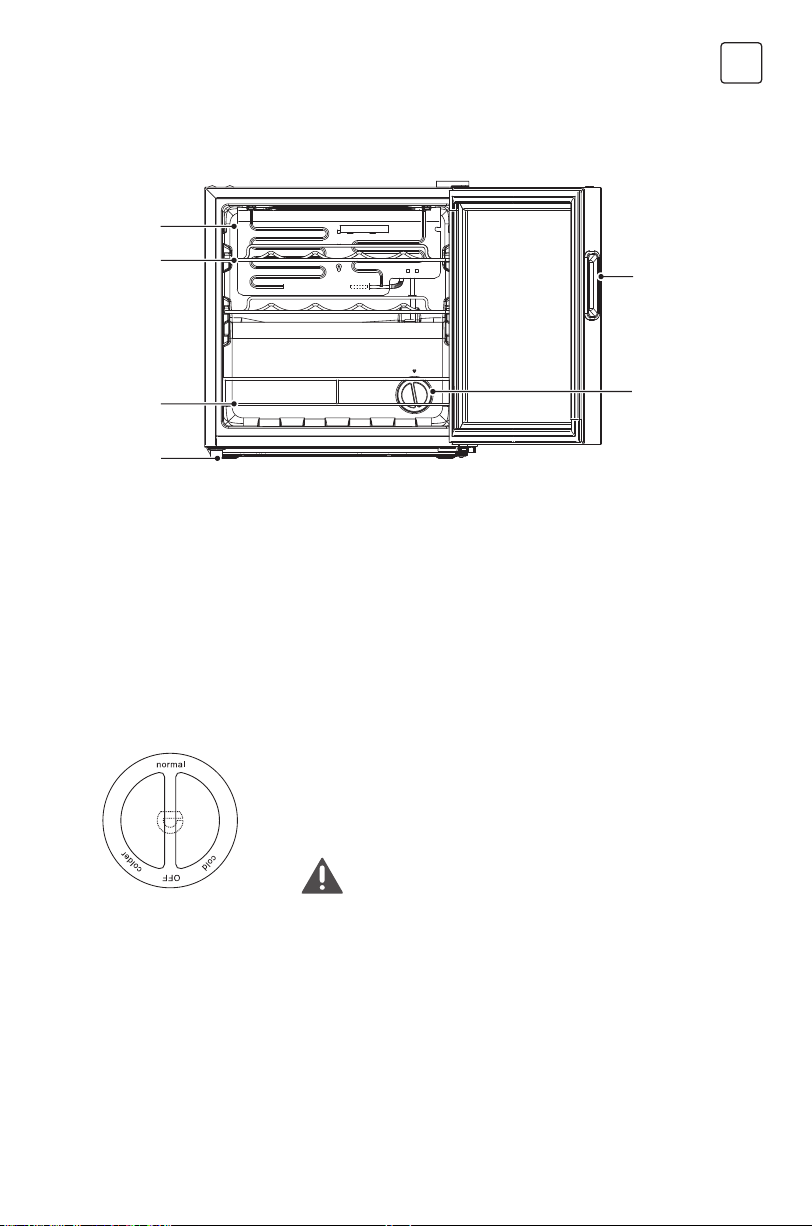
PROPER USE OF THE WINE COOLER
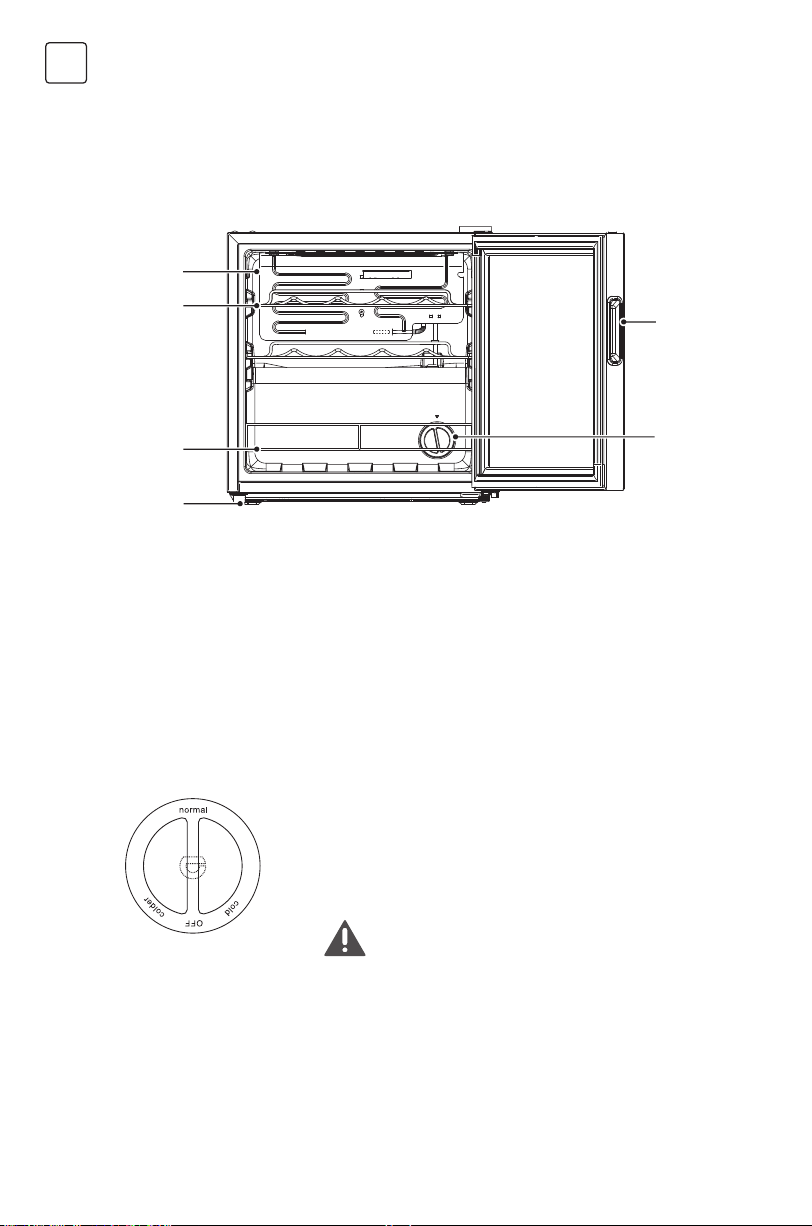
Names of components
Refrigerator
rollbond
evaporator
Shelf
ENG
Door Handle
Steel column
strip
Levelling
foot
( The picture above is only for reference. The actual configuration will depend on the
physical product or statement by the distributor)
• The product is most energy efficient when the shelves are placed in their original position.
• Internal humidity range from 50% to 80% for wine storage compartment For EU
• The temperature in the wine cooler is 5-18ºC, only used to store unopened bottled wine (red wine,
white wine, rose wine).
• Do not place food in the wine cooler to prevent bacterial contamination.
• Please keep the interior of the wine cabinet dry, please drink Bottled wine during the validity period.
Thermostat
knob
Temperature Control
• After power on the wine cooler, it can turn the thermostat knob
to set the inside temperature level, “Cold” is the warmest setting.
“Colder” is the coldest setting. “OFF” means stop cooling.
• Recommended gear: “normal”
The setting range of centigrade temperature is 5ºC~18ºC
and the setting range of Fahrenheit temperature is 41ºF-64°F.
( The picture above is only
for reference. The actual
configuration will depend
on the physical product or
statement by the distributor)
5
Page 6
ENG
Placement
• Before using the wine cooler, remove all
packaging materials including bottom cushions
and foam pads and tapes inside the cooler,
tear off the protective film on the door and the
cooler body.
• Avoid direct sunlight and heat sources such as
stove, heating radiator, etc.
• The wine cooler is placed in a well- ventilated
indoor place; the ground shall be flat, and
sturdy (rotate left or right to adjust the feet for
levelling if unstable).
• The top space of the wine cooler shall be
greater than 30cm,and the distances from both
sides and backside shall be more than 10cm to
facilitate heat dissipation.
• This wine cooler needs to be installed
independently and cannot be used as a built-in.
Otherwise, it will cause problems such as failure
to install into the cabinet, the performance
and life of the product are reduced. And the
manufacturer does not provide basic product
warranty.
Start to use
• After transportation, please let the wine cooler
stay for more than 2 hours before turning on
the power, otherwise it will lead to a decrease
in cooling capacity or a damage to the wine
cooler. The wine cooler shall stay for half an
hour before connecting power when it is firstly
started. Clean up the inner chamber before put
into use for first time .
• Please pull out plug in case of power failure or
cleaning. Do not connect the wine cooler to
power supply within five minutes to prevent
damages to the compressor due to successive
starts.
• In the process of compressor work, water
droplets or frost will be formed on the back
wall of the refrigerated compartment, which is a
normal phenomenon. After a period of time, the
frost will melt into water and flow into the water
tray to evaporate away.
• Do not connect cooler to electronic energy
saving plug and converter that can convert DC
into AC (E.g.: solar energy system, ship grid).
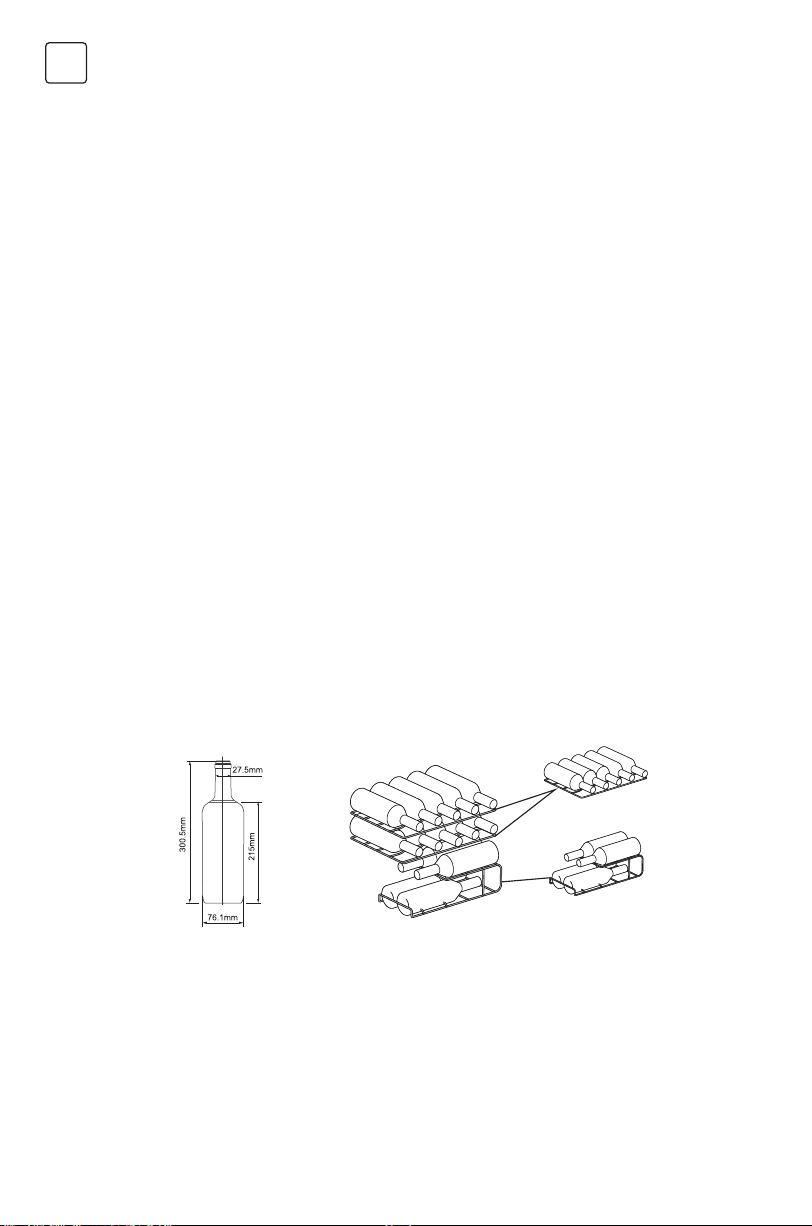
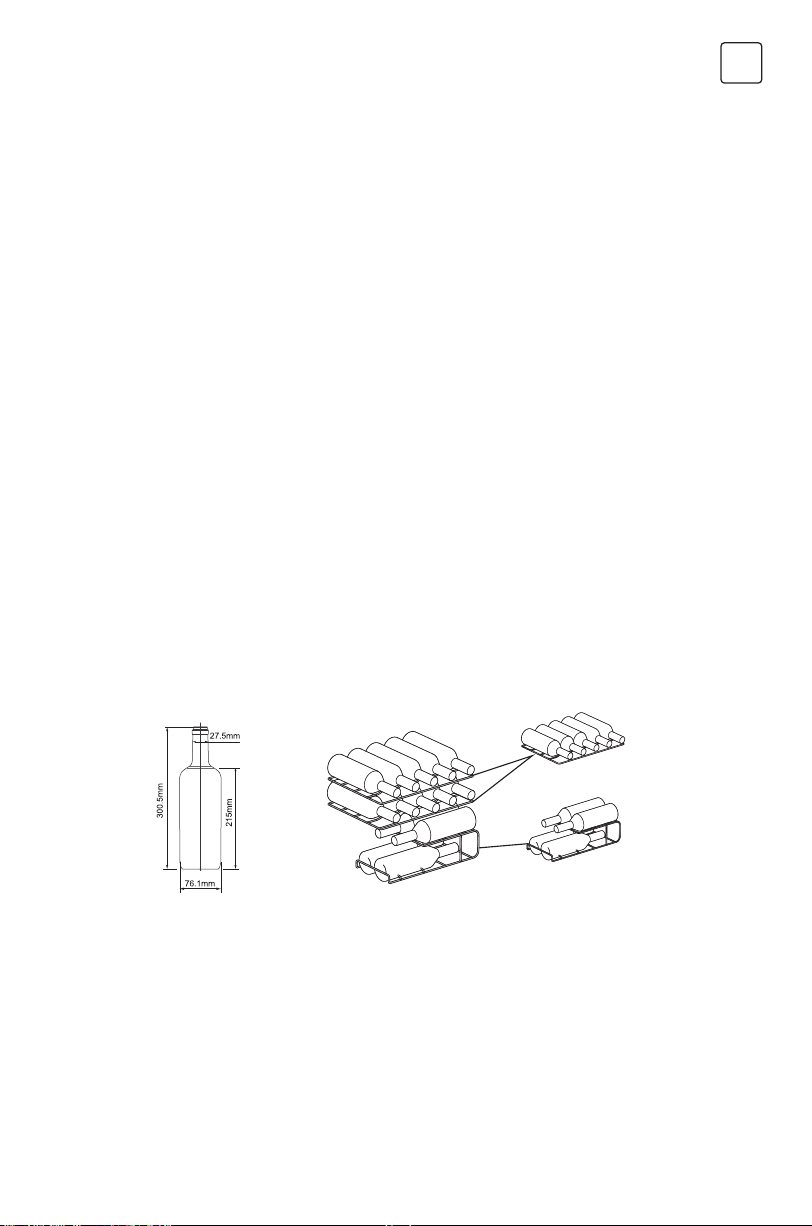
The arrangement of bottle
• Do not let bottle touch the back side of wine cooler in order to maintain good air circulation in the wine
cooler.
• The capacity for bottle storage in the wine cabinet (Fig.2) is based on the following marked bottle size
(Fig.1) . Oversized bottle may have impact on the number of bottle storage in the wine cabinet.
• The recommended maximum bottling volume is 14 bottles, as Fig.2
Fig. 1 Fig. 2
( The picture above is only for reference. The actual configuration will depend on the physical product or
statement by the distributor)
6
Page 7
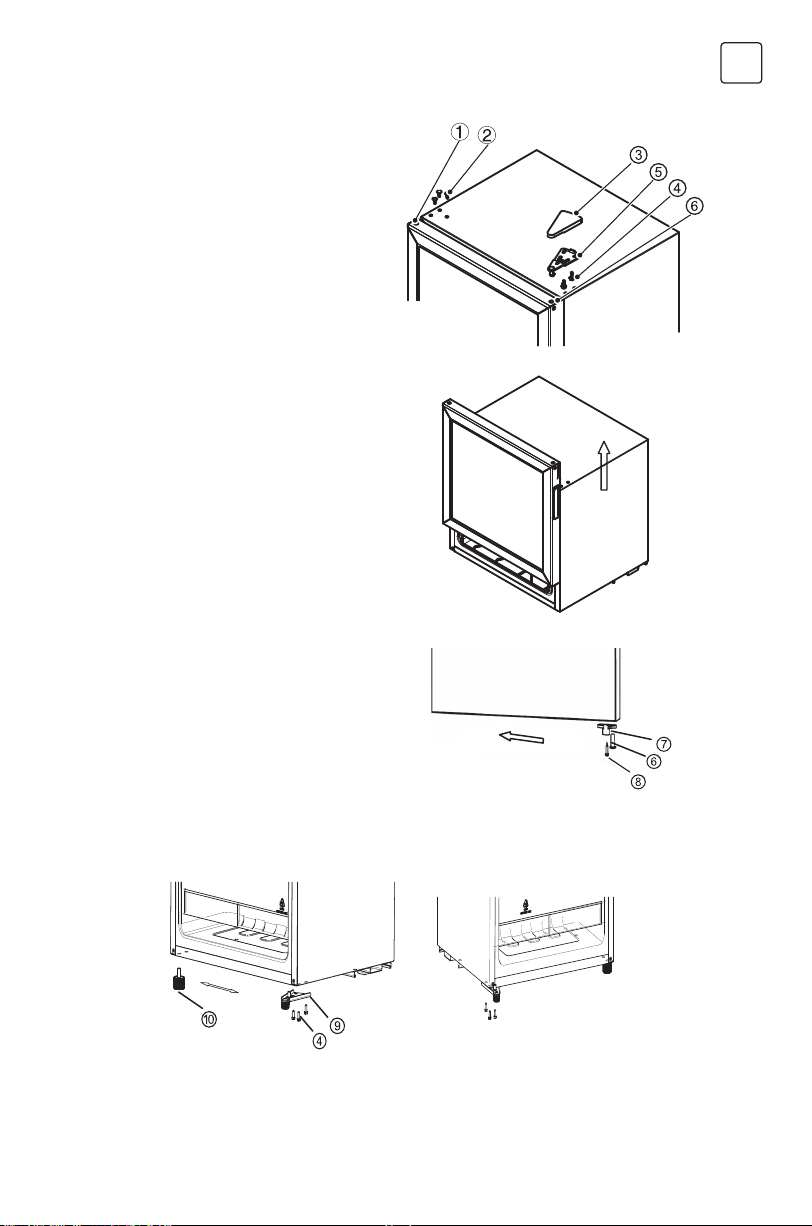
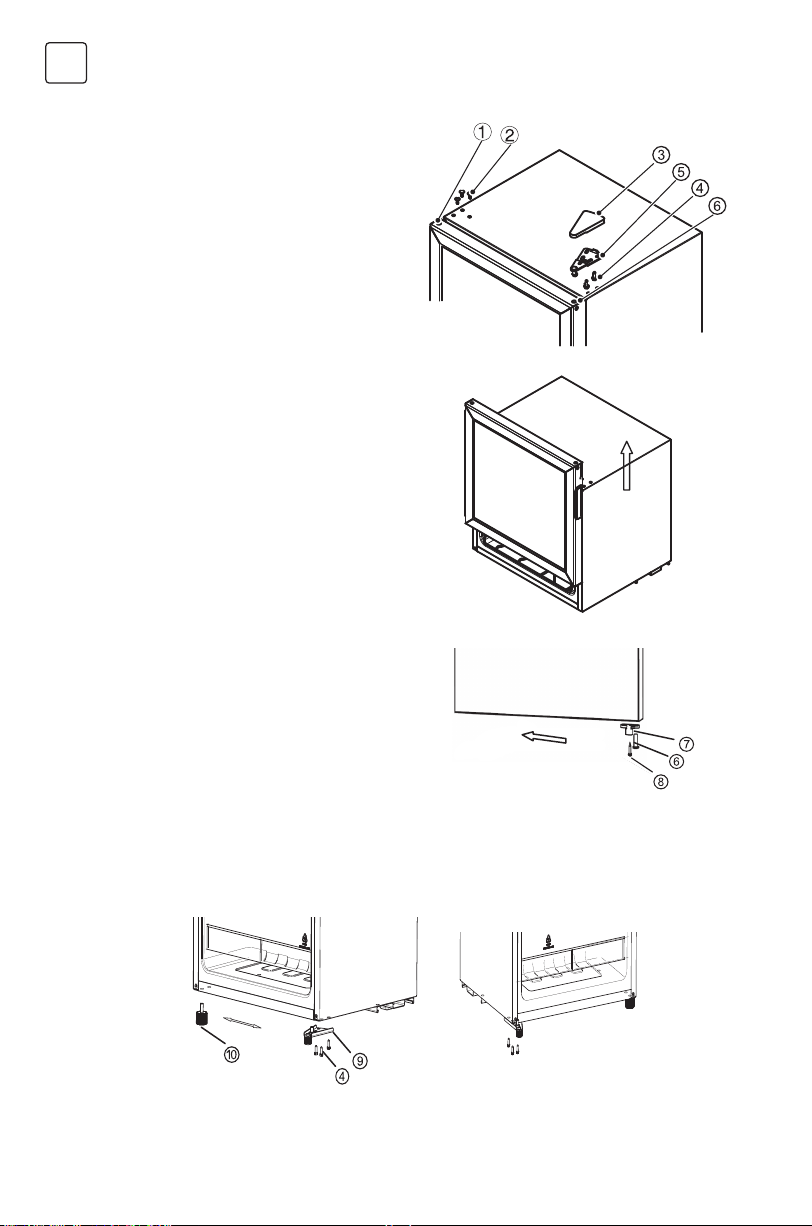
Reversing the door swing
1. Change the installation location of the upper
hinge (5) of the wine cooler , then the opening
direction of the door could be changed at will.
Please follow the following instructions for the
change of the opening direction of the wine
cooler’s door (for instance: from right-handed
door to left-handed door): close the glass
door of the wine cooler, use a blade to remove
the axle sleeve (1) and rivet (2) carefully, loose
the mounting cover (3) of the door hinge and
three positioning bolts (4) and remove the
upper hinge (5) and axle sleeve (6).
2. Open the door of the wine cooler and detach
the glass door of which with tremendous care.
ENG
3. Dismantle the door axle sleeve (6) at lower
part of the glass door, door stopper block
screws (8) and door stopper (7), and fix them
to left side.
4. Dismantle the levelling foot (10), positioning bolts (4) and lower hinge (9), then exchange the parts of
right and left sides and later use the reverse method to install the levelling foot and positioning bolts.
7
Page 8
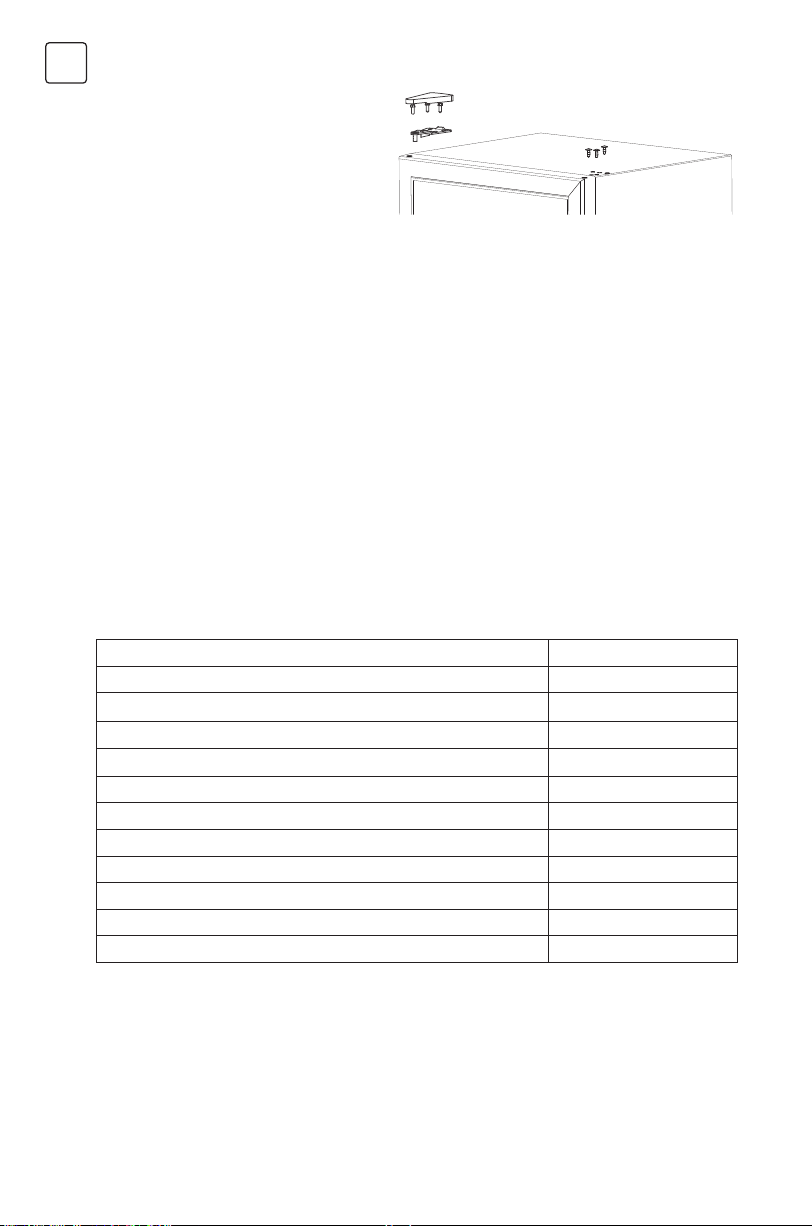
ENG
5. Put the aforesaid glass door on the lower
hinge, install the door axle sleeve (6) back
and fix the upper hinge (5). Align the door
with the cabinet and check the tightness of
gasket, and then install all the ornaments
(1) (2).
( The picture above is only for reference. The actual configuration will depend on the physical product or
statement by the distributor)
Practical skills for grape wine’s storage
• Da not store bottled wine by box or case in
refrigerator.
• The cork of the old bottle shall always be
soaked in the wine when putting into wine
cooler. Air space is not allowed between wine
and cork.
• Open-type bottle shelf is helpful, as it does
not cut off air circulation. The air moisture that
condensed on bottle can be dried out swiftly.
• The wine shall before drinking: Such as put
pink red wine onto the table 2-5 hours before
drinking and red wine 4-5 hours, then can
reach suitable serving temp. White wine, on
the contrary, can be served right on the table.
Champagne shall always be stored in cooler
and taken out only before drinking.
• Please notice that wine’s temperature is
always lower than ideal serving temp, as the
temperature will immediately rise 1 to 2 °C
when pouring into tumbler.
Serving temperature
The wine’s taste depends on right pouring temperature; therefore it determines its flavor.
We suggests the wine’s temperature reaches the following degree when pouring:
Wine Kinds Serving Tamp
Bordeaux red 18ºC
Louis Family dry red wine/Barolo 17ºC
Burgundy red/Bordeaux red 16ºC
Port 15ºC
Young Burgundy red 14ºC
Young red wine 12ºC
Young Beaujolais/all white wines with little residual sugar 11ºC
Old white wines/Chardonnay 10ºC
Sherry 9ºC
Young white wines from late vintage 8ºC
White wines Loire/Entre-deux-Mers 7ºC
Energy saving tips
• The Cooler shall be placed in room dry and ventilated. The cooler cannot be put under direct sunlight
or next to hear source ( such as radiator. stove, etc.). and a suitable insulation board shall be applied if
necessary.
• Try lo shorten opening lime of cooler’s door.
8
Page 9
MAINTENANCE OF THE WINE COOLER
Disconnect the wine cooler
Unplug power plug to disconnect the wine cooler.
Stop using the wine cooler
If the wine cooler left unused for a long time,
please:
1. Unplug the wine cooler;
2. Clean the wine cooler;
3. Keep the wine cooler door open.
Clean the wine cooler
• Dusts behind the wine cooler and on the
ground shall be timely cleaned to improve the
cooling effect and energy saving.
• Check the door gasket regularly to make sure
there are no debris. Clean the door gasket with
a soft cloth dampened with soapy water or
diluted detergent.
• The interior of the wine cooler should be
cleaned regularly to avoid odor.
• Please turn off the power before cleaning,
remove drinks ,shelves, etc.
• Use a soft cloth or sponge to clean the inside of
the wine cooler, with two tablespoons of baking
soda and a quart of warm water. Then rinse with
water and dry with a soft cloth. After cleaning,
open the door and let it dry naturally before
turning on the power.
• For areas that are difficult to clean in the
wine cooler (such as narrow sandwiches,
gaps or corners), it is recommended to wipe
them regularly with a soft rag, soft brush, etc.
and when necessary, combined with some
auxiliary tools (such as thin sticks) to ensure
no contaminants or bacterials accumulation in
these areas.
• Do not use soaps, detergents, spray cleaners,
etc. to clean the inside of your wine cooler as
these may create odors or contamination.
• Clean the shelves with a soft cloth dampened
with soapy water or diluted detergent. Then
rinse with water and dry with a soft cloth or dry
naturally.
• The wooden wine rack should not be directly
immersed in liquid to prevent cracking or mold
after moisture. The wooden wine rack is cleaned
with a dry soft cloth. The heavily contaminated
wooden wine rack should be cleaned with a soft
cloth that has been wrung out, and dry naturally.
• Wipe the outer surface of the wine cooler
with a soft cloth dampened with soap water,
detergent, etc., and then wipe dry. Do not rub or
scratch the surface of the glass door to prevent
the door from being broken or scratched.
• Do not use hard brushes, clean steel balls, wire
brushes, abrasives(such as toothpastes), organic
solvents (such as alcohol, acetone, banana
oil, etc.), boiling water, acid or alkaline items,
which may damage the wine cooler surface
and interior. Boiling water and organic solvents
such as benzene may deform or damage plastic
parts.
• Do not rinse directly with water or other liquids
during cleaning to avoid short circuits or affect
electrical insulation after immersion. Water
should not soak the operating control elements
and lighting system in the glass door.
ENG
9
Page 10
ENG
TROUBLESHOOTING
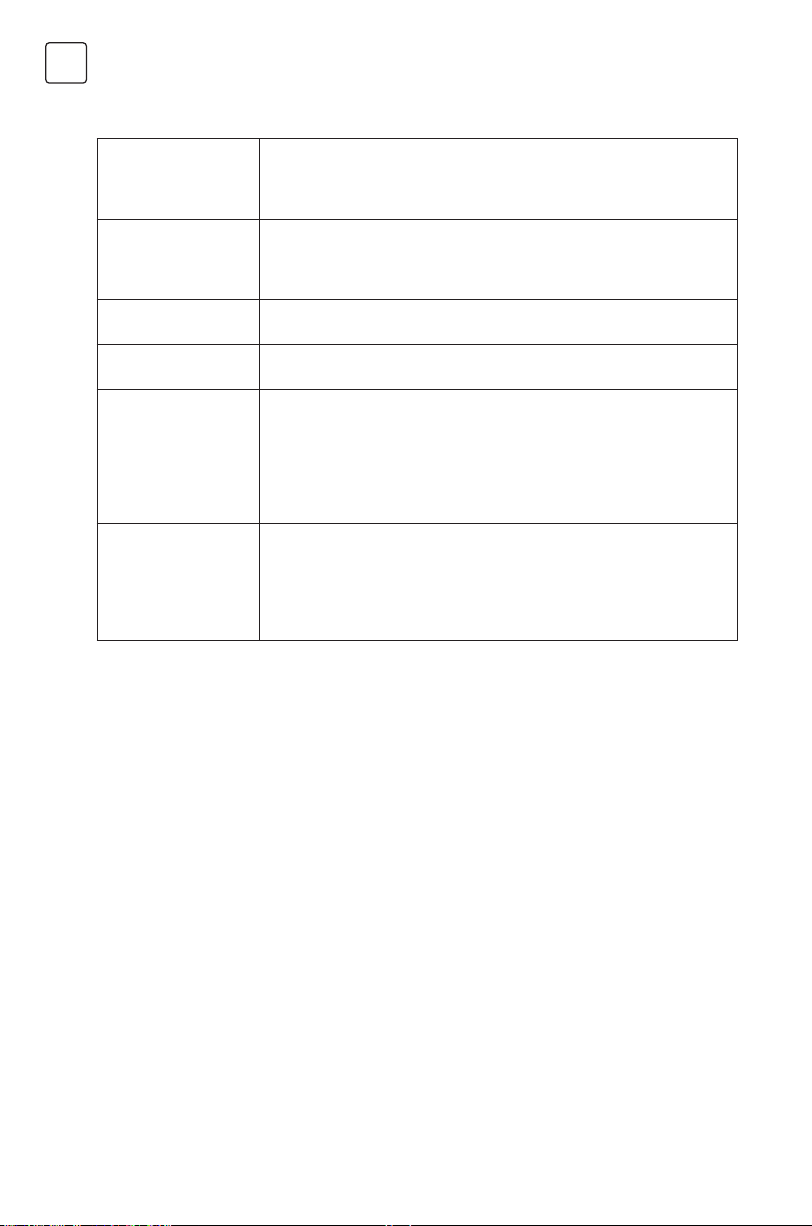
Whether the wine cooler is plugged and connected to power;
Not work
Long-term operation of
compressor
Light not work
Loud noises
Over heat on sidewall
Surface condensation
Airflow sound
Buzz
Clatter
Low voltage;
Whether temperature control knob is in the work area;
Failure power or tripping circuit.
It is normal that wine cooler operates for longer time in summer when the
ambient temperature is higher;
Do not put too much beverage s in the wine cooler at one time;
Frequent opening of wine cooler door.
Whether the wine cooler is connected to power, whether the indicator light
is damaged.
Whether the floor is flat, whether the placement of wine cooler is stable;
Whether the wine cooler accessories are properly placed.
The wine cooler enclosure may emit heat during running specially in
summer, this is caused by the radiation of the condenser, and it is a normal
phenomenon.
Condensation: condensation phenomenon will be detected on the exterior
surface and door seals of the wine cooler when the ambient humidity is
high, this is a normal phenomenon, and after wiping with towel, turns up the
set temperature of the appliance properly.
Refrigerants circulating in the refrigerant lines will produce eruption of sound
and grunts which is normal does not affect the cooling effect.
Buzz will be generated by running compressor specially when starting up or
shutting down.
The solenoid valve or electric switch valve will clatter which is a normal
phenomenon and does not affect the operation.
10
Page 11
BIZTONSÁGI FIGYELMEZTETÉSEK
FIGYELMEZTETÉS: Tűzveszély / gyúlékony anyagok
• Ezt a készüléket háztartási célokra
tervezték. Irodák és egyéb munkahelyek
személyzeti konyháiban, családi házakban,
szállodákban és motelekben, egyéb lakóhely
jellegű környezetekben, panziókban,
vendéglátóhelyeken és hasonló, nem
kiskereskedelmi célú helyiségekben.
• A készüléket nem használhatják olyan
személyek (beleértve a gyermekeket is),
akik csökkent fizikai, érzékszervi vagy
szellemi képességekkel rendelkeznek, vagy
nem rendelkeznek kellő tapasztalattal és
ismeretekkel, kivéve, ha a biztonságukért
felelős személy felügyeli vagy oktatja őket a
készülék használatára vonatkozóan)
• Ügyeljen rá, hogy gyermekei ne játszanak a
készülékkel.
• Ha a tápkábel megsérül, a további veszélyek
elkerülése érdekében azt csak a gyártó,
annak szakszervize, vagy egy megfelelő
végzettséggel rendelkező szakember
cserélheti ki.
• Ne tároljon robbanásveszélyes anyagokat,
például gyúlékony hajtóanyagot tartalmazó
aeroszolos dobozokat a készülékben.
• A készüléket karbantartás és tisztítás idejére
áramtalanítani kell.
• FIGYELEM: Tartsa szabadon a
szellőzőnyílásokat
• FIGYELEM: A leolvasztási folyamat
felgyorsítására ne használjon a gyártó által nem
javasolt mechanikus, vagy más eszközöket
• FIGYELEM: Ne rongálja meg a hűtőközeg kört.
• FIGYELEM: Ne használjon elektromos
készülékeket a készülék élelmiszer tároló
rekeszeiben kivéve, ha azokat a gyártó
kifejezetten ajánlja.
• FIGYELEM: A készüléket a helyi előírásoknak
megfelelően ártalmatlanítsa a gyúlékony
hűtőközeg miatt.
• FIGYELEM: A készülék elhelyezésekor ügyeljen
arra, hogy a tápkábel ne akadjon be vagy
sérüljön meg.
• FIGYELEM: Ne tároljon hosszabbítókat a
készülék mögött.
• Ne használjon hosszabbítót vagy földeletlen
(kétágú) adaptereket.
• VESZÉLY: Gyermekek csapdába esésének
veszélye. Mielőtt kidobja régi hűtőszekrényét
vagy fagyasztóját:
- Vegye le az ajtókat.
- Hagyja a polcokat a helyükön, hogy a
gyerekek ne tudjanak könnyen bemászni a
készülékbe.
• Áramtalanítsa a készüléket a tartozékok
behelyezésekor.
• A hűtőszekrényhez használt hűtőközeg és
a ciklopentán habosító anyag rendkívül
gyúlékony. A nem használt hűtőszekrényt
mindenféle tűzforrástól távol kell tartani,
és a megfelelő képesítéssel rendelkező
vállalkozásnak kell ártalmatlanítania.
• Tartsa gyermekeit távol a készüléktől, nehogy
csapdába essenek a rájuk csukódó ajtók miatt.
• A készüléket 8 éven aluli gyermekek,
valamint fizikai, érzékszervi vagy értelmi
képességeikben korlátozott, illetve a készüléket
és annak használatát nem ismerő személyek
csak olyan felügyelete mellett használhatják,
aki a berendezés biztonságos módon történő
használatára és az ezzel járó veszélyekre
vonatkozó szabályokat megismerte.
• Ez a hűtőberendezés nem beépíthető.
• Ez a készülék kizárólag bor tárolására szolgál.
• A LED izzók cseréjét vagy karbantartását csak a
gyártó, annak egy szerviztechnikusa vagy egy
hasonlóan képzett személynek kell elvégeznie.
HU
11
Page 12
HU
A figyelmeztető szimbólumok jelentése
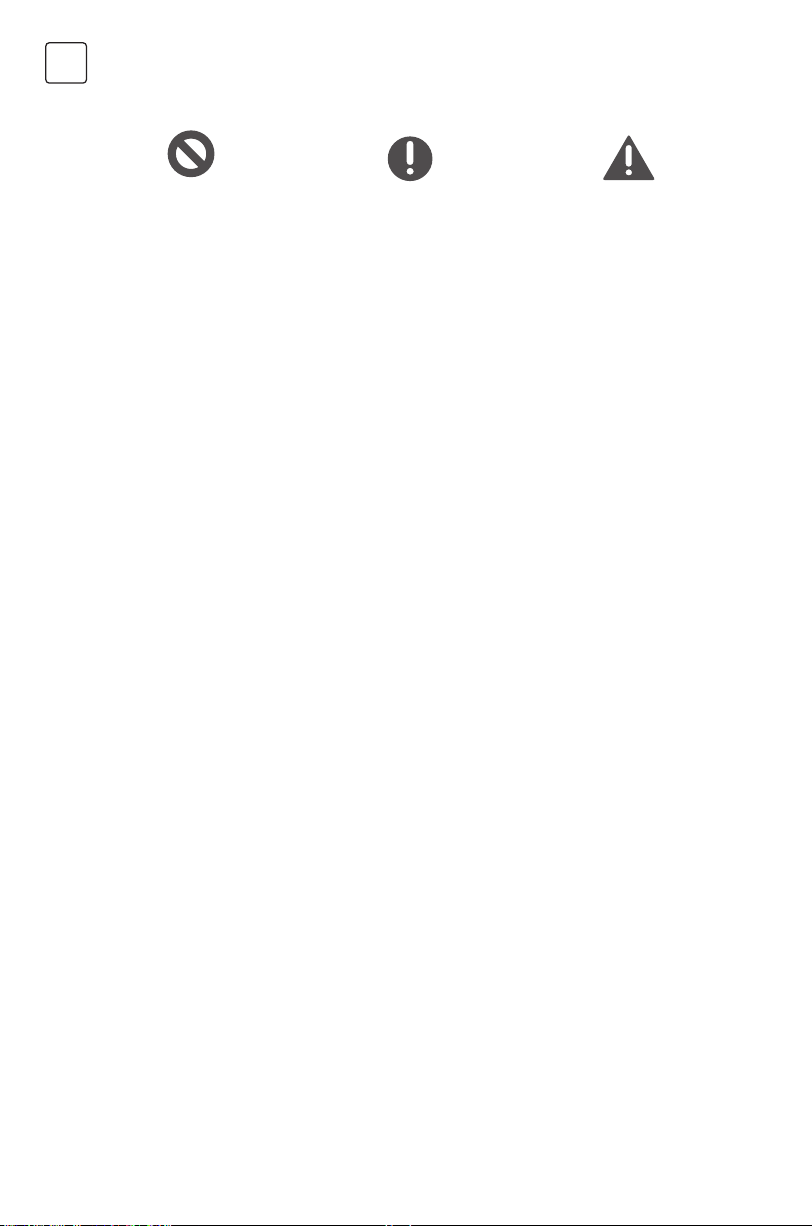
Ez egy tiltó szimbólum.
Az ezzel a szimbólummal
jelölt utasítások be nem
tartása a termék károsodását
eredményezheti, vagy
veszélyeztetheti a felhasználó
épségét.
Ez egy figyelmeztető szimbólum.
Az ezzel a szimbólummal jelölt
utasításokat szigorúan be kell
tartani; ellenkező esetben a termék
károsodása vagy személyi sérülés
következhet be.
Elektromossággal
kapcsolatos
figyelmeztetések
• Soha ne a tápkábelnél fogva húzza ki a borhűtő
hálózati csatlakozóját. Fogja meg határozottan a
villásdugót, és úgy húzza ki azt a konnektorból.
• A biztonságos használat érdekében semmilyen
körülmények között ne rongálja meg a
tápkábelt, ne használja, ha az megsérült.
• Kérjük, használjon külön konnektort, és azt ne
ossza meg más elektromos készülékekkel.
• A hálózati csatlakozónak stabilan kell érintkeznie
a konnektorral, különben tűzveszélyes lehet.
• Kérjük, gondoskodjon arról, hogy a hálózati
aljzat földelő elektródája megbízható földelő
vezetékkel legyen ellátva.
• Zárja el a biztonsági szelepet, majd nyissa ki az
ajtókat és ablakokat, ha gáz és más gyúlékony
gázok szivárgását észleli. Ne húzza ki a eszközt
és más elektromos készülékeket a konnektorból,
tekintettel arra, hogy az esetlegesen keletkező
szikra tüzet okozhat.
• A biztonság érdekében nem ajánlott a fagyasztó
tetejére rizsfőzőket, mikrohullámú sütőket és
egyéb, a gyártó által nem ajánlott készülékeket
elhelyezni.
Figyelmeztetések a
használatra vonatkozóan
• Ne szerelje szét vagy építse át a hűtőszekrényt,
és ne rongálja meg a hűtőkört; a készülék
karbantartását minden esetben szakembernek
kell elvégeznie.
• Ha a tápkábel megsérül, a további veszélyek
elkerülése érdekében azt csak a gyártó, annak
szakszervize, vagy egy megfelelő végzettséggel
rendelkező szakember cserélheti ki.
Ez egy figyelmeztető
szimbólum. Megfelelő
óvintézkedésekre van
szükség, különben kisebb
vagy közepes mértékű
sérülések vagy a termék
károsodása következik be.
• A hűtőszekrény ajtajai között, valamint az ajtók
és a hűtőszekrénytest között a rések kicsik,
ügyeljen arra, hogy ne tegye a kezét ezekre
a területekre. Kérjük, legyen óvatos, amikor
becsukja a hűtőszekrény ajtaját.
• Ne adja a csomagot és más alkatrészeket
gyermekeknek játszani. A csomagolás és
a műanyag fólia fulladáshoz vezethet! Ne
engedje, hogy a gyermekek bemásszanak, vagy
felmásszanak hűtőre, nehogy beszoruljanak a
készülékbe.
• Ne mossa le a készüléket vízzel, mert zárlatot
okozhat, ami rendkívül tűz- és balesetveszélyes.
• Ne használja a készüléket, annak ajtaját
lábtartóként, támasztékként.
• Ne helyezzen nehéz tárgyakat a készülékre,
tekintettel arra, hogy az ajtó nyitásakor vagy
zárásakor a tárgyak leeshetnek, és baleseti
sérüléseket okozhatnak.
• Kérjük, áramszünet vagy tisztítás esetén
húzza ki a villásdugót a konnektorból. Ilyen
esetben várjon legalább 5 percet, mielőtt újból
áramforráshoz csatlakoztatja a készüléket.
A tételek elhelyezésével
kapcsolatos
figyelmeztetések
• Ne tegyen gyúlékony, robbanásveszélyes,
illékony, vagy erősen maró dolgokat a
hűtőszekrénybe.
• A tűzesetek elkerülése érdekében ne helyezzen
gyúlékony tárgyakat a hűtőszekrény közelébe.
• A hűtőszekrény háztartási használatra, kizárólag
bor tárolására szolgál; nem használható más
célra, például vér, gyógyszerek vagy biológiai
termékek stb. tárolására.
12
Page 13
Figyelmeztetések
1. Előfordulhat, hogy a borhűtő nem működik
megfelelően, ha hosszabb ideig üzemel a
működési tartományok kívül.
2. Ne lépje túl a borgyártók által ajánlott tárolási
idő(ke)t semmilyen bor esetében.
3. A borhűtő leolvasztása során a bor
hőmérsékletének indokolatlan emelkedését
megakadályozó óvintézkedések szükségesek.
4. A bor hőmérsékletének emelkedése a kézi
leolvasztás, karbantartás vagy tisztítás során
lerövidítheti a tárolási időt.
Az ártalmatlanításra vonatkozó figyelmeztetések
A hűtőszekrényhez használt hűtőközeg és a ciklopentán habosító anyag rendkívül gyúlékony. A
nem használt hűtőszekrényt mindenféle tűzforrástól távol kell tartani, és a megfelelő képesítéssel
rendelkező vállalkozásnak kell ártalmatlanítania.
Mielőtt kidobja régi készülékét vegye le az ajtókat és hagyja a polcokat a helyükön, hogy a
gyerekek ne tudjanak könnyen bemászni a készülékbe.
A szimbólum azt jelzi, hogy a helyi törvényeknek és előírásoknak megfelelően a
készüléket a háztartási hulladéktól elkülönítve kell a hulladékba helyezni. Ha a termék
eléri élettartama végét, vigye a helyi hatóságok által kijelölt gyűjtőpontra. A készülék
elkülönített módon történő gyűjtése és újrahasznosítása segít megóvni a természeti
erőforrásokat, és biztosítja, hogy az újrahasznosítás az emberi egészség és a környezet
védelmével összhangban történjen. A termék újrahasznosítása érdekében további
információért forduljon az illetékesekhez, a helyi hulladékgyűjtő szolgáltatóhoz vagy ahhoz
az üzlethez, ahol a terméket megvásárolta.
HU
13
Page 14
HU
A HŰTŐSZEKRÉNY MEGFELELŐ
HASZNÁLATA
Alkatrészek megnevezése
Párologtató
Polc
Ajtómarkolat
Acél rács
Szintező
lábak
(A fenti kép csak tájékoztató jellegű. A tényleges konfiguráció ettől eltérő lehet.)
• A készülék akkor a legenergiatakarékosabb, ha a polcok az eredeti helyzetükben vannak elhelyezve.
• Belső páratartomány: 50%-80% a bor tároló rekeszben.
• A borhűtő hőmérséklete 5-18ºC között van, csak bontatlan palackozott borok (vörösbor, fehérbor,
rozébor) tárolására használható.
• Ne helyezzen élelmiszert a borhűtőbe, hogy elkerülje a bakteriális szennyeződést.
• Kérjük, tartsa szárazon a borhűtő belsejét, és fogyassza el a palackozott bort a szavatossági időn belül.
Termosztát
Hőmérséklet-szabályozás
• Miután bekapcsolta a borhűtőt, a termosztát gomb elforgatásával
beállíthatja a belső hőmérsékletet. A “Cold” a legmelegebb
beállítás. A “Colder” a leghidegebb beállítás. Az “OFF” a hűtés
leállítását jelenti.
• Ajánlott beállítás: “normal”
A Celsius hőmérséklet beállítási tartománya 5ºC~18ºC,
a Fahrenheit hőmérséklet beállítási tartománya pedig
(A fenti kép csak tájékoztató
jellegű. A tényleges
konfiguráció ettől eltérő
lehet.)
41ºF-64ºF.
14
Page 15
Elhelyezés
• A borhűtő használata előtt távolítsa el az
összes csomagolóanyagot, beleértve az alsó
habszivacs párnákat, valamint a készülék
belsejében lévő szalagokat is, tépje le az ajtón
és a készülékházon lévő védőfóliát.
• Tartsa távol hőforrásoktól és a közvetlen
napfénytől.
• A hűtőt jól szellőző, zárt helyen kell elhelyezni; a
talajnak vízszintesnek és szilárdnak kell lennie.
• A hűtő tetejétől legalább 30 cm, és a
hőelvezetés megkönnyítése érdekében a két
oldaltól és a hátsó oldaltól való távolságnak
legalább 10 cm-nek kell lennie.
• Ezt a hűtőt szabadon álló készülékként kell
használni és nem lehet beszerelni.
Használat megkezdése
• Szállítás után hagyja a borhűtőt legalább 2 órán
keresztül állni, mielőtt bekapcsolja a készüléket,
különben csökken a hűtési kapacitás vagy
károsodhat a borhűtő. Az első használatba vétel
előtt tisztítsa meg a belső felületeket.
• Kérjük, hogy áramszünet vagy tisztítás
esetén húzza ki a tápkábelt a konnektorból.
Ne csatlakoztassa öt percen belül újból
áramforráshoz, hogy elkerülje a kompresszor
károsodását.
• A kompresszor működése során a hűtőtér hátsó
falán vízcseppek vagy jégfoltok keletkeznek,
ami normális jelenség. Egy idő után a jég vízzé
olvad, és a víztartályba folyik le, hogy onnan
elpárologjon.
• Ne csatlakoztassa a hűtőt energiatakarékos
csatlakozóhoz és olyan átalakítóhoz, amely
képes az egyenáramot váltakozó áramra
alakítani (pl.: napelemes rendszer, hajóhálózat).
A palackok elrendezése
• Ne engedje, hogy a palackok a borhűtő hátsó falához érjenek, hogy a hűtőben egyenletes legyen a
levegőkeringés.
• A borhűtő tárolókapacitása (2. ábra) az alábbi jelzett palackméreten (1. ábra) alapul. A túlméretes
palackok hatással lehetnek a borhűtőben tárolható palackok számára.
• Az ajánlott maximális palackmennyiség 14 palack, lásd a 2. ábrát.
HU
Fig. 1 Fig. 2
(A fenti kép csak tájékoztató jellegű. A tényleges konfiguráció ettől eltérő lehet.)
15
Page 16
HU
Ajtónyitás irányának megfordítása
1. A borhűtő felső zsanérjának (5) beszerelési
pozíciójának megváltoztatásával az ajtó nyitási
iránya tetszőlegesen megváltoztatható. Kérjük,
kövesse az alábbi utasításokat a borhűtő ajtó
nyitási irányának megváltoztatásához (például:
jobbos ajtóról balos ajtóra): zárja be a borhűtő
üvegajtaját, egy pengével óvatosan távolítsa
el a a zsanért (1) és a tengelyt (2), lazítsa meg
az ajtópánt borítását (3) és a három rögzítő
csavart (4), majd távolítsa el a felső zsanért (5)
és a zsanércsatlakozót (6).
2. Nyissa ki a borhűtő ajtaját és óvatosan távolítsa
el az üvegajtót.
3. Szerelje le az üvegajtó alsó részén lévő ajtó
perselyt (6), az ajtó ütközőket (8) és ajtó
ütközőt (7), majd rögzítse azokat a bal oldalra.
4. Szerelje le a szintező lábat (10), rögzítő csavarokat (4) és az alsó zsanért (9), majd cserélje ki az
alkatrészeket a jobb és bal oldalon, majd fordított sorrenben szerelje vissza a szintező lábat és a rögzítő
csavarokat.
16
Page 17
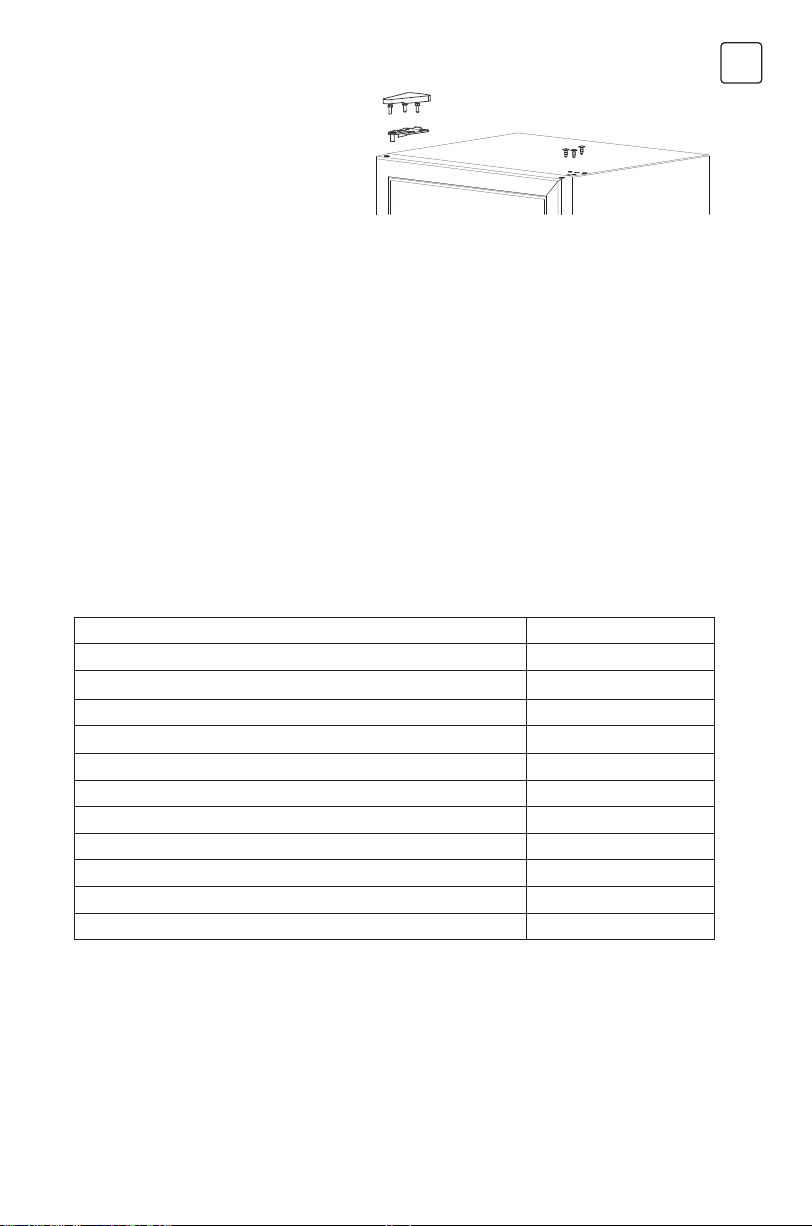
5. Helyezze a fent említett üvegajtót az alsó
zsanérra, szerelje vissza az ajtóperselyt
(6), és rögzítse a felső zsanért (5). Igazítsa
az ajtót a készülékházhoz, ellenőrizze a
tömítés tömítettségét, majd szerelje fel az
összes díszítést (1) (2).
(A fenti képek csak tájékoztató jellegűek. A tényleges konfiguráció ettől eltérő lehet.)
A bor tárolására vonatkozó gyakorlati tanácsok
• Ne tárolja a palackozott bort dobozban, vagy
csomagolásban a hűtőszekrényben.
• Fordítsa fejjel lefelé a palackot egy pillanatra,
hogy a palack dugóját ellepje az üvegben lévő
bor, ami ettől egy kicsit megduzzad és így a
parafa és az üveg között nem lesz légáramlás.
• A nyitott típusú palackpolc hasznos, mivel
nem zárja el a levegő keringését. A palackra
kondenzálódott pára gyorsan felszárad.
• A rozé borokat fogyasztás előtt 2-5 órával,
a vörösbort pedig 4-5 órával már tegye ki
az asztalra, hogy elérjék a megfelelő tálalási
hőmérsékletet. A fehérbor és a pezsgőfélék
ezzel szemben közvetlenül a hűtőből tálalhatók.
• A bor hőmérséklete mindig legyen alacsonyabb
az ideális tálalási hőmérsékletnél, mivel a
pohárba töltéskor a hőmérséklet azonnal 1-2
°C-kal megemelkedik.
Tálalási hőmérséklet
A bor íze a megfelelő hőmérséklettől függ, ez határozza meg leginkább. Javasoljuk, hogy a bor
hőmérséklete a következő legyen a kitöltéskor:
Borfajták Töltési hőmérséklet
Bordeaux vörös 18ºC
Louis Family száraz vörösbor/Barolo 17ºC
Burgundy vörös/Bordeaux vörös 16ºC
Port 15ºC
Fiatal Burgundy vörös 14ºC
Fiatal vörösbor 12ºC
Fiatal Beaujolais/minden fehérbor kevés maradékcukorral 11ºC
Öreg fehérborok/Chardonnay 10ºC
Sherry 9ºC
Fiatal fehérborok késői szüretből 8ºC
Fehér borok Loire/Entre-deux-Mers 7ºC
HU
Energiatakarékossági tippek
• A készüléket a helyiség leghűvösebb részén kell elhelyezni, távol a hőleadó készülékektől,
fűtéscsövektől és a közvetlen napfénytől.
• Próbálja meg minél kevesebb ideig nyitva tartani a hűtőajtót.
17
Page 18

HU
BORHŰTŐ KARBANTARTÁSA
Kapcsolja ki a borhűtőt
A hűtő leválasztásához húzza ki a hálózati
csatlakozót.
Ha nem használja a borhűtőt
Ha a hűtő hosszú ideig használaton kívül marad,
kérjük, hogy:
1. Húzza ki a tápkábelt;
2. Tisztítsa meg a hűtőt;
3. Tartsa nyitva a hűtő ajtaját.
A borhűtő tisztítása
• A hűtő mögött és a földön rendszeresen
fel kell takarítani a hűtés jó hatásfoka és az
energiatakarékosság javítása érdekében.
• Rendszeresen ellenőrizze az ajtótömítést, hogy
ne legyenek rajta szennyeződések. Tisztítsa
meg az ajtótömítést szappanos vízzel vagy
mosószerrel megnedvesített puha ruhával.
• A készülék belsejét rendszeresen tisztítani kell a
szagok kialakulásának elkerülése érdekében.
• Tisztítás előtt áramtalanítsa a készüléket,
távolítsa el az összes bort, polcot, stb.
• Puha ruhával vagy szivaccsal, két evőkanál
szódabikarbónával és egy liter meleg víz
keverékével tisztítsa meg a hűtő belsejét,
majd öblítse le tiszta vízzel és törölje tisztára. A
tisztítás után nyissa ki az ajtót, és hagyja, hogy az
magától megszáradjon.
• A borhűtőben a nehezen tisztítható
területeket (például rések vagy sarkok)
ajánlott rendszeresen áttörölni puha ronggyal,
puha kefével stb. és szükség esetén néhány
segédeszközzel (például vékony pálcikával),
hogy ezeken a területeken ne halmozódjanak
fel szennyeződések vagy baktériumok.
• Ne használjon szappant, mosószert , súrolóport,
spray tisztítószert , stb. , mivel ezek szagokat
okozhatnak a hűtő belsejében.
• A polcokat szappanos vízzel vagy hígított
mosószerrel nedvesített puha ruhával
tisztítsa meg. Szárítsa meg puha ruhával vagy
természetes úton.
• A fából készült bortartót nem szabad
közvetlenül folyadékba meríteni, hogy ne
repedezzen vagy penészedjen be. A fából
készült borállványt egy száraz, puha ruhával
tisztítsa meg.
• Törölje át a borhűtő külső felületét szappanos
vízzel, mosószerrel megnedvesített puha
ruhával, majd törölje szárazra. Ne dörzsölje
vagy karcolja meg az üvegajtó felületét, hogy
elkerülje annak sérülését.
• Ne használjon kemény kefét, drótkeféket
, súrolószereket (akár fogkrém is), szerves
oldószereket (pl. alkohol , aceton, banánolaj
stb.), forró vizet, savas vagy lúgos elemeket,
amelyek károsíthatják a készülék felületét
és belsejét. A forrásban lévő víz és a
szerves oldószerek, mint például a benzol,
deformálhatják vagy károsíthatják a műanyag
alkatrészeket.
• Ne öblítse le közvetlenül vízzel vagy más
folyadékkal a tisztítás során a készüléket, hogy
elkerülje a rövidzárlatot.
18
Page 19
HIBAELHÁRÍTÁS
HU
Nem működik a
készülék
A kompresszor sokáig
működik
A világítás nem
működik
Hangos zajok
Túlmelegedés az
oldalfalon
Felületi kondenzáció
Légáramlási hang
Zúgás
Csattogás
A hűtő be van-e dugva, és csatlakoztatva van-e az áramellátáshoz; Alacsony
feszültség;
A hőmérsékletszabályozó gomb jól van-e beállítva; Hibás tápellátás vagy
áramkör.
Normális, hogy a hűtő hosszabb ideig működik nyáron, amikor a környezeti
hőmérséklet magasabb;
Ne tegyen túl sok italt a hűtőbe egyszerre; Túl gyakran nyitja ki a hűtőajtót.
A hűtő csatlakoztatva van-e az áramforráshoz, sérült-e az izzó.
Sík-e a padló, stabil-e a hűtő elhelyezése;
A hűtő tartozékai megfelelően vannak-e elhelyezve.
A készülékház működés közben, különösen nyáron, hőt adhat le, ezt a
kondenzátor sugárzása okozza, és ez normális jelenség.
Kondenzáció: kondenzációs jelenség észlelhető a hűtő külső felületén
és ajtótömítésein, amikor a környezeti páratartalom magas, ez normális
jelenség, és egy törölközővel könnyedén letörölhető.
A hűtőközeg-rendszerben keringő gázok hangokat és morajlásokat
produkálnak, ami normális és nem befolyásolja a hűtést.
Zúgás keletkezik a kompresszor működése során, különösen indításkor vagy
leállításkor.
A mágnesszelep vagy az elektromos kapcsolószelep csattogni fog, ami
normális jelenség, és nem befolyásolja a működést.
19
Page 20
tesla.info
 Loading...