

Page 1
V1.1
1
TBLM1
LISN-MATE
1 Introduction
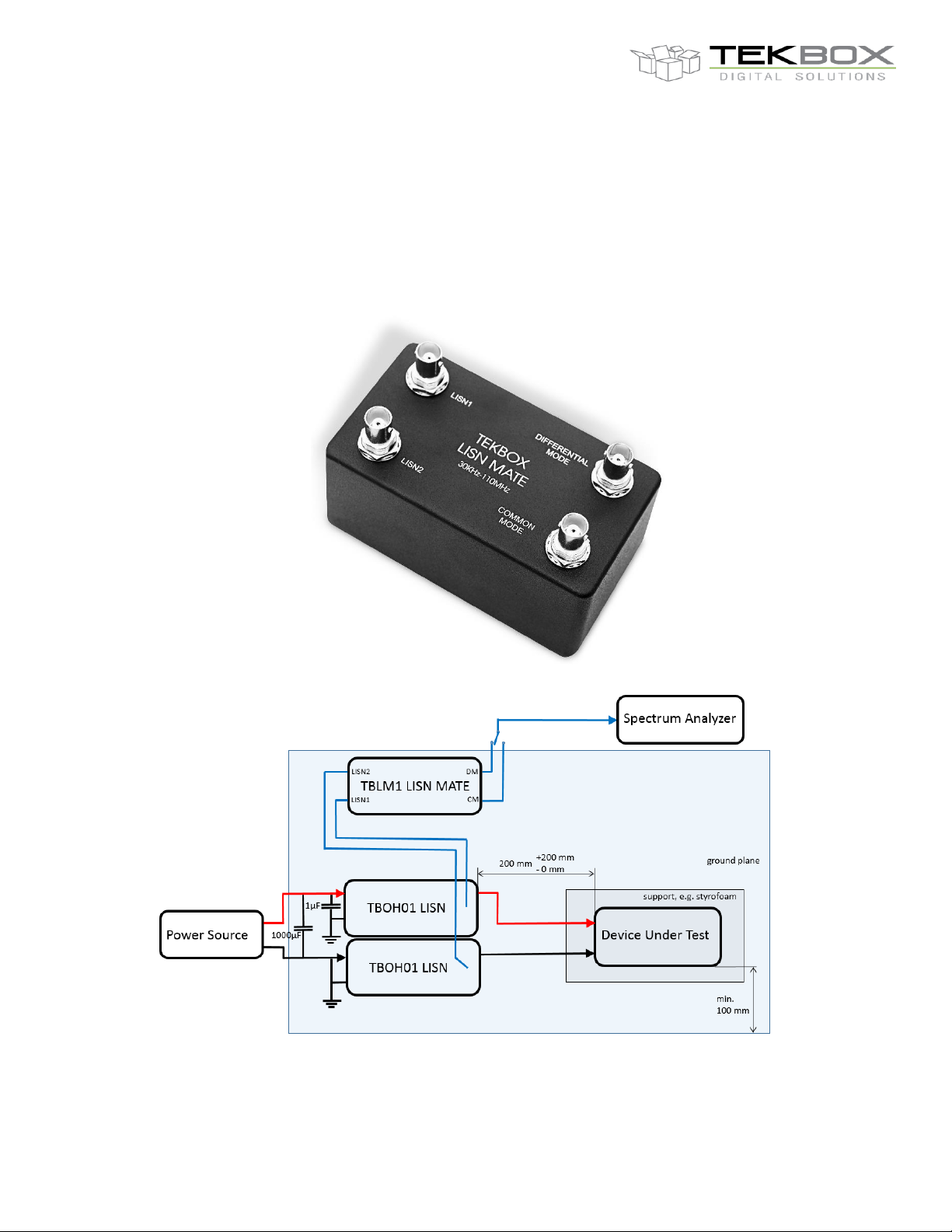
The TBLM1 is a companion device for LISNs, which splits the conducted noise signal into its common mode and
differential mode components. The LISN Mate is connected to the output of a LISN inserted into the positive supply
line and to a second LISN inserted into the negative supply line. The conducted noise signal at the output of a
LISN is the sum of common mode and differential mode noise. The LISN mate splits it into the common mode and
differential mode components, with each signal component available at a separate BNC port.
Picture 1: LISN mate
Picture 2: set up for the measurement of differential mode and common mode conducted noise
terminate the unused LISN mate output port with 50 Ohm
Page 2
V1.1
2
-100
-90
-80
-70
-60
-50
-40
-30
-20
-10
0
0 20 40 60 80 100 120 140 160
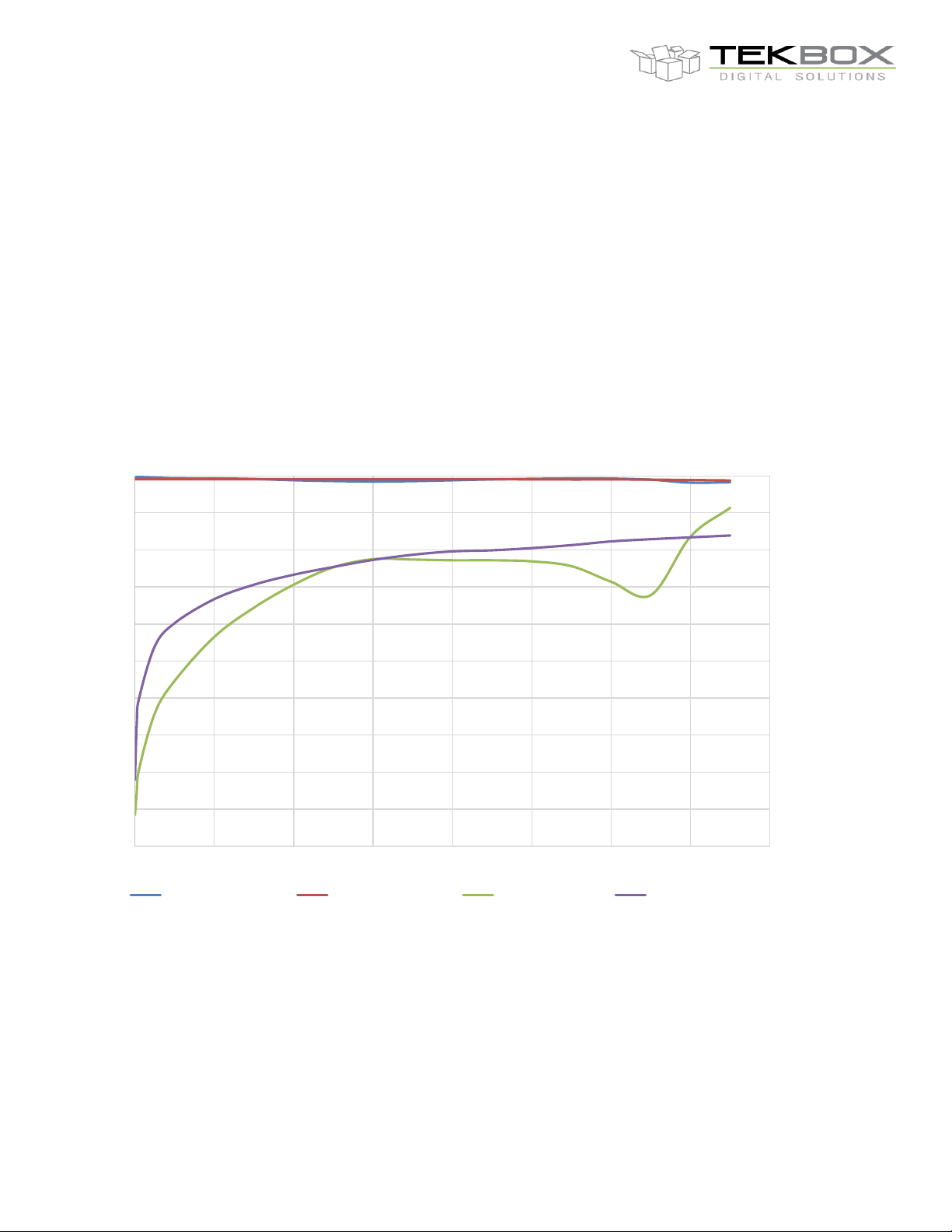
LISN Mate frequency response
DM insertion loss [dB] CM insertion loss [dB] DM supression [dB] CM supression [dB]
MHz
dB
TBLM1
2 Parameters
Frequency range: 30 kHz – 110 MHz
Maximum RF level at any BNC port: 27dBm
Maximum DC current at any BNC port: 30 mA
2.1 Frequency response
LISN-MATE
Picture 3: frequency response
Common mode insertion loss: input signal split into two same phase components and applied to LISN1 and LISN2
port; output signal measured at common mode port
Differential mode suppression: input signal split into two same phase components and applied to LISN1 and LISN2
port; output signal measured at differential mode port
Page 3
V1.1
3
Frequency [MHz]
DM insertion loss [dB]
CM insertion loss [dB]
DM supression [dB]
at CM port
CM supression [dB]
at DM port
0.03
-0.45
-0.93
-91.6
-82.1
0.5
-0.31
-0.93
-85.3
-66.4 1 -0.31
-0.93
-79.5
-60.4 5 -0.46
-0.93
-64.2
-46.1
10
-0.65
-0.93
-55.4
-39.8
20
-0.69
-0.93
-43.5
-33.3
30
-0.86
-0.93
-35.6
-29.4
40
-1.21
-0.93
-29.4
-26.7
50
-1.43
-0.93
-24.7
-24.6
60
-1.54
-0.93
-22.5
-22.7
70
-1.45
-0.93
-22.6
-21.3
80
-1.22
-0.93
-22.8
-20.4
90
-0.97
-0.93
-22.8
-20.1
100
-0.81
-0.99
-23.1
-19.5
110
-0.71
-1.02
-24.4
-18.7
120
-0.74
-1.01
-28.6
-17.7
130
-1.06
-1.04
-32.2
-17.1
140
-1.85
-1.15
-16.4
-16.6
150
-1.73
-1.25
-8.6
-16.1
Part Number
Description
TBLM1
LISN Mate, 2 pieces BNC-male to BNC male cables, 35cm, RG223
Version
Date
Author
Changes
V1.0
28.3.2018
Mayerhofer
Creation of the document
V1.1
10.10.2018
Mayerhofer
Information concerning termination of unused port added
TBLM1
LISN-MATE
Differential mode insertion loss: input signal split into two 180° phase shift components and applied to LISN1 and
LISN2 port; output signal measured at differential mode port
Common mode suppression: input signal split into two 180° phase shift components and applied to LISN1 and
LISN2 port; output signal measured at common mode port
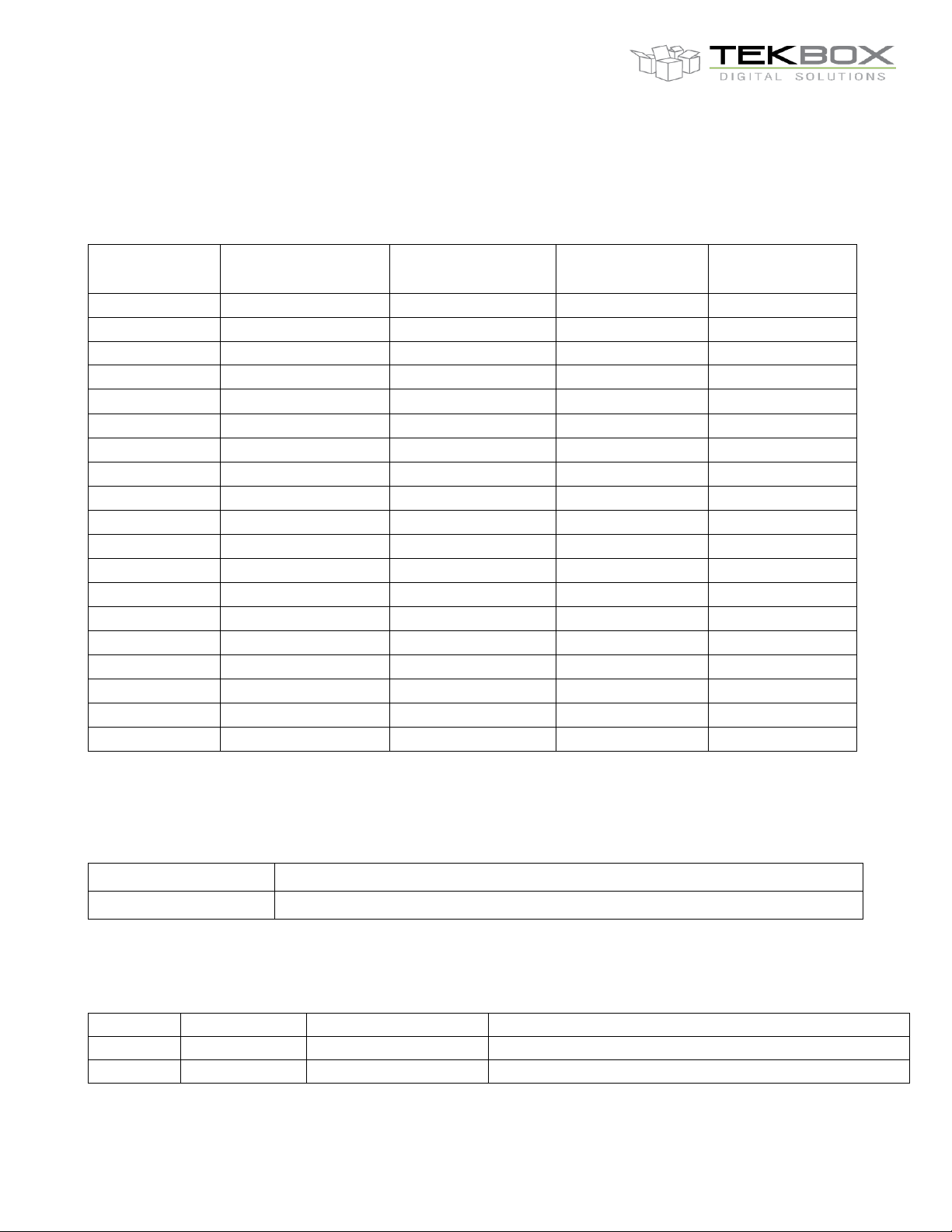
Table 1 – Frequency response
3 Ordering Information
Table 2 – Ordering Information
4 History
Table 3 – History
 Loading...