

Page 1

Advantages of the
Impedance - Controlled
MHz 4
Radiofrequency
Technology
Page 2

Advantages of the Impedance - Controlled
4 MHz Radiofrequency Technology
Radiofrequency has found its place as a precision tool in ENT, neurosurgery and microsurgery.
Numerous studies
to other technologies. With the impedance-controlled CURIS® 4 MHz radiofrequency generator, Sutter
offers the benets of an advanced 4 MHz radiofrequency technology for a variety of applications.
Minimal lateral thermal damage
Better wound healing
Precise and focused coagulation
1-7
show the advantages of the 4 MHz radiofrequency technology in comparison
4,5
6
7,9
The advantages of the impedance-controlled
4 MHz radiofrequency technology lie in its physics
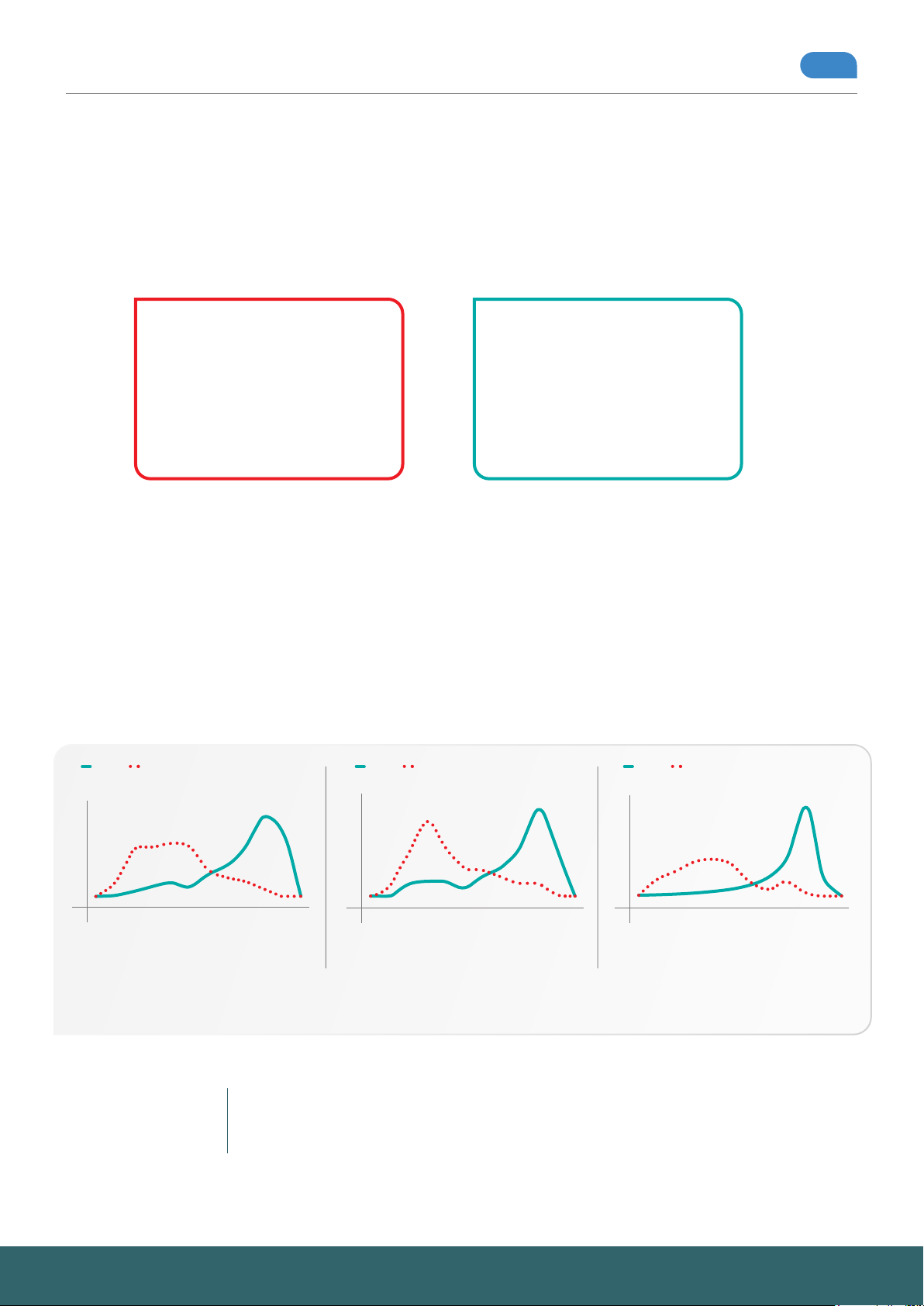
Using the CURIS® 4 MHz radiofrequency generator energy is absorbed evenly inside the cells
avoiding the energy to heat up the outer layer as it happens during conventional high frequency
technology
generator an optimal tool for both cutting and coagulation in precision electrosurgery.
8
. This even ow of energy inside the cells makes the CURIS® 4 MHz radiofrequency
Conventional electrosurgical units CURIS®4 MHz Radiofrequency Generator
Fig. 1 a : With conventional electrosurgical units, the electromagnetic eld concentrates between the cells and heats up
only the outer layer. Illustration only.
Source: [8] Holder
“Using radiofrequency for dissection compared to other instruments is clearly superior.
It shows better hemostasis, better handling, better cutting and it is an inexpensive
treatment compared to laser.“
Clemens Heiser, MD
Munich (Germany)
Fig. 1 b : With the CURIS® 4 MHz radiofrequency generator, cell
membranes are conductive and the energy is absorbed evenly
inside the cells. The results are highly focussed tissue effects.
Illustration only.
1 | Sutter • Advantages of the Impedance-Controlled 4 MHz Radiofrequency Technology • 2021
Page 3

Minimal Lateral Thermal Damage
low*
medium*
high
*
MP bladediode laserCO2 laser
800 μm
600 μm
400 μm
200 μm
0 μm
CURIS
®
coagulation zone in base of tongue
3 mm
1 mm
2 mm
0 mm
CO
2
diode MP blade
CURIS
®
low*
medium*
high
*
average width of incisions
low*
medium*
high
*
CURIS
®
MP bladediode laserCO2 laser
400 μm
300 μm
200 μm
100 μm
0 μm
coagulation zone in muscle
Studies support the conclusion that the impedance-controlled 4 MHz radiofrequency technology
produces less lateral thermal damage than other technologies:
It was shown that the CURIS® 4 MHz radiofrequency generator achieved the best cutting width (see g. 2),
the smallest coagulation defects and the narrowest lesions at all energy levels compared to CO
YAG laser and high frequency technology. Moreover, it produced the smallest coagulation zone in
different tissue types at various energy levels compared to the other technologies (see g. 3a & 3b). Thus,
the impedance-controlled 4 MHz radiofrequency technology preserves best the tumor-adjacent
structures and improves pathological assessment.
4
laser,
2
CUT
Fig. 2: Comparing the average width of incisions
produced by different instruments at different
energy levels
*
energy levels
Fig. 3a: Comparing the coagulation zone of the
instrument in the base of tongue at different
energy levels
Another study among 25 patients presenting with oral or oropharyngeal tumors showed that radiofrequency-assisted resected specimen using the CURIS® 4 MHz radiofrequency generator were better
assessable than laser-assisted resected specimen. The impedance-controlled 4 MHz radiofrequency
technology produced predominantly smooth resection margins and reduced the tissue resistance.
Compared to CO
laser and high frequency technology, the 4 MHz radiofrequency technology caused
2
the narrowest lesions and coagulation zones.
Better Wound Healing
A comparison of the healing process of lesions in albino rats created by different technologies showed
proven benets of the 4 MHz radiofrequency technology in terms of wound healing. Using the impedancecontrolled CURIS® 4 MHz radiofrequency generator turned out to be more targeted and precise compared
to conventional high frequency, preserving the basal membrane as well as the deep layers of the epithe-
lium, thus causing less profound wounds.
using the CURIS® 4 MHz radiofrequency generator is faster compared to conventional high frequency.
Radiofrequency induced wounds show complete epithelialization after seven days in contrast to the lesions
produced by high frequency which show abundant inammation associated with focal suppurations (see g. 4).
Fig. 3b: Comparing the coagulation zone of the
instrument in muscle tissue at different
energy levels
5
6
The histological assessment also showed that wound healing
Illustration only.
CUT
Fig. 4: Histological aspects on day seven: comparing radiofrequency and conventional high frequency
Sold through Sutter Exclusive Partners
High frequency / electric cauterizationRadiofrequency
| 2Sutter • Advantages of the Impedance-Controlled 4 MHz Radiofrequency Technology • 2021
Page 4
Precise Coagulation and Gentle Tissue Effects
The precision and quality of coagulation results can be observed in the effects on the tissue.
A study comparing bipolar coagulations on egg yolk showed that the impedance-controlled CURIS®
4 MHz radiofrequency generator achieves gentler effects as well as more reproducible results
compared to conventional high frequency. With each of the two generators, 100 coagulations
were performed for 1, 2 and 3 seconds, respectively. The results were evaluated by three blinded
analysts on a visual analog scale for three criteria: edge sharpness, homogeneity and shape of the
coagulation (see g. 5 & 6).
9
COAG
Conventional High Frequency Generator
Fig. 5: An example of poor shape of coagulation,
poor edge sharpness and poor homogeneity
CURIS® 4 MHz Radiofrequency Generator
Fig. 6: An example of good shape of coagulation,
good edge sharpness and good homogeneity
The evaluations revealed a clear difference between the two generators. Overall, the impedancecontrolled CURIS® 4 MHz radiofrequency generator produced better results in terms of edge sharpness,
homogeneity and shape of coagulation compared to conventional high frequency. The coagulations produced
by the CURIS® 4 MHz radiofrequency generator were evaluated in excellent range whereas the coagulations
produced by the conventional high frequency generator were much less favorable (see g. 7-9). Since all
three criteria achieved better results using 4 MHz radiofrequency technology, it can be concluded that the
impedance-controlled CURIS® 4 MHz radiofrequency generator leads to gentler tissue effects.
9
CURIS® High Frequency setting: 15 watt, 2 seconds CURIS® High Frequency setting: 15 watt, 2 seconds CURIS® High Frequency setting: 15 watt, 2 seconds
100
80
60
40
20
0
X
0 1 2 3 4 5 6 7 8 9 10
Y
Fig. 7: Edge sharpness of coagulations at
2 seconds activation time
X: Evaluation on a visual analog scale from 0 (“very poor”) to 10 (“excellent”)
Y: Number of evaluations
100
80
60
40
20
0
X
Y
Fig. 8: Homogeneity of coagulations at 2 seconds
activation time
0 1 2 3 4 5 6 7 8 9 10
150
100
50
0
X
0 1 2 3 4 5 6 7 8 9 10
Y
Fig. 9: Shape of coagulation at 2 seconds
activation time
“The CURIS® 4 MHz radiofrequency generator provides unparalleled precision to the
neurosurgeon seeking optimal control in neurosurgical cases. I found the ability to
perform pinpoint coagulation with minimal thermal and electrical spread increasing the
safety and efcacy of my operations.”
Ali Zomorodi, MD
Durham, NC (USA)
Sold through Sutter Exclusive Partners
Sold through Sutter Exclusive Partners
| 3Sutter • Advantages of the Impedance-Controlled 4 MHz Radiofrequency Technology • 2020
| 3Sutter • Advantages of the Impedance-Controlled 4 MHz Radiofrequency Technology • 2021
Page 5
Focused Coagulation at Low Temperatures
p
3
pulsed power
performance
Interstitial Application of Bipolar Energy
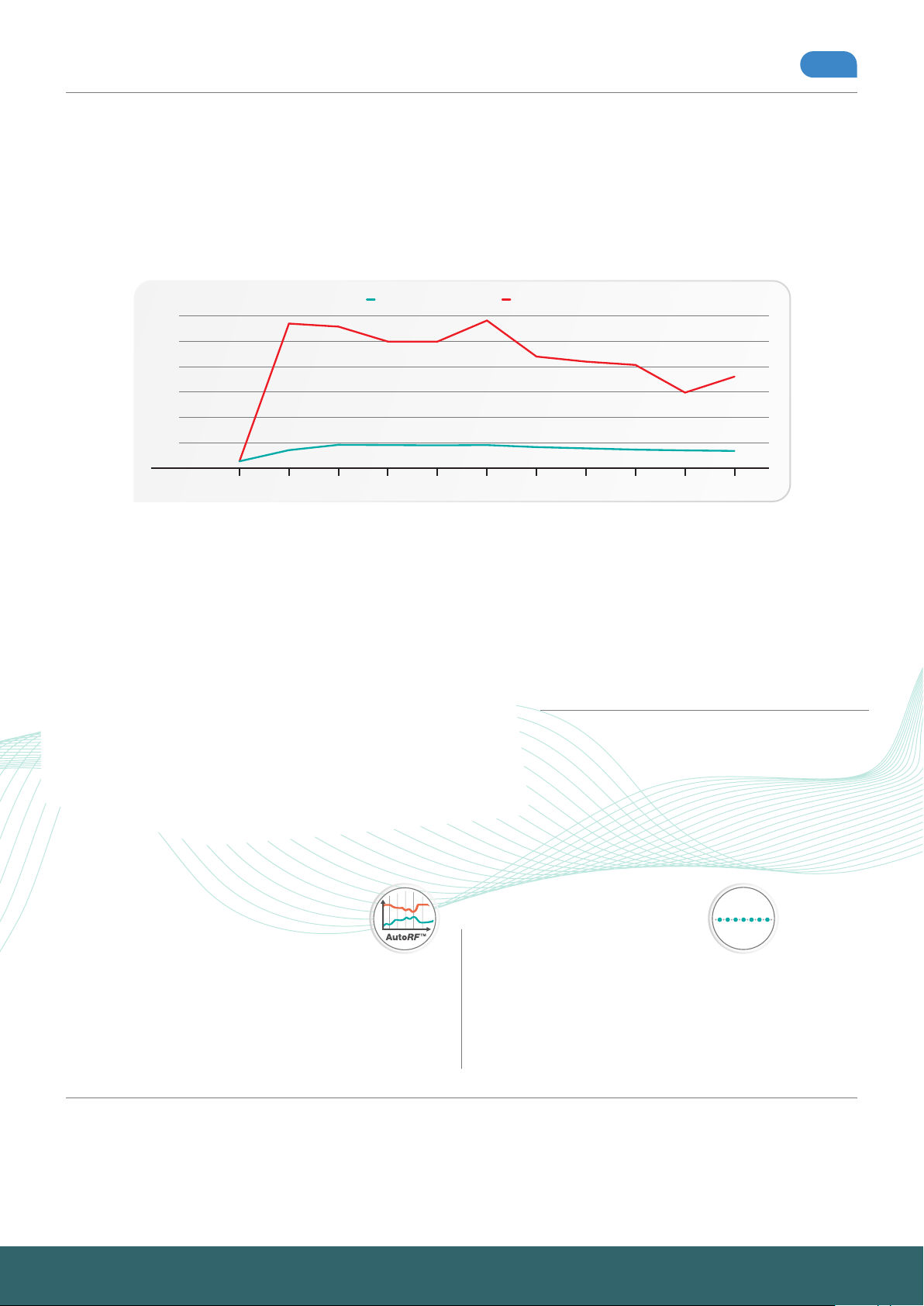
A comparison of the impedance-controlled 4 MHz radiofrequency technology with Coblation® (operating
at a frequency of 100.1 kHz, a factor 40 times smaller than CURIS®) proves the thermal benets of
4 MHz radiofrequency during coagulation. Whereas Coblation® reached excessive temperatures after saline
injection
did not exceed the level of 100°C (see g. 10). These thermal advantages make the impedancecontrolled CURIS® 4 MHz radiofrequency generator the more suitable technology for the treatment of
hypertrophic turbinates.
*1
, mean temperatures using the impedance-controlled CURIS® 4 MHz radiofrequency generator
7
temperature (°C)
600
500
400
300
200
100
Coblation® with salineCURIS® with saline
COAG
activation time (s)
1 2 3 4 5 6 7 8 9 10 11
Fig. 10: Mean temperatures (°C) of a series of measurements using CURIS® with RaVoR™ bipolar electrode and Coblation®
*1
according to manufacturer‘s guidelines saline gel has to be used during the procedure
*2
illustration graphically modied for clarity
Additional Advantages of the Impedance - Controlled
CURIS® 4 MHz Radiofrequency Generator
Easy handling
Time-saving
Cost- efficient
3TM
p
AutoRF
™
technology
*2
10, 11
5, 10
10
3TM
AutoRF™ is a smart impedance control function that
adapts the power output of the CURIS® 4 MHz radiofrequency
generator to the tissue condition. Whether it is cutting
through different types of tissue (such as mucosa, muscle,
fat or connective tissue) or altering tissue conditions during
coagulation, the AutoRF™ feature delivers adapted power
output as required by the different tissue impedance.
p
all coagulation modes of the CURIS® 4 MHz radiofrequency
generator. Radiofrequency energy is delivered in about 50
small packages per second. Due to the pulsed power output,
there are short breaks between the individual packages,
giving the tissue enough time to absorb the energy. Highly
focused, yet gentle coagulation with minimal thermal damage
is possible.
References: 1 Bran, G M et al. Bipolar Radiofrequency Volumetric Tissue Reduction of Inferior Turbinates: Evaluation of Short-Term Efcacy in a Prospective, Randomized, Single-Blinded, Placebo-
Controlled Crossover Trial. Eur Arch Otorhinolaryngol, 2012.
Wahl. HNO-Abstractband, Dt HNO-Kongress München, 2009, p. 186.
Sleep Apnoea: Is One Treatment Adequate? J Laryngology and Otology, V 123, 2009, p. 750-754.
surgery. Eur Arch Otorhinolaryngol 2014; 271:1207-13.
A study of the type of lesions achieved by three electrosurgical methods and their way of healing. Rom J Morphol Embryol, 2015.
and Radiofrequency waves in a porcine turbinate model. Romanian Journal of Rhinology, 2018.
History and Applications. IOP Publishing Ltd 2005.
Tumors Using Microelectrodes (54 Cases) EUR Arch Otorhinolaryngol, 2014; 271 (9): 2497-502.
4 | Sutter • Advantages of the Impedance-Controlled 4 MHz Radiofrequency Technology • 2020
Sold through Sutter Exclusive Partners
2
Neumann, K et al. Behandlung der kindlichen symptomatischen Tonsillenhyperplasie - Radiofrequenztonsillotomie als Mittel der
3
Pang, K P Siow, J K. Sutter Bipolar Radiofrequency Volumetric Tissue Reduction of Palate for Snoring and Mild Obstructive
5
Hofauer B et al. Radiofrequency in Oral and oropharyngeal tumor surgery. Auris Nasur Larynx, 2020; 47(1):148 - 153. 6 Muehlfay G et al.
9
Sutter Medizintechnik, data on le, 2019.
4
Hoffmann TK et al. Comparative analysis of resection tools suited for transoral robot-assisted
8
Holder, D S “Brief introduction to Bioimpedance” in: Electrical Impedance Tomography–Methods,
10
Sutter Medizintechnik, data on le, 2020.
, which stands for pulsed power performance, is active in
7
Vogt K et al. Comparison of the thermal effects of Coblation
11
Basterra J et al. Transoral Resection of Supraglottic
Sold through Sutter Exclusive Partners
| 4Sutter • Advantages of the Impedance-Controlled 4 MHz Radiofrequency Technology • 2021
Page 6

SUTTER MEDIZINTECHNIK GMBH
LFRED-WALZ-STR. 22 · 79312 EMMENDINGEN/GERMANY · TEL. +49(0)7641-96256-0 · FAX +49(0)7641-96256-30
A
WWW.SUTTER-MED.COM · [email protected]
© Sutter Medizintechnik · Subject to change · REF 1331 A – U06 · printed on acid free paper
 Loading...