

Page 1
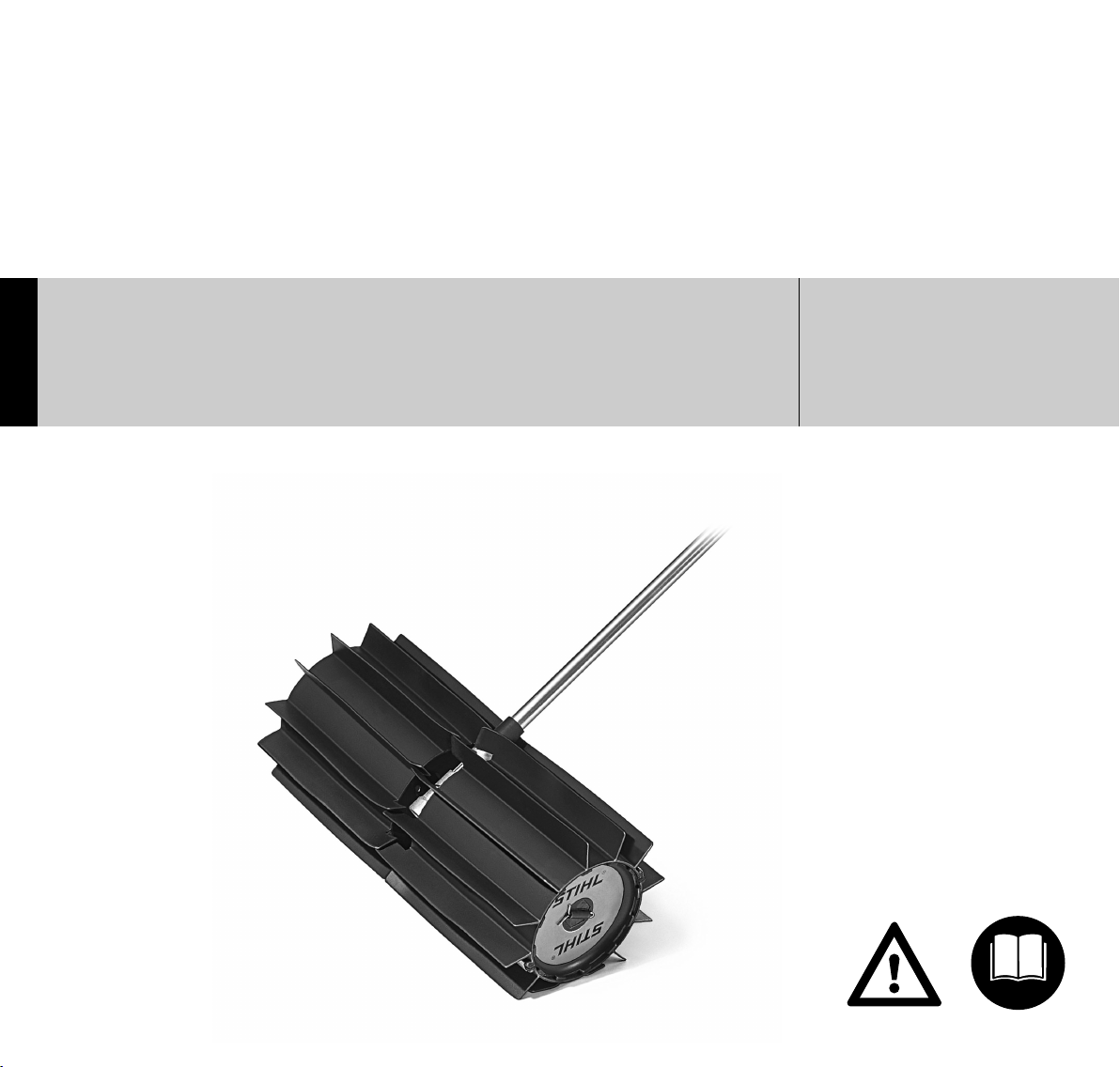
STIHL KW
STIH)
Instruction Manual
Manual de instrucciones
Warning!
For safe operation follow all safety
precautions in Instruction Manual - improper
use can cause serious injury.
Advertencia!
Para su seguridad durante el manejo de este
producto, siga siempre las precauciones de
seguridad dadas en el manual de
instrucciones - el uso indebido puede causar
lesiones graves.
Page 2

Contents
English / USA
Guide to Using this Manual .............. 2
Safety Precautions and
Working Techniques ......................... 3
Using the PowerSweep .................. 10
Approved Basic Power Tools .......... 11
Installing the Gearbox ..................... 11
Mounting Sweeper Drums .............. 12
BA_SE_020_003_01_03.fmPrinted on chlorine-free paper.
Mounting the Loop Handle ............. 13
Fitting Carrying Eye (Clamp) .......... 14
Fitting the Harness ......................... 15
Balancing the Machine ................... 15
Starting / Stopping the Engine ........ 16
Operating Instructions .................... 17
Storing the Machine ........................ 17
Replacing Sweeper Drum ............... 17
Replacing the Rubber Sleeve ......... 18
Removing the Gearbox .................. 18
Main Parts ...................................... 19
Specifications ................................. 19
Special Accessories ....................... 20
Maintenance and Repairs ............... 20
Printing inks contain vegetable oils; paper can be recycled.
Allow only persons who understand this
Manual to operate your PowerSweep
attachment.
To receive maximum performance and
satisfaction from your STIHL
PowerSweep attachment, it is important
that you read and understand the
maintenance and safety precautions,
starting on page 3, before using your
PowerSweep attachment.
Contact your STIHL dealer or the STIHL
distributor for your area if you do not
understand any of the instructions in this
Manual.
!Warning!
Because a PowerSweep is a power
tool, some special safety precautions
must be observed to reduce the risk of
personal injury.
Careless or improper use may cause
serious or even fatal injury.
Always wear proper eye protection.
STIHL's philosophy is to continually
improve all of its products. As a result,
engineering changes and improvements
are made from time to time. If the
operating characteristics or the
appearance of your PowerSweep
attachment differs from those described
in this Manual, please contact your
STIHL dealer for information and
assistance.
STIHl
© ANDREAS STIHL AG & Co. KG, 2008
0458 224 8621. M1,5. A8. PM. Printed in USA
1KW
Page 3
English / USA
Guide to Using this Manual
Important Information
This STIHL attachment may be mounted
to different STIHL basic power tools
(powerhead with shaft and handle
system).
The approved basic power tool models
are listed in chapter "Approved Basic
Power Tools".
Other combinations of the
attachment and non-approved
power tools are not permitted since
they may result in accidents or
serious personal injury.
This instruction manual contains only
descriptions of procedures and
conditions in which the attachment and
power tool combination differs from the
basic power tool.
For correct operation of your attachment
and power tool combination, also read
and observe the appropriate chapters in
the instruction manual of the basic
power tool you are using.
Pictograms
All the pictograms attached to the
machine are shown and explained in
this manual.
The operating and handling instructions
are supported by illustrations.
Symbols in text
The individual steps or procedures
described in the manual may be marked
in different ways:
: A bullet marks a step or procedure
without direct reference to an
illustration.
A description of a step or procedure that
refers directly to an illustration may
contain item numbers that appear in the
illustration.
Example:
Loosen the screw (1)
Lever (2) ...
In addition to the operating instructions,
this manual may contain paragraphs
that require your special attention. Such
paragraphs are marked with the
symbols described below:
Warning where there is a risk of an
accident or personal injury or
serious damage to property.
Caution where there is a risk of
damaging the machine or its
individual components.
Note or hint which is not essential
for using the machine, but may
improve the operator’s understanding of the situation and result
in better use of the machine.
Note or hint on correct procedure in
order to avoid damage to the
environment.
2
KW
Page 4
Safety Precautions and Working Techniques
English / USA
Equipment and features
This instruction manual may refer to
several models with different
features. Components that are not
installed on all models and related
applications are marked with an
asterisk (*). Such components may
be available as special accessories
from your STIHL dealer.
Engineering improvements
STIHL’s philosophy is to continually
improve all of its products. As a result,
engineering changes and improvements
are made from time to time. If the
operating characteristics or the
appearance of your machine differ from
those described in this manual, please
contact your STIHL dealer for
assistance.
Therefore some changes, modifications
and improvements may not be covered
in this manual.
Warning!
Because a power tool
equipped with a
PowerSweep attachment
is a high-speed power
tool, special safety
precautions must be observed to reduce
the risk of personal injury.
It is important that you
read, fully understand and
observe the following
safety precautions and
warnings. Read the
owner's manuals and the
safety instructions of your power tool
and PowerSweep attachment
periodically. Careless or improper use of
any power tool may cause serious or
fatal injury. Have your STIHL dealer
show you how to operate your power
tool. Observe all applicable local safety
regulations, standards and ordinances.
!Warning!
Minors should never be allowed to use a
power tool. Bystanders, especially
children, and animals should not be
allowed in the area where a power tool is
in use!
Never let the PowerSweep run
unattended.
!Warning!
Do not lend or rent your power tool
without the owner's manuals. Be sure
that anyone using your power tool
understands the information contained
in these manuals.
Most of these safety precautions and
warnings apply to the use of all STIHL
PowerSweeps. Different models may
have different parts and controls. See
the appropriate section of your power
tool and PowerSweep attachment
owner's manual for a description of the
controls and function of the parts of your
power tool model.
Safe use of a power tool involves
1. the operator
2. the power tool
3. the use of the power tool.
THE OPERATOR!
Physical Condition
You must be in good physical condition
and mental health and not under the
influence of any substance (drugs,
alcohol, etc.) which might impair vision,
dexterity or judgment. Do not operate a
power tool when you are fatigued.
3KW
Page 5
English / USA
Be alert - if you get tired while operating
your power tool, take a break. Tiredness
may result in loss of control. Working
with any power tool can be strenuous. If
you have any condition that might be
aggravated by strenuous work, check
with your doctor before operating a
PowerSweep.
!Warning!
Prolonged use of a power tool (or other
machines) exposing the operator to
vibrations may produce whitefinger
disease (Raynaud's phenomenon) or
carpal tunnel syndrome. These conditions reduce the hand's ability to feel
and regulate temperature, produce
numbness and burning sensations and
may cause nerve and circulation
damage and tissue necrosis.
All factors which contribute to whitefinger disease are not known, but cold
weather, smoking and diseases or
physical conditions that affect blood
vessels and blood transport, as well as
high vibration levels and long periods of
exposure to vibration are mentioned as
factors in the development of whitefinger
disease.
In order to reduce the risk of whitefinger
disease and carpal tunnel syndrome,
please note the following:
– Most STIHL power tools are
equipped with an anti-vibration
("AV") system designed to reduce
the transmission of vibrations
created by the engine to the
operator's hands. An AV system is
recommended for those persons
using power tools on a regular or
sustained basis.
– Wear gloves and keep your hands
warm.
– Keep the AV system well
maintained. A power tool with loose
components or with damaged or
worn AV buffers will tend to have
higher vibration levels.
– Maintain a firm grip at all times, but
do not squeeze the handles with
constant, excessive pressure, take
frequent breaks.
All the above mentioned precautions do
not guarantee that you will not sustain
whitefinger disease or carpal tunnel
syndrome. Therefore, continual and
regular users should monitor closely the
condition of their hands and fingers. If
any of the above symptoms appear,
seek medical advice immediately.
Proper Clothing
!Warning!
To reduce the risk of injury, the operator
should wear proper protective apparel.
!Warning!
Never operate a
PowerSweep unless
wearing goggles or
properly fitted safety
glasses with adequate top
and side protection
complying with your National Standard.
!Warning!
Power tool noise may
damage your hearing.
Wear sound barriers (ear
plugs or ear mufflers) to
protect your hearing.
Continual and regular
users should have their hearing checked
regularly.
Protect your hands with
gloves when handling the
power tool. Heavy-duty,
nonslip gloves improve
your grip and protect your
hands.
4
KW
Page 6
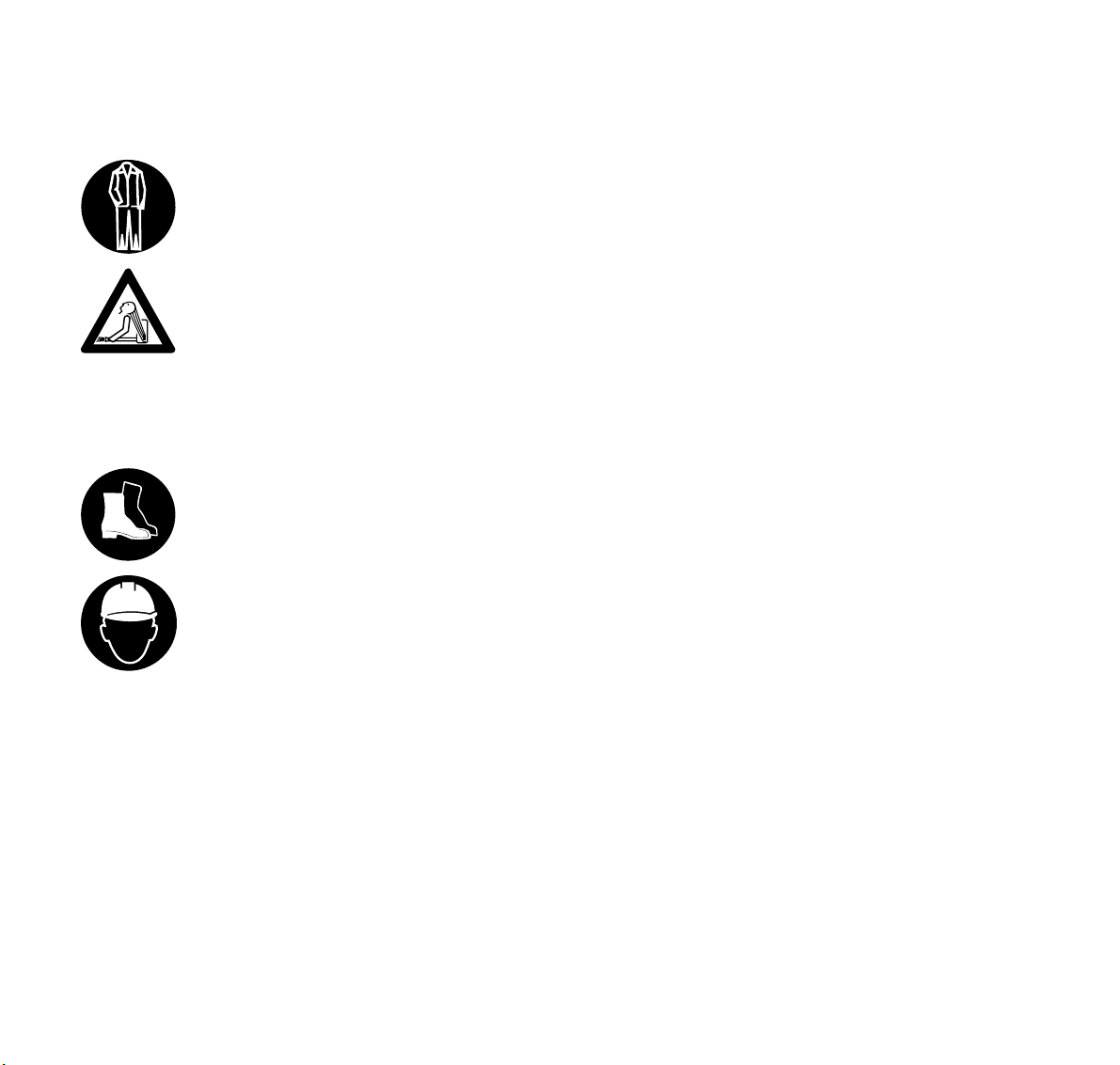
English / USA
Clothing must be sturdy
and snug-fitting, but allow
complete freedom of
movement.
Avoid loose-fitting jackets,
scarfs, neckties, jewelry,
flared or cuffed pants,
unconfined longhair or
moving parts of the unit.
Wear long pants made of heavy material
to protect your legs. Do not wear shorts,
sandals or go bare foot. Secure hair so it
is above shoulder level.
Good footing is important
in PowerSweep work.
Wear sturdy boots with
nonslip soles.
Wear an approved safety
hard hat to reduce the risk
of injury to your head
when there is a danger of
head injuries.
THE POWER SWEEP
ATTACHMENT
For illustrations and definitions of the
PowerSweep attachment parts see the
chapter on "Parts and Controls"
!Warning!
Never modify a PowerSweep
attachment in any way. Only
attachments supplied by STIHL or
expressly approved by STIHL for use
with the specific STIHL power tool
models are authorized. Although certain
unauthorized attachments may be
useable for the STIHL power tool, their
use may, in fact, be extremely
dangerous.
THE USE OF THE POWER SWEEP
Transporting the PowerSweep
!Warning!
Always turn off the engine and make
sure the attachment has stopped before
putting a PowerSweep down. When
transporting your PowerSweep in a
vehicle, properly secure it to prevent
turnover, fuel spillage and damage to the
PowerSweep.
Preparation for the use of the
PowerSweep
Adjust carrying harness and hand grip to
suit your size before starting work. The
machine should be properly balanced as
specified in your owner's manual for
proper control and less fatique in
operation.
Always check your PowerSweep for
proper condition and operation before
starting, particularly the throttle trigger,
throttle trigger interlock (if applicable),
stop switch, sweeper drums, rubber
sleeve and harness.
The sweeper must be properly tightened
and in safe operating condition. Both
sweeper belts must be mounted. The
rubber sleeve on the end of the drive
tube must be in good condition. Do not
operate your PowerSweep with
damaged sweeper drums or rubber
sleeve. Inspect for loose parts (nuts,
screws, etc) and for worn or damaged
parts. Replace worn or damaged parts.
5KW
Page 7
English / USA
Fueling
Your STIHL PowerSweep uses an oilgasoline mixture for fuel. For further
instructions see the safety precautions
and the chapter on "Fuel" of the owner's
manual of the power tool.
!Warning!
Gasoline is an extremely
flammable fuel. If spilled
and ignited by a spark or
other ignition source, it
can cause fire and serious
burn injury or property
damage. Use extreme caution when
handling gasoline or fuel mix.
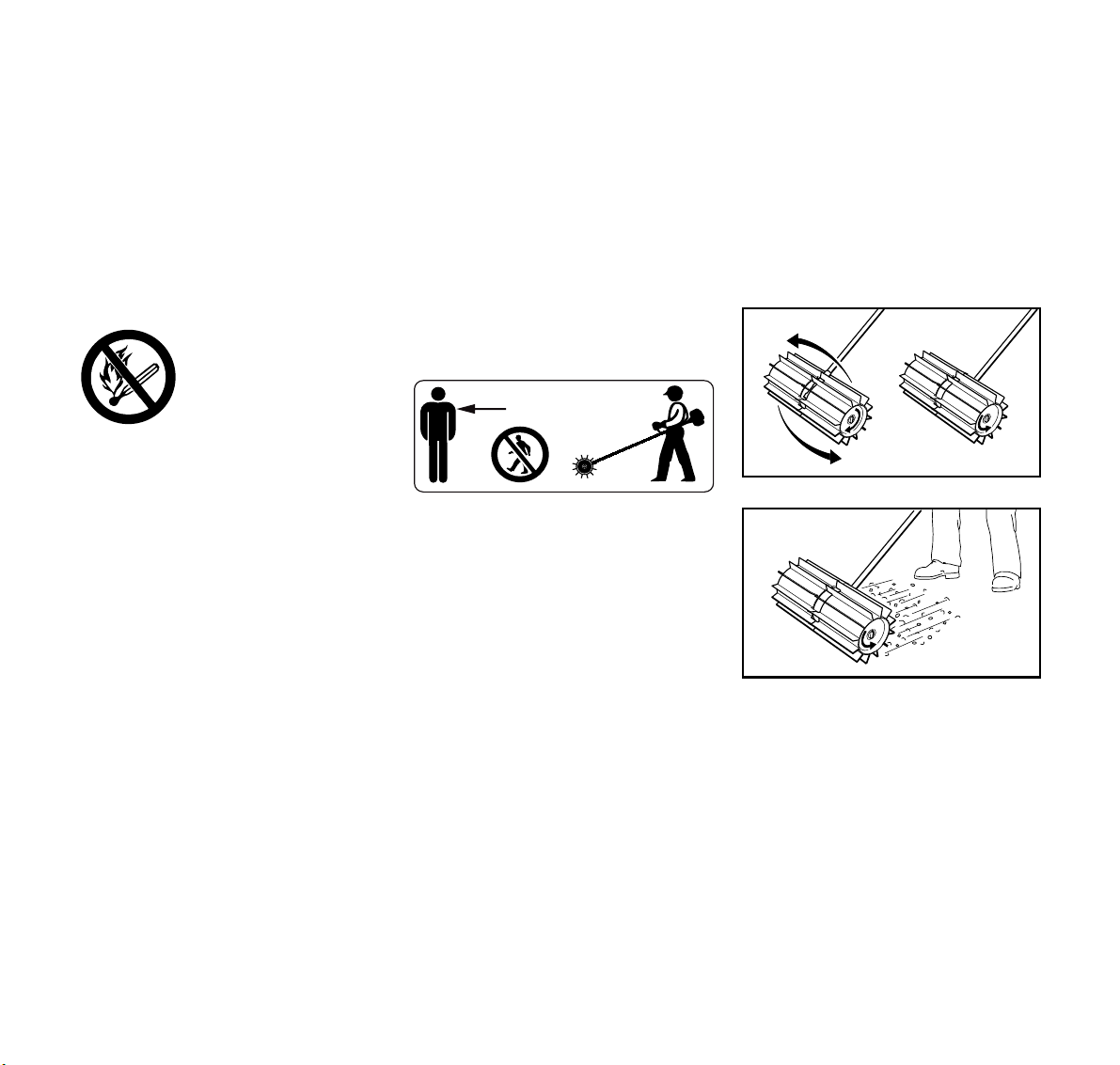
Do not smoke or bring any fire or flame
near the fuel or PowerSweep.
OPERATING INSTRUCTIONS
The PowerSweep is designed only for
sweeping sand, stones, gravel, leaves
and snow on grass, concrete or asphalt
and removing puddles of water from flat
surfaces. To reduce the risk of injury, do
not use your PowerSweep for any other
purpose.
Starting
!Warning!
Your PowerSweep is a one-person
machine.
If you start the engine in the "start
position" the sweeper belts will rotate
when the engine starts - this may set the
PowerSweep in motion back towards
the operator.
5m (16ft)
To reduce the risk of injury from thrown
objects or contact with the sweeper
belts, do not allow any other person
within a radius of 5 m (16 ft) of your own
position.
Stop the engine immediately if you are
approached. Start and operate your
PowerSweep without assistance. For
specific starting instructions, see the
appropriate section of the owner’s
manual of the power tool. Place the
power tool on firm ground or other solid
surface in an open area. Maintain a
good balance and secure footing.
Working Conditions
Operate and start your power tool only
outdoors in a well ventilated area.
Operate the PowerSweep under good
visability and daylight conditions only.
Work carefully.
223BA028 KN
223BA029 KN
!Warning!
Reversing the PowerSweep will cause
debris to be thrown back towards the
operator. When reversing the
PowerSweep, use lower throttle settings
and be aware that thrown debris may
also affect your footing.
6
KW
Page 8
English / USA
!Warning!
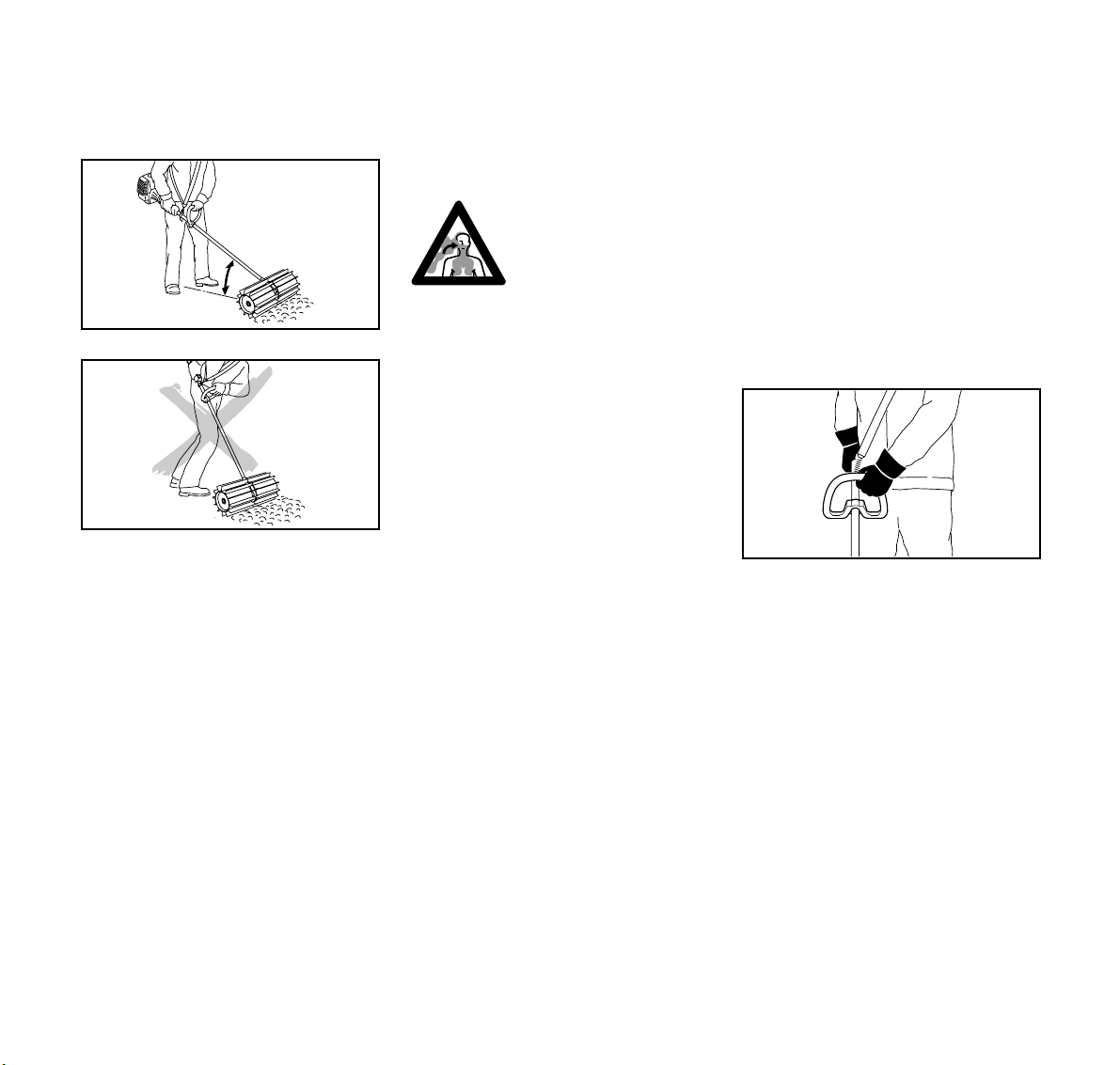
To reduce the risk of injury from loss of
control, maintain a low angle to the work
surface. A high angle of operation tends
to propel the PowerSweep toward you.
!Warning!
Your PowerSweep
produces toxic exhaust
fumes as soon as the
engine is running. These
gases (e.g. carbon
223BA001 KN
colorless and odorless. To reduce the
risk of serious or fatal injury from
inhaling toxic fumes, never run the
PowerSweep indoors or in poorly
ventilated locations.
monoxide) may be
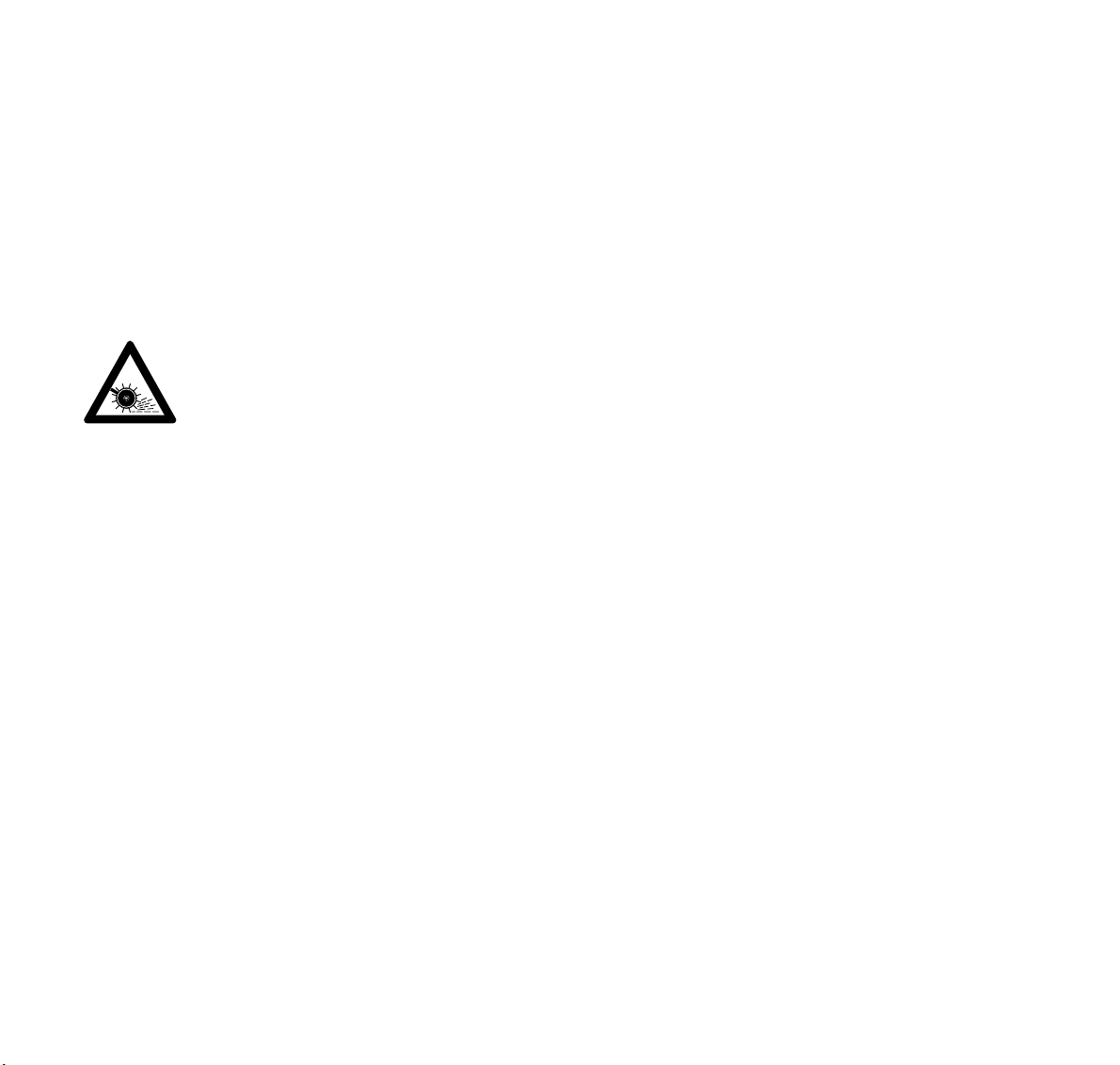
!Warning!
Use of this product can generate dust
and fumes containing chemicals known
to cause respiratory disease, cancer,
223BA002 KN
birth defects, or other reproductive
harm. If you are unfamiliar with the risks
associated with the particular dust or
fume at issue, consult your employer,
governmental agencies such as OSHA
and NIOSH and other sources on
hazardous materials. California and
some other authorities, for instance,
have published lists of substances
known to cause cancer, reproductive
toxicity, etc.
Control dust and fumes at the source
where possible. In this regard use good
work practices and follow the
recommendations of OSHA/NIOSH and
occupational and trade associations.
When the inhalation of toxic dust and
fumes cannot be eliminated, the
operator and any bystanders should
always wear a respirator approved by
NIOSH/MSHA for the type of dust and /
or fumes encountered.
002BA054 KN
Always hold the PowerSweep firmly with
both hands. Wrap your fingers tightly
around the handles, keeping the
handles cradled between your thumb
and fore-finger. Keep your hands in this
position, to have your PowerSweep
under control at all times. Make sure
your PowerSweep handles and grip are
in good condition and free of moisture,
pitch, oil or grease.
7KW
Page 9
English / USA
!Warning!
Never attempt to operate any
PowerSweep with one hand. Loss of
control of the PowerSweep may result in
personal injury.
Special care must be taken in slippery
conditions (wet ground, snow).
Examine work area and
check for solid objects
(such as stones, pieces of
metal, etc.) which could
be thrown and cause
injury or damage the
sweeper flaps or other property (e.g.
parked vehicles, windows, etc.).
!Warning!
This PowerSweep is to be used at
ground level with the sweeper belts
parallel to the ground. Use of a
PowerSweep above ground level may
increase the risk of injury, since the
brooming attachment is more fully
exposed and the PowerSweep may be
more difficult to control.
Do not operate the PowerSweep using
the starting throttle lock as you do not
have control of the engine speed. See
section of your owner's manual on the
proper use of the slide control.
If the sweeper belts become clogged or
stuck, always turn off the engine and
make sure the sweeper belts have
stopped, before cleaning.
Important adjustments
!Warning!
To reduce the risk of personal injury from
loss of control or contact with the
running sweeper drums, do not use your
PowerSweep with incorrect idle
adjustment. At correct idle speed, the
sweeper drums should not move. For
directions on how to adjust idle speed,
see the appropriate section of the
owner's manual of the power tool.
If you cannot set the correct idle speed,
have your STIHL dealer check your
PowerSweep and make proper
adjustments and repairs.
MAINTENANCE, REPAIR AND
STORING
Use only identical STIHL replacement
parts for maintenance and repair. Use of
non-STIHL parts may cause serious or
fatal injury.
Follow the maintenance and repair
instructions in the appropriate section of
your owner's manual. Please refer to the
maintenance chart at the last pages of
this manual.
!Warning!
Always stop the engine and make sure
that the sweeper belts have stopped
before doing any maintenance or repair
work or cleaning the PowerSweep. Do
not attempt any maintenance or repair
work not described in your owner's
manual. Have such work performed at
your STIHL dealer shop only.
!Warning!
Check condition of sweeper belts at
regular intervals. Loose particles or
pieces of the belts could be thrown and
injure the operator or bystanders. To
reduce risk of injury from broken parts
replace damaged sweeper belts
immediately and always in pairs. Do not
reuse or attempt to repair damaged or
worn sweeper belts.
8
KW
Page 10

English / USA
!Warning!
To reduce the risk of fire and burn
injuries, check fuel filler cap for leaks at
regular intervals. Use the specified
spark plug and make sure it and the
ignition lead are always in good
condition.
!Warning!
Never test the ignition system with
ignition wire boot removed from spark
plug or with unseated spark plug, since
uncontained sparking may cause a fire.
!Warning!
To reduce the risk of fire and burn injury,
use only spark plugs authorized by
STIHL. Always press spark plug boot
snugly onto spark plug boot of the
proper size. (Note: If boot has
detachable SAE adapter nut, it must be
attached.) A loose connection between
spark plug boot and ignition wire
connector in the boot may create arcing
that could ignite combustible fumes and
cause a fire. Keep spark plug clean, and
make sure ignition lead is in good
condition.
!Warning!
Do not operate your PowerSweep if the
muffler is damaged, missing or modified.
An improperly maintained muffler will
increase the risk of fire and hearing loss.
Never touch a hot muffler or burn will
result. If your muffler was equipped with
a spark-arresting screen to reduce the
risk of fire (e.g. in the USA, Canada and
Australia), never operate your
PowerSweep if the screen is missing or
damaged. Do not modify or remove any
part of the muffler or spark arresting
screen. Remember that the risk of forest
fires is greater in hot or dry weather.
Tighten all nuts, bolts and screws,
except the carburetor adjustment
screws, after each use.
Additionally, the daily maintenance
schedule for your PowerSweep set forth
in your STIHL Owner's Manual should
be strictly followed.
Store PowerSweep in a dry, high or
locked location out of reach of children.
Before storing for longer than a few
days, always empty the fuel tank.
9KW
Page 11
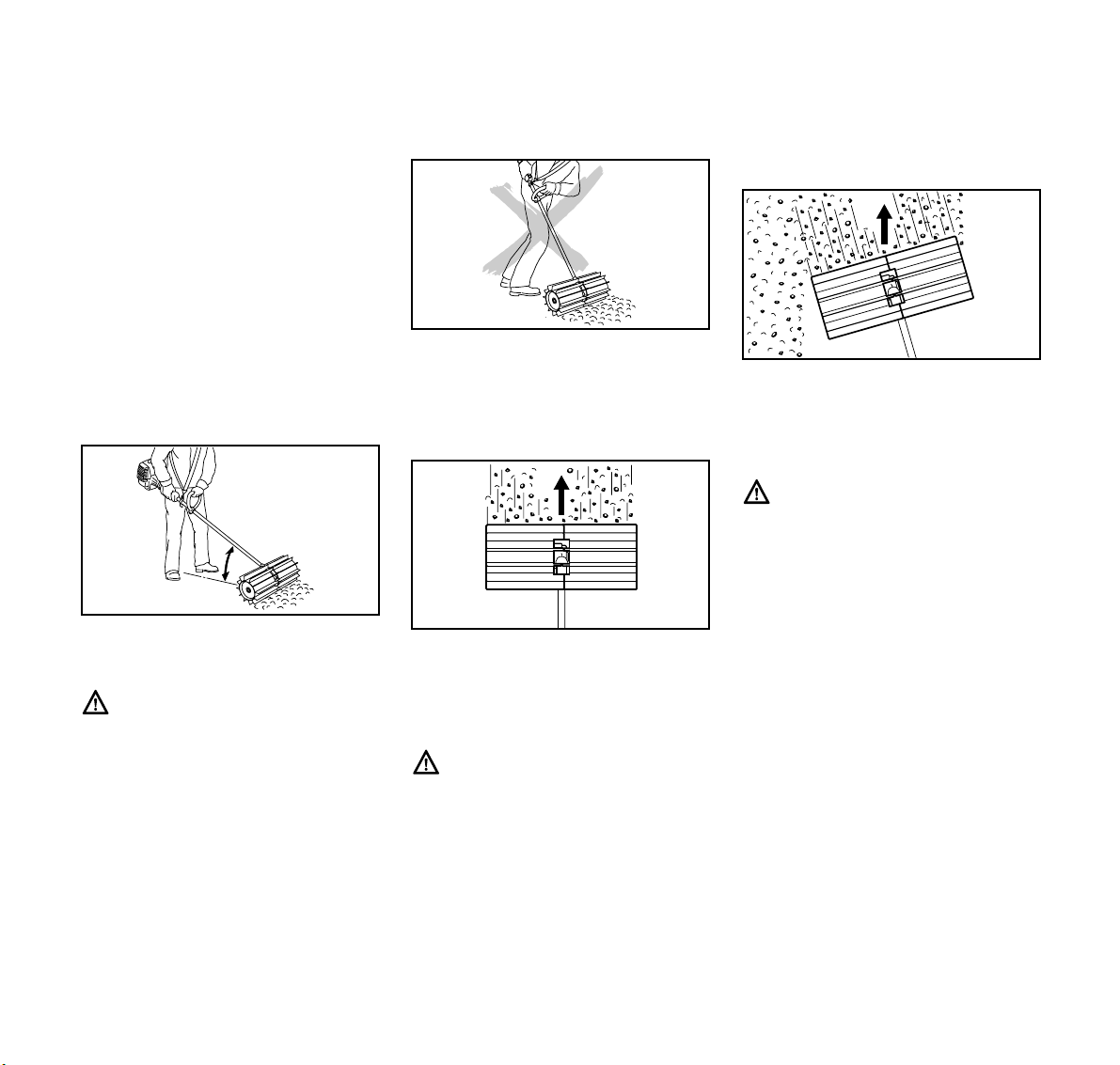
English / USA
Using the PowerSweep
Use the PowerSweep for sweeping
sand, stones, gravel, leaves and snow
on grass, concrete or asphalt and
removing standing water from solid
surfaces.
: To reduce risk of accidents or injury,
remove all obstacles and objects
from the work area.
: If the work area is very dry, spray it
with water if necessary to reduce
the amount of dust created.
: Push the PowerSweep steadily at
walking pace.
: Always keep the drive tube at a
shallow angle (see illustration).
The steeper the angle between the
drive tube and the ground, the more
difficult it is to control the
PowerSweep.
: Do not push the PowerSweep into
the ground.
Sweeping narrow areas
1
223BA001 KN
: Guide the sweeper drum at right
angles to the direction of travel (1).
Sweepings are thrown forwards,
ahead of the operator.
The PowerSweep pushes back
toward the operator.
Sweeping wide areas
1
223BA002 KN
223BA027 KN
: Guide the sweeper drum at an angle
to the direction of travel (1).
Sweepings are thrown forwards to
one side.
The PowerSweep pushes back
toward the operator.
223BA026 KN
10
KW
Page 12
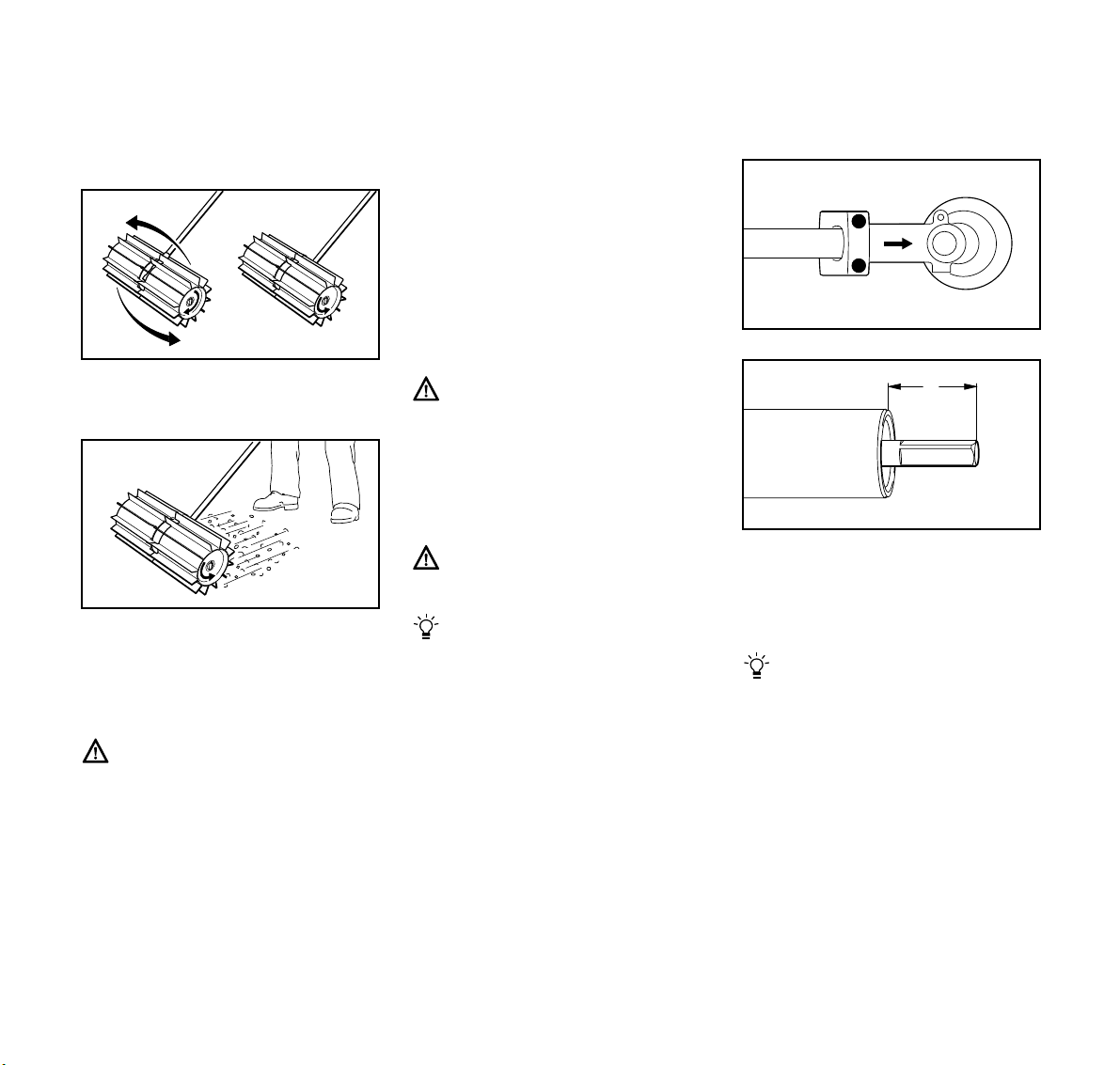
English / USA
Sweeping corners
: Turn the PowerSweep over.
Sweepings are thrown back toward the
operator. For this reason:
: Run the PowerSweep at a low
throttle setting only.
The PowerSweep pulls the operator
forward. Debris thrown back toward
the operator may affect footing.
Approved Basic Power Tools
Operation of STIHL KW PowerSweep
attachment is permitted only with the
following basic power tools:
STIHL FC 95, STIHL FC 110,
STIHL FH 75, STIHL FS 65-4
STIHL FS 831), STIHL FS 851),
STIHL FS 90
STIHL FS 1101), STIHL HL 731),
STIHLHL751), STIHL HL 1001) and
223BA028 KN
STIHL KW 85
Other combinations of the
attachment and non-approved basic
power tools are not permitted since
they may result in accidents or
serious personal injury.
Retrofitting the Loop Handle*
This attachment may be operated
only with a basic power tool
223BA029 KN
equipped with a loop handle.
The loop handle does not need to
be equipped with a barrier bar*.
The following machines must be
retrofitted with a loop handle:
0° versions of the HL 73, HL 75 and
HL 100
: To retrofit the loop handle see
“Mounting the Loop Handle”.
1)
Not approved for units with a bike
handle or models FS 85 X,
FS 110 X, HL 73 K, HL 73-0°,
HL 75 K, HL 75-0°, HL 100 K
and HL 100-0°
* see "Guide to Using this Manual"
1)
, STIHL FS 1001),
Installing the Gearbox
1)
,
402BA001 KN
L
381BA015 KN
Preparations
: Loosen the clamp screws on the
gearhead of the power tool and pull
the gearhead off the drive tube.
The drive shaft may slip out of the
tube when you pull off the gearhead.
If this happens push the drive shaft
back into the tube.
The drive shaft must not project from the
tube any more than L (7/8“ or 22 mm). If
necessary, apply slight pressure to the
drive shaft and rotate it slowly at the
same time until it can be pushed in to the
required length.
11KW
Page 13
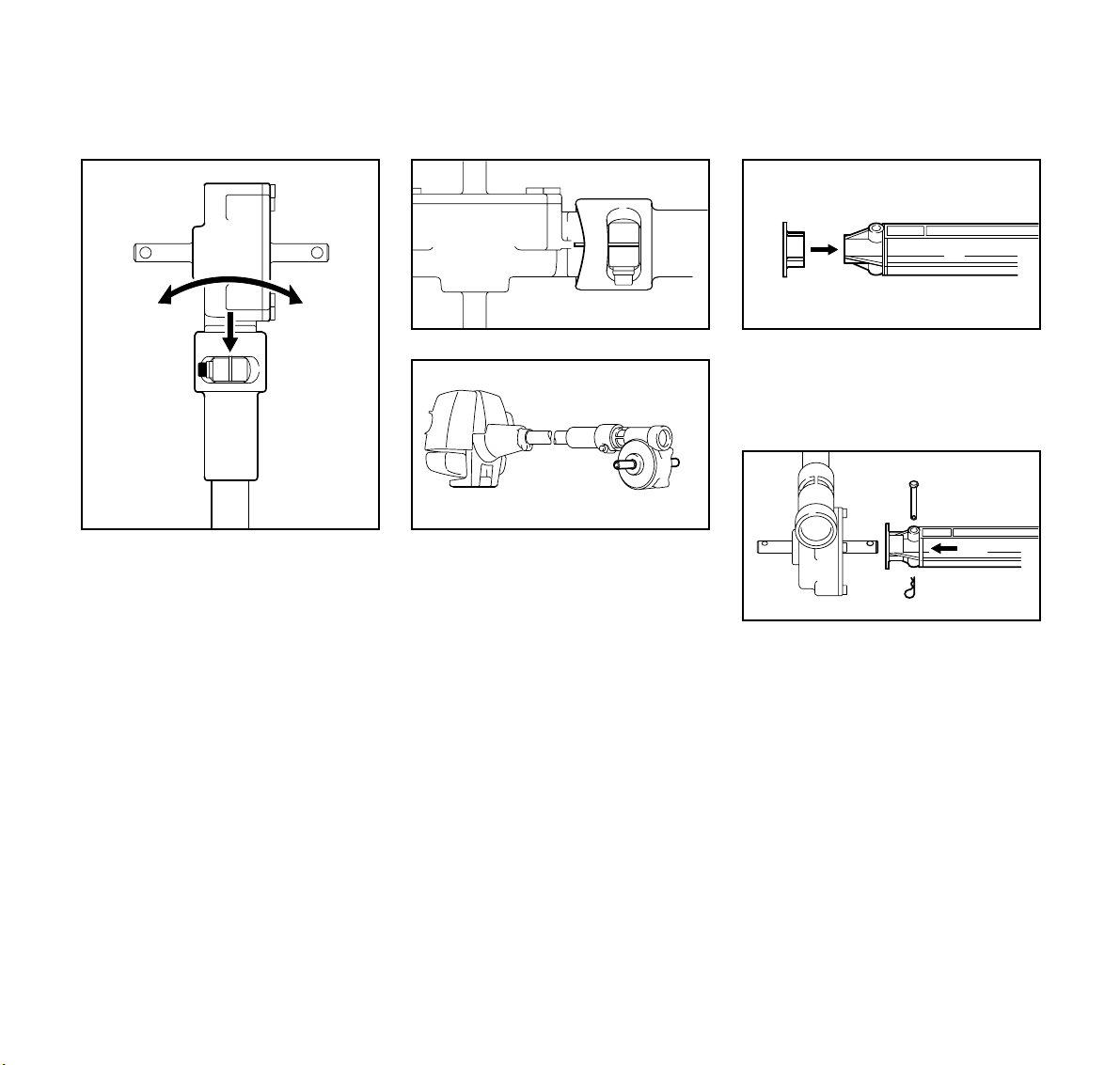
English / USA
Mounting Sweeper Drums
4
2
1
2
1
3
Mounting the gearbox
: Release the clamp screw (1).
: Slide the gearbox (2) onto the drive
tube (3), turning the gearbox back
and forth at the same time.
6
5
224BA001 KN
: Once the end of the drive tube is
inserted beyond the slot in the
clamp (4) – ease the rubber sleeve
to one side to check this – push the
gearbox right up to the stop.
: Fit clamp screw and tighten as far
as stop.
: Line up the gearbox (2) on the drive
tube so that the machine support (5)
on the powerhead points downward
and the output shafts (6) are
horizontals.
: Tighten the clamp screws firmly.
: Go to "Mounting Sweeper Drums".
224BA002 KN
: Fit grass shield (1) on end of
axle (2) and press home as far as
stop.
6
2
224BA006 KN
4
3
223BA007 KN
2
5
223BA008 KN
: Push axle (2) onto the output
shaft (3).
: Insert pin (4) through axle and
output shaft. Secure pin with cotter
pin (5).
12
KW
Page 14

English / USA
Mounting the Loop Handle*
2
: Push sweeper drum assembly (6)
onto the axle (2) – note the installed
position (see illustration)!
6
7
2
223BA009 KN
88
: Fit new cotter pin (7) in end of
axle (2) and bend over the ends (8)
of the cotter pin as shown.
: Repeat the procedure on the other
side.
Always mount both sweeper drum
assemblies!
A
2
4
3
223BA010 KN
Position of Loop Handle
: Fit the loop handle (1) on the drive
tube approx. 8“ / (20 cm) (A)
forward of the control handle (2).
: Make sure that any parts that are
already fitted, ie. the spacer sleeve*
(3) and carrying eye* (4), are
between the loop handle and
control handle.
1
002BA184 KN
* see “Guide to Using this Manual”
13KW
Page 15

English / USA
Fitting Carrying Eye* (Clamp)
9
9
8
8
1
1
A
1
5
6
1
7
10
10
Mounting the Loop Handle
: Place the clamp (5) in the loop
handle (1) and fit handle in position
on the drive tube (6).
: Fit the clamp (7).
: Line up the holes.
: Fit washers (8) on the screws (9)
and insert screws through the holes.
: Screw on the square nuts (10) as far
as stop.
14
002BA157 KN
Aligning the Loop Handle
: Adjust the loop handle (1) to the
most comfortable position for the
user and application.
Distance A must not be more than
22“ (55 cm).
About 14“ (35 cm) is recommended.
: Tighten down screws on loop
handle firmly.
2
002BA183 KN
: For position of carrying eye (clamp)*
see "Mounting the Loop Handle".
: Position the clamp (1) so that the
tapped hole is on the left-hand side
of the drive tube (viewed from
powerhead).
: Squeeze the ends of the clamp
together and hold it that position.
: Insert M 6 x 14 screw (2).
: Line up the carrying eye.
: Tighten down the screw.
* see “Guide to Using this Manual”
002BA142 KN
KW
Page 16

Fitting the Harness* Balancing the Machine
2
English / USA
11
Shoulder Strap
: Put on the shoulder strap (1).
: Adjust length of strap until the spring
hook (2) is about a hand’s width
below your right hip.
: Balance the PowerSweep –
see "Balancing the Machine".
2
Attaching Machine to Harness*
: Attach the spring hook (1) to the
clamp* (2).
3
002BA150 KN
: Loosen the screw (3).
Balancing the Machine
: Slide the clamp up or down the drive
tube so that the sweeper belts touch
the ground.
: Tighten the screw firmly.
002BA151 KN
223BA013 KN
* See "Guide to Using this Manual"
* See "Guide to Using this Manual"
15KW
Page 17

English / USA
Starting / Stopping the Engine
If you crank the engine in the
START position, the sweeper
drums may rotate when the engine
1
2
2
223BA038 KN
starts and this may set the
PowerSweep in motion. For this
reason, do not run the unit for any
longer than necessary in the
starting throttle position.
3
To shut down the engine
3
: Move the slide control in the
directon of the arrow ( h )
to STOP – $ or move the stop
switch to $.
Disconnecting Machine from
Harness
: Press down bar (1) on spring
hook (2).
: Pull the clamp (3) out of the
spring hook.
16
002BA152 KN
Starting
Always follow the starting instructions
given in the owner’s manual of the
powerhead you are using.
: Make sure you have a secure
footing – the sweeper drums may
touch the ground, but not any other
obstacles.
: Hold the unit securely with your left
hand on the control handle and
press it down firmly.
223BA039 KN
KW
Page 18

English / USA
Operating Instructions Storing the Machine
During Operation
Do not run the engine at full throttle off
load. When run off load, the engine
reaches very high revs, which can cause
the temperature of the gearbox to rise
unnecessarily.
After Finishing Work
Storing machine for a short period:
Wait for the engine to cool down. Store
the machine with an empty tank in a dry
place, well away from sources of
ignition, until you need it again. Check
the tightness of all accessible screws
and nuts at regular intervals and
retighten as necessary.
Storing for longer period:
See chapter "Storing the Machine".
For periods of about 3 months or longer:
: Remove and clean the sweeping
attachments, inspect for damage or
wear.
: Store the machine in a dry, high or
locked location – out of the reach of
children and other unauthorized
persons.
Replacing Sweeper Drum
223BA022 KN
: Straighten the ends of the cotter pin,
remove the cotter pin.
: Pull the sweeper drum off the axle.
: Repeat the procedure on the other
side.
: Examine gear housing for signs of
oil. If leaks are found, have your
STIHL dealer check the gearbox.
: Install new sweeper drums – see
"Mounting Sweeper Drums“.
17KW
Page 19

English / USA
Replacing the Rubber Sleeve
The rubber sleeve protects the drive
tube from wear caused by contact with
the sweeper belts.
A worn sleeve must be replaced as
follows:
: Remove the sweeper drums –
: see “Replacing Sweeper Drum“.
: Remove the gearbox –
see "Removing the Gearbox".
: Pull the worn sleeve off the gearbox.
: Push a new sleeve onto the
gearbox.
: Mount the gearbox – see “Installing
the Gearbox“.
: Fit the sweeper drums – see
“Mounting Sweeper Drums“.
223BA032 KN
Removing the Gearbox
223BA033 KN
: Straighten the ends of the cotter pin,
remove the cotter pin.
: Pull the sweeper drum off the shaft.
: Examine gear housing for signs of
oil. If leaks are found, have your
STIHL dealer check the gearbox.
: Repeat the above procedure on the
other side.
1
223BA022 KN
18
3
: Release the clamp screw (1).
: Pull the gearbox (2) off the drive
tube (3).
2
223BA015 KN
KW
Page 20

English / USA
Main Parts
3
1 = Shaft
2 = Sleeve
3 = Sweeper drum assembly
4 = Axle
5 = Gearbox
Specifications
Engine
1
See instruction manual of the basic
power tool you are using.
Weight
2
PowerSweep
attachment 10.5 lbs (4.8 kg)
Interchangeable
attachment 11.9 lbs (5.4 kg)
Sweeper Drum
Quantity 2
Width 22 in (57 cm)
No. of rubber
5
4
Definitions
1. Shaft.
Device to connect the engine with
the gearbox.
2. Sleeve (shaft protector).
Designed to protect the shaft
against abrasion from the sweeper
flaps.
3. Sweeper drum assembly.
Tool for sweeping and cleaning.
4. Axle.
Connects sweeper drum assembly
with the drive shaft.
5. Gearbox.
To transform the engine speed
down to lower RPM of the sweeper
drums.
paddles 12
224BA004 KN
19KW
Page 21

English / USA
Special Accessories
Deflector 4602 007 1001
Sweeper belts
Safety glasses
Harness
Combination wrench
Contact your STIHL dealer for the latest
information on these and other special
accessories.
Maintenance and Repairs
Users of this unit should carry out only
the maintenance operations described
in this manual. Other repair work may be
performed only by authorized STIHL
service shops.
Warranty claims following repairs can be
accepted only if the repair has been
performed by an authorized STIHL
224BA005 KN
servicing dealer using original STIHL
replacement parts.
Original STlHL parts can be identified by
the STlHL part number, the
logo and, in some cases, by the STlHL
parts symbol (. This symbol may
appear alone on small parts.
STIHl
20
KW
Page 22

Contenido
español / EE.UU
Guía para el uso de este manual ... 22
Medidas de seguridad
y técnicas de manejo ...................... 23
Uso de la PowerSweep .................. 30
Herramientas motorizadas básicas
aprobadas ...................................... 31
Instalación de la caja
BA_SE_020_003_31_03.fmImpreso en papel sin cloro.
de engranajes ................................. 31
Montaje de los tambores
barredores ...................................... 32
Montaje del mango tórico ............... 33
Colocación de la argolla
de transporte (abrazadera) ............. 34
Colocación del arnés ...................... 35
Equilibrio de la máquina ................. 35
Arranque / parada del motor ........... 36
Instrucciones de manejo ................ 37
Almacenamiento de la máquina ..... 37
Sustitución del tambor barredor ..... 37
Sustitución del manguito
de caucho ....................................... 38
Retiro de la caja de engranajes ...... 38
Piezas principales ........................... 39
Especificaciones ............................. 39
Accesorios especiales .................... 40
Mantenimiento y reparaciones ....... 40
Las tintas contienen aceites vegetales,el papel es reciclable.
Permita que solamente las personas
que comprenden la materia tratada en
este manual manejen el accesorio
PowerSweep.
Para obtener el rendimiento y satisfacción máximos del accesorio PowerSweep STIHL, es importante leer y comprender las instrucciones de
mantenimiento y las precauciones de
seguridad, que empiezan en la página
23, antes de usarlo.
Comuníquese con el concesionario o
distribuidor de STIHL si no entiende
alguna de las instrucciones dadas en el
presente manual.
!Advertencia
Dado que la PowerSweep es una herramienta motorizada, es necesario tomar
medidas especiales de seguridad para
reducir el riesgo de lesiones.
El uso descuidado o inadecuado puede
causar lesiones graves e incluso mortales.
Siempre protéjase adecuadamente los
ojos.
La filosofía de STIHL es mejorar continuamente todos su productos. Como
resultado de ello, periódicamente se
introducen cambios de diseño y mejoras. Si las características de funcionamiento o la apariencia de su accesorio
PowerSweep difieren de las descritas
en este manual, comuníquese con el
concesionario STIHL para obtener la
información y ayuda que requiera.
STIHl
© ANDREAS STIHL AG & Co. KG, 2008
0458 224 8621. M1,5. A8. PM. Printed in USA
21KW
Page 23

español / EE.UU
Guía para el uso de este
manual
Información importante
Este accesorio STIHL puede instalarse
en diferentes herramientas motorizadas
básicas STIHL (motor con sistema de
tubo de mando y mango).
Los modelos aprobados de herramientas motorizadas básicas se listan en el
capítulo "Herramientas motorizadas
básicas aprobadas".
!No se permite ninguna otra com-
binación de accesorio y herramienta
motorizada básica no aprobada
debido al riesgo de que pueda causar
accidentes o lesiones personales
graves.
Este manual de instrucciones contiene
solamente las descripciones de los procedimientos y condiciones en los cuales
la combinación de herramienta motorizada y accesorio difiere de la herramienta motorizada básica.
Para el uso correcto de la combinación
de accesorio y herramienta motorizada,
también lea y aténgase a la información
dada en los capítulos correspondientes
del manual de instrucciones de la herramienta motorizada básica que se está
usando.
Pictogramas
Todos los pictogramas que se
encuentran en la máquina se muestran
y explican en este manual.
Las instrucciones de uso y manipulación
vienen acompañadas de ilustraciones.
Símbolos en el texto
Los pasos individuales o procedimientos
descritos en el manual pueden estar
señalados en diferentes maneras:
: Un punto identifica un paso o
procedimiento sin referencia directa
a una ilustración.
Una descripción de un paso o
procedimiento que se refiere
directamente a una ilustración puede
tener números de referencia que
aparecen en la ilustración.
Ejemplo:
Suelte el tornillo (1)
Palanca (2) ...
Además de las instrucciones de uso, en
este manual pueden encontrarse
párrafos a los que usted debe prestar
atención especial. Tales párrafos están
marcados con los símbolos que se
describen a continuación.
Advertencia donde existe el riesgo
de un accidente o lesiones
personales o daños graves a la
propiedad.
Precaución donde existe el riesgo
de dañar la máquina o los
componentes individuales.
Nota o sugerencia que no es
esencial para el uso de la máquina,
pero puede ayudar al operador a
comprender mejor la situación y
mejorar su manera de manejar la
máquina.
Nota o sugerencia sobre el
procedimiento correcto con el fin de
evitar dañar el medio ambiente.
22
KW
Page 24

Medidas de seguridad
y técnicas de manejo
español / EE.UU
Equipo y características
Este manual de instrucciones
puede describir varios modelos con
diferentes características. Los
componentes que no se encuentran
instalados en todos los modelos y
las aplicaciones correspondientes
están marcados con un asterisco
(*). Esos componentes pueden ser
ofrecidos como accesorios
especiales por el concesionario
STIHL.
Mejoramientos técnicos
La filosofía de STIHL es mejorar
continuamente todos su productos.
Como resultado de ello, periódicamente
se introducen cambios de diseño y
mejoras. Si las características de
funcionamiento o la apariencia de su
máquina difieren de las descritas en
este manual, comuníquese con el
concesionario STIHL para obtener la
ayuda que requiera.
Por lo tanto, es posible que algunos
cambios, modificaciones y
mejoramientos no hayan sido descritos
en este manual.
Advertencia !
Dado que una herramienta motorizada equipada con un accesorio de
barredora PowerSweep
es un aparato que funciona a velocidad rápida, es necesario
tomar medidas especiales de seguridad
para reducir el riesgo de lesiones.
Es importante que usted
lea, comprenda bien y
respete las siguientes
advertencias y medidas
de seguridad. Lea periódi-
camente los manuales de
instrucciones y las instrucciones de
seguridad de su herramienta motorizada
y accesorio de barredora PowerSweep.
El uso descuidado o inadecuado de
cualquier herramienta motorizada
puede causar lesiones graves e incluso
mortales. Pida a su concesionario
STIHL que le enseñe el manejo de la
herramienta motorizada. Respete todas
las disposiciones, reglamentos y normas de seguridad locales del caso.
!Advertencia!
Nunca se debe permitir a los niños que
usen una herramienta motorizada. ¡No
se debe permitir la proximidad de otros,
especialmente niños y animales, donde
se esté utilizando la herramienta motorizada!
Nunca deje la PowerSweep funcionando sin vigilancia.
!Advertencia!
No preste ni alquile nunca su herramienta motorizada sin entregar los
manuales del usuario. Asegúrese que
todas las personas que utilicen la herramienta motorizada lean y comprendan
la información contenida en estos
manuales.
La mayoría de las medidas de seguridad
y avisos contenidos en este manual se
refieren al uso de todas las máquinas
PowerSweep de STIHL. Los distintos
modelos pueden contar con piezas y
controles diferentes. Vea las secciones
correspondientes de los manuales del
propietario de la herramienta motorizada y del accesorio de barredora
PowerSweep para tener una descripción de los controles y la función de
cada componente de su herramienta
motorizada.
El uso seguro de una herramienta motorizada atañe a
1. el operador
2. la herramienta motorizada
3. el uso de la herramienta motorizada.
EL OPERADOR
Condición física
Usted debe estar en buenas condiciones físicas y psíquicas y no encontrarse
bajo la influencia de ninguna sustancia
(drogas, alcohol, etc.) que le pueda restar visibilidad, destreza o juicio. No
maneje una herramienta motorizada
cuando está fatigado.
23KW
Page 25

español / EE.UU
Esté alerta. Si se cansa durante el
manejo de la herramienta motorizada,
tómese un descanso. El cansancio
puede provocar una pérdida del control.
El uso de cualquier herramienta motorizada es fatigoso. Si usted padece de
alguna dolencia que pueda ser agravada por la fatiga, consulte a su médico
antes de utilizar la PowerSweep.
!Advertencia!
El uso prolongado de una herramienta
motorizada (u otras máquinas) expone
al operador a vibraciones que pueden
provocar el fenómeno de Raynaud
(dedos blancos) o el síndrome del túnel
del carpio. Estas condiciones reducen la
capacidad manual de sentir y regular la
temperatura, producen entumecimiento
y ardor y pueden provocar trastornos
nerviosos y circulatorios, así como
necrosis de los tejidos.
No se conocen todos los factores que
contribuyen a la enfermedad de Raynaud, pero el clima frío, el fumar y las
enfermedades o condiciones físicas que
afectan los vasos sanguíneos y la circulación de la sangre, como asimismo los
niveles altos de vibración.
Por lo tanto, para reducir el riesgo de la
enfermedad de dedos blancos y del síndrome del túnel del carpio, sírvase notar
lo siguiente:
– La mayor parte de las herramientas
motorizadas de STIHL están equipadas con un sistema antivibración
("AV") cuyo propósito es reducir la
transmisión de las vibraciones creadas por el motor a las manos del
operador. Se recomienda el uso del
sistema AV a aquellas personas
que utilizan herramientas motorizadas en forma constante y regular.
– Use guantes y mantenga las manos
abrigadas.
– Mantenga el sistema AV en buen
estado. Una herramienta motorizada con los componentes flojos o
con amortiguadores AV dañados o
desgastados también tendrá tendencia a tener niveles más altos de
vibración.
– Agarre firmemente los mangos en
todo momento, pero no los apriete
con fuerza constante y excesiva;
tómese descansos frecuentes.
Todas las precauciones antes mencionadas no le garantizan que va a estar
totalmente protegido contra la enfermedad de Raynaud o el síndrome del túnel
del carpio. Por lo tanto, los operadores
constantes y regulares deben controlar
con frecuencia el estado de sus manos
y dedos. Si aparece alguno de los síntomas arriba mencionados, consulte
inmediatamente al médico.
Vestimenta adecuada
!Advertencia!
Para reducir el riesgo de lesiones el
operador debe usar el equipo protector
adecuado.
!Advertencia!
Nunca maneje una
PowerSweep a menos
que tenga puestas gafas
o anteojos de seguridad
correctamente ajustados
con la correspondiente
protección superior y lateral, de acuerdo
con la normativa nacional.
!Advertencia!
El ruido de la herramienta
motorizada puede dañar
los oídos. Siempre use
amortiguadores del ruido
(tapones u orejeras) para
protegerse los oídos. Los
usuarios constantes y regulares deben
someterse con frecuencia a un examen
o control auditivo.
Protéjase las manos con
guantes cuando manipule
la herramienta motorizada. Los guantes gruesos y antideslizantes
mejoran el manejo y protegen las manos.
24
KW
Page 26

español / EE.UU
La ropa debe ser de confección fuerte y ajustada,
pero no tanto que impida
la completa libertad de
movimiento.
Evite el uso de chaquetas
sueltas, bufandas, corbatas, joyas, pantalones
acampanados o con vueltas, pelo largo suelto o
cualquier cosa que pueda
engancharse en las piezas en movimiento de la máquina.
Use pantalones largos hechos de un
material grueso para protegerse las
piernas. No use pantalones cortos, sandalias o pies descalzos. Sujétese el pelo
de modo que quede sobre los hombros.
Una buena base de
apoyo es indispensable
cuando se maneja la
PowerSweep. Póngase
botas gruesas con suela
antideslizante.
Utilice un casco de segu-
ridad aprobado para redu-
cir el riesgo de lesionarse
la cabeza en caso de
existir tal tipo de peligro.
EL ACCESORIO DE BARREDORA
POWER SWEEP
Para las ilustraciones y definiciones de
los componentes del accesorio de
barredora PowerSweep, vea el capítulo
sobre "Piezas y controles"
!Advertencia!
Nunca modifique, de ninguna manera,
un accesorio de barredora PowerSweep. Utilice únicamente los accesorios suministrados por STIHL o expresamente autorizados por STIHL para
usarse con los modelos específicos de
herramientas motorizadas de STIHL. Si
bien es posible conectar ciertos accesorios no autorizados a la herramienta
motorizada de STIHL, su uso puede ser,
en la práctica, extremadamente peligroso.
USO DE LA POWERSWEEP
Transporte de la PowerSweep
!Advertencia!
Antes de apoyar la PowerSweep en el
suelo, apague el motor y asegúrese de
que el accesorio ha dejado de girar.
Cuando transporte la PowerSweep en
un vehículo, sujétela firmemente para
impedir su vuelco, el derrame de combustible y el daño a la PowerSweep.
Preparación para el uso de la PowerSweep
Ajuste el arnés y la empuñadura de
modo correspondiente a su estatura
antes de empezar a trabajar. La
máquina debe estar correctamente
equilibrada de la forma especificada en
el manual del propietario para un control
correcto y menos fatiga de trabajo.
Siempre revise la condición y funcionamiento de su PowerSweep antes de
ponerla en marcha, especialmente el
gatillo de aceleración, el bloqueo del
gatillo de aceleración (si lo tiene), el interruptor de parada, los tambores barredores, el manguito de caucho y el arnés.
La barredora debe estar correctamente
apretada y en buenas condiciones de
trabajo. La barredora debe tener instaladas las dos correas. El manguito de caucho, en el extremo del tubo de mando,
debe estar en buenas condiciones. No
maneje la PowerSweep si tiene dañados los tambores barredores o el manguito de caucho. Busque piezas sueltas
(tuercas, tornillos, etc.) y piezas desgastadas o dañadas. Cambie las piezas que
estén desgastadas o dañadas.
25KW
Page 27

español / EE.UU
Llenado de combustible
La barredora PowerSweep STIHL utiliza
una mezcla de aceite y gasolina como
combustible. Para más instrucciones,
consulte las precauciones de seguridad
y el capítulo "Combustible" del manual
del propietario de la herramienta motorizada.
!Advertencia!
La gasolina es un com-
bustible muy inflamable.
Si se derrama y arde a
causa de una chispa u
otra fuente de ignición,
puede provocar un incendio y quemaduras graves o daños a la
propiedad. Tenga sumo cuidado cuando
manipule gasolina o la mezcla de combustible.
No fume cerca del combustible o la
barredora PowerSweep, ni acerque ningún fuego o llama a ellos.
INSTRUCCIONES DE MANEJO
La PowerSweep está diseñada para
barrer solamente arena, piedras, gravilla, hojas y nieve sobre césped, hormigón o asfalto, y para quitar los charcos
de agua de las superficies planas. Para
reducir el riesgo de lesiones, no utilice
su PowerSweep para ningún otro fin.
Arranque
!Advertencia!
Su PowerSweep es una máquina que
debe ser manejada por solamente una
persona.
Si arranca el motor con el interruptor en
la "posición de arranque", las correas de
la barredora comenzarán a girar; esa
acción puede mover la PowerSweep
hacia el operador.
5m (16ft)
Para reducir el riesgo de lesiones causadas por objetos arrojados por la barredora o el contacto con las correas de la
misma, no permita que haya nadie en un
radio de 5 m (16 pies) del lugar en que
usted se encuentra.
Apague el motor inmediatamente si se
le aproxima alguna persona. Ponga en
marcha y maneje su PowerSweep sin
ayuda de nadie. Para las instrucciones
específicas de arranque, vea la sección
correspondiente en el manual del propietario de la herramienta motorizada.
Coloque la herramienta motorizada
sobre suelo firme u otra superficie sólida
en un lugar abierto. Mantenga buen
equilibrio con los pies bien apoyados.
Condiciones de trabajo
Maneje y arranque su herramienta
motorizada solamente al aire libre en un
lugar bien ventilado.
Maneje la PowerSweep solamente
cuando tenga buena visibilidad y a la luz
del día. Trabaje con mucho cuidado.
223BA028 KN
223BA029 KN
!Advertencia!
Si se invierte la PowerSweep se arrojará
la basura hacia el operador. Cuando
invierta la PowerSweep, reduzca la aceleración y esté alerta a la basura arrojada por la barredora, ya que lo puede
hacer perder la estabilidad.
26
KW
Page 28

español / EE.UU
!Advertencia!
Para reducir el riesgo de lesiones
debido a la pérdida de control de la
máquina, mantenga un ángulo bajo con
respecto a la superficie de trabajo. Un
ángulo alto de manejo tiene tendencia a
propulsar la PowerSweep hacia usted.
!Advertencia!
Su PowerSweep emite
gases de escape tóxicos
apenas el motor empieza
a funcionar. Estos gases
(por ej., monóxido de car-
223BA001 KN
ros e inodoros. Para reducir el riesgo de
sufrir lesiones graves o mortales por
respirar gases tóxicos, nunca haga funcionar la PowerSweep puertas adentro
o en lugares mal ventilados.
bono) pueden ser incolo-
!Advertencia!
El uso de este producto puede generar
polvo y vapores que contienen productos químicos considerados como cau-
223BA002 KN
santes de enfermedades respiratorias,
cáncer, defectos de nacimiento u otra
toxicidad reproductora. Si usted desconoce los riesgos asociados con el polvo
o vapor en cuestión, consulte con su
empleador, autoridades gubernamentales tales como OSHA y NIOSH y otras
fuentes de información sobre materiales
peligrosos. Por ejemplo, el estado de
California y algunas otras autoridades
han publicado varias listas de sustancias carcinógenas, de toxicidad reproductora, etc.
Siempre que sea posible, controle el
polvo y los vapores en su punto de origen. Al respecto, emplee buenas prácticas de trabajo y siga las recomendaciones de OSHA/NIOSH y asociaciones
laborales y comerciales. Cuando sea
imposible eliminar la inhalación del
polvo o vapores tóxicos, el operador y
las personas que se encuentren en la
cercanía siempre deberán usar un respirador aprobado por NIOSH/MSHA para
el tipo de polvo y/o vapores presentes
en el lugar.
002BA054 KN
Siempre sujete la PowerSweep firmemente con ambas manos. Cierre firmemente los dedos alrededor de los mangos, manteniéndolos bien apoyados
entre el pulgar y dedo índice. Mantenga
las manos en esta posición, para que
siempre tenga la PowerSweep bien controlada. Asegúrese que los mangos de
la PowerSweep y la empuñadura están
en buenas condiciones y sin humedad,
resina, aceite o grasa.
27KW
Page 29

español / EE.UU
!Advertencia!
Nunca intente manejar ninguna PowerSweep con una sola mano. La pérdida
del control de la PowerSweep puede
ocasionar lesiones.
Tenga especial cuidado cuando trabaje
en condiciones resbaladizas (suelo
mojado, nieve).
Inspeccione la zona de
trabajo y vea si hay obje-
tos sólidos (por ej., pie-
dras, trozos de metal,
etc.) que podrían ser arro-
jados por la máquina y
ocasionar lesiones corporales o dañar
las aletas de la barredora o causar otros
daños materiales (por ej., vehículos
estacionados, ventanas, etc.).
!Advertencia!
La PowerSweep normalmente se usa a
nivel del suelo con las correas de la
barredora paralelas al suelo. La utilización de una PowerSweep sobre el nivel
del suelo puede aumentar el riesgo de
lesionarse, ya que el accesorio barredor
queda más al descubierto y puede ser
más difícil controlar la PowerSweep.
No maneje la PowerSweep usando el
bloqueo de acelerador de arranque,
pues no tendrá control de la velocidad
del motor. Vea la sección en su manual
del usuario sobre el uso correcto del
control deslizante.
Si las correas de la barredora se atascan o quedan pegadas, siempre apague
el motor y asegúrese que están detenidas antes de limpiarlas.
Ajustes importantes
!Advertencia!
Para reducir el riesgo de lesiones personales debido a la pérdida de control o al
contacto con los tambores barredores
en movimiento, no use la PowerSweep
con la velocidad de ralentí mal regulada.
Cuando el ralentí está correctamente
regulado, los tambores barredores no
deben moverse. Para instrucciones de
ajuste del ralentí, vea la sección correspondiente en el manual del propietario
de la herramienta motorizada.
Si no puede regular correctamente el
ralentí, pida a su concesionario STIHL
que revise la PowerSweep y haga los
ajustes o reparaciones correspondientes.
MANTENIMIENTO, REPARACION
Y ALMACENAMIENTO
Utilice solamente piezas de repuesto de
STIHL para el mantenimiento y reparación. El uso de piezas no fabricadas por
STIHL puede causar lesiones graves o
mortales.
Siga las instrucciones de mantenimiento
y reparación dadas en la sección correspondiente del manual del usuario. Consulte la tabla de mantenimiento en las
últimas páginas de este manual.
!Advertencia
Siempre apague el motor y asegúrese
que las correas de la barredora están
detenidas antes de hacer cualquier trabajo de mantenimiento, reparación o
limpieza de la PowerSweep. No intente
hacer ningún trabajo de mantenimiento
o reparación que no esté descrito en su
manual del usuario. Este tipo de trabajo
debe realizarse únicamente en el taller
del concesionario STIHL.
!Advertencia
Revise la condición de las correas de la
barredora en intervalos regulares. Partículas sueltas o pedazos de correa
podrían salir lanzados al aire y lesionar
al operador o personas en la cercanía.
Para reducir el riesgo de lesiones causadas por piezas rotas, sustituya inmediatamente las correas dañadas de la
barredora, y hágalo siempre en pares.
No reutilice ni intente reparar las correas
dañadas o desgastadas de la barredora.
28
KW
Page 30

español / EE.UU
!Advertencia
Para reducir el riesgo de incendio y de
quemaduras, revise si hay fugas en la
tapa de llenado de combustible en intervalos regulares. Use la bujía especificada y asegúrese de que ella y el cable
de encendido están en buen estado.
!Advertencia
No pruebe nunca el sistema de encendido con el casquillo del cable de encendido desconectado de la bujía, o sin
tener bien instalada la bujía, ya que las
chispas al descubierto pueden causar
un incendio.
!Advertencia
Para reducir el riesgo de incendio y de
quemaduras, utilice solamente las
bujías autorizadas por STIHL. Siempre
inserte el casquillo de la bujía bien apretado en el borne de la bujía del tamaño
adecuado. (Nota: Si el casquillo tiene
una tuerca adaptadora SAE desmontable, tiene que ser instalada.) Una
conexión suelta entre el casquillo de la
bujía y el conector del cable de encendido en el casquillo puede crear un arco
voltaico y encender los vapores del
combustible, provocando un incendio.
Mantenga la bujía limpia, y asegúrese
que el conductor de encendido esté en
buen estado.
!Advertencia
No maneje nunca su PowerSweep si el
silenciador está dañado, se ha perdido o
si fue modificado. Un silenciador mal
cuidado aumenta el riesgo de incendio y
puede causar pérdida del oído. No
toque nunca un silenciador caliente,
puede quemarse. Si el silenciador está
equipado con un chispero para reducir
el riesgo de incendio (por ejemplo, en
EE.UU., Canadá y Australia), no maneje
nunca la PowerSweep si le falta el chispero o si el mismo está dañado. No
modifique ni retire ninguna pieza del
silenciador o chispero. Recuerde que el
riesgo de incendios forestales es mayor
durante las estaciones calurosas y
secas.
Apriete todas las tuercas, pernos y tornillos, excepto los tornillos de ajuste del
carburador, después de cada uso.
Además, es imprescindible seguir el
programa de mantenimiento diario indicado en el manual del usuario de la
PowerSweep STIHL.
Guarde la PowerSweep en un lugar
seco, elevado o con llave lejos del
alcance de los niños.
Antes de guardar la máquina durante un
período de más de algunos días, siempre vacíe el tanque de combustible.
29KW
Page 31

español / EE.UU
Uso de la PowerSweep
La PowerSweep está diseñada para
barrer solamente arena, piedras, gravilla, hojas y nieve sobre césped, hormigón o asfalto, y para quitar el agua
estancada de las superficies planas.
: Para reducir el riesgo de accidentes
o lesiones, quite todos los obstáculos y objetos de la zona de trabajo.
: Si la zona de trabajo está muy seca,
rocíela con agua para reducir la
cantidad de polvo que se levanta.
: Empuje la PowerSweep a un ritmo
constante y tranco normal.
: Mantenga siempre el tubo de
mando a un ángulo bajo (vea la ilustración).
Cuanto más pronunciado el ángulo
entre el tubo de mando y el suelo,
tanto más difícil el control de la
PowerSweep.
: No empuje la PowerSweep contra
el suelo.
Barrido de zonas angostas
1
223BA001 KN
: Dirija el tambor barredor en ángulo
recto con respecto al sentido de
avance (1).
La basura barrida se lanza hacia
adelante del operador.
La PowerSweep empuja hacia el
operador.
Barrido de zonas anchas
1
223BA002 KN
223BA027 KN
: Dirija el tambor barredor en ángulo
con respecto al sentido de avance
(1).
La basura barrida se lanza hacia
adelante y hacia un lado.
La PowerSweep empuja hacia el
operador.
223BA026 KN
30
KW
Page 32

español / EE.UU
Barrido de los rincones
: Invierta la PowerSweep.
La basura barrida se lanza hacia el operador. Por esta razón:
: Maneje la PowerSweep solamente
a baja velocidad.
La PowerSweep tira del operador
hacia adelante. La basura lanzada
hacia atrás contra el operador
puede afectar su estabilidad.
Herramientas motorizadas básicas aprobadas
Se permite el uso del accesorio de
barredora PowerSweep KW solamente
con las siguientes herramientas motorizadas básicas:
STIHL FC 95, STIHL FC 110,
STIHL FH 75, STIHL FS 65-4
STIHL FS 83
STIHL FS 901), STIHL FS 1001),
STIHL FS 1101), STIHL HL 731),
223BA028 KN
STIHLHL751), STIHL HL 1001) y
STIHL KW 85
No se permite ninguna otra combinación de accesorio y herramienta
motorizada básica no aprobada
debido al riesgo de que pueda causar accidentes o lesiones personales graves.
Adición del mango tórico*
Este accesorio puede usarse sola-
223BA029 KN
mente con una herramienta motorizada básica equipada con un
mango tórico.
El mango tórico no tiene que equiparse con una barra de defensa*.
En las siguientes máquinas es necesario instalar un mango tórico: versiones
de 0° de las HL 73, HL 75 y HL 100
: Para instalar el mango tórico, vea
"Montaje del mango tórico".
1)
El accesorio no ha sido aprobado
para uso en máquinas con manillar
tipo bicicleta o en los modelos
FS 85 X, FS 110 X, HL 73 K,
HL 73-0°, HL 75 K, HL 75-0°,
HL 100 K y HL 100-0°
* vea "Guía para el uso de este
manual"
1)
, STIHL FS 851),
Instalación de la caja de engranajes
1)
,
402BA001 KN
L
381BA015 KN
Preparaciones
: Afloje los tornillos de fijación del
mecanismo de la herramienta motorizada y después extráigalo del tubo
de mando.
El eje impulsor puede deslizarse
fuera del tubo cuando se extrae el
mecanismo. Si esto sucede,
empuje el eje impulsor de vuelta en
el tubo.
El eje impulsor no debe sobresalir del
tubo más de L (22 mm ó 7/8 pulg). De
ser necesario, aplique una ligera presión
en el eje impulsor y al mismo tiempo
gírelo lentamente hasta que se pueda
empujarlo hasta el largo requerido.
31KW
Page 33

español / EE.UU
Montaje de los tambores barredores
4
2
1
2
1
3
Montaje de la caja de engranajes
: Suelte el tornillo de fijación (1).
: Deslice la caja de engranajes (2)
sobre el tubo de mando (3), y al
mismo tiempo gírela a uno y otro
lado.
6
5
224BA001 KN
: Una vez que el extremo del tubo de
mando se inserta más allá que la
ranura en la abrazadera (4) –
mueva el manguito de caucho a un
lado para comprobar esto – empuje
la caja de engranajes directamente
hasta el tope.
: Coloque el tornillo de fijación y
apriételo hasta el tope.
: Alinee la caja de engranajes (2) en
el tubo de mando, de tal modo que
el apoyo de la máquina (5) en el
motor quede orientado hacia abajo
y los ejes de salida (6) estén horizontales.
: Apriete los tornillos de fijación bien
firmes.
: Pase a "Montaje de los tambores
barredores".
224BA002 KN
: Coloque el escudo para césped (1)
en el extremo del eje (2) y empújelo
a su lugar hasta donde tope.
6
2
224BA006 KN
4
3
223BA007 KN
2
5
223BA008 KN
: Empuje el eje (2) en el eje de salida
(3).
: Inserte el pasador (4) a través del
eje y del eje de salida. Fije el pasador con el pasador hendido (5).
32
KW
Page 34

español / EE.UU
Montaje del mango tórico
2
: Empuje el conjunto de tambor
barredor (6) en el eje (2). Observe la
posición del conjunto instalado (vea
la ilustración).
6
7
2
223BA009 KN
88
: Coloque el pasador hendido nuevo
(7) en el extremo del eje (2) y
dóblele los extremos (8), como se
muestra.
: Repita el procedimiento anterior en
el otro lado.
Instale siempre los dos conjuntos
de tambores barredores!
A
2
4
3
223BA010 KN
Posición del mango tórico
: Fije el mango tórico (1) en el tubo de
mando, a aproximadamente 20 cm
(8 pulg) (A) delante del mango de
control (2).
: Asegúrese que las piezas que ya
están colocadas, por ej., el manguito espaciador* (3) y la argolla de
transporte* (4), se encuentran entre
el mango tórico y el mango de control
1
002BA184 KN
* Vea “Guía para el uso de este
manual”
33KW
Page 35

español / EE.UU
9
8
Colocación de la argolla de transporte* (abrazadera)
9
8
1
1
A
1
5
6
1
7
10
10
Montaje del mango tórico
: Coloque la abrazadera (5) en el
mango tórico (1) y ponga el mango
en posición en el tubo de mando (6).
: Coloque la abrazadera (7).
: Alinee los agujeros.
: Coloque las arandelas (8) en los tor-
nillos (9) y después inserte los tornillos en los agujeros.
: Atornille las tuercas cuadradas (10)
hasta el tope.
34
002BA157 KN
Alineación del mango tórico
: Ajuste el mango tórico (1) hasta
dejarlo en la posición que mejor
acomode al usuario y la aplicación.
La distancia A no debe medir más
de 55 cm (22 pulg).
Lo recomendado es aproximadamente 35 cm (14 pulg).
: Apriete firmemente los tornillos del
mango tórico.
2
002BA183 KN
: Para la posición de la argolla de
transporte (abrazadera)*, vea "Montaje del mango tórico".
: Coloque la abrazadera (1) con el
agujero roscado hacia el lado
izquierdo del tubo de mando (visto
desde el motor).
: Apriete juntos los extremos de la
abrazadera y sosténgala en esa
posición.
: Inserte el tornillo M6 x 14 (2).
: Alinee la argolla de transporte.
: Apriete el tornillo.
* Vea “Guía para el uso de este
manual”
002BA142 KN
KW
Page 36

Colocación del arnés* Equilibrio de la máquina
2
español / EE.UU
11
Correa para hombro
: Colóquese la correa (1) sobre el
hombro.
: Ajuste el largo de la correa hasta
que el gancho de resorte (2) esté a
una distancia más o menos igual al
ancho de la mano por debajo de la
cadera derecha.
: Equilibre la PowerSweep – vea
"Equilibrio de la máquina".
2
Fijación de la máquina al arnés*
: Enganche el gancho de resorte (1)
en la abrazadera* (2).
3
002BA150 KN
: Suelte el tornillo (3).
Equilibrio de la máquina
: Deslice la abrazadera hacia arriba o
hacia abajo en el tubo de mando, de
tal modo que las correas de la
barredora toquen el suelo.
: Apriete el tornillo bien firme.
002BA151 KN
223BA013 KN
* Vea “Guía para el uso de este
manual”
* Vea “Guía para el uso de este
manual”
35KW
Page 37

español / EE.UU
r
2
Arranque / parada del moto
Si se arranca el motor en la posición
de arranque START, los tambores
de la barredora pueden girar tan
1
2
223BA038 KN
3
pronto arranque el motor y pueden
causar el movimiento del accesorio
PowerSweep. Por este motivo, no
haga funcionar el motor por más
tiempo que el necesario con el acelerador en la posición de arran-
que.
3
Desconexión de la máquina del
arnés
: Empuje la barra (1) del gancho de
resorte (2) hacia abajo.
: Tire de la abrazadera (3) para
sacarla del gancho de resorte.
002BA152 KN
Arranque
Siga siempre las instrucciones de arranque indicadas en el manual del propietario de la herramienta motorizada básica
que está utilizando.
: Asegúrese de tener los pies bien
apoyados – los tambores de la
barredora pueden tocar el suelo,
pero no deben quedar en contacto
con otros obstáculos.
: Sujete la máquina con la mano
izquierda en el mango de control y
empújela firmemente hacia abajo.
Para apagar el motor
: Mueva el control deslizante en el
sentido indicado por la flecha (h) a
STOP – $ o mueva el interruptor de
parada a la posición $.
223BA039 KN
36
KW
Page 38

español / EE.UU
Instrucciones de manejo Almacenamiento de la
máquina
Durante el funcionamiento
No haga funcionar el motor a aceleración máxima sin carga. Cuando funciona sin carga, el motor alcanza una
velocidad muy alta, lo que causa el
aumento innecesario de la temperatura
de la caja de engranajes.
Después de terminar el trabajo
Almacenamiento de la máquina por
corto tiempo:
Espere que el motor se enfríe. Guarde la
máquina con el tanque de combustible
vacío en un lugar seco y alejado de las
fuentes de encendido hasta que la
vuelva a necesitar. En intervalos regulares, revise el apriete de todos los tornillos y tuercas accesibles, y vuelva a
apretarlos como sea necesario.
Almacenamiento por tiempo prolongado:
Vea el capítulo "Almacenamiento de la
máquina".
Para intervalos de 3 meses o más:
: Retire y limpie los accesorios barre-
dores e inspecciónelos en busca de
daños o desgaste.
: Guarde la máquina en un lugar seco
y elevado, o bajo llave – fuera del
alcance de los niños y de otras personas no autorizadas.
Sustitución del tambor barredor
223BA022 KN
: Enderece los extremos del pasador
hendido y después sáquelo.
: Tire del tambor barredor para
sacarlo del eje.
: Repita el procedimiento anterior en
el otro lado.
: Inspeccione la caja de engranajes
para ver si hay indicios de aceite. Si
encuentra alguna fuga, solicite al
concesionario STIHL que revise la
caja de engranajes.
: Instale los tambores barredores
nuevos. Vea "Montaje de los tambores barredores".
37KW
Page 39

español / EE.UU
Sustitución del manguito de caucho
El manguito de caucho protege al tubo
de mando contra el desgaste causado
por el contacto con las correas de la
barredora.
Un manguito desgastado debe sustituirse de la manera siguiente:
: Saque los tambores barredores.
Vea "Sustitución de los tambores
barredores".
: Retire la caja de engranajes. Vea
"Retiro de la caja de engranajes".
: Extraiga el manguito desgastado de
la caja de engranajes.
: Coloque un manguito nuevo
empujándolo sobre la caja de
engranajes.
: Instale la caja de engranajes. Vea
"Instalación de la caja de engranajes".
: Instale los tambores barredores.
Vea "Montaje de los tambores
barredores".
223BA032 KN
Retiro de la caja de
engranajes
223BA033 KN
: Enderece los extremos del pasador
hendido y después sáquelo.
: Tire del tambor barredor para
sacarlo del eje.
: Inspeccione la caja de engranajes
para ver si hay indicios de aceite. Si
encuentra alguna fuga, solicite al
concesionario STIHL que revise la
caja de engranajes.
: Repita el procedimiento anterior en
el otro lado.
1
223BA022 KN
38
3
: Suelte el tornillo de fijación (1).
: Tire de la caja de engranajes (2)
para sacarla del tubo de mando (3).
2
223BA015 KN
KW
Page 40

español / EE.UU
Piezas principales
3
1 = Eje
2 = Manguito
3 = Conjunto de tambor barredor
4 = Eje
5 = Caja de engranajes
Especificaciones
Motor
1
Vea el manual de instrucciones de la
herramienta motorizada básica.
Peso
2
Accesorio PowerSweep 4,8 kg (10,5 lb)
Accesorio intercambiable 5,4 kg (11,9 lb)
Tambor barredor
Cantidad 2
Ancho 57 cm (22 pulg)
N° de paletas de
5
4
Definiciones
1. Eje.
Dispositivo que conecta el motor
con la caja de engranajes.
2. Manguito (protector del eje).
Diseñado para proteger al eje contra la abrasión causada por las aletas de la barredora.
3. Conjunto de tambor barredor.
Herramienta para barrer y limpiar.
4. Eje.
Conecta el conjunto de tambor
barredor con el eje impulsor.
5. Caja de engranajes.
Para reducir la velocidad del motor
a la velocidad más baja de los tambores barredores.
caucho 12
224BA004 KN
39KW
Page 41

español / EE.UU
Accesorios especiales
Deflector 4602 007 1001
Correas de barredora
Anteojos de seguridad
Arnés
Llave combinada
Póngase en contacto con el concesionario STIHL para obtener la información
más reciente sobre éstos y otros accesorios especiales.
Mantenimiento y reparaciones
Los usuarios de esta máquina deben
efectuar únicamente los trabajos de
mantenimiento descritos en este
manual. Solamente los talleres autorizados por STIHL deben llevar a cabo los
demás trabajos de reparación.
Los reclamos de garantía presentados
después de realizadas las reparaciones
224BA005 KN
serán aceptados únicamente si las mismas fueron ejecutadas por un concesionario de servicio autorizado STIHL utilizando piezas de repuesto originales de
STIHL.
Es posible identificar las piezas originales de STIHL por el número de pieza
STIHl
algunos casos, el símbolo ( de piezas
STIHL. En las piezas pequeñas el símbolo puede aparecer solo.
, el logotipo de STIHL y, en
40
KW
Page 42

0458 224 8621
englisch / English USA / spanisch / español EE.UU
 Loading...