

Page 1
Controller User Manual
SPPI/SPNI/SPP/SPN/SPPZ/SPMI/SPIF/GSPP/GSPN/
GSPI/GSNI/GSPF/SPI/SNI/SPIZ/SPIF
SUMMARY
SUMMARY................................................................................................................................... 17
OFFICIAL APPROVAL AND RULES ................................................................................................. 18
1. INSTALLATION ......................................................................................................................... 19
1.1. Delivery and unpacking..........................................................................................................19
1.2. Positioning.............................................................................................................................19
1.3. Connections ..........................................................................................................................19
1.4. Minimum requirements on site.............................................................................................20
2. USE ......................................................................................................................................... 21
2.1. Operation standards .............................................................................................................21
2.2. Classification of the refrigerators...........................................................................................21
2.3. General characteristics..........................................................................................................22
2.4. Indications for ......................................................................................................................22
2.5. Equipment operation and changing the settings ...................................................................23
2.6. Conditions for safe operation ...............................................................................................24
2.7. Stability and risk of overloading............................................................................................25
2.8. General risks.........................................................................................................................25
3. CLEANING AND MAINTENANCE............................................................................................... 26
3.1. Conservation........................................................................................................................26
3.2. Maintenance........................................................................................................................26
3.3. Before asking for the supervision of a technician .................................................................27
3.4. Spare parts...........................................................................................................................27
4. REPAIRS AND COMPLAINTS ................................................................................................... 28
www.sterlingpro.co.uk | 01264 560190 | [email protected]
Page 2
18
U.N.E. 66.900
QUALITY SYSTEMS
U.N.E. 66.902
QUALITY INSURANCE IN PRODUCTION AND INSTALLATION
U.N.E. 66.904
QUALITY MANAGEMENT
U.N.E. 86.101 82 (1)
TEST METHODS
U.N.E. 86.101 82 (2)
TEST CONDITIONS
U.N.E. 86.101 82 (3)
TEMPERATURE TEST
U.N.E. 86.101 82 (4)
FROST TEST
U.N.E. 86.101 82 (5)
WATER VAPOUR CONDENSATION TEST
U.N.E. 86.101 82 (6)
ELECTRICAL ENERGY CONSUMPTION TEST
73/23/EEC
DIRECTIVE ABOUT ELECTRICAL SECURITY
89/336/EEC
DIRECTIVE ABOUT ELECTROMAGNETIC COMPATIBILITY
OFFICIAL APPROVAL AND RULES
Our products fulfil the present E.U. rules, including the CE mark of the European official
approval.
The applied rules are:
Make sure to initially cool the product down before putting it into the
freezing equipment.
As much as possible, limit the opening of machine doors.
Periodically clean the pipe for draining liquids to make sure it is not clogged.
Page 3

19
1. INSTALLATION
1.1. Delivery and unpacking
Our equipment must be transported in an upright position. It is strictly forbidden to lay the
equipment down on any side as it may lead to damaging the refrigerating unit.
It is recommended that the equipment be unpacked immediately after its delivery and checked for
any damage that may have occurred during transport.
If the equipment is damaged, one must immediately inform the carrier or the carriers about this fact
since it is the carrier who is responsible for the damage.
Any possible return of damaged machines to Sterling Pro Ltd must be agreed prior to shipment. Any
equipment sent to Sterling Pro Ltd without authorization will not be accepted.
Proper care must be taken during unpacking of the device in order to avoid injury and to avoid
damage to the machine.
1.2. Positioning
Remove the packing except the pallet support.
Lift the refrigerator up with a forklift, making sure not to damage the equipment and checking for its
stability so as to prevent any loss of balance, and move it to the place where it is to be installed.
Don’t push or drag the refrigerator because of risk of damaging its legs or causing it to tip over.
Once the machine is placed on the appropriate place, the pallet support can be taken out. Be careful
not to damage the machine.
In order to level the refrigerator, rotate the adjustable legs in either a clockwise or anticlockwise
direction.
At last, the factory-applied rust protective film should be removed.
After positioning of the device, proceed according to the cleaning instructions given in the section
“Conservation”.
1.3. Connections
a) Before earthing the refrigerator to the plug, make sure that the voltage and the mains frequency
coincide with those specified on the machine rating plate.
b) The electric system in the place where the refrigerating unit is to be installed must have a
grounding wire and a ground fault circuit interrupter.
c) Check if the cross-section of the supply wires is appropriate for the consumption it is going to
resist .
Page 4

d) Don’t insert any objects through the protection grilles of the fan or the refrigerating unit.
e) Due to the danger of electrical discharges, don’t come close to the refrigerator shoeless if the
ground is wet or if you have wet hands.
f) Before starting any cleaning or conducting maintenance operations on the equipment make sure
to put the main power switch in “0” position and unplug the machine.
g) It is necessary that the refrigerator is run until it reaches the operating temperature, before
loading it with goods. It is recommended to preserve the products with a food-grade plastic film in
order to avoid transmission of scents.
h) For the correct operation of the cooling system, it is essential not to block the air intake of the
refrigerating unit or of the inside fan, if the machine is equipped with it.
i) The installation and the maintenance operations must be conducted by qualified technical
personnel. The supply wire can be replaced without using special tools. It is H05 VV-F type.
The inside wiring consists of three wires of 1 mm². Electrical connections are made by means of
faston terminals 6.35 protected with covers.
j) For proper use of the refrigerator and to assure long-term exploitation of the equipment, the user
must receive the appropriate training and conservation instructions from a qualified technician.
k) Before servicing the refrigeration equipment:
- Switch off the mains tension.
- Protect your hands because many elements have high temperature, which can produce burns.
1.4. Minimum requirements on site
The electric system must be secured with a ground fault circuit interrupter and include a socket with
a grounding pin.
The premises where the equipment is to be installed must be properly ventilated. The installation
site should be perfectly level. A drainage channel connected to the drains must be also provided.
Installation of the machines with a controlled humidity or condensation by water (or mixed) requires
a source of water supply.
Page 5
2. USE
SERVICE CONDITIONS
NOISE TESTS
GENERAL REFRIGERATION (+10 to 0°C)
FROZEN PRODUCTS ( 15 to – 25°C)
FISH (+2 to -6°C)
2.1. Operation standards
The established working limits concerning environmental conditions for the refrigerators, class N:
Ambient temperature: +38°C
Condensation temperature: +54°C
Relative humidity: 60%
Ambient temperature is +42°C for machines with tropical air conditioning system.
Noise tests are being conducted in a room without noise absorbing elements and without any
significant obstacles near the refrigerator.
Noise levels registered in acoustic tests have been measured in accordance with the rules ISO 230 to
the 235.
Leq (continuous level) is less than 70dB. (A)
Lp (sonorous pressure level) is less than 130dB. (C)
NOTE: (A) (C) Frequency weighing
2.2. Classification of the refrigerators
Refrigeration equipment can be divided into few segments, depending on the working temperature
range:
The machines are prepared for the conservation of fresh products or precooked food for short
periods of time.
The equipment is designed for the storage of frozen products for longer periods of time (6 months).
The devices are intended for fresh fish maintenance for short periods of time.
Page 6

2.3. General characteristics
They are equipped with the necessary devices to guarantee security and heath of the user.
Our refrigerated and freezer counters are manufactured from stainless steel.
Our refrigerated and freezer cabinets can be divided in two groups: first is made completely of
stainless steel and the second is partially (exterior) made of galvanised steel.
Cabinets made of galvanised steel are characterized by the presence of a flexible aluminium zinc
coat with a better corrosion resistance and mechanical damage properties compared to cabinets
painted using traditional methods.
Stainless steel equipment is manufactured from highest quality stainless steel sheets, AISI-304
18/10.
All accessories including nuts and bolts are in stainless steel or chromium plated.
The whole inside, where the products are being stored, is made from non-hazardous and certified
materials.
The 60mm thick filling of polyurethane foam with the density of 40 kg/m³, injected at high pressure
into the walls of the equipment, assures good insulation and energy savings.
As a standard, our equipment is provided with:
· Height-adjustable legs.
· Self-closing doors.
· Grid shelves GN 2/1 and sliding guides allowing for adjusting the distances between the shelves.
· An automatic system for evaporation of defrost water.
· High-class electronic controller with a digital temperature display conformant to HACCP guidelines.
· Forced air circulation system, which guarantees the uniform temperature distribution in the whole
chamber.
· Illuminated main switch and compressor operation control light.
· Power supply: 230V, 50Hz.
The temperature range of the refrigerated tables and cabinets is controlled electronically between
0°C and 8°C.
The temperature range of the freezer tables and cabinets is controlled electronically between -18°C
and -22°C.
The refrigerating unit works with refrigerating gas approved by the CE present rules.
2.4. Indications for use
Our refrigerated and freezer tables as well as cabinets are designed for food and beverages storage.
In order to assure proper operation of the equipment, it is forbidden to place hot products or
containers, chemical substances or corrosive agents, inside the refrigerator. Refrigerating equipment
should be used correctly.
Page 7
2.5. Equipment operation and changing the settings
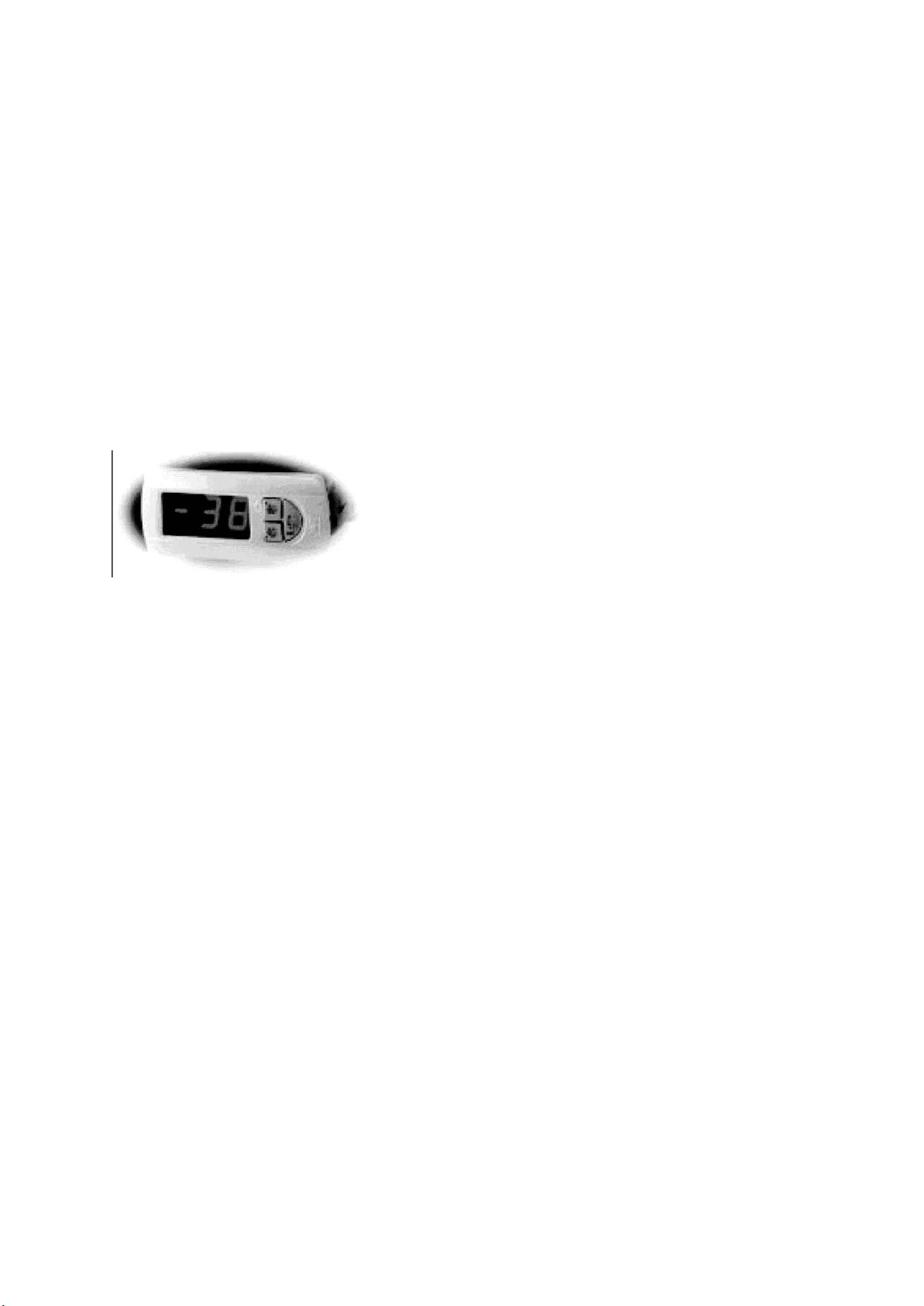
Red LED-type display. During normal operation, it shows the
temperature reading of the ambient temperature sensor.
In emergencies, the alarm code alternates with the ambient
temperature. If defrosting is performed according to a time
setting (d0=2 or 3) and the other sensor is used to read the
product temperature (/4=1), then the product temperature is
displayed continuously instead of the ambient temperature
(the temperature of air flowing around the product).
Regardless of which sensor provides the information on the
temperature, adjustments are always performed according to
the temperature detected by the ambient temperature
sensor.
ON / OFF SETTING
The equipment is provided with an illuminated main power switch.
- “I” position – on
- “0” position – off
Approximately 1 minute after the power switch is set in the "I" position, the compressor will be
activated, which will be indicated by the control light. The equipment will then start the refrigerating
process.
The refrigerating unit can be deactivated by setting the power switch in the “0” position.
CHANGING THE TEMPERATURE SETTINGS
Display
CHANGING THE SETTINGS
· press the button for about 1 second; the leading value will appear on the display;
· after two seconds the value will start blinking;
· increase or decrease the leading value using the and pushbuttons, until you reach the desired
value;
· press the button again to confirm the set value.
MANUAL INITIATION OF THE DEFROSTING CYCLE
Defrosting is performed automatically. However, one can initiate the defrosting cycle at any moment
by pressing and holding the pushbutton for at least 5 seconds.
Page 8

FUNCTION OF THE DIODES BELOW THE PUSHBUTTONS
- Illuminated diode below the push button signifies that the compressor is on.
- Illuminated diode below the pushbutton means that the defrosting is being performed.
- Illuminated diode below the pushbutton signifies that the alarm function is active.
Blinking of a diode below a given pushbutton means that the activation of a function is
delayed due to time limitations.
ALARMS
Blinking “EO” symbol – defect of the ambient temperature sensor:
- The sensor is not compatible with the regulating device,
- A short-circuit occurred in the sensor’s circuit,
- Other defects.
Blinking “E1” symbol – defect of the evaporator or the product temperature sensor:
- The sensor is not compatible with the regulating device,
- A short-circuit occurred in the sensor’s circuit,
- Other defects.
Blinking “LO” symbol – low temperature alarm:
- The alarm will be deactivated once a temperature between the maximum and minimum
permissible value is restored.
Blinking “HI” symbol – high temperature alarm:
- The alarm will be deactivated once a temperature between the maximum and minimum
permissible value is restored.
Blinking “Ed” symbol – maximum defrosting time exceeded:
- Check the efficiency of the defrosting process.
Blinking “DF” symbol – defrosting on-going:
- It’s not an alarm sign but gives the information about the on-going defrosting process.
2.6. Conditions for safe operation
· Become familiar with the instructions provided in this manual before starting any work with
refrigerator.
· Don’t use the equipment if any traces of damage are visible.
· Don’t use the machine for a purpose other than it was designed for.
· Don’t expose the equipment to weather conditions.
· When working with the equipment follow general occupational health and safety principles and
regulations.
· In case of any disturbances in the operation of the equipment or problems with its use, contact an
authorized service provider.
Page 9
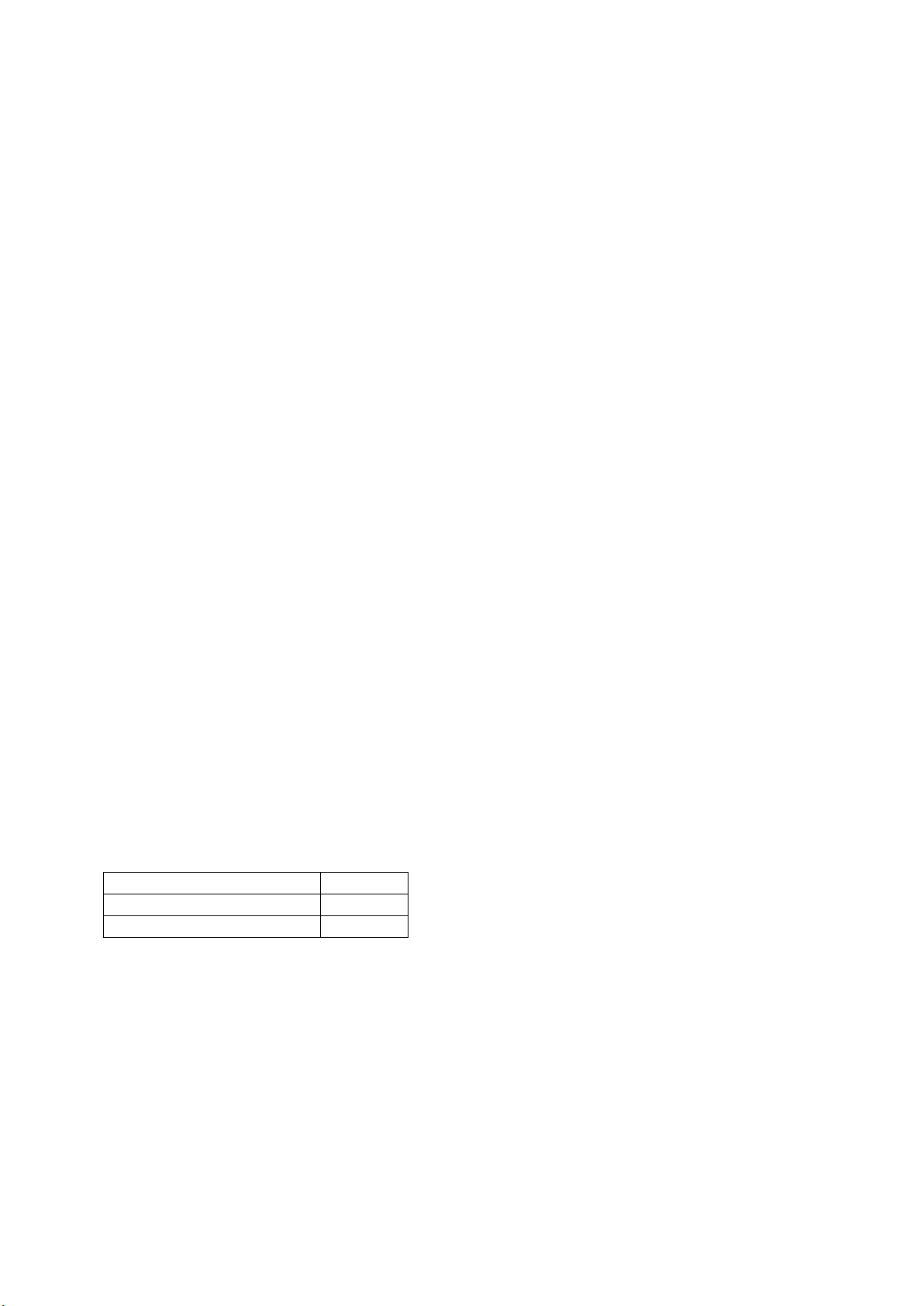
2.7. Stability and risk of overloading
General refrigeration
+10°C
Frozen products
-15°C
Stored fish
+2°C
Stability is guaranteed, even if doors are open.
In refrigerators equipped with drawers the maximum load per drawer is 40 kg; overloading a drawer
is not allowed. In each drawer the load must be distributed uniformly.
It is advisable not to open more than one drawer at the same time to avoid overturning of the
machine.
For the same reason don’t rest or sit on the drawers.
2.8. General risks
1) To assure safety while cleaning or performing maintenance operations don’t take off the elements
shielding the moveable parts of the equipment unless the machine has been disconnected from the
mains previously.
2) Take the necessary precautions before having access to the condenser unit zone, due to the high
temperature in some elements and thus a great risk of burns.
3) Electrical discharges risks have been diminished by applying the Low Tension Regulations.
4) The refrigerators are equipped with a drainage pipe to facilitate cleaning and for the outflow of
residual liquids that may come from food products. When cleaning the equipment, it is necessary to
take out the plug in the upper end of the drainage pipe to avoid liquids accumulating inside the
equipment.
5) Unexpected interruption of power supply.
In case of an unexpected power outage lasting longer than 20 minutes, make sure that the
temperature of the product has not exceeded the upper permissible limit and avoid opening of the
refrigerator’s doors.
The minimum temperature values at which the products don’t begin to spoil are as follows:
6) For optimum performance of the equipment, avoid putting hot food products or not closed
beverage bottles in the inside of the refrigerator.
Protect food products by means of watertight containers or sealing system and store them on the
shelves in such a manner as to allow for proper circulation of air in the whole refrigerator’s chamber.
Avoid frequent opening of refrigerator’s doors and don’t leave them open.
Page 10

3. CLEANING AND MAINTENANCE
3.1. Conservation
First cleaning must be done after unpacking and before the machine is energized. The equipment
should be washed with water and mild detergent.
When the equipment is clean and dry, insert the accessories in the appropriate places.
The external and the internal parts of the equipment must be washed with a damp sponge or cloth.
Do not use agents that may scratch the surface or that contain chlorine.
The equipment must be rinsed with clean water, without soaking it, since water may damage the
electrical parts of the refrigerator.
The area where the machine is being placed must be open and clean in order to avoid materials
being absorbed by the refrigerator’s fan. They can be further deposited into the condenser blades
and as a result produce failures.
Before calling a qualified technician, check the power supply to the machine and make sure that
there is no heat source nearby.
3.2. Maintenance
Maintenance has to be conducted by qualified technical personnel.
Maintenance of the device consists in particular in cleaning the condenser blades, which are located
by the compressor. Ask your supplier for a more accurate description of where this component is
located. Cleaning is best achieved using a vacuum cleaner or stiff brush.
The frequency of cleaning depends on the local conditions but we recommend that the condenser is
checked every month.
Periodically clean the pipe for draining defrosted water to assure that it’s not clogged.
Check if the ambient temperature in the area where the machine is situated – it must not exceed the
maximum temperature suitable for your equipment.
Check if the doors and drawers of the refrigerator close tightly. Ensure that the seals are clean and
intact.
Page 11

3.3. Before asking for the supervision of a technician
Sometimes the cause of incorrect operation of the equipment is simple and can easily be eliminated
by the user. Before requesting the assistance of a service technician, please verify the following:
a) If the refrigerator does not work
· Check if the refrigerator is plugged in and if there is power supply in the network to which the
machine is connected (if so, the control lamp should light up).
b) If the temperature is not correct
· Check if there is a heat source near the equipment.
· Check if the thermostat regulator isn’t in OFF position.
· Check if the room temperature doesn’t exceed +38°C.
· Check if the products inside the refrigerator are distributed evenly and the fan air intake openings
are not blocked. Furthermore make sure that enough time has passed for the products to cool
down.
· Check if the evaporator inside the equipment is not covered with excessive ice; this may prevent
the equipment from reaching the set temperatures.
The most frequent cause of the presence of excessive ice on the evaporator is failure to observe the
procedure of preliminary cooling of products before placing them inside the refrigerator.
c) If there are odd or loud noises
· Check the machine levelling and if the doors are closed properly.
· Check if there are any objects touching the dynamic parts of the refrigerating unit.
3.4. Spare parts
We recommend using only original spare parts. Sterling Pro shall not bear any responsibility in cases
where unoriginal spare parts have been used.
 Loading...